Discovering Dublin: Last days of normal life (1/)

Something was about to change here in Dublin on the night of March 11th. I knew this, and thus felt hesitation as well as excitement for an interesting day as I headed into work on the 12th.

You see, TU Dublin had an Open Day planned to show female high school students about our apprenticeship courses. My colleagues and I had put a lot of work into planning this, although we anticipated things could change due to coronavirus. Later this day, life was to shift decisively about our world here in Dublin.

The Last Day ‘Open’ at TU Dublin
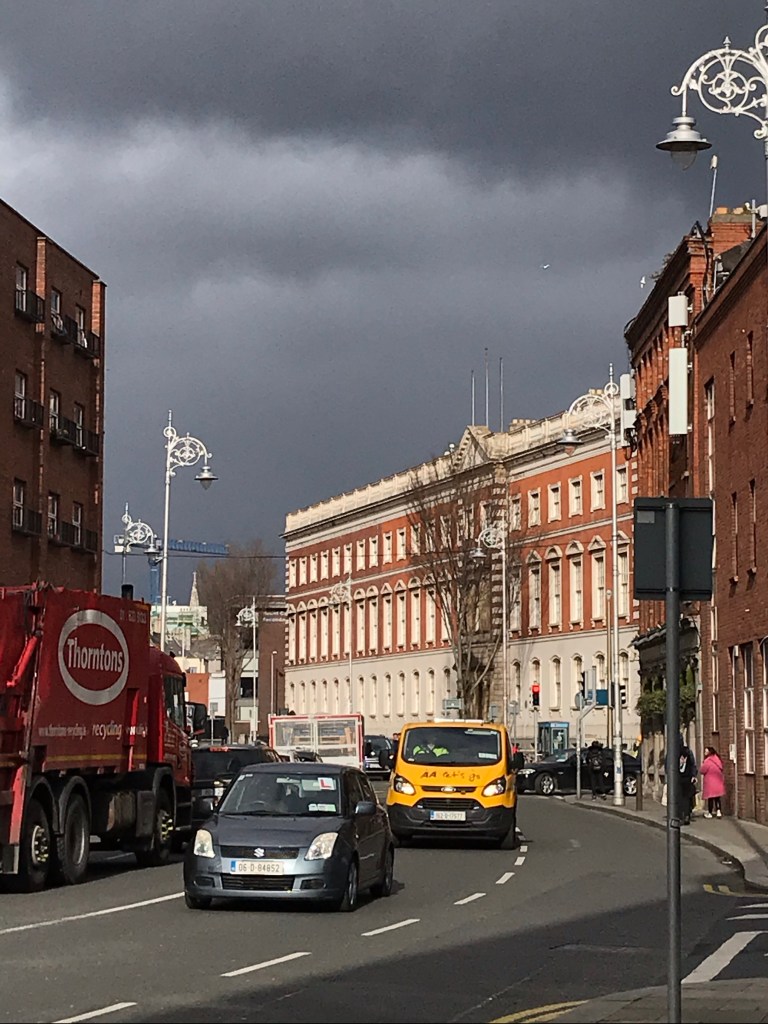
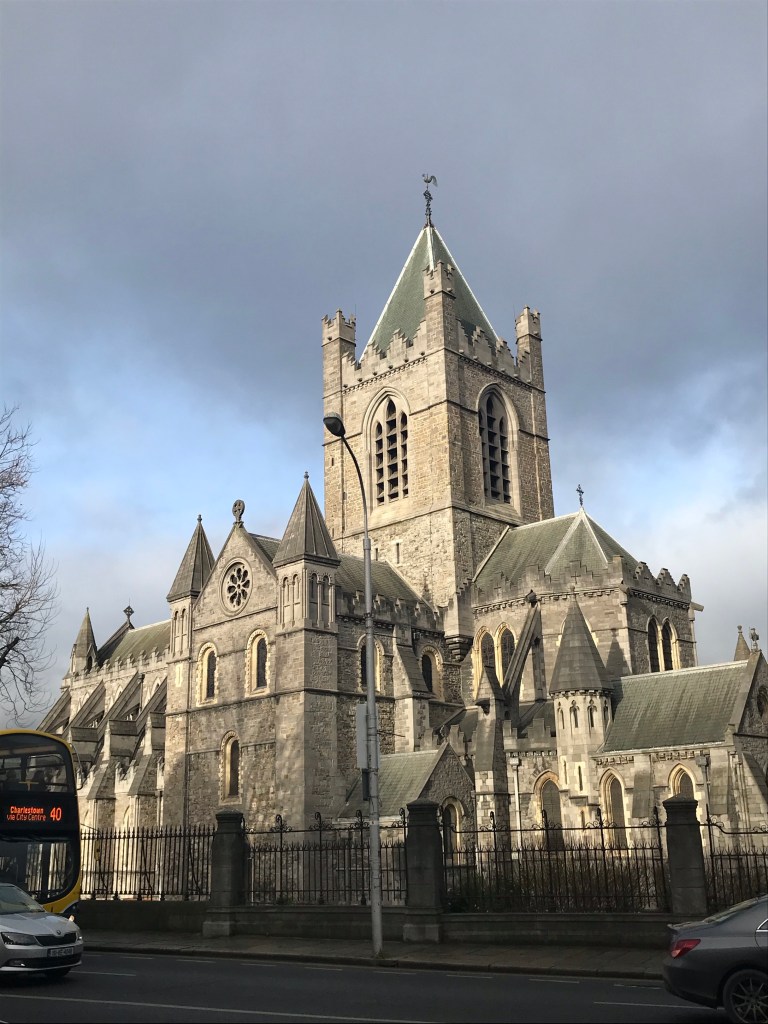
A glimpse of Bolton Street with drama in the sky.

We waited anxiously for word from the university about closures. In the meantime, we took care. Although plans went ahead and during this Open Day, the new norms of hand sanitizer and social distancing appeared. Wee conscientiously worked to hold intimate conversations about life plans at a two arm’s length–not an easy feat in a loud and active space like the lobby of Linenhall, home of the TU’s Dublin School of Architecture.

Attendance on this Open Day was higher than one would expect given the uncertainty of life, but not as high as the past year. Only a portion of those who reserved places made it to D2 that day. It was well worth my own four-block walk into work to meet girls from as far as Wicklow who’d ventured up to meet us.
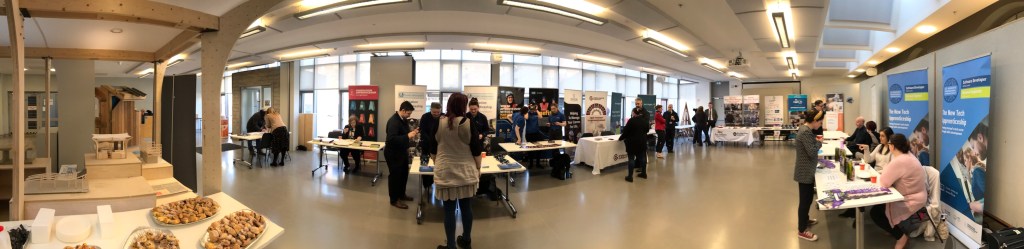
Setting up for the day.

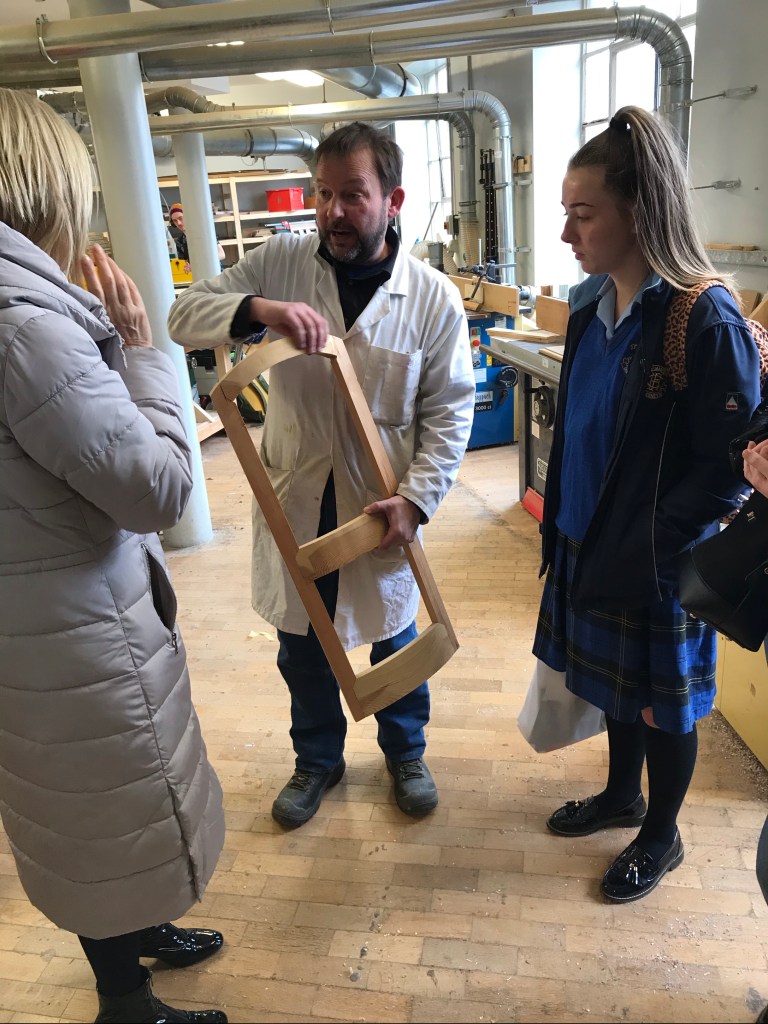
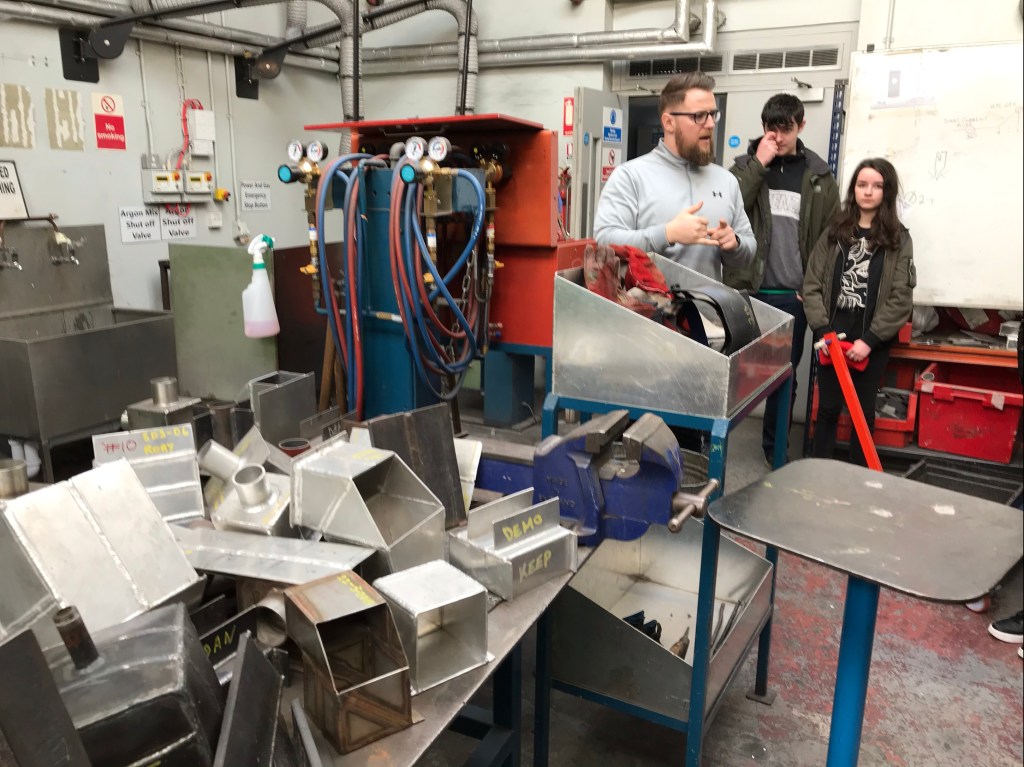
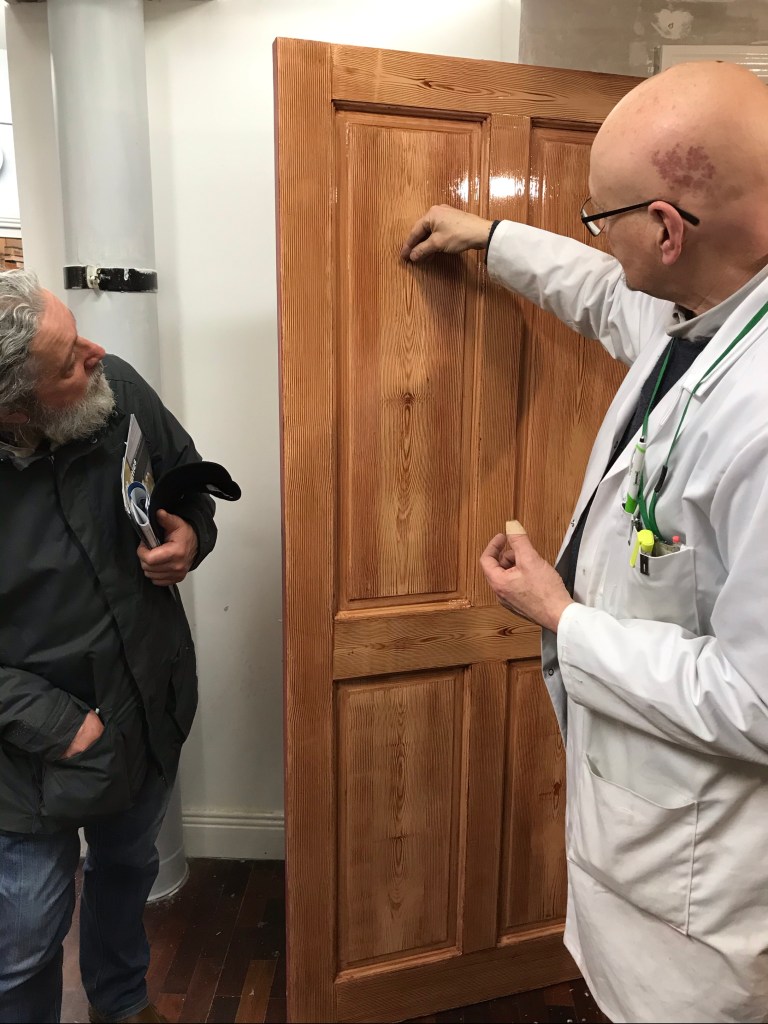
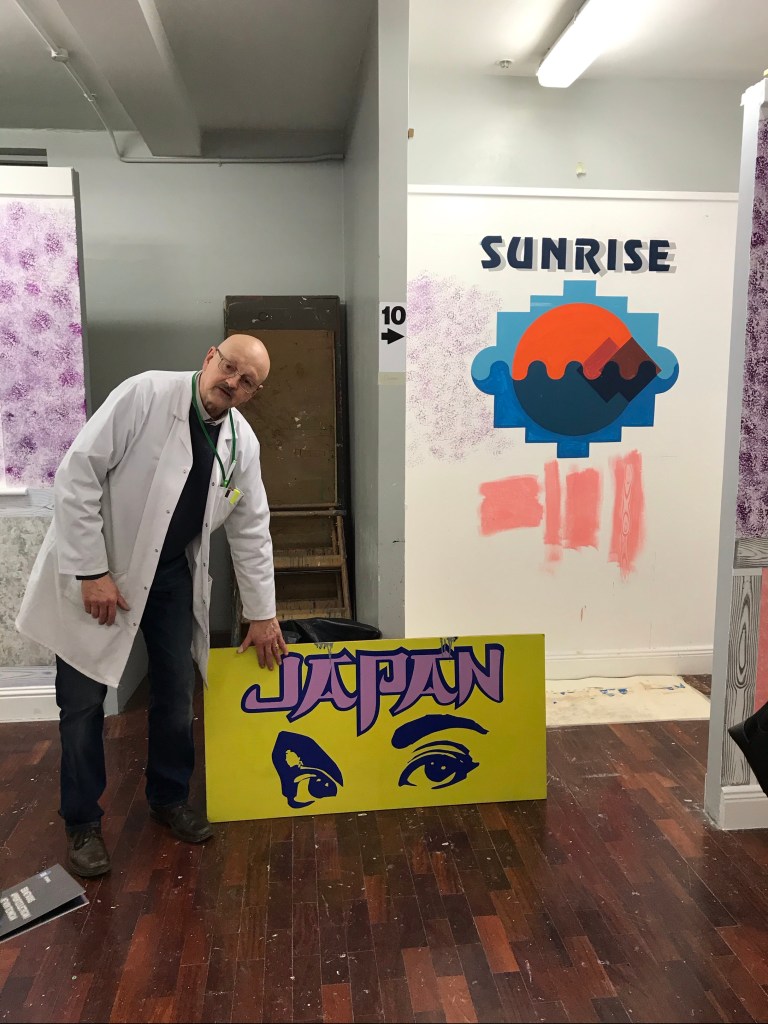
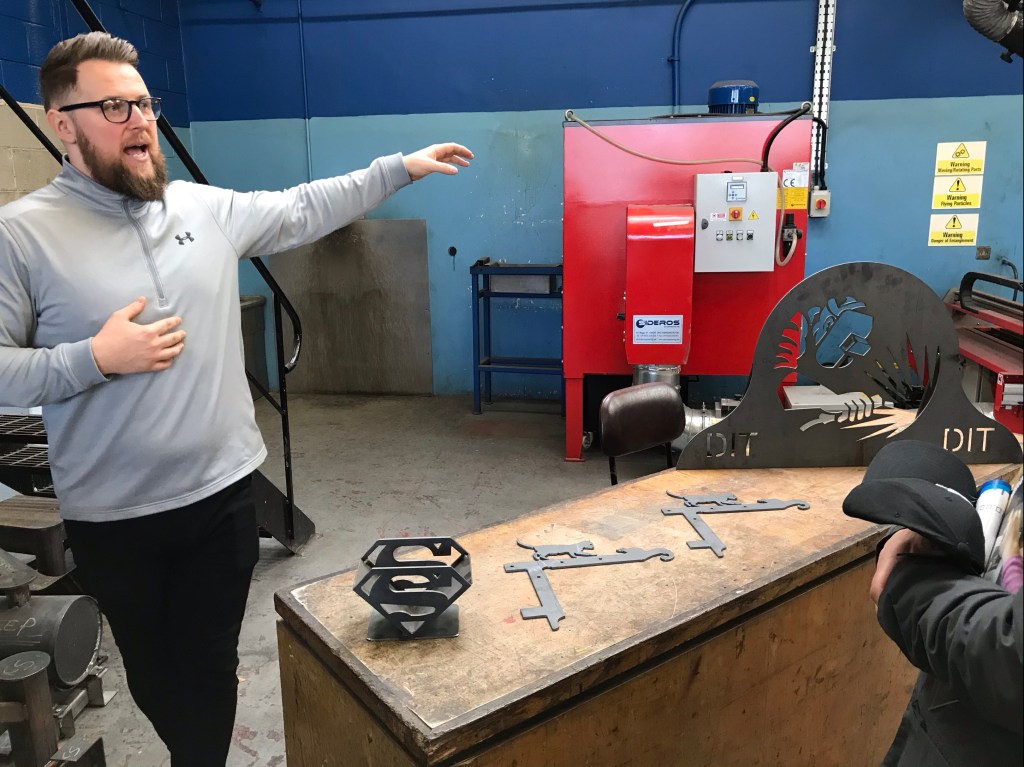
I provided tours of the facilities–bricklaying, plumbing, carpentry, metal fabrication, painting and decorating, laser cutting and 3D printing, automated fabrication–at Linenhall and Bolton Street where apprentices learn. Those taking our sampler program, “Access to Apprenticeship” get to use to all these workshops, and to complete a small project in each to help them determine which to specialize in by completing a full course.
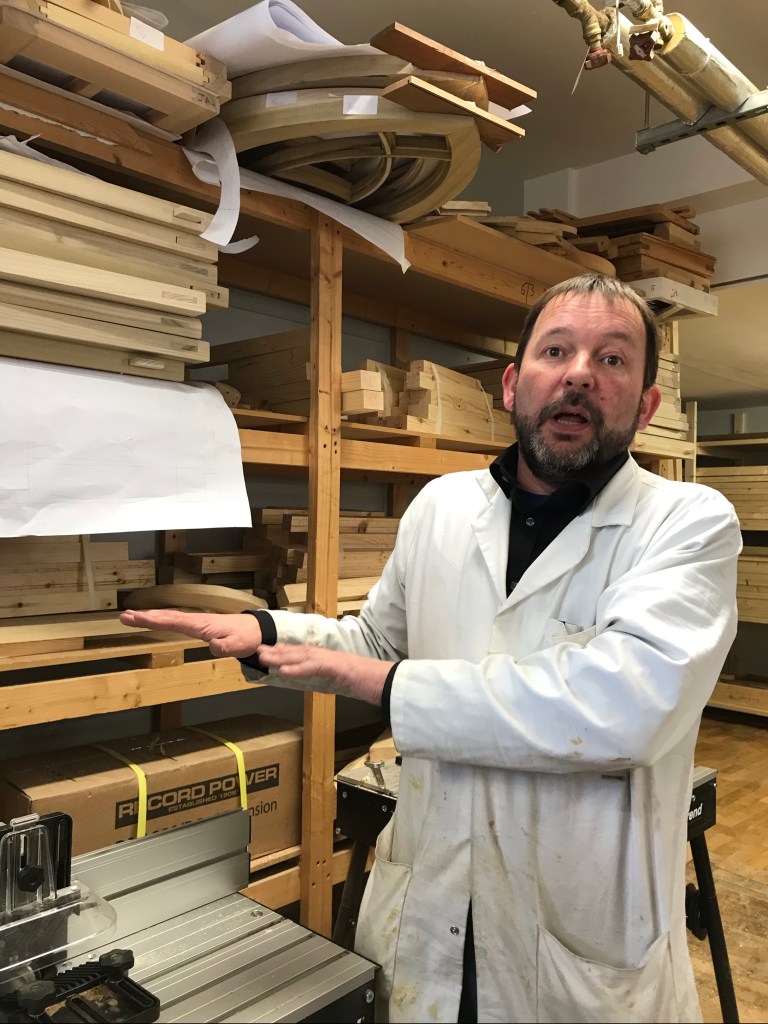
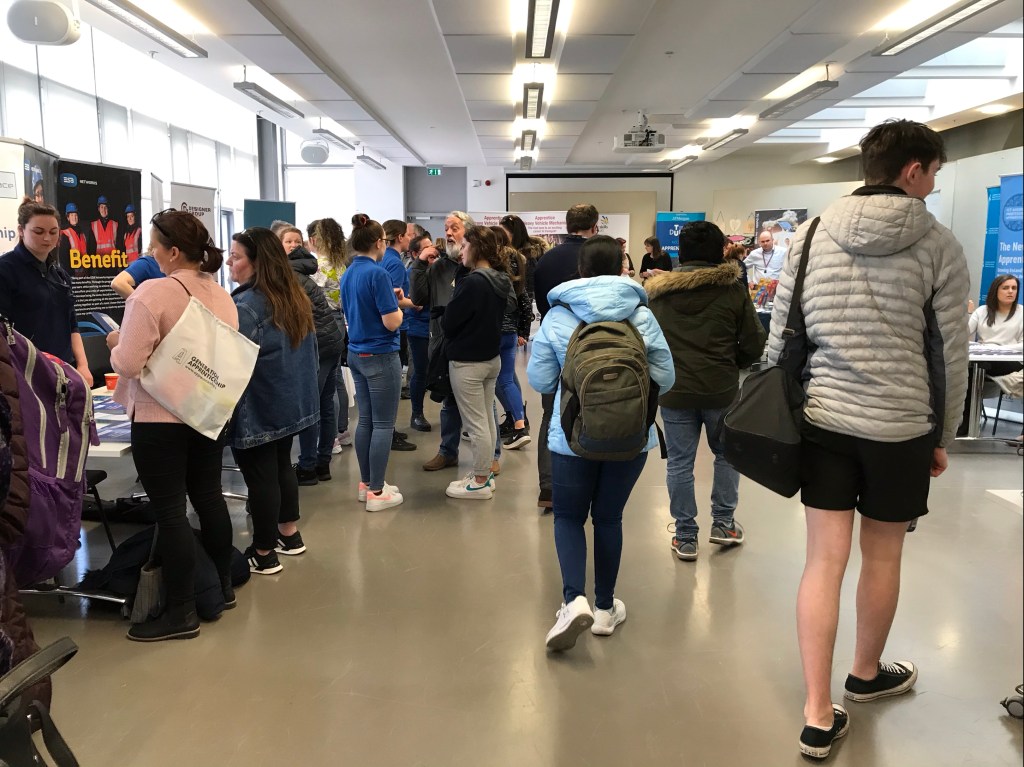
At the end of the event we heard that campus buildings would close that night at 18:00; after this, classes would meet only online.
The BIM modules we offer in my program did indeed meet that night, all online, thanks to the collaborative working platform my colleagues use to teach BIM. Kevin Furlong, Barry McAuley, and Emma Hays took it all in stride and kept on delivering! I was truly impressed.
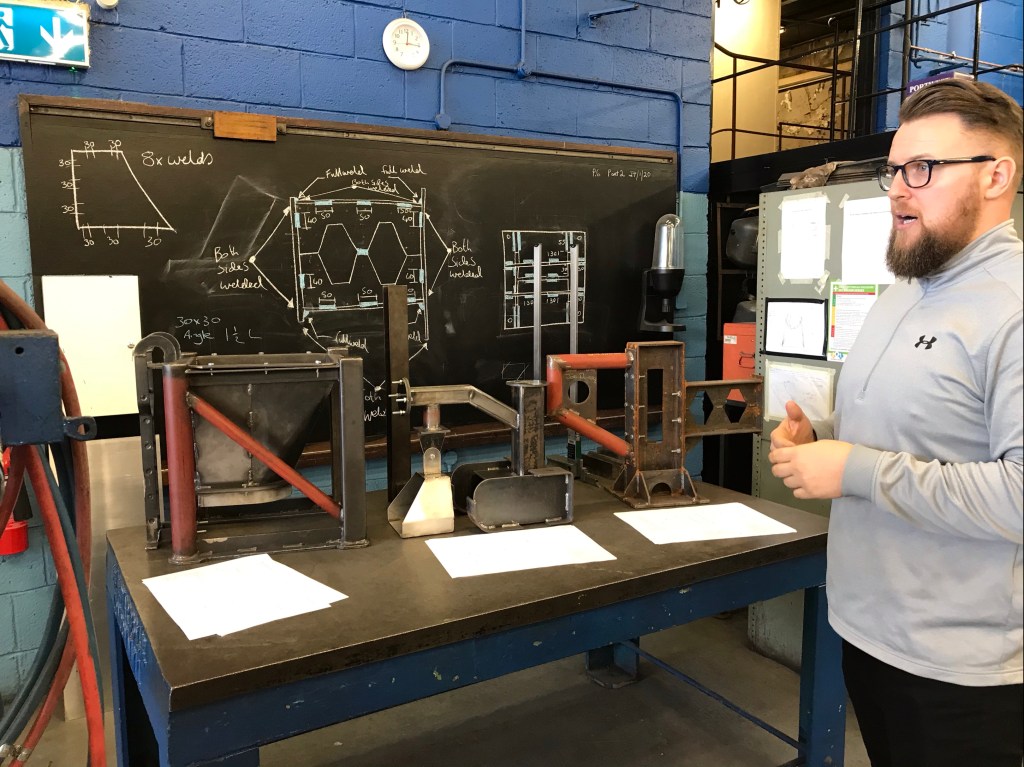
Working it out during Covid-19

I already worked half time on research, so I actually labored from home 50% of my working hours, pre-Covid. For me, work life after the 12th of March looked pretty similar to before–lots and lots and lots of time at my laptop. There was less variety, though, and much less human contact.

I missed feeling creative. I wasn’t able to blog, as I didn’t feel reason to celebrate during a time of fer and hardship.

I got work done, but not with my normal level of zest.

The first two weekends after the campus shut down, we weren’t yet asked to isolate (we never officially ‘locked down’) but the government was asking us to keep our distance from others.

My household has one other person, Aongus, and this fact has kept me sane during isolation. I’m glad I haven’t had to go through this pandemic living alone. That said, my guy has much higher exposure to the outside world than I do, and could inadvertently drag Covid-19 home at any time.

As you probably know, Aongus and I really enjoy our weekends. We love getting out, exploring the world, getting exercise, fresh air and sunlight. In fact, not feeling pangs of guilt for taking weekend off is a major reason I moved to Europe from the USA. You’ll recall that Aongus and I made the most of every minute in London during my two-year fellowship there. We had plans to make the most of our precious weekends together in Dublin upon our return.

A Sunday at Greystones Beach

Sliding into a new normal, we had a couple weeks to adjust to freedoms and habits that were slipping away. We were still allowed to drive and explore, but were required to stay away from others. Our gym was still open during this time, as well, though we were distancing.

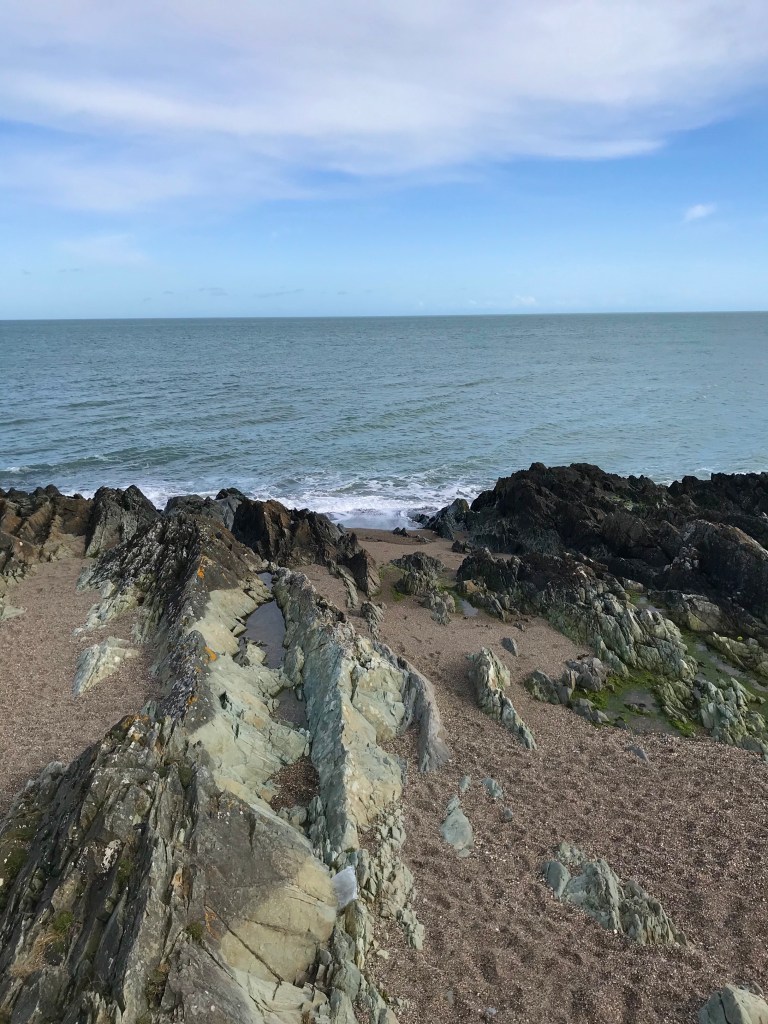
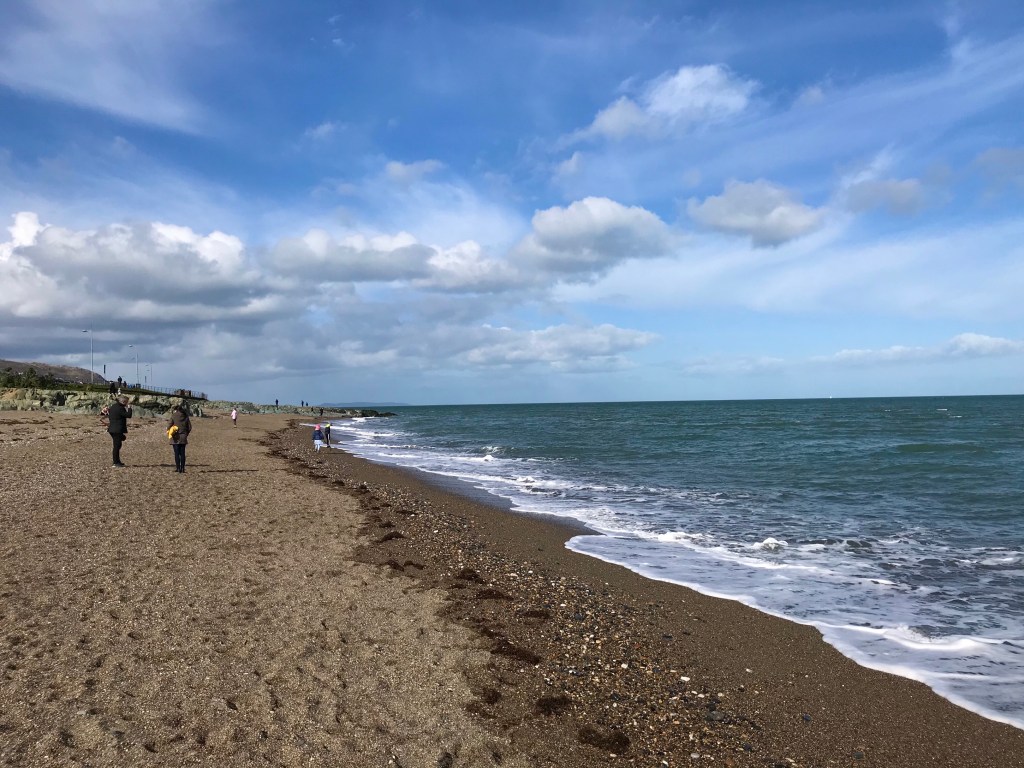
On Sunday, March 15, Aongus and I drove out to Greystones, where we were able to distant from others on the beach. We enjoyed the solitude in the cool winter breeze off the Irish Sea.
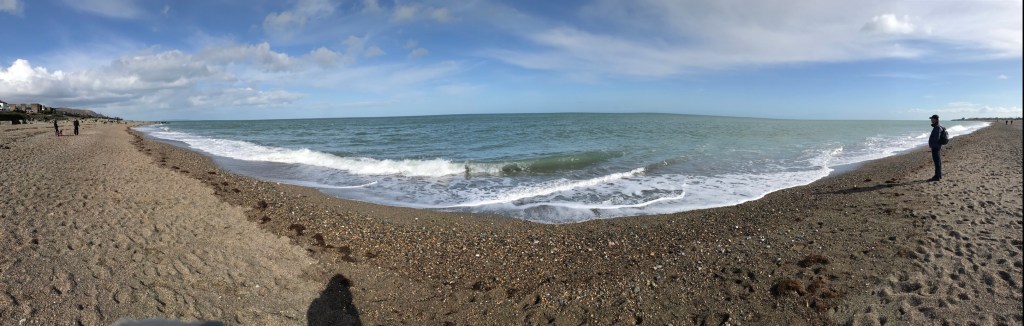
And we learned that lunches and loos were few and far between. From this day forward, we packed sandwiches whenever we ventured out, and planned ahead for long period of loo-less-ness.
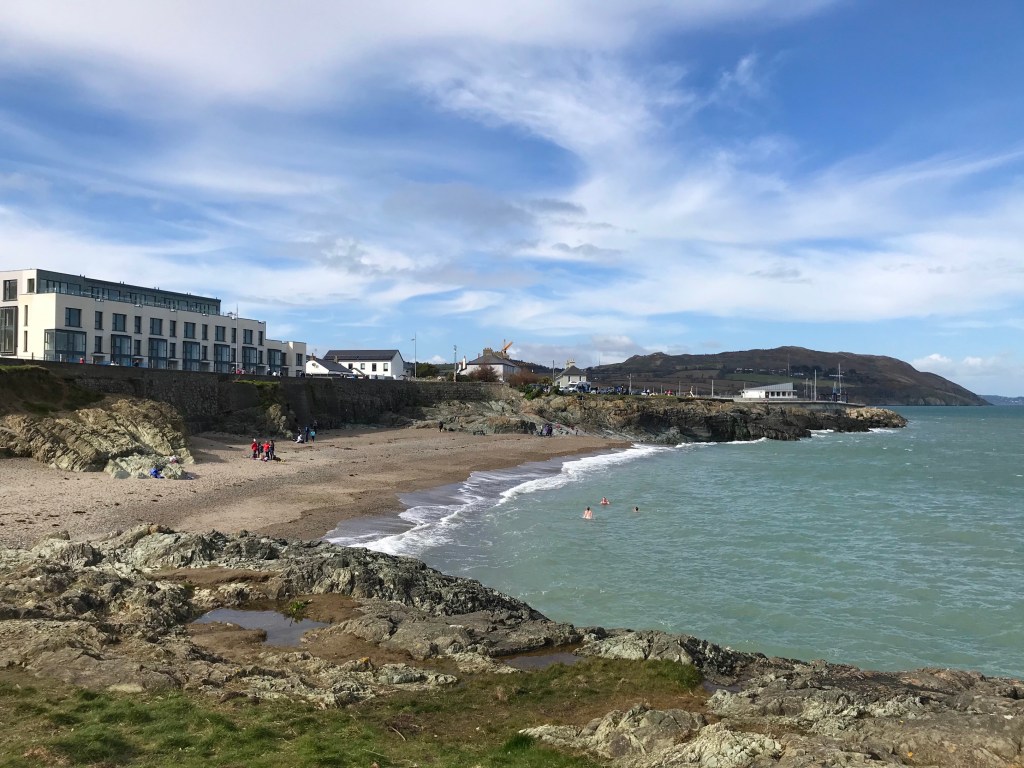
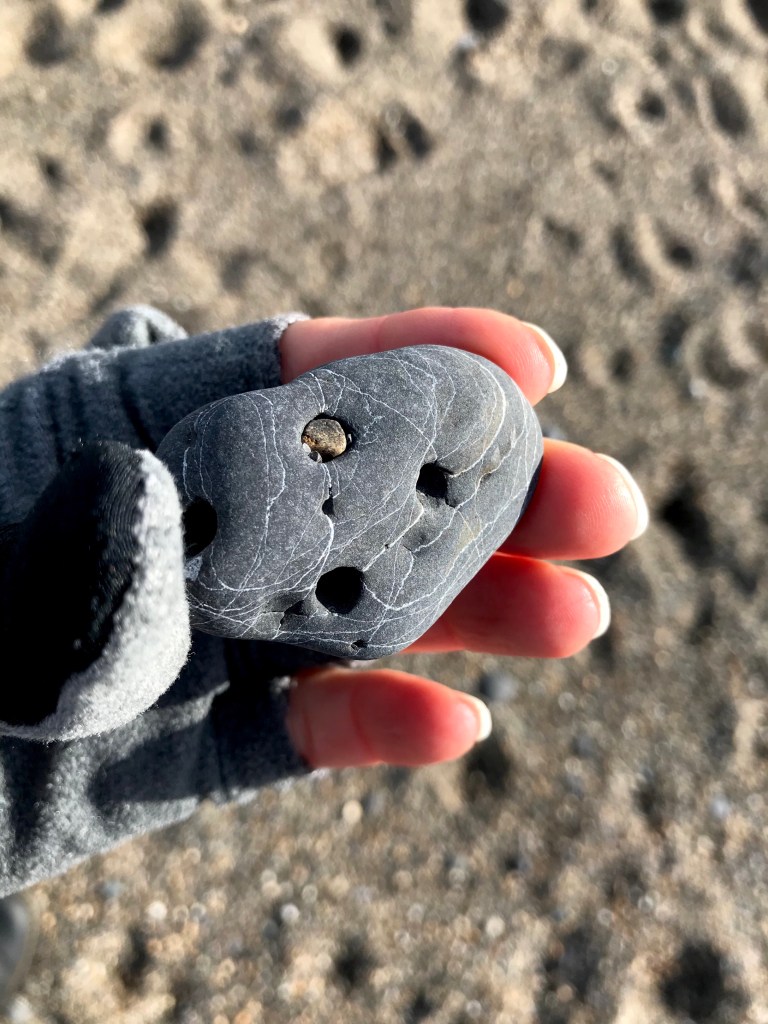
The difficulty finding these that day told me that things were going to change more radically. We drove to some favorite spots hoping for lunch, but couldn’t stop because they were packed with people.
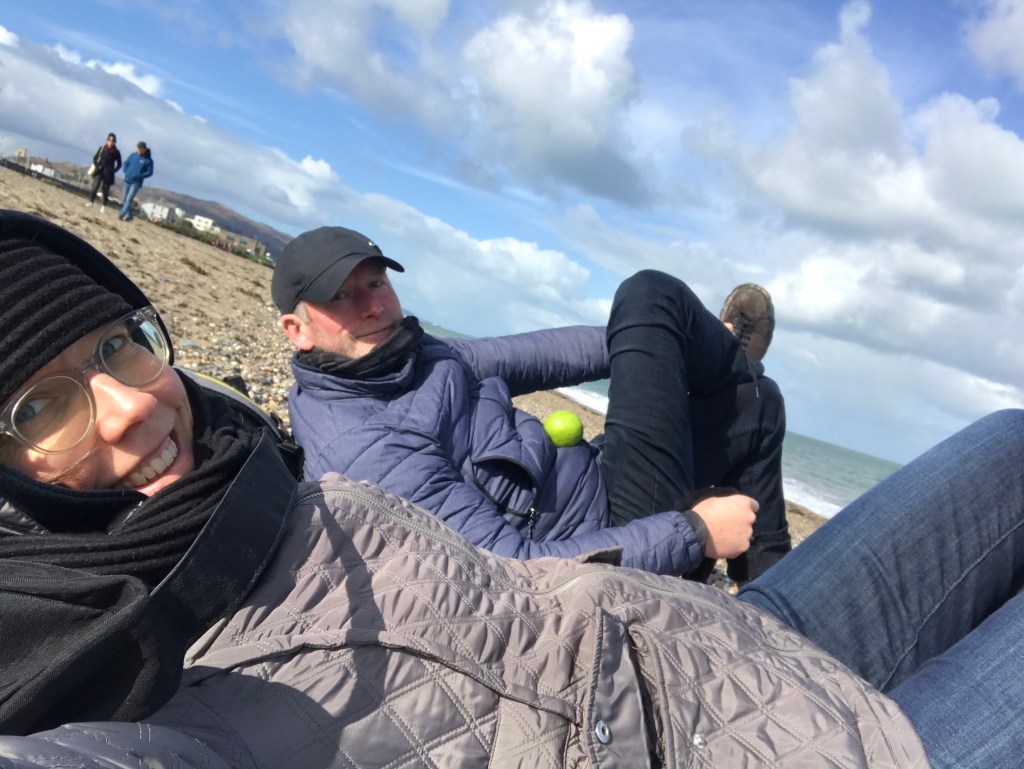
We did, however, find joy in simple pleasures: an apple, the sunshine, and loving company.

Holi-day at Bull Island Marshes & Dollymount Strand

St. Patrick’s Day was a holiday, so we made another trip trip to the sea, still pre-lockdown (to use the phrase lightly–we’ve never officially ‘locked down’ in Ireland to the degree of many other European countries).

Although Dublin’s St. Patrick’s Day Parade had been cancelled, and tourists discouraged from coming, we residents were still allowed out, but asked to keep our distance.

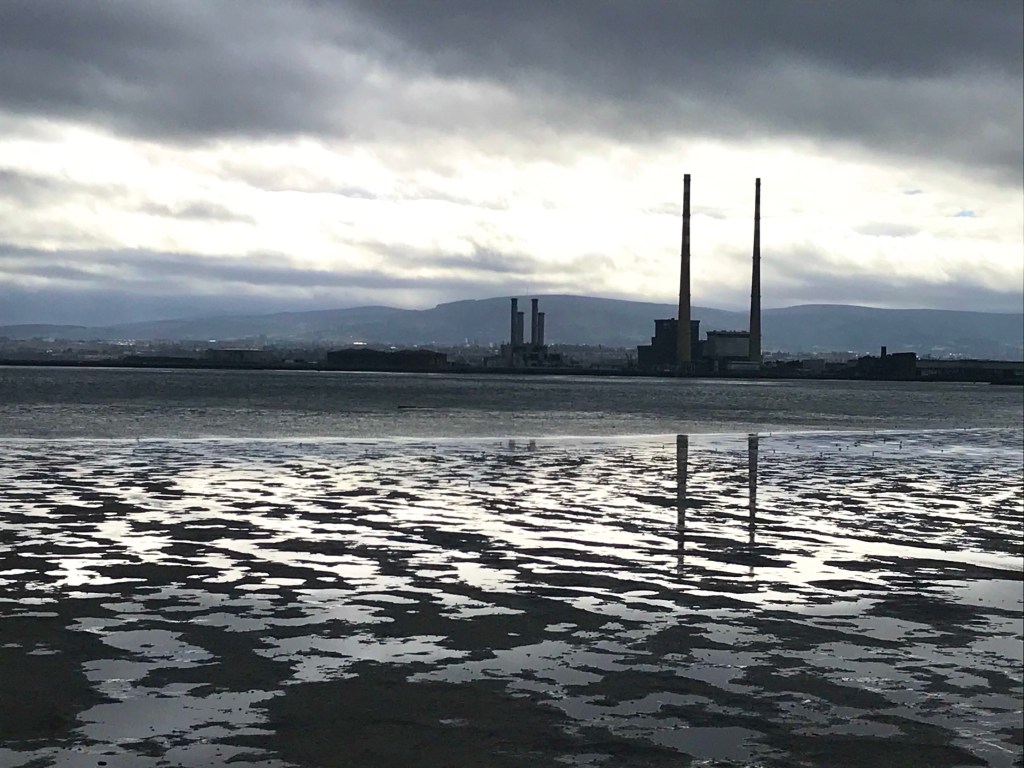
Aongus and I headed out to Bull Island, by car, as was typical for us before coronavirus. Walking and Dublin Bikes were our other main forms of transportation, and where they didn’t bring us, a bus or car would. “Back then”, we would never have dreamed of cycling to Bull Island or Dollymount Strand; they seemed so very far away.

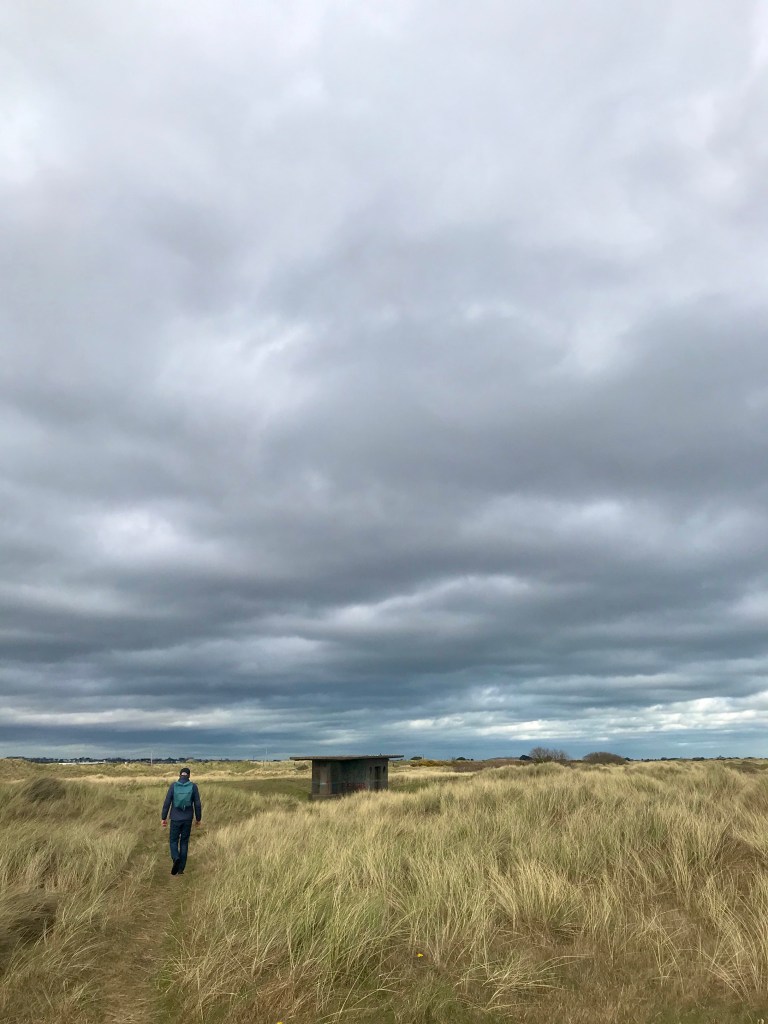
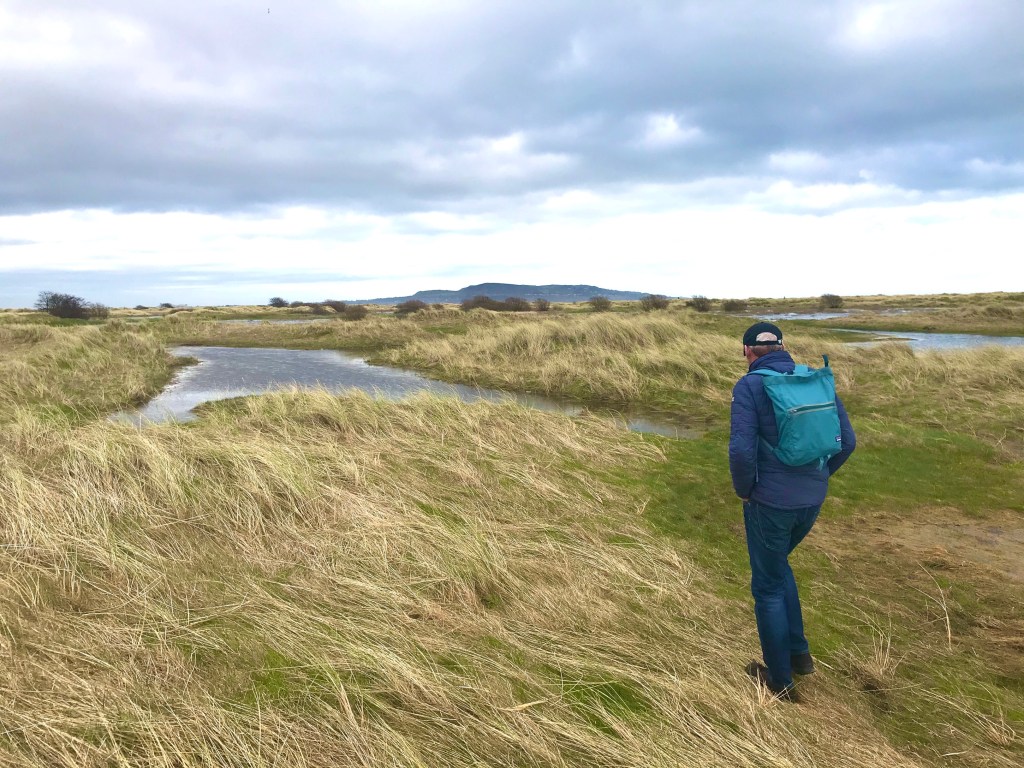
Bull Island is a favorite among Dubliners though, and when we arrived the beach looked far too crowded to allow the distance I required, so we instead explored the marshes.
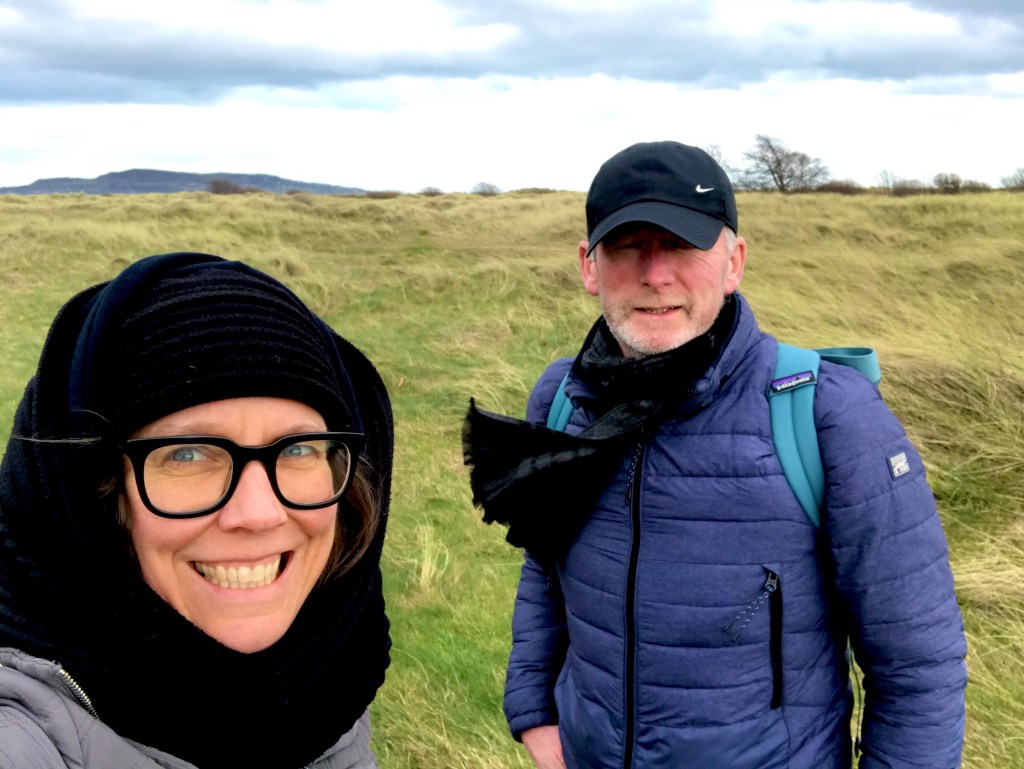
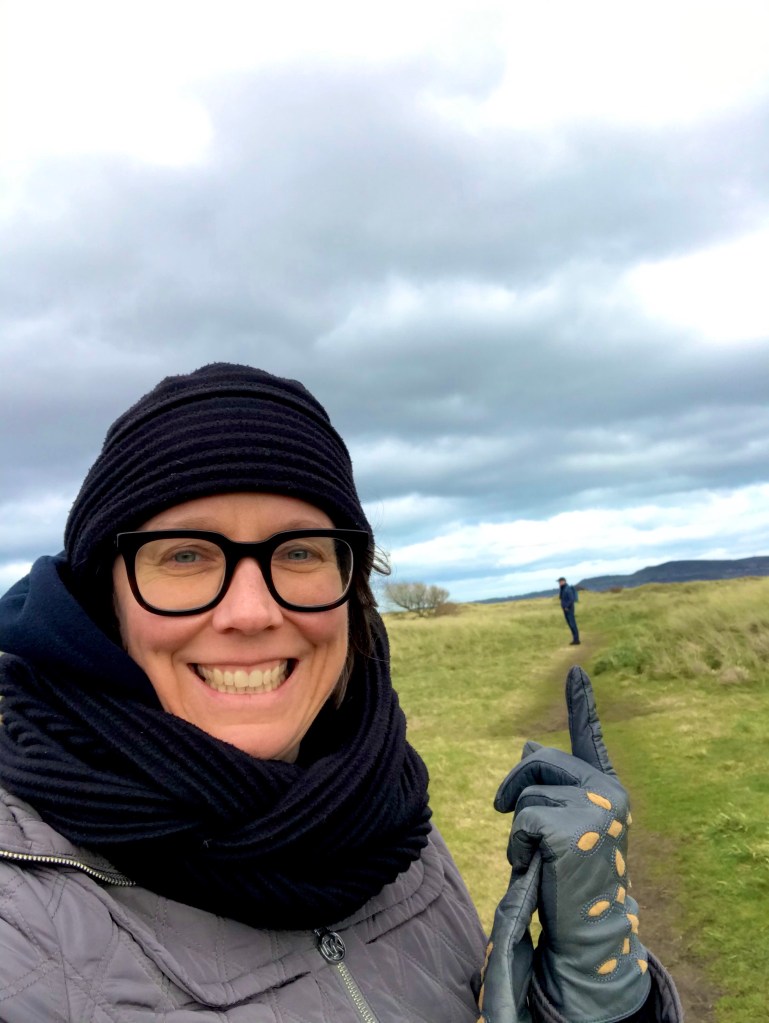
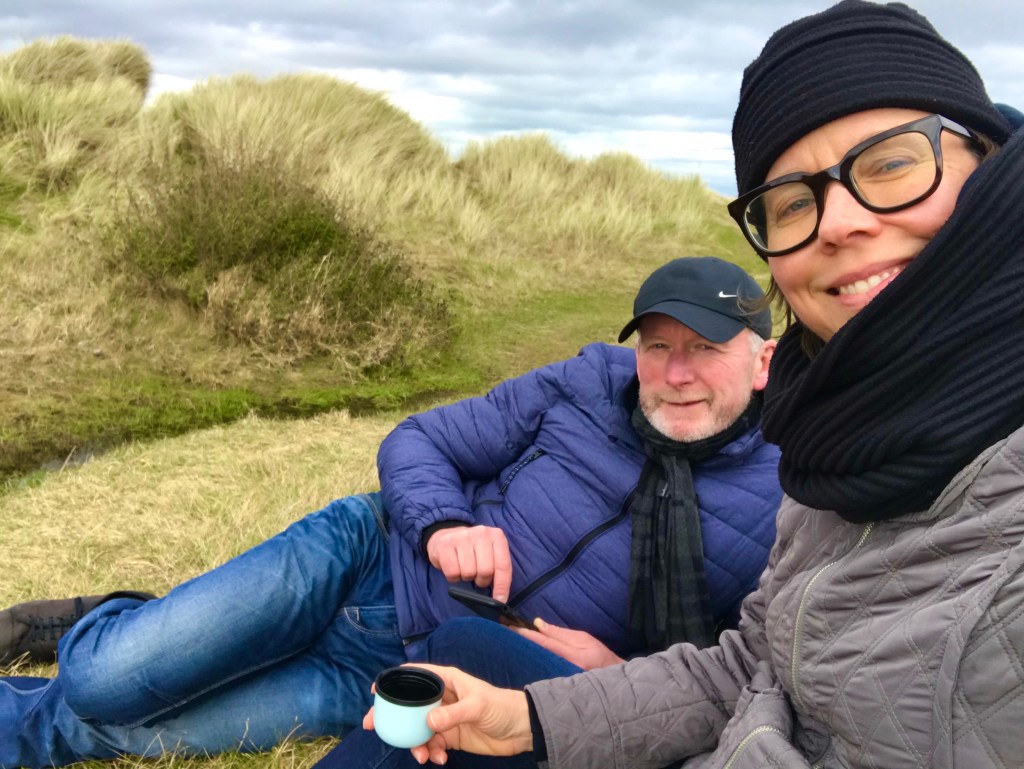
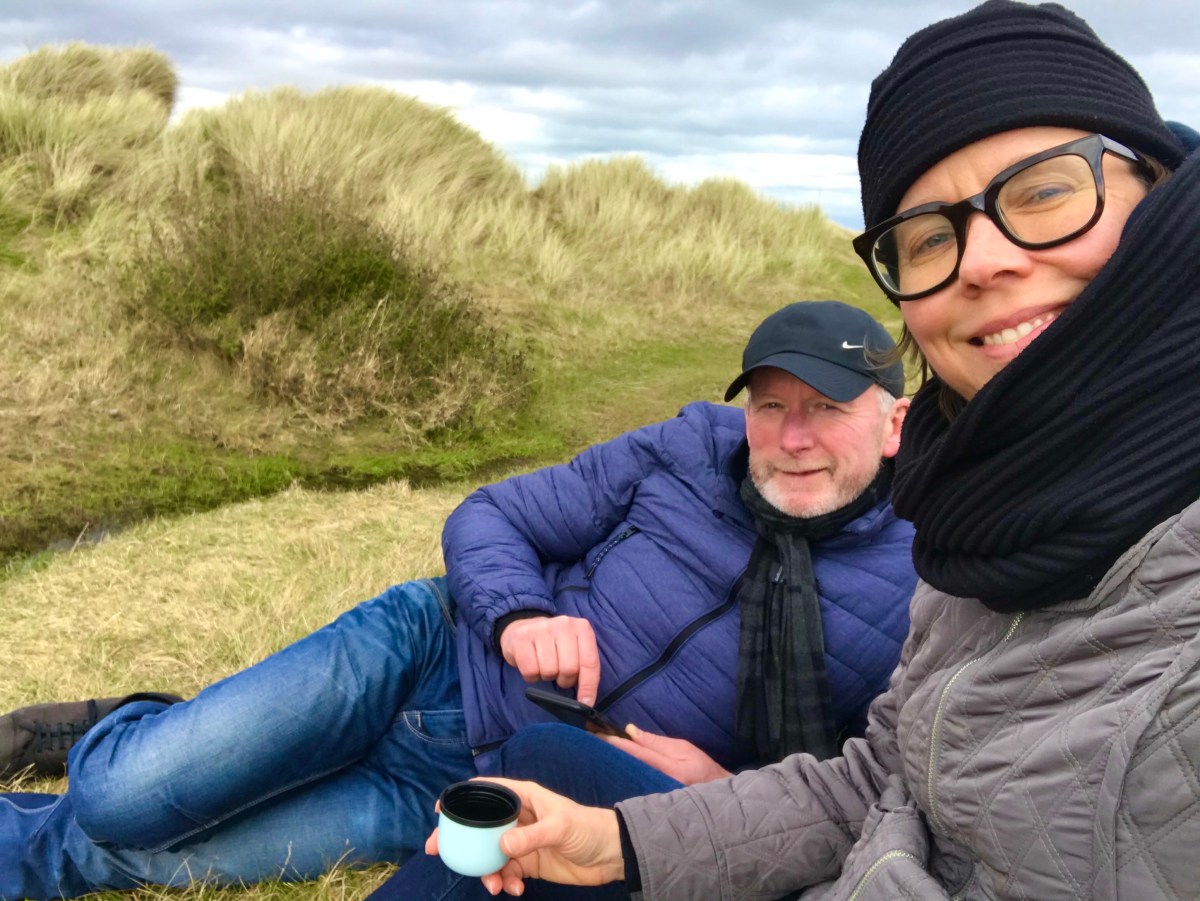
My colleague Damon Berry had recommended that I check them out, and this was the first time I latched onto the idea. Aongus and I had a nice picnic in the dunes.

Of course, we hoped to find passage across to the beach by way of the dunes, but the waterways prevented that. Nevertheless, we enjoyed discovering a tranquil strip of Bull Island where few people venture.

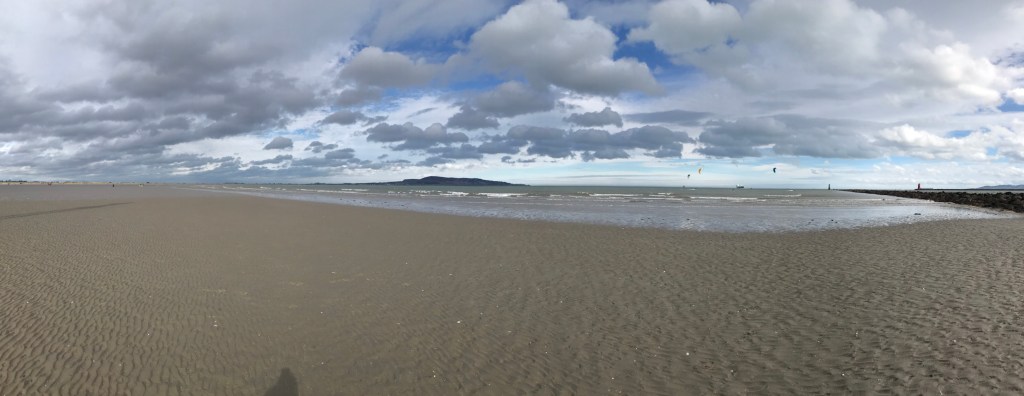
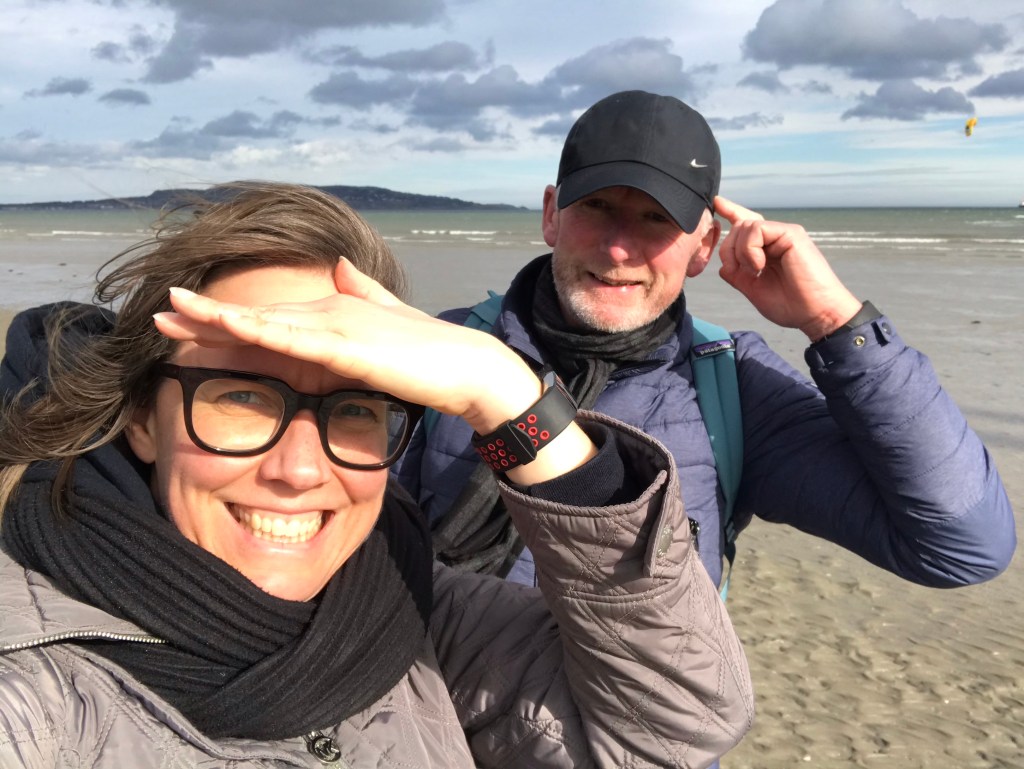
By the late afternoon, the beach had cleared out (it was the bottleneck along the wall that had presented the problem passing others) and we were able to visit the strand, which is called Dollymount.

As you can see, Dublin is quite chilly during March, but any opportunity to go outside, walk, and soak in the sunshine is prized.

Isolation begins

The lifestyle we had known was quickly sliding away. Soon after our visit to Bull Island, the period of isolation began. Aongus and I essentially hibernated for weeks. I was able to keep working from home. He, as a construction site project manager, was able to do some limited amount of work from home and was allowed on site, alone, occasionally, to do essential work, or check for security.

As we have a range of grocery stores (Fresh Market, Lidl, two Centras and a Daybreak) within 1-4 blocks of our flat and the food supply chains serving Dublin never let us down, we were able to source food easily and have learned many new recipes with what we can find in these stores.

That 2km radius we were allowed to travel from home for the purpose of exercise kept us sane, and we looked forward to weekends, hoping and praying for sunshine.

An Irish Welcome-Home!

Welcome to the homepage of Ireland by Chance, a blog sharing the adventures of an Expat architect/urbanist/teacher/engineering education researcher who moved from the United States in 2012 to make Ireland her home.

You can view archives (2012-present) by clicking the folder icon to learn what it’s like to be Fulbright and Marie Curie Research Fellow, to teach at university in Ireland, and to explore the cities and landscapes of Ireland, the UK, and Europe.

I’ve also posted an example grant proposal for Marie Curie (individual fellowships):
Abstract and Eval
• Excellence Section 1.1, 1.2, 1.3, 1.4
Notes on using tables
• Impact Section 2.1, 2.2
Implementation Section 3.1, 3.2, 3.3, 3.4
Ethics Section
Final Report from 2016 submission

Dublin Maker here we come!

The TU Dublin RoboSlam gang is alive and kicking!

Nearly 20 of us met in February to start planning our exhibition for Dublin Maker 2020. The big event is to be held on the 27th of June in Herbert Park, on the south-side of Dublin.

Last week, a portion of our team reassembled to get different people’s parts working together in a coordinated way. I’ve created a little video of that second prep session for you to enjoy.

One thing that worries me, though, is that all the stuff my colleagues have made looks so very cool, so incredibly professional, that visitors to our Dublin Maker booth will think they BOUGHT this ready-made. Not so.

For instance, Keith Colton (in the video with the bandaid on his thumb) used a 3D printer to make the car he’s holding. He made it from scratch.

Shane Ormond combined a whole bunch of cutting-edge technologies to get a tiny camera on top of his race car to feed video into the VR headsets and TV monitors, all the while controlling the car’s behavior from a hand-held device. He’s been sending us video updates from his house and it’s been cool to watch his car speed under sofas and chairs and around his lovely home.

When I tired driving, I couldn’t control the car too well–and I’m pretty used to driving sporty cars! In this case, the car didn’t quite have the handling of my 2004 Nissan Z350. The car was racing around at top speed and the VR googles made it all seem much too real!

Note in he video how Paul Leamy’s stomach turned when his car flipped over. Seemed real! You can see on the TV monitor, but viewed through VR goggles it’s all the more gripping.

So, see for yourself!

Come on out on June 27th to see where all this leads. Our team is just at the start and we plan to build a plethora of buses, stop lights, trams, and Dublin city sites for our cars to whizz though on Dublin Maker day 2020.

Brand new Bachelors in BIM launched today at TU Dublin

It’s been a busy and exciting week here in Dublin. Monday at noon I was appointed as Programme Chair for the new BSc (Hon) in BIM (Digital Construction) at TU Dublin. We launched the programme at lunchtime today, Friday, just four days later. I had a lot of studying up to do to get up to speed to host the induction/orientation.

This course is for people who have a three-year Bachelors degree (called level 7 in Ireland–this is the standard Bachelors in Europe). They will have studied Architecture, Engineering and Construction (AEC) for their first degree and want to learn about Building Information Modelling and upgrade to a four-year Honours level Bachelors (called level 8 in Ireland, and more like the Bachelors degrees offered in the USA). In the future, we will also accept people who have level 6 (apprentice) degrees and Recognition for Prior Learning (RPL).

This link provides info on Programme Outcomes, Awards & Graduate Attributes, for example. Take a look at the amazing resources and software packages available for students to use and learn. The program includes Work Place Learning (here’s the handbook for it) as well as a research Dissertation (handbook) supported by a Research Methods module that I’ll be teaching alongside Debbie Brennan.

So, today we held induction and welcomed 24 students into our first cohort!

This time next year, successful students will walk away with a BSc (Hons) and a host of new knowledge and skills related to digital construction.

My colleagues — Dr. Avril Behan, Mr. Kevin Furlong, Dr. Barry Mcauley, Ms. Deborah Brennan and others — were involved in designing this programme, and they even got a grant (Springboard+) to cover much of the cost for the 2020 cohort. They did all this work while I was away, working in London. What a truly lovely programme they have built!

It’s really needed here in Ireland — it’s great for the people taking the course who will gain valuable new skills — and it’s great for the Irish construction industry which desperately needs people skilled in BIM. I find this to be an extremely worthwhile project and I’m delighted to be part of it and to work with such a great team.

Here’s a press release from TU Dublin:

Technological University Dublin is delighted to announce the commencement of its level 8 BSc (Hons) in BIM (Digital Construction), designed and delivered by the same team who created TU Dublin’s award-winning MSc in aBIMM suite (ICE Postgraduate Course of the Year 2019). This programme is designed to meet the Lean Construction, BIM and digital transformation upskilling needs of holders of level 6 qualifications (including craft apprenticeship) plus industry experience, and of level 7 (ordinary degree) award holders in construction-related areas.  Focussing on discipline-specific BIM modelling (architecture, construction, MEP engineering & structural engineering) and multidisciplinary co-ordination, underpinned by a Lean Construction philosophy, this programme will equip graduates with the skills necessary to take up roles as BIM Modellers, Technicians, and Coordinators with consultants, contractors, clients, and public sector bodies.  The programme is delivered in blended format with attendance required on the Bolton Street Campus for one afternoon per week (typically Fridays from 12:30) from late January to late May with additional online delivery (one  evening per week – evening tbc and depending on discipline). From September to December the programme is delivered fully online with a number of support face-to-face workshops. 

The course handbook is available at: 

https://sites.google.com/a/dit.ie/handbook-of-the-bsc-hons-in-bim-at-tu-dublin-2020/ 

TU Dublin secured 90% of the funding for places in this year’s cohort from the Irish Higher Education Authority’s Springboard+ programme. Thus, the cost to selected participants in 2020 is only €220.

The application deadline for this year has passed (it was was Monday January 13th 2020 for commencement at end of January). This first cohort will commence their coursework in January 2020 and walk away with diplomas in a highly marketable field of expertise (BIM and digital construction) in February 2020.

If you would like more info on the programme, please register your interest by emailing the School of Multidisciplinary Technologies <smdt.adm@tudublin.ie>. Our school administrator can then send additional info as we prepare for upcoming cohorts. 

Home delivery

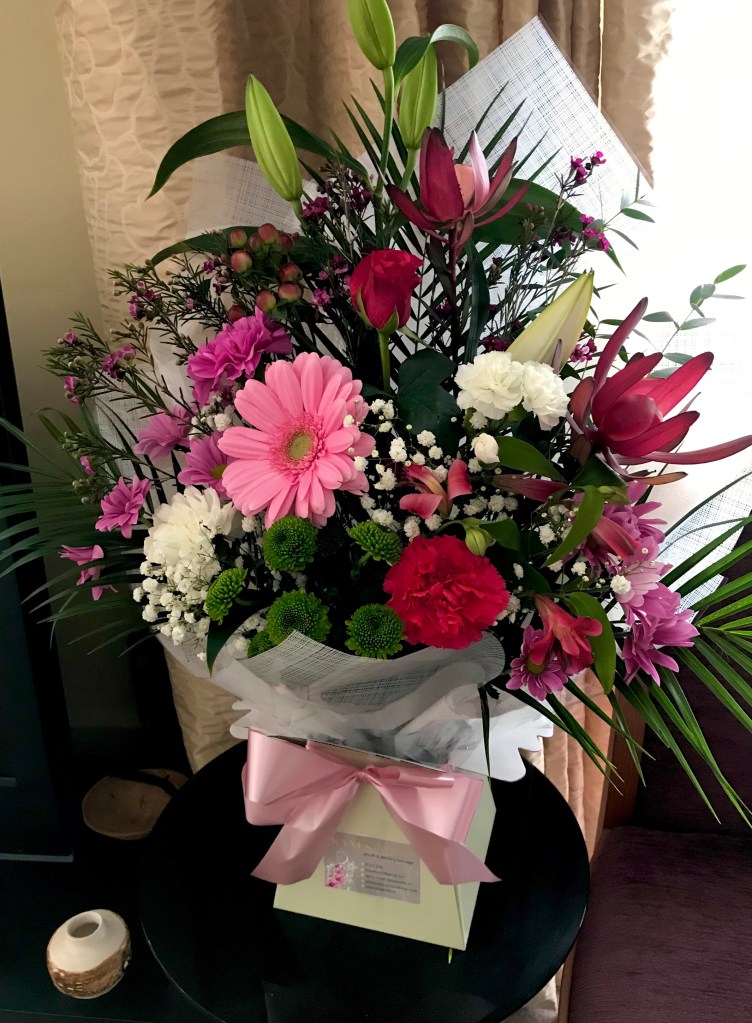
I’m happy to report that the florist delivered to my front door—no more cycling needed today!

This just in! Happy 50!

Thank you, Aongus, for the lovely birthday gift! Hope your own “welcome home to Dublin” tonight goes more smoothly than my day!

Perils of cycling in Dublin

I cycled to the post office collection point over lunch today, using Dublin Bikes, to fetch a birthday gift. My rear tire hit a wet manhole cover and slid out from under me. My body hit the ground, belly first, flying toward an oncoming car. I stopped 18” short of its tires. The driver didn’t stop or apparently even consider it.

I am a bit bruised and had quite a scare but I’m okay and I’m home now. I might stay in my home office for the rest of the week as this experience was terrifying! I’m kidding of course, but I will stay put until my afternoon research appointment.

At least I discovered I can ask the Post to convey my packages to their local office, across the street from where I work. (The intercom in my flat doesn’t work and won’t be fixed. C’est la vie.)

So it appears I’ve used up another one of my nine lives, and just one day short of my 50th birthday, I’m down to fewer than six lives now. The precise count is unclear, but I definitely squandered one in 1979 when my crazy acrobatic attempt landed me in the hospital. Hopefully the remaining number, whatever it is, will see me safely through the coming 50 years.

Cheers—here’s to a happy but purple-kneed birthday!

Discovering the new TU Dublin

It’s been a great start-of-semester and welcome-back here in Dublin. I’ve been settling back in at TU Dublin, since the first of the year. I’ve been learning to juggle a host of new job responsibilities along with my favorite existing projects. There’s so much work to be done!

In addition to teaching first-year engineering modules/courses, I have also been helping launch the new MSc in BIM, working on curriculum development (which buys out half my work time), finalizing research projects for publication, and drafting my final report for the 2018-12019 fellowship I had to UCL.

I’ve also attended a host of special events:

  1. The launch of TU Dublin’s new strategic plan
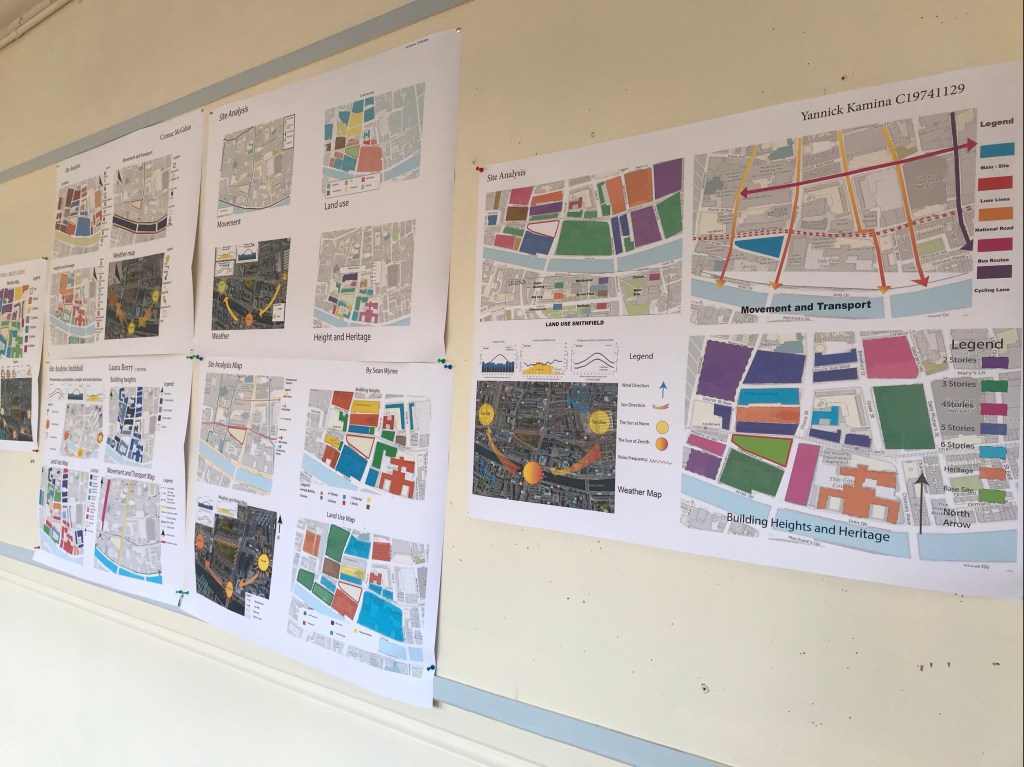
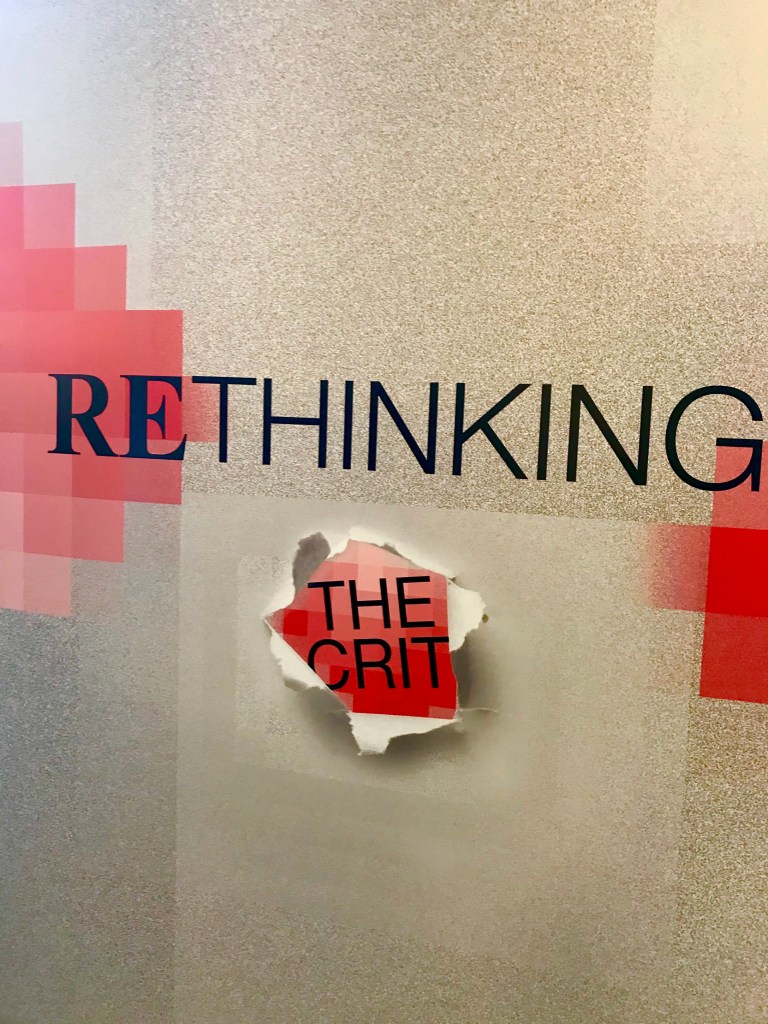
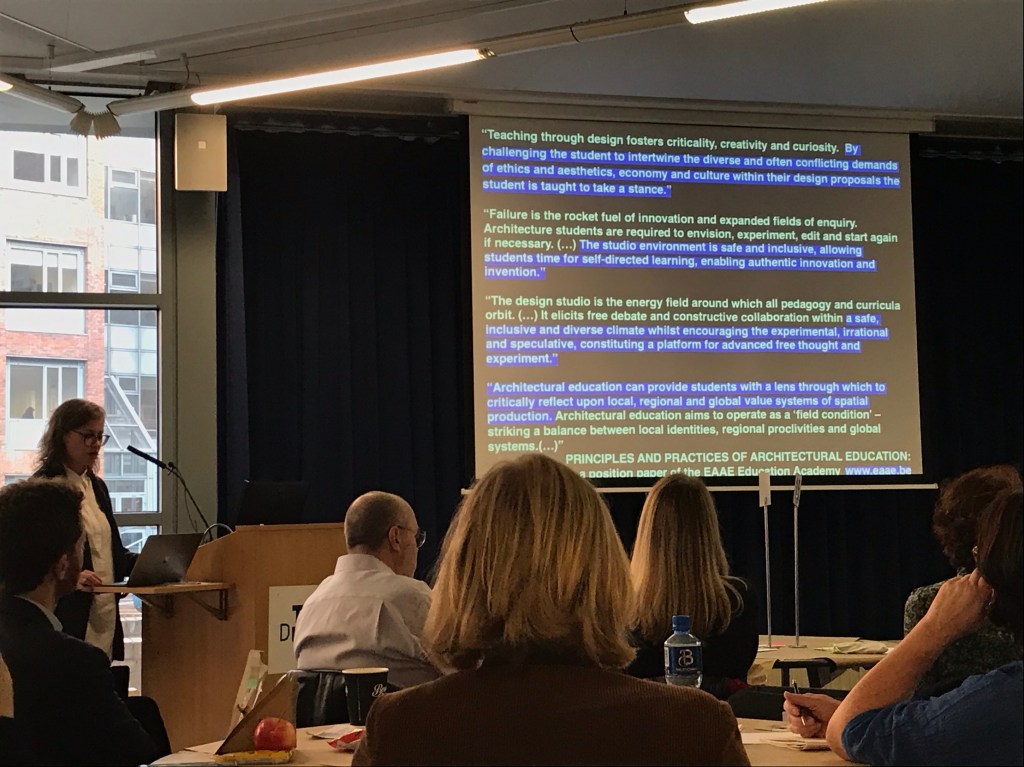
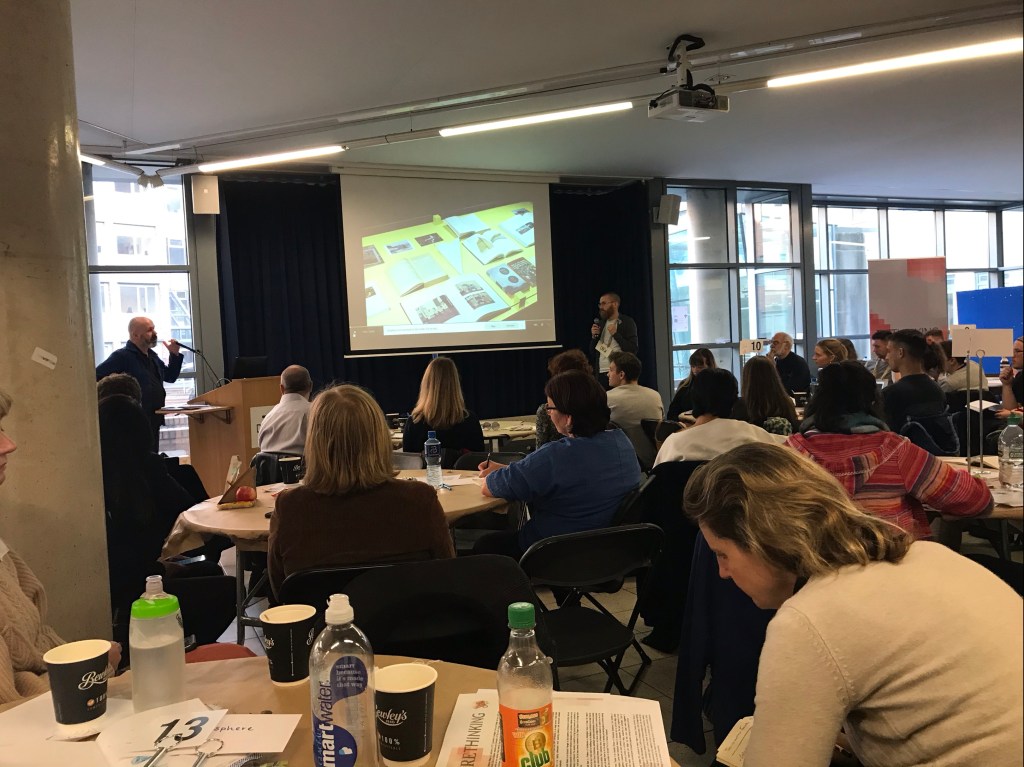
  2. A two-day conference on “Rethinking the Crit” in architecture and design education.
  3. Tech support workshops for staff on Brightspace and Agresso
  4. Personal wellbeing workshops for staff on insurance and personal finance.
  5. A planning sessions with our ever-expanding RoboSlam team preparing for Dublin Maker 2020 (June 2020) and our upcoming Engineering Your Future week (May 2020)

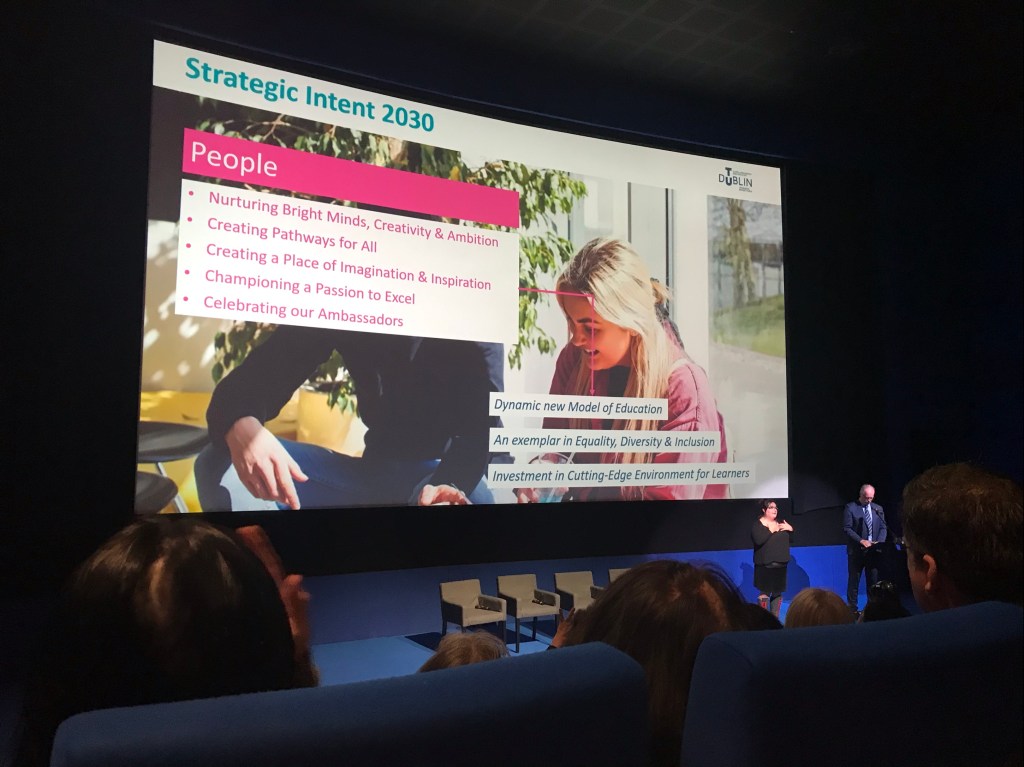
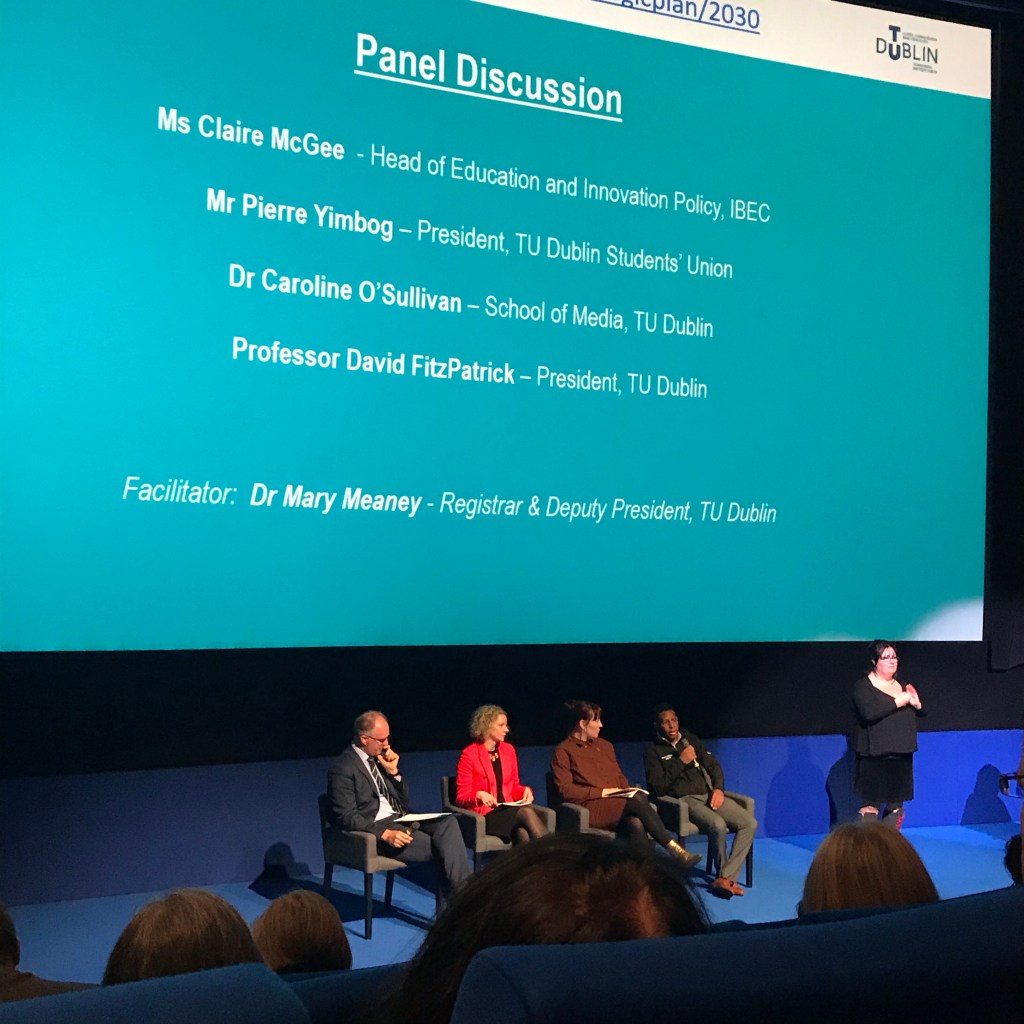
TU Dublin’s new Strategic Plan

The unveiling of the strategic plan was quite well organized and inspiring. The speakers and panelists all did a great job explaining the shared aspirations of our academic community. I hope the details are as well done as the vision they presented.

Soon, I’ll read the plan and see how it matches up against the evaluation rubric I published back during my doc studies, which you can download here.

Chance, S and Williams, B. (2009). Assessing University Strategic Plans: A Tool For ConsiderationEducational planning: the journal of the international society for educational planning, 2009, 18(1), 38-54.

The take-home message of the strategic planning launch was that TU Dublin values diversity and inclusivity. The student voice was clear, strong and impressive. The leaders were well-spoken.

TU Dublin’s workshop on “Rethinking the Crit”

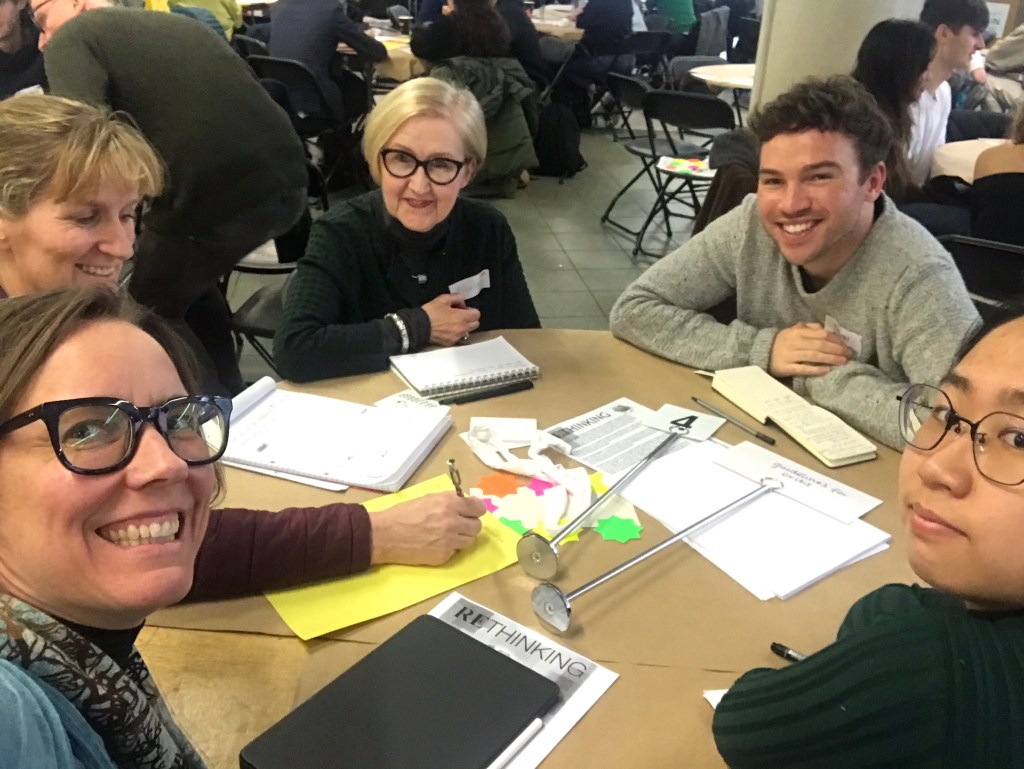
I attended a hands-on conference alongside architecture students from all over Ireland as well as teachers and critics from Ireland and abroad.

The workshop was organized by my College’s office for Learning Development, under the direction of Patrick Flynn, our Head of Learning Development. In many places, his role would be called Vice Dean for Academics, but DIT (the parent of TU Dublin) tended to do things its own unique way.

As I’m part of a team developing a brand new Architectural Engineering curriculum, this conference on how to improve the studio jury system was of great value to me. That Arch Eng course will graduate people ready for architecture licensing.

One of the presenters, Dr. Kathryn Anthony, literally wrote the book that got this conversation rolling: Design Juries on Trial. It was published in 1991 but there’s still a lot more uptake needed of her ideas across the globe. She collected data at Hampton University, where I used to teach, and at HU we used many of the techniques she proposed—with great success.

I hope to use techniques we discussed to help improve architecture education near and far.

Irish Trad: Traditional Irish Music on Internet Radio

Photo taken while visiting Kevin Donleavy in December 2012, during my Fulbright Fellowship to Ireland, but visiting Virginia for Christmas. 

A friend of mine in Virginia delivers a radio program of traditional Irish music. Tune in 3-5 pm Greenwich Mean Time (GMT) on Saturday, March 2. That’s 10-12 EST to hear Kevin Donleavy’s show!

Learn more about Kevin and how I met him here, about a past show here, and about our dear, departed friend Jerry Crilly here.

A chairde and pals, howreya,

Yes,  time for Irish traditional music on-line again.  The date is this Saturday, March 2,  and the program will be broadcast from 10 am till 12 noon as always. Or 3-5 pm that day in Ireland.  You need visit WTJU.net on the Web,  and then click on the Launch button. Your host, Kevin Donleavy of the O’Neill-Malcom branch of Comhaltas.  So do mark your calendar.
Here are some highlights from the upcoming show :  A couple of selections from the Sweets of May collection of music from South Armagh.  Liam Weldon singing the tremendously touching song, ” Where Is Our James Connolly ?”
Tunes from such fiddlers as Ciaran Tourish and Oisin MacDiarmada and the powerful Mick Conneely.  Lovely uilleann piping from Christopher McMullan’s new compact disc. Two songs from the woman’s band Girsa: “I Courted a Wee Girl,”  and “Mary and the Soldier.”  Cuts from the traditional groups Danu and Teada.  A political song or two, of course.  A seldom played reel called “The Nine Points of Roguery,”  played by the fine Sean Norman Ceili Band.  And more ….
This Saturday, time to wet the tea, roll back the carpet,  and get cracking!  Mi daza!
Kevin

Open House Dublin: An architect’s delight

Screen Shot 2018-11-30 at 6.38.27 PMI have several blogs in my files that I’ve not yet shared. The info below is no longer “news” but it should be interesting and helpful to some, so I’m posting it for you today. Happy holidays!
The Irish Architecture Foundation (IAF) does an outstanding job organizing its annual Open House event. In 2018, they held it October 12–14. Open House spans three days and allows thousands of citizens to visit architectural wonders that are usually not accessible to the public. Over 170 tours and events were open to the public–all for free and most with architects, trained historians, or other experts as guides.

Although this happened six weeks ago, I’m posting it now since I like to have a record of what I’ve seen. I’ve attended five of these Open Houses, I believe, and you can find photos from other years by running a search for “Open House” on this site.

Despite the dreary rain on Saturday the IAF army of volunteers opened sites all across Dublin. Aongus and I benefitted, as lines were shorter. We took advantage of having Aongus’ car to stay dryer and see more sites than we could by foot. This means we visited more outlying areas than I’d originally planned. We normally walk or take Dublin Bikes.

On Sunday the sun came out, but not until after a cold wait for the opening of 14 Henrietta Street. The crowds were fierce on Sunday, and I even encountered a few grouchy folks with a sense of entitlement. I tried to cheerfully point out that the long wait times were due to the popularity and success of the event and that all the people organizing the events and running the sites were volunteering their time. That sense of entitlement is an ugly thing. Putting that aside, I really enjoyed myself and have provided photos of the seven sites I managed to visit.

Screen Shot 2018-11-30 at 5.43.27 PMBelvedere House

The first site we went to was Belvedere House, which used ot house the boys’ school that was the rival of the one Aongus attended for secondary school. The tour was full, so we actually just saw the lobby in our initial visit, but we returned later and got the tour and more photos.

The House was constructed in 1786 at 6 Denmark St Great, Dublin 1. According to the Open House website, “The construction of what is now Belvedere College began under the 1st Earl of Belvedere, and was later finished and occupied by the 2nd Earl of Belvedere. Built to the designs of architect Robert West, it features the work of renowned stuccodore Michael Stapleton. After the 2nd Earl’s death in 1814, the townhouse was left unoccupied and fell into disrepair. The house was eventually procured by the Society of Jesus Religious Order in 1841 and has since been occupied as part of their educational facility. James Joyce, Austin Clarke, Harry Clarke, Joseph Plunkett, Donagh MacDonagh and Kevin Barry are amongst some of the great past alumni who roamed the corridors and were educated here. RKD Architects were appointed in 2014 by Belvedere College to restore the 18th Century house and one of the most powerful features of the house today is the stucco work in the hall and first floor reception rooms.”

Screen Shot 2018-11-30 at 5.43.43 PMCroke Park Villas

This is a social housing community with an iconic design that was replicated in many other parts of Dublin. As it is so stylized, it seems to many people to be outdated. This particular set of Villas is being torn down and new housing built. There was a photographic exhibition in one of the flats, documenting families who used to live here. A few of the flats still have residents, who await new homes in the construction underway nearby.

The complex was designed by Daithi P. Hanley and constructed in the 1960s at Sackville Avenue, Ballybough Road, Dublin 3. Open House’s website noted that “In 1956 Dublin Corporation approved a Compulsorily Purchase Order on a series of derelict and condemned cottages in Ballybough in order to construct modern single and duplex flats between Love Lane and Sackville Avenue. Named Croke Villas due to its proximity to the GAA HQ, Croke Park, it was the first stage of an extensive plan to regenerate the Ballybough/North Strand area much of which still bore the scars of the 1941 North Strand Bombings. At present the complex is undergoing renovation and three blocks have been demolished along with a number of derelict cottages on Sackville Avenue. This new development with provide a mix of houses and duplex apartments. The flats were designed by Daithi P. Hanley when he re-joined Dublin Corporation in 1956 as housing Architect. He designed a series of 4 and 5 storey blocks of Flats which used standardised components resulting in significant savings in construction costs and building maintenance of which Croke Villas was part. There were many others of these flats built across the city. Hanley also designed the Garden of Remembrance, Simmonscourt Pavilion, the memorial monument at the Customs House, the Basilica of Our Lady, Knock, among quite a number of interesting projects.As part of Open House 2018 number 45 Croke Villas will be open to the public and will have an exhibition of photographs taken prior to and during the demolition by photographic artist Jeanette Lowe. Number 45 Croke Villas is in the last remaining block of flats, due to be demolished early in 2019. The finished development with form a processional boulevard into the Croke Park Stadium.”

Screen Shot 2018-11-30 at 5.44.38 PMAsh Street

This project was designed by de Siún Architects and constructed in 2018 at 25 Ash St., Merchants Quay, Dublin 8. Michael de Siún has shown his own home before, very near to this one, and it is an architectural gem. Such clever detailing to make small spaces feel spacious and appealing. I felt that a product Aongus and I had seen at the London Building Centre might be usefully applied to the project, and I forwarded information on it to the architectural design team by email.

The Open House website explains, “The refurbishment of no. 25 Ash St. introduces a double-height light well into a small 100 year old house. The previously tight rooms have been opened up to create a spacious continuous flow from entrance to rear garden. A feature staircase with strong vertical elements emphasizes the connection between the floors. A simple palette of oak, concrete, and brick unite the whole, culminating in an intricate brick façade to the rear of the building.”

Screen Shot 2018-11-30 at 5.44.52 PMWeaver Park

This city park was designed by Áit Urbanism + Landscape / DCC Parks & Landscape Services and constructed in 2017 on Cork St, in Dublin 8. Despite the rain, we found the park design to be fun and festive. There were even some kids besides Aongus out playing. We rounded off our day with dinner on Camden Street, at Damascus Gate.

According to the Open House website, “Weaver Park represents one of the primary objectives arising from Dublin City Council’s “The Liberties Greening Strategy”. This strategy identified a derelict site, formerly occupied by the Chamber Court Flats, which offered a significant opportunity for the provision of a landmark public amenity. In making the site available for redevelopment, Dublin City Council was responding to the campaigns of local community groups who had long seen the potential in this space. The brief given to Áit Urbanism + Landscape underlined the importance of a participative process that engaged with these local groups, so that the community’s requirements could be understood and delivered through an informed design. Weaver Park is therefore a distillation of the community’s aspirations with inclusivity at its core. The design delivers a hive of activity within a context that will be sylvanic and ecologically functional in time. The fulcrum of the park is a 40-year-old Quercus palustris; this beautiful Oak tree now provides an instant maturity and a new focal point on the Cork Street landscape. It is an icon for the greening of The Liberties.

Screen Shot 2018-11-30 at 5.46.18 PM14 Henrietta Street

This building was a stately-home-turned-tenement. From housing one wealthy family at its prime, this home eventually held a hundred people at once. I shutter to imagine.

Watching “Call the Midwife” during my subsequent writing retreat gave me a glimpse into what such urban density would have looked like. It’s an excellent series that illustrates history as well as truest loving people. So seldom can I bear to watch television, and particularly Netflix, due to its grim and gritty culture. This show, however, is a true delight despite drawing tears.

Back to the house in Dublin, though, where you can see for yourself most any day by paying an admission fee. For Open House Sunday, entry was free but the tour abbreviated. And there was a line around the block when it opened Sunday morning!

It was originally built in the 1740s at 14 Henrietta Street, Dublin 1. The renovation that has just been opened was designed by Shaffrey Architects. This work converted the house into a museum that now showcases how the spaces would have looked both at the building’s prime and high and when it was packed to the gills. The house is in eyeshot of Linenhall, where my DIT staff office is located and I had a bird’s eye view of the renovations as they progressed. I kept a keen eye as the roof was repaired, a fire stair added, and the brick on rear of the house repointed.

The Open House website provides a detailed description: “Dating from the 1720s, Henrietta Street in Dublin’s North inner city is the most intact collection of early to mid-18th Century houses in Ireland. Built as a townhouse for the elite of Dublin, 14 Henrietta Street was split into tenements in the 1880s as the need for working class housing in Dublin grew, with some 100 people living there by 1911. It remained a tenement house until the last families left in the last 1970s. It’s been a 10-year project for Dublin City Council to rescue, stabilise, conserve and adapt 14 Henrietta Street. The house is the primary artefact of a new museum – the walls, floors, banisters, old gas pipes, fireplaces, and fragments of linoleum and wallpaper have many stories to tell. Shaffrey Architects planned and created new spaces to discretely integrate essential services and fire protection, using wireless technology to minimise loss of finishes and fabric. The tours will showcase the reception, selected rooms, basement and garden area to see the connections between the old and new. This year’s winner for the RIAI Award for Conservation / Restoration and Awarded The Special Jury Award.”

Screen Shot 2018-11-30 at 5.44.10 PMNew Garda (Police) Headquarters

Designed by the Irish Office of Public Works (OPW) and built in 2017, this build graces the Corner of Kevin St and Bride St, Dublin 8. This building is in the line-of-sight from Kevin Street DIT, where I frequently teach RoboSlam workshops and the RoboSumo design project, with Ted Burke and often Damon Berry and Frank Duignan. I was delighted that one of the architects who worked on this project delivered our tour. He was quite a young lad–leading me to feel a bit aged! (Like a fine wine? Perhaps….)

The Open House website explains, “The new Kevin Street Garda Divisional Headquarters was designed by the OPW. It is designed as a civic quality building responding to the specific site context of its historic surroundings. The building is energy efficient and sustainable with universal access for all. The building is arranged in linear blocks of accommodation either side of an atrium space. It reinstates the street line along Bride Street with a five-storey building opposite the seven-storey National Archive building. The five-storey curved block steps down in a series of steps to become two storey adjacent to the former medieval Archbishops Palace, thereby responding in scale to these important historic buildings. The important Kevin Street junction is acknowledged by expressing the central atrium space on that façade. The public entrance is located at this point. The atrium serves as the main vertical and horizontal circulation space within the building and provides for natural ventilation to all offices along with natural air extraction and allows daylight to penetrate into the building.”
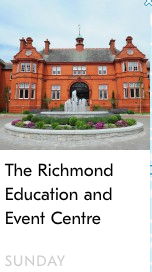
Screen Shot 2018-11-30 at 5.42.54 PMThe Old Richmond Surgical Hospital

Just one block from my apartment in Dublin, this stately brick building gleams with love and civic pride. Originally designed by Carroll and Batchelor 1901 and built in 1901, The Richmond was refurbished in 2016 by Kavanagh Tuite. It is located near my own flat, at No. 1 North Brunswick St, Dublin 7. This was not my first tour of the building, but I learn new things each time.

The Open House website explains, “The Richmond Education & Event Centre was opened on the 20th April 2018, following an extensive refurbishment, following its purchase by the Irish Nurses and Midwives Organisation in 2013. The building was originally opened on the 20th April 1901 as The Richmond Surgical Hospital and remained open as a hospital until 1987, when patients from The Richmond and Jervis Street were moved to Beaumont Hospital. It after became a business centre and then a Court House for a number of years, there are still 3 cells in the basement. This red brick english renaissance style building has three floors and is U-shaped overlooking a central courtyard and fountain. It is built on the site of benedictine convent dating back to 1688. The building has meeting rooms, offices, four large former wards (auditorium, lecture room, banqueting room, victorian tea room). The tour will include the ground floor, first floor (except offices) and part of the basement.”

smc

Diverse researchers at your service!

img_2864-1

The campus of DIT Grangegoreman (soon to be TU Dublin) which is now under construction

I found myself surrounded today, by dozens of brilliant scholars. I’d been invited to speak at a workshop on Gender Equality held by the Irish Alumni Chapter of Marie Skłodowska-Curie actions (MSCA). The half-day workshop was held in St. Laurence Church on the Grangegorman Campus of DIT.

Marie Curie fellows, past and present, traveled in from all over Ireland to attend the event. The Irish MSCA Alumni chapter is just two years old and it covers the whole of the island, welcoming researchers from north and south, east and west.

A lovely group of early-career researchers arrived in last night from Cork for the workshop, for instance. They came to Ireland from many different countries across Europe and beyond to work with the excellent researchers here.

img_2904-1

Dr. Chiara Loder, with Ireland’s MSCA office, helps researchers write winning proposals

img_2894

Dr. Geraldine Canny, the MSCA National Contact Point and Head of Ireland’s MSCA Office.

Dr. Amir Tabaković, a Strategic Research Proposal Coordinator housed in DIT’s Research Enterprise and Innovation Services office organized the event. Amir was formerly a Marie Curie Fellow to TU Delft in the Netherlands. Several other alumni assisted in organizing, including Dr. Declan Devine, the  Chair of Ireland’s MCA Alumni chapter who was a Marie Curie fellow–following his wife’s own MSCA fellowship. They have spent time doing research in Switzerland, the US, and now back home in Ireland.

The day’s line-up of speakers was both exceptionally accomplished and full of insight. We started with introductions by our hosts, Amir and Declan, and a talk by Dr. Geraldine Canny, who is Head of the Irish Marie Skłodowska-Curie Office and National Contact Point – H2020 Marie Skłodowska-Curie Programme. She is responsible for the delivery of the office suite of application supports and also provides input into MSCA policy as a Programme Committee member. The program continued as follows:

Screen Shot 2018-12-03 at 5.08.22 PM

img_2918

Jean Cahill, one of my mentors and heroes

I’ve included photos of many presentations. During the coffee break and post-workshop lunch, we got to socialize and network. I asked Jean Cahill–a Head of Research at DIT and one of the people who has helped me with writing various grants in the past–how many Marie Curie Fellows we’ve had at DIT. She rattled off five, and I was two of them! I think, for institutional records, I’m counted as an incoming MSAC Fellow (2014-2016) and an outgoing MSCA Fellow (2018-2020). The reason I’d asked Jean about this was that I had just met DIT’s newest incoming MSCA fellow, and she’s female. Interestingly, all the five fellows to DIT who Jean identified are female. The program is open to men and women alike, so the success rate for women applying to DIT is very high! I’ve always found DIT to be a very supportive environment. In fact, Jean and others like former National Contact Point Dr. Jennifer Brennan, helped me draft both of MSCA applications–going well above and beyond their job requirements and providing loads of pertinent advice that was crucial to my success in securing funds. For both of my MSCA applications, Professor Nancy Stenson and Dr. Marek Rebow helped with editing as well.

img_2972

Chatting with Professor Brian Bowe in DIT’s Rathdowne House

For today, Amir had asked me to talk about my experiences as a Marie Curie fellow and identify some gender aspects of my research work. I encouraged the audience to push beyond gender and seek inclusivity for all types of diversity. I asked them to promote wider considerations of diversity in European funding calls and evaluations, as well as in their own research. I asked them to consider publishing gender-related aspects of their findings in journals that reach more than one type of specialty audience and I provided examples. Then I described one of the research projects I’ve done as an MSCA fellow and the data analysis I have underway now that I will report via the Society for Research in Higher Education.

img_2992-1

Dr. Shanonn Chance with DIT’s Dr. Barry McCauley, an expert in BIM and Quantity Surveying

At the conclusion of the workshop, I met up with my former Fulbright and MSCA supervisor, Professor Brian Bowe. Then I walked from DIT Grangegoreman to DIT Bolton Street by way of our new path–which connects the two sites and takes just seven minutes to walk. There at Bolton Street, I returned a library book (Marton and Booth, 1997) and had a chat with Dr. Barry McCauley, who was serving as my temporary replacement but has since been appointed to a permanent full-time position of his own at DIT. I couldn’t be more pleased, as Barry is an excellent teacher and researcher and is excelling even while adjusting to his new prosthetics. Barry was injured on a construction site when he was 21 and his legs were crushed, but he has not let this stop him. He went on to get his Ph.D. and he’s a force to be reckoned with! We are lucky to have him at DIT; I really enjoyed learning Navis Works and CostX from him in prior years and he has done some very important research on uptake and implementation of BIM (Building Informational Modelling) globally.

If you are a researcher reading this who is interested in applying for a fellowship to come do research in engineering education at either DIT (soon to be TU Dublin) or at my other institution which is UCL, or in BIM implementation here at DIT, please contact me and I’ll help you write a grant proposal (IrelandByChance at gmail dot com).