Marking History with Fergus and Francis

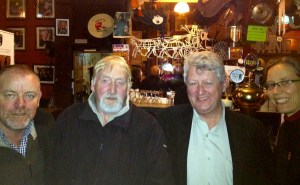
Fergus Whelan, Jerry Crilly, Tom Mulligan, and Shannon Chance at the Cobblestone last night.

Fergus Whelan, Jerry Crilly, Tom Mulligan, and Shannon Chance at the Cobblestone last night.

Kevin Donleavy  had written me to inquire about the plaque I mentioned in the blog post “Peace in Ireland.”  Last night I had the chance to learn a little more.

I was at the Cobblestone to meet Jerry regarding a little Christmas project we’ve got in the works.

And Fergus Whelan, the organizer of the December 1 event, happened to be there too.

The plaque, Fergus explained, was to honor Francis Hutchinson who was born in Northern Ireland but died in Dublin.  No grave marker had  ever been installed.

Plaque for Francis Hutcheson. You can click on the image to see a larger version.(Photo provided by Fergus Whelan.)

Plaque for Francis Hutcheson. Please click on the image to see a larger version. (Photo provided by Fergus Whelan.)

Fergus has righted this oversight.  A plaque now shines near the church on Mary Street in Dublin.  This group unveiled it on December 1, 2012 — the day I met them in the Cobblestone.

The December 1 events commemorated that remarkable man, Francis Hutchinson, who, among other things, influenced the American Declaration of Independence.  He did so via his friend Thomas Jefferson.  The plaque is well worth a read!

The December 1 event was so very striking, however, because the group of men gathered on that night had travelled down together in a single bus from Northern Ireland (where Hutchinson was born).  This morning Fergus sent me an email with photos, saying:

Hi Shannon

As explained the group shot are formers prisoners from both sides i.e. loyalist and republican. They came to Dublin to be present for the unveiling of the plaque.

Best, Fergus

Fergus asked these folks to travel down to Dublin together, on one bus, and to attend events together celebrating the life of Francis Hutchinson.  They put aside decades of ill will and united for this cause… because Fergus asked them to come.

I know this story will matter to Kevin Donleavy.  He has a similar project underway (that I’ll tell you about in due time).

What amazing experiences — sharing evenings with people who have such divergent points of view and yet finding unity within them. I’m thankful for Fulbright and thankful for my friends at the Cobblestone pub.
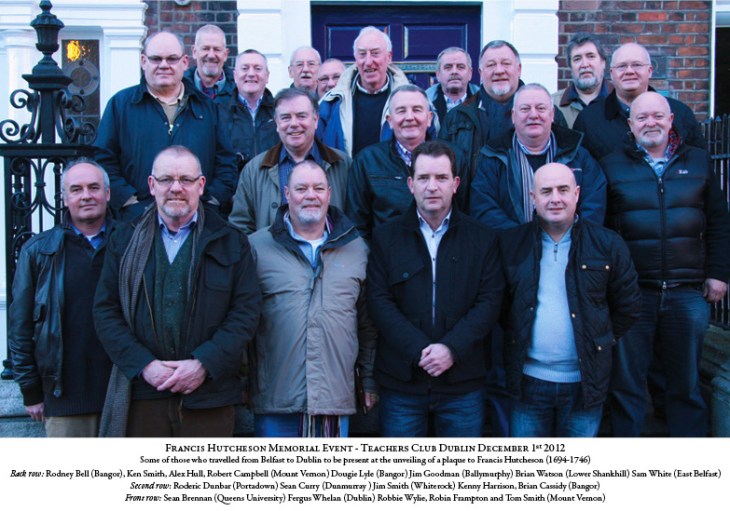
The group from the north of Ireland who came for the unveiling. (Photo provided by Fergus Whelan.)

The group from the north of Ireland who came for the unveiling. (Photo provided by Fergus Whelan.)

Hillary on Human Rights

Hillary Clinton delivered a brilliant speech on human rights in Dublin yesterday–and I got to witness history unfold.  The US Secretary of State identified four specific human rights priorities and emphasized that these drive the nation’s foreign policies.

  • religious freedom
  • internet freedom
  • women and girls’ rights
  • civic rights

The Irish Times reported Secretary Clinton’s commitment to “providing emergency support to ’embattled’ human rights activists who ran into trouble because of their work. Legal representation and communication technology such as mobile phones and internet access were being provided. Mrs Clinton also said ensuring the human rights of women and girls were respected was the ‘unfinished business of the 21st century’.”

Invitation to Hillary Clinton's DCU speech.

The invitation I received to hear Hillary Clinton’s DCU speech in person. I’m proud to have been part of this event!

This keynote address was part of a conference on human rights that kicks off the opening of a new Institute for International Conflict Resolution and Reconstruction at Dublin City University (DCU). The Fulbright Ireland website reports this Institute “is aiming to work towards Secretary Clinton’s vision and is offering BA, MA, and PhD degrees.”

Improving Engineering Students’ Design Skills

ARROW logoThe article Improving Engineering Students’ Design Skills in a Project-Based Learning Course by Addressing Epistemological Issues that Gavin, Brian, and I wrote for the SEFI conference in Greece is available for download on DIT’s ARROW database.  Check it out!

Blog Tips 1: Why Blog about your Fulbright Experiences?

The Communications Director at the Fulbright Commission in Ireland asked me to provide some tips on blogging to share with other Fulbrighters.  I’ve created a series of four blog posts on the subject:

  1. Why Blog about your Fulbright Experiences?
  2. Choosing and Adapting to your Blog Platform
  3. Finding your Blogging Niche
  4. Publicizing your Fulbright Blog
Fulbright header

Header from a CIES webpage.

So then, why blog?

Blogging experts say the main challenge is to continually generate new content that’s of interest to others. With blogging, they say, you have to stay very active and load new content regularly or you’ll lose the attention of your audience.

We’ve all seen stale, dormant blogs.  That is a viable way to go… if you simply want to meet your grantor’s wish that you blog about your experiences without investing much of yourself in the process.

I’ll admit I wasn’t thrilled at the request to blog when it arrived.  I’ve never followed blogs and didn’t see the merits or the potential for growth.

As a Fulbright, you have content that’s of great interest to others.  Blogging provides a quick and fun way to share this content. It can provide an opportunity to learn more from your own experience and also learn about writing for a real live audience. You can track your statistics to see what interests people in different parts of the world, for instance.

So, who’s your audience? My own has grown over time. It includes people I’ve known a long time and the folks I’m meeting here each day.  It includes regular visitors from across the US and Europe, and occasional visits from people in Africa, Asia, and South America. Watching the statistics page on WordPress gives me some idea of who I’m reaching and how often they visit.

The notion of sharing in this way comes fairly naturally to me.

When I lived in Switzerland in 1997, I emailed many dozen friends and relatives each day.  They were interested to know about what I did, saw, and thought while living alone in a foreign land. They’d send questions and encouragement. That helped me feel support during a challenging time in my life.

Blogging is an even better platform for me to do what I was attempting then. It lets me share photos and ideas with many more people, and do this very quickly. Most of all, it lets me address the goals of the Fulbright program by promoting the work that I’m doing and the cultural exchange I’m experiencing.

My cousin lived in Paris for a year in 1993. She wishes she had Internet tools then. They make staying in touch AND growing your social network so much easier.

A few parting thoughts for this introductory blog:

  • Choose your blogging platform and template carefully. Some are easier to use than others.
  • Watch tutorials about your platform so you can learn the tools quickly.  You’ll need to develop your own set of approaches over time, so that blogging doesn’t consume too much of your time.
  • Craft a catchy title and consider purchasing an easy-to-recall domain name for yourself.
  • Determine your level of desired privacy so you can adapt your activities accordingly. You can keep your URL under wraps and share it with select friends, or you can go public and connect in to search engines like Google and Bing.
  • Learn to keep some content in reserve (saved in draft form) to pull out when you don’t have time to generate text but you want to get something fresh posted.

If you’re determined to do this well, then you might as well learn to enjoy blogging and to see it as a way to document, reflect, and share. Just think: in the end you’ll have a beautiful log of your experiences. It will help you remember and record all you’ve done. Best of all, it will help you stay connected with people back home as well as those you’ve just met.

Peace in Ireland

Musicians Jerry Crilly, Frank Cullen, and Pat Goode playing in the back room of the Cobblestone.

Musicians Jerry Crilly, Frank Cullen, and Pat Goode playing in the back room of the Cobblestone.

Tom Mulligan said I was witnessing history last night.

I’m not aware of all the subtleties of the situation but, essentially, a group of folks from Northern Ireland was in Dublin for the unveiling of a monument.  A friend of the group — a regular at the Cobblestone who hails from Dublin — invited the group over to Tom’s pub after the formal event to hear traditional Irish music.  [Note:  I’ve posted more on this topic since.  See Making History with Fergus and Francis.]

Quite by chance, Jerry Crilly, Frank Cullen, and I happened to be there.  We were celebrating Kevin Donleavy’s radio program that happened earlier in the day.  It had featured quite a few songs from Jerry’s CD.  Jerry rang us up  (as in, called us on the phone) because he wanted to give us copies of the CD.

And while we were at the Cobblestone my musical friends / drinking buddies got invited to the back to sing.

Because I was there with these musical stars, I got to enjoy an evening full of song!  I actually had a seat front and center and felt completely, 100% included.

As much as I love instrumentals, it’s the singing that moves me most.  So this was an incredible find for me — I really lucked out last night!

I sat cozily in a room full of people who, not so long ago, took up arms against each other.

Here, in the shelter of a unified Ireland and the warm embrace of the Mulligans’ pub, men from north and south sang together and reveled in the island’s newly found peace.

When Dave and I visited Ireland in 2003, the tone was much different from today.  Political tensions still ran deep and pub songs recounted strife.

I feel honored to have been part of this event that helped promote peace among nations.  I am proud that an American president helped negotiate the peace accord that paved the way for this evening’s events. (In The Journal of Conflict Studies, Rodger MacGinty noted “that the American influence on the peace process, both from influential Irish-Americans and the Clinton administration, has been profound.”)

I will remain eternally grateful that our nation supports Fulbright programs designed to promote cultural understanding and celebrate — and grow — human knowledge.  We do many things that don’t make sense.  And we fight all too often.  But in the name of Senator Fulbright, we do have programs designed to help us do better.

I take the cultural understanding part of my Fulbright very seriously.  I thank you for sharing in the effort by reading along.

It was amazing to be part of a cultural healing process last night and watch stale old tensions dissolve into the night air.  As an added bonus, I also got to meet Jerry’s and Tom’s significant others for the first time.  This place feels more and more like home every day.

Incidentally, Tom has taken to introducing me as a long-lost cousin, and that term’s growing on me.  It’s much nicer than wee-distant relation, or third cousin twice removed….

Corners of the Globe

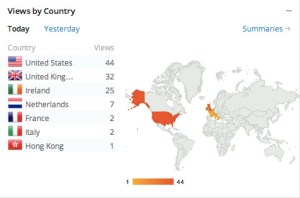
Views so far today, November 30.

Views so far today, November 30.

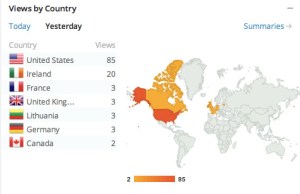
These little maps just blow my mind.  Can you believe that people in Lithuania, Hong Kong, and Holland visited this blog in the past two days?  And how did I get 32 visits from the UK today?

The Internet is amazing.  I hope I’ve passed on a bit of knowledge, inspiration, and cultural understanding.

Views from yesterday, November 29.

Views from yesterday, November 29.

Green Know-How

Simon McGuinness asked me to speak about LEED with his Architectural Technology class.

Simon McGuinness asked me to speak about LEED with his Architectural Technology class.

65% of Ireland’s architects are unemployed today.  Shocking.  And sad.

Today, I got to speak to a room-full of these architects and architectural technologists.  They come to DIT once a week — from all over Ireland — to learn about sustainability.

To be eligible to take this course, a person has to be receiving some form of unemployment assistance.  The government funds this program as a way to infuse knowledge about green building into the community and help re-train this group so they can help address pressing social needs.

And what a fantastic audience!  I was so caught up in the dialogue that I forgot to take a picture for you.  I believe everyone in the room was older than me and likely had much more field experience.

And they were fully engaged, interested, and attentive!  Full of energy and questions!

The teacher of the course, Simon McGuinness, had asked me talk about the nuts and bolts of documenting projects using the LEED Green Building rating system.  That can be a very dry subject.  But they took it in with enthusiasm.

During the one-hour talk, I got the chance to share some of the findings of my dissertation and the recommendations I made in the article I just published in Planning for Higher Education.  I’ve included a gallery of those slides, below.  Please see the article for details.  (It got over 800 downloads!)

Brushes with Great Museums

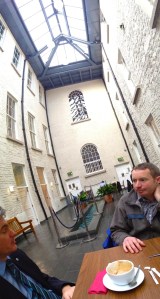
Meeting with Brian Bowe and Gavin Duffy at the Beatty Library’s cafe.

The cafe at the Chester Beatty Library serves up a fine selection of Middle Eastern, North African, Mediterranean, and vegetarian entrees and gluten-free desserts.  We met there for lunch Tuesday since it’s halfway between Gavin’s base on Kevin Street and ours on Bolton Street.

Mom and her neighbors (Tim and Mary) spoke highly of this “Silk Road Cafe.”  The Dean had heard its praises sung as well.  Unfortunately, he was called to a more urgent meeting and couldn’t join us after all.

The Beatty Library’s sun-filled, glass-covered courtyard was a lovely setting for our discussion of student-centered learning, research, and publication strategy.

Shockingly, neither of my colleague had ever been to this incredible museum before!  Yet it houses one of the world’s most astounding collections of religious artifacts.  It represents all the world’s major religions and was donated by the American collector Chester Beatty.  And, amazingly, admission is completely free! (Lunch, however, is not.)

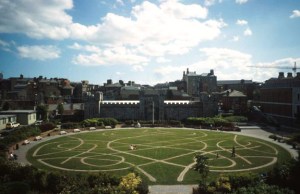
Although I didn’t get Gavin and Brian into the actual exhibit halls, at least they got to experience the covered courtyard and the stunning “Castle garden.” It’s surrounded by a high wall and feels very much like a secret garden. During my childhood, I dearly loved the book The Secret Garden.

Castel Garden, behind Dublin Castle. (Photo borrowed from W&L travel log.)

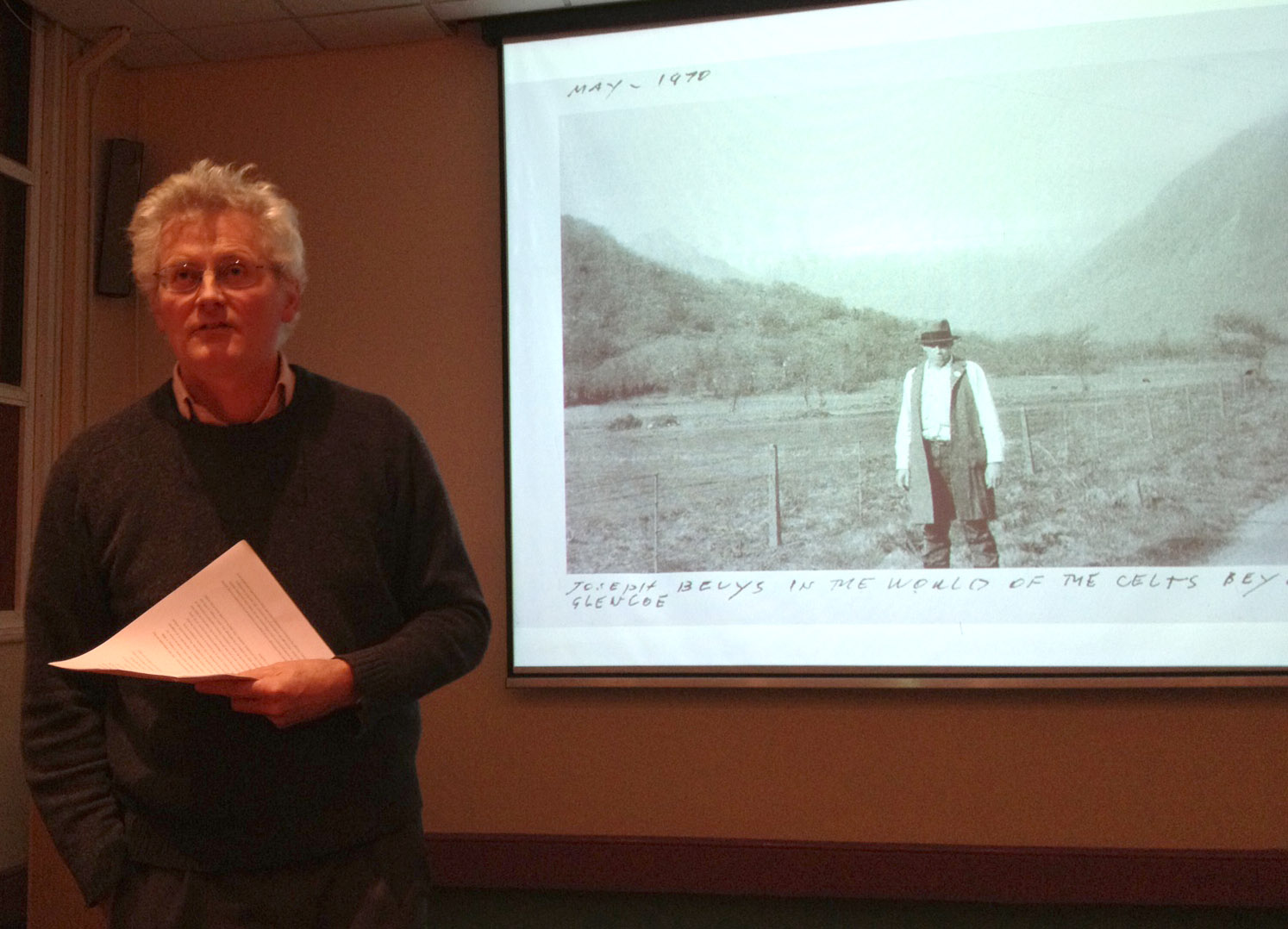
A few hours after our lunch, I had another brush with great museums when Seán Rainbird lectured at the DIT School of Architecture.  He’s the new director of the National Gallery of Ireland. He has also worked at the Tate in London and the Stattsgallerie in Stuttgart (designed by James Stirling’s office).

Seán Rainbird talked about Joseph Beuys’ fascination with all things Celtic when he spoke at the DIT School of Architecture.

Can you imaging that I delivered a lecture in the same “Schools of Thought” lecture series with such an accomplished person?  Wow!

Seán talked about Joseph Beuys and the Celtic World, the topic of a book he wrote.  He said he had just three weeks to write it!  Can you imagine being so knowledgeable about a topic that you could produce a press-worthy document in just three weeks?  Truly amazing.

They say everyone wants to “be like Mike.”  I’d rather “be like Seán” myself!

Meet Dave Jetson!

Callista Brien’s talk on Social Media for Engineers Ireland.

Meet George Jetson! (Image from the blog Dark Horizons).

Meet Dave Jetson!

His nephew David!

Luc, his sis!

Whoever though that we’d live the Jetson dream so soon in history?  Certainly not I!

A few weeks ago, at an event hosted by Engineers Ireland, Callista Brien discussed how social media is changing the way we think and act.  This was part of a seminar about project management.

And Callista was right.

FaceBook and FaceTime are amazing and they’re making my life richer.

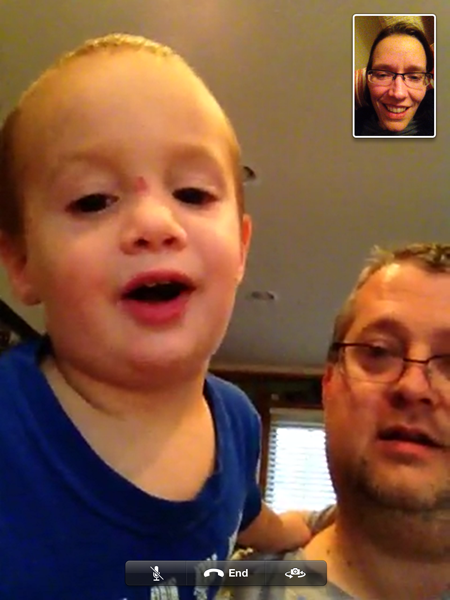
Look how excited Lucy’s kids got when I rang in using FaceTime a couple days ago.

The Chance family keeps in touch with me via Facebook, iMessage, and the occasional FaceTime call.

And so, some days, life seems like a futuristic movie.

These tools keep Dave, Christina, Matthew and Lucy, David, Christopher, Tommy, Michael, Julia, Conner, and Evan Chance as central characters in my life, even when we’re far, far apart.

Dave with Lucy’s gang.

Awesome brothers!

“Aunt Shannon, I fell down!”

Chugging toward that PhD

Gavin Duffy and Rob Howard discussing Gavin’s conceptual framework.

We’re making definite progress on our research, Gavin and I.

Last week’s meeting with Dr. Rob Howard was a success, I’d say.  Gavin had a good “statement of purpose” to share with his dissertation advisor.  During our lunch meeting, the three of us were able to produce a diagram for the study (i.e., a conceptual framework model) that I hope will help speed the writing along.

It’s so inspiring to see Gavin make progress on his PhD!  Kind of makes you want to write a dissertation yourself, doesn’t it?

I wouldn’t mind writing another!  That lucky because my current research project actually feels like a dissertation study.  I’m happy to report progress on it as well.

Last week I emailed the outline, theoretical models, and introduction to my supporting authors and Dean Murphy.  I’m hoping to get feedback from them over lunch today.

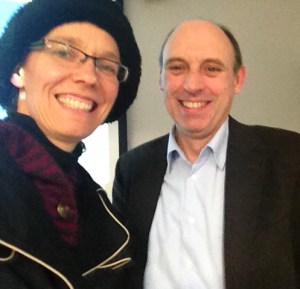
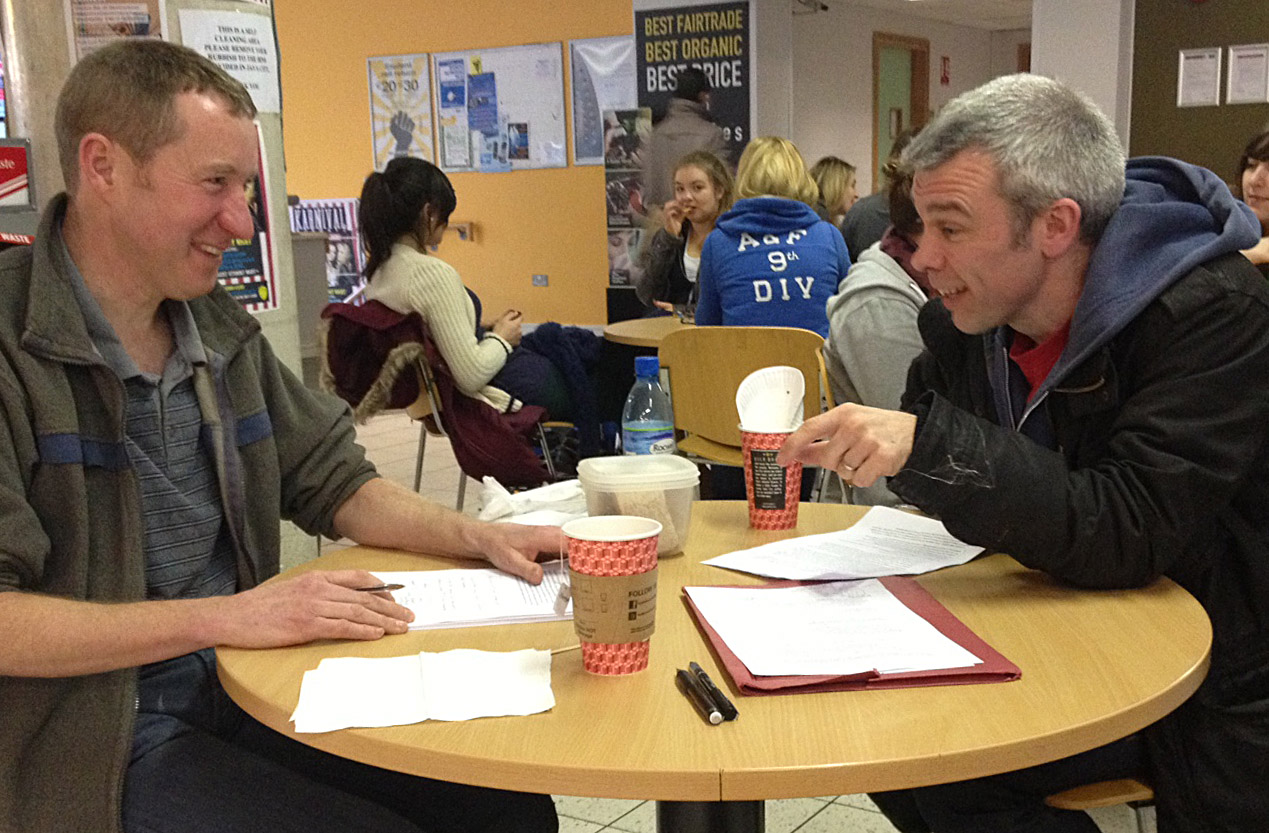
Shannon Chance and Joe Dennehy at the Scholars Cafe on Aungier Street.

I’m putting the research to good use already, though.  Right after the meeting with Rob Howard, I was in the faculty cafeteria at the School of Business.

A very energetic professor, Joe Dennehy, bounded over to ask follow-up questions to the Teaching Fellowships keynote I delivered.  Joe wants to coordinate a group like the one I’ve been studying and asked my advice.

Every time I discuss the study I learn more.  And fortunately my graphic models worked well for communicating core ideas to Joe.

His zest for new ideas is contagious. How can you not love someone who writes of “the joyful serendipity of running into you on my way to see” the Head of School.

I plan to keep the conversation going with Joe… maybe I’ll soak up some knowledge about housing economics (which he teaches) while I’m helping him coordinate his faculty learning group in the spring.