I was asked to recap my work in the engineering education research (EER) space in the past year.
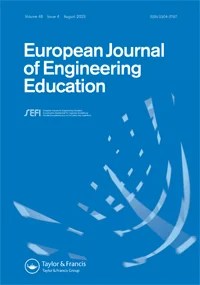
The biggest projects I’ve been undertaking are editing the forthcoming Routledge International Handbook of Engineering Ethics Education and a special issue of IEEE Transactions on Education. I serve as a Deputy Editor of the European Journal of Engineering Education and am designing a curriculum in Architectural Engineering for NewGiza University in Egypt. I recently co-authored a paper on comparing thesis and final year project pedagogies that was published in EJEE and I’m doing research about women studying engineering with Sandra Cruz and others, and on BIM education with Barry McAuley.
Today, I am working on writing a report because I’m serving as an external examiner for a research center in South Africa. I’m also grading portfolios submitted by research students in the BIM BSc course I chair. I already prepared a report to send to the teachers who will be delivering one of the two modules I have designed for next semester at NewGiza University, who I will meet with tomorrow. I started my morning with a little fun on Duolingo, where I am learning Spanish.
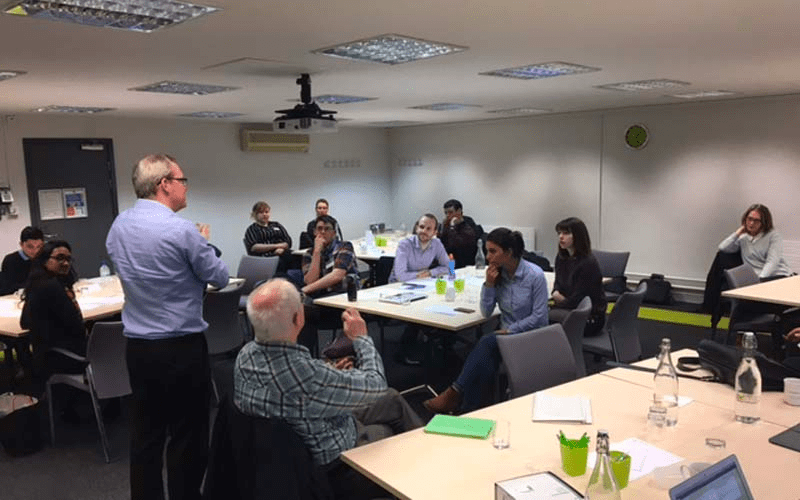
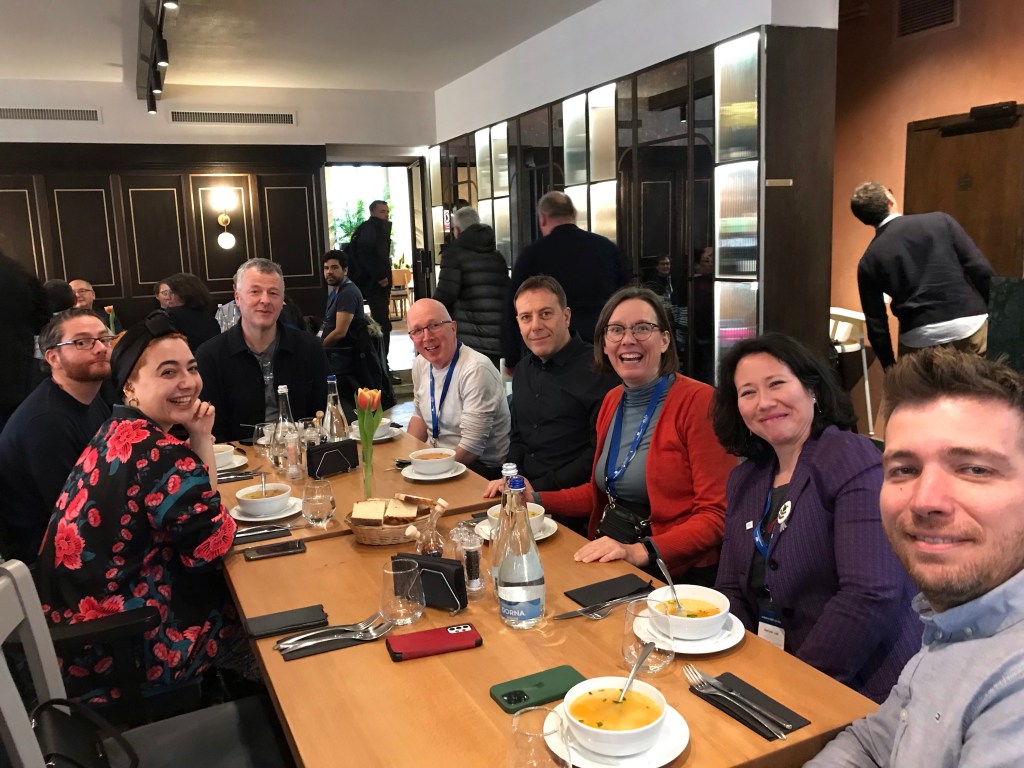
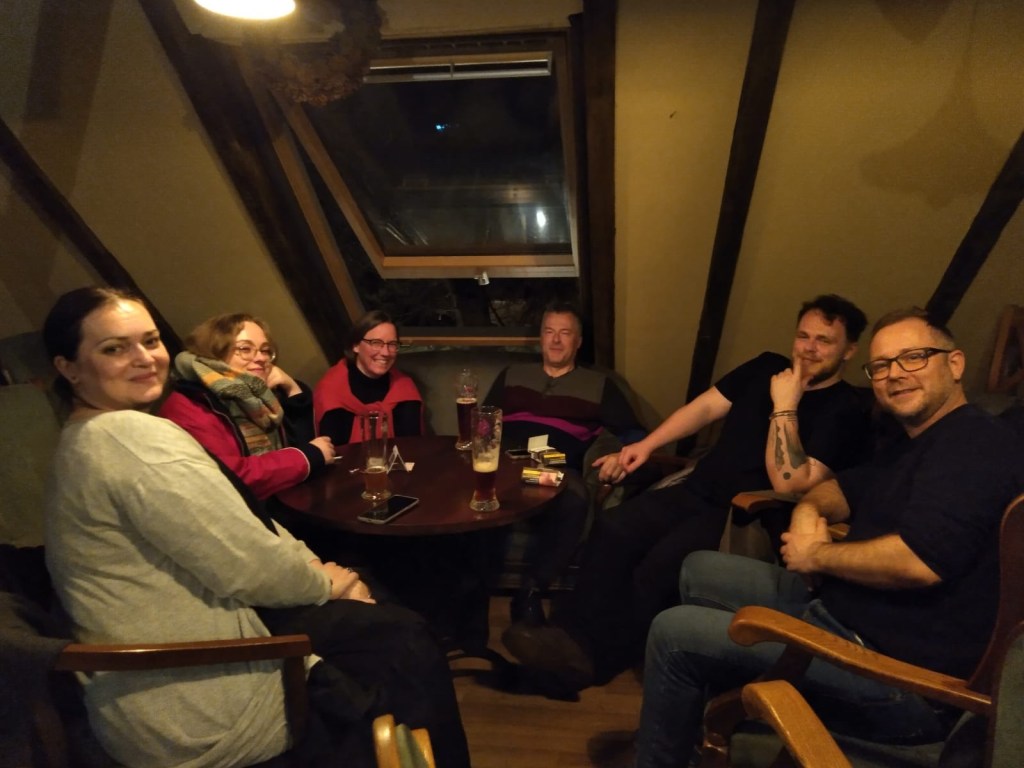
If there’s time, I’ll review a chapter for the International Handbook of Engineering Ethics Education. I’ll share a snapshot of a recent meeting of the handbook editors. This is a most amazing group of collaborators and I am so fortunate to work with them.
The chapters in the theme I’m managing (accreditation of engineering ethics education) are fascinating and I can’t wait to see them published in 2024!
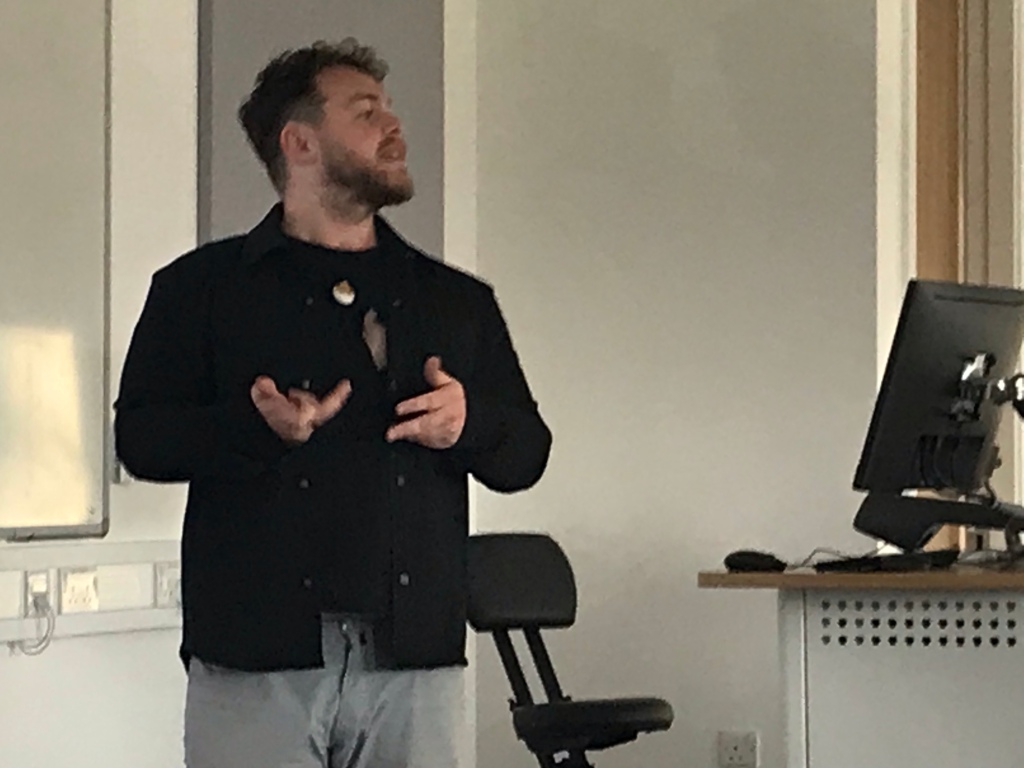
A typical editorial meeting of the Handbook team. Contemplating thoughtfully as always.
The global Research in Engineering Education Network (REEN), which I used to chair, has a new call out for individuals who are passionate about engineering education research and capacity building.
REEN is seeking expressions of interest for two REEN Board positions, representing (1) North American and (2) Central and South America.
Are you interested in doing a Ph.D. in engineering education, or know someone who is? Please consider these two excellent opportunities, and please share them with anyone you think might be interested.
First, at UCL:
The University College London (UCL) Centre for Engineering Education (CEE) is offering two funded Ph.D. student scholarships (the funding covers stipend and research expenses, plus tuition at the domestic/home/UK resident rate, non-UK applicants only have to pay the difference between this and the international student tuition rate). Overseas candidates are welcome to apply.
The envisioned stipend (currently £20,622 pa) and fees at the home rate (£5,860 pa if based in Engineering, £7,580 pa if based in the Institute of Education) are for a period of 3 years. Funding to cover a 3.5 or 4-year period will be considered. The Centre will also fund consumables and travel to attend conferences during the Ph.D. period.
The recipients will start in January 2024.
The application deadline is 31 October 2023, and you can get more information on projects and person specifications here:
My experiences with UCL CEE are ongoing (I currently serve there as an Honorary Professor) and have been nothing short of spectacular. It’s an amazing group of colleagues to work with and everyone has such a great “can do” attitude. I love the vibe of London and this Centre.
If the two doctoral scholarships discussed above don’t suit you, there are other routes available. You can submit an expression of interest to get help from the CEE in applying for other funding, e.g., from the British Academy Postdoctoral Fellowship Scheme or Marie Curie Individual Fellowships (which is how I went to work at the CEE for 2018 & 2019). Your expression of interest is simple enough, up to 500 words summarising what you want to study, up to 400 words on why you’ve chosen UCL, and a CV (for post-doc positions, the CV should list your publications and the date you finished your PhD). Email that to the centre’s manager Helen Bhandari, h.bhandari (at) ucl.ac.uk.
Second, in Ireland:
You’re also very welcome to propose an idea to do with me, here at TU Dublin, and seek funding from the Marie Curie Individual Fellowships scheme when they open in February-March next spring. This website has many helpful tips to help you in writing, and if you’re interested in pedagogy, learning and teaching, and student development, then we could work together. Just contact me on the form on this site or at IrelandByChance (at) gmail (dot) com.
Applying for this requires you to team up with a prospective supervisor — the person you propose to guide you in your research. And, as I say, if you study things I’ve expertise in, I’d be happy to work with you to hone your application and subsequently supervise your work.
Morevoer, if you haven’t got time to apply this year, and want to study architecture or engineering education topics, we can start preparing now for next year. The application will be similar next year as you see posted for this year.
This scholarship is valued up to €28,000 per year, comprising:
A stipend of €19,000 per annum
A contribution to fees, including non-EU fees, up to a maximum of €5,750 per annum
Eligible direct research expenses of €3,250 per annum
Whereas the UCL funding doesn’t cover the extra for students coming from outside the country, Ireland’s funding does. However, the Irish Research Council (IRC) receives lots of applications, so there is heavy competition for this funding.
If you have questions about either of these, I’ll be happy to help advise or steer you to the answers.
It was no easy feat, as the concepts in this paper are both theoretical and applied.
Rahman and I worked closely together for a year and a half, refining a manuscript he had drafted. Together, we crafted sections to link the topic of architecture education to the journal’s main readership, comprised of engineering education researchers. We had to translate many ideas to make them readily understandable to teachers of engineering and architecture alike.
We also perfected every sentence of the manuscript, seeking to communicate ideas as effectively as possible to EJEE’s broad audience.
I’m extremely proud of this work, and realized only after publishing it that we’d hit a sweet spot, as described by a scholar Deborah Gill from the UK, by helping shed light on these two terms and the types of education they imply.
I hope that many people read it, use the content in their teaching practice, and cite the article in their own future publications.
I’ve never met Rahman in person, but I am choosing to believe LinkedIn and ResearchGate that these images feature him.
Rahman Tafahomi holds a Ph.D. in Architecture and Urban Design from the University of Technology Malaysia. He works at the University of Rwanda in the Department of Architecture as an associate professor. Over the summer, he earned promotion from senior lecturer to associate professor — well deserved! Rahman’s research interests include architecture, landscape design, urban design, heritage, architecture education, teaching and learning in higher education, and behavioral patterns.
Last week I taught two evening classes of Research Methods with my BSc in BIM (Digital Construction) students–and I have another starting at 6PM tonight. The students are earning “honors-level” bachelor’s degrees in just one year at TU Dublin. It’s an action-packed year, and they complete 60 ECTS (a full-time academic load, equivalent to 30 credits in the US university system) over 12 continuous months. It’s a great credential to earn and they learn so many new skills. “Honors-level” means they need to write a research paper, and I teach them the basics of that in Research Methods. So, last Tuesday, I welcomed them back from summer (where they completed their Work-Based Learning module) via an online class I taught from a hotel room in Athlone.
And just why was I in Athlone, halfway across Irland, on a school night?
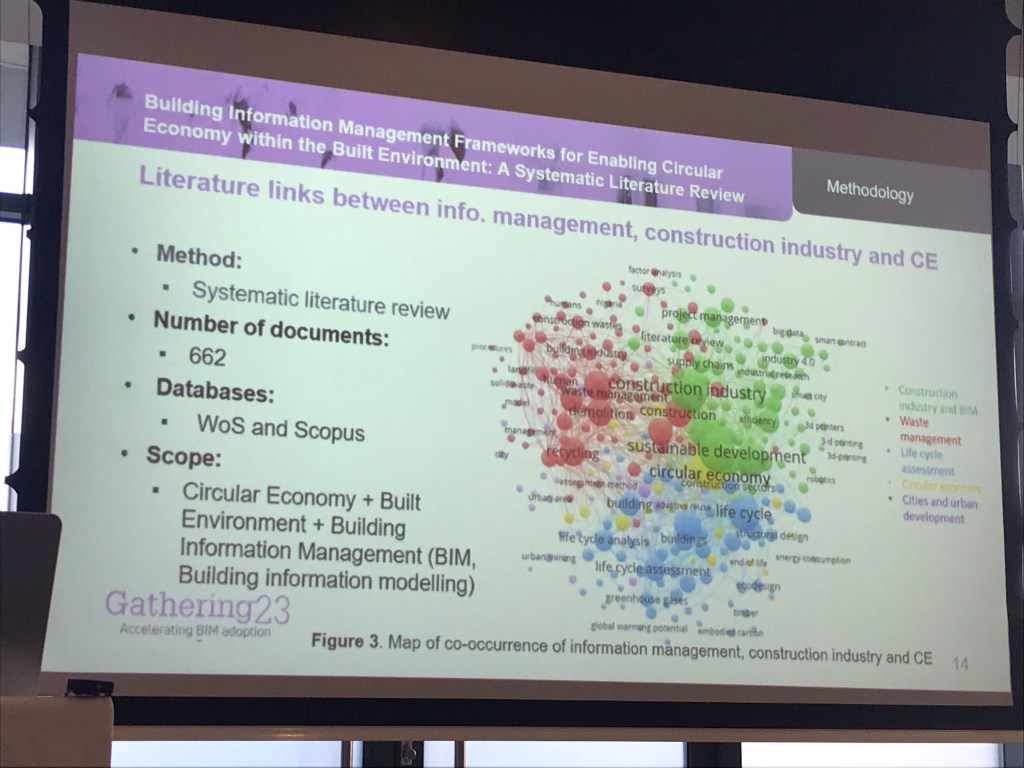
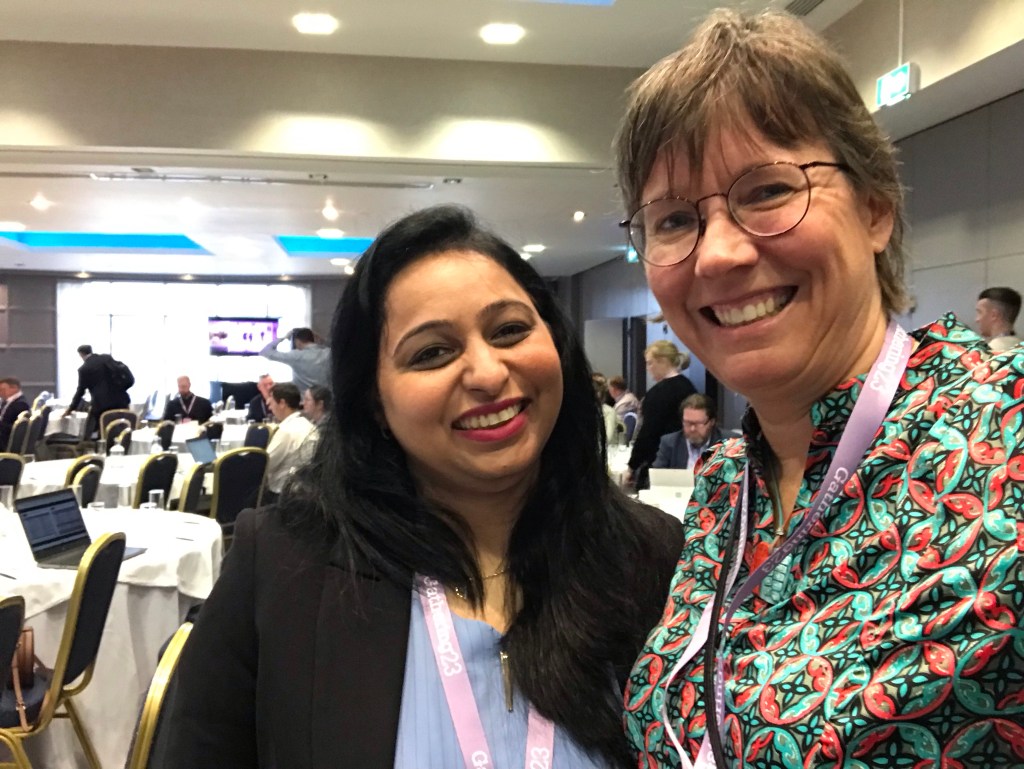
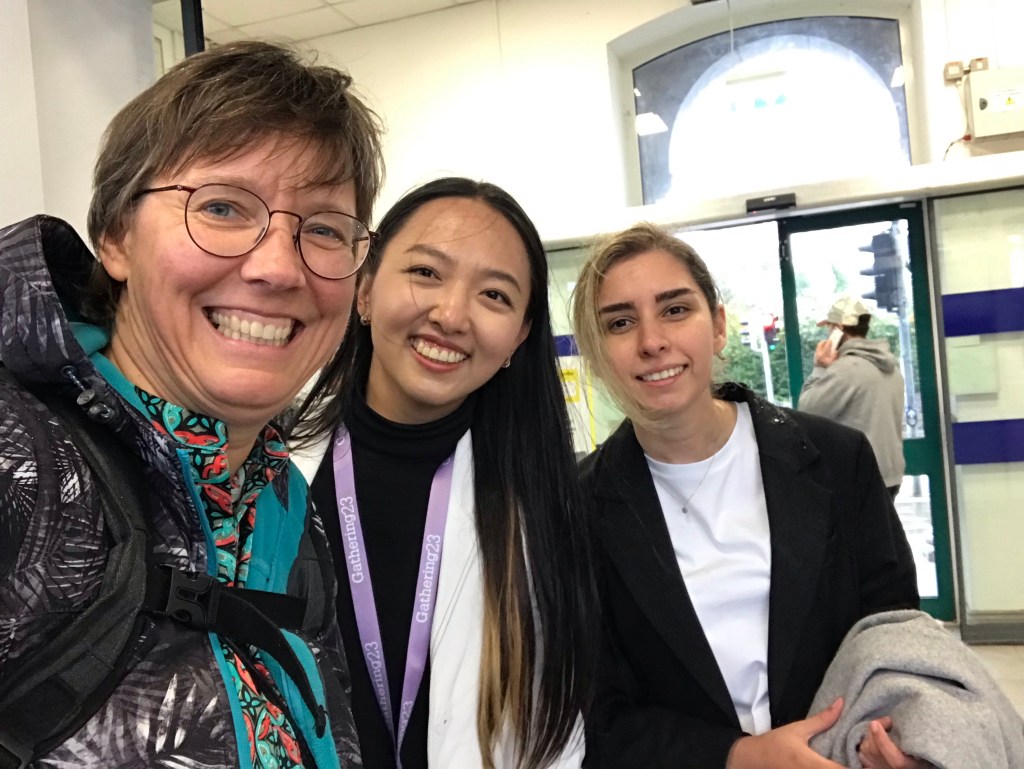
I was lucky enough to attend the 2023 CitA BIM Gathering as an observer. CitA is the Construction IT Alliance in Ireland, and its BIM Gathering is held every second year.
This year the Gathering had a great innovation. The first two days (Monday and Tuesday) were online for a manageable two hours each day. The third (Wednesday) we had a full day in person, in the midlands of Ireland, along the Shannon River.
I really appreciated CitA’s multi-type conference format as we got to hear from speakers who couldn’t travel to Athlone. This format used travel resources more wisely, and the rhythm suited me as a participant. I particularly valued the online presentations by lawyer May Winfield of Buro Happold, Lèon van Berlo from buildingSMART International, Johnthan Reinhard from TU Dublin, and Carolina Soto Oguerta from Chile.
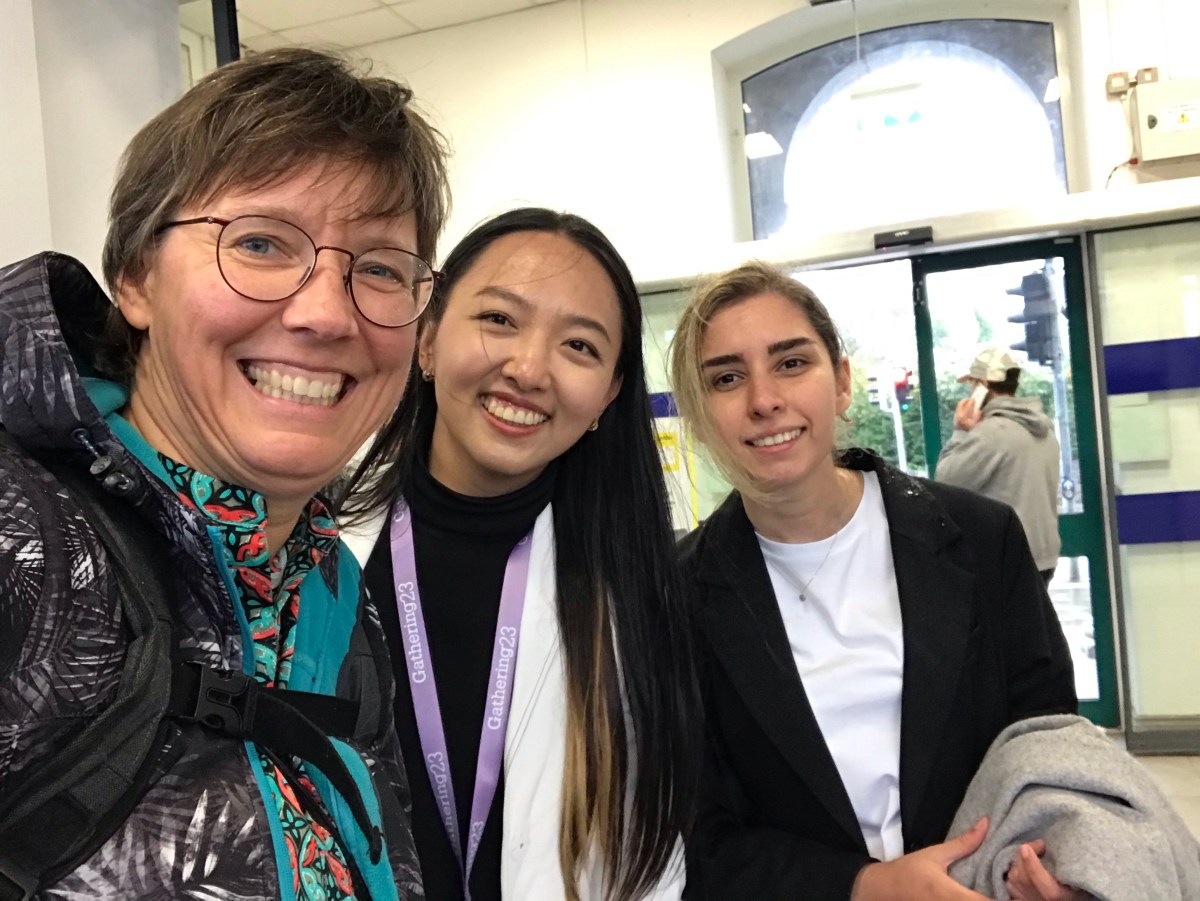
Because I had a class to teach on Tuesday night, I bolted from home to Heusten Station as soon as the Tuesday Gathering events ended, to settle into my hotel room and make sure the wifi connection was sound.
I thoroughly enjoyed traveling with Irish Rail, and I worked on a review for the European Journal of Engineering Education on the way. Sooooo much preferable to driving!
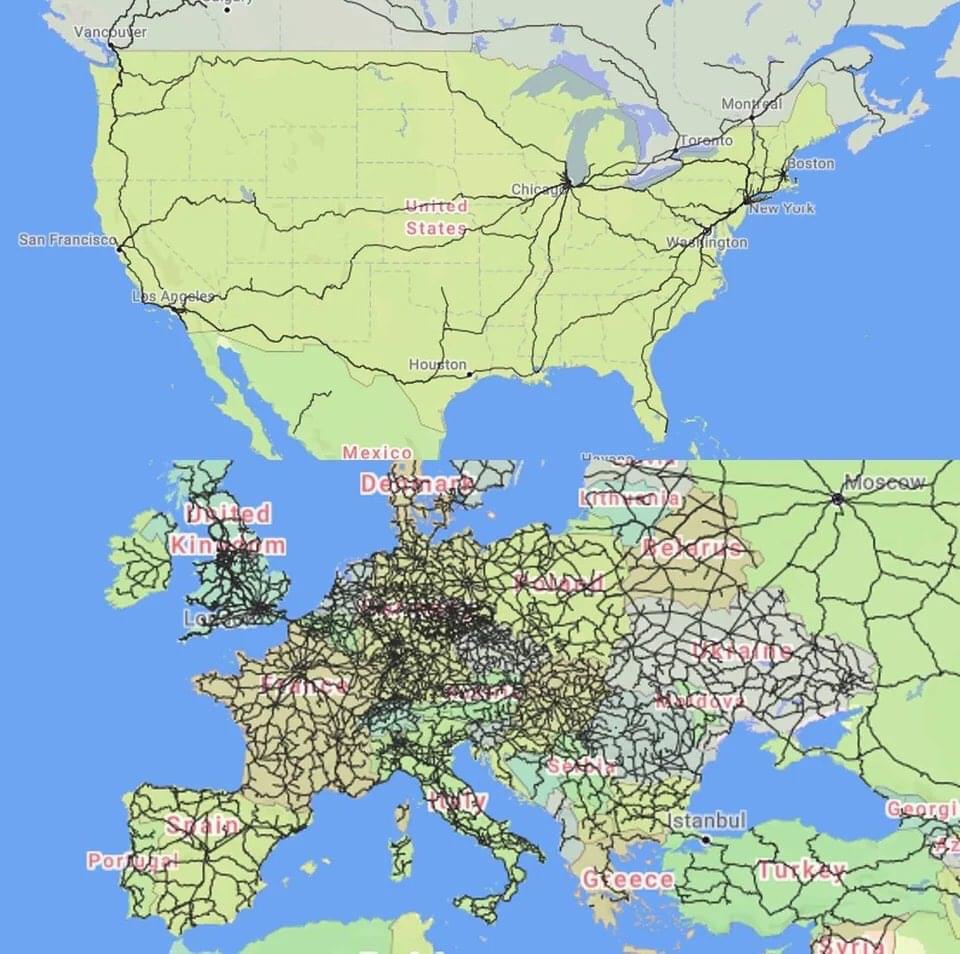
Here’s a map comparing Europe’s train network with the USA’s. Whereas I can’t get outside Ireland by rail, it’s a pleasure when I can use the train domestically.
Athlone is home to the new Technological University of the Shannon (TUS), and I am hoping this increased exposure of the name “Shannon” helps Irish people learn my name 🙂 as they never seem to understand my pronunciation of it. It just doesn’t fit many people’s schema for a woman’s first name here, and they revert to calling me Sharon shortly into almost any conversation.
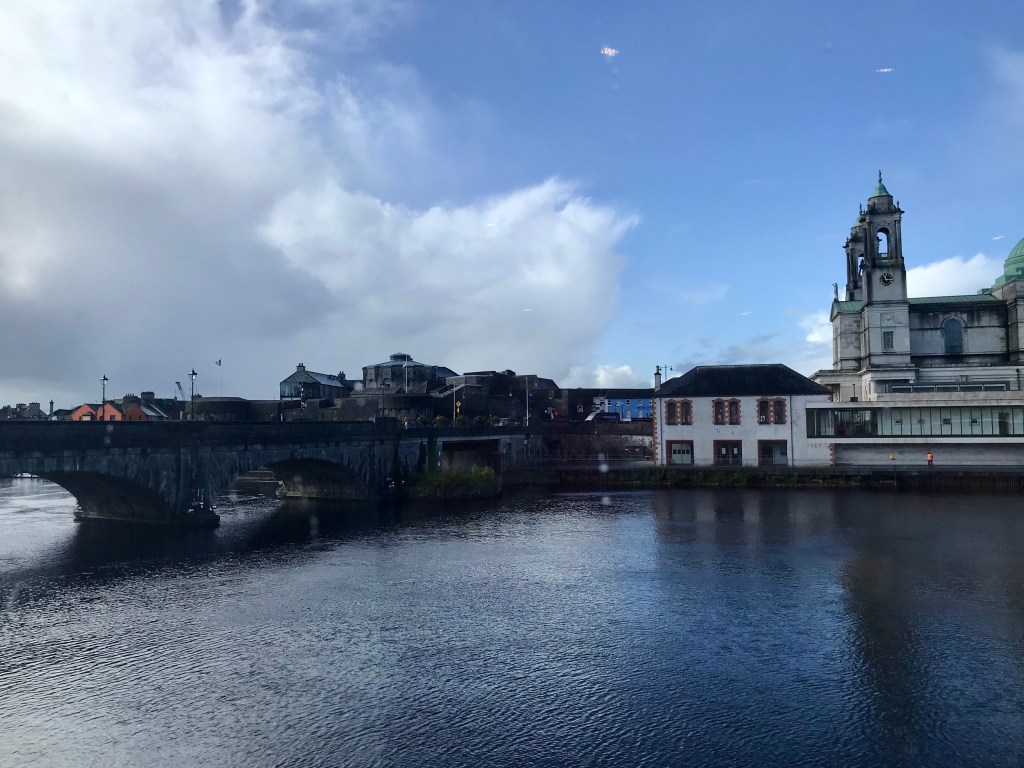
View from the conference room at the Radisson Blu in Athlone.
CitA is headed by Dr. Alan Hore, who will soon retire from TU Dublin. I’m not happy to learn that bit of news, but I am sure Alan has new plans for doing something big and meaningful!
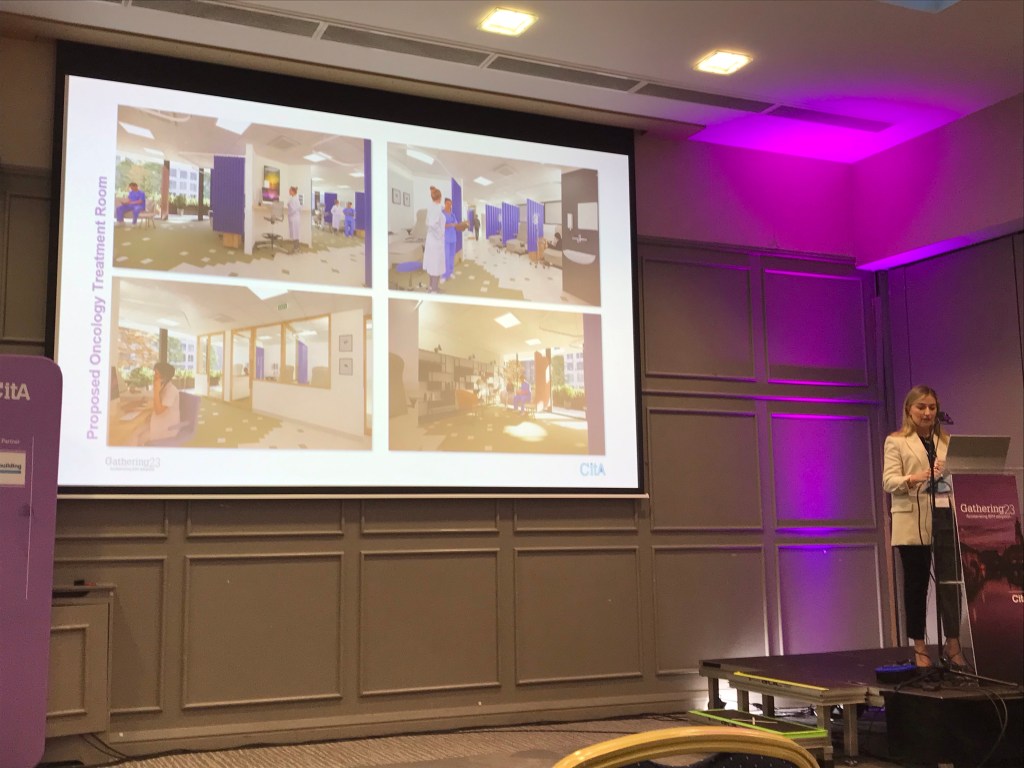
In-person attendance from TU Dublin was strong, and many students presented really impressive research during the conference. I was particularly impressed with the presentations by students, including Sadaf Dalirazar from UCD, Léa Laurent (affiliated with Munster University of Technology, but presenting on behalf of her firm O’Connell Mahon), and TU Dubin’s Peshawa Mohammed, Ryan Dempsey, and Jennifer McAuley. Sadaf was nominated for an award (at her first-ever conference, for her first-ever conference paper). Léa won for best industry paper and Jennifer won for best academic paper, so I must have picked my sessions well! I also found Ryan’s presentation–though high speed!–to be very enlightening. I applaud them all for their fabulous work.
Presentations pictured by Sadaz Dalirazar, Ryan Dempsey, Léa Laurent, and Jennifer McAuley.
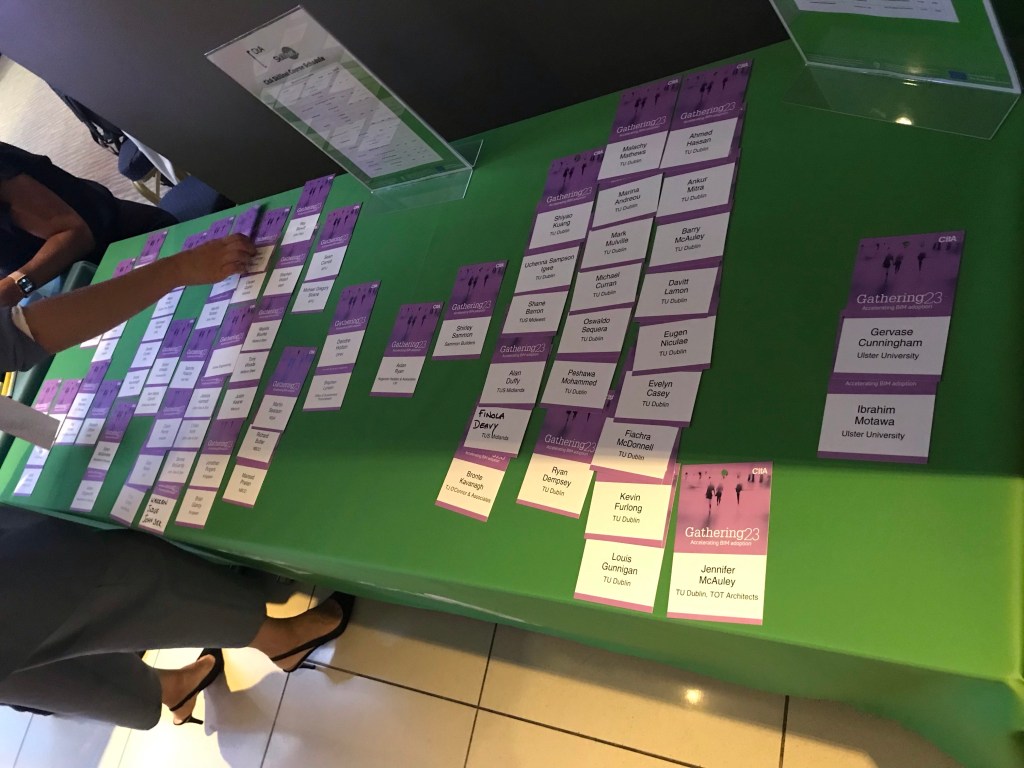
I also got to chat with graduates of our BSc from the first three cohorts, Divia Chadwa and Martin King, as well as one student currently completing the course, Bronte Kavanagh, and my co-teachers from TU Dublin, Davitt Lamon, Kevin Furlong MA, MSc, Dr. Malachy Mathews, and more!
I was also happy to hear from the Mayor of Athlone, who is an architect; Louise Heavin delivered a thought-provoking address and is enhancing the sustainability and livability of her small city. David Philip‘s presentation was also very interesting, “The Unexpected Road, from Premise to Prediction”, and I had the pleasure of chatting with David over lunch.
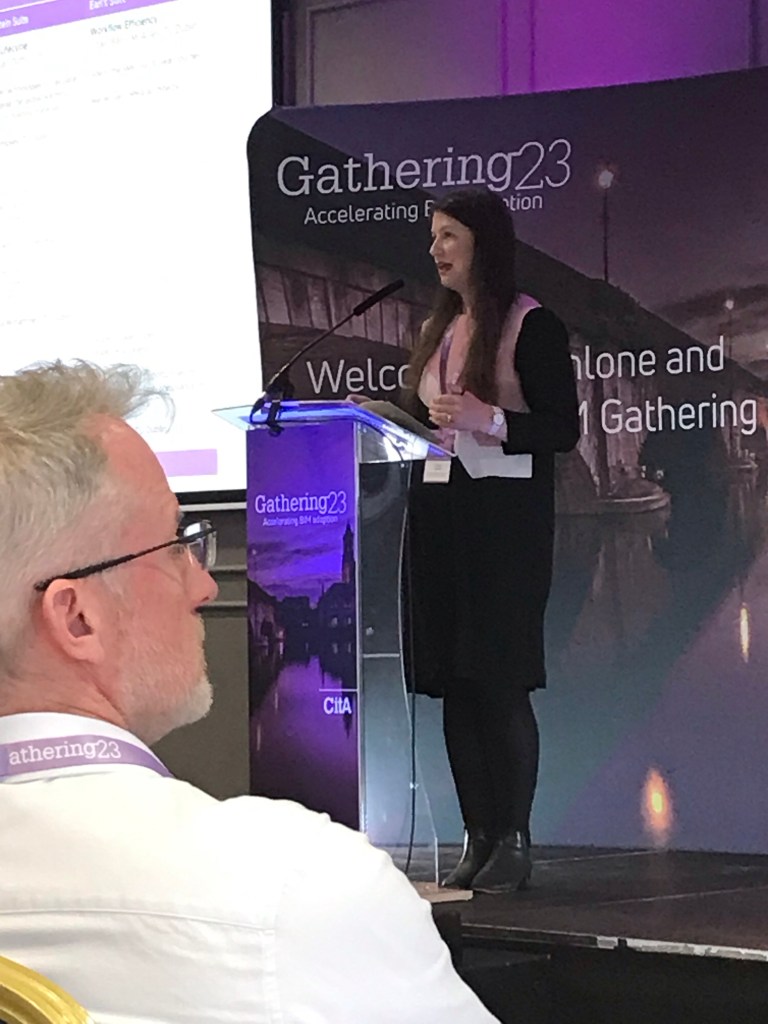
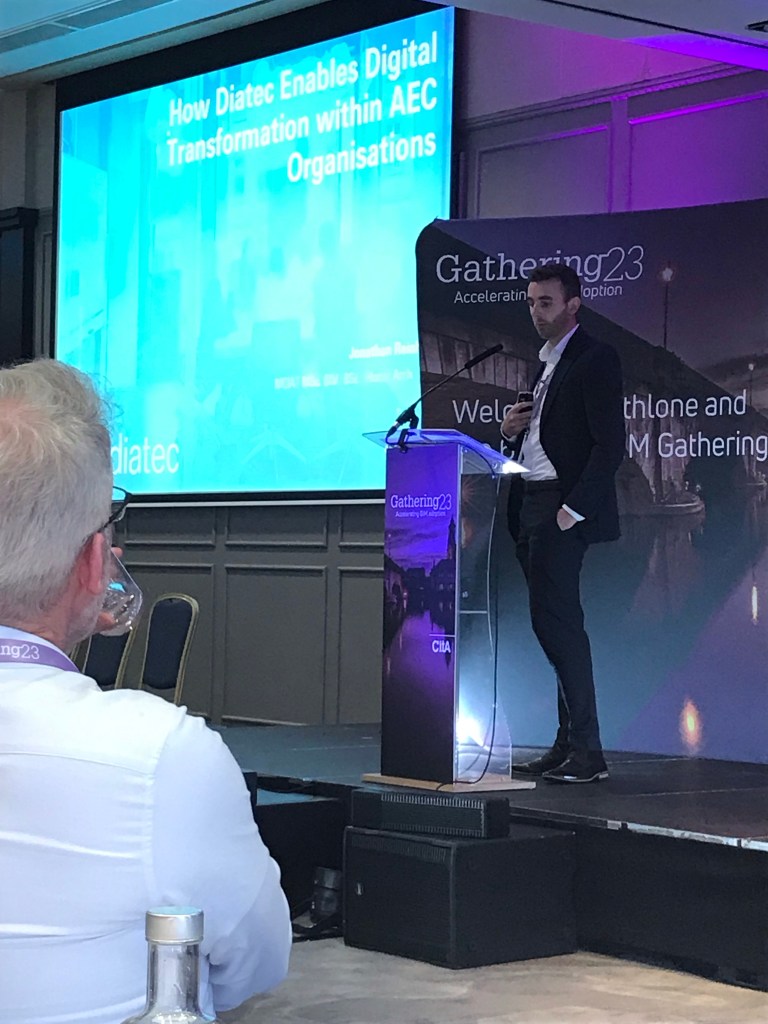
Main stage presentations by Louise Heavin, David Philips, and Jonathan Reinhard (this time speaking on behalf of Diatec).
Following a summer of intense curriculum design, a relaxing holiday in Greece, and the Dublin Maker fair, I dove right into the new academic year, voicing my perspectives at various meetings and workshops with colleagues at TU Dublin and–last week–attending and throwing myself into the annual conference of SEFI, the European Society for Engineering Education which was held just ten minutes walk from my apartment in Dublin.
Incidentally, SEFI is an acronym for our organization’s French name, Société Européenne pour la Formation des Ingénieurs, in case that wasn’t clear….
We kicked off on Sunday with a full-day pre-conference Doctoral Symposium, that I organized alongside Jonte Bernhard, Tinne De Laet, and Kristina Edström. It was, in all honesty, a highlight of the overall week, and each participant shared insights at the end of the day. “I found my village” exclaimed one of the PhD students to resounding applause. Indeed this annual symposium, where experienced researchers provide one-to-one advice to doctoral students helps bring our research community together. Everyone participating learns and grows, and we grow stronger as a group and also as individuals. With 37 students, 24 seniors, and 4 organizers present, we had plenty of others to learn from and with!
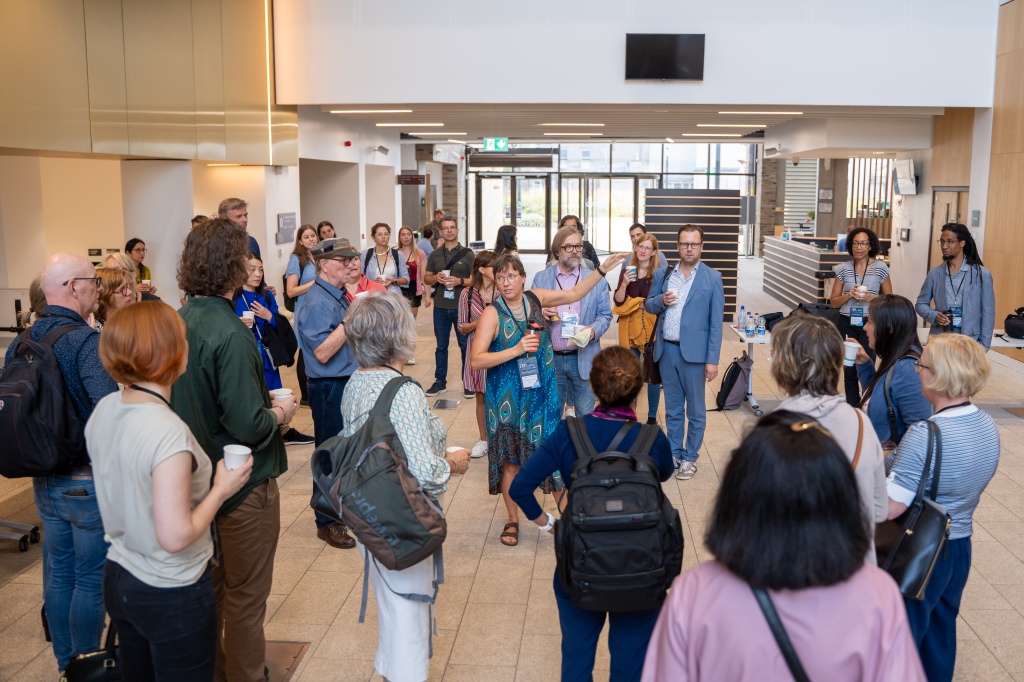
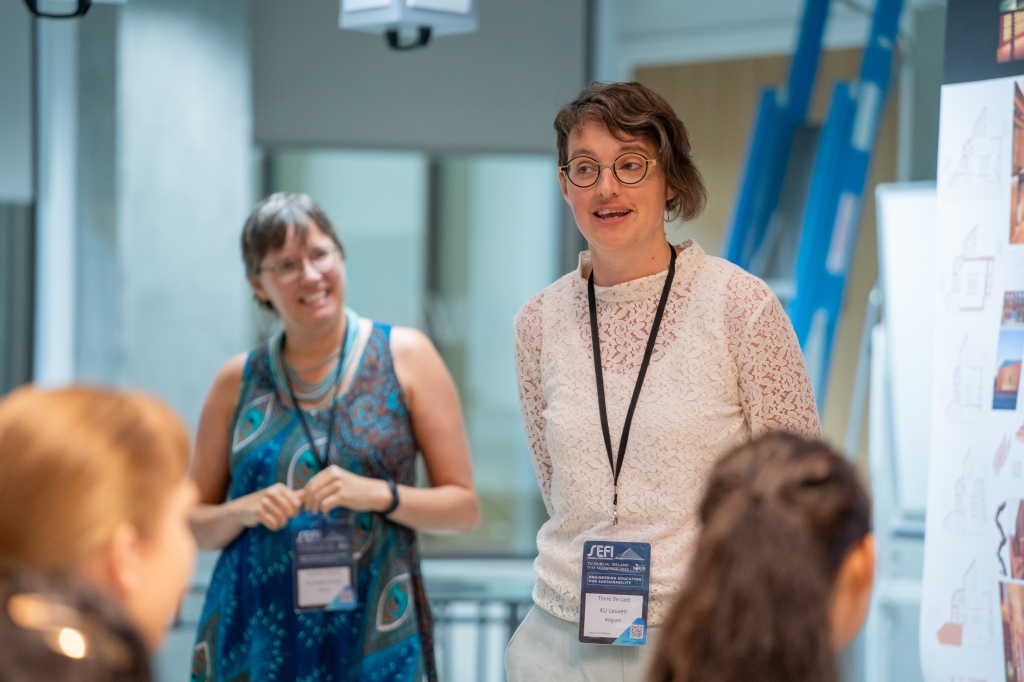
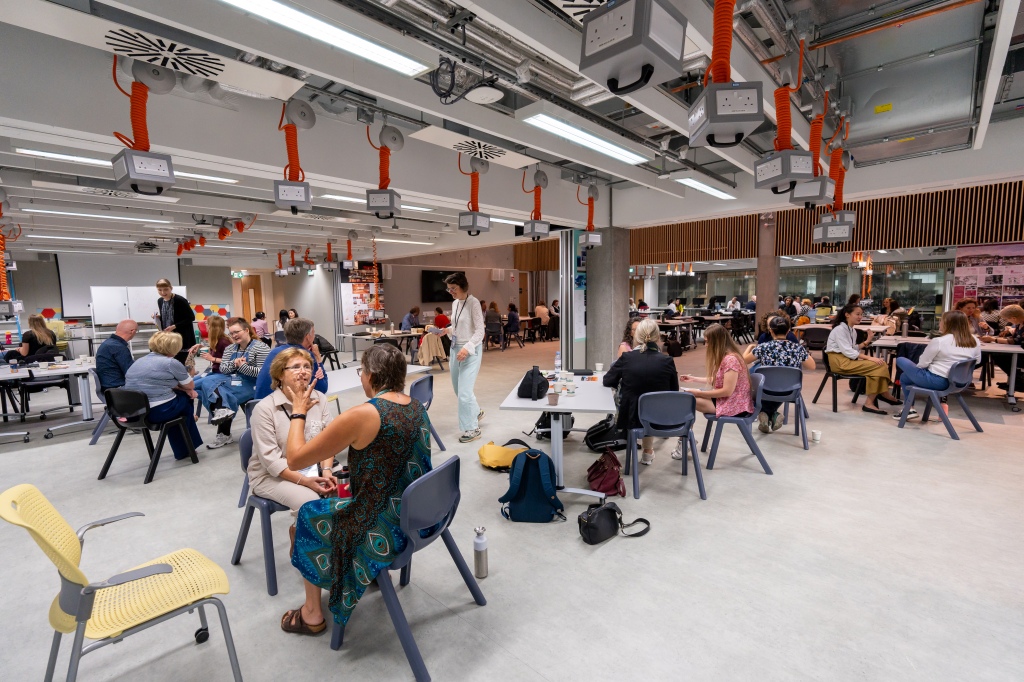
Favorite moments from the 2023 SEFI Doc Symposium include small group coaching, the extremely popular “speed dating” event, and the sharing of take-home messages.
All the photos on this post are by the talented photographer Conor Mulhern <conor@eyeon.ie>, hired to document the event.
Running straight from the Doc Symposium to Temple Bar that Sunday, I hosted my second event of the day — a new-to-SEFI pre-conference welcome for anyone feeling like they’d like a sense of community before the big event started. We had nearly 30 participants for our “Birds of a (Different) Feather” event, organized by Inês Direito, Predrag Pale, and I.
The main conference kicked off Monday morning. It was the 51st conference for SEFI, an organization that just reached 50 years of age, and a record number of people attended. Our TU Dublin East Quad was busting at the seams with 575 participants fully engaged.
I was a member of our Local Organizing Committee and I witnessed first-hand the heroic efforts and calm resolve of a truly outstanding member of our TU Dublin community, Ger Reilly, who led the cause.
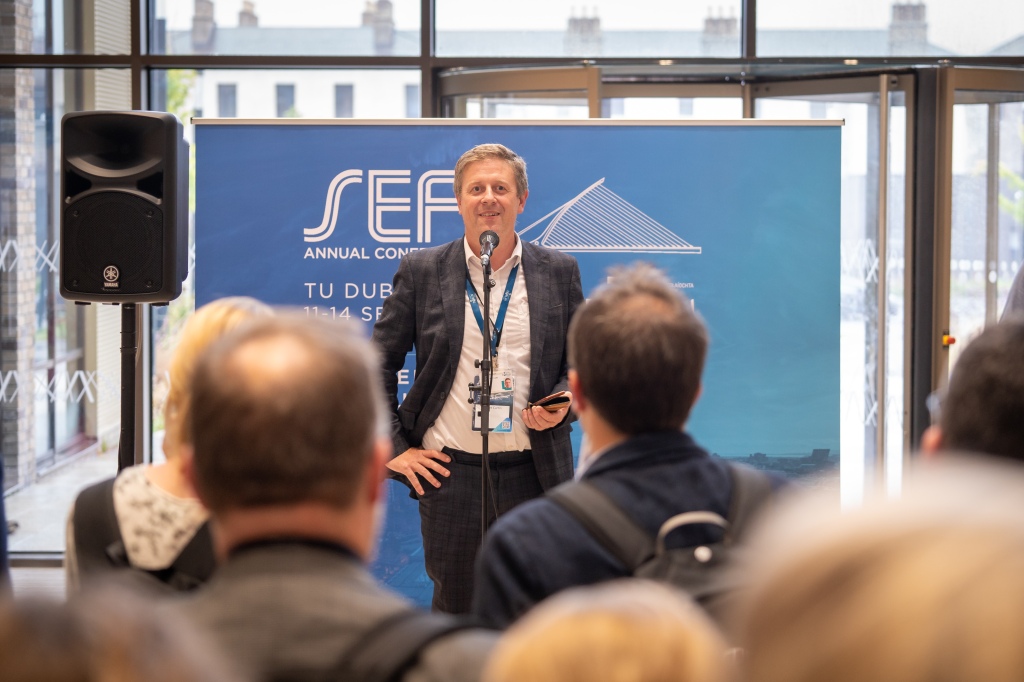
Recognizing Ger Reilly for all his amazing work organizing SEFI 2023!
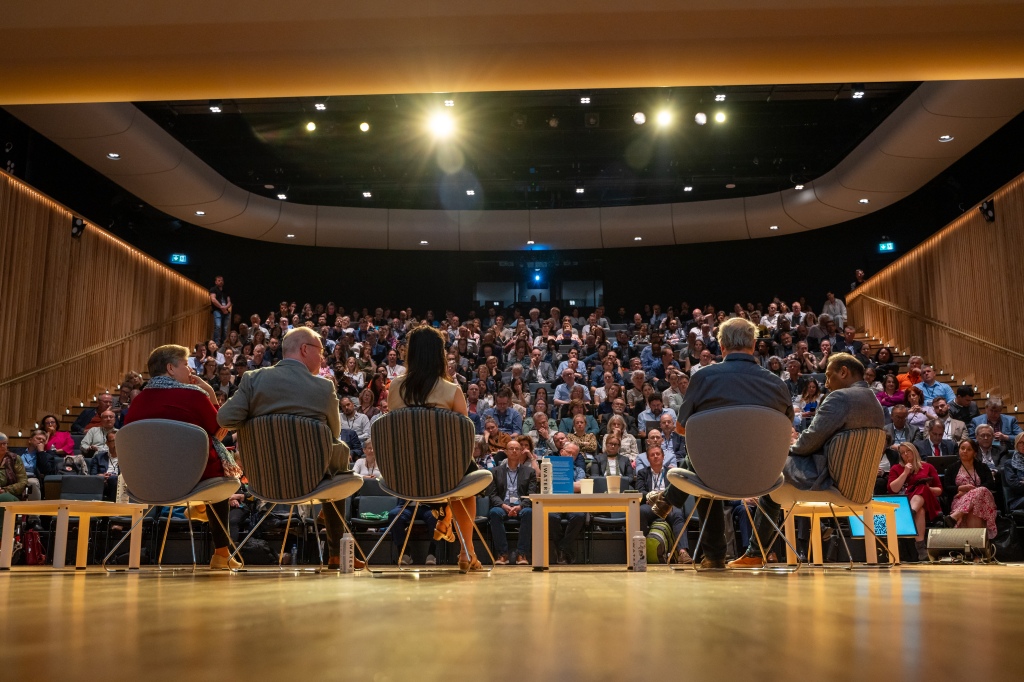
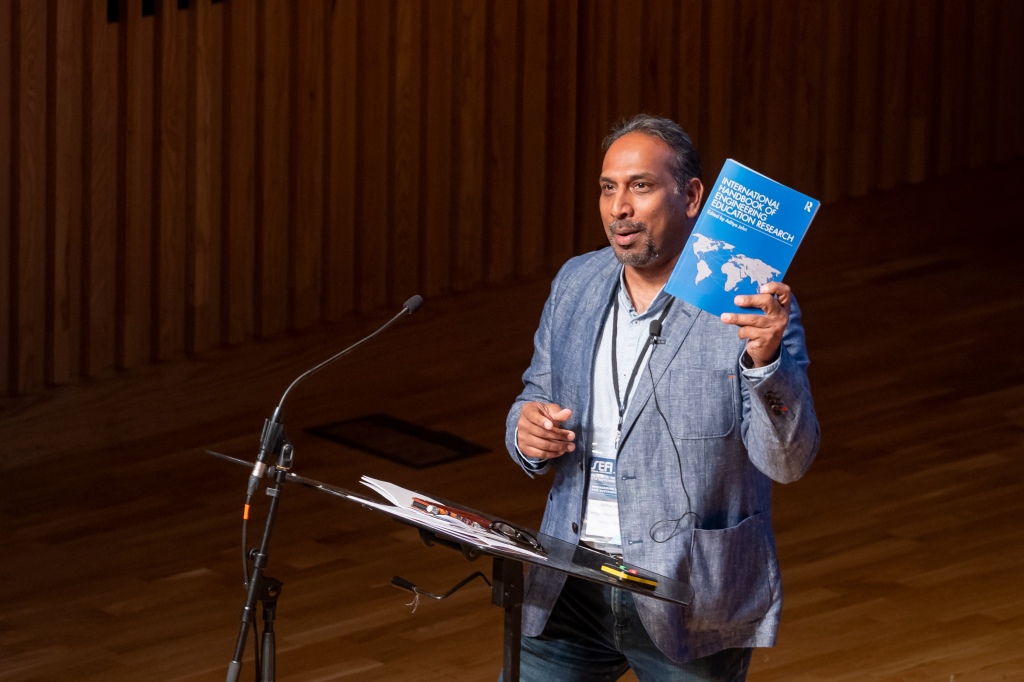
Monday morning started with a plenary on our new International Handbook of Engineering Education Research, organized by Aditya Jordi and Diana Adela Martin, with Bill Williams, Kristina Edström, John Mitchell, and Diana Adela Martin as panelists. Each panelist shared intriguing new insights on the current state of engineering education and thoughts and advice on where we’re headed as a field. I’ve worked closely with each of these scholars and feel a deep connection to each of them.
The opening plenary on the future of engineering education research. With Aditya Johri, Bill Williams, Diana Martin, John Mitchell, and Kristina Edström.
To tell the truth, I could not be prouder of Diana Adela Martin and her outstanding contributions to this year’s conference. She had asked me, when she completed her Ph.D., to mentor her (e.g., to learn about reviewing and editing for journals and books). That was just a few short years ago. And then, here she was–center stage–presenting ideas born from her work as an author and Associate Editor of our International Handbook of Engineering Education Research! At SEFI, she also led workshops, the Special Interest Group on Ethics that she co-chairs with Helena Kovacs, presented research, attended our EJEE editors’ dinner in her new capacity as Associate Editor of EJEE, and served as a senior advisor at the Doc Symposium, mingling with her new colleagues from UCL’s Centre for Engineering Education where she will soon start working as a Senior Research Associate.
Diana Martin in action (and leading an Ethics SIF workshop with Helena Kovacs, above).
After the panel, paper presentation sessions and workshop sessions swung into full gear.
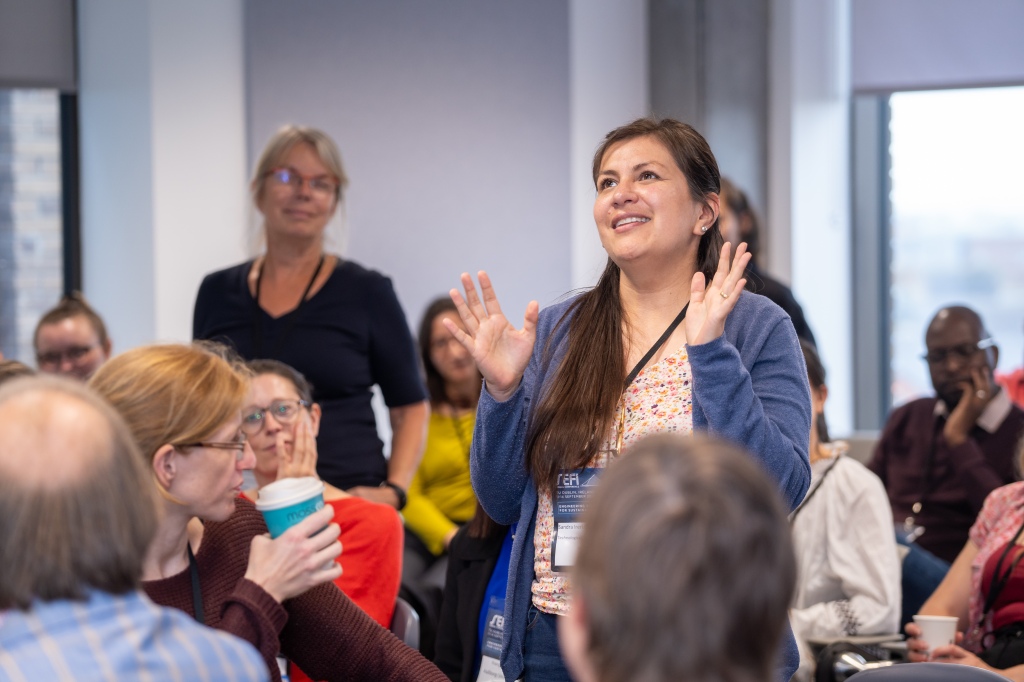
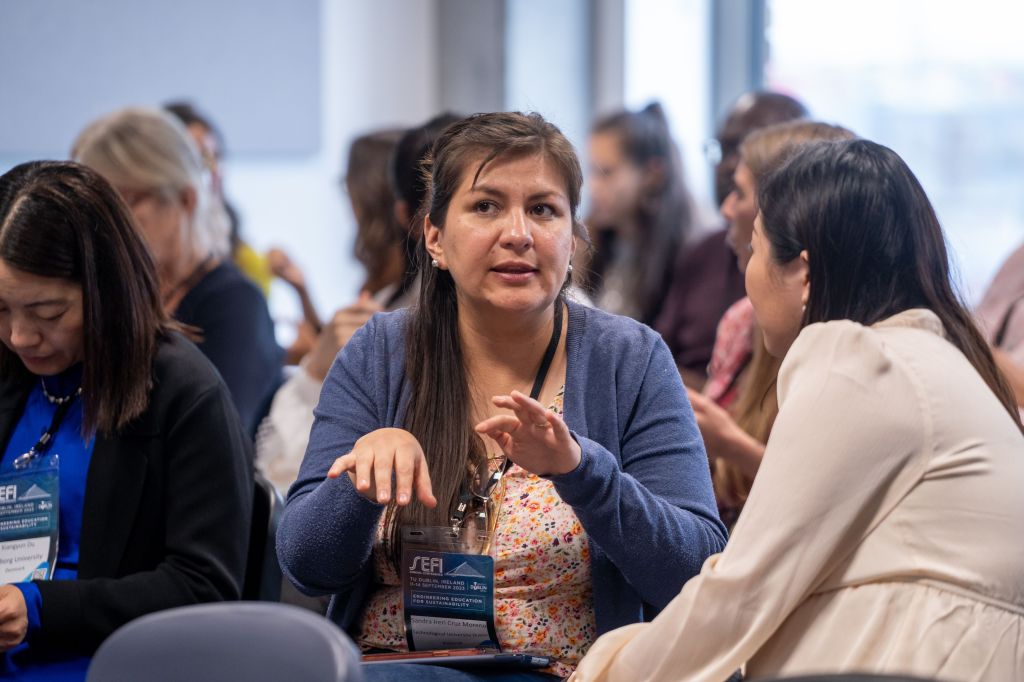
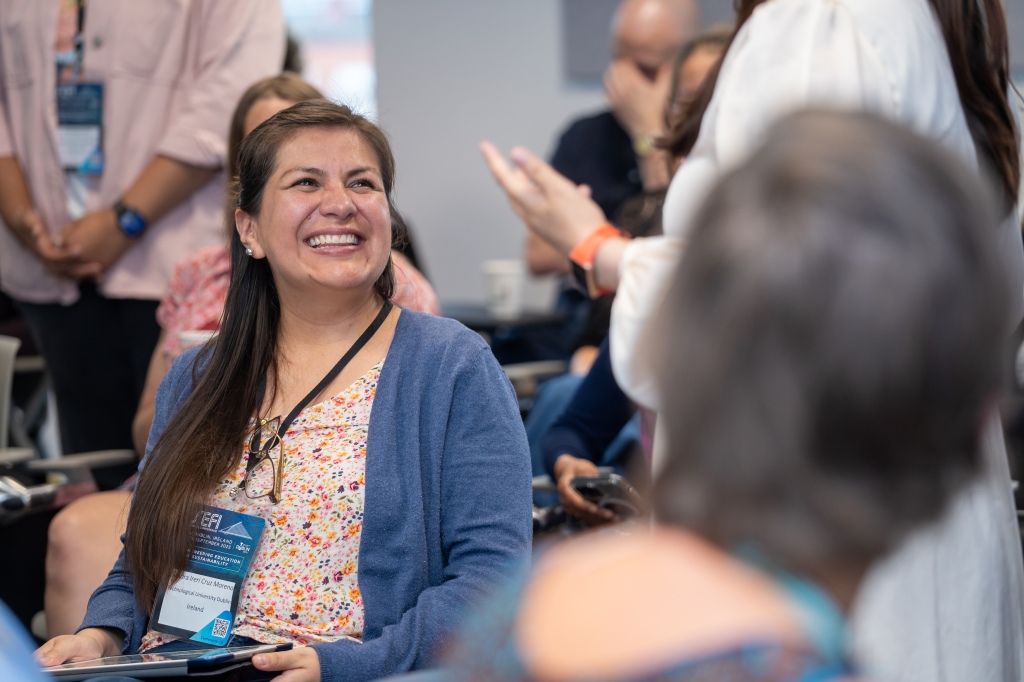
My fabulous PhD supervisee, Sandra Cruz, presented a paper on one facet of her research. Her paper is titled “Exploring Women’s Teamwork Experiences in Engineering Education: A Phenomenological Analysis”.
TU Dublin Ph.D. student Sandra Cruz, a joy and an inspiration to supervise!
Just before Sandra’s presentation, I myself presented a paper co-authored with Barry McAuley of a “Preliminary mapping of bachelors’ research to enhance digital construction in Ireland”. Afterward, I joined two really fun Special Interest Group workshops (Ethics, and Engineering Education Research).
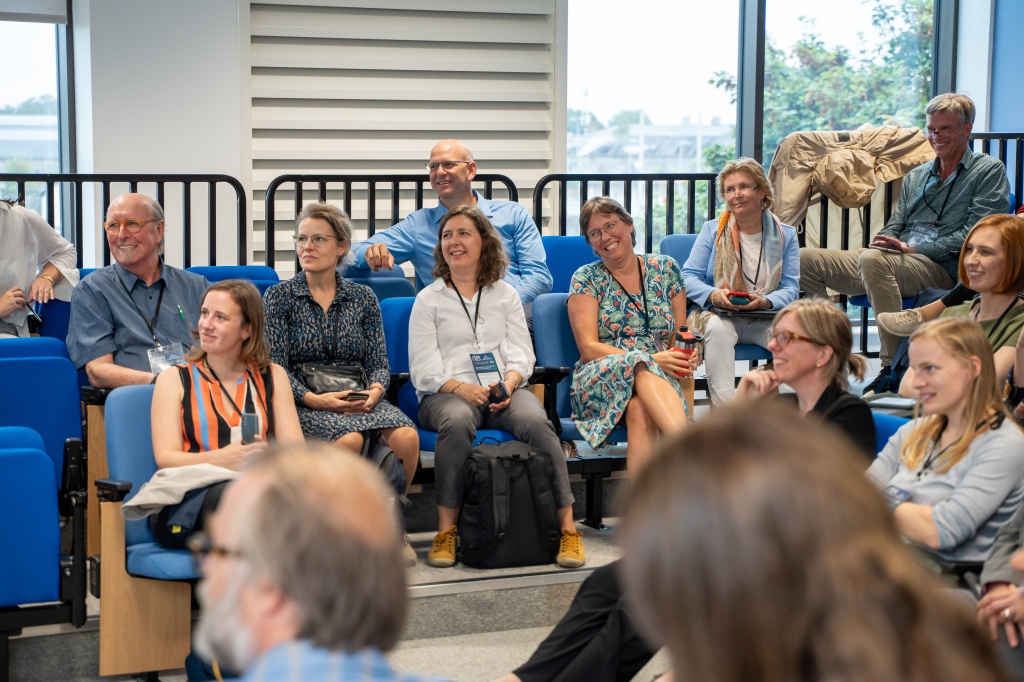
I really enjoyed the paper presentations and workshops, as evident in the photos below that Conor captured, and I helped lead two of the workshops.
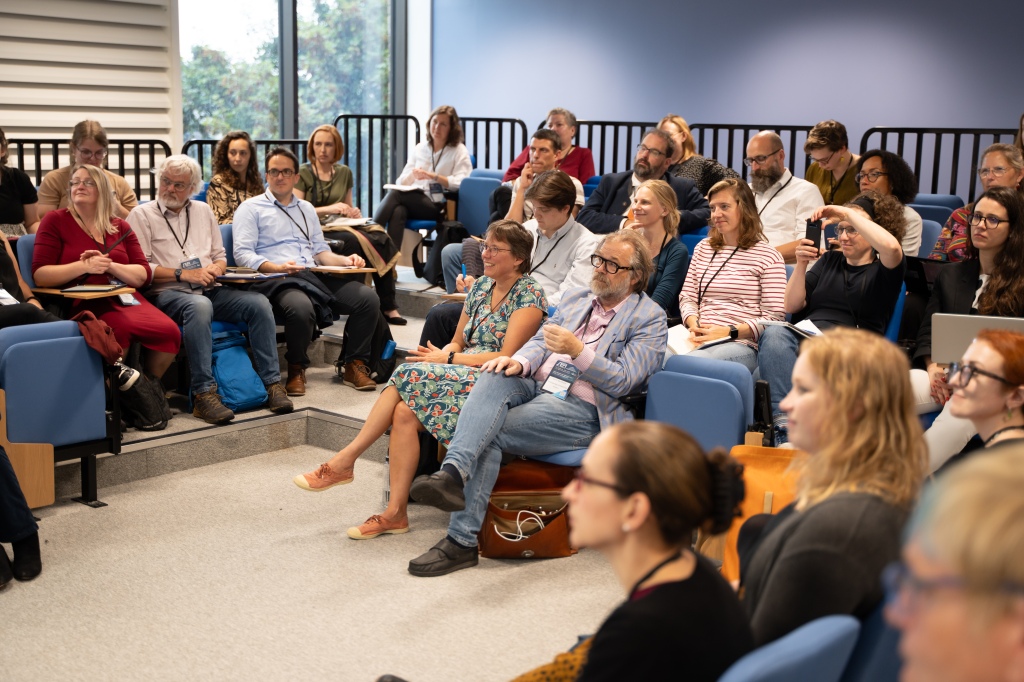
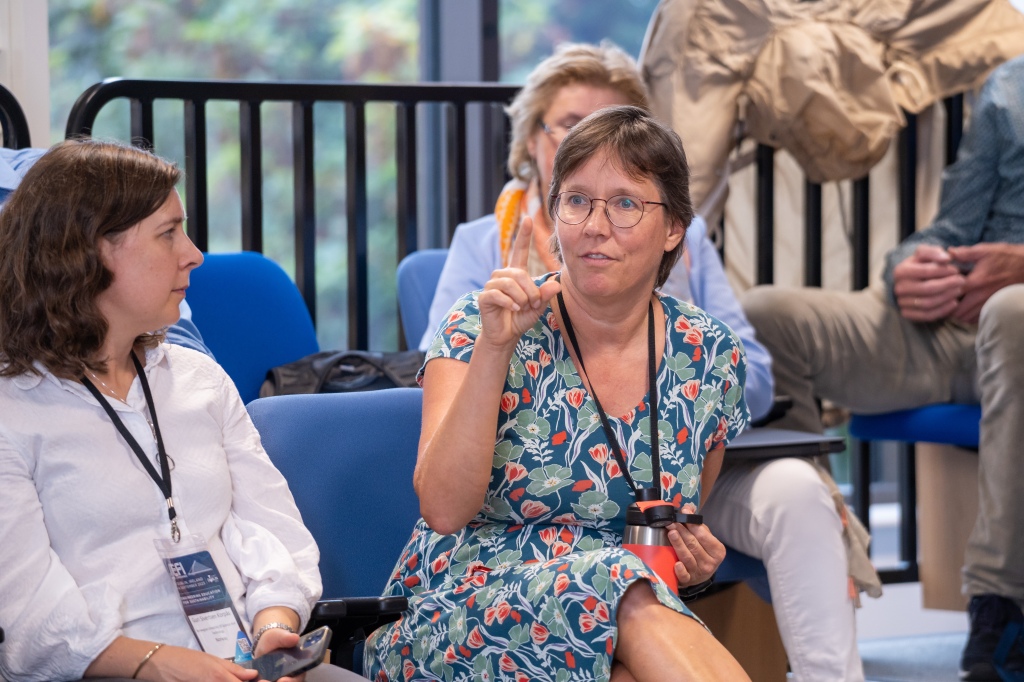
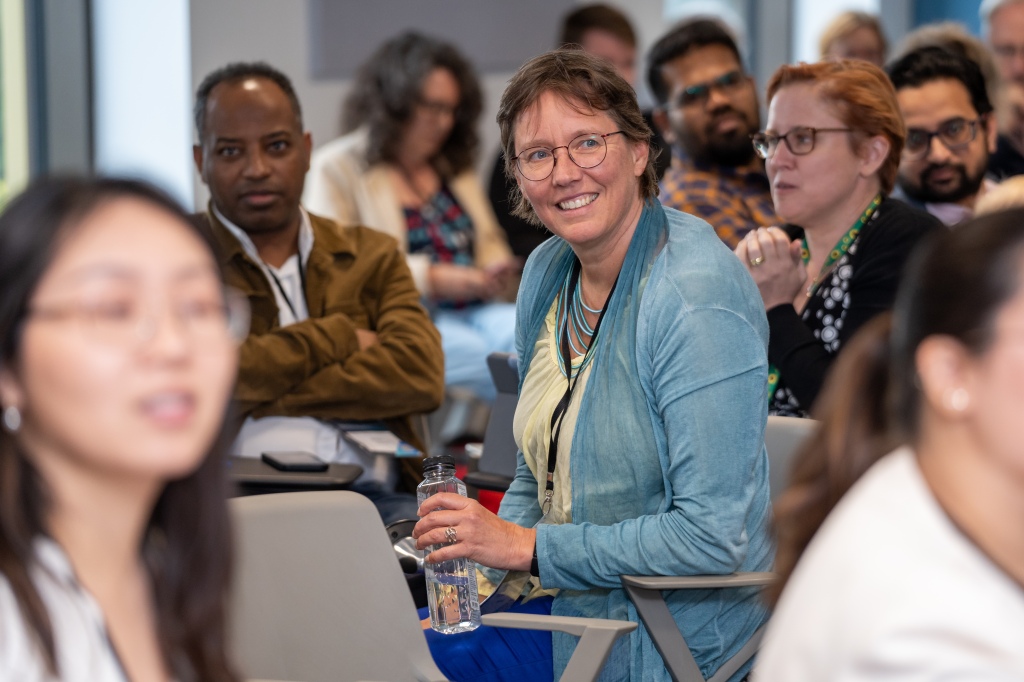
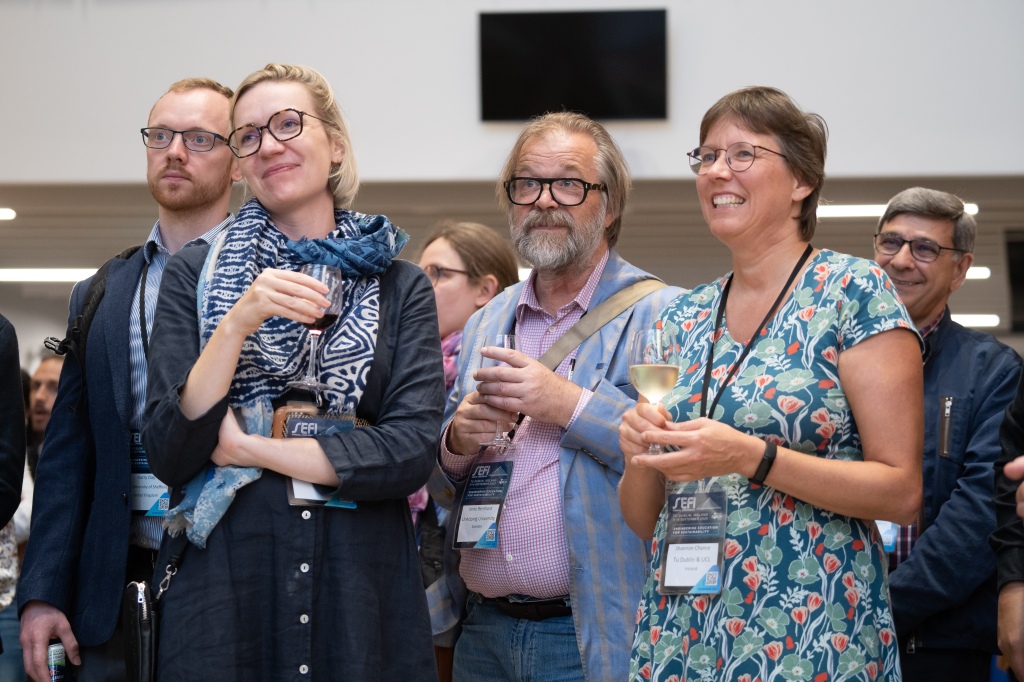
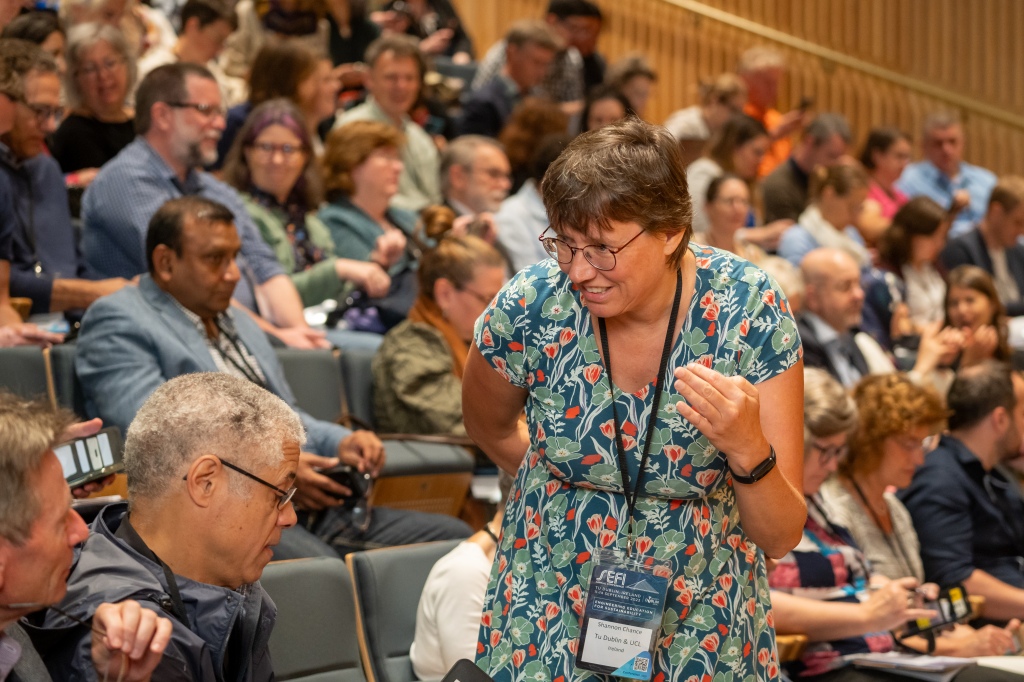
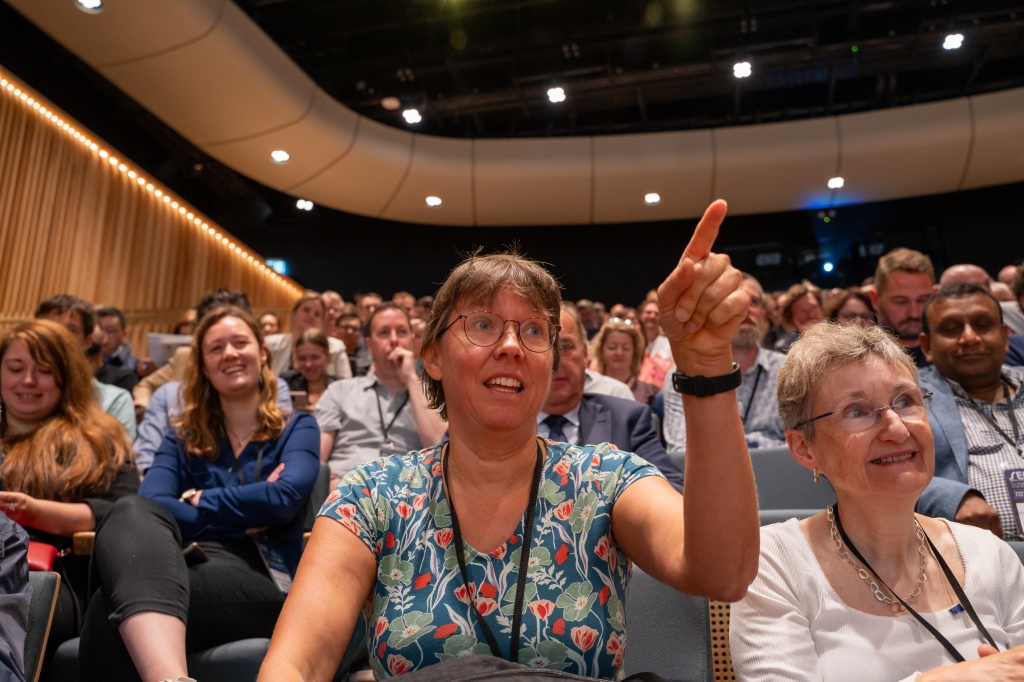
Fun at workshops and paper sessions.
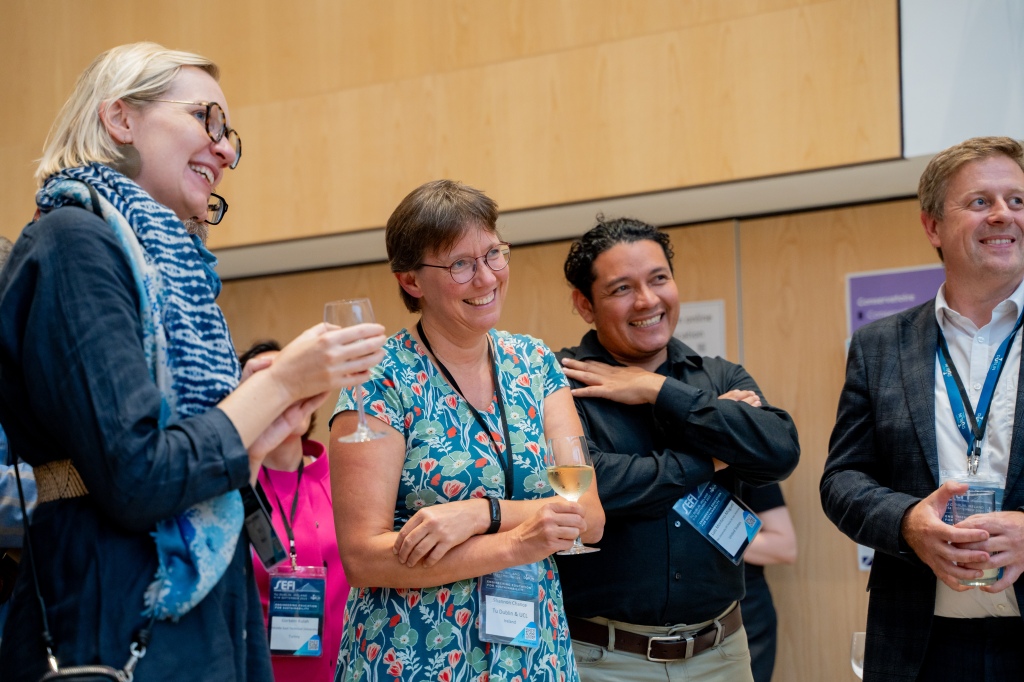
During the opening reception, a number of energetic colleagues were honored: Kristina Edström, Pieter de Vries, Yolande Berbers, and Maartje van den Bogaard have given so much to SEFi over the years and it wouldn’t be the organization it is today without their efforts. They we all named Fellows of SEFI, and Maartje even thanked me for being a mentor and role model during her acceptance speech–that was a big surprise to hear!
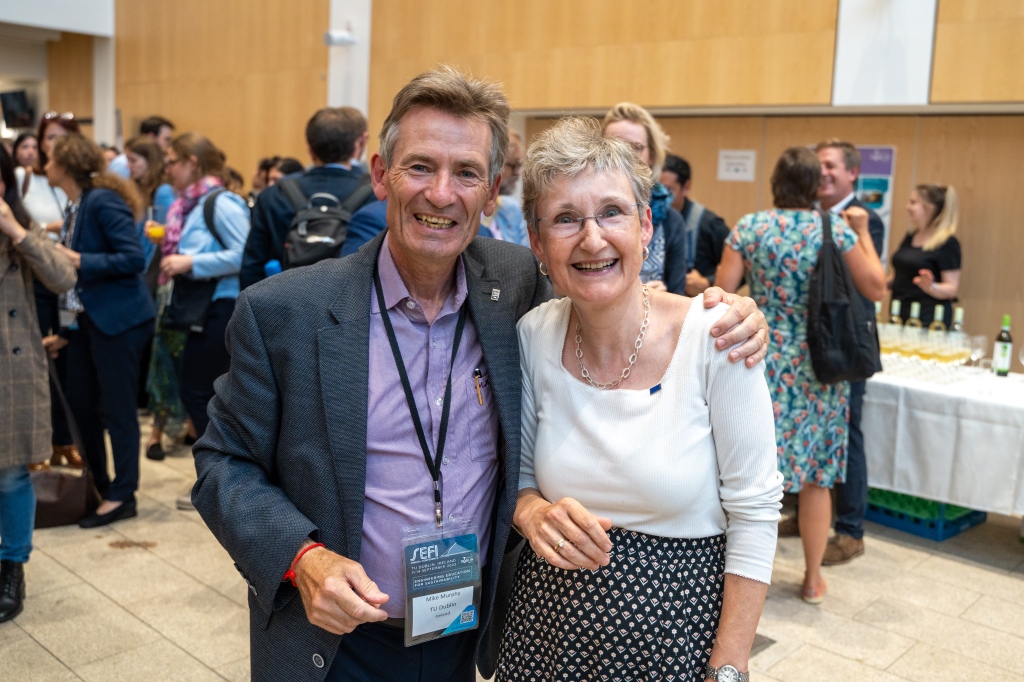
Moments from the open reception. Here Mike Murphy congratulates Yolande Berbers following her award as SEFI Fellow.
I must acknowledge all the exceptional work done to support this conference by SEFI staff Klara Ferdova over the year we’ve been planning this event.
My dear colleagues Klara Ferdova and Jonte Bernhard.
Aongus and I joined friends at Oscar’s Cafe after the reception.
On Tuesday, afternoon, Jye Benjamin O’Sullivan presented our co-authored paper “Drawing from SEFI Ethics Knowledge to Support Eco-ethics Education within the European University of Technology”.
Jye Benjamin O’Sullivan presenting our paper. (My smartphone photo, not Conor’s, or it would be much clearer!)
During SEFI, I helped lead workshops for new authors (Tuesday) and reviewers (Wednesday). I attended breakout meetings such as the EJEE Editorial Board meeting, EERN-UK & Ireland, and a celebration of our dear friend John Heywood, and Emeritus Professor from Trinity College Dublin, who at 92 years young is still working away, publishing research.
My university president, David FitzPatrick, and dean, James Curtain, and TU Dublin did a tip-top job representing our institution at this event. They’ve really grown into their roles over the past few years and their short speeches at the conference opening and closing were informative and engaging. Their support for the conference was important in so many ways, including having so many TU Dublin staff members present as volunteers and participants.
Dean Jame Curtain, President David FiztPatrick, and the amazing Ger Reilly, leaders at TU Dublin.
I attended SEFI’s General Assembly meeting to support my fabulous collaborators in taking on new leadership roles. For instance:
Emanuela Tilley was elected Vice President of SEFI for the coming two years. She and I work closely together to design a new curriculum for NewGiza University.
Emanuela Tilley in action, delivering awards and assuming the role of SEFI vice president.
Inês Direito joined the SEFI Board of Directors. She is also my mentee, and it brings such joy to my heart to see her flourish as a scholar, leader, and truly amazing friend and collaborator. I actually didn’t see much of Inês at SEFI this year… we were both so busy spreading our wings. To say I’m proud of the scholar she is and the leader she’s becoming is an understatement!
Inês Direito assumed a new role on the SEDI Board of Directors during the conference.
At the EJEE Editorial Board meeting, Kristina Edström, our Editor in Chief shared statistics showing that our journal is rising in stature. I’m very pleased to serve as Deputy Editor, alongside Jonte Bernhard, and look forward to helping lead this journal forward in the coming years.
Our superb leader, and EJEE editor-in-chief, Kristina Edström.
Special guests joined us from far and wide. Even though this is the annual European conference, dozens upon dozens of researchers in engineering education joined us from Africa, Australia, and North America.
Two very intriguing keynotes were delivered in the last two days of the conference, and I was delighted since our Local Organizing Committee had nominated them as keynote speakers.
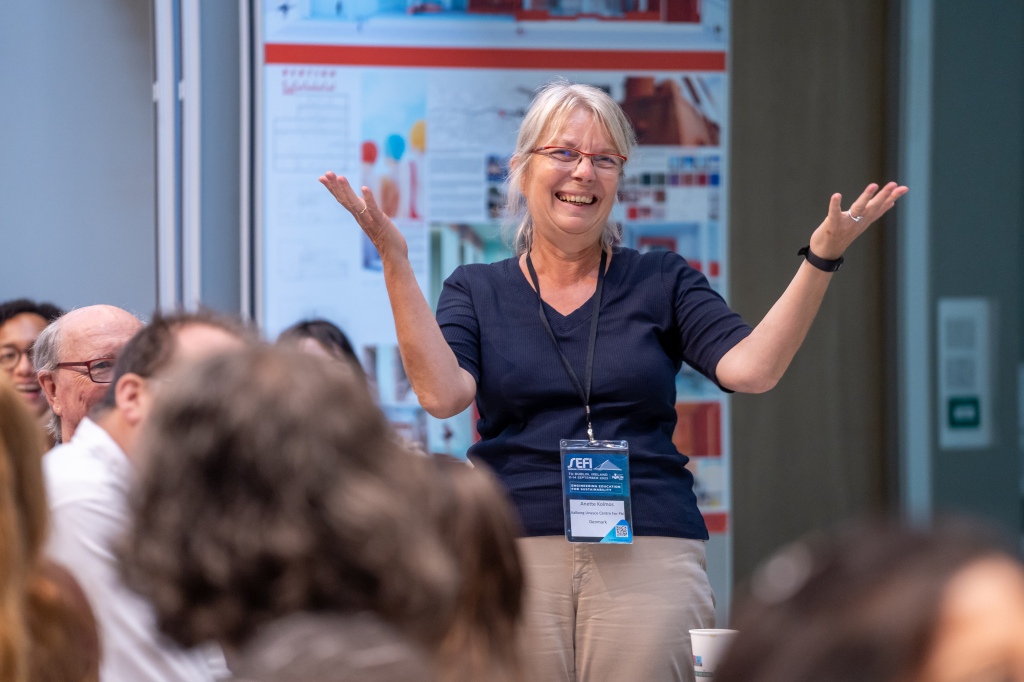
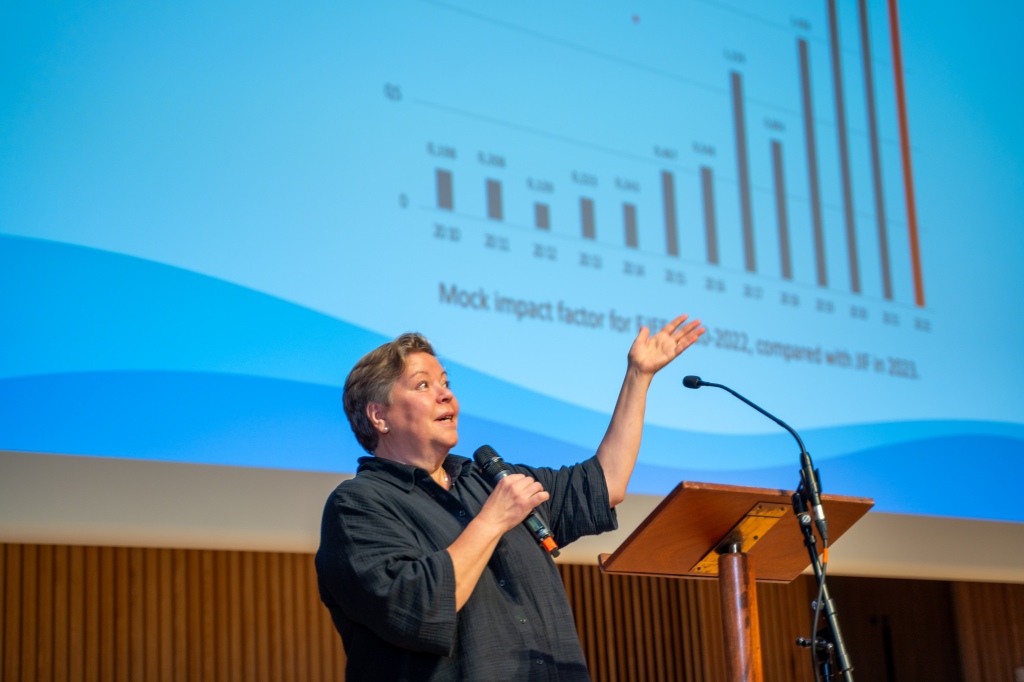
Anette Kolmos, from the Aalborg University UNESCO Center for Problem-Based Learning, put enormous energy into preparing and delivering her keynote–developing incredibly helpful new graphics and descriptions of extremely advanced concepts regarding transdisciplinary team challenge-based learning and the like. She pulled together ideas that she’s been sharing for years into an extremely effective presentation that brought these ideas to life.
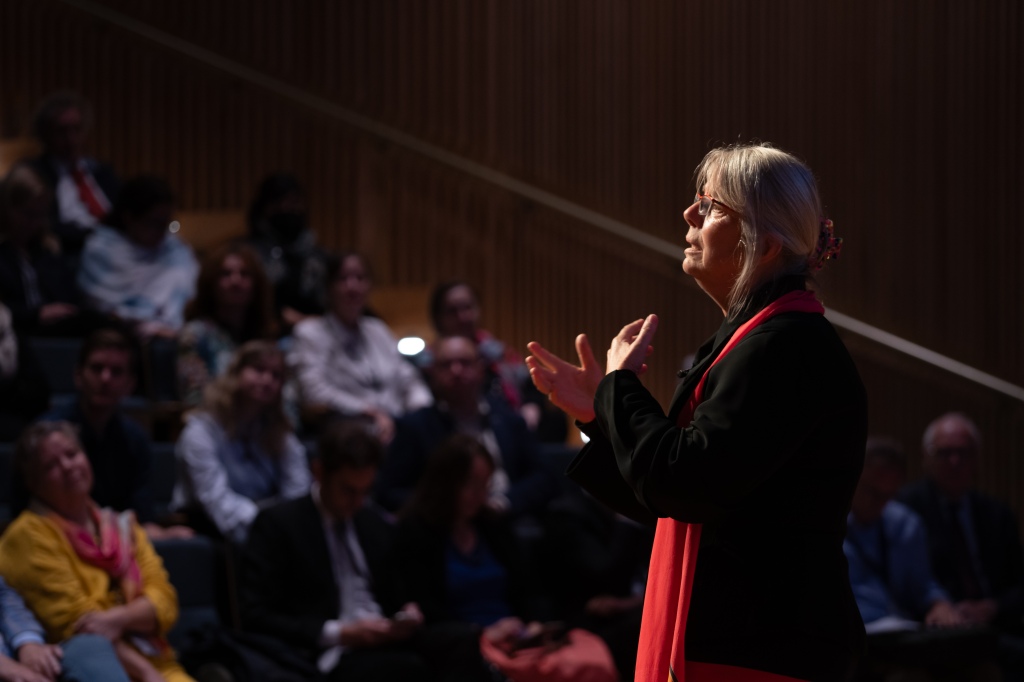
Anette Kolmos’ keynote at SEFI 2023.
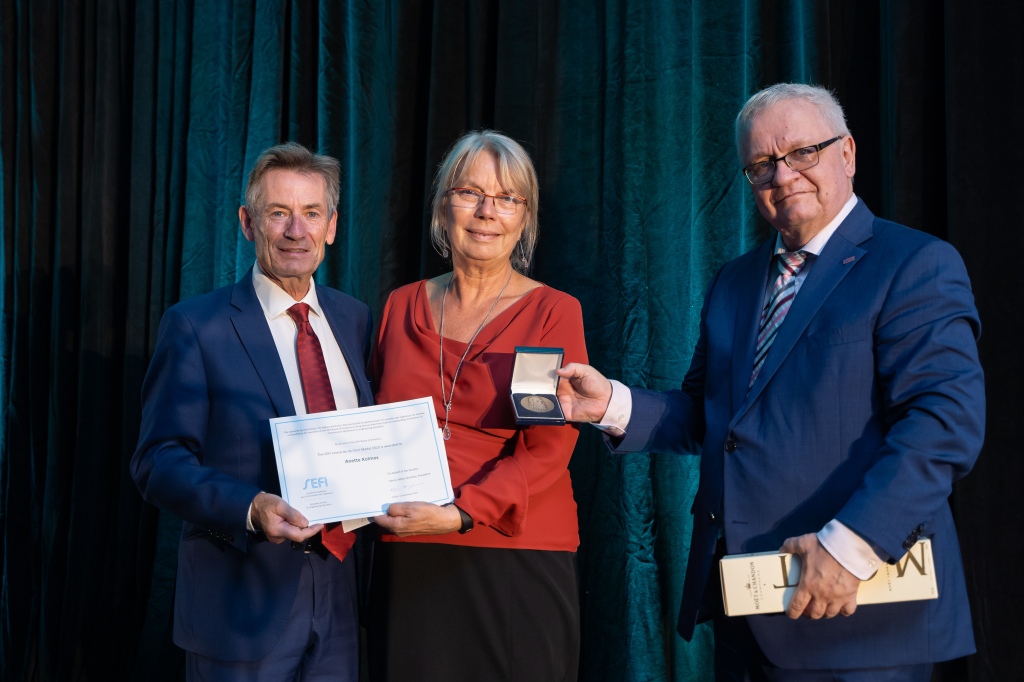
Anette also won top honors at our gala banquet on the final night, taking home SEFI’s coveted Leonardo DaVinci Award, an honor long overdue I’d say. She’s in great company as Santiago Calatrava is one of many illustrious past winners of this award.
Tinne De Laet won SEFI’s Maffioli award for all she does to support engineering students at her university—not forgetting that she also delivers the Doc Symposium each year!
Tinne De Laet coming up to accept the 2023 Maffioli awardSEFI past and current presidents awarding Anette Kolmos the 2023 Da Vinci medal.
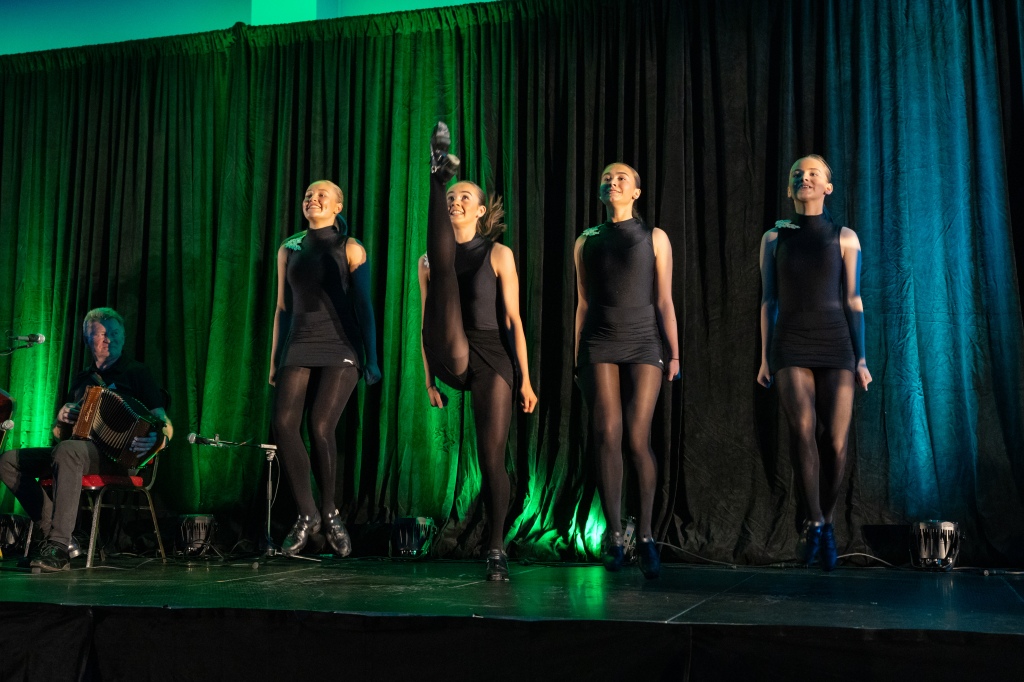
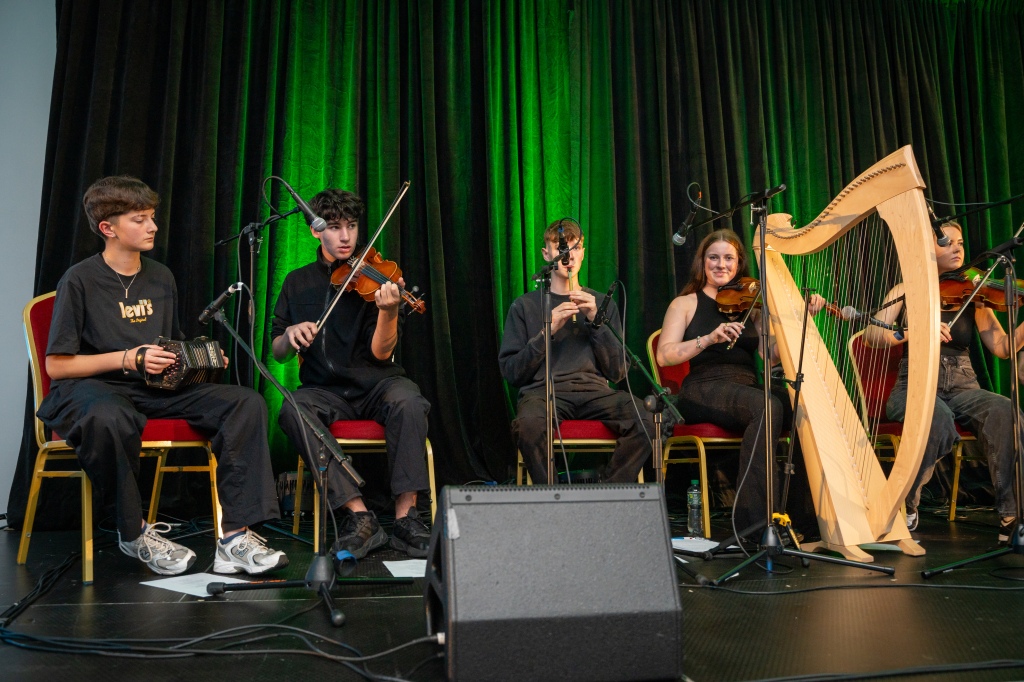
The award was given at the “gala dinner” out at a banquet hall of Dublin’s RDS. The food was lovely and I enjoyed the evening alongside my colleagues from Univesity College London, where I serve as Honorary Professor. The banquet was a hoot, our colleague Gavin Duffy‘s daughter was one of the musicians entertaining the crowd. There was also Irish Céilí dancing (think “River Dance”) on stage.
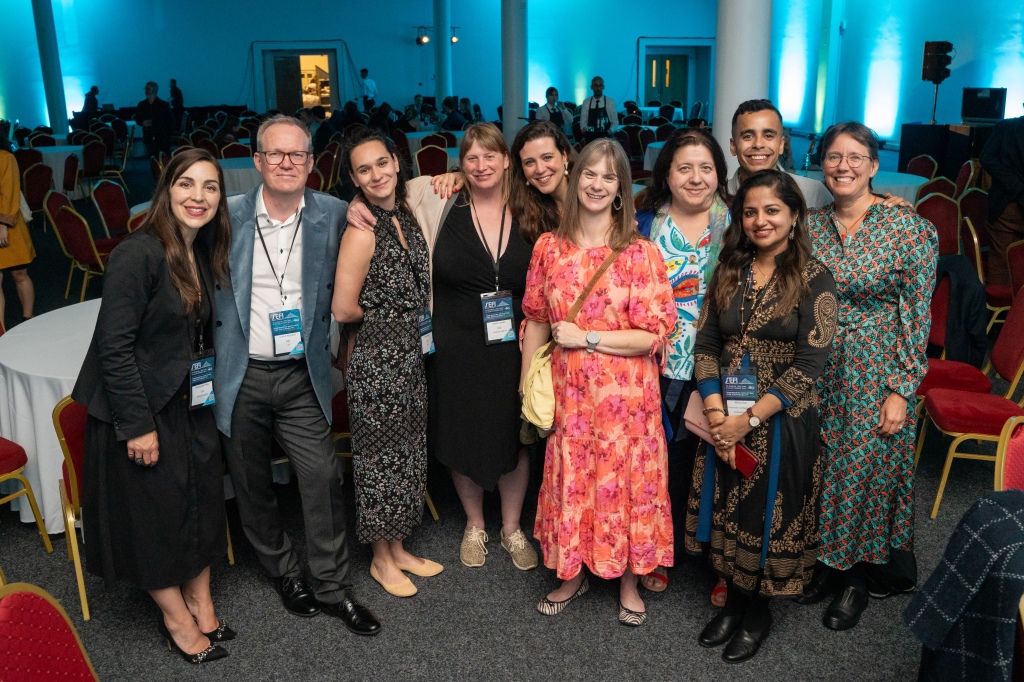
UCL’s Centre for Engineering Education enjoying the gala dinner and its entertainment.
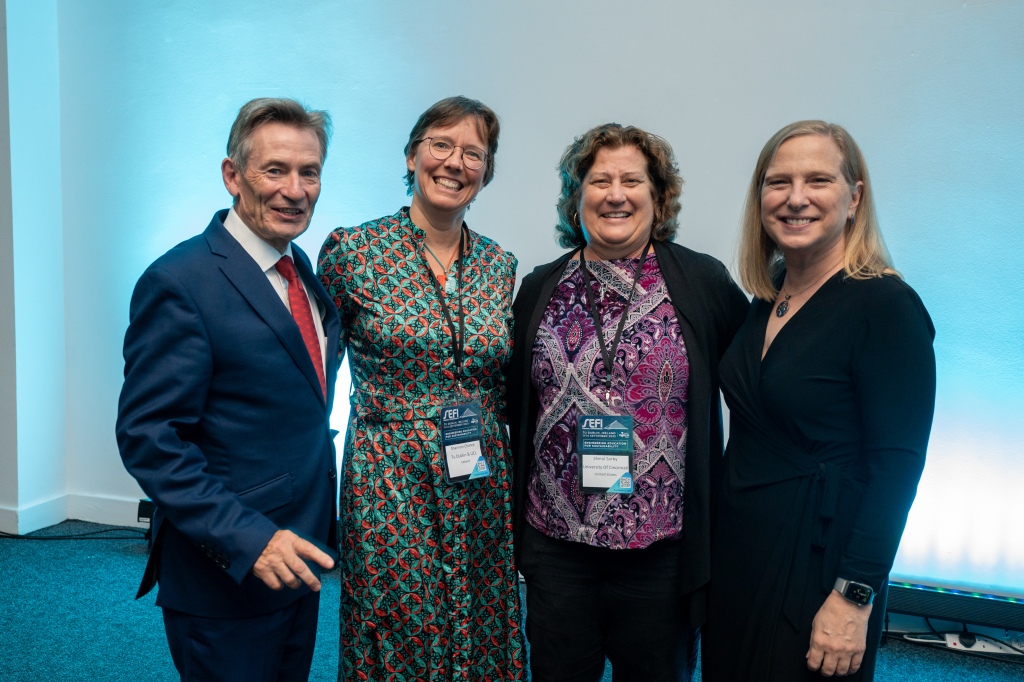
Our past SEFI president Mike Murphy even finally got a photo with the three Fulbright fellows who most recently came to TU Dublin during his tenure as Dean of Engineering and Built Environment: me (Shannon Chance), Sheryl Sorby, and Stephanie Farrell. Sheryl and Stephanie have both served as presidents of the mega-sized organization ASEE (American Society of Engineering Education), whose conference I attended in June.
Mike Murphy with his last three Fulbright scholars: Shannon Chance, Sheryl Sorby, and Stephanie Farrell.
For the final keynote of the conference, Ed Byrne, a sustainability leader from Cork, Ireland did not disappoint! I count on Ed for up-to-date reports on changes to engineering accreditation in Ireland. Like Anette, Ed had crafted a presentation chock full of cutting-edge research on educational issues and pedagogies to improve sustainability. I enjoyed his info-packed presentation, and meeting him in person afterward. I’d previously attended and presented at the Engineering Education for Sustainable Development (EESD2021) online conference he organized.
I really enjoyed the main stage events this year!
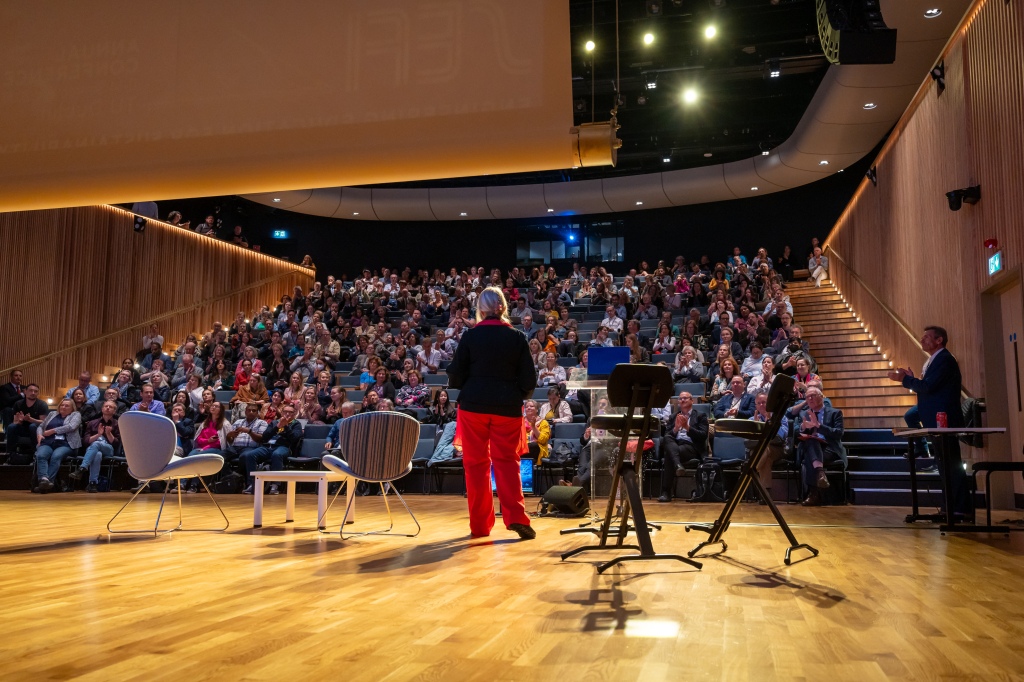
Enjoying the full house and engaging with plenary speakers. To the right, I’m sitting beside former SEFI president Yolande Berbers.
During the conference, a couple people, including Klara Kövesi, stopped me to say they follow this blog. That inspired me to get new content posted (thank you!).
All in all, it was a very satisfying week. By Friday, I’d discovered the trove of brilliant photos captured by Conor Mulhern <conor@eyeon.ie>. Conor, the official conference photographer, was with us every minute of the week. Starting at 9 AM Sunday morning and sticking it out until the very last moments Thursday afternoon. Conor seemed to be in all places at once!
Conor captured us so skillfully. I had to dash off an email:
Dear Conor,
I just got my hands on the Dropbox link, and I am stunned with your astonishing ability to capture us as individuals and as a community. Thank you so very much for being part of our event. You saw us not as outsiders but captured our hearts and souls.
Your Doc Symposium photos exude the joy I felt. I’ve not yet viewed the other folders, but I am full of pride, happiness and satisfaction, thanks to the memories you’ve so aptly captured.
Warm Regards,
Shannon
And he replied:
Hi Shannon,
Ah you’re very kind to say so!
It was my pleasure. Everyone seemed very happy to be there which made my job much easier, and even in the sessions with faces in deepest concentration, you in particular always had a smile to make a good photo! 🙂
Well done all-round on making it all happen.
All the best,
Conor
An enthusiastic round of applause for Conor, our photographer! Here are my great colleagues Emanuela Tilley, Sarah Junaid, John Mitchell, and Klara Ferdova in the front row, with Klara Kövesi in green behind them.
Ultimately, I agree with our Doc Symposium participant who said she’s found her village. I found this village in 2012, at the SEFI conference in Thessaloniki that I attended alongside Mike Murphy, Brian Bowe, and Gavin Duffy. I met new colleagues, like Bill Williams, who welcomed me warmly and with whom I collaborate frequently today. I began to cherish the SEFI community at my first conference, and I also thoroughly enjoyed my time before and after that conference exploring Thessaloniki. The city stuck in my memory long after I left. I hope SEFI 2023 and Dublin live long in the hearts of those who attended this year!
If you are attending ASEE conference in 2023, you can attend this session of the Educational Research and Methods Division (ERM), where I’ll be a panelist alongside Aditya:
M314C·Introducing the International Handbook of Engineering Education Research (IHEER) and Discussing the Future of EER
Mon. June 26, 2023, 11:00 AM to 12:30 PM (Room 308, Baltimore Convention Center)
I served as an Associate Editor for the handbook and co-authored the chapter on “Informal Learning as Opportunity for Competency Development and Broadened Engagement in Engineering”. The chapter authors, Madeline Polmear, Shannon Chance, Roger G. Hadgraft, and Corrinne Shaw made a great team. It was a pleasure writing this chapter and my first time writing with any of the three. Won’t be my last!
I haven’t been blogging much these days, as I’m so embroiled in research publication activities (mostly in the roles of editor and peer reviewer) that I rarely spend time at the computer for recreational activities like blogging. That said, I feel compelled to report how rewarding it has been to work with the Bachelor’s level Building Construction Modeellign/Digital Construction students at TU Dublin. I coordinate the BSc (honors level) degree program, lead its Research Methods and Work Based Learning modules, and support its Dissertation module.
One of our recent students, Anne Grego, has presented her bachelor’s level work at two conferences. The one presented last month at the EU BIM conference has been published. You can download the paper, “USING BIM TO INCREASE THE EFFICIENCY OF ENERGY-DRIVEN RETROFITTING PROJECTS” by Anne Grego, Shannon Chance and Barry McAuley from https://arrow.tudublin.ie/surconcon/2/
Recently, I had the good fortune to gather with the European University of Technology (EUt+) as part of its EthiCo project. There are eight, soon to be nine, technological universities in this alliance.
The first day, I met with leaders of an EthiCo work package who are developing materials to teach teachers to integrate ethics into their course delivery. The leaders of this project were receptive to my ideas, and asked me to present ideas and a framework—which I synthesized from the Engineering Ethics Education Handbook I am currently co-editing—during the subsequent day’s work sessions.
Just getting started….
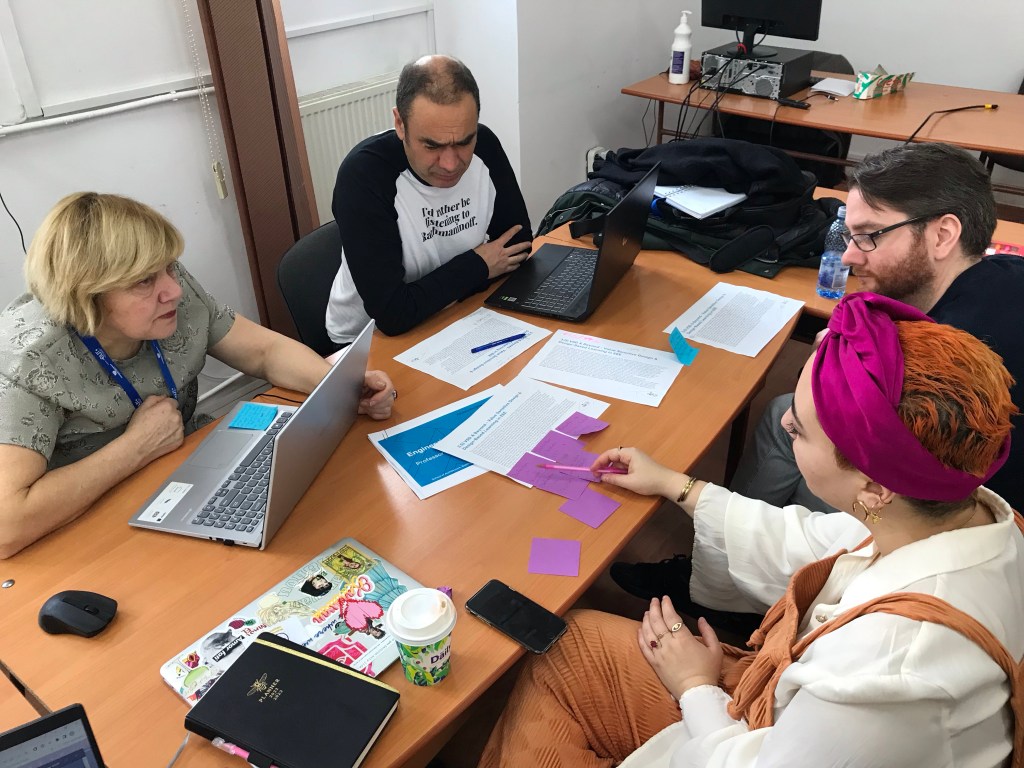
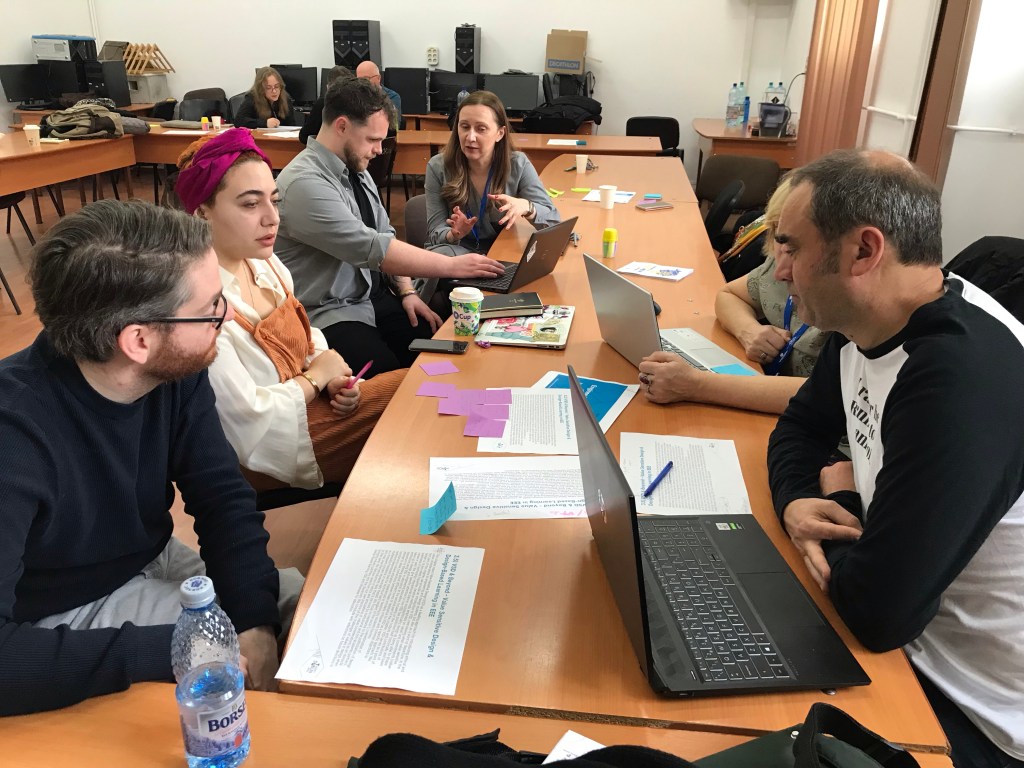
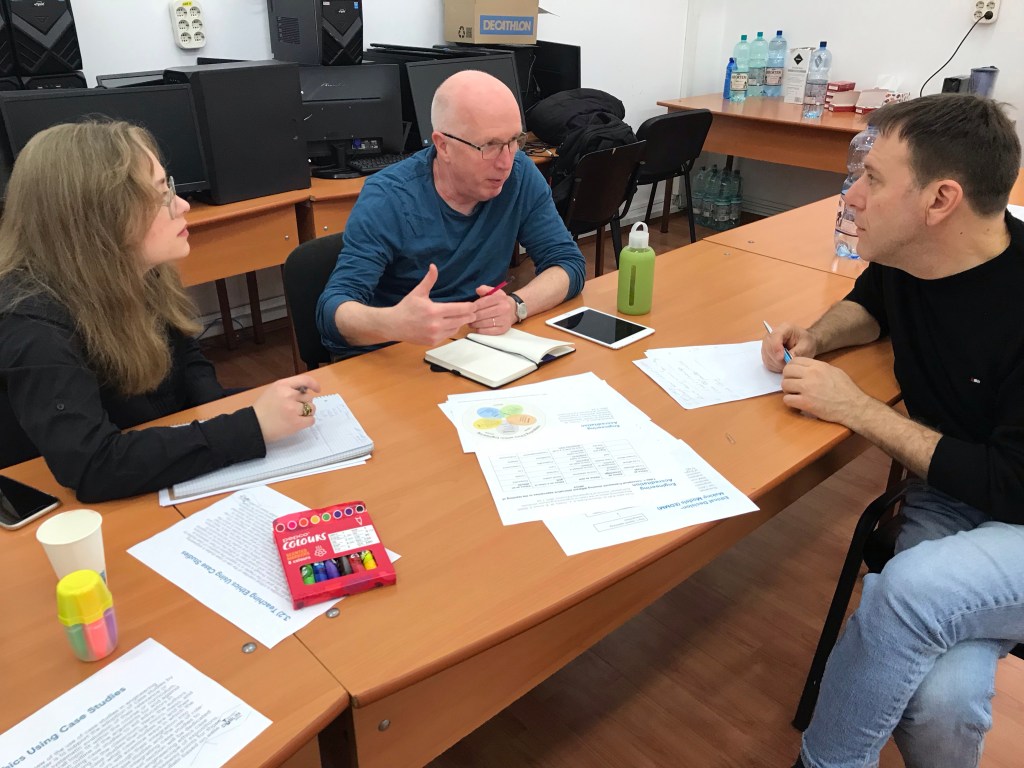
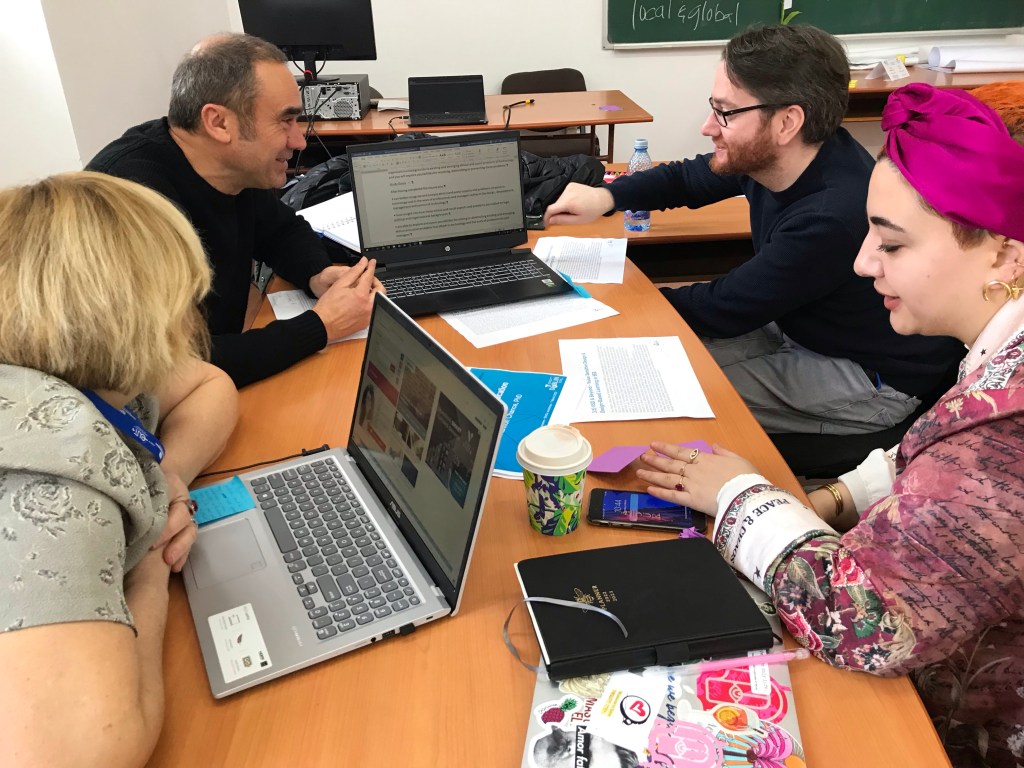
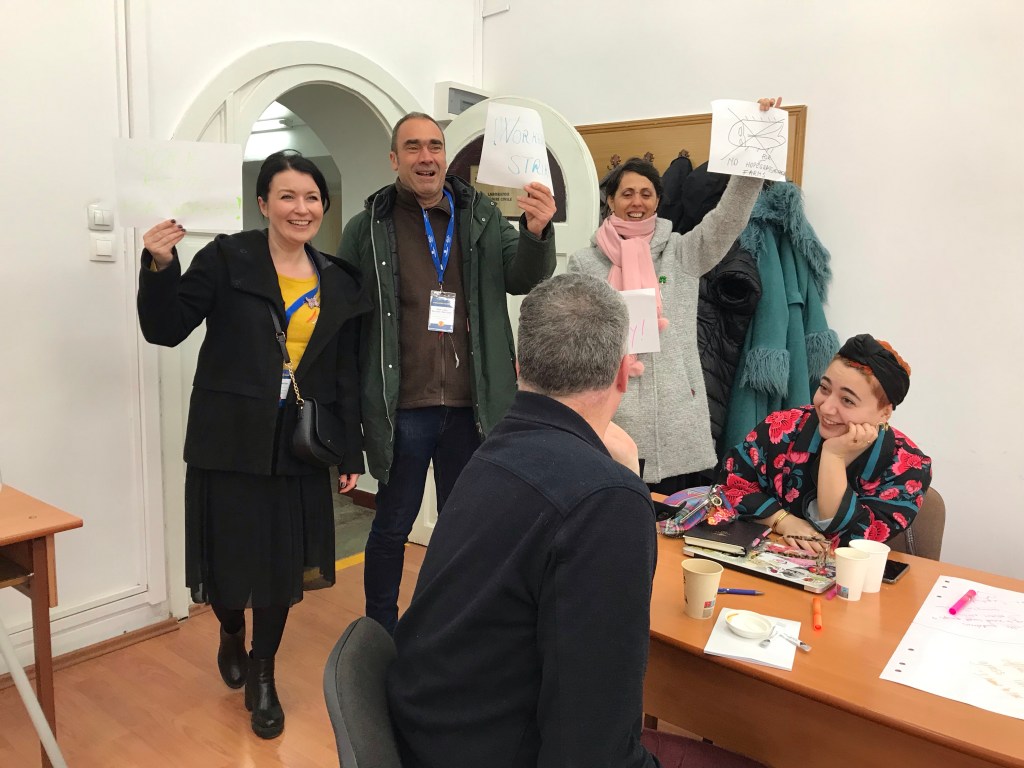
On the third day, I facilitated a session on integrating ethics into participants’ own teaching, using case studies, challenge- or problem-bases learning, or Values Sensitive Design and Virtues Practice Design. The photos below show the groups hard at work.
On the fourth day, I facilitated a session on defining learning for teacher-training modules on using each type of activity listed above (case studies, CBL or PBL, and VSD or VPD).
Being part of the EEE Handbook empowered me to step forward and lead these sessions extemporaneously. I got to draw from the contributions of 115 experts on our handbook team.
The EthiCo group of the EUt+ was enthusiastic about learning the techniques promoted in the handbook, and they look forward to reading and using the Handbook once it’s published.
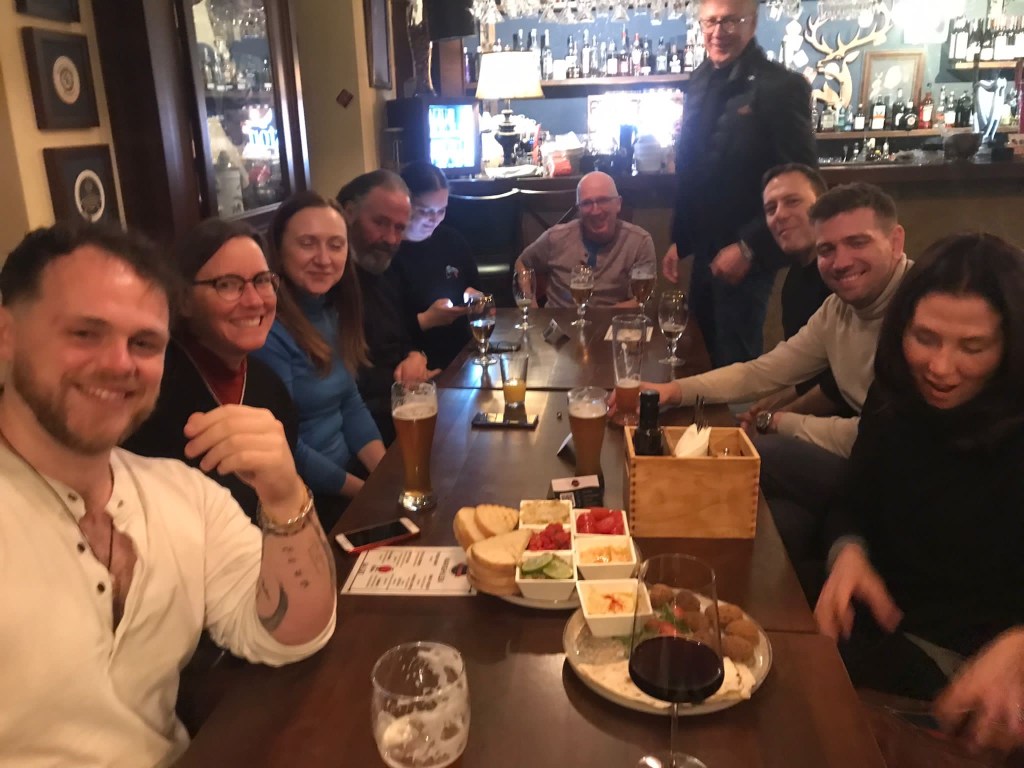
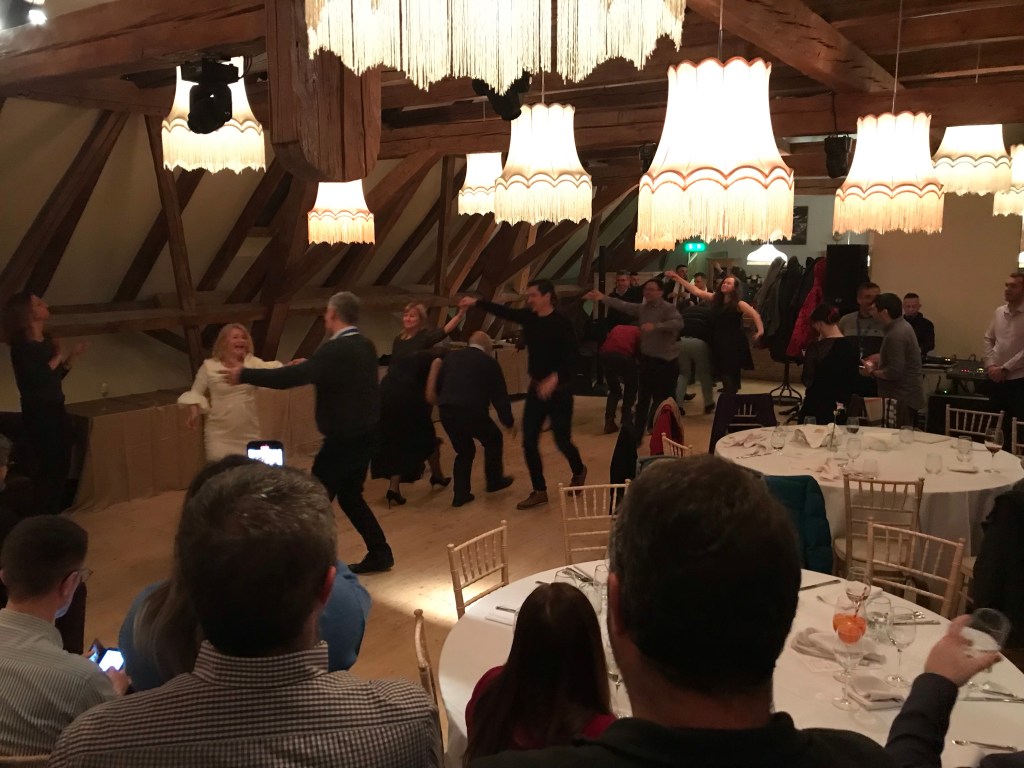
Cultural exchange was a big part of the EUt+ week as well, and you see photos of this side of things below.
I immensely enjoyed meeting and working with colleagues at TU Dublin’s peer institution who are part of EUt+ and also building string relationships with TU Dublin colleagues who attended.
I added days before and after the conference for exploring Cluj, Romania. It’s a fascinating place to visit!
My colleague and co-Deputy Editor of the European Journal of Engineering Education, Professor Jonte Bernhard, came to visit for the weekend. Jonte was on his way to a PhD viva in Limerick where he is serving today as External Examiner.
Here’s a favorite picture from the summer, taken with Jonte, at a dinner in Stockholm that was hosted by our chief editor, Kristina Edström.
A jolly bunch of engineering education research editors! Drs. Inês Direito, Jonte Bernhard, Shannon Chance, Jenni Case, and Kristina Edström after the EARLI SIG9 conference in August 2022.
This past weekend, Aongus cooked up a lovely dinner for Jonte and me on Saturday. We were joined by a PhD student named Urša — she had attended the Doctoral Symposium that Jonte and I organized at the SEFI conference in September.
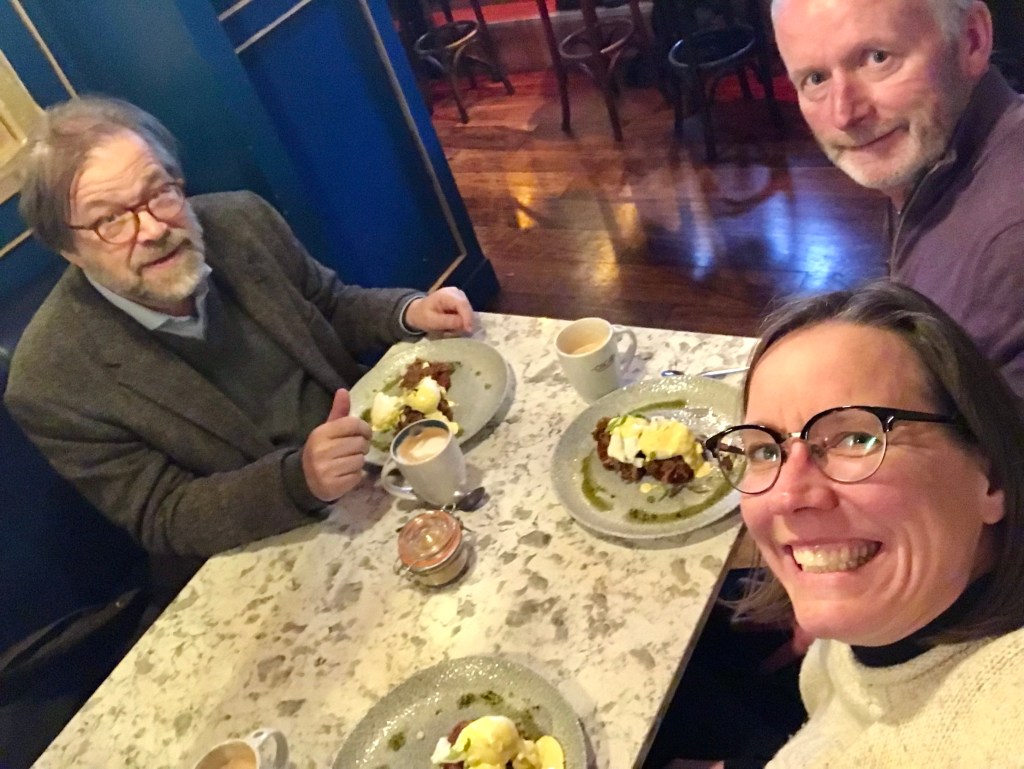
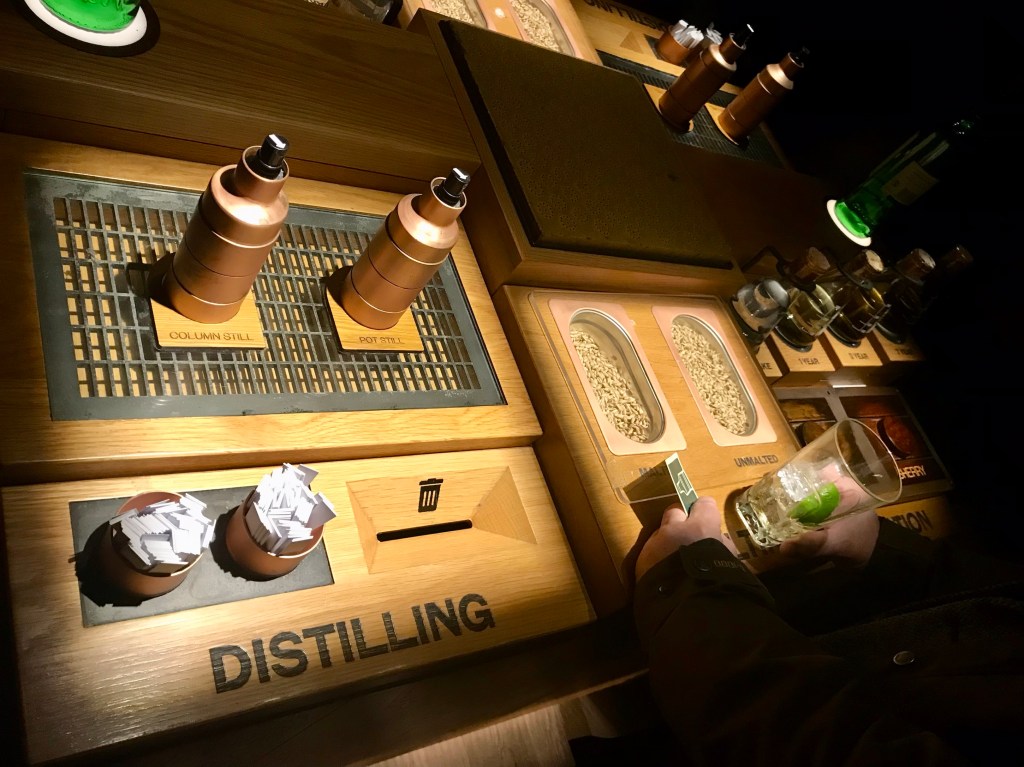
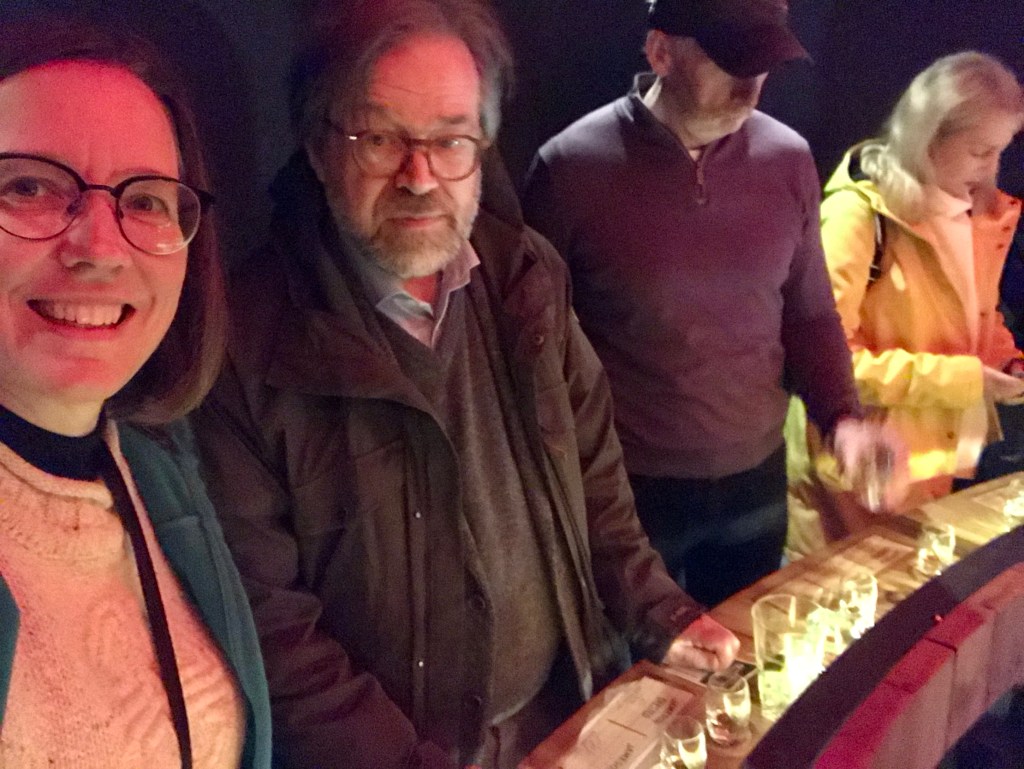
On Sunday, Jonte, Aongus, and I enjoyed brunch at Oscar’s on Smithfield Plaza. Aongus and I had hoped to show Jonte several of Dublin’s sites, but the rain put us off. We did make it over, between downpours and hail, to tour the Jameson Distillery on Bow Street.
Aongus had never been on the Jameson’s tour, and I hadn’t since 2003, so it was a rare treat despite it being just a block from our flat.
Jameson Distillery tour.
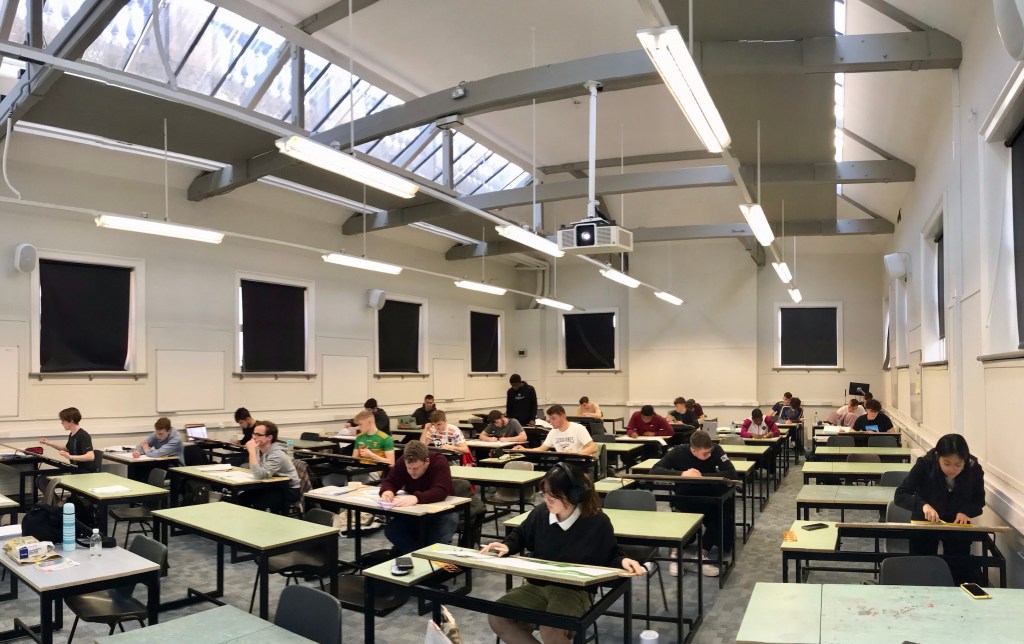
For me, the work week started with attending an online conference. Then, I did a bit of peer reviewing before heading off to teach Tech Graphics 2-6 PM.
My co-teacher, Marina, and Rachel (who teaches physics lab down the hall at the same time as us) both came over for dinner to celebrate the semester coming to a close.
As both Marina and Rachel are working on PhDs (in BIM and spatial perception, respectively), we’ll be sure to get them reviewing papers for our journals soon!


























 Ireland by Chance