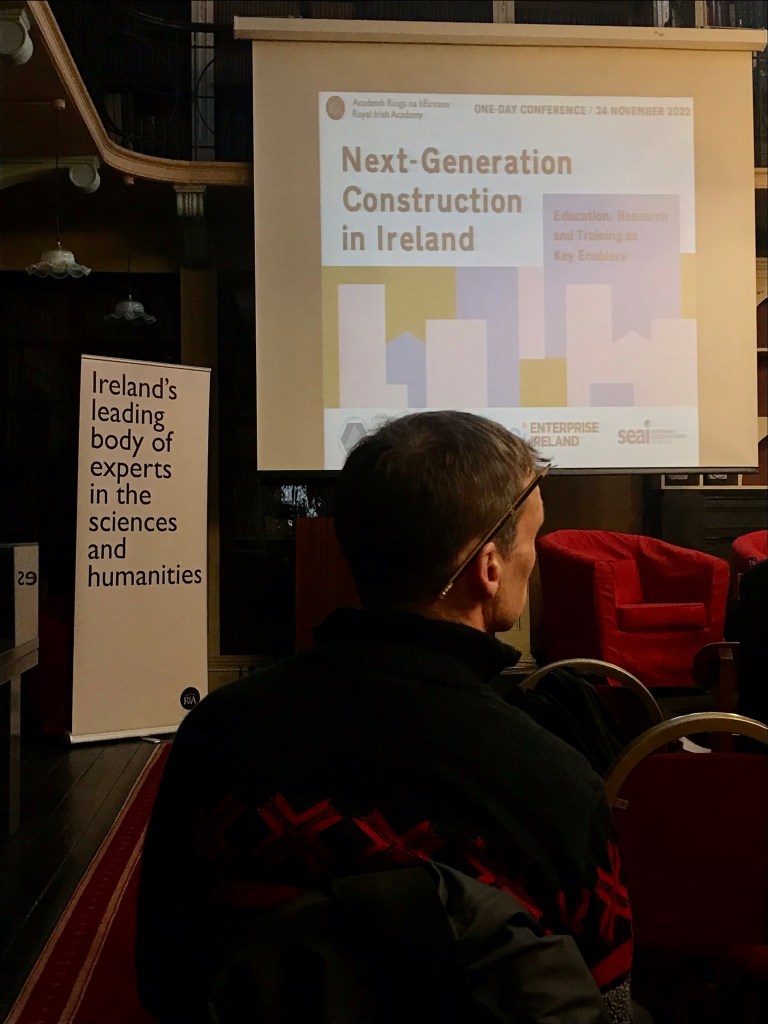
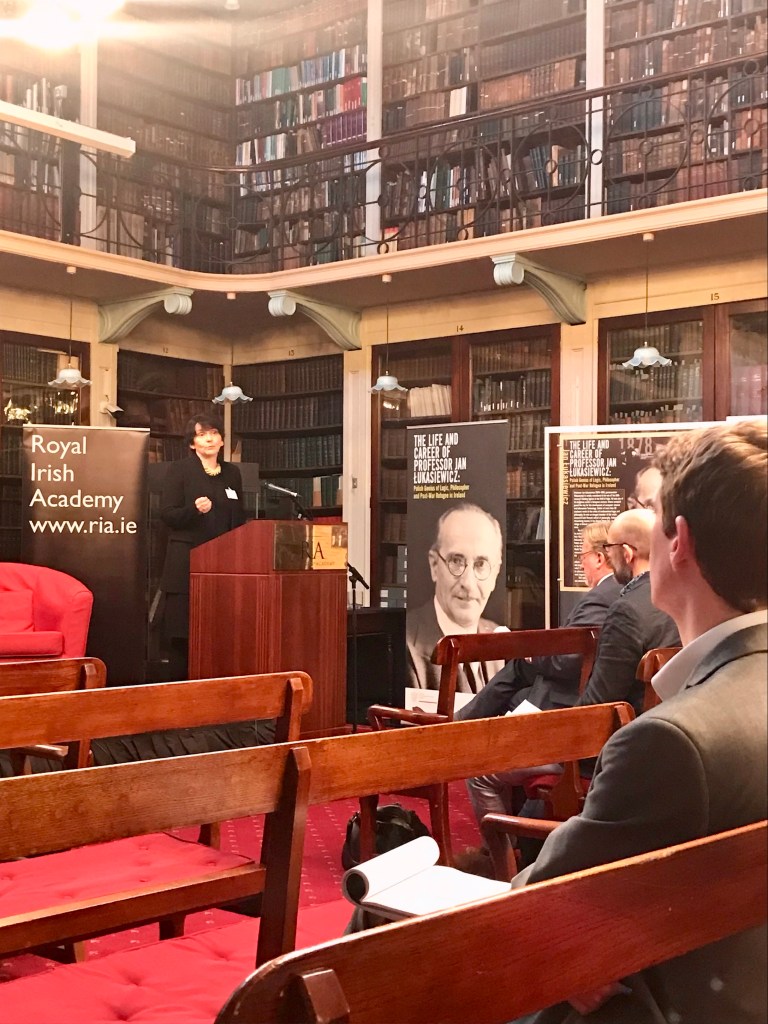
Thanksgiving here in Ireland is usually just another ordinary Thursday. But this year I made a point to celebrate. I registered for a conference held at the Royal Irish Academy on Dawson Street, so I could learn about “Next Generation Construction in Ireland” while soaking in old-school Irish ambiance, and I bought tickets for an American Thanksgiving feast.
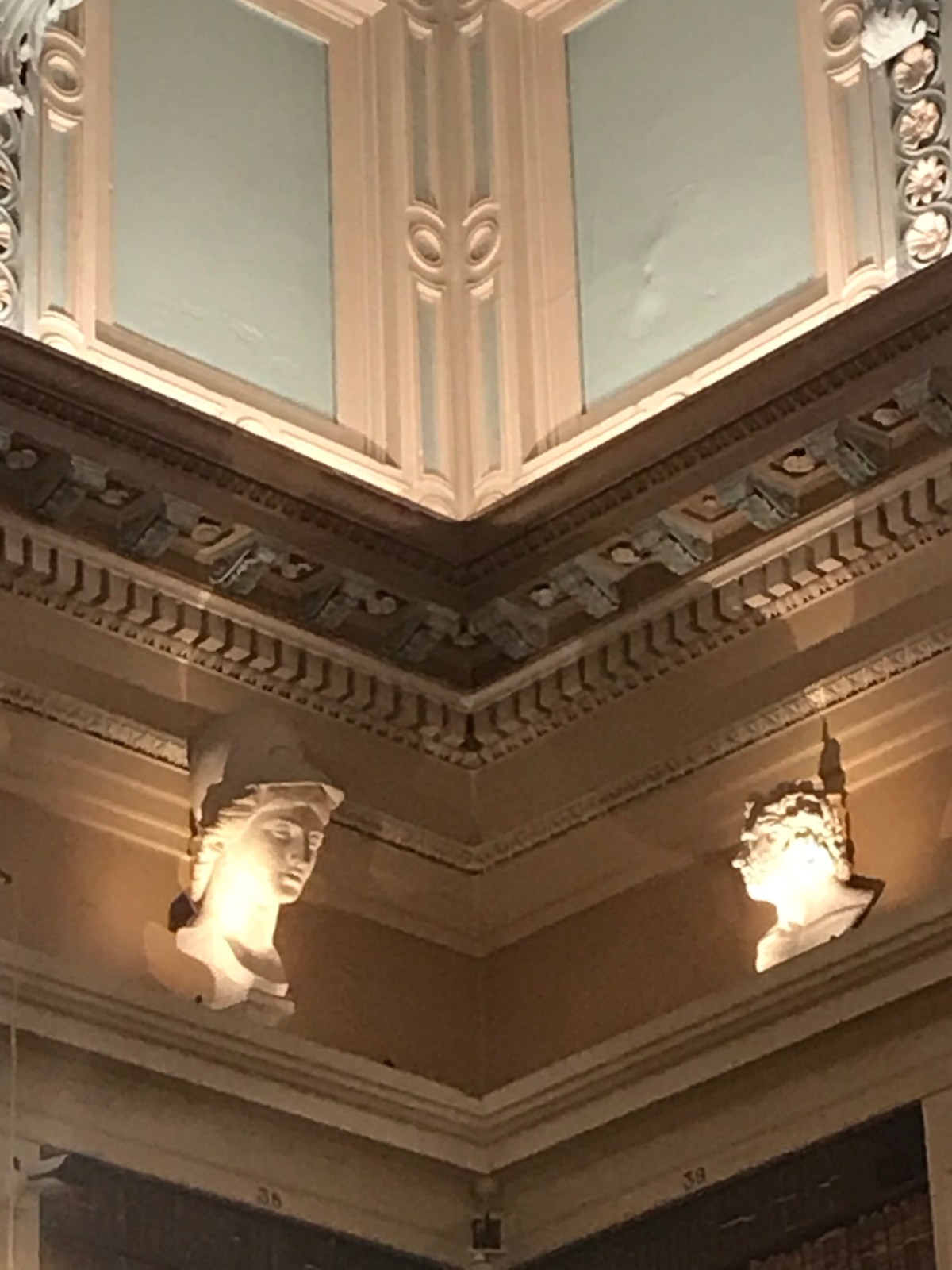
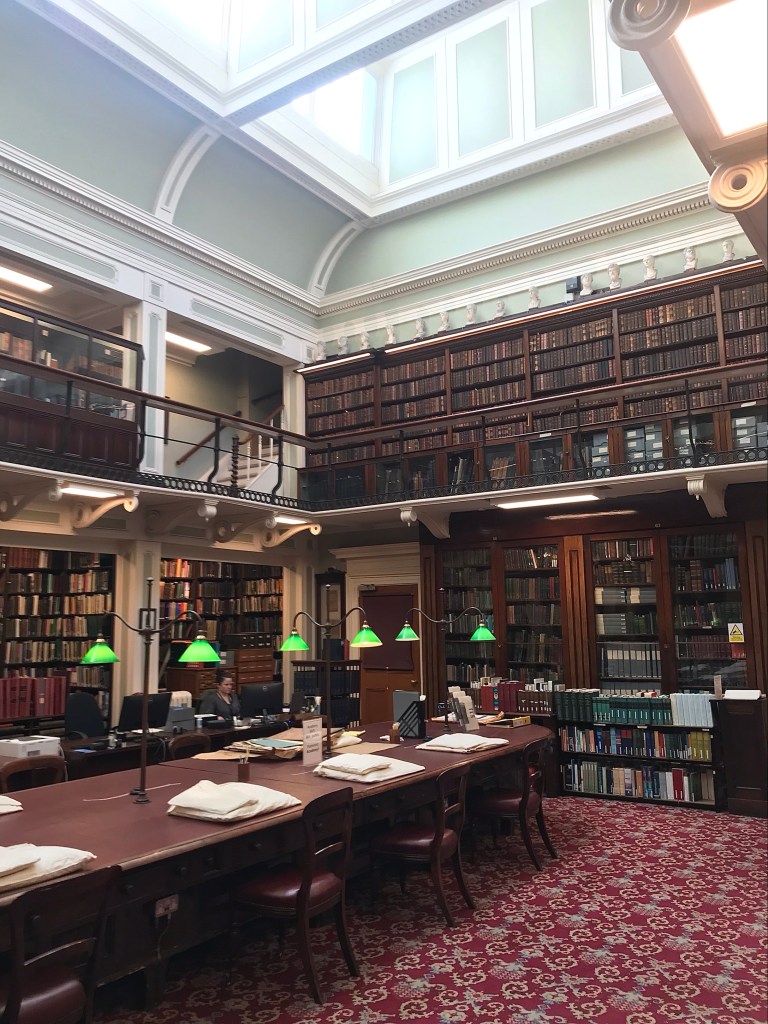
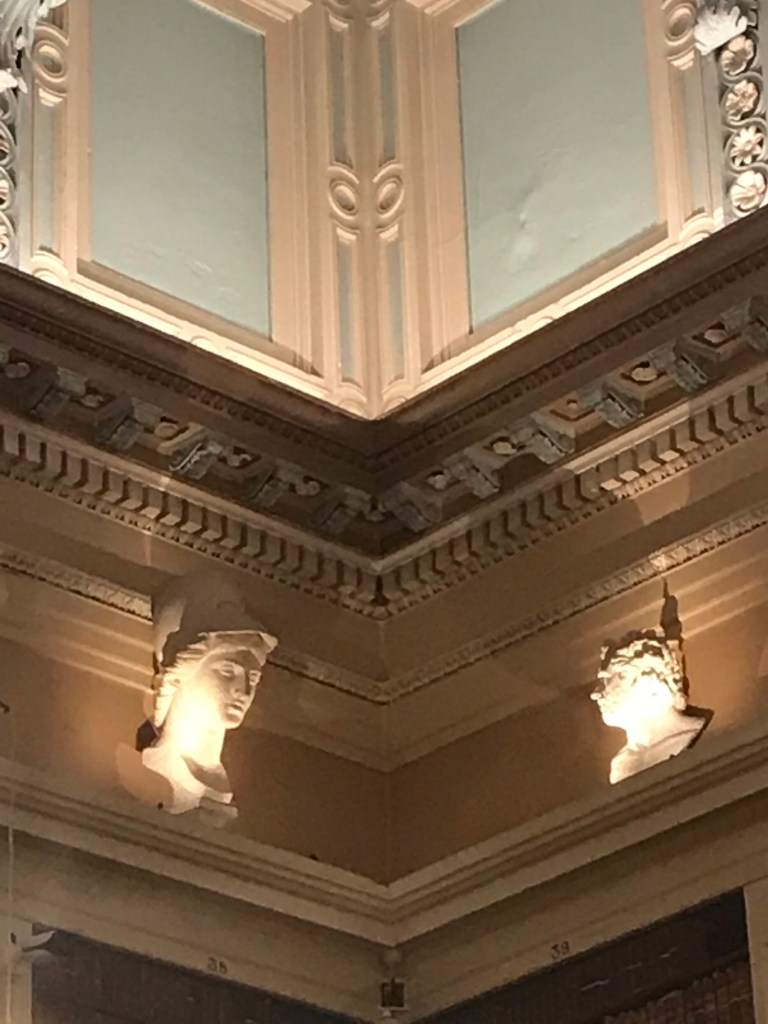
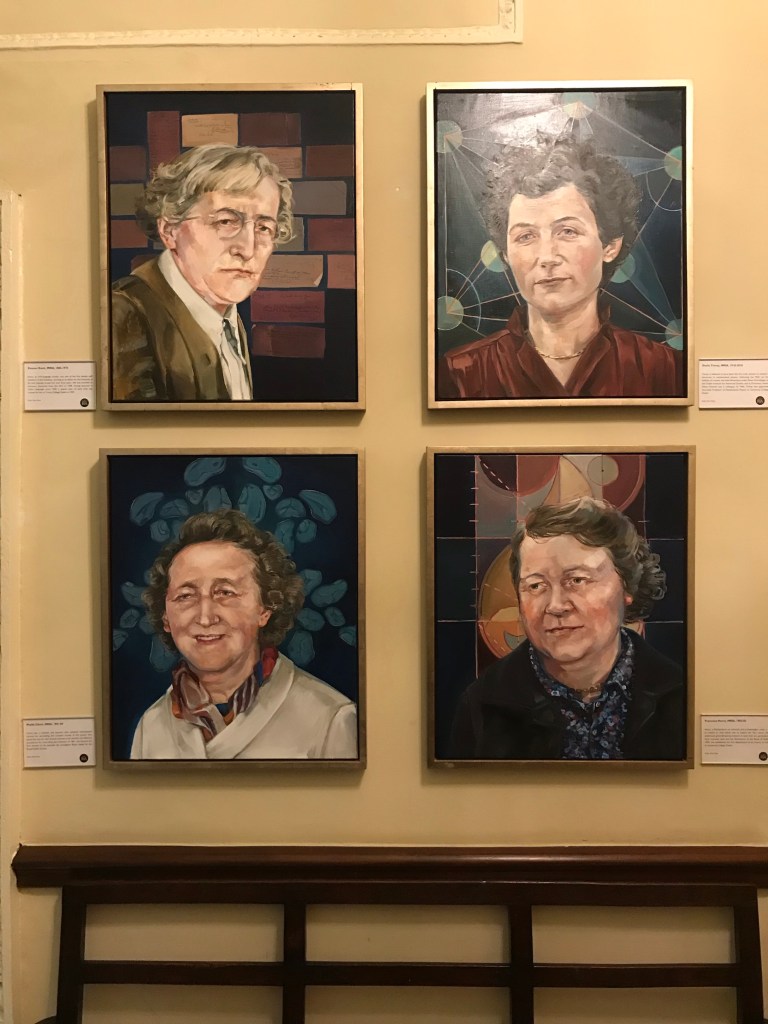
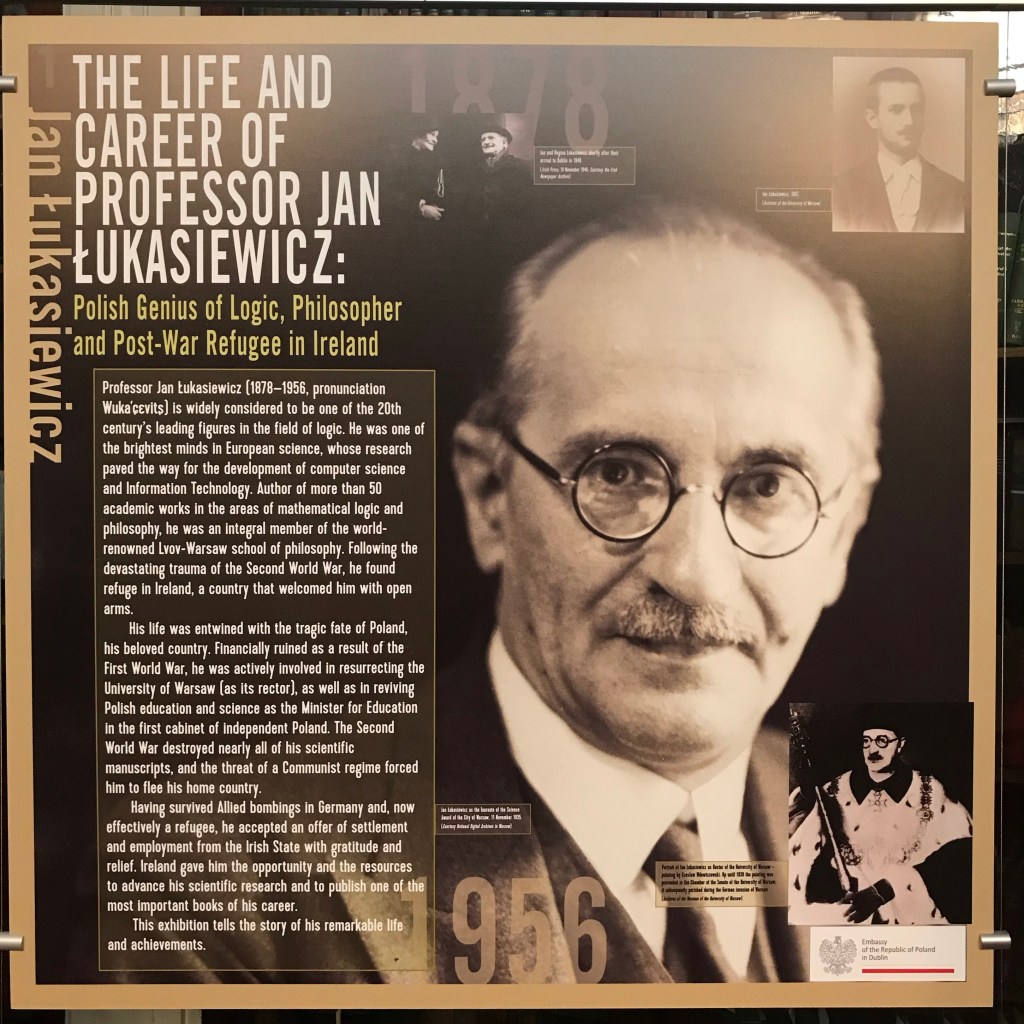
I love visiting the stately old RIA building, with its floors of well worn books. There was an interesting exhibition on display, and lovely architectural details to treat the eyes and soothe the soul.
The Royal Irish Academy bridges science and humanities.
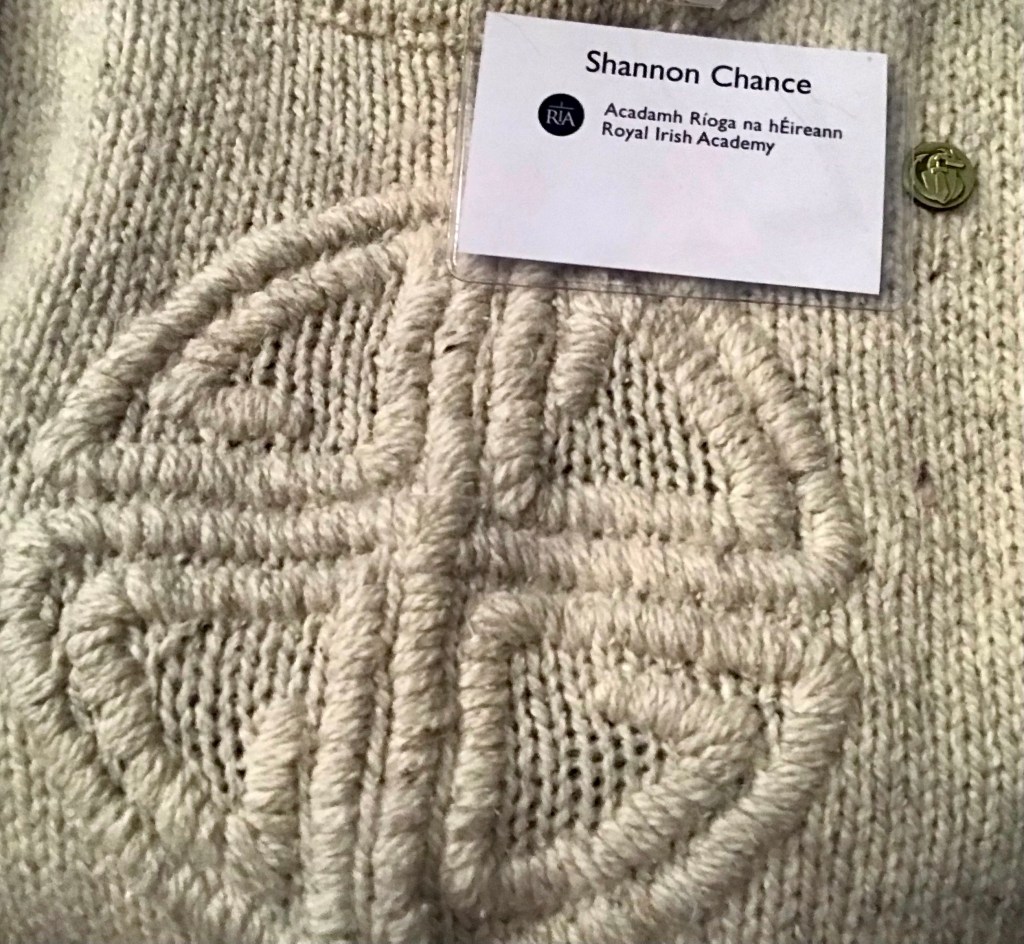
Despite heavy rain falling before my cycle over, I was inspired to wear my favorite Irish sweater and the “BIM Hero” lapel pin I received earlier in the year. (I am hoping the pin will provide the good karma I need to get my current manuscript on the Hero’s Journey polished up to final form to submit this coming week!)
Delighted to have been named a “BIM Hero” at the BIM Coordinators Summit.
During this one-day conference, I learned more than a few new things about Modern Methods of Construction, Irish strategies and policies, and education programs and plans to up-skill the Irish workforce.
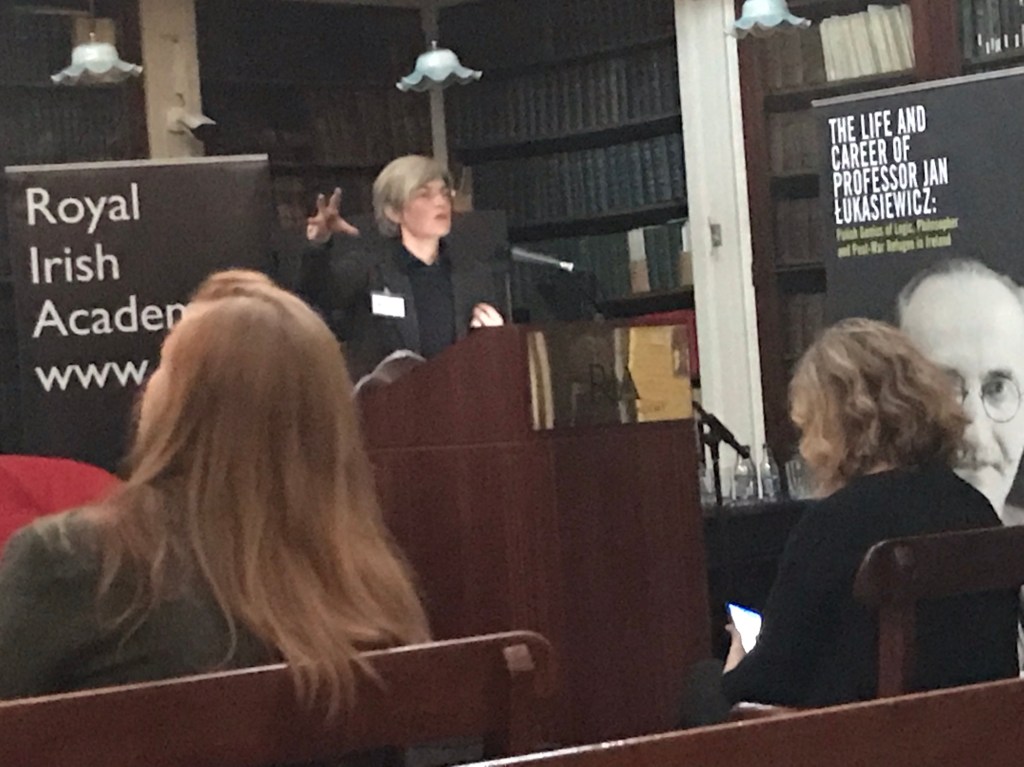
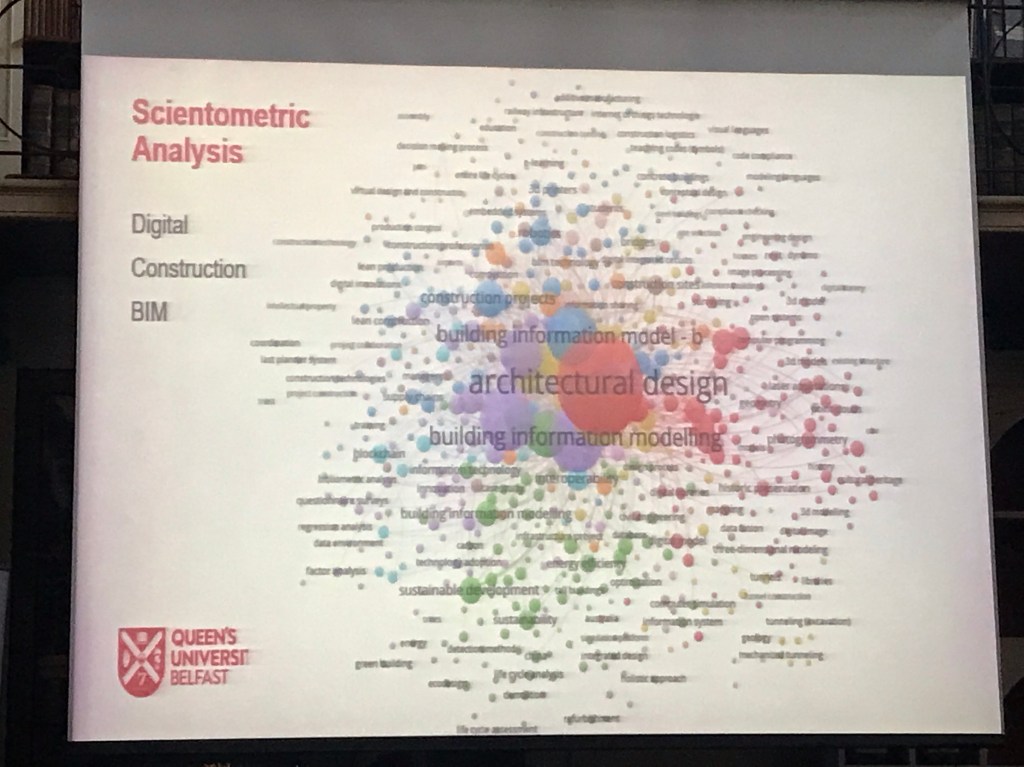
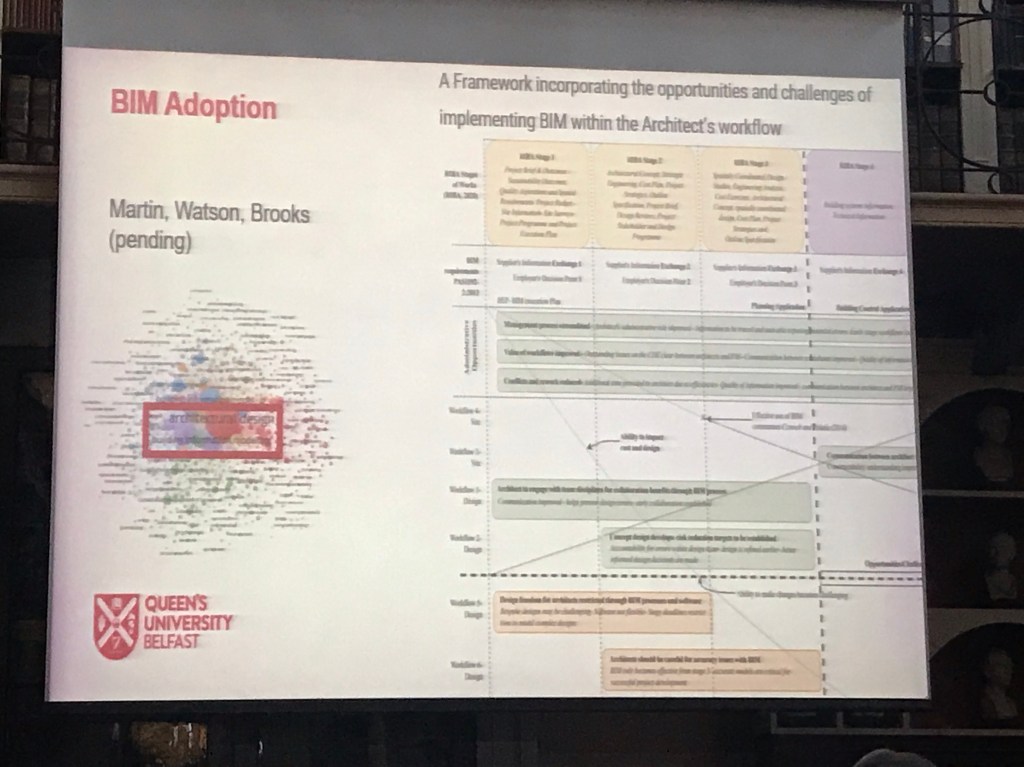
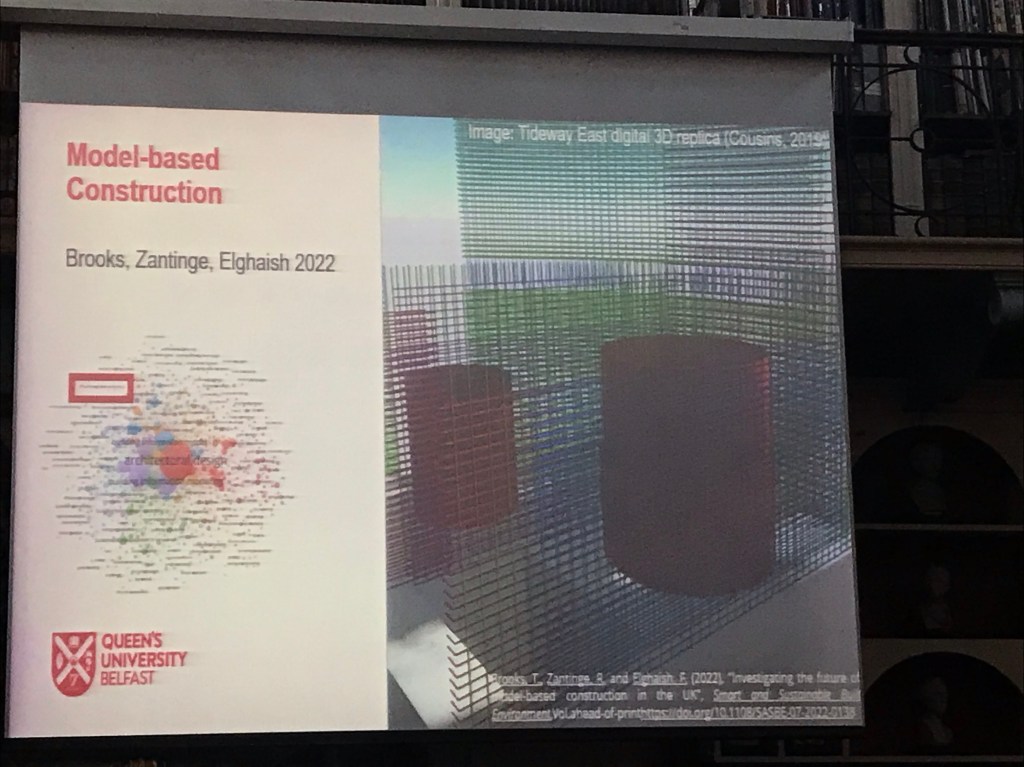
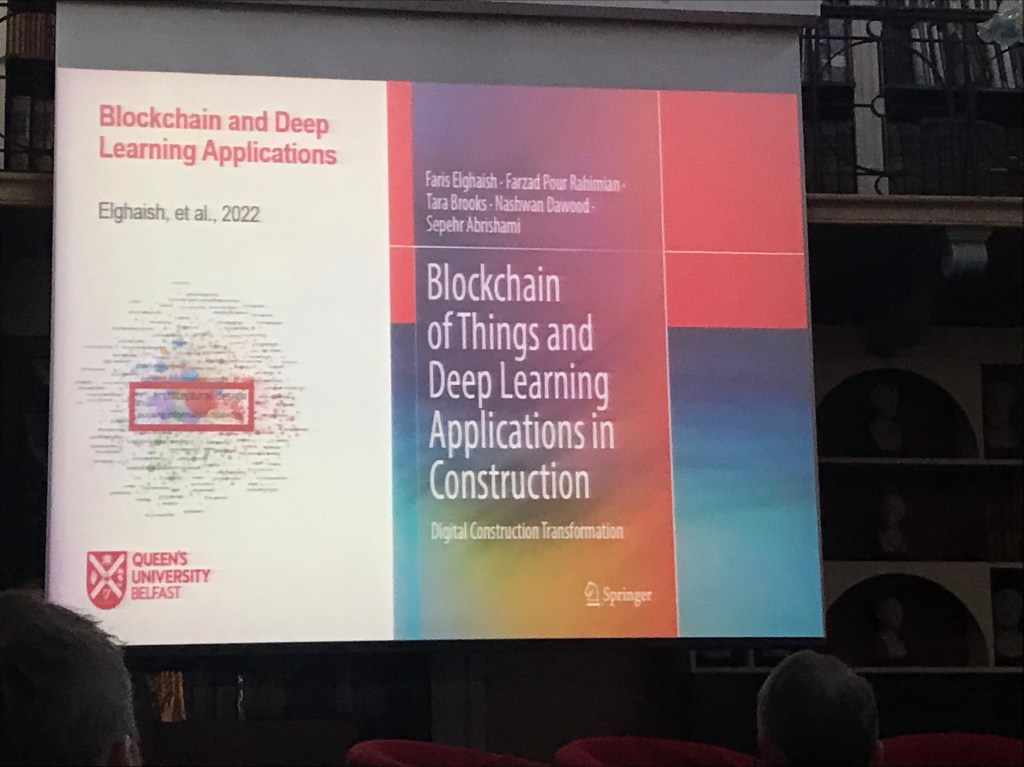
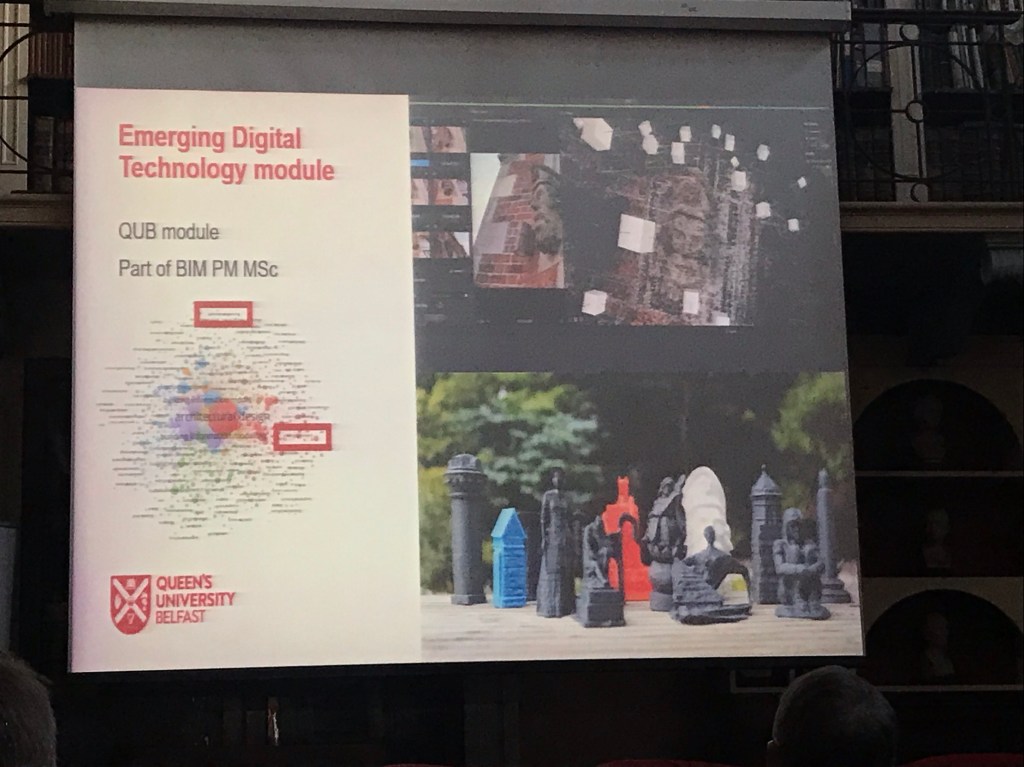
Dr. Tara Brooks from Queens University in Belfast presented fascinating research and I’ve included images since I really enjoyed the graphic devices she used to situate her contributions to the body of knowledge in BIM and digital construction.
The graphically rich presentation by Tara Brooks.
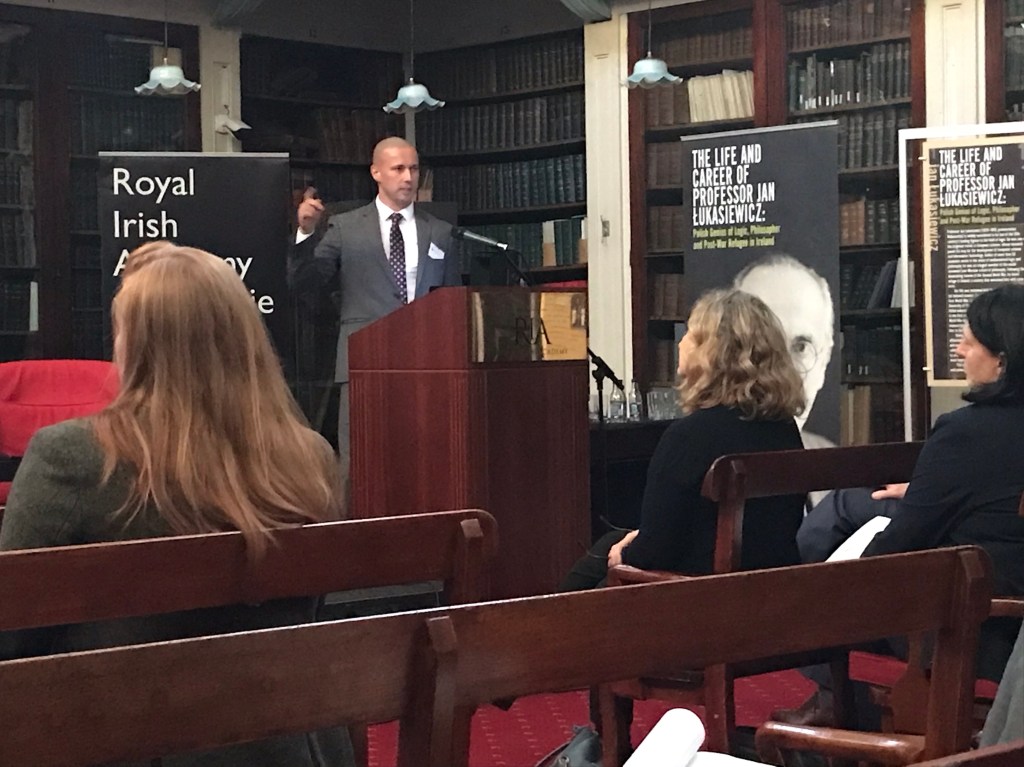
My own university, TU Dublin, was very well represented among attendees, presenters, panelists, organizers, and session chairs. I’ve pictured Joseph Mady, a part time lecturer who delivered an interesting talk.
TU Dublin’s Joseph Mady presenting.
Our conference ended promptly at 5, as Ireland’s Prime Minister was scheduled to speak in the same room at 7, and there was setting up to do.
With the conference concluded, I headed across Dawson Street to Cafe en Seine for a cocktail with Aongus.
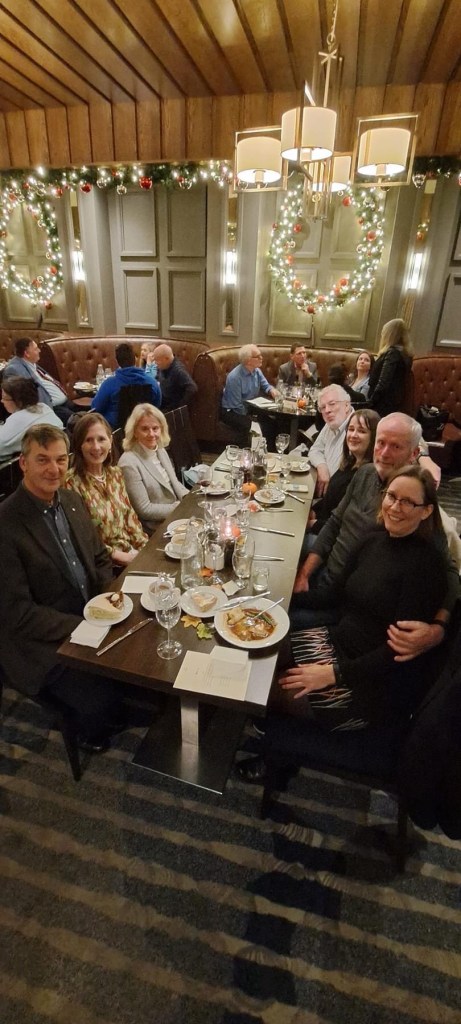
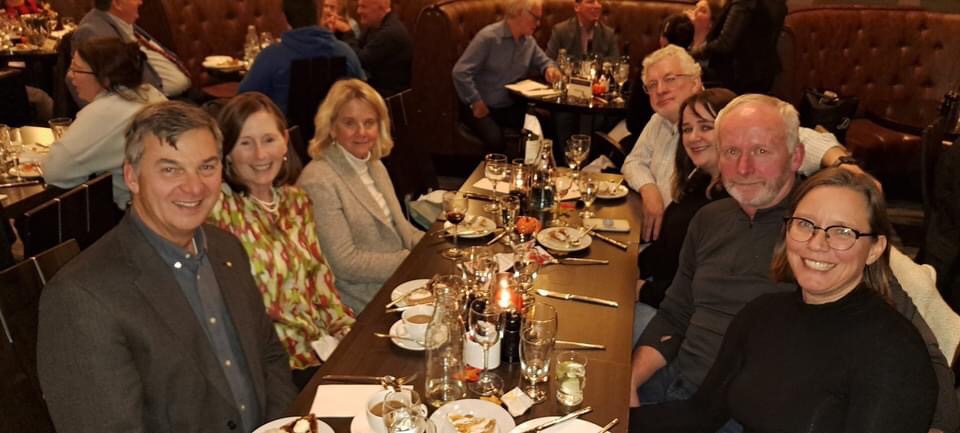
Then we cycled together over to the Hilton near Lock C6 on the south side canal. We met up with a merry group of Americans (most with Irish in tow) to share a feast of turkey will most all the trimmings.
From Cafe en Seine to the Hilton’s Restaurant Charlemont.
It was Aongus’ first sweet potato casserole with marshmallows and he’s still raving about his new find. It’s fun to see the delight he takes in root veg… he also loved the glazed carrots. Such a healthy boy! My favorite were the green beans sautéed with bacon.
We made some new friends and had a ball sharing stories in a familiar twang. Until next year:
It’s a very strange and dreary day here in Dublin. We almost never get thunder and lightning, and that novel occurrence is providing the main bit of excitement for the day. (The thunderclaps are rolling longer than I’ve heard in my life — more like a standing ovation than mere claps.) Suffering from lack of focus, I have picked items from the non-urgent portion of my extensive “To Do” list, which will mean the urgent ones get more urgent. At least when I procrastinate, I’m still actually working!?
So this morning, in addition to meeting online with my PhD student, I spent some time studying the composition of the Editorial Board of the European Journal of Engineering Education (EJEE) and creating a spreadsheet to help me understand our peer reviewers’ expertise better, as I’ve recently become Deputy Editor of this journal.
EJEE’s Editor-in-Chief, Dr. Kristina Edström, recently published an editorial welcoming me aboard. She kindly listed three publications I have in EJEE:
The second one has a title that tends to scare people!
That scary name and the fact that it’s been behind a paywall on the publisher’s website mean that the tally of downloads isn’t as high, but you can find it free (as the embargo period passed) using this link from the TU Dublin ARROW repository, where it has had 870 downloads to complement the 1458 views at the publisher’s site. I really hope people will find and use this paper on “Comparing grounded theory and phenomenology,” especially if they are uncertain about which methodology to use for their research. Grounded theory and phenomenology have some similar characteristics, but the results we report in this paper illustrate that you can use them to find different things. Grounded theory is helpful when studying organizational and policy issues, as the article shows. Phenomenology looks deeply at the core essence of the experience. Using the two different methods in parallel analyses, we were able to learn about teachers’ (phenomenological) experience implementing Problem-Based Leaning, and also the (grounded theory) way they organized themselves to achieve results.
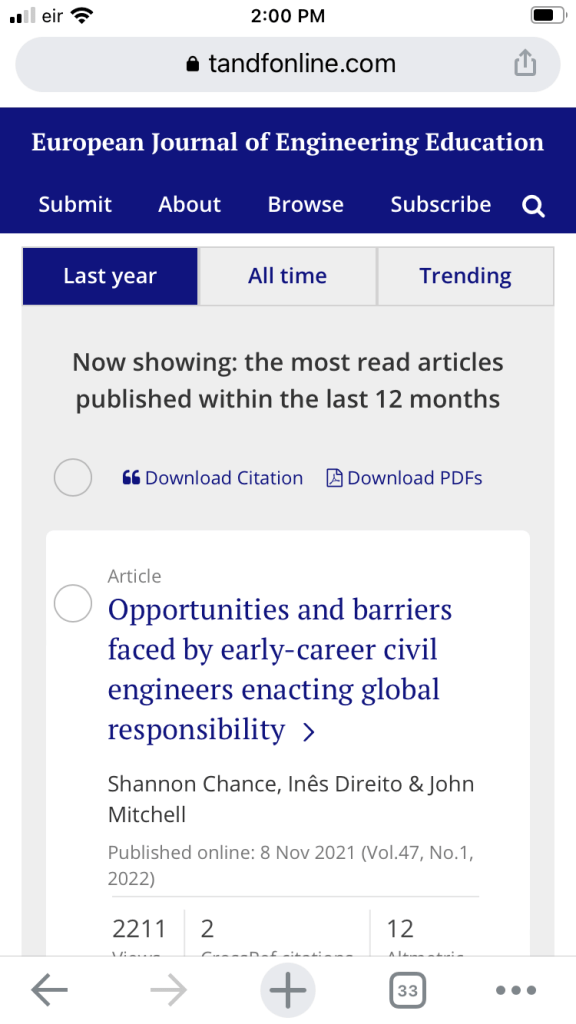
Meanwhile, the third on the list, “The study of grit in engineering education research: a systematic literature review” is EJEE’s fourteenth all-time most downloaded. This paper offers really important advice for anyone wanting to use Angela Duckworth’s theory of “grit” (passion and perseverance) to study student development. We found many researchers to be leaving out crucial information when reporting their “grit” results, and we provide advice on how to report findings in a reliable way.
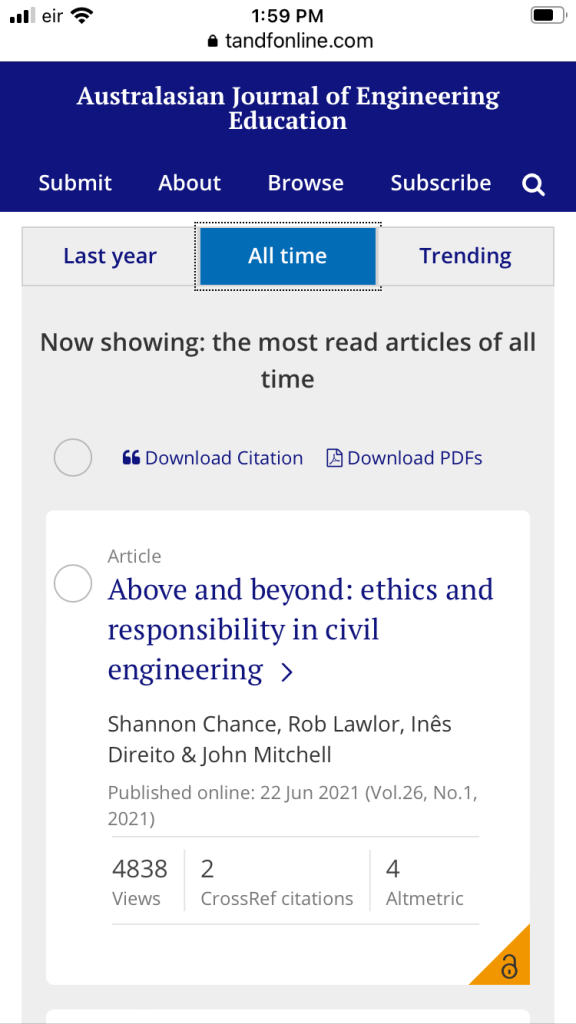
As you can see in the screenshots above, I also authored the all-time most-downloaded article of the Australasian Journal of Engineering Education, “Above and beyond: ethics and responsibility in civil engineering” with 4,838 views as of today. I put my whole heart and soul into this paper and I am overjoyed to see it succeed. I hope readers will find the content useful.
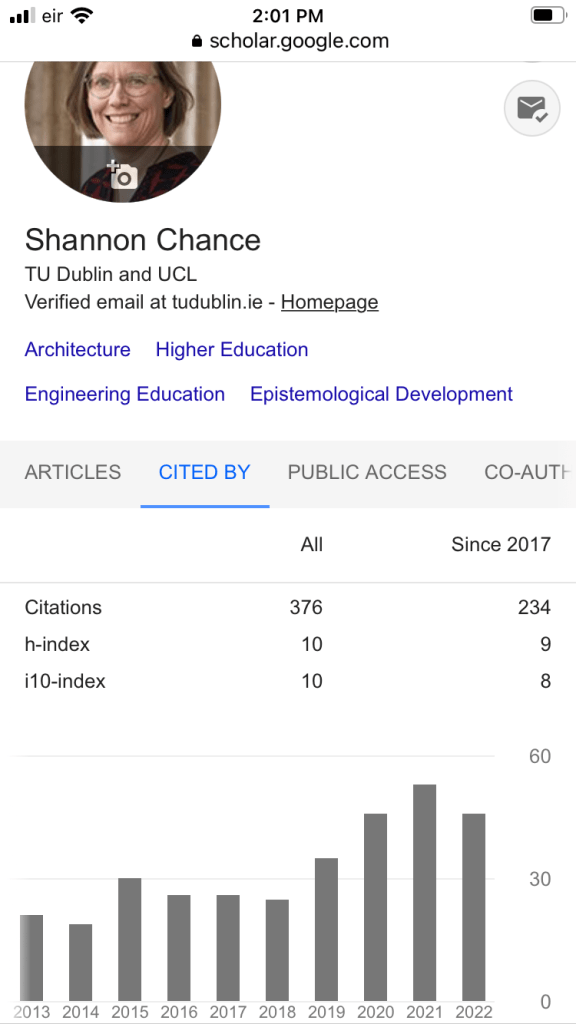
Anyway, these discoveries prompted me to check my Google Scholar profile with happy results — I have climbed to h-index 10, which means ten of my articles have been cited at least ten times. The next milestone is h-index 11, which requires 11 articles to each have 11 or more citations. Those take a long time to accrue, but hopefully, people who download the articles will cite them in their own upcoming publications.
Now, for a little 2:26 PM lunch and a deep dive into some curriculum design for the afternoon! Thanks for stopping to read this. I truly appreciate your support.
Today, my colleagues and I presented at the International Society of Educational Planners 2022 (virtual) conference. We brought findings from the realm of engineering education research to share with the educational planners attending.
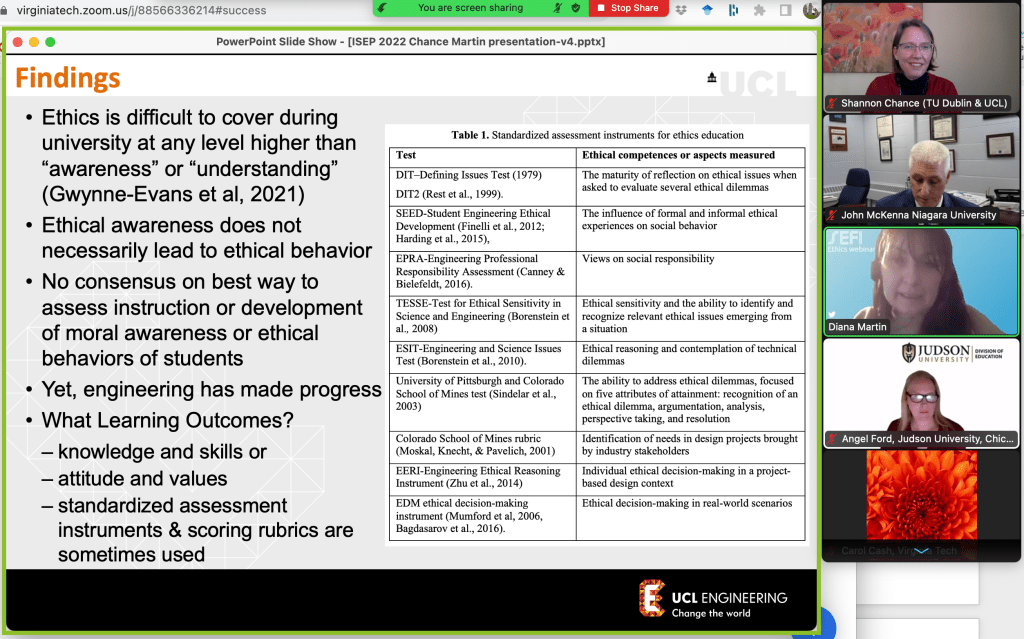
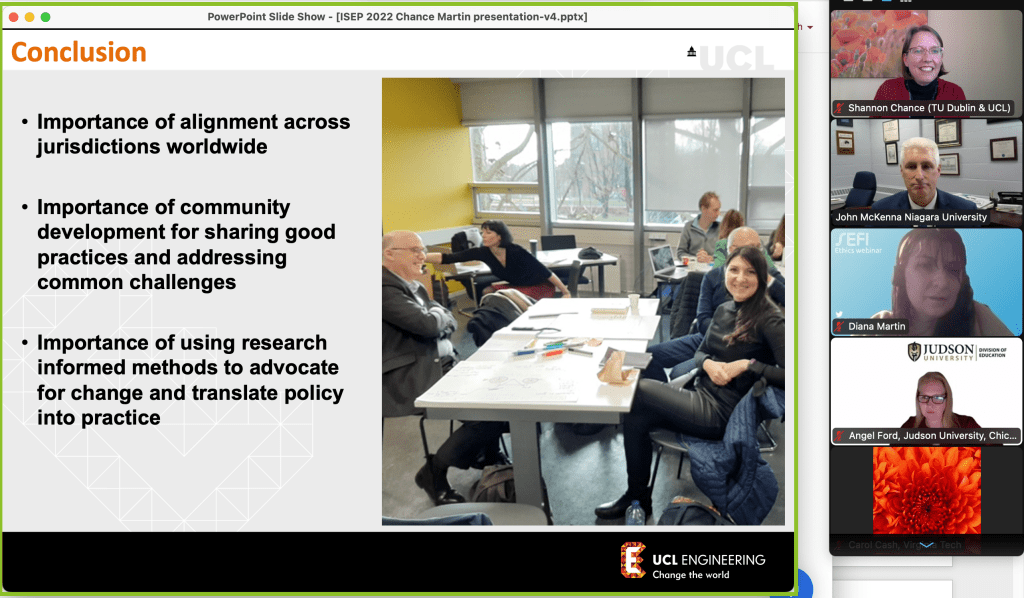
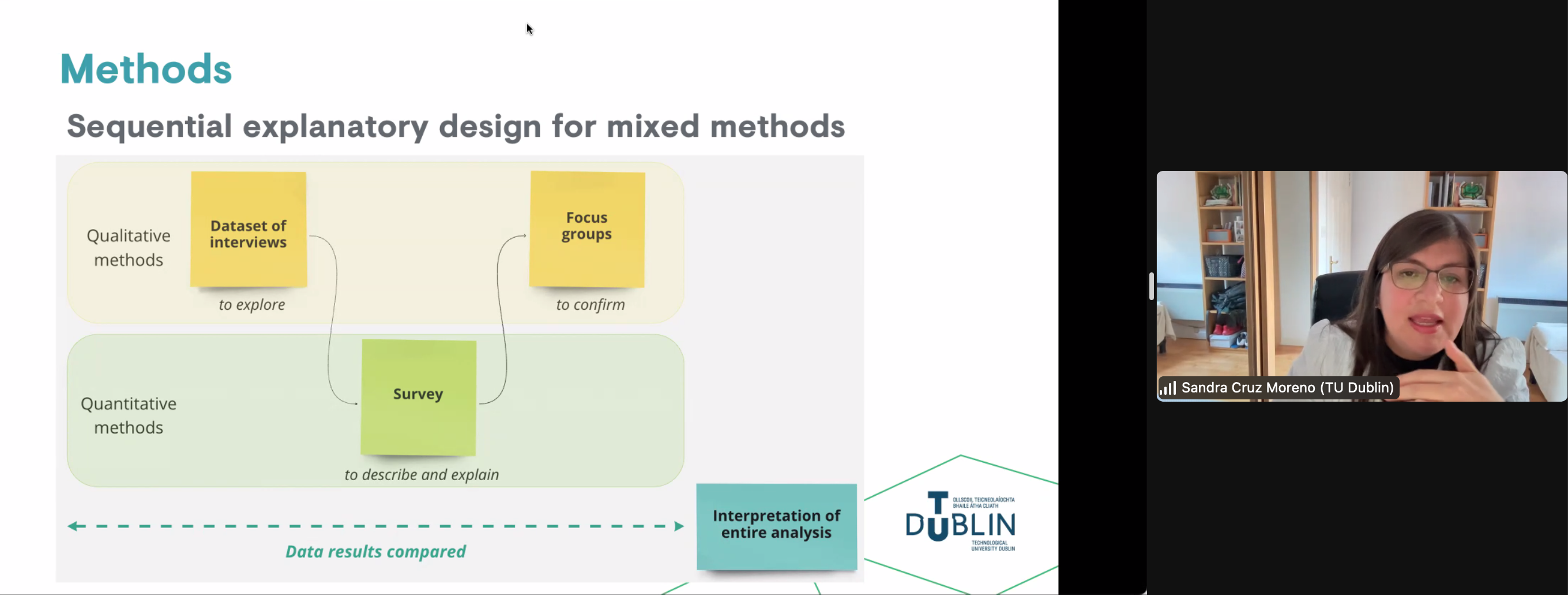
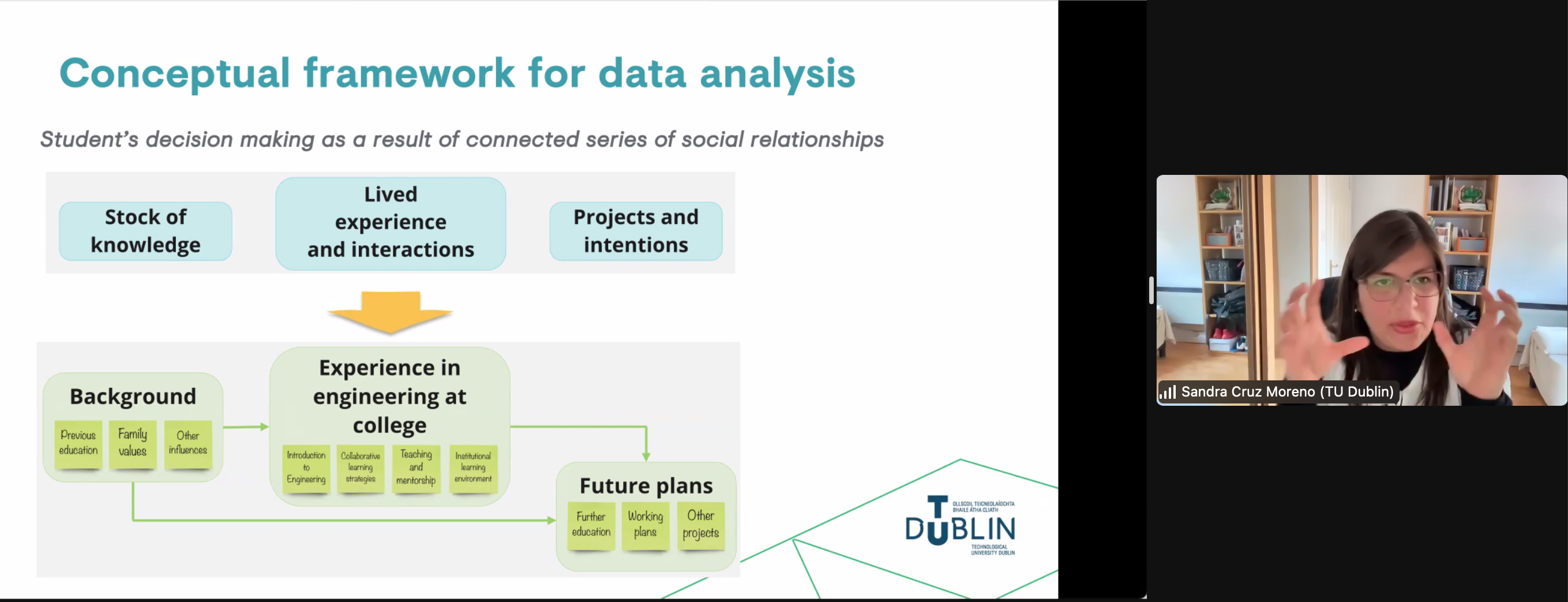
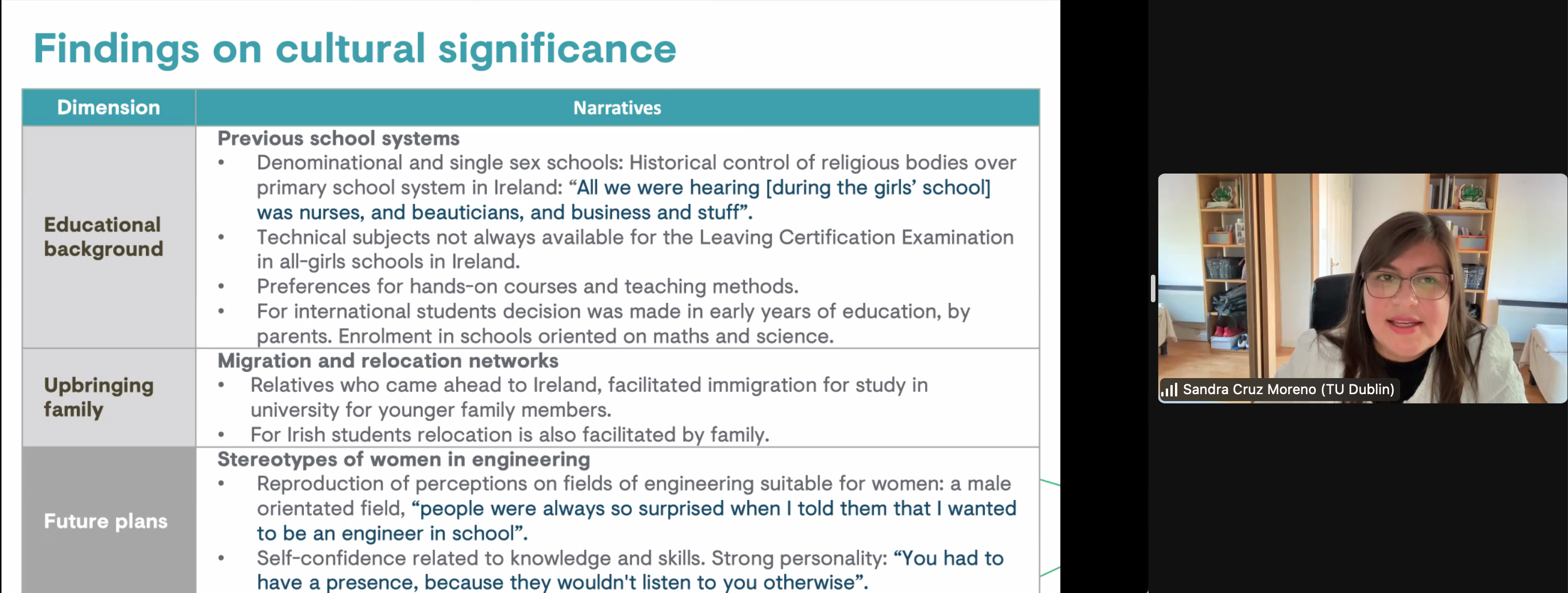
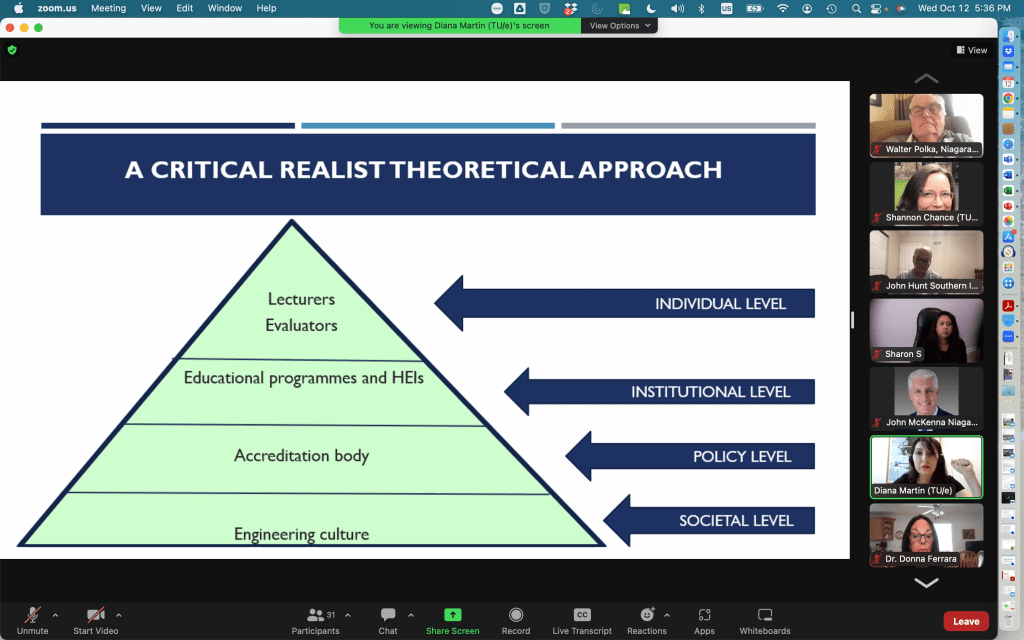
Early on, Diana Martin and I presented “Promoting engineering ethics education and assessment practices for wider implementation in educational planning.” I presented the first half but I had a chance to make some screen captures once Diana took over. You can see them here:
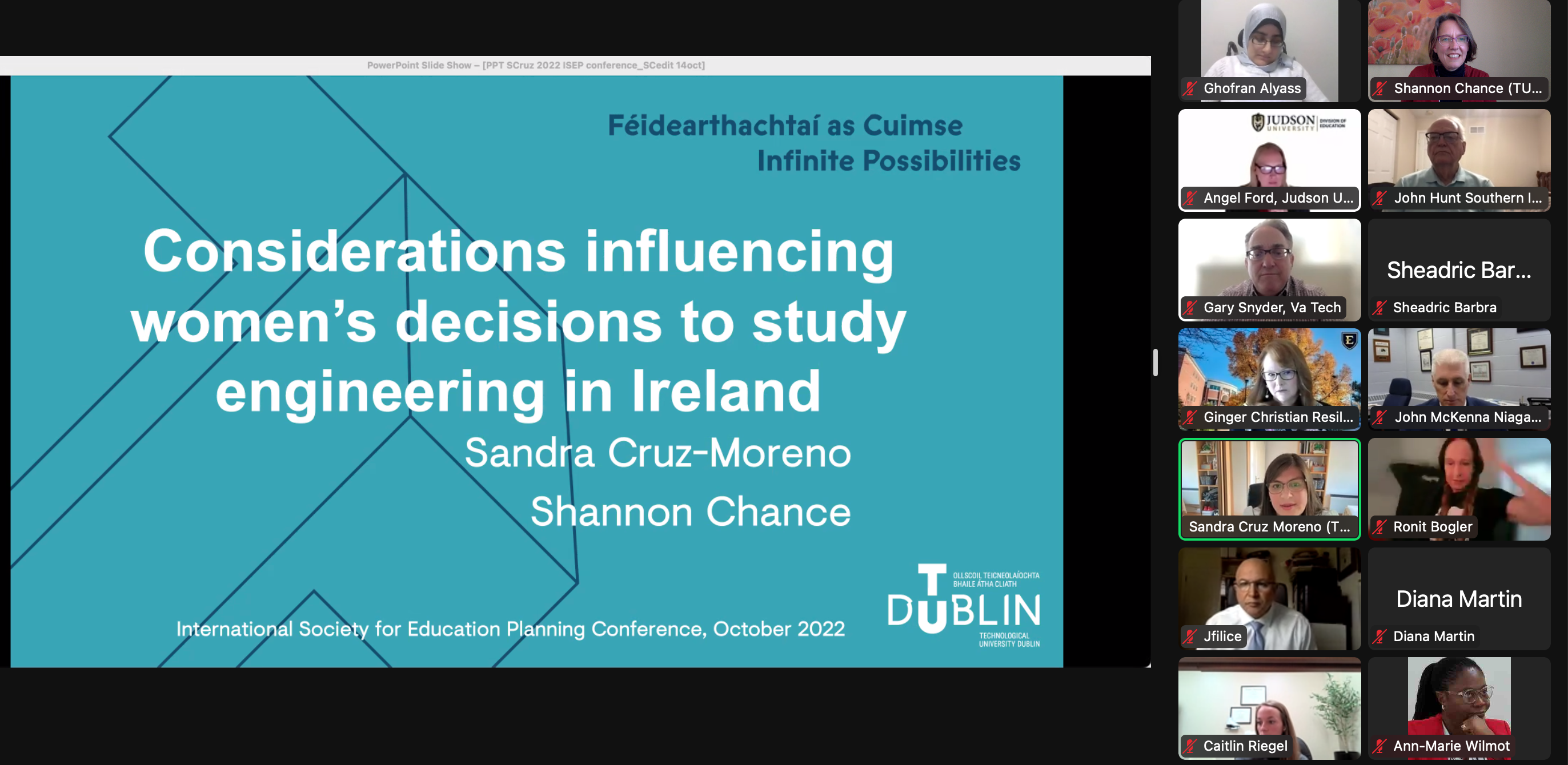
The most exciting part of the day, for me, has been the presentation Sandra Cruz-Moreno, my PhD student at TU Dublin. Sandra started her PhD studies in January 2022 and this (already!) is her fourth symposium/conference presentation. Sandra presented “Considerations influencing women’s decisions to study engineering in Ireland.”
I’m Sandra’s Lead Supervisor, and we had good confidence going into the day since yesterday Sandra presented all her progress to my Advisory Supervisor, Professor Brian Bowe. It was great to gain Brian’s insight and hear his resounding endorsement for the work Sandra has completed to date! We have a solid plan, agreed by all, for moving forward.
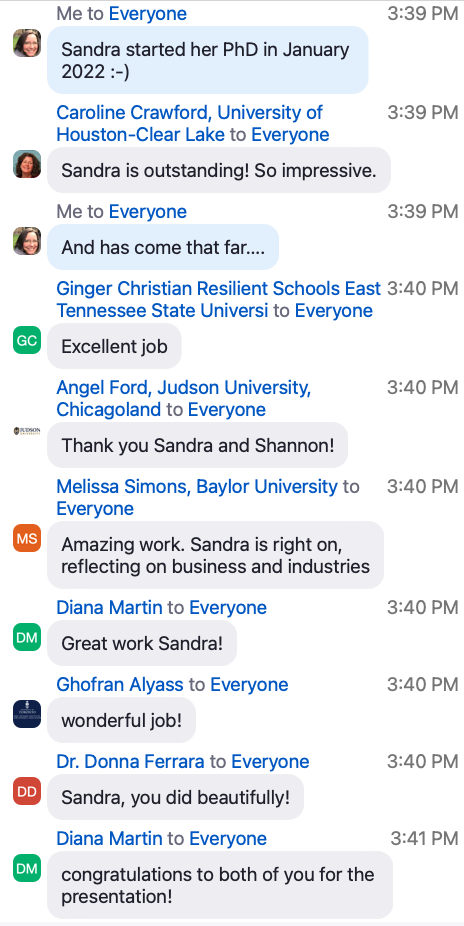
Sandra delivered the entire ISEP presentation herself and the audience’s reaction was warm and supportive.
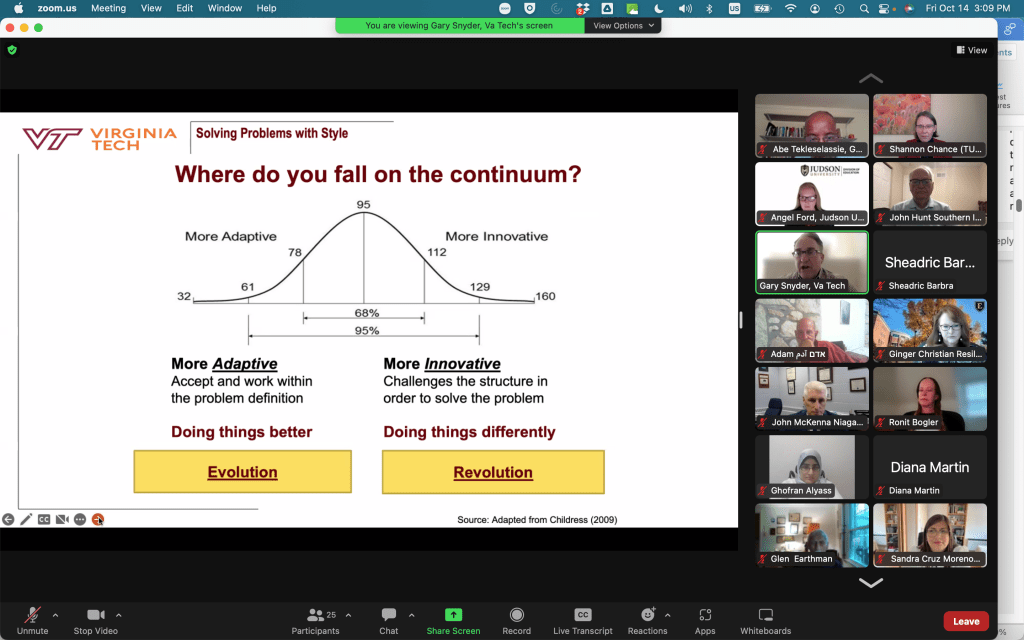
The scholar who presented between our two teams, Gary Snyder, raised many interesting points. If you’re interested in the innovation adoption curve, you might enjoy the slide below:
Many of the participants at this ISEP conference, including Gary, are from Virginia Tech. Seeing them makes me realize that I’m missing the amazing autumn colors of Virginia again this year. It’s been too long since I’ve had the chance to feel that crisp Virginia fall weather and red, red maple leaves.
I’ll close on another high note, by showing Diana’s keynote presentation from Wednesday, when she was awarded THE 2022 Outstanding Dissertation Award from ISEP. Amazing work, Diana!
I am so lucky to know these two, and honored to work with them both.
This week, I’m attending a virtual conference of the International Society for Educational Planning (ISEP). My colleague, Diana Adela Martin, is speaking later today. She’s presenting her PhD thesis, since she’s being awarded the 2022 ISEP Outstanding Dissertation Award. (Someone I know nominated her, wink, wink!)
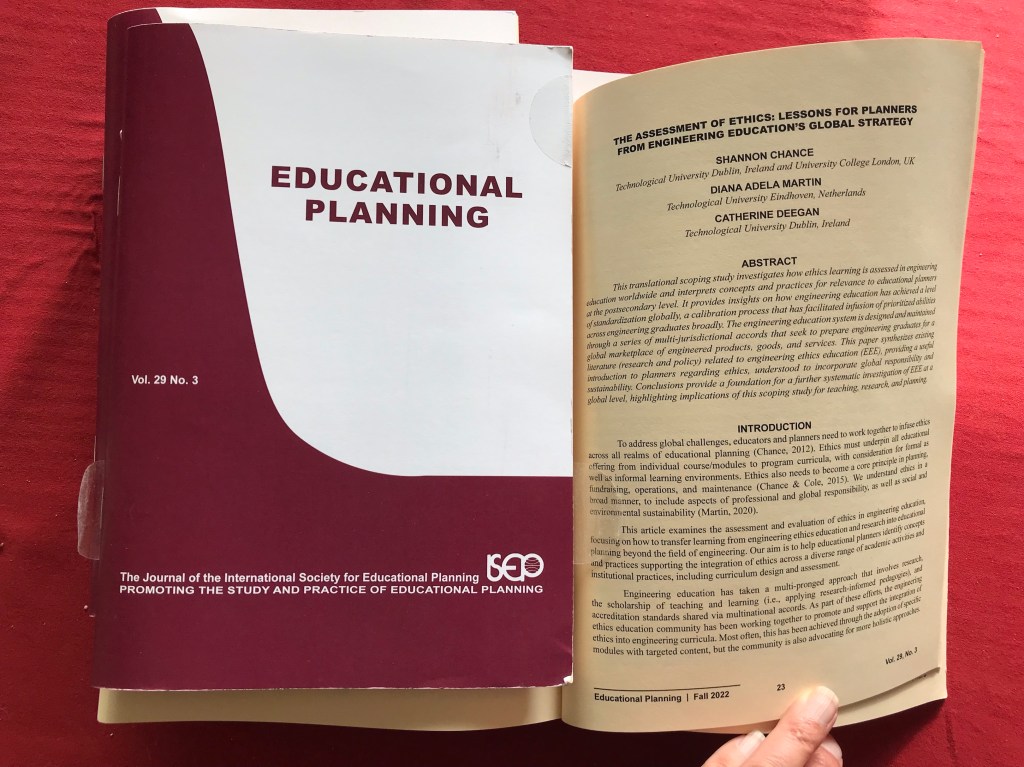
ISEP publishes Educational Planning and its most recent issue features an article by Diana and me, along with our TU Dublin colleague Catherine Deegan. You can download the current issue at this link and find our article starting on page 23. Here’s the APA citation:
Hot off the press, copies for my co-authors and me.
Yesterday, I cycled to the post office to pick up a package containing print copies of the journal. ISEP moves fast! The issue was published at the end of last week, and the print copies arrived (all the way from Blacksburg, Virginia) just days later.
Diana and I will be presenting aspects of the published work at the ISEP conference on Friday, and my PhD student, Sandra Cruz-Moreno will be presenting aspects of her doctoral research in the in the same session.
In other good news, classes this semester are rolling along smoothly, and University College London recently extended my term as Visiting Professor for an additional five years.
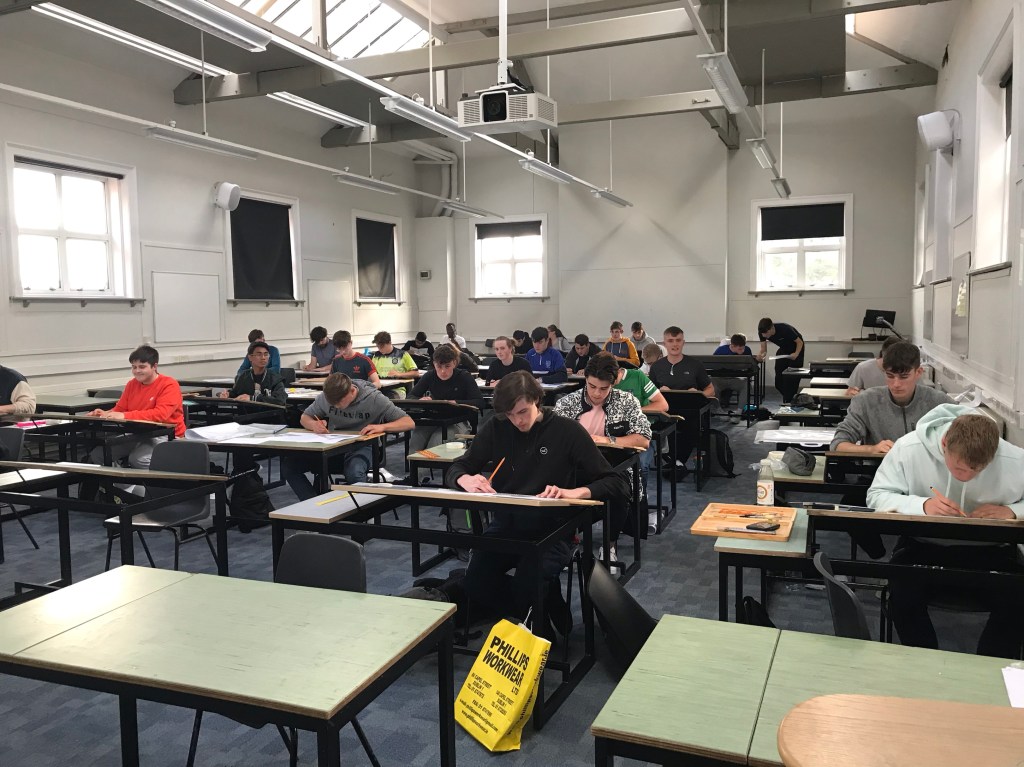
A photo from our first day of Tech Graphics — Hand Drawing class for autumn semester 2022.
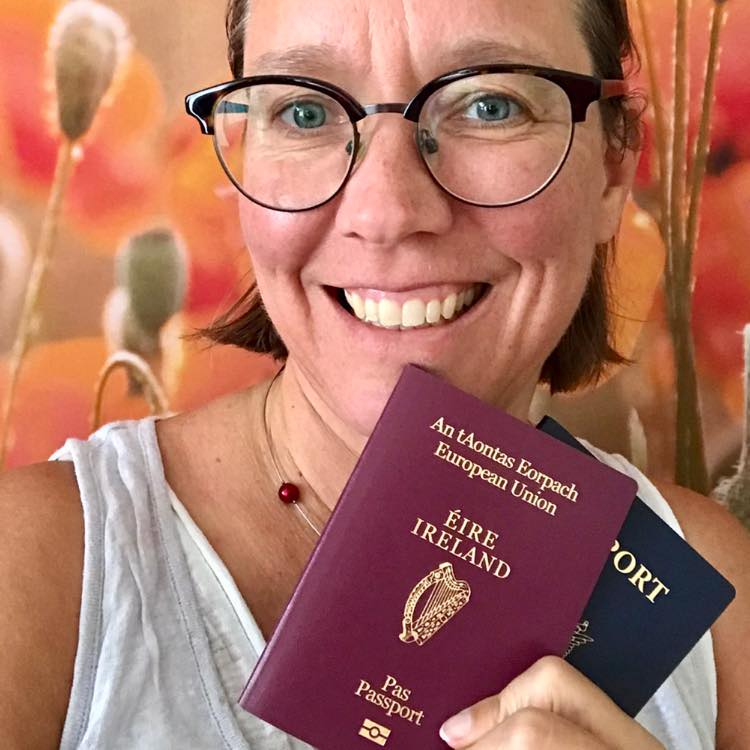
This site began as a way to share cultural experiences while I was a Fulbright Fellow in Ireland 2012-2013. I ended up falling for Ireland and I returned as a Marie Curie research fellow in 2014, and when that ended I got a full-time lecturing post at TU Dublin, although I was allowed a two-year career break to complete a second Marie Curie research fellowship, this time to University College London, in 2018 and 2019. I returned to Ireland and just recently earned Irish citizenship and an Irish passport.
Ethics teaching and research are core to my work — teaching, researching, designing curricula, and editing. Here’s a two-day snippet of activities….
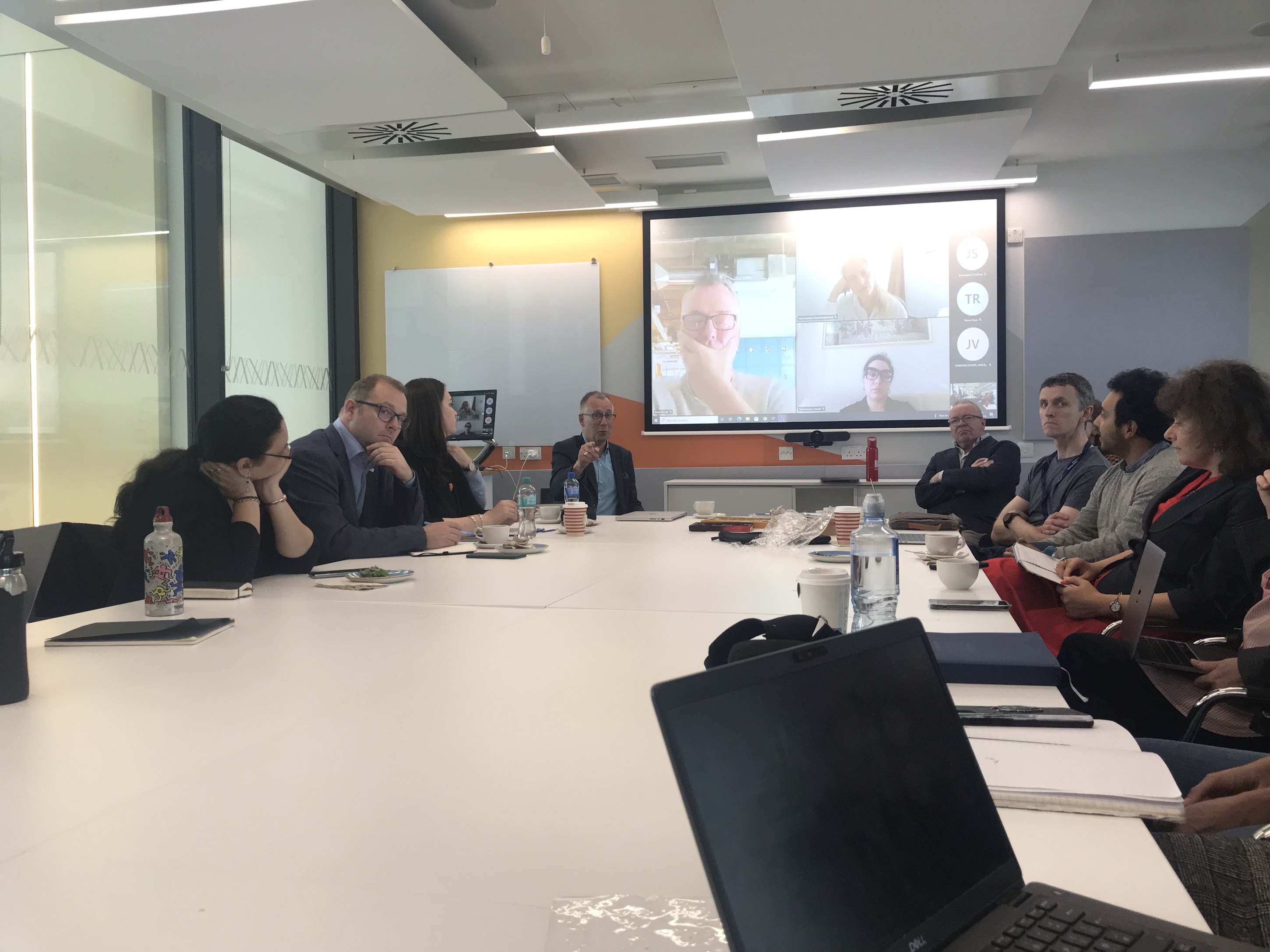
Yesterday, I attended a work session for the EthiCo project, led by TU Dublin but working in collaboration with many other technological universities. We’re considering multi-dimensional understandings of ethics. And, our group is developing tools for teaching students about ethics and teachers about how to incorporate ethics (social and environmental justice) into their classrooms. TU Dublin’s Professor Noel Fitzpatrick is leading the effort.
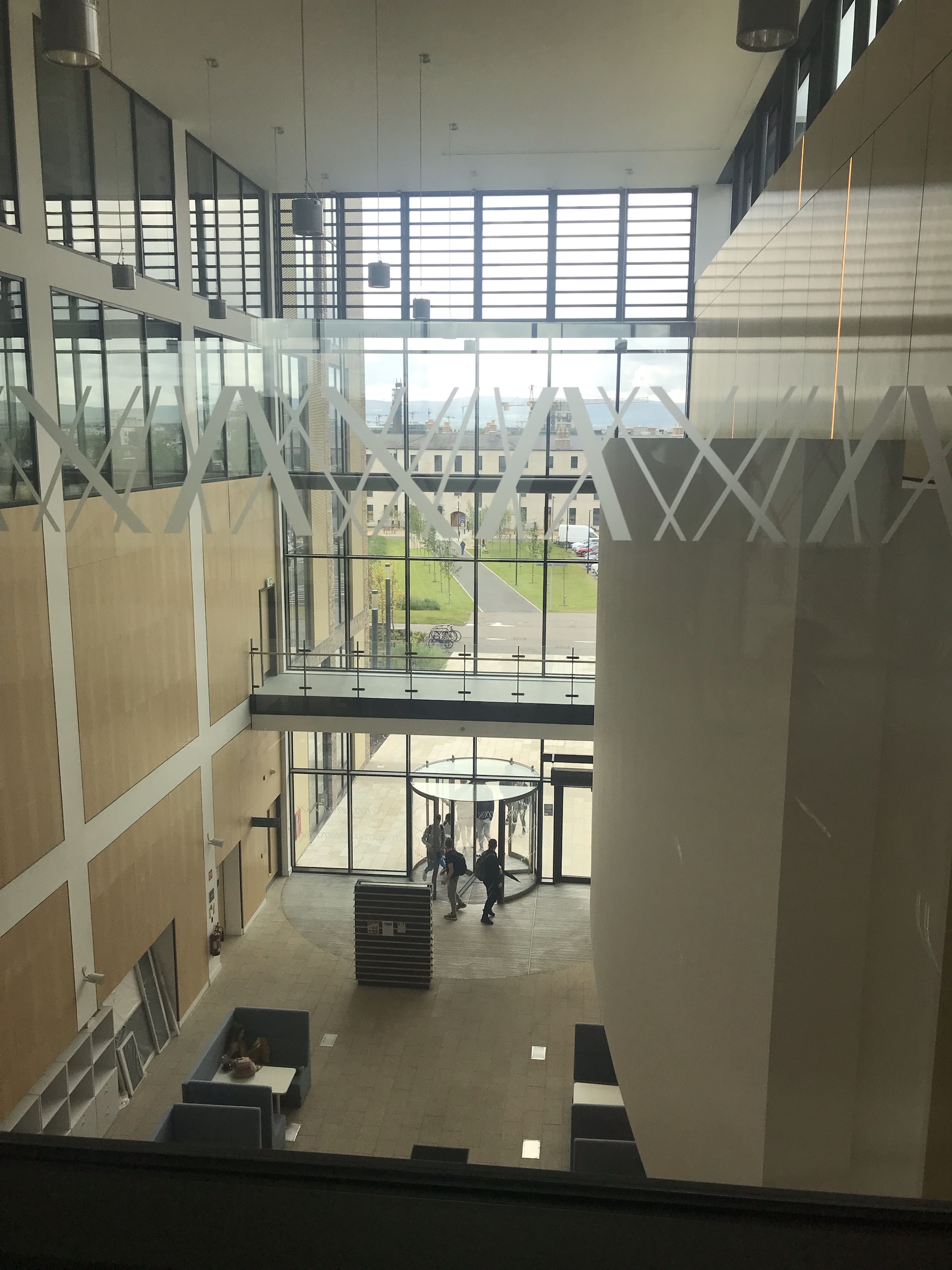
View toward the Dublin mountains from the brand new East Quad, second floor meeting room.Hybrid format EthiCo working session
Just before we met, my WhatsApp thread was alive as my colleagues and I determined the theme of our upcoming Dublin Maker (July 23) booth: Reboot Arcade. Short description: Games of all sorts and art installations relating to rebooting civilization in our own unique way.
We’ll inspire those who visit our booth to envision the world we’d create if we were doing things from scratch. I’ll contribute an activity for our booth at Dublin Maker about circular economy and regenerative design.
Throughout the day, I also wrote and uploaded feedback to my BIM students in the Research Methods module.
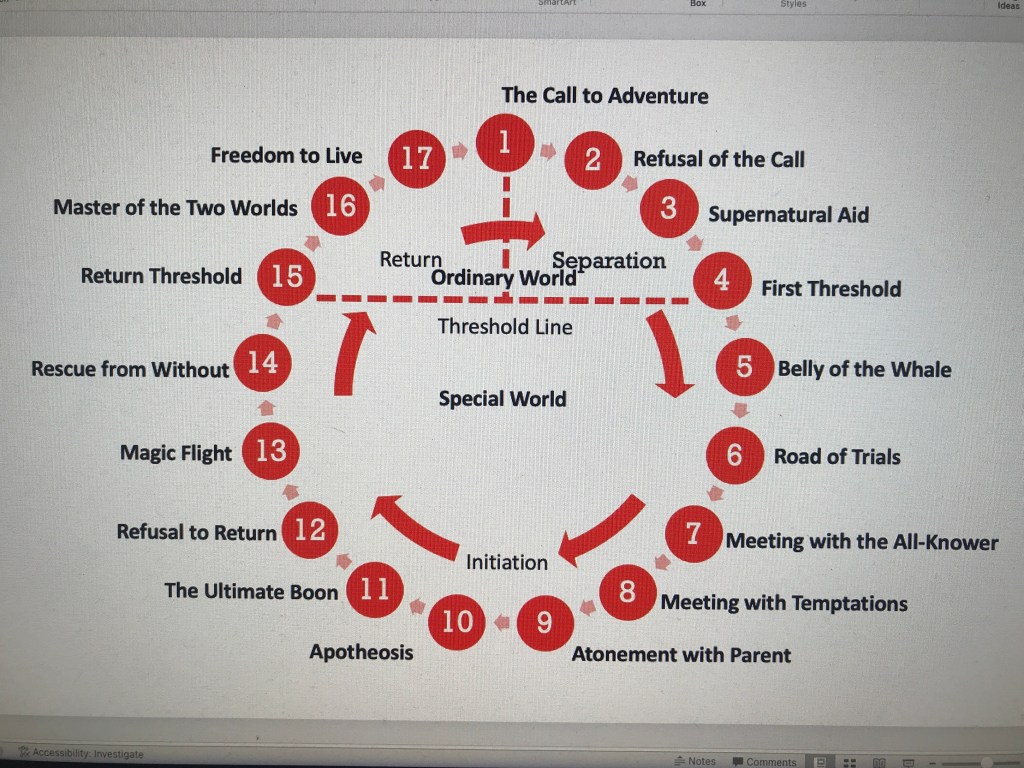
And, did quite a bit of editing on a manuscript with Inês Direito and Bill Williams using the Hero’s Journey framework. Here’s snapshot of my screen with a graphic I’ve made for that paper:
A snapshot of the graphic I’ve made for the Hero’s Journey paper. (Adapted from J. Campbell by Shannon Chance, 2022.)
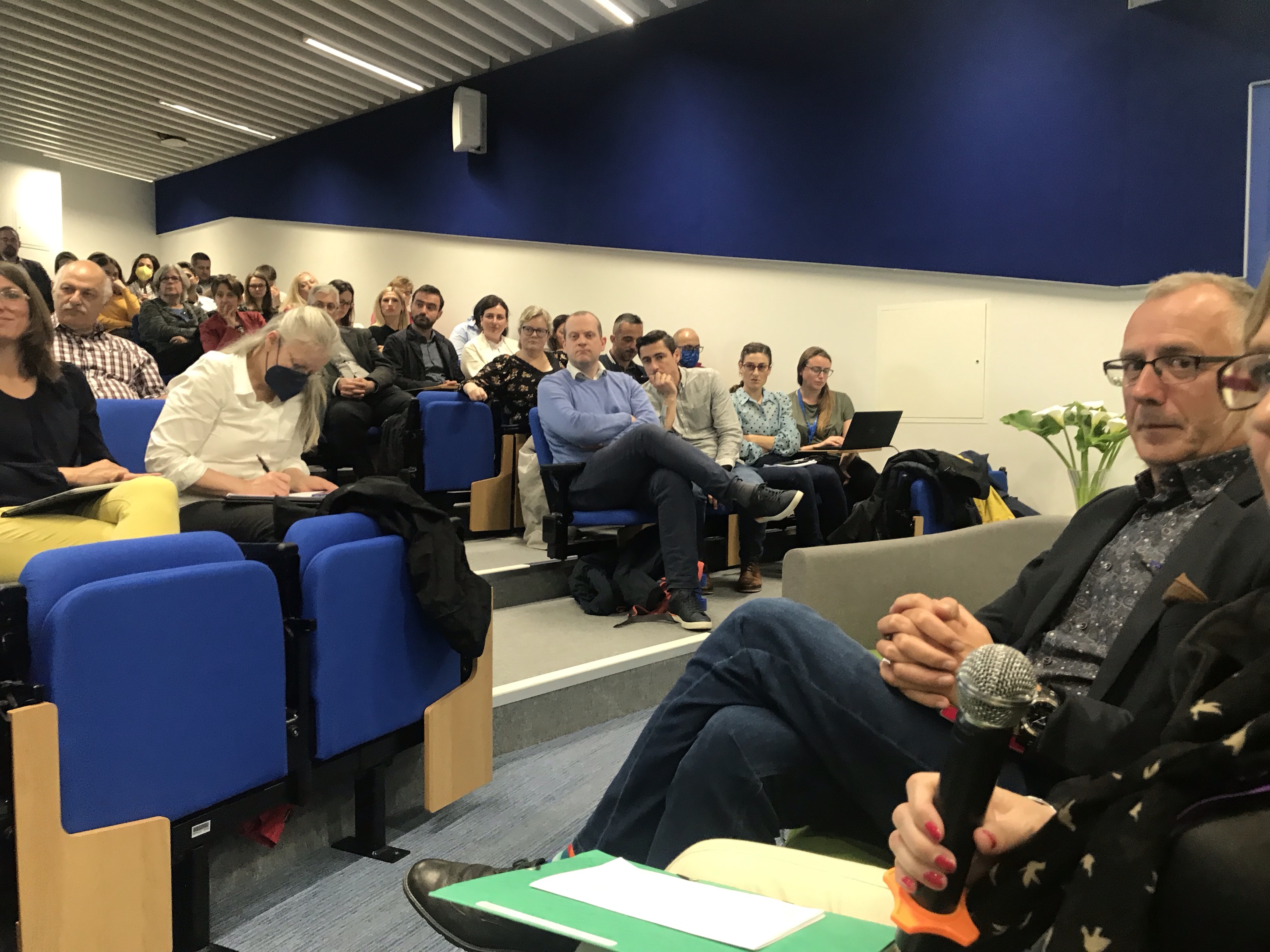
Today started with a conference of the members of the European University of Technology (EUt+). I presented ideas as part of the morning’s panel on the role of Education in the EUt+. I talked about the importance of ethics in technical education. It’s strange but exciting to be in a room with over 100 educators discussing topics passionately in person once again!
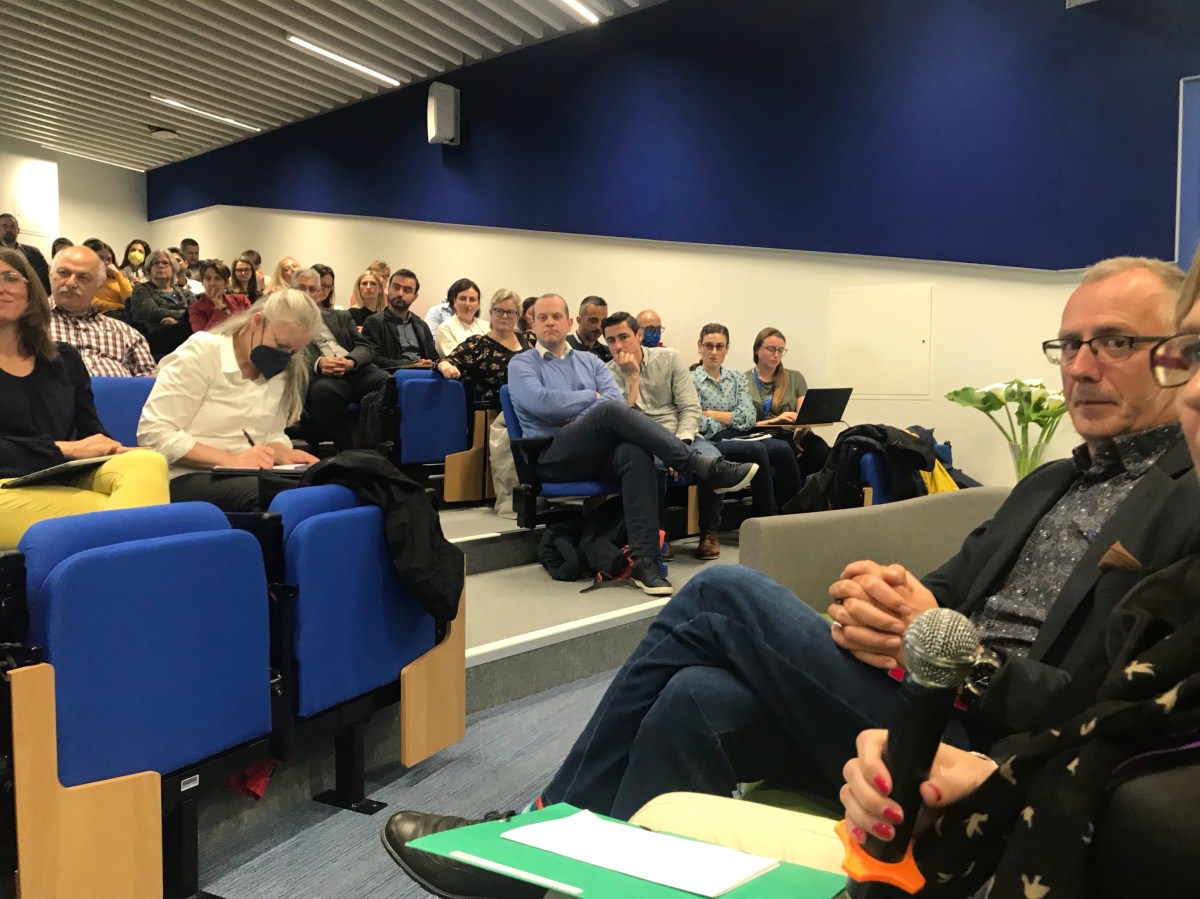
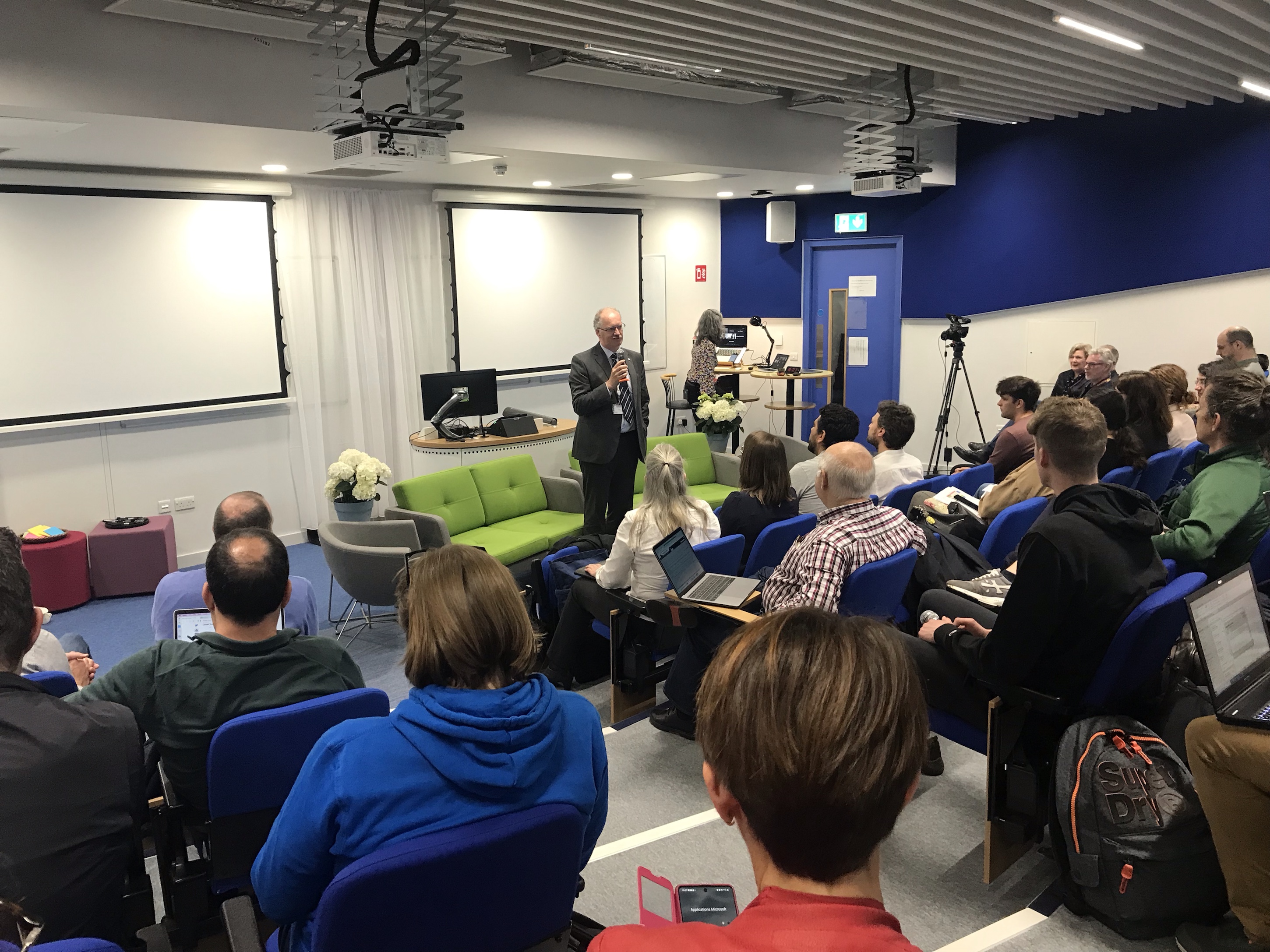
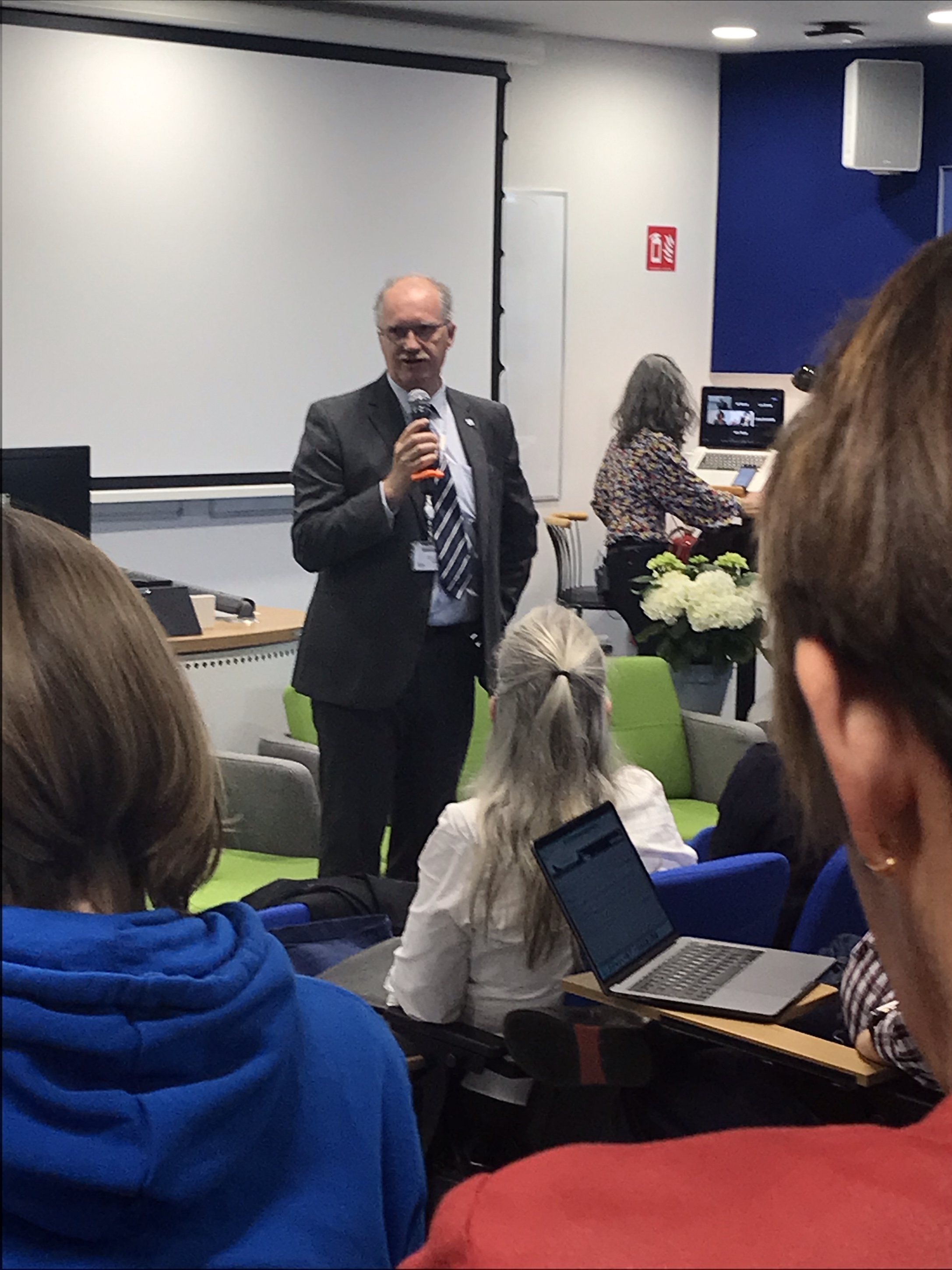
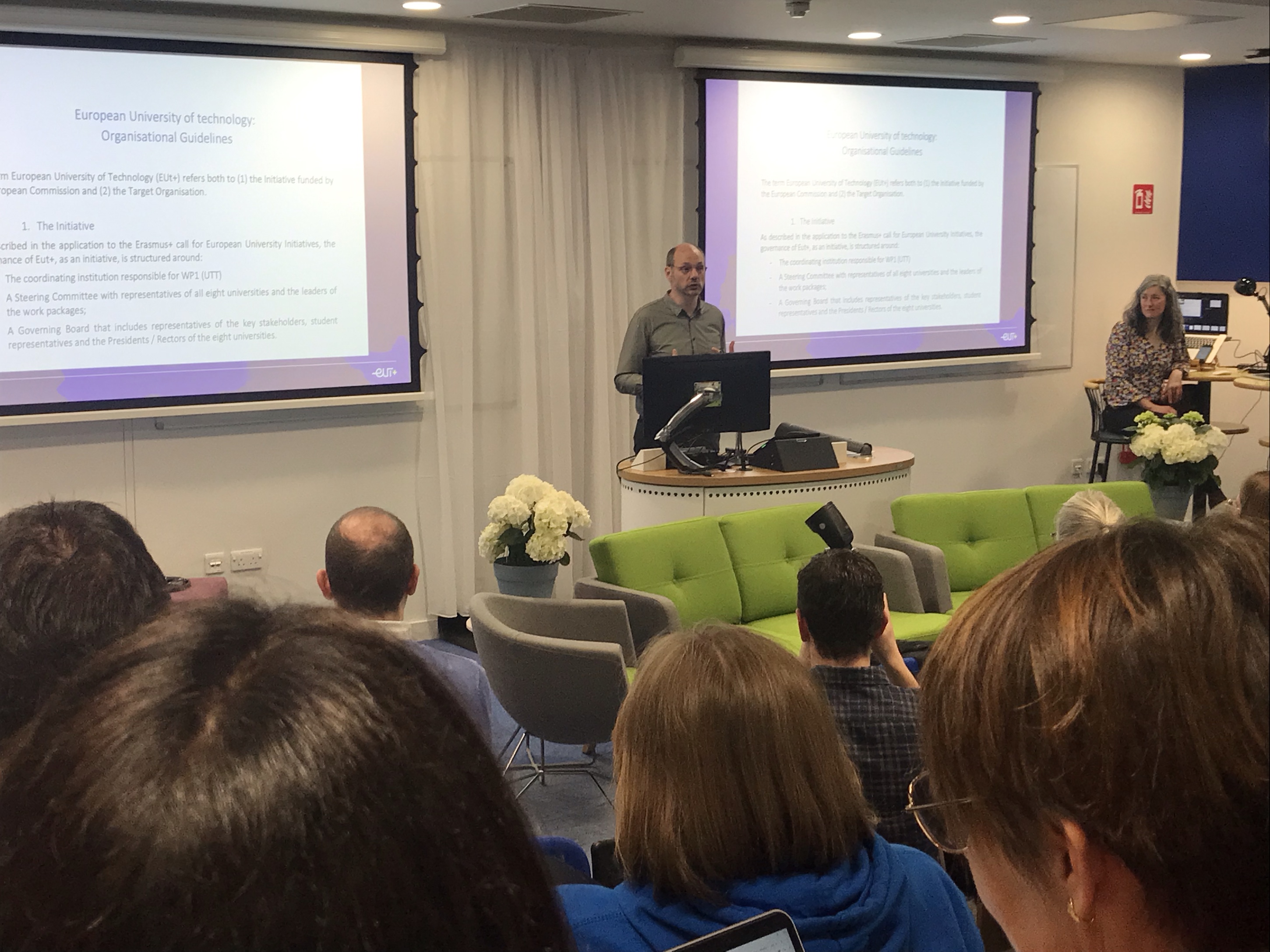
Pics from the EUt+ kickoff session and my view from the Education panel.
After the panel, I chatted with colleagues over coffee, and later followed up with many via email about how they can connect to SEFI and SEFI’s Ethics working group, and also the upcoming Project Approaches in Engineering Education (PAEE) conference where I’ll be delivering a keynote.
I really enjoyed hearing the speakers launch the conference (the secretary of the initiative, TU Dublin’s president, and the TU Dublin point person for the EUt+). Hearing them, I got a better idea of what’s in store for us as we join together as one big university offering more transferability of our students and of ideas and among our teachers. We’re building the future and creating our new reality.
But I couldn’t stay long. I hurried home to meet online with the editorial team for a new Handbook on Engineering Ethics Education. I zipped off emails to invite lead authors for Theme 4, on ethics accreditation.
I’ve got to get back to work now, but I’ll paste the handbook outline below, so you can see what kinds of things we’re exploring.
Outline for the Handbook on EEE
Theme 1: Foundations of engineering ethics education
Chapter 1.1: The purpose(s) of engineering ethics education
Chapter 1.2: How engineering ethics education makes use of normative ethical theories
Chapter 1.3: The individual and the collective in engineering ethics education
Chapter 1.4: Codes and professional organizations in engineering ethics education
Chapter 1.5: Reason and emotion play in engineering ethics education
Theme 2: Interdisciplinary contributions to engineering ethics education
Chapter 2.1: Philosophical and religious foundations in global perspective
Chapter 2.2: Sociological, Postcolonial and Critical Theory foundations
Reflecting professionally on my past four years, REEN is a definite bright spot.
I’m delighted with what we have accomplished since 2018 when I joined the Governing Body of the Research in Engineering Education Network (REEN), and since I took on the role of Chair for 2020 and 2021. I got to put many of the theories to work that I learned in my PhD in Higher Education Administration (Policy, Planning and Leadership).
We aim to host REES in geographically diverse regions, and we see this Symposium as a way of introducing new areas and communities to EER. I helped recruit and select the hosts and locations for REES 2021 in Perth Australia, and REES 2023 in Hubli, India. REES has been/will be held in:
I’m delighted to notice that REES has now been held on every (inhabited) continent!
We recognize that attending REES in person involves global travel and is thus prohibitively expensive for many — as well as taxing on the environment — and we seek to make it more accessible, inclusive, and environmentally sustainable. So, the organizing team has developed multiple avenues for online participation.
We started innovating this way at the outset of the pandemic, when we organized with UCL’s Centre for Engineering Education a full-day online Engineering Education Meet Up. We co-organized a second one on International Women’s Day 2020. People attended these online events from all over the globe and we facilitated all time zones in the first event.
We built on this success with virtual events in the design of the upcoming REES in Perth, which has a global “relay” type structure. Events will happen face-to-face in Perth but will include paper presentations in a hybrid format (with face to face + online participation). Each research paper will be discussed three times:
first in the afternoon in Perth (hybrid)
second online at a time comfortable for the Middle East westward across Europe and Africa and across the Americas, and
third at a report back to the Perth group the next morning.
We have a host of facilitators enlisted to carry the dialogue across the time zones during REES 2021, to support continuity. We will use collaborative tools (e.g., Padlet, Miro, Jamboards, or similar) to record and add ideas at each stage of the global relay. I’ll be facilitating two of these relay sessions, scheduling and helping the facilitation leaders prepare, and moderating the online keynote sessions. Our keynote speakers have agreed to deliver their talks twice: once to people in time zones near Perth (hybrid format), and again to the other side of the world (online only).
REEN will provide awards for the REES Best Paper and best student paper (the Duncan Frazier Award), and a sub-committee of REEN Board members is now in the process of selecting winners for 2021.
During my term as Chair, the REEN Board has developed a practice of building capacity among board members and empowering each other so that there is continuity in transition and handover over responsibilities among Board members.
In the past two years, we have expanded our Board to provide a better representation of non-Anglo regions; the prior naming and allocation of representatives previously privileged the USA and Australia, but it now provides two representatives per continent with some sub-divisions specified to ensure geographical diversity (here’s an example call for applicants). We’ll modify further soon, to make the Middle East and Russia two separate regions.
We have innovated and grown. In the past two years, we have developed many new policies and procedures (such as for recruiting candidates and conducting elections) and programs (e.g., virtual Meet Ups, hybrid conference formats, capacity-building groups, and a capacity-building workshop series that we’ll soon pilot test).
We established a new transition period, to bring the incoming Chair on board 6-12 months prior to taking the full role of Chair, and the outgoing Chair to transition out gradually over 6-12 months to provide advice and support to the incoming Chair.
We also established a new rotation cycle for elections that helps stabilize membership so that we have a consistent level of turnover each year. Our new practices for recruiting and selecting Board members provide a common and transparent approach across regions that will help REEN fill its needs for diverse skills, interests, and expereince. We developed a more balanced approach that allows seasoned and emerging researchers alike a chance to serve.
As we are a larger group, we have not had trouble recruiting people to take on new roles or expand our repertoire of offerings. These were problems encountered in the past, when sitting Chairs couldn’t find replacements, for example. In the past three years, we have had extensive competition for the Board positions we have advertised, typically with 6-10 people running for each open position.
To help ensure engagement among Board members and address a few cases of under-performance, I implemented an annual benchmarking activity wherein Board members submit a written reflection at the start of each year, summarizing what they contributed the prior year, and setting forth goals and aspirations they have for the coming year. This approach has been successful in helping build a sense of ownership and accountability. It helps us identify and build momentum around shared goals. Thankfully, it also gave individuals who were not contributing very much a chance to see that for themselves and modify their behaviour by either stepping up their efforts, better stating what they intended to contribute so they could deliver, or stepping down to allow others a chance to serve and lead.
As REEN itself does not have a bank account, we have successfully controlled costs. We moved our website to a less expensive/nearly free provider, and we upgraded the content. During my time on REEN, we have added a page on EER journals, and our team continues to cultivate and refine this list, trying to provide trustworthy and consistent information to authors to aid their selection of publication venues and help them avoid predatory publishers. We still have the annual cost of the website domain, and I’ll try to find a sponsor for that as I don’t like that obligation passing from Chair to Chair as we’ve been doing.
Over the past 24 months, we produced a special focus journal issue on ethics in engineering, published in hard copy in May 2021 via the Australasian Journal of Engineering Education. I was the Editor, supported by the Editor-in-Chief Sally Male, and Associate Editors from REEN Teresa Hattigh, Andrea Mazzurco, and Valquíria Villas-Boas.
A full list of past REEN publications is available on our website and this list is being expanded this very week to include updated content and a new page of domain-specific journals as well.
REEN also conveys news and communicates happenings via a new blog feature on our website, with a new email subscription list, in addition to a new Twitter handle, @BoardREEN and the LinkedIn Discussion Board that we have operated for years. I’ve been a major player in posting to social media, and hope to soon recruit someone to help with the job. Perhpas when we bring new Board members in, early in 2022.
The special focus issue of the Australasian Journal of Engineering Education (that I mentioned above) adds to the global body of literature on engineering ethics education. The introduction by the guest editor Shannon Chance presents the nine manuscripts and explains ties across them. Overall, the set covers ethical decision-making models and pedagogical techniques, philosophical aspects of ethics in engineering practice and education, ethics in accreditation, and the role of extra-curricular activities and gaming platforms in students’ ethical development. The set has been released digitally and will soon be published in hard copy as well. Many of the articles are open access, and a link to each is provided below.
In the special issue, authors Gwynne-Evans, Junaid and Chetty argue for a repositioning of ethics at the heart of engineering graduate attributes. Martin, Conlon and Bowe examine how “cases” (or detailed examples) are used in the teaching of engineering ethics; these authors argue for the development of immersive scenarios and active stakeholder engagement, as well for the development of local repositories and metrics of effectiveness. Stransky, Bodnar, Anastasio and Burkey explore the power of immersive environments that encourage authentic, high-level engagement by students. Sivaraman proposes a 4-tier rubric for evaluating engineering students’ ethical decision-making skills in the context of hypothetical scenarios. Lawlor offers a dissenting perspective to the teaching of engineering ethics through case studies and he recommends mirroring practices used in the education of philosophers—reading, lectures, discussion, and assessment—so that students are equipped to think critically about the profession. Hess, Miller, Higbee, Fore and Wallace explore empathy and ethical becoming, with the aim of helping Biomedical students recognize issues in practice environments. Frigo, Marthaler, Albers, Ott and Hillerbrand bring to the forefront the role of phronesis and virtues in engineering education. Advocating an authentic approach to teaching ethics, Polmear, Chau and Simmons highlight the role that informal, out-of-class, or extra-curricular activities play in the students’ ethical development. Finally, Chance, Lawlor, Direito and Mitchell assess the ramifications of traditional approaches to teaching ethics by asking civil engineers how they had learned about ethics and find that lessons of codes and professional practice were likely present in their engineering courses but completely unmemorable.
As REEN wants to help more regions build skills in EER and a sense of community working together, our Board members launched, in late 2019, a group we are now calling the “Engineering Education Research Network – Africa”. This group shares resources and ideas via WhatsApp and meet online to share similarly. Our Board has been working diligently to develop a series of workshops to introduce this community to EER and examples of how to do EER. We will run this workshop series in January-February 2022. I’ll meet with the group (online) later in November to launch that workshop initiative and encourage people to sign up.
Board members are hoping to extend these support activities into additional regions, eventually providing video recordings translated into local languages to help people learn EER. Our long-range plan for these EERN communities includes Latin America, the Middle East, and China.
In the role of Chair, I also developed a new logo with input from all Board members:
Our little Board is small but mighty. My wholehearted thanks go to the current Board members who made possible all the accomplishments I outlined above:
I collected interviews for this project with civil engineers recruited by Engineers Without Borders UK (EWB-UK). Dr Inês Direito helped with interviews and data analysis and Professor John Mitchell helped us with editing.
This is a sister article to one published in May 2021 via the Australasian Journal of Engineering Education that was titled “Above and beyond: ethics and responsibility in civil engineering“. That article has 1,354 downloads to date! It’s also Open Access, and free to read.
We hope you’ll find the various insights revealed about the ethics and experiences of early-career engineers interesting and informative.
I haven’t been blogging much during the pandemic, as I spend far too many hours sitting in front of a computer monitor for things that must be done. Hours for hobbies like blogging just weren’t available – my eyes and thighs couldn’t take more. Moreover, since I posted advice and examples of Marie Curie final reports and applications there has been a deluge of visitors to those pages and posting more would cause those visitors confusion.
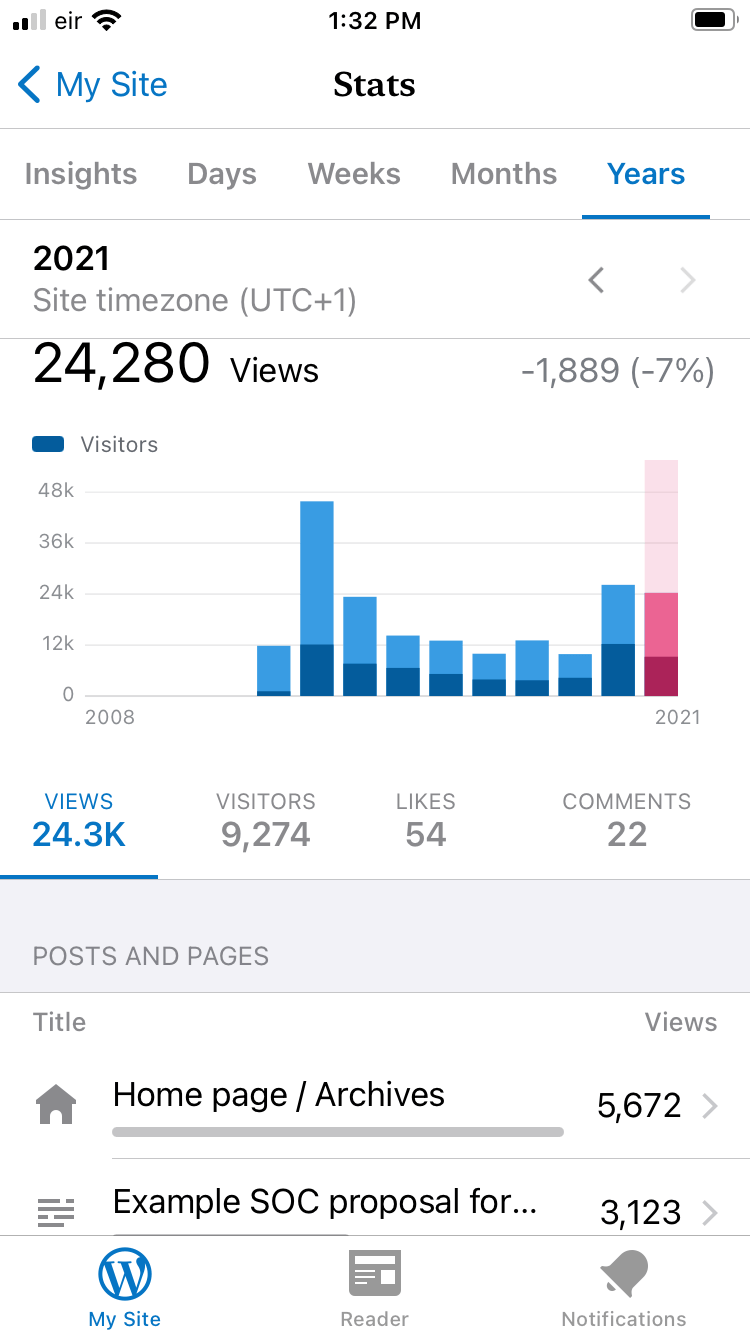
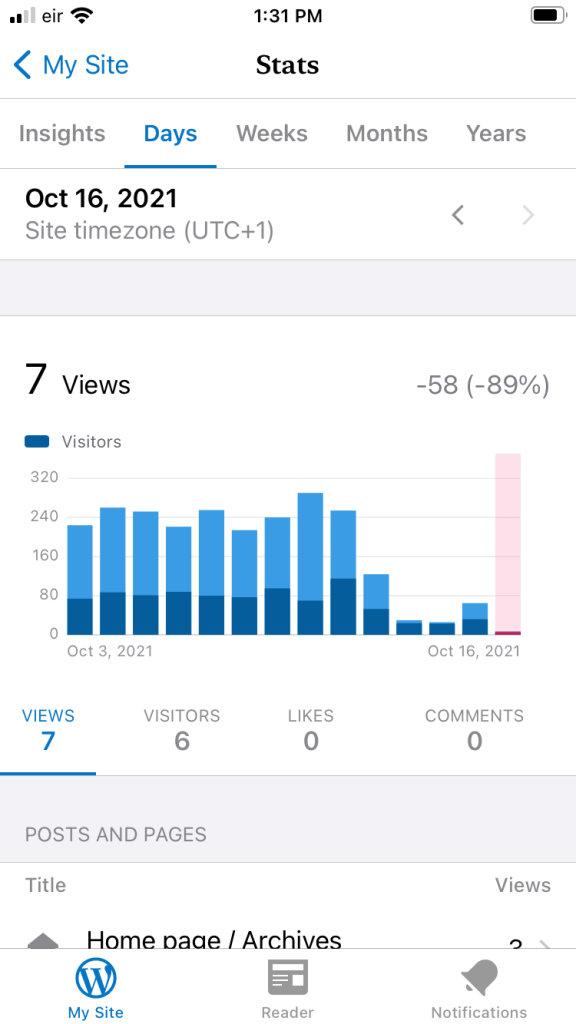
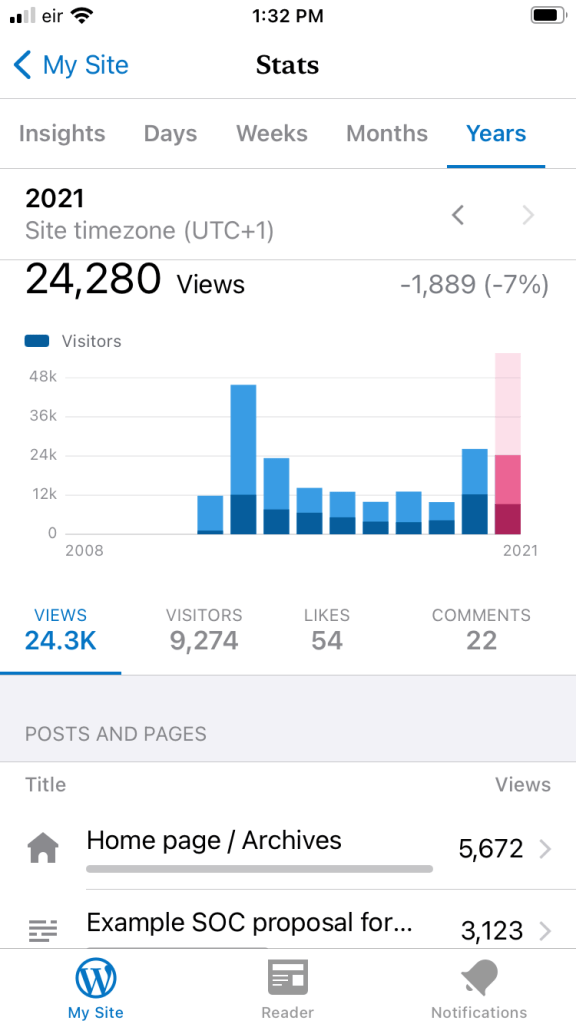
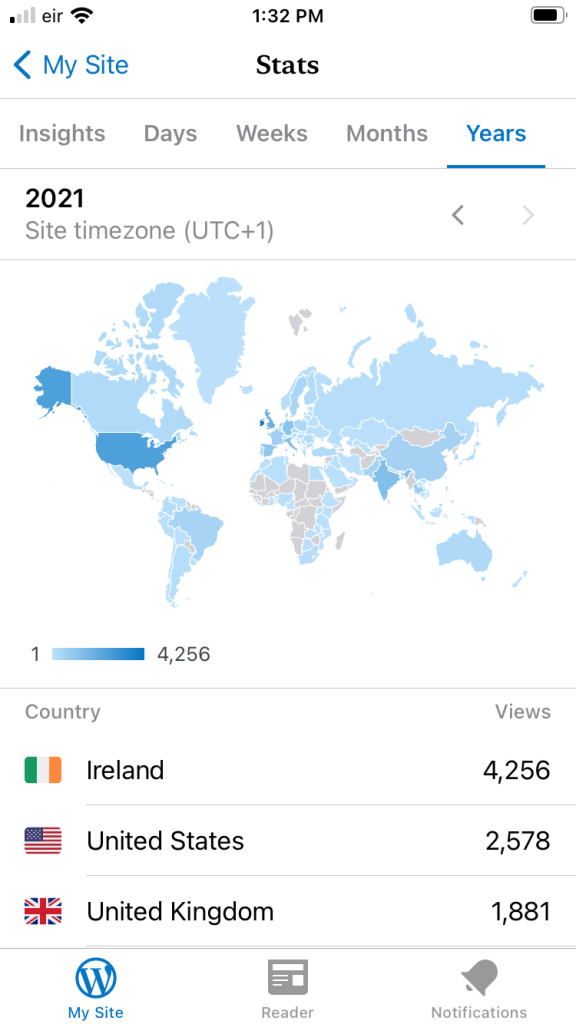
But, the traffic slowed down this year after the 2021 deadline for applications. You can see the cliff edge, where traffic dropped off, in the image to the left, below. These web materials were heavily visited in 2020 as well as 2021, as shown to the right, and I anticipate MSCA applicants will return for the 2022 application cycle.
In any case, I’m delighted with having over nine thousand visitors this year!
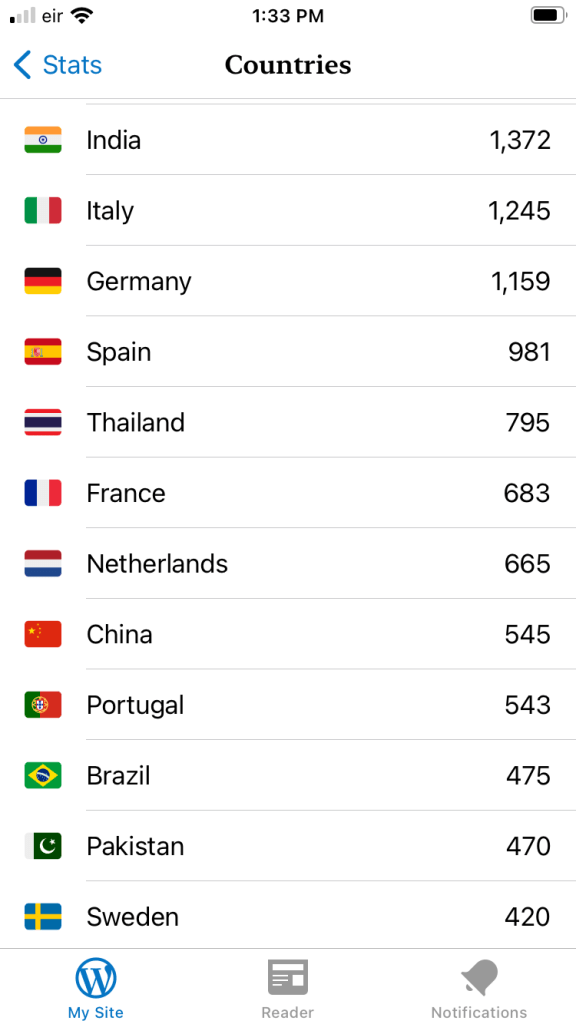
Most visitors came from my home (USA) and host (Ireland and the UK) countries, but I also reached people far away!
It’s time to update you! And, as I’m currently preparing to put my best foot forward in a local interview, it’s also a good time to reflect on what I’ve accomplished in the past four years:
Marie Curie Research Fellow and Visiting Professor at UCL
Programme Chair for the TU Dublin’s BSc (Honours) in BIM (Digital Construction)
Governing Body member and Chair of the Research in Engineering Education Network (REEN)
Guest editor for three special focus journal issues
Journal Associate Editor, Editorial Board member, and mentor for new reviewers
Author of multiple publications, having collected data for additional new publications as well
International speaker and workshop coordinator
Licensed Architect with up to date CPD
Supervisor and mentor for emerging researchers, appointed Senior Fellow of the (UK) Higher Education Academy
Blogger sharing examples to build human capacity in research and research-informed teaching
Manager of a portfolio of funded projects
In this post, I’ll tell you a bit about the first two items. Hopefully, I can detail other items in subsequent posts — so examples are fresh in my mind come interview time!
After successfully completing a two-year Marie Cure individual fellowship at UCL, I returned to Dublin, but I have kept my networks and collaborative activities at UCL going strong. The fellowship opened so many new doors for me — it exposed a new world of opportunities. My host institution, a global powerhouse in research and in engineering education as well as architecture education, provided an ideal place to grow new knowledge and skills. The fellowship’s generous training/travel budget, plus the exciting assignments UCL sent me on (e.g., leading two Master Classes in South Africa), helped extend my network into many new regions. Even today, nearly two years after leaving the UCL campus, I work daily with my UCL colleagues. As Visiting Professor, I attend online lectures and research sessions, provide leadership on research and gender issues, and engage in collaborative projects. Today, UCL Consultants pays half my salary, straight to TU Dublin, to provide me time to develop curricular materials for a brand-new degree programme in Architectural Engineering. This curriculum development work has been challenging, but also incredibly interesting and rewarding.
Just a month after returning to Dublin and just a month before the pandemic came crashing in, I accepted the role of Programme Chair for TU Dublin’s BSc (Honours) in BIM (Digital Construction) and launched that programme. I had an amazing Dean, but the two layers of supervisors between the Dean and me (as Programme Chair) were vacant for over half a year and so I learned quite a range of new skills. As my new line manager pointed out to me yesterday, I left my own personal stamp on the programme as it developed. Thankfully, he described this as a positive! Developing the structure and content of the “Research Methods” and “Work-Based Learning” modules for this BSc has been particularly rewarding. The “Honours” part of the programme name indicates that the students must complete a research thesis to graduate, and we’ve done an impressive job guiding the students to topics where doing research will benefit them, their careers, and the organizations where they work. We graduated our first cohort and have a second nearing completion. The tough part of this role, for me, is keeping up with technologies and standards that evolve so fast.
In upcoming posts, I look forward to reflecting on REEN, journal, and mentoring work. But for now, I’d better get back to my “To Do” list!
Would you like four years of PhD tuition/registration fees, with a €18,500 annual stipend and annual project budget of €2,600? The goal is to research STEM education and earn a PhD at Technological University Dublin (TU Dublin), in Ireland’s capital city. Applicants for this project are required to complete an Expression of Interest and email it to both shannon.chance@tudublin.ie AND phd@tudublin.ie. The application deadline is October 14, 2021.
Specifically, TU Dublin’s Research Scholarship Programme 2021 awarded me funding to hire a PhD researcher/student to study the topic of “Supporting Diversity in STEM by Enhancing Problem-Based Learning (PBL) Practices”. EU and non-EU citizens are welcome to apply, but those coming from outside the EU will need to obtain proper visas to study and work in Ireland. Registration Fees/Tuition each year would cost €4,500 (EU full-time) or €9,000 (non-EU full-time) but are completely covered, meaning that this grant is worth €102,400-€120,400. The stipend and project costs “will be paid annually, based upon successful completion of the annual assessment by the student”.
Applicants must have obtained a minimum of a 2.1 honours degree (level 8), or equivalent, in a relevant (e.g, STEM or social science) subject. A Master’s degree and/or some prior experience in qualitative or quantitative research is desirable but not essential. The ideal candidate will be highly self-motivated, with keen interest in STEM education and theories on learning and teaching and the ability to work both independently and collaboratively. We welcome applications from candidates from diverse backgrounds and from anywhere in the world. Applicants must meet the minimum English language requirements. Non-Irish can convert thier qualifications using an online conversion calculator (e.g., the US equivalent would be a four-year bachelor’s with B+ or better GPA).
What are we studying?
Our Research Question is:What challenges do women face with collaborative, peer-to-peer and Problem Based Learning while studying engineering and other STEM courses at university, and how do they deal with these challenges?
Why are we doing this?
Across engineering in Ireland, skills shortages represent “a major concern” and “barrier” to growth, and “the continuing gender gap requires greater attention and action”[i].Addressing shortfalls and increasing diversity requires shifting the culture of science, technology, engineering, and maths (STEM) and STEM learning – it must start with understanding the experiences of the students who enrol in STEM.
The proposed mixed methods study involves phenomenological analysis of 71 existing interview transcripts, complemented by a quantitative survey of STEM students to identify patterns across TU Dublin. These longitudinal data provide a unique window into students’ experience of engineering and the active, inquiry-driven, Problem-Based Learning (PBL) used at TU Dublin.
I’ll be the lead supervisor for this PhD researcher, and the advisory supervisor will be Professor Brian Bowe. I’ve provided the Detailed Project Description in the body of this post. A brief description of the project that is being advertised by the University is provided here:
The full proposal that I submitted for funding provided details about both of the supervisors, about strategic alignment with organizational and governmental goals, and how this project will enhance research capacity. I’ve shared a few details at the bottom of the post about terms of funding. Many thanks to the people who gave input and advice on my application: Brian Bowe, Oluwasegun Seriki, Clare Eriksson, Marek Rebow and a consultant Marek secured.
In 2020, Irish firms aimed to hire 5,152 engineers but 91% of engineering leaders listed skills shortages as “a major concern” and “barrier” to growth (Engineers Ireland, 2020). In Ireland today, more students are choosing STEM studies at second level, but many don’t continue into STEM higher education and “the continuing gender gap requires greater attention and action – in Ireland and internationally” (Engineers Ireland, 2020).
‘Pipeline’ or ‘conversion’ rates – persistence to graduation and into STEM careers of students who do enrol – are an issue. Globally, half of all students starting in engineering exit the major within a year[i] and in Ireland “drop-out rates in some third-level STEM courses [are] hitting 80%”[ii]. Moreover, most who graduate in engineering are male; in Ireland, men account for over 80% of all graduates in engineering, manufacturing and construction[iii]. Today’s culture of engineering study and work is largely shaped by males, and this may discourage some prospective applicants from joining the field.
Prior research suggests experiential, Problem-Based Learning (PBL) increases student engagement and helps address reasons women avoid STEM subjects[iv], [v], [vi]. Yet, task allocation and peer evaluation in teams continue to reflect gender bias, even when students do not recognize inequity[vii], [viii]. Time and project management, group coordination, and communications often fall to women – and often go unrecognized[ix]. Such dynamics can influence students’ perception of how they fit, if they belong, and whether they should stay in engineering. Engineering culture is often described as “chilly” to those who don’t fit the engineering stereotype[x]. Women who experience an unwelcoming environment have shown less commitment to stay in STEM programs than those who feel accepted[xi]. Although women who enter STEM courses are typically high achievers with strong self-confidence, their experiences can cause significant drops in their confidence levels, especially in their first two years[xii]. A US study found female participants felt dismissed, ignored, and unacknowledged when working in small groups of men in both work and academic settings[xiii]. Profanity, semi-sexual double entendre, and violent metaphors used by male faculty and students in engineering classrooms, although typically not intended to offend, contribute to a chilly climate[xiv].
PBL, which inherently involves group work, is promoted at TU Dublin by the Learning, Teaching and Technology Centre (LTTC), and so it is important to assess how well the pedagogy is working here. This study will investigate women’s experiences with PBL and other forms of collaborative peer-to-peer learning in engineering at TU Dublin, compare and contrast this with experiences of women from other engineering schools in Europe, and assess how the PBL experience changed over time for the Dublin-based women. This will be assessed via qualitative, phenomenological analysis of existing interview data. Findings will be extended via a survey of women in STEM at TU Dublin.
Addressing shortfalls and increasing diversity requires shifting the culture of STEM and STEM learning – it must start with understanding the experiences of STEM students. The First Time Supervisor (FTS applicant) has amassed a valuable, longitudinal dataset to help answer the research question: What challenges do women face with collaborative, peer-to-peer and Problem Based Learning while studying engineering and other STEM courses at university, and how do they deal with these challenges?
Phenomenological interviews collected 2015-2019 via the applicant’s two MSCA fellowships[xv], [xvi], provide insight regarding the experiences of diverse female students (see Figure 1).
Methodologies. The proposed two-part mixed-methods study involves qualitative and quantitative components. Ethics clearance will be sought for each phase, as the second phase will be built upon findings of the first.
Composition of the dataset
In the first phase, extensive qualitative, phenomenological analysis of 71 existing interview transcripts will be conducted to assess how women have experienced PBL and other forms of collaborative learning (e.g., studying with peers in- and outside class) at TU Dublin across their four years of engineering studies and in other institutions in Portugal and Poland. The TU Dublin sample studied using formal PBL methods as part of their B.Eng. degree programs, starting from day one of their course – they include 24 of the 26 women on the inaugural cohort of TU Dublin’s common core engineering programme. These students completed their course in 2019 when the final set of interviews were conducted — analysis of these data is urgently needed. Additional interview data, collected in Poland and Portugal, provide a counterpoint to help assess the degree to which findings are localized to TU Dublin, versus representative of women’s experiences in PBL and collaborative learning more broadly. Phenomenology helps researchers investigate structures of consciousness and explore how specific phenomena are experienced from the first-person point of view. Van Manen’s interpretive, hermeneutic method will be used for analyzing interview data.[xvii] TU Dublin has expertise in this: Brian Bowe and Rob Howard have supervised theses using phenomenological methods[xviii], [xix], [xx] as well as closely related phenomenographical methods[xxi], [xxii], [xxiii]. As 33 prior doctoral theses using phenomenology in EER had sample sizes of 7-28 participants, this is an ambitious study, feasible explicitly because the qualitative data have already been collected and checked for accuracy.[xxiv]
In the second phase, a widescale survey will be conducted with women studying on four or more STEM courses that involve PBL across TU Dublin to assess the degree to which the qualitative findings hold true more broadly. Survey questions will be based on analysis from the phenomenological phase and piloted before use. Preliminary analyses conducted by the applicant indicate that many women in the engineering sample at TU Dublin had to adjust to working on teams with male students for the first time, as they came from single-sex schools. Many felt they had less preparation to start engineering than their male counterparts because their secondary schools provided limited access to physics and other engineering-related courses. The survey will provide a broader, and more current, perspective on these topics, to see if these barriers were experienced by many women in STEM at TU Dublin and assess what this might imply for Irish education policy. Specific sources of stress will be distilled from the interviews, and the follow-up survey will help assess how widespread these challenges have been. Thus, the follow-up survey will allow the PhD researcher to confirm and extend findings of the phenomenological phase.
Objectives of the studyare to:
Distil lessons from interviews and surveys to improve attraction, delivery, and retention in engineering and STEM education and employment
Assess the degree to which PBL pedagogies support women in engineering
Describe how women experience PBL in engineering at TU Dublin
Identify positive and negative aspects of the PBL experience
Make full use of the existing longitudinal interview data via in-depth analysis
Extend the value and generalizability of the findings via a quantitative survey
Assess data for gender, ethnic, and intersectional dimensions
Workplan (Figure 2). Upon arrival, the PhD researcher will be provided longitudinal data and guided in career planning, literature review, and target methodologies (Year 1) as a foundation for phenomenological analysis (Y2) and collection and analysis of survey data to achieve generalizability (Y3). The researcher will take part in the Graduate Research School’s structured PhD programme, annual Doctoral Symposia provided by the European Society for Engineering Education (SEFI), summer schools of the Australasian Association for Engineering Education (AAEE) or similar, and online workshops organized by the Research in Engineering Education Network (REEN) and other leading organizations for engineering education research (EER). The research will be disseminated via SEFI, regional symposia, and either the American Society for Engineering Education (ASEE) or REEN’s Symposium (REES) and journal articles, submitted to the European Journal of Engineering Education (EJEE) and Journal of Engineering Education (JEE).
Work Porgramme including Timetable, Ethical Considerations, Methods, and Dissemination
Feasibility, limitations and risks. The level of funding available, the existence of an extensive dataset, high-quality mentoring from the FTS applicant[xxv], [xxvi], [xxvii], and the supervising team’s track records help ensure this project can be completed on time[xxviii]. The sample size, considered large for qualitative research, will facilitate transferability but not generalizability; to address this limitation we propose rigorous methodologies and inclusion of a survey. Possible risksinclude a low return of surveys (however, ample qualitative data exist to make completion of a thesis viable) and Brian Bowe’s timetable (however, Rob Howard represents a viable backup). A primary risk is that the interview data will grow stale if they are not analyzed soon.
Originality. A longitudinal dataset of this depth is extremely rare in EER, and it presents unique opportunities. Using phenomenology is an innovative approach to study this topic[xxix] and having an extensive pre-existing dataset will allow time to extend qualitative findings via a wide-scale survey. Prior work of similar nature is US-based and quantitative in nature [iv], [xxx], tracking what happens (e.g., patterns of enrolment and retention), but failing to identify what keeps them engaged in the field or compels them to leave. The stressors they face and the why behind departures remains unclear so a deeper, more qualitative, study is needed. In early interviews, TU Dublin students reported some unique factors – a high proportion of single-sex schools, difficulty registering for physics in some schools – that warrant follow-up[xxxi], [xxxii].
[iii] Turcinovic, P. (2013). EU knowledge triangle: ‘Renaissance or ocean of papers?’ Donald School Journal of Ultrasound in Obstetrics and Gynecology, 7(3), 272-277.
[iv] Boedeker, P., Nite, S., Capraro, R. M., & Capraro, M. M. (2015, October). Women in STEM: The impact of STEM PBL implementation on performance, attrition, and course choice of women. In 2015 IEEE Frontiers in Education Conference (FIE) (pp. 1-8). IEEE.
[v] Marra, R.M., Rodgers, K.A., Shen, D., & Bogue, B. (2012). Leaving engineering: A multi-year single institution study. Journal of Engineering Education, 101(1), 6-27.
[vi] Kokkelenberg, E.C., & Sinha, E. (2010). Who succeeds in STEM studies? An analysis of Binghamton University undergraduate students. Economics Of Education Review, 29(6), 935-946.
[vii] Fowler, R. R., & Su, M. P. (2018). Gendered risks of team-based learning: A model of inequitable task allocation in Project-Based Learning. IEEE Transactions on Education, 61(4), 312-318.
[viii] Hirshfield, L. J. (2018). Equal but not equitable: Self-reported data obscures gendered differences in project teams. IEEE Transactions on Education, 61(4), 305-311.
[ix] Neumann, M. D., Lathem, S. A., & Fitzgerald-Riker, M. (2016). Resisting cultural expectations: Women remaining as civil and environment engineering majors. Journal of Women and Minorities in Science and Engineering, 22(2).
[x] Wyer, M., (2003). Intending to stay: Images of scientists, attitudes toward women, and gender as influences on persistence among science and engineering majors, J. Women Min. Sci. Eng., (9),1, 1716.
[xi] Wyer, M., (2003). Intending to stay: Images of scientists, attitudes toward women, and gender as influences on persistence among science and engineering majors, J. Women Min. Sci. Eng., (9), 1, 1716.
[xii] Brainard, S.G. and Carlin, L., (1998). A six-year longitudinal study of undergraduate women in engineering and science, J. Eng. Educ, (87),4, 369 – 375
[xiii] Wilkins-Yel, K. G., Simpson, A., & Sparks, P. D. (2019). Persisting despite the odds: Resilience and coping among women in engineering. Journal of Women and Minorities in Science and Engineering, 25(4).
[xiv] Tonso, K. (1996). “The Impact of Cultural Norms on Women,” Journal of Engineering Education, (85), 3, 217–225.
[xvi] European Commission. (2019). Designing Engineers: Harnessing the Power of Design Projects to Spur Cognitive and Epistemological Development of STEM Students. https://cordis.europa.eu/project/id/747069
[xvii] van Manen, M., Researching lived experience1997, Ontario, Canada: The Althouse Press.
[xviii] Chari, D. (2014). What is nanoscience?‘-A hermeneutic phenomenological study of nanoscience researchers’ experiences.
[xix] Sloan, A. (2015) A Phenomenological Study of Computer Science Lecturers: Lived Experiences of Curriculum Design, Doctoral Thesis, Technological University Dublin. doi:10.21427/D7QC75
[xx] Bates, E. (2011). How do Apprentice Painters and Decorators on the Irish Standards Based Apprenticeship Experience their Learning? Dissertation. Technological University Dublin.
[xxi] Beagon, U. (2021) A Phenomenographic Study of Academics Teaching on Engineering Programmes in Ireland: Conceptions of Professional Skills and Approaches to Teaching Professional Skills, Doctoral Thesis, TU Dublin, 2021, DOI:10.21427/K4MD-2571
[xxii] Irving, P. (2010). A Phenomenographic Study of Introductory Physics Students: Approaches to their Learning and Perceptions of their Learning Environment in a Physics Problem-Based Learning Environment. Doctoral Thesis.Technological University Dublin. doi:10.21427/D7K888
[xxiii] Walsh, Laura. (2009). A phenomenographic study of introductory physics students: approaches to problem solving and conceptualisation of knowledge. Technological University Dublin. doi:10.21427/D73598
[xxiv] CHANCE, S., & Direito, I. (2018). Identification and preliminary review of doctoral theses in engineering education that have used phenomenological methods. In Proceedings of the 46th SEFI Annual Conference 2018. Creativity, innovation and entrepreneurship for engineering education excellence. Societe Europeenne pour la Formation des Ingenieurs (SEFI). Copenhagen, Denmark. http://discovery.ucl.ac.uk/10062437/1/Chance_SEFI%202018-ShannonChance-final%20paper-submitted.pdf
[xxix] CHANCE, S., & Direito, I. (2018). Identification and preliminary review of doctoral theses in engineering education that have used phenomenological methods. In Proceedings of the 46th SEFI Annual Conference 2018. Creativity, innovation and entrepreneurship for engineering education excellence. Societe Europeenne pour la Formation des Ingenieurs (SEFI). Copenhagen, Denmark. http://discovery.ucl.ac.uk/10062437/1/Chance_SEFI%202018-ShannonChance-final%20paper-submitted.pdf
[xxx] LaForce, M., Noble, E., & Blackwell, C. (2017). Problem-based learning (PBL) and student interest in STEM careers: The roles of motivation and ability beliefs. Education Sciences, 7(4), 92.
[xxxi] CHANCE, S. M., Bowe, B. & Duffy, G. (2016). Policy Implications of Irish Women’s Experiences in STEM Education. Association for the Study of Higher Education (ASHE) conference in Columbus, Ohio.
[xxxii] CHANCE, S. M., Eddy, P., & Bowe, B. (2016). Implications for education policy: A comparative study of women’s experiences in engineering and physics education in Ireland and Poland. Joint conference of Irish Social Sciences Platform (ISSP) and National Economic and Social Council (NESC) in Dublin.
Some of the pertinent details from the TU Dublin Research Scholarship Programme 2021 handbook are:
Each award will provide a scholarship to support a full-time graduate research student and include a stipend of €18,500 and €2,600 for project costs. Funding is available for supervision of full-time students up to a maximum of 4 years for PhD students … and will be paid annually, based upon successful completion of the annual assessment by the student.
15. Non-EEA students must comply with all immigration regulations as determined by the Department of Justice and Law Reform.
16. Research students in receipt of funding must engage full-time in research. Although teaching, and other work, is considered a valuable experience, it should not exceed a total of 4 hours per week.
19. Expenses may include: • project materials and consumables; • project equipment; • software and hardware critical for the proposed research; • a maximum limit of €1,000 for computers or laptops applies unless required for high- performance computing and all must be in line with TU Dublin IT procurement policy; • pay-as-you-go access to national research infrastructures; • archival research costs; • reasonable and vouched travel (use of own car without prior approval of the Head of the Graduate Research School and first class or business travel will not be considered) • reasonable and vouched hotel costs • reasonable and vouched subsistence (all subsistence must be vouched and per diems will not be considered.) Subsistence claims cannot exceed and must be in line with Government rates. • registration costs for conferences/workshops/meetings directly related to the award; • normal (not emergency/express) visa costs for travel to conferences/research events; • skills training directly related to the objective(s) of the award; • publishing and write-up costs, excluding proof-reading costs; ανd • reasonable travel and refreshment costs for subjects and volunteers in studies





 Ireland by Chance