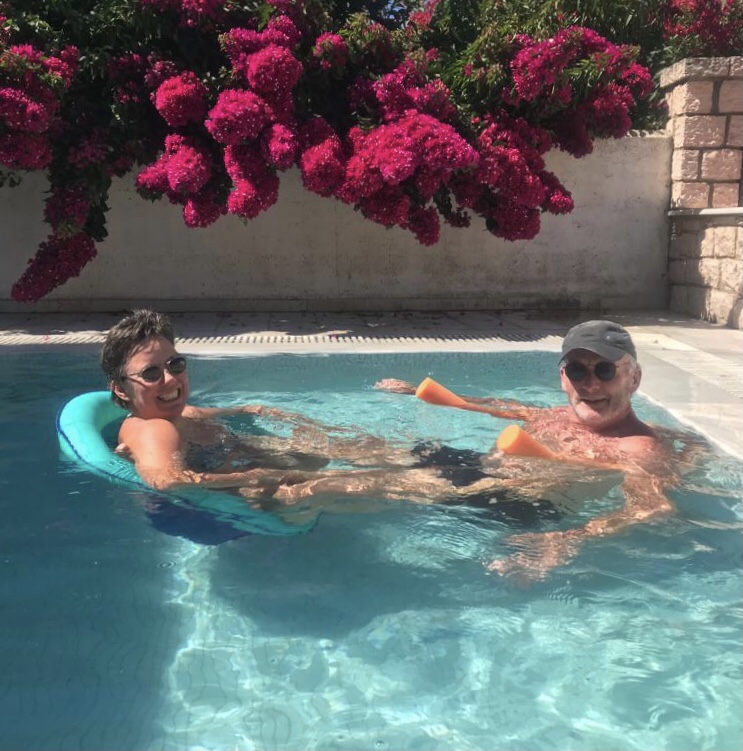
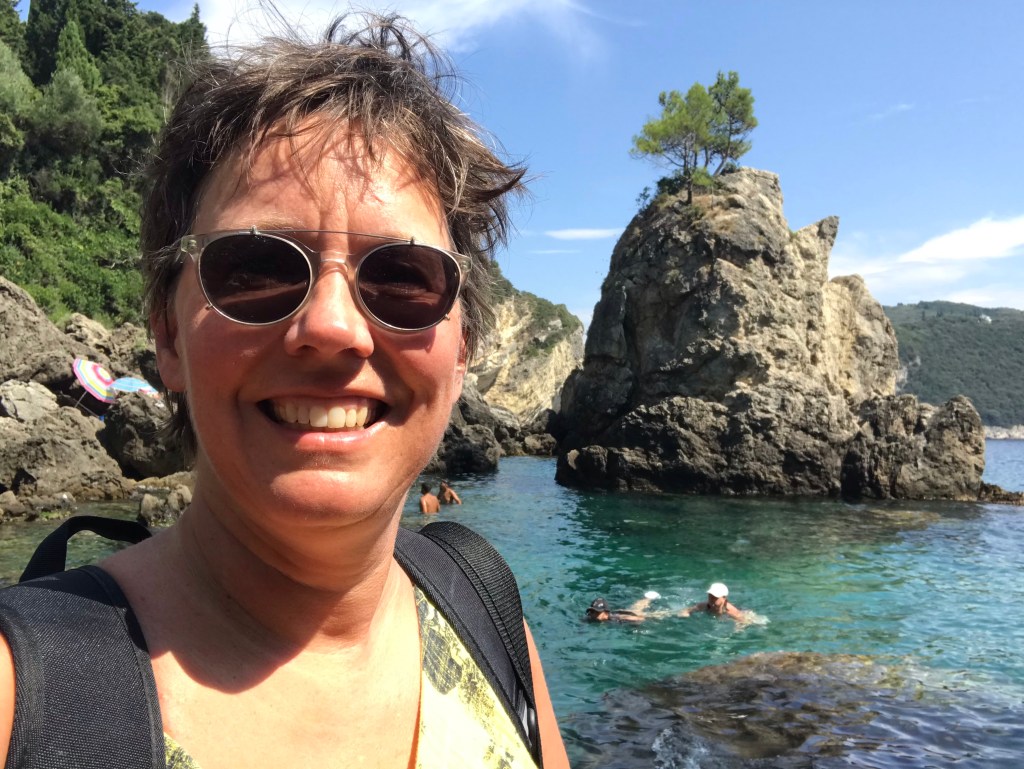
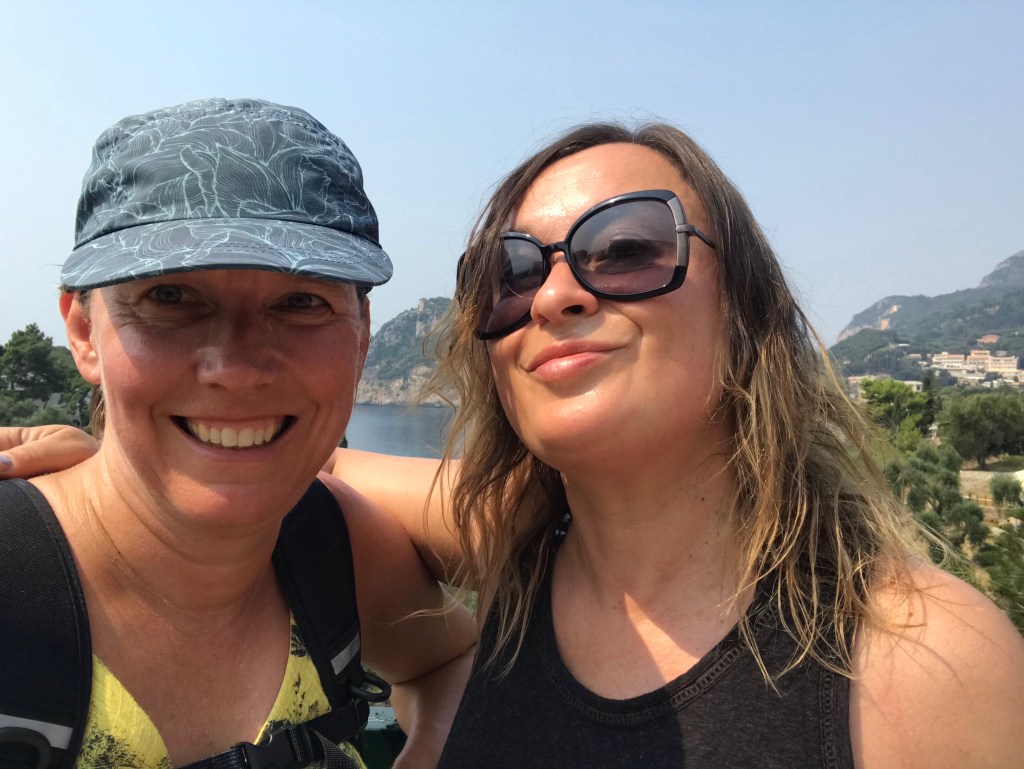
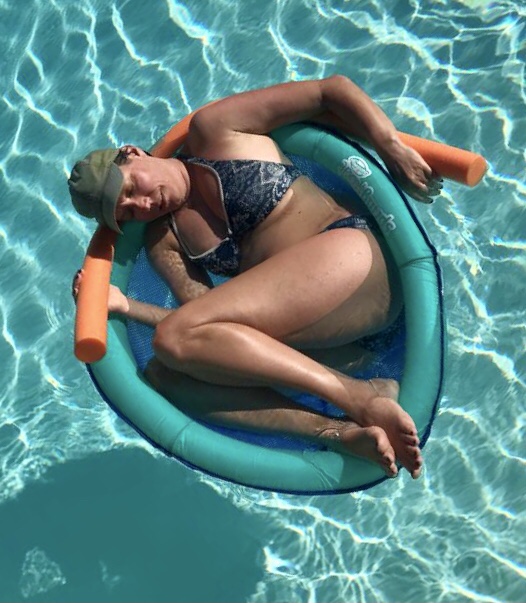
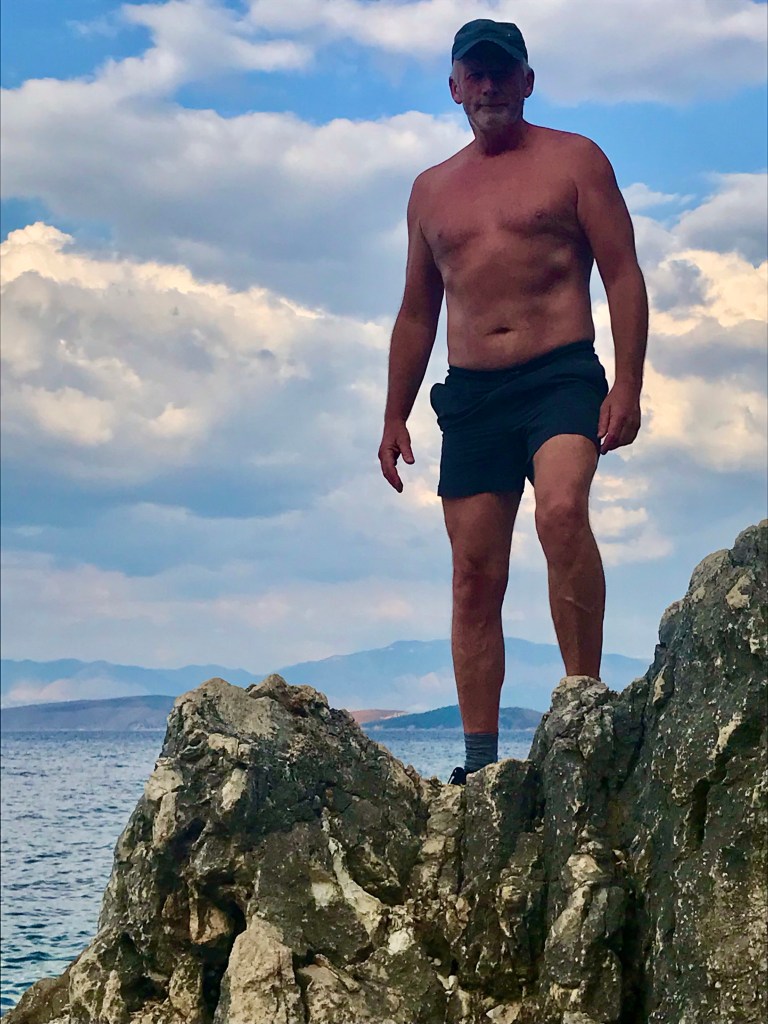
I’m sitting down to write about academic affairs… but first I’m dying to revisit a few choice memories from the summer. After I returned from the trip to Virginia (Virginia Tech) and Maryland (for the ASEE conference), I spent several weeks working intensely on curriculum design. Then, I jetted off to Corfu for a tranquil and relaxing holiday with Aongus. After he departed, my colleague Svetlana joined the trip for a bit. A few pictorial highlights are shared below:
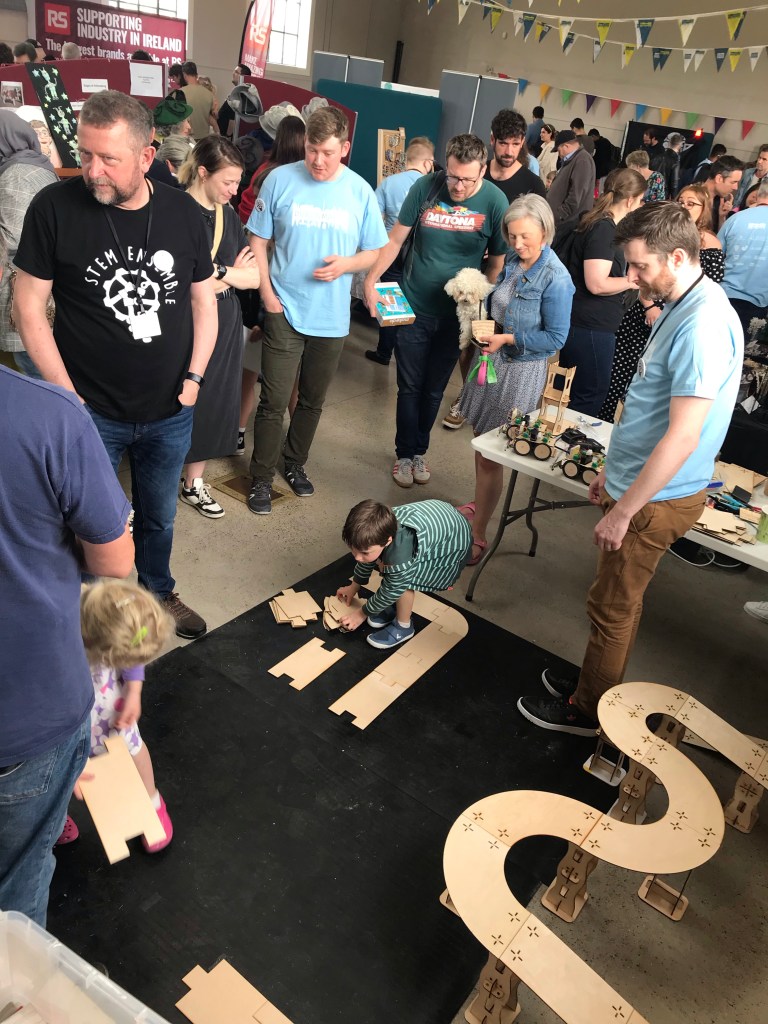
I returned from Greece just in time for Dublin Maker 2023 (an extensive fair and expo of creative people in action) before commencing the new academic year at TU Dublin.
Our TU Dublin group, which has grown from RoboSlam into the Dublin STEM Ensemble in recent years, hosted four tables worth of activities at Dublin Maker, including robot activities, button making, an AI-fed talking head, a facial recognition setup, and Ted Burke’s super fun FrankenFont activity that I helped facilitate.
Visitors to our FrankenFont area helped create a brand new type font, with 65 individuals creating letters for our set by the end of the day.
If you are attending ASEE conference in 2023, you can attend this session of the Educational Research and Methods Division (ERM), where I’ll be a panelist alongside Aditya:
M314C·Introducing the International Handbook of Engineering Education Research (IHEER) and Discussing the Future of EER
Mon. June 26, 2023, 11:00 AM to 12:30 PM (Room 308, Baltimore Convention Center)
I served as an Associate Editor for the handbook and co-authored the chapter on “Informal Learning as Opportunity for Competency Development and Broadened Engagement in Engineering”. The chapter authors, Madeline Polmear, Shannon Chance, Roger G. Hadgraft, and Corrinne Shaw made a great team. It was a pleasure writing this chapter and my first time writing with any of the three. Won’t be my last!
I haven’t been blogging much these days, as I’m so embroiled in research publication activities (mostly in the roles of editor and peer reviewer) that I rarely spend time at the computer for recreational activities like blogging. That said, I feel compelled to report how rewarding it has been to work with the Bachelor’s level Building Construction Modeellign/Digital Construction students at TU Dublin. I coordinate the BSc (honors level) degree program, lead its Research Methods and Work Based Learning modules, and support its Dissertation module.
One of our recent students, Anne Grego, has presented her bachelor’s level work at two conferences. The one presented last month at the EU BIM conference has been published. You can download the paper, “USING BIM TO INCREASE THE EFFICIENCY OF ENERGY-DRIVEN RETROFITTING PROJECTS” by Anne Grego, Shannon Chance and Barry McAuley from https://arrow.tudublin.ie/surconcon/2/
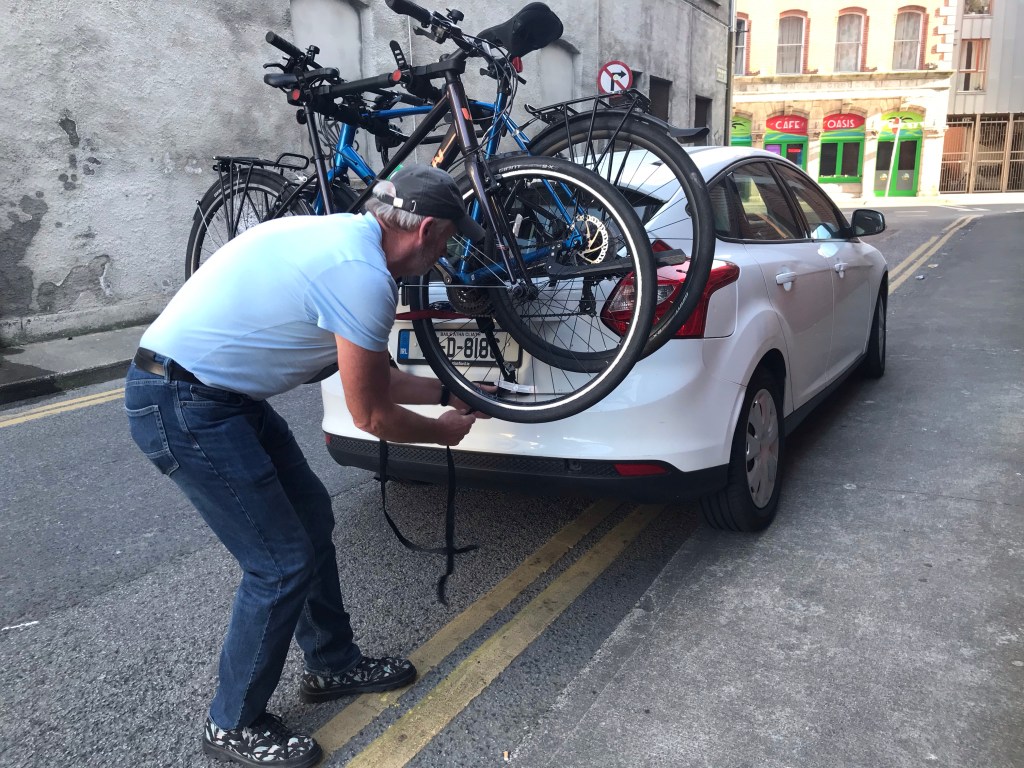
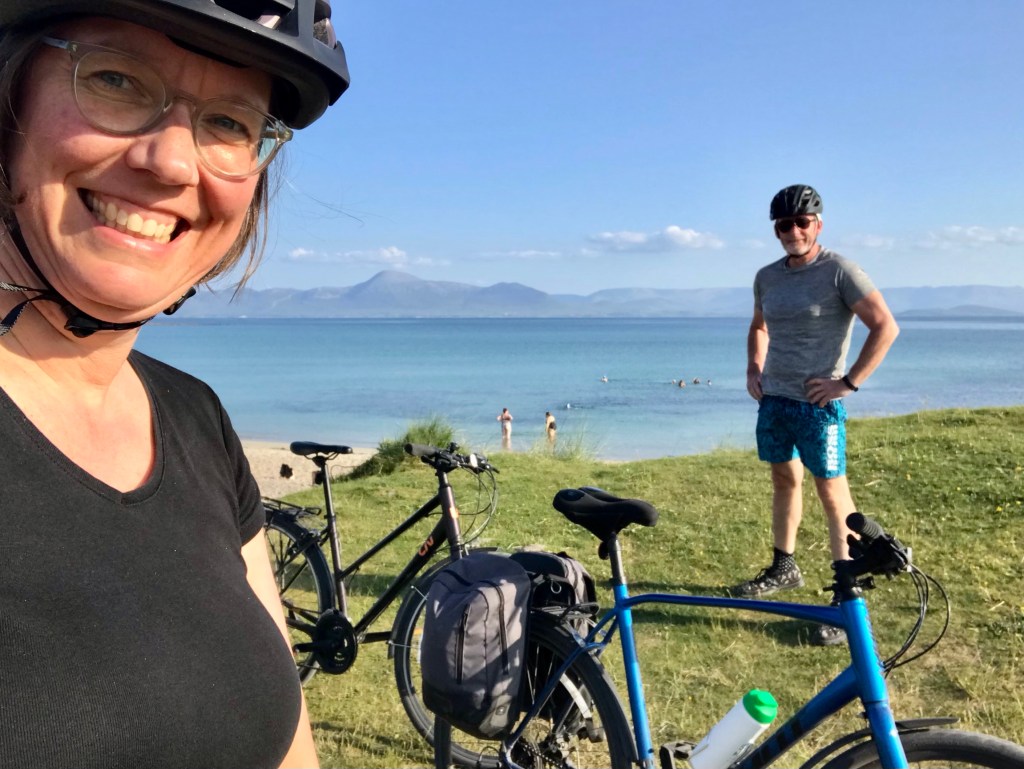
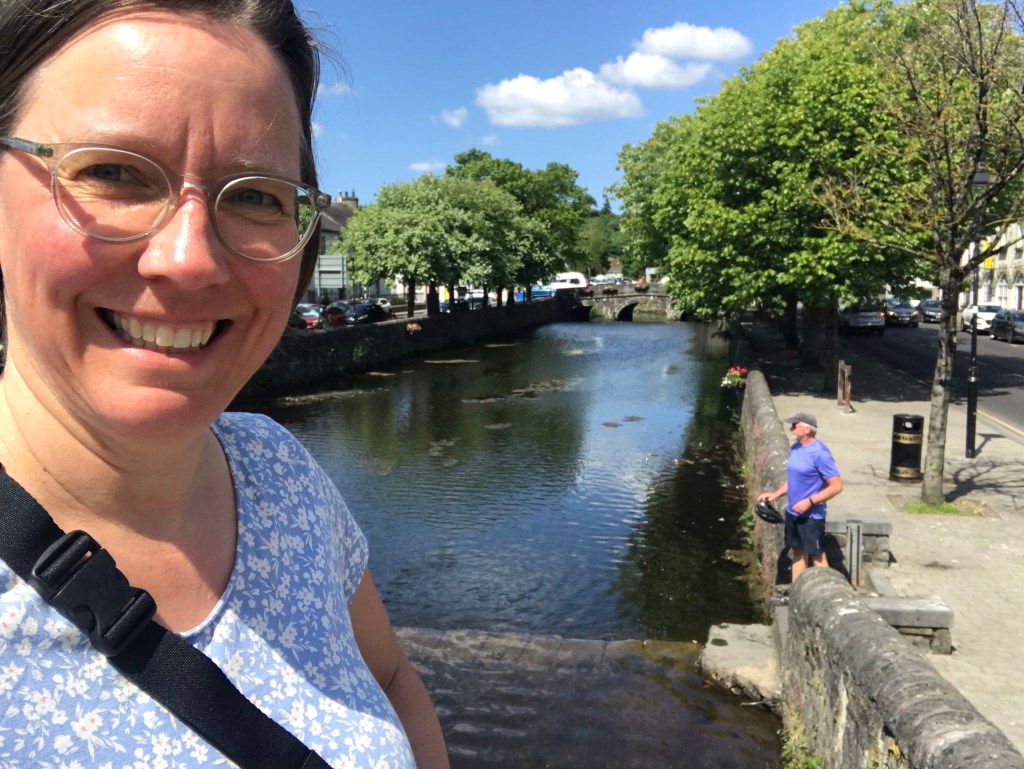
Aongus and I enjoyed an amazingly warm and sunny Bank Holiday weekend, the start of June. We travelled by car with bikes on a rack, cycled parts of the Greenway along the Wild Atlantic Way, and enjoyed beaches and restaurants along the way.
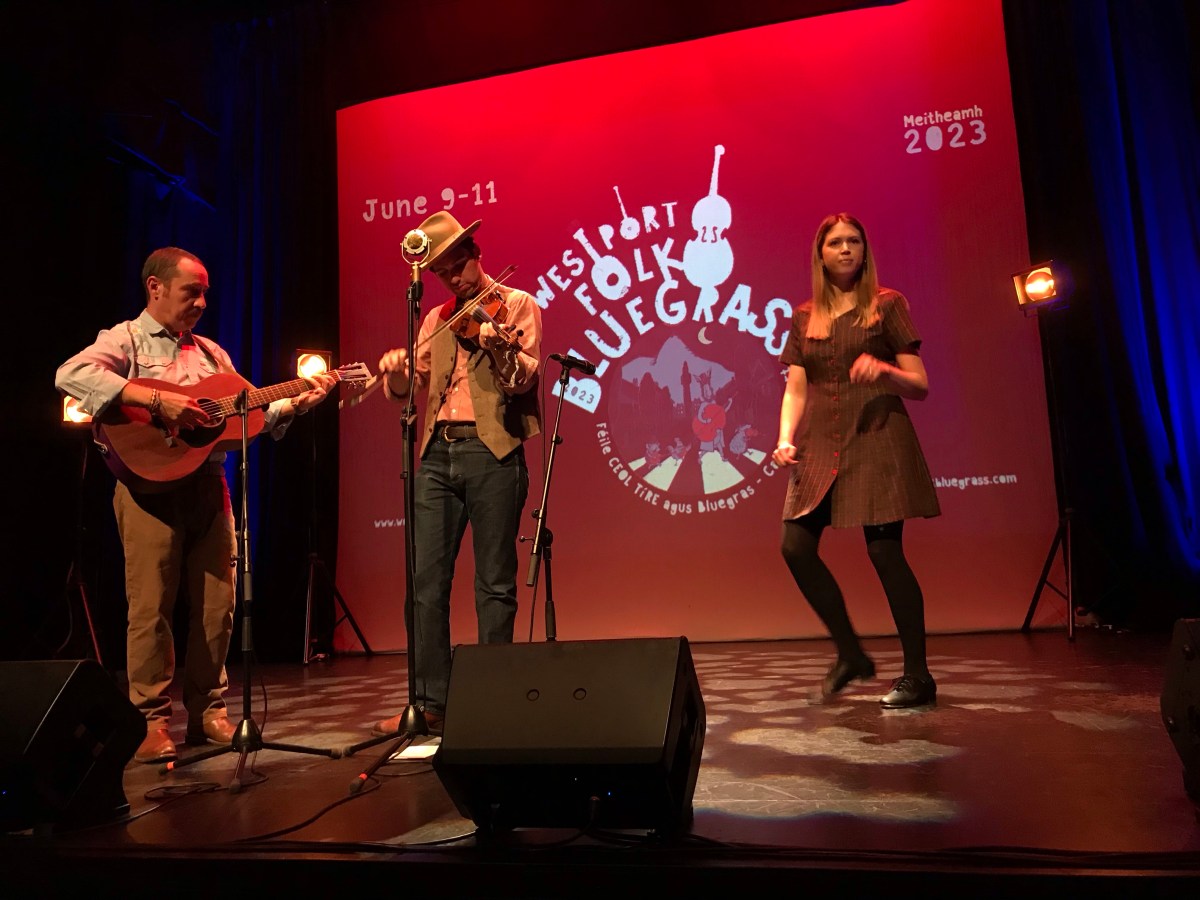
We also found posters for the following weekend’s Westport Folk and Bluegrass Festival, so we booked train tickets and accommodation and headed back out West just four days after motoring home.
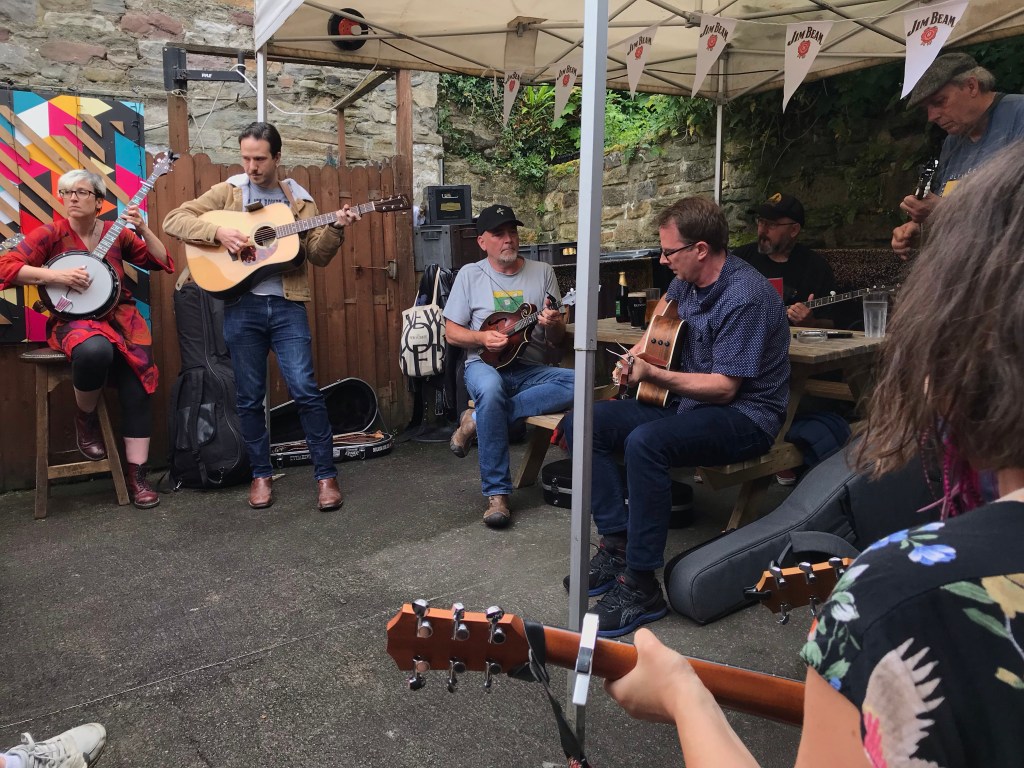
And boy, did we enjoy the music festival! We felt part of this small group of folks—a hundred or so musicians and enthusiasts, for the past three days.
The folk and bluegrass tunes from Appalachia sang to my heart and had me longing for days of old, attending Statler Brothers concerts in the park every Fourth of July.
During the country sets this weekend, I relived Saturday nights, sprawled across my grandparents’ den, watching Hee Haw with all its slapstick humor, surrounded by a happy extended family.
This morning’s gospel set, presented aside prayers at Westport’s magestic Anglican (Church of Ireland) church was a highlight. It was standing room only and people also flowed out past the doors. Aongus and I had arrived mare than an hour early, thankfully. So, we enjoyed second-row seats to hear the Kody Norris Show quartet for the second time. They also played at last night’s show, and boy, are they a hit!
I also loved the Derryberries, from Tennessee, Bill and the Bells, Melody Walker & Jacob Groopman, Lunch Special, and Tim Rodger’s gig, among others.
We sat very front at the main stage Friday night, and very back there on Saturday. Westport’s Town Hall Theater has fabulous acoustics and great sight lines throughout.
This intimate three-day music festival is organized by a gent with an amazing Mayo accent, named Uri, who moved to Ireland 19 years ago, I’m told, from Israel. He is clearly now a cornerstone of the community, bringing this annual event to Westport since 2007.
Aongus and I loved both weekends—cycling along the seaside and swaying with the tunes. We’ve already booked to come back again next year. We think Westport is the prettiest town in Ireland and the hospitality can’t be beat. My favorite publican, Tom Mulligan says it’s Ireland’s only panned town. I think Derry, up in Northern Ireland (UK), is another in this island.
All in all, being surrounds by folks with such a passion for music is a treat. And Westport is a gem in Ireland’s green, green crown.
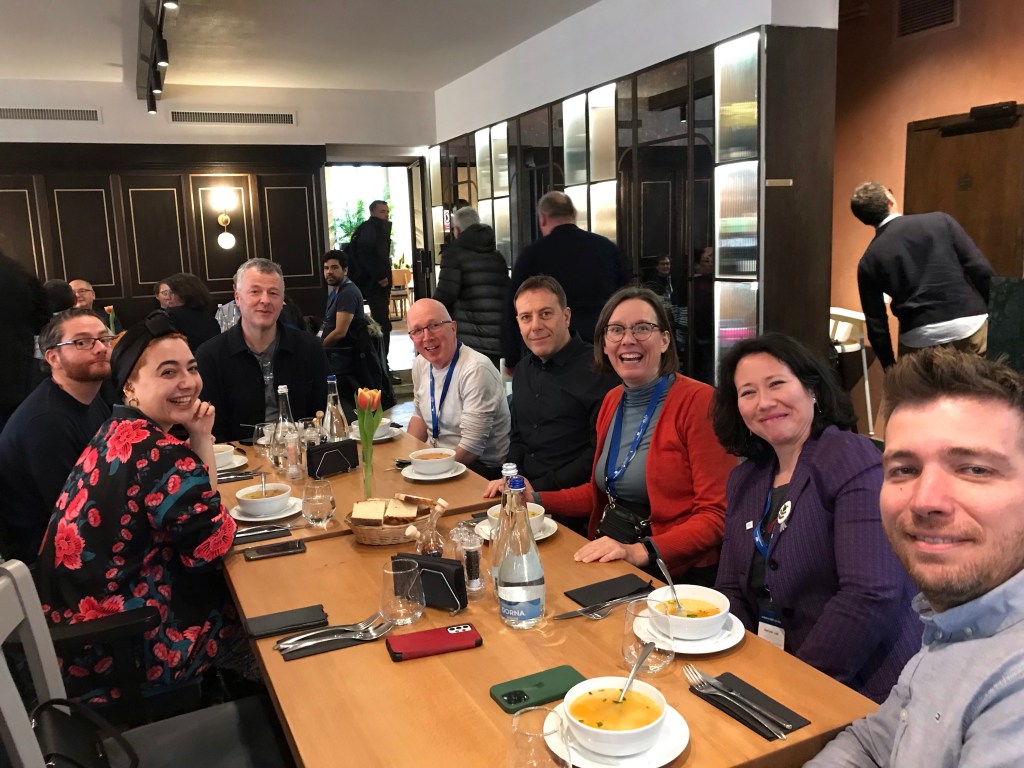
Recently, I had the good fortune to gather with the European University of Technology (EUt+) as part of its EthiCo project. There are eight, soon to be nine, technological universities in this alliance.
The first day, I met with leaders of an EthiCo work package who are developing materials to teach teachers to integrate ethics into their course delivery. The leaders of this project were receptive to my ideas, and asked me to present ideas and a framework—which I synthesized from the Engineering Ethics Education Handbook I am currently co-editing—during the subsequent day’s work sessions.
Just getting started….
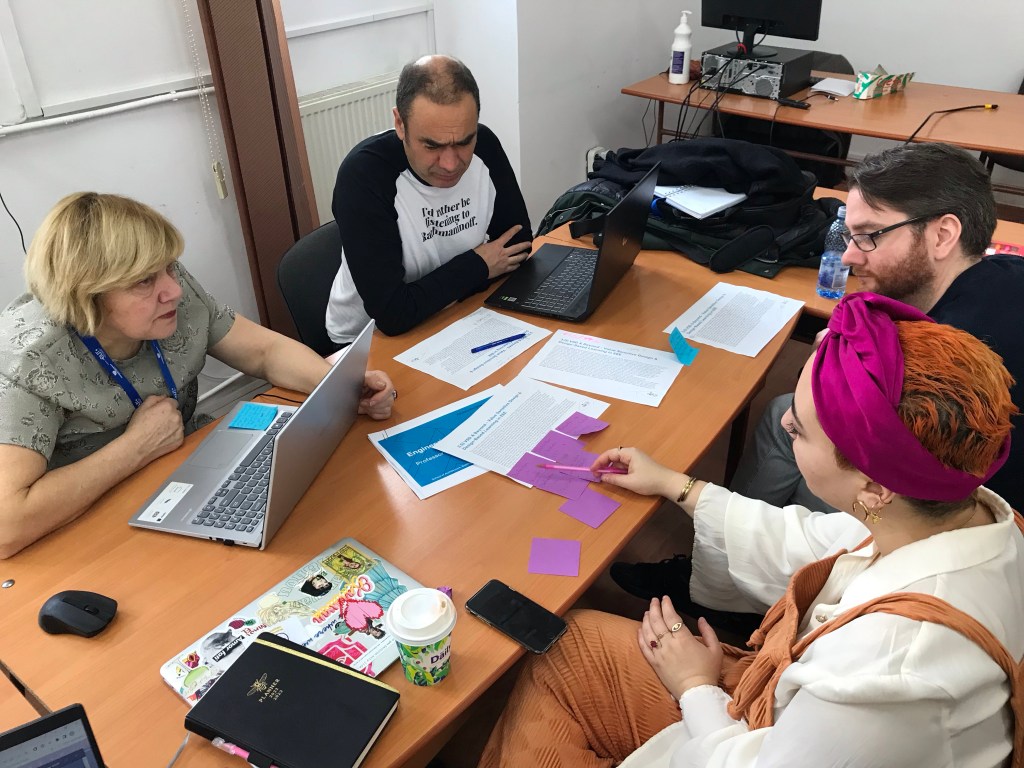
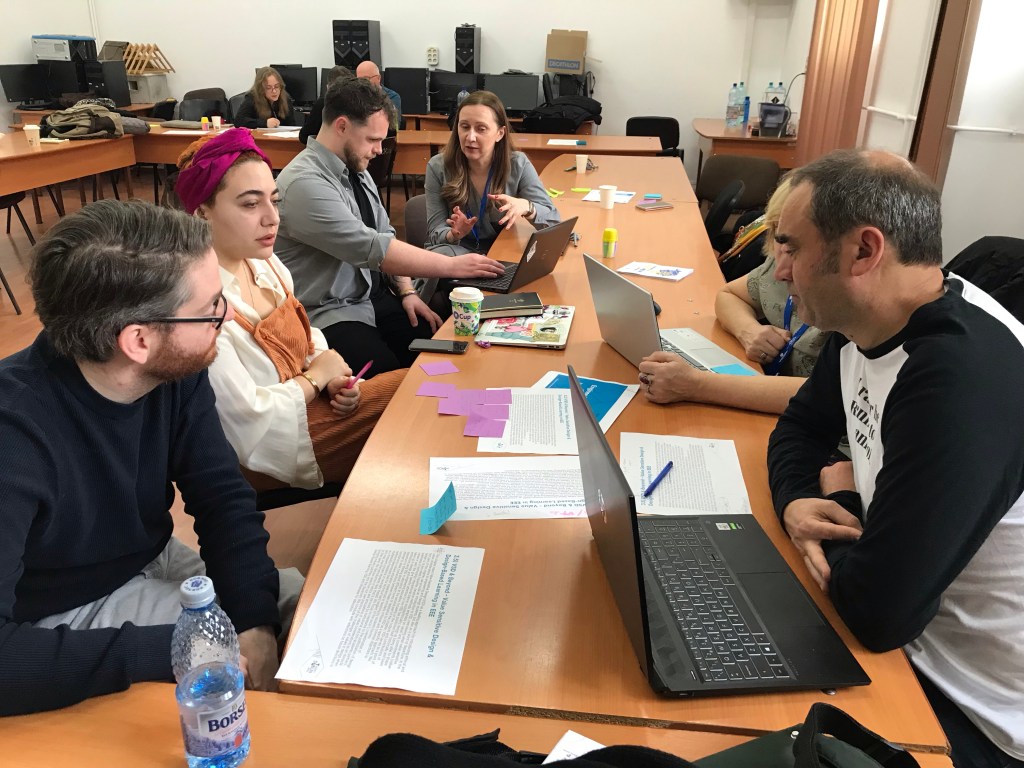
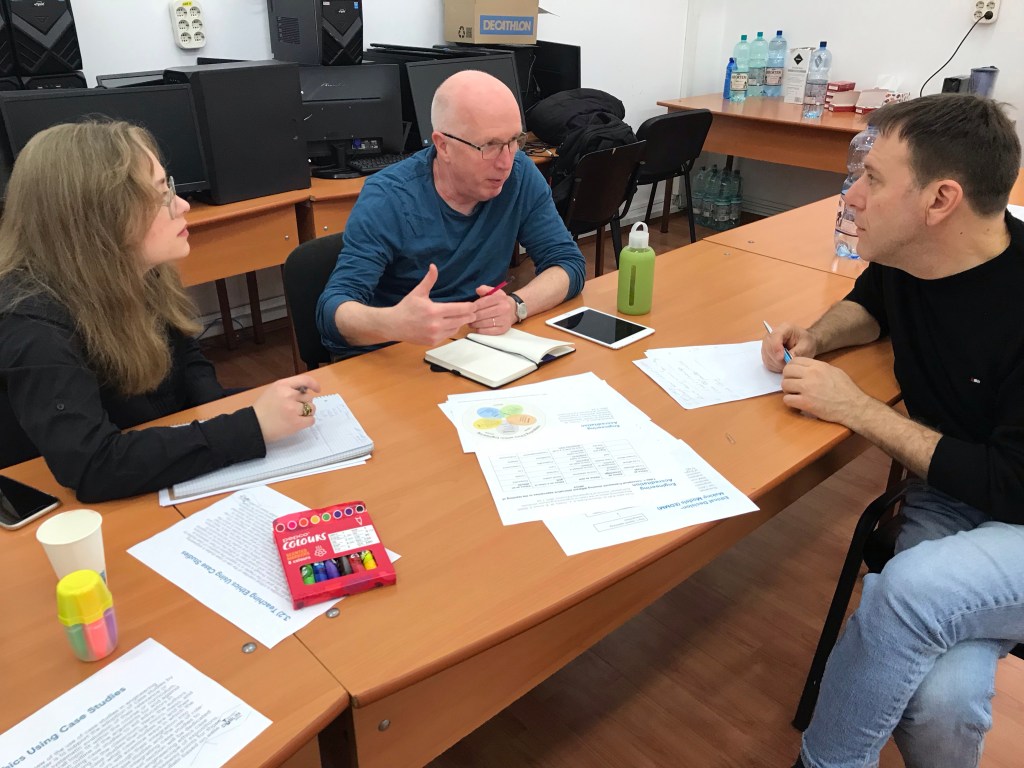
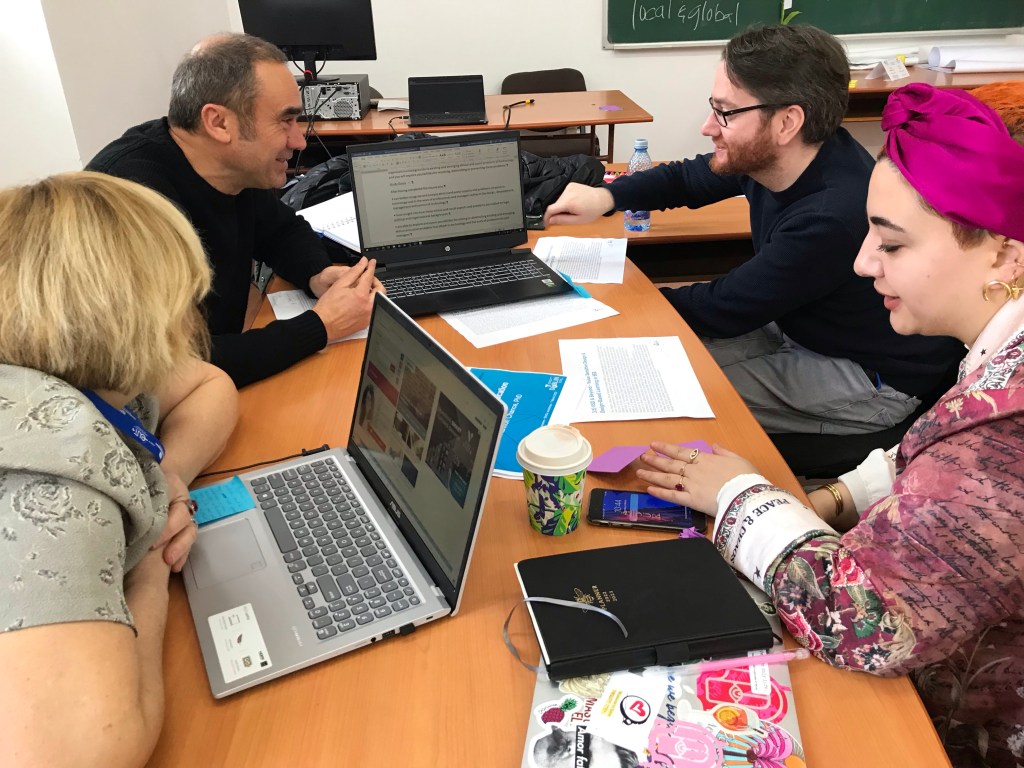
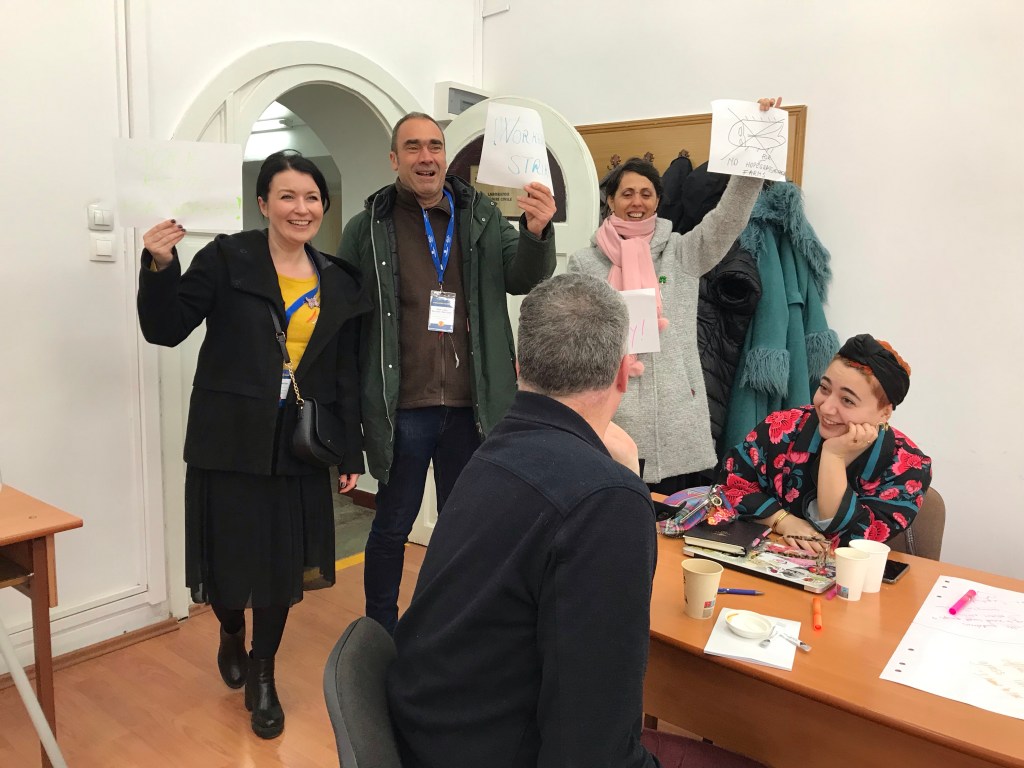
On the third day, I facilitated a session on integrating ethics into participants’ own teaching, using case studies, challenge- or problem-bases learning, or Values Sensitive Design and Virtues Practice Design. The photos below show the groups hard at work.
On the fourth day, I facilitated a session on defining learning for teacher-training modules on using each type of activity listed above (case studies, CBL or PBL, and VSD or VPD).
Being part of the EEE Handbook empowered me to step forward and lead these sessions extemporaneously. I got to draw from the contributions of 115 experts on our handbook team.
The EthiCo group of the EUt+ was enthusiastic about learning the techniques promoted in the handbook, and they look forward to reading and using the Handbook once it’s published.
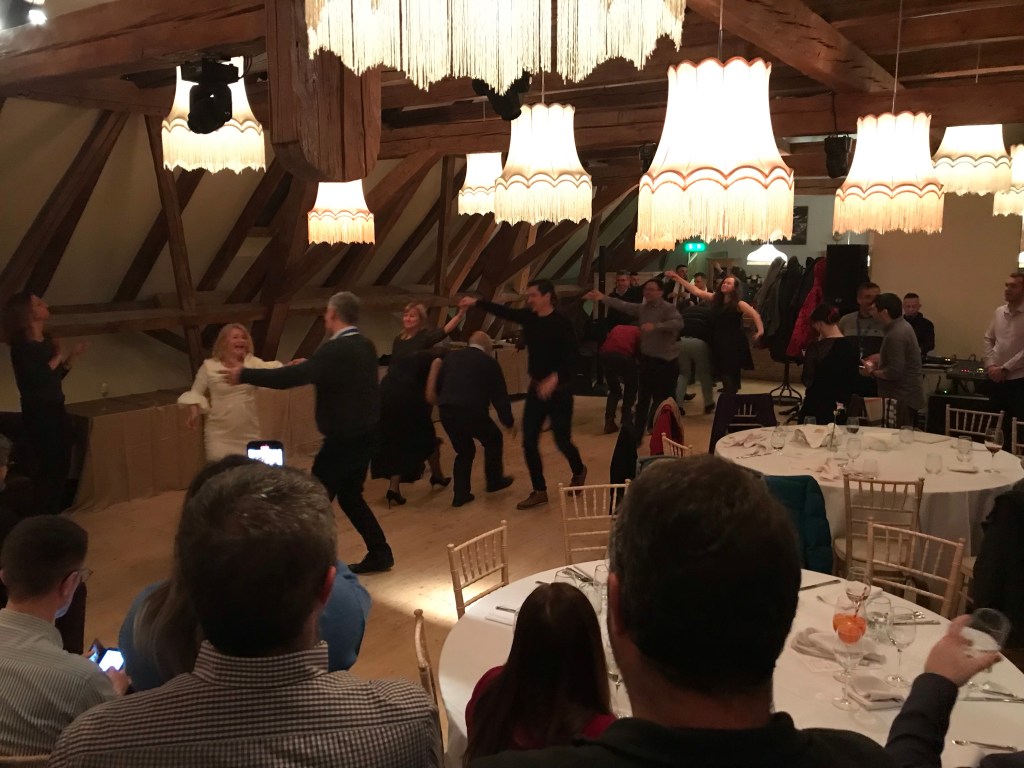
Cultural exchange was a big part of the EUt+ week as well, and you see photos of this side of things below.
I immensely enjoyed meeting and working with colleagues at TU Dublin’s peer institution who are part of EUt+ and also building string relationships with TU Dublin colleagues who attended.
I added days before and after the conference for exploring Cluj, Romania. It’s a fascinating place to visit!
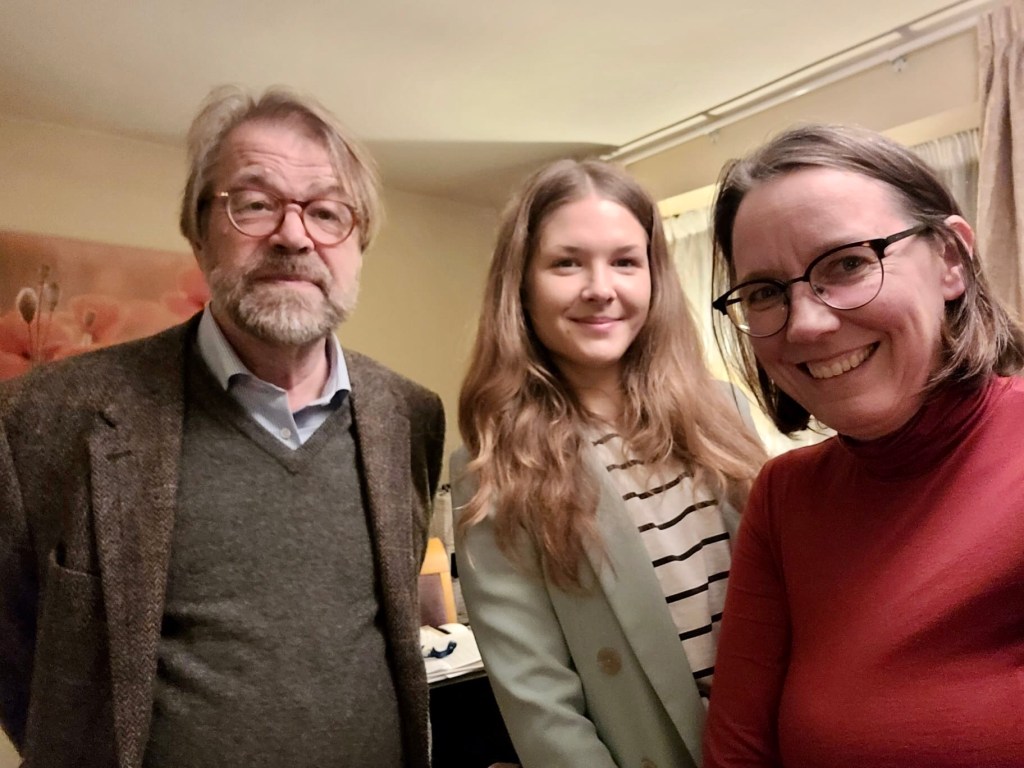
My colleague and co-Deputy Editor of the European Journal of Engineering Education, Professor Jonte Bernhard, came to visit for the weekend. Jonte was on his way to a PhD viva in Limerick where he is serving today as External Examiner.
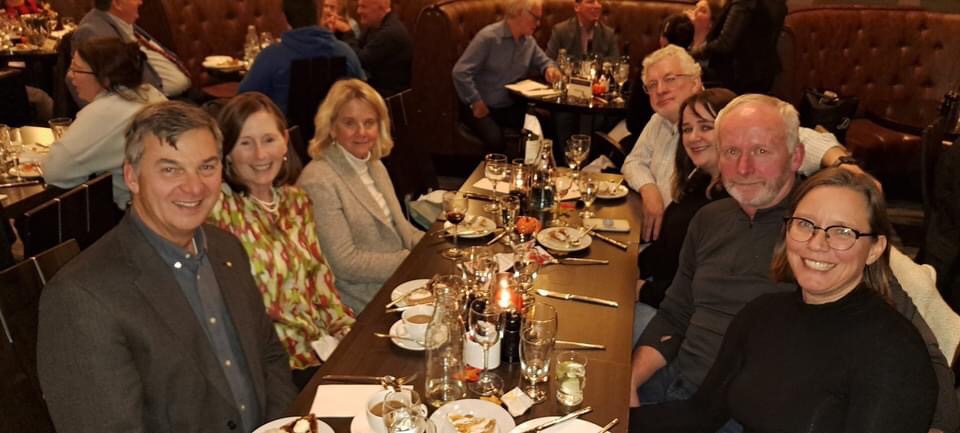
Here’s a favorite picture from the summer, taken with Jonte, at a dinner in Stockholm that was hosted by our chief editor, Kristina Edström.
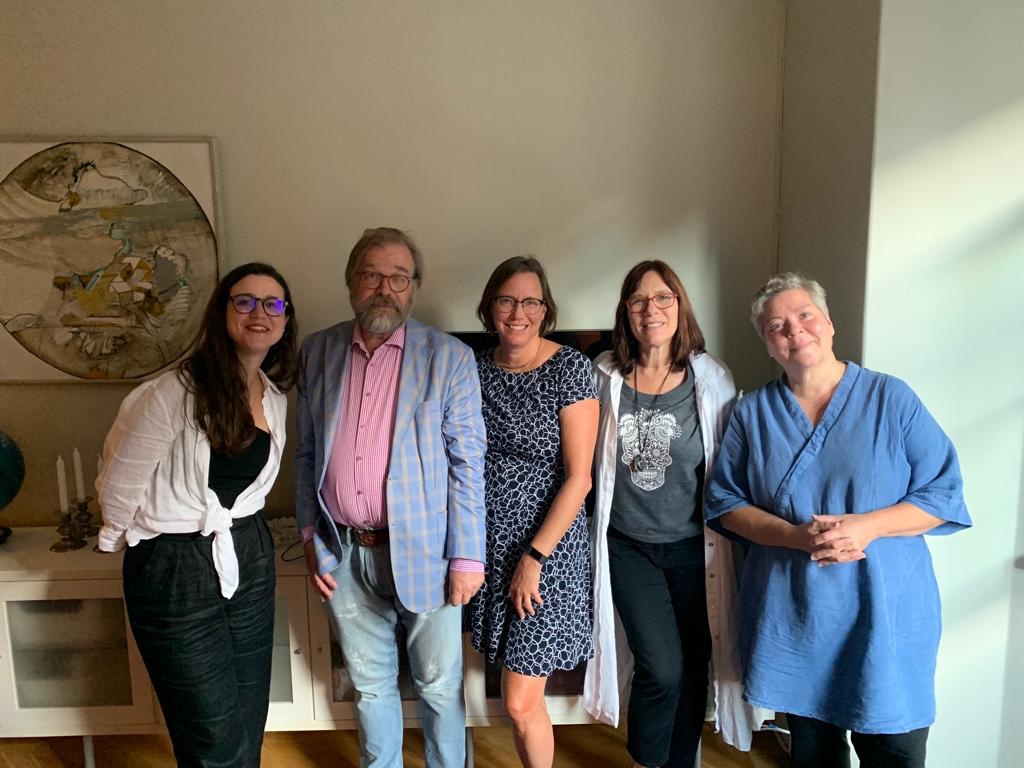
A jolly bunch of engineering education research editors! Drs. Inês Direito, Jonte Bernhard, Shannon Chance, Jenni Case, and Kristina Edström after the EARLI SIG9 conference in August 2022.
This past weekend, Aongus cooked up a lovely dinner for Jonte and me on Saturday. We were joined by a PhD student named Urša — she had attended the Doctoral Symposium that Jonte and I organized at the SEFI conference in September.
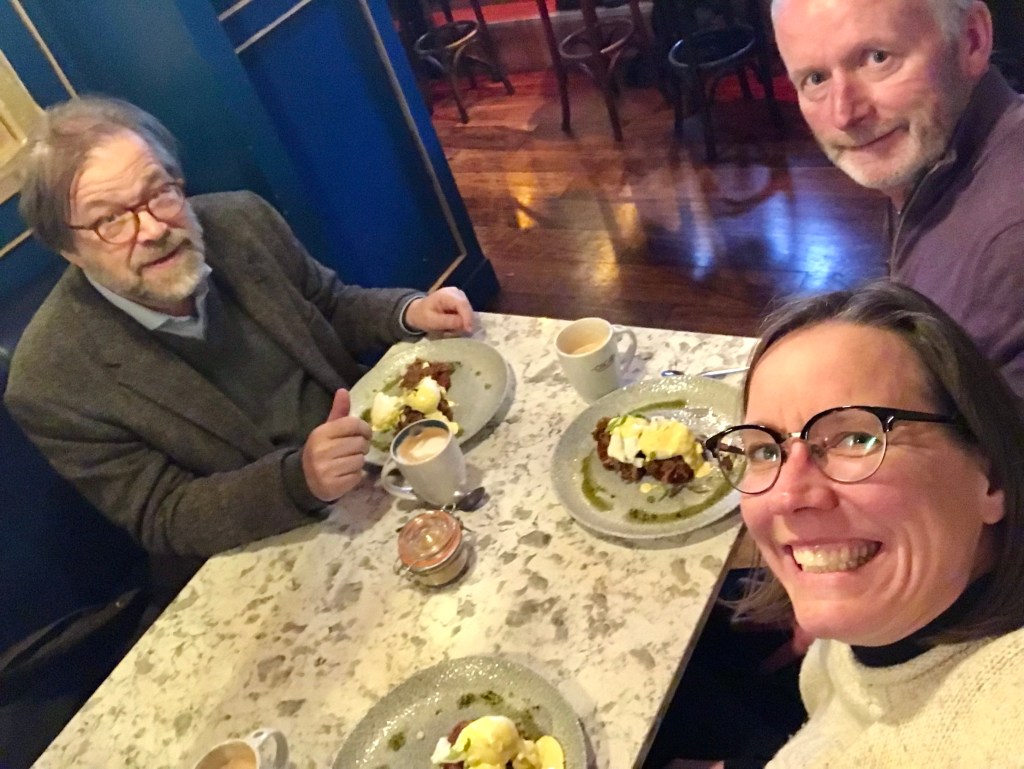
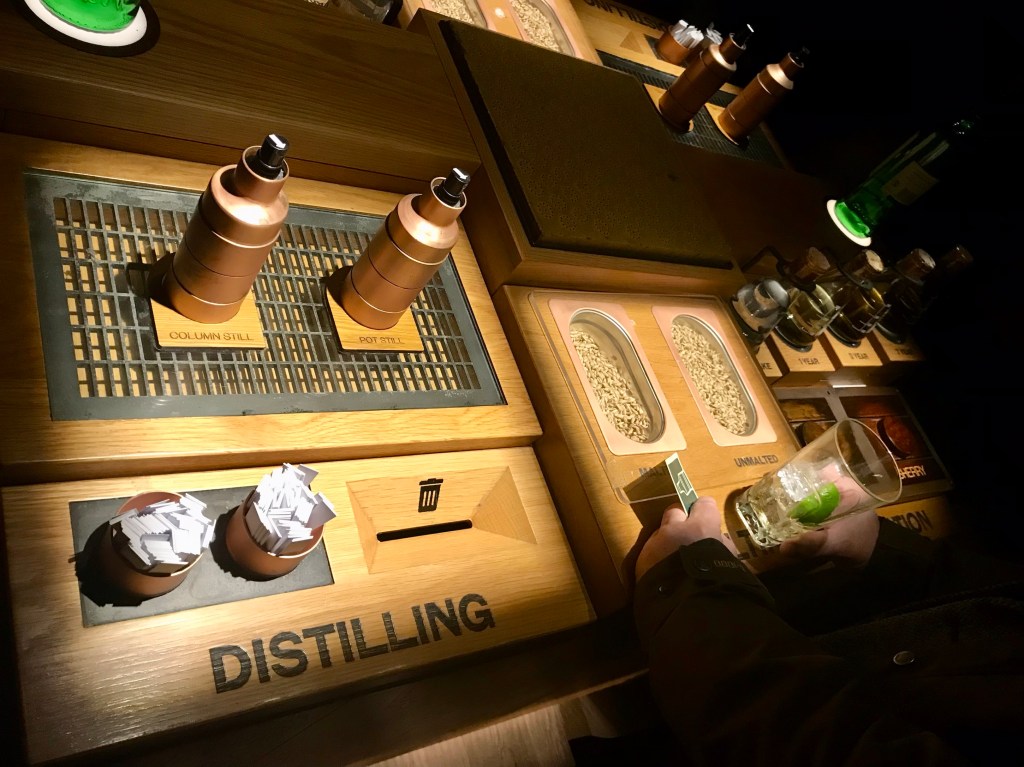
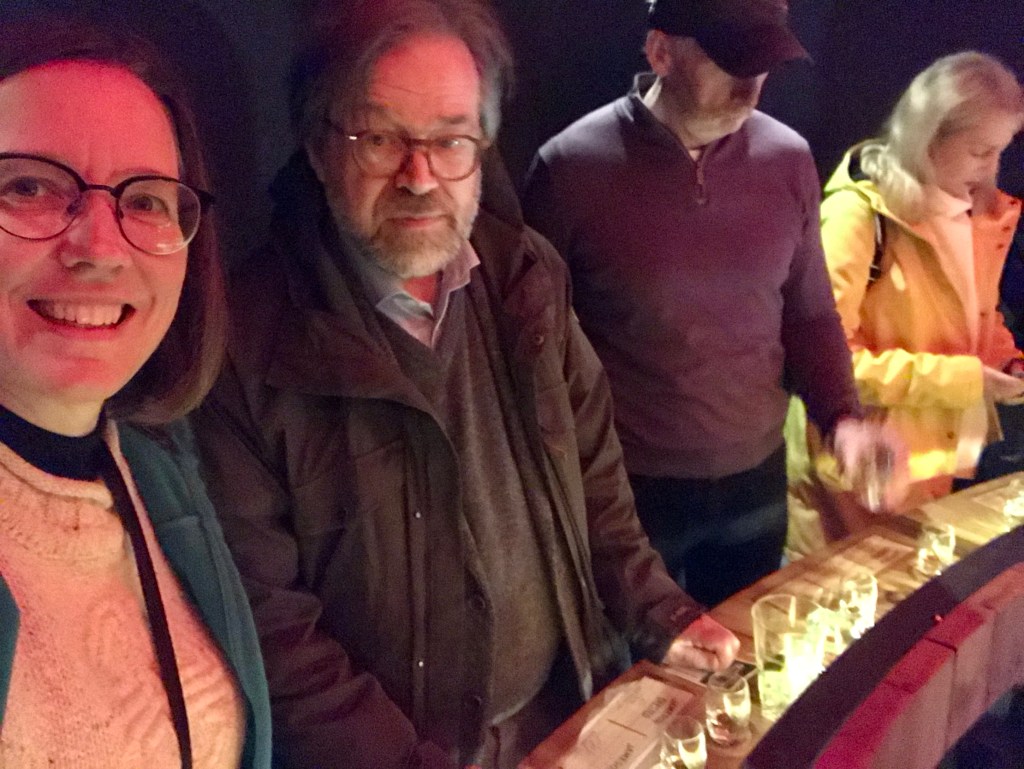
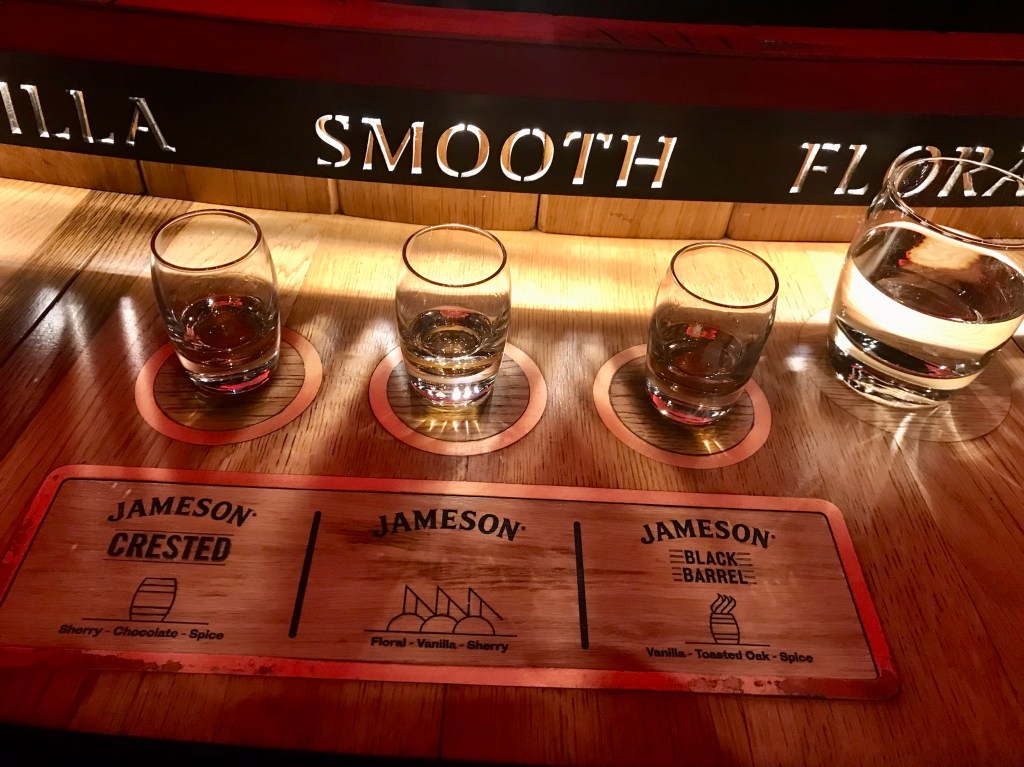
On Sunday, Jonte, Aongus, and I enjoyed brunch at Oscar’s on Smithfield Plaza. Aongus and I had hoped to show Jonte several of Dublin’s sites, but the rain put us off. We did make it over, between downpours and hail, to tour the Jameson Distillery on Bow Street.
Aongus had never been on the Jameson’s tour, and I hadn’t since 2003, so it was a rare treat despite it being just a block from our flat.
Jameson Distillery tour.
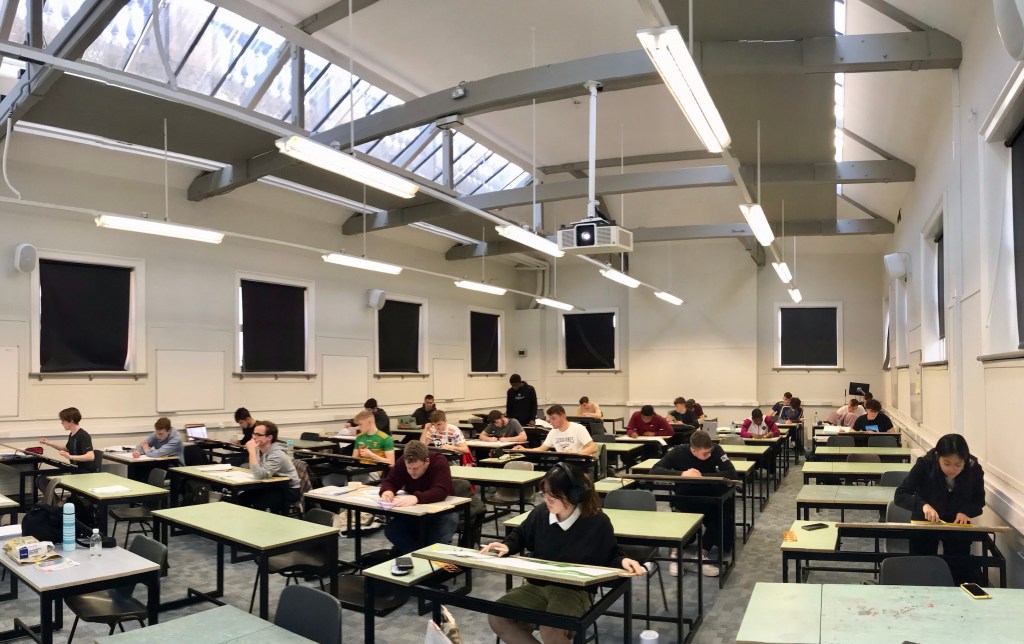
For me, the work week started with attending an online conference. Then, I did a bit of peer reviewing before heading off to teach Tech Graphics 2-6 PM.
My co-teacher, Marina, and Rachel (who teaches physics lab down the hall at the same time as us) both came over for dinner to celebrate the semester coming to a close.
As both Marina and Rachel are working on PhDs (in BIM and spatial perception, respectively), we’ll be sure to get them reviewing papers for our journals soon!
I met my PhD supervisee, Sandra, online just as the sun was coming up this morning. Thankful that she’s well on track, I got down to work, whipped up a conference abstract and got it submitted for tonight’s deadline.
Then I settled in for an intense day of paper editing. I was finalizing my team’s major revisions — our big December 18 deadline will be here far too soon. And with other deadlines looming large overhead, I took the long open stretch on my schedule today to make substantial progress.
I forgot my gym class. I forgot to eat lunch.
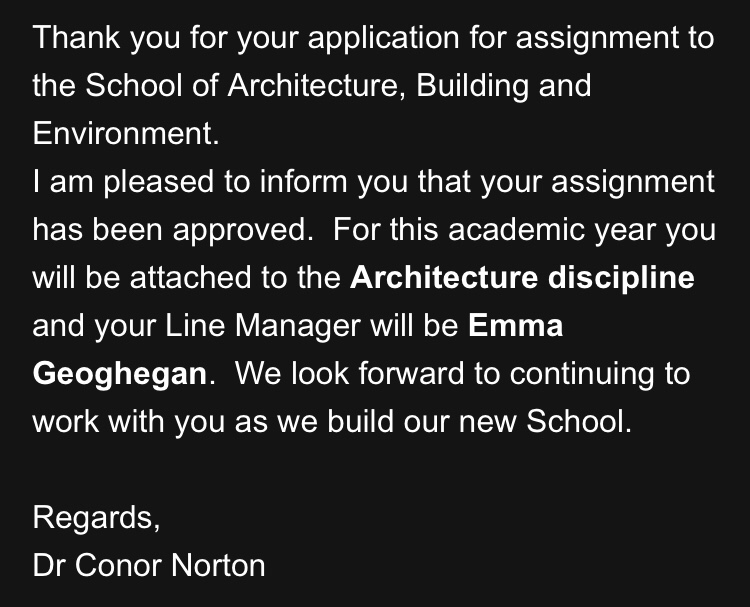
But while my head was under the sand, two very welcome emails landed in my box. The first I’ve been awaiting since last spring, but our university processes are slow. I’ve been assigned to teach in the school where my passion lies (still at TU Dublin, just in a different school as mine was dismantled).
I’ll now be teaching in the School of Architecture, Building and Environment which is great because I really love teaching students architecture. I’ll still teach BIM topics, too, of course.
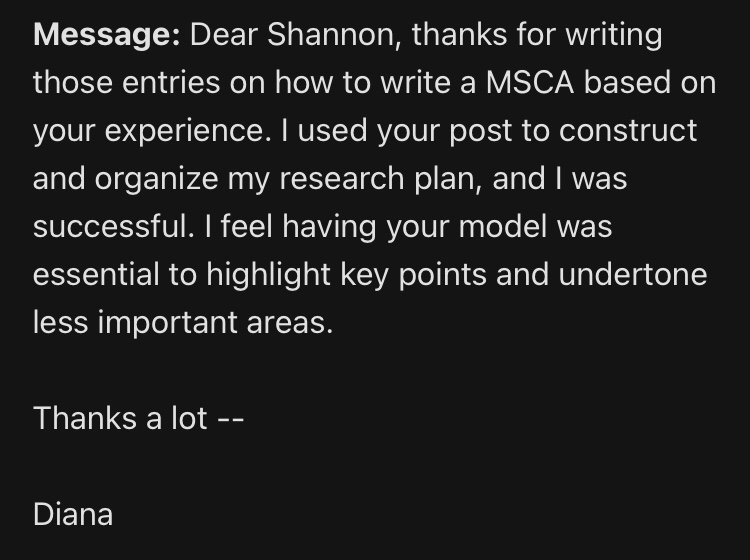
The second incoming message was a bit of thanks from a researcher who used the advice on my blog and won herself an MSCA Marie Curie fellowship this year! I couldn’t be prouder than to help make this type of difference in someone’s life.
So, goals big and small came to fruition today. These emails reported life-changing news for me and for Diana.
With no time to rest on my laurels, I had to wrap up my replies fast, and run out to buy groceries for dinner. We’re having a younger friend over to discuss financial planning, a new hobby of mine.
Life is busy, but full of interesting new challenges. Lots to fill you in on over the coming weeks!
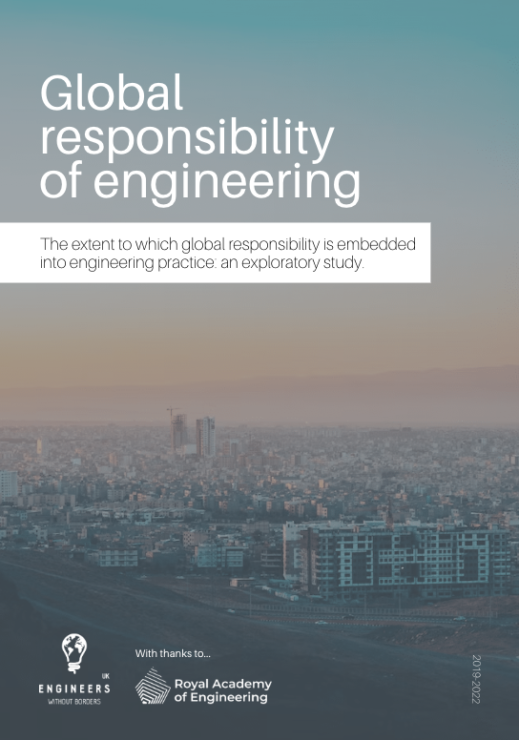
Last week, Engineers Without Borders UK published my team’s research in the form of the GLOBAL RESPONSIBILITY OF ENGINEERING REPORT. The EWB-UK webpage about the report explains “Drawing on the experience of engineers working in the built environment sector, our latest report explores the extent to which global responsibility is embedded in engineering practice.”
The report is rich visually, and also in content:
The qualitative research reported in this publication was conducted by me, with support from my University College London colleagues, Dr. Inês Direito and Professor John Mitchell, and with advice from the EWB staff and its project Advisory Board.
Through a study of existing literature and interviews with engineers working in the built environment sector, in this report, we highlight the existing understanding and role of global responsibility as a concept within the sector. We explore the following: What is understood by global responsibility in engineering, and what are some of the preceding concepts that have led to this point? How well is the urgency for adopting a globally responsible approach in engineering grasped? To what extent do engineers feel it is their responsibility to take action and what is accelerating or dampening that?
Engineers Without Borders UK (2022)
EWB staff members helped transform my team’s research into the report format commonly used in the UK. They also provided the report’s case studies, photographs, and illustrations. EWB staff who were instrumental in shaping the delivery were: Dr. Jonathan Truslove, Katie Cresswell-Maynard, and Emma Crichton.
Advisory Board members providing conceptual direction included: Jon Prichard, Dr. Rob Lawlor, Thomas Gunter, Professor Nick Tyler, Dr. Rhys Morgan, and the Royal Academy of Engineering’s Education and Skills Committee.
The correct citation for this publication, based on APA guidelines includes the authors’ names:
I’d like to give special thanks to my colleagues at UCL (Inês, John and Nick) as well as the University of Leed’s Dr. Rob Lawlor for their encouragement and support throughout this project. I also send thanks to the EWB team for getting the publication across the finish line.
As a result of many people’s hard work, the report delivers our research findings to a new audience. You can find other outputs of the research project in two academic journal articles published by the UCL team, and you can download them directly, using the links below:
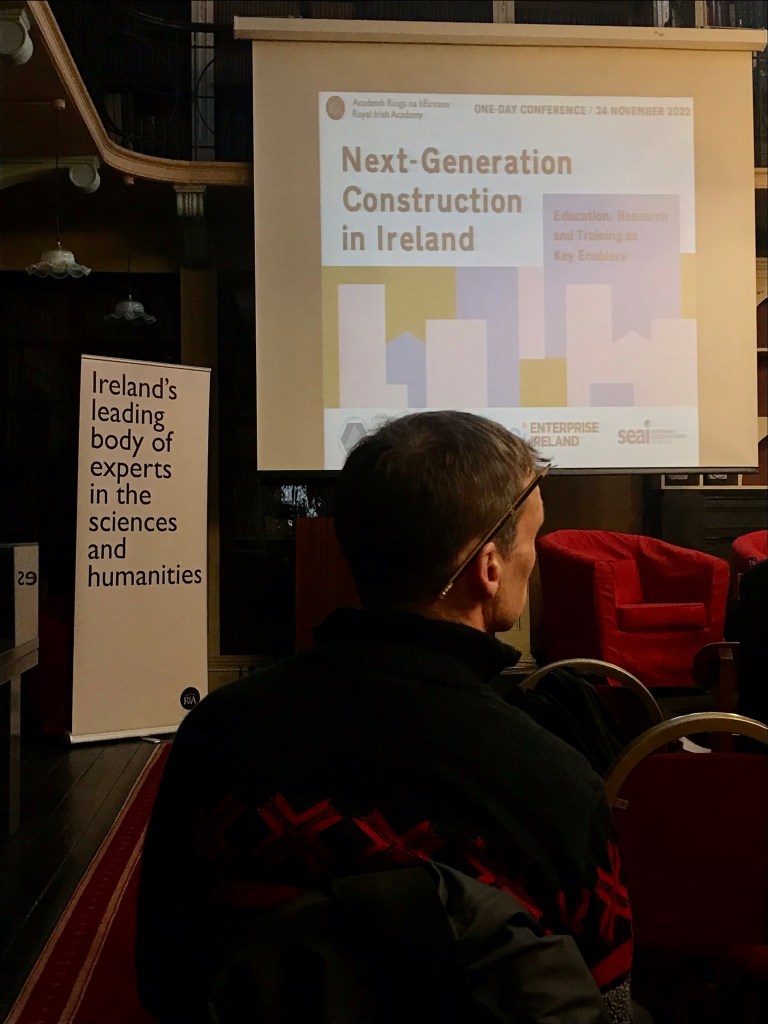
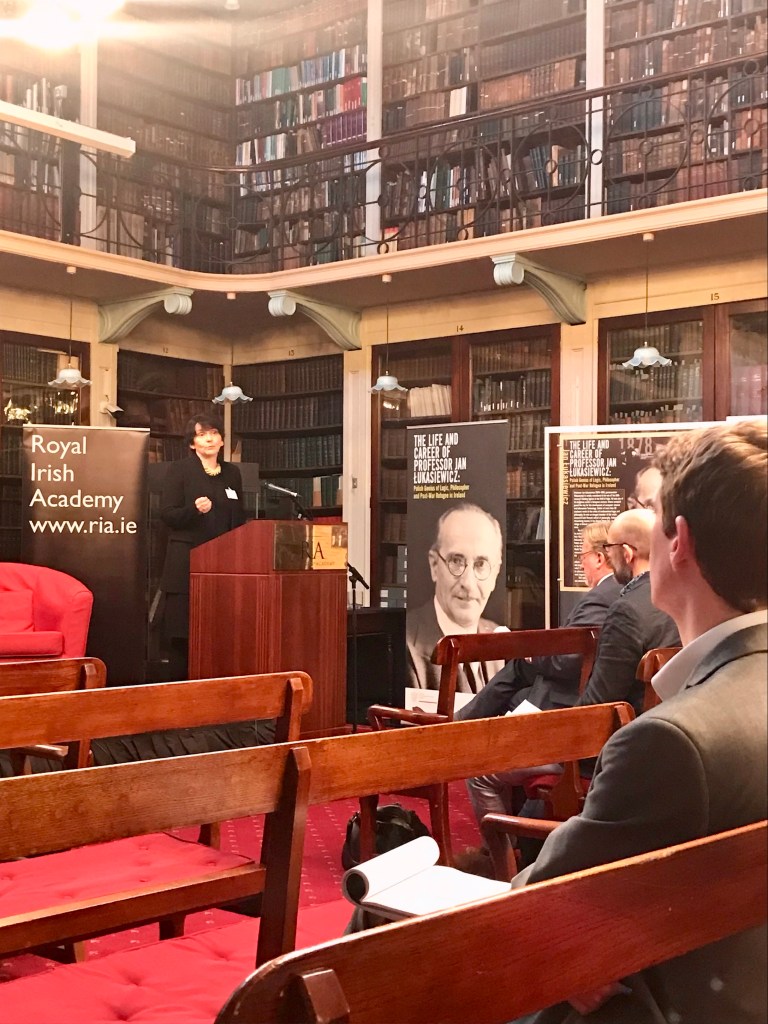
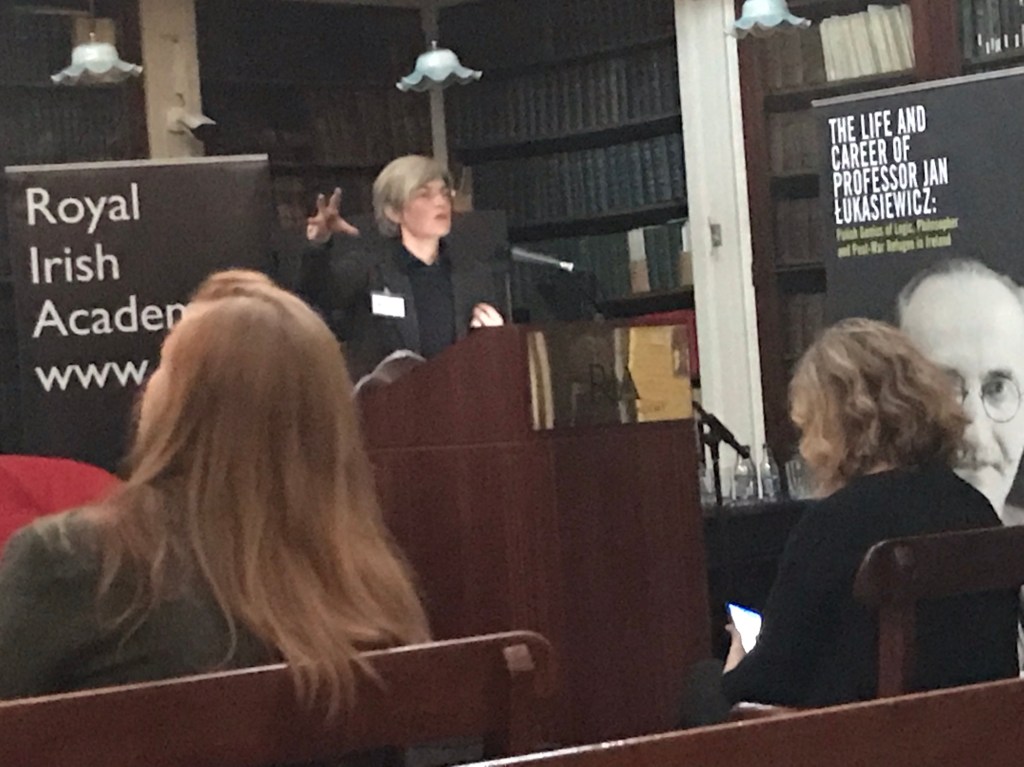
Thanksgiving here in Ireland is usually just another ordinary Thursday. But this year I made a point to celebrate. I registered for a conference held at the Royal Irish Academy on Dawson Street, so I could learn about “Next Generation Construction in Ireland” while soaking in old-school Irish ambiance, and I bought tickets for an American Thanksgiving feast.
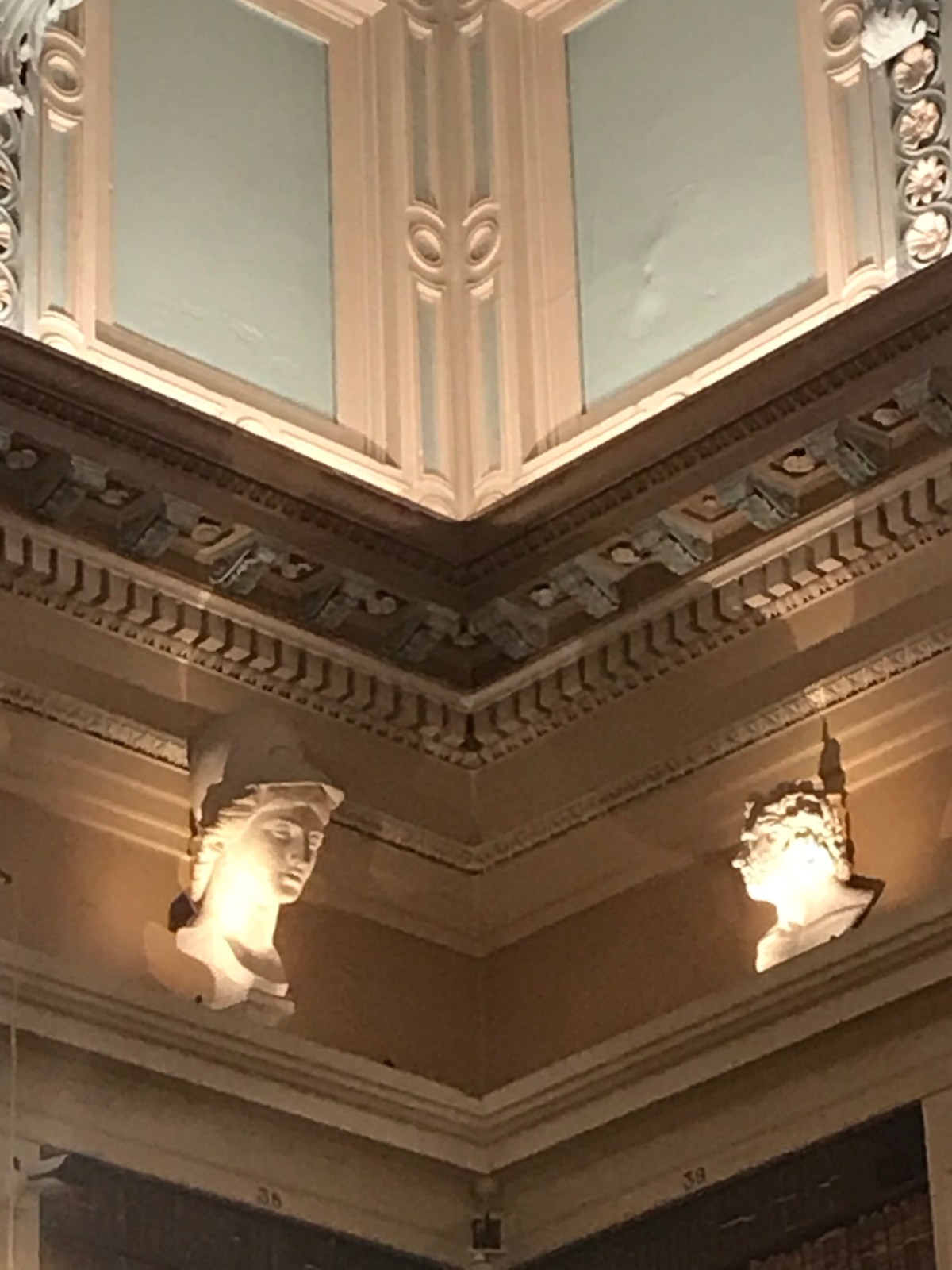
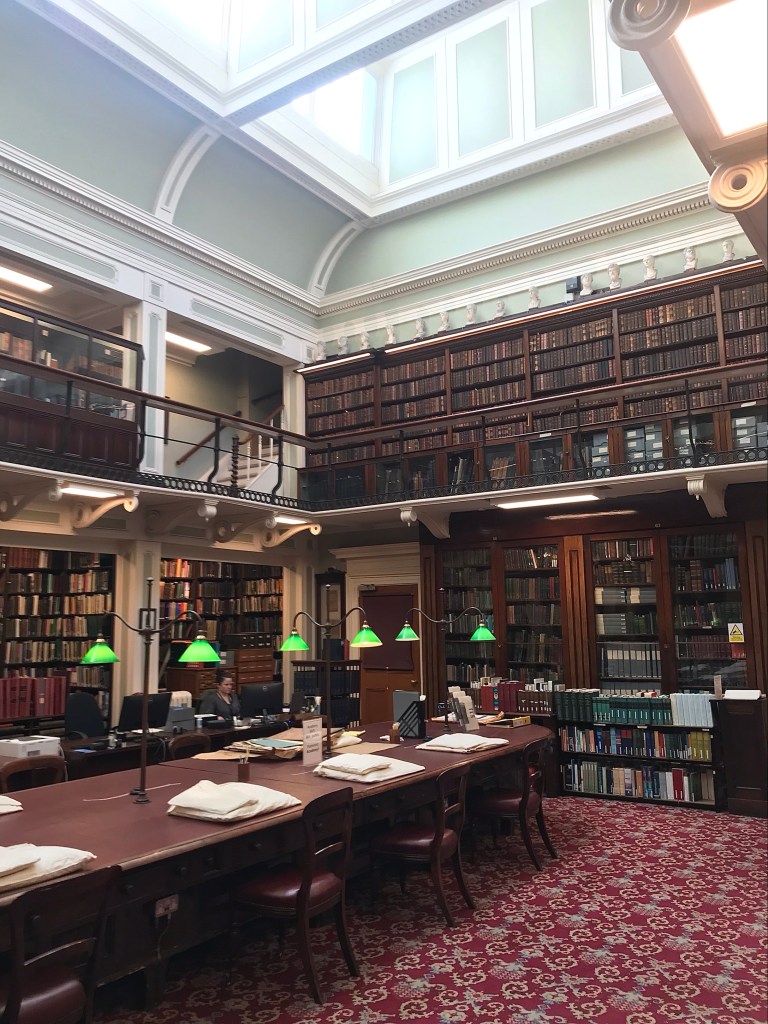
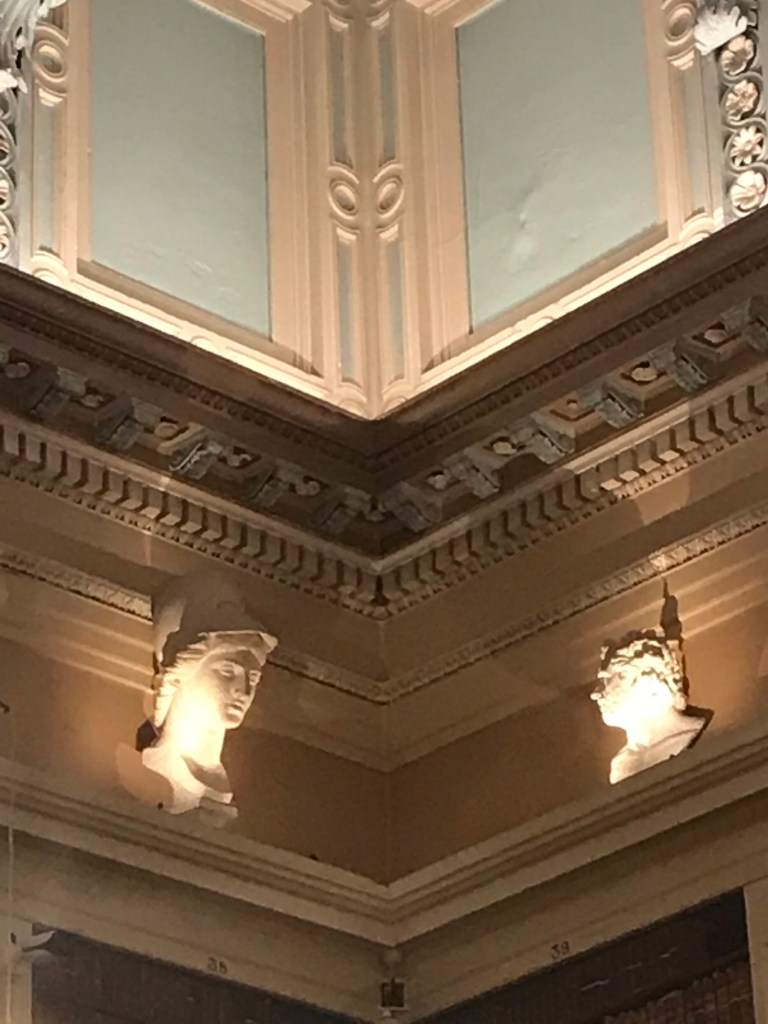
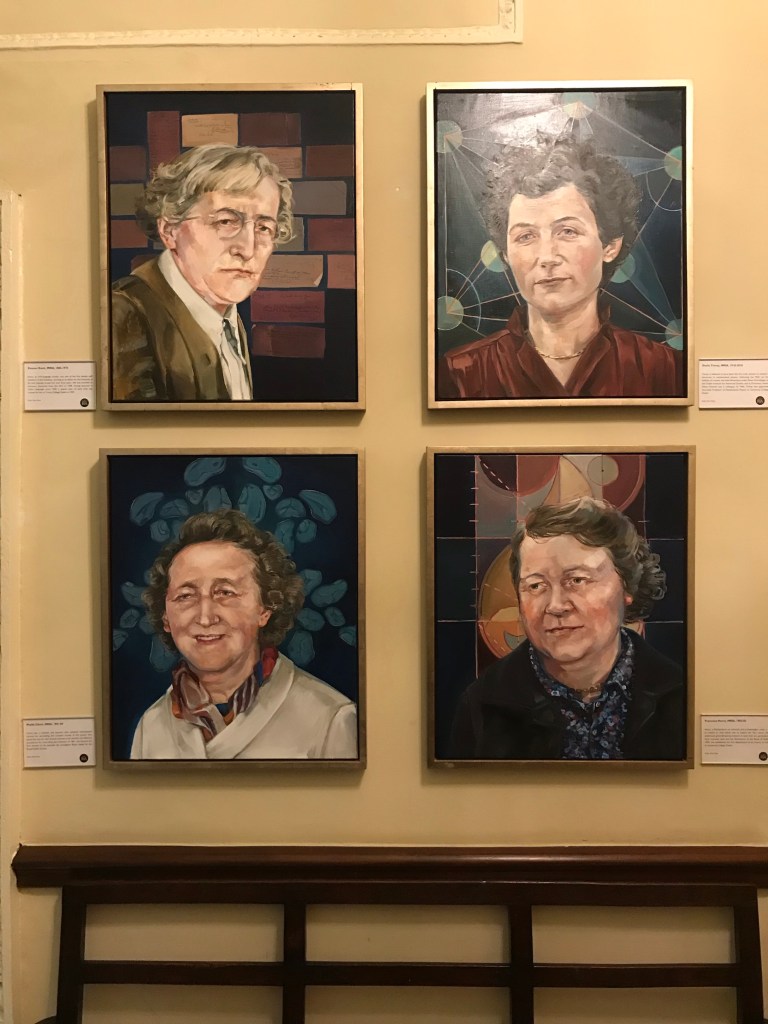
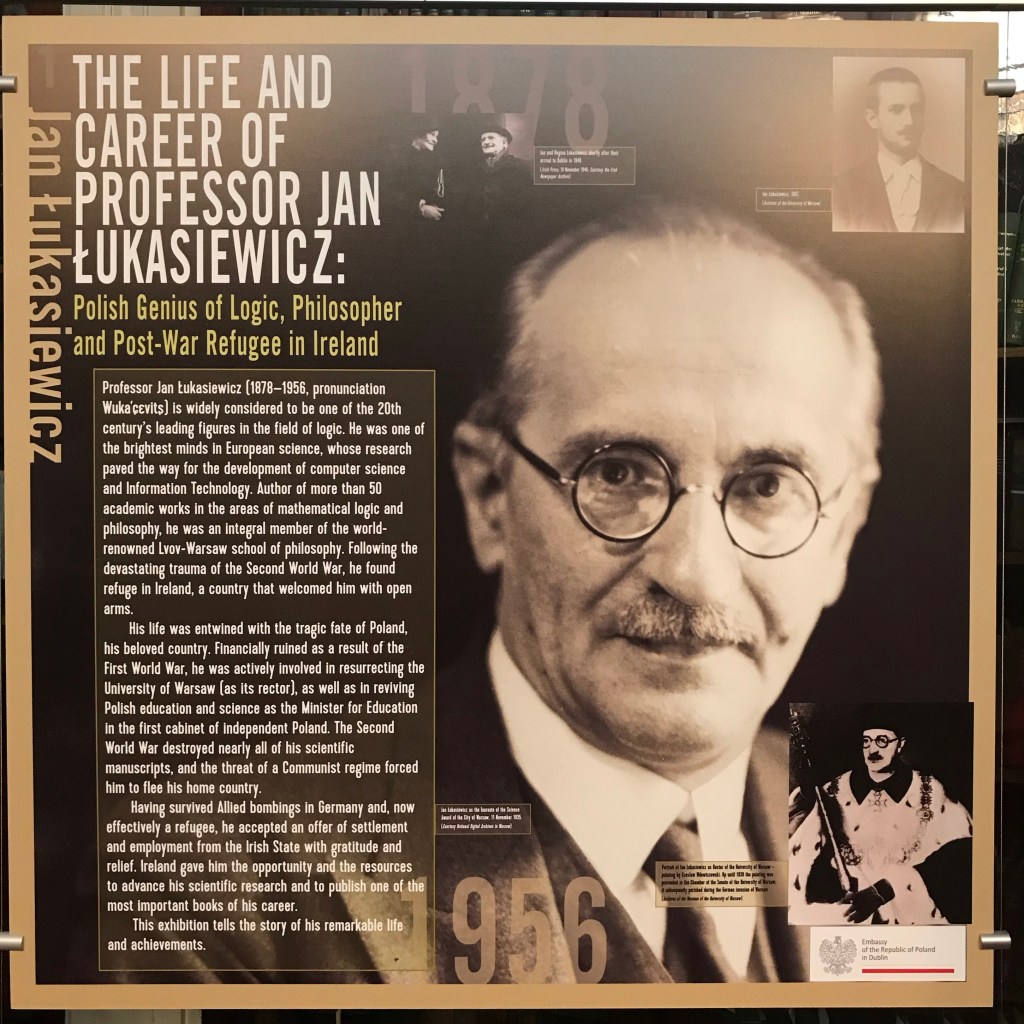
I love visiting the stately old RIA building, with its floors of well worn books. There was an interesting exhibition on display, and lovely architectural details to treat the eyes and soothe the soul.
The Royal Irish Academy bridges science and humanities.
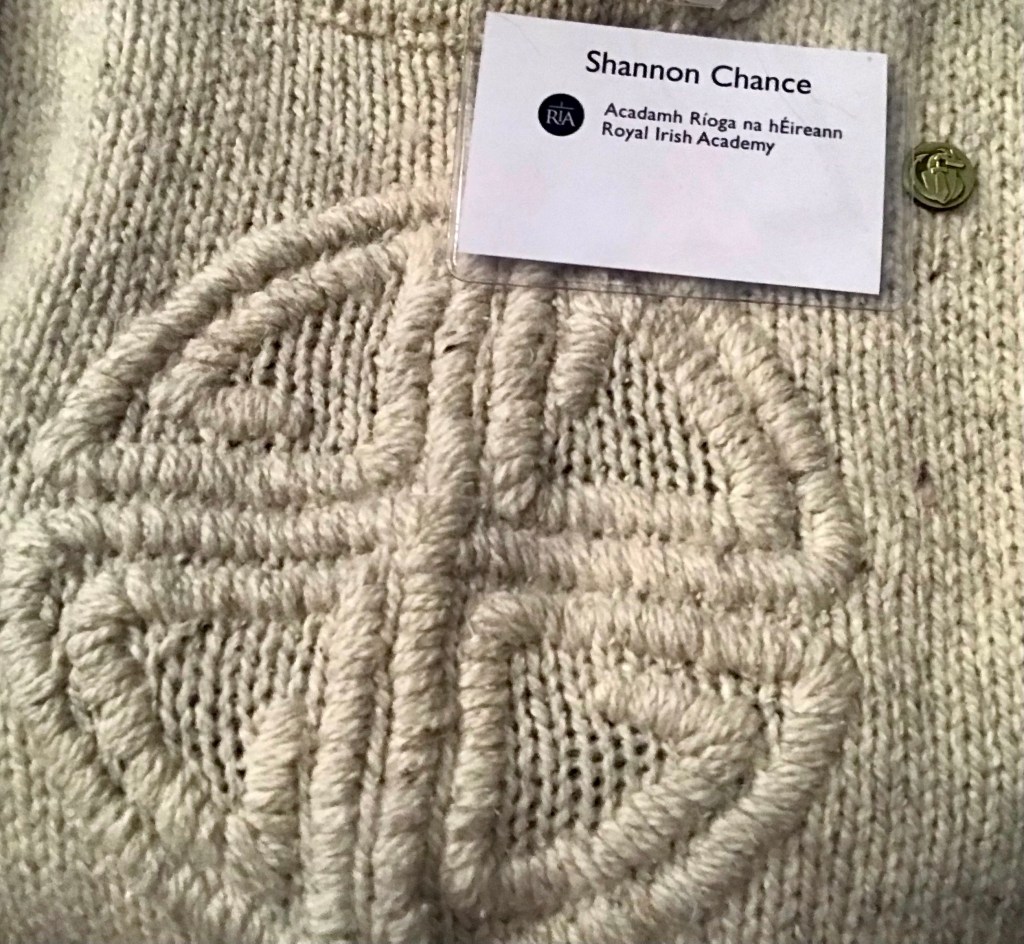
Despite heavy rain falling before my cycle over, I was inspired to wear my favorite Irish sweater and the “BIM Hero” lapel pin I received earlier in the year. (I am hoping the pin will provide the good karma I need to get my current manuscript on the Hero’s Journey polished up to final form to submit this coming week!)
Delighted to have been named a “BIM Hero” at the BIM Coordinators Summit.
During this one-day conference, I learned more than a few new things about Modern Methods of Construction, Irish strategies and policies, and education programs and plans to up-skill the Irish workforce.
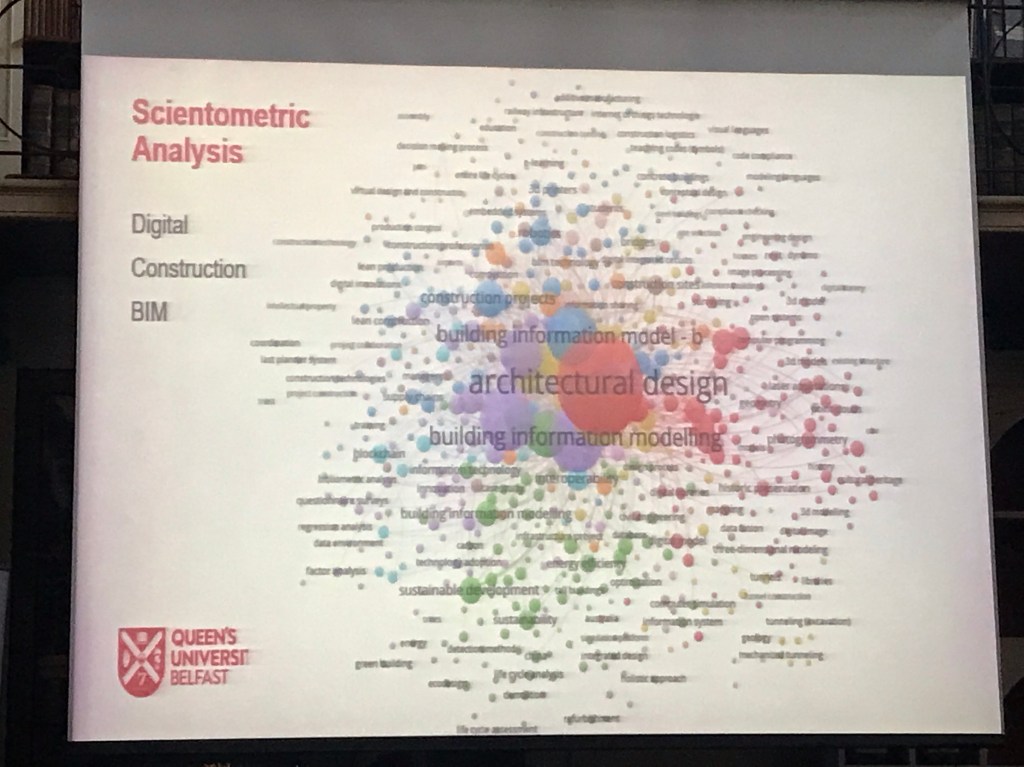
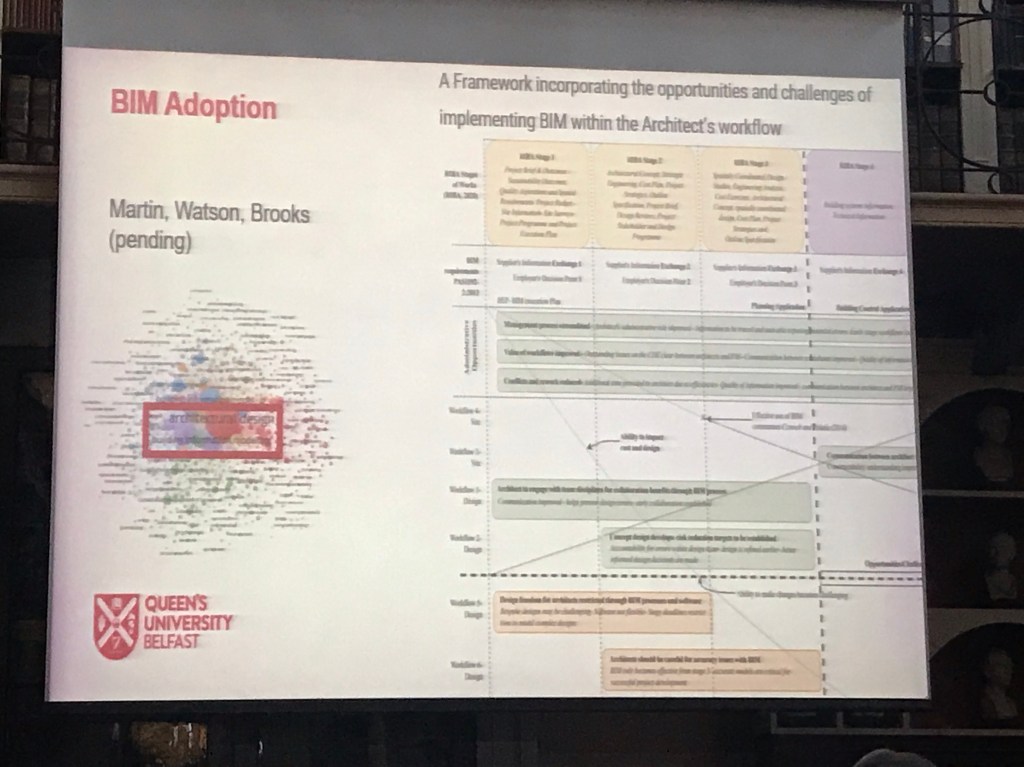
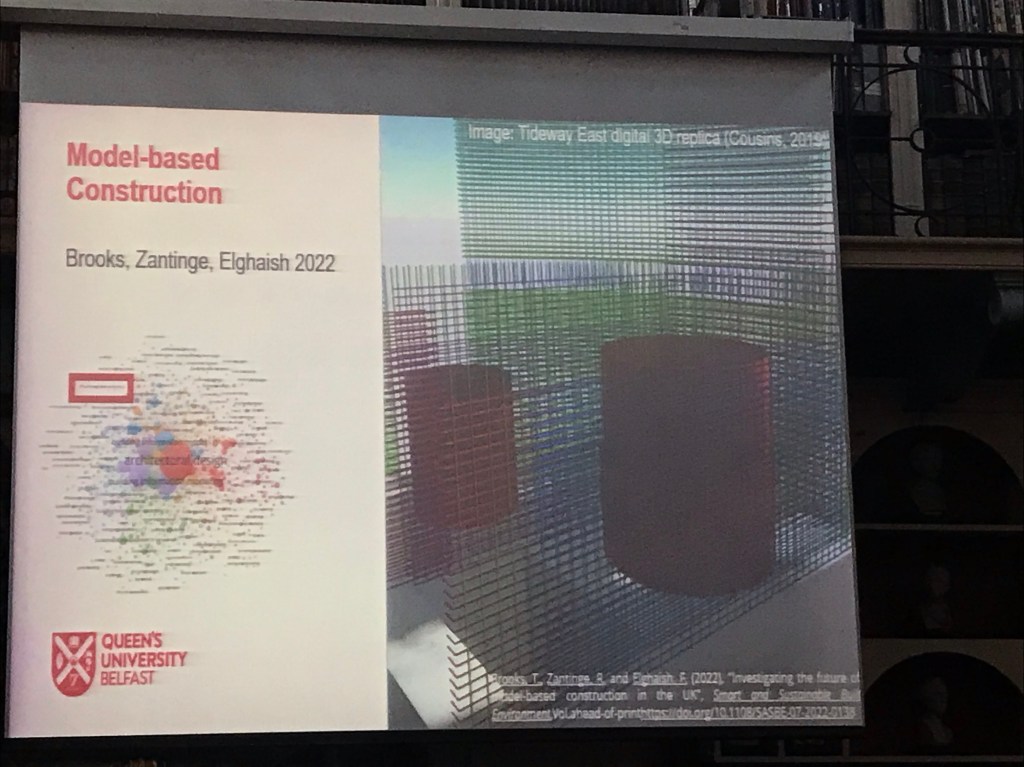
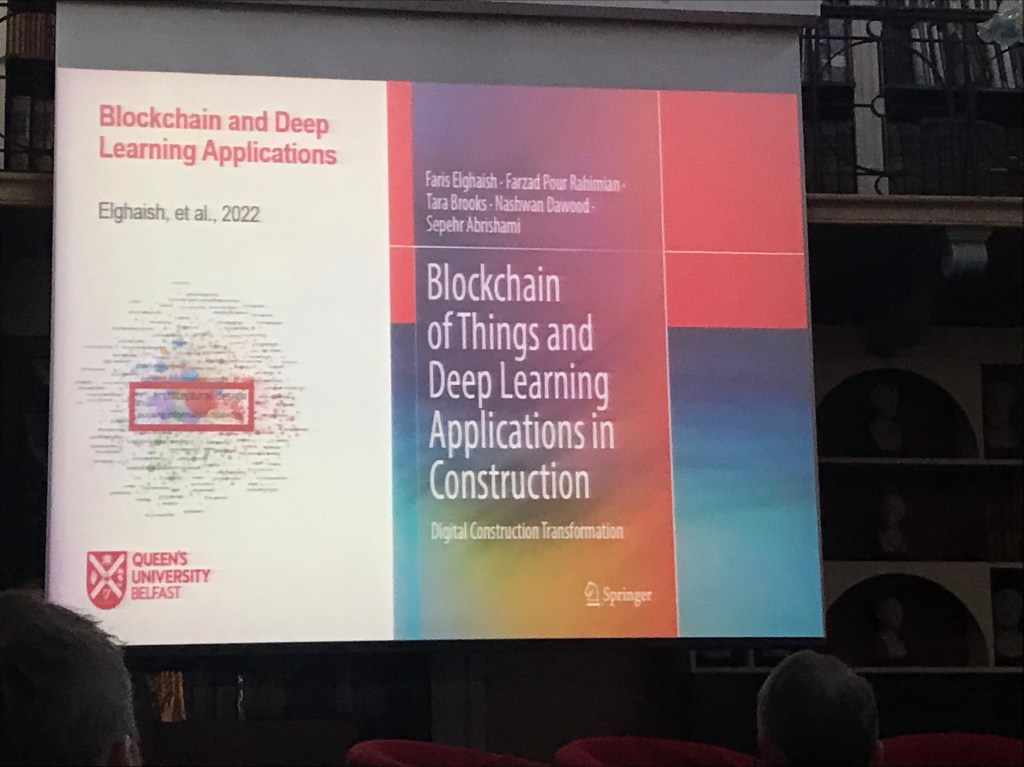
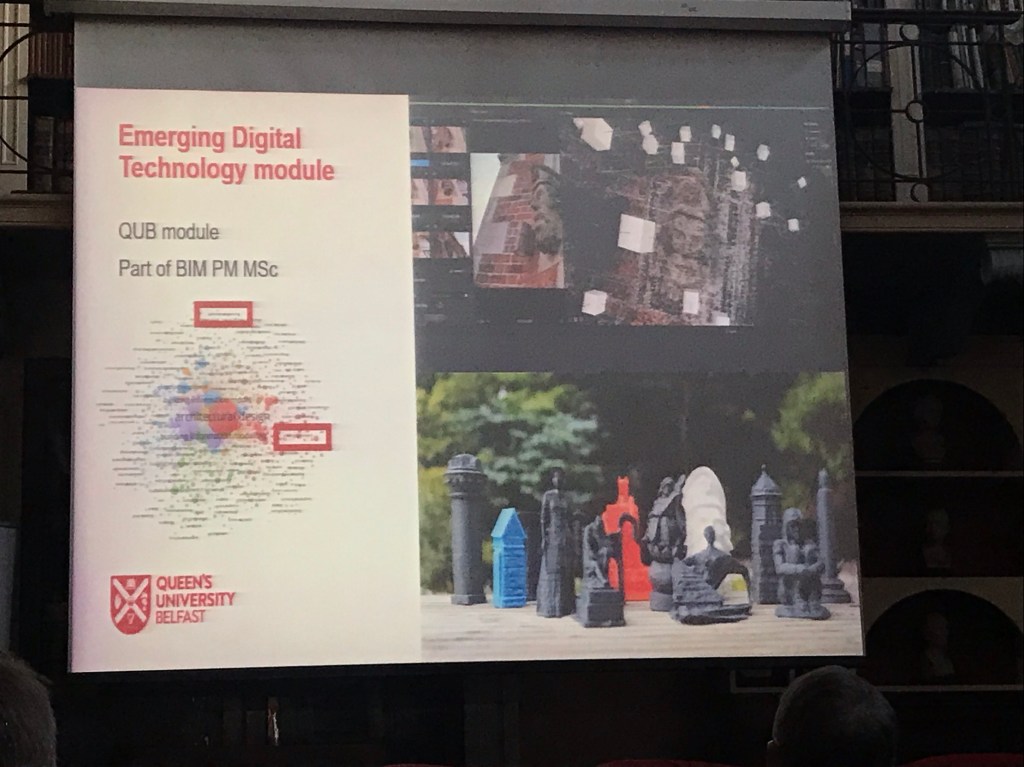
Dr. Tara Brooks from Queens University in Belfast presented fascinating research and I’ve included images since I really enjoyed the graphic devices she used to situate her contributions to the body of knowledge in BIM and digital construction.
The graphically rich presentation by Tara Brooks.
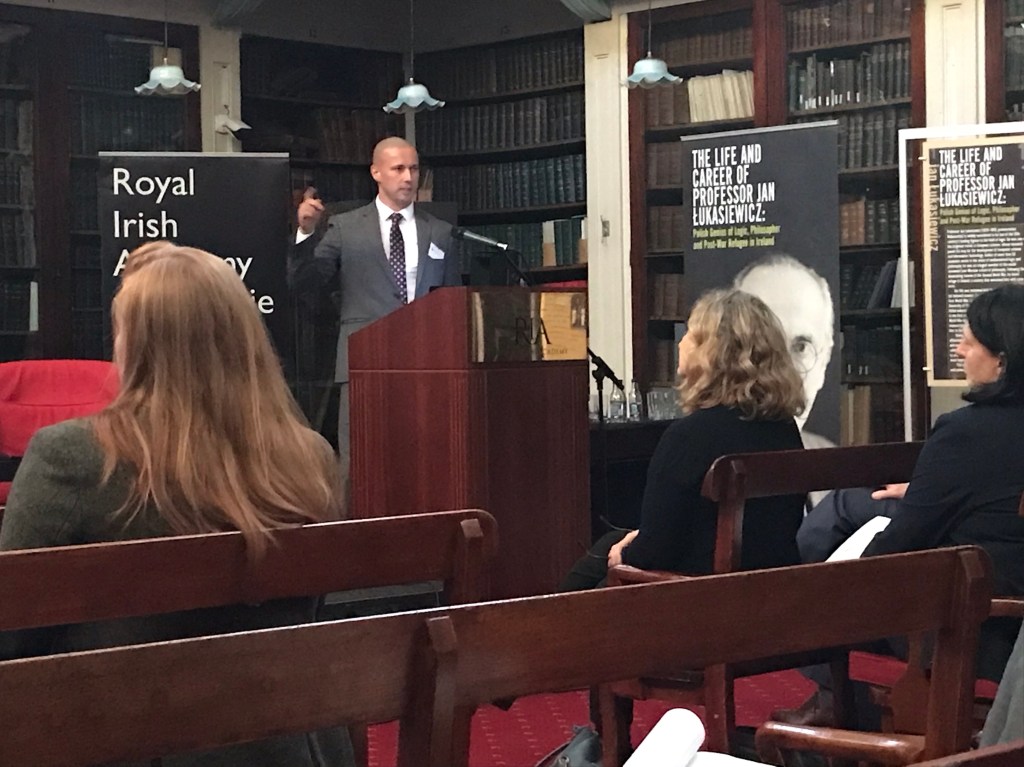
My own university, TU Dublin, was very well represented among attendees, presenters, panelists, organizers, and session chairs. I’ve pictured Joseph Mady, a part time lecturer who delivered an interesting talk.
TU Dublin’s Joseph Mady presenting.
Our conference ended promptly at 5, as Ireland’s Prime Minister was scheduled to speak in the same room at 7, and there was setting up to do.
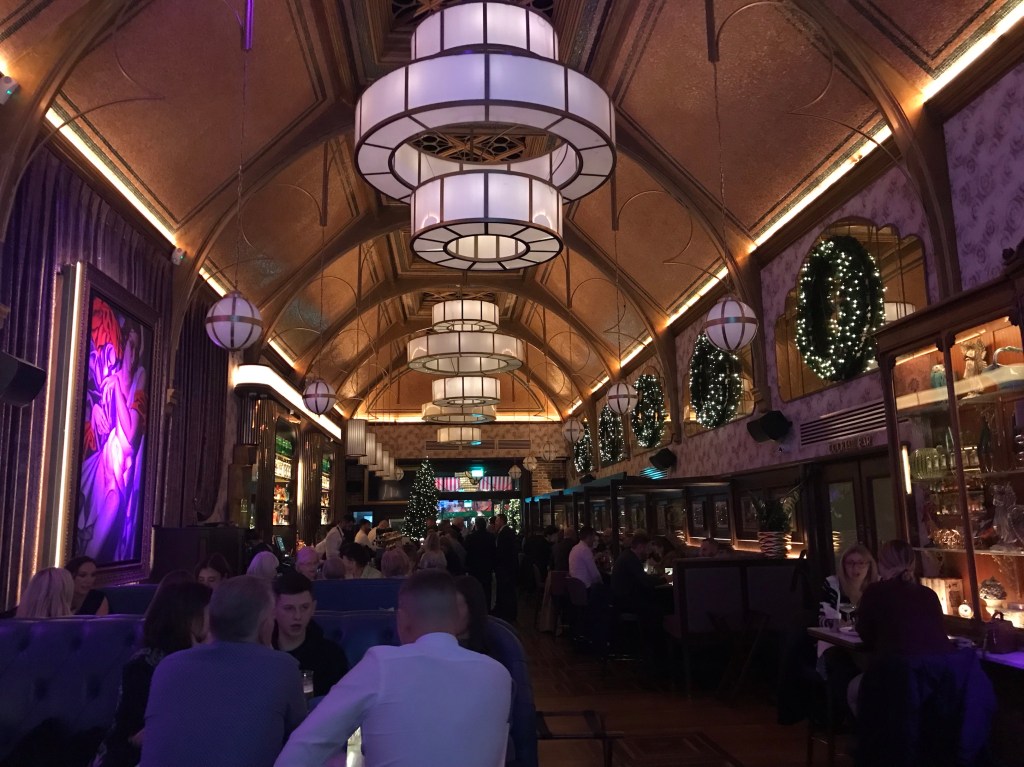
With the conference concluded, I headed across Dawson Street to Cafe en Seine for a cocktail with Aongus.
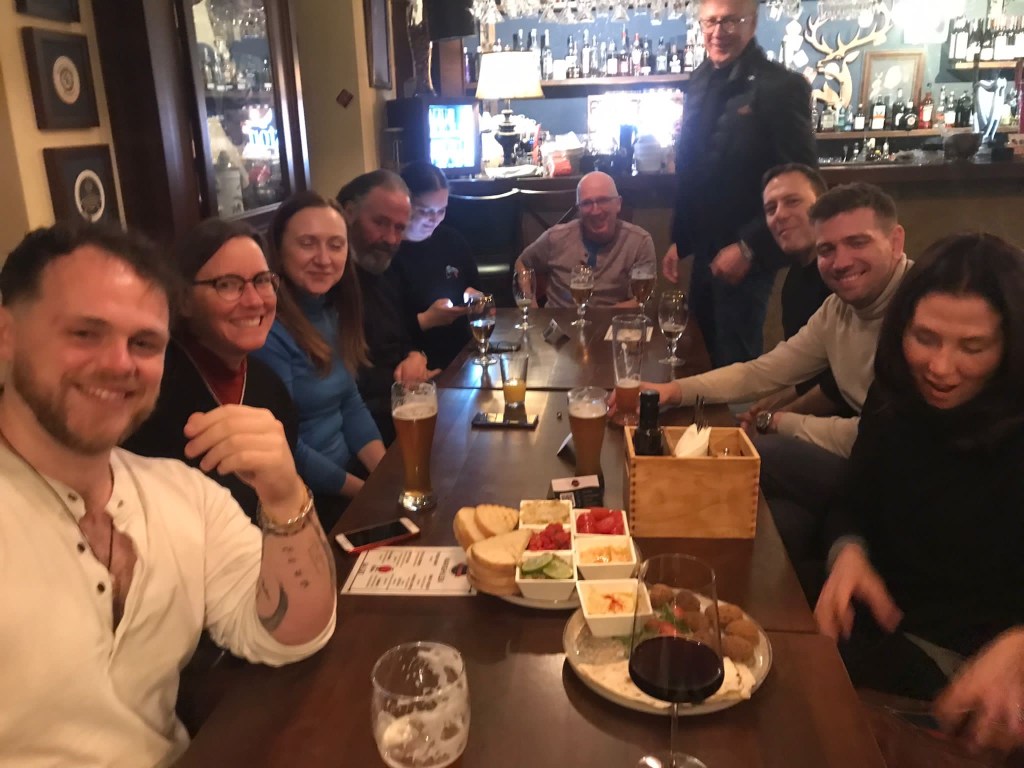
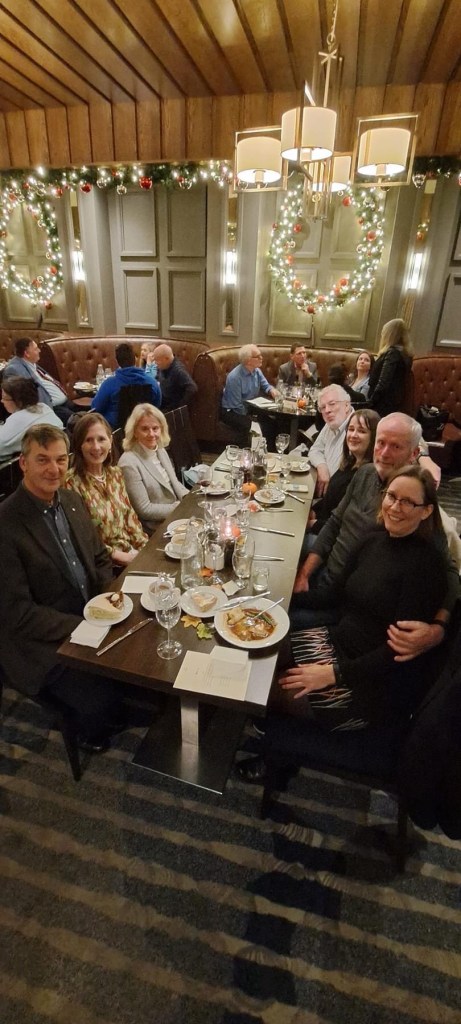
Then we cycled together over to the Hilton near Lock C6 on the south side canal. We met up with a merry group of Americans (most with Irish in tow) to share a feast of turkey will most all the trimmings.
From Cafe en Seine to the Hilton’s Restaurant Charlemont.
It was Aongus’ first sweet potato casserole with marshmallows and he’s still raving about his new find. It’s fun to see the delight he takes in root veg… he also loved the glazed carrots. Such a healthy boy! My favorite were the green beans sautéed with bacon.
We made some new friends and had a ball sharing stories in a familiar twang. Until next year:
It’s a very strange and dreary day here in Dublin. We almost never get thunder and lightning, and that novel occurrence is providing the main bit of excitement for the day. (The thunderclaps are rolling longer than I’ve heard in my life — more like a standing ovation than mere claps.) Suffering from lack of focus, I have picked items from the non-urgent portion of my extensive “To Do” list, which will mean the urgent ones get more urgent. At least when I procrastinate, I’m still actually working!?
So this morning, in addition to meeting online with my PhD student, I spent some time studying the composition of the Editorial Board of the European Journal of Engineering Education (EJEE) and creating a spreadsheet to help me understand our peer reviewers’ expertise better, as I’ve recently become Deputy Editor of this journal.
EJEE’s Editor-in-Chief, Dr. Kristina Edström, recently published an editorial welcoming me aboard. She kindly listed three publications I have in EJEE:
The second one has a title that tends to scare people!
That scary name and the fact that it’s been behind a paywall on the publisher’s website mean that the tally of downloads isn’t as high, but you can find it free (as the embargo period passed) using this link from the TU Dublin ARROW repository, where it has had 870 downloads to complement the 1458 views at the publisher’s site. I really hope people will find and use this paper on “Comparing grounded theory and phenomenology,” especially if they are uncertain about which methodology to use for their research. Grounded theory and phenomenology have some similar characteristics, but the results we report in this paper illustrate that you can use them to find different things. Grounded theory is helpful when studying organizational and policy issues, as the article shows. Phenomenology looks deeply at the core essence of the experience. Using the two different methods in parallel analyses, we were able to learn about teachers’ (phenomenological) experience implementing Problem-Based Leaning, and also the (grounded theory) way they organized themselves to achieve results.
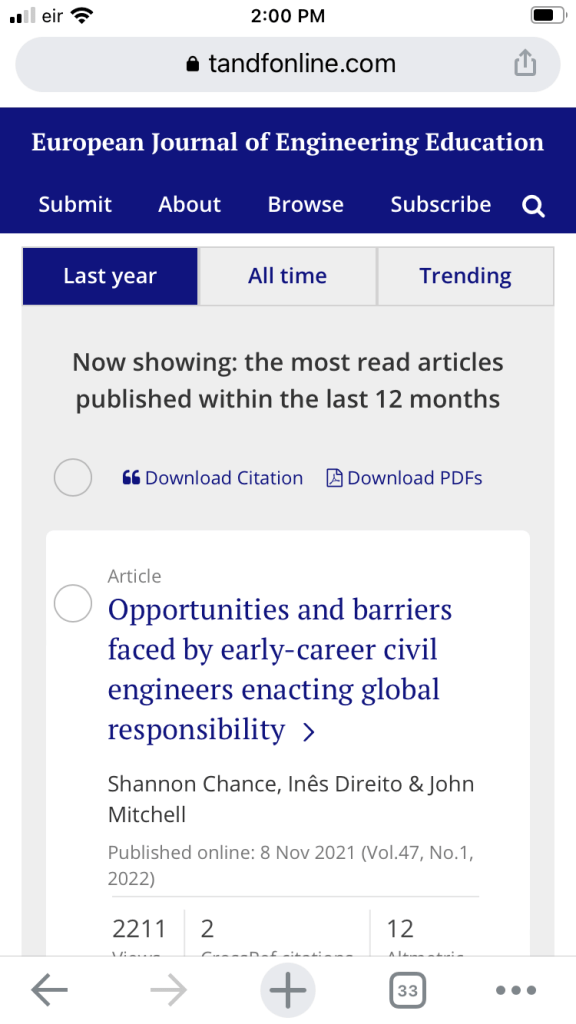
Meanwhile, the third on the list, “The study of grit in engineering education research: a systematic literature review” is EJEE’s fourteenth all-time most downloaded. This paper offers really important advice for anyone wanting to use Angela Duckworth’s theory of “grit” (passion and perseverance) to study student development. We found many researchers to be leaving out crucial information when reporting their “grit” results, and we provide advice on how to report findings in a reliable way.
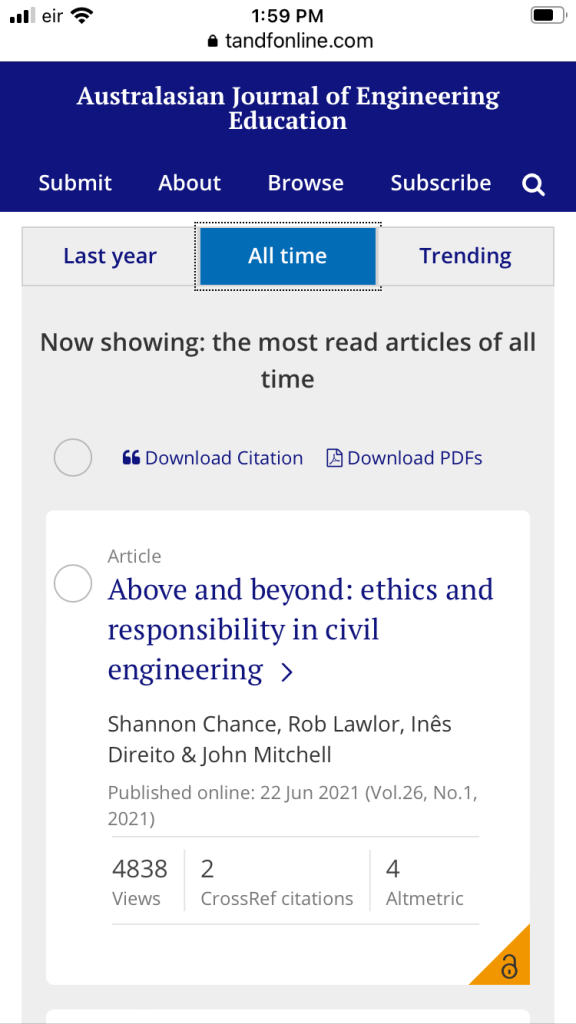
As you can see in the screenshots above, I also authored the all-time most-downloaded article of the Australasian Journal of Engineering Education, “Above and beyond: ethics and responsibility in civil engineering” with 4,838 views as of today. I put my whole heart and soul into this paper and I am overjoyed to see it succeed. I hope readers will find the content useful.
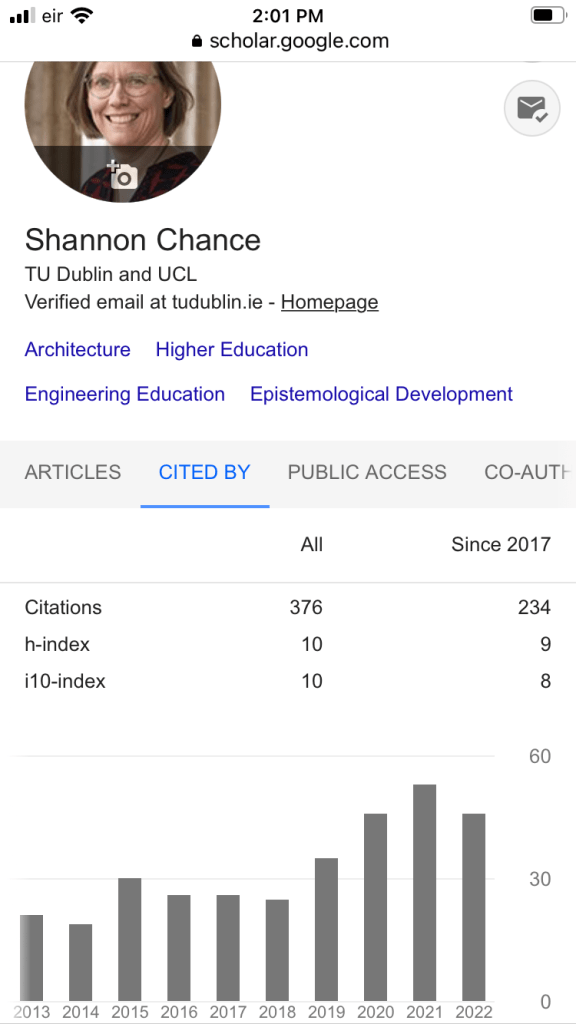
Anyway, these discoveries prompted me to check my Google Scholar profile with happy results — I have climbed to h-index 10, which means ten of my articles have been cited at least ten times. The next milestone is h-index 11, which requires 11 articles to each have 11 or more citations. Those take a long time to accrue, but hopefully, people who download the articles will cite them in their own upcoming publications.
Now, for a little 2:26 PM lunch and a deep dive into some curriculum design for the afternoon! Thanks for stopping to read this. I truly appreciate your support.

















 Ireland by Chance