Learning London: A day of cream tea and BauBax testing

img_2647

Soho at Christmas–but it is lit this way year round!

Aongus and I aim to make the most of every free day we have in London. I’m back at Gatwick now, flying to a speaking engagement in Dublin, and reflecting on the past 24 hours.

After work yesterday (7PM Friday), we met in Covent Garden. First strolling aimlessly, for the purpose of exercise and air, we found ourselves in Soho when Aongus’ hunger pangs won out. We stopped in for Dim Sum at the Golden Phoenix restaurant on Gerrard Street, London W1D 6JE, in the heart of China Town.

Aiming to try new things as often as possible, we thus enjoyed our first dinner on Gerrard Street. The custard-filled buns at the Golden Phoenix were particularly delicious; we will skip ordering a saucy dish next time and stick to the dumplings!

img_2679

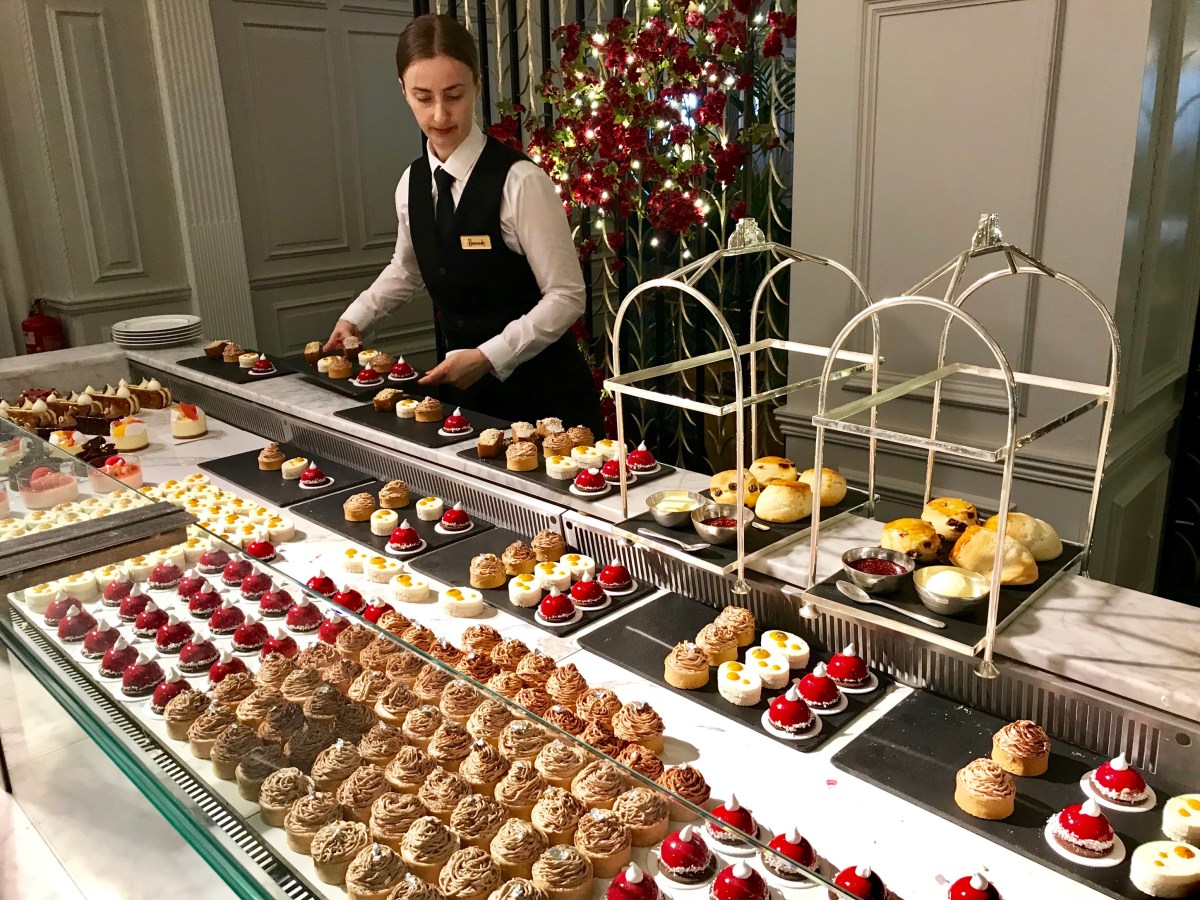
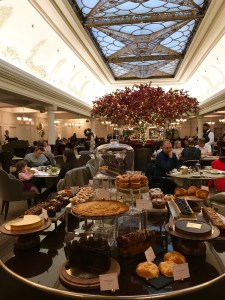
Cream tea for two at Harrod’s

Today (Saturday morning) we awoke for a trip to Kensington via the London underground. I’d booked cream tea for two at Harrod’s. The store and its surrounding streets had a festive holiday feel.

After tea, we browsed and even made a small purchase (but not Italian luxury furniture, unfortunately!).

In our photos of furniture-testing, you’ll see Aongus trying out his new BauBax 2.0 travel jacket. In a recent Kick Starter campaign, I had ordered us matching bomber jackets. Today we donned these early Christmas presents, and Aongus is delighted with his. I’m an architect and I am quite detail-oriented, so although I’m happy with several of the innovative features, I am not entirely satisfied with the overall product–at least not in the medium size for women.

img_2673

Harrods interior stair. The building is a-maze-ing.

It seems to me they tested the BauBax 2.0 design on the large size for men. Several of the features promised–most notably the interior iPad pocket–are too small in the version for ladies. My iPad is a few millimeters too long to fit, and they now say the ladies version will only fit an “iPad mini” which I have not found to be a useful tool. Nevertheless, there’s still a pocket for the iPad pencil. Not too useful if you can’t bring your iPad! It’s important to have pockets when Ryanair won’t allow baggage aboard without add-on fees. I like to travel with as few bags as possible!

So, while the garment does have several nice design features, the final product appears to have been rushed out of the factory. Many of the seams and details in mine are of poor quality. I’ll need to bring it to a tailor to remedy its shortfalls, and I’ll not buy clothing online again.

img_2735

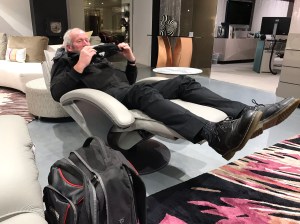
Giving an Italian recliner and a BauBax 2.0 bomber jacket a test run

I guess it boils down to the fact that when it comes to buying cars, computers, and clothes, I’m not an Innovator according to Rodger’s Adoption model–those folks bought the BauBax 1.0 on Kickstarter. I’m also not completely comfortable as an Early Adopter, as I’ve ended up with second-iteration products that still needed some refinement–including this BauBax 2.0 and a 2004 Nissan 350Z.

I really loved my Z car but it, and its 2003 and 2004 siblings, came out of the factory without its tires balanced! They didn’t realize that tire-balancing issue until they’d rolled 14 months or so of these two-seat sports cars out of showrooms. Tires started failing at 16k miles and had to be replaced. So now I know definitively–I need to wait for v3.0. Just be an Early Innovator and enjoy the benefits of having a refined design rather than a cutting-edge showpiece.

I am, however, very happy with the smile on Aongus’ face and the fact that he says the shape of the jacket is flattering. Fortunately, with time and use, I’m beginning to identify which pockets can fit which items–which doesn’t exactly align with the BauBax info sheets that we studied meticulously–but I’m finding systems that work for me.

img_2755

Comptior on Exhibition Rd

So as you see from Aongus’ reclined testing position at Harrod’s furniture showrooms, we rested a bit on some cozy chairs, identifying ideal options for our future. After discussing chair designs with a furniture rep, we viewed some women’s fashions. We enjoy seeing the bizarre clothing designs on offer here and at Harvey Nichols, but we quickly had our fill and headed out and down to the street.

img_2759

Enjoying a chicken tagine

Following a zesty Lebanese tagine at Comptior on Exhibition Road–a cafe we had previously enjoyed with my cousin Kaitlin–we headed over to the Victoria and Albert Museum to absorb some art and history. We particularly enjoyed the stained glass and the new section for photography. You’ll see photos of the building and also from the Buddist, metalwork, and photography sections.

img_2840

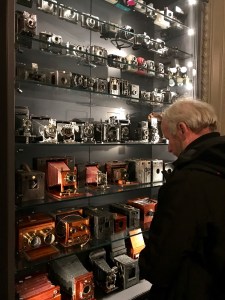
Cameras on exhibit in the V&A’s new photography section

The sun had set and there wasn’t much time before my flight to Dublin, so we dashed to the South Kensington tube station and jumped onto a District line train.

We said a quick but heartfelt “goodbye and see you Friday” as I disembarked at Victoria Station and climbed the stairs to the National Rail station on the ground floor. Despite construction works around Gatwick that delayed the train 15 minutes, I arrived and cleared security with plenty of time for a browse at Dixon’s and a healthy salad from Pret before I hit the runway–putting my travel jacket to work.

Ciao, Britain. See your other side on Tuesday!

Perched atop UCL for an Away Day strategizing engineering education

Perched high above UCL, in the penthouse Marconi room, University College London’s engineering education experts assembled on November 29th at the uppermost point of the Bloomsbury campus to discuss progress and strategy for the future. I was delighted with the sweeping views toward East London, where I live, and my co-researcher Dr. Inês Direito and I selected seats where we could watch the color of the sky shift throughout the day.

UCL staff from the Institute of Education (IoE), Arena Centre for Research-Base Education, and Faculty of Engineering Sciences (Integrated Engineering Programme and the Centre for Engineering Education where I’m working) joined together for a half-day retreat. We started with a light lunch so that we could get re-acquainted and welcome a guest from McGill University in Canada. I myself am here for two years as a Marie Curie Research Fellow, on a career break from Dublin Institute of Technology (DIT).

Our Centre for Engineering Education (CEE) has two directors. Professor David Guile is from the Institute of Education and Professor John Mitchell is from the Faculty of Engineering Sciences. John ran the meeting.

After introductions, we got updates on CEE activities as well as a synopsis of our core mission. Emanuela Tilley, Director of UCL’s Integrated Engineering Programme (IEP) provide an update and John Mitchell described progress building the university’s new campus in Stratford, East London. The campus is called Here East and will eventually include space for our Centre.

img_2628

Emanuela Tilley providing updates on UCL’s award-winning IEP

We learned about the new Masters in Engineering and Education that CEE and IoE recently launched. There are six MSc students in the current, inagural cohort and its organizers anticipate bringing in 20 additional students next year. I’ll be delivering a session for this degree program in January, on learning theories. I’m hoping that DIT’s MSc in aBIMM (Masters in applied Building Information Modeling and Management technologies) can provide a helpful precedent for organizing the thesis portion of the program, as my colleagues Deborah Brennan and Dr. Avril Behan have already achieved creative solutions to address the types of challenges our UCL team faces, as identified by Jay Derrick and David Guile. I’ll work to connect these four people.

Near the end of the meeting, Inês and I provided updates on our current and planned research projects. I mentioned contributions we’ve made to the larger community of engineering education researchers, running multiple workshops at SEFI 2018, providing leadership on journals like IEEE Transactions on Education, and collaborating with the CREATE research group at DIT, my home institution. I wrapped up by identifying the research projects that we have in progress—two that use phenomenology as well as two phenomenographic studies and two systematic reviews. I should have mentioned the special focus issue I have underway on using design projects to promote student development, but I forgot!

Meeting my bosses at London DIT Alumni’s annual chapter gathering

Maintaining professional connections is important, and although I’m on a Marie Curie fellowship in London, I still meet frequently with leaders from my home institution, Dublin Institute of Technology (DIT). Last night I met with Dr. Avril Behan (my direct line manager at DIT) in London, our recently-retired boss Professor Kevin Kelly, and DIT’s president Professor Brian Norton.

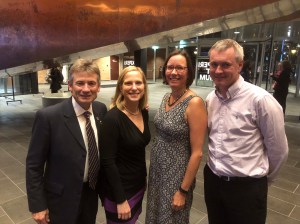
The London DIT Alumni chapter hosted a brilliant get-together, an annual event, at London’s Irish Center. This gave me a chance to meet DIT alumni working in London and also catch up with Avril, Kevin, Brian, and other DIT staff like Ciara Ahern.

I also had the pleasure of meeting anew many DIT graduates: MBA Tania Eyanga, Architecture Technologist John Heaney, daylighting designer Dr. Ruth Kelly Waskett, and engineers Paul Sheridan and Stephen Sunderland who work with WSP.

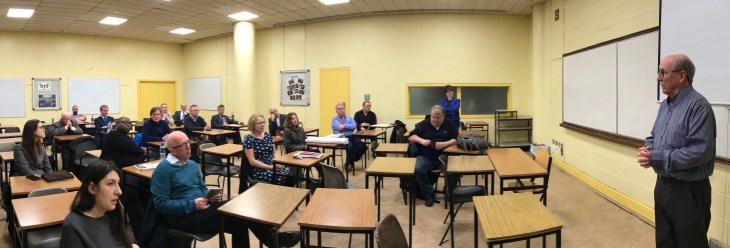
I’ve attached photos of the event as well as a few pics from Professor Kevin Kelly’s retirement party, held at DIT a couple of weeks ago.

At last night’s gathering, Professor Brian Norton provided updates on DIT’s new campus at Grangegoreman, and delivered the exciting news that a pedestrian route connecting Grangegoreman with DIT Bolton Street has just opened. The walk now takes just seven minutes and cuts through Kings Inn Law building, a truly stroll walk up Henrietta Street to Constitution Hill. Can’t wait to use this route! It will cut about 15 minutes off the current walking time between the two DIT sites.

Inaugurating a pioneer in engineering education research, Dr. Bill Williams

img_2510

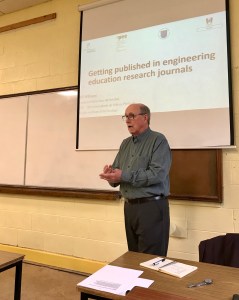
Bill’s workshop on getting published in EER

Thanksgiving Day had a different look and feel this year. Here in Dublin, we welcomed Dr. Bill Williams to give his inaugural lecture as Visiting Professor in DIT’s School of Multidisciplinary Technologies.

Bill is an energetic and knowledgeable colleague, a close friend, and an excellent mentor to me. We have been working together on various projects since the day we first met, at a SEFI conference in 2012. Bill hosted my 2013 visit to five universities in Portugal, and we are currently co-editing a special focus issue of the journal IEEE Transactions on Education, the second special focus issue we’ve organized together. Because Bill has been so helpful in supporting my development over the years, I wanted others at DIT to benefit from his knowledge, experience, and helpful advice as well. He’s got a can-do attitude that is uplifting and infectious. And so, I nominated him for this prestigious appointment at DIT and am delighted it finally came to pass!

He arrived in Dublin Wednesday, which gave us a bit of time to catch up and compare notes on various projects. We enjoyed a very tasty vegetarian dinner at the newly-expanded Brother Hubbard, to get the ball rolling. If you’ve not eaten there, do hurry! You’re really missing out!

img_2433

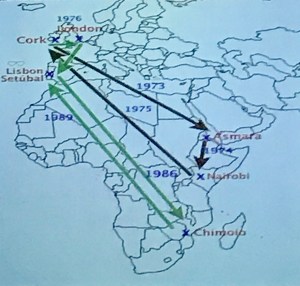
Bill’s life path

Bill and I started Thanksgiving Day with a strategy meeting with our schools’ senior leaders, then we met with colleagues, welcomed guests from near and far, and settled in for Bill’s insightful lecture on “14 ways engineers bring value” to society.

Bill described his trajectory into engineering education research, via two stints in Africa where he taught Chemistry. Although he’s originally from Cork, Ireland, he has lived and worked for the past few decades in Barreiro, Portugal. In Lisbon, he earned his Ph.D., just shortly before retiring. Now, I’m quite happy to report, he’s still incredibly active in research and in advising and mentoring researchers new and old. We’ve now made it official by appointing him as an adjunct professor here at DIT!

img_2455-1

After an interesting set of lecture topics followed by Q&A with lively discussion, a small group of the international guests joined Bill and the event organizers for dinner in Dublin’s Italian Quarter–so I had Thanksgiving dinner surrounded by dear friends after all!


img_2458

Dr. Abel Nyamapfene (UCL) and Professor John Heywood (Trinity)

I was delighted that we had 22 attendees at Bill’s Thursday lecture and nearly as many at the follow-up workshop on Friday–a great turn-out, particularly given the long distances many traveled to attend! Bill himself traveled in from Portugal for the two-day event.

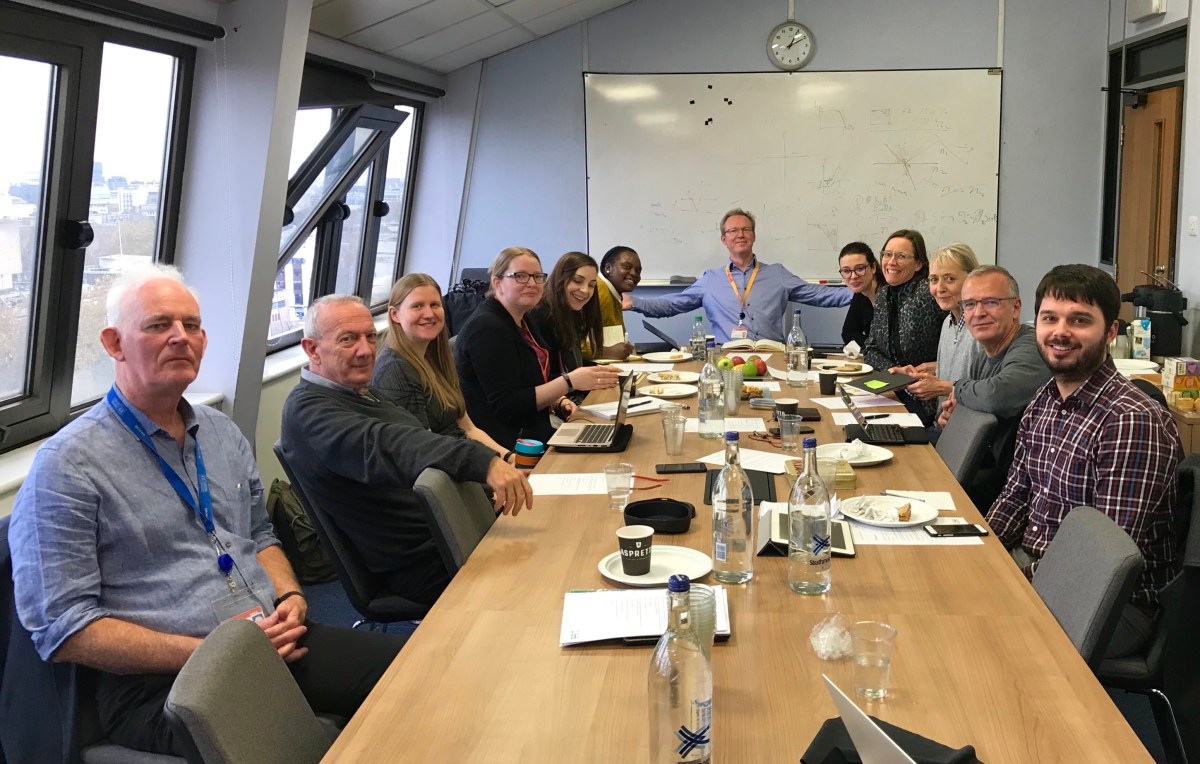
My UCL colleagues, Drs. Inês Direito and Abel Nyamapfene, came across from London. They work with me at the Centre for Engineering Education at University College London.

Dr. John Heywood (Professor Emeritus at Trinity and a global leader in the field of education research) made the trip up from Bray, Ireland.


img_2463-1

Drs. Shannon Chance (DIT and UCL) and Inês Direito (UCL)

Dr. Dónal Holland (Assistant Professor at the UCD School of Mechanical & Materials Engineering and an Associate at the Harvard School of Engineering and Applied Sciences) came up from University College Dublin both days.

All these guests were joined by a host of enthusiastic DIT staff from the Kevin Street, Grangegoreman, and Bolton Street campuses.

Still abuzz from the lecture on Thursday, we prepared to focus on research publication strategies on Friday via a workshop led by Bill. But first, Inês, Abel, and Bill came for lunch at my flat and this provided me a semblance of a Thanksgiving gathering around my own table.

img_2465

Professor Brian Bowe (DIT) with Drs. Dónal Holland (UCD and Harvard) and Gavin Duffy (DIT)

Nevertheless, the main event for Friday was a workshop on getting research published in engineering education. Bill ran this half-day seminar for DIT’s CREATE research group. CREATE seeks to make Contributions to Research in Engineering and Applied Technologies Education. It is based at Dublin Institute of Technology (DIT, soon to be Technological University Dublin, TU Dublin).

Across these two days, we enjoyed sharing ideas informally as well as formally. Bill met with Professor Brian Bowe (the head of CREATE at DIT) and with a number of Ph.D. students and emerging researchers, and with senior leaders of the School.

I photographed some of the memorable moments and have shared them in the gallery below.

Meeting Grafton Architects: Irish Ladies Leading the Way!

img_2359-1

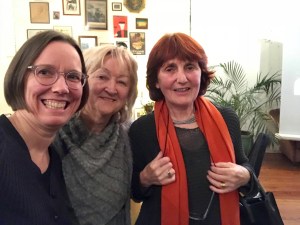
Shannon Chance with Shelley McNamara and Yvonne Farrell of Dublin-based Grafton Architects.

I finally got to meet Shelley McNamara and Yvonne Farrell, founders of Grafton Architects and designers of my home here in Dublin.

You may recall blogs I posted in October 2012 titled Hats off to Grafton Architects, a post about sun angles in winter, and a video clip I made shortly after moving into “my Dublin Castle.” I have attached my apartment tour which is quite goofy. In it, explained features unique to Ireland and the EU, but I called the water tank “electric storage.” That’s factually true, but here they use the term just for the wall heaters that heat bricks in the night, when electricity costs less, and radiate that heat our during the day.

I learned more about electric storage heat from my maintenance guy, Keith Brown. I posted a blog where he showed me how they work. I sure do miss Keith as he was able to fix anything, usually the way my grandpa would have! Pa grew up during the Great Depression and was quite thrifty! Keith, on the other hand, moved to Spain.

I, on the other hand, am not moving to Spain any time soon. But this flat is plenty warm and sunny.

I love every minute in this place, perched high in the Smithfield Lofts that Yvonne and Shelley designed back in 2006. Last night, I got to tell them how much I enjoy living here.

Grafton Architects

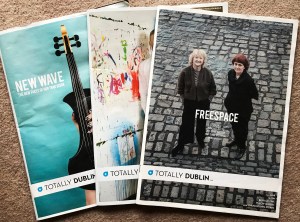
Covers from “Totally Dublin”

I had braved the lashing rain, trotting across town to pick up new specs at Ace and Tate and then over to Fumbally for an event produced by the magazine Totally Dublin, which ran a feature on them in January 2018 that I still have on my coffee table.

The talks weren’t starting on time. Or rather, Irish evening-time tends to run quite behind what the clock face shows. This event ran 8-10 PM, rather than the 7-8:30 PM published. In any case, I had time to grab a slice of cake and get psyched up to hear these amazing architects talk.

In the interim, I decided to hop across the room to tell Yvonne and Shelley that I’m a big fan and I love my home.

img_2125

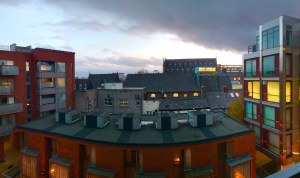
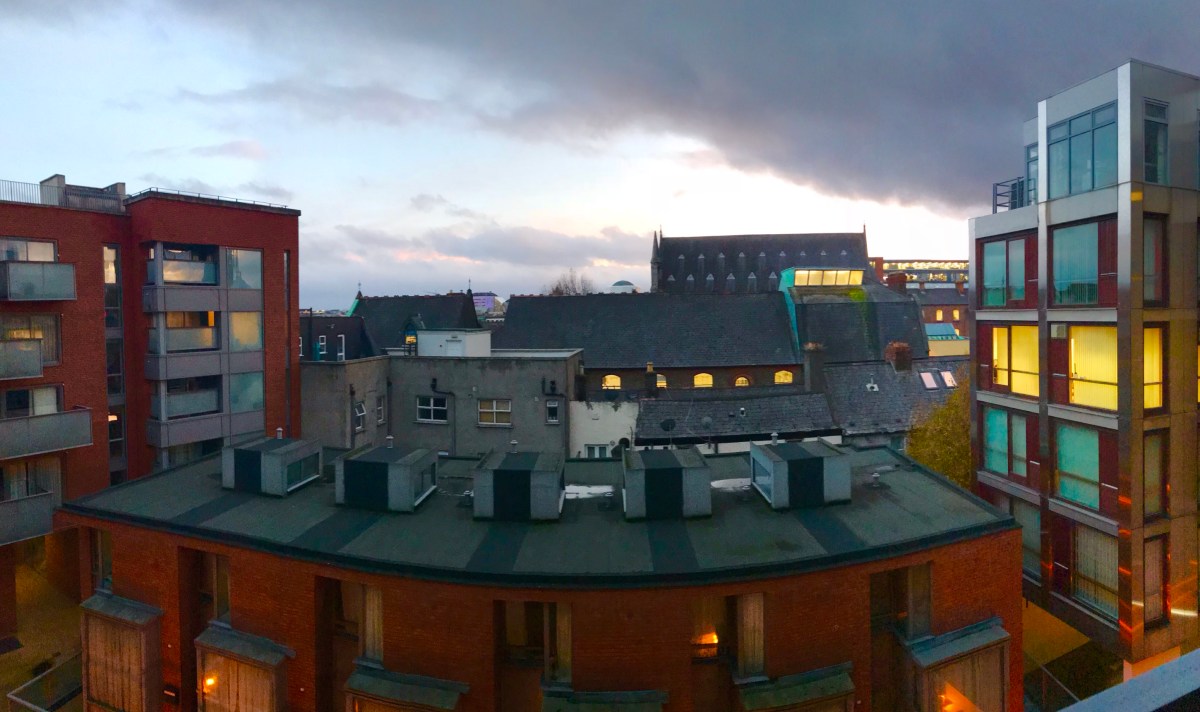
A Dickens Christmas in cozy Smithfield

I showed them the photo I took last week from my balcony, which I’d posted in an earlier blog.

They seemed delighted to hear their building was loved, as that construction process was rough, with the developer cutting corners and ultimately going out of business when the economy crashed. I’d been told that unfortunate story by my colleagues when I moved in and was glad to help these architects reconnect with their creation. Incidentally, any criticisms I’ve ever had of this building are due to poor workmanship and Ireland’s very strange fire codes.

img_2347

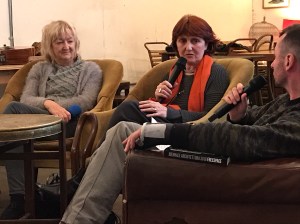
Shelley McNamara sharing insights

These architects are now world-famous. They curated the Venice Biennale this year, bringing Irish architecture and Irish design to the fore of the world stage. They dedicated the 2018 Biennale to “Freespace,” which I might describe as third-space, public space where everyone is welcome and treated with equal dignity and respect.

Last night, Shelley and Yvonne discussed their role in the Biennale and working together since they first met in architecture school at UCD where they graduated in 1974. Imagine, they entered in a class that was gender balanced at the end of the 1960s!

Consider that the year Shelley and Yvonne entered architecture school, women were not allowed to study this subject in many universities in the USA, including the University of Virginia (a place Yvonne and Shelley mentioned to me last night). UVA began admitting women in the year 1970. The institution had admitted a few women before this date because they had a medical school that needed nurses; my mom earned a Bachelors in Nursing there at UVA in the mid-60s.

What a revelation, to learn there was gender balance in architecture admissions here in Ireland at the same time there were 0% women and 100% men in architecture at UVA!

Yvonne and Shelley said they’d never experienced gender discrimination in their lifetimes as architects, designing buildings in Ireland, Peru, Italy, Spain, France…. That was quite inspiring to hear!

Yesterday evening also featured discussions with the photographer and artistic director of the magazine’s October cover piece on “The Bumbles” and discussion and performance by busker NC Lawlor, an Irish man reared in Manchester and now living and performing in many types of venues in Dublin. You’ll have to find him busking on Grafton Street if you want to hear him first hand!

Below are photos of the evening, along with pics I’ve snapped over time of my cozy flat.

Basking Joyfully in Southern France

I’m currently on a writing retreat, working from Dublin and doubling down on my extensive to-write list. I worked straight through two weekends here because my flat here is so peaceful and sunny. Now, I’m taking a day off for good behavior and pausing to post photos.

Here’s a glimpse of two sunny weeks Aongus and I spent in the South of France this past September. Ours was an outdoor adventure full of cycling, river rafting, kayaking, hiking, and swimming. We thoroughly enjoyed the dramatic coastline, the historic coastal cities and remote hill towns, the Gorges du Verdon, and the Cliniques near Cassis.

I’m sharing these pics to give inspiration for your next travel adventure–and ours, too!

Antibes

Saint-Paul de Vence

Castellane

Rougon and La Palud-sur-Verdon

Moustier St. Marie

Roussillon

Le Pont Julien

Bonnieux

Lourmarin

Aix-en-Provence

Cassis

La Cadière-d’Azur

Le Castellet

Sanary-sur-Mer

Hyères

Porquerolles

St. Tropez

La Croix-Valmer & Ramatuelle

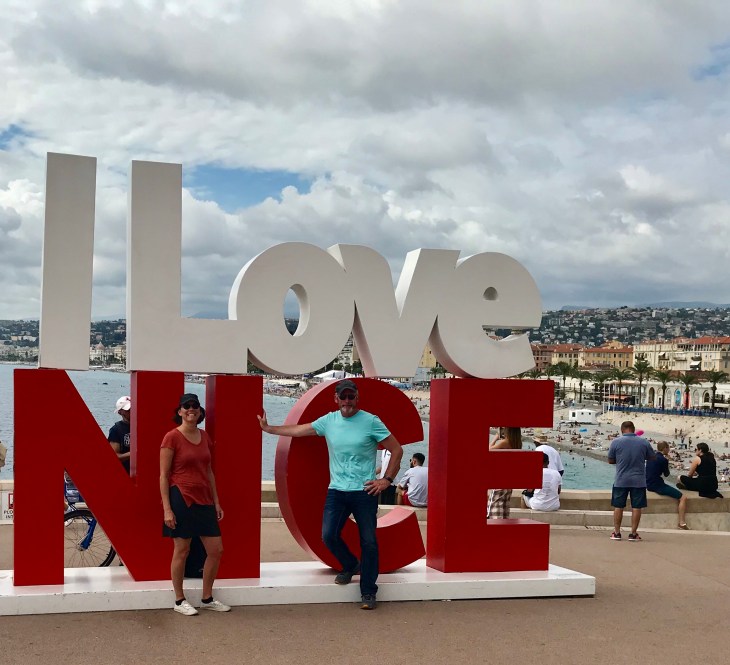
Nice

img_9223

Vieux Nice, Mèdecin, and the Port of Nice

Negresco Hotel

Promenade des Anglais and Ponchettes Beach

Farewell, for now, Nice!

An Evening of Astronauts and Magically Informative Skies


Last night’s sky over Dublin was spectacular, and a magical evening unfolded. I’ve been sequestered in my flat here in Dublin for the past few weeks, on a self-imposed writing retreat away from my current home in London.
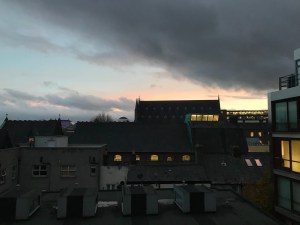
 

img_2124

The view from my balcony, looking south toward Four courts, just beyond the roof of the Cappucian Friary and Padre Pio church.

However, my retreat has transformed into a sort of boot camp. The past few weeks have been like the days I was enrolled full-time for my Ph.D. while holding down my full-time teaching job (and somehow still doing well at both). I’ve been so inwardly focused that I’ve thought of calling this time my ‘hermitage.’ Yet, I’ve been so productive I’ve considered making this an annual thing.

After working straight through the weekend and submitting two big projects Tuesday, I was ready for a break Wednesday evening. And the evening didn’t fail to deliver. It was nothing short of magical.

Remarkable moments I enjoyed:

  • Views from my balcony at sunset.
  • Views of the city center from the top of a double-decker Dublin Bus–before realizing I was heading in the wrong direction and getting nowhere fast!
  • Recognizing, just in time, the error in my plan.
  • A fine fair-weather clip across town on a Dublin Bike, with a long haul up the hill to the far end of Phoenix Park to the residence of the US Ambassador.
  • img_2185

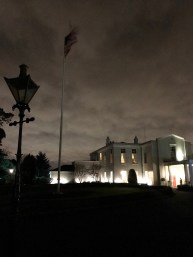
    US Ambassador’s residence in Dublin

    The stunning sight of the Ambassador’s home, tucked under a thick, delightfully-cheerful but ever-so-slightly-ominous blanket of clouds.

  • Clouds lit from the underside by our small but bustling city–a town beaming with holiday cheer and festive lights.
  • Stories of being in orbit from a man who has traveled far above the earth’s surface, in multiple spacecraft.
  • Learning about different types of rockets, and safety procedures that saved the lives of his colleagues in a recent failed mission.
  • Viewing dramatic photos US astronaut Shane Kimbrough captured from space–many from the Russian side of the Space Station, which he says has clearer glass that makes for better pics. img_2158
  • Meandering around the ground floor of the residence and enjoying the architectural details, but unfortunately, not recognizing a soul.
  • The delightful sensory experience of cycling back through the park on my way home. (By this time, the weather was starting to cool and I wished I’d donned the jacket that was tucked in my purse.) I pushed onward, not wanting to break the magic.
  • Parking my Dublin Bike at Blackhall Place, wandering through Smithfield Plaza, and enjoying the plaza’s holiday lights.
  • img_2206

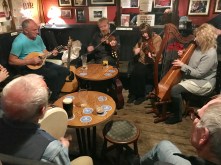
    Music session at the Cobblestone, with Mick O’Grady, Pat Goode, Brenda Malloy, Tony Nugent, and others.

    And finally, stepping through the warm and welcoming front door of the Cobblestone pub, and soaking in greetings of musician friends and bartenders–catching some tunes, and sharing stories after the 7-9:30 session.

This fairy-tale set of events unfolded, after a somewhat odd day. I’d dealt with random, miscellaneous tasks, following on the heels of a week of productive writing and editing. Although this day wasn’t particularly productive, I kept trying.

But I had a particularly strange occurrence while working from home during the day:

A guy knocked on my apartment door and I asked through the solid core panel, “Who is it?” He didn’t say who, but rather that he needed something. I asked what. He said, in pained exasperation, that it was too complicated to explain. He sputtered and stuttered that he’d just have to go tell someone else. Fine by me. Look, if you’re bleeding and you need a doctor, say so. If you can’t explain your problem, I’ve no way to assess if and how I can help. My friends at the pub last night said never, ever open the door. Thanks to both God and good judgment that I didn’t.

I’ve been struggling with my vision and waiting for a new pair of multifocal glasses to arrive. Turns out, my far sight has improved, and this has thrown off all the settings on my progressive lenses. As a result, I’ve been fighting headaches from struggling to find a head-tilt position where I can actually see the screen. This has been going on for months, and I’ve only just gotten to the bottom of it all. A temporary pair of reading glasses is helping, but wearing them is disorienting and headaches still crop up.

So yesterday I was quite ready for a break. I wrapped up my work to head out for an event. I blended up a healthy juice of fruits and veggies–apples, carrots, cucumber, spinach, celery, and ginger–to pep me up for the evening.

I noted the stunning view of clouds rolling into Dublin at sunset. I clicked a photo from my balcony to post on Facebook:
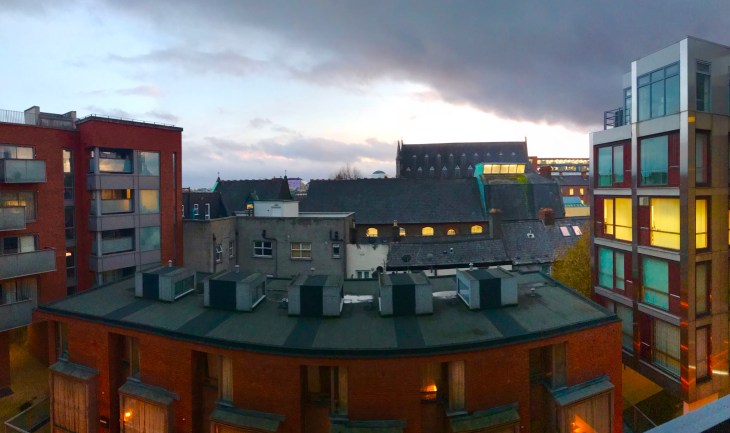
img_2125

It’s already feeling like Christmas in Dublin! A bit of a Dickens Christmas, the lighting suggests. 

Such a lovely place to be, in this bright and sunny flat!

I quickly donned a skirt and boots with heels (unusual for me these days) and I zipped out for the bus slightly after 5 PM, en route, I thought, to the US Embassy. I grabbed a seat front and center on the top deck of the bus, and successfully deflected the man-spread in progress in the adjoining seat.

Views from the top deck were lovely! But, a half hour after I’d left home, sitting atop a bus stuck in traffic, I double checked the invite. It was quite clearly sent from the US Embassy, and that’s where I was headed. It’s on the southeast corner of town.

Nevertheless, the event–a public discussion with a highly experienced US Army astronaut–was actually in the other direction!

Screen Shot 2018-11-15 at 11.26.01 AM.png

The only way through rush hour traffic and up to the US Ambassador’s residence perched on the hill of Phoenix Park was by bike. It’s touted as the largest city park in Europe (or something of that sort), and the Residence is, as I’d come to discover, at the very northwest corner of the park. On the far opposite corner of town.

I had to wait for the bus’s next stop. It goes all the way from the Liffey, around Trinity College, to the far, far end of Nassau Street–almost to Claire Street, between stops. Quite difficult to see all those buildings pass by while wanting to disembark!

Once the bus finally stopped, by the grace of God, I clambered toward the nearest Dublin Bike dock.

Despite the mini-skirt and tall wedge-heeled boots I’d put on, I managed to make good time. I was up to the Ambassador’s in under a half hour. The cycle ride required great physical exertion, but there was no other viable way to get quickly from Trinity to Heuston Station. From the station, I could have taken a cab up and across the Park, but I persevered. After days sitting at the laptop, I needed the exercise.

img_2131

Gusts of wind billowed past, pushing a thick blanket of clouds across the winter sky. But it was warm. What a treat–the feel of cycling through the park in this delightful weather (despite rough paving on the cycle lanes, which appear to be under renovation). I felt a deep sense of joy while approaching the formal gates, to be greeted by the cheerful security officers who quickly found my name on their list. The magic of the evening was reinforced by this delightful setting–the Ambassador’s residence was aglow under a dramatic sky.

img_2159

The US Ambassador’s Residence is architecturally impressive.

I arrived in time to grab a canapé and a glass of wine before finding a seat. My face, flushed with energy, glowed brightly. The crowd filled three rooms, and so I observed through two different sets of doors. What ensued was delightfully informative. The dialogue was well worth the haul!

The speaker, US astronaut Shane Kimbrough, has the rare distinction of having served aboard BOTH the Space Shuttle AND the International Space Station. Once, he was in orbit for a full six months. That mission had been planned for four and a half months. Near the end, he received word that his stay was extended another six weeks.

Such interesting stories! He told of a mission he was on that launched from Russia, of bringing a soccer ball from a Challenger astronaut into space. He said during a spacewalk, you’re essentially in your own little one-person space capsule. He brought the experience of being-in-space alife for us all. img_2139-1
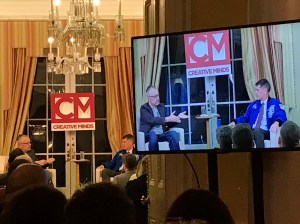
For more on NASA Astronaut and Former Commander of the International Space Station Shane Kimbrough see his webpage.

Shane shared amazing photos of his adventures and talked of cultural exchange, including multiple Thanksgivings spent in space. He described one year where the multi-national group aboard the Space Station celebrated our Christmas (December 25) as well as Russian Christmas (January 7).

He was also on a mission touted as “Home Improvement” since their team delivered and installed new kitchens, bathrooms, technical and exercise equipment and the like. Shane seemed so young and vibrant, yet he’s done all this. And what a remarkably humble guy he seemed to be!

Something he described will stick with me: he emphasized the fragility and beauty of the thin layer of atmosphere that protects, and indeed enables, life on our planet.

Of course, I ‘know about’ the ozone layer. My mom taught me to protect it since I was a kid. But I had never internalized the magic of this layer.  Although I knew about it intellectually, I had trouble ‘feeling’ it.

The scale is immense and the set of variables inconceivably complex. I have always had trouble wrapping my head around the idea of climate change. Shane made it palpable.

With a few words from Shane Kimbrough, I realized I’ve really only been looking up and out. From the International Space Station, he’d been outside, looking in. There, he adopted a more holistic view. He articulated it beautifully.

I’d been looking at all this from our human center, and been rightfully concerned. This astronaut helped me ‘see’ another way, but this also increased my concern. We must do more. I now have a better sense of awe of the beauty, vulnerability, and fragility of this thin veil.
img_2196-1On a night like yester–looking up, looking out–I saw the clouds rolling past. The jet stream pushing them along bound from the Atlantic along toward Scandinavia. img_2212-1
Heading home, I saw clouds. The stars were masked by plumes of water droplets suspended in air. Thick blankets of billowy, puffy clouds–holding us together–keeping us safe.

En route, I was inspired to wander the plaza and soak in the festive holiday lights. Then, I stepped in to see friends at my favorite local pub, the Cobblestone. Inside this pub, I feel love. Love of music and life-long friendships among musicians. I am always treated like family here.

Returning home, I fell into dreams of stars, with a new and deeper sense of awe for this planet we call home.

img_2218I awoke this morning to the ominous political news of Brexit, the pending collapse of the UK government, and then Teresa May’s resignation.

There was a different sort of sky, the sort of rays my friend Glen calls ‘God light’. Dear God, please let this light show us the importance of the atmosphere and of each other. Let it lead us to make better decisions.

Working Hard, Playing Hard: London city models, maker spaces, and materials libraries

img_0657

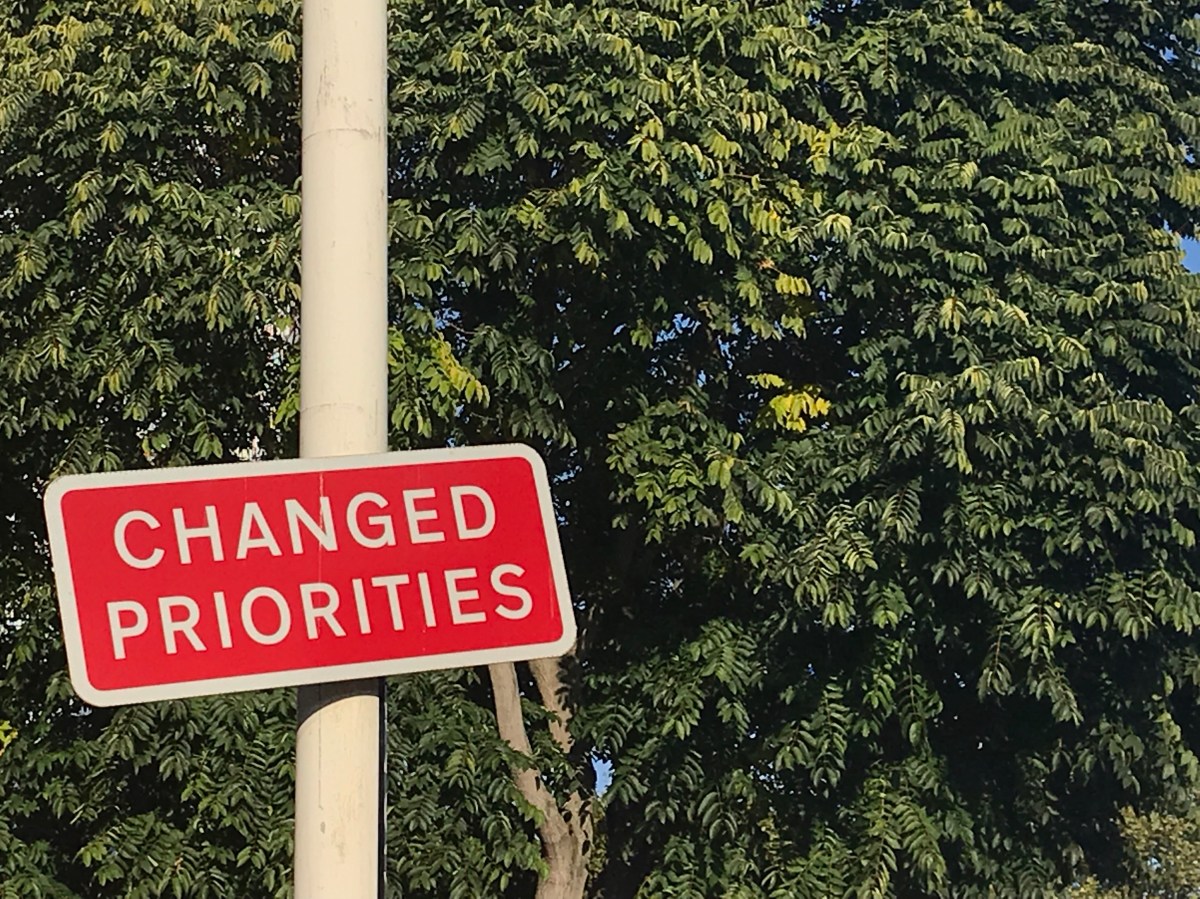
Sums up the week.

Getting back on track after a vacation is always hectic. A road sign I passed today announcing “CHANGED PRIORITIES” summed up the ironies I’ve faced. My first week back (after a holiday in France and conferences in Denmark and Greece) has been a flurry of activity. I had to put a lot of time into recovering lost documents and preparing government applications, and that wasn’t expected. I anticipated being in Dublin this past week, but fate (and lost IDs) sent me in other directions.

Besides trying to make headway with research projects, file expense reports, get back into my gym routine and recover the plethora of bank and identification cards I lost in Greece, I did make time to meet colleagues and explore material libraries, maker labs, and the massive city model of London. The list below attests, though, that I actually got some “real work” done. I’m making progress despite the detours!

img_0537

With Dr. Anne Gardner, the new Deputy Editor of AAEE

Chronological highlights of the past ten days have been:

  • Quick catch-ups with both my supervisors, Profs. Nick Tyler and John Mitchell. John is the incoming Editor in Chief of IEEE Transactions on Education, so we had much to discuss.
  • Submitting two abstracts for the American Society for Engineering Education (ASEE) 2019 conference.
  • Providing input on a curriculum proposal under development at our Centre and module (course) planning for our new MSc in Engineering Education.
  • Lunching with guest academic, Prof. Euan Lindsay, of Australia’s Charles Sturt University and making with him a quick trip to the Building Centre’s exhibition on spatial modeling by Zaha Hadid’s lab and the giant model of London.
  • Touring UCL’s Institute of Making, its materials library and maker space.
  • img_0503
  • Thomas Empson’s fabulous RES2 presentation
  • Attending a dynamic, well-structured, and highly successful milestone presentation by my Ph.D. student, Thomas Empson of London South Bank University (LSBU). Delighted to have contributed to Thomas’ success.
  • Touring LSBU’s extensive maker labs (theater and cave for virtual reality, robotic arms, 3D printers using all sorts of materials, high-end laser cutters, and old-school lathes, milling machines, spray booths. Room after room after room. An amazing set of resources for the LSBU engineering community. I was astounded. They also have a small materials library.
  • img_0525
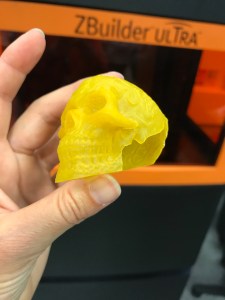
  • A product of LSBU’s extensive Maker Lab, this shell in the shape of a skull was printed in a liquid that contains emulsion and hardens when struck by a laser beam in the printer. Then the remaining liquid is drained away.
  • Lunching with guest academic, Prof. Anne Gardner, incoming Deputy Editor of the Australasian Journal of Engineering Education and another quick trip to visit the Building Centre.Gaining official approval from the UCL Ethics Committee to proceed with two research projects.
  • Completing UCL’s new online training program for data protection (GDPR), earning 100% on the final test.
  • Reading a UCL publication of guidelines for research staff. This is a very organized place!
  • Reading an incoming manuscript for the special focus journal issue and helping manage the review process.
  • Meeting with an expert in phenomenographical research methods, Dr. Mike Miminiris, to plan for an upcoming project.
  • Scheduling dates for upcoming seminars at UCL (by Dr. Mike Miminiris) and DIT (by Dr. Bill Williams).
  • Meeting with Prof. Simon Philbin, the new Director of LSBU’s Natu Puri Institute (NPI) to discuss strategic direction for the Institute.
img_0578

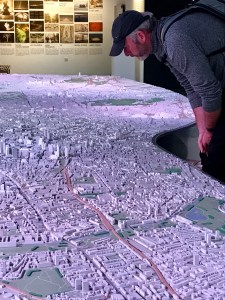
Aongus studying the London model

Over the weekend, I decided to bring Aongus to the Building Center because he hadn’t been yet. We spent most of Saturday with the model of London (using its interactive learning tools and the videos), taking a sneak peek at an exhibition being mounted on modular construction, visiting the special exhibit on the history of the Centre, viewing the Hadid exhibition (mentioned above), and learning about commercially-available building products and materials in the Centre’s massive product library.

That makes THREE materials libraries and TWO extensive maker labs visited in a week! All these are pictured in the photo gallery below.

img_0610

New global rankings from THE

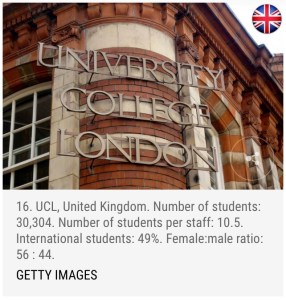
I discovered that the new global rankings of universities, by the Times Higher Education, has placed UCL at 14th in the world. Each rating system uses different variables and metrics, so it’s not surprising that this is a bit different than the QS system that has UCL at 7th globally.

On Saturday and Sunday, we also made time to immerse ourselves in London–including the rainstorm on Saturday (oh my). Aongus and I enjoyed delectable meals, including dim sum at Dim T, my favorite fix at Chipotle, and molten cookies at Kingly Court. Saturday evening, we enjoyed the opening of the film “A Star is Born.” On Sunday, Aongus and I visited the Churchill War Rooms.

img_0652

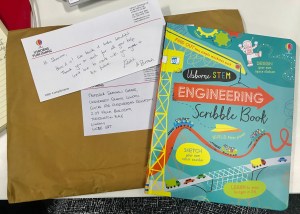
Hot off the presses @Usborne #STEM “Engineering Scribble Book” for kids. Loved offering guidance as Eddie and Darran developed the content! @Centre4EngEdu @CREATE_DIT. A university bookstore outside London replied to comments on my Twitter feed. @cccubookstore said “Engineering Scribble Books will be in stock tomorrow. Science Scribble Book on publication in November ;-)”

So far this week, I’ve reviewed feedback I’ve collected from colleagues on three important documents I’m preparing. I spent the better part of a day re-vamping a manuscript to address reviewer comments.

Also this week, I enjoyed meeting a new Ph.D. student at UCL, Aristos, who is studying tidal energy and knows Greek–he has helped me contact the police station in Greece (still no word on my lost items). I had lunch one day with my officemate, Sital, and learned more about her family’s heritage. I meet online with the board of the Research on Engineering Education Network (REEN) planning the 2019 Symposium (REES 2019) to be held in Cape Town July 10-12, 2019. I also met online with Dr. Bill Williams to plan his upcoming lecture and workshop topics.

Ending on a high note yesterday, I received a fun package in the mail–a copy of a book I helped create for kids. I served as the “expert advisor” for Usborne Publisher on a publication called Usborne STEM “Engineering Scribble Book.” It’s the first in a series and it looks great!

With all these unanticipated adventures, I’m wondering if I, rather than fate, will help set my own priorities for the upcoming week. Probably not!

Copenhagen to Athens to Kos: A hop, skip, and a jump from SEFI to ICL

img_9548

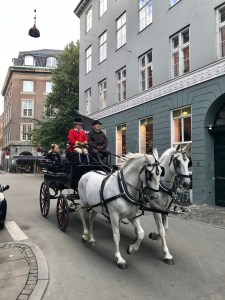
Copenhagen

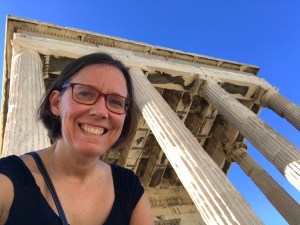
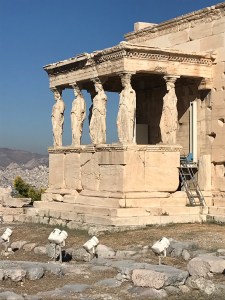
Following last week’s meeting of the European Society for Engineering Education (SEFI) in Copenhagen, I enjoyed a post-conference dinner with colleagues, explored Copenhagen’s old town in the morning, and then jetted off to Greece for a second international conference–this one on Interactive Collaborative Learning (ICL). I spent a day in Athens en route, inspiring a deep sense of awe! For an architect like me, visiting the Acropolis is a must, and the experience was even more uplifting than I’d expected. I loved Athens and I will certainly return!

The photo album in this post includes photos of the day I spent cycling around Kos with my colleague, Dr. Stephanie Ferrall, and also from my one-day layover in Athens. It also provides a glimpse into the conference events to show what the work of a traveling researcher really looks like.

img_9829

Athens

The highlight of the ICL conference was getting to know colleagues with similar interests. I particularly enjoyed getting to know the Portuguese and Sri Lankan delegations and the keynote speakers.

Presentations were interesting and informative and I’ve posted photos of Anuradha Peramunugamage (from Sri Lanka), Stephanie Ferrall (USA), Christina Aggor (Ghana), and Rovani Sigamoney (currently from France) presenting their work.

img_0263

Dr. Ferrall’s ICL keynote

Stephanie was a big reason I attended. I submitted a paper for this conference after seeing she was listed as a keynote speaker. Stephanie and I were research fellows in Dublin together at DIT during the academic year 2014-2015. Stephanie is a world expert in engineering education pedagogy and in supporting LGBTQ+ students. She is currently the national president of the American Society of Engineering Education (ASEE). Her work focuses on inclusivity and “revolutionizing diversity” in engineering schools. Stephanie’s keynote speech at ICL focused on classroom diversity whereas the keynote she delivered the week before, at SEFI, described large-scale patterns and philosophies regarding diversity. At ICL, Stephanie was honored by the International Society for Engineering Pedagogy (IGIP) with its highest award, the Nikola Tesla chain.

dsc_0113

My ICL presentation

I was also drawn to this conference because much of my research has to do with engineering students’ experiences of collaborative learning and that is the core subject of the conference.

At the ICL conference, I presented one line of my analysis, a study of Middle Eastern women’s experiences studying engineering abroad in Ireland. I collected interviews with eight such women over a period of four years. You can download “Middle Eastern Women’s Experiences of Collaborative Learning in Engineering in Ireland” at this link: https://arrow.dit.ie/engschcivcon/109/. The citation for the paper is:

Chance, S. M., Williams, B. (2018). Middle Eastern Women’s Experiences of Collaborative Learning in Engineering in Ireland. International Conference on Interactive Collaborative Learning (ICL) in Kos Island, Greece, 2018.

img_0128

Bike tour of Kos Island

As there were a few days free between SEFI and ICL, I’d gotten to spend time exploring Kos with Stephanie before the second conference. I posted some photos of us on Facebook with a notable but unanticipated effect. A colleague of mine from the Centers for Disease Control (CDC) in the USA, Christopher Kochtitzky, took notice and reached out to connect with Stephanie since their goals for changing the world overlap.

img_0173Thus, one of my top accomplishments of this conference was connecting my colleagues from the CDC and ASEE. Soon Stephanie and Chris will be working together. They will connect engineering educators and students with the CDC’s new initiatives to increase physical activity across the US population and to improve public transportation, particularly with regard to accessibility. Stephanie will be able to tap into Chris’s experience and policy research and Chris will access Stephanie’s national contacts to help achieve CDC goals.
img_9795

On the Acropolis in Athens

The best surprise of my trip to Kos was meeting and getting to know Rovani Sigamoney from the United Nations Educational, Scientific and Cultural Organization (UNESCO). This organization does amazing work. UNESCO was created following WWII to help preserve cultural monuments, artifacts, and places. Today it seeks to get better educational opportunities to the world population and to improve living conditions. I’ve always admired UNESCO’s work but saw it as a big, far-away organization. Now I see ways I can contribute, and I’m getting straight to work! Thanks, Rovaini, for the fine job you’re doing with the engineering division!

img_0293

UNESCO’s Rovani Sigamoney

On the last evening of my trip, I dined alone. The waiters provided my favorite dessert, although it wasn’t on the menu, and they made it a gift. Shortly before that, I had snapped a photo of the Kos police station in the evening light (see the end of the photo gallery). Little did I know I’d be back at that station in the morning, to report that I’d dropped my purse.

Into every life, a little rain must fall, and in this case, my purse fell off the back of the e-bike I had rented to get around town on the last day. With the generosity of many different people, I managed to make my way back to London late Saturday night. Now I’m working to recover all those bank cards and government-issued photo IDs. Thankfully, though, I still have my health and my happiness and great memories of Copenhagen and Kos, and friends new and old.

SEFI—researching Engineering Education with the Europeans

img_9347I’ve just attended the world’s friendliest conference, the European Society for Engineering Education (SEFI). I’ve never felt more welcome and invigorated by the exchange of ideas at a conference. This was my third SEFI, and while I’ve always felt incredibly welcome here, I now know people from all corners of the world by first name and they greet me likewise.

Last Sunday, I flew to Copenhagen from Nice, landing in the evening and traveling out to the campus of Denmark Technical University early Monday morning to help deliver an all-day workshop on research methods for PhD students. The workshop was coordinated by Prof. Jonte Bernhard, Dr. Kristina Edström, and Dr. Tinne de Laet. I also attended the conference’s opening ceremony and reception at Microsoft’s Danish HQ that evening.

img_9491Tuesday started bright and early with a keynote speech–delivered by Dr. Stephanie Farrell who was a Fulbright Fellow to Dublin Institute of Technology (DIT) while I was a Marie Curie Fellow there. Although each morning started with a keynote lecture, for me, Stephanie’s was the most insightful of all. Attendees asked dozens of questions at the end, with another dozen people standing in line to ask questions afterward.

In all, there were three past DIT Fulbright Scholars at the conference–Stephanie, Dr. Sheryl Sorby, and me. The fact that three past DIT Fulbright scholars are still contributing to European EER on a regular basis and attending SEFI shows how a modest investment to support a Fulbrighter can pay dividends. We all still proudly represent DIT in various activities!

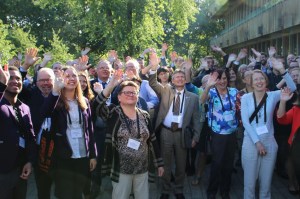
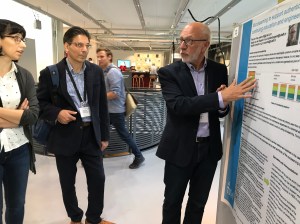
img_9308Following the Thursday morning keynotes, we enjoyed a fun new poster-presentation format. Poster authors got 30 seconds each to pitch their topic to the entire delegation, and then we went to visit their posters. This format raised the profile of posters as well as attendees’ interest in discussing them.

On this day, I also attended a session on writing for the European Journal for Engineering Education, got invited to serve on the journal’s Editorial Board by editors (Drd. Edström, Bernhard, and Maartje van den Bogaard), and networked with colleagues from Europe, North America, and Australia. Afterward, back in the city center, I enjoyed a lively dinner with editors from four different journals.

Working Groups were the focus on Wednesday, and I helped deliver a series of sessions of the Engineering Education Research (EER) Working Group, spearheaded by our leader Dr. Tinne de Laet. I’m a member of this group’s Governing Board, and since we meet monthly online, we didn’t need to conduct a business meeting here. In our morning session, each Board member briefly described her/his current projects. Participants each chose one Board member to join for small-group discussion. My small group discussed (1) tips for winning fellowship grants and (2) epistemology and identity topics related to EER. Later in the day, the Working Group ran a workshop where participants reviewed high-quality research papers and discussed their characteristics. During lunch and breaks–which were full of fascinating discussion with colleagues–I conferred with colleagues from Dublin Institute of Technology (Prof. Brian Bowe, Prof. Mike Murphy, Mr. Kevin Gaughan, Ms. Una Beagon, Ms. Diana Adele Martin, and Mr. Darren McCarthy) on plans to host an Inaugural Lecture at DIT this autumn. The lecture will be delivered by Dr. Bill Williams, who has just been appointed Adjunct Senior Researcher at DIT (upon my nomination–yay!). Since we intend to invite colleagues from other institutions, and particularly my colleagues from University College London, I worked to find an appropriate date and to identify the topics of Bill’s upcoming lecture and also the EER workshop he will conduct for our research group. Stay tuned for details!

img_9405After lunch, I attended a session on “Increasing the Impact of your Journal Publications” conducted by editors of the Journal for Engineering Education, Dr. Lisa Benson and Dr. Cindy Finelli. For dinner, the EER Working Group Board met in town.
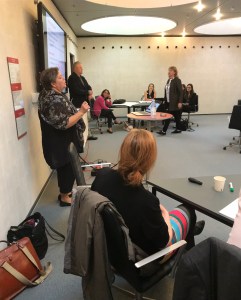
Thursday morning, delegates attended presentations by individual scholars regarding their research projects. We used a range of formats including lecture, discussion, and flipped-classroom.

Over lunch, I worked with UCL colleagues, Ms. Emanuela Tilley, and Prof. John Mitchell, on strategic planning for a new Architectural Engineering curriculum we are developing. Throughout the conference, I enjoyed comparing notes with members of UCL’s Centre for Engineering Education who attended, including Emanuela, John, Dr. Inês Direito, Dr. Able Nayamapfene, and Ms. Paula Broome.

img_9380After lunch, I presented as part of the session “Reviewers! Reviewers! Reviewers!” In this session, editors of four journals explained what they are aiming to publish and how to write good reviews. I was representing IEEE Transactions on Education, the journal for which I am Associate Editor. We broke into small groups to identify characteristics of a good peer review and this was followed by a very insightful whole-group discussion.
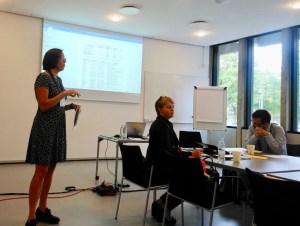
After the workshop, I attended the Editorial Board meeting for EJEE, learning about our reach and impact from the publisher’s representative.

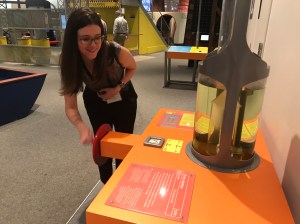
img_9440Late in the afternoon, everyone at the conference boarded buses for Copenhagen’s Experimentarium, a really fun science-learning center. I played with the educational exhibits alongside Stephanie’s family and other colleagues from DIT, UCL, and Fulbright. There was an awards ceremony, where our UCL colleague, Dr. Eva Soerensson was honored, and I thoroughly enjoyed the conference “gala” dinner. I sat with Belgian, Dutch, and British colleagues at dinner. We got a bit rowdy and ended up building towers from paper cups and discussing the feature of ubiquitous household appliances.
853e6054-964c-402e-b996-e9ee3e8191a1The final day of the conference had many individual poster and paper presentations, including a discussion session/presentation I delivered on patterns I’ve found among doctoral dissertations that have used phenomenology to study aspects of engineering education.
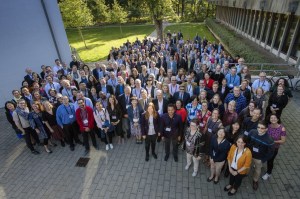
The closing ceremony for the conference was chaired by the incoming SEFI president, DIT’s Prof. Mike Murphy. We learned about the venue for next year’s conference, Budapest! Can’t wait!

img_9342I enjoyed dinner with close friends after the conference attendees dispersed. I got to explore Copenhagen a little on Saturday morning before flying off to a new conference in Greece.

Thanks to the whole SEFI crowd for a stellar week! See you in Hungry if not before!