From Lockdown to Lisbon

Lisbon 1Over Thanksgiving week, I was part of a panel to evlauate EU grant applications. These events are normally held in Brussels, and since the flight and accommodations were both cheaper starting on Saturday, I flew in early. Suffice it to say, I arrived just in time for the lockdown. Our evaluation activities were not held in person as a result, but nevertheless, our  panels conducted all the necessary meetings using online tools. We successfully completed all our evaluations on schedule, using software that I believe was to be implemented in January in any case.

The highlights of my time in Brussels are captured in the attached photo gallery, which includes a gratuitous cat photo to mark Brussel’s cat postings on Twitter. The authorities asked citizens not to post info on their activities, so the folks in Brussels posted fun pictures of their cats’ activities during the lockdown, including quite a few PhotoShopped images just for fun. I didn’t have any time free to PhotoShop, but I Tweeted this cat photo in solidarity.

After spending a full week indoors–evaluating work, attending online meetings, submitting reports, reviewing and approving reports, finalizing and submitting my own grant proposal to Science Foundation Ireland, and finishing my read of a PhD thesis (what we in the USA call a dissertation)–I was more than ready to hail a cab to the airport and fly off to Lisbon.

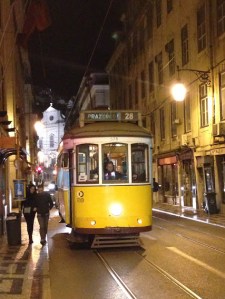
The sunshine, good cheer, and fabulous food of Lisbon were so very welcome after a cold and lonely week alone in Brussels. I’ve attached a gallery of snapshots from Lisbon and, in a post to follow, I’ll tell you about the thesis evaluation panel I attended there.

Ful-ly Oriented as a Fulbright to Ireland

Fulbright Ireland recently welcomed a new cohort of incoming scholars. The orientation program included lessons in Irish language, culture, politics, and economics, in addition to general tips for organizing life and getting around.

The staff of Fulbright Ireland invited me to come share my experiences as a Fulbright Alum, and so I attended my third orientation for incoming scholars. I much enjoyed my own incoming session in 2012, and was happy to give a short talk for the incoming scholars in 2014 and 2015. In the past, I’ve also attended orientation sessions for the Irish Fulbright scholars headed to the USA and served on an evaluation panel to help select Irish awardees in engineering.

I always enjoy hearing about the fascinating research projects our Fulbrighters are doing, and the experiences they’ve had getting here and settling in. A list of the current Fulbright scholars who have come from the US to Ireland, along with a brief description of each project, is available on the Irish Fulbright website.

I also enjoy hosting Fulbright scholars at my own home now and then. Currently, I’m hosting Amanda Wagstaff, who earned a BA in Art and Art History from the College of William and Mary (on the very same day I earned my PhD there). She went on to earn an MFA in Studio Art from the University of North Carolina at Greensboro. As the recipient of a Fulbright award for current and recent students, Amanda is researching Celtic Christian monasticism and text/art objects at the Chester Beatty Library in Dublin. Amanda maintains a beautiful website of her artwork that I encourage you to visit.

I’ve shown photos of the day–including taking the DART from Connolly Station (pictured) and the orientation sessions conducted at the Institute of Public Administration.

Culture Night Dublin with Fulbright-ing Friends

Culture Night Dublin 2105 1Dublin Culture Night happens once a year, offering a glimpse into many cultural treasures this city has to offer. This year, I got to attend the event with my friends Amanda Wagstaff and Frank Daly.

Amanda recently moved to Dublin as a Fulbright student for the 2015-16 academic year. She and I actually graduated from the College of William and Mary on the very same day in 2010–she with a Bachelor of Arts and I with a PhD in Higher Ed. Amanda is a studio artist who is using the archives at the Chester Beatty Library to generate inspiration for her own contemporary artwork. You can see Amanda’s past work on her website, Traipse.

Frank’s art and photography is viable on his website and his many Google+ photo albums.

The there of us kicked off our Culture Night explorations at Christchurch Cathedral, not far from my Smithfield residence, and then proceeded eastward to see several more sights. We took in dinner at the Queen of Tarts, Dublin’s stately Customs House, and a guitar concert at the Unitarian Church on St. Stephen’s Green.

Culture Night is just one of many ways to learn history in Dublin. I’ve included photos in the gallery below of several cultural events that happened around the same time:

  • a lecture on the Irish Civil War (hosted by the Smithfield-Stoneybatter People’s History club and held at in the backroom of the Cobblestone Pub)
  • a man in Smithfield preparing his horses and carriage for the All Ireland football match
  • the best places I know to sit and read about history (my friends seem to enjoy reading in these places, too!)

In the Know on Assistive Technologies with Dr. Matteo Zallio

Dr Matteo Zallio seminar at DIT 4Assistive technologies can help us age more safely and gracefully, and live independently for much longer than we could on our own. My colleagues in engineering have been involved in growing these technologies. They’ve established the tPOT research group here at DIT to facilitate innovation in this area.

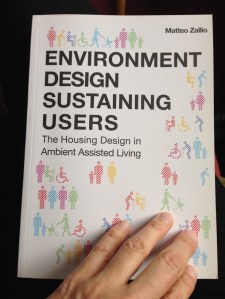
I recently attended a seminar at DIT by Dr. Matteo Zallio who has done very interesting research. Matteo is an architect with a PhD in assistive technologies and he spoke about “Environments and Smart Objects: Ambient Assisted Living for Long Lives of People.”

Matteo has developed a rating system to help people assess how well various products and places support aging. The rating system is hypothetical at this point–it’s been well-developed but not yet adopted for implementation. I’m hoping it will be soon.

I’ve researched facilities and designs to support aging in place in the past, so I had many questions and comment at the end of Matteo’s presentation. I even Skyped with him following his lecture to answer questions he had about moving to Dublin. I’m pleased to say he’ll be joining the tPOT group as a postdoctoral fellow next fall!

Pictures from his lecture, and his impressive book, are posted in this photo gallery:

A Portrait of Engineering (and Architecture) in Warsaw

That's when dad and I were building an experimental aircraft. (that's still half done, I'm sorry to say).

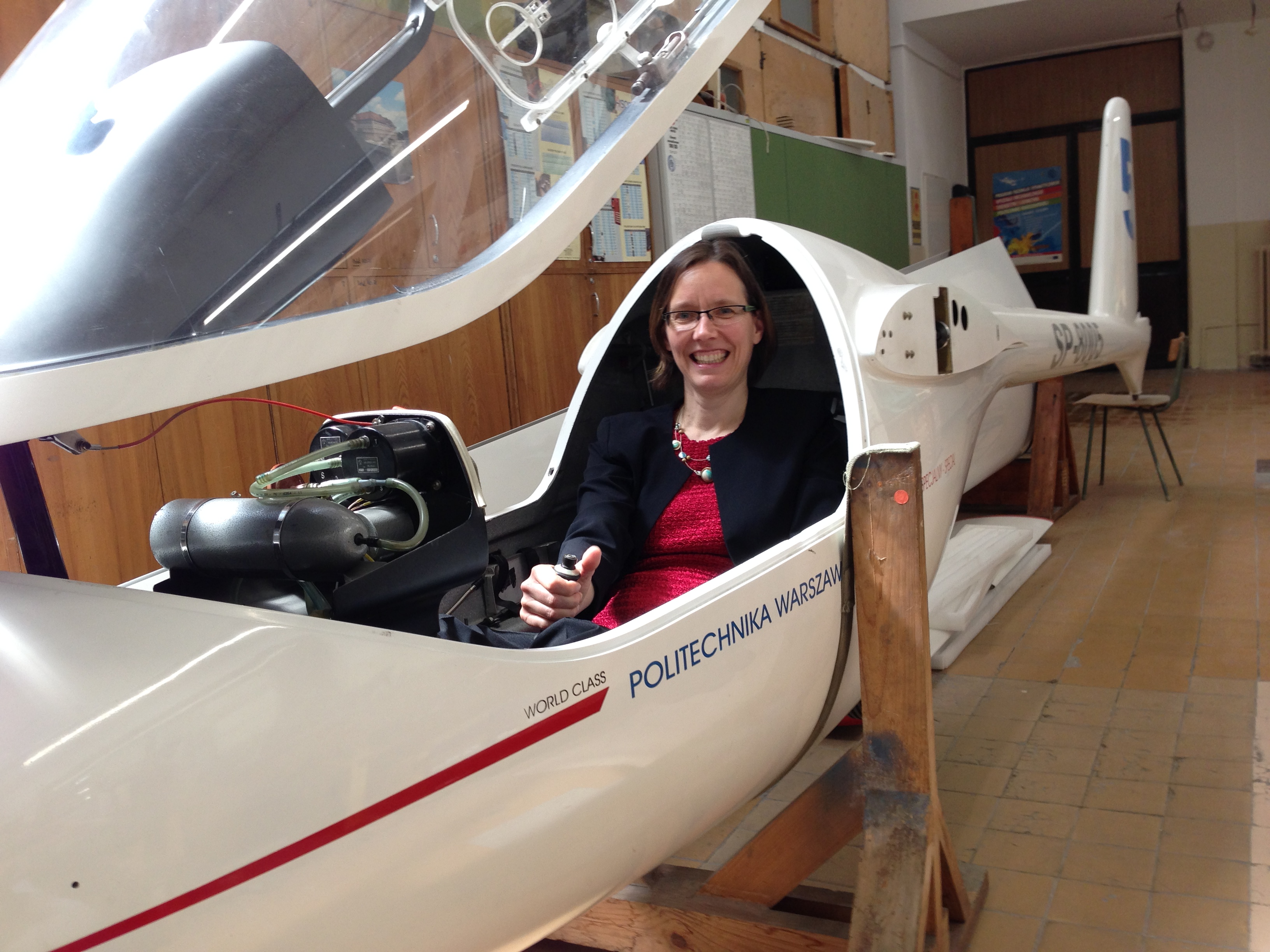
Me and WUT’s PW-5.

I just spent a most unexpectedly sublime week in Warsaw. What a beautiful, walkable, and livable city! Just the right density — useful public transport, affordable bike rentals, green space at regular intervals, and architectural monuments galore.

My primary task was to conduct interviews with budding engineers. Over the course of the week, eleven Polish women (who are studying various sorts of physics and engineering) each volunteered an hour and a half to share their experiences with me. It was amazingly insightful to discover similarities and difference with the experiences of the 10 Irish and 11 foreign-born women I’ve interviewed at Dublin Institute of Technology. (I also have 11 interviews recorded with Portuguese women, but these must still be translated.)
Fortunately for me, the students in Poland can opt to take their classes in Polish, or English, or a mixture of both. These Polish women spoke English very well and were bold enough to grant me interviews in my own native tongue.

In the evening hours I had time to explore some sites, depicted in the photos below.

Crafting Lisbon

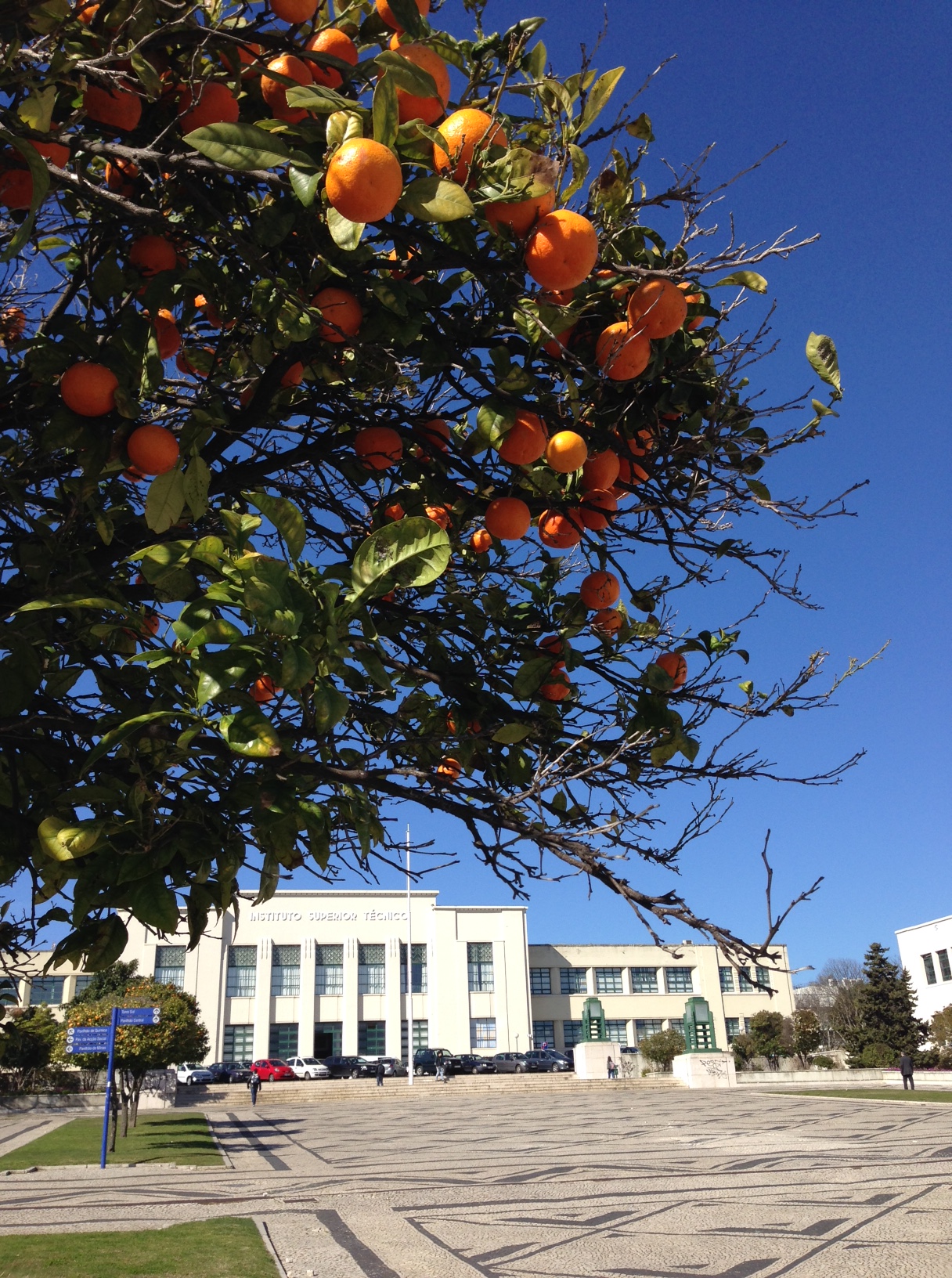
Orange trees along the entry IPS.

Orange trees along the entry IPS.

My Friday visit to the architecture school of the Instituto Superior Técnico (IST) was icing on the cake after a week of engineering interviews, conducted across the bay from Lisbon at Escola Superior de Tecnologia do Barreiro (a branch of the Instituto Politécnico de Setúbal, where I had interviewed students their experiences as engineering students as part of my Marie Curie research project).

You might recall that I delivered workshops at IPS and IST as a Fulbright scholar, back in 2013 (click here for more).

For a little more fun on my last day in Lisbon on this trip, I took the Metro over to IST. There, I visited the first year studio to hear student teams present their urban analyses of Lisbon districts. I toured the 2nd-5th year studios with my gracious faculty hosts and I wrapped up the afternoon discussing recent work with PhD students from the Architecture Research Group who I’d met on my previous trip to Portugal. The doctoral students — Maria Bacharel Carreira, Luisa Cannas da Silva, Mafalda Panheco, and Sajjad Nazidizaji — and thier professor Teresa Valsassina Heitor took me for a beer at the end of the day.

IPS's Escola Superior de Tecnologia do Barreiro

IPS’s Escola Superior de Tecnologia do Barreiro (image from http://www.estbarreiro.ips.pt/)

Many thanks to my colleagues at IPS, Bill Williams and Raquel Barreira, who helped arrange and conduct interviews. Thanks also to the ISP students who provided interviews and the IST teachers and students who shared their work with me. I can’t wait to visit again!

Loving Lively Lisbon 

Guy ambling home from work on a unicycle, paraplegic dog sporting his own wheelchair, man dancing to headphones on the boardwalk at sunset. Chamber pots on sale at the church bazaar, saxophonist sharing zydeco by the ferry terminal. So much to see, so much life to live.

I’m in the port city of Lisbon, Portugal’s capital, this week to interview women here who are studying first year engineering at the polytechnic institute. I flew in Sunday morning which gave me a chance to see some sights. 

I find a new adventure around every corner, even though I’ve been here before. 

Curiosity Cabinet 

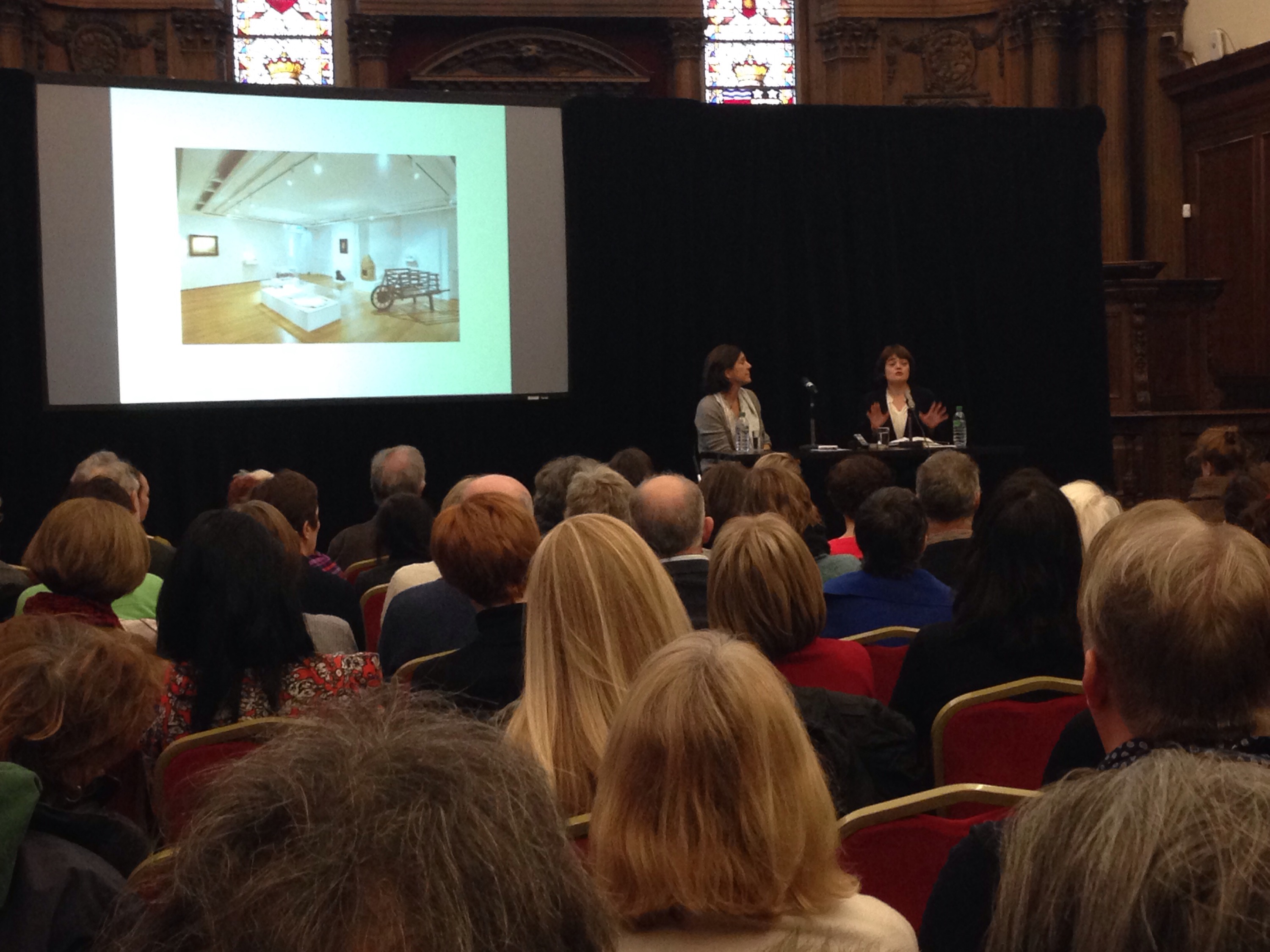
Fascinated by philosophies on museum curating, I jumped at the chance to attend a Saturday presentation at the Irish Museum of Modern Art (IMMA) by the artist/curator Dorothy Cross. It was a general conversation with Lisa Le Fauvre.

Dorothy Cross is the person who assembled IMMA’s exhibition, TROVE, from the storerooms of Ireland’s National Gallery (in Dublin and Cork).

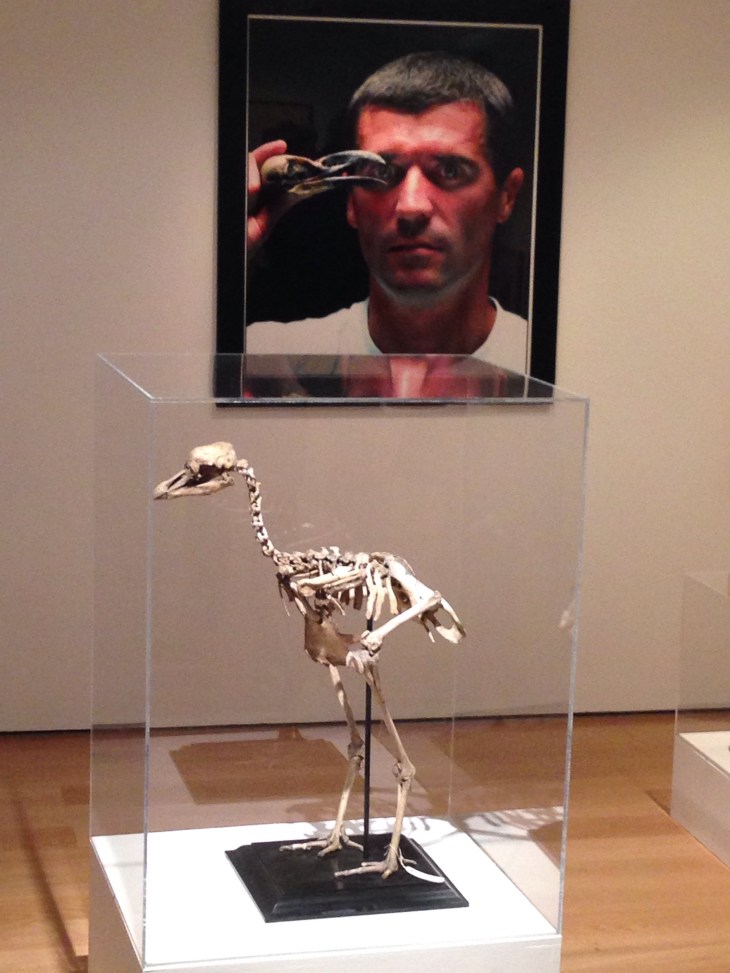
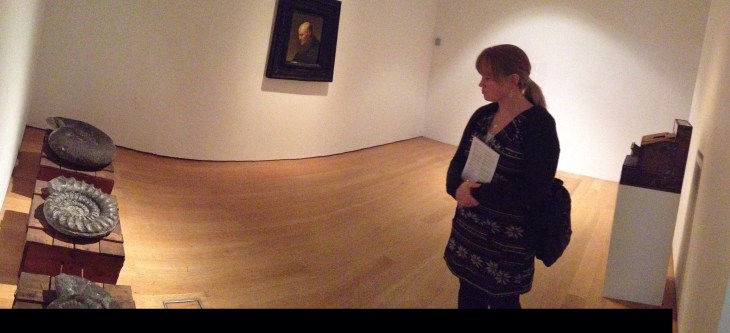
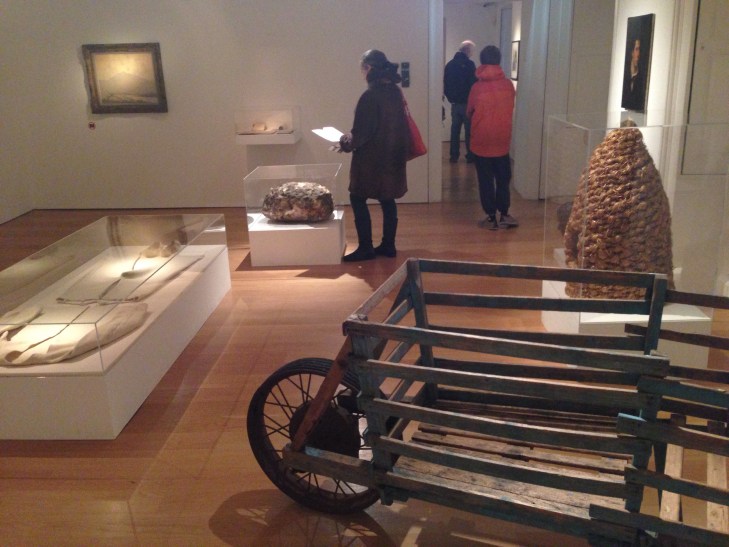
Walking through the exhibit hall felt to me like being in a curiosity cabinet of yesteryear. Somewhere between Rembrandt’s studio in Amaterdam, the Galelio Museum of Florence, and Alice’s wonderland.

Here, Dorothy Cross juxtaposed objects in novel and informative ways. A (sculpted) saint bursts forth from his shipping crate. A (real life) naked man stands amid column-like worship stones… he is not pictured here on my G-rated website! 😉

Back in college, I read a number of postmodern philosophy books about  museum curating. They noted that house museums, like the Rembrandt one I mentioned above, provide very authentic contexts for displaying artifacts. Dorothy Cross navigated this postmodern mileau with panache.

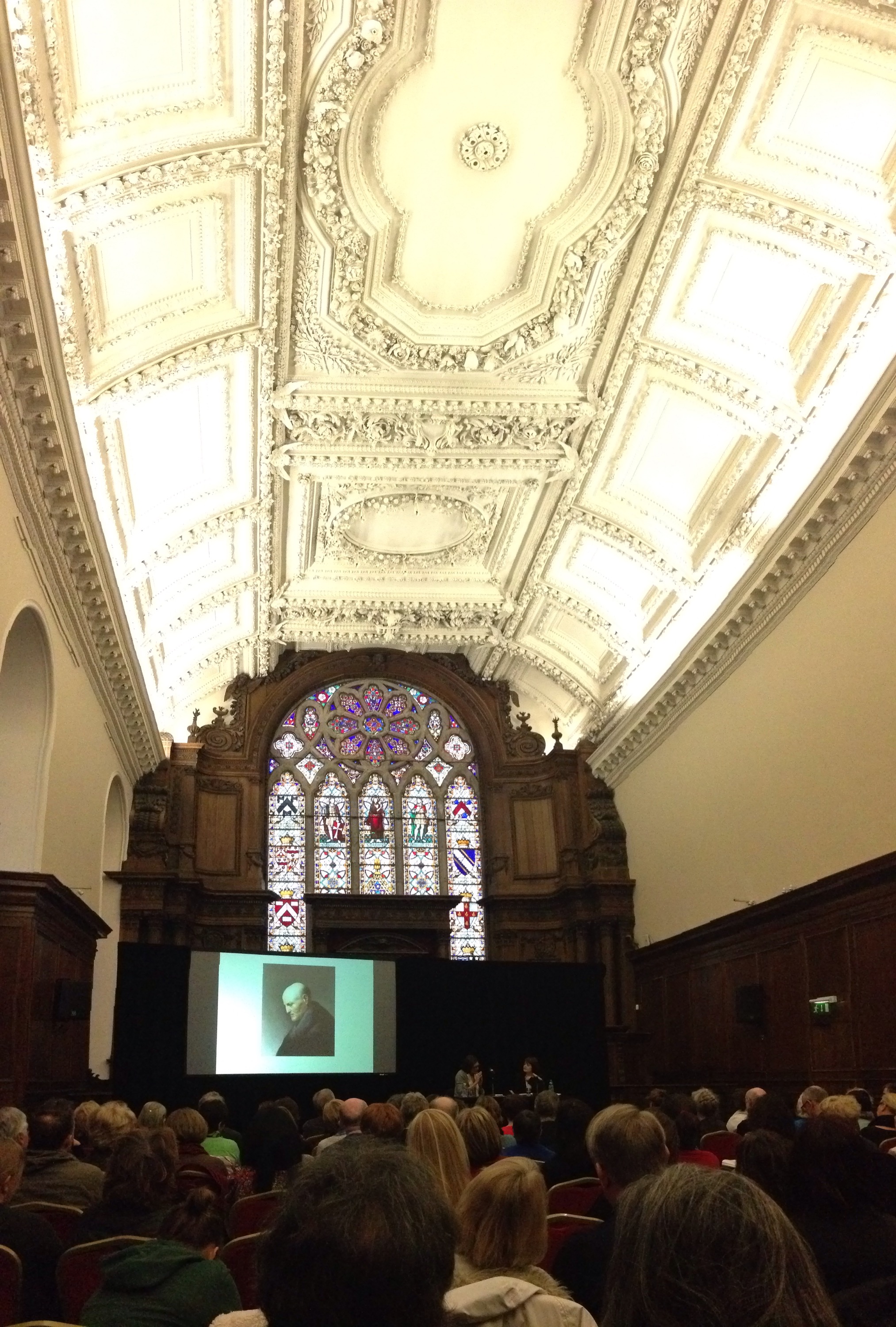
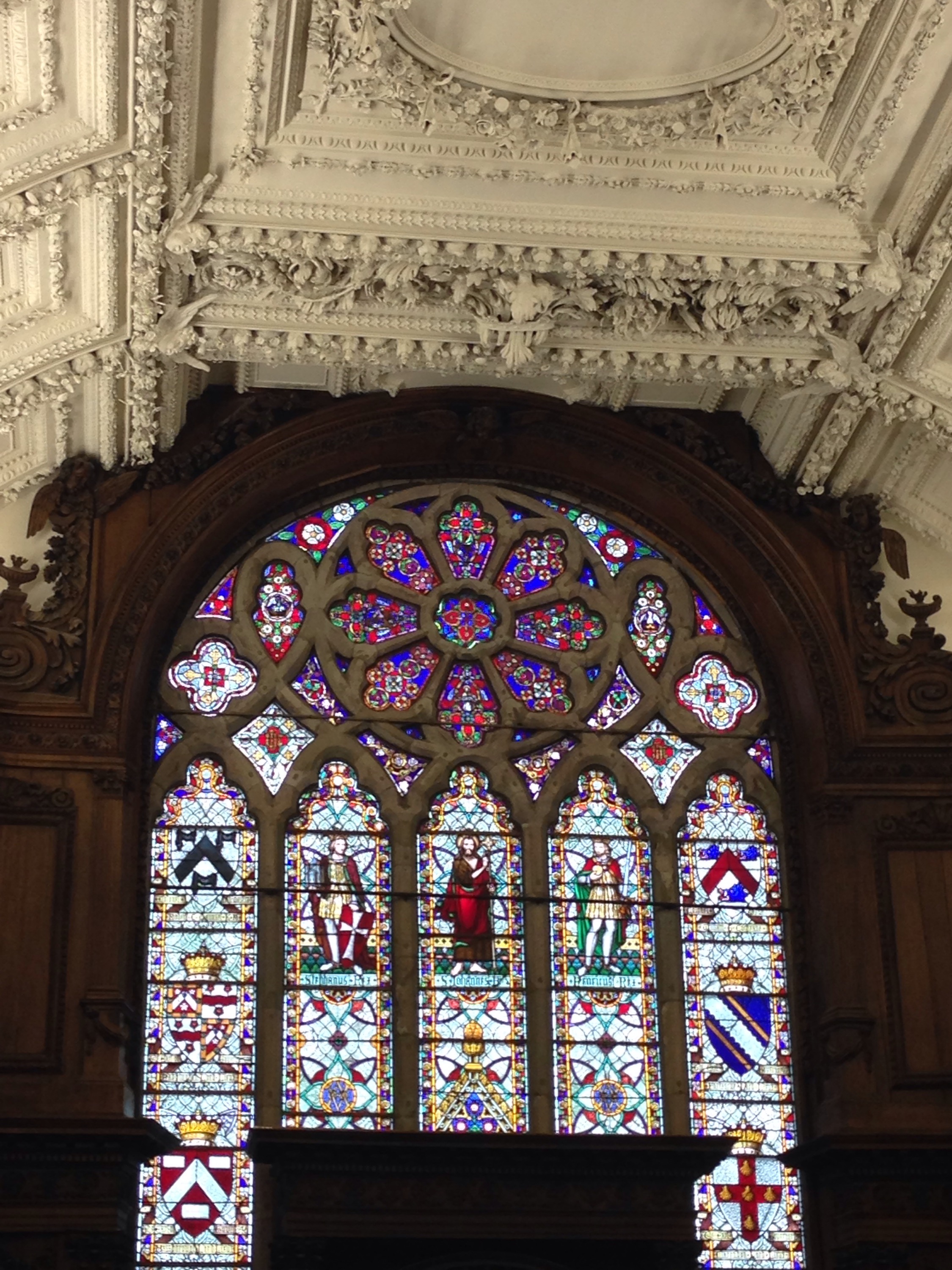
I was equally thrilled that the lecture was held in the lovely baroque chapel at IMMA. I’ve been trying to access it for weeks but it’s generally closed to the public.

Dorothy Cross (left) and Lisa Le Favre discussed curating the show “TROVE.”

IMMA’s Chapel, Ireland’s best baroque interior.

The ceiling feels so “Alice in Wonderland.”

Bountiful veggies dangle from above.


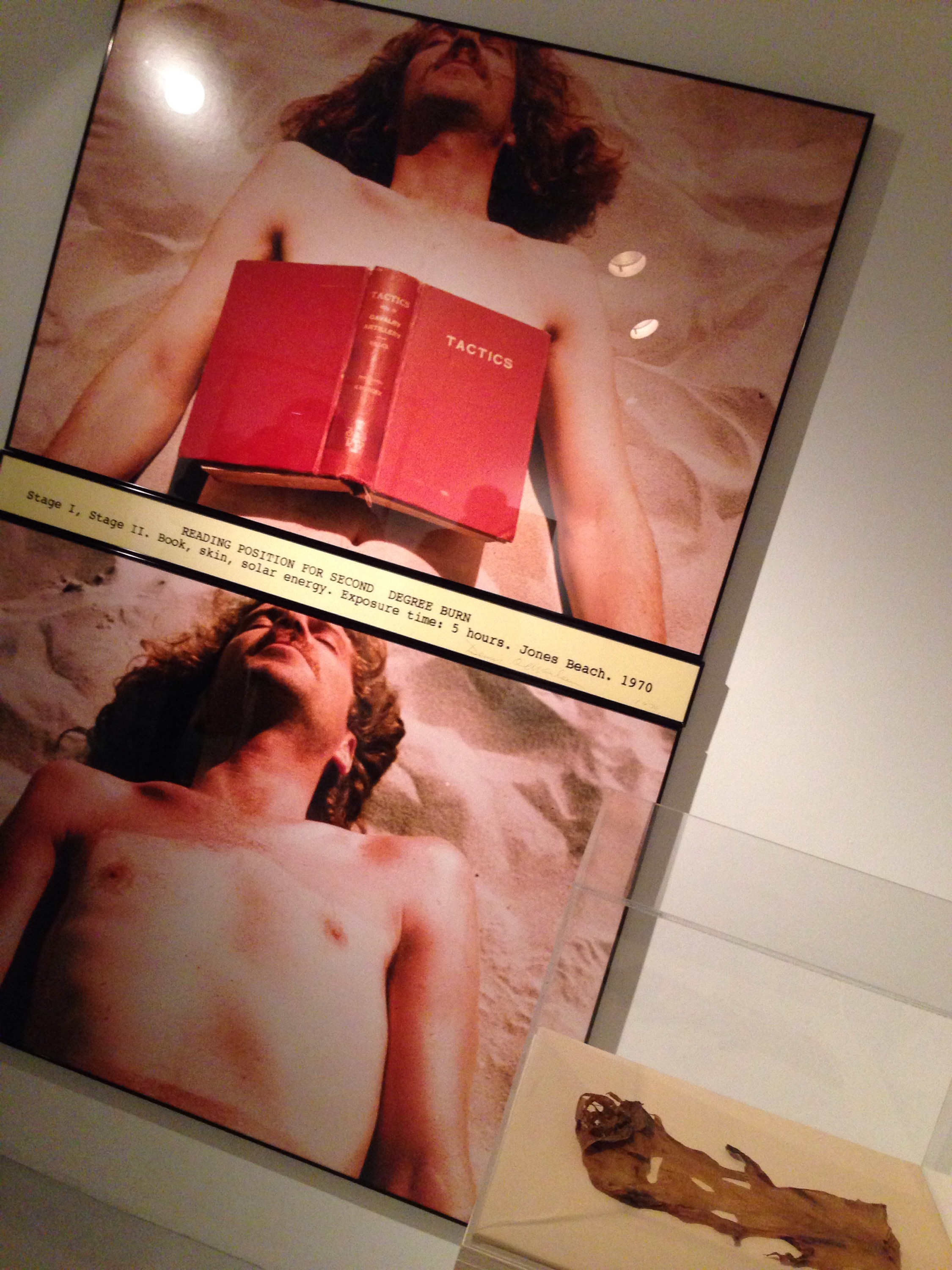
“Reading Position for Second Degree Burn” circa 1970, beside a skin cut into a mask. How odd.

Nest of the Oven Bird

Tea Time!

I hesitate to admit that I’ve only just partaken of an English afternoon tea. It’s been in my sights for years now, but I suppose some of the best things in life take time.

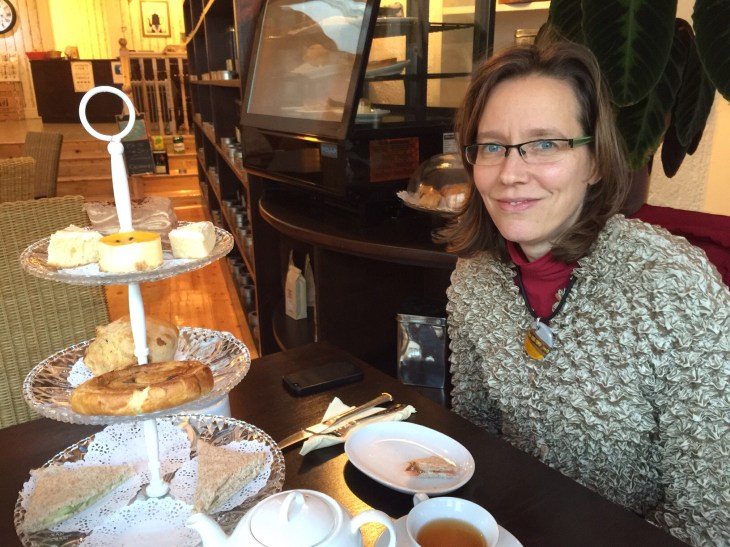
This afternoon, Blackrock’s House of Tea served up a lovely tray with sandwiches, scone, pastry, a smattering of desserts, and two luxurious blends of tea.

‘Twas a remarkable little meal. Tea time is moving back onto my list of definite “to dos,” and alsa, now, it’s much higher up!


Finding Familiar Territory in Linenhall  

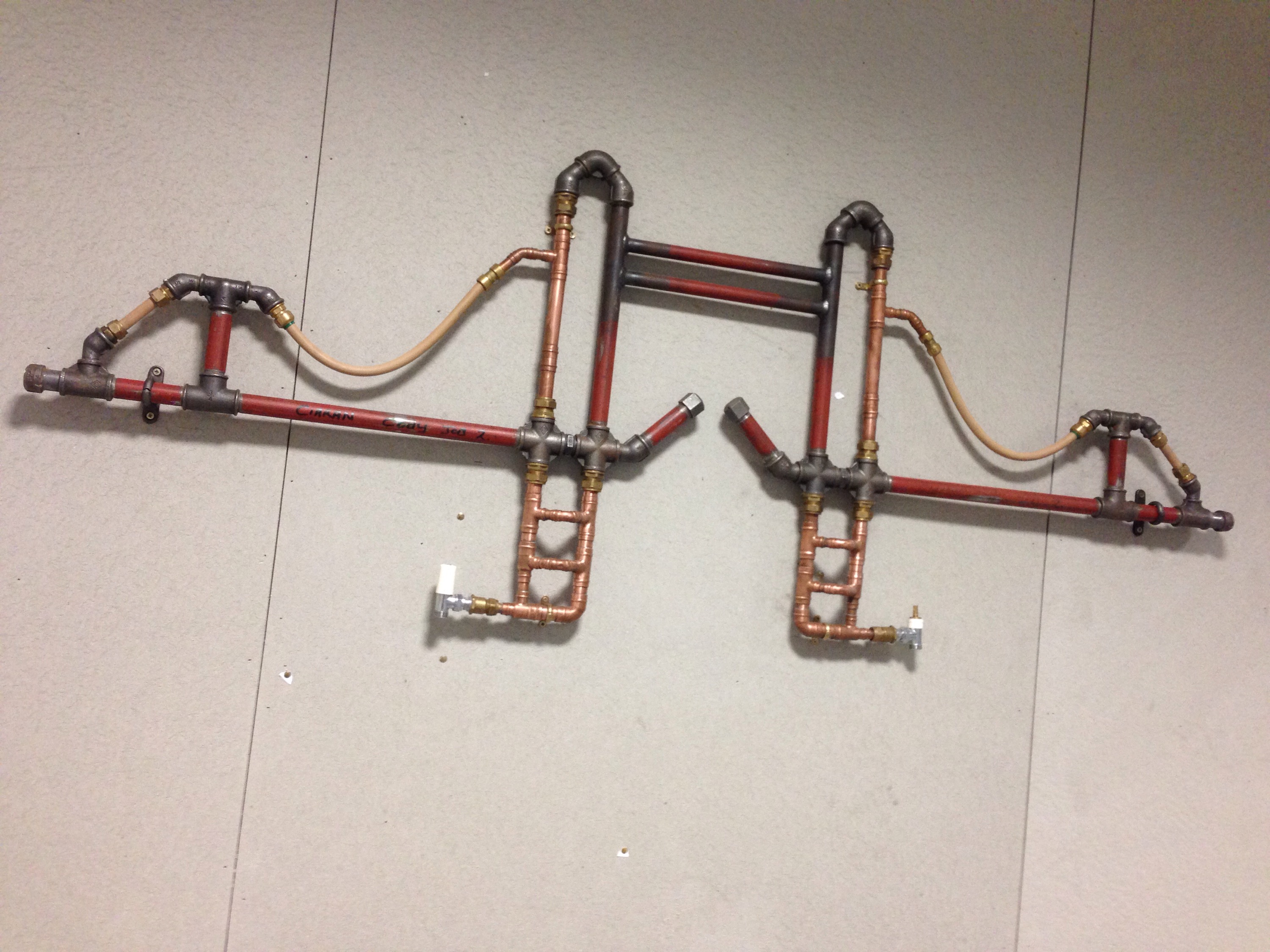
A plumbing extracaganza!

I’ve recently moved office. Whereas I previously had an individual office with an expansive view, I now share a room overlooking an alley. But, remarkably, it suits me just as well.

As I enter and exit my workspace each day, I pass through architecture crits and exhibits of student work. My new home is Linenhall, the apex of Dublin School of Architecture at DIT.

The Linenhall complex has housed the Building Trades for many years–following a proud history as a linen production factory. My friend Fergus Whelan studied bricklaying here, before growing into the labor-rights activist/history research scholar he is today.

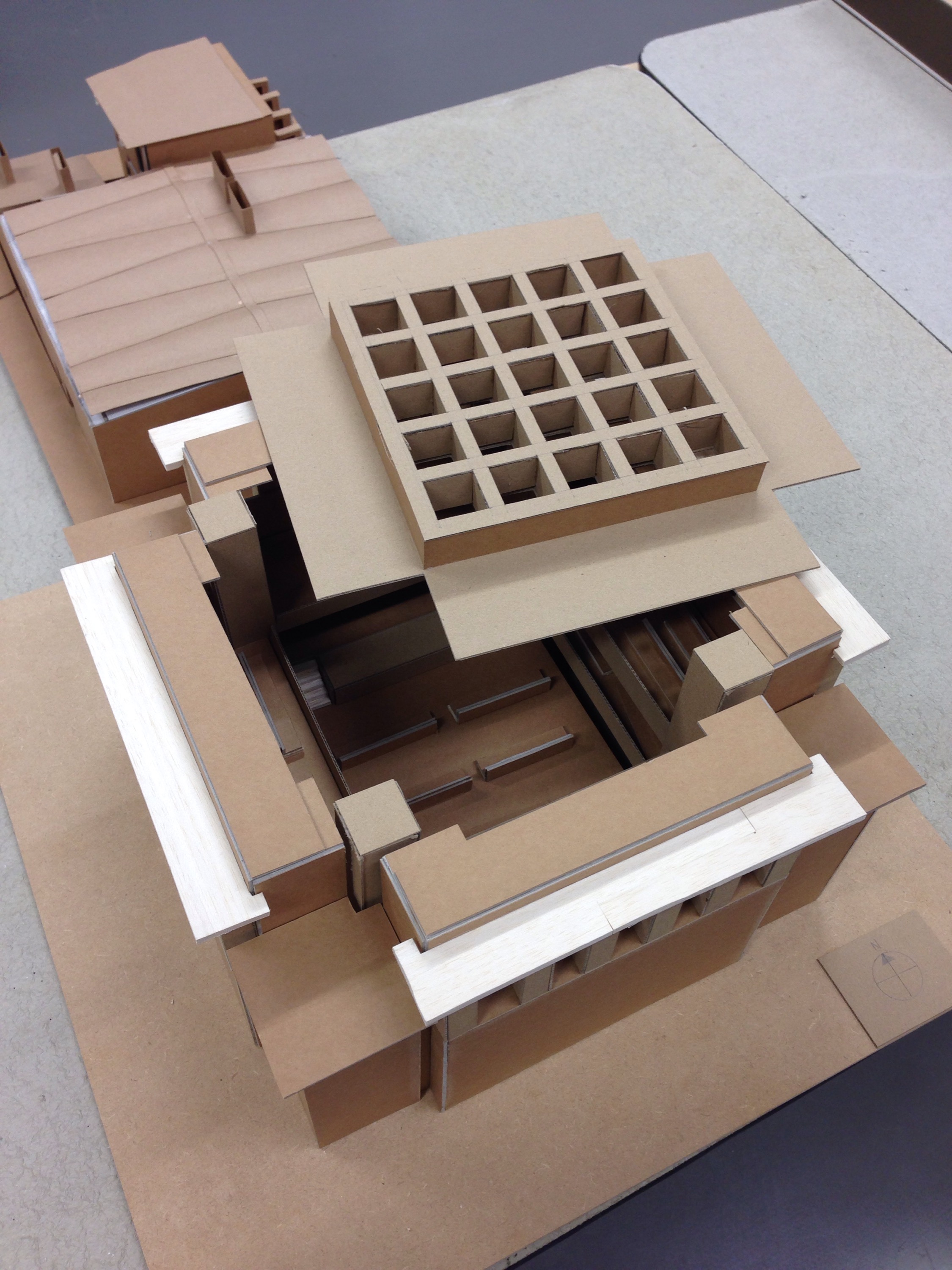
Having recently been renovated to serve architects as well, Linenhall provides me a sense of comforting familiarity. I’m surrounded by architectural explorations–models and drawings of all colors and tones.

This is the stuff of which my days have been made, from my earliest musings in college.

I’m comforted by the vocabulary of architectural models, drawings, and debates… by the buzz of activity and the creative clutter… by the occasional unnamable object of exquisite beauty.

And I’m pleased to share my work space with researchers in education and architectural technology.

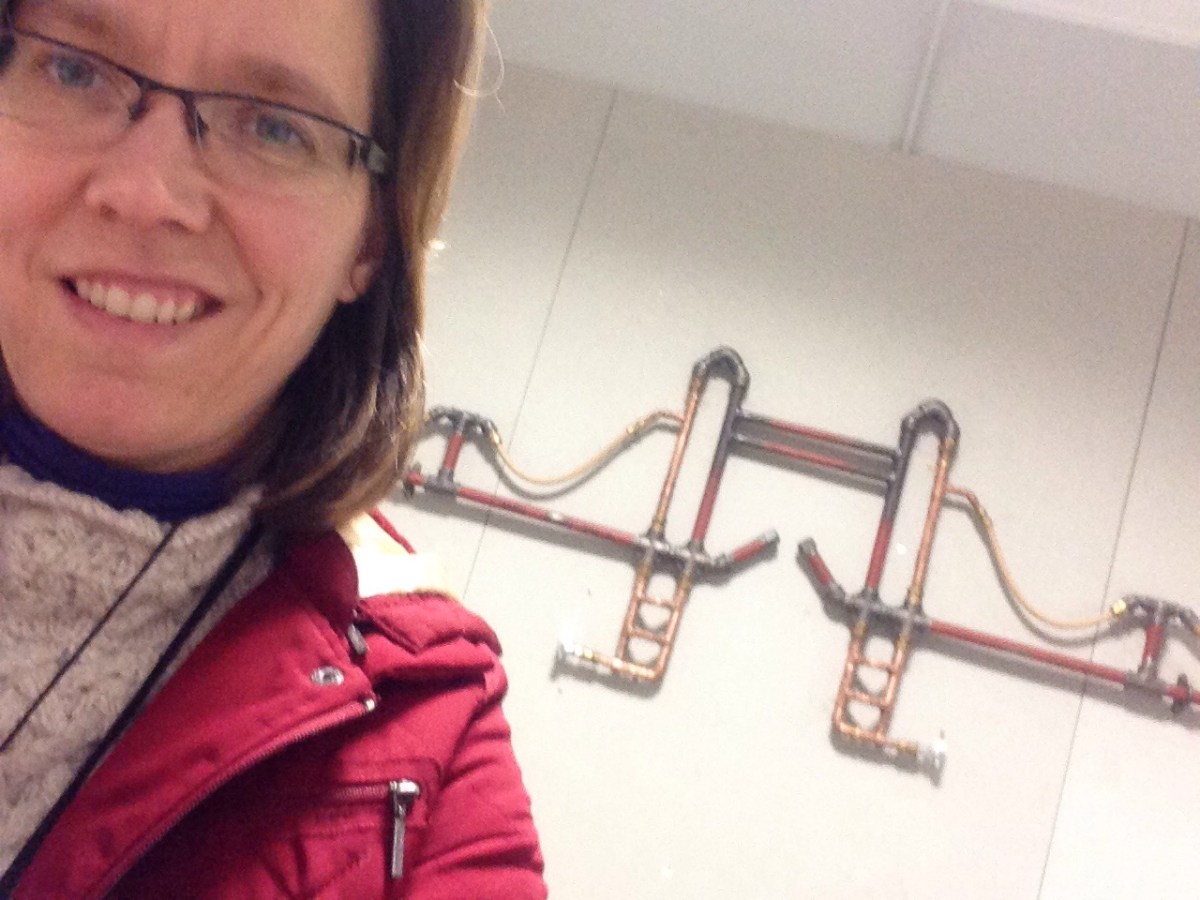
Not sure what it is, but I wasn’t the only one taking selfies with it!

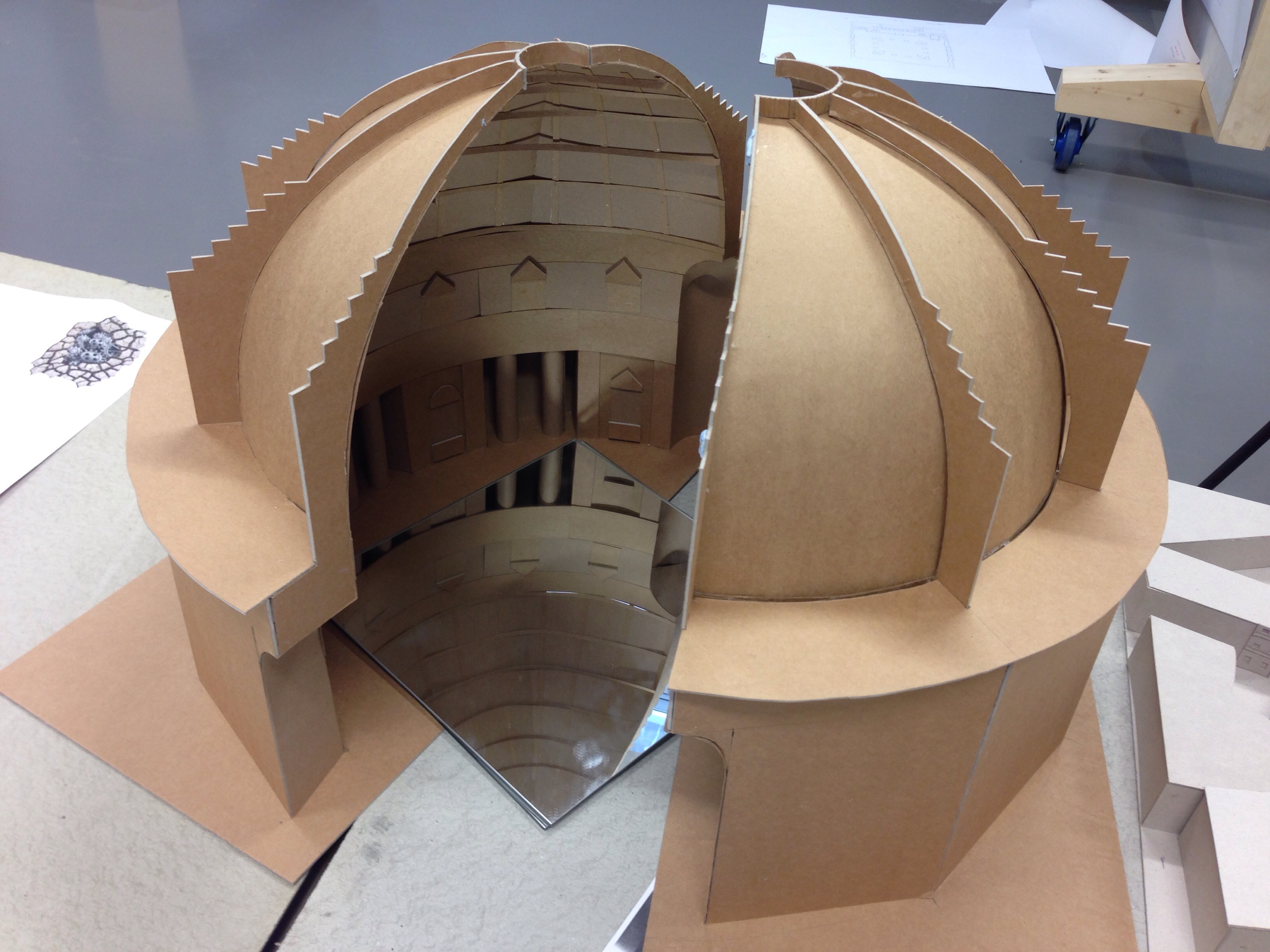
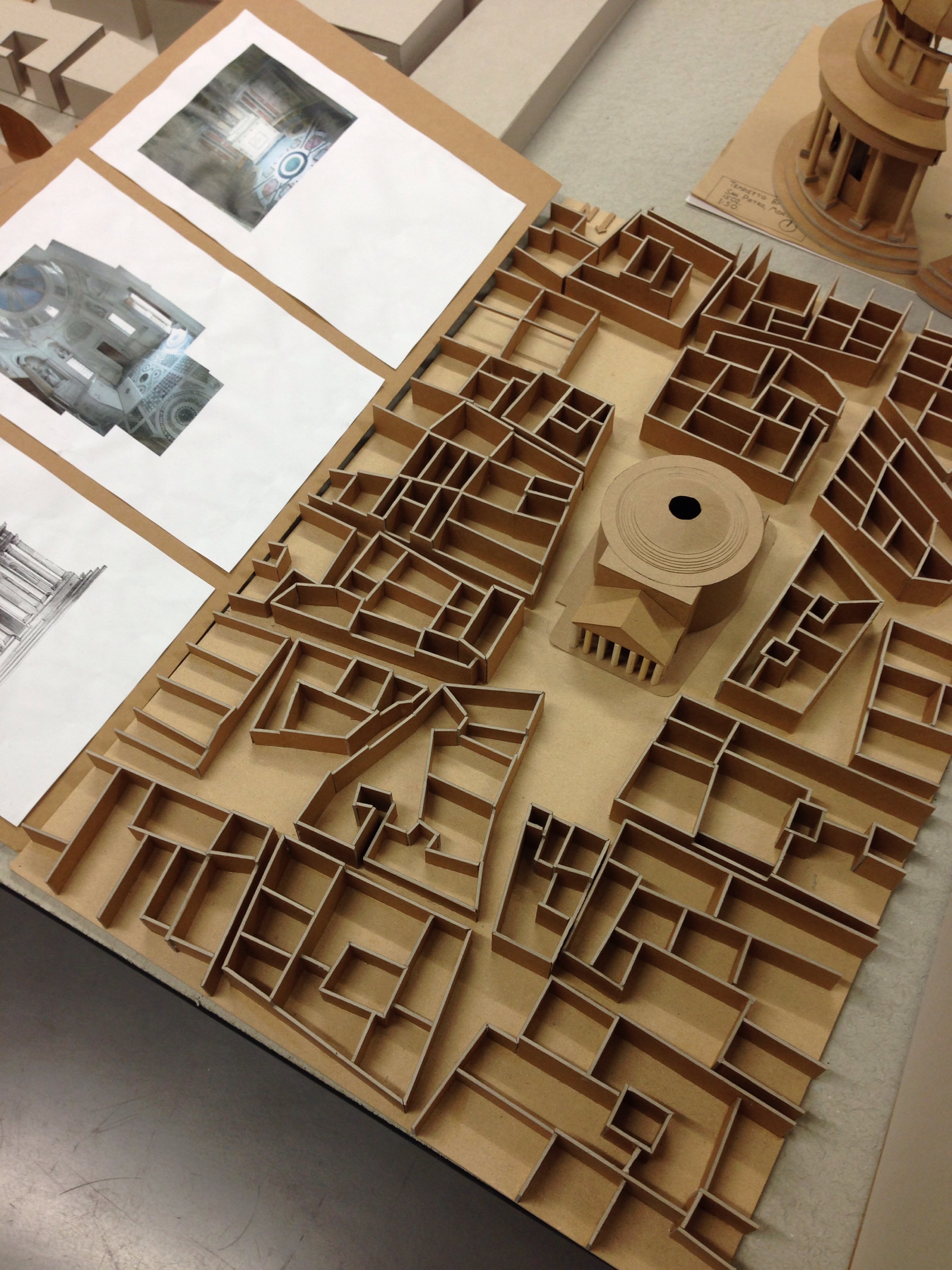
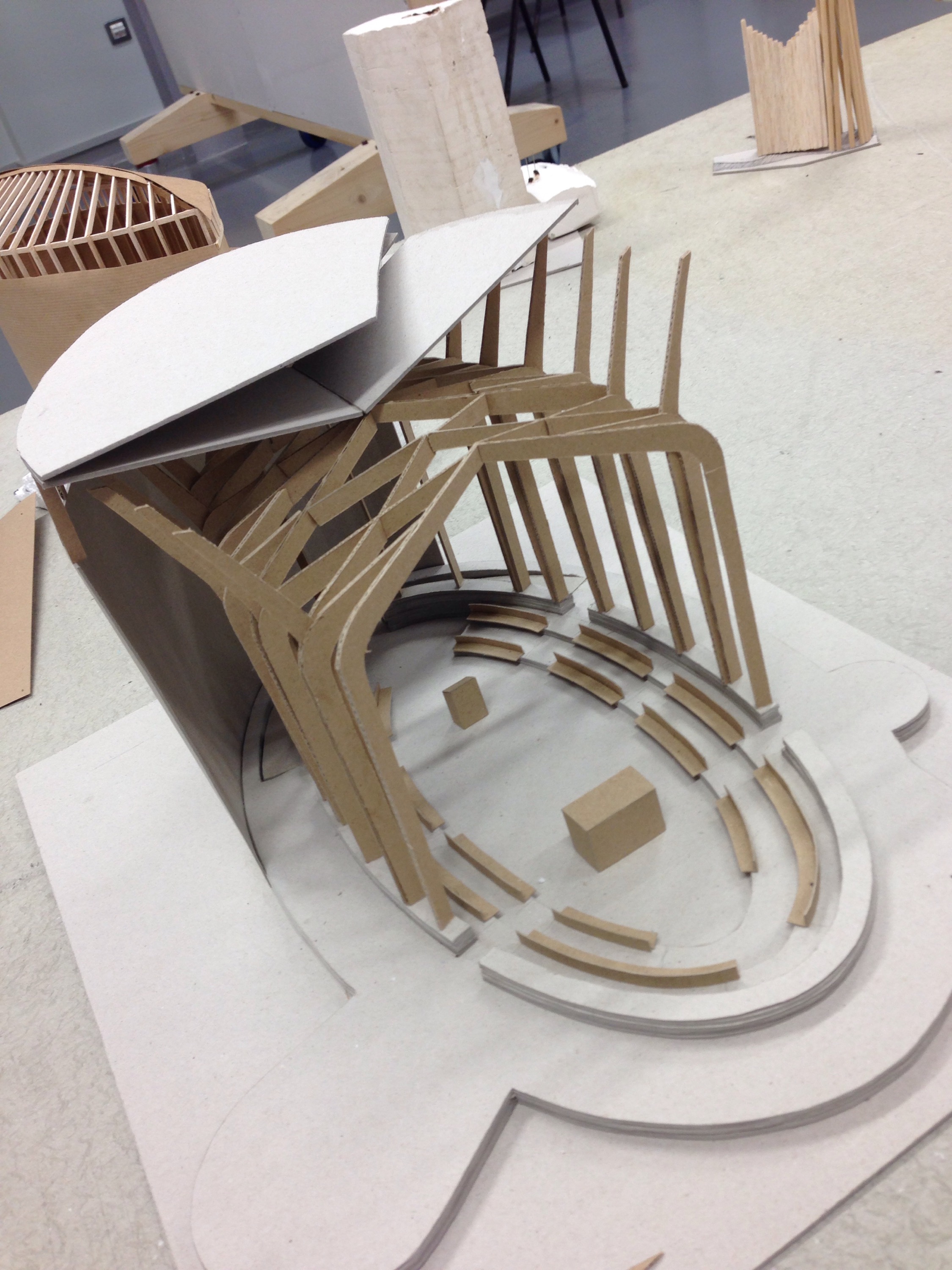
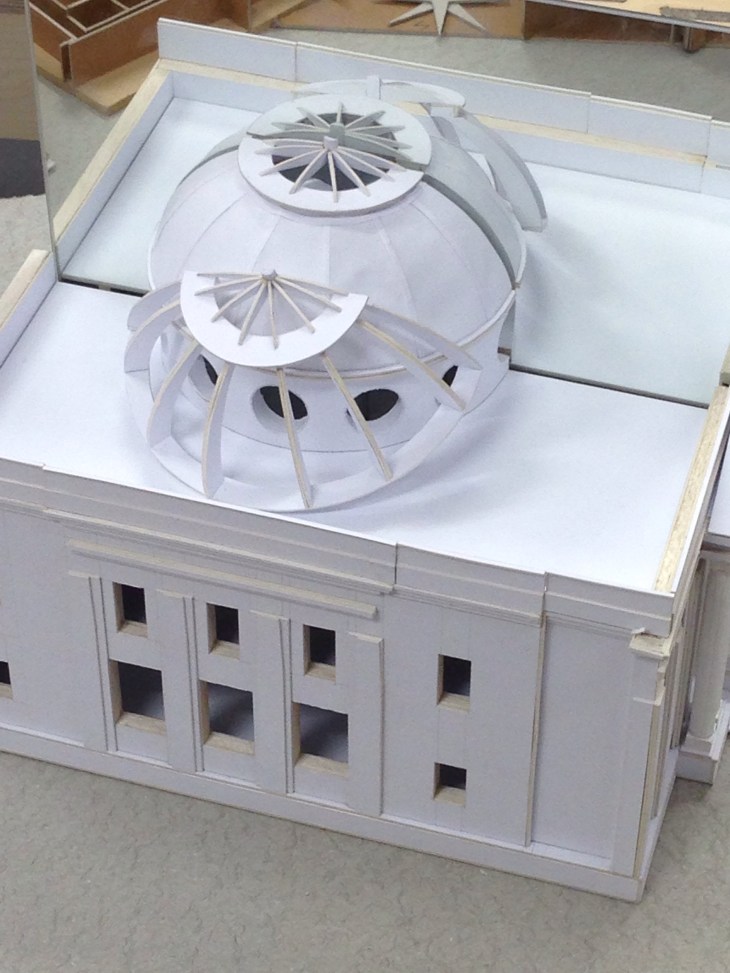
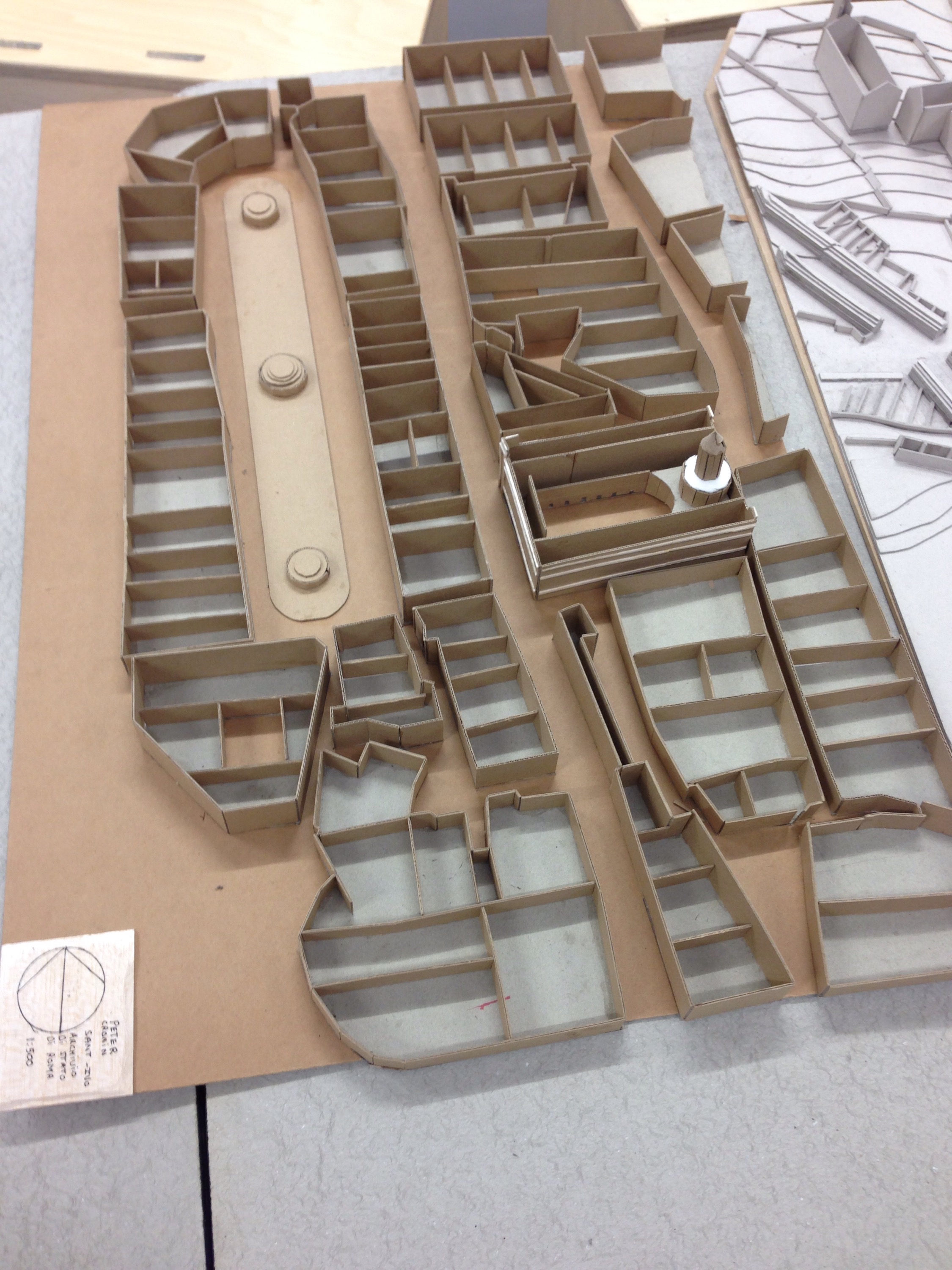
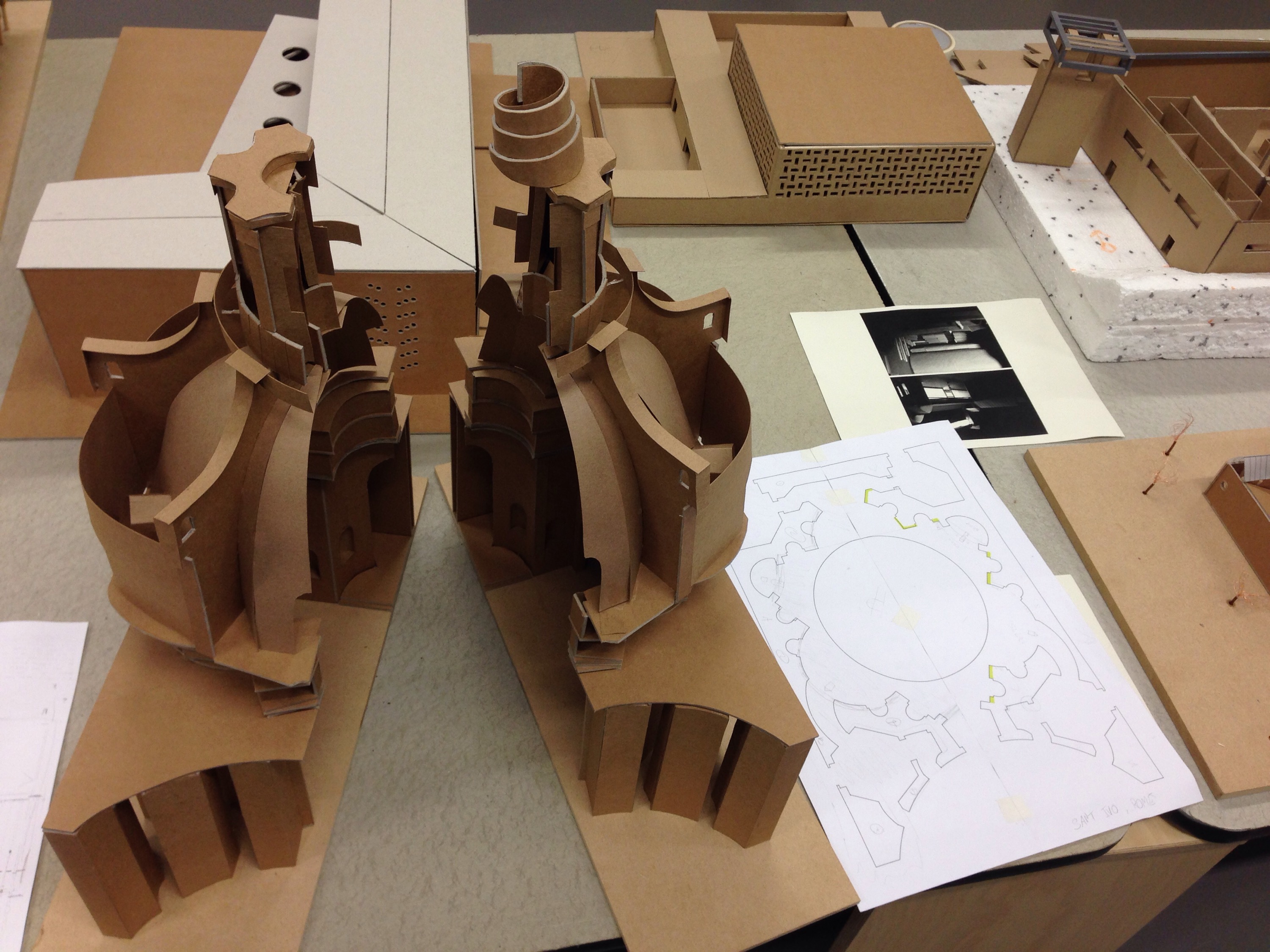
An ehhibition of precedent models.

Rome’s Pantheon and its plaza.

A chapel in Switzerland by James Turrell.

Piazza Navona and surrounds, in Rome.

San Ivo, by Borromini.

Frank Lloyd Wright’s Unity Temple in Oak Park, a suburb of Chicago.