Discovering Dublin: 2/5/20km Northside (4/)

During lockdown in Ireland, we started with an allowable 2 km radius exercise zone from our homes. This eventually increased to 5 km, then 20 km. For Aongus and me, the entire center of Dublin falls within 2km. If you’re thinking “Wow, that’s small!” I agree, yes, Dublin’s central core is quite small.

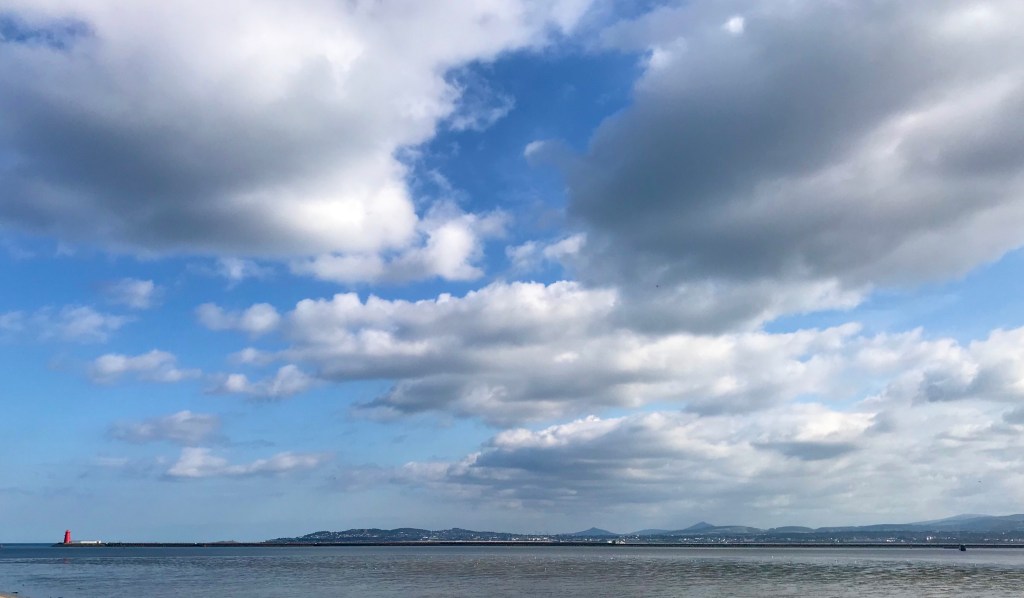
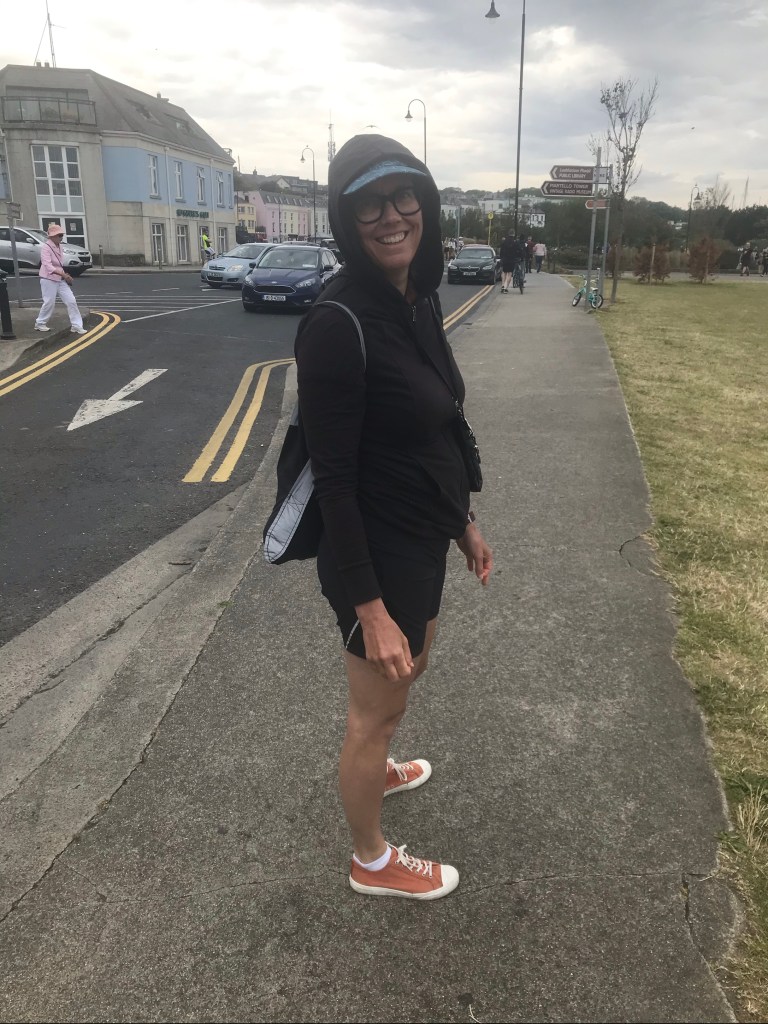
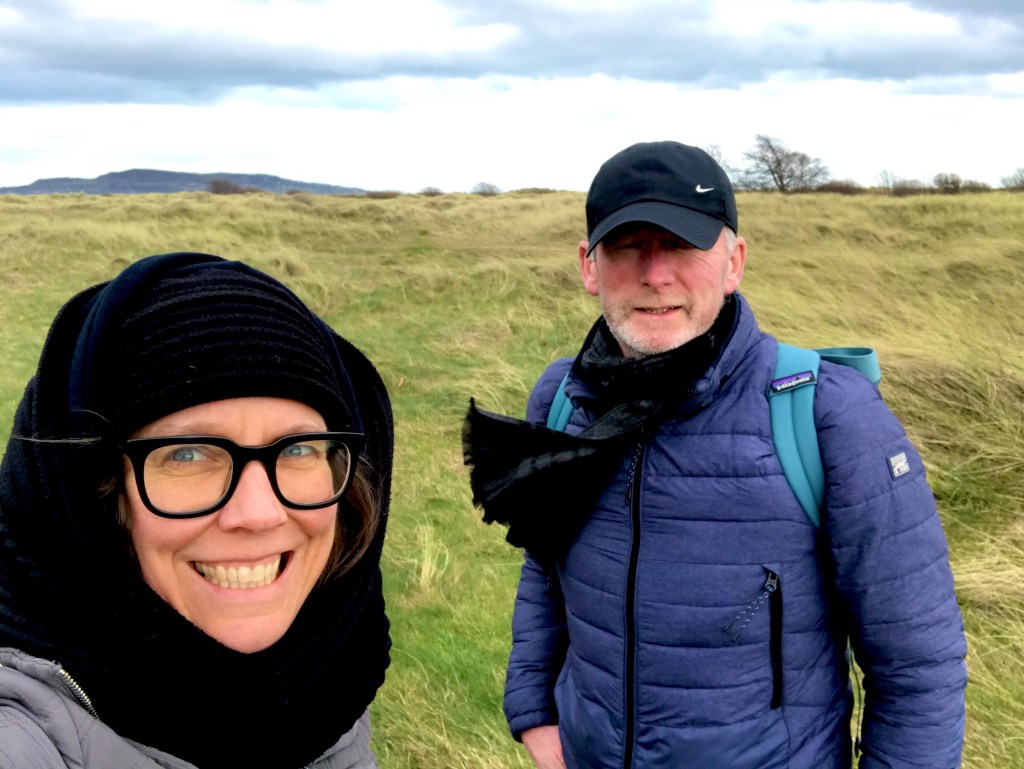
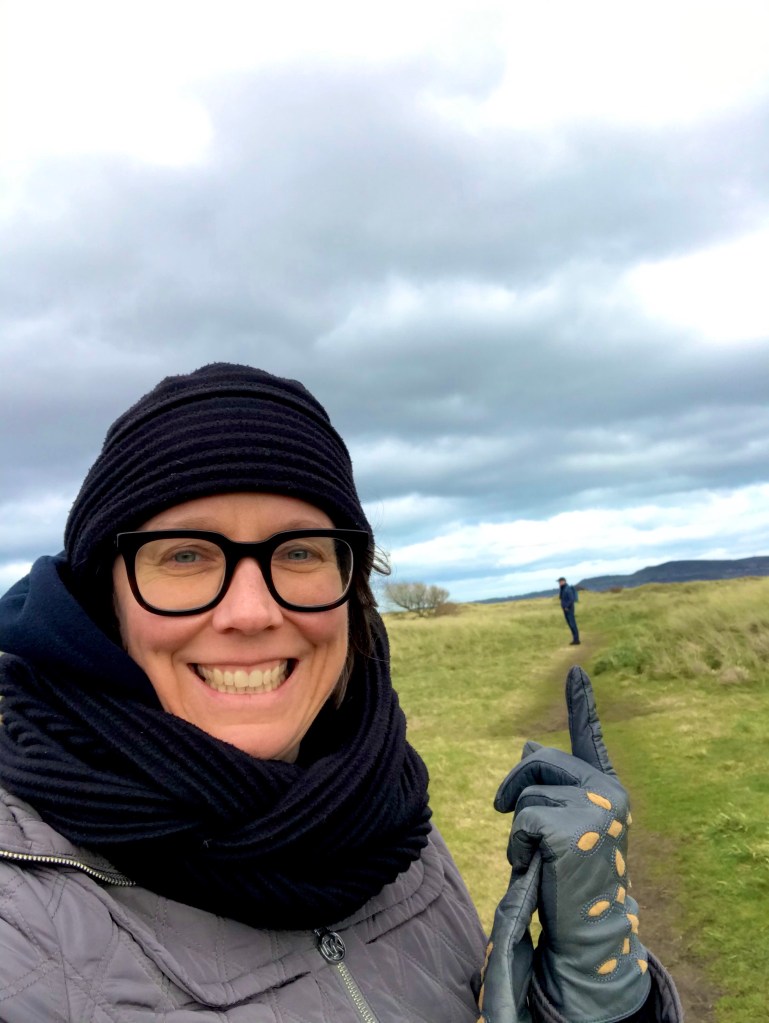
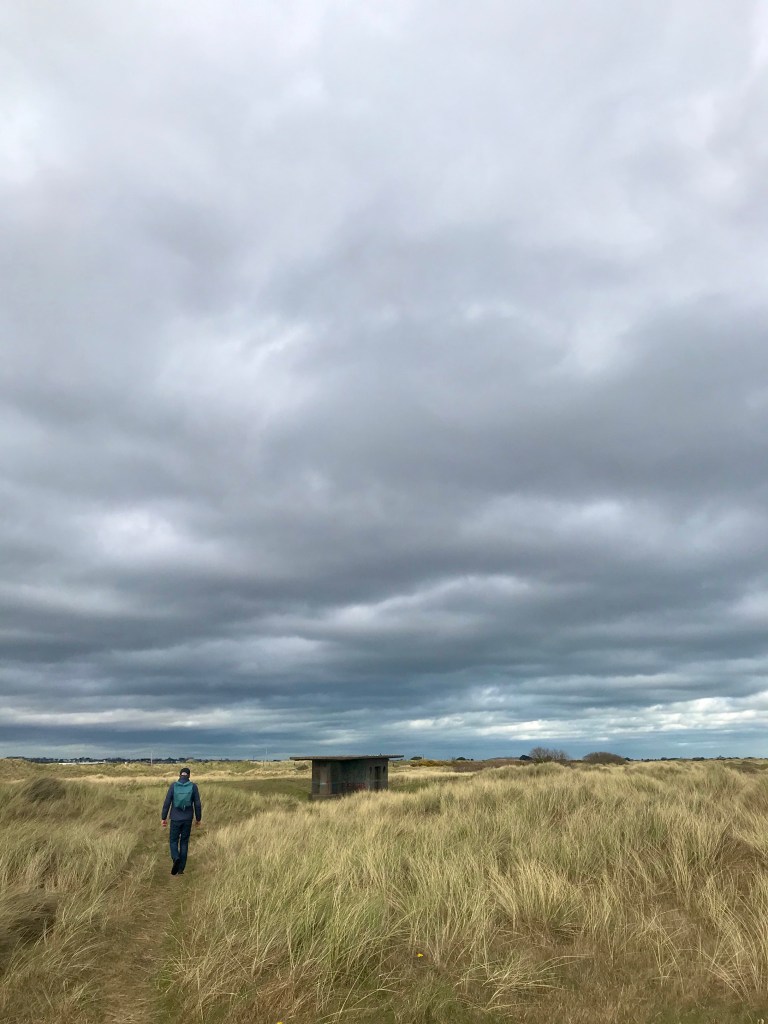
Our circle expanded, very slowly, from our immediate neighborhood of Smithfield, to 2km with Phoenix Park (described in another post), Blessington Basin and the Royal Canal (described below). At 5km, we expanded to the Botanic Gardens and Griffith Park. At 20km, we cycled further, challenging ourselves to 20km there and 20km back, which would get us to Howth, cycling along the greenway at Clontarf or even over onto Bull Island and along Dollymount Strand. I’ve shared photos of all this below, as it’s just too picturesque to miss.

I wanted to document the experience for historical purposes (the life of empty nesters in Dublin during lockdown!?). I think the post has wider value, too: if you’re ever visiting Dublin, these are great places to explore!
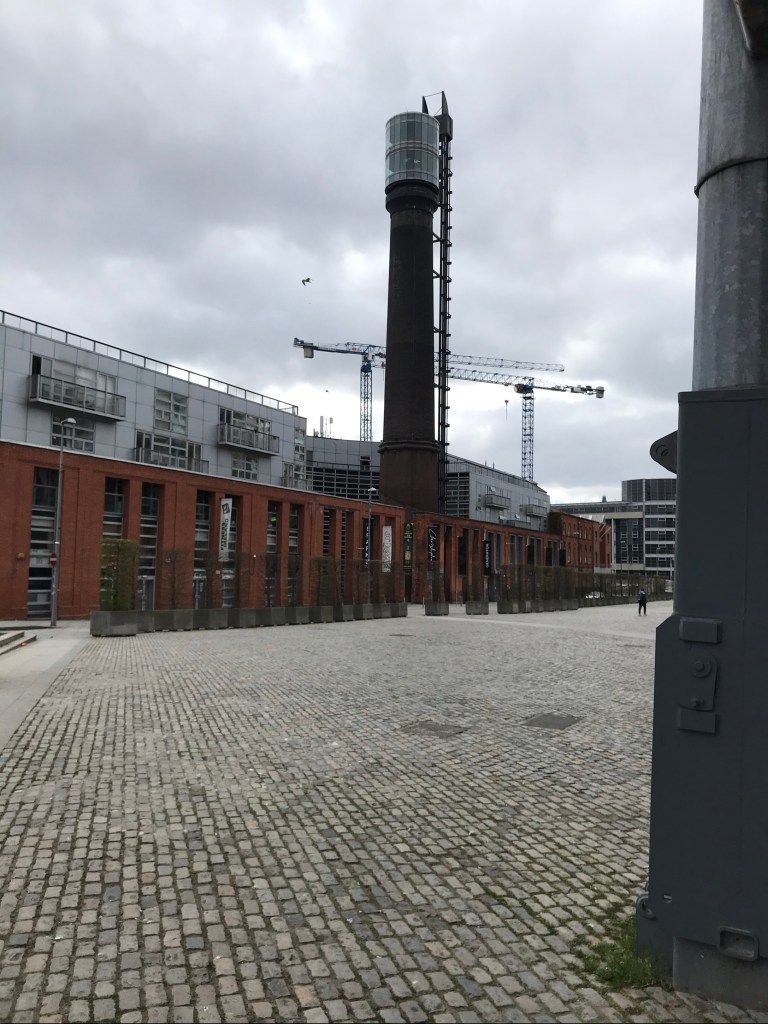
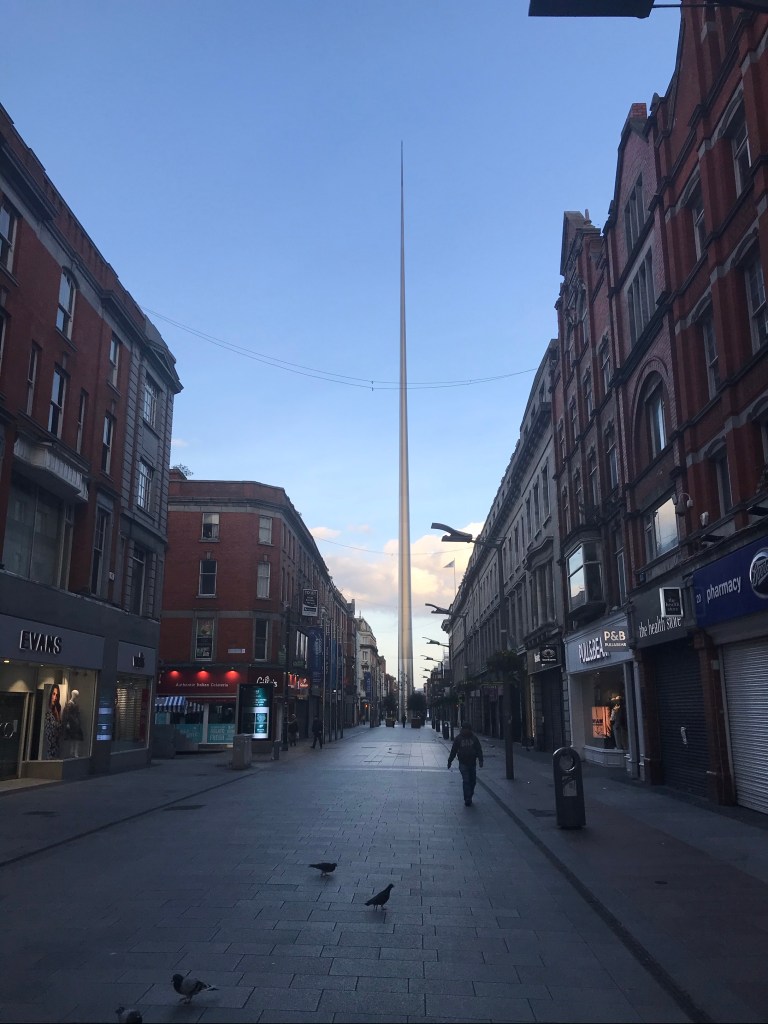
Smithfield Plaza was empty for weeks.

Days before lockdown started, I reminded myself that I wanted to climb the tower at Jameson’s Distillery, shown above, which one could then access for a €5 fee paid to the Genesis Hostel on Smithfield Plaza. The tower could, I told myself, become inaccessible again, for any reason, at any time. It had been closed most of the time since I moved to Smithfield in September 2012.

Due to Covid, the tower certainly became inaccessible once again.

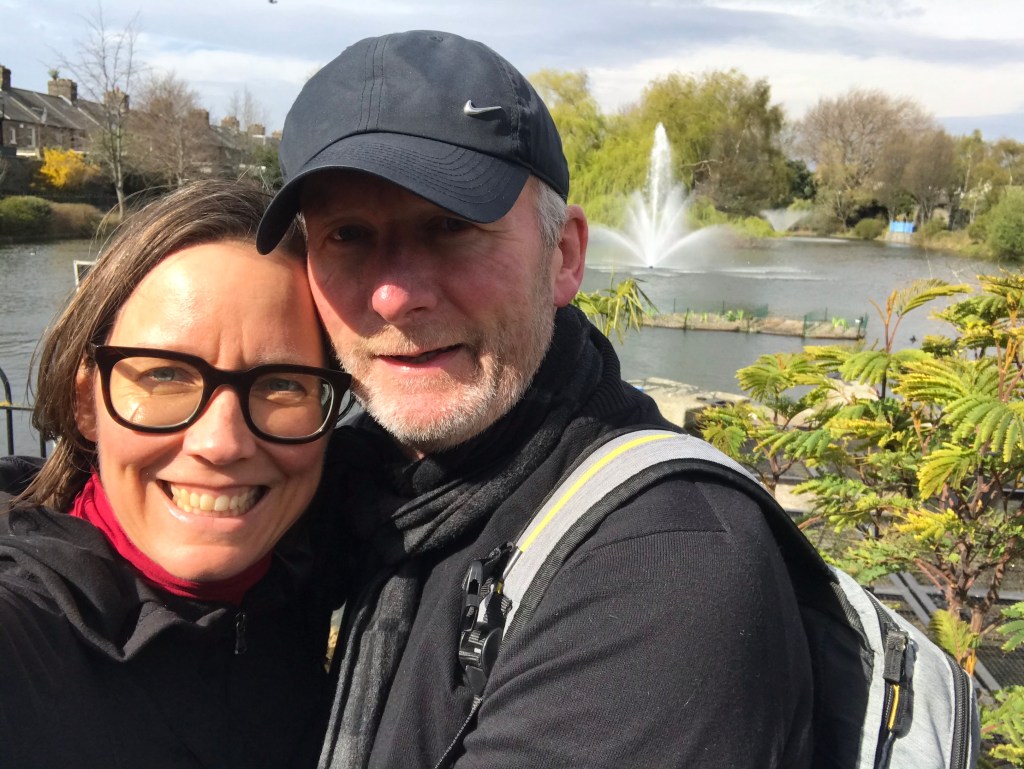
During lockdown, I rarely ventured out Monday-Friday. I tried to get indoor exercise during the week, but it wasn’t easy. With the Liffey four blocks from home, I motivated myself to get out and walk that far some evenings, between work and dinner. Below, Aongus and I are pictured on one of Dublin’s two Calatrava-designed bridge, which is five blocks from our home:
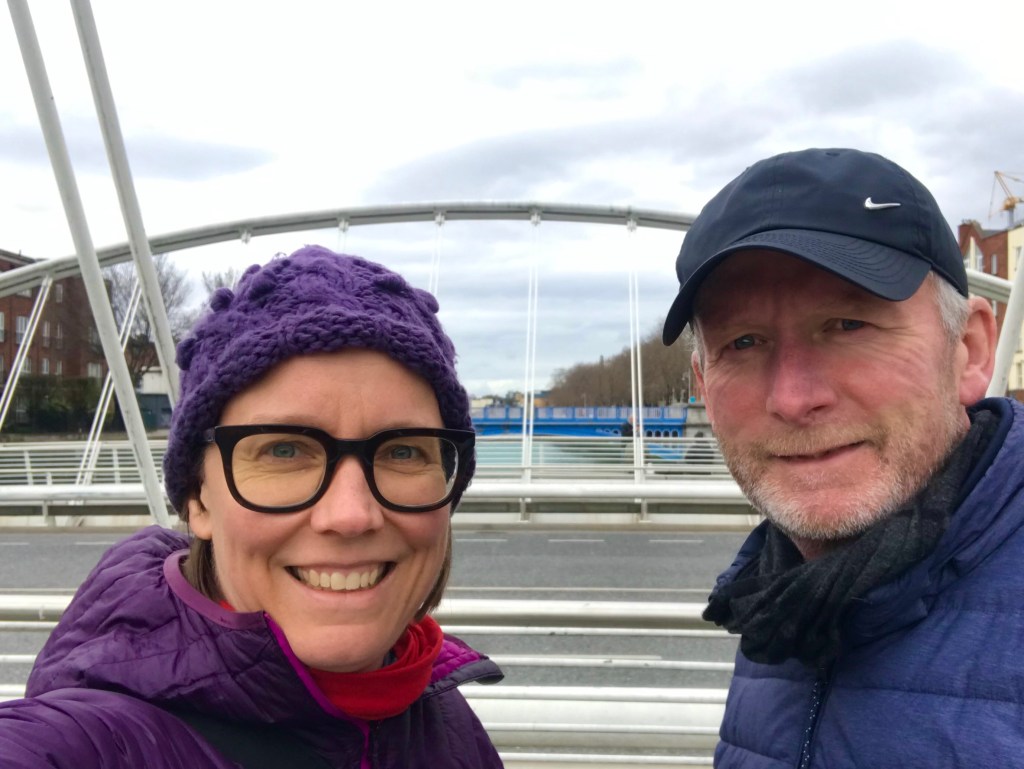
You can see the tip top of the giant obelisk in Phoenix Park peeking from the trees between our heads.

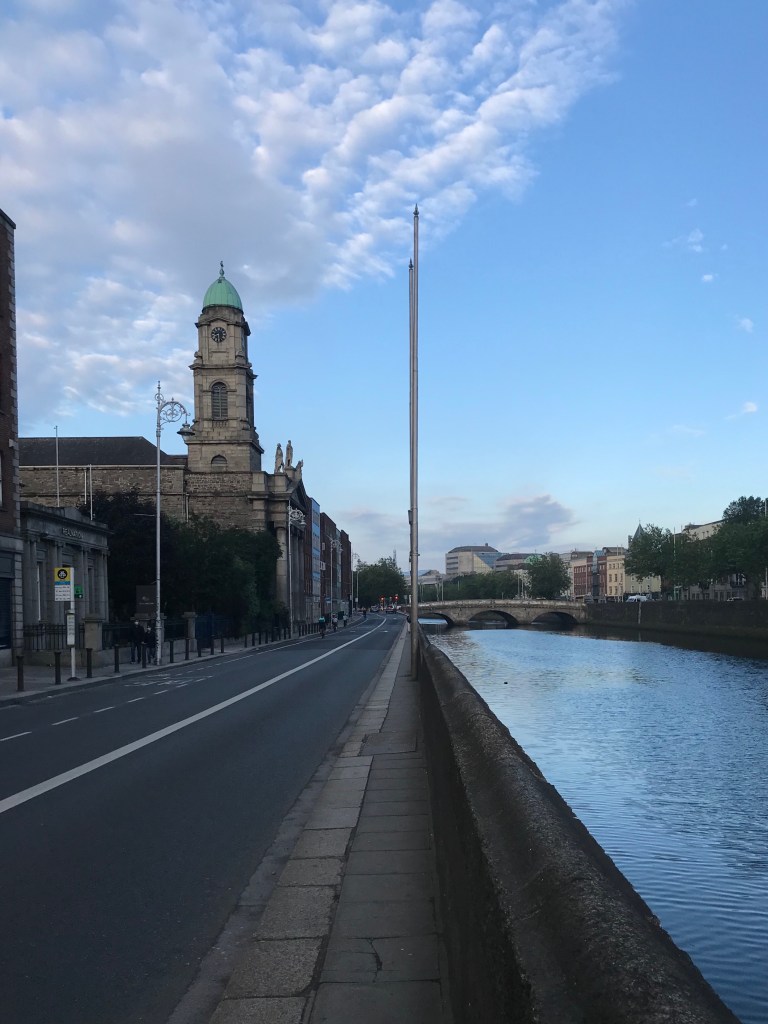
Below are photos of “northside” streets close to our home: (1) along the Liffey with Smithfield to the right/north, (2) cycling the new protected lanes along the Liffey, (3) the lovely steeple of St. Paul’s @ Smithfield shown as second time, and (4) a morning view of, vacant, taken by Aongus on his way to work once lockdown started to lift.
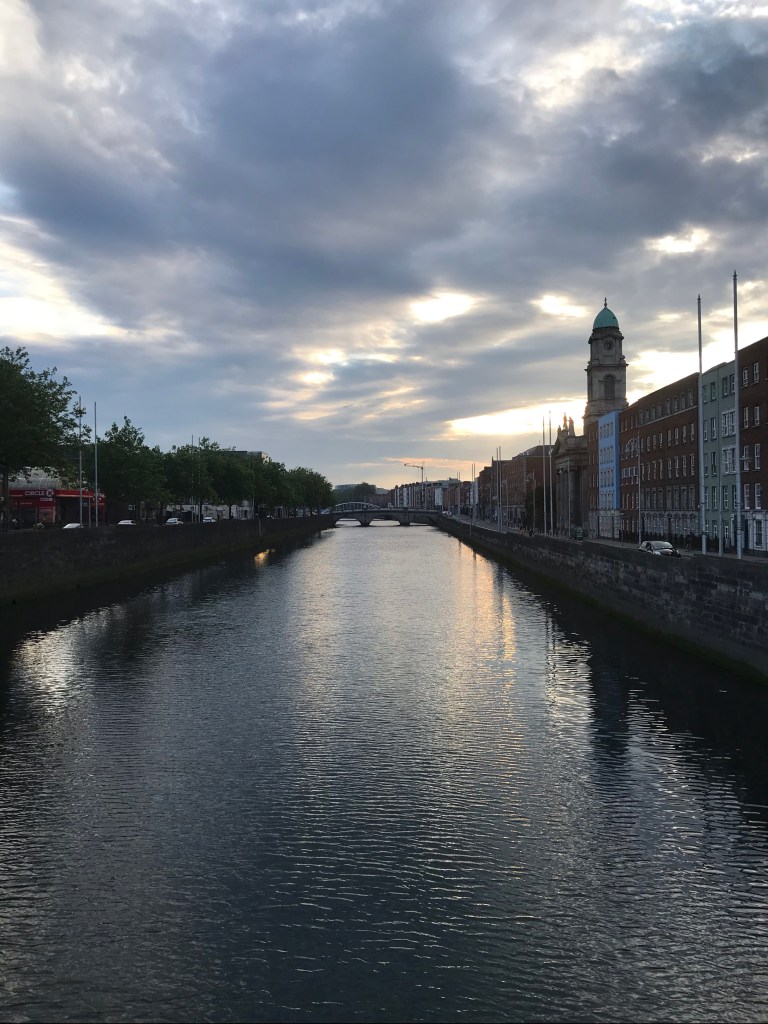
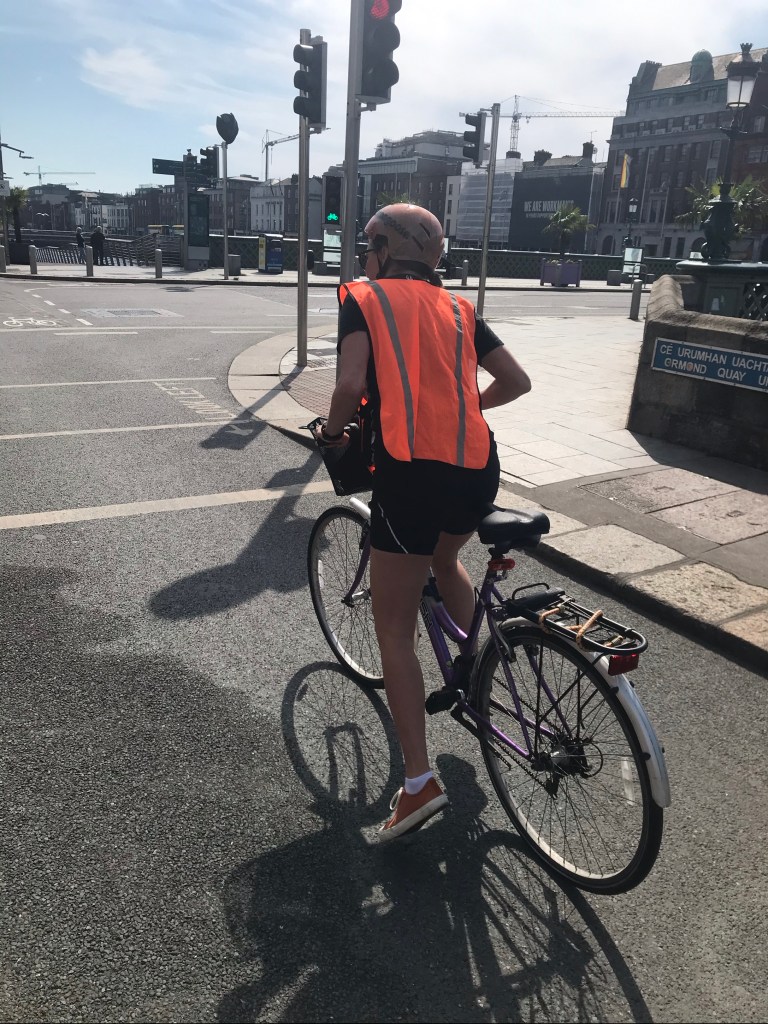
During the height of lockdown, the streets of central Dublin were actually quite eerie in the evening. The Irish police (called the Gardí) set up checkpoints all around Dublin—mostly to prevent drivers from exceeding their boundaries without reason.

On one walk we were stopped on O’Connell Street by a Guard. He asked us why we were in town, and since exercise was allowed and we were within our allowable zone, there was not problem and the guards let us pass. Other acceptable reasons were shopping for medicine or food shopping, or assisting someone who was cocooning.

We got stopped one other time, on the way to Phoenix Park because unbeknownst to us, a right-wing radical individual was trying to stage a protest. It didn’t work for her. People didn’t show up to join her shenanigans. The Irish are quite reasonable politically, in my opinion, and such radical views are unpalatable here.

Blessington Basin

Although Aongus initially thought 2km would be too restrictive, it turned out there was more to see than he realized. Within our 2km small radius there were urban delights to be found: we joyfully ‘discovered’ Blessington Basin for ourselves.

I’d seen it on the map while searching the web for property (I might as well be looking for leprechauns or unicorns as a sunny and affordable flat or house in Dublin). Though I knew its name and location, I’d never had reason to venture there. Until lockdown. It’s easily reached from our flat by foot or bicycle.
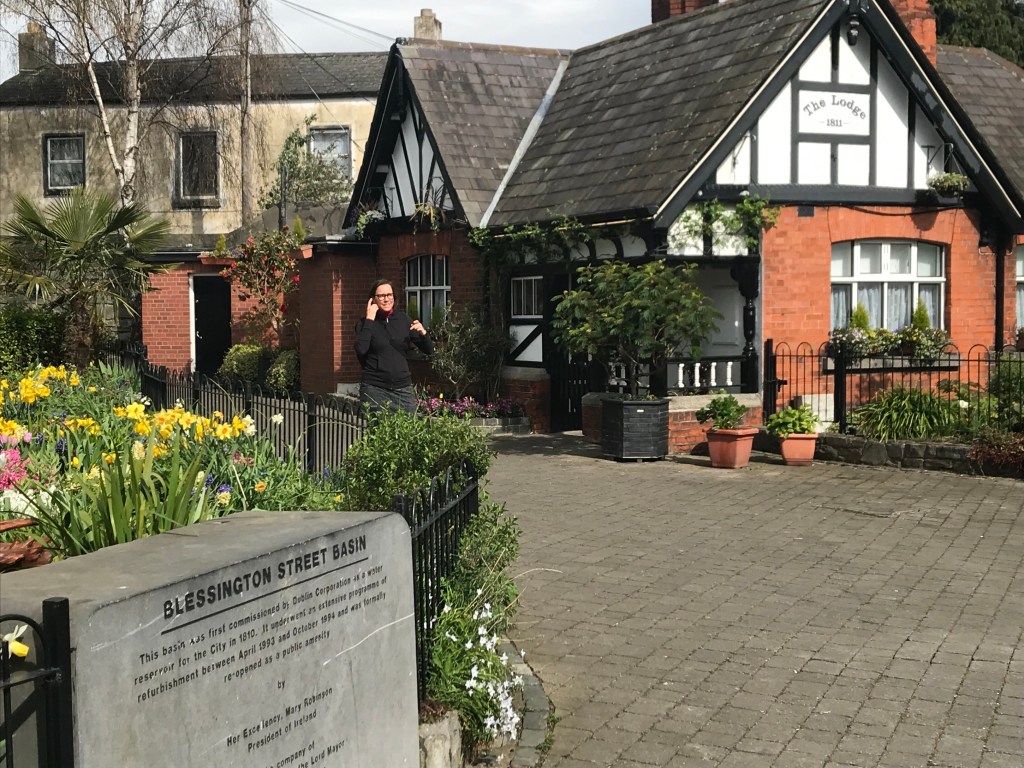
Ultimately, we ended up near the Basin while exploring on Dublin Bikes (which we both subscribe to for a very reasonable annual fee).

Aongus was flabbergasted. He had no inkling of the existence of this Basin– even though he was raised not far away, on the Northside of Dublin in Glasnevin!

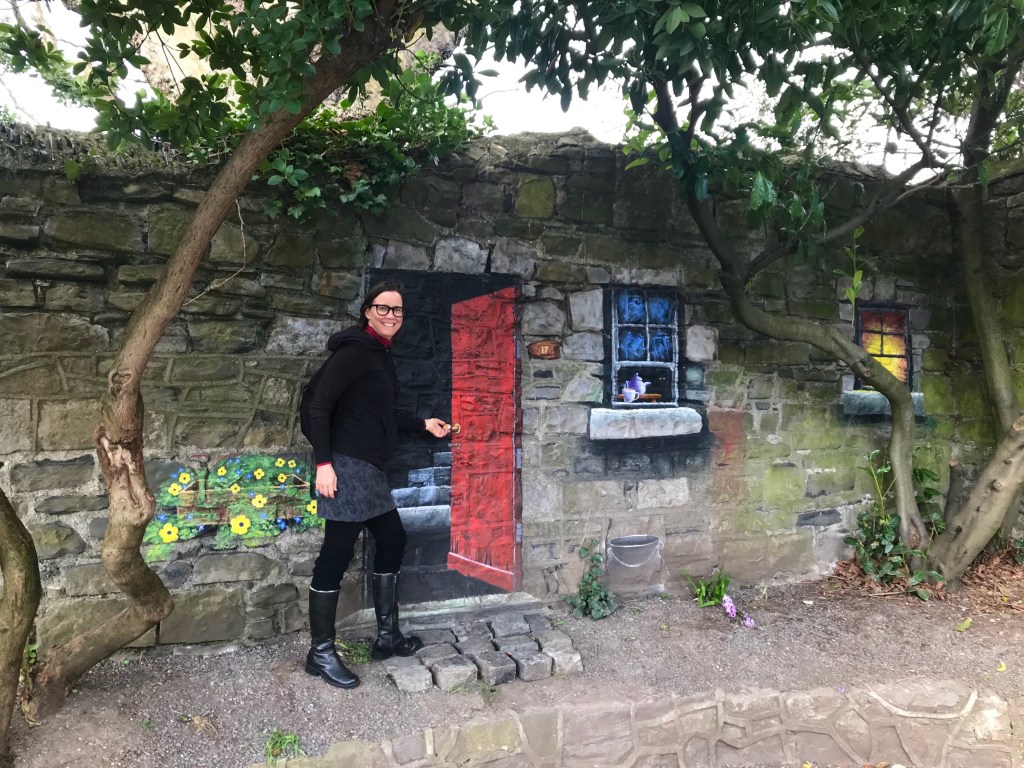
There are several delightful murals in the park surrounding Blessington Basin, and the one pictured above, with me sliding through an illusionary door, is appropo. A step into Blessington Basin park feels like you’re entering Sinclair Lewis’ Narnia or Alice’s Wonderland!

Royal Canal

A week into lockdown, I got my previously non-working bike up and running. At about the same time, Aongus borrowed a bike from his sister, because he was the one appointed by his family to keep his 82 year-old aunt supplied with food and meds.
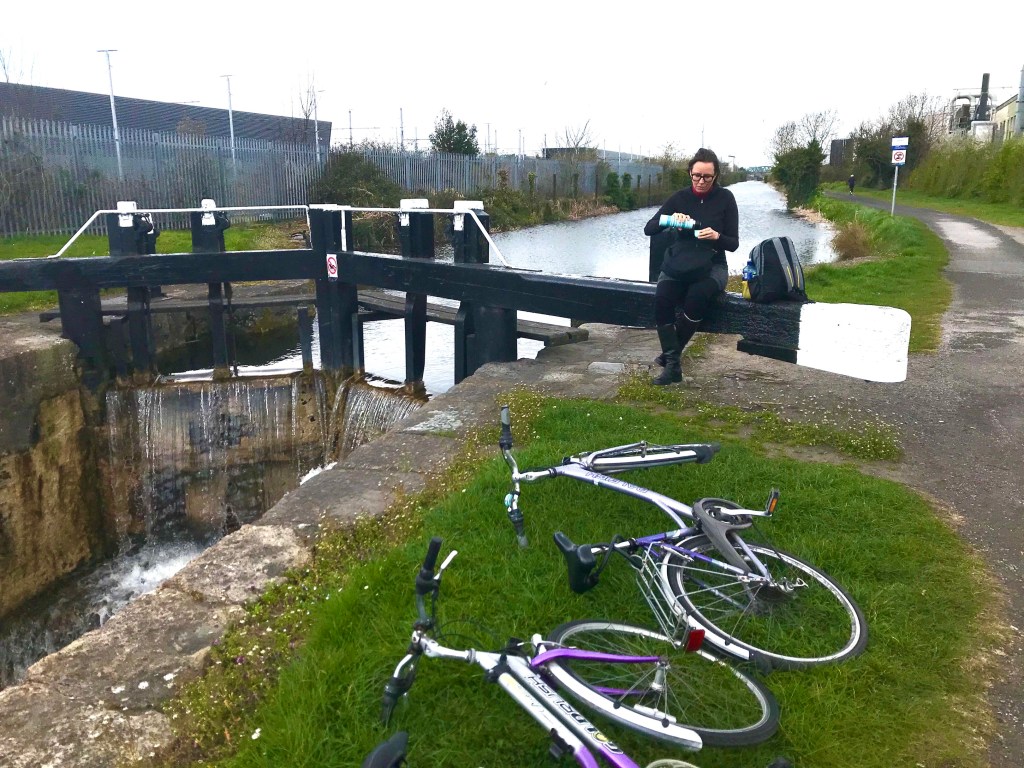
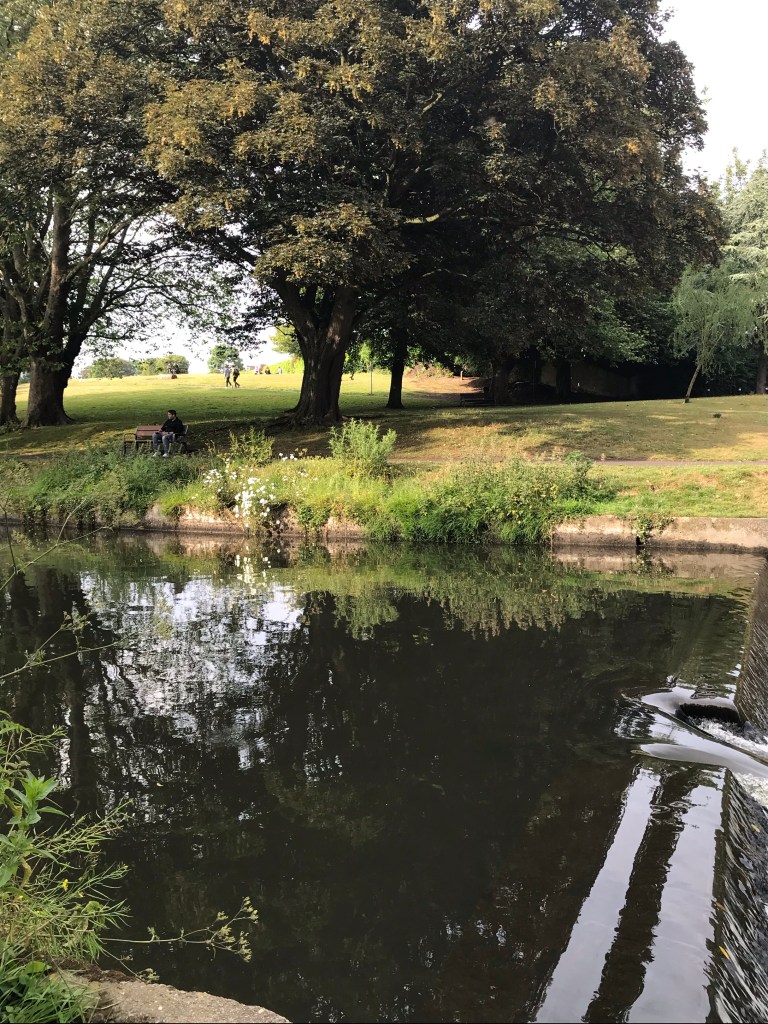
With these bikes, we were able to explore more easily and we found more joys, like the footpaths, the little canalside park beside Shandon Gardens, and cycle paths aside the Royal Canal (with one of its locks shown above). We determined to return again when we’re allowed more distance to roam.

National Botanic Gardens

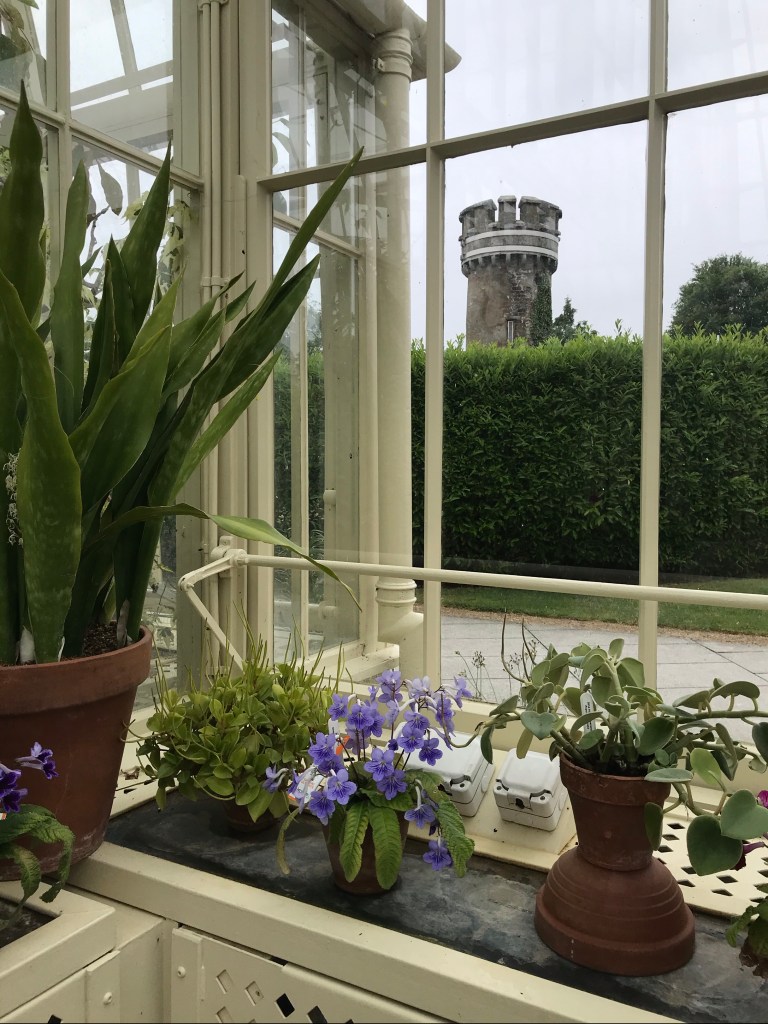
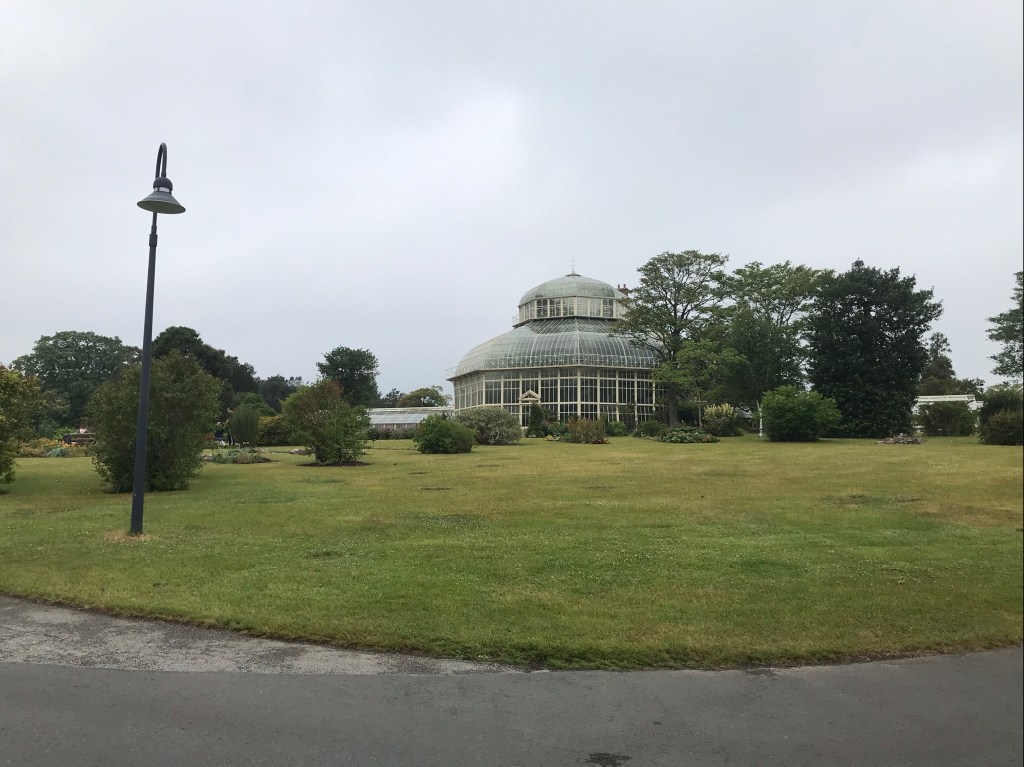
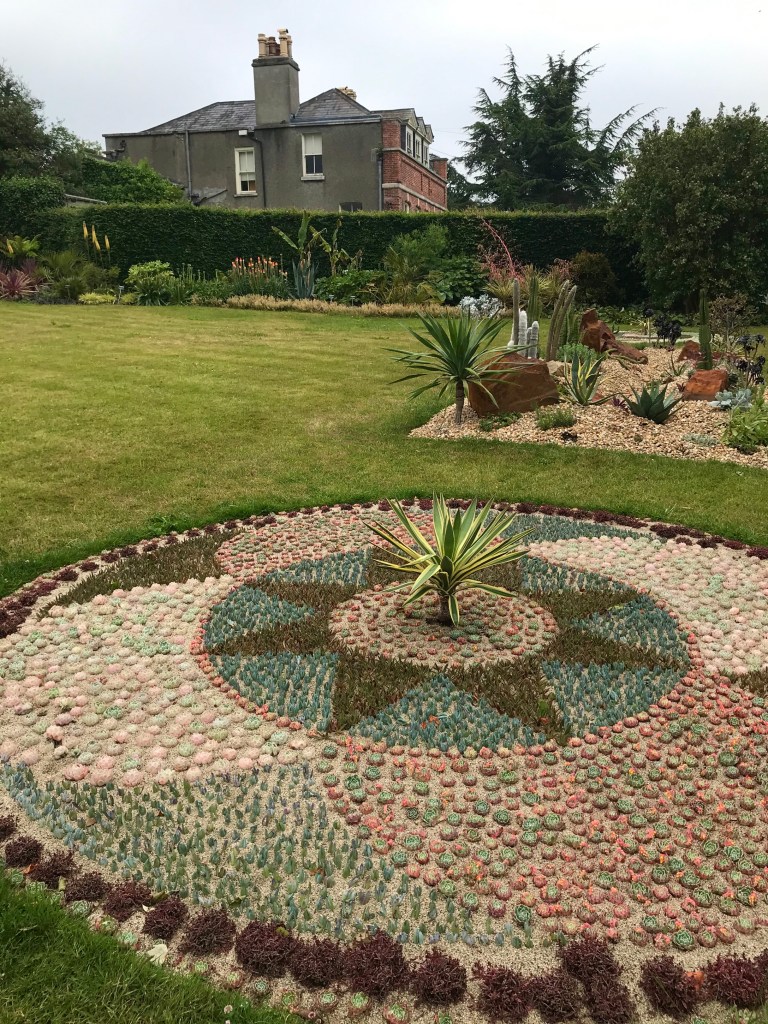
Our allowable zone eventually expanded to 5km. Inside that we found the Botanic Gardens and Griffith Park, although these photos were taken after we’d gotten 20km access. The Botanical Gardens had been closed for months before opening its gates to the public. The caretakers must have been there during lockdown, as the place is still meticulously manicured.
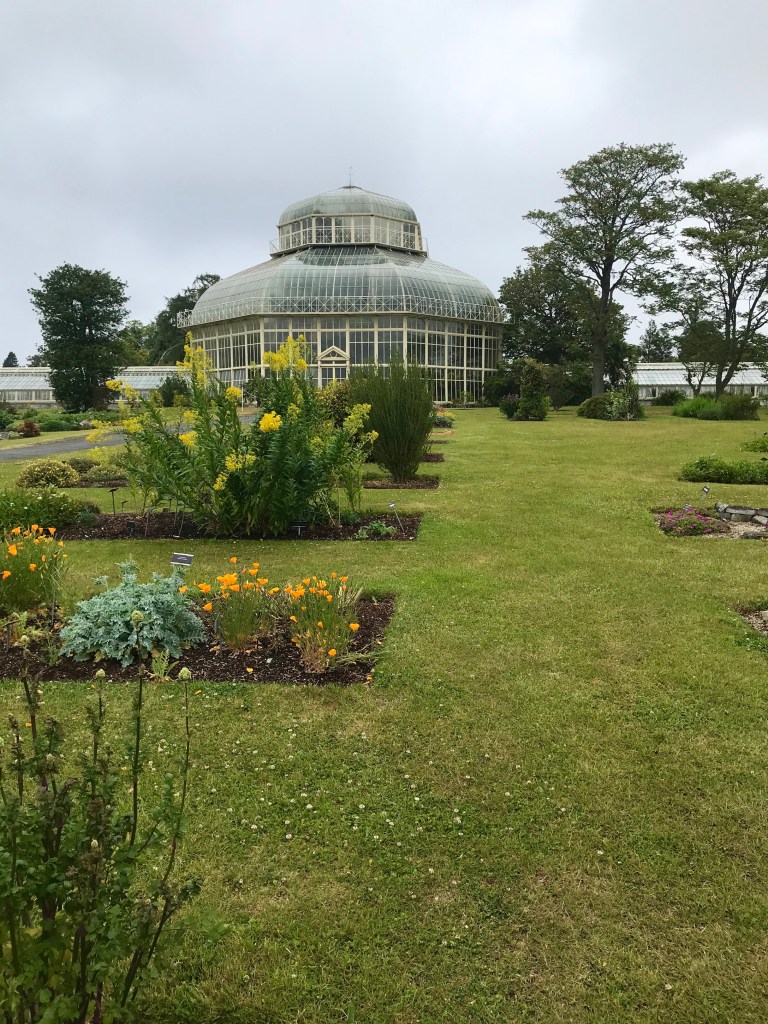
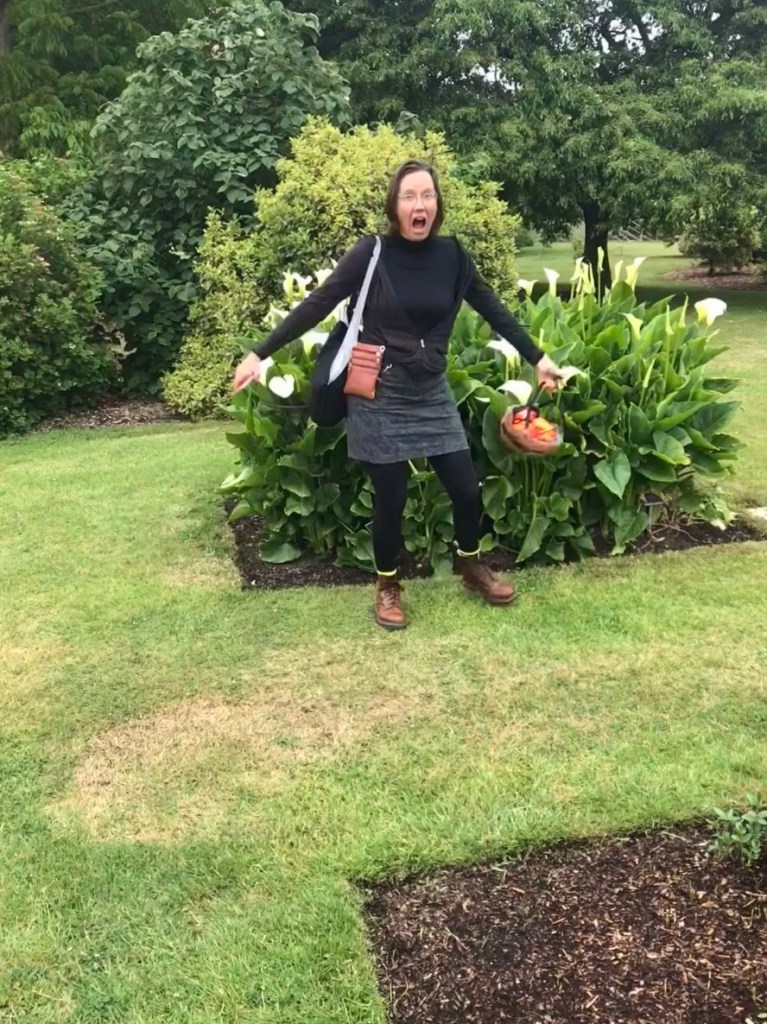
When amenities began re-opening on the northside of the city, the gates of the National Botanic Garden sprung open with colorful life:
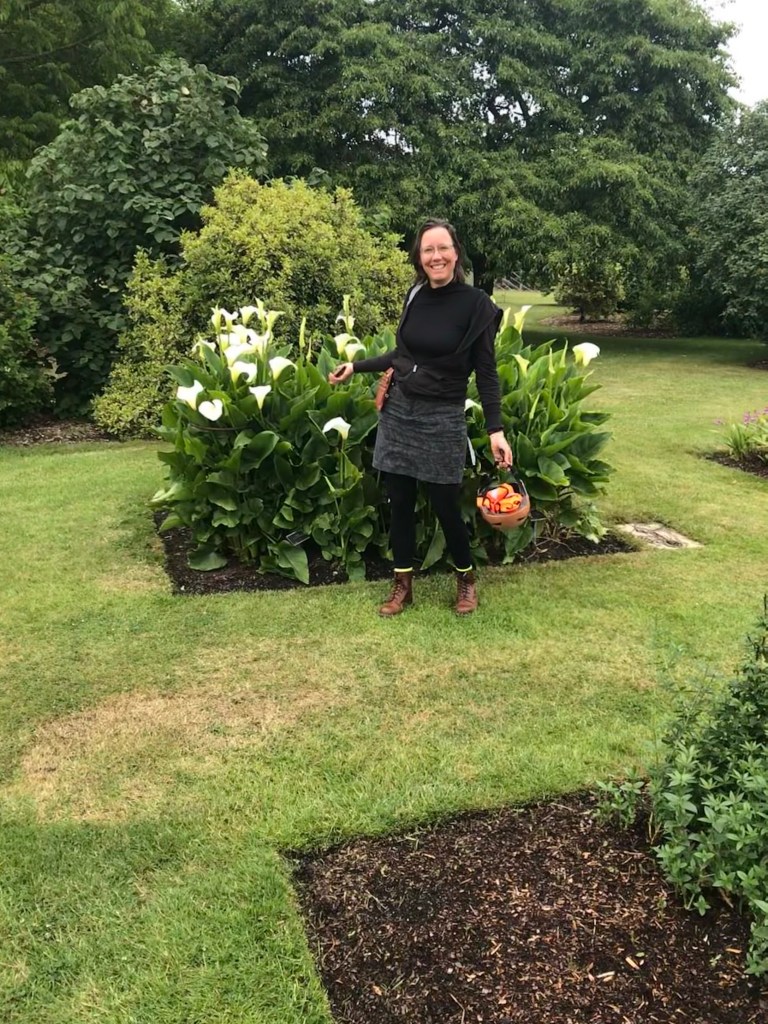
The flowers had been developing nicely in the peace and quiet.

Aongus loves this place. It’s near his childhood neighborhood and one if his mum’s favorite spots for a weekend walk.
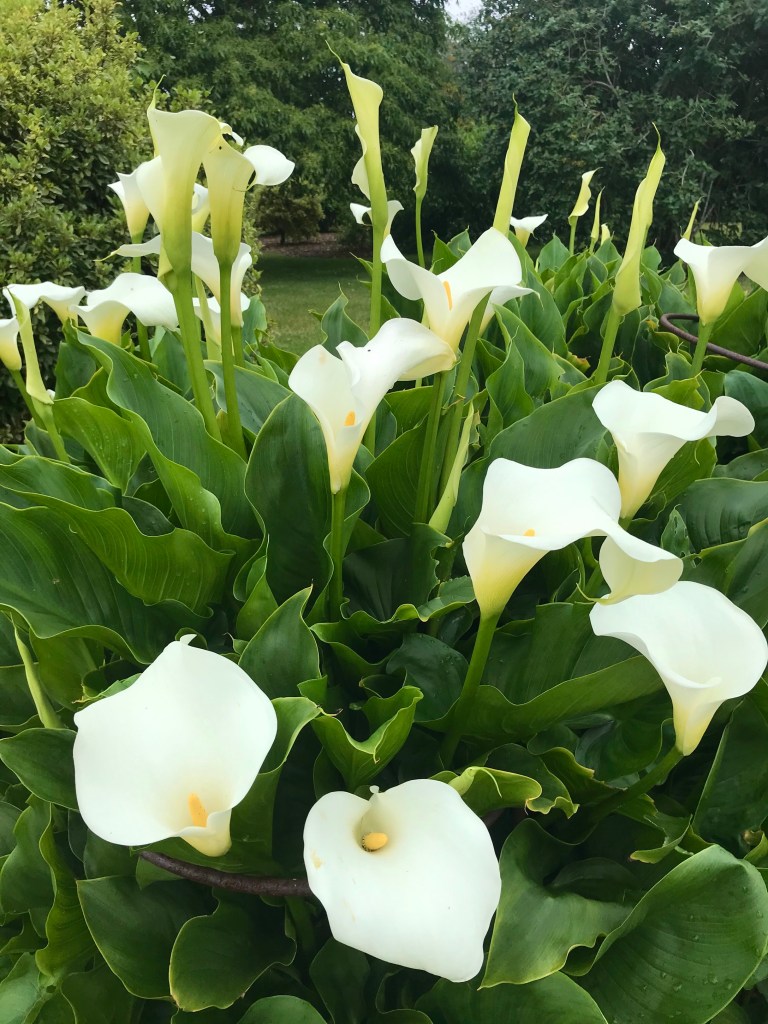
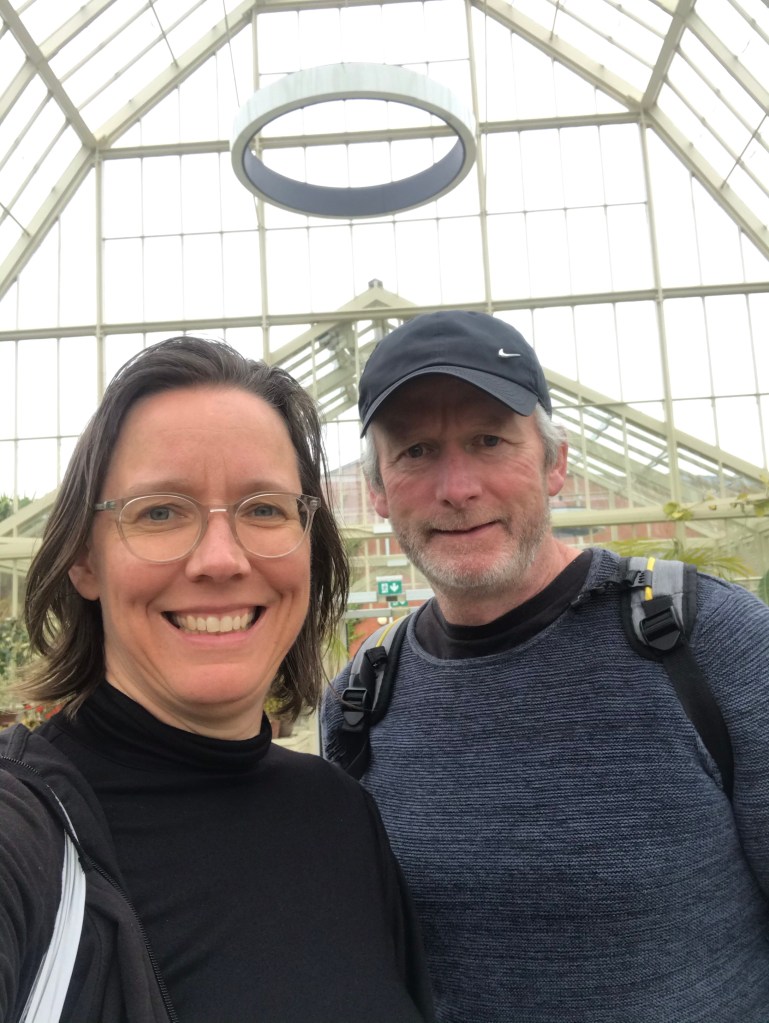
Griffith Park

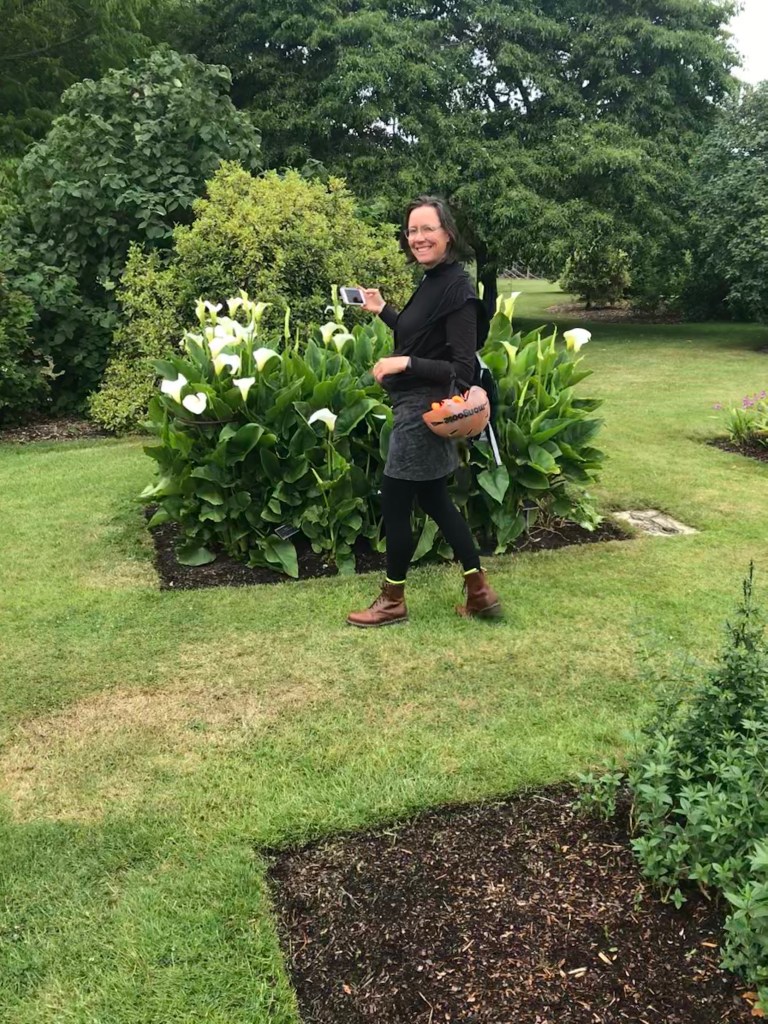
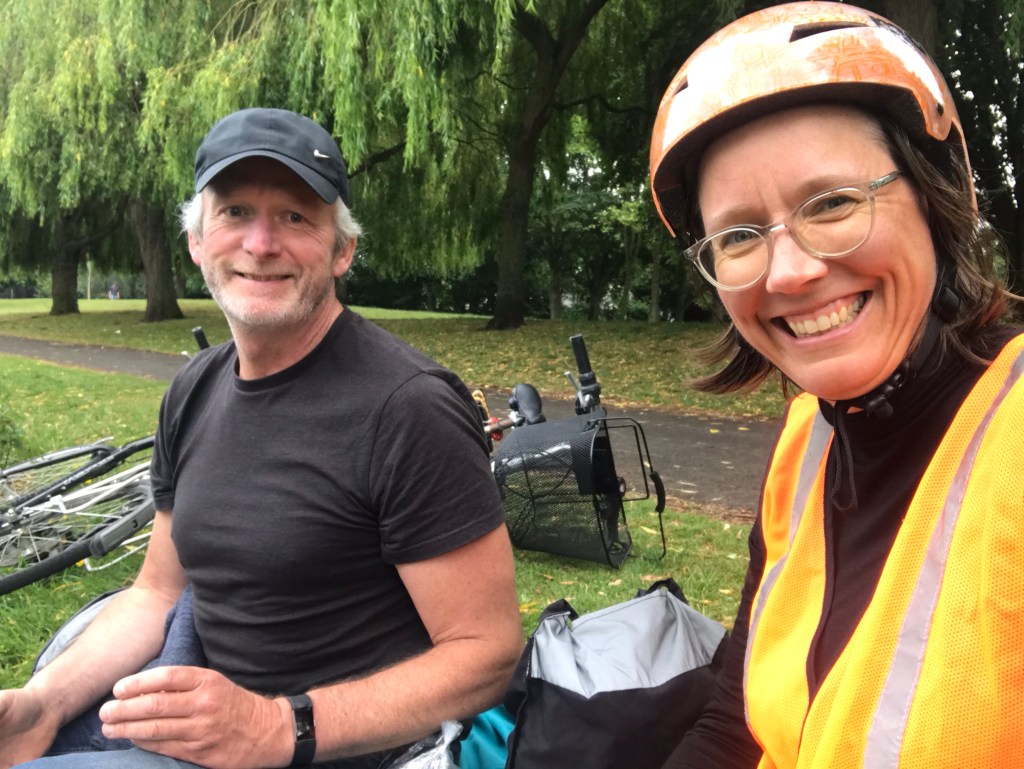
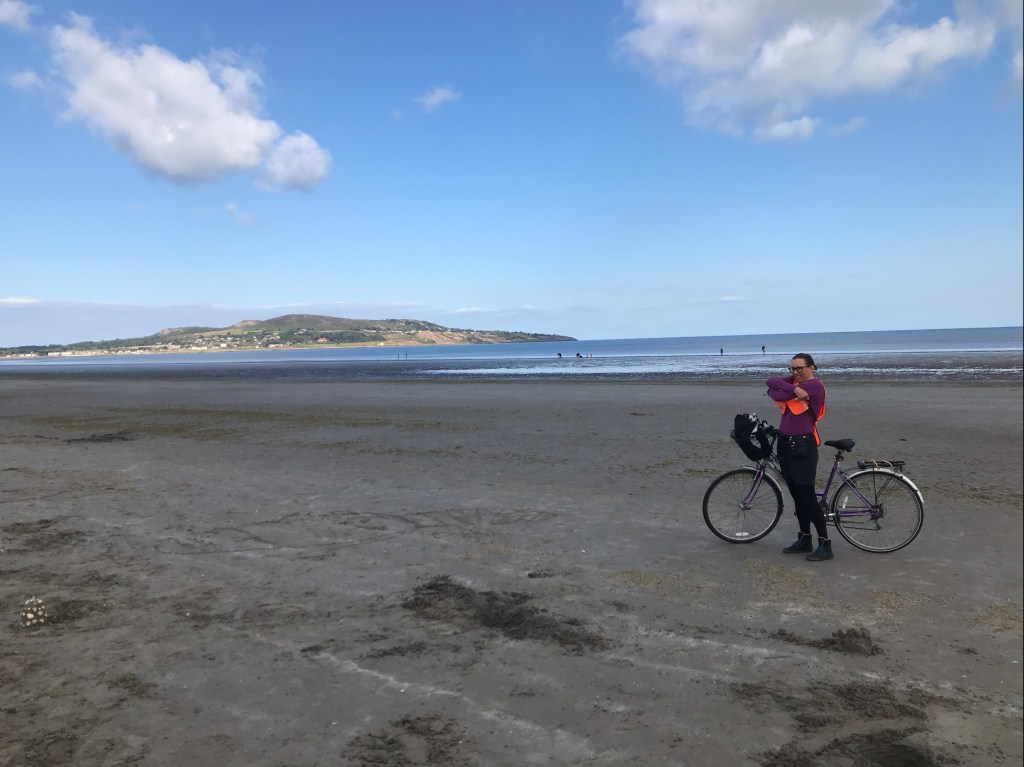
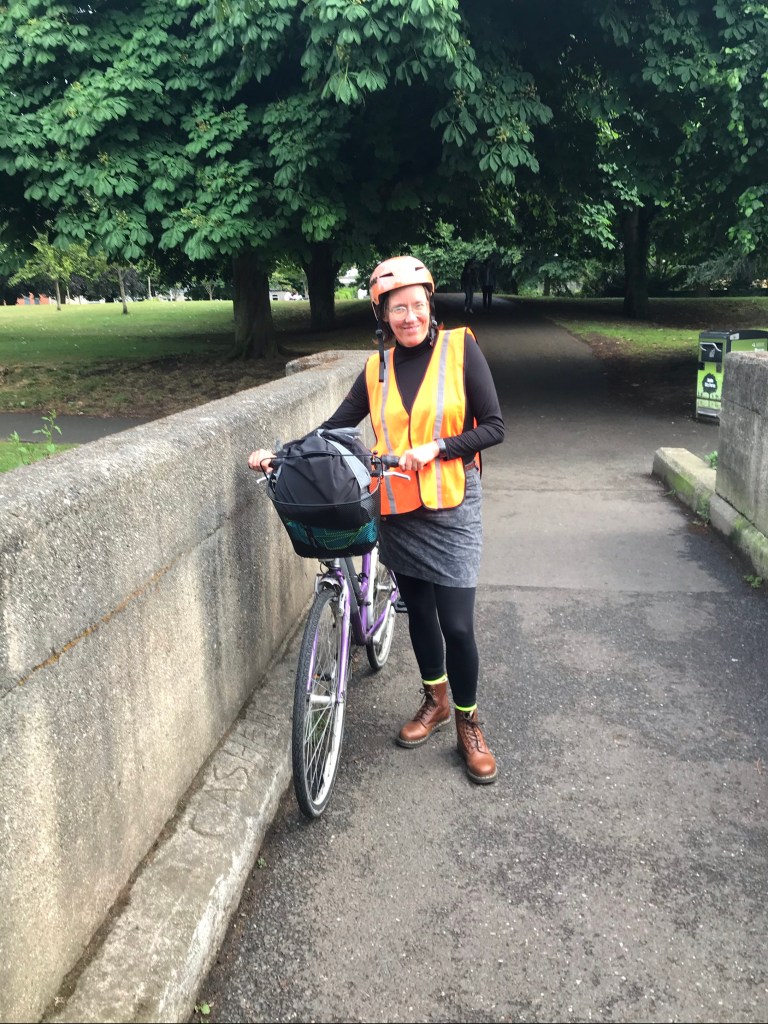
Aongus brought me through Griffith Park one day. It’s just to the south of his auntie’s house. Here’s I’m decked out in bright orange and a crash helmet, which I found helpful as cars returned to the streets of Dublin. Most drivers allowed me plenty of space, but of course, I was only cycling on weekends.
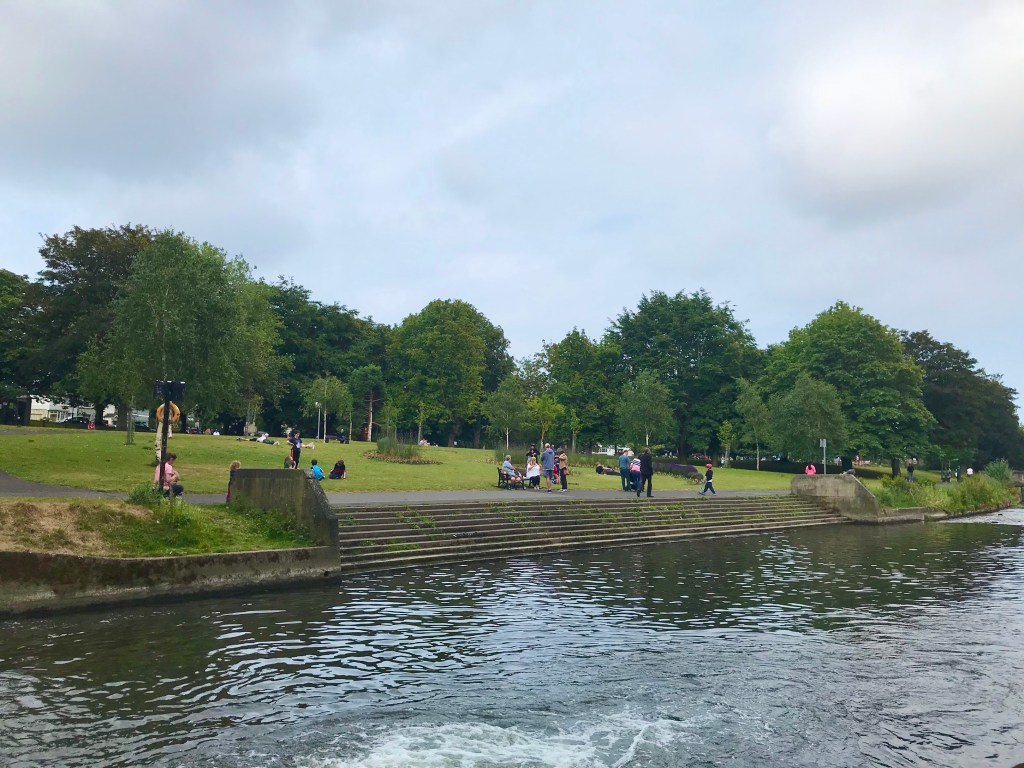
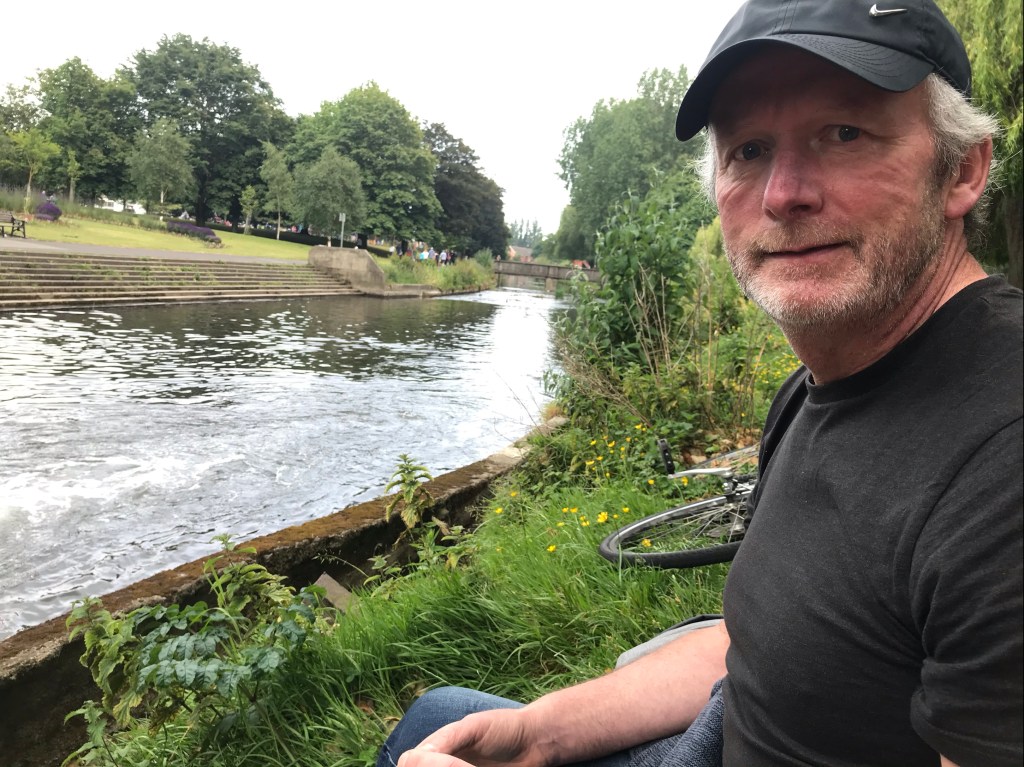
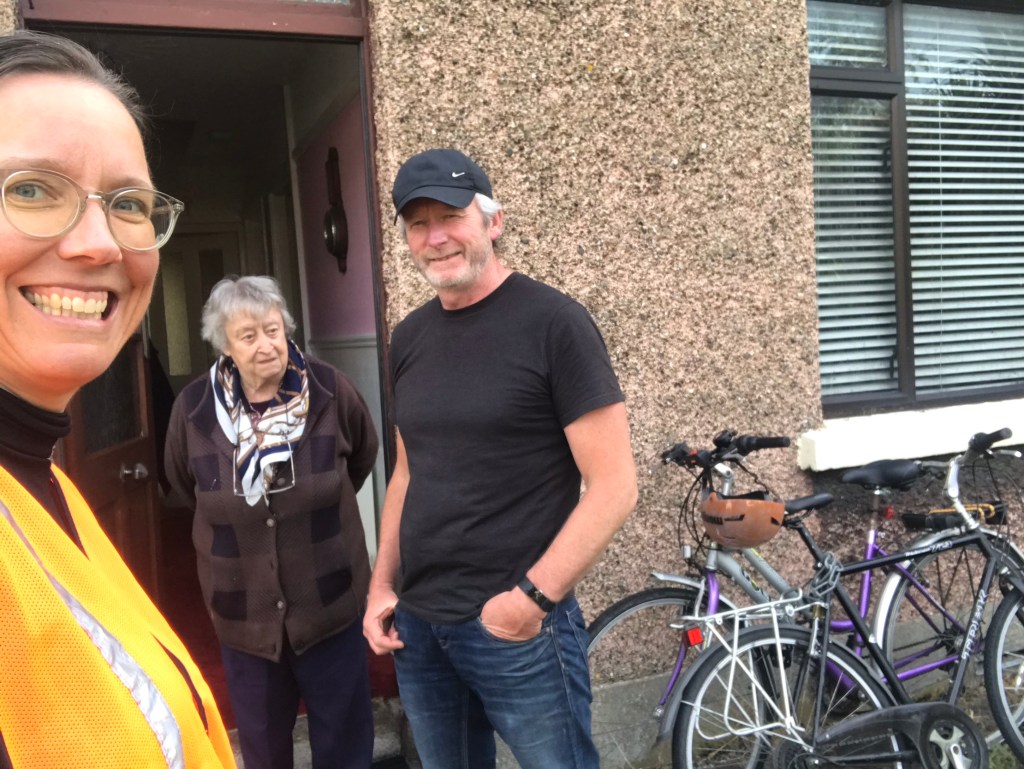
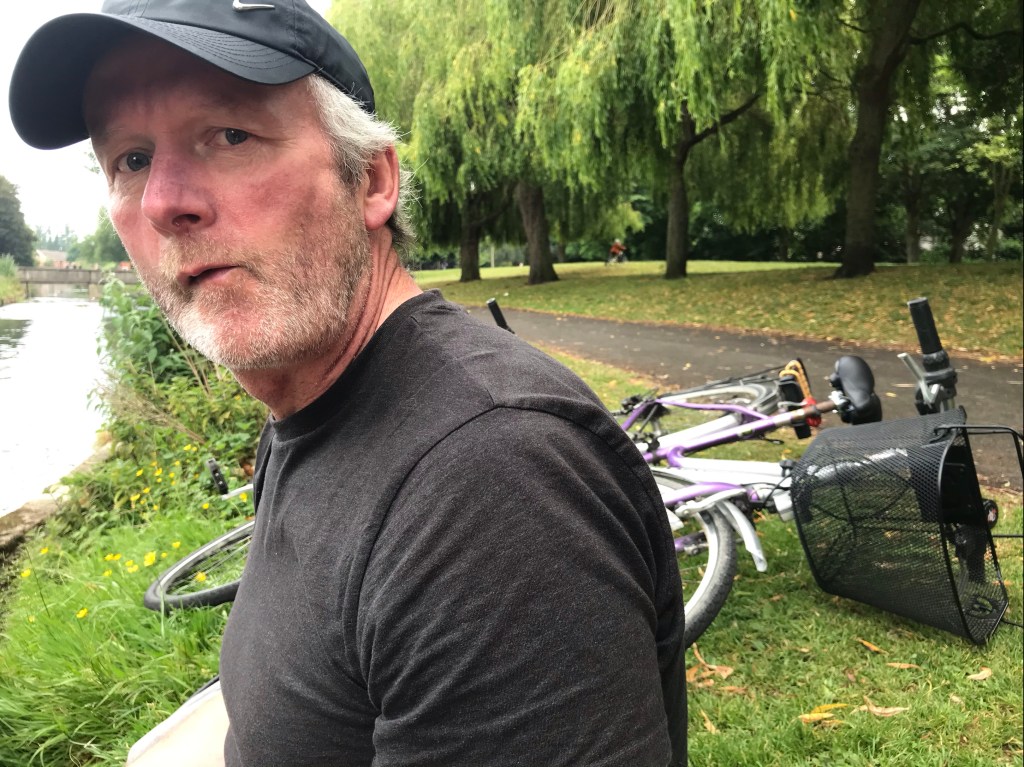
We had a snack beside the canal this day in Griffith Park, and then enjoyed a short and distanced front-year visit with his aunt.
Dollymount
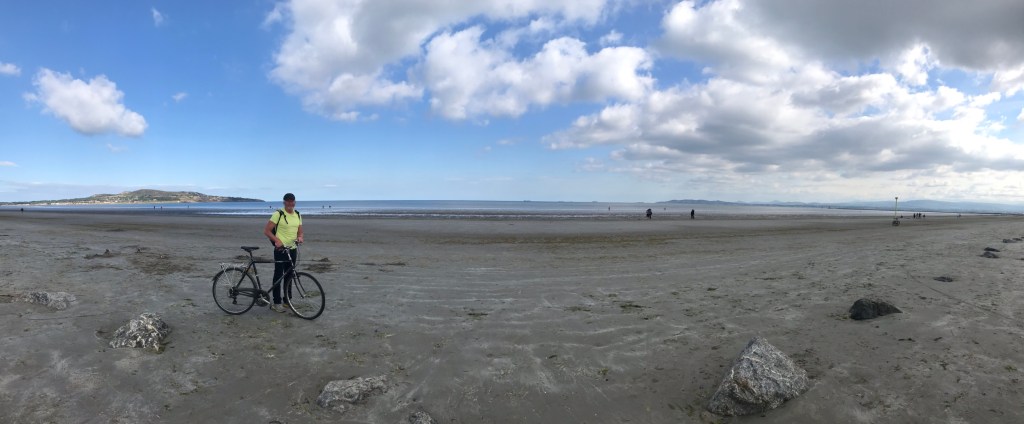
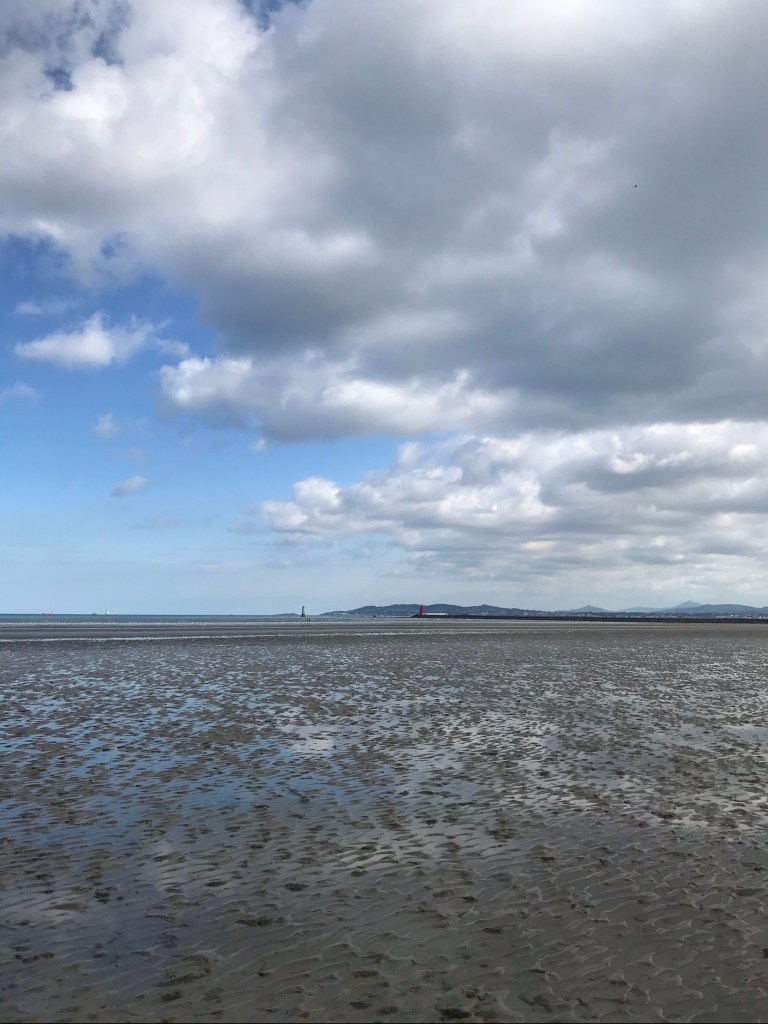
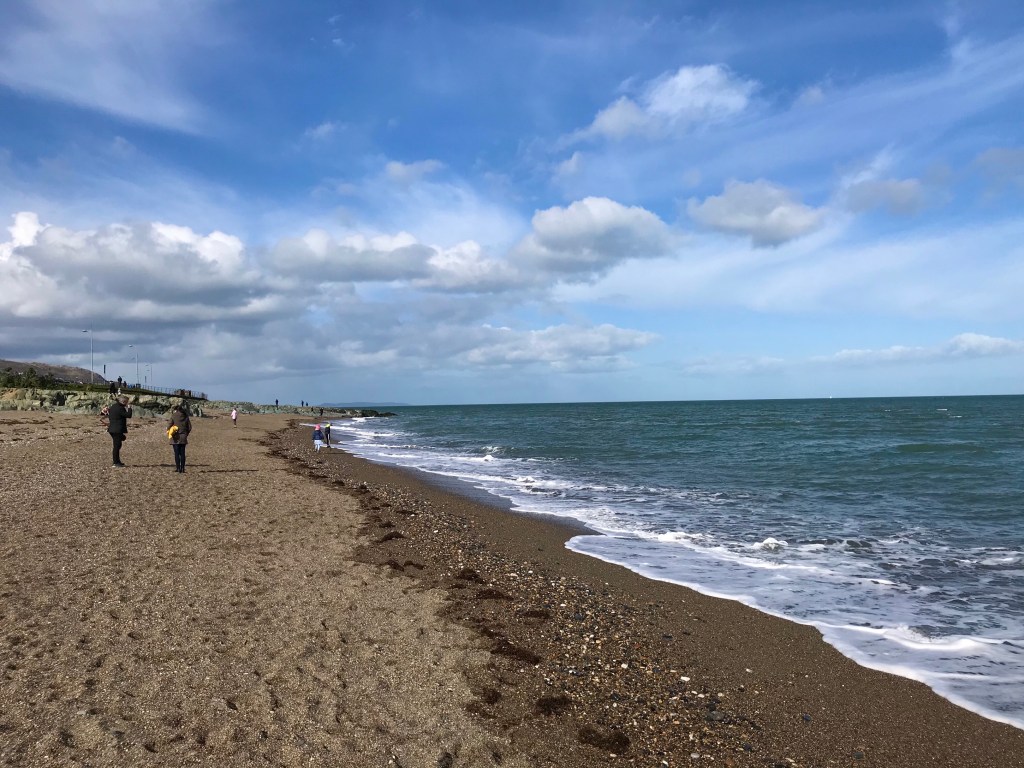
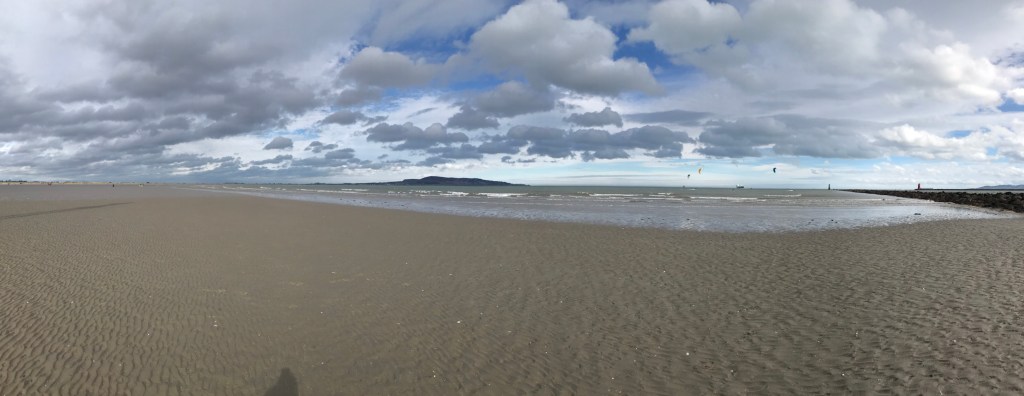
Bull Island with its Dollymount Strand fall just beyond our 5km, so we had to wait for the 20km radius to enjoy these coastal amenities again. Fairview and some of Clontarf were allowed, but we couldn’t go up as far as Bull Island. It’s too bad that we couldn’t enjoy the Wood Bridge without cars.
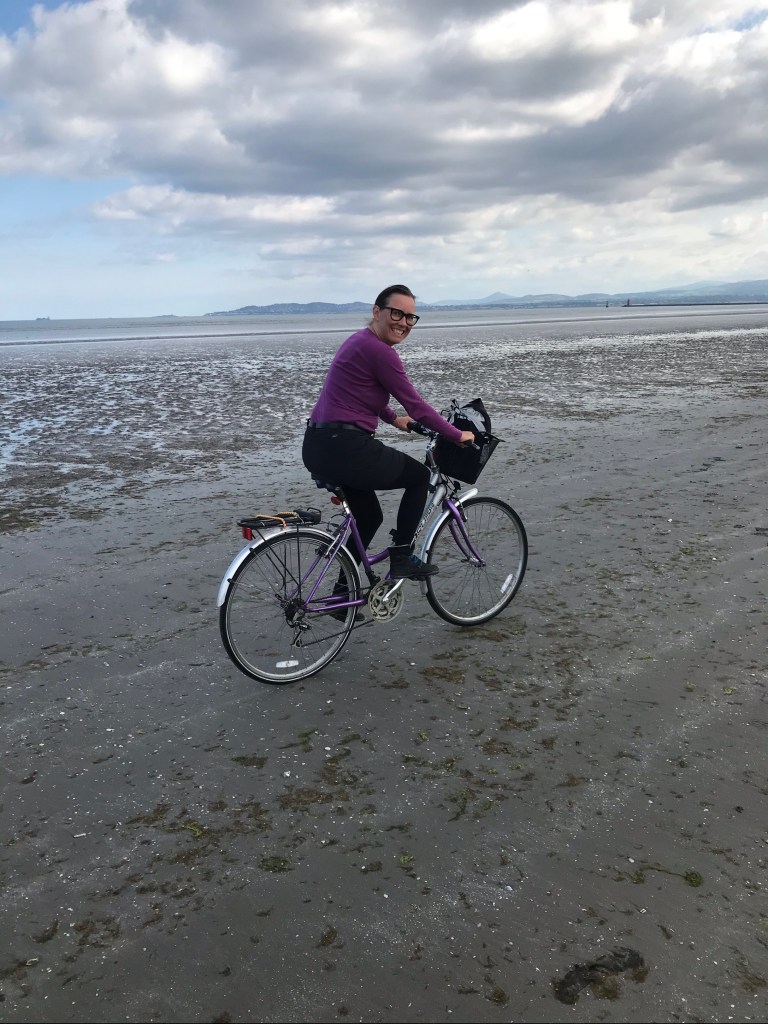
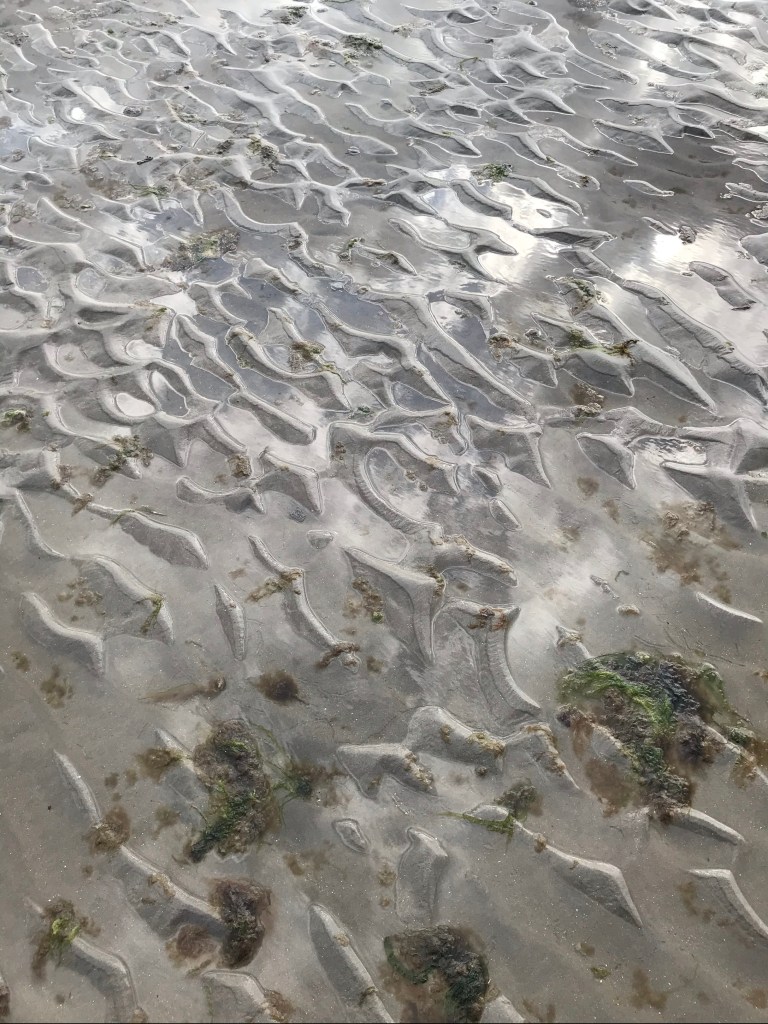
Our visit to Dollymount Strand came after our cycle to Howth (described below). We took the long route on the way home from Howth, to enjoy the views, and the challenge of cycling in the sand. It’s much easier to cycle where the sand is wet than dry!
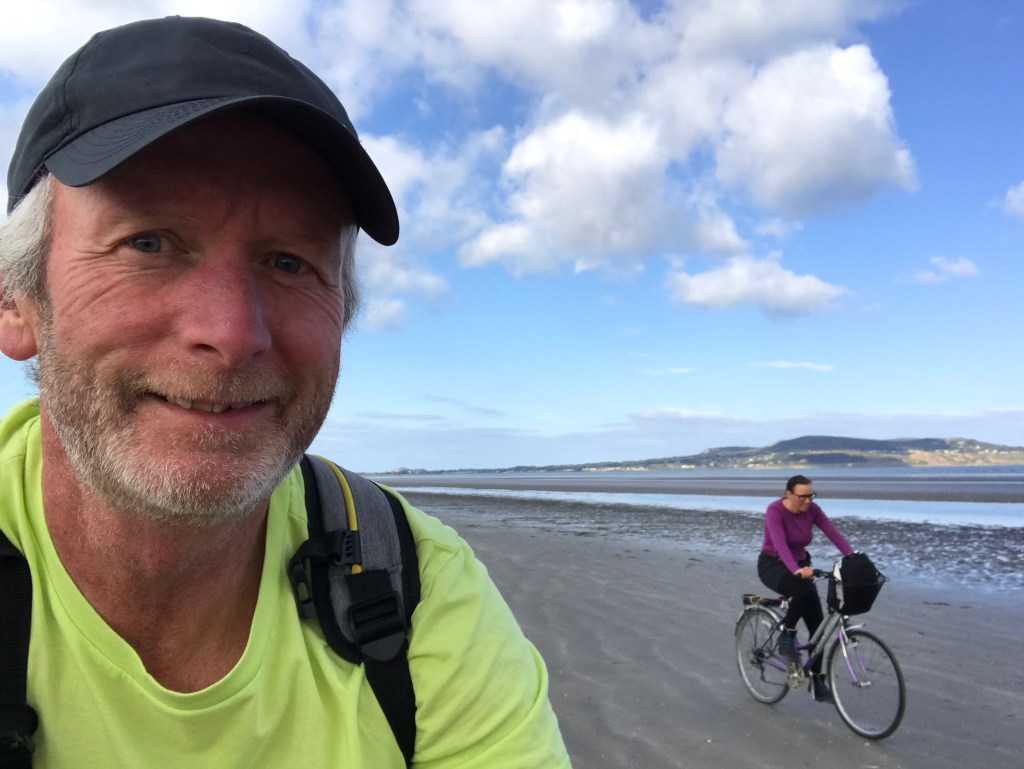
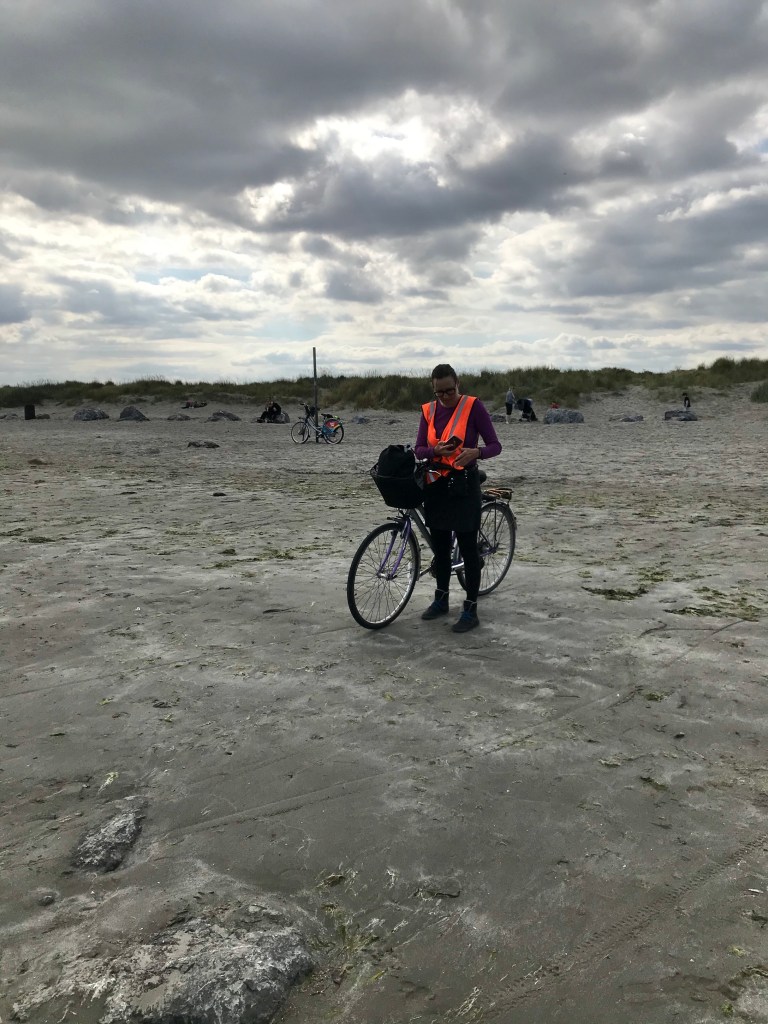
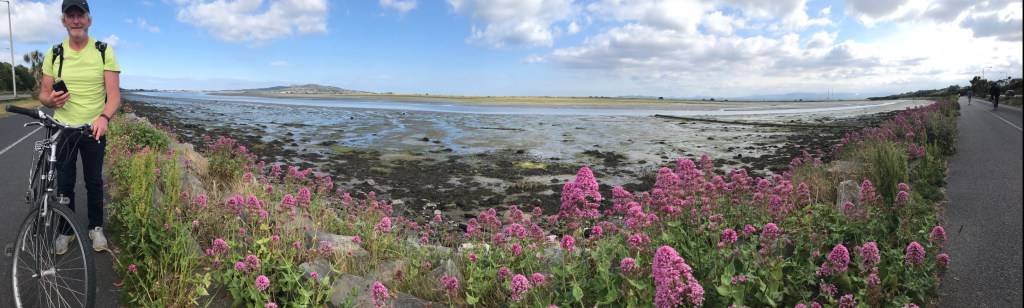
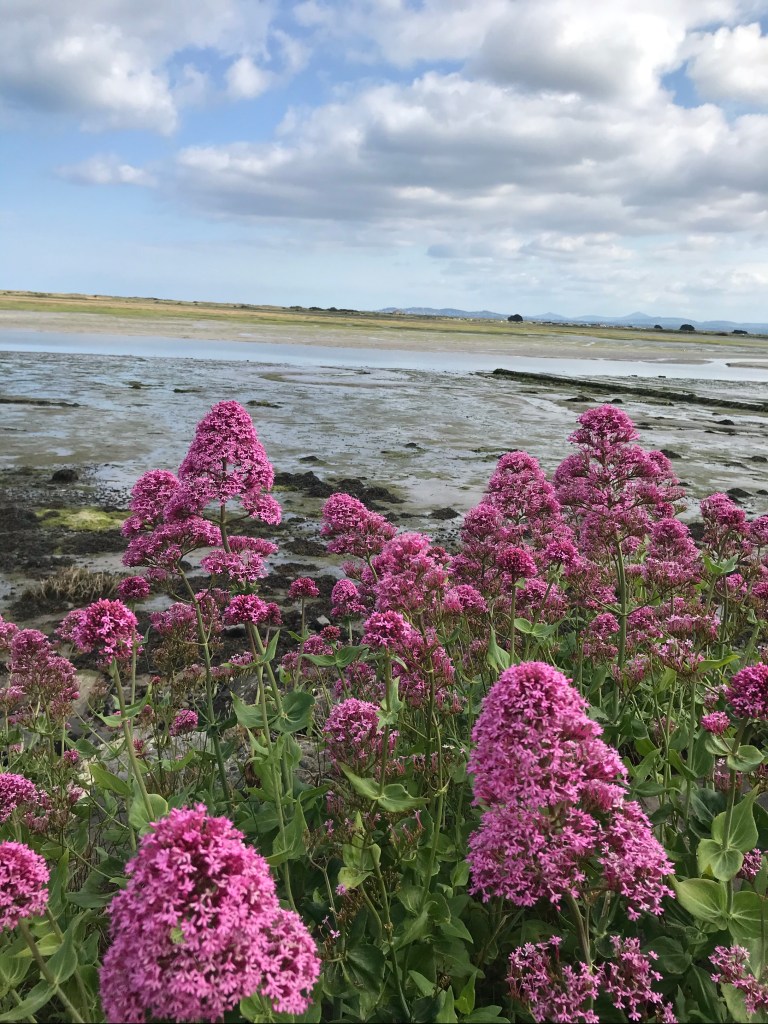
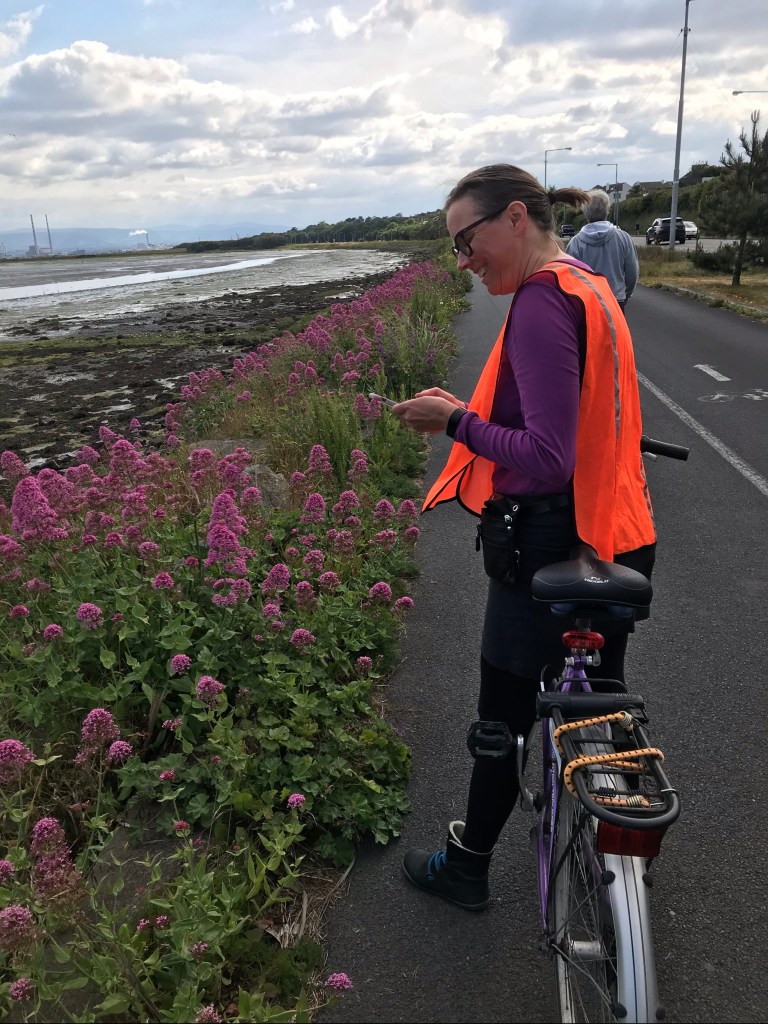
The wildflowers were stunning! Which is why I couldn’t decide which photos to include… so you get a bunch!

Howth

The real jewel in the crown of our 20km radius northward from Dublin is the little fishing village of Howth.
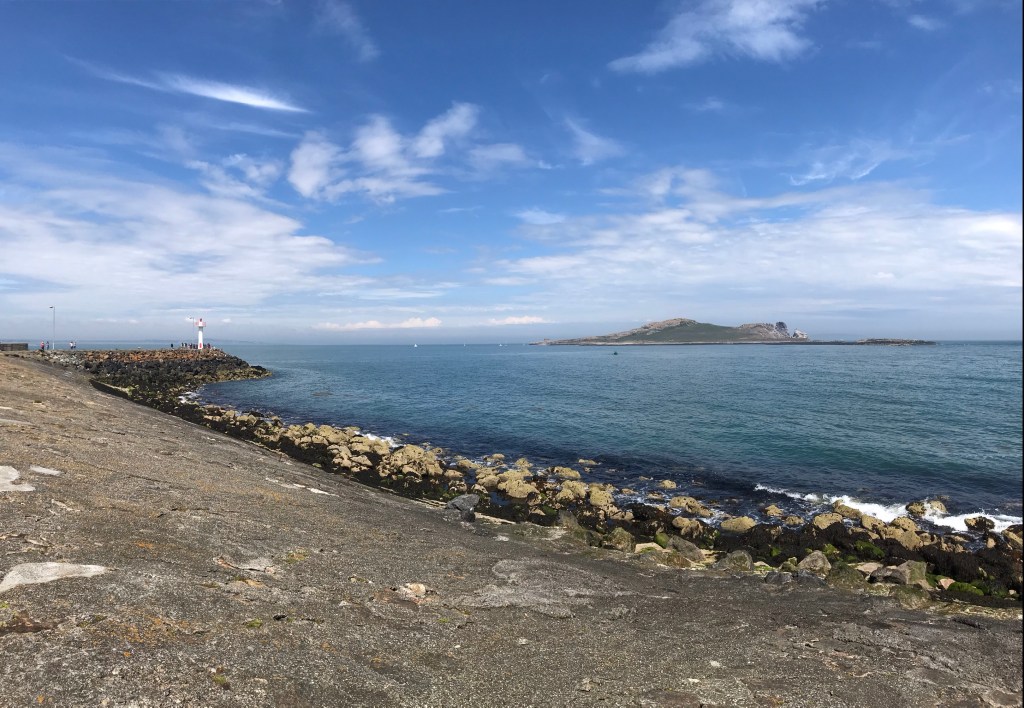
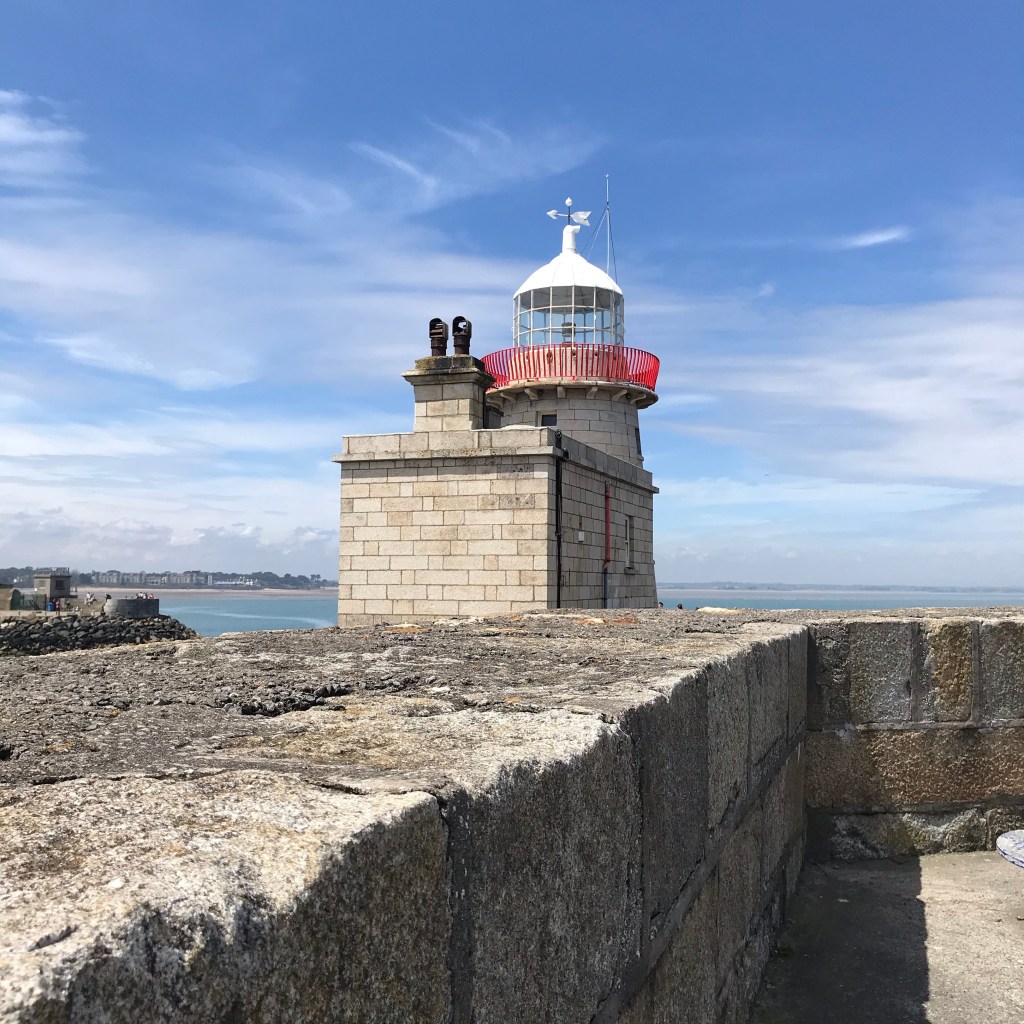
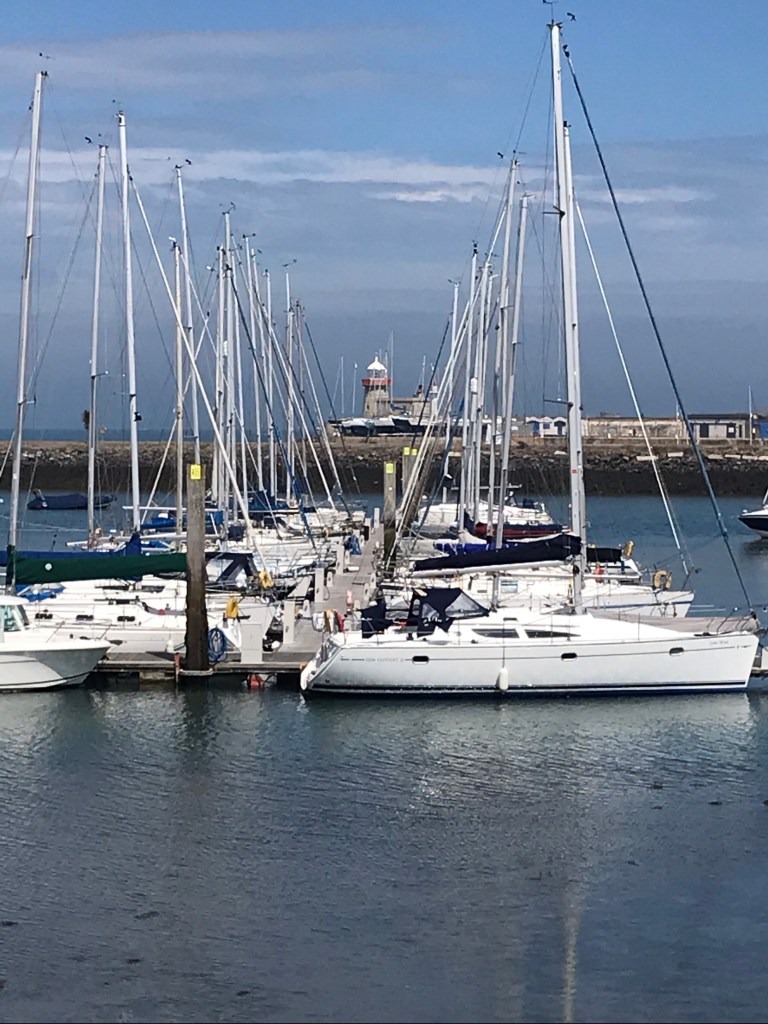
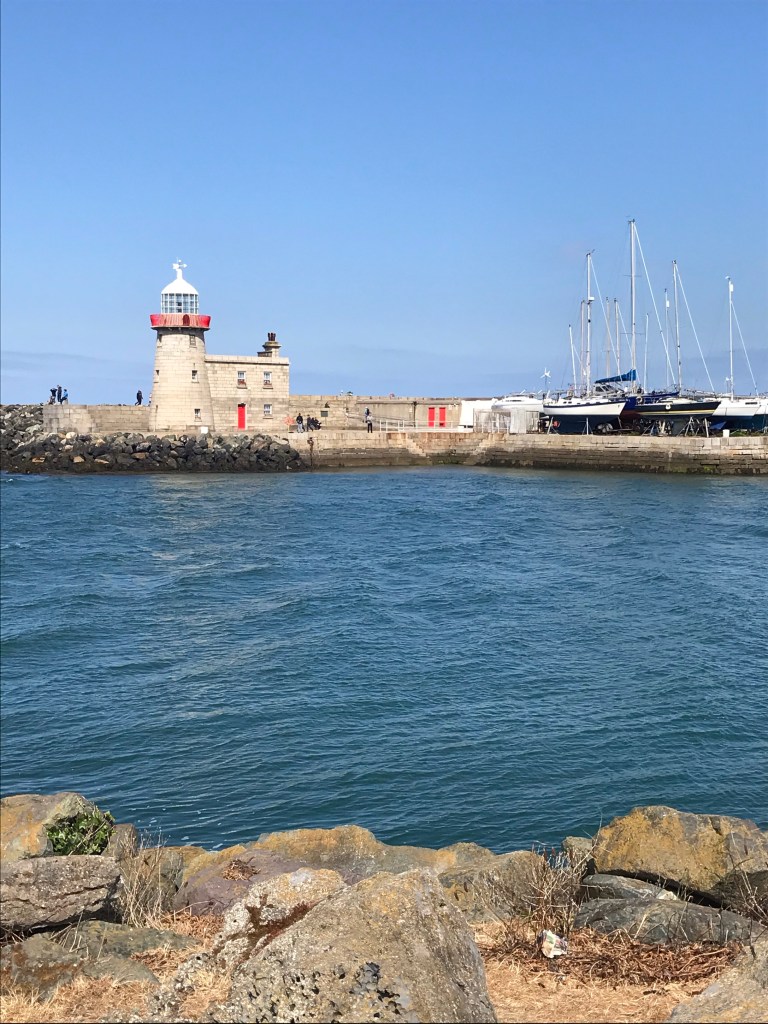
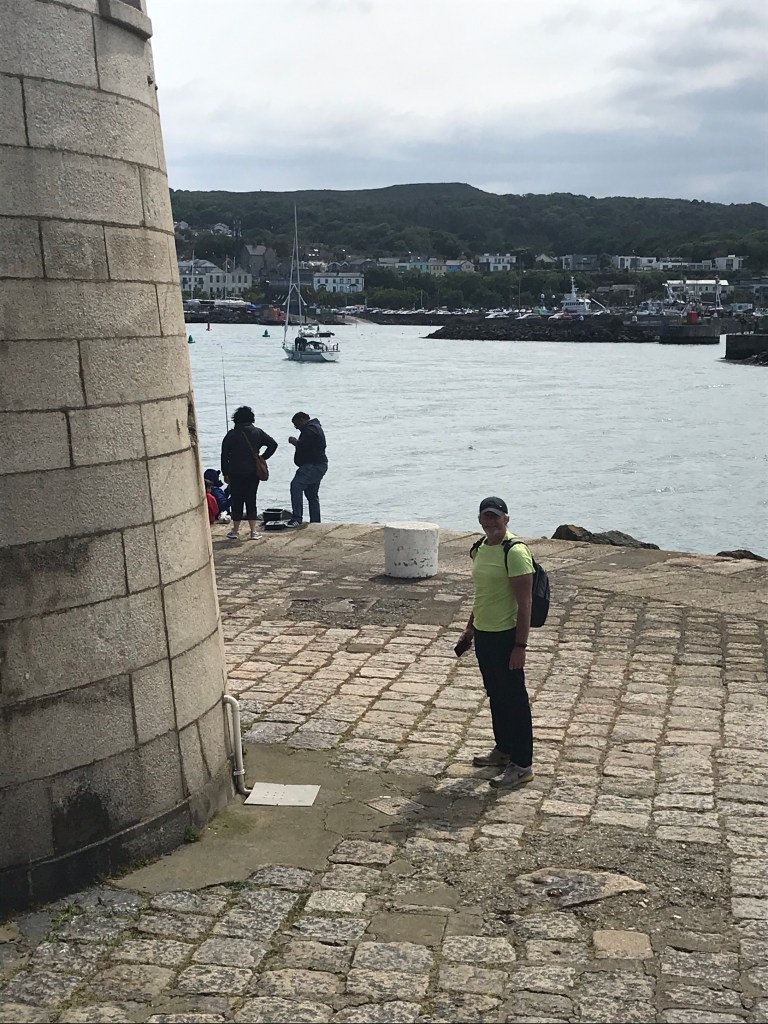
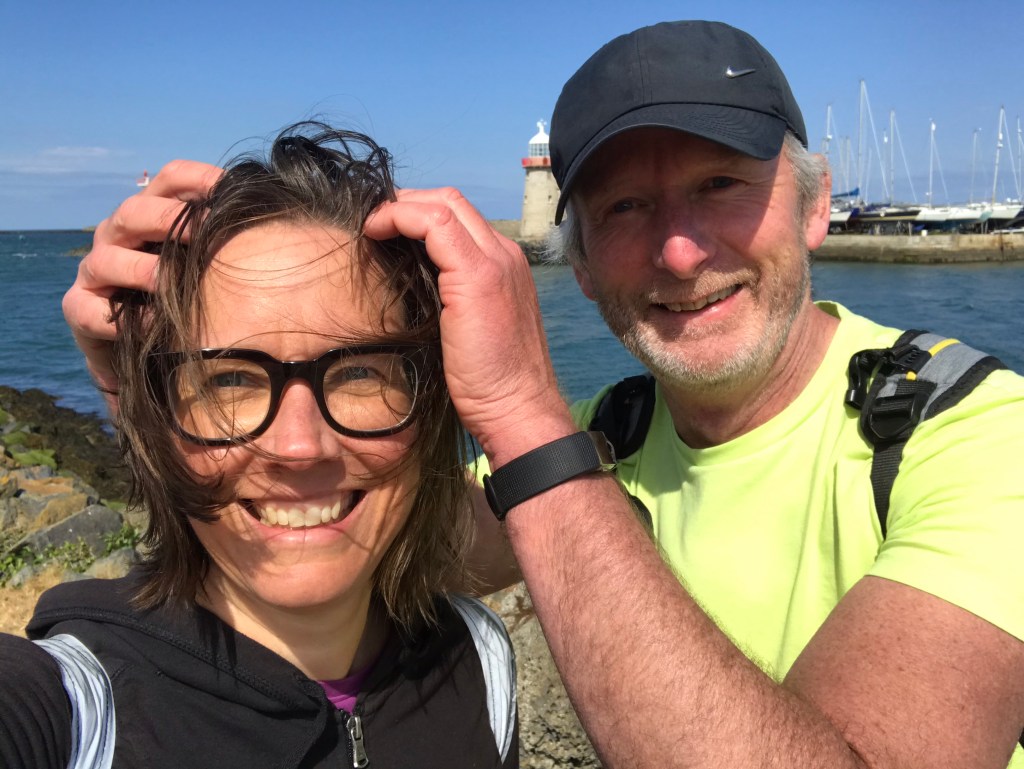
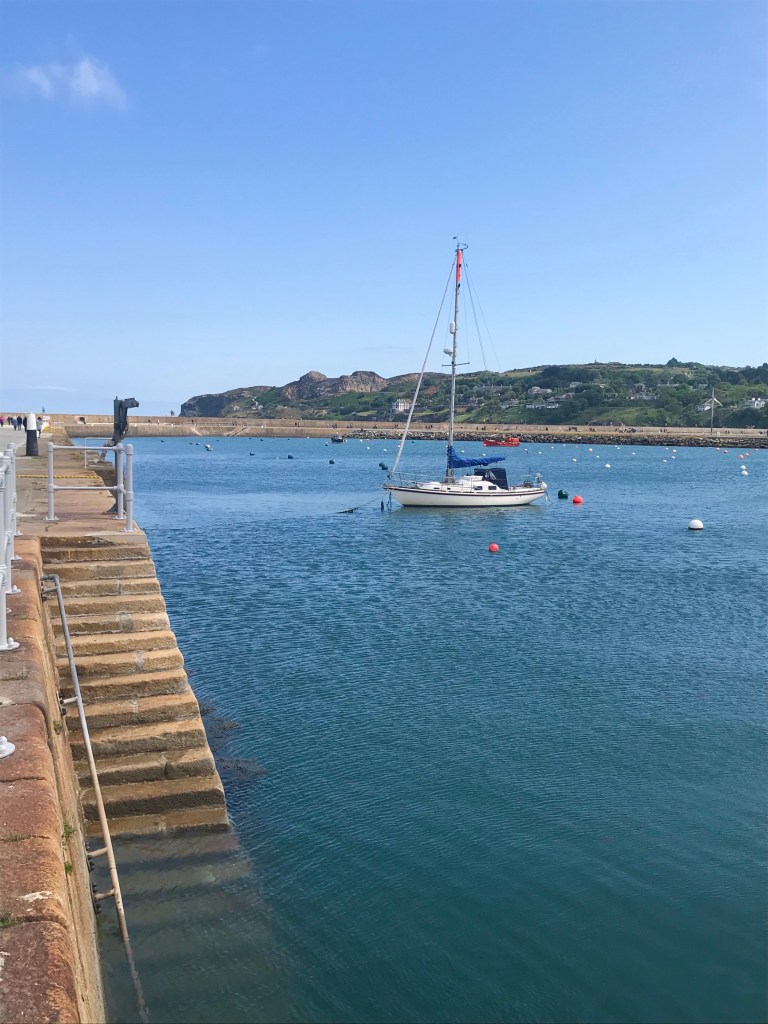
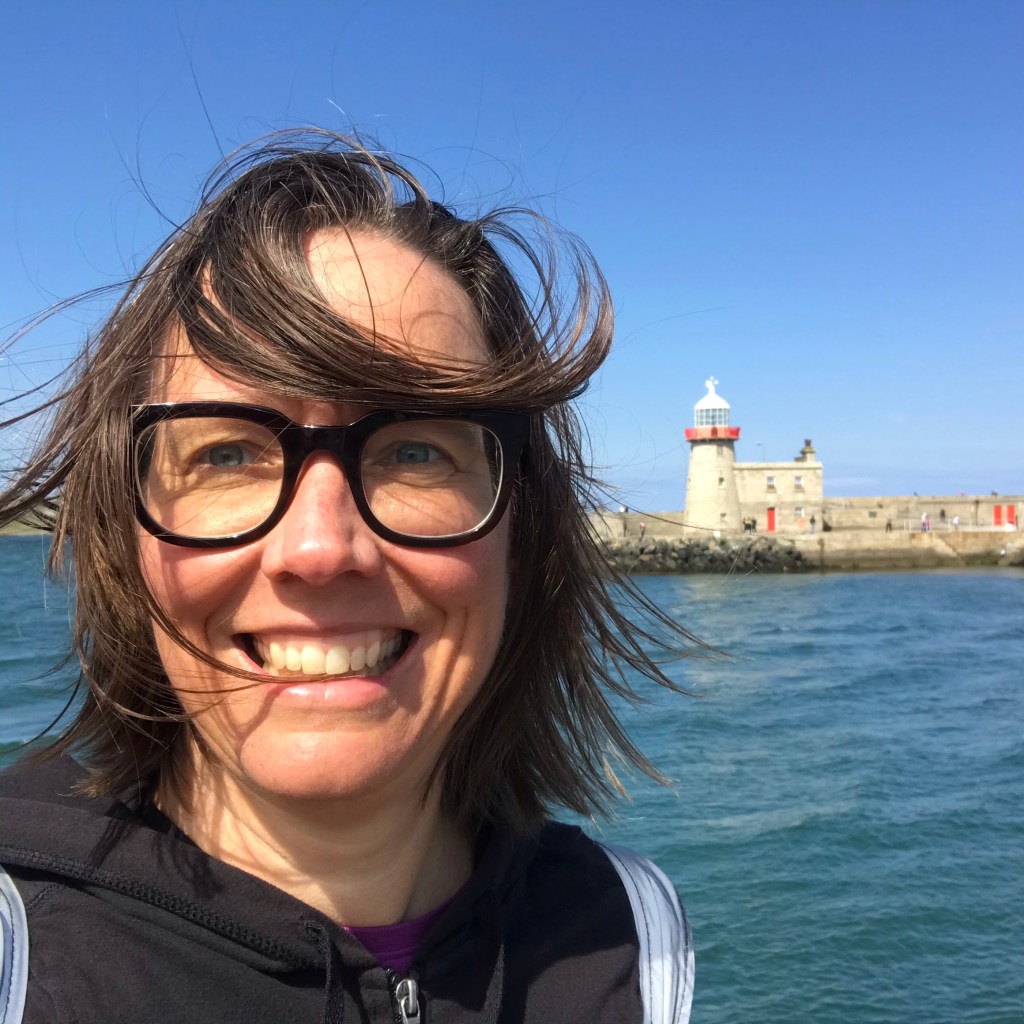
There’s a picturesque little harbor, protected by a lighthouse (and seagulls), that is today filled with pleasure craft in addition to work boats.
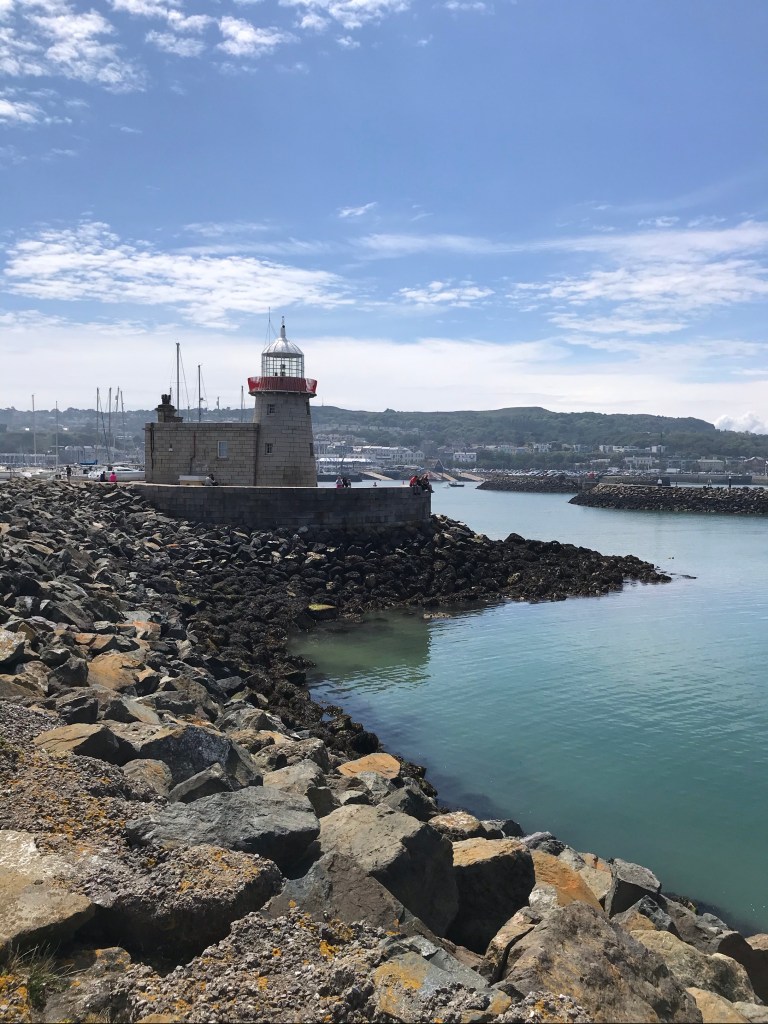
We have cycled out to Howth twice now. Once we bumped into friends of Aongus and enjoyed a distranced chat (after months of isolation seeing them was a highlight of the day).

The pictured below show us getting caught in the rain. We ended up taking the DART home that day and, as I had no mask, I had to improvise with a beach blanket.
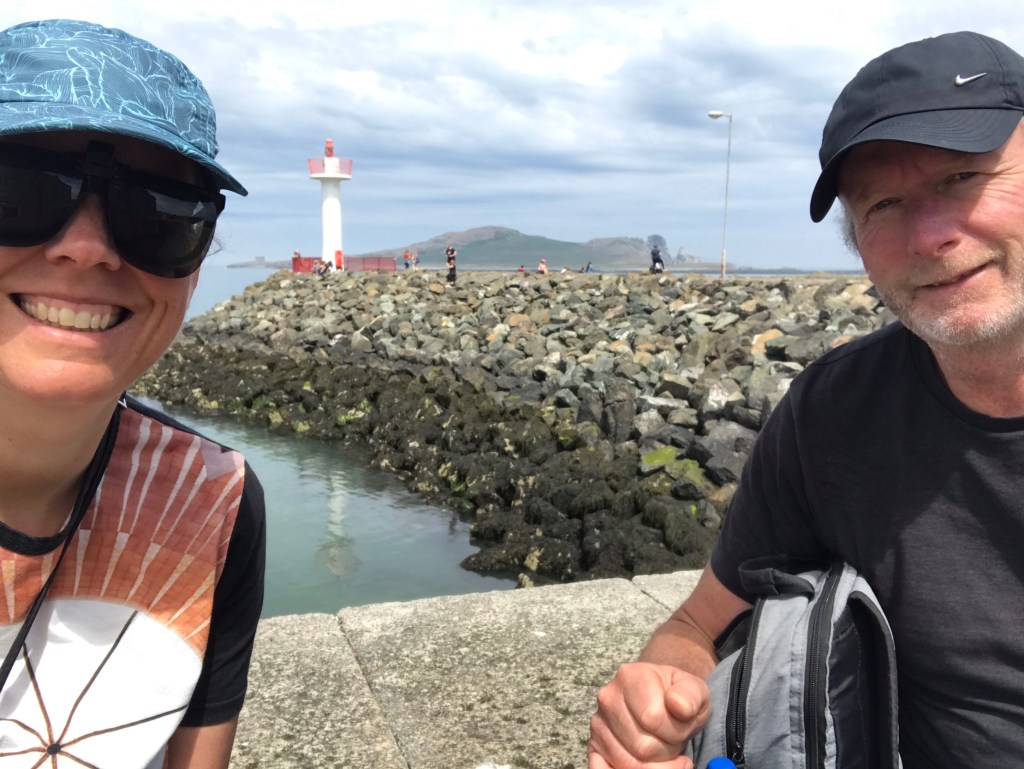
Fortunately, there was also lots of space and sun in Howth.

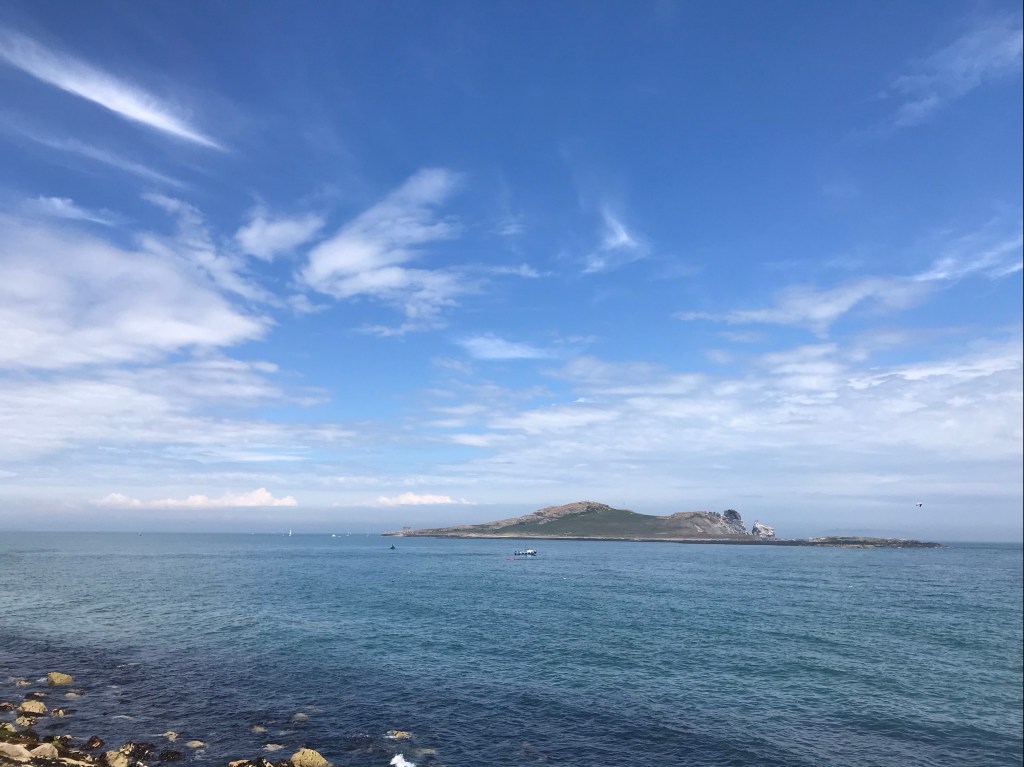
And so very many eye-catching views.

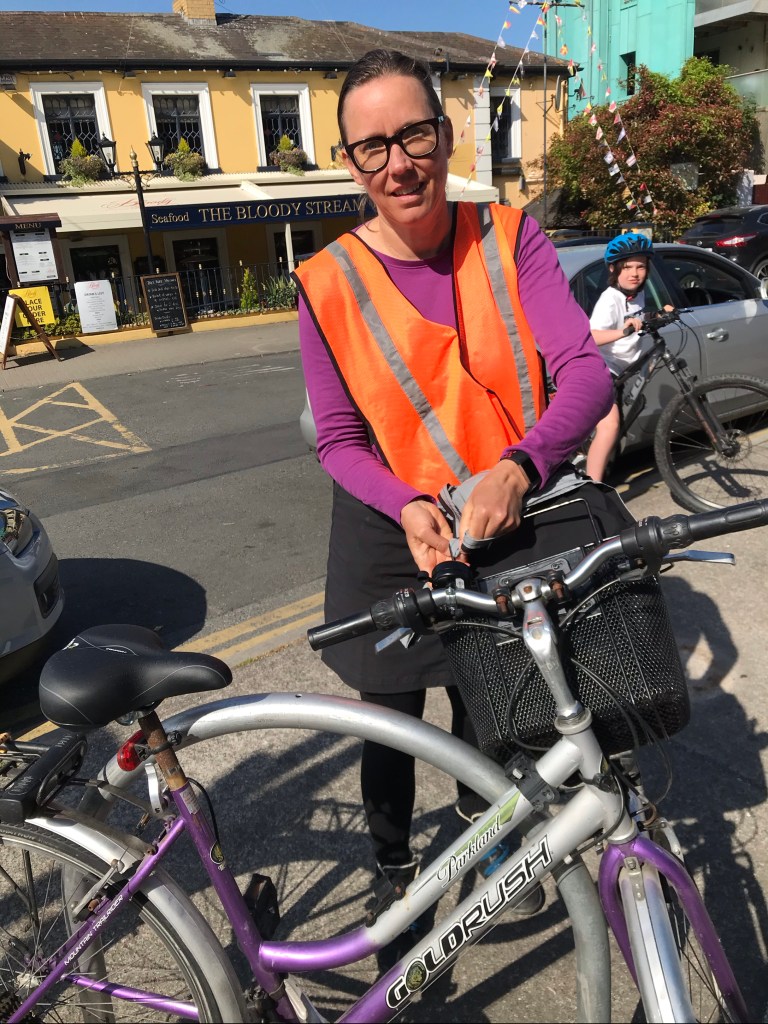
Plus, some darned good company.
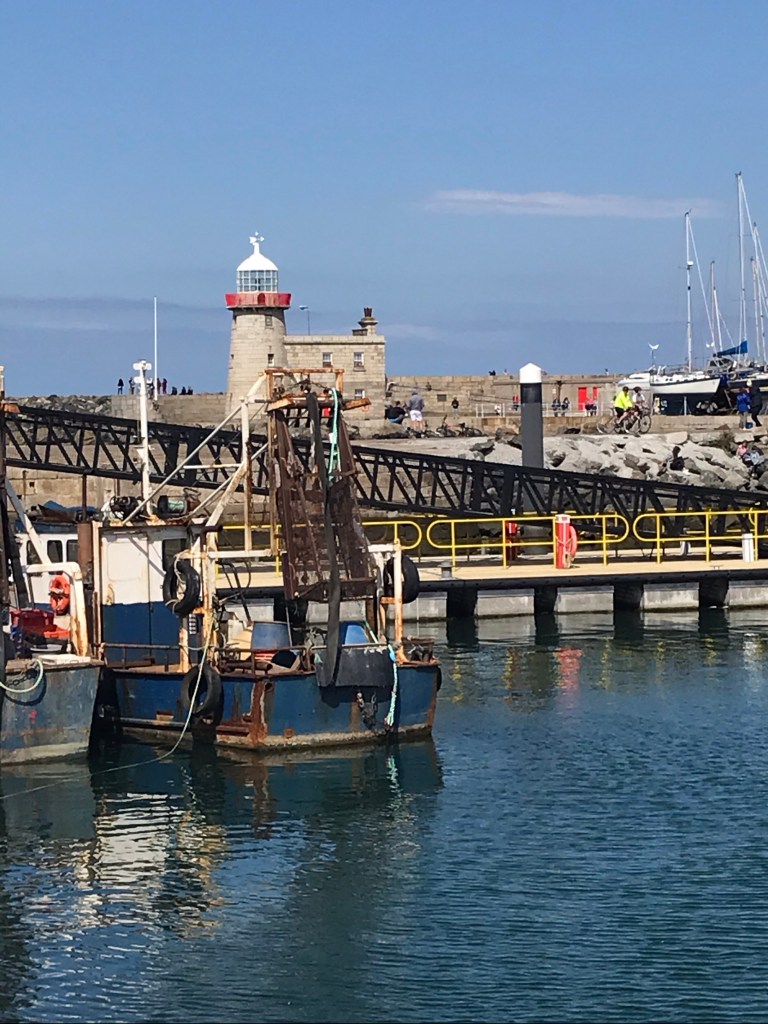
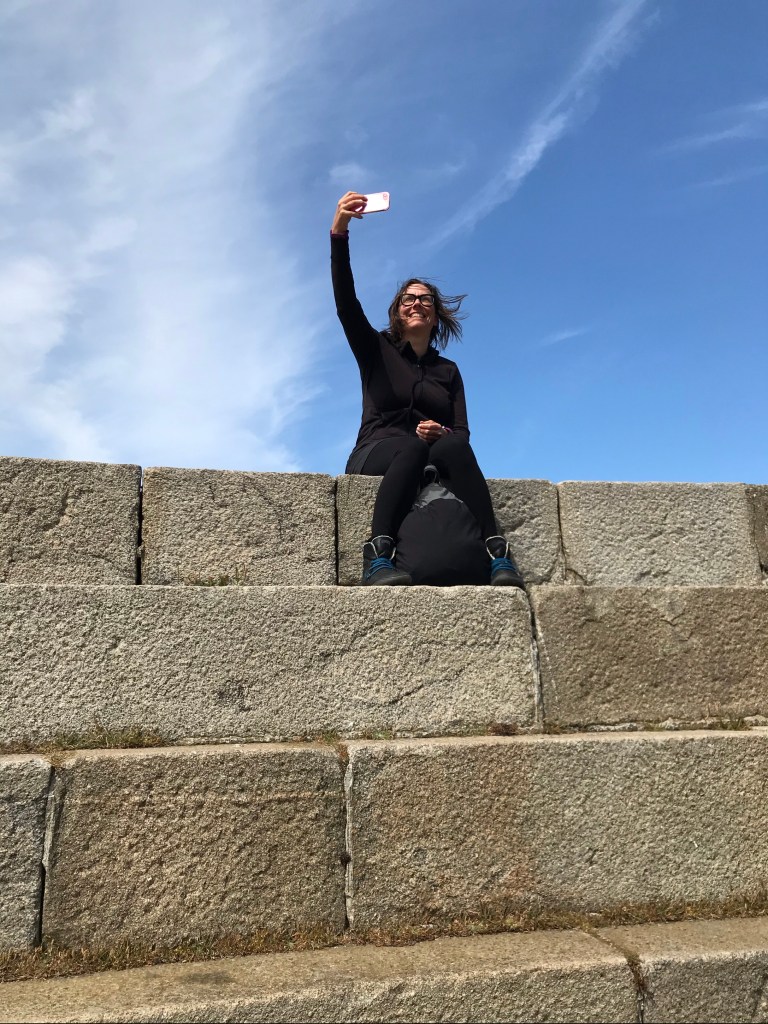
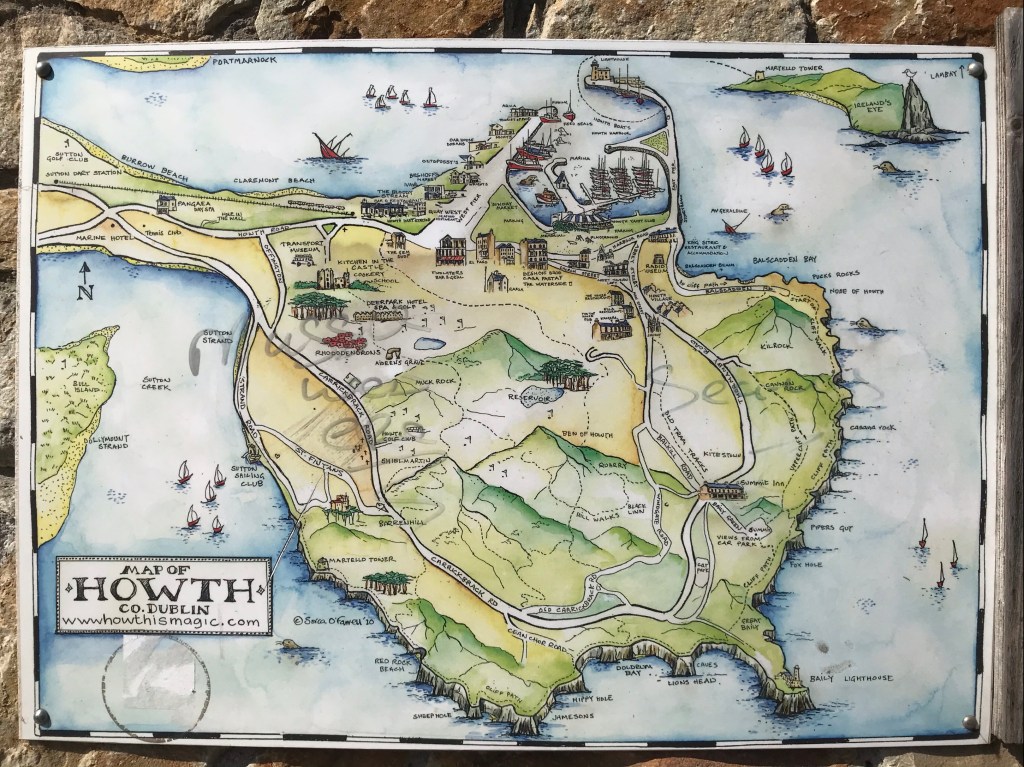
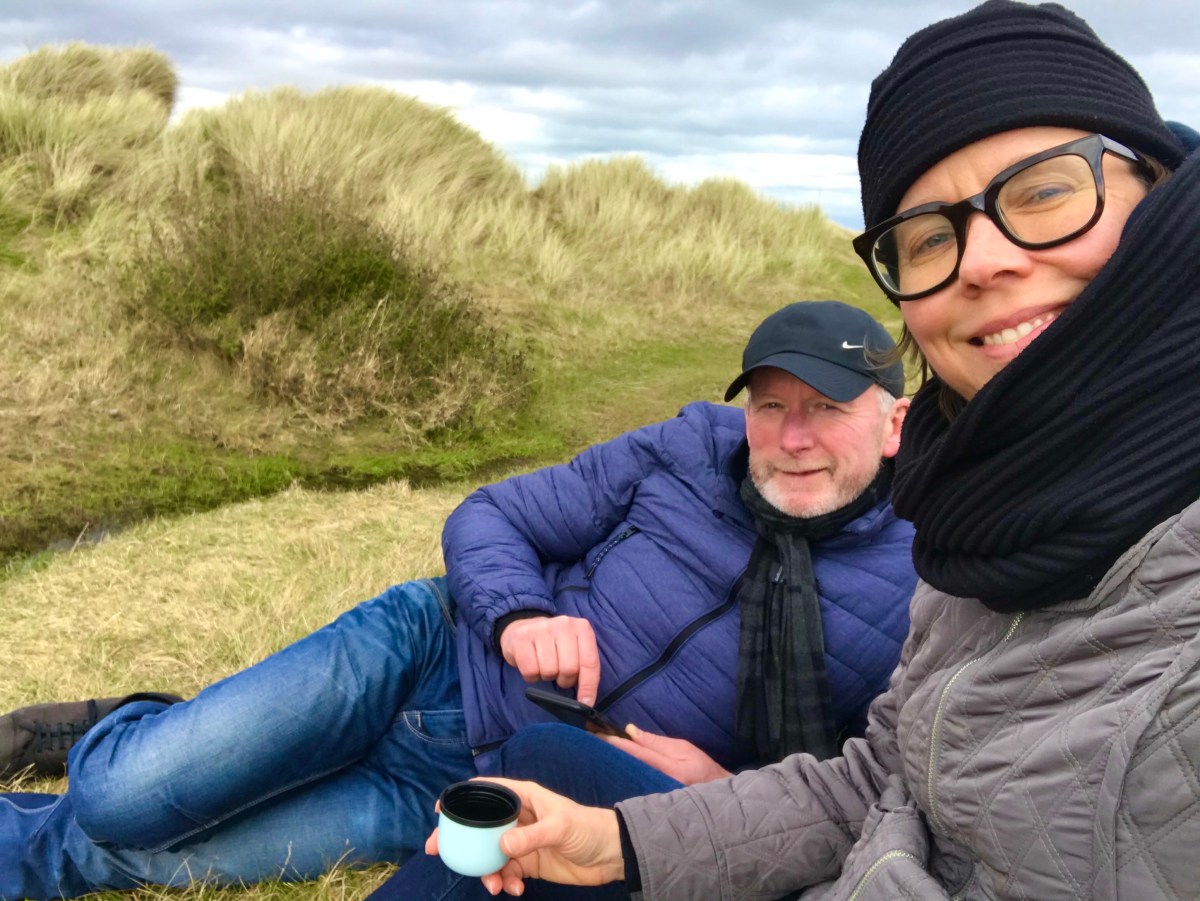
I couldn’t be more blessed than to spend this lockdown with the fun, kind, generous, patient, energetic, optimistic, healthy, share-the-load and ever-loving Mr. Aongus Coughlan. Now, if only I can get him hiking that Howth cliff walk with me (see the map below). Since the 20km rule has been lifted, it’s in our currently allowable zone. And yet, it’s still a bit too steep for the man. Never on a windy day!
Southeast Ireland: Cycling around Rosslare

Last weekend we tested out our new car-mounted bike rack. We researched good cycling routes, loaded the bikes for an overnight trip, and struck out Saturday morning for Wexford, the sunniest county in Ireland. On the island’s southeastern-most tip, County Wexford enjoys the highest number of summer days per year on the island.

En route to Wexford with bikes ready to roll.

We parked the car at our hotel in view of Rosslare Harbor, with its ferry port and boats to France, the UK, and elsewhere in Europe and fueled up with a sandwich.

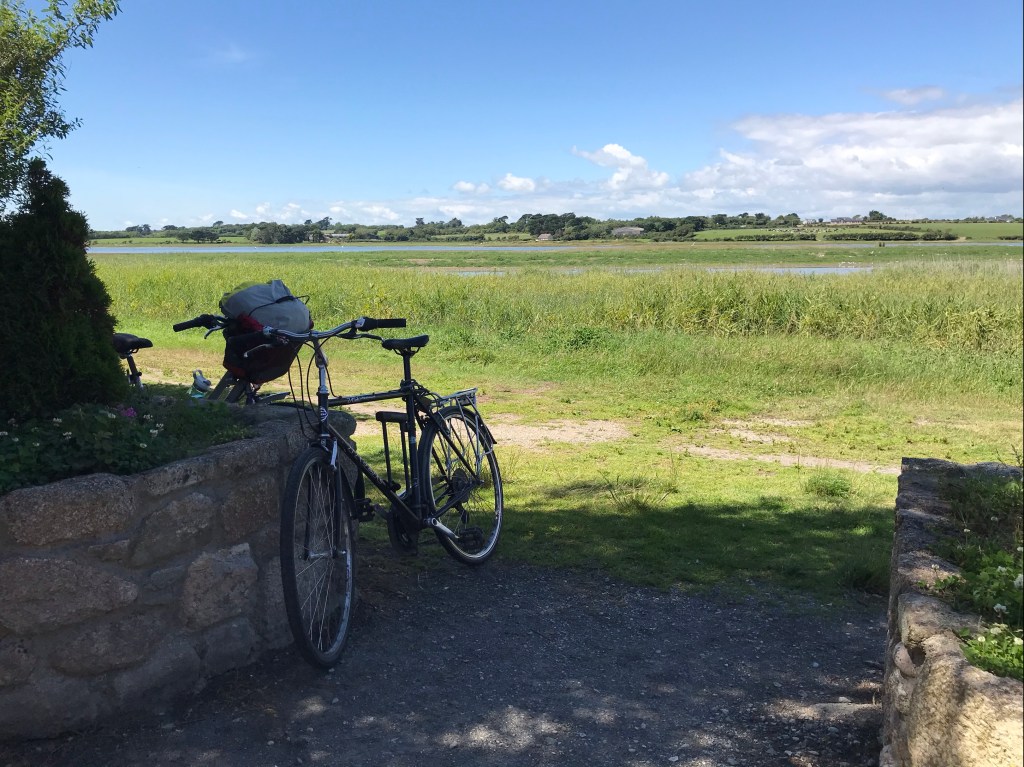
Then we set out to find peaceful waters by bike. The port is the starting point for the Irish leg of a major European cycling route, with three sub-routes circling the area. It’s part of a larger European system of touring-friendly cycling roads.

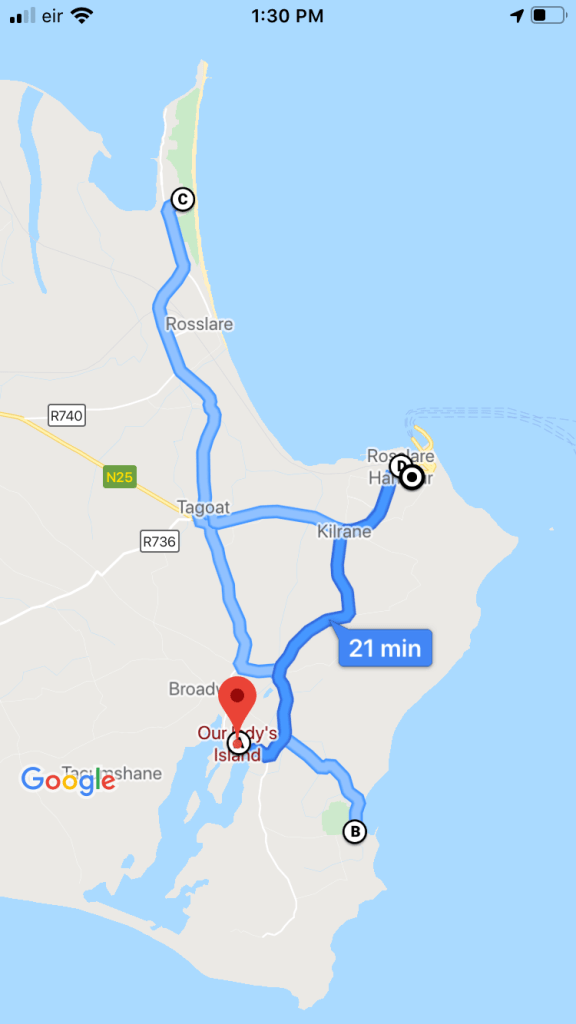
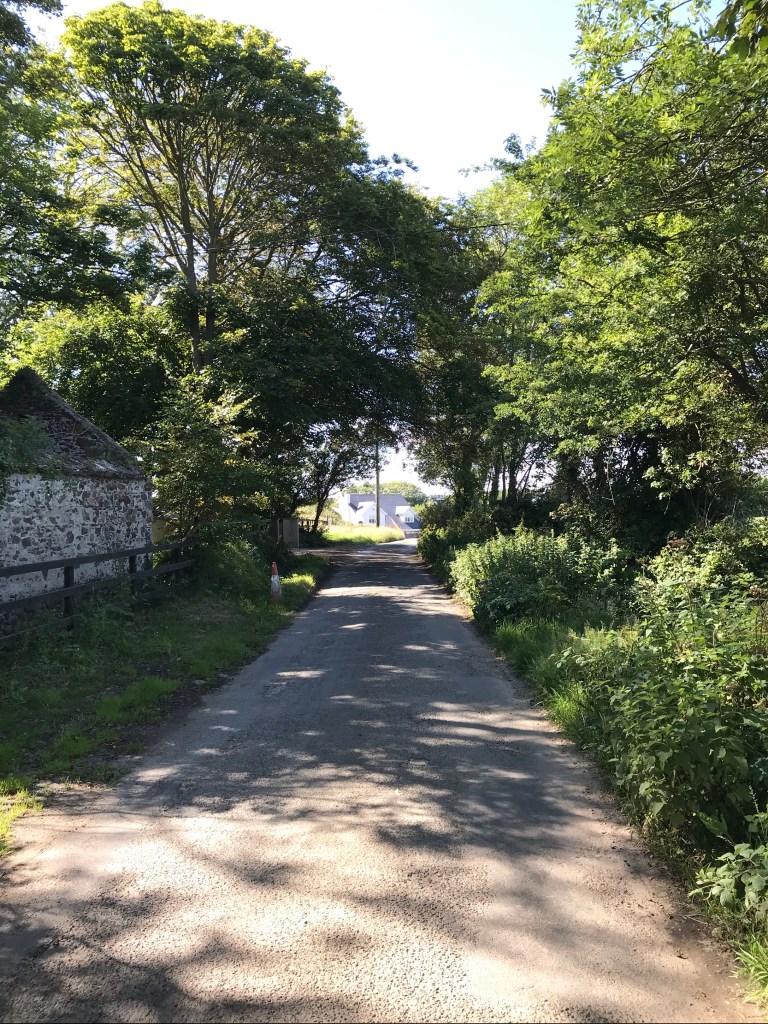
Our cycling route this day totaled about 37 km and, with its loops, provided us options if we ran out of steam. We didn’t run out though! We chose tranquil little roads, were passed by the occasional car, puzzled at the road signs, and asked other cyclists for advice. GPS really helps with navigating roads in Ireland, but groping around can also be fun.
Ladys Island

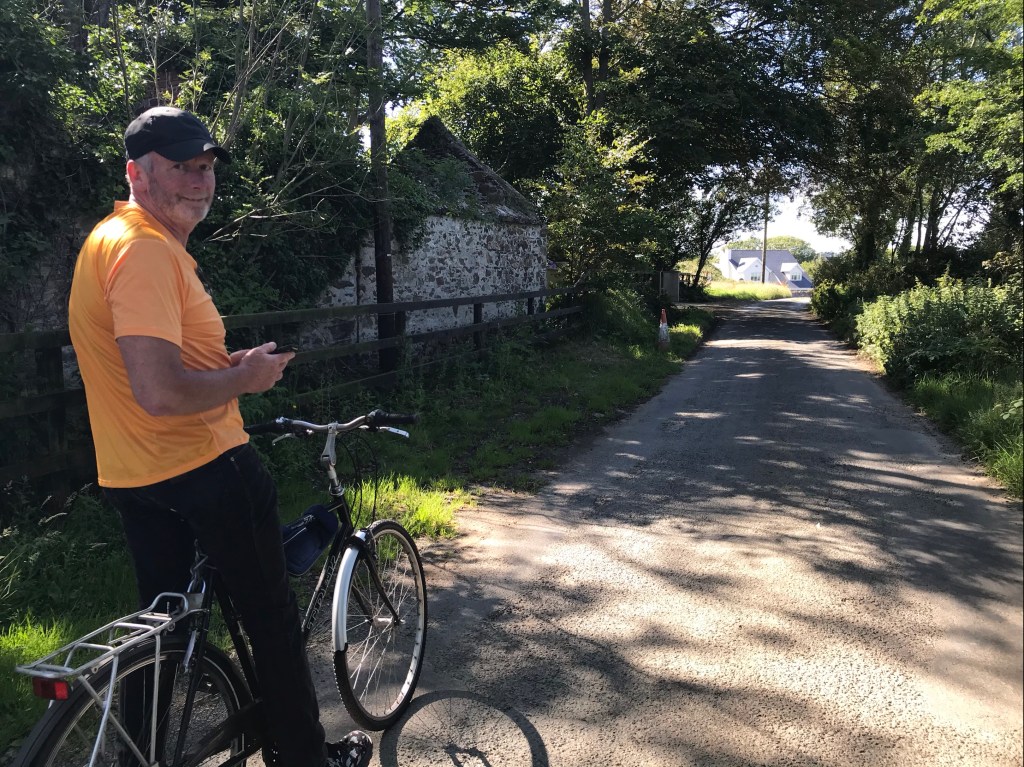
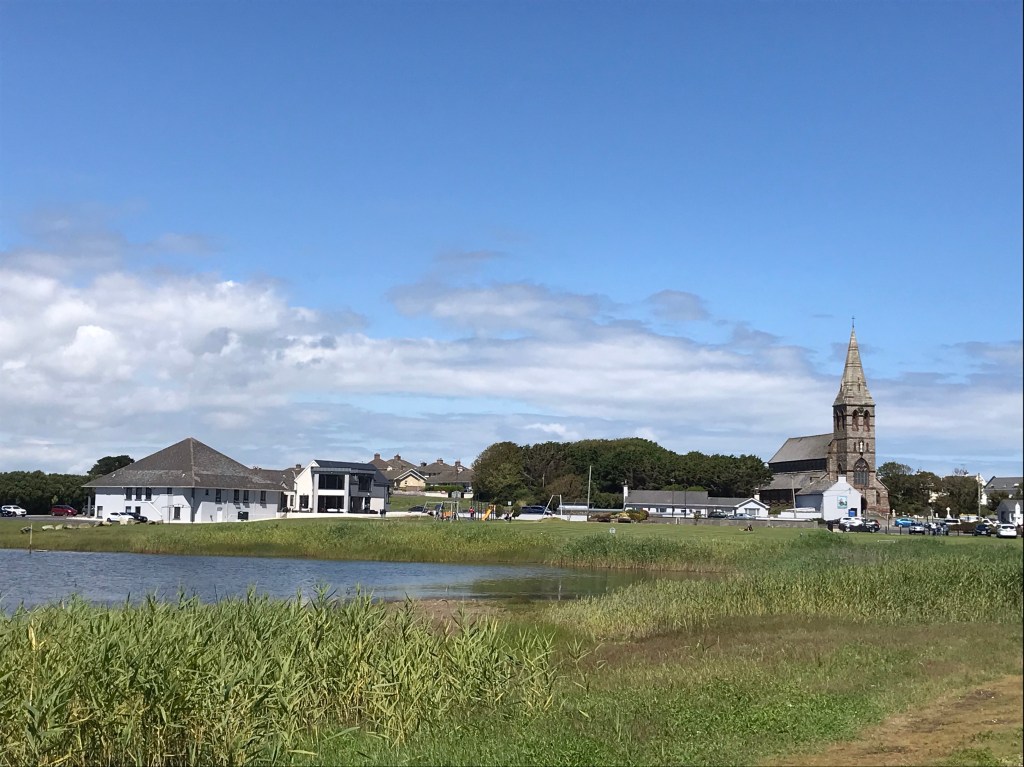
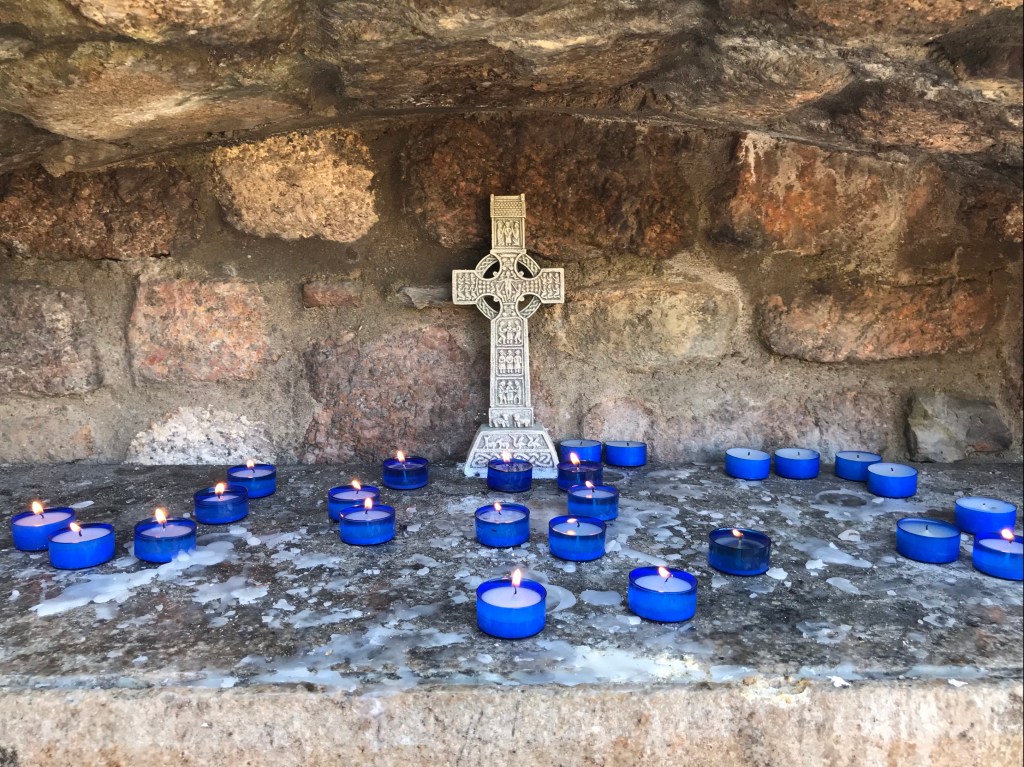
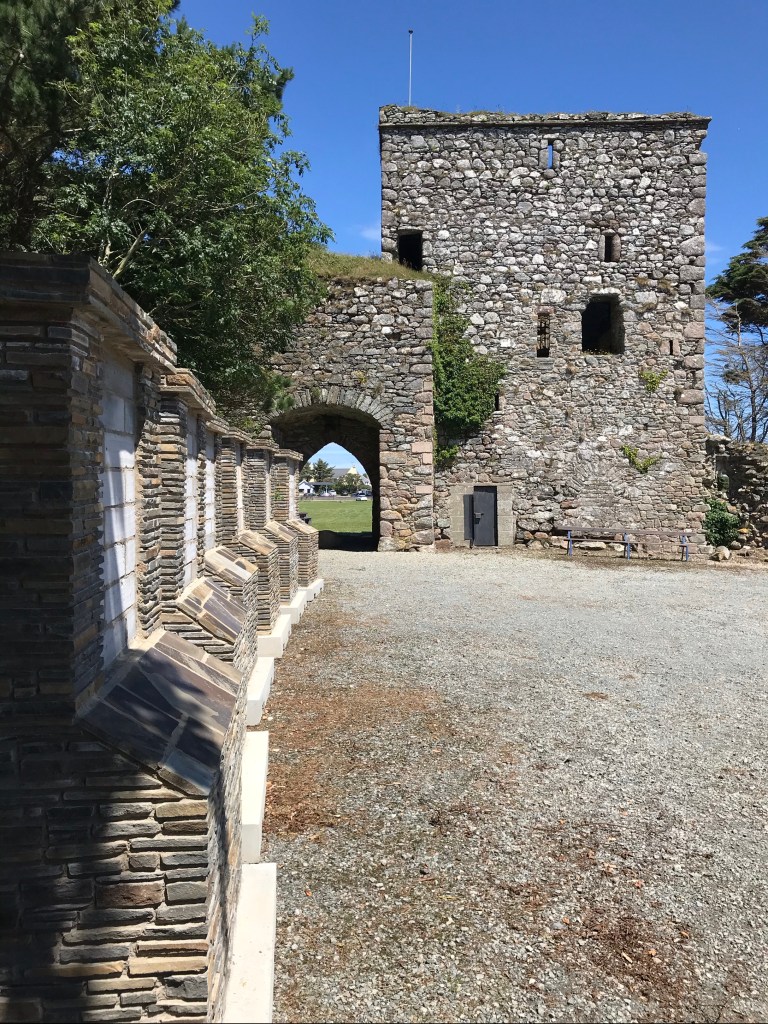
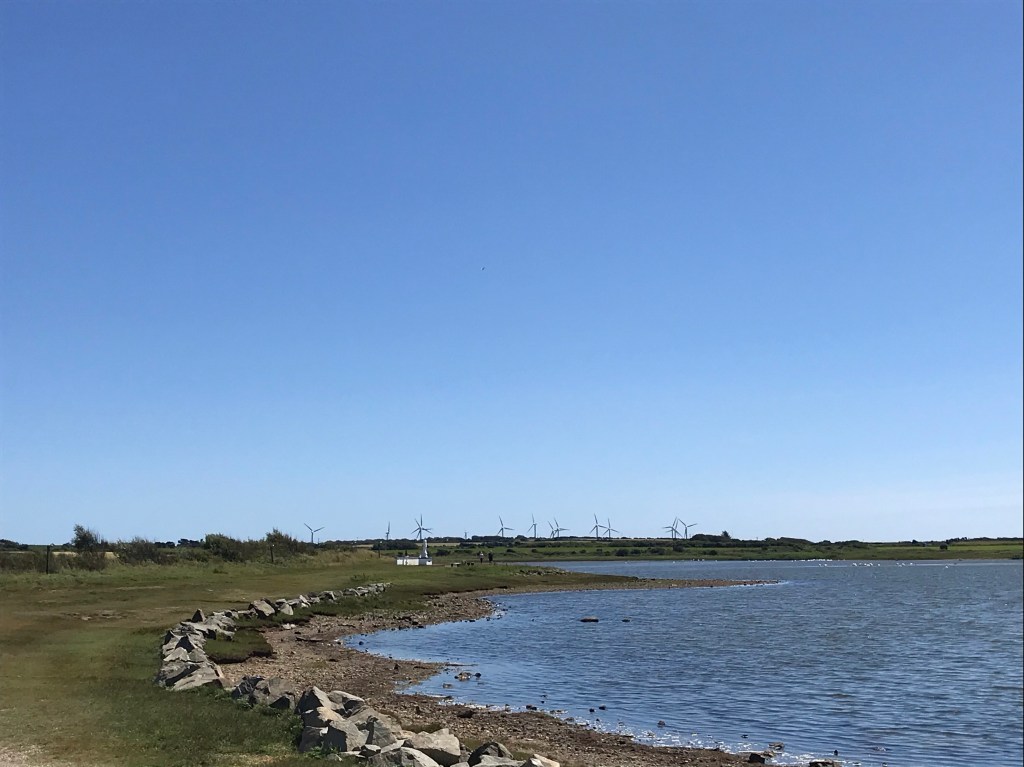
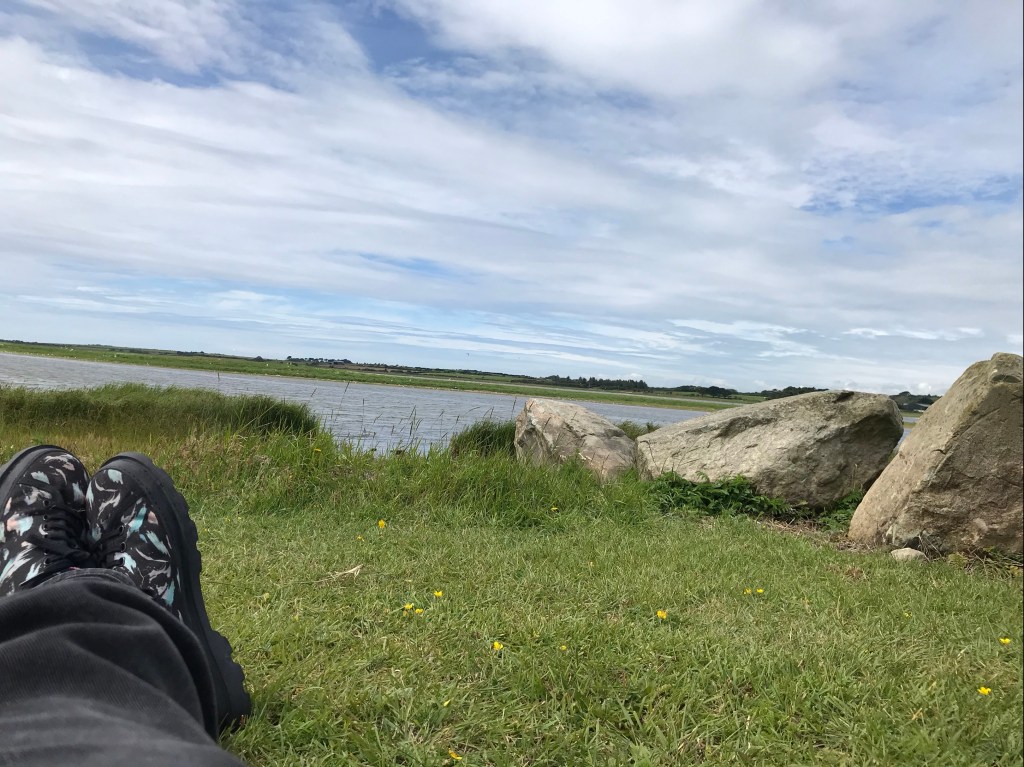
Our first stop: Ladys Island, also called Our Lady’s Island. The island itself is a bird sanctuary, and the peninsula beside it is accessible to people and is a religious pilgrimage site. We completed the pilgrimage route by bike. There was evidence of recent outdoor masses beside the castle-like ruin. We explored a old cemetery, recently reclaimed from the brush. There were many people walking and cycling in the area.

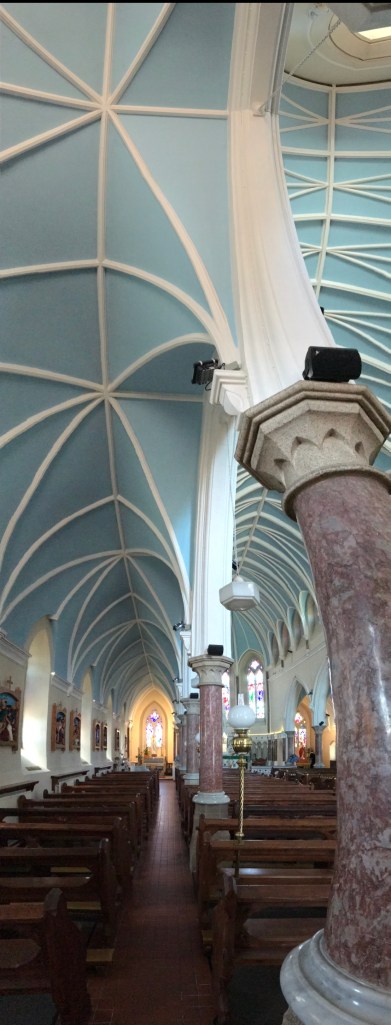
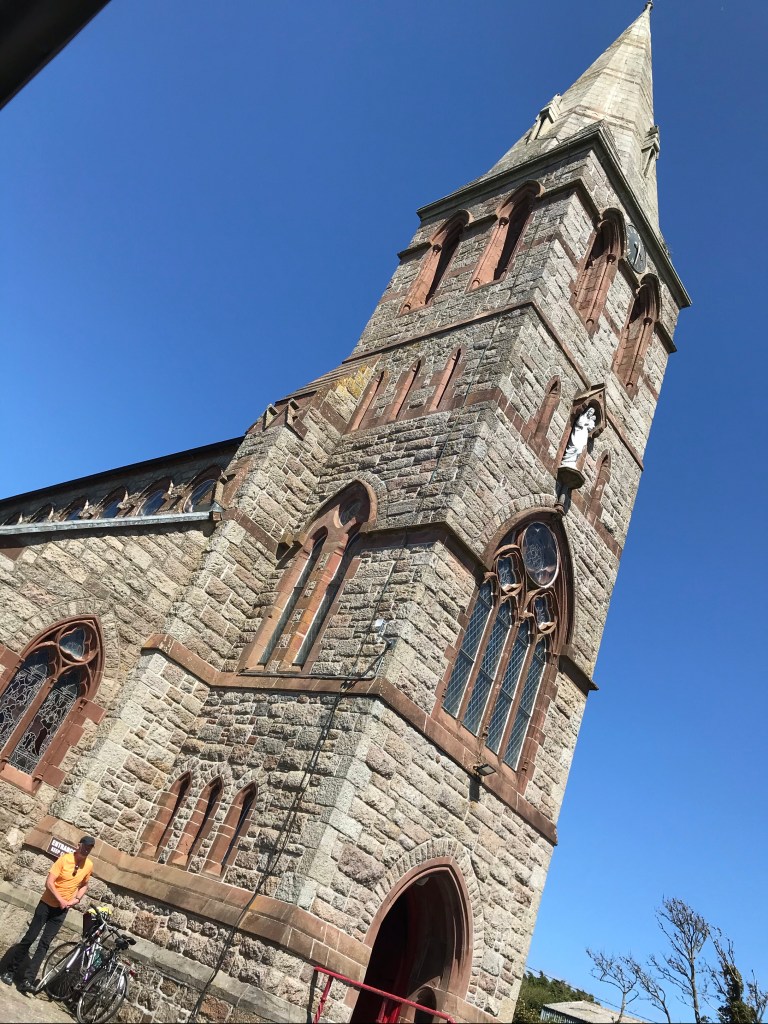
The church here reminded me of the one in Staunton, Virginia, called St. Andrews, where my grandmother went. Designed during the same neo-Gothic loving era, I’d say, and not terribly old.

Carne Beach

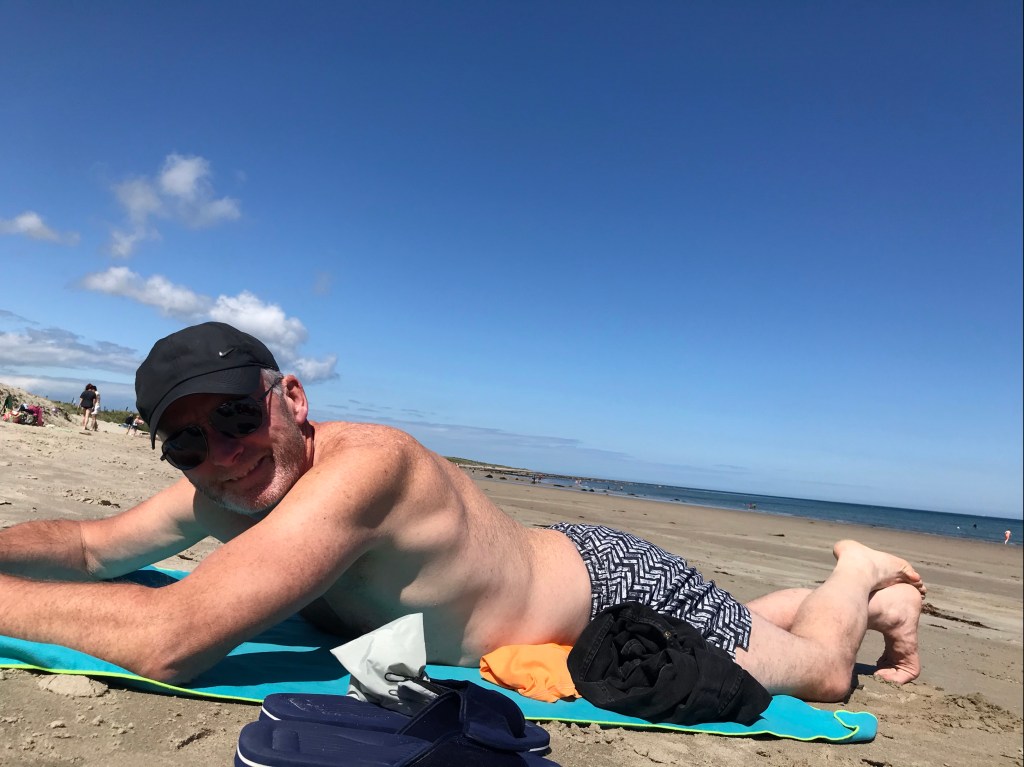
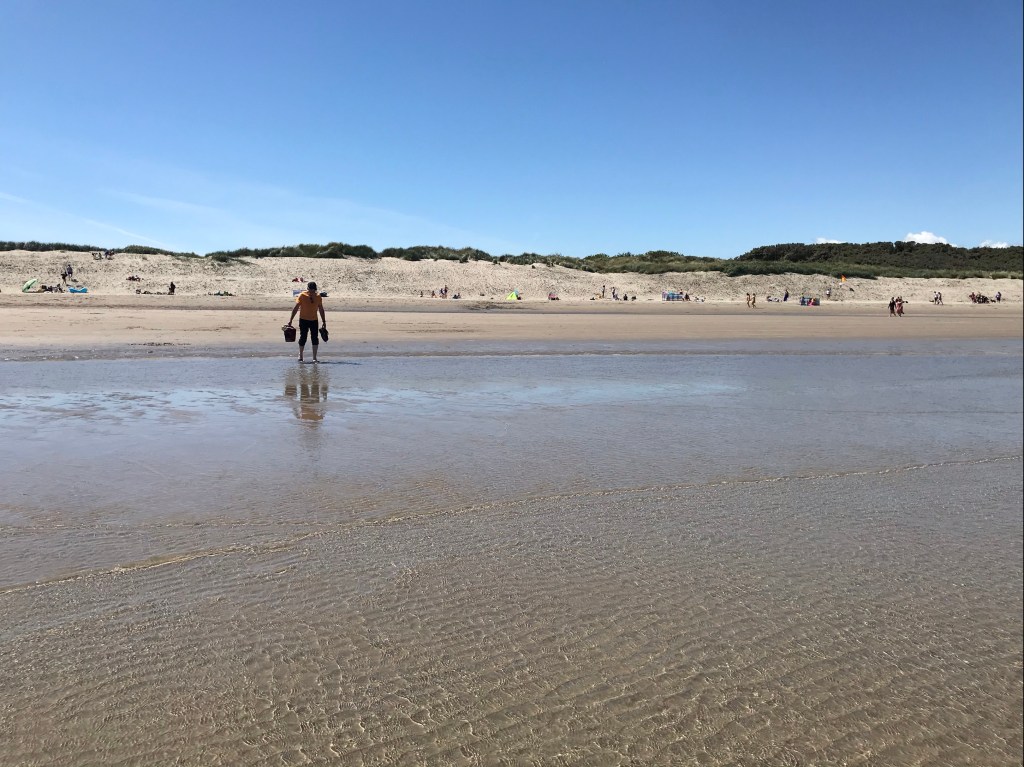
We enjoyed the sounds of all the lovely birds and then we struck out for Carne Beach. It was beautiful and blue and the water seemed warm enough for a swim although we didn’t try. We just enjoyed the sun, sounds, breeze, and colors.

Rosslare

Then we cycled a long stretch to Rosslare village and beach. It was packed with weekend holiday-makers so we didn’t stay long. Turned away from a restaurant at 4:30 PM, we decided it was best to find food without delay. Rosslare doesn’t currently have capacity to serve many in restaurants and it was full of blow-ins from Dublin, like us.

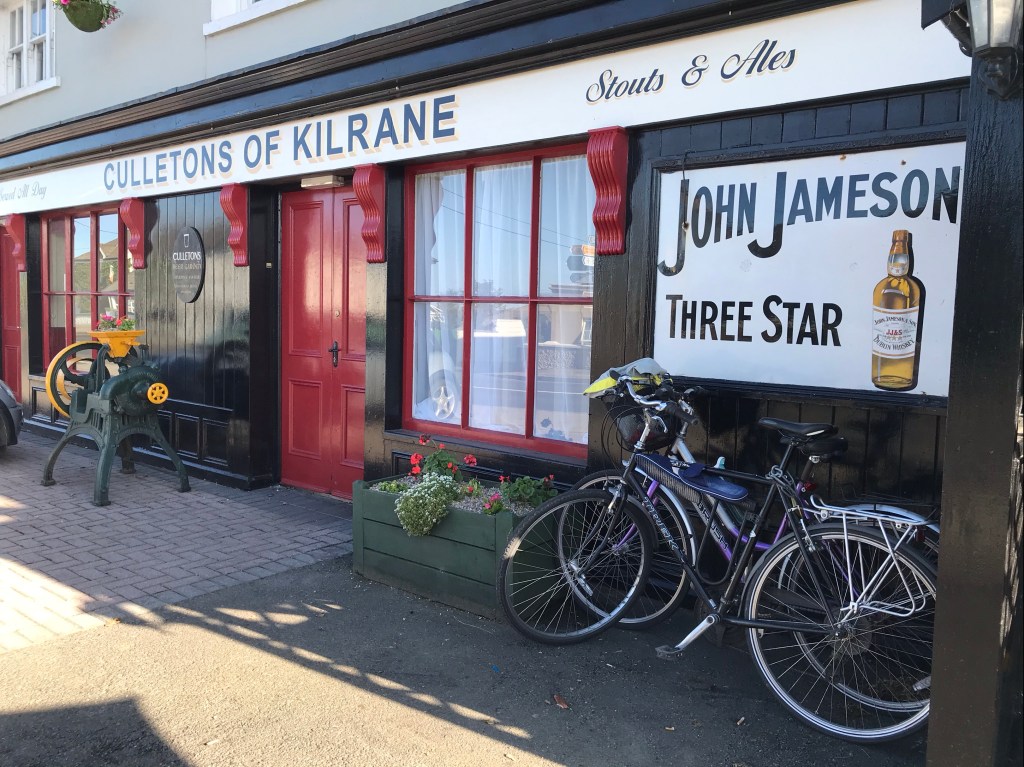
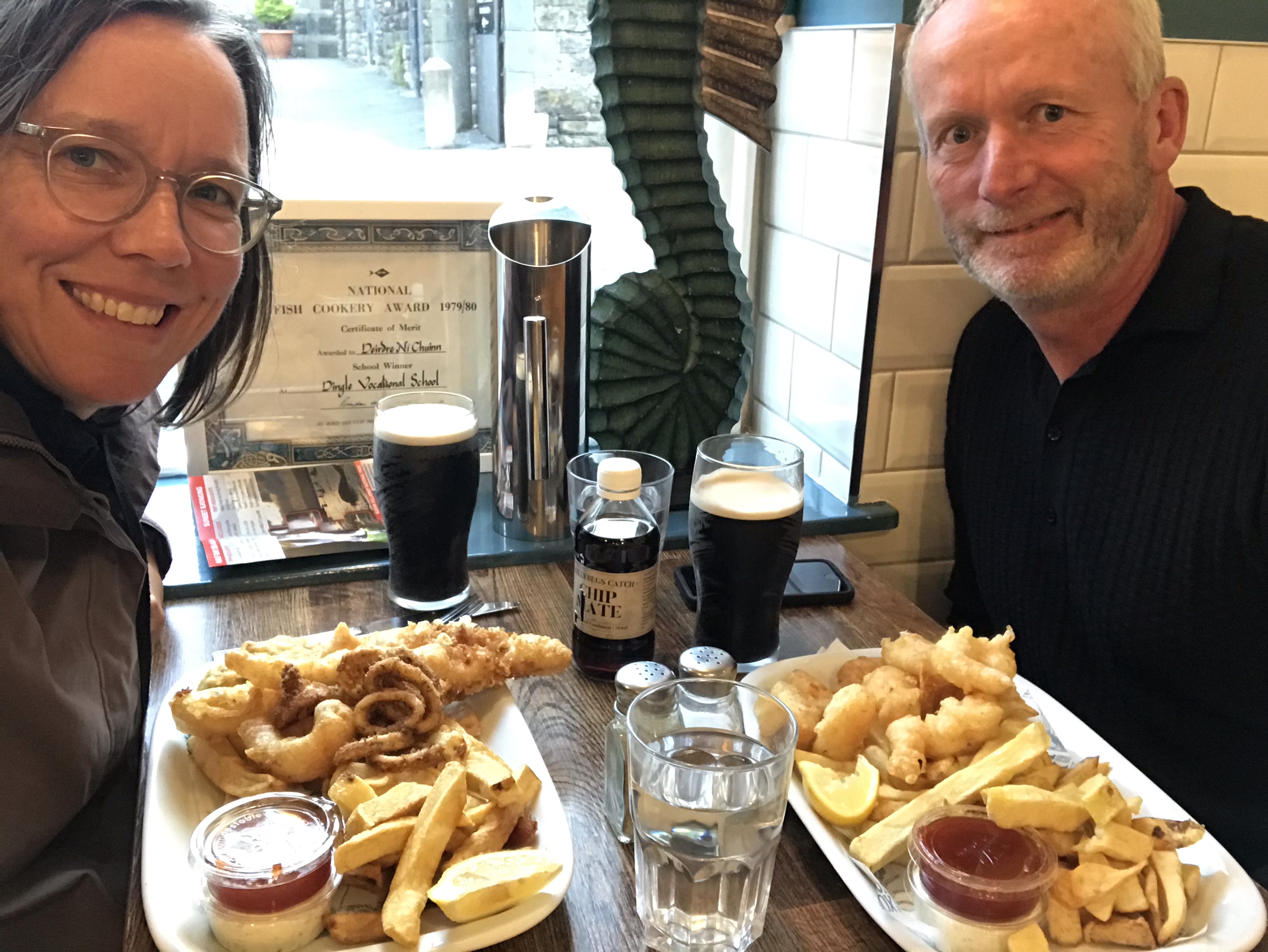
We cycled back toward the Harbor and were fortunate to find the last table at Culletons of Kilrane where we enjoyed one lovely plate of fish and chips and another of salmon-wrapped cod. The high quality of the food was a pleasant surprise! And pulled pints of Guinness to boot!

The pub we tried before this one was filled by funeral-goers from the burial we’d passed earlier in the day, near Lady’s Island. As an Irish person, Aongus is 100% certain the pub booking was linked to the funeral. This is the only possible explanation, he insists. As an American, I’m not sure I can explain how he knows, even though I read up on funeral rites in the book “How to be Irish” by Daniel Slattery. Actually, I’ve read that funeral chapter twice, but some details still evade me. 

After dinner, we returned to our hotel and settled in for the night. The cycle route here is lifted off the street and was safe enough even after a pint of Guinness, which Aongus says was rocket fuel for me. I virtually flew home. 

Breakfast wasn’t well organized at the hotel, but Supervalue did the trick. We ate on the back deck of the hotel, then packed up and drove back to Lady’s Island to soak in a bit more birdsong and delicate tranquility.

The highlight of our whole trip came at the end, with an impromptu invitation to lunch at the holiday home of our friends Richard and Geraldine. I’d stayed the night with them once before here in Rosslare, between days of RoboSlam events that our team conducted throughout county Wexford, but Aongus had never been to their home. 

As we’d only chosen this destination the night before, I messaged Richard on the way down to see if they might be visiting Rosslare on this particular weekend. 

Geraldine and Richard arrived in town after us, but welcomed us with (virtually, not literally) open arms! I thought we’d meet at a cafe or on the beach, but they were eager to have guests and graciously invited to their place, nicknamed “Five”. Try finding that on Google Maps!

This was my first time visiting with friends in person since mid-March, and it was really good for my mental health to reconnect with beloved others. I even got to expand upon my new-found knowledge of Irish politics and governance by sharing ideas and perceptions with them. 

County Wexford and the Hays family gave us a lovely weekend and we look forward to visiting both again!

Lovely outdoor lunch with Richard and Geraldine. Plus Aongus and Shannon.

Discovering Dublin: Last days of normal life (1/)

Something was about to change here in Dublin on the night of March 11th. I knew this, and thus felt hesitation as well as excitement for an interesting day as I headed into work on the 12th.

You see, TU Dublin had an Open Day planned to show female high school students about our apprenticeship courses. My colleagues and I had put a lot of work into planning this, although we anticipated things could change due to coronavirus. Later this day, life was to shift decisively about our world here in Dublin.

The Last Day ‘Open’ at TU Dublin

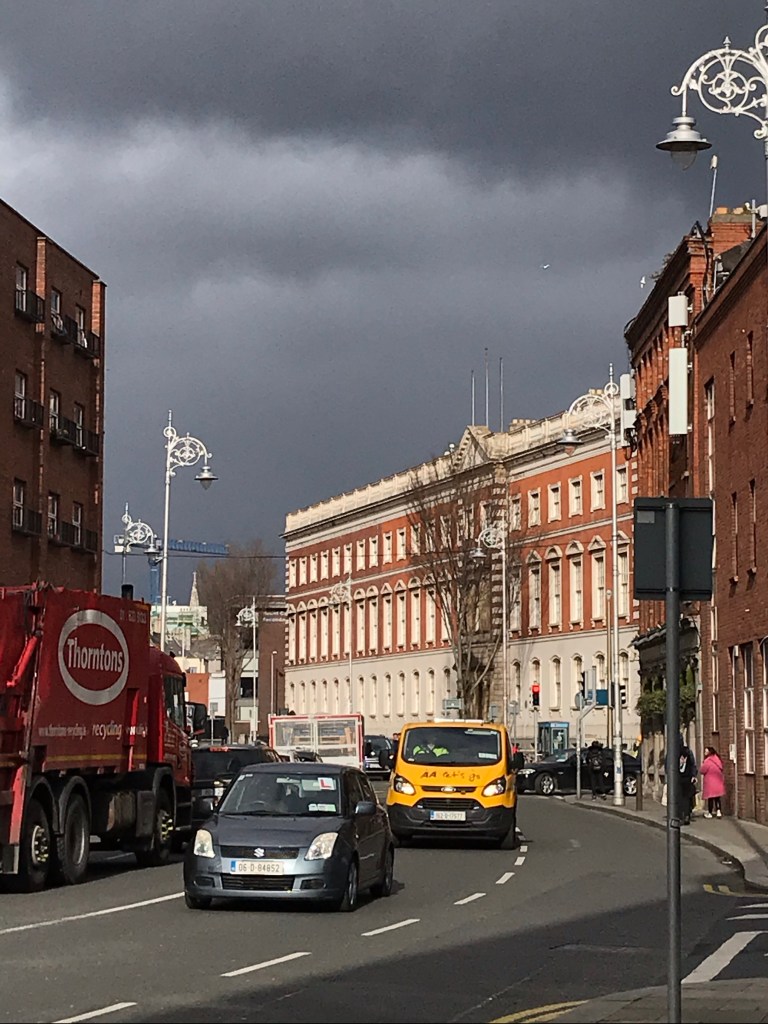
A glimpse of Bolton Street with drama in the sky.

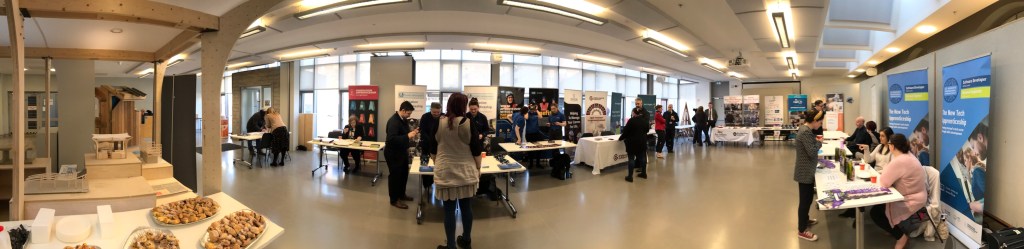
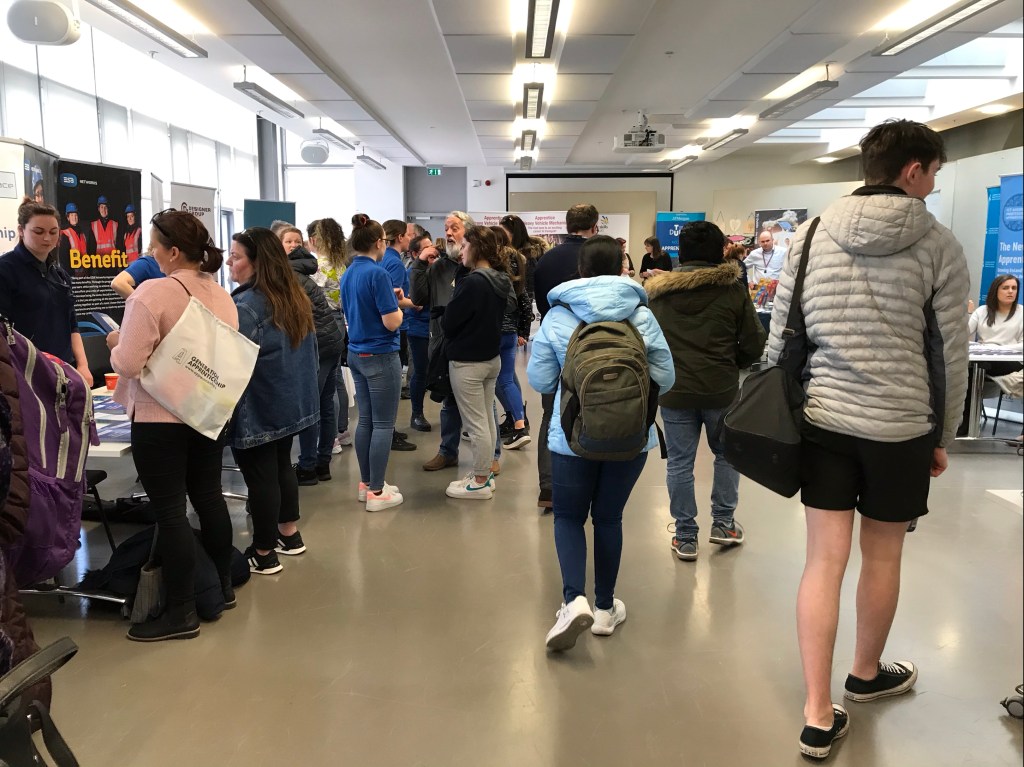
We waited anxiously for word from the university about closures. In the meantime, we took care. Although plans went ahead and during this Open Day, the new norms of hand sanitizer and social distancing appeared. Wee conscientiously worked to hold intimate conversations about life plans at a two arm’s length–not an easy feat in a loud and active space like the lobby of Linenhall, home of the TU’s Dublin School of Architecture.

Attendance on this Open Day was higher than one would expect given the uncertainty of life, but not as high as the past year. Only a portion of those who reserved places made it to D2 that day. It was well worth my own four-block walk into work to meet girls from as far as Wicklow who’d ventured up to meet us.

Setting up for the day.

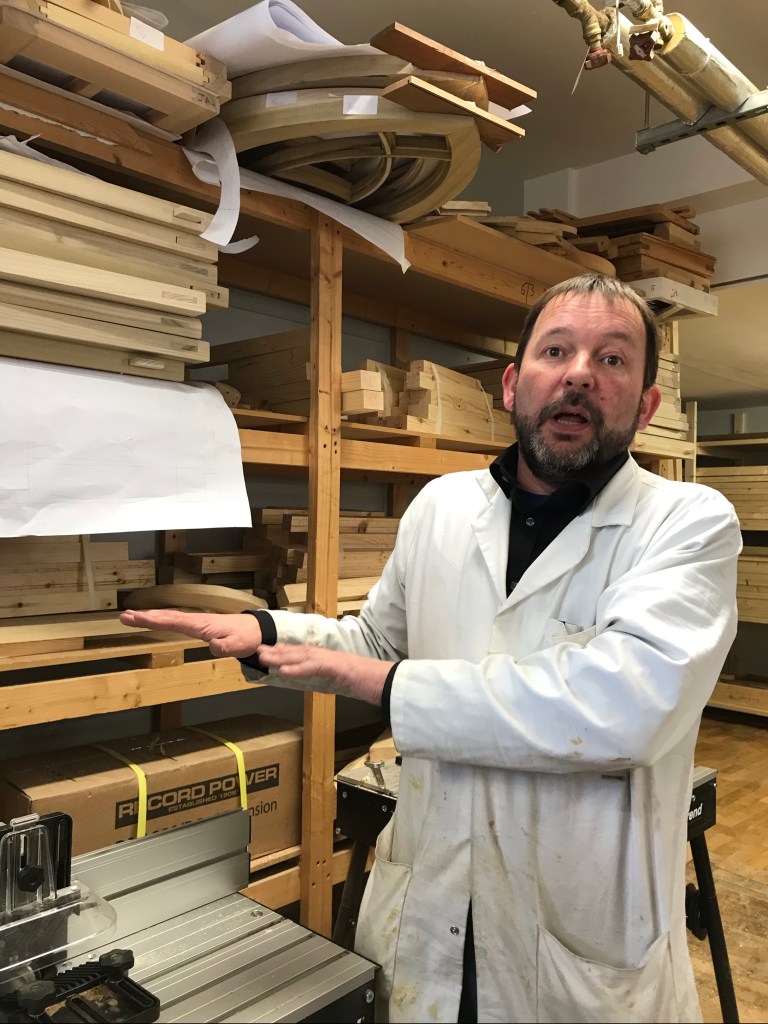
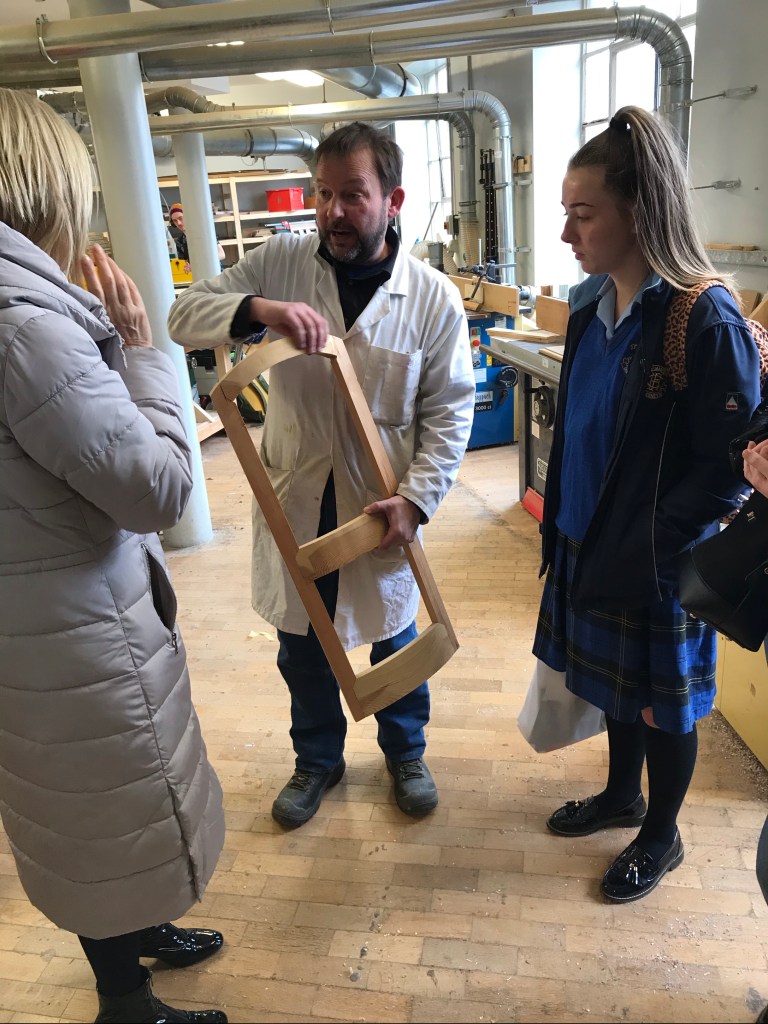
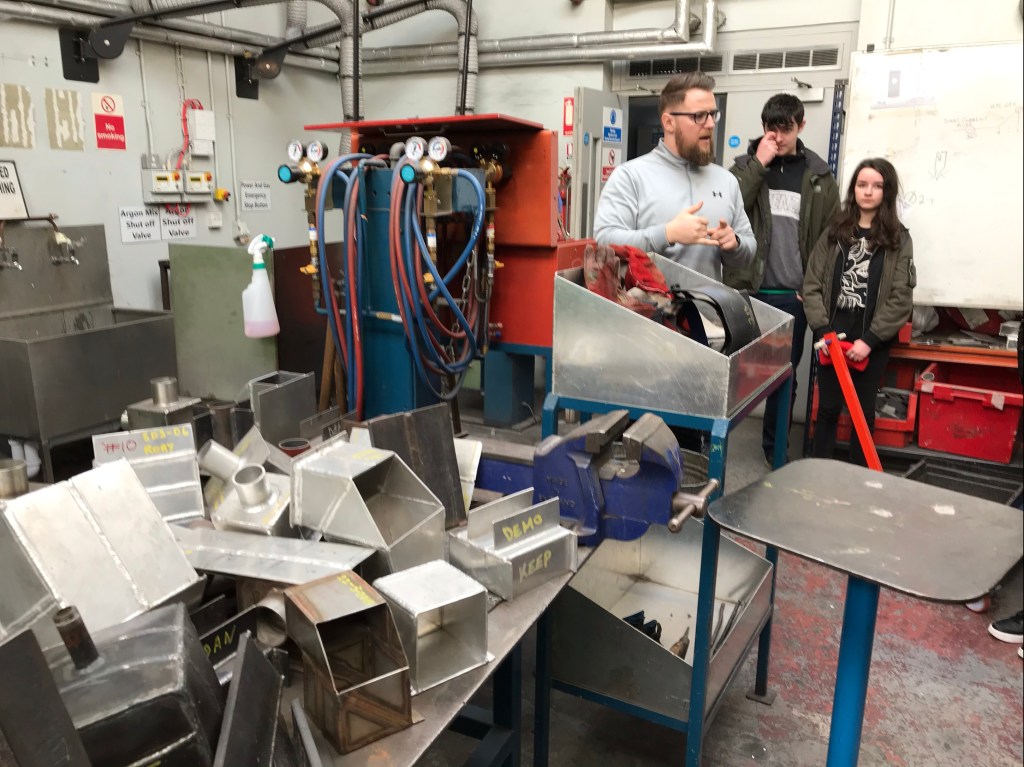
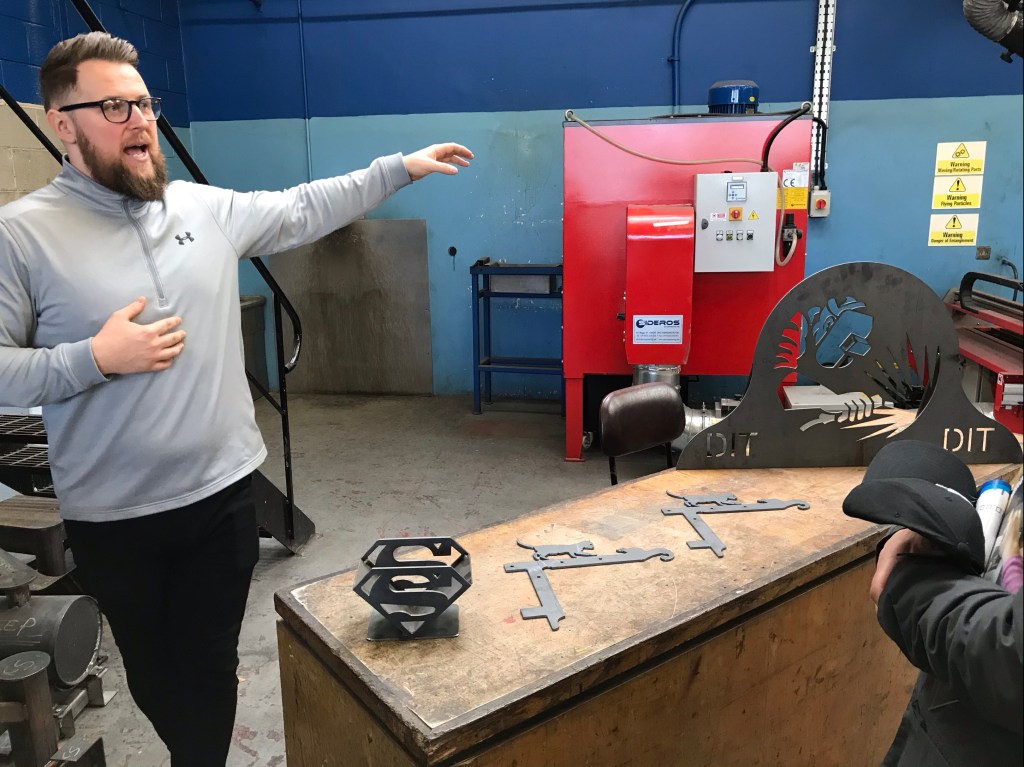
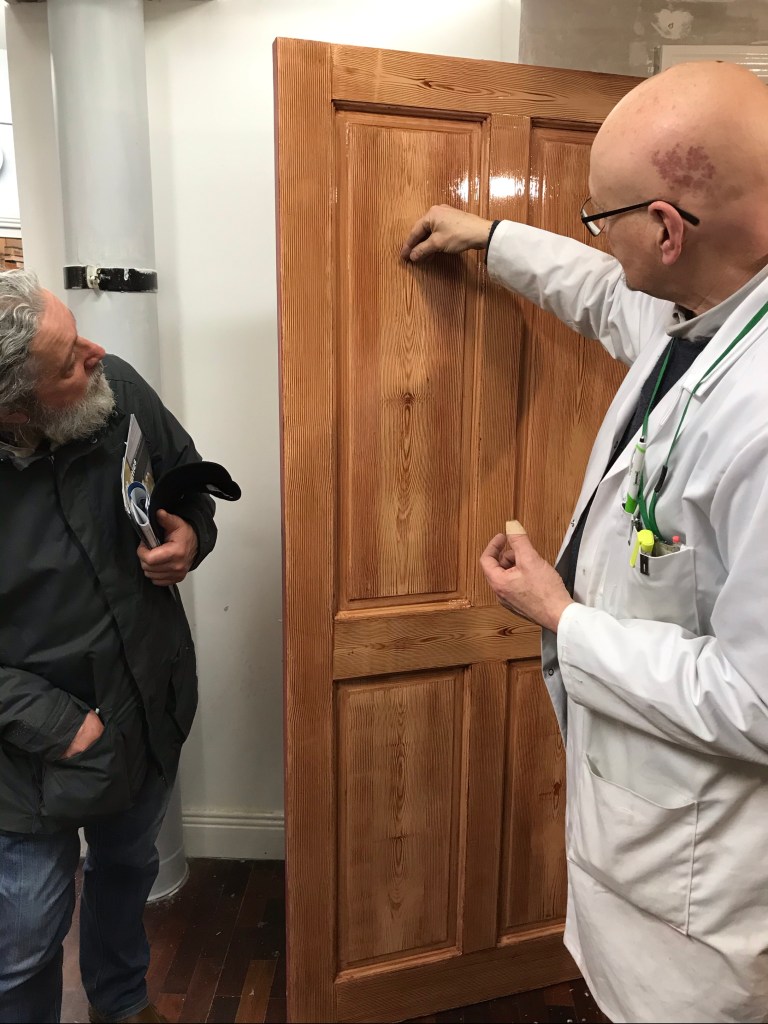
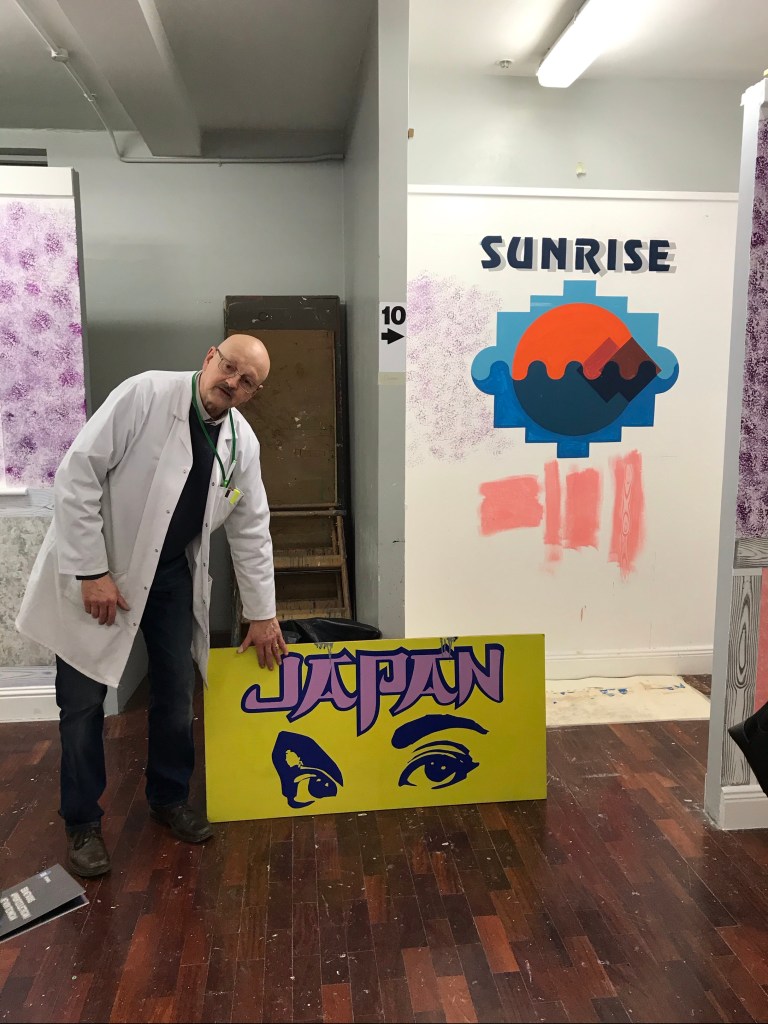
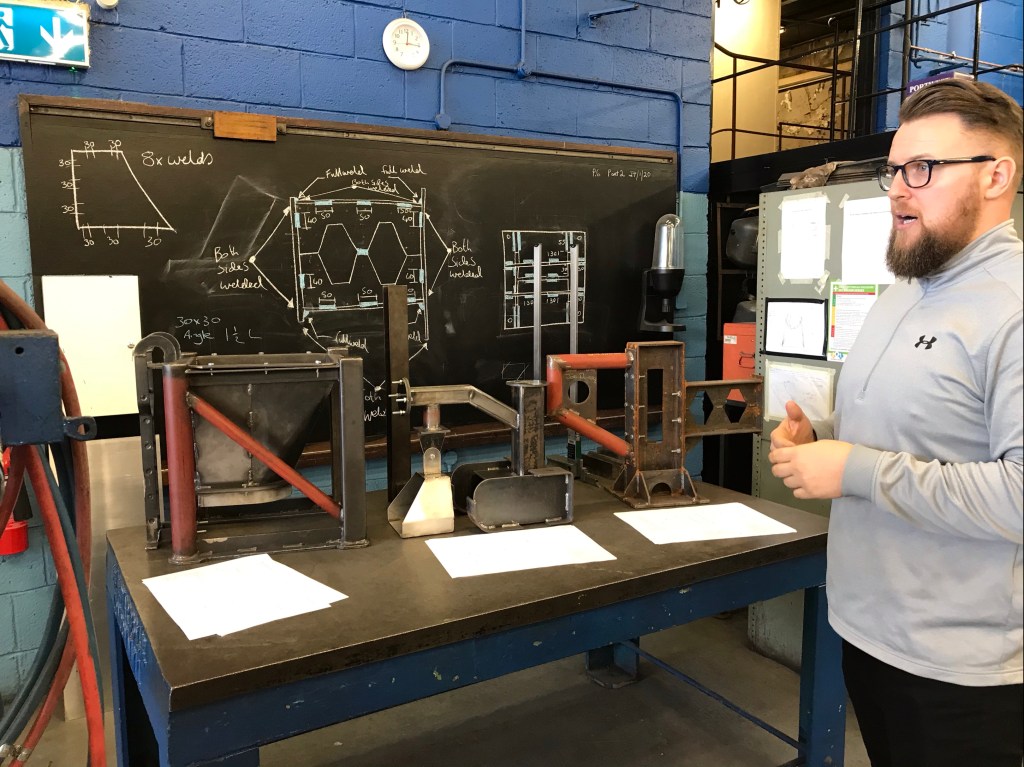
I provided tours of the facilities–bricklaying, plumbing, carpentry, metal fabrication, painting and decorating, laser cutting and 3D printing, automated fabrication–at Linenhall and Bolton Street where apprentices learn. Those taking our sampler program, “Access to Apprenticeship” get to use to all these workshops, and to complete a small project in each to help them determine which to specialize in by completing a full course.

At the end of the event we heard that campus buildings would close that night at 18:00; after this, classes would meet only online.

The BIM modules we offer in my program did indeed meet that night, all online, thanks to the collaborative working platform my colleagues use to teach BIM. Kevin Furlong, Barry McAuley, and Emma Hays took it all in stride and kept on delivering! I was truly impressed.

Working it out during Covid-19

I already worked half time on research, so I actually labored from home 50% of my working hours, pre-Covid. For me, work life after the 12th of March looked pretty similar to before–lots and lots and lots of time at my laptop. There was less variety, though, and much less human contact.

I missed feeling creative. I wasn’t able to blog, as I didn’t feel reason to celebrate during a time of fer and hardship.

I got work done, but not with my normal level of zest.

The first two weekends after the campus shut down, we weren’t yet asked to isolate (we never officially ‘locked down’) but the government was asking us to keep our distance from others.

My household has one other person, Aongus, and this fact has kept me sane during isolation. I’m glad I haven’t had to go through this pandemic living alone. That said, my guy has much higher exposure to the outside world than I do, and could inadvertently drag Covid-19 home at any time.

As you probably know, Aongus and I really enjoy our weekends. We love getting out, exploring the world, getting exercise, fresh air and sunlight. In fact, not feeling pangs of guilt for taking weekend off is a major reason I moved to Europe from the USA. You’ll recall that Aongus and I made the most of every minute in London during my two-year fellowship there. We had plans to make the most of our precious weekends together in Dublin upon our return.

A Sunday at Greystones Beach

Sliding into a new normal, we had a couple weeks to adjust to freedoms and habits that were slipping away. We were still allowed to drive and explore, but were required to stay away from others. Our gym was still open during this time, as well, though we were distancing.

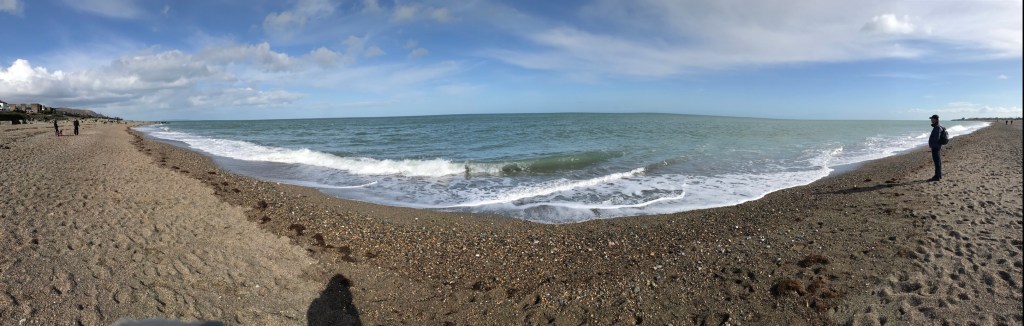
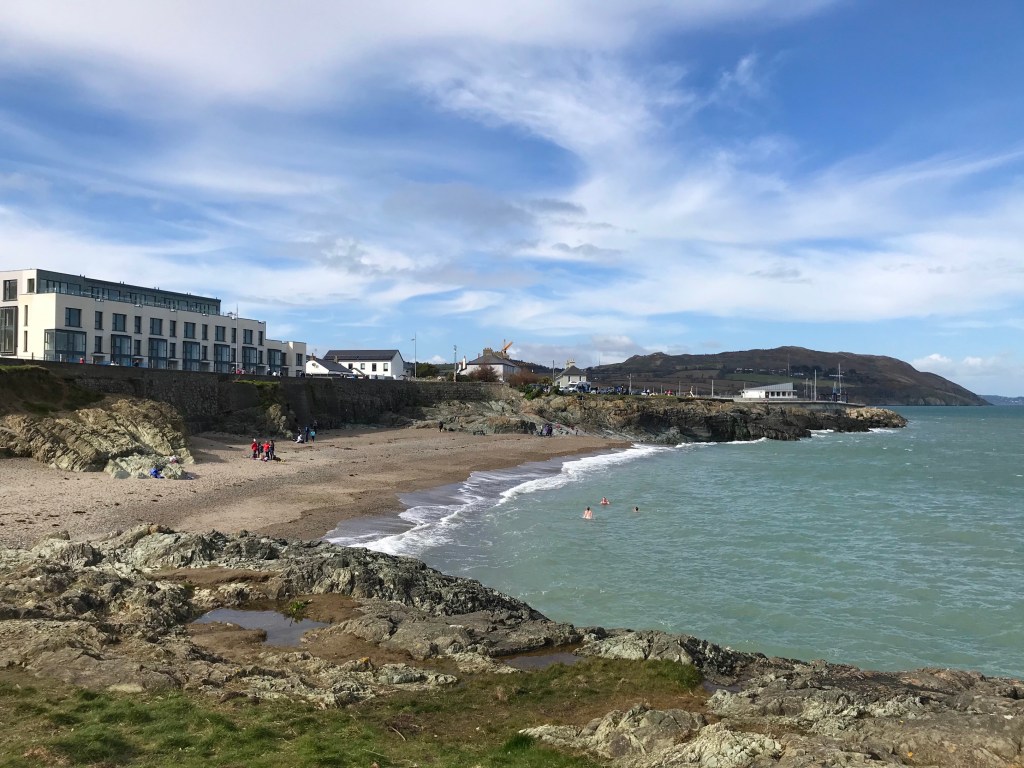
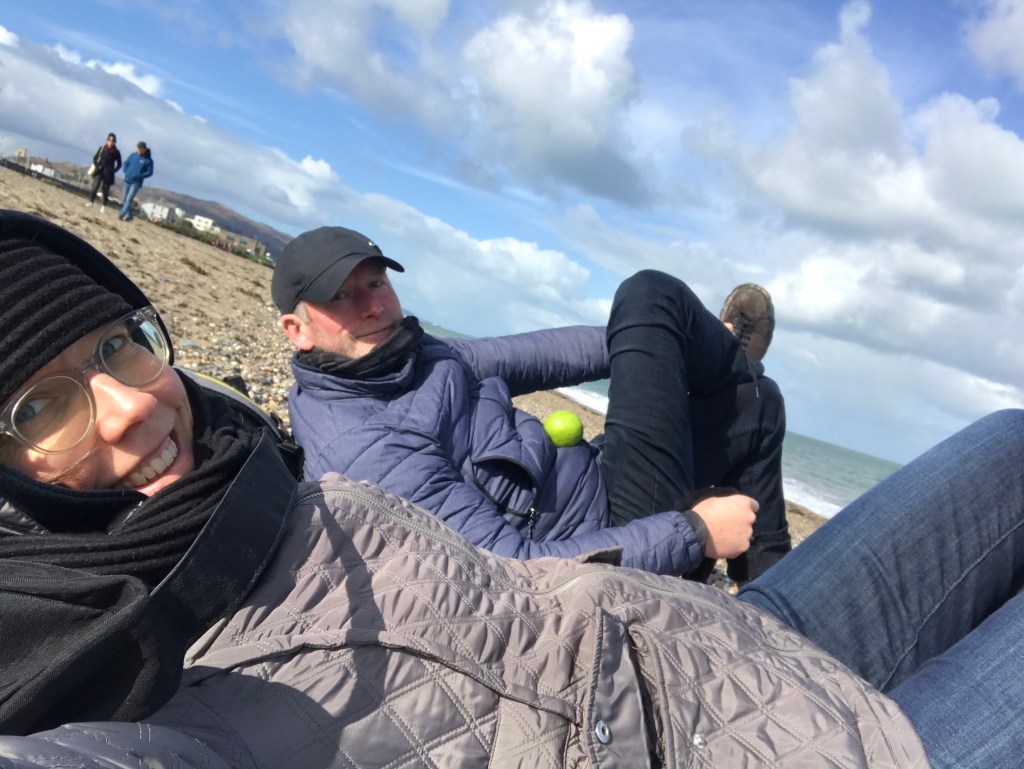
On Sunday, March 15, Aongus and I drove out to Greystones, where we were able to distant from others on the beach. We enjoyed the solitude in the cool winter breeze off the Irish Sea.

And we learned that lunches and loos were few and far between. From this day forward, we packed sandwiches whenever we ventured out, and planned ahead for long period of loo-less-ness.

The difficulty finding these that day told me that things were going to change more radically. We drove to some favorite spots hoping for lunch, but couldn’t stop because they were packed with people.

We did, however, find joy in simple pleasures: an apple, the sunshine, and loving company.

Holi-day at Bull Island Marshes & Dollymount Strand

St. Patrick’s Day was a holiday, so we made another trip trip to the sea, still pre-lockdown (to use the phrase lightly–we’ve never officially ‘locked down’ in Ireland to the degree of many other European countries).

Although Dublin’s St. Patrick’s Day Parade had been cancelled, and tourists discouraged from coming, we residents were still allowed out, but asked to keep our distance.

Aongus and I headed out to Bull Island, by car, as was typical for us before coronavirus. Walking and Dublin Bikes were our other main forms of transportation, and where they didn’t bring us, a bus or car would. “Back then”, we would never have dreamed of cycling to Bull Island or Dollymount Strand; they seemed so very far away.

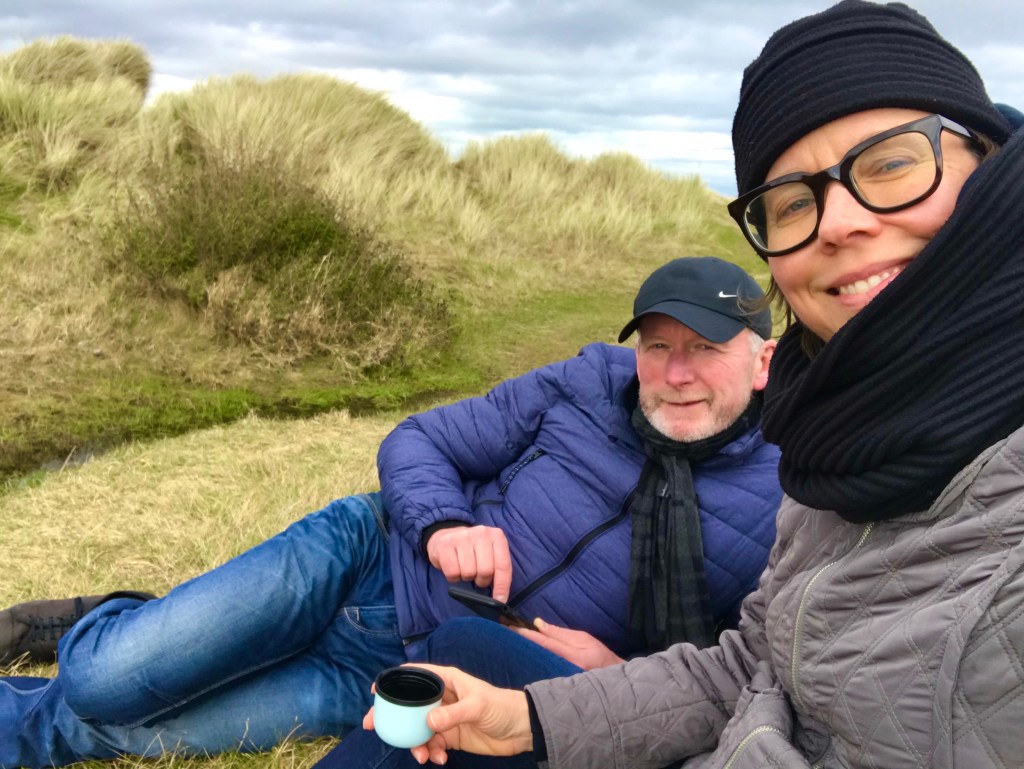
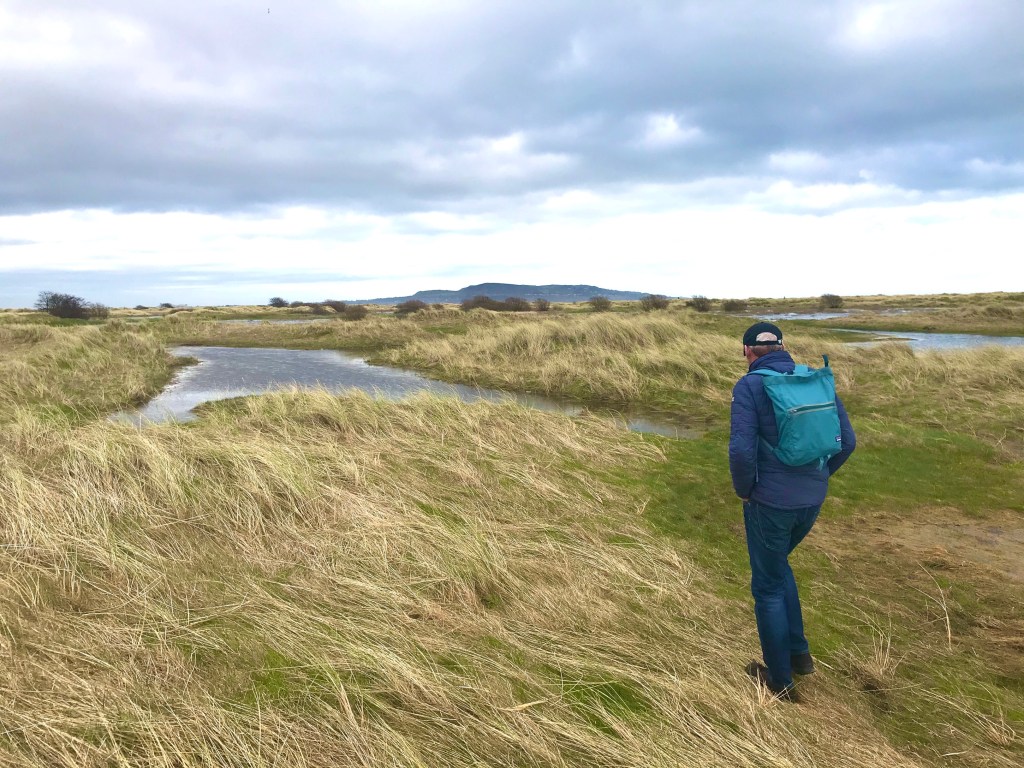
Bull Island is a favorite among Dubliners though, and when we arrived the beach looked far too crowded to allow the distance I required, so we instead explored the marshes.

My colleague Damon Berry had recommended that I check them out, and this was the first time I latched onto the idea. Aongus and I had a nice picnic in the dunes.

Of course, we hoped to find passage across to the beach by way of the dunes, but the waterways prevented that. Nevertheless, we enjoyed discovering a tranquil strip of Bull Island where few people venture.

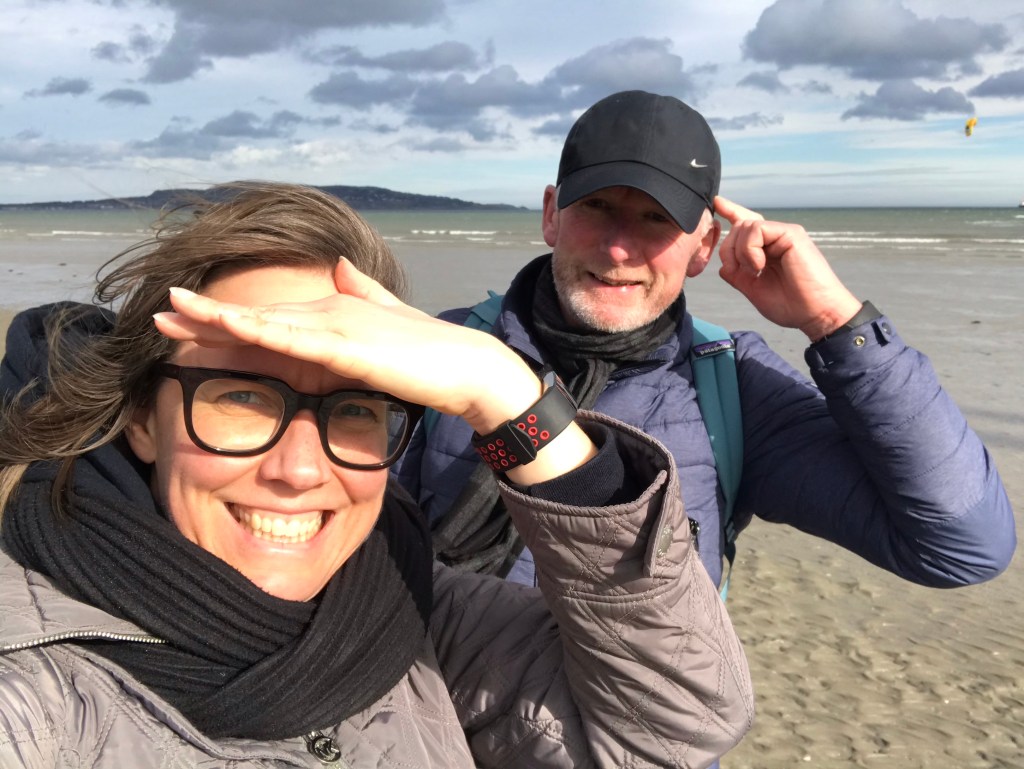
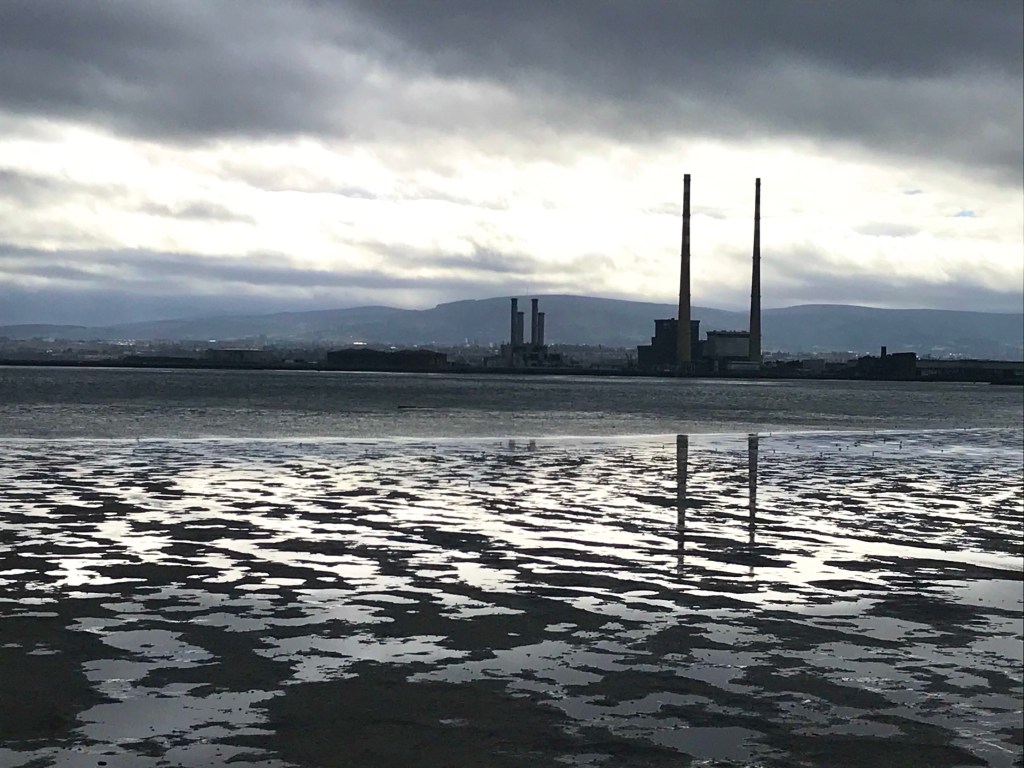
By the late afternoon, the beach had cleared out (it was the bottleneck along the wall that had presented the problem passing others) and we were able to visit the strand, which is called Dollymount.

As you can see, Dublin is quite chilly during March, but any opportunity to go outside, walk, and soak in the sunshine is prized.

Isolation begins

The lifestyle we had known was quickly sliding away. Soon after our visit to Bull Island, the period of isolation began. Aongus and I essentially hibernated for weeks. I was able to keep working from home. He, as a construction site project manager, was able to do some limited amount of work from home and was allowed on site, alone, occasionally, to do essential work, or check for security.

As we have a range of grocery stores (Fresh Market, Lidl, two Centras and a Daybreak) within 1-4 blocks of our flat and the food supply chains serving Dublin never let us down, we were able to source food easily and have learned many new recipes with what we can find in these stores.

That 2km radius we were allowed to travel from home for the purpose of exercise kept us sane, and we looked forward to weekends, hoping and praying for sunshine.

County Kerry: A day in Dingle

The Irish government has allowed domestic travel since June 29, and has been encouraging residents of the Republic to holiday inside the country to help revive the Irish tourist sector. Aongus and I were happy to oblige and we headed out for a four day weekend to the west of Ireland.

Unbelievably, my Irish man—born in Dublin and raised speaking Irish—had never been to Dingle! This rainy little fishing village is a favorite of Americans, and I’ve visited several times since my inaugural trip there in 2003.

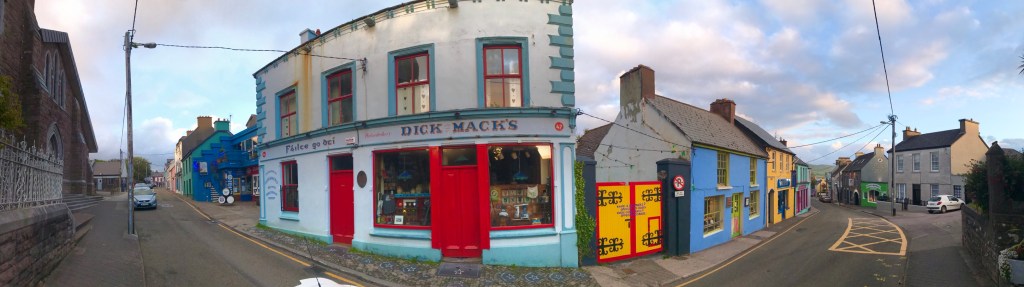
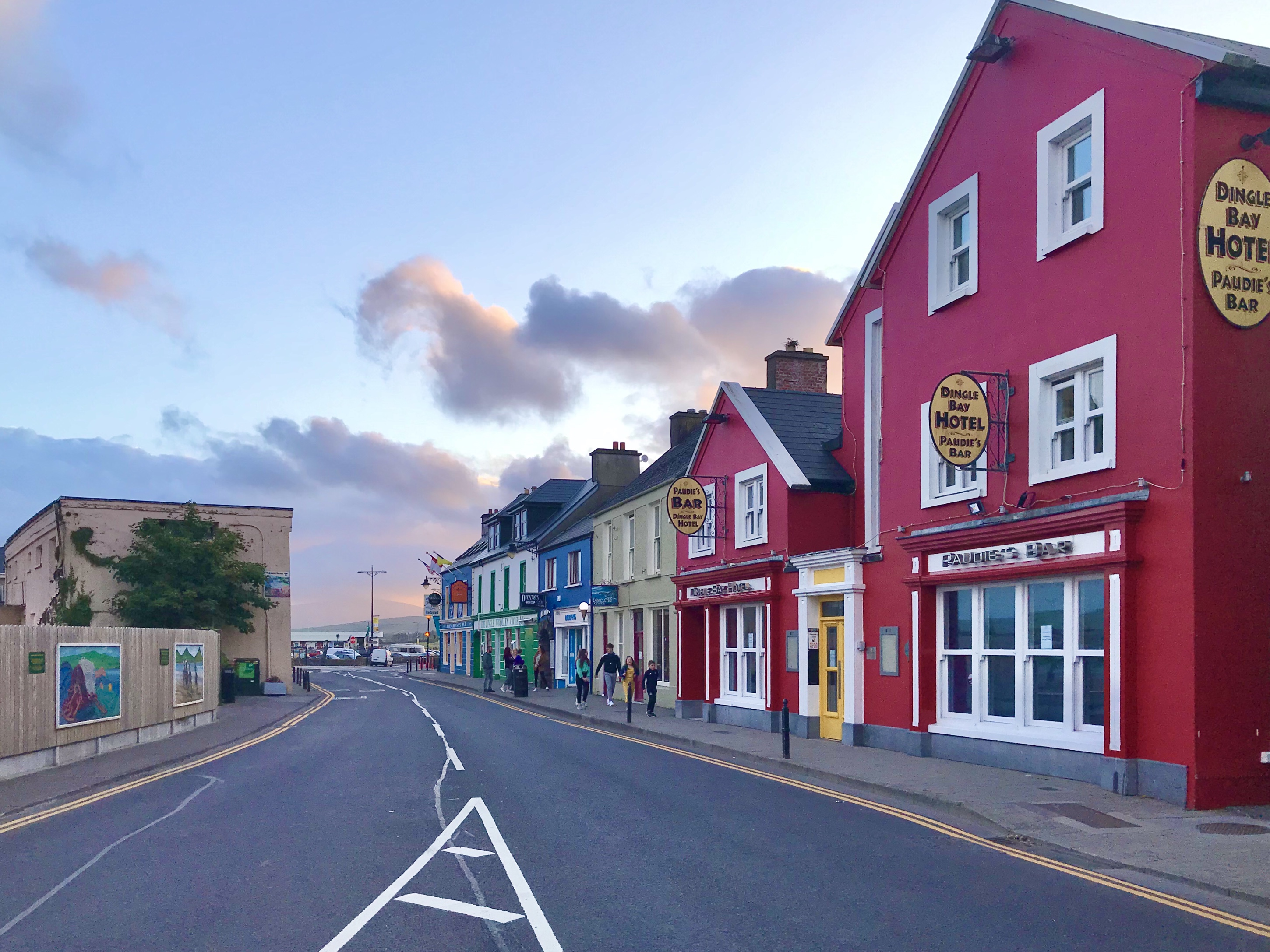
The Fish Box is just to the left of Dick Mack’s Pub, across the street from St. Mary’s Church.

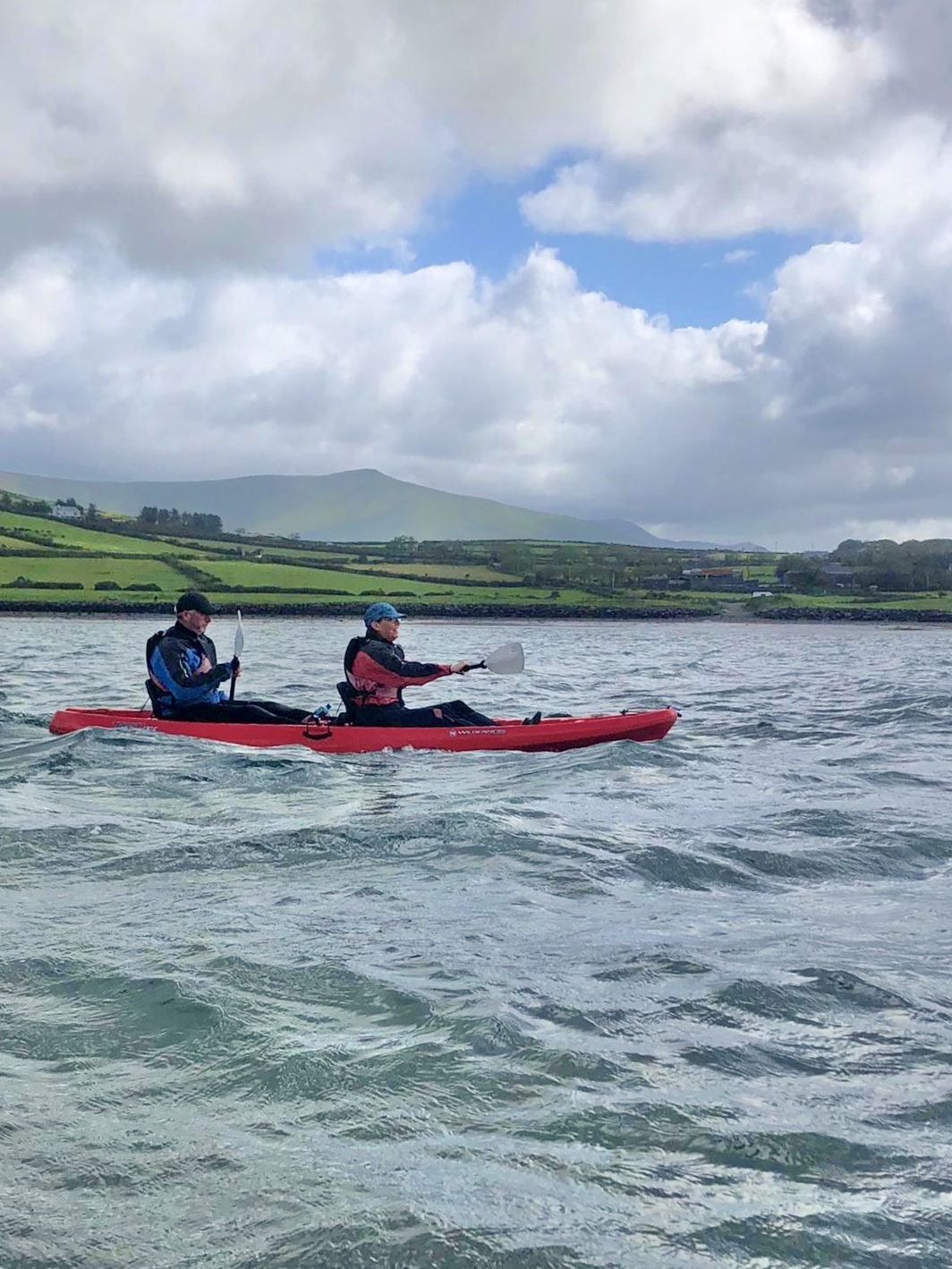
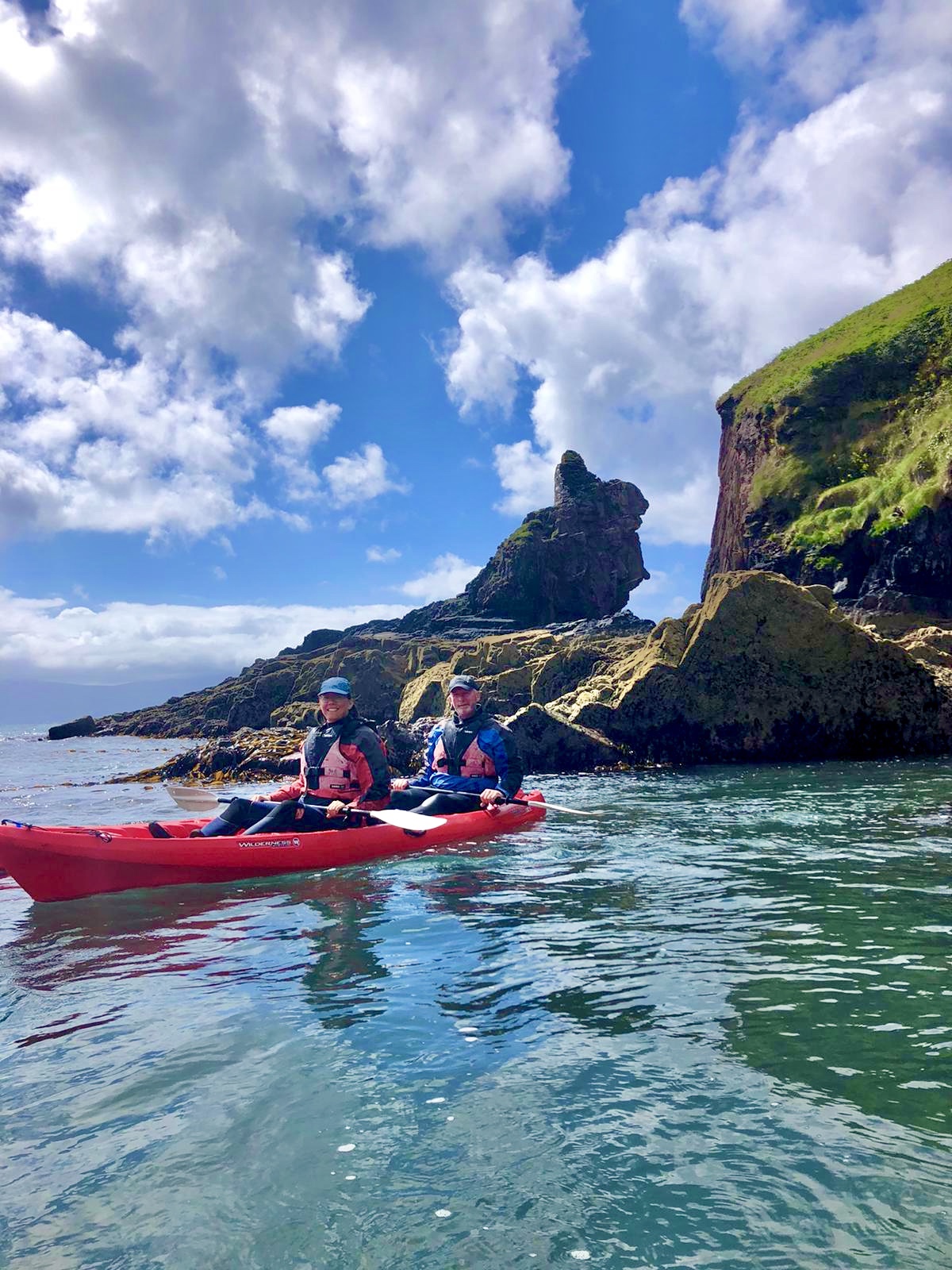
This particular overnight stay in this lovely little town included dinner at The Fish Box (amazing!), bed and breakfast at Bambury’s Guest House, and a kayaking trip guided by Irish Adventures.

And yes, we saw Fungie first hand, just 30’ or so away. Such a friendly and adventurous dolphin who has graced Dingle Bay since 1983. The tourism industry loves Fungie, with hundreds and sometimes even thousands of people boating out to visit the people-living dolphin daily.

On our kayaking trip were four learners—a couple from Cork and a mum and son from Dingle—and two instructors. A family of five got their own guide and travelled apart from us.

It was such a treat to pal around with Irish people enjoying their own home place. Truly an ideal time to visit. Especially since the seas were too rough for boating two days before and two days after our own outing. We really lucked out!

The pubs of Dingle were still closed during our visit, so there were no trad music sessions to enjoy, but we were able to do a little shopping. I picked up some exercise gear in hopes of our gym opening next week, and I also purchased a Cornwall Seasalt brand scarf to replace the one I dropped at Bonobo’s of Smithfield in February that so unkindly was never handed over to the lost and found.

Social distancing was easy in Dingle and we look forward to exploring more of Ireland as time, weather, and government guidelines permit. We were so very thankful for this one precious day of fun and glorious weather.

New-ish cap!

Special thanks to Noel of Irish Adventures for excellent instruction and leadership of the tour as well as his gift to me of an Irish Adventures baseball cap. They had actually run out of new caps, but gifted me one off their very own head! And it’s already perfectly broken in. Pop it in the wash and it’s good to go!

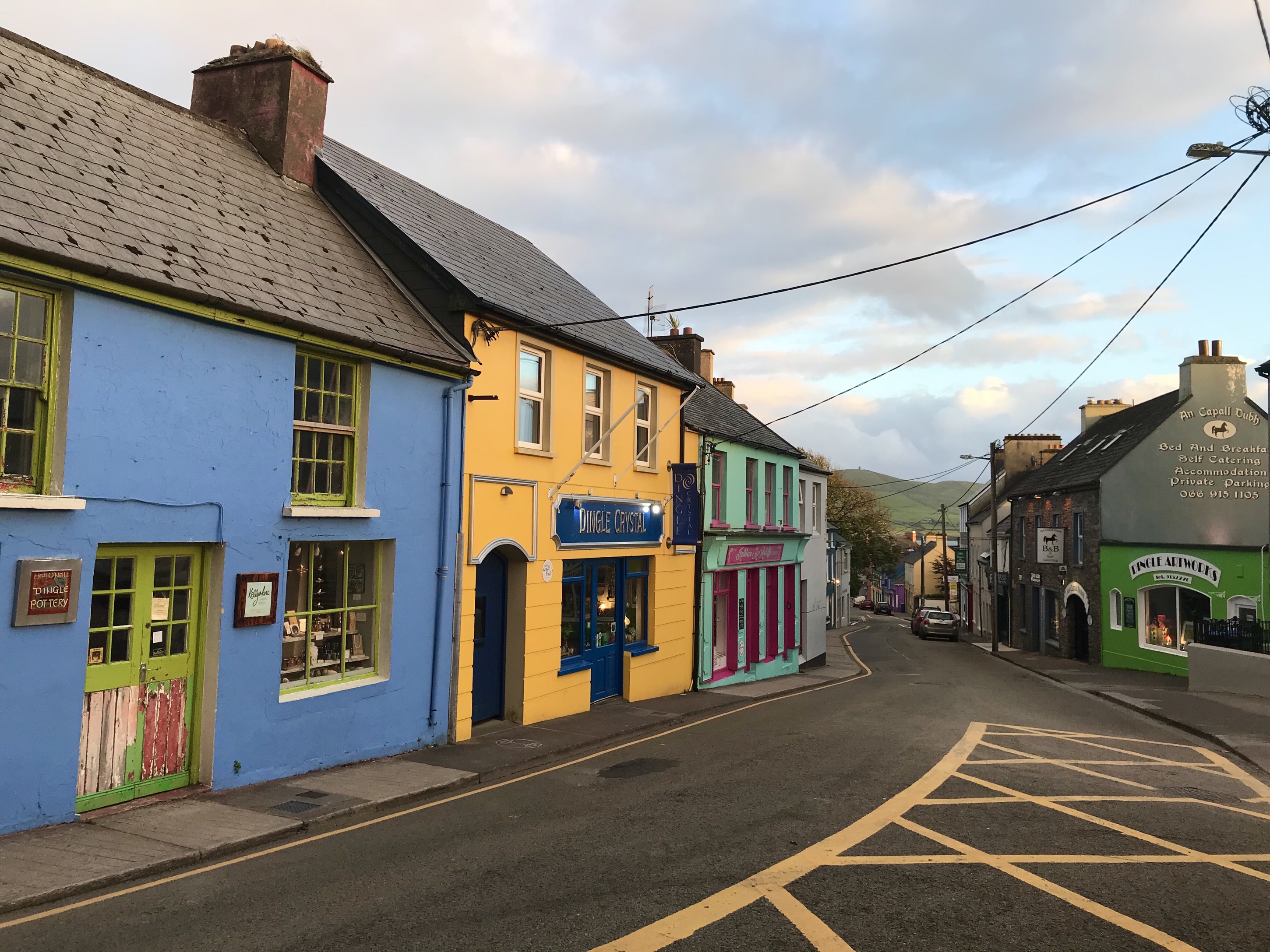
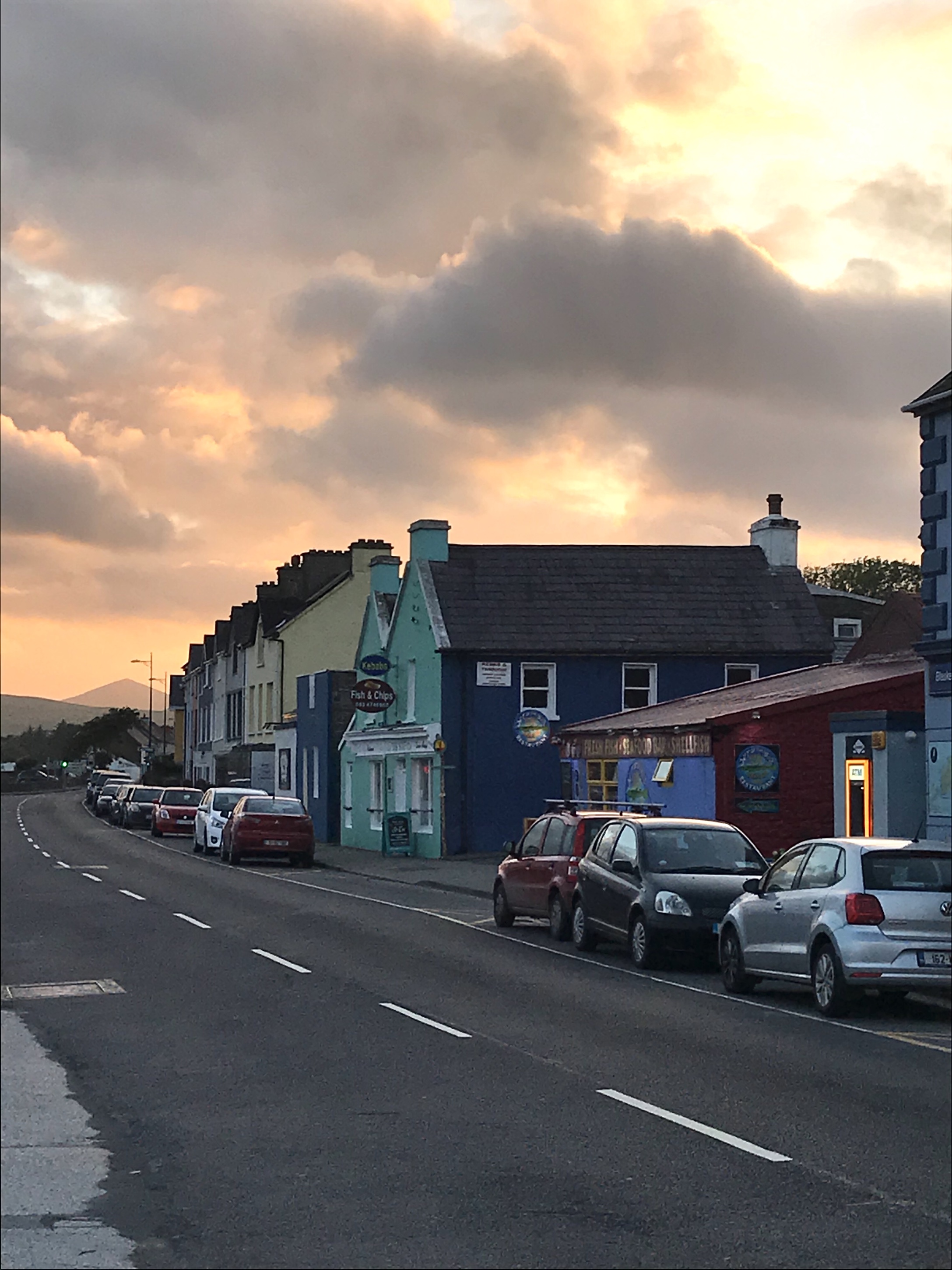
The photo gallery below shows an approach to Dingle via the Connor Pass (with new Wild Atlantic Way signage), the town of Dingle at sunset, and our morning out on the weather. Stay tuned for more pics of Kerry to come!

An Irish Welcome-Home!

Welcome to the homepage of Ireland by Chance, a blog sharing the adventures of an Expat architect/urbanist/teacher/engineering education researcher who moved from the United States in 2012 to make Ireland her home.

You can view archives (2012-present) by clicking the folder icon to learn what it’s like to be Fulbright and Marie Curie Research Fellow, to teach at university in Ireland, and to explore the cities and landscapes of Ireland, the UK, and Europe.

I’ve also posted an example grant proposal for Marie Curie (individual fellowships):
Abstract and Eval
• Excellence Section 1.1, 1.2, 1.3, 1.4
Notes on using tables
• Impact Section 2.1, 2.2
Implementation Section 3.1, 3.2, 3.3, 3.4
Ethics Section
Final Report from 2016 submission

Irish Trad: Traditional Irish Music on Internet Radio

Photo taken while visiting Kevin Donleavy in December 2012, during my Fulbright Fellowship to Ireland, but visiting Virginia for Christmas. 

A friend of mine in Virginia delivers a radio program of traditional Irish music. Tune in 3-5 pm Greenwich Mean Time (GMT) on Saturday, March 2. That’s 10-12 EST to hear Kevin Donleavy’s show!

Learn more about Kevin and how I met him here, about a past show here, and about our dear, departed friend Jerry Crilly here.

A chairde and pals, howreya,

Yes,  time for Irish traditional music on-line again.  The date is this Saturday, March 2,  and the program will be broadcast from 10 am till 12 noon as always. Or 3-5 pm that day in Ireland.  You need visit WTJU.net on the Web,  and then click on the Launch button. Your host, Kevin Donleavy of the O’Neill-Malcom branch of Comhaltas.  So do mark your calendar.
Here are some highlights from the upcoming show :  A couple of selections from the Sweets of May collection of music from South Armagh.  Liam Weldon singing the tremendously touching song, ” Where Is Our James Connolly ?”
Tunes from such fiddlers as Ciaran Tourish and Oisin MacDiarmada and the powerful Mick Conneely.  Lovely uilleann piping from Christopher McMullan’s new compact disc. Two songs from the woman’s band Girsa: “I Courted a Wee Girl,”  and “Mary and the Soldier.”  Cuts from the traditional groups Danu and Teada.  A political song or two, of course.  A seldom played reel called “The Nine Points of Roguery,”  played by the fine Sean Norman Ceili Band.  And more ….
This Saturday, time to wet the tea, roll back the carpet,  and get cracking!  Mi daza!
Kevin

Open House Dublin: An architect’s delight

Screen Shot 2018-11-30 at 6.38.27 PMI have several blogs in my files that I’ve not yet shared. The info below is no longer “news” but it should be interesting and helpful to some, so I’m posting it for you today. Happy holidays!
The Irish Architecture Foundation (IAF) does an outstanding job organizing its annual Open House event. In 2018, they held it October 12–14. Open House spans three days and allows thousands of citizens to visit architectural wonders that are usually not accessible to the public. Over 170 tours and events were open to the public–all for free and most with architects, trained historians, or other experts as guides.

Although this happened six weeks ago, I’m posting it now since I like to have a record of what I’ve seen. I’ve attended five of these Open Houses, I believe, and you can find photos from other years by running a search for “Open House” on this site.

Despite the dreary rain on Saturday the IAF army of volunteers opened sites all across Dublin. Aongus and I benefitted, as lines were shorter. We took advantage of having Aongus’ car to stay dryer and see more sites than we could by foot. This means we visited more outlying areas than I’d originally planned. We normally walk or take Dublin Bikes.

On Sunday the sun came out, but not until after a cold wait for the opening of 14 Henrietta Street. The crowds were fierce on Sunday, and I even encountered a few grouchy folks with a sense of entitlement. I tried to cheerfully point out that the long wait times were due to the popularity and success of the event and that all the people organizing the events and running the sites were volunteering their time. That sense of entitlement is an ugly thing. Putting that aside, I really enjoyed myself and have provided photos of the seven sites I managed to visit.

Screen Shot 2018-11-30 at 5.43.27 PMBelvedere House

The first site we went to was Belvedere House, which used ot house the boys’ school that was the rival of the one Aongus attended for secondary school. The tour was full, so we actually just saw the lobby in our initial visit, but we returned later and got the tour and more photos.

The House was constructed in 1786 at 6 Denmark St Great, Dublin 1. According to the Open House website, “The construction of what is now Belvedere College began under the 1st Earl of Belvedere, and was later finished and occupied by the 2nd Earl of Belvedere. Built to the designs of architect Robert West, it features the work of renowned stuccodore Michael Stapleton. After the 2nd Earl’s death in 1814, the townhouse was left unoccupied and fell into disrepair. The house was eventually procured by the Society of Jesus Religious Order in 1841 and has since been occupied as part of their educational facility. James Joyce, Austin Clarke, Harry Clarke, Joseph Plunkett, Donagh MacDonagh and Kevin Barry are amongst some of the great past alumni who roamed the corridors and were educated here. RKD Architects were appointed in 2014 by Belvedere College to restore the 18th Century house and one of the most powerful features of the house today is the stucco work in the hall and first floor reception rooms.”

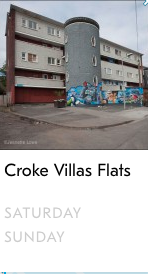
Screen Shot 2018-11-30 at 5.43.43 PMCroke Park Villas

This is a social housing community with an iconic design that was replicated in many other parts of Dublin. As it is so stylized, it seems to many people to be outdated. This particular set of Villas is being torn down and new housing built. There was a photographic exhibition in one of the flats, documenting families who used to live here. A few of the flats still have residents, who await new homes in the construction underway nearby.

The complex was designed by Daithi P. Hanley and constructed in the 1960s at Sackville Avenue, Ballybough Road, Dublin 3. Open House’s website noted that “In 1956 Dublin Corporation approved a Compulsorily Purchase Order on a series of derelict and condemned cottages in Ballybough in order to construct modern single and duplex flats between Love Lane and Sackville Avenue. Named Croke Villas due to its proximity to the GAA HQ, Croke Park, it was the first stage of an extensive plan to regenerate the Ballybough/North Strand area much of which still bore the scars of the 1941 North Strand Bombings. At present the complex is undergoing renovation and three blocks have been demolished along with a number of derelict cottages on Sackville Avenue. This new development with provide a mix of houses and duplex apartments. The flats were designed by Daithi P. Hanley when he re-joined Dublin Corporation in 1956 as housing Architect. He designed a series of 4 and 5 storey blocks of Flats which used standardised components resulting in significant savings in construction costs and building maintenance of which Croke Villas was part. There were many others of these flats built across the city. Hanley also designed the Garden of Remembrance, Simmonscourt Pavilion, the memorial monument at the Customs House, the Basilica of Our Lady, Knock, among quite a number of interesting projects.As part of Open House 2018 number 45 Croke Villas will be open to the public and will have an exhibition of photographs taken prior to and during the demolition by photographic artist Jeanette Lowe. Number 45 Croke Villas is in the last remaining block of flats, due to be demolished early in 2019. The finished development with form a processional boulevard into the Croke Park Stadium.”

Screen Shot 2018-11-30 at 5.44.38 PMAsh Street

This project was designed by de Siún Architects and constructed in 2018 at 25 Ash St., Merchants Quay, Dublin 8. Michael de Siún has shown his own home before, very near to this one, and it is an architectural gem. Such clever detailing to make small spaces feel spacious and appealing. I felt that a product Aongus and I had seen at the London Building Centre might be usefully applied to the project, and I forwarded information on it to the architectural design team by email.

The Open House website explains, “The refurbishment of no. 25 Ash St. introduces a double-height light well into a small 100 year old house. The previously tight rooms have been opened up to create a spacious continuous flow from entrance to rear garden. A feature staircase with strong vertical elements emphasizes the connection between the floors. A simple palette of oak, concrete, and brick unite the whole, culminating in an intricate brick façade to the rear of the building.”

Screen Shot 2018-11-30 at 5.44.52 PMWeaver Park

This city park was designed by Áit Urbanism + Landscape / DCC Parks & Landscape Services and constructed in 2017 on Cork St, in Dublin 8. Despite the rain, we found the park design to be fun and festive. There were even some kids besides Aongus out playing. We rounded off our day with dinner on Camden Street, at Damascus Gate.

According to the Open House website, “Weaver Park represents one of the primary objectives arising from Dublin City Council’s “The Liberties Greening Strategy”. This strategy identified a derelict site, formerly occupied by the Chamber Court Flats, which offered a significant opportunity for the provision of a landmark public amenity. In making the site available for redevelopment, Dublin City Council was responding to the campaigns of local community groups who had long seen the potential in this space. The brief given to Áit Urbanism + Landscape underlined the importance of a participative process that engaged with these local groups, so that the community’s requirements could be understood and delivered through an informed design. Weaver Park is therefore a distillation of the community’s aspirations with inclusivity at its core. The design delivers a hive of activity within a context that will be sylvanic and ecologically functional in time. The fulcrum of the park is a 40-year-old Quercus palustris; this beautiful Oak tree now provides an instant maturity and a new focal point on the Cork Street landscape. It is an icon for the greening of The Liberties.

Screen Shot 2018-11-30 at 5.46.18 PM14 Henrietta Street

This building was a stately-home-turned-tenement. From housing one wealthy family at its prime, this home eventually held a hundred people at once. I shutter to imagine.

Watching “Call the Midwife” during my subsequent writing retreat gave me a glimpse into what such urban density would have looked like. It’s an excellent series that illustrates history as well as truest loving people. So seldom can I bear to watch television, and particularly Netflix, due to its grim and gritty culture. This show, however, is a true delight despite drawing tears.

Back to the house in Dublin, though, where you can see for yourself most any day by paying an admission fee. For Open House Sunday, entry was free but the tour abbreviated. And there was a line around the block when it opened Sunday morning!

It was originally built in the 1740s at 14 Henrietta Street, Dublin 1. The renovation that has just been opened was designed by Shaffrey Architects. This work converted the house into a museum that now showcases how the spaces would have looked both at the building’s prime and high and when it was packed to the gills. The house is in eyeshot of Linenhall, where my DIT staff office is located and I had a bird’s eye view of the renovations as they progressed. I kept a keen eye as the roof was repaired, a fire stair added, and the brick on rear of the house repointed.

The Open House website provides a detailed description: “Dating from the 1720s, Henrietta Street in Dublin’s North inner city is the most intact collection of early to mid-18th Century houses in Ireland. Built as a townhouse for the elite of Dublin, 14 Henrietta Street was split into tenements in the 1880s as the need for working class housing in Dublin grew, with some 100 people living there by 1911. It remained a tenement house until the last families left in the last 1970s. It’s been a 10-year project for Dublin City Council to rescue, stabilise, conserve and adapt 14 Henrietta Street. The house is the primary artefact of a new museum – the walls, floors, banisters, old gas pipes, fireplaces, and fragments of linoleum and wallpaper have many stories to tell. Shaffrey Architects planned and created new spaces to discretely integrate essential services and fire protection, using wireless technology to minimise loss of finishes and fabric. The tours will showcase the reception, selected rooms, basement and garden area to see the connections between the old and new. This year’s winner for the RIAI Award for Conservation / Restoration and Awarded The Special Jury Award.”

Screen Shot 2018-11-30 at 5.44.10 PMNew Garda (Police) Headquarters

Designed by the Irish Office of Public Works (OPW) and built in 2017, this build graces the Corner of Kevin St and Bride St, Dublin 8. This building is in the line-of-sight from Kevin Street DIT, where I frequently teach RoboSlam workshops and the RoboSumo design project, with Ted Burke and often Damon Berry and Frank Duignan. I was delighted that one of the architects who worked on this project delivered our tour. He was quite a young lad–leading me to feel a bit aged! (Like a fine wine? Perhaps….)

The Open House website explains, “The new Kevin Street Garda Divisional Headquarters was designed by the OPW. It is designed as a civic quality building responding to the specific site context of its historic surroundings. The building is energy efficient and sustainable with universal access for all. The building is arranged in linear blocks of accommodation either side of an atrium space. It reinstates the street line along Bride Street with a five-storey building opposite the seven-storey National Archive building. The five-storey curved block steps down in a series of steps to become two storey adjacent to the former medieval Archbishops Palace, thereby responding in scale to these important historic buildings. The important Kevin Street junction is acknowledged by expressing the central atrium space on that façade. The public entrance is located at this point. The atrium serves as the main vertical and horizontal circulation space within the building and provides for natural ventilation to all offices along with natural air extraction and allows daylight to penetrate into the building.”
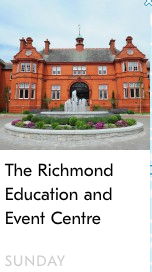
Screen Shot 2018-11-30 at 5.42.54 PMThe Old Richmond Surgical Hospital

Just one block from my apartment in Dublin, this stately brick building gleams with love and civic pride. Originally designed by Carroll and Batchelor 1901 and built in 1901, The Richmond was refurbished in 2016 by Kavanagh Tuite. It is located near my own flat, at No. 1 North Brunswick St, Dublin 7. This was not my first tour of the building, but I learn new things each time.

The Open House website explains, “The Richmond Education & Event Centre was opened on the 20th April 2018, following an extensive refurbishment, following its purchase by the Irish Nurses and Midwives Organisation in 2013. The building was originally opened on the 20th April 1901 as The Richmond Surgical Hospital and remained open as a hospital until 1987, when patients from The Richmond and Jervis Street were moved to Beaumont Hospital. It after became a business centre and then a Court House for a number of years, there are still 3 cells in the basement. This red brick english renaissance style building has three floors and is U-shaped overlooking a central courtyard and fountain. It is built on the site of benedictine convent dating back to 1688. The building has meeting rooms, offices, four large former wards (auditorium, lecture room, banqueting room, victorian tea room). The tour will include the ground floor, first floor (except offices) and part of the basement.”

smc

Diverse researchers at your service!

img_2864-1

The campus of DIT Grangegoreman (soon to be TU Dublin) which is now under construction

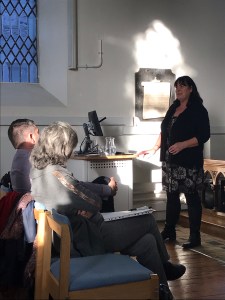
I found myself surrounded today, by dozens of brilliant scholars. I’d been invited to speak at a workshop on Gender Equality held by the Irish Alumni Chapter of Marie Skłodowska-Curie actions (MSCA). The half-day workshop was held in St. Laurence Church on the Grangegorman Campus of DIT.

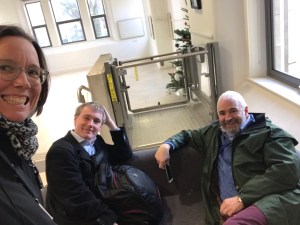
Marie Curie fellows, past and present, traveled in from all over Ireland to attend the event. The Irish MSCA Alumni chapter is just two years old and it covers the whole of the island, welcoming researchers from north and south, east and west.

A lovely group of early-career researchers arrived in last night from Cork for the workshop, for instance. They came to Ireland from many different countries across Europe and beyond to work with the excellent researchers here.

img_2904-1

Dr. Chiara Loder, with Ireland’s MSCA office, helps researchers write winning proposals

img_2894

Dr. Geraldine Canny, the MSCA National Contact Point and Head of Ireland’s MSCA Office.

Dr. Amir Tabaković, a Strategic Research Proposal Coordinator housed in DIT’s Research Enterprise and Innovation Services office organized the event. Amir was formerly a Marie Curie Fellow to TU Delft in the Netherlands. Several other alumni assisted in organizing, including Dr. Declan Devine, the  Chair of Ireland’s MCA Alumni chapter who was a Marie Curie fellow–following his wife’s own MSCA fellowship. They have spent time doing research in Switzerland, the US, and now back home in Ireland.

The day’s line-up of speakers was both exceptionally accomplished and full of insight. We started with introductions by our hosts, Amir and Declan, and a talk by Dr. Geraldine Canny, who is Head of the Irish Marie Skłodowska-Curie Office and National Contact Point – H2020 Marie Skłodowska-Curie Programme. She is responsible for the delivery of the office suite of application supports and also provides input into MSCA policy as a Programme Committee member. The program continued as follows:

Screen Shot 2018-12-03 at 5.08.22 PM

img_2918

Jean Cahill, one of my mentors and heroes

I’ve included photos of many presentations. During the coffee break and post-workshop lunch, we got to socialize and network. I asked Jean Cahill–a Head of Research at DIT and one of the people who has helped me with writing various grants in the past–how many Marie Curie Fellows we’ve had at DIT. She rattled off five, and I was two of them! I think, for institutional records, I’m counted as an incoming MSAC Fellow (2014-2016) and an outgoing MSCA Fellow (2018-2020). The reason I’d asked Jean about this was that I had just met DIT’s newest incoming MSCA fellow, and she’s female. Interestingly, all the five fellows to DIT who Jean identified are female. The program is open to men and women alike, so the success rate for women applying to DIT is very high! I’ve always found DIT to be a very supportive environment. In fact, Jean and others like former National Contact Point Dr. Jennifer Brennan, helped me draft both of MSCA applications–going well above and beyond their job requirements and providing loads of pertinent advice that was crucial to my success in securing funds. For both of my MSCA applications, Professor Nancy Stenson and Dr. Marek Rebow helped with editing as well.

img_2972

Chatting with Professor Brian Bowe in DIT’s Rathdowne House

For today, Amir had asked me to talk about my experiences as a Marie Curie fellow and identify some gender aspects of my research work. I encouraged the audience to push beyond gender and seek inclusivity for all types of diversity. I asked them to promote wider considerations of diversity in European funding calls and evaluations, as well as in their own research. I asked them to consider publishing gender-related aspects of their findings in journals that reach more than one type of specialty audience and I provided examples. Then I described one of the research projects I’ve done as an MSCA fellow and the data analysis I have underway now that I will report via the Society for Research in Higher Education.

img_2992-1

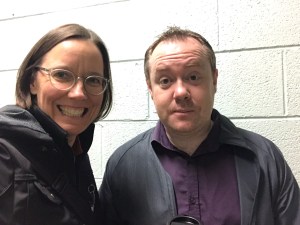
Dr. Shanonn Chance with DIT’s Dr. Barry McCauley, an expert in BIM and Quantity Surveying

At the conclusion of the workshop, I met up with my former Fulbright and MSCA supervisor, Professor Brian Bowe. Then I walked from DIT Grangegoreman to DIT Bolton Street by way of our new path–which connects the two sites and takes just seven minutes to walk. There at Bolton Street, I returned a library book (Marton and Booth, 1997) and had a chat with Dr. Barry McCauley, who was serving as my temporary replacement but has since been appointed to a permanent full-time position of his own at DIT. I couldn’t be more pleased, as Barry is an excellent teacher and researcher and is excelling even while adjusting to his new prosthetics. Barry was injured on a construction site when he was 21 and his legs were crushed, but he has not let this stop him. He went on to get his Ph.D. and he’s a force to be reckoned with! We are lucky to have him at DIT; I really enjoyed learning Navis Works and CostX from him in prior years and he has done some very important research on uptake and implementation of BIM (Building Informational Modelling) globally.

If you are a researcher reading this who is interested in applying for a fellowship to come do research in engineering education at either DIT (soon to be TU Dublin) or at my other institution which is UCL, or in BIM implementation here at DIT, please contact me and I’ll help you write a grant proposal (IrelandByChance at gmail dot com).

Discovering Irish History on Arbor Hill

Hoping to learn a bit of Irish history today, Aongus and I hiked over to Dublin’s Collins Barracks after brunch. A former military station, Collins Barracks is now used as a museum with decorative arts, WWI and II memorabilia, and even a gun-running ship that was pulled up from the sea floor. It’s also where Aongus did his service in the Irish military once upon a time.

To our dismay (and that of five other groups of visitors who arrived at 1 PM) the museum at Collins Barracks opens only 2-5 pm on Sundays. We left disappointed and took the back way out of the Barracks, exiting at Arbor Hill Prison.

Finding the Arbor Hill cemetery, next to the prison, open, we decided to venture in. There, we discovered tomb stones of British soldier and their families who served as occupying forces during the 1800s.

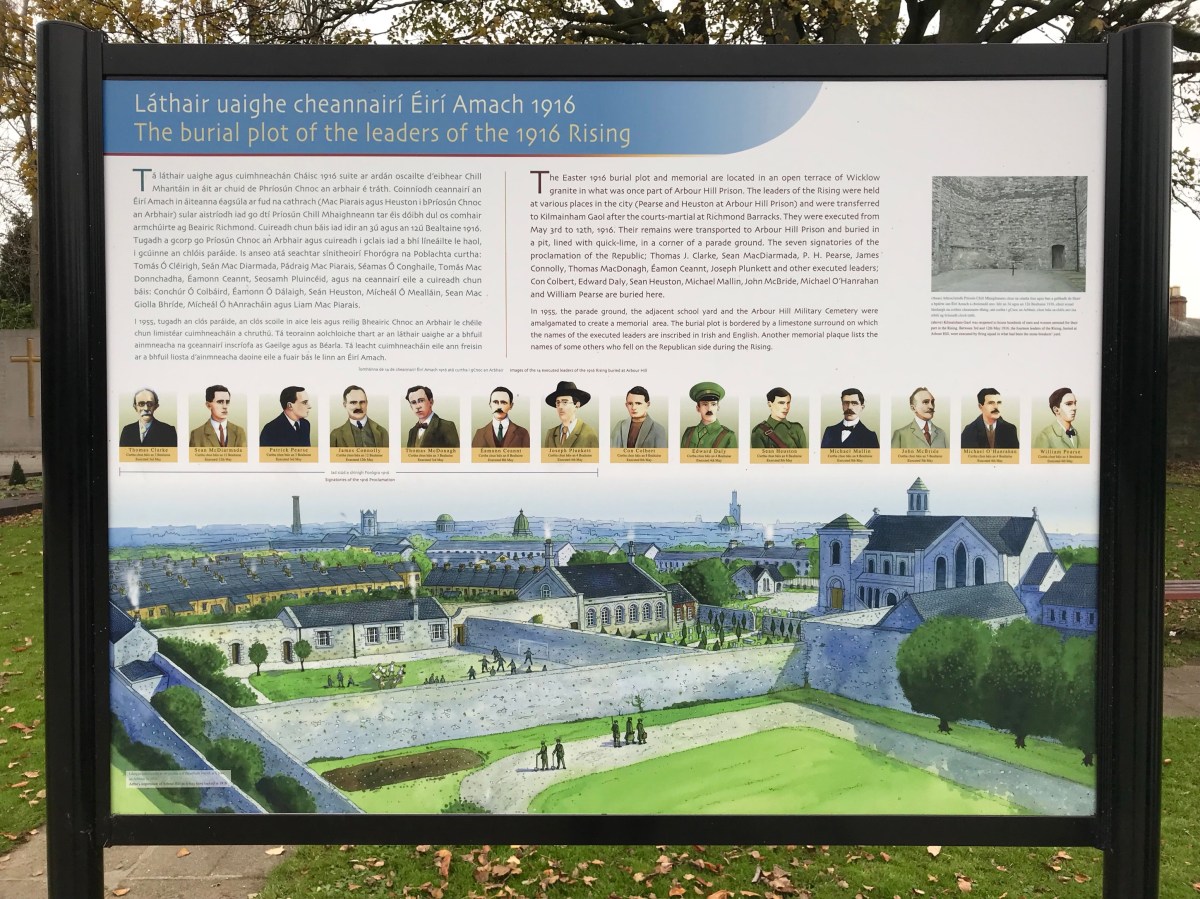
We also found a memorial to the Irish who lost their lives in the 1916 uprising. The leaders of the Rising were executed in Kilmainham Gaol, across the Liffey river, and then buried in a mass grave here.

Following 1916 the Irish continued to struggle against colonial rule, and they gained independence from British in 1922. Later this memorial was built to memorialize their effort. The monument includes the text of the 1916 Proclamation, in Irish on the left and English on the right.

Today this memorial park was full of dogs, and dog lovers, from the adjacent Stoneybatter neighborhood. Upon exiting the cemetery on the northern side and into the neighborhood, we discovered a well-preserved WWII tank kept up by a citizen group and had a bit of fun.

But after a busy week filled with cold, wet weather, we’d had our fill of exploring. We turned to head for home.

We’d driven from work on Friday straight down to Bunclody for RoboSlam workshops and not returned to Dublin until late Saturday night. All this activity caught up with us on Sunday, but the comfort of a warm blanket and a hot tea helped us recuperate for the coming week.

Inishbofin Island: Picturesque Wonderland off the Western Coast of Ireland

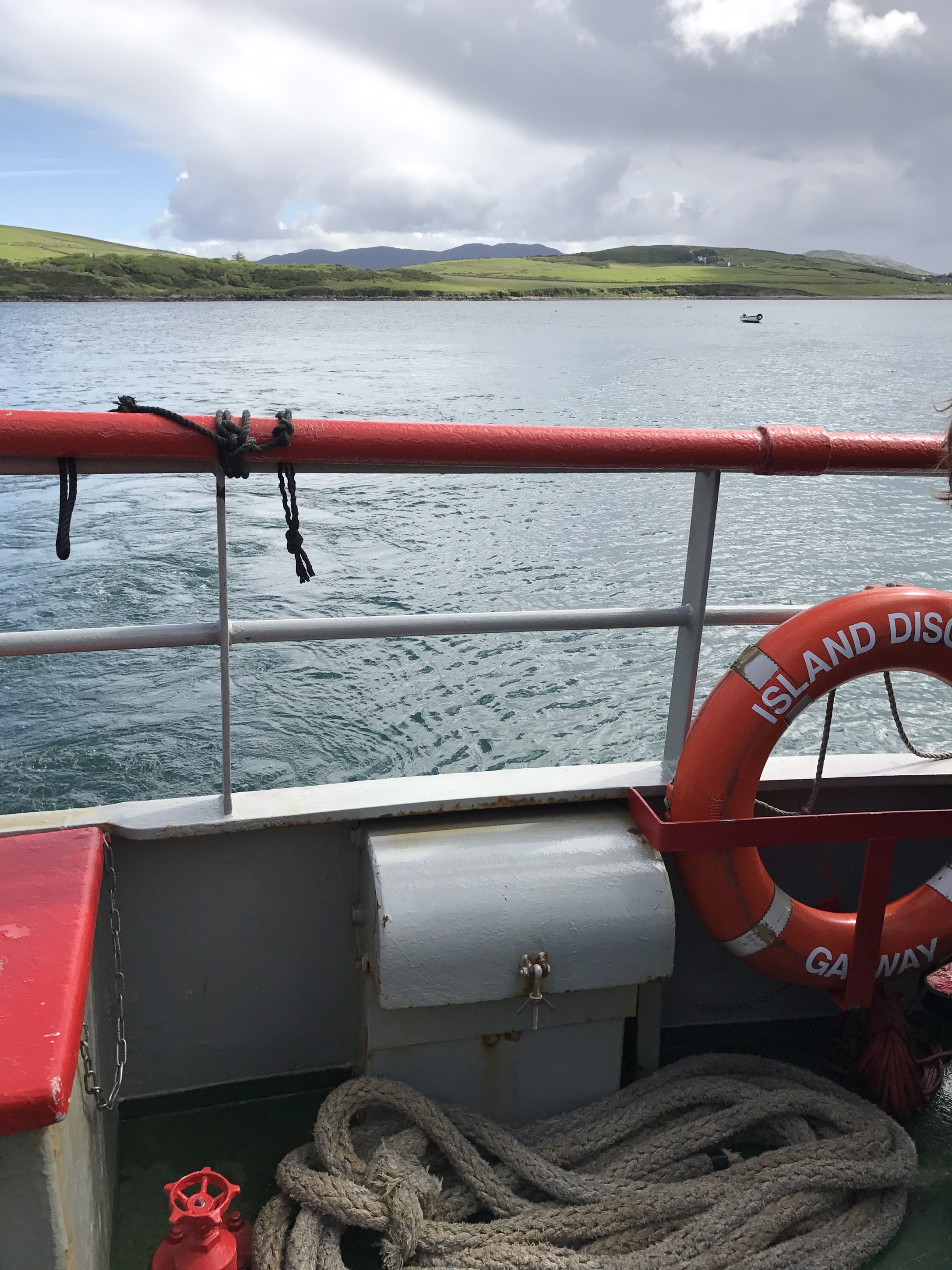
Arriving on Inishbofin by ferry from the coast of Ireland near Clifton, we anticipated a unique combination of rest, relaxation, and outdoor adventure. Aongus and I had spent a weekend here one year ago, and we were blessed with beautiful skies and sunshine then (enough, by the way, to turn my Irishman purple). Early this summer we returned, hoping for a sequel of delightful adventures. And that's exactly what we found.

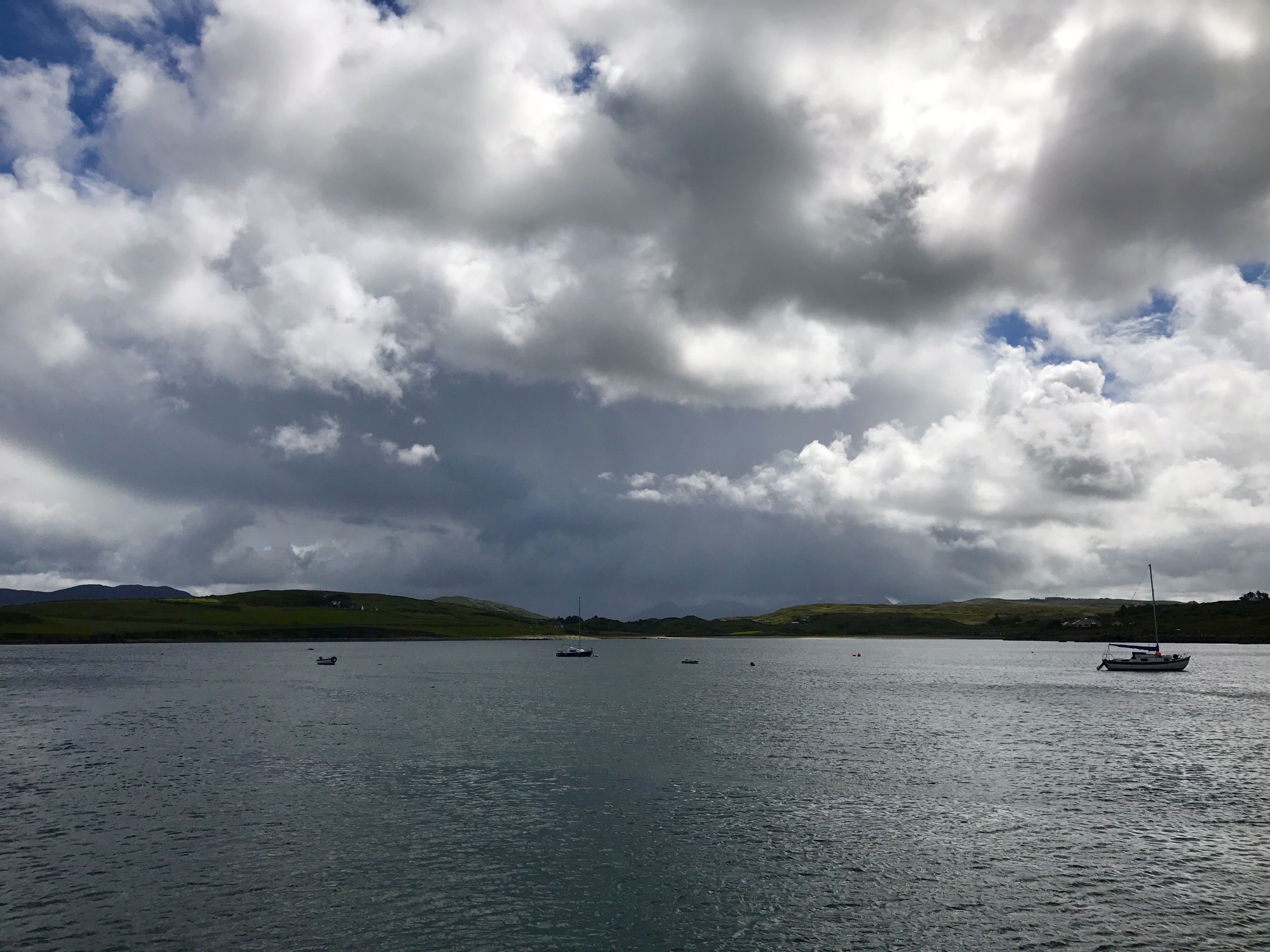
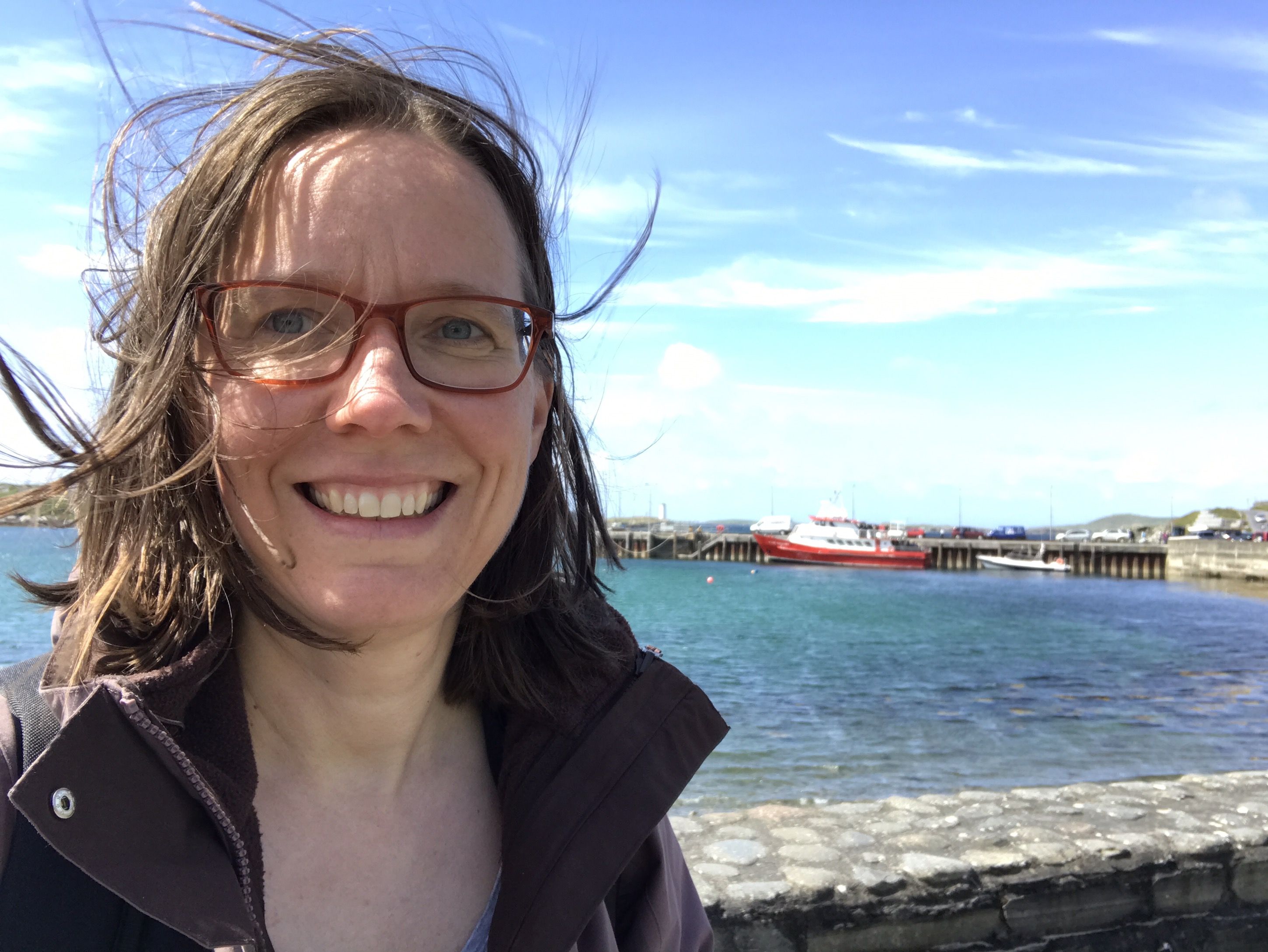
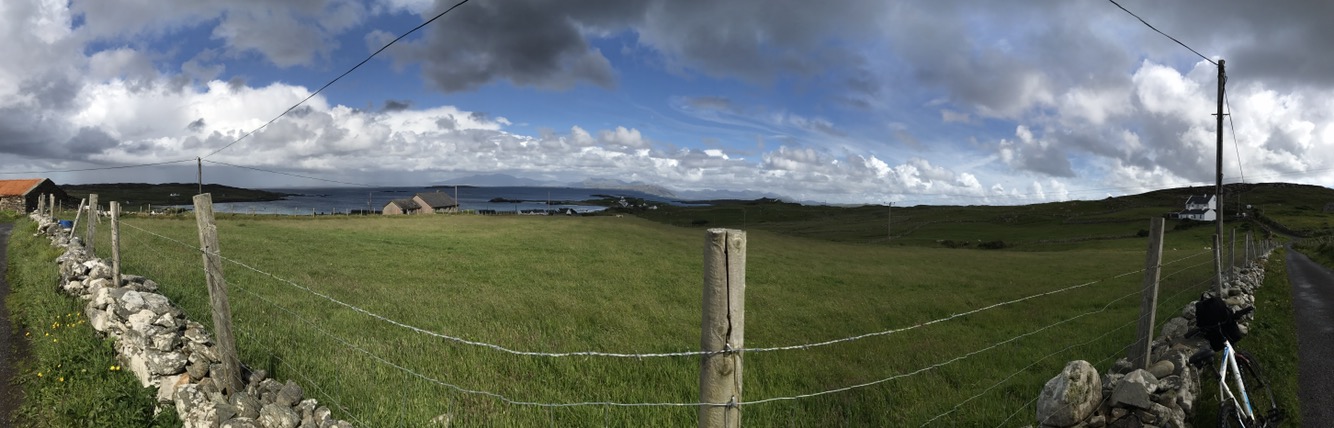
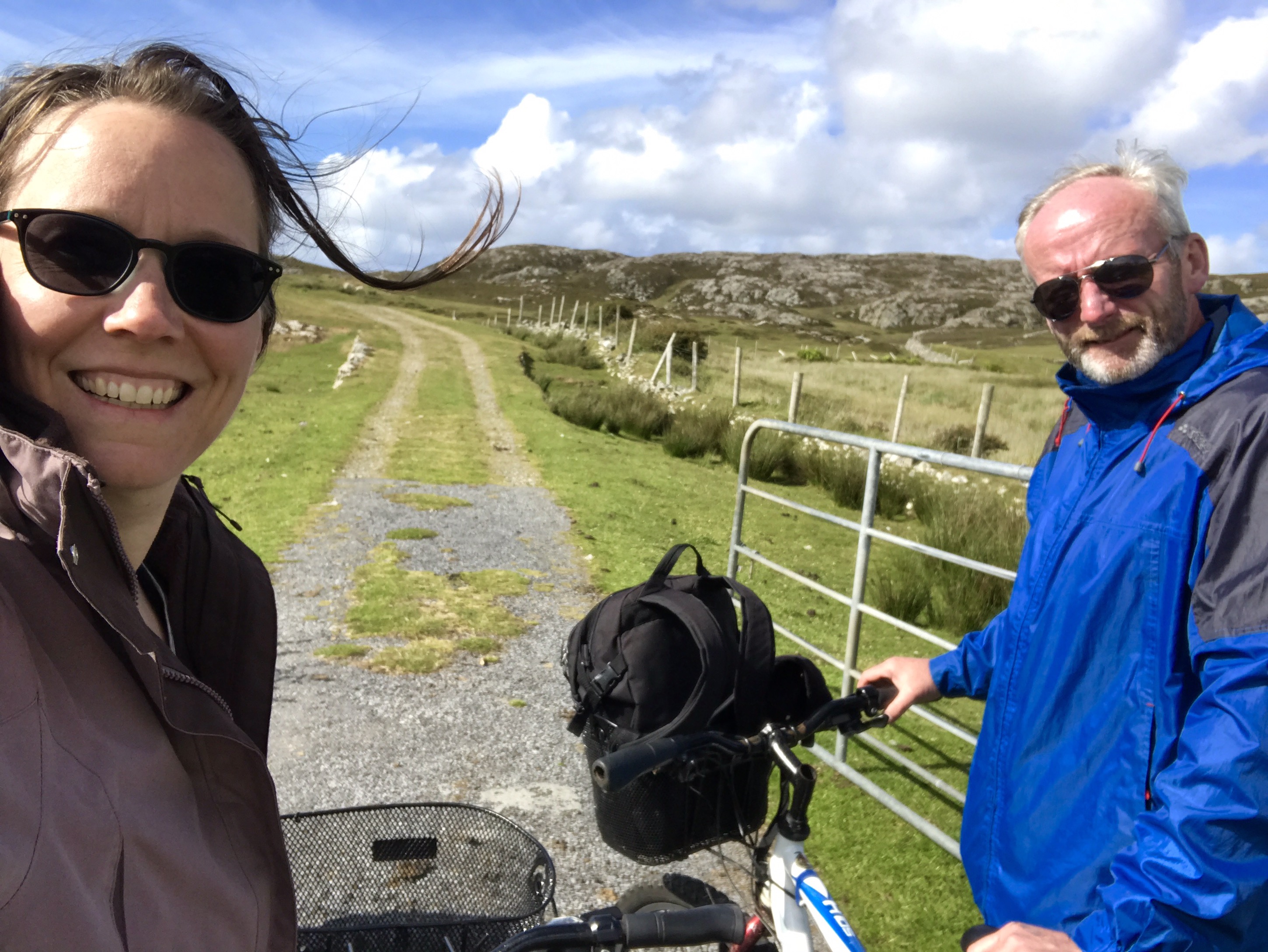
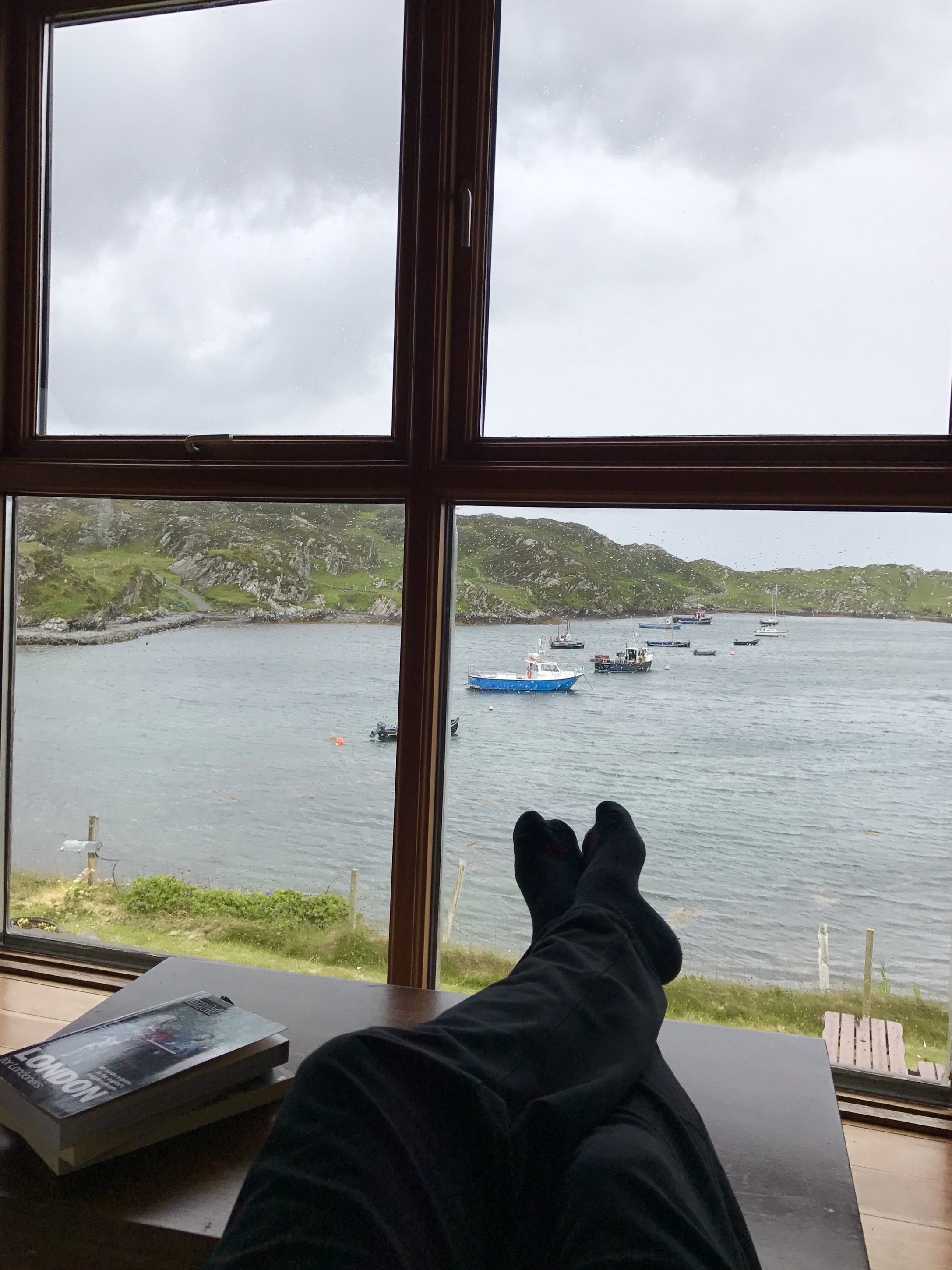
Now don't get me wrong, our cycling and sunbathing were at times delayed by sprinkles. You'll see from the photos that windbreakers were needed, even in June. But our three days in this little paradise couldn't have been lovelier. The weather and pace of life were just right. And a happily exhausted duo we were by the end of our cycling day, toasting life over pints of Guinness.

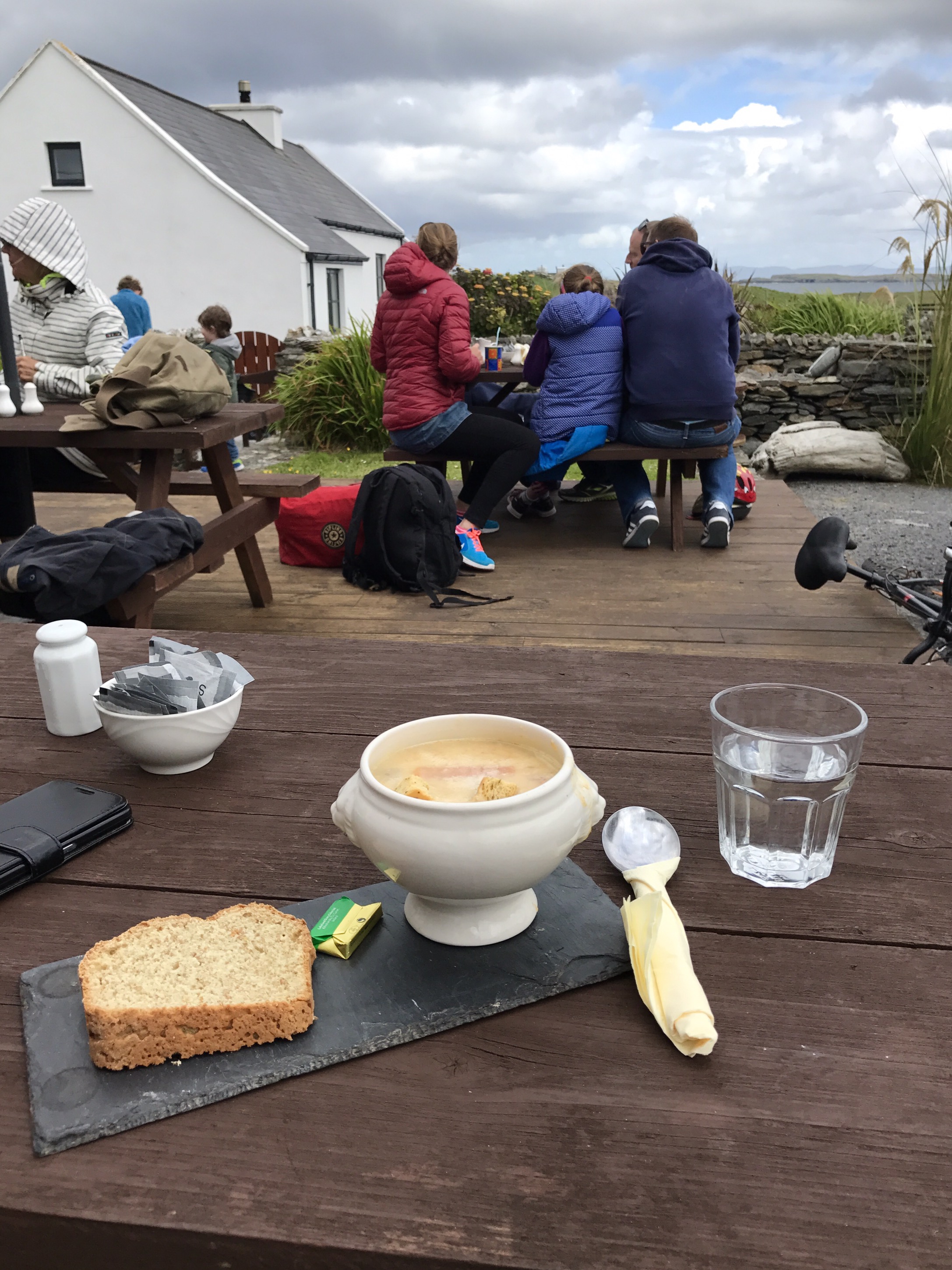
Inishbofin island is home to a hundred or so folks and it boasts a few hotels, restaurants, and pubs, along with a couple tiny little stores. It's reached by passenger ferry.

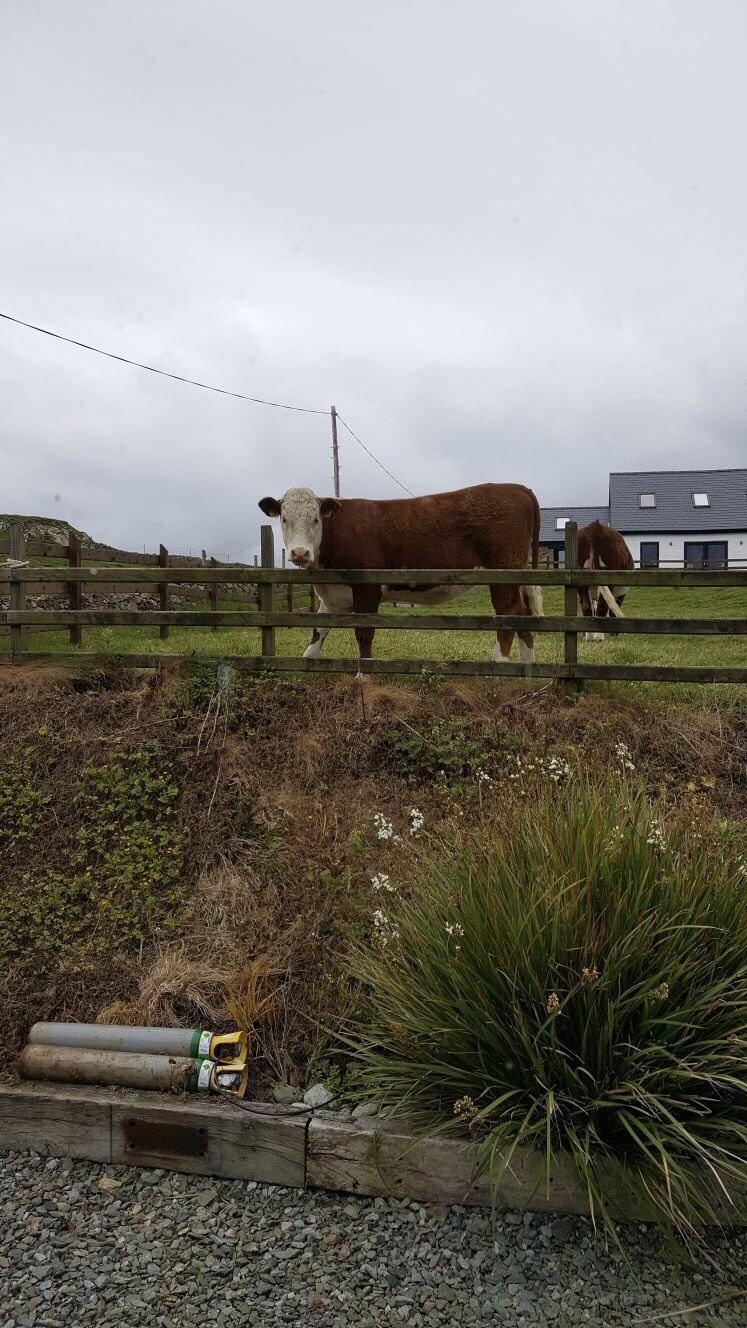
When visiting, it's wise to bring most of what you'll need over from the mainland, and to plan activities and wardrobes around clouds and rain.

If the sun shines, it's a bonus.

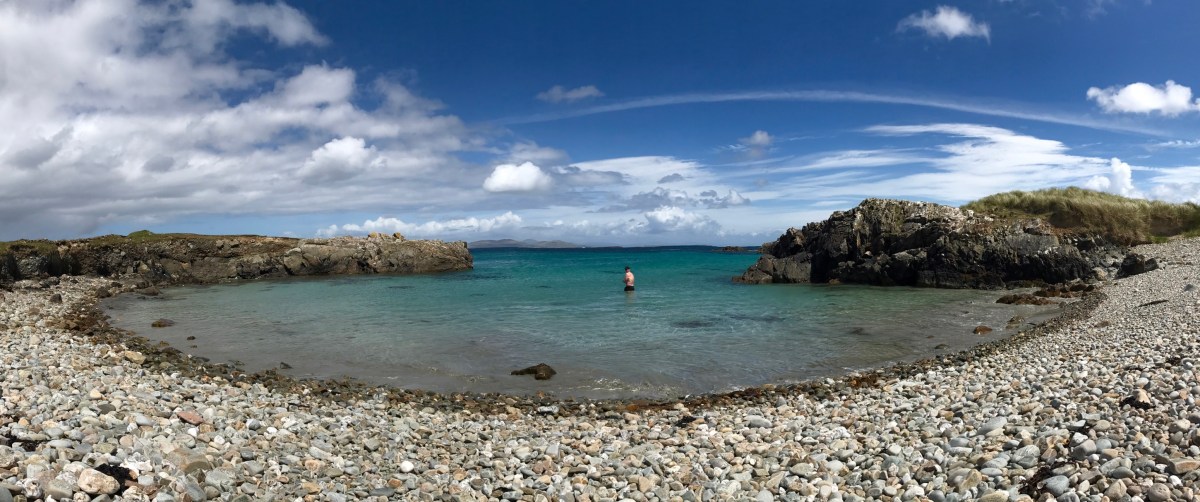
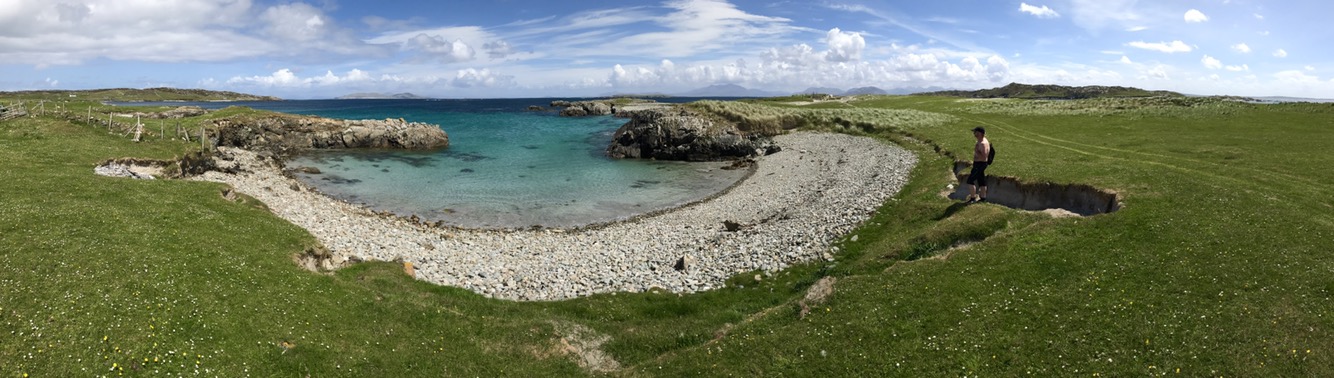
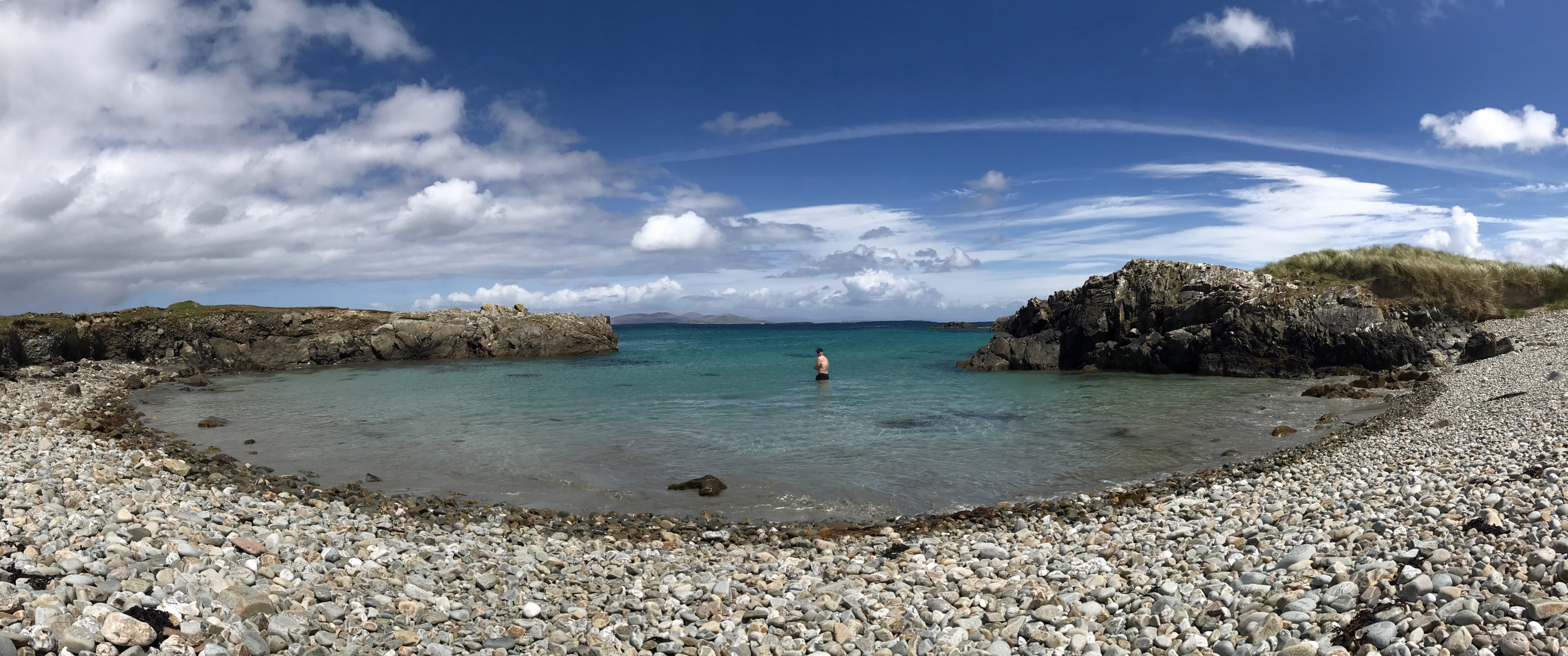
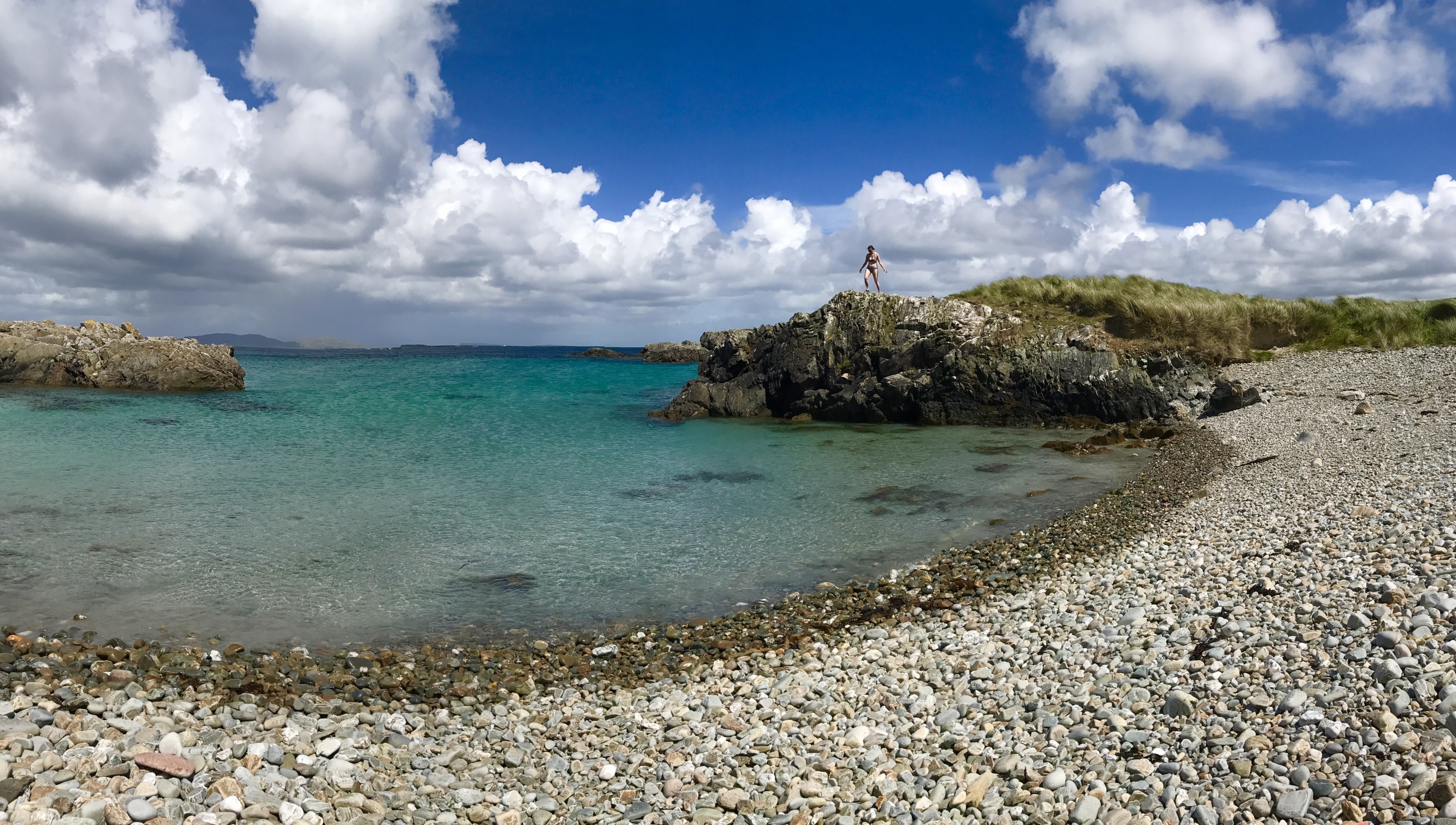
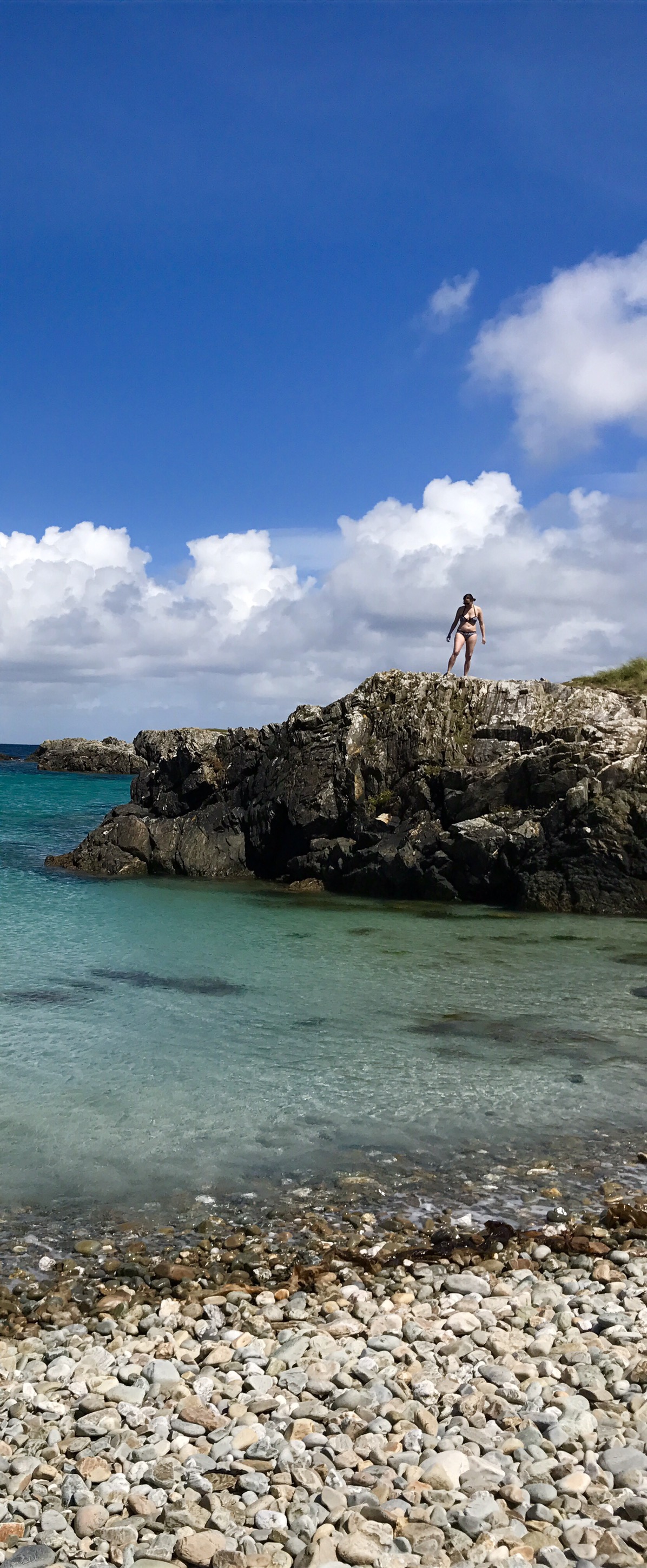
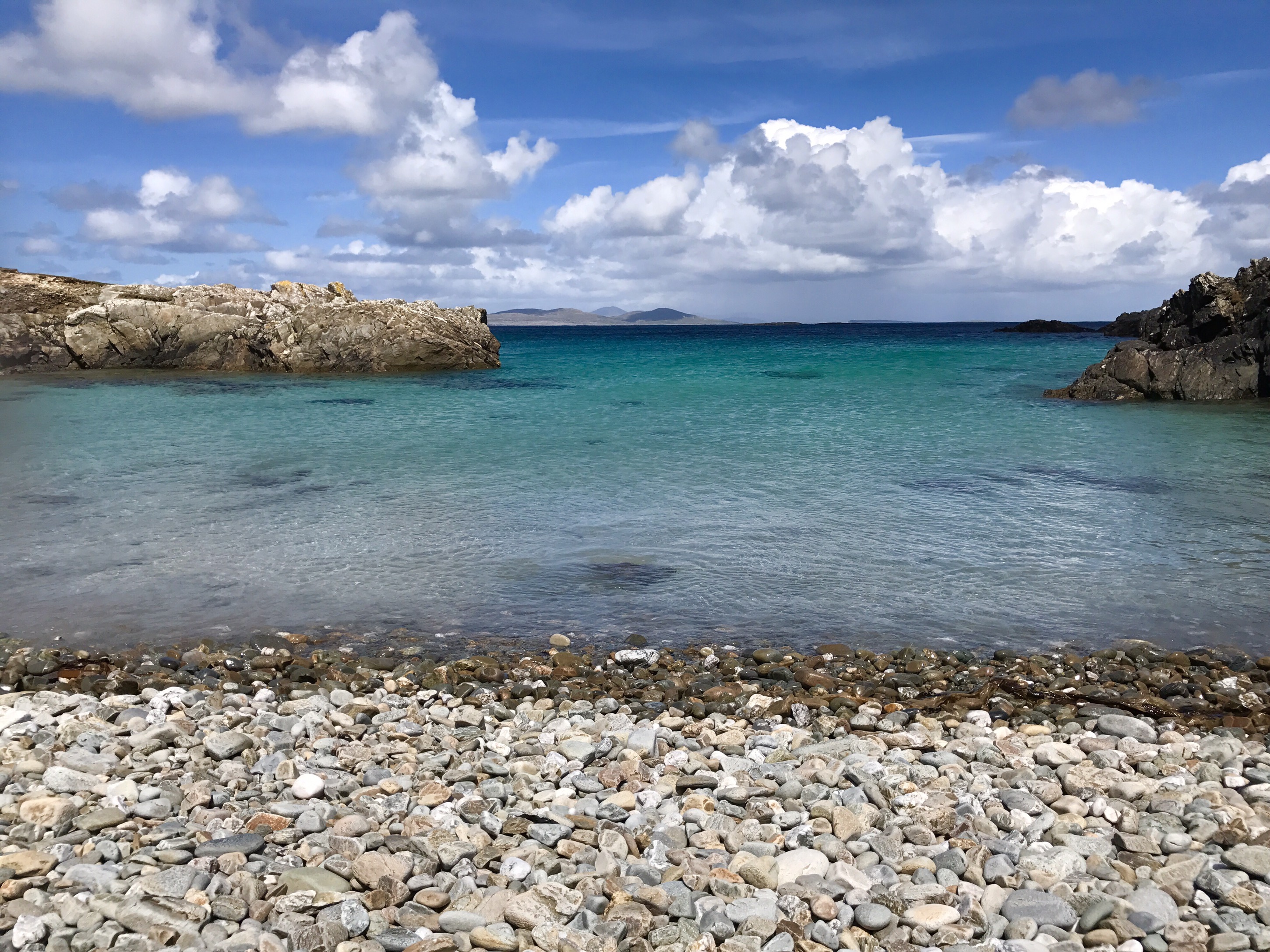
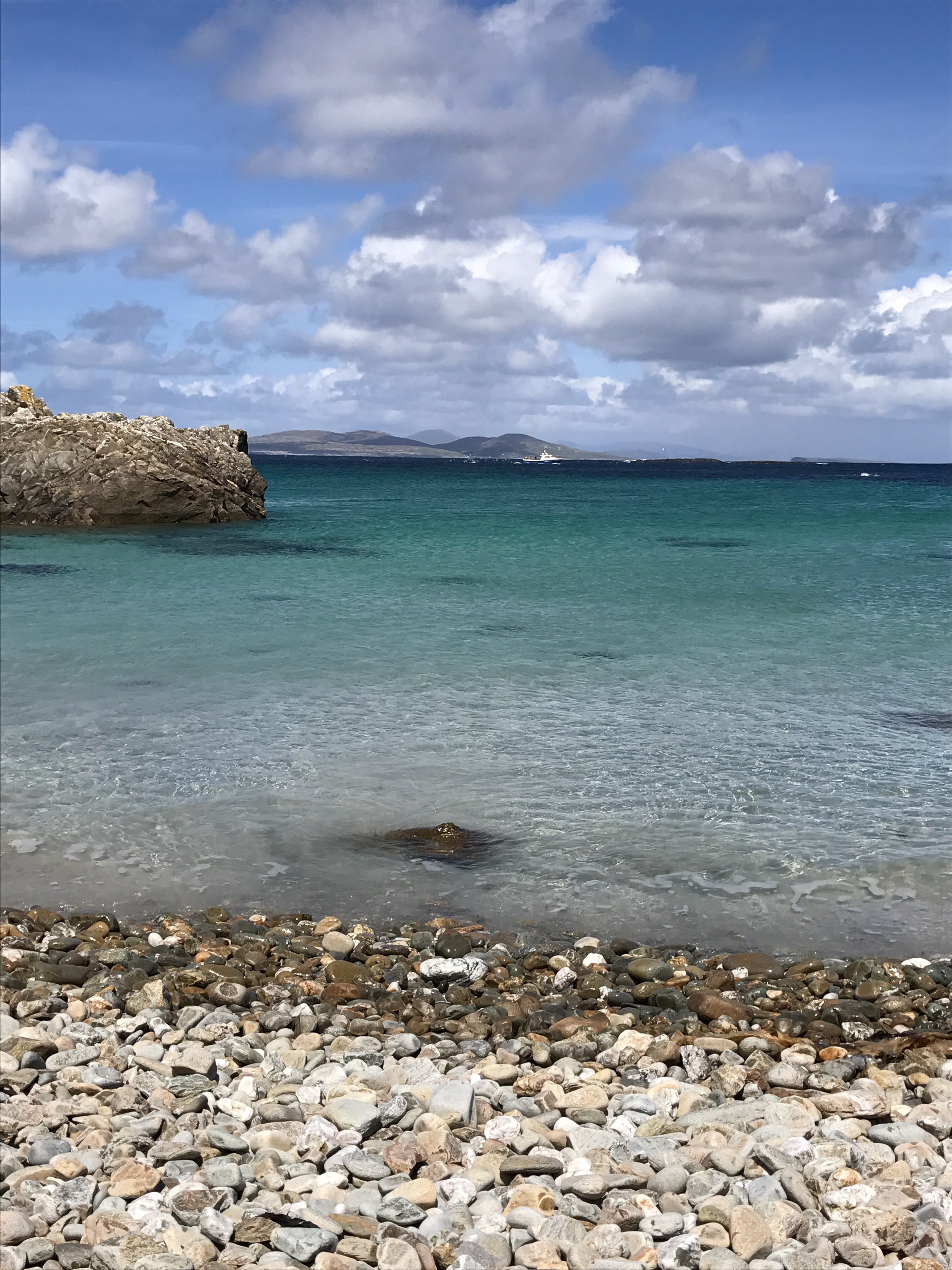
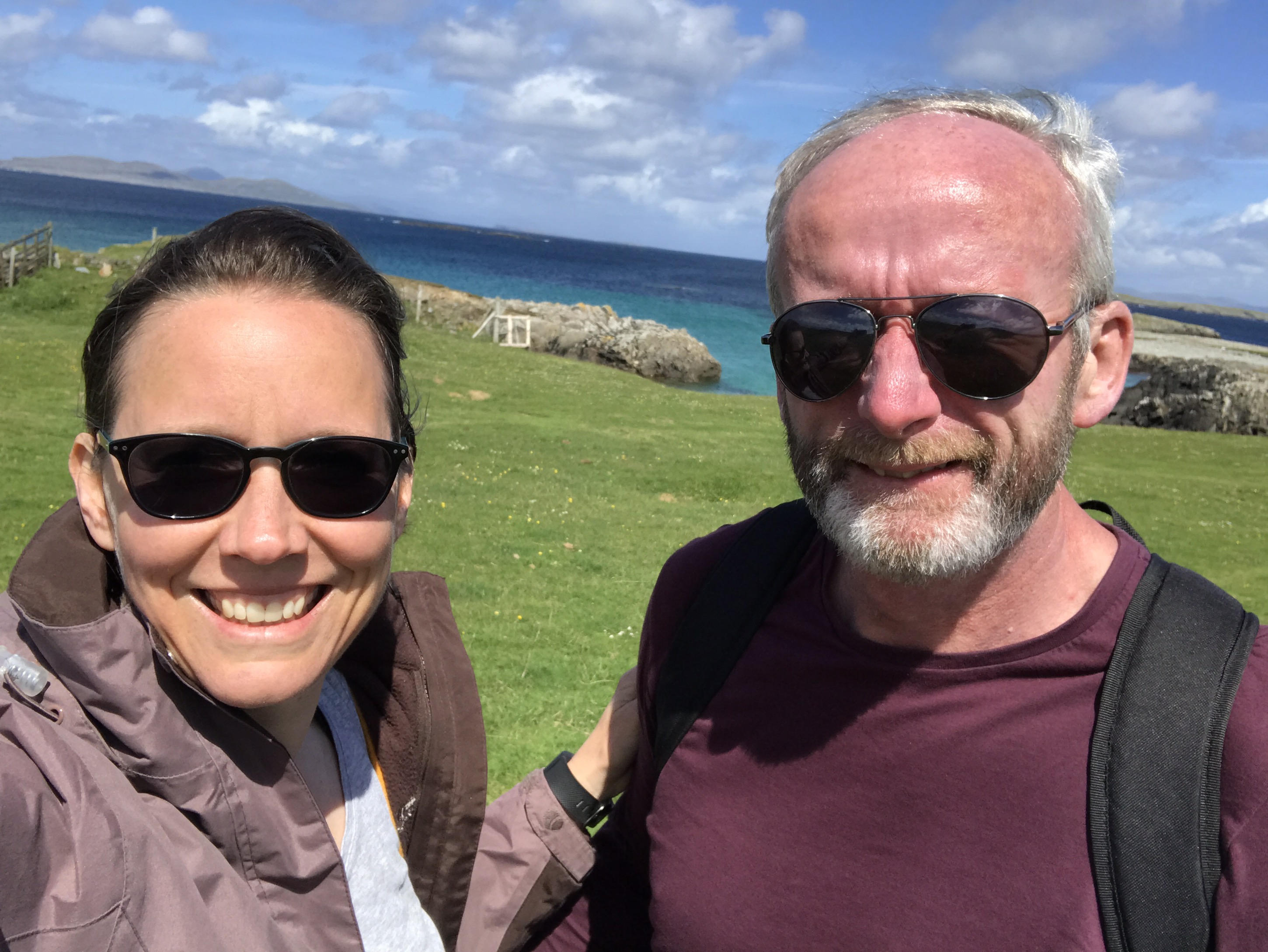
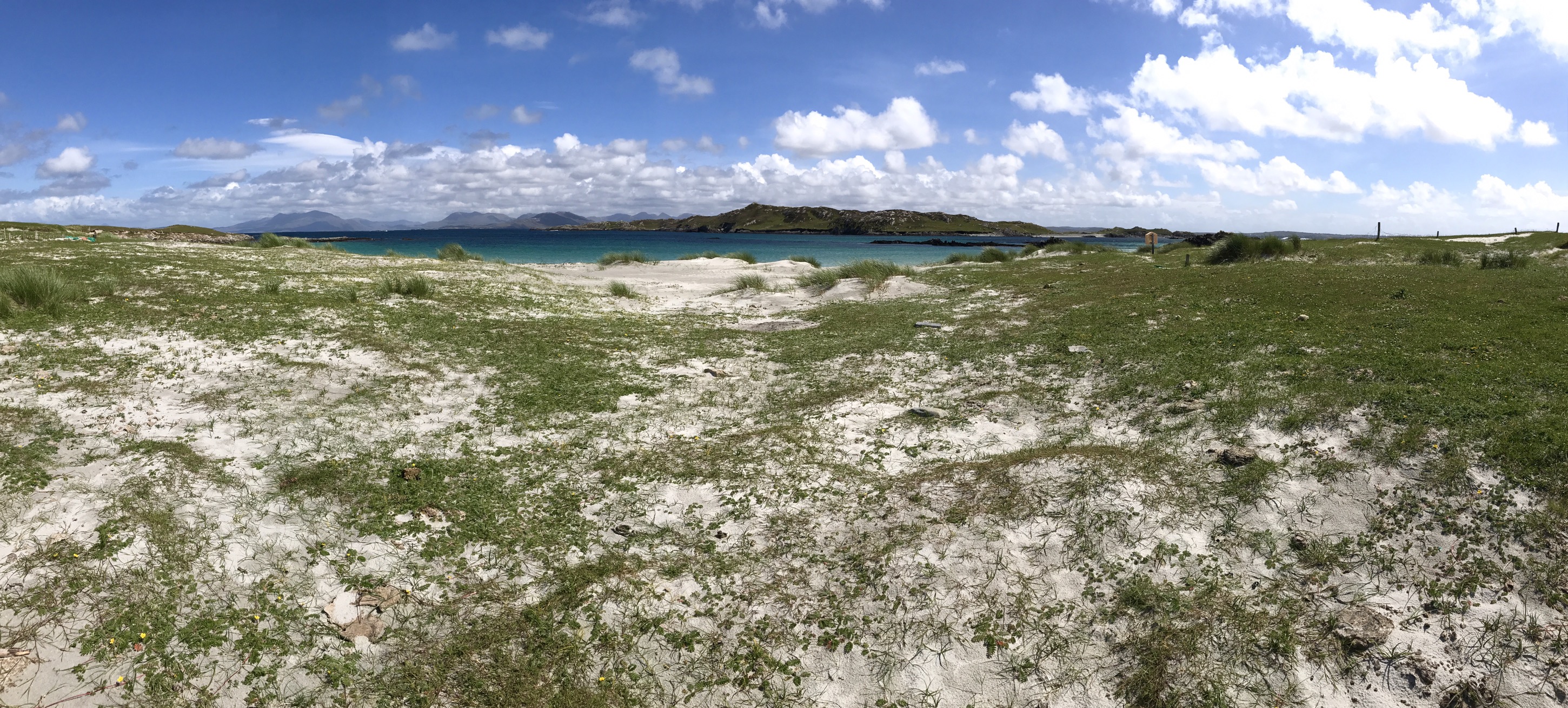
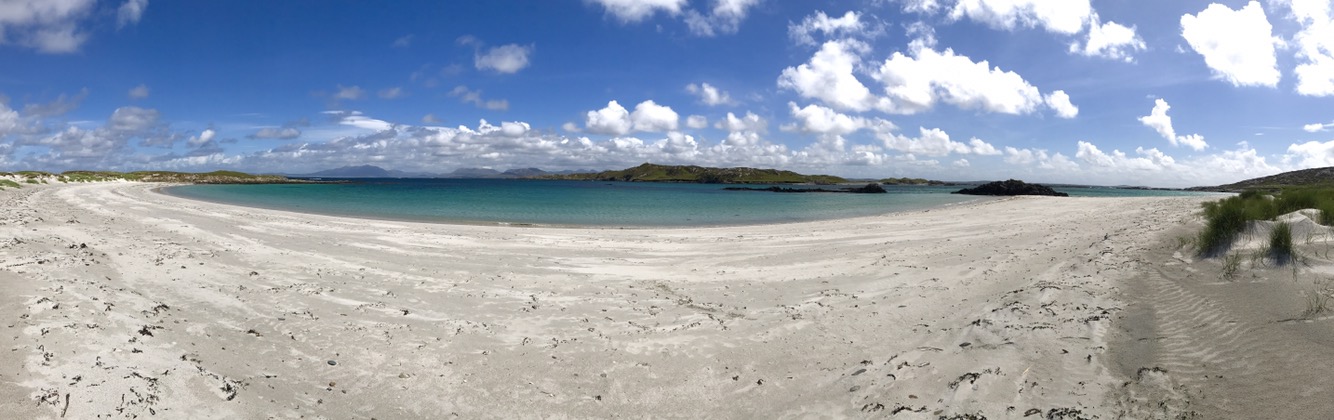
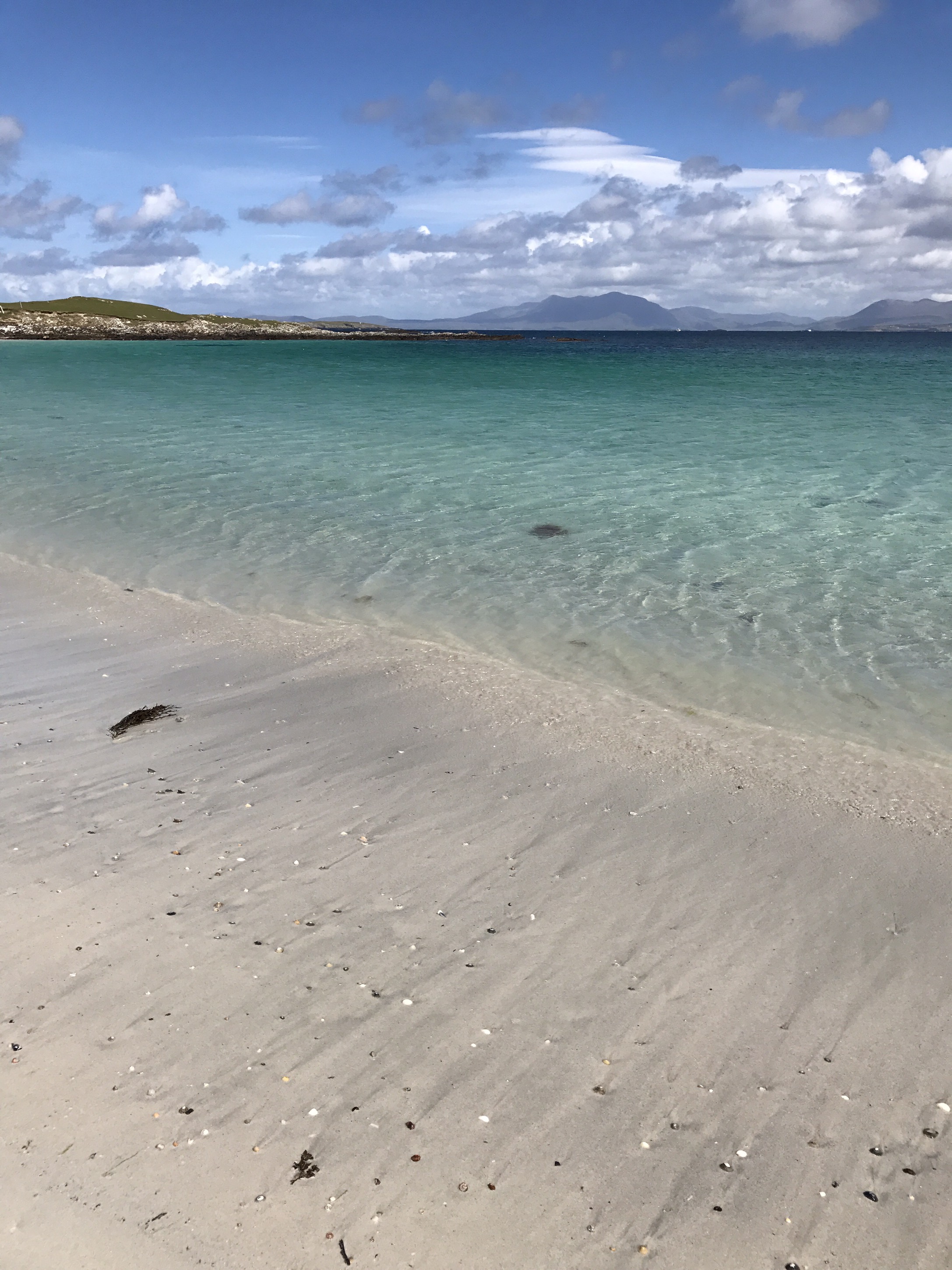
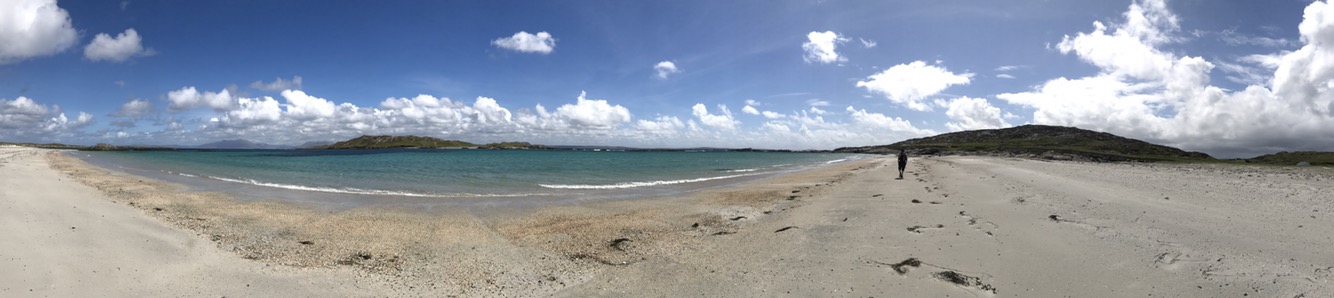
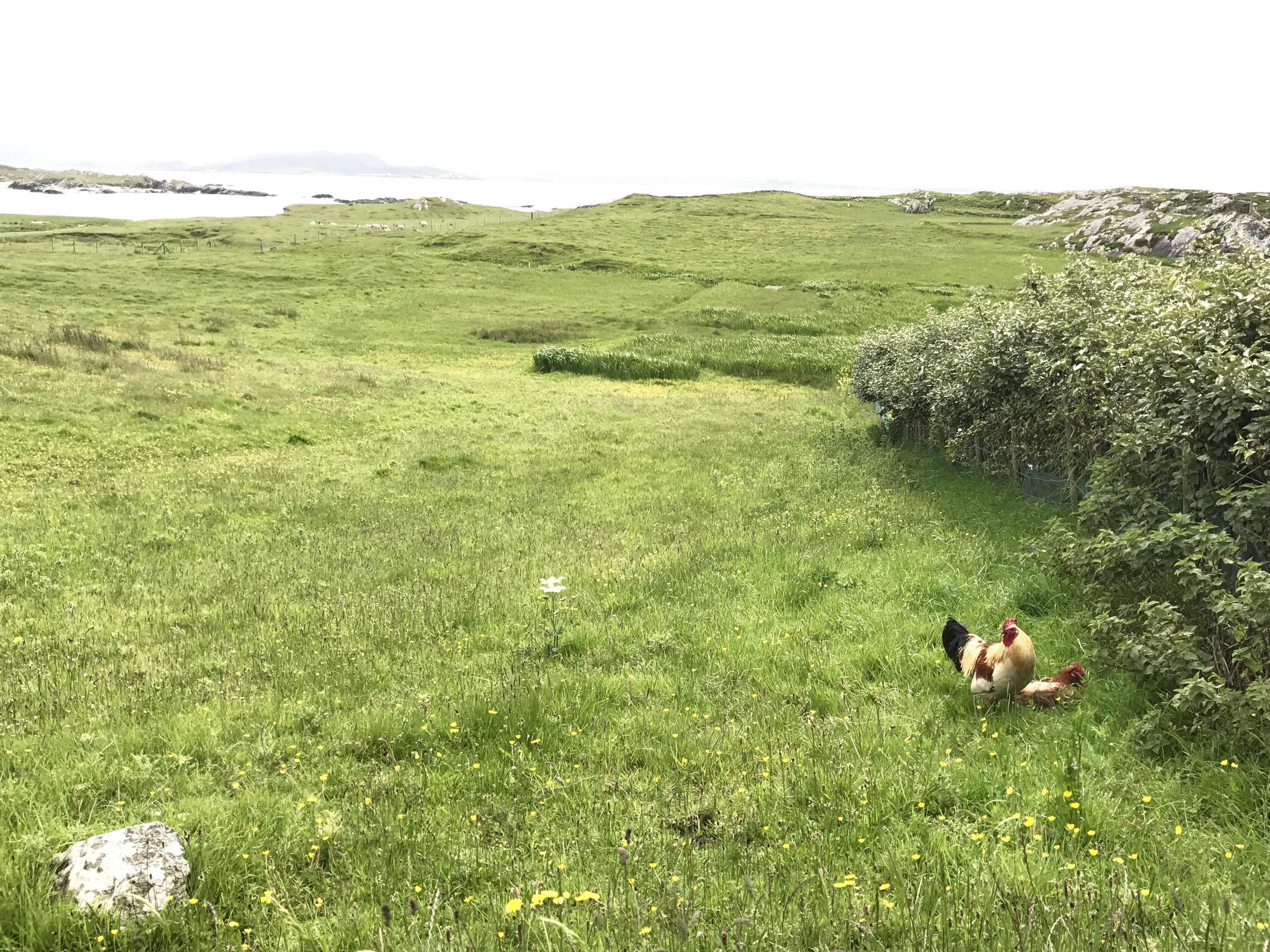
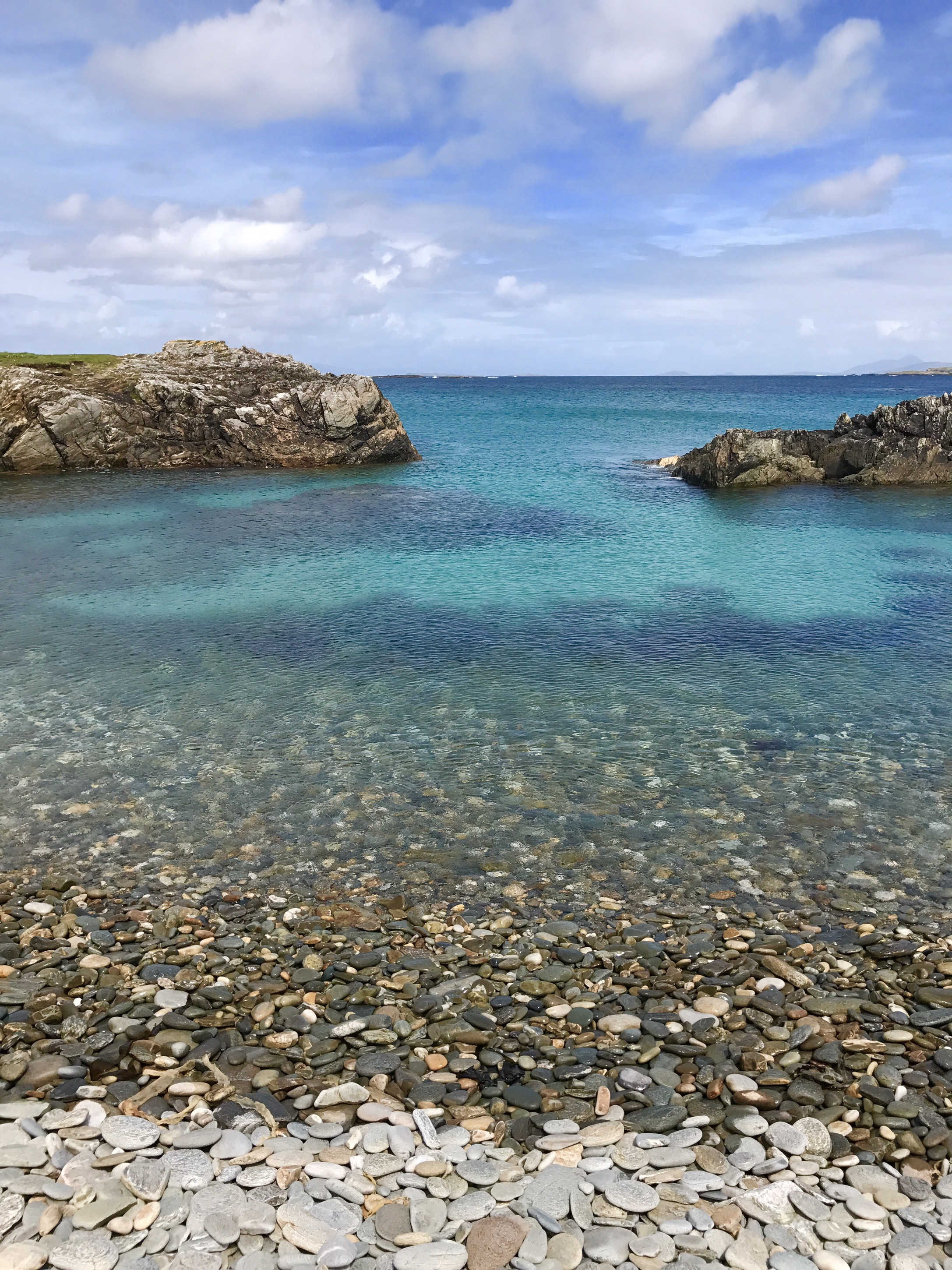
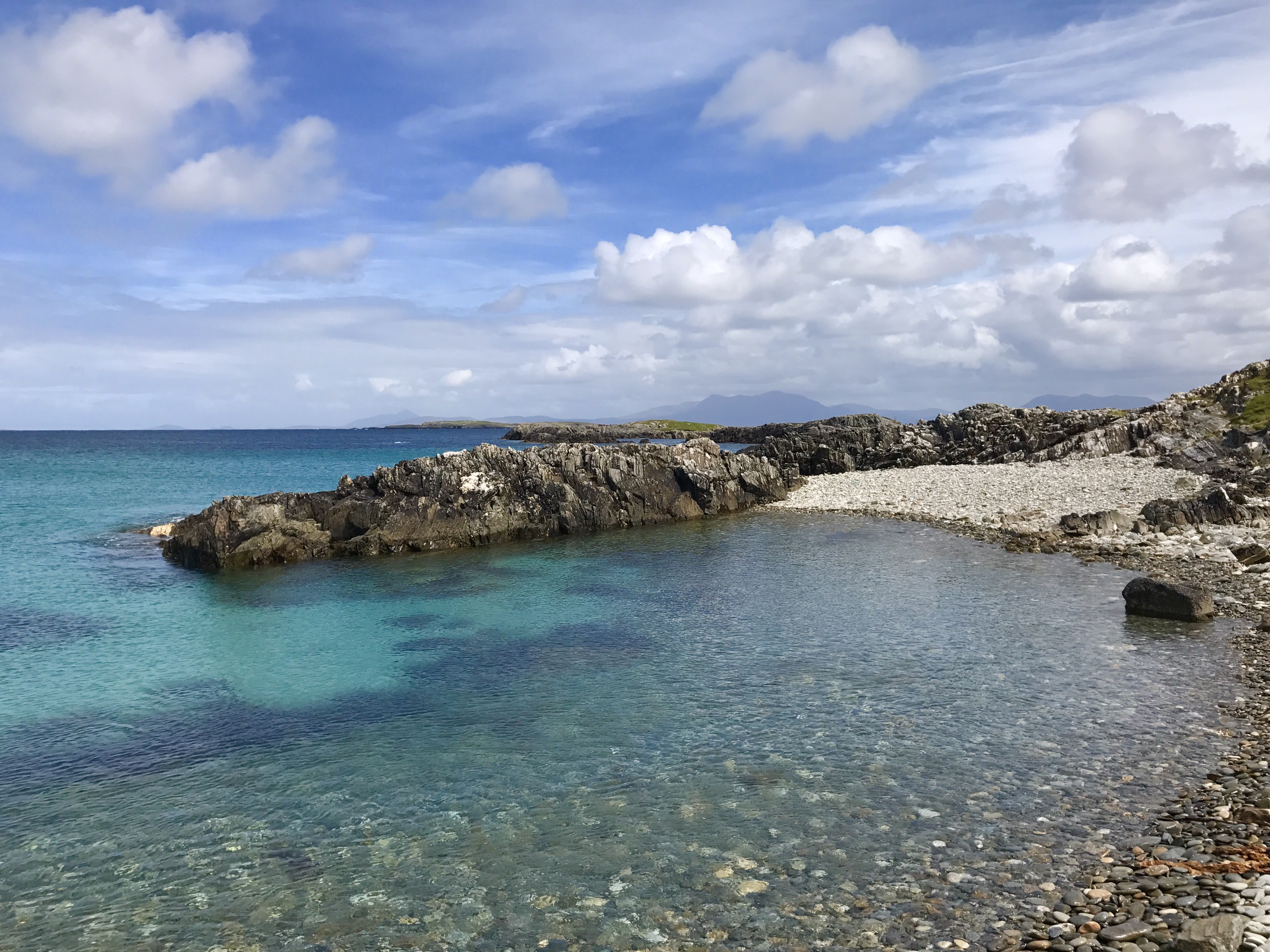
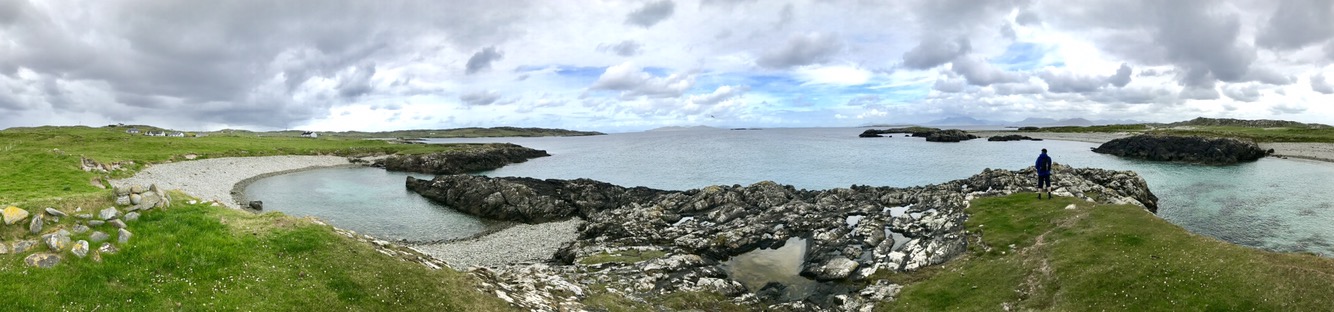
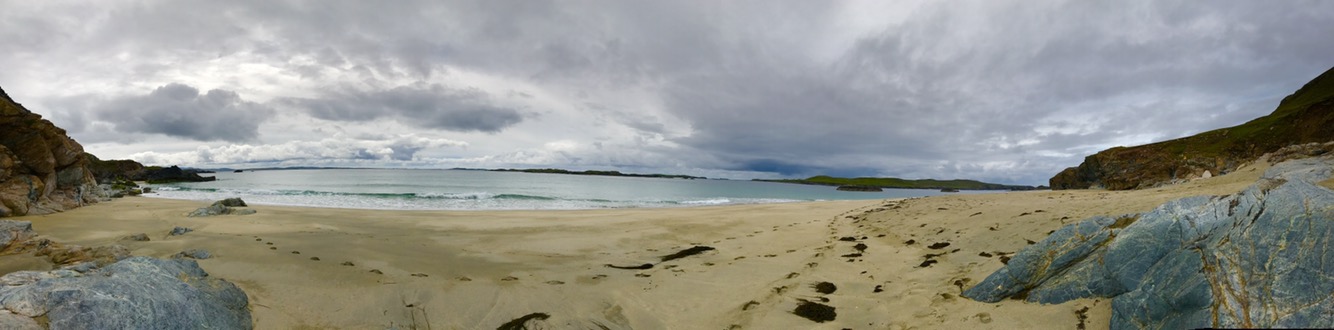
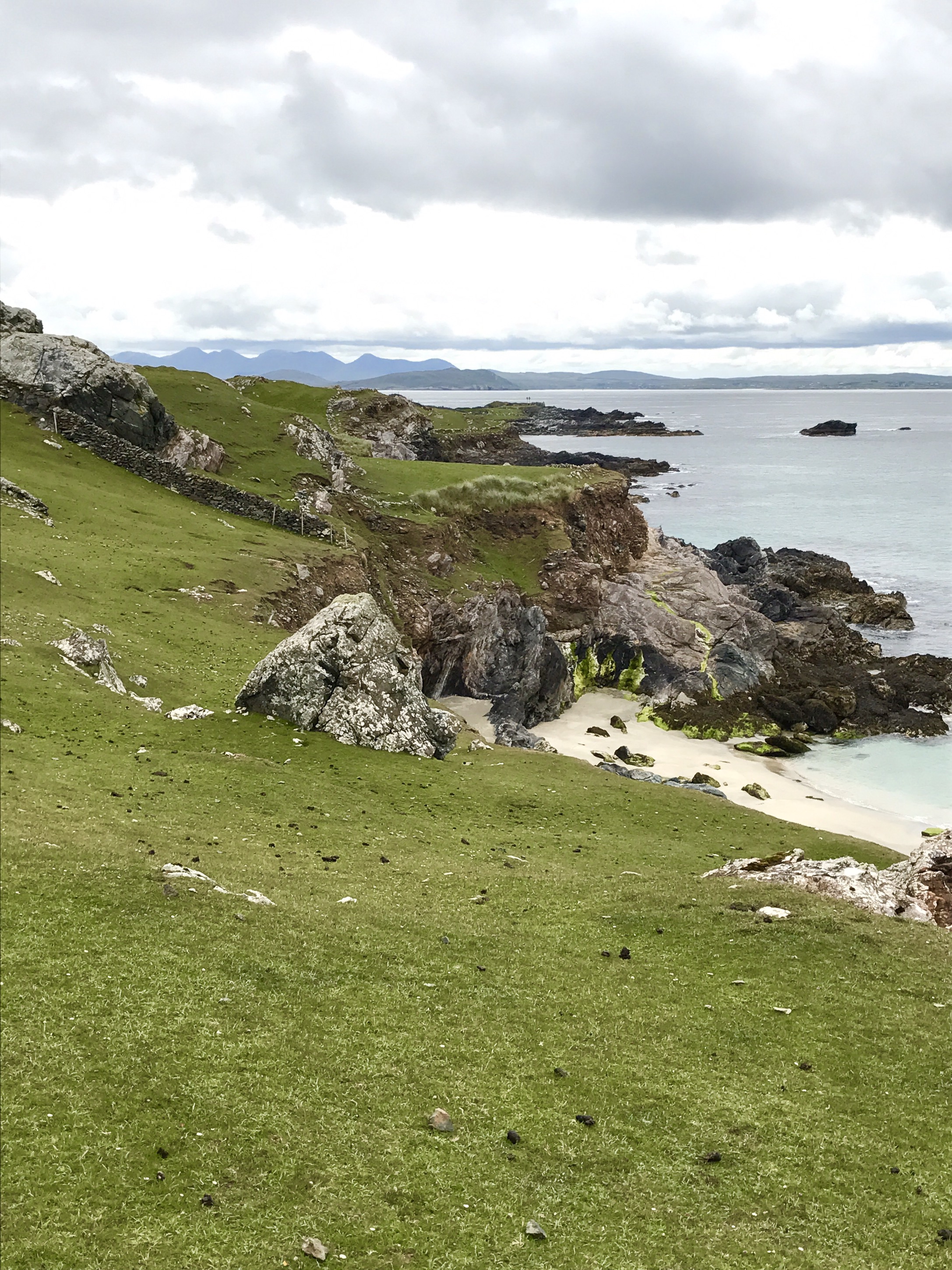
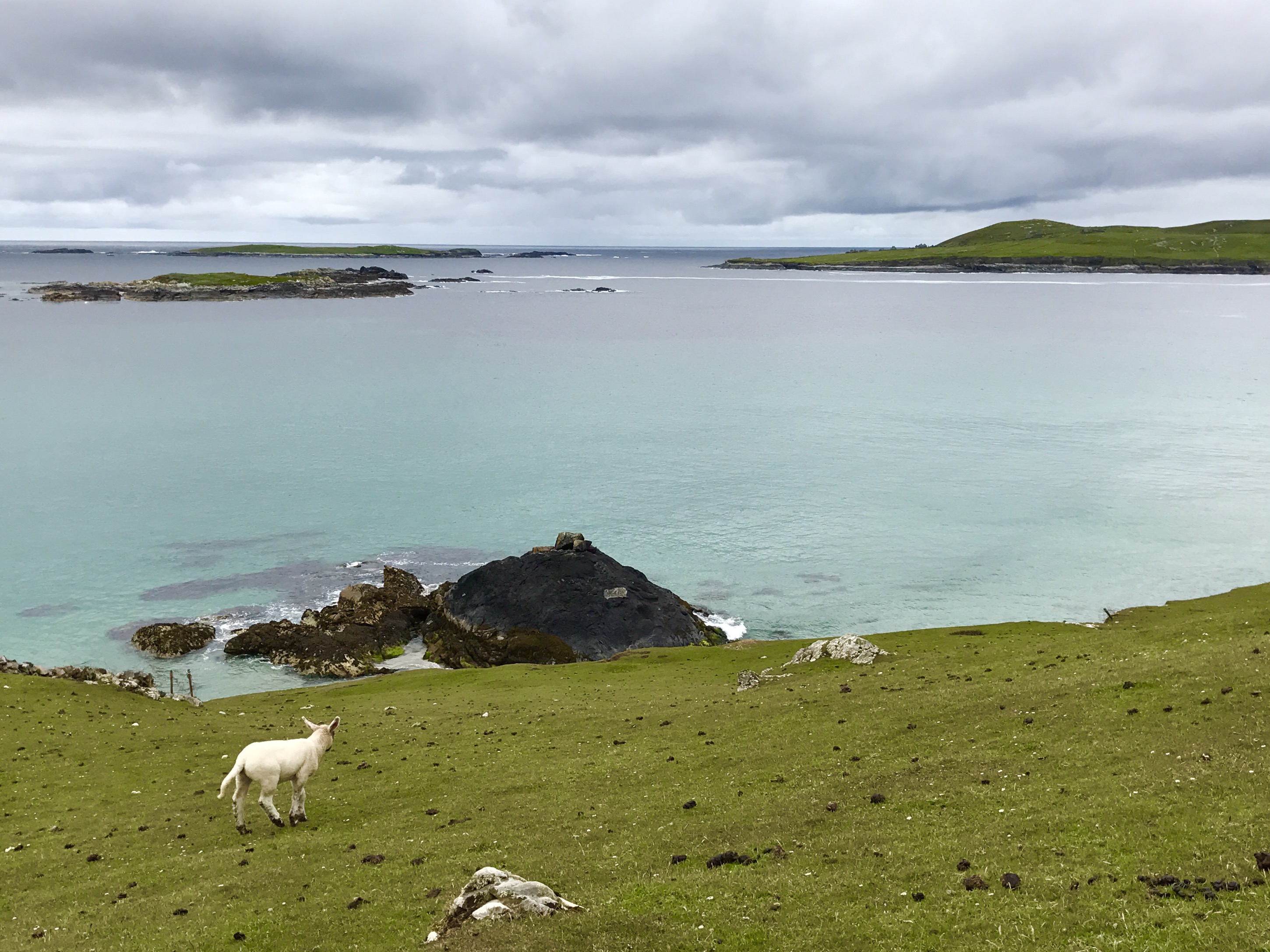
Discovering your own little patch of beach and some sunshine is a delight beyond compare. Add in a hike, a bicycling adventure, and some yoga on a cliff overlooking the beach and a normal day becomes shear magic.

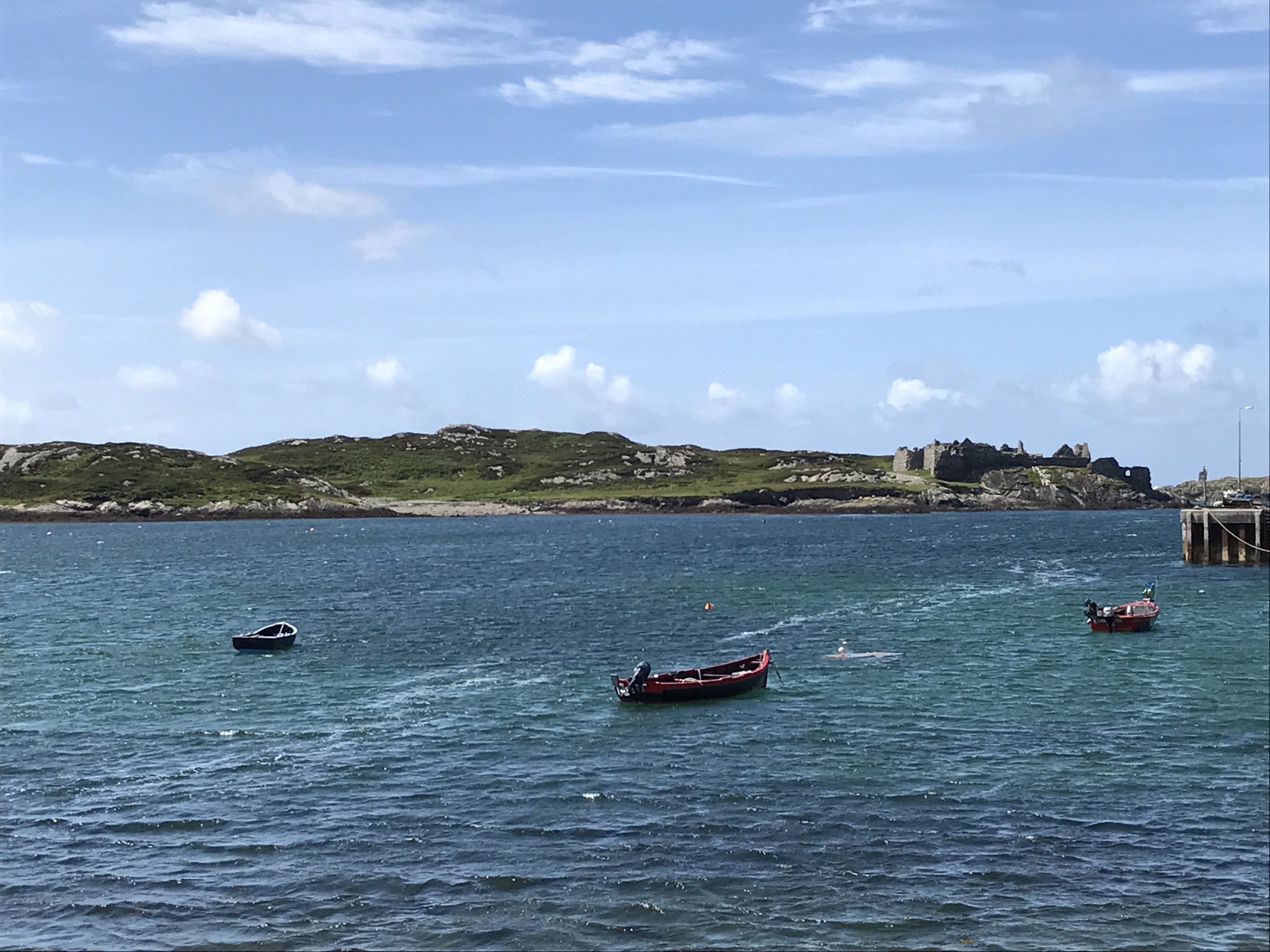
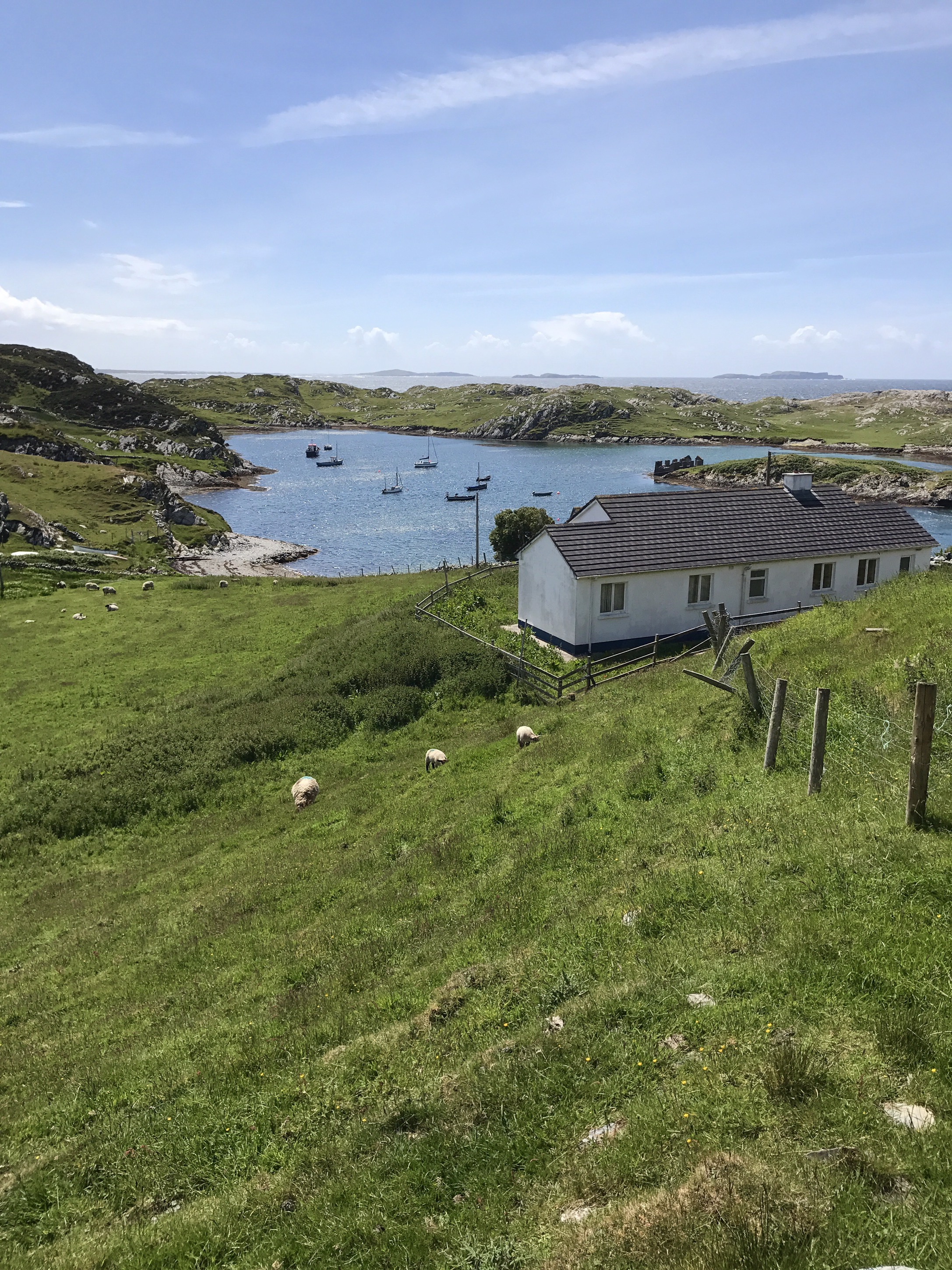
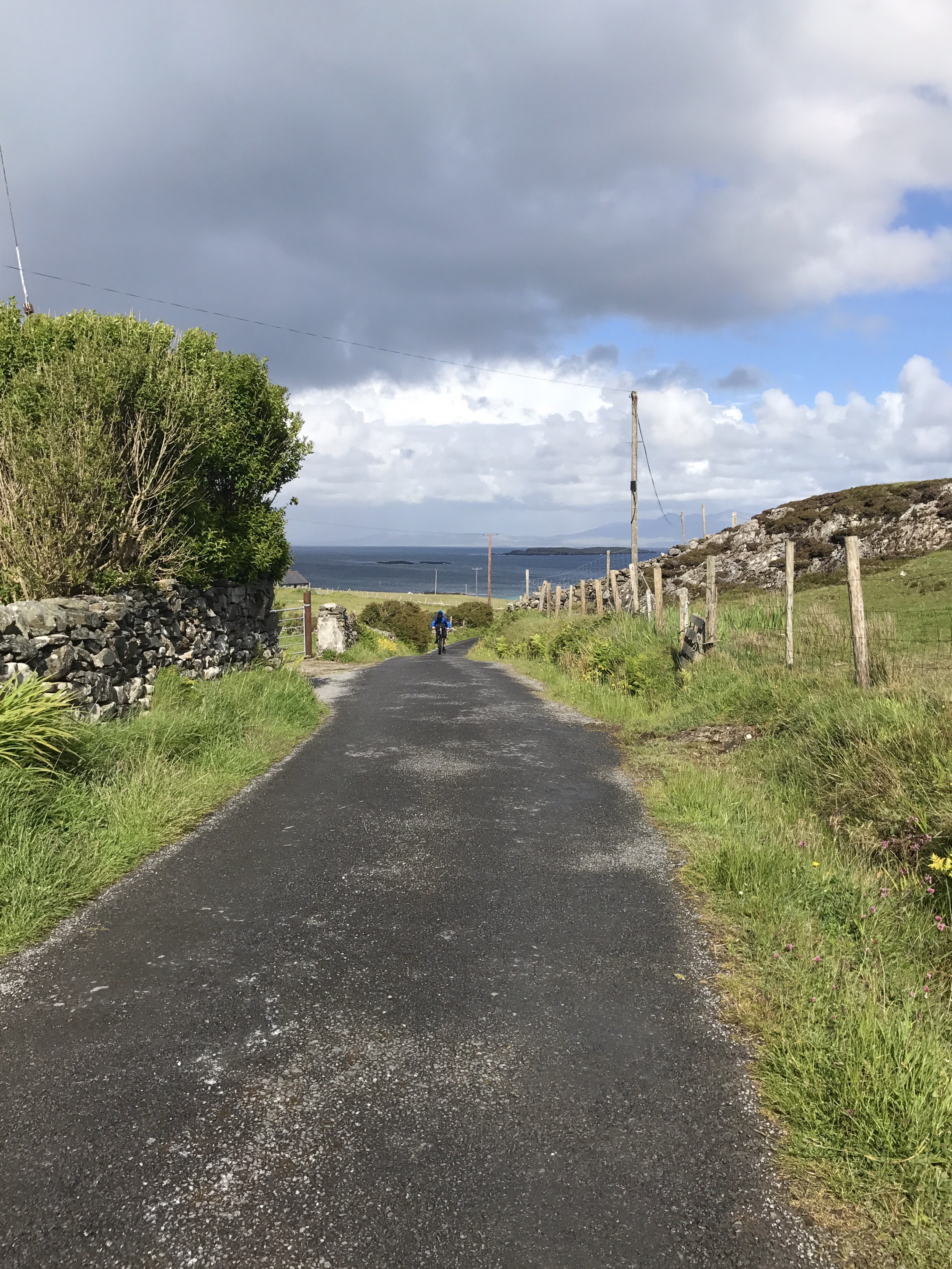
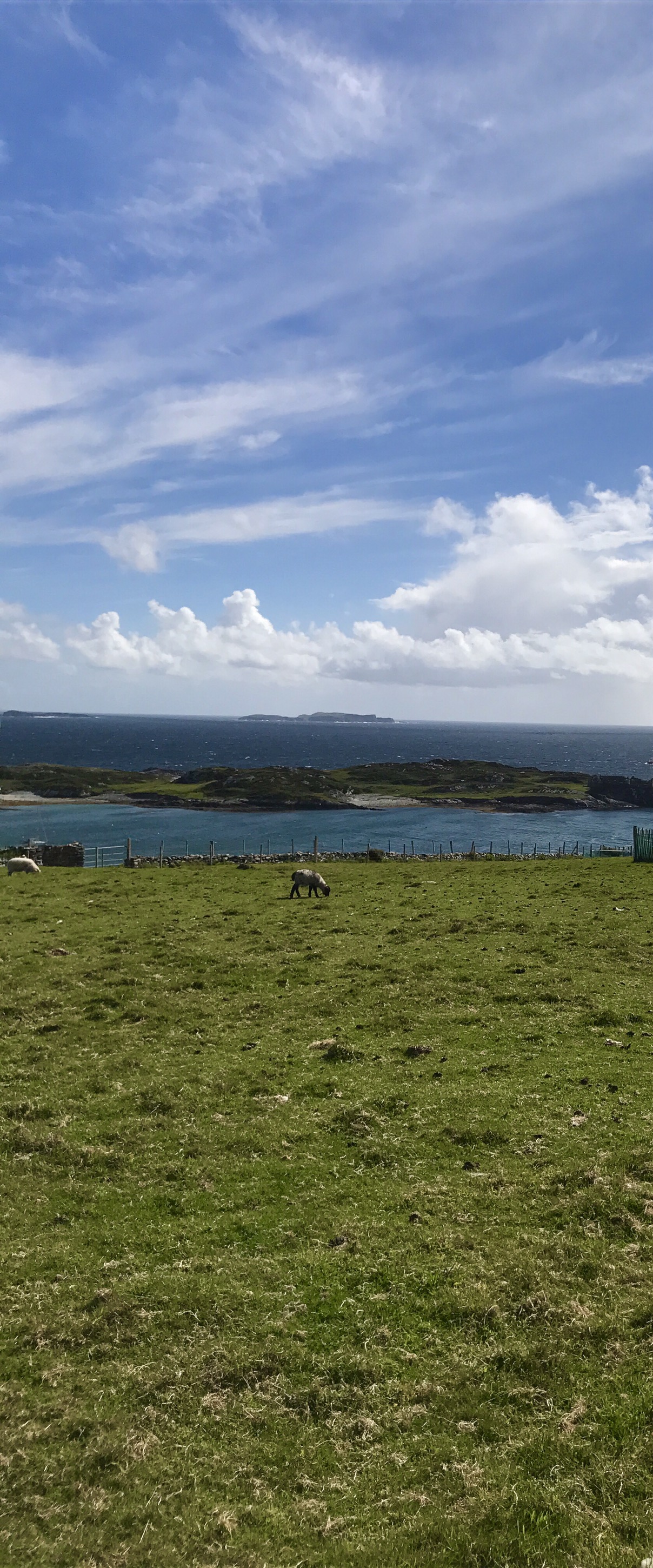
The peace and tranquillity you may find on this little island can soothe a weary soul. The sunshine, though fleeting, will call you back again and again.