What do the terms thesis and final year project mean?

During my summer holiday, I managed to help get a new article published with my co-author, Dr. Rahman Tafahomi, from the University of Rwanda.

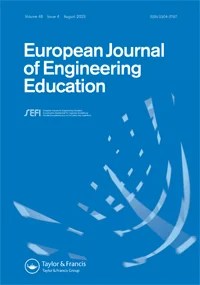
The article, “Comparing the meaning of ‘thesis’ and ‘final year project’ in architecture and engineering education” was published in the European Journal of Engineering Education (EJEE) at the beginning of August.

It was no easy feat, as the concepts in this paper are both theoretical and applied.

Rahman and I worked closely together for a year and a half, refining a manuscript he had drafted. Together, we crafted sections to link the topic of architecture education to the journal’s main readership, comprised of engineering education researchers. We had to translate many ideas to make them readily understandable to teachers of engineering and architecture alike.

We also perfected every sentence of the manuscript, seeking to communicate ideas as effectively as possible to EJEE’s broad audience.

I’m extremely proud of this work, and realized only after publishing it that we’d hit a sweet spot, as described by a scholar Deborah Gill from the UK, by helping shed light on these two terms and the types of education they imply.

I tend to agree with Deborah’s assessment that many people have an interest in this question and that conversations around this topic arise frequently on university campuses everywhere, because the article has been available on the publisher’s website only since August 10th, 2023, and in just six weeks it’s been downloaded 435 times. That only shows part of the picture, though, because it’s also been downloaded from ResearchGate 47 times.

Rahman developed a very valuable series of diagrams depicting:

  • Figure 1. Final year project studio relationships in architecture.
  • Figure 2. Thesis process in undergraduate architecture.
  • Figure 3. The process of science research.
  • Figure 4. The process of the engineering research.
  • Figure 5. Bauhaus and Beaux Art (and Polytechnique) educational approaches.
  • Figure 6. Integrated approach to mitigate the problem.

You can download the paper to see the diagrams, from https://www-tandfonline-com.tudublin.idm.oclc.org/doi/epdf/10.1080/03043797.2023.2244441?needAccess=truehttps://www.tandfonline.com/doi/full/10.1080/03043797.2023.2244441

I hope that many people read it, use the content in their teaching practice, and cite the article in their own future publications.

Rahman Tafahomi holds a Ph.D. in Architecture and Urban Design from the University of Technology Malaysia. He works at the University of Rwanda in the Department of Architecture as an associate professor. Over the summer, he earned promotion from senior lecturer to associate professor — well deserved! Rahman’s research interests include architecture, landscape design, urban design, heritage, architecture education, teaching and learning in higher education, and behavioral patterns.

Cycling to Bluegrass in Westport along Ireland’s Wild Atlantic Way

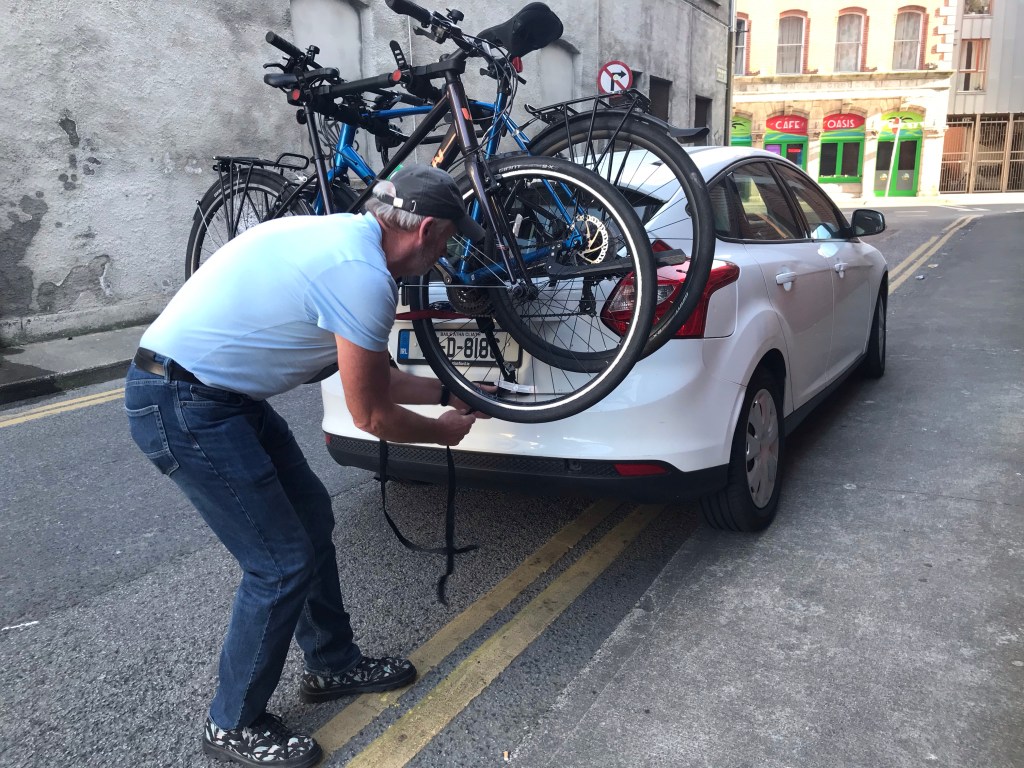
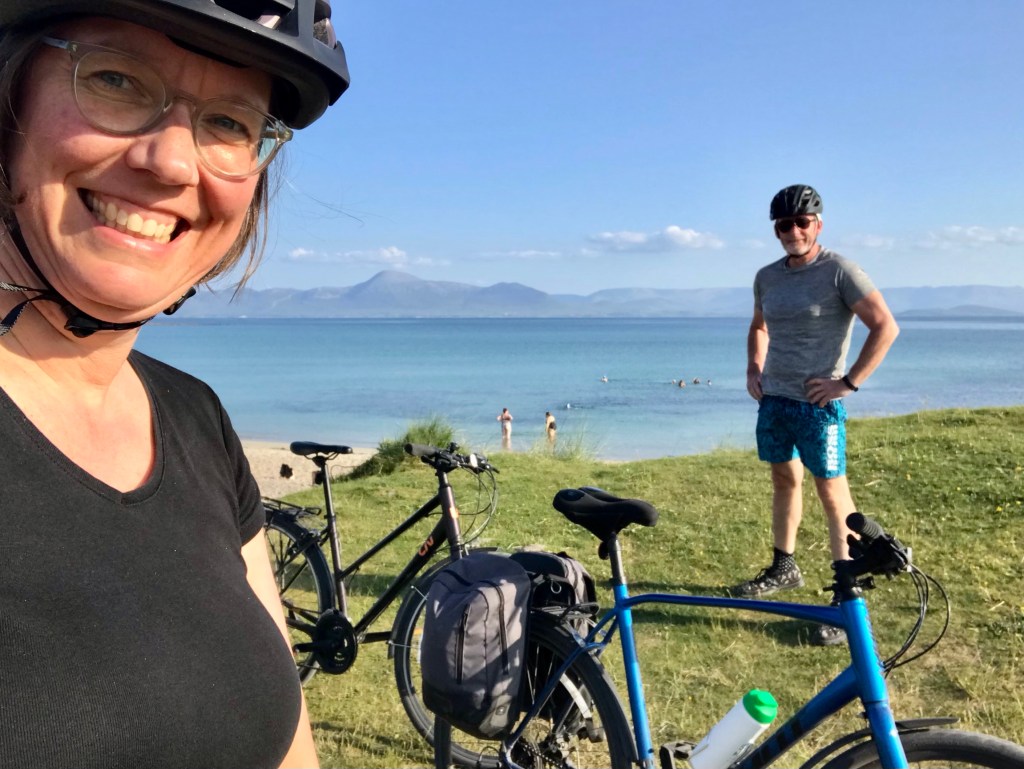
Aongus and I enjoyed an amazingly warm and sunny Bank Holiday weekend, the start of June. We travelled by car with bikes on a rack, cycled parts of the Greenway along the Wild Atlantic Way, and enjoyed beaches and restaurants along the way.

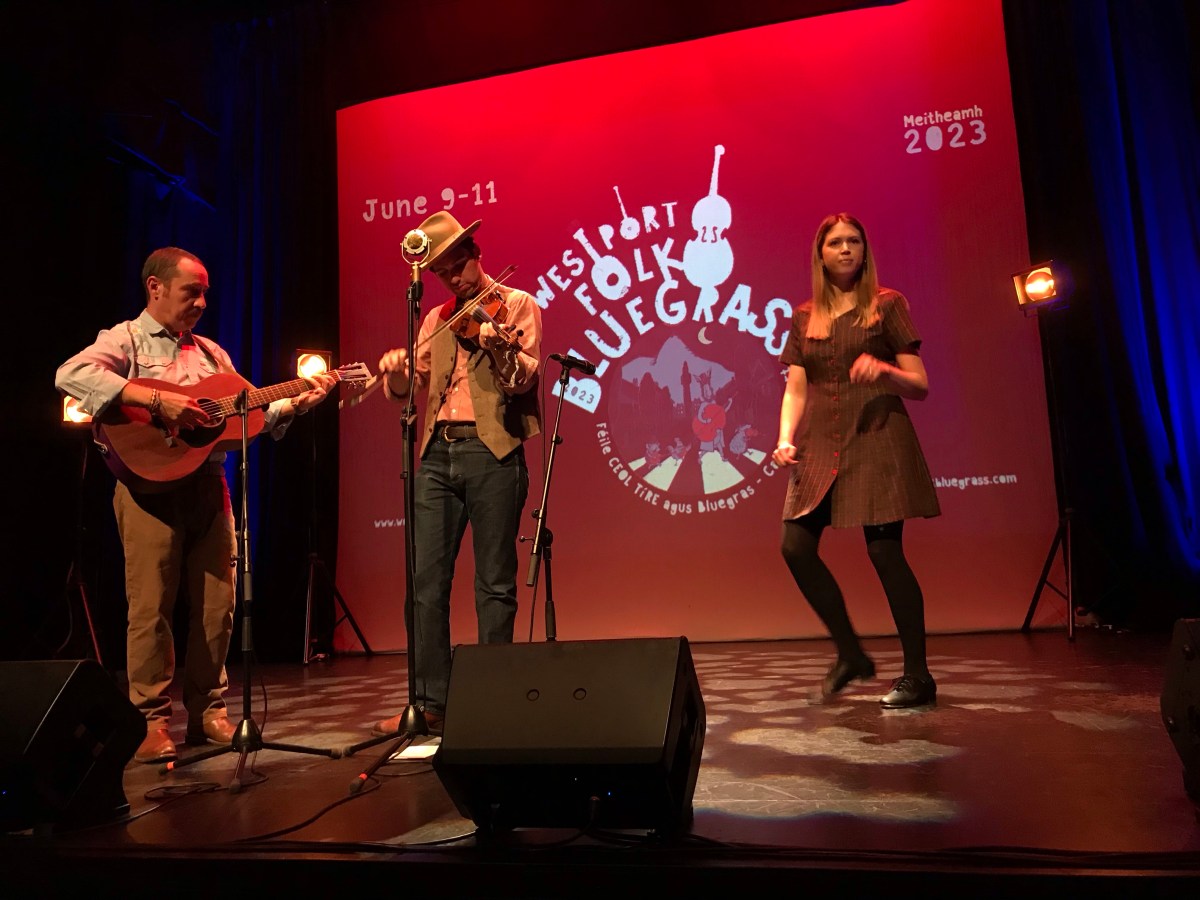
We also found posters for the following weekend’s Westport Folk and Bluegrass Festival, so we booked train tickets and accommodation and headed back out West just four days after motoring home.

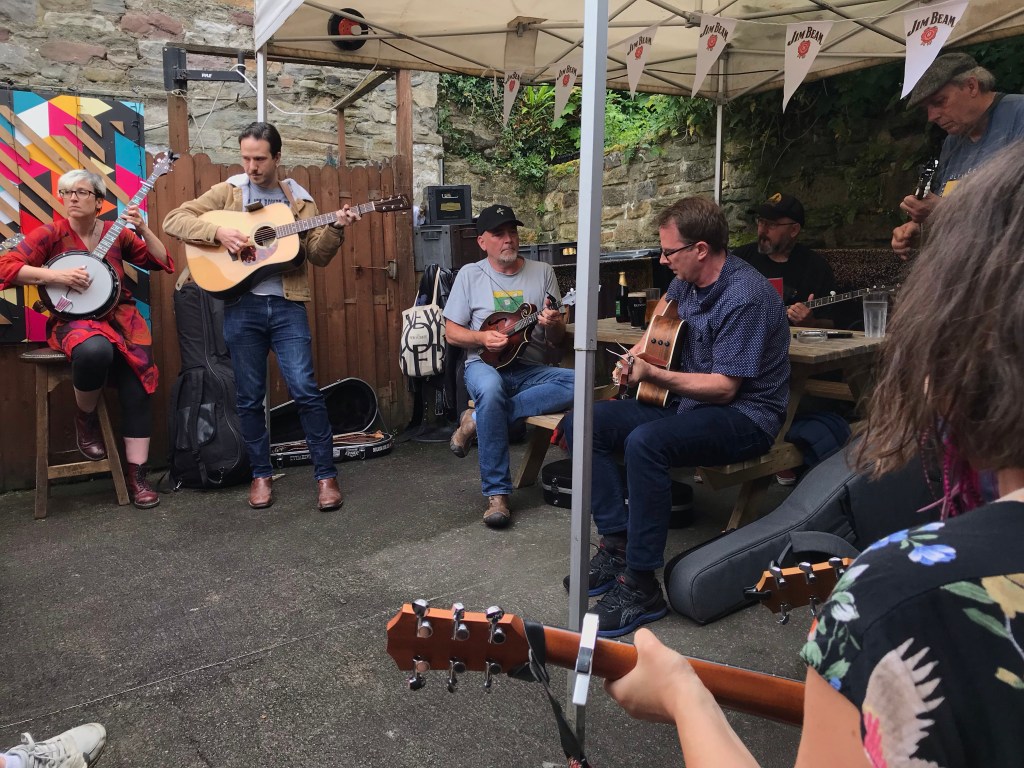
And boy, did we enjoy the music festival! We felt part of this small group of folks—a hundred or so musicians and enthusiasts, for the past three days.

The folk and bluegrass tunes from Appalachia sang to my heart and had me longing for days of old, attending Statler Brothers concerts in the park every Fourth of July.

During the country sets this weekend, I relived Saturday nights, sprawled across my grandparents’ den, watching Hee Haw with all its slapstick humor, surrounded by a happy extended family.

This morning’s gospel set, presented aside prayers at Westport’s magestic Anglican (Church of Ireland) church was a highlight. It was standing room only and people also flowed out past the doors. Aongus and I had arrived mare than an hour early, thankfully. So, we enjoyed second-row seats to hear the Kody Norris Show quartet for the second time. They also played at last night’s show, and boy, are they a hit!

I also loved the Derryberries, from Tennessee, Bill and the Bells, Melody Walker & Jacob Groopman, Lunch Special, and Tim Rodger’s gig, among others.

We sat very front at the main stage Friday night, and very back there on Saturday. Westport’s Town Hall Theater has fabulous acoustics and great sight lines throughout.

This intimate three-day music festival is organized by a gent with an amazing Mayo accent, named Uri, who moved to Ireland 19 years ago, I’m told, from Israel. He is clearly now a cornerstone of the community, bringing this annual event to Westport since 2007.

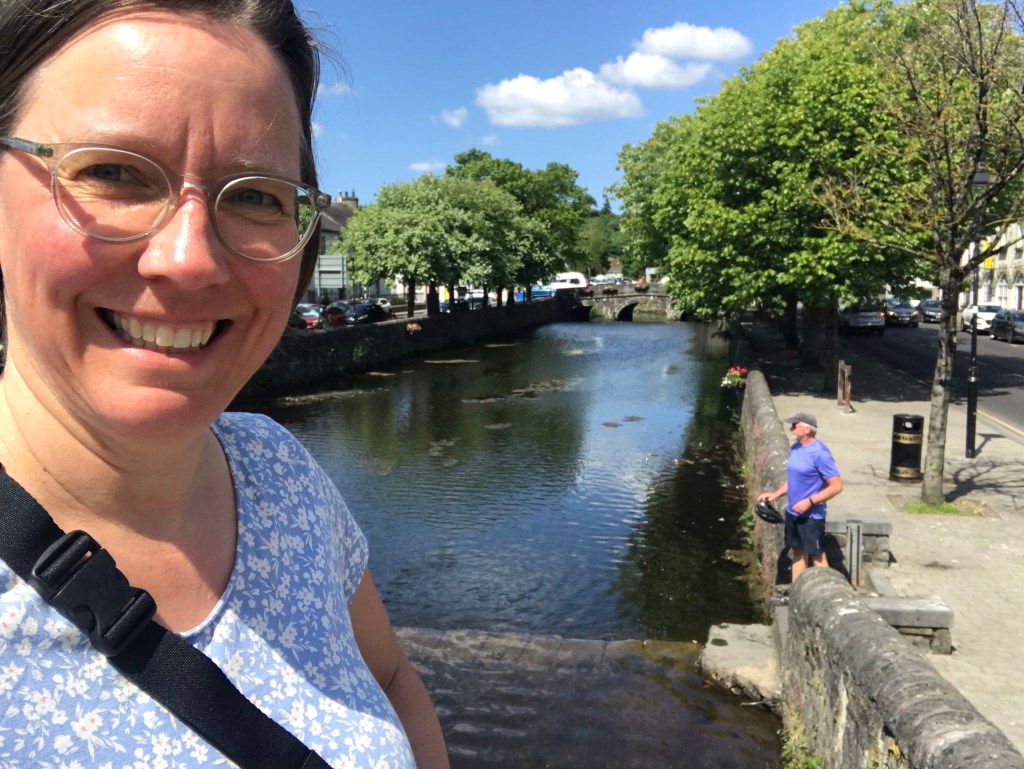
Aongus and I loved both weekends—cycling along the seaside and swaying with the tunes. We’ve already booked to come back again next year. We think Westport is the prettiest town in Ireland and the hospitality can’t be beat. My favorite publican, Tom Mulligan says it’s Ireland’s only panned town. I think Derry, up in Northern Ireland (UK), is another in this island.

All in all, being surrounds by folks with such a passion for music is a treat. And Westport is a gem in Ireland’s green, green crown.

Welcome news

I met my PhD supervisee, Sandra, online just as the sun was coming up this morning. Thankful that she’s well on track, I got down to work, whipped up a conference abstract and got it submitted for tonight’s deadline.

Then I settled in for an intense day of paper editing. I was finalizing my team’s major revisions — our big December 18 deadline will be here far too soon. And with other deadlines looming large overhead, I took the long open stretch on my schedule today to make substantial progress.

I forgot my gym class. I forgot to eat lunch.

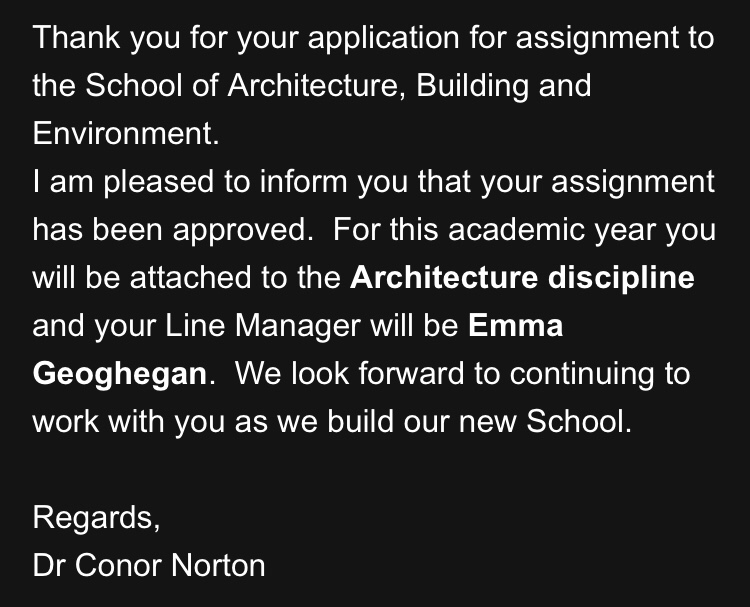
But while my head was under the sand, two very welcome emails landed in my box. The first I’ve been awaiting since last spring, but our university processes are slow. I’ve been assigned to teach in the school where my passion lies (still at TU Dublin, just in a different school as mine was dismantled).

I’ll now be teaching in the School of Architecture, Building and Environment which is great because I really love teaching students architecture. I’ll still teach BIM topics, too, of course.

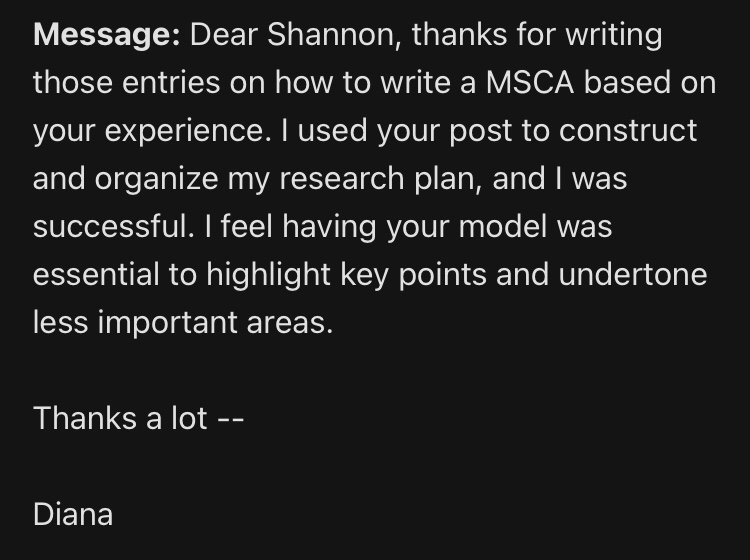
The second incoming message was a bit of thanks from a researcher who used the advice on my blog and won herself an MSCA Marie Curie fellowship this year! I couldn’t be prouder than to help make this type of difference in someone’s life.

So, goals big and small came to fruition today. These emails reported life-changing news for me and for Diana.

With no time to rest on my laurels, I had to wrap up my replies fast, and run out to buy groceries for dinner. We’re having a younger friend over to discuss financial planning, a new hobby of mine.

Life is busy, but full of interesting new challenges. Lots to fill you in on over the coming weeks!

Giving Thanks from Dublin

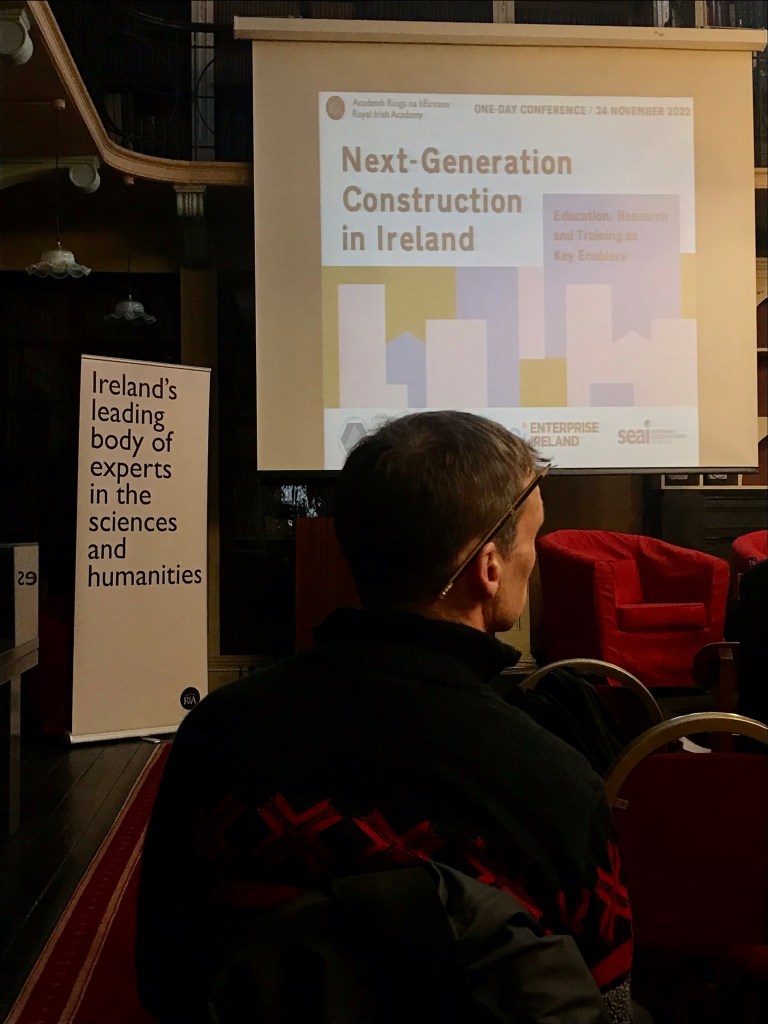
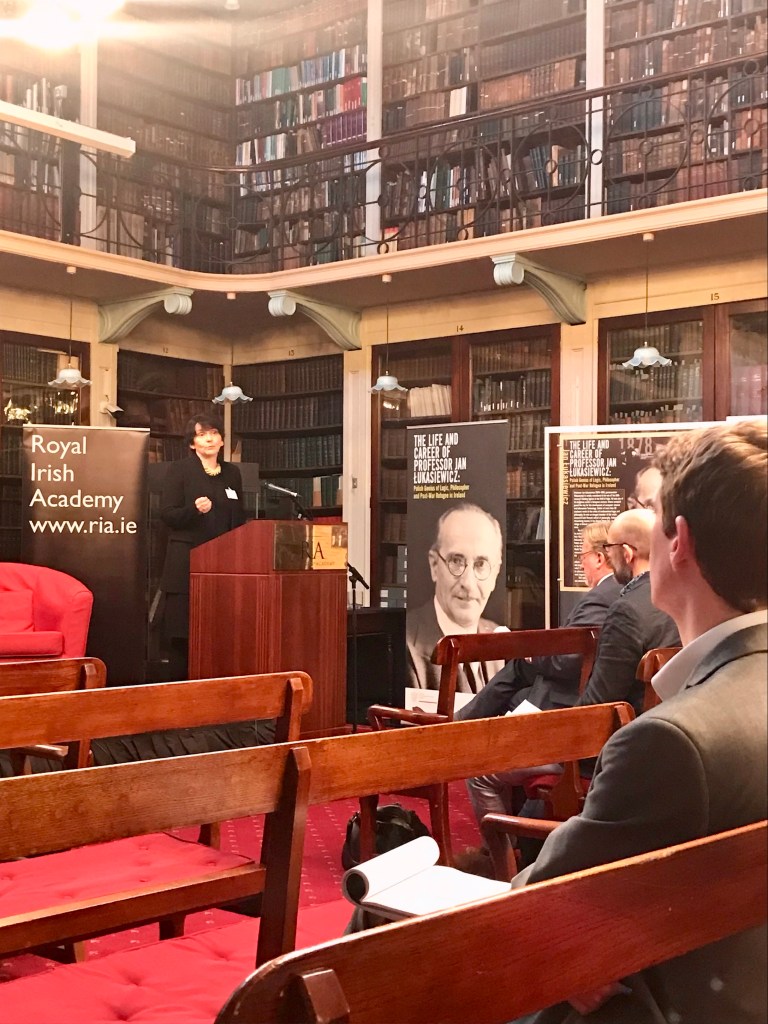
Thanksgiving here in Ireland is usually just another ordinary Thursday. But this year I made a point to celebrate. I registered for a conference held at the Royal Irish Academy on Dawson Street, so I could learn about “Next Generation Construction in Ireland” while soaking in old-school Irish ambiance, and I bought tickets for an American Thanksgiving feast.

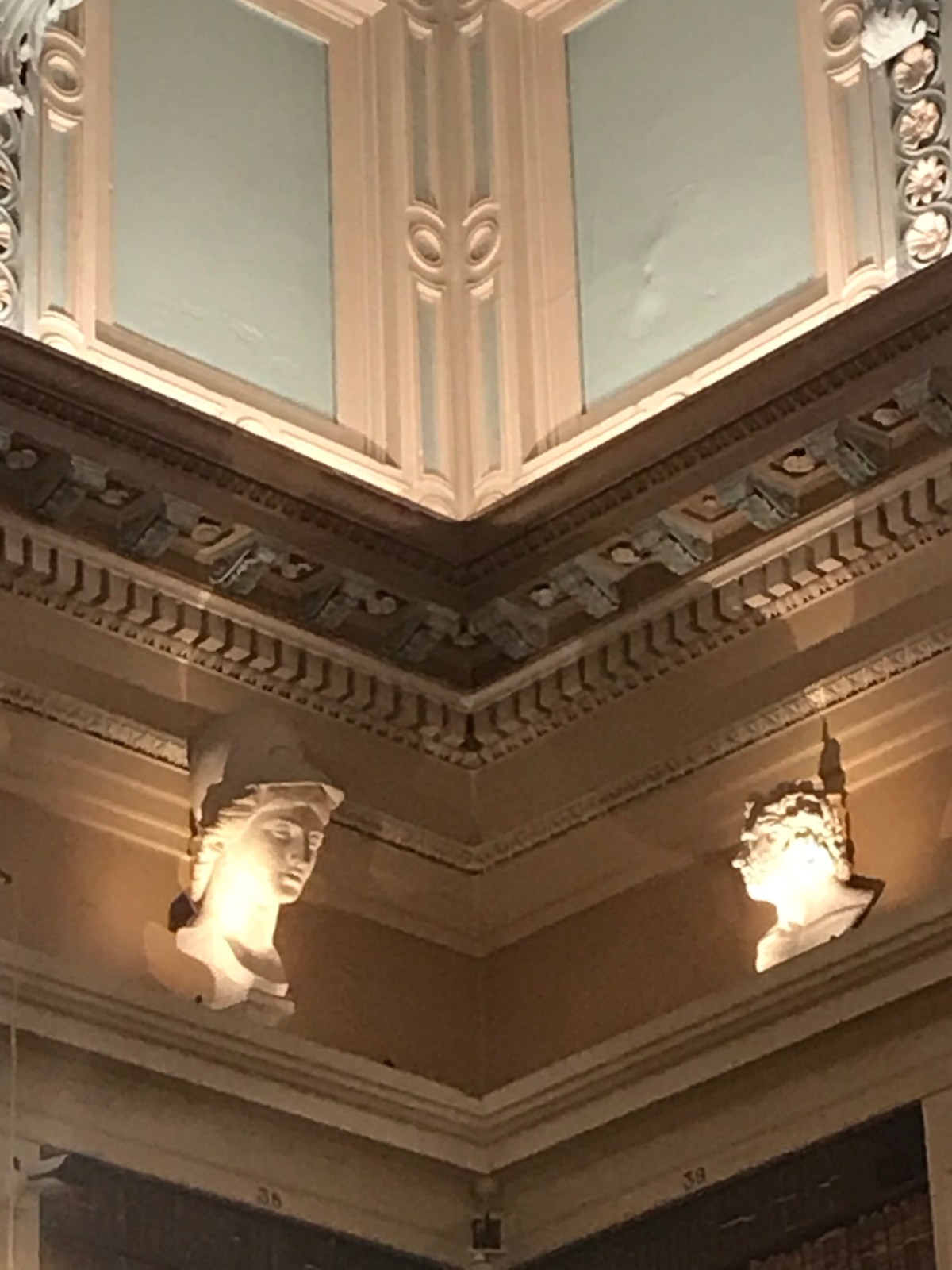
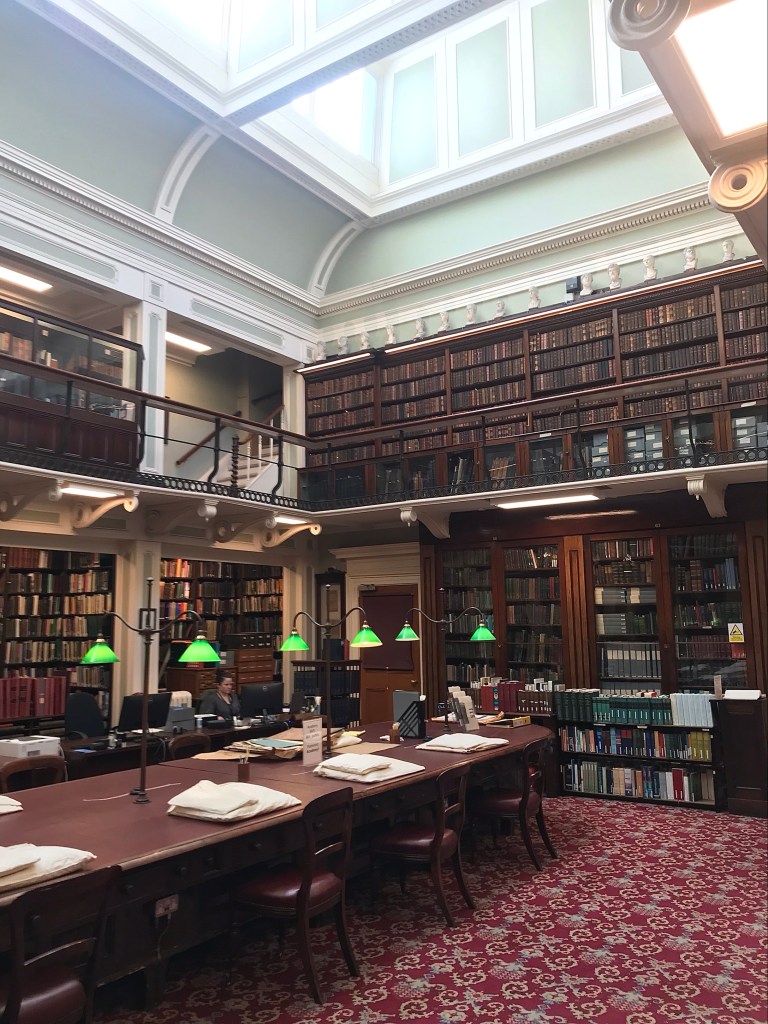
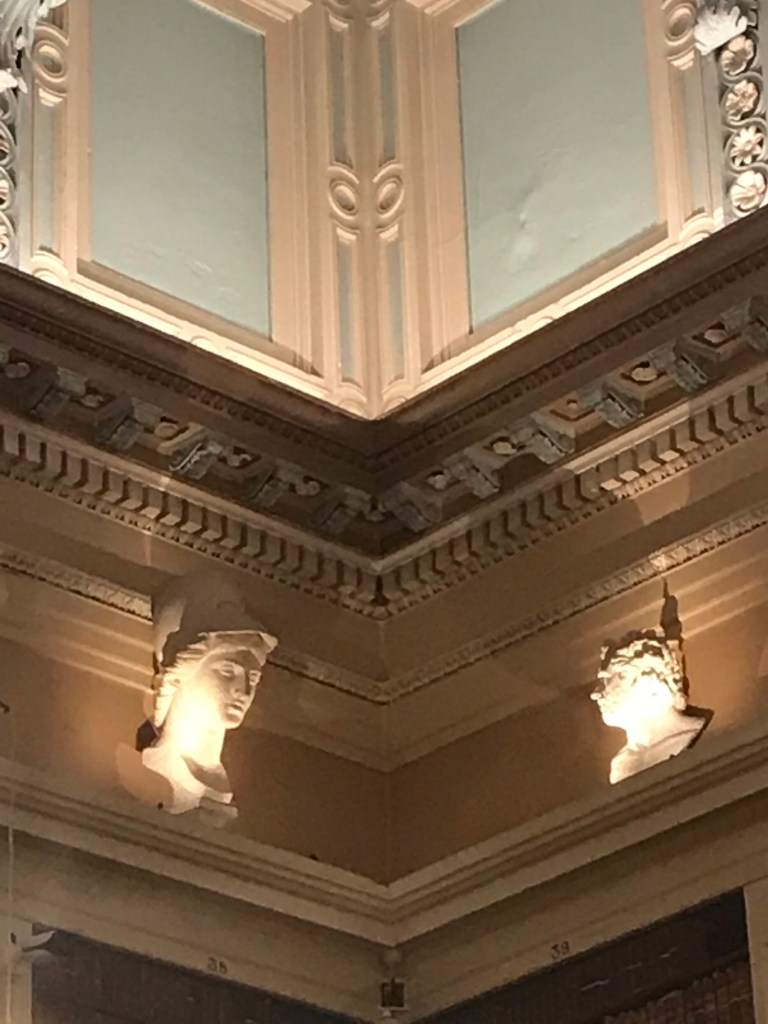
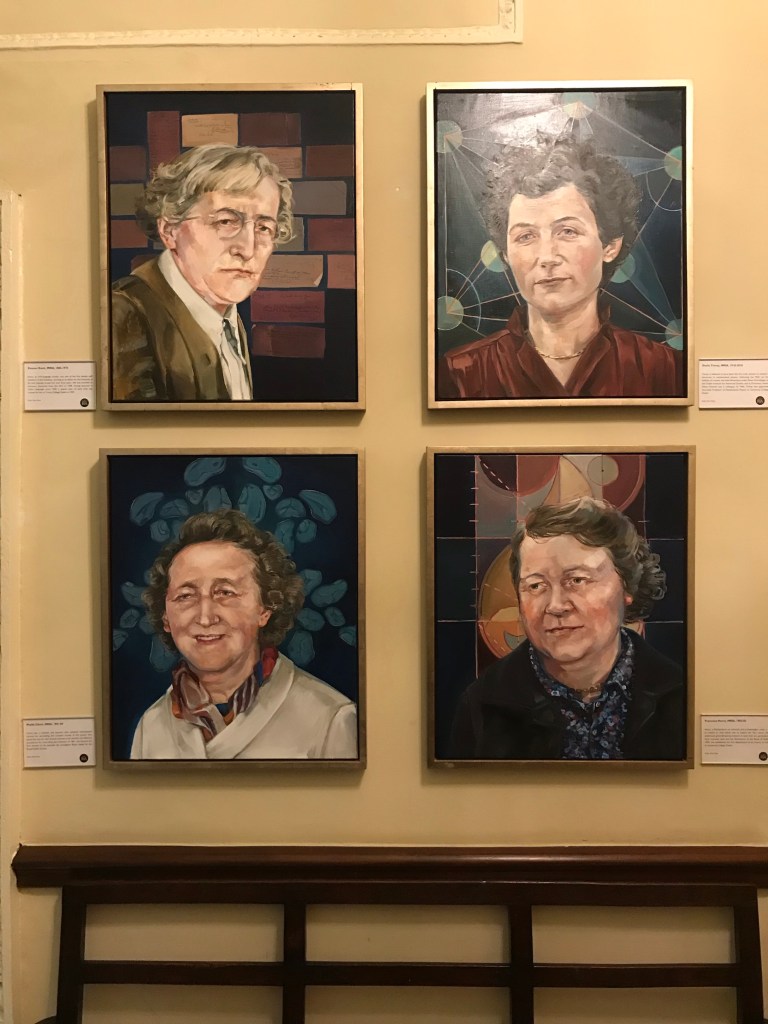
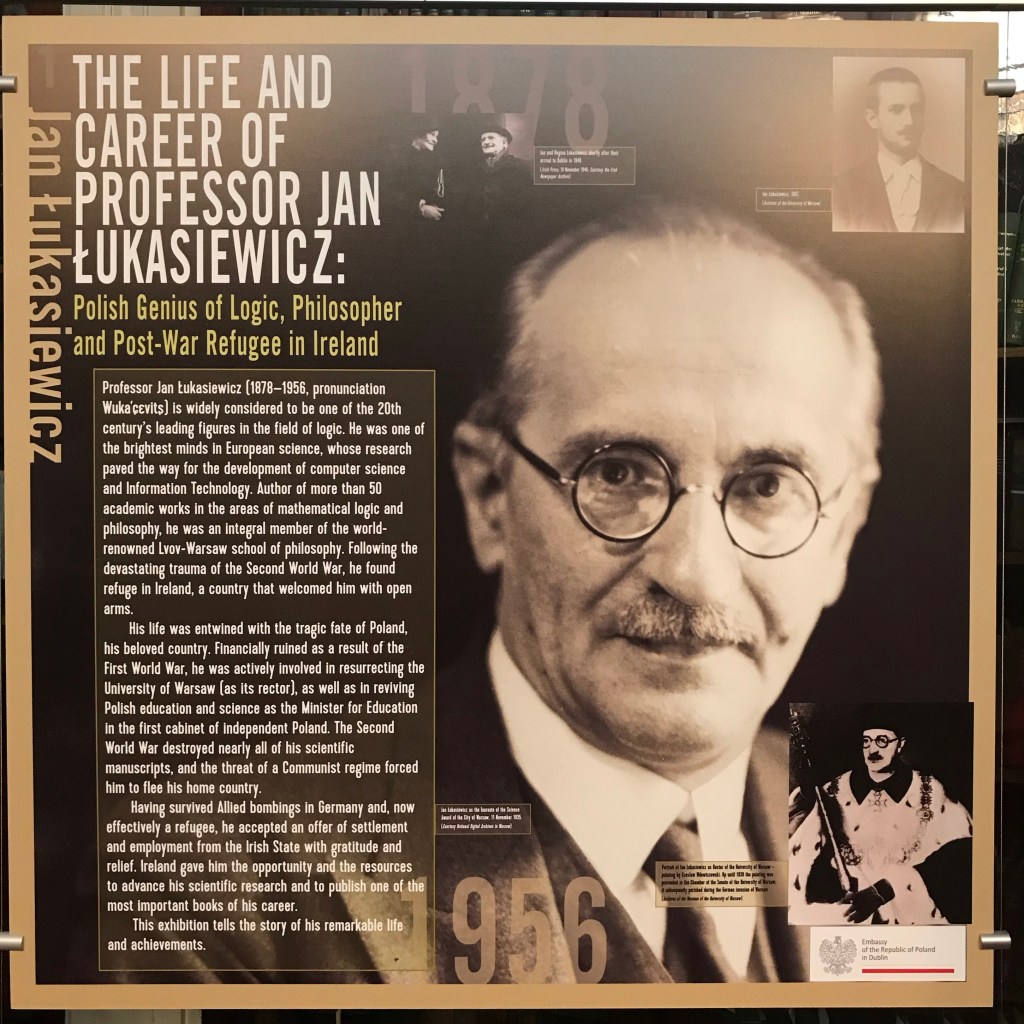
I love visiting the stately old RIA building, with its floors of well worn books. There was an interesting exhibition on display, and lovely architectural details to treat the eyes and soothe the soul.

Despite heavy rain falling before my cycle over, I was inspired to wear my favorite Irish sweater and the “BIM Hero” lapel pin I received earlier in the year. (I am hoping the pin will provide the good karma I need to get my current manuscript on the Hero’s Journey polished up to final form to submit this coming week!)

Delighted to have been named a “BIM Hero” at the BIM Coordinators Summit.

During this one-day conference, I learned more than a few new things about Modern Methods of Construction, Irish strategies and policies, and education programs and plans to up-skill the Irish workforce.

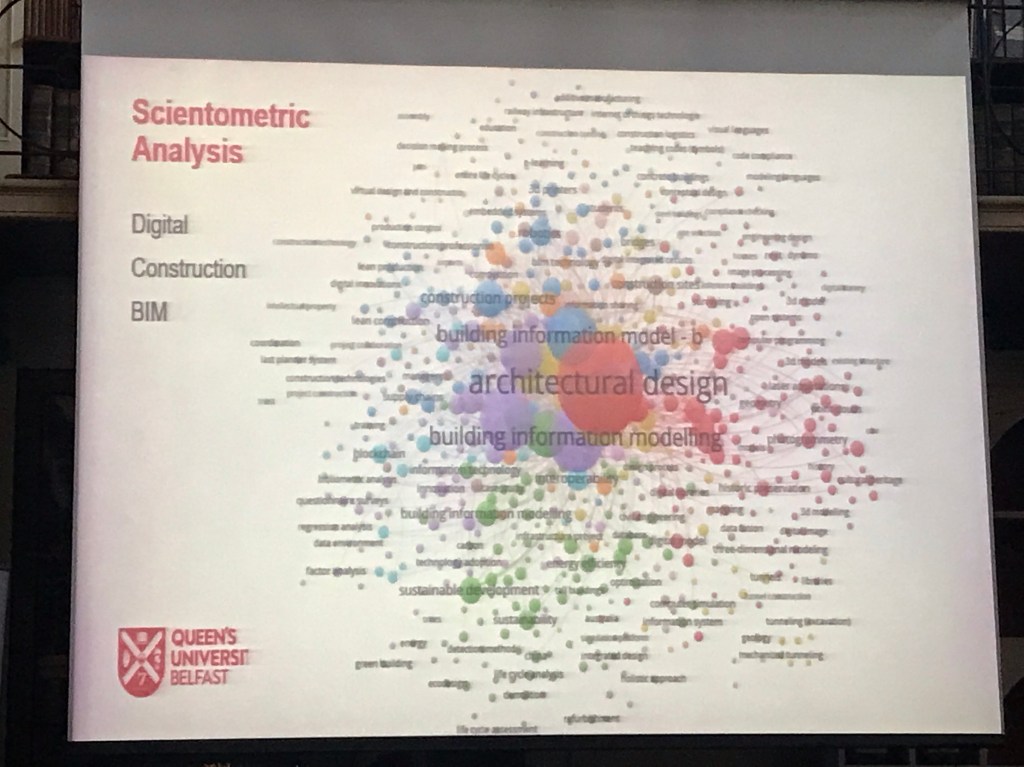
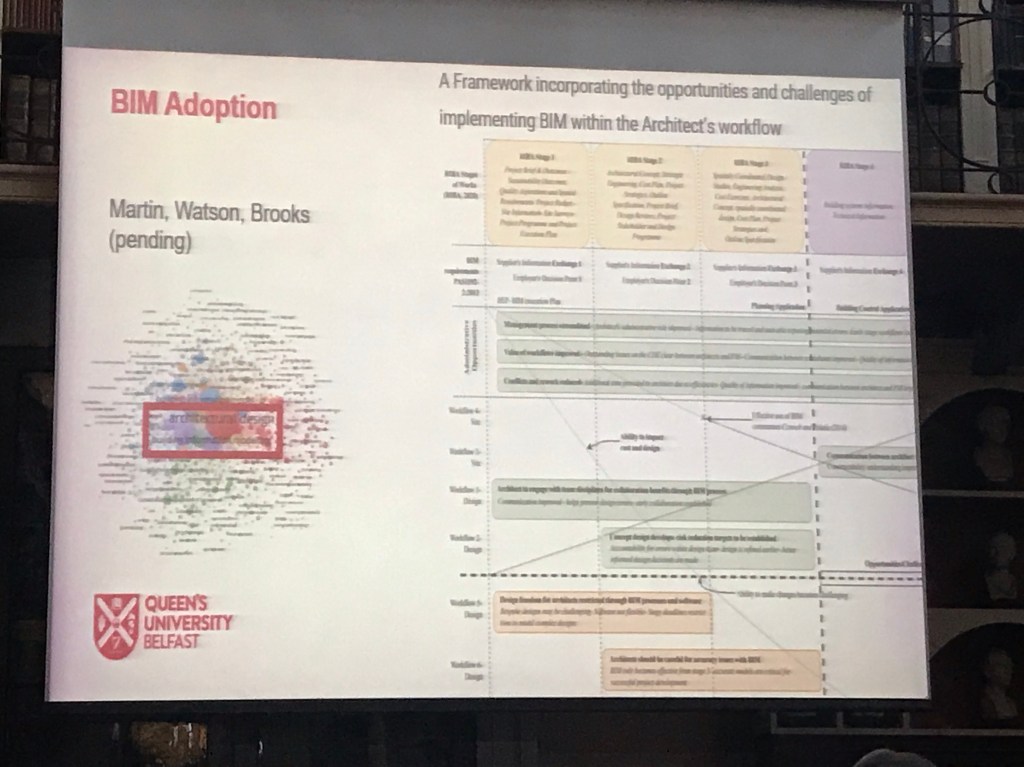
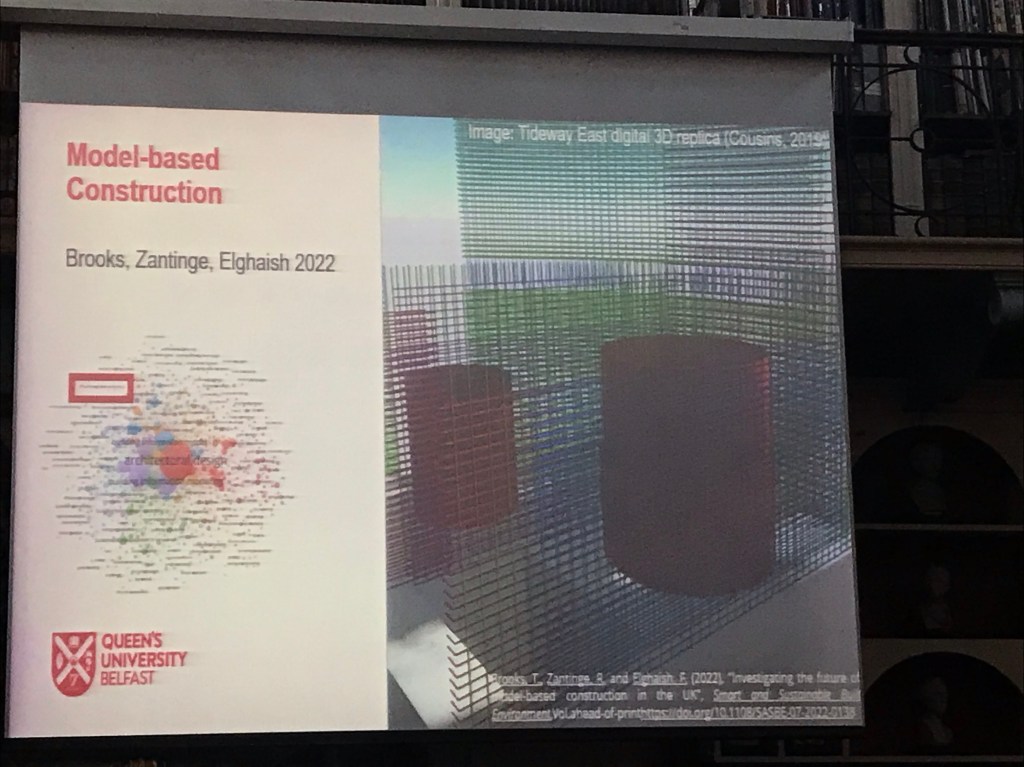
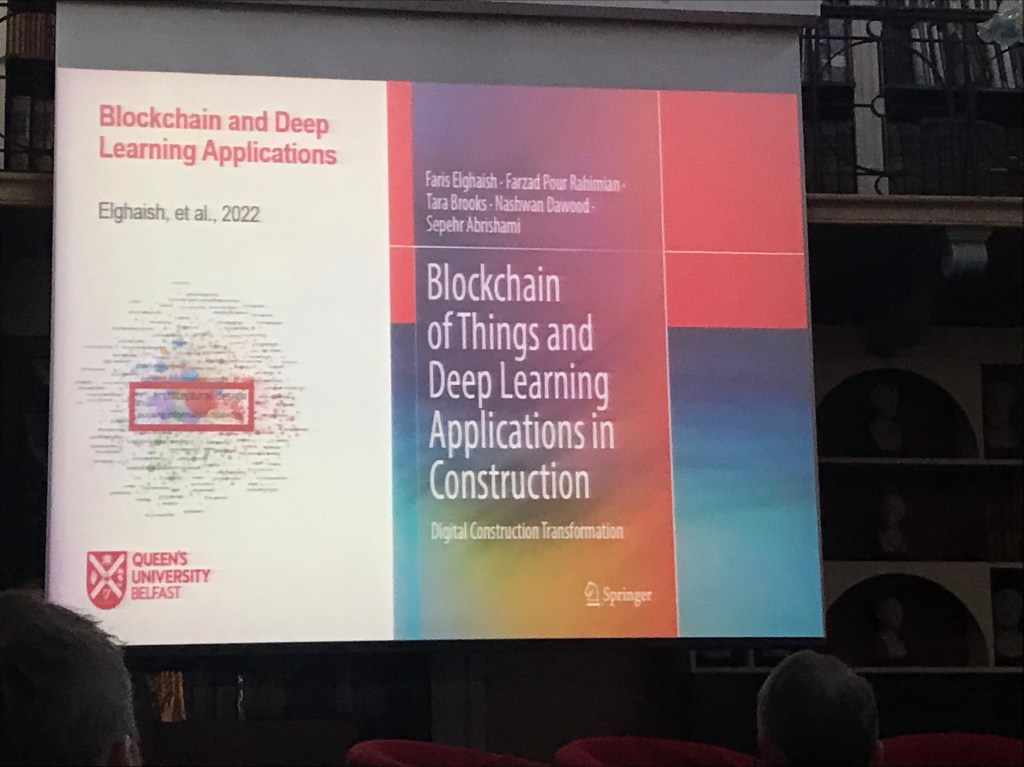
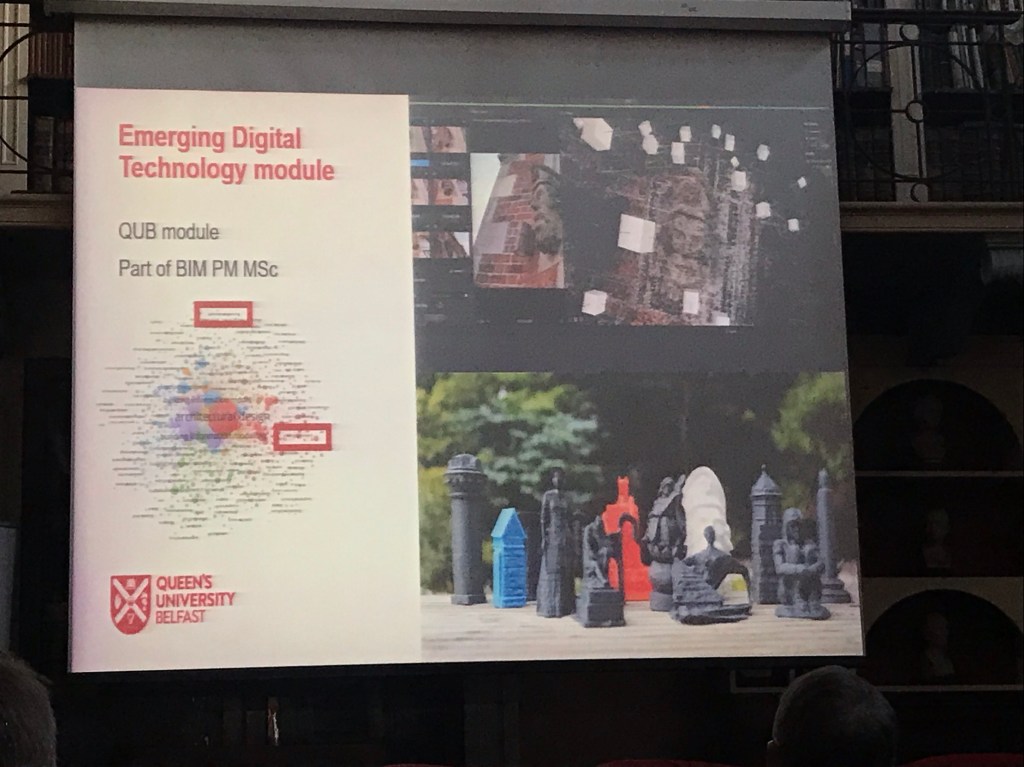
Dr. Tara Brooks from Queens University in Belfast presented fascinating research and I’ve included images since I really enjoyed the graphic devices she used to situate her contributions to the body of knowledge in BIM and digital construction.

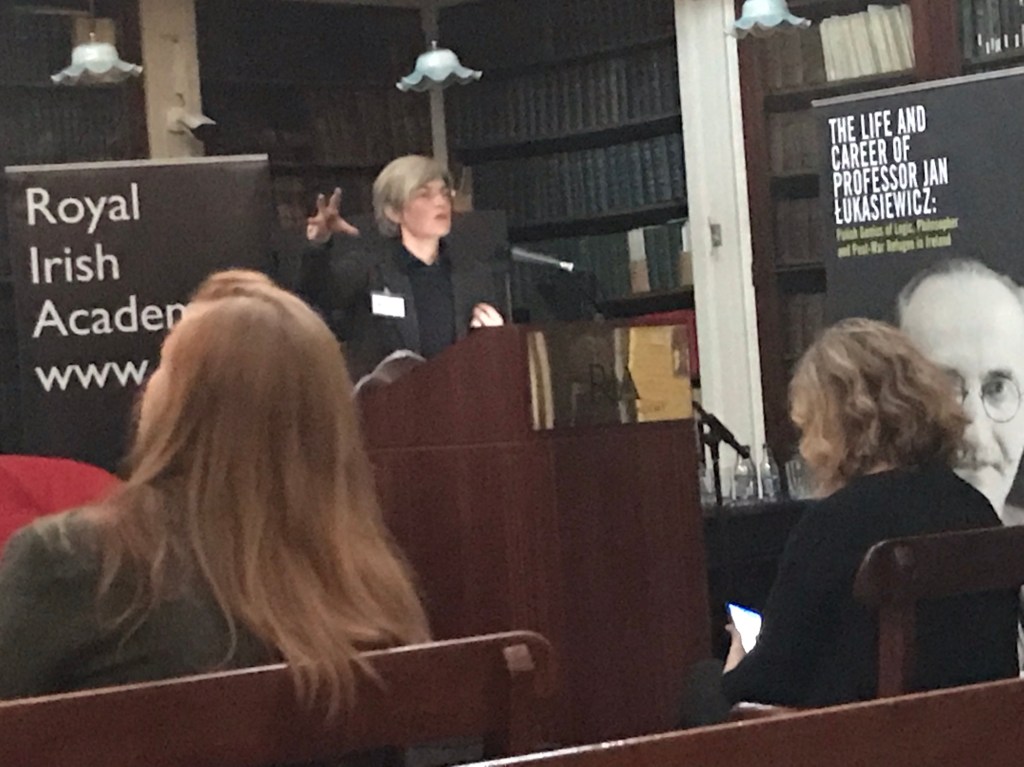
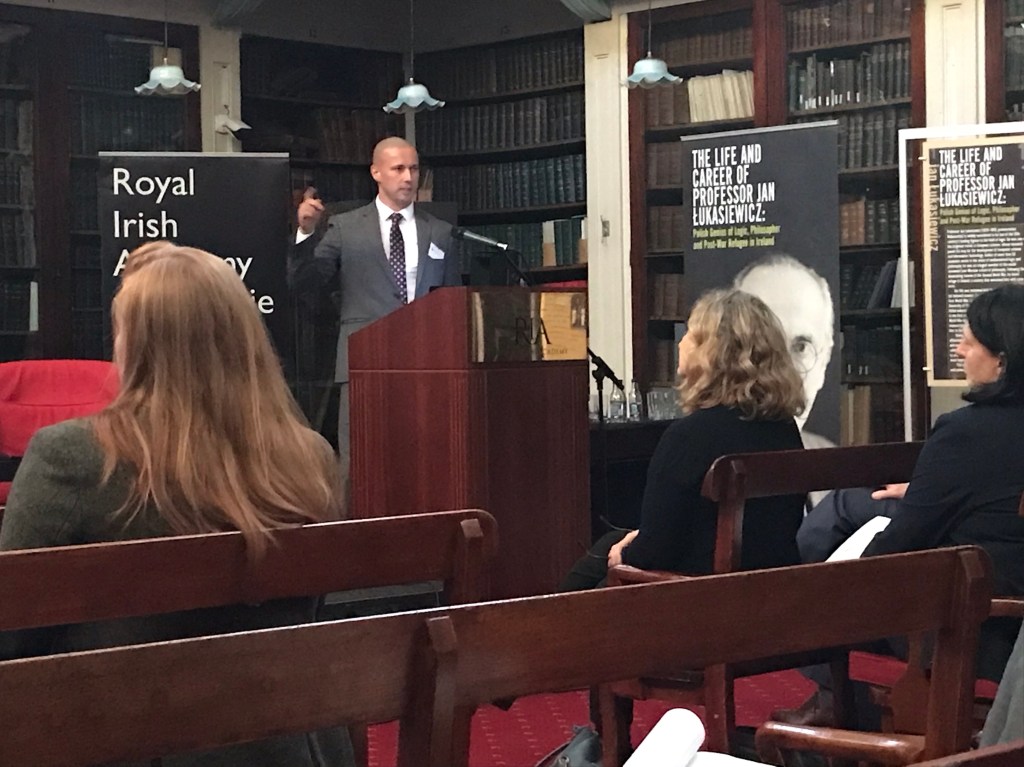
My own university, TU Dublin, was very well represented among attendees, presenters, panelists, organizers, and session chairs. I’ve pictured Joseph Mady, a part time lecturer who delivered an interesting talk.

Our conference ended promptly at 5, as Ireland’s Prime Minister was scheduled to speak in the same room at 7, and there was setting up to do.

With the conference concluded, I headed across Dawson Street to Cafe en Seine for a cocktail with Aongus.

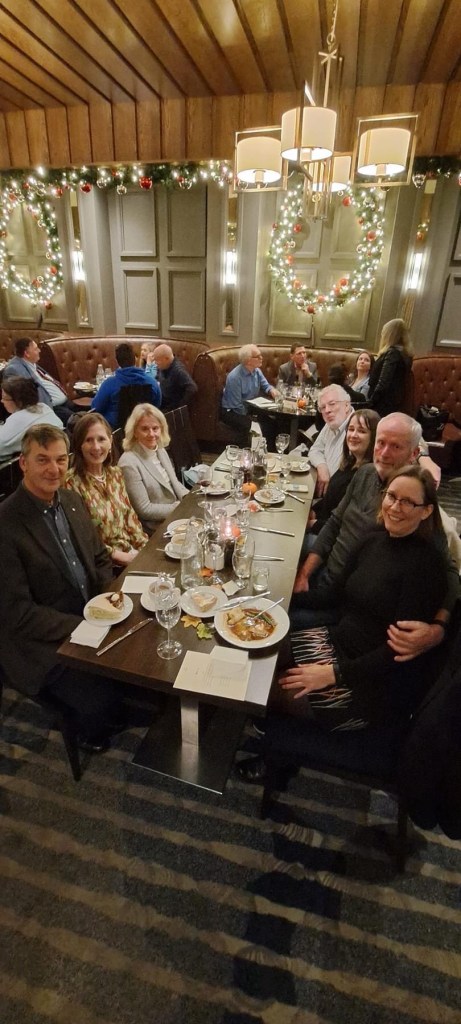
Then we cycled together over to the Hilton near Lock C6 on the south side canal. We met up with a merry group of Americans (most with Irish in tow) to share a feast of turkey will most all the trimmings.

It was Aongus’ first sweet potato casserole with marshmallows and he’s still raving about his new find. It’s fun to see the delight he takes in root veg… he also loved the glazed carrots. Such a healthy boy! My favorite were the green beans sautéed with bacon.

We made some new friends and had a ball sharing stories in a familiar twang. Until next year:

Happy Thanksgiving, y’all!

Americans make fast friends!

Virtually back in-person at TU Dublin

I’m finally coming out of laptop-induced hibernation. I’m ready to move between in-person and online realms, and hoping this will ensue rather seamlessly. It’s been hard to muster enthusiasm for blogging after working behind the laptop all day, every day. Maybe spending time outside will provide inspiration to blog, as it has today.

This morning, I delivered a seminar (7-8 AM) to the Center for Research on Engineering Education (CREE) at the University of Cape Town. The topic was writing research proposals for publication and securing grants and fellowships. I delivered a similar session earlier in the year as part of a workshop series conducted by the Research in Engineering Education Network (REEN), and CREE asked me to bring it to their group.

A really enthusiastic group attended and I received several follow-up emails. I really appreciate hearing what attendees valued and how we might connect more in the future. I met most of these folks in delivering Master Classes in South Africa when I was working at UCL, and also when attending the Research in Engineering Education Symposium in Cape Town in 2019. I’ve really enjoyed getting to know them better through regular meetings, online during Covid. I’m currently developing a special focus journal issue with one of them, Anita Campbell. We had a meeting about that project yesterday that was so exciting I had trouble sleeping last night!?

Cover slide for the talk I gave today, virtually in Cape Town.

Logging off the Cape Town session, I headed over to Bolton Street TU Dublin to help lead a field trip for Transition Year (high school) students to visit sites in Dublin.

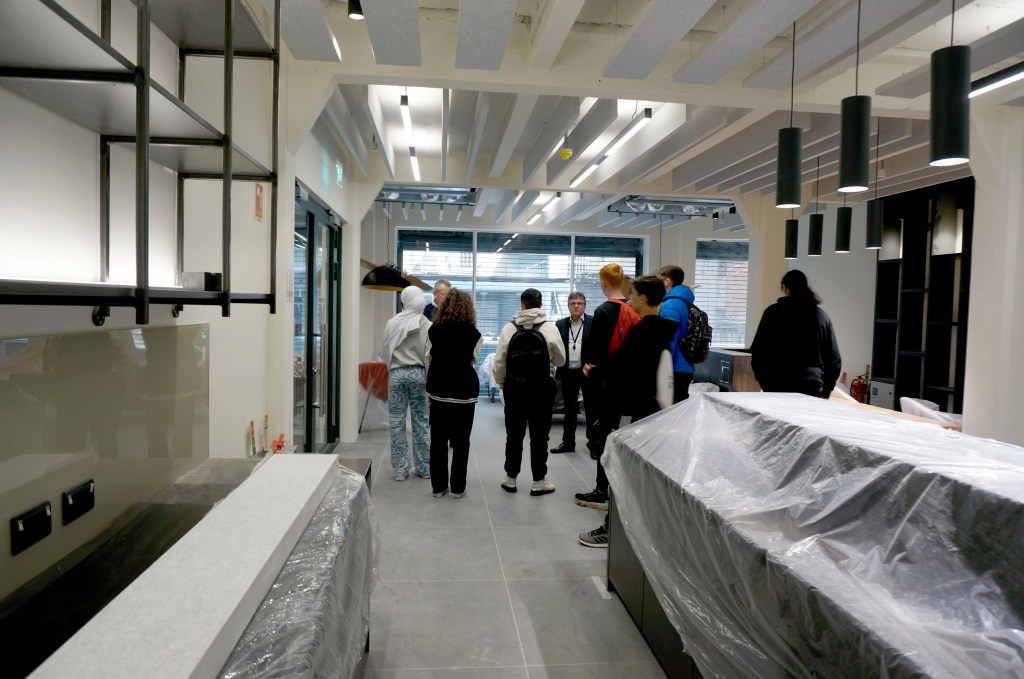
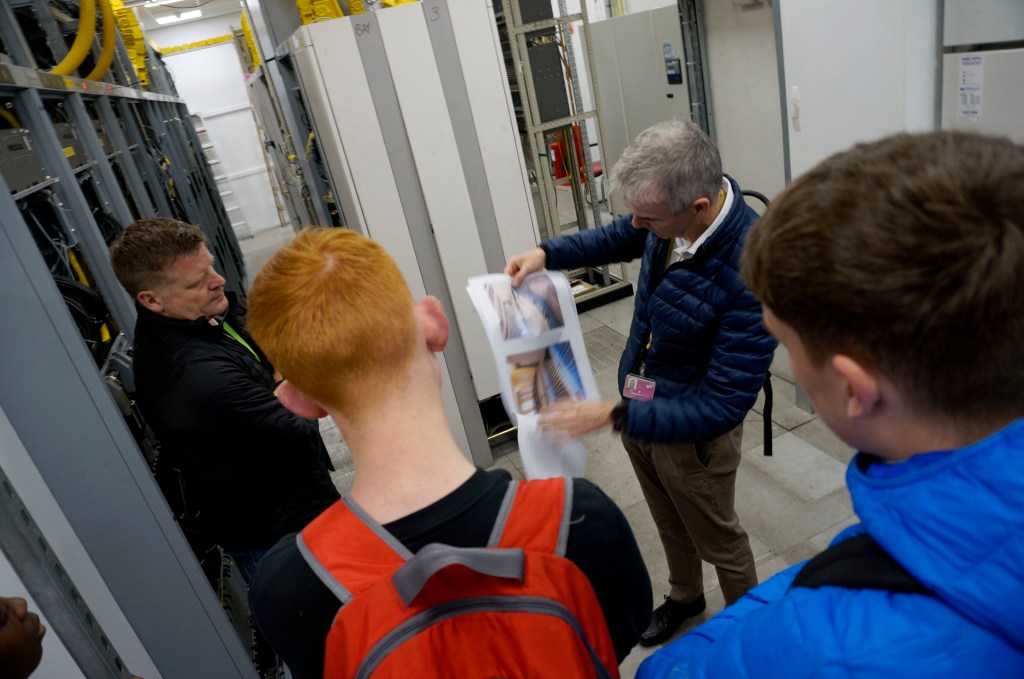
One-half of the students toured the “waste to energy” facility in Dublin (which they don’t call an incinerator, as that word seems politically incorrect here but is easy-to-envision thanks to Toy Story). The other half of the students came with Kevin Gaughan and me to see a construction site downtown. I included two photos of our site visit below, but you can see more about the visit, including a full gallery of images, at https://roboslam.wordpress.com/2022/05/12/engineering-your-future-at-tu-dublin-2022/.

While I was busy on the tour, some of my colleagues were preparing for tomorrow’s activity for the same students, a BioSlam. You can view the instructions for making little blood flow monitors on our RoboSlam site, at https://roboslam.wordpress.com/bioslam-ppg/.

A photo of the project for tomorrow. See https://roboslam.wordpress.com/bioslam-ppg/ for more.

I’ll have to step out of the BioSlam for a while to attend an online Meeting on engineering ethics — I hope earbuds do the job and I can attend from the corridor outside the electronics lab.

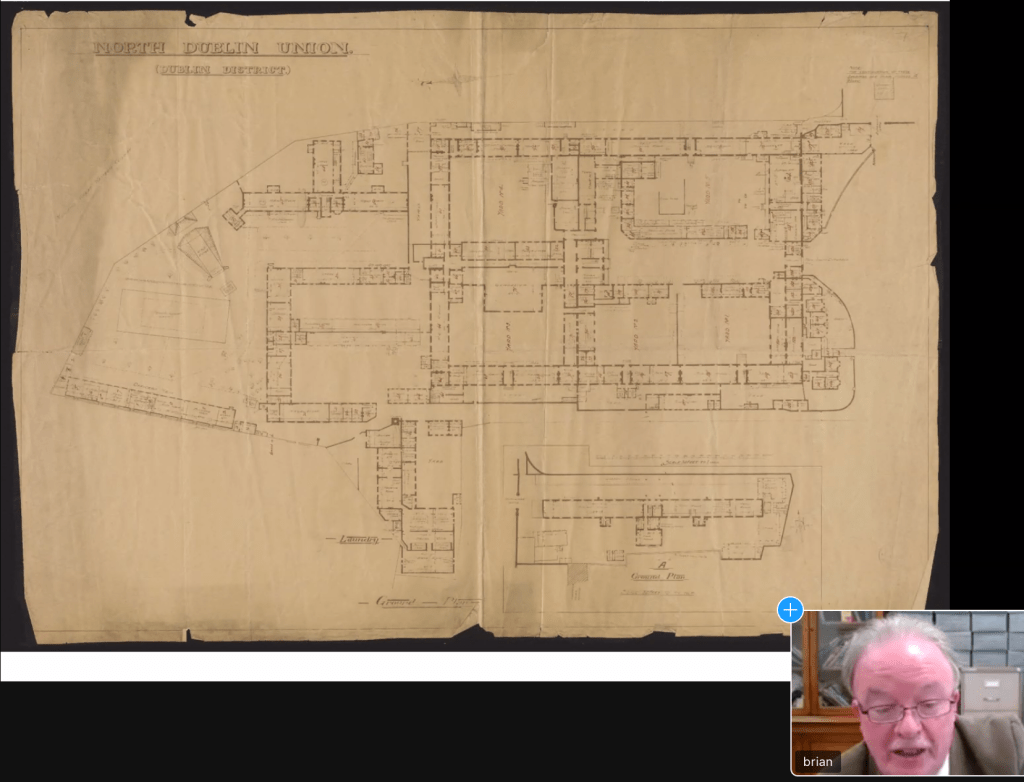
At the moment, I am taking a breather, listening to an online talk by a leading expert in the history of Grangegorman. The speaker, Brian Donnely, Senior Archivist in the National Archives, is currently talking about Richmond Surgical Hospital (a block from my flat) and as well as TU Dublin’s campus site at Grangegorman, which was used as an “insane asylum” with a prison placed between the two in the past.

And, I’m multi-tasking (a rarity for me) and posting a blog (also very rare these days).

Online lecture by Brian Donnely, Senior Archivist in the National Archives.

In just over two hours, I’ll be teaching an online evening class on Research Methods for my BSc students in BIM/Digital Construction. Before then, I’ll read the peer reviews I’ve just received for the European Journal for Engineering Education, so that I can recommend tomorrow to the Editor in Cheif how to move forward toward publication of the manuscript.

A slide for tonight’s Research Methods class.

Architecture Scribble Book now at booksellers

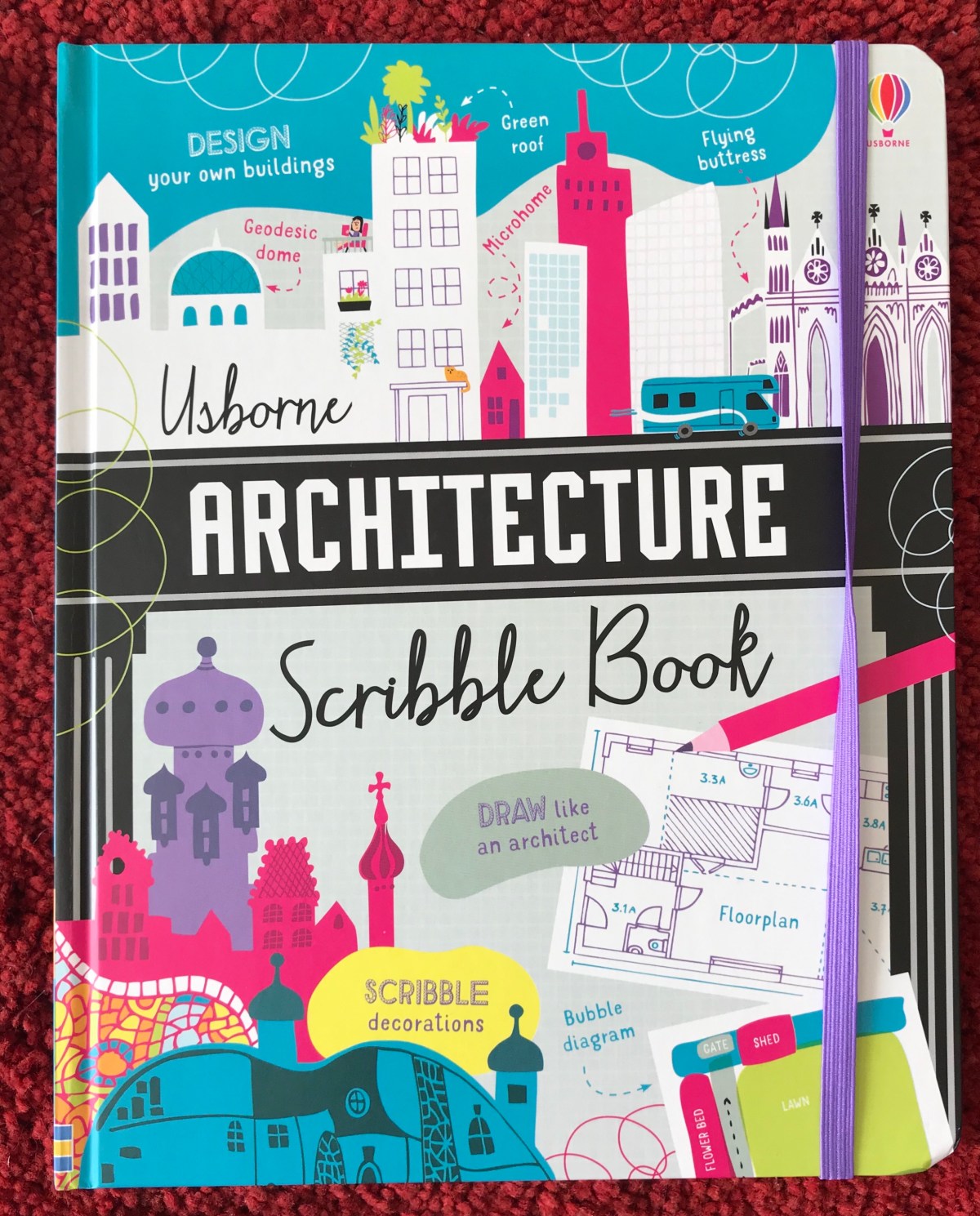
Introducing the “Architecture Scribble Book” — a brand new book from Usborne Publishers.

As with the “Engineering Scribble Book” published in 2018, I served as consultant on the content and presentation for this book project. These are outreach projects I completed during my Marie Curie fellowship at University College London.

The front cover of “Architecture Scribble Book”

The “Architecture Scribble Book” is an activity book for kids, chock full of principles we teach architecture students at university level, presented in a way that is fun and easy-to-understand.

Pages from “Architecture Scribble Book”

Much like the “Engineering Scribble Book”, this “Architecture Scribble Book” aims to give kids a taste of this STEM-oriented career. STEM stands for science, technology, engineering and mathematics. Some people like to add an A to STEM, making it STEAM, to make sure the art and architecture side of things doesn’t get overlooked. These books show that architecture and engineering are both highly creative fields!

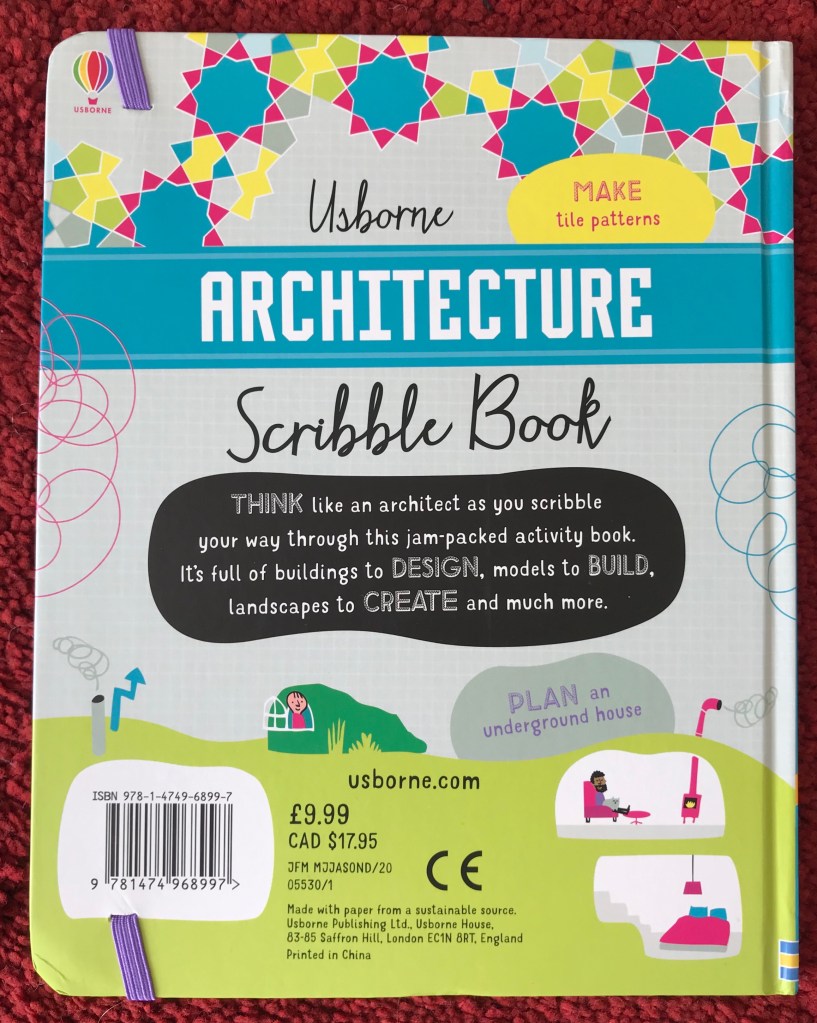
Covers of both “Scribble Architecture” and “Scribble Engineering”

With this architecture activity book, kids get to learn about design and technology as they build skills and understanding, and learn about the values architecture need to hold to do their jobs well.

Here’s a video by Usborne Publishers on the architecture book:

Lessons include spatial planning, daylighting, geometry, structural properties, material reuse, universal design, effective use of materials, and much more.

Kids also learn basic conventions of representation, such as those used in floor plans, elevations, and perspective drawings.

Pages from “Scribble Engineering”

These concepts are similar in some ways to those covered in the “Engineering Scribble Book”, but the content is unique. Together the make a very nice set.

All said, the “Architecture Scribble Book” is a lovely addition to the Usborne series, and could make a great gift for the children on your Christmas gift list.

Here’s a video by the publisher on the engineering book:

Learning London: Enchanting Holland Park and Victorian House Museum

A couple of weekends ago, we visited Holland Park on both Saturday and Sunday. There was too much to see in the area for just one go. We had to spread it out. In fact, we’d also visited a weekend prior, bringing our 2019 total to three days.

In this blog, I’ll show you around the park and give you a peek inside one of the nearby Victorian house museums, 18 Stafford Terrace.

img_5872-1

On all three of our recent our visits to Holland Park, we were en route to the Design Museum. 

Walking Cards

In addition to using the handy walking cards pictures below, I also referenced my guidebooks and the internet to sketch out our trips.

Kyoto Japanese Garden

These beautifully designed and cultivated gardens boast a waterfall and a pride of peacocks.


Holland House

This house was greatly destroyed during the Second World War, but part of it lives on to delight the park’s visitors.

Belvedere Restaurant

There’s a lovely, posh restaurant in the park. We had a splurge.

18 Stafford Terrace

This is one of two Victorian house museums near Holland Park and the Design Museum. This one, on Stafford Terrace which runs parallel to Kensington Hight Street, was once home to an illustrator for Punch magazine, Edward L. Sambourne. It’s a lovely house filled with his artwork. It’s a delight to see how the stately homes on this terrace are laid out and lived in. This one is furnished in the “Aesthetic Movement.”

Learning London: At the lovely Bethnal Green library

img_5776Aongus and I stopped by the public library in Bethnal Green over the weekend since I wanted to show him its glorious architecture. It’s in the park we traverse en route to the Central Line Tube Station. The woodwork and the natural lighting in the reading rooms are superb.

And since Aongus selected a new thriller from the shelf, it freed the copy of “Brooklyn” he was carrying along in his bag. I dug it out of his bag on the Tube and read much of it in the course of over our weekend adventures. Granted, I normally read non-fiction since it’s much less addictive. Once I get started with a novel, I can’t put it down.

img_6125As such, I’m nearly finished reading the novel now. It is, as you probably recall from the contemporary motion picture by the same name, about a young Irish woman who boldly moves, alone, across the Atlantic to start a new life. I empathize with her experiences and I recognize many of the places she describes–both in Brooklyn and around Enniscorthy town and county Wexford, her original home. I’ve enjoyed both the book and the feature film but have learned more about Ireland form the book.

Aongus borrowed the paperback of “Brooklyn” from the Idea Store in Whitechapel–a modern edifice but also lovely. It was designed by architect Sir David Adjaye, who we learned much more about later in the weekend while visiting the Desing Museum. More on his exhibition in a future blog!

In any case, Aongus and I are very lucky to live near great libraries here in London!

Learning London: Enjoying the (bus/fellowship/research) Journey

img_5651When you’re supervising a Ph.D. student, s/he usually comes to you for meetings. In my case, however, I travel over to LSBU twice a month to meet with my supervisee, Thomas, and his primary supervisor, Professor Shushma Patel. I’m doing this for several reasons:

  • It helps ensure Thomas gets effective advice that coincides. That helps since Thomas’ work and his conceptual thinking are very complex and we can work together to make sure all the parts fit together coherently.
  •  As part of my Marie Curie Fellowship, I’m also in training myself. As part of Work Package 4, Training, I’m supervising Thomas. This is an excellent way to build skills supervising students. Once Tomas successfully completes his Ph.D., I’ll be eligible to serve as a primary Ph.D. supervisor at TU Dublin and other institutions. This will surely make my applications for future funding more enticing to grantors, in cases where I’m proposing to “train” others in research.
  • In this case, I get to learn from Professor Patel, Thomas’ primary supervisor, who has impressive experience guiding doc students. I’m the second supervisor.
  • Meeting with Thomas and Shushma is loads of fun!

In advising Thomas, I get to draw from many aspects of my past experience–design creativity, environmental sustainability, engineering teamwork, and higher education (its organization and inner workings).

We usually spend about two hours in each meeting, as there are multiple facets to our work:

  • Most importantly, Thomas is writing a thesis (which in the United States we call a “dissertation”). It will include case studies of innovative engineering production. This is the central focus of our work.
  • Thomas is implementing his background research in designing and delivering The Great Challenge competition for the Design Museum, as I blogged about last week.
  • We’ve had an abstract accepted for a conference on product design education and we are developing it into a full paper, to submit in early March.

These meetings are delightful! We connect lots of synapses and we most definitely grow our brains while discussing complex inter-related issues.

img_5647-1The appetizer for the main-course meeting at LSBU each week is the trip there. I take a different route than I take to work daily and, on these days, I enjoy getting a bit of exercise. The fastest route to their campus is by way of the DLR, which is a 15-minute walk away from our flat

The cake-and-icing of the day? The double-decker-bus trip back to UCL! I love taking the London Bus from LSBU near Elephant and Castle, past Waterloo and the London Eye (the city’s giant Ferris wheel), across the Thames, over Strand Street, past Holburn Station and then straight north, through Bloomsbury, past Russel Square, to Tavistock Square. Then, it’s a short walk to the Engineering Front Building.

img_5672-1All parts of the journey are full of interesting sights!

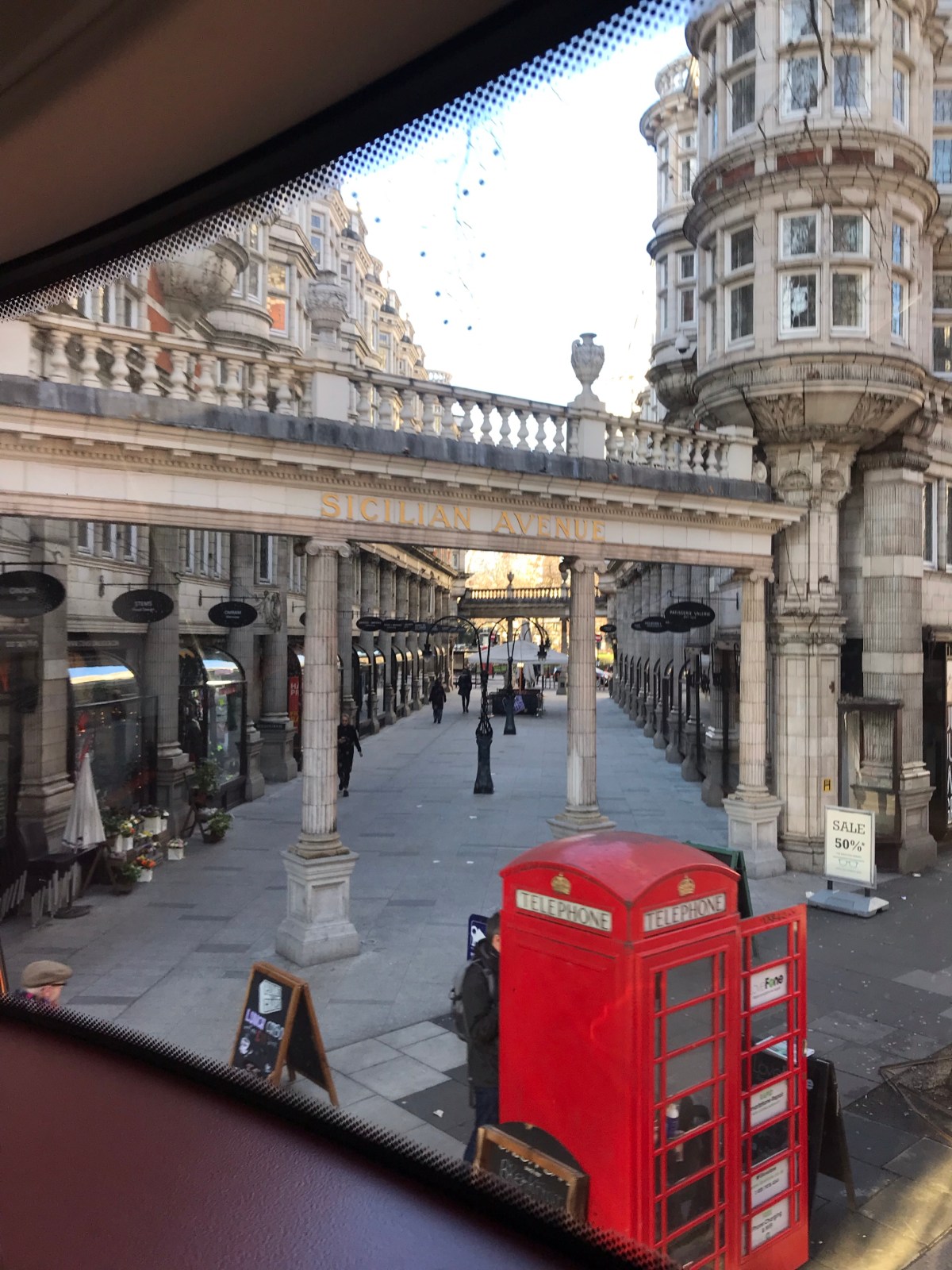
Today on the big red bus, I got my very favorite seat–right above the bus driver, perched high above the street. The lovely sunlight today helped me overlook the bitter cold, and enticed me to snap even more photos than usual. You can see shots of the trip overall, with a frame-by-frame of some of my favorite areas.

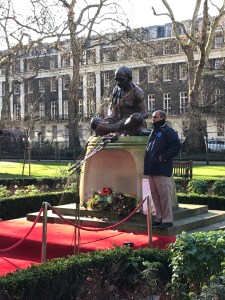
I disembarked at Tavistock Square where a ceremony to commemorate Gandhi, held on the anniversary of his death, was concluding. The Square was magical and I felt Gandhi’s presence and the sense of peace he cherished–until I slipped on some black ice and nearly took a fall. Thankfully, I–or perhaps the spirit of Gandhi–caught me on the way down. I escaped injury.

img_5680Lessons of the day:

  • Completing a Ph.D. is a journey, best done with a collegial group of curious, knowledgeable, creative, and good-natured people.
  • A Fellowship also provides a gateway from the ordinary day-to-day routine and facilitates journey into the unknown.
  • There’s no better way to traverse the city on such a day than London Bus.
  • Seize the day and enjoy the journey. Make the very best of it you can.

AND:

BE THE CHANGE YOU HOPE TO SEE IN THE WORLD! –Mahatma Gandhi


Open House Dublin: An architect’s delight

Screen Shot 2018-11-30 at 6.38.27 PMI have several blogs in my files that I’ve not yet shared. The info below is no longer “news” but it should be interesting and helpful to some, so I’m posting it for you today. Happy holidays!

The Irish Architecture Foundation (IAF) does an outstanding job organizing its annual Open House event. In 2018, they held it October 12–14. Open House spans three days and allows thousands of citizens to visit architectural wonders that are usually not accessible to the public. Over 170 tours and events were open to the public–all for free and most with architects, trained historians, or other experts as guides.

Although this happened six weeks ago, I’m posting it now since I like to have a record of what I’ve seen. I’ve attended five of these Open Houses, I believe, and you can find photos from other years by running a search for “Open House” on this site.

Despite the dreary rain on Saturday the IAF army of volunteers opened sites all across Dublin. Aongus and I benefitted, as lines were shorter. We took advantage of having Aongus’ car to stay dryer and see more sites than we could by foot. This means we visited more outlying areas than I’d originally planned. We normally walk or take Dublin Bikes.

On Sunday the sun came out, but not until after a cold wait for the opening of 14 Henrietta Street. The crowds were fierce on Sunday, and I even encountered a few grouchy folks with a sense of entitlement. I tried to cheerfully point out that the long wait times were due to the popularity and success of the event and that all the people organizing the events and running the sites were volunteering their time. That sense of entitlement is an ugly thing. Putting that aside, I really enjoyed myself and have provided photos of the seven sites I managed to visit.
Screen Shot 2018-11-30 at 5.43.27 PMBelvedere House

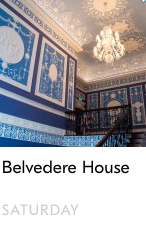
The first site we went to was Belvedere House, which used ot house the boys’ school that was the rival of the one Aongus attended for secondary school. The tour was full, so we actually just saw the lobby in our initial visit, but we returned later and got the tour and more photos.

The House was constructed in 1786 at 6 Denmark St Great, Dublin 1. According to the Open House website, “The construction of what is now Belvedere College began under the 1st Earl of Belvedere, and was later finished and occupied by the 2nd Earl of Belvedere. Built to the designs of architect Robert West, it features the work of renowned stuccodore Michael Stapleton. After the 2nd Earl’s death in 1814, the townhouse was left unoccupied and fell into disrepair. The house was eventually procured by the Society of Jesus Religious Order in 1841 and has since been occupied as part of their educational facility. James Joyce, Austin Clarke, Harry Clarke, Joseph Plunkett, Donagh MacDonagh and Kevin Barry are amongst some of the great past alumni who roamed the corridors and were educated here. RKD Architects were appointed in 2014 by Belvedere College to restore the 18th Century house and one of the most powerful features of the house today is the stucco work in the hall and first floor reception rooms.”
Screen Shot 2018-11-30 at 5.43.43 PMCroke Park Villas

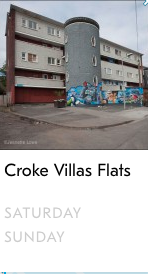
This is a social housing community with an iconic design that was replicated in many other parts of Dublin. As it is so stylized, it seems to many people to be outdated. This particular set of Villas is being torn down and new housing built. There was a photographic exhibition in one of the flats, documenting families who used to live here. A few of the flats still have residents, who await new homes in the construction underway nearby.

The complex was designed by Daithi P. Hanley and constructed in the 1960s at Sackville Avenue, Ballybough Road, Dublin 3. Open House’s website noted that “In 1956 Dublin Corporation approved a Compulsorily Purchase Order on a series of derelict and condemned cottages in Ballybough in order to construct modern single and duplex flats between Love Lane and Sackville Avenue. Named Croke Villas due to its proximity to the GAA HQ, Croke Park, it was the first stage of an extensive plan to regenerate the Ballybough/North Strand area much of which still bore the scars of the 1941 North Strand Bombings. At present the complex is undergoing renovation and three blocks have been demolished along with a number of derelict cottages on Sackville Avenue. This new development with provide a mix of houses and duplex apartments. The flats were designed by Daithi P. Hanley when he re-joined Dublin Corporation in 1956 as housing Architect. He designed a series of 4 and 5 storey blocks of Flats which used standardised components resulting in significant savings in construction costs and building maintenance of which Croke Villas was part. There were many others of these flats built across the city. Hanley also designed the Garden of Remembrance, Simmonscourt Pavilion, the memorial monument at the Customs House, the Basilica of Our Lady, Knock, among quite a number of interesting projects.As part of Open House 2018 number 45 Croke Villas will be open to the public and will have an exhibition of photographs taken prior to and during the demolition by photographic artist Jeanette Lowe. Number 45 Croke Villas is in the last remaining block of flats, due to be demolished early in 2019. The finished development with form a processional boulevard into the Croke Park Stadium.”

Screen Shot 2018-11-30 at 5.44.38 PMAsh Street

This project was designed by de Siún Architects and constructed in 2018 at 25 Ash St., Merchants Quay, Dublin 8. Michael de Siún has shown his own home before, very near to this one, and it is an architectural gem. Such clever detailing to make small spaces feel spacious and appealing. I felt that a product Aongus and I had seen at the London Building Centre might be usefully applied to the project, and I forwarded information on it to the architectural design team by email.

The Open House website explains, “The refurbishment of no. 25 Ash St. introduces a double-height light well into a small 100 year old house. The previously tight rooms have been opened up to create a spacious continuous flow from entrance to rear garden. A feature staircase with strong vertical elements emphasizes the connection between the floors. A simple palette of oak, concrete, and brick unite the whole, culminating in an intricate brick façade to the rear of the building.”

Screen Shot 2018-11-30 at 5.44.52 PMWeaver Park

This city park was designed by Áit Urbanism + Landscape / DCC Parks & Landscape Services and constructed in 2017 on Cork St, in Dublin 8. Despite the rain, we found the park design to be fun and festive. There were even some kids besides Aongus out playing. We rounded off our day with dinner on Camden Street, at Damascus Gate.

According to the Open House website, “Weaver Park represents one of the primary objectives arising from Dublin City Council’s “The Liberties Greening Strategy”. This strategy identified a derelict site, formerly occupied by the Chamber Court Flats, which offered a significant opportunity for the provision of a landmark public amenity. In making the site available for redevelopment, Dublin City Council was responding to the campaigns of local community groups who had long seen the potential in this space. The brief given to Áit Urbanism + Landscape underlined the importance of a participative process that engaged with these local groups, so that the community’s requirements could be understood and delivered through an informed design. Weaver Park is therefore a distillation of the community’s aspirations with inclusivity at its core. The design delivers a hive of activity within a context that will be sylvanic and ecologically functional in time. The fulcrum of the park is a 40-year-old Quercus palustris; this beautiful Oak tree now provides an instant maturity and a new focal point on the Cork Street landscape. It is an icon for the greening of The Liberties.

Screen Shot 2018-11-30 at 5.46.18 PM14 Henrietta Street

This building was a stately-home-turned-tenement. From housing one wealthy family at its prime, this home eventually held a hundred people at once. I shutter to imagine.

Watching “Call the Midwife” during my subsequent writing retreat gave me a glimpse into what such urban density would have looked like. It’s an excellent series that illustrates history as well as truest loving people. So seldom can I bear to watch television, and particularly Netflix, due to its grim and gritty culture. This show, however, is a true delight despite drawing tears.

Back to the house in Dublin, though, where you can see for yourself most any day by paying an admission fee. For Open House Sunday, entry was free but the tour abbreviated. And there was a line around the block when it opened Sunday morning!

It was originally built in the 1740s at 14 Henrietta Street, Dublin 1. The renovation that has just been opened was designed by Shaffrey Architects. This work converted the house into a museum that now showcases how the spaces would have looked both at the building’s prime and high and when it was packed to the gills. The house is in eyeshot of Linenhall, where my DIT staff office is located and I had a bird’s eye view of the renovations as they progressed. I kept a keen eye as the roof was repaired, a fire stair added, and the brick on rear of the house repointed.

The Open House website provides a detailed description: “Dating from the 1720s, Henrietta Street in Dublin’s North inner city is the most intact collection of early to mid-18th Century houses in Ireland. Built as a townhouse for the elite of Dublin, 14 Henrietta Street was split into tenements in the 1880s as the need for working class housing in Dublin grew, with some 100 people living there by 1911. It remained a tenement house until the last families left in the last 1970s. It’s been a 10-year project for Dublin City Council to rescue, stabilise, conserve and adapt 14 Henrietta Street. The house is the primary artefact of a new museum – the walls, floors, banisters, old gas pipes, fireplaces, and fragments of linoleum and wallpaper have many stories to tell. Shaffrey Architects planned and created new spaces to discretely integrate essential services and fire protection, using wireless technology to minimise loss of finishes and fabric. The tours will showcase the reception, selected rooms, basement and garden area to see the connections between the old and new. This year’s winner for the RIAI Award for Conservation / Restoration and Awarded The Special Jury Award.”

Screen Shot 2018-11-30 at 5.44.10 PMNew Garda (Police) Headquarters

Designed by the Irish Office of Public Works (OPW) and built in 2017, this build graces the Corner of Kevin St and Bride St, Dublin 8. This building is in the line-of-sight from Kevin Street DIT, where I frequently teach RoboSlam workshops and the RoboSumo design project, with Ted Burke and often Damon Berry and Frank Duignan. I was delighted that one of the architects who worked on this project delivered our tour. He was quite a young lad–leading me to feel a bit aged! (Like a fine wine? Perhaps….)

The Open House website explains, “The new Kevin Street Garda Divisional Headquarters was designed by the OPW. It is designed as a civic quality building responding to the specific site context of its historic surroundings. The building is energy efficient and sustainable with universal access for all. The building is arranged in linear blocks of accommodation either side of an atrium space. It reinstates the street line along Bride Street with a five-storey building opposite the seven-storey National Archive building. The five-storey curved block steps down in a series of steps to become two storey adjacent to the former medieval Archbishops Palace, thereby responding in scale to these important historic buildings. The important Kevin Street junction is acknowledged by expressing the central atrium space on that façade. The public entrance is located at this point. The atrium serves as the main vertical and horizontal circulation space within the building and provides for natural ventilation to all offices along with natural air extraction and allows daylight to penetrate into the building.”
Screen Shot 2018-11-30 at 5.42.54 PMThe Old Richmond Surgical Hospital

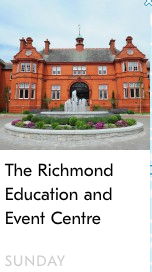
Just one block from my apartment in Dublin, this stately brick building gleams with love and civic pride. Originally designed by Carroll and Batchelor 1901 and built in 1901, The Richmond was refurbished in 2016 by Kavanagh Tuite. It is located near my own flat, at No. 1 North Brunswick St, Dublin 7. This was not my first tour of the building, but I learn new things each time.
The Open House website explains, “The Richmond Education & Event Centre was opened on the 20th April 2018, following an extensive refurbishment, following its purchase by the Irish Nurses and Midwives Organisation in 2013. The building was originally opened on the 20th April 1901 as The Richmond Surgical Hospital and remained open as a hospital until 1987, when patients from The Richmond and Jervis Street were moved to Beaumont Hospital. It after became a business centre and then a Court House for a number of years, there are still 3 cells in the basement. This red brick english renaissance style building has three floors and is U-shaped overlooking a central courtyard and fountain. It is built on the site of benedictine convent dating back to 1688. The building has meeting rooms, offices, four large former wards (auditorium, lecture room, banqueting room, victorian tea room). The tour will include the ground floor, first floor (except offices) and part of the basement.”

smc