Portugal has vibrant networks of academics engaged in engineering education research. This week, I got to be part of that community, thanks to the generous support of the American Corner, on a four-night visit funded by the US Embassy in Portugal.
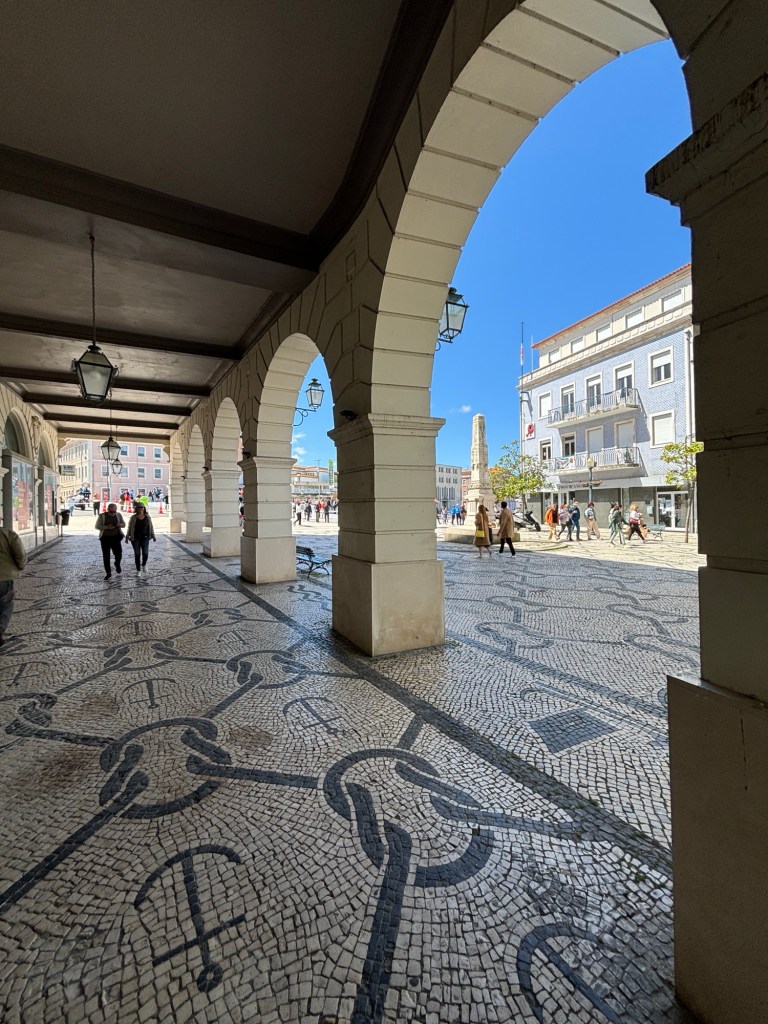
In and around the fabulous hotel, located on a canal in Aveiro’s historic center.
Flying into Portugal on Saturday morning, I settled in and toured the area over the weekend with my dear colleague (formerly of UCL) Inês Direito and her partner Gonçalo. Inês and I continually collaborate on research — and our bond grows stronger with each project and every passing year.
Snapshots of our explorations in Aveiro… Inês and Shannon always having a ball!
On Monday morning, I delivered a keynote address on “Boosting Engineering Education: How Research Can Make Engineering Education Better” and then facilitated a hands-on workshop on “Integrating Ethics, Sustainability, and Inclusion in Your Teaching.” In all this, I was the guest of honor with the Department of Mechanical Engineering at the University of Aveiro (UA).
I was impressed that 25 teachers and students participated in these morning events, as they happened during a week without classes at UA. Despite having the flexibility to work from home this week, people traveled to campus from all across the engineering disciplines at UA — and visitors traveled in from Lisbon, Porto, and Setúbal to partake as well.
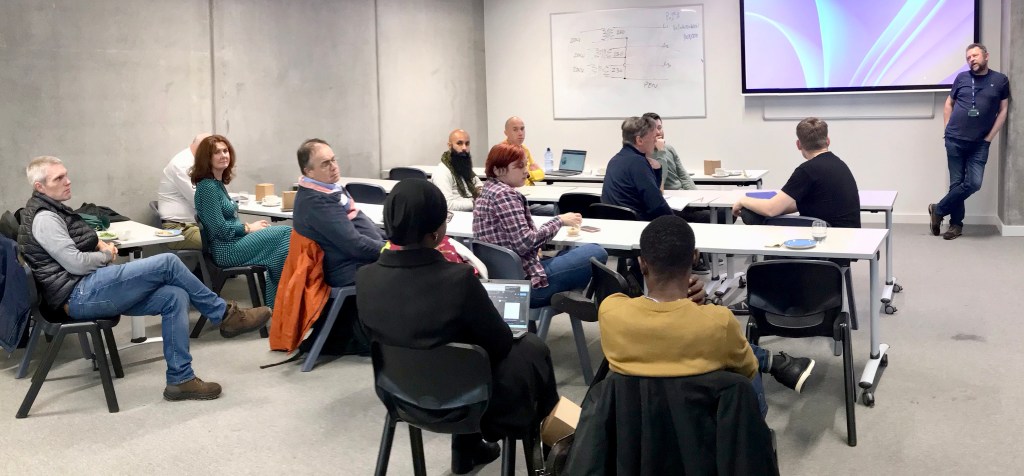
Images from campus, the keynote and workshop.
After lunch Monday, the Engineering Education Research team at UA and I headed to the administration building to meet with the university’s Vice-Rector for Research and an expert from UA’s Research Support Office. We discussed grant proposals and laid the foundation for upcoming initiatives that we plan to launch at UA.
Wrapping up that exciting meeting, we skipped across campus to the sleek, modern library, designed by Alvaro Siza, where the American Corner has a recording studio. In a session moderated by Inês, a few of us (Inês, Pedro Fonseca, Anikó Costa, and I) discussed what engineering education is, and why it is crucial for solving societal challenges in the 21st century. We also considered what role interdisciplinary collaboration plays in engineering education, and how can we, in higher education institutions, can facilitate it more effectively. Finally, we chatted about how interested people can get involved in engineering education research.
On air from the American Corner with Inês Direito.
On Tuesday, the EER team and I set to work refining our plans to secure funding for our projects. We had the treat of bumping into a pair of scholars who currently hold the type of grant we aim to secure, and they agreed to share their experience and insight with us. I’m looking forward to meeting them at the end of the summer to learn more!
Reflecting on the visit from the boarding gate at Porto airport, I realized that I’d had the most marvelous time in Aveiro. Every single person I met helped make the trip special—from the driver Casimiro, to Inês and Gonçalo, the hotel staff, Sandra the librarian in charge of the American Corner, to UA’s engineering education research team, the energetic and ever-smiling Robertt, Barbara, Inês, and Carla. Colleagues Bill and Val, and Val’s spouse Frank, all traveled from the Lisbon area for research meetings while I was there, helping make the experience that much more special!
Always learning, with Val, Inês, and Bill!
I am bursting with energy for our upcoming projects, and hopeful what the future might hold for our team.
I’d like to highlight some creative endeavors of two people I have had the pleasure to teach and/or mentor over the years. They take time to post about their hobbies and/or professional work on WhatsApp or social media, and I benefit from what they share.
I have felt such inspiration due to recent posts by Shane Ormond (who lives in Ireland) and Nikkolas Smith (who lives in the USA).
Shane was previously a student in DIT’s School of Electrical and Electronic Engineering, and he’s been part of our RoboSlam activities for nearly a decade now (see RoboSlam.com and its blog section). DIT has transformed since then into TU Dublin — and RoboSlam has evolved into the Dublin STEM Ensemble. Shane has been a big part of both. He can frequently be seen supporting STEM Ensemble activities, like our annual exhibit at Dublin Maker, or our periodic planning and knowledge-sharing sessions held in the new Granegoreman Central Quad.
Here’s a video Shane shared on our STEM Ensemble WhatsApp thread last week about one of the projects he’s been doing in his spare time:
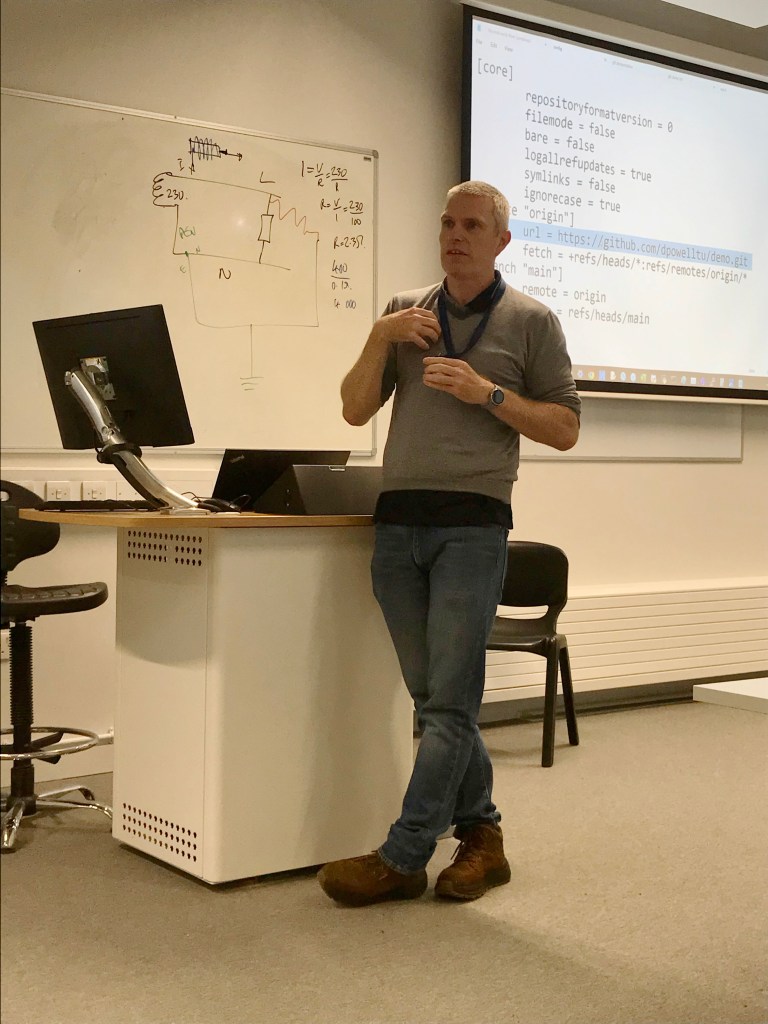
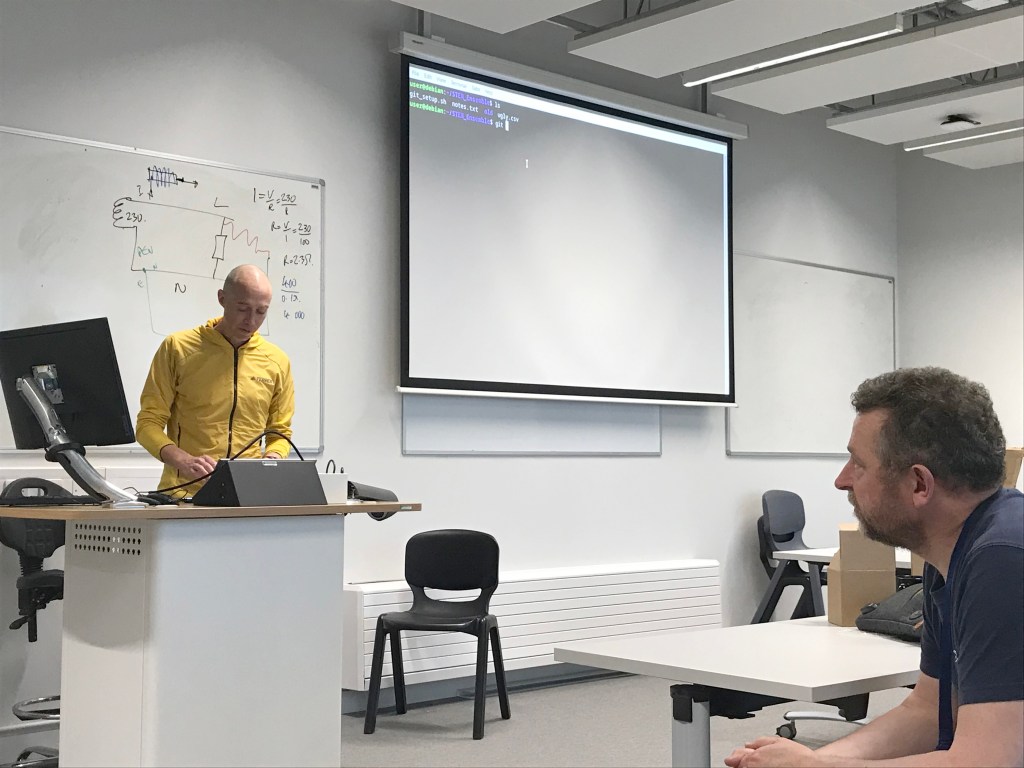
At the end of the video, Shane mentioned GitHub, where he posts his work for others to draw from. STEM Ensemble recently held a seminar on GitHub that Shane and I both attended. (The difference is, he understood a lot more of the presentation than I did!)
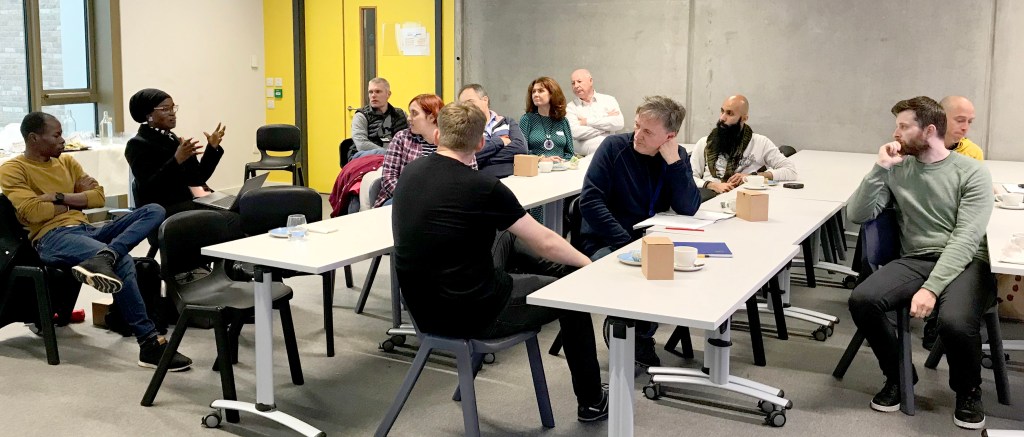
Images from our recent STEM Ensemble meeting that was followed by two presentations on using GitHub and a jaunt to the pub.
I see the video (above) with the blue model car as an evolution of Shane’s earlier work with robotic model cars with cameras on them, which I captured in this March 5, 2020 video. I shot it days before campus ground to a close with Covid lockdown:
Shane does all this as a hobby; at a couple of Dublin Maker faires he developed the technology to power talking heads. This year’s talking head automatically answered spoken questions using ChatGPT.
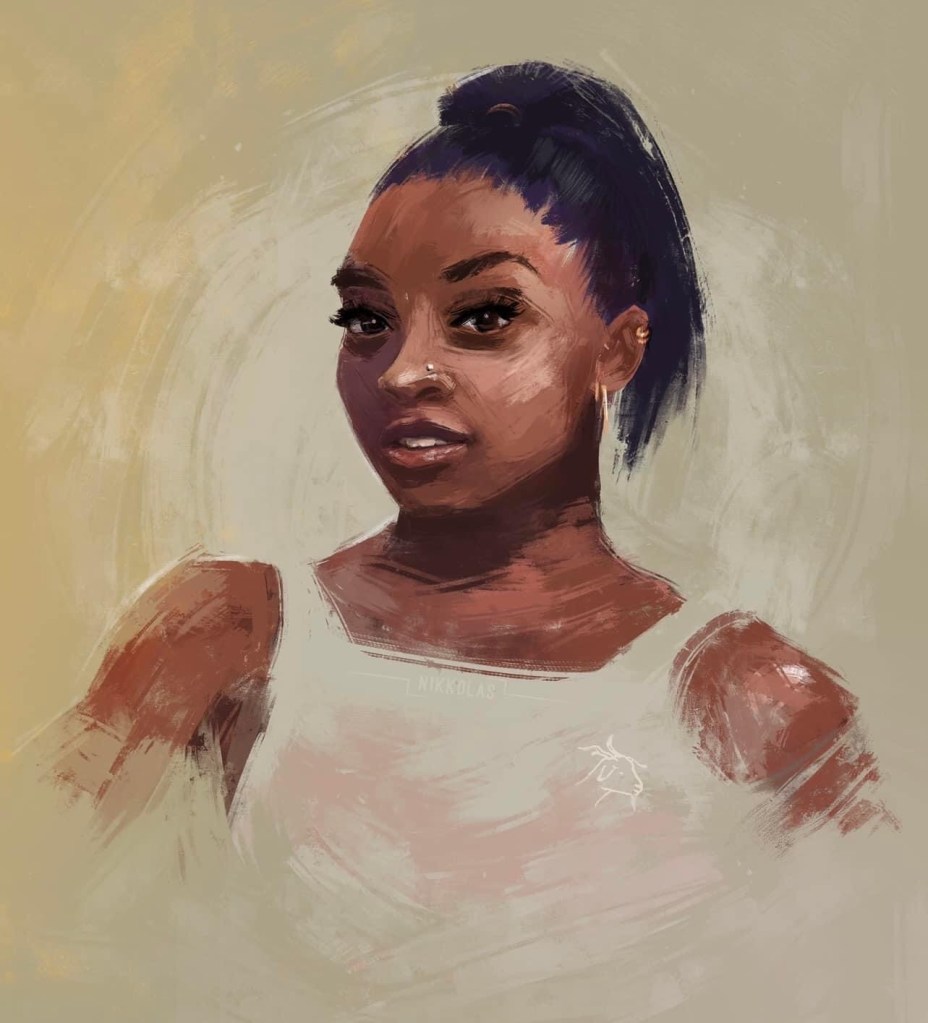
Like Shane, Nikk Smith is internally motivated to create. Nikk was an architecture student of mine at Hampton University, many moons ago. He often posts his “Sunday sketches” on social media. Here are a couple examples:
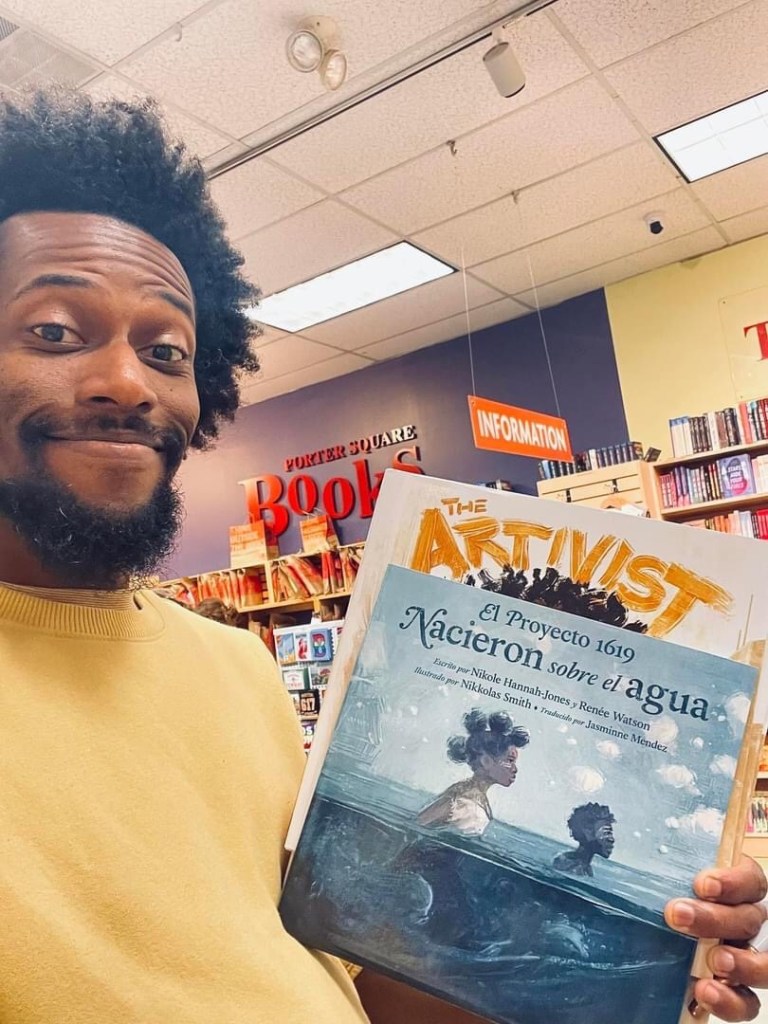
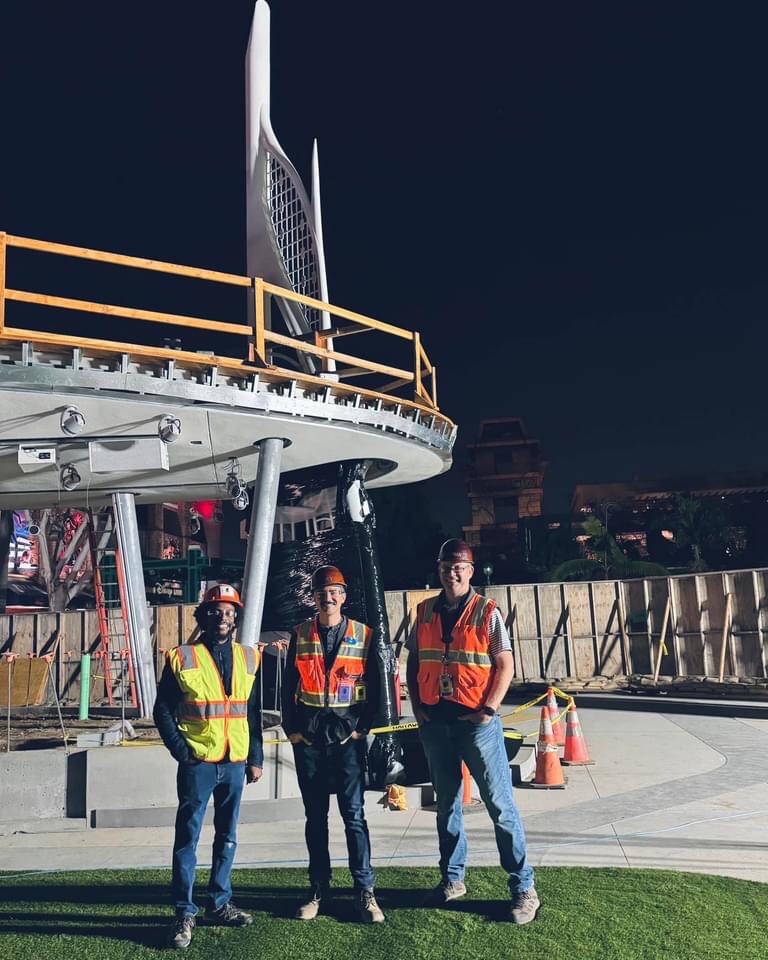
A couple of Nikk SMith’s “Sunday sketches”. One of gymnast Simone Biles, and another of children from Palestine, Sudan, and Congo. His work has socio-political relevance, and he highlights Black causes and heroes.Nikk also illustrates and sometimes also writes books for children. “Born on the Water” has been extremely successful, and has just been published in Spanish. The original is in English. He uses art to support his activism, and coined the term “activist” encouraging others to combine art and activism!Nikk used to work as a full-time Disney Imagineer, but now he works for himself (I think) and does consulting for Disney. A tower he designed for Disney to honor Black architects has just been opened at a Disney park. Nikk also designs movie posters — and I included his most recent poster here.
I am proud beyond compare of the work my former students and mentees are doing in the world — the creativity and passion they bring to the world and the lives they design for themselves.
Shane and Nikk are two outstanding examples, and I hope to feature more of my own personal heroes on this blog in the months to come. Being an academic educator and researcher connects me with many amazing people.
Following an extra-warm couple of weeks here in Dublin, fall set in with a cold, hard thud. Despite low thermometer readings, the sun did peek over the horizon, hanging low in the sky.
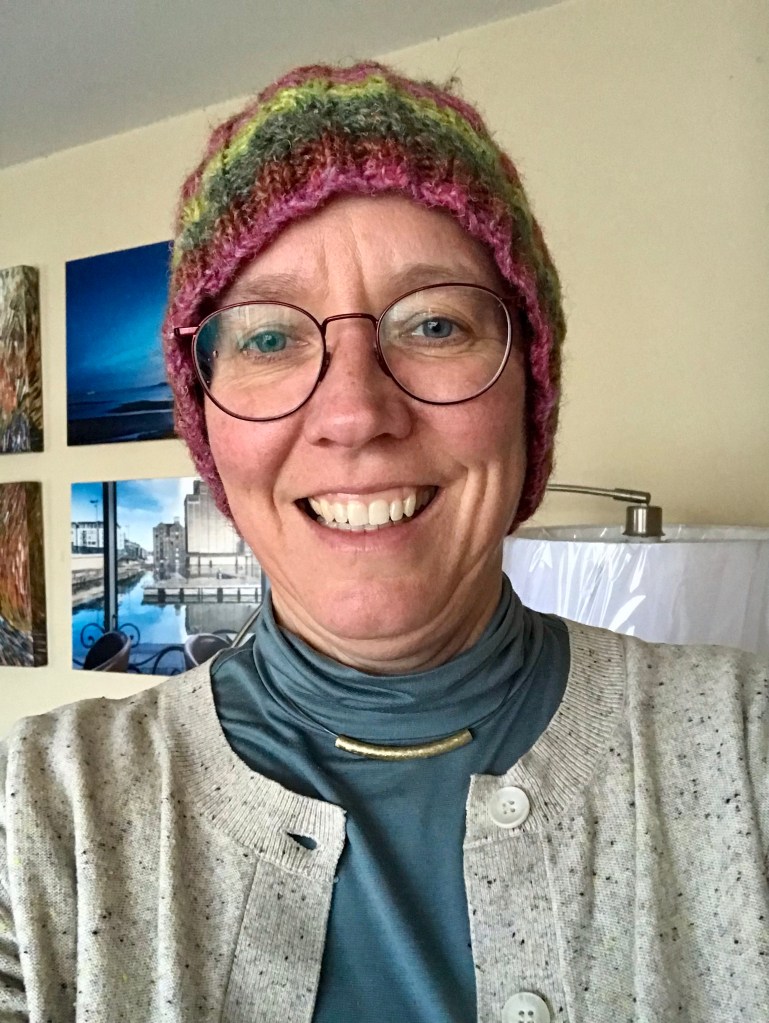
We were blessed with a couple of crisp, cold but gloriously sunny days of weekend. I bundled up in preparation, kitted with a lovely hat my aunt Kitty gifted me this summer.
Kitty has honed her kitting skills to a T, and I’m reaping the benefits of her hard work and loving craft.
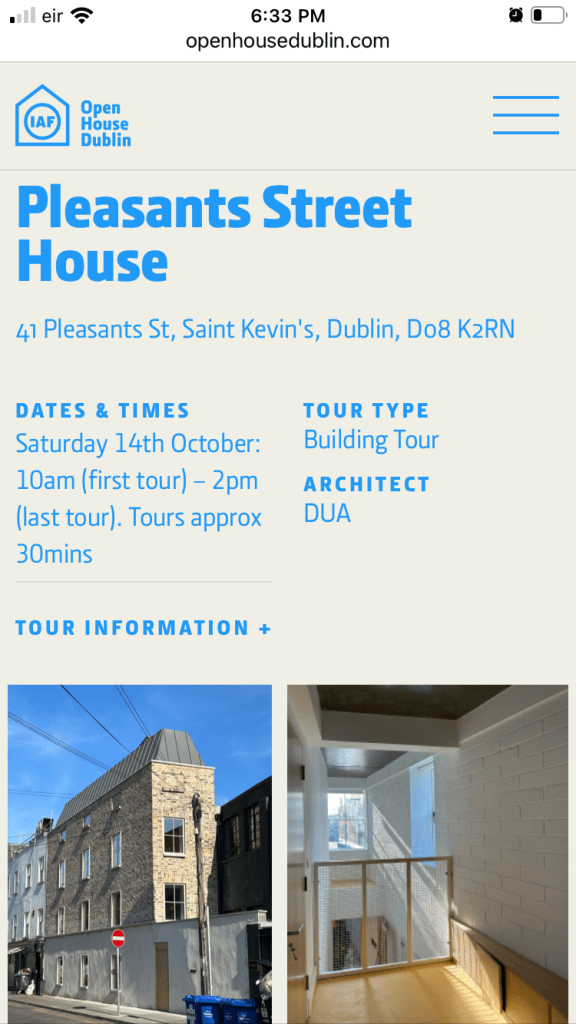
Saturday, Aongus got up early for a gym session then we headed out on our bikes to catch an early tour offered as part of the annual festival called “Open House Dublin”. This event has been a highlight of every year I’ve lived in Dublin and this year did not disappoint. We didn’t manage to snag tickets to many events, but the three we attended were grand!
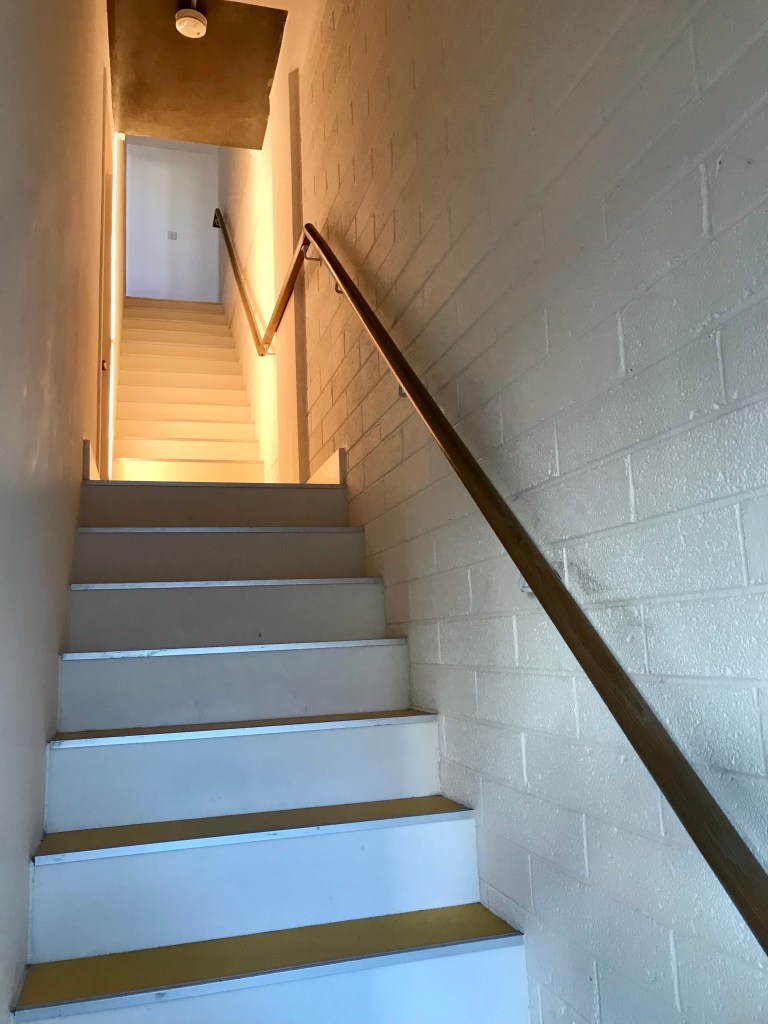
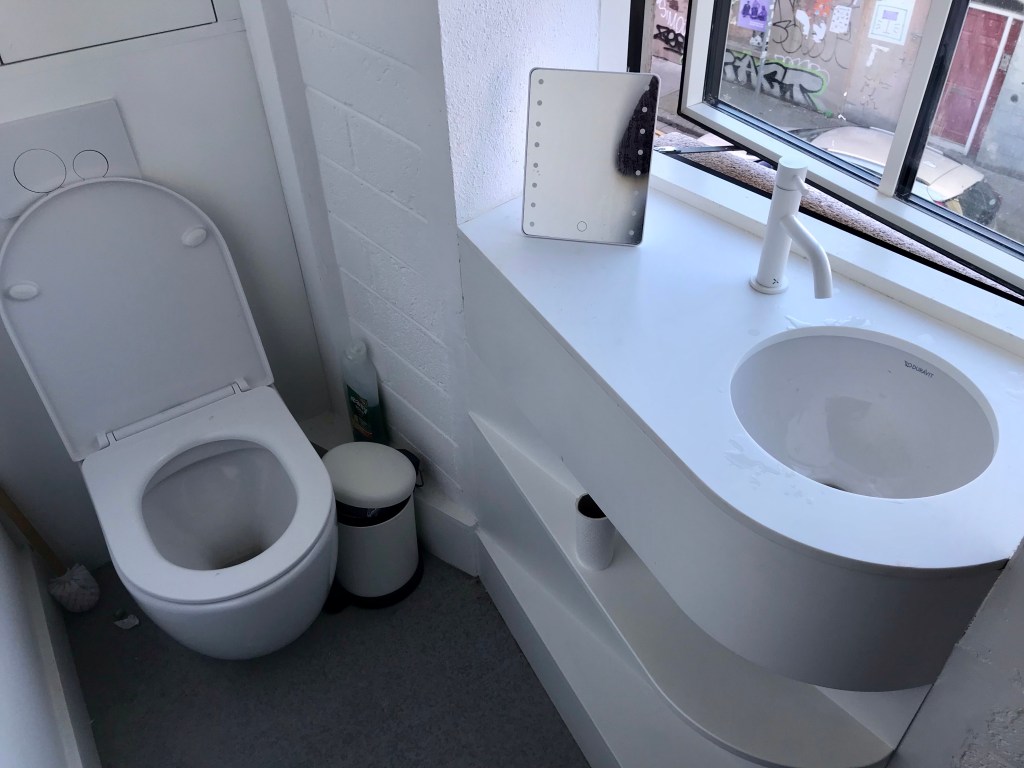
We started with a single-family house (our favorite type of tour here) on Pleasant Street, near Aongus’ new job site at Kevin Street. The house was designed by DUA and is currently rented to three super-luck Trinity students until the owners move in from abroad.
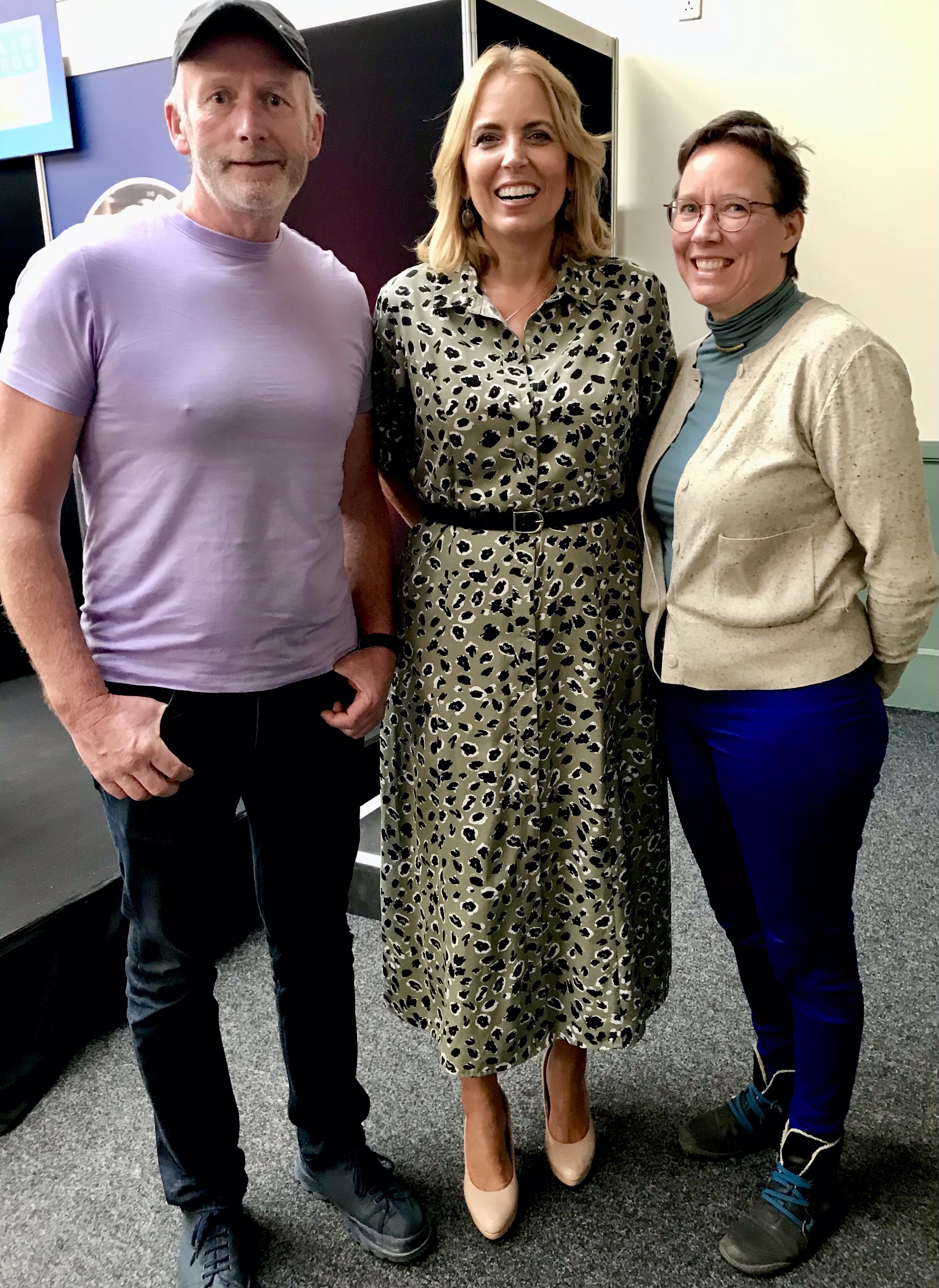
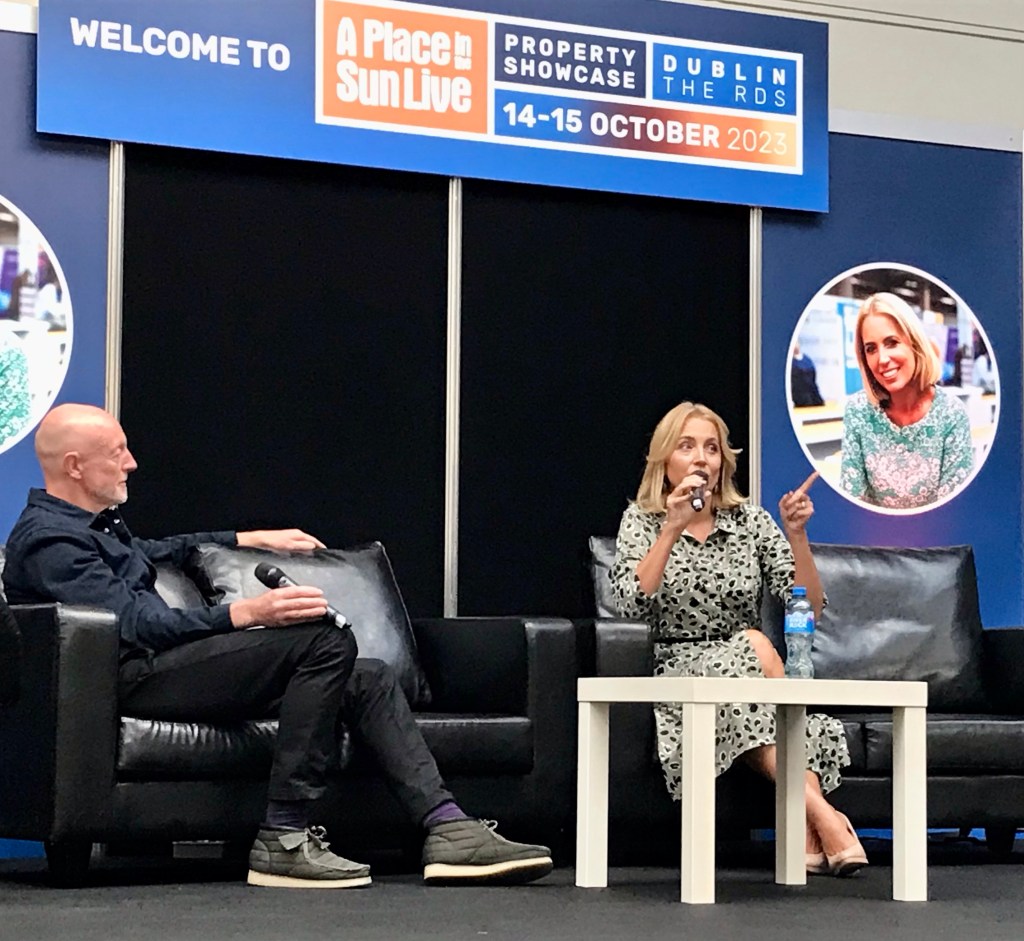
Following that tour, we cycled at top speed over to RDS for the “Place in the Sun” expo. We listened attentively to four panels and got to meet Jasmine Harmon, the TV show’s most active host.
Heading back into town after a full day of sun and star-gazing, we enjoyed lunch and a drink at Opium on Camden Street. Then we were off again, headed to the Lighthouse Cinema for a second Open House event, called “Cities Have Feelings”. We enjoyed a film and poetry reading by LionHeart. We also soaked in a super-intriguing lecture by city architect Finn Williams who has worked in London and now works in Marmö, Sweden. There was a follow-up panel with them both that yielded even more intriguing insights. At the end, I got to catch up with my architecture colleague, Jim Roach, at the drinks reception.
Sunday morning, Aongus and I hit the gym bright and early. He had a personal training session, then we both did spin class before he headed into an abs class. (Maybe you’re getting the drift that I can’t keep up with the man, but I try!). We fueled up with oatmeal and fruit afterward and then jumped on our bikes again for one last Open House tour.
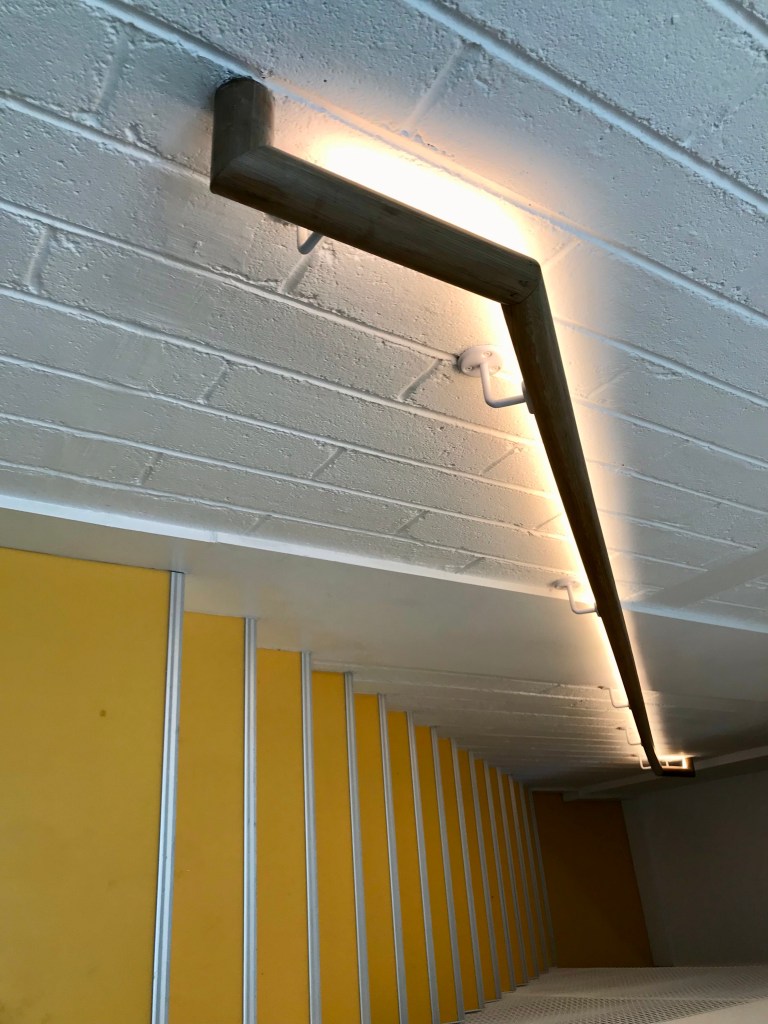
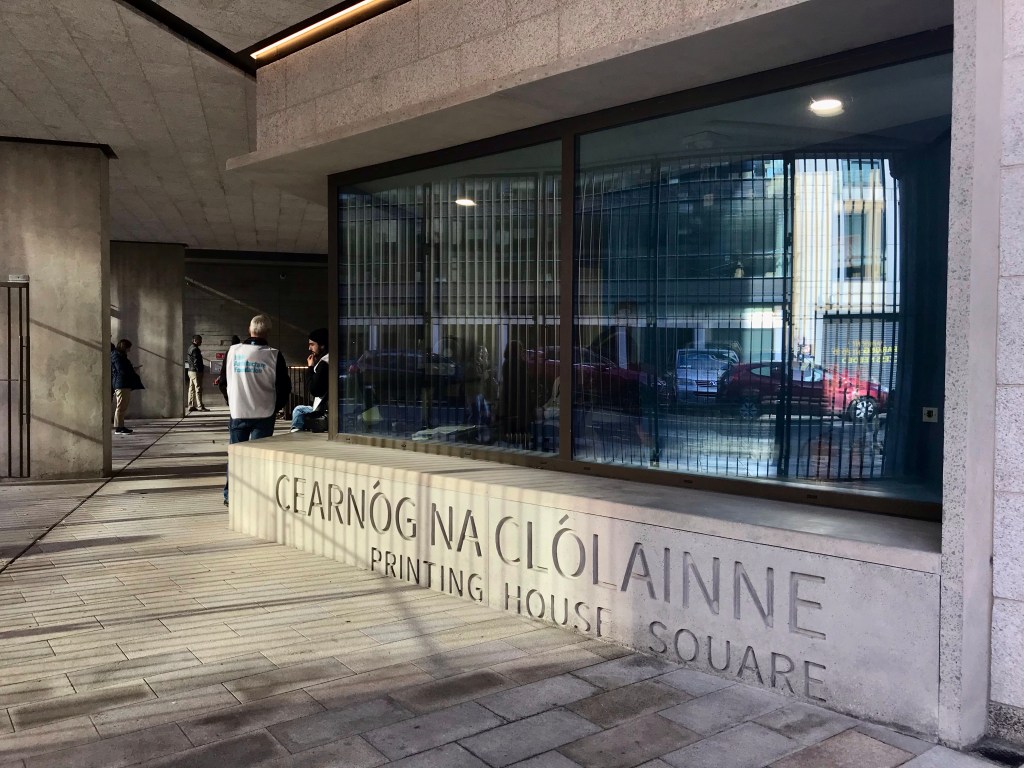
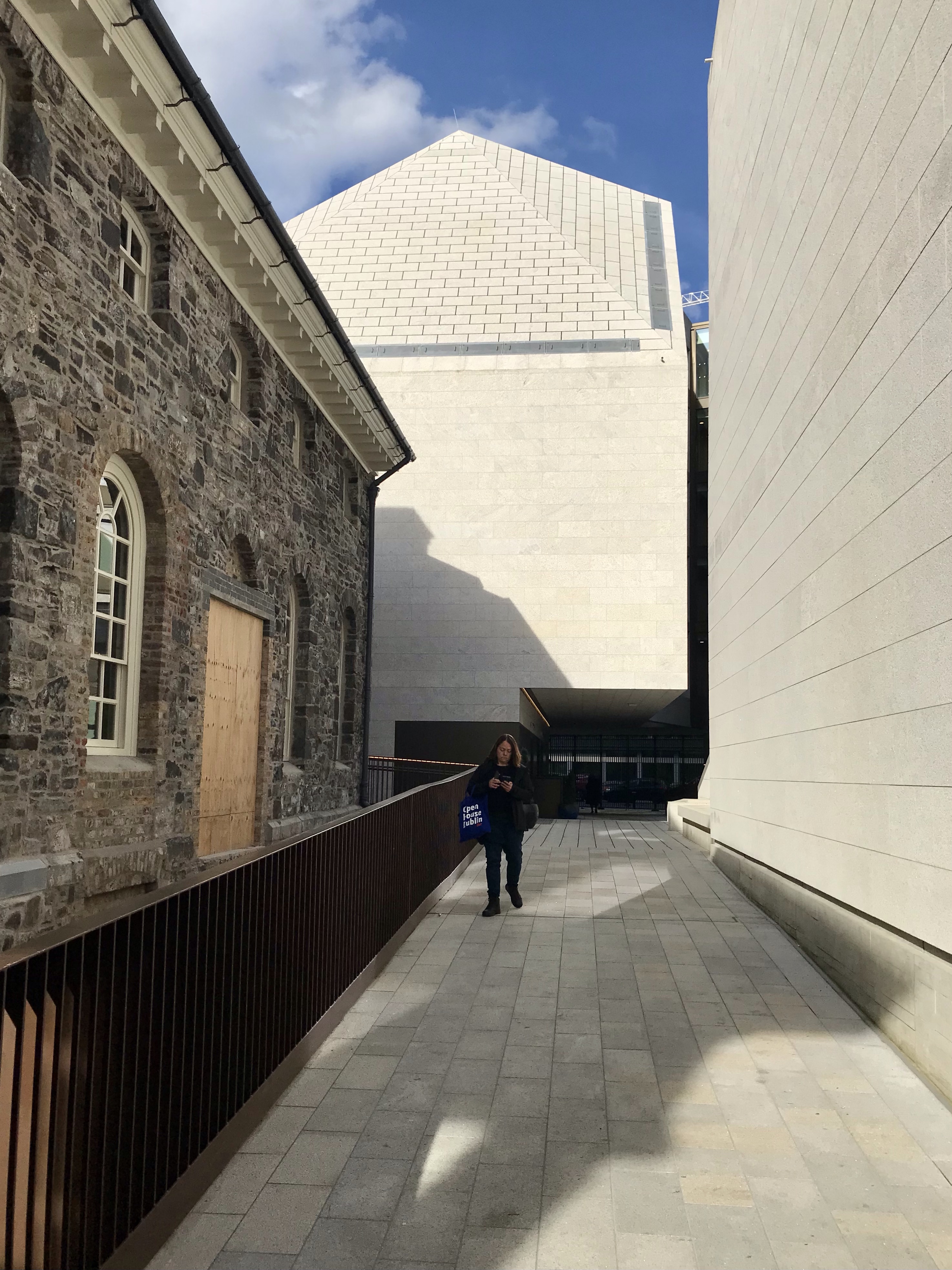
This was a visit to Printing House Square—better known to me as Oisín House—the construction project Aongus has worked on since our return from London. Architect Valerie Mulville delivered the tour and I got to see the fruits of Aongus’ efforts.
The edifice was awarded “Building of the Year” and Aongus’ employer named “Builder of the Year” at a recent event. This was the first time I’d had a chance to see inside. It’s quite an impressive structure and the quality of the finishes and detailing was surprisingly high.
I enjoyed a cycle through the city center while Aongus sped off for visits to his aunt and mum afterward.
Then, I made my way home to field incoming questions from students. They are culminating a sprint course on Research Methods. Last week was a marathon on the topic for the 23 students, my co-teacher Claire Simpson, and me. The students’ final proposals will need grading and feedback in the morning since they’ll start their Dissertation module this Thursday. My sprint hasn’t ended!
In any case, I’m so extremely thankful for sunlight, energy and vibrant health, curiosity, a full set of senses, mobility and freedom to explore, citizenship, warmth and comfort, quality food, an interesting and secure job that I love, and a strong and fit partner to enjoy all this with. Long may these blessings last!
Last week I taught two evening classes of Research Methods with my BSc in BIM (Digital Construction) students–and I have another starting at 6PM tonight. The students are earning “honors-level” bachelor’s degrees in just one year at TU Dublin. It’s an action-packed year, and they complete 60 ECTS (a full-time academic load, equivalent to 30 credits in the US university system) over 12 continuous months. It’s a great credential to earn and they learn so many new skills. “Honors-level” means they need to write a research paper, and I teach them the basics of that in Research Methods. So, last Tuesday, I welcomed them back from summer (where they completed their Work-Based Learning module) via an online class I taught from a hotel room in Athlone.
And just why was I in Athlone, halfway across Irland, on a school night?
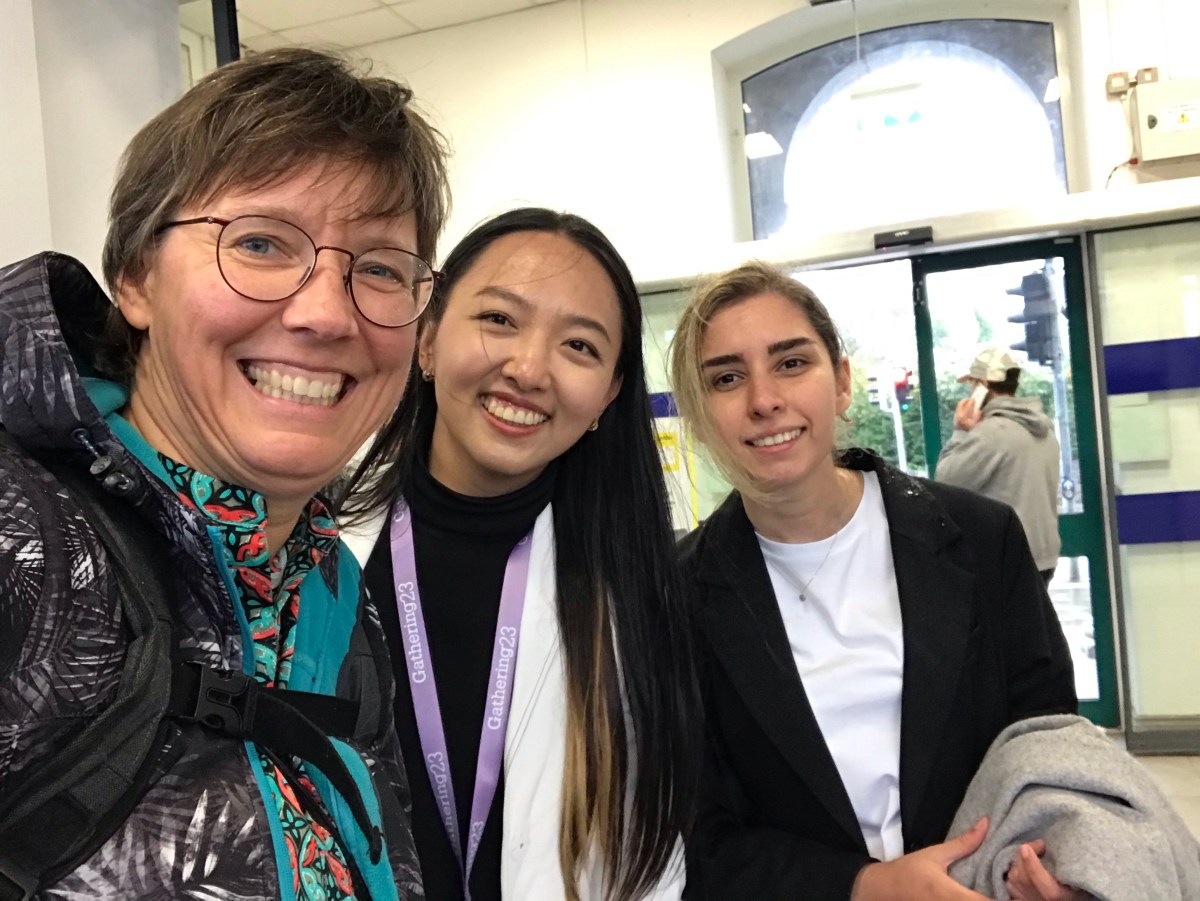
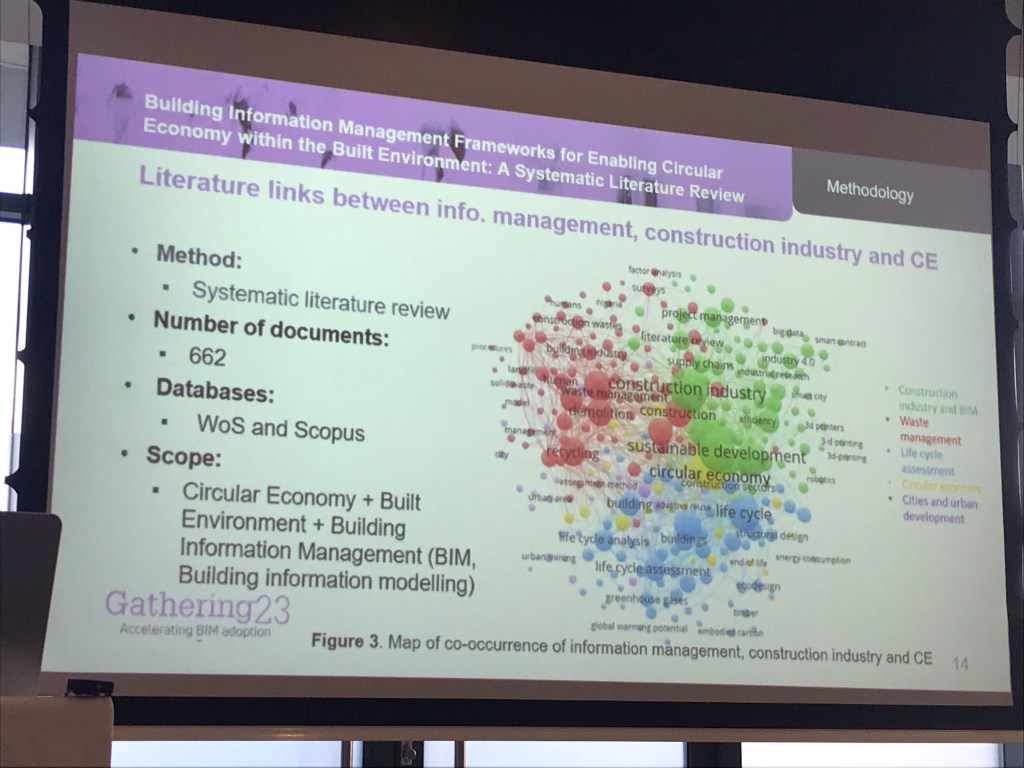
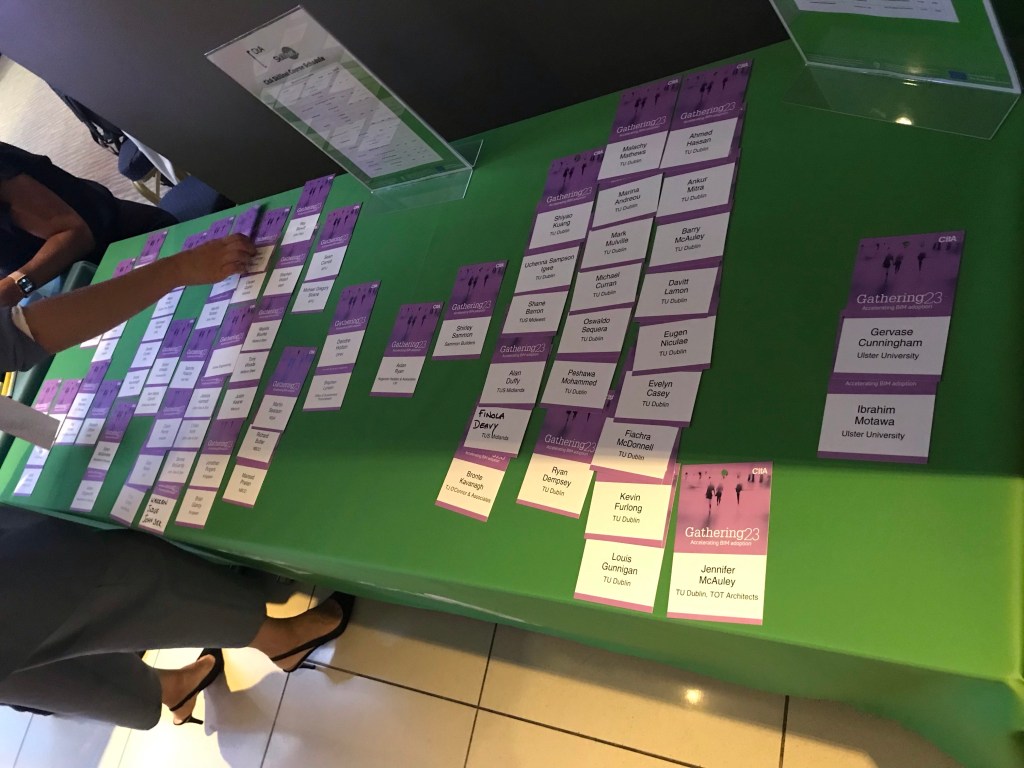
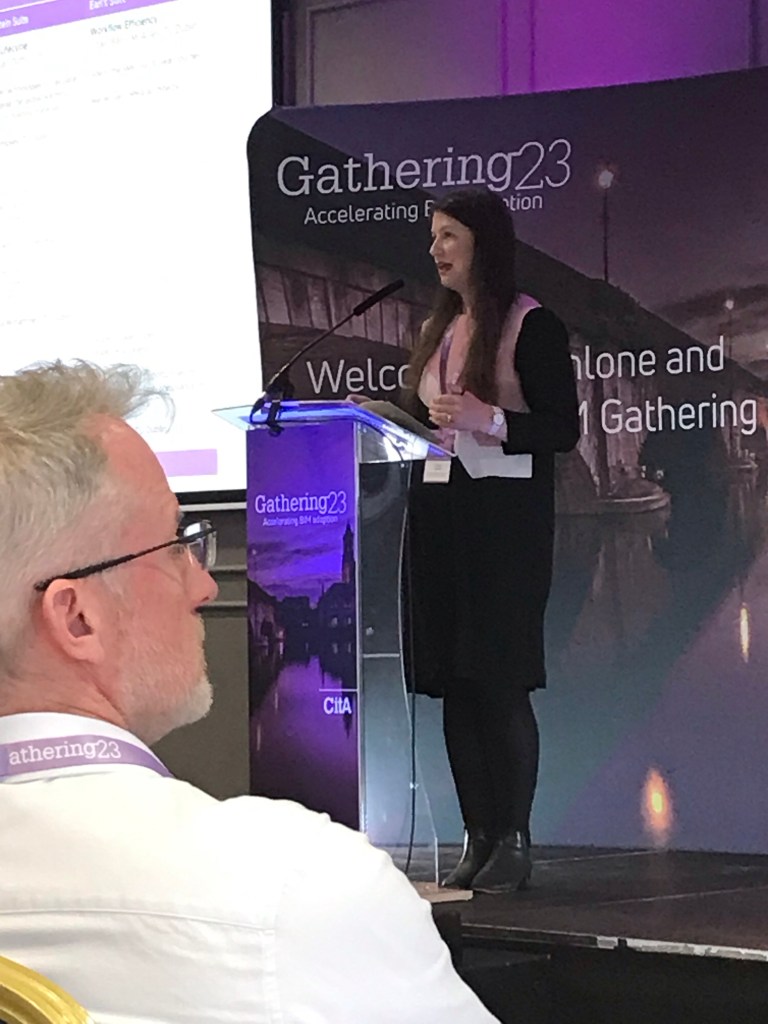
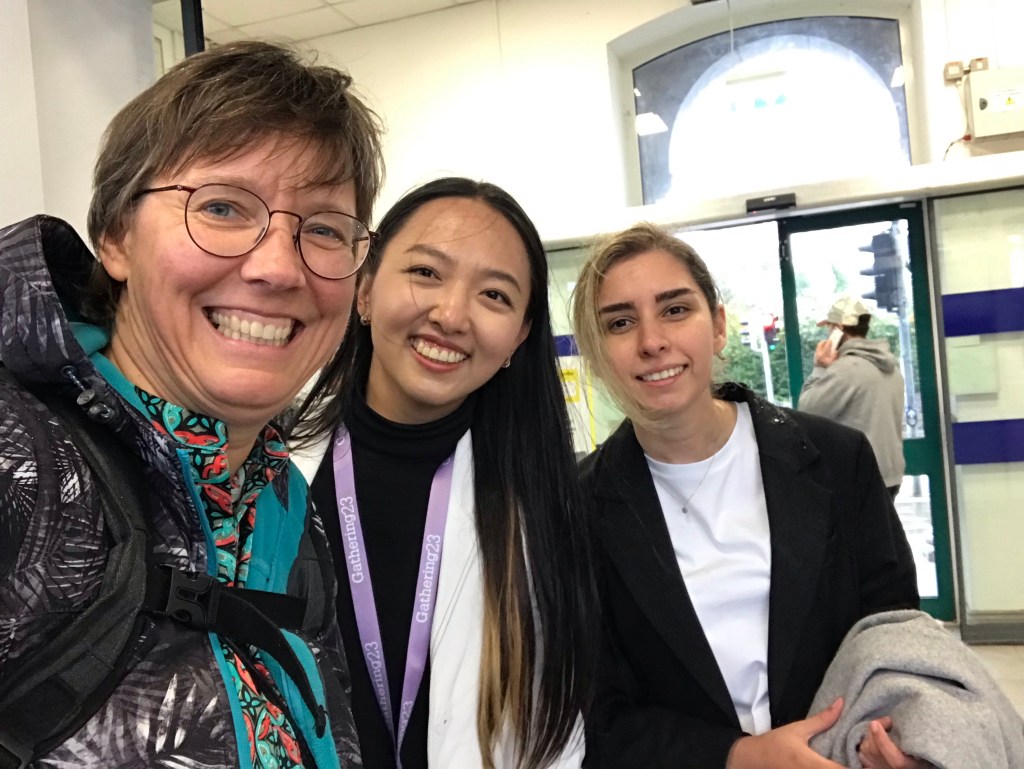
I was lucky enough to attend the 2023 CitA BIM Gathering as an observer. CitA is the Construction IT Alliance in Ireland, and its BIM Gathering is held every second year.
This year the Gathering had a great innovation. The first two days (Monday and Tuesday) were online for a manageable two hours each day. The third (Wednesday) we had a full day in person, in the midlands of Ireland, along the Shannon River.
I really appreciated CitA’s multi-type conference format as we got to hear from speakers who couldn’t travel to Athlone. This format used travel resources more wisely, and the rhythm suited me as a participant. I particularly valued the online presentations by lawyer May Winfield of Buro Happold, Lèon van Berlo from buildingSMART International, Johnthan Reinhard from TU Dublin, and Carolina Soto Oguerta from Chile.
Because I had a class to teach on Tuesday night, I bolted from home to Heusten Station as soon as the Tuesday Gathering events ended, to settle into my hotel room and make sure the wifi connection was sound.
I thoroughly enjoyed traveling with Irish Rail, and I worked on a review for the European Journal of Engineering Education on the way. Sooooo much preferable to driving!
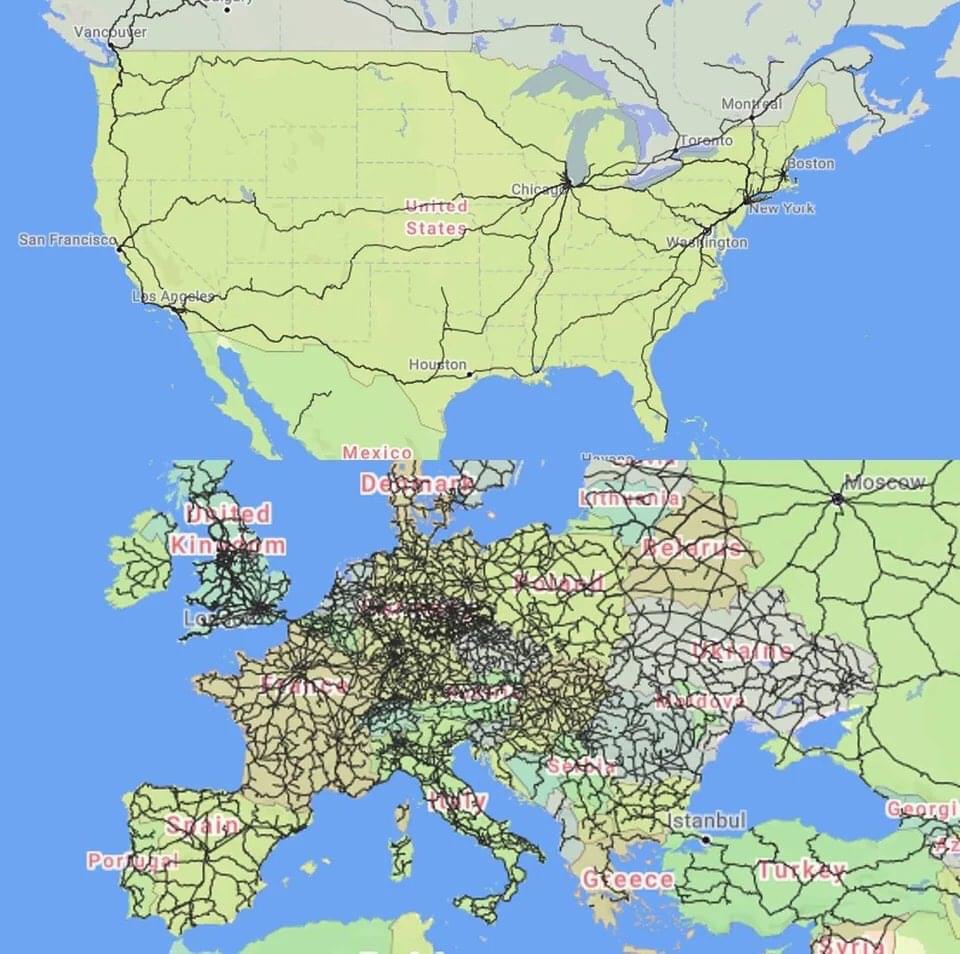
Here’s a map comparing Europe’s train network with the USA’s. Whereas I can’t get outside Ireland by rail, it’s a pleasure when I can use the train domestically.
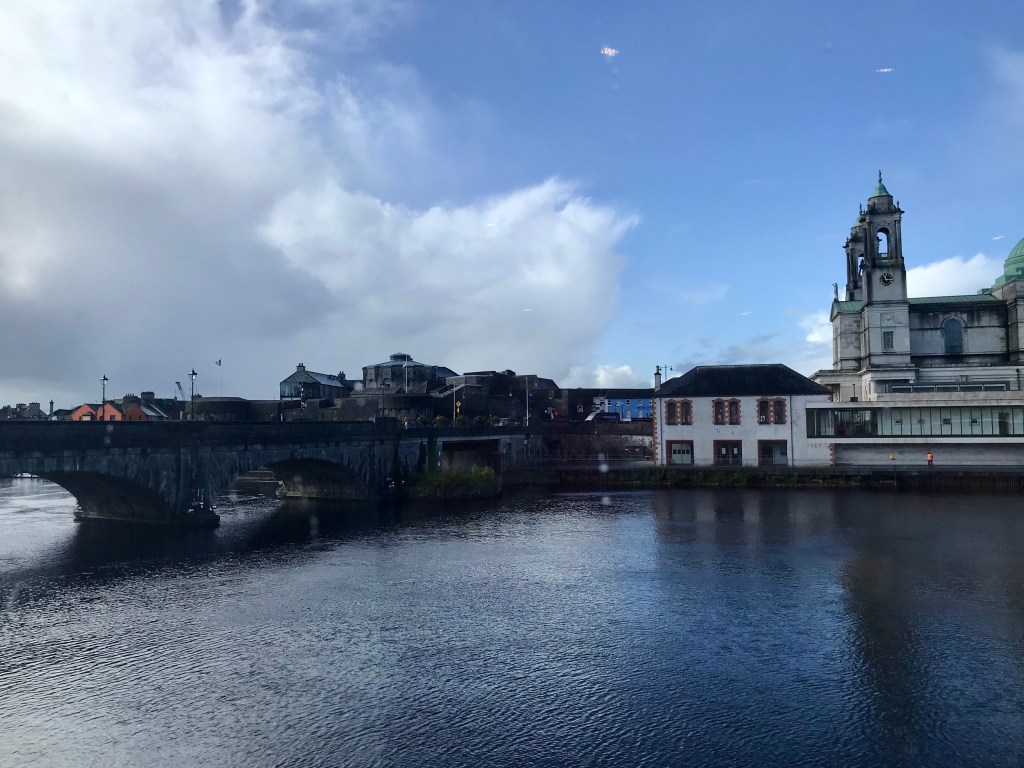
Athlone is home to the new Technological University of the Shannon (TUS), and I am hoping this increased exposure of the name “Shannon” helps Irish people learn my name 🙂 as they never seem to understand my pronunciation of it. It just doesn’t fit many people’s schema for a woman’s first name here, and they revert to calling me Sharon shortly into almost any conversation.
View from the conference room at the Radisson Blu in Athlone.
CitA is headed by Dr. Alan Hore, who will soon retire from TU Dublin. I’m not happy to learn that bit of news, but I am sure Alan has new plans for doing something big and meaningful!
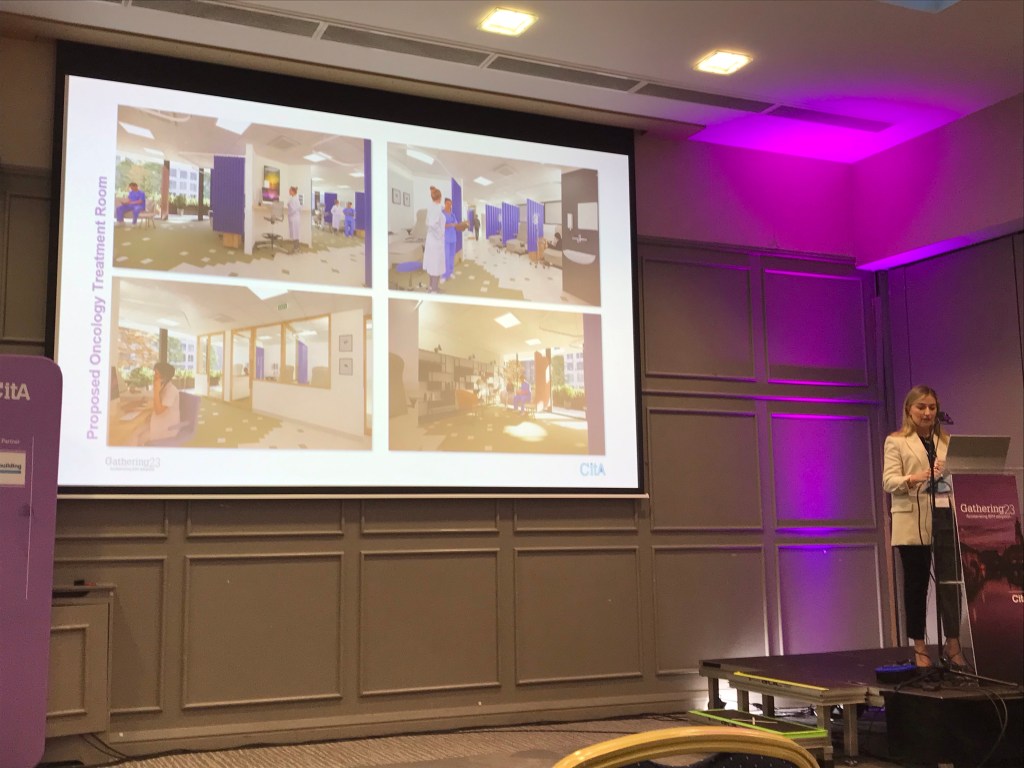
In-person attendance from TU Dublin was strong, and many students presented really impressive research during the conference. I was particularly impressed with the presentations by students, including Sadaf Dalirazar from UCD, Léa Laurent (affiliated with Munster University of Technology, but presenting on behalf of her firm O’Connell Mahon), and TU Dubin’s Peshawa Mohammed, Ryan Dempsey, and Jennifer McAuley. Sadaf was nominated for an award (at her first-ever conference, for her first-ever conference paper). Léa won for best industry paper and Jennifer won for best academic paper, so I must have picked my sessions well! I also found Ryan’s presentation–though high speed!–to be very enlightening. I applaud them all for their fabulous work.
Presentations pictured by Sadaz Dalirazar, Ryan Dempsey, Léa Laurent, and Jennifer McAuley.
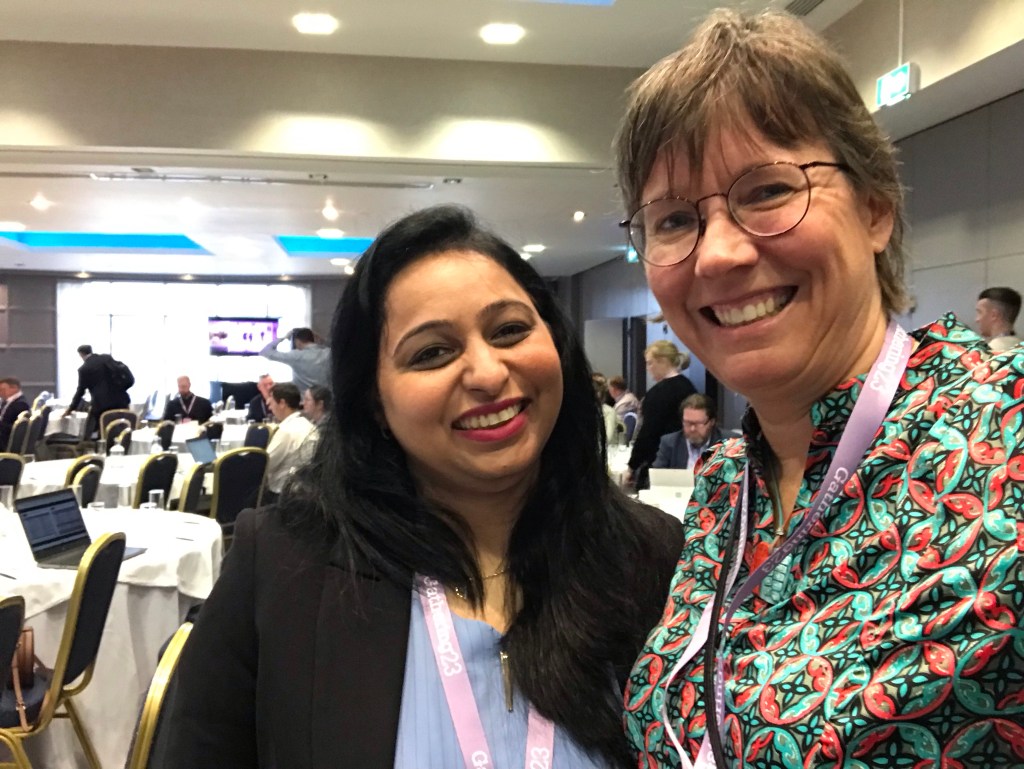
I also got to chat with graduates of our BSc from the first three cohorts, Divia Chadwa and Martin King, as well as one student currently completing the course, Bronte Kavanagh, and my co-teachers from TU Dublin, Davitt Lamon, Kevin Furlong MA, MSc, Dr. Malachy Mathews, and more!
I was also happy to hear from the Mayor of Athlone, who is an architect; Louise Heavin delivered a thought-provoking address and is enhancing the sustainability and livability of her small city. David Philip‘s presentation was also very interesting, “The Unexpected Road, from Premise to Prediction”, and I had the pleasure of chatting with David over lunch.
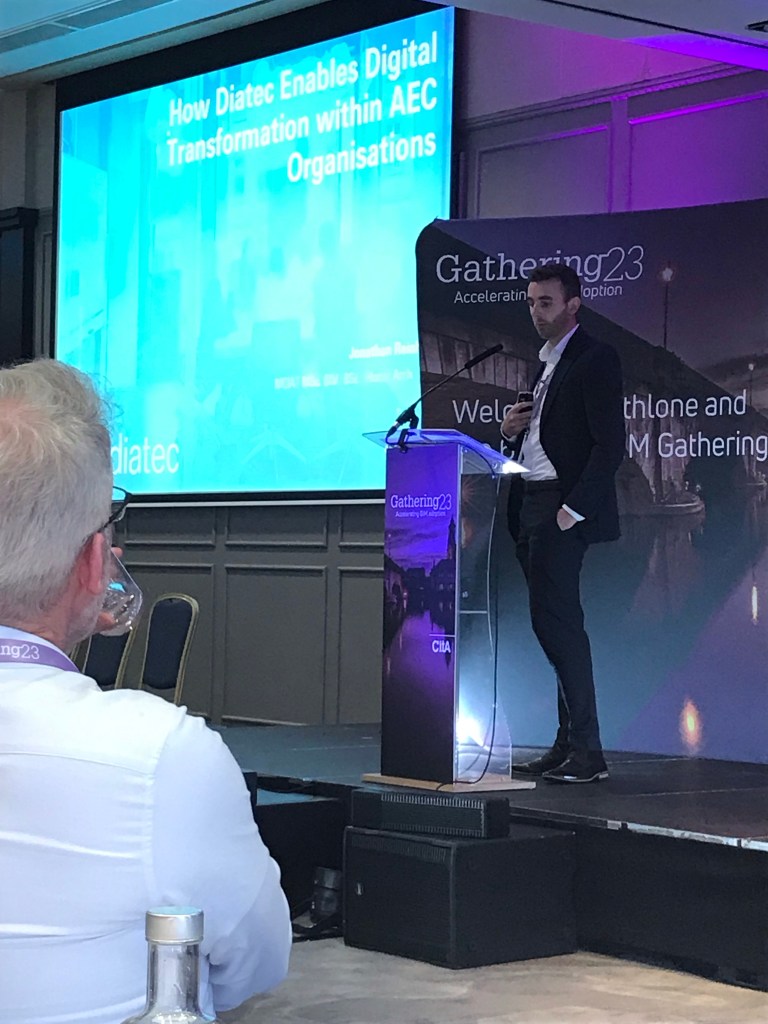
Main stage presentations by Louise Heavin, David Philips, and Jonathan Reinhard (this time speaking on behalf of Diatec).
Following a summer of intense curriculum design, a relaxing holiday in Greece, and the Dublin Maker fair, I dove right into the new academic year, voicing my perspectives at various meetings and workshops with colleagues at TU Dublin and–last week–attending and throwing myself into the annual conference of SEFI, the European Society for Engineering Education which was held just ten minutes walk from my apartment in Dublin.
Incidentally, SEFI is an acronym for our organization’s French name, Société Européenne pour la Formation des Ingénieurs, in case that wasn’t clear….
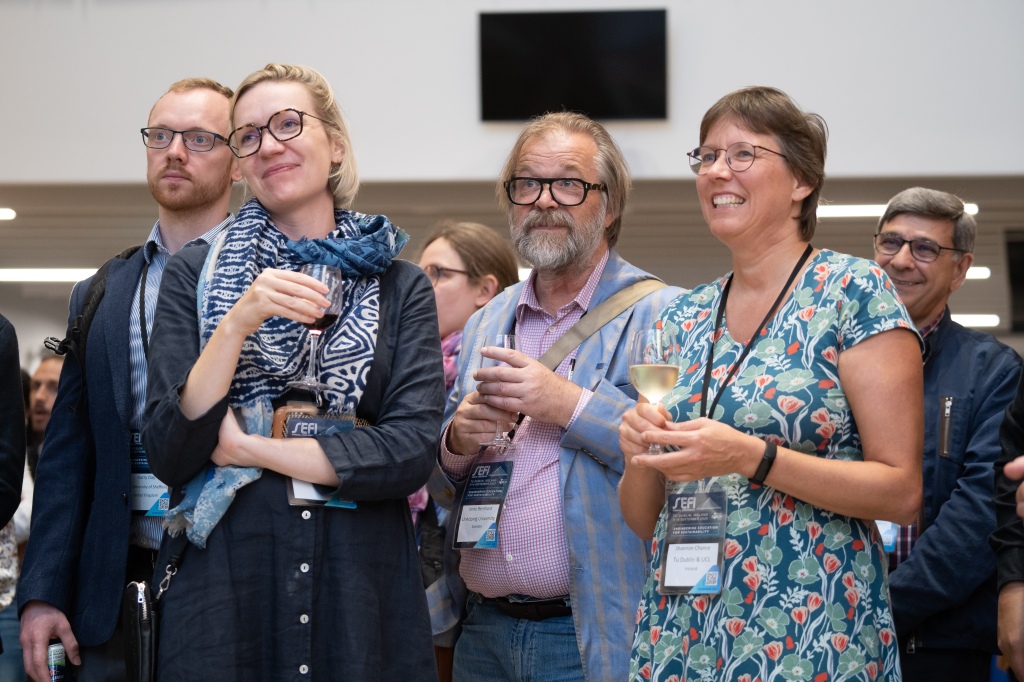
We kicked off on Sunday with a full-day pre-conference Doctoral Symposium, that I organized alongside Jonte Bernhard, Tinne De Laet, and Kristina Edström. It was, in all honesty, a highlight of the overall week, and each participant shared insights at the end of the day. “I found my village” exclaimed one of the PhD students to resounding applause. Indeed this annual symposium, where experienced researchers provide one-to-one advice to doctoral students helps bring our research community together. Everyone participating learns and grows, and we grow stronger as a group and also as individuals. With 37 students, 24 seniors, and 4 organizers present, we had plenty of others to learn from and with!
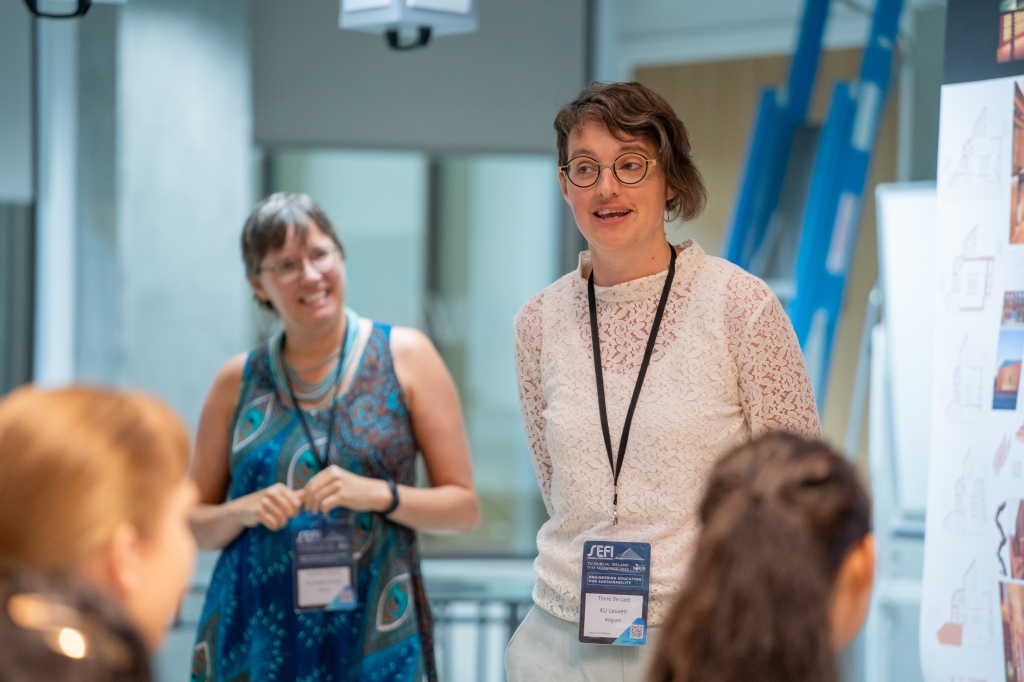
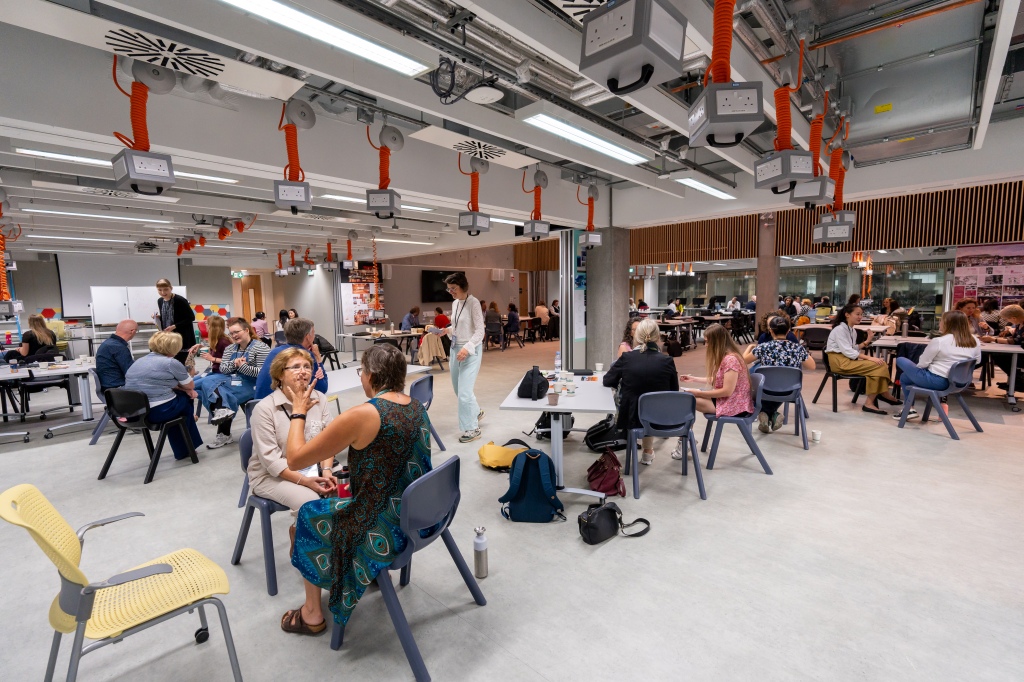
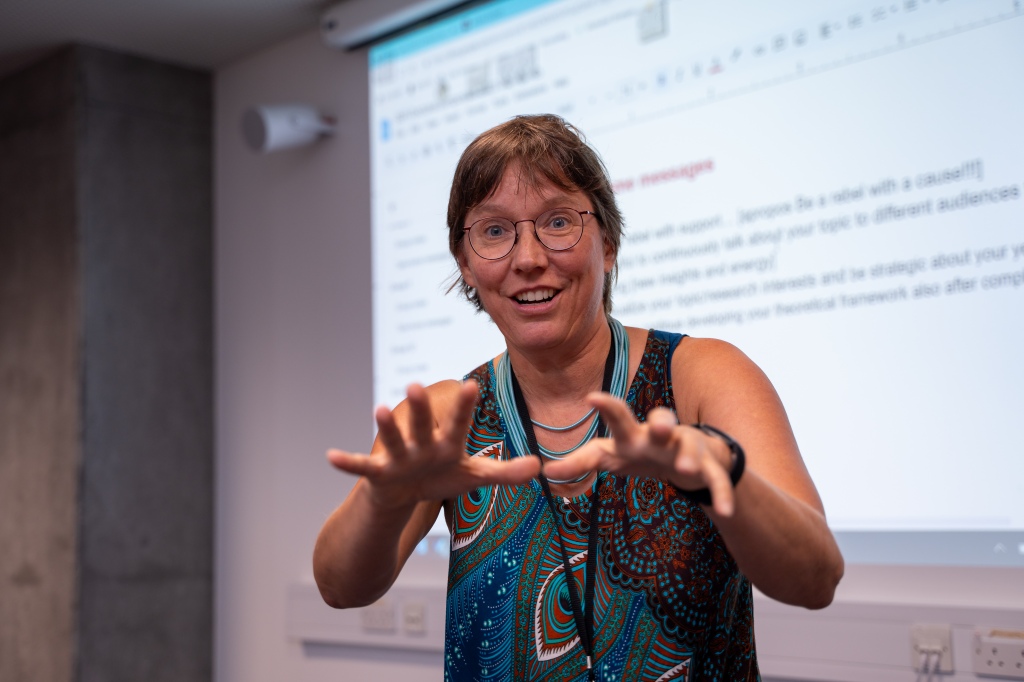
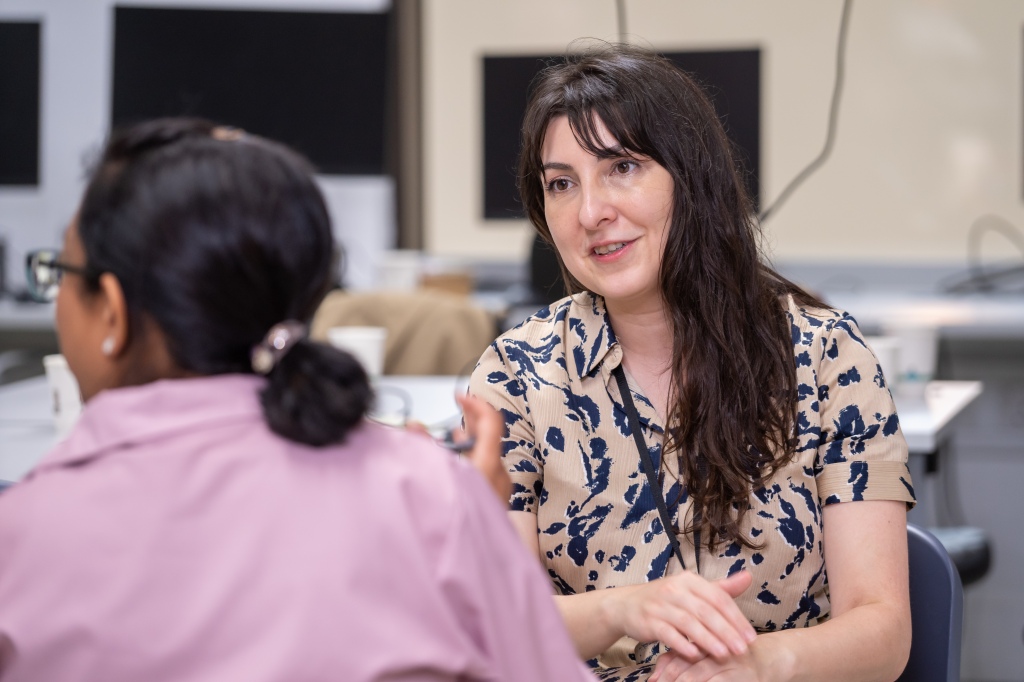
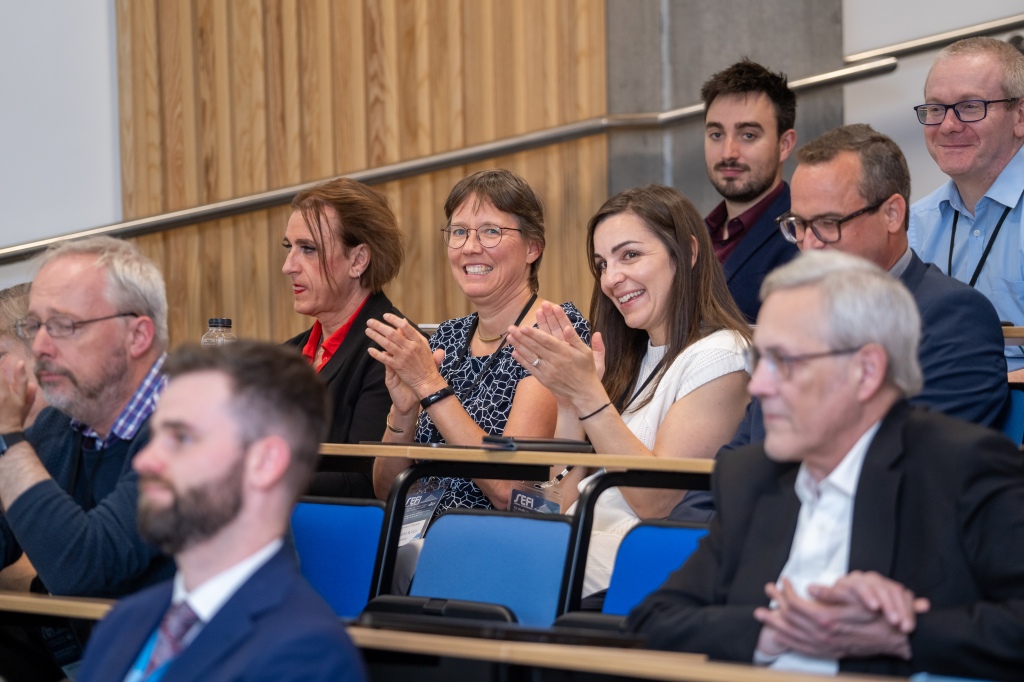
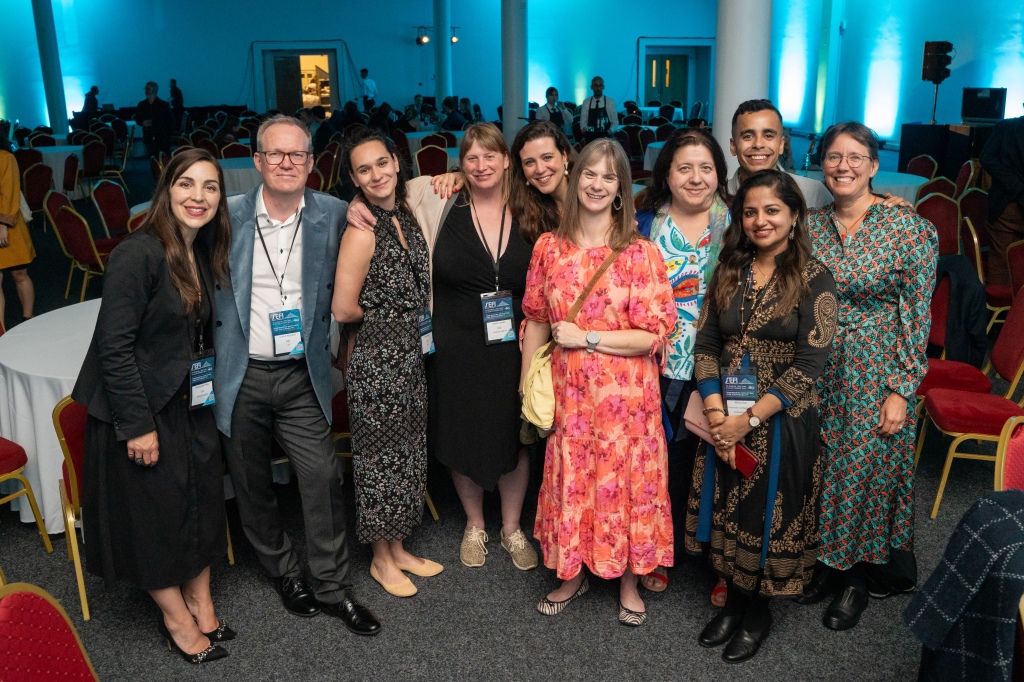
Favorite moments from the 2023 SEFI Doc Symposium include small group coaching, the extremely popular “speed dating” event, and the sharing of take-home messages.
All the photos on this post are by the talented photographer Conor Mulhern <conor@eyeon.ie>, hired to document the event.
Running straight from the Doc Symposium to Temple Bar that Sunday, I hosted my second event of the day — a new-to-SEFI pre-conference welcome for anyone feeling like they’d like a sense of community before the big event started. We had nearly 30 participants for our “Birds of a (Different) Feather” event, organized by Inês Direito, Predrag Pale, and I.
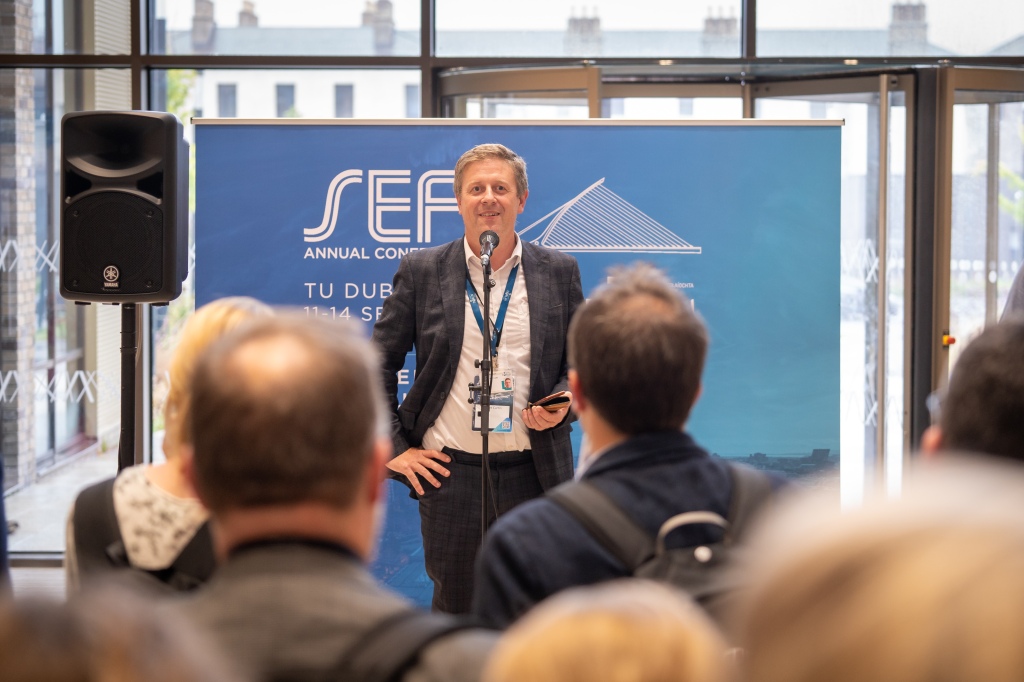
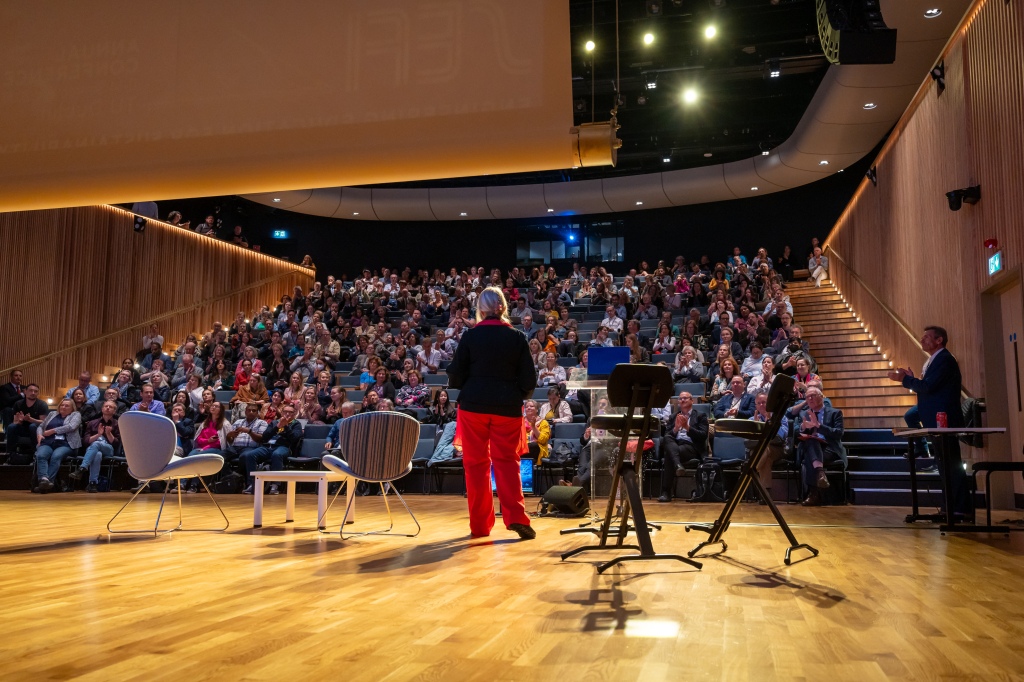
The main conference kicked off Monday morning. It was the 51st conference for SEFI, an organization that just reached 50 years of age, and a record number of people attended. Our TU Dublin East Quad was busting at the seams with 575 participants fully engaged.
I was a member of our Local Organizing Committee and I witnessed first-hand the heroic efforts and calm resolve of a truly outstanding member of our TU Dublin community, Ger Reilly, who led the cause.
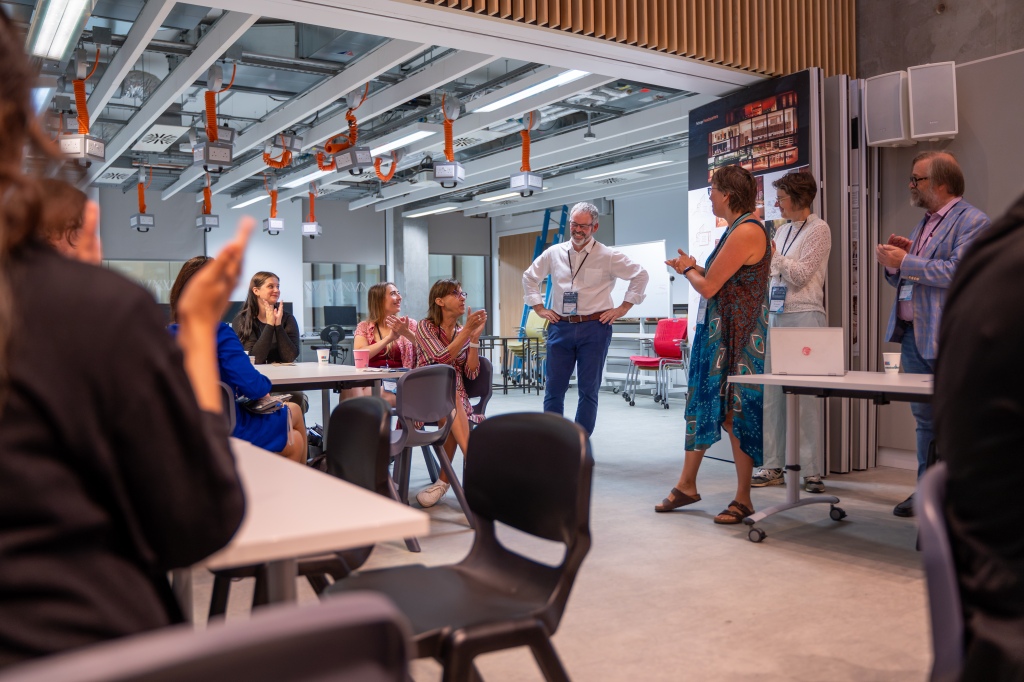
Recognizing Ger Reilly for all his amazing work organizing SEFI 2023!
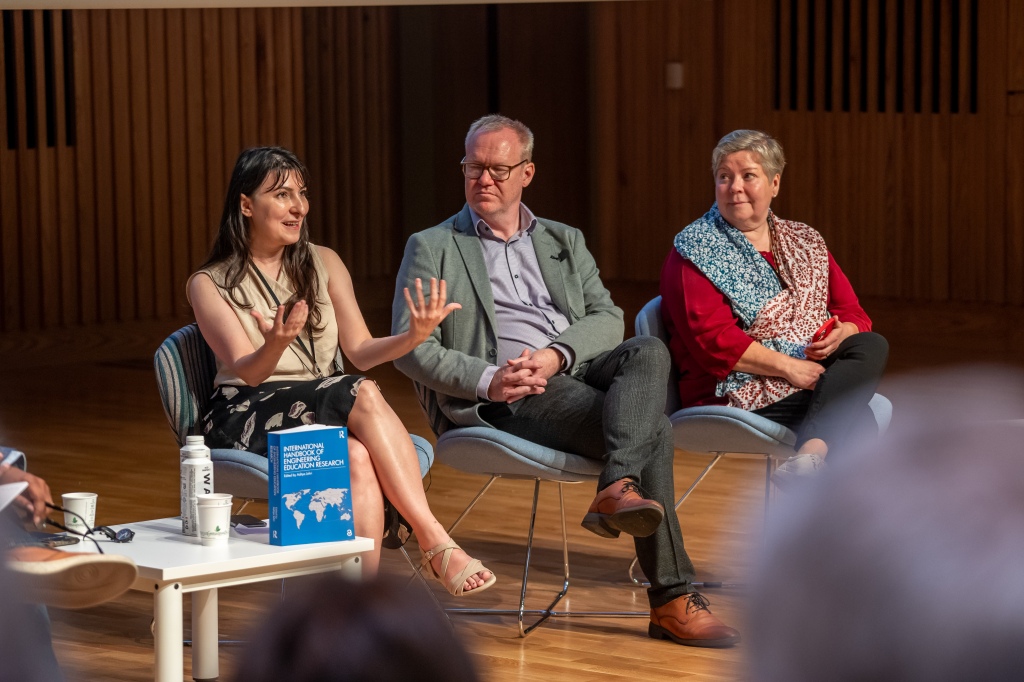
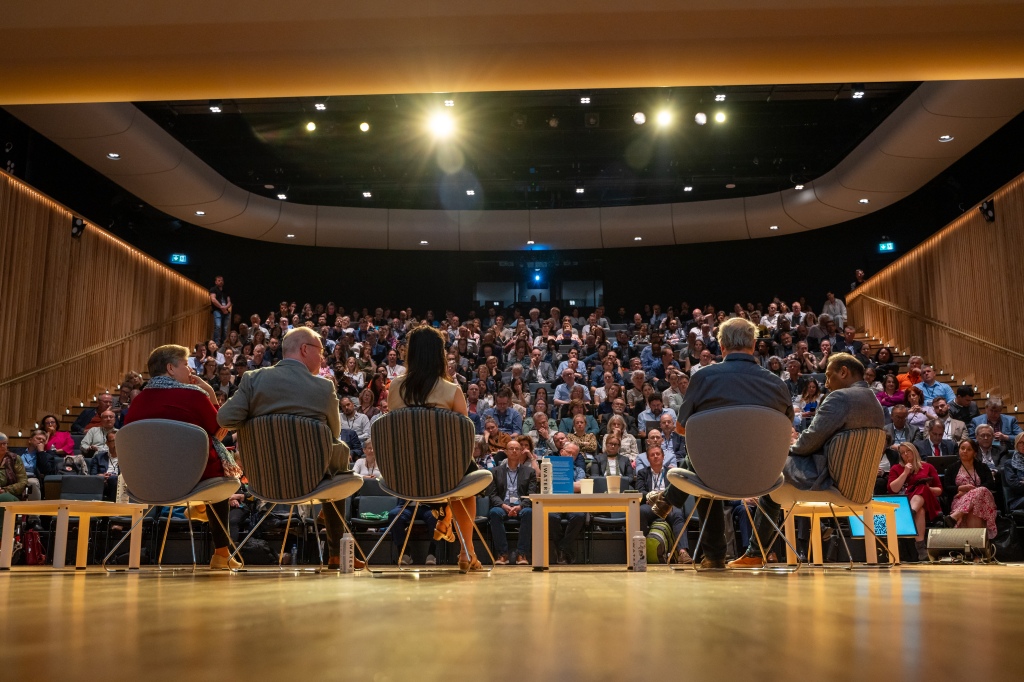
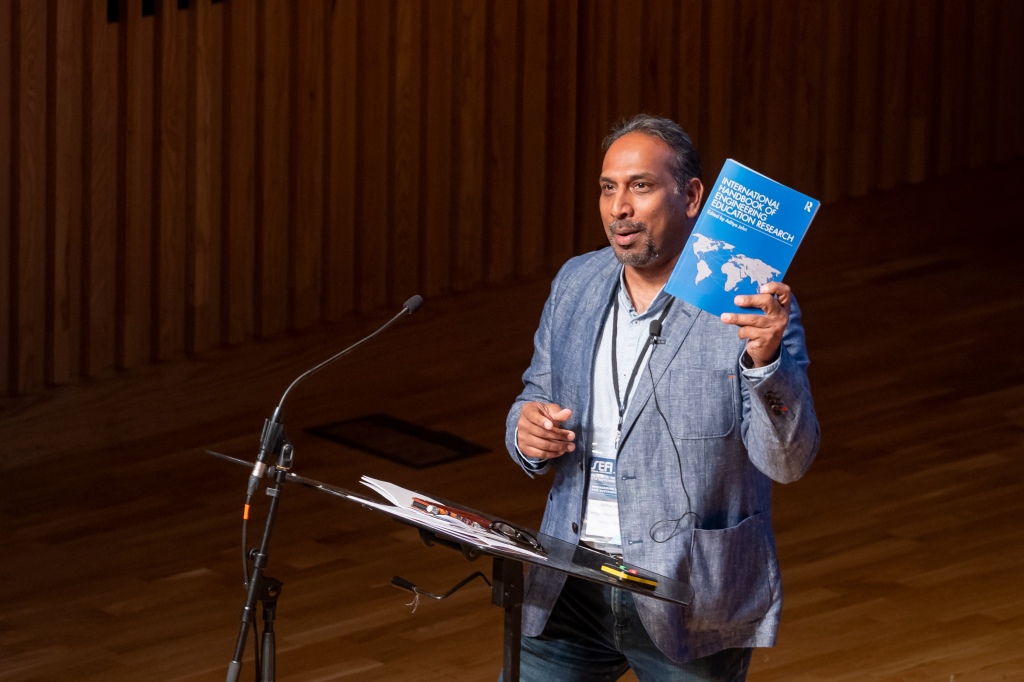
Monday morning started with a plenary on our new International Handbook of Engineering Education Research, organized by Aditya Jordi and Diana Adela Martin, with Bill Williams, Kristina Edström, John Mitchell, and Diana Adela Martin as panelists. Each panelist shared intriguing new insights on the current state of engineering education and thoughts and advice on where we’re headed as a field. I’ve worked closely with each of these scholars and feel a deep connection to each of them.
The opening plenary on the future of engineering education research. With Aditya Johri, Bill Williams, Diana Martin, John Mitchell, and Kristina Edström.
To tell the truth, I could not be prouder of Diana Adela Martin and her outstanding contributions to this year’s conference. She had asked me, when she completed her Ph.D., to mentor her (e.g., to learn about reviewing and editing for journals and books). That was just a few short years ago. And then, here she was–center stage–presenting ideas born from her work as an author and Associate Editor of our International Handbook of Engineering Education Research! At SEFI, she also led workshops, the Special Interest Group on Ethics that she co-chairs with Helena Kovacs, presented research, attended our EJEE editors’ dinner in her new capacity as Associate Editor of EJEE, and served as a senior advisor at the Doc Symposium, mingling with her new colleagues from UCL’s Centre for Engineering Education where she will soon start working as a Senior Research Associate.
Diana Martin in action (and leading an Ethics SIF workshop with Helena Kovacs, above).
After the panel, paper presentation sessions and workshop sessions swung into full gear.
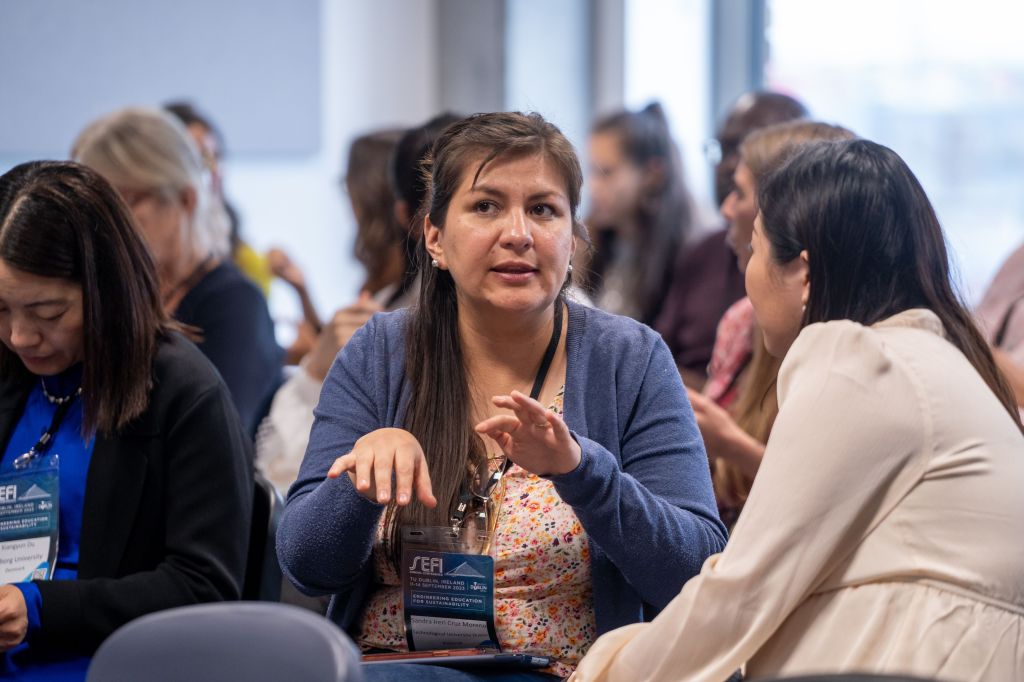
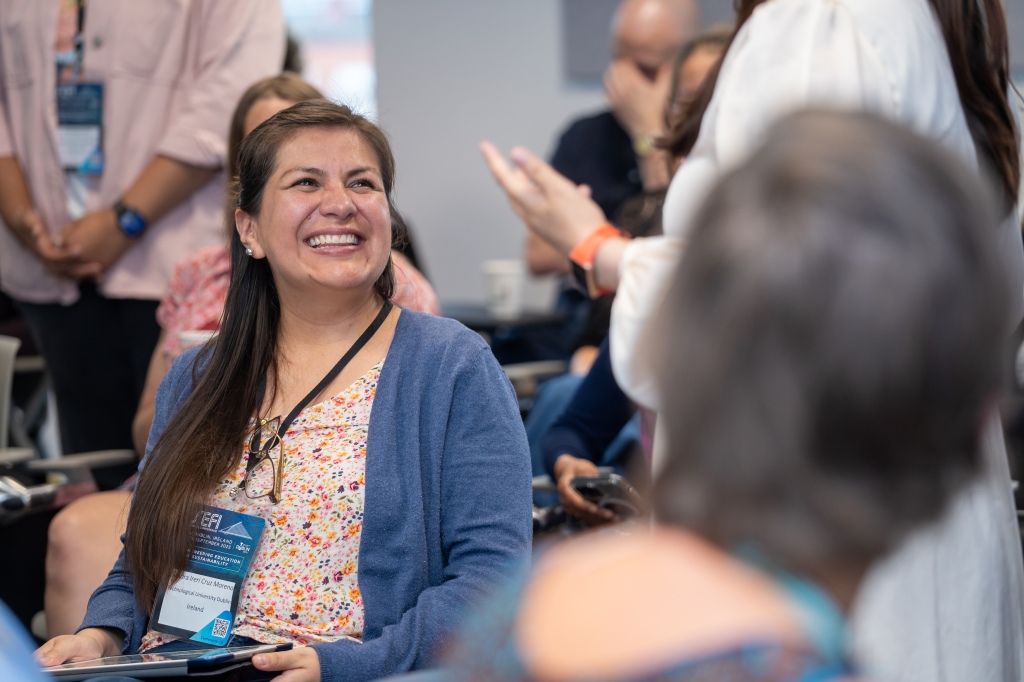
My fabulous PhD supervisee, Sandra Cruz, presented a paper on one facet of her research. Her paper is titled “Exploring Women’s Teamwork Experiences in Engineering Education: A Phenomenological Analysis”.
TU Dublin Ph.D. student Sandra Cruz, a joy and an inspiration to supervise!
Just before Sandra’s presentation, I myself presented a paper co-authored with Barry McAuley of a “Preliminary mapping of bachelors’ research to enhance digital construction in Ireland”. Afterward, I joined two really fun Special Interest Group workshops (Ethics, and Engineering Education Research).
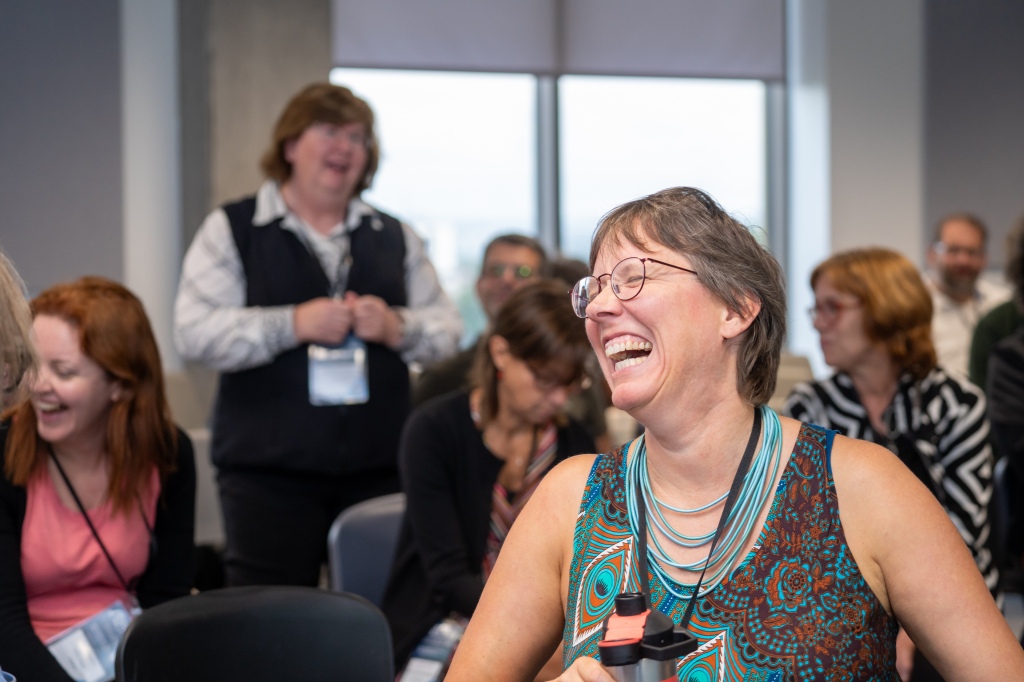
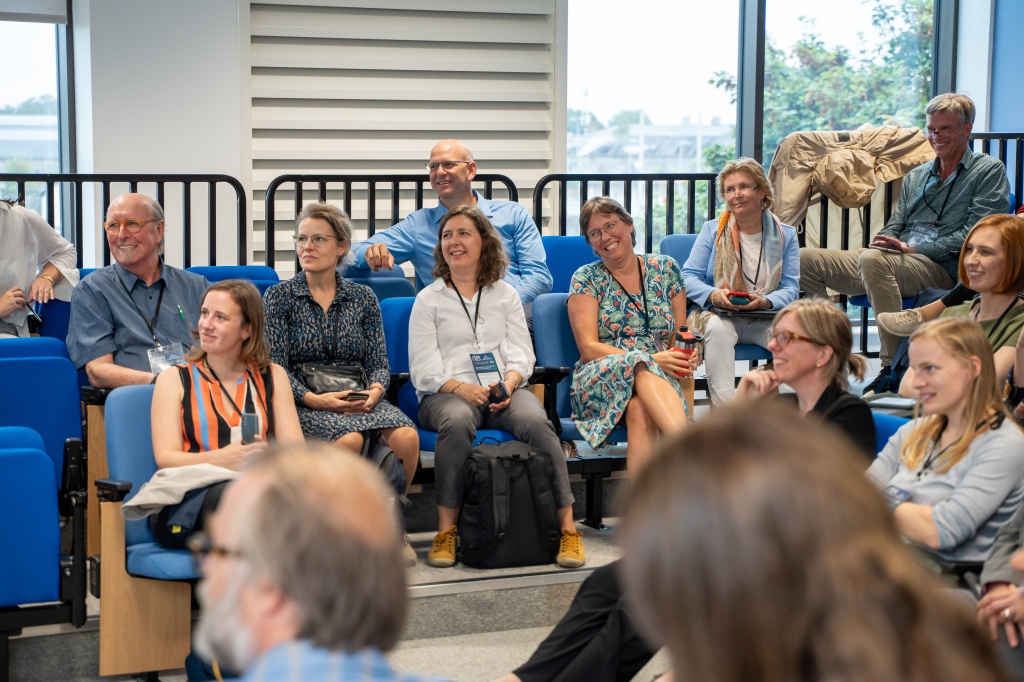
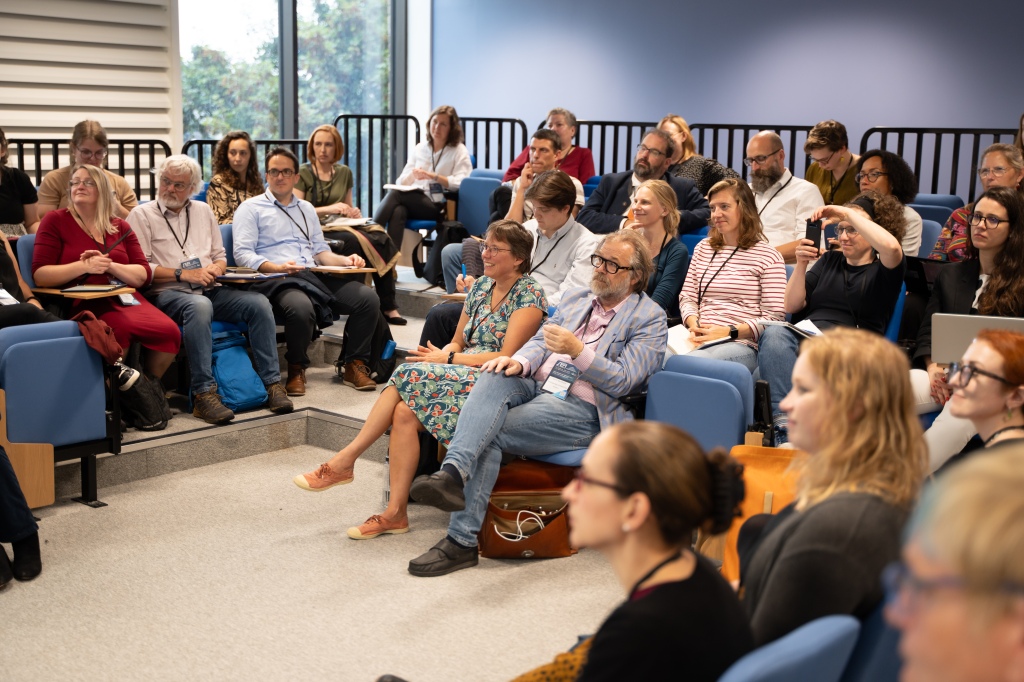
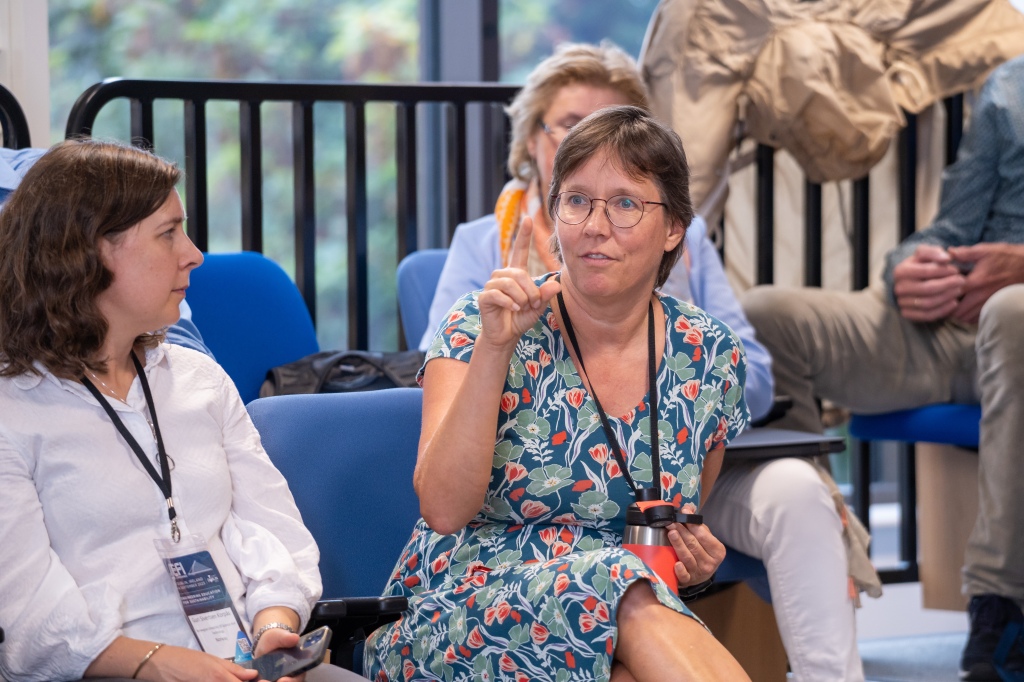
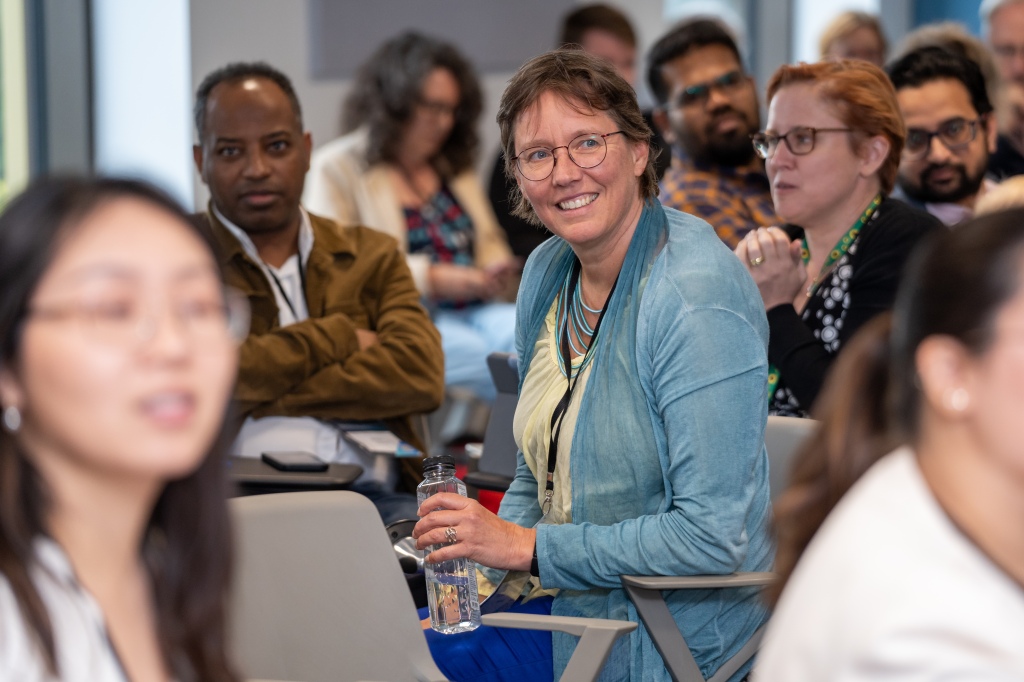
I really enjoyed the paper presentations and workshops, as evident in the photos below that Conor captured, and I helped lead two of the workshops.
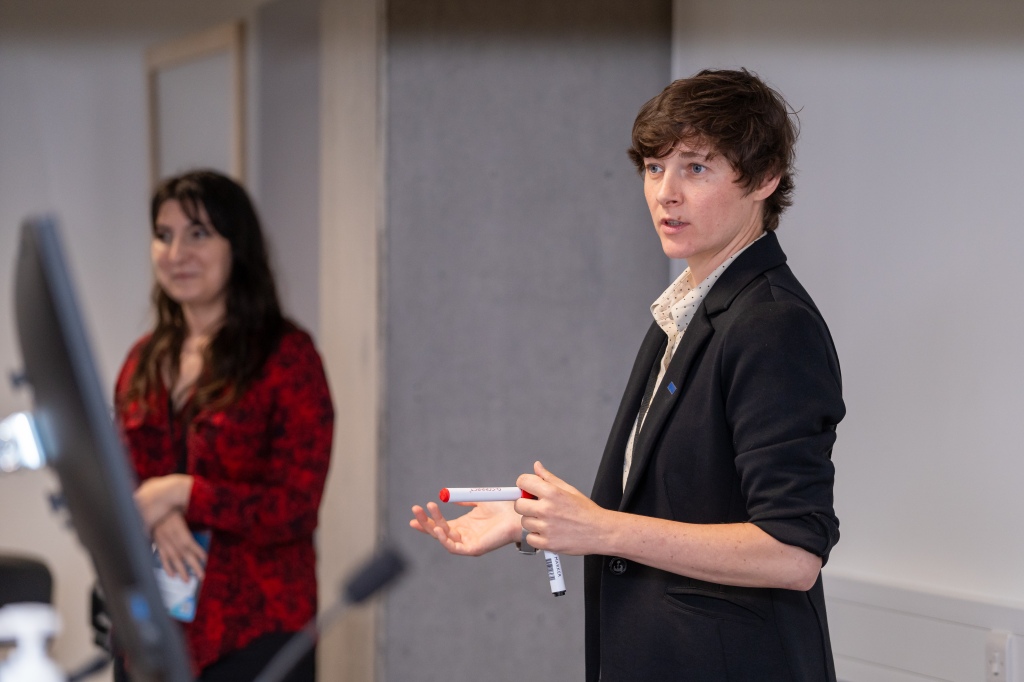
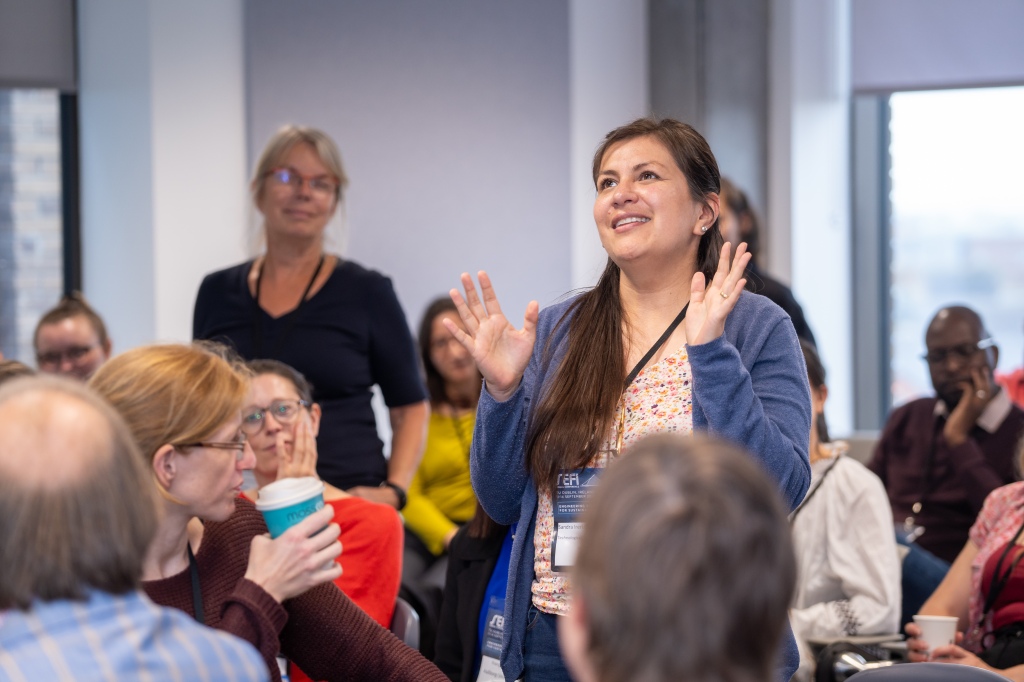
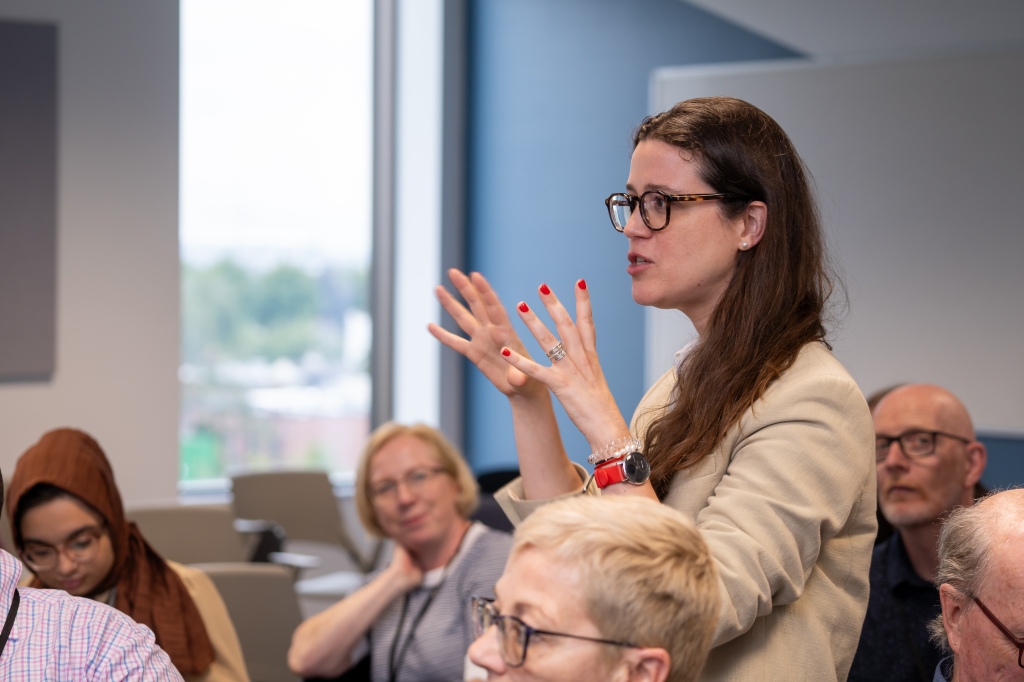
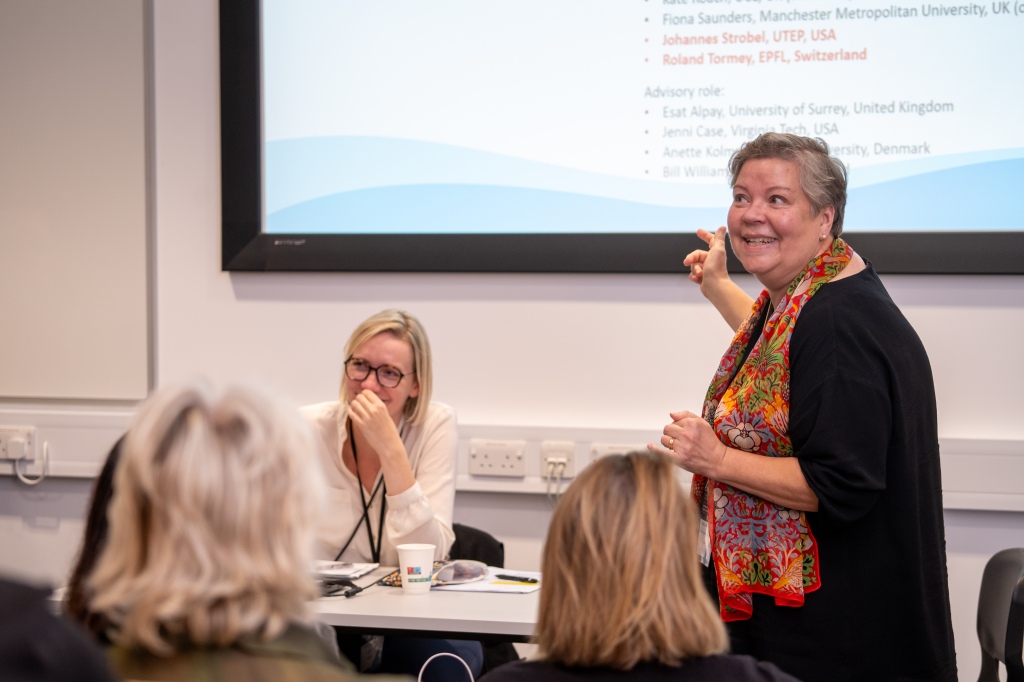
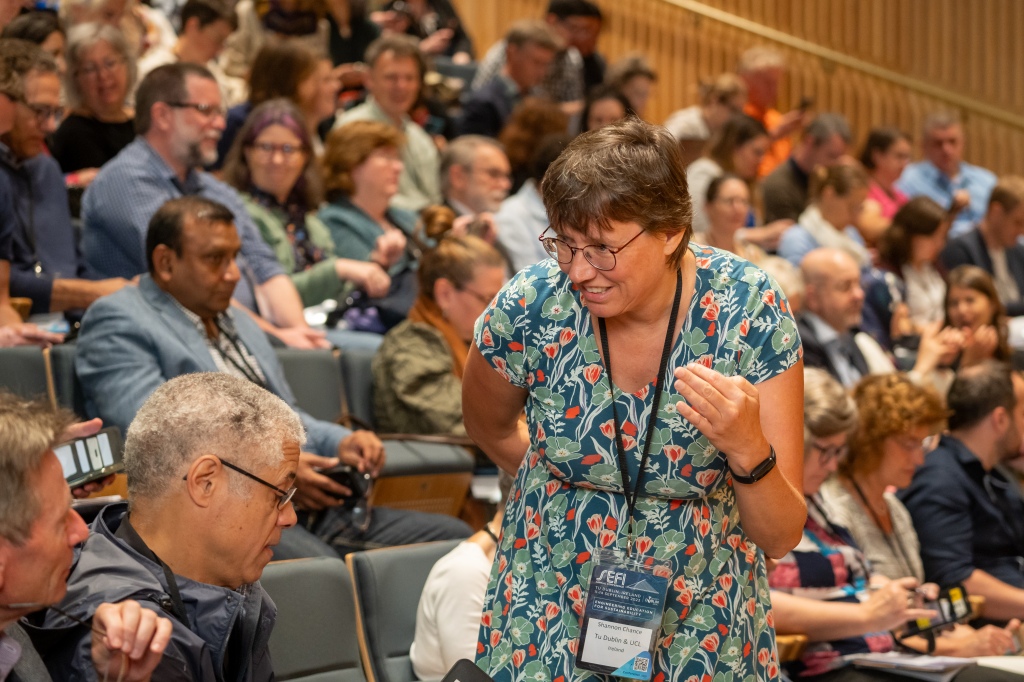
Fun at workshops and paper sessions.
During the opening reception, a number of energetic colleagues were honored: Kristina Edström, Pieter de Vries, Yolande Berbers, and Maartje van den Bogaard have given so much to SEFi over the years and it wouldn’t be the organization it is today without their efforts. They we all named Fellows of SEFI, and Maartje even thanked me for being a mentor and role model during her acceptance speech–that was a big surprise to hear!
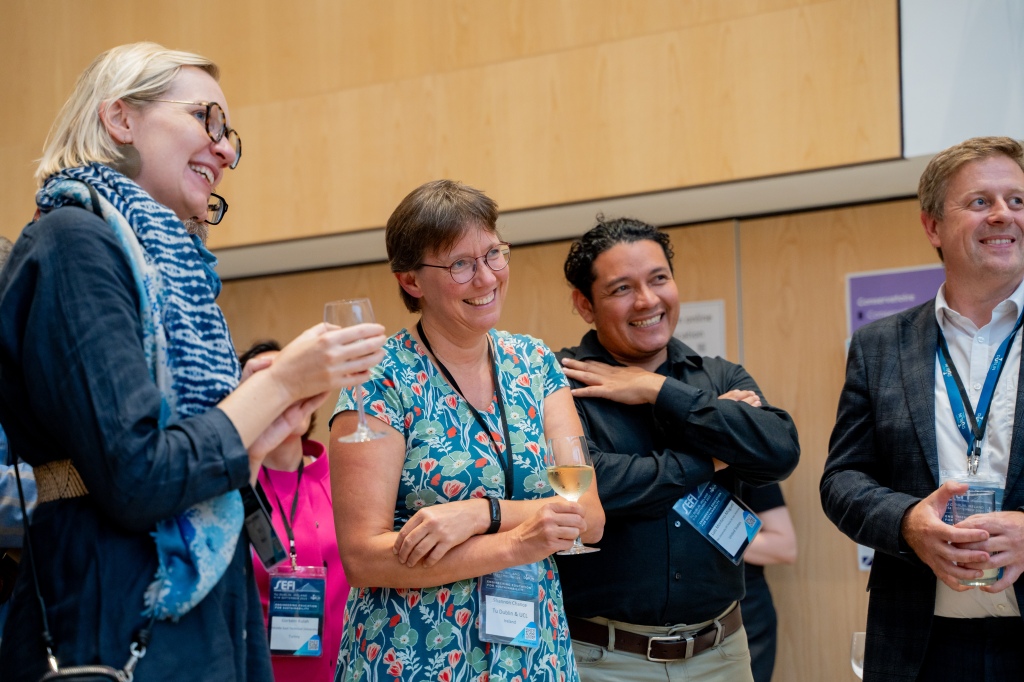
Moments from the open reception. Here Mike Murphy congratulates Yolande Berbers following her award as SEFI Fellow.
I must acknowledge all the exceptional work done to support this conference by SEFI staff Klara Ferdova over the year we’ve been planning this event.
My dear colleagues Klara Ferdova and Jonte Bernhard.
Aongus and I joined friends at Oscar’s Cafe after the reception.
On Tuesday, afternoon, Jye Benjamin O’Sullivan presented our co-authored paper “Drawing from SEFI Ethics Knowledge to Support Eco-ethics Education within the European University of Technology”.
Jye Benjamin O’Sullivan presenting our paper. (My smartphone photo, not Conor’s, or it would be much clearer!)
During SEFI, I helped lead workshops for new authors (Tuesday) and reviewers (Wednesday). I attended breakout meetings such as the EJEE Editorial Board meeting, EERN-UK & Ireland, and a celebration of our dear friend John Heywood, and Emeritus Professor from Trinity College Dublin, who at 92 years young is still working away, publishing research.
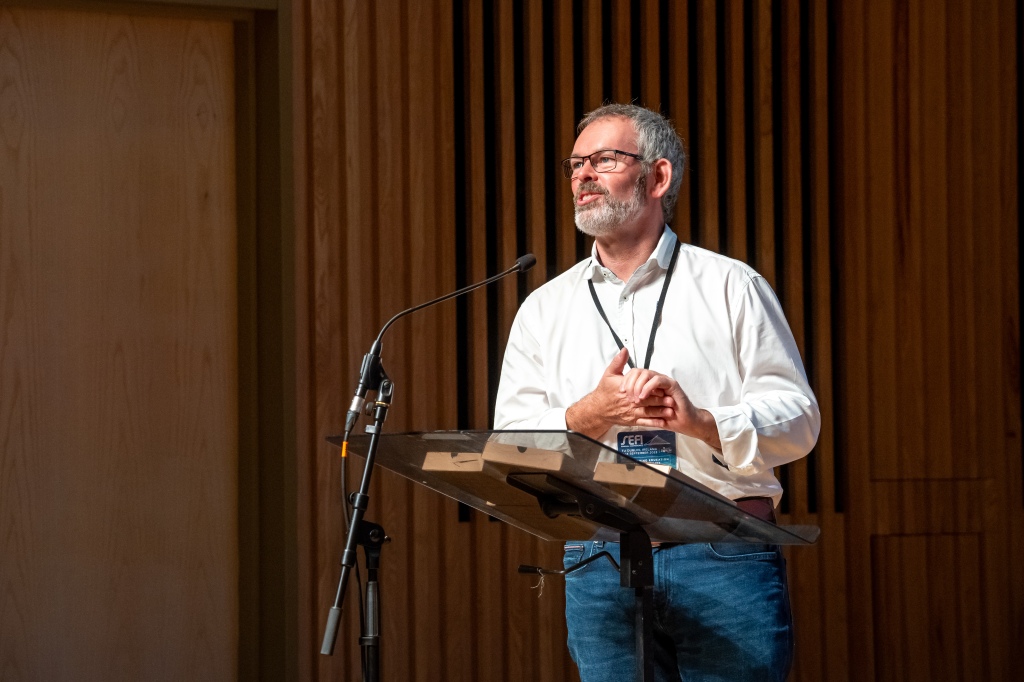
My university president, David FitzPatrick, and dean, James Curtain, and TU Dublin did a tip-top job representing our institution at this event. They’ve really grown into their roles over the past few years and their short speeches at the conference opening and closing were informative and engaging. Their support for the conference was important in so many ways, including having so many TU Dublin staff members present as volunteers and participants.
Dean Jame Curtain, President David FiztPatrick, and the amazing Ger Reilly, leaders at TU Dublin.
I attended SEFI’s General Assembly meeting to support my fabulous collaborators in taking on new leadership roles. For instance:
Emanuela Tilley was elected Vice President of SEFI for the coming two years. She and I work closely together to design a new curriculum for NewGiza University.
Emanuela Tilley in action, delivering awards and assuming the role of SEFI vice president.
Inês Direito joined the SEFI Board of Directors. She is also my mentee, and it brings such joy to my heart to see her flourish as a scholar, leader, and truly amazing friend and collaborator. I actually didn’t see much of Inês at SEFI this year… we were both so busy spreading our wings. To say I’m proud of the scholar she is and the leader she’s becoming is an understatement!
Inês Direito assumed a new role on the SEDI Board of Directors during the conference.
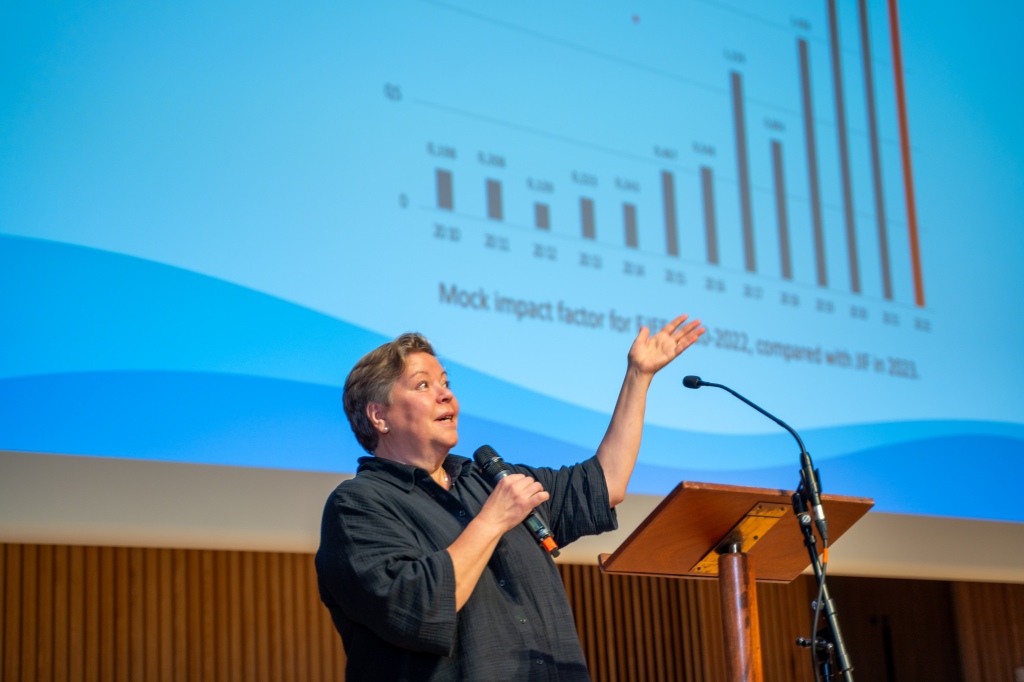
At the EJEE Editorial Board meeting, Kristina Edström, our Editor in Chief shared statistics showing that our journal is rising in stature. I’m very pleased to serve as Deputy Editor, alongside Jonte Bernhard, and look forward to helping lead this journal forward in the coming years.
Our superb leader, and EJEE editor-in-chief, Kristina Edström.
Special guests joined us from far and wide. Even though this is the annual European conference, dozens upon dozens of researchers in engineering education joined us from Africa, Australia, and North America.
Two very intriguing keynotes were delivered in the last two days of the conference, and I was delighted since our Local Organizing Committee had nominated them as keynote speakers.
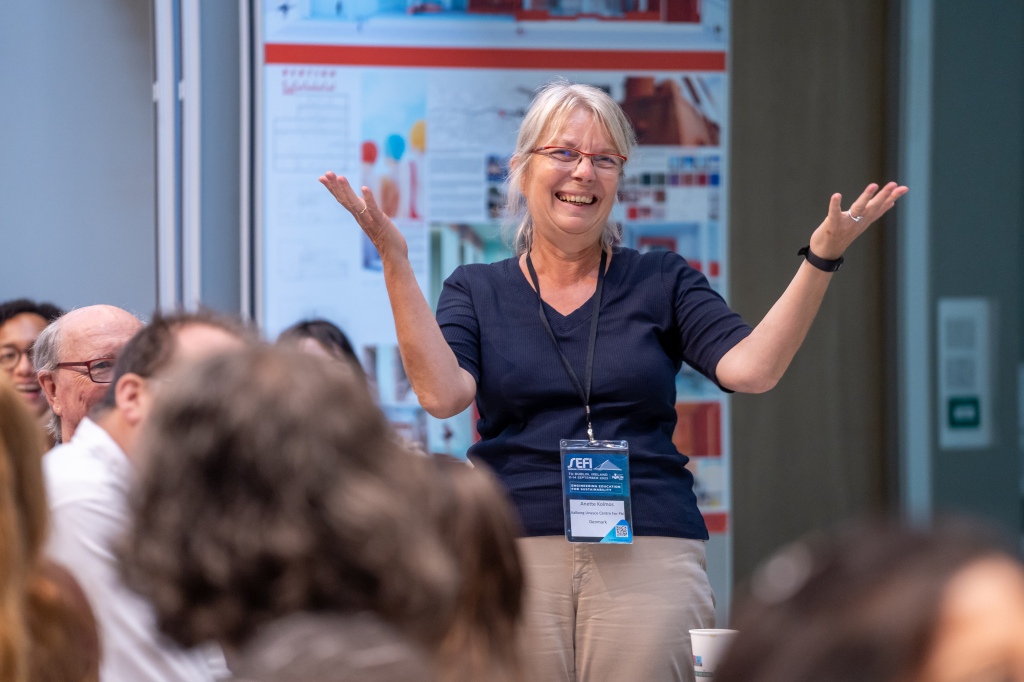
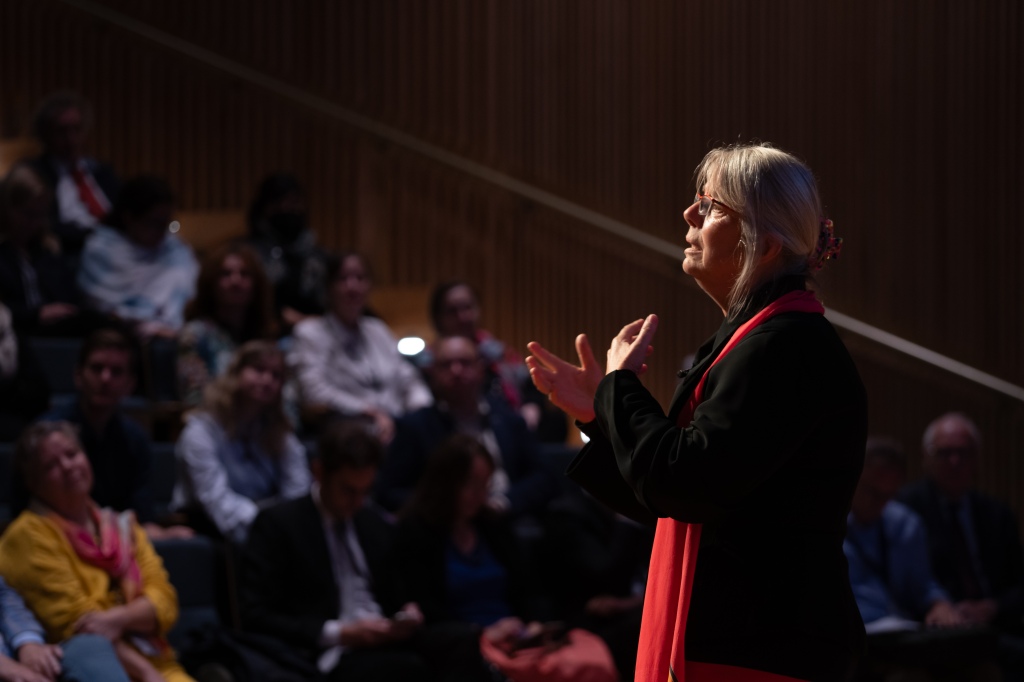
Anette Kolmos, from the Aalborg University UNESCO Center for Problem-Based Learning, put enormous energy into preparing and delivering her keynote–developing incredibly helpful new graphics and descriptions of extremely advanced concepts regarding transdisciplinary team challenge-based learning and the like. She pulled together ideas that she’s been sharing for years into an extremely effective presentation that brought these ideas to life.
Anette Kolmos’ keynote at SEFI 2023.
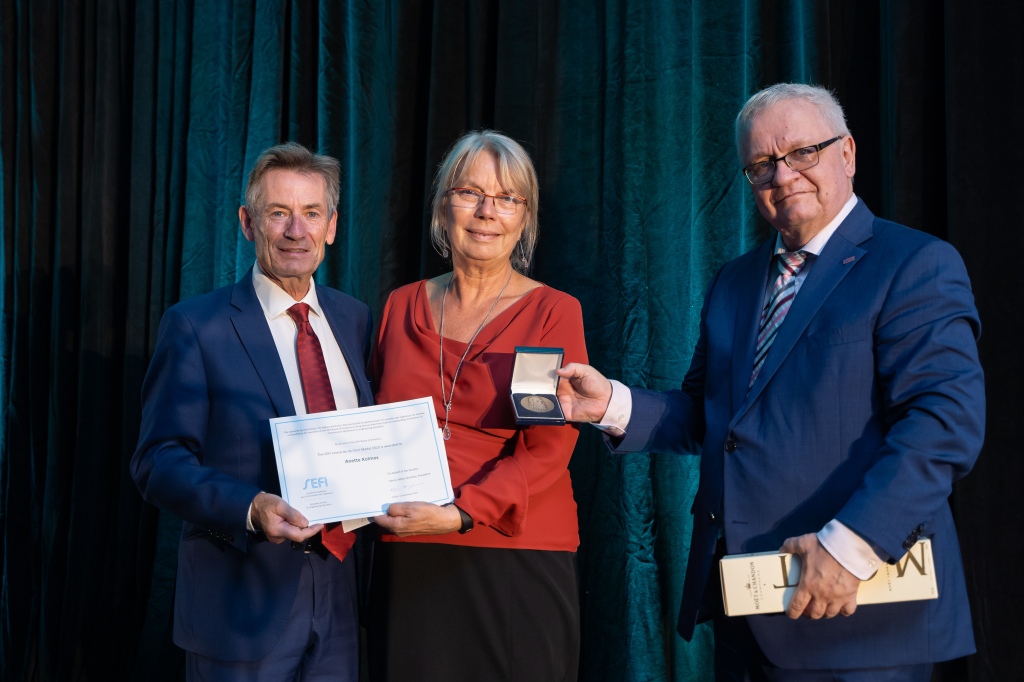
Anette also won top honors at our gala banquet on the final night, taking home SEFI’s coveted Leonardo DaVinci Award, an honor long overdue I’d say. She’s in great company as Santiago Calatrava is one of many illustrious past winners of this award.
Tinne De Laet won SEFI’s Maffioli award for all she does to support engineering students at her university—not forgetting that she also delivers the Doc Symposium each year!
Tinne De Laet coming up to accept the 2023 Maffioli awardSEFI past and current presidents awarding Anette Kolmos the 2023 Da Vinci medal.
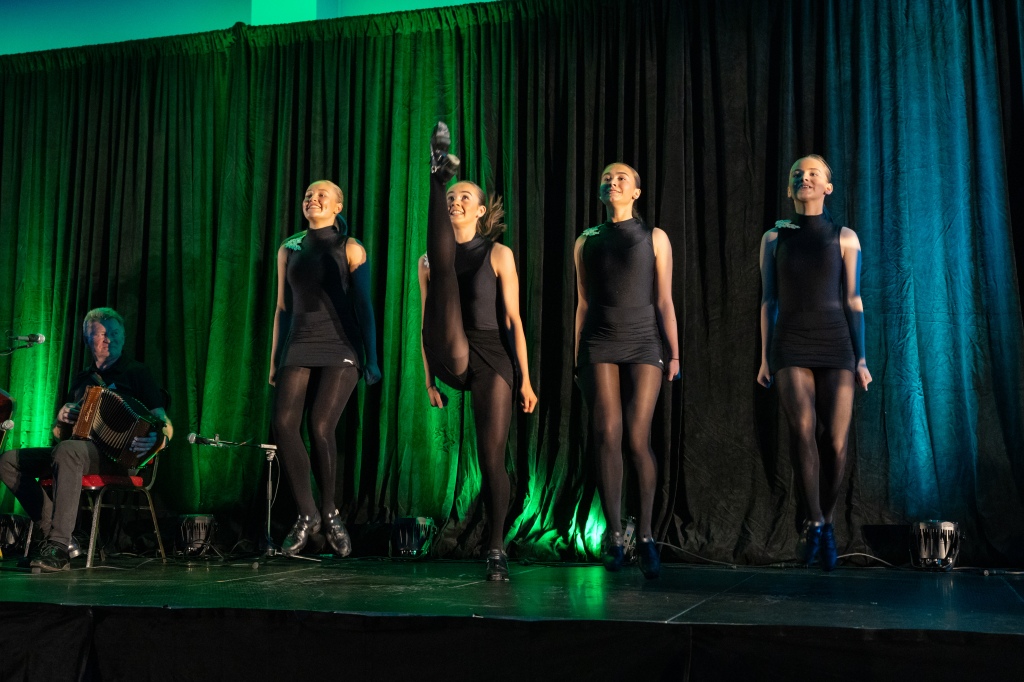
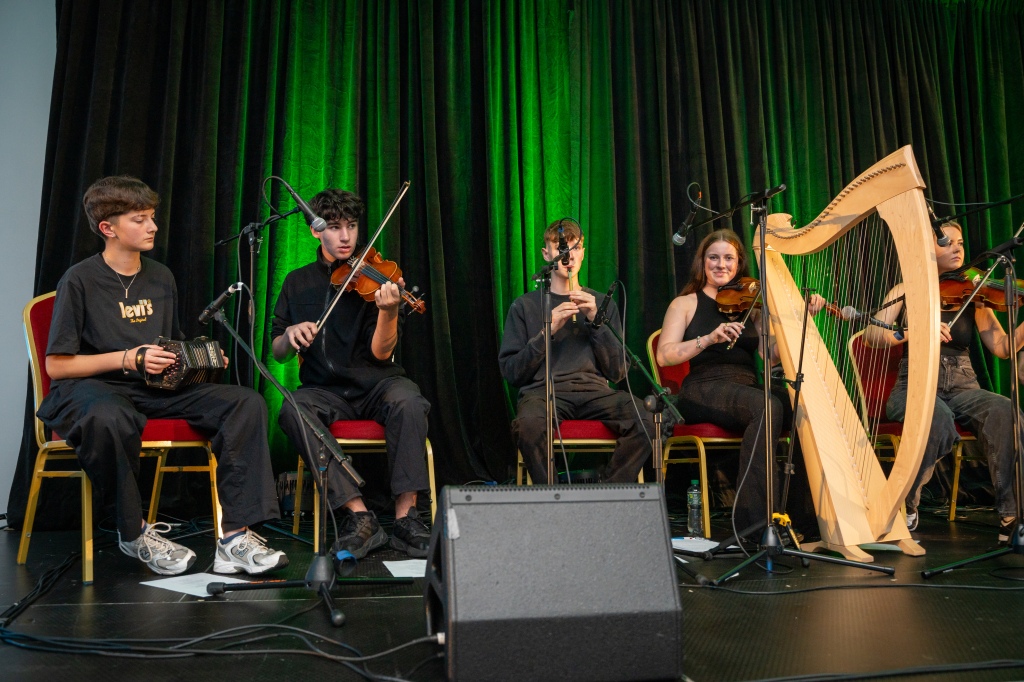
The award was given at the “gala dinner” out at a banquet hall of Dublin’s RDS. The food was lovely and I enjoyed the evening alongside my colleagues from Univesity College London, where I serve as Honorary Professor. The banquet was a hoot, our colleague Gavin Duffy‘s daughter was one of the musicians entertaining the crowd. There was also Irish Céilí dancing (think “River Dance”) on stage.
UCL’s Centre for Engineering Education enjoying the gala dinner and its entertainment.
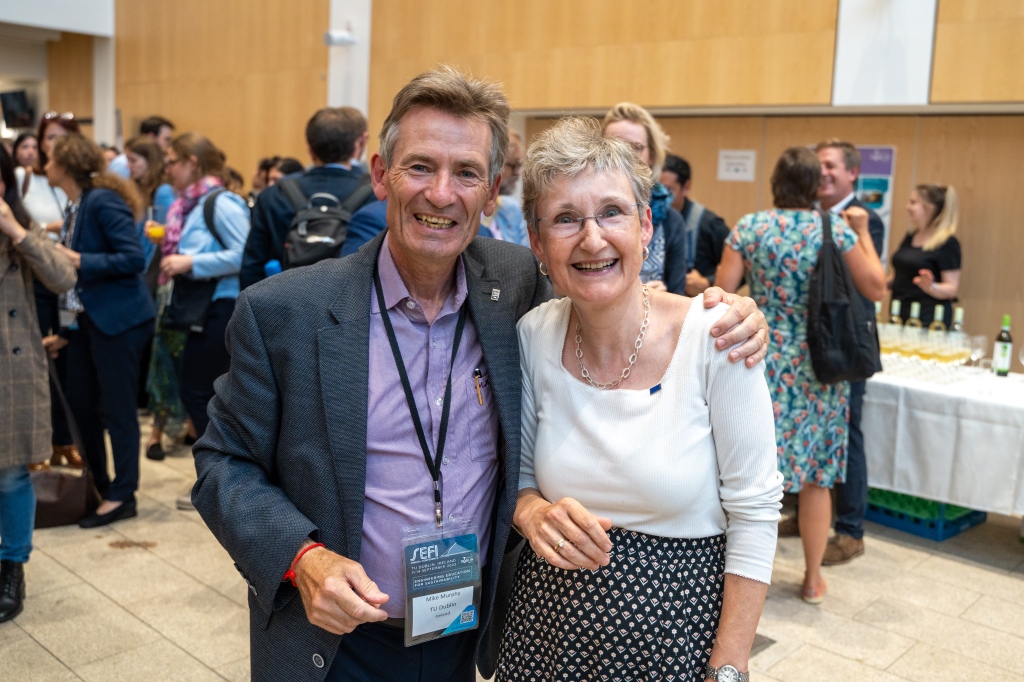
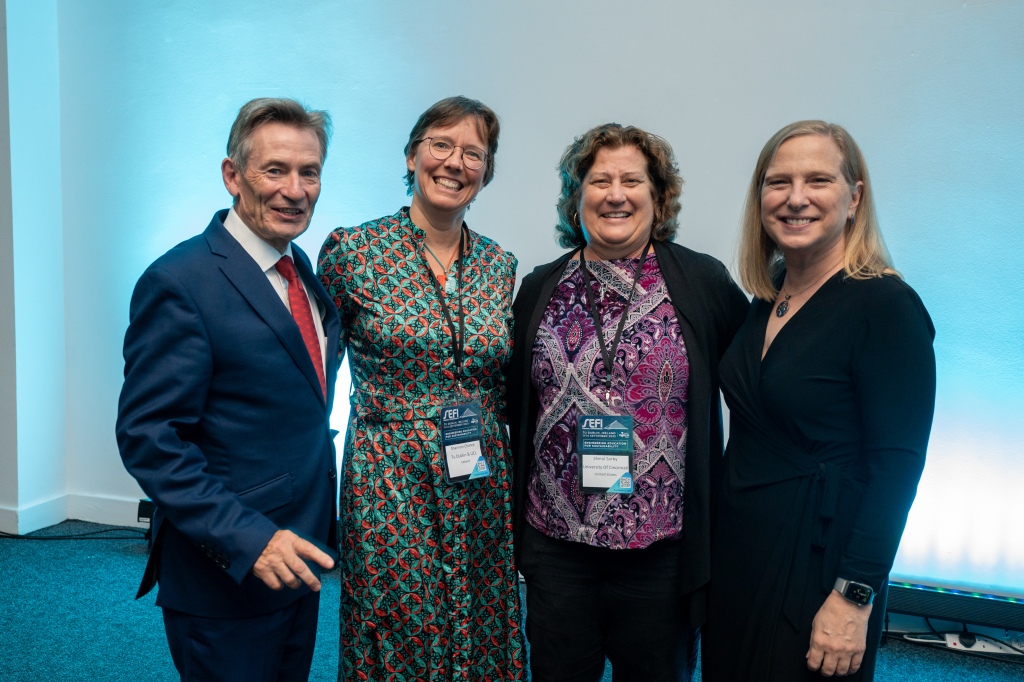
Our past SEFI president Mike Murphy even finally got a photo with the three Fulbright fellows who most recently came to TU Dublin during his tenure as Dean of Engineering and Built Environment: me (Shannon Chance), Sheryl Sorby, and Stephanie Farrell. Sheryl and Stephanie have both served as presidents of the mega-sized organization ASEE (American Society of Engineering Education), whose conference I attended in June.
Mike Murphy with his last three Fulbright scholars: Shannon Chance, Sheryl Sorby, and Stephanie Farrell.
For the final keynote of the conference, Ed Byrne, a sustainability leader from Cork, Ireland did not disappoint! I count on Ed for up-to-date reports on changes to engineering accreditation in Ireland. Like Anette, Ed had crafted a presentation chock full of cutting-edge research on educational issues and pedagogies to improve sustainability. I enjoyed his info-packed presentation, and meeting him in person afterward. I’d previously attended and presented at the Engineering Education for Sustainable Development (EESD2021) online conference he organized.
I really enjoyed the main stage events this year!
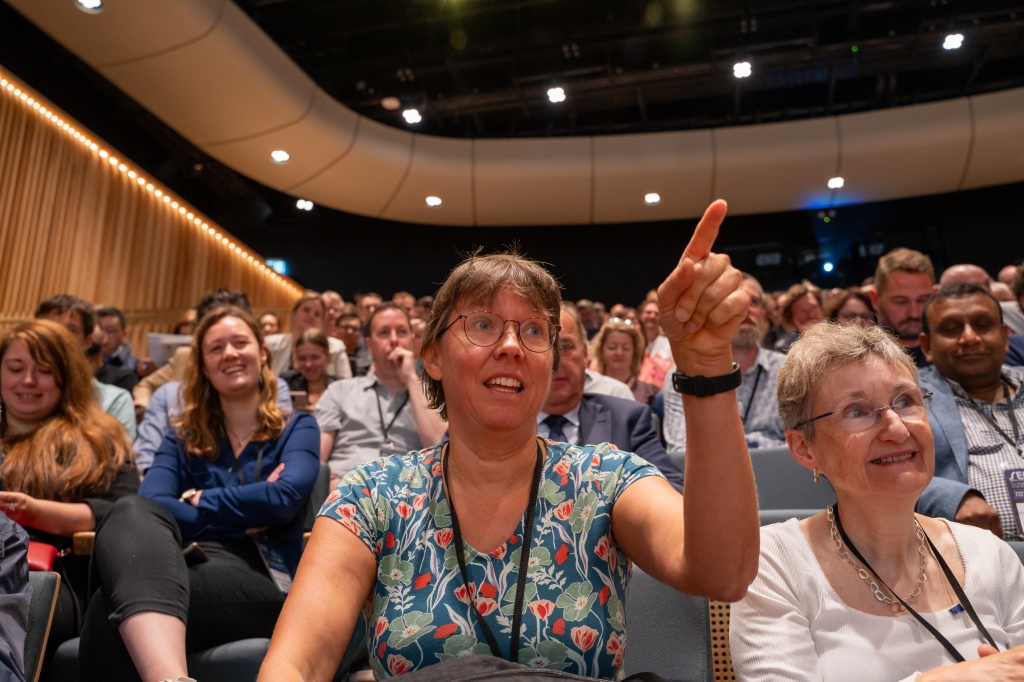
Enjoying the full house and engaging with plenary speakers. To the right, I’m sitting beside former SEFI president Yolande Berbers.
During the conference, a couple people, including Klara Kövesi, stopped me to say they follow this blog. That inspired me to get new content posted (thank you!).
All in all, it was a very satisfying week. By Friday, I’d discovered the trove of brilliant photos captured by Conor Mulhern <conor@eyeon.ie>. Conor, the official conference photographer, was with us every minute of the week. Starting at 9 AM Sunday morning and sticking it out until the very last moments Thursday afternoon. Conor seemed to be in all places at once!
Conor captured us so skillfully. I had to dash off an email:
Dear Conor,
I just got my hands on the Dropbox link, and I am stunned with your astonishing ability to capture us as individuals and as a community. Thank you so very much for being part of our event. You saw us not as outsiders but captured our hearts and souls.
Your Doc Symposium photos exude the joy I felt. I’ve not yet viewed the other folders, but I am full of pride, happiness and satisfaction, thanks to the memories you’ve so aptly captured.
Warm Regards,
Shannon
And he replied:
Hi Shannon,
Ah you’re very kind to say so!
It was my pleasure. Everyone seemed very happy to be there which made my job much easier, and even in the sessions with faces in deepest concentration, you in particular always had a smile to make a good photo! 🙂
Well done all-round on making it all happen.
All the best,
Conor
An enthusiastic round of applause for Conor, our photographer! Here are my great colleagues Emanuela Tilley, Sarah Junaid, John Mitchell, and Klara Ferdova in the front row, with Klara Kövesi in green behind them.
Ultimately, I agree with our Doc Symposium participant who said she’s found her village. I found this village in 2012, at the SEFI conference in Thessaloniki that I attended alongside Mike Murphy, Brian Bowe, and Gavin Duffy. I met new colleagues, like Bill Williams, who welcomed me warmly and with whom I collaborate frequently today. I began to cherish the SEFI community at my first conference, and I also thoroughly enjoyed my time before and after that conference exploring Thessaloniki. The city stuck in my memory long after I left. I hope SEFI 2023 and Dublin live long in the hearts of those who attended this year!
I haven’t been blogging much these days, as I’m so embroiled in research publication activities (mostly in the roles of editor and peer reviewer) that I rarely spend time at the computer for recreational activities like blogging. That said, I feel compelled to report how rewarding it has been to work with the Bachelor’s level Building Construction Modeellign/Digital Construction students at TU Dublin. I coordinate the BSc (honors level) degree program, lead its Research Methods and Work Based Learning modules, and support its Dissertation module.
One of our recent students, Anne Grego, has presented her bachelor’s level work at two conferences. The one presented last month at the EU BIM conference has been published. You can download the paper, “USING BIM TO INCREASE THE EFFICIENCY OF ENERGY-DRIVEN RETROFITTING PROJECTS” by Anne Grego, Shannon Chance and Barry McAuley from https://arrow.tudublin.ie/surconcon/2/
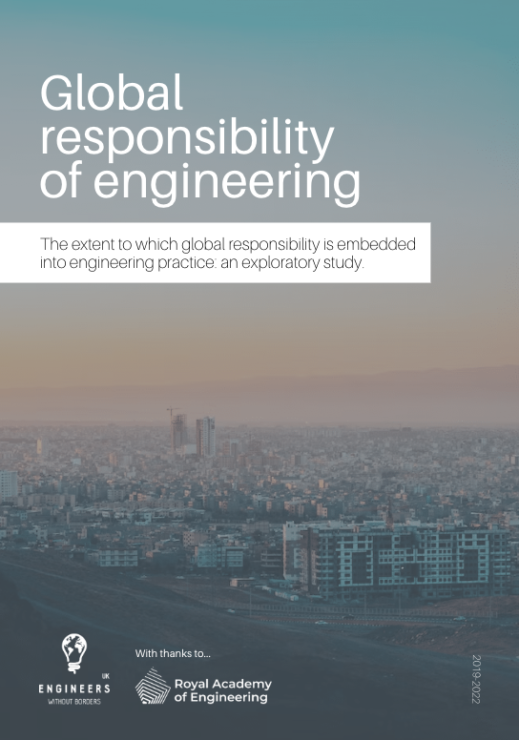
Last week, Engineers Without Borders UK published my team’s research in the form of the GLOBAL RESPONSIBILITY OF ENGINEERING REPORT. The EWB-UK webpage about the report explains “Drawing on the experience of engineers working in the built environment sector, our latest report explores the extent to which global responsibility is embedded in engineering practice.”
The report is rich visually, and also in content:
The qualitative research reported in this publication was conducted by me, with support from my University College London colleagues, Dr. Inês Direito and Professor John Mitchell, and with advice from the EWB staff and its project Advisory Board.
Through a study of existing literature and interviews with engineers working in the built environment sector, in this report, we highlight the existing understanding and role of global responsibility as a concept within the sector. We explore the following: What is understood by global responsibility in engineering, and what are some of the preceding concepts that have led to this point? How well is the urgency for adopting a globally responsible approach in engineering grasped? To what extent do engineers feel it is their responsibility to take action and what is accelerating or dampening that?
Engineers Without Borders UK (2022)
EWB staff members helped transform my team’s research into the report format commonly used in the UK. They also provided the report’s case studies, photographs, and illustrations. EWB staff who were instrumental in shaping the delivery were: Dr. Jonathan Truslove, Katie Cresswell-Maynard, and Emma Crichton.
Advisory Board members providing conceptual direction included: Jon Prichard, Dr. Rob Lawlor, Thomas Gunter, Professor Nick Tyler, Dr. Rhys Morgan, and the Royal Academy of Engineering’s Education and Skills Committee.
The correct citation for this publication, based on APA guidelines includes the authors’ names:
I’d like to give special thanks to my colleagues at UCL (Inês, John and Nick) as well as the University of Leed’s Dr. Rob Lawlor for their encouragement and support throughout this project. I also send thanks to the EWB team for getting the publication across the finish line.
As a result of many people’s hard work, the report delivers our research findings to a new audience. You can find other outputs of the research project in two academic journal articles published by the UCL team, and you can download them directly, using the links below:
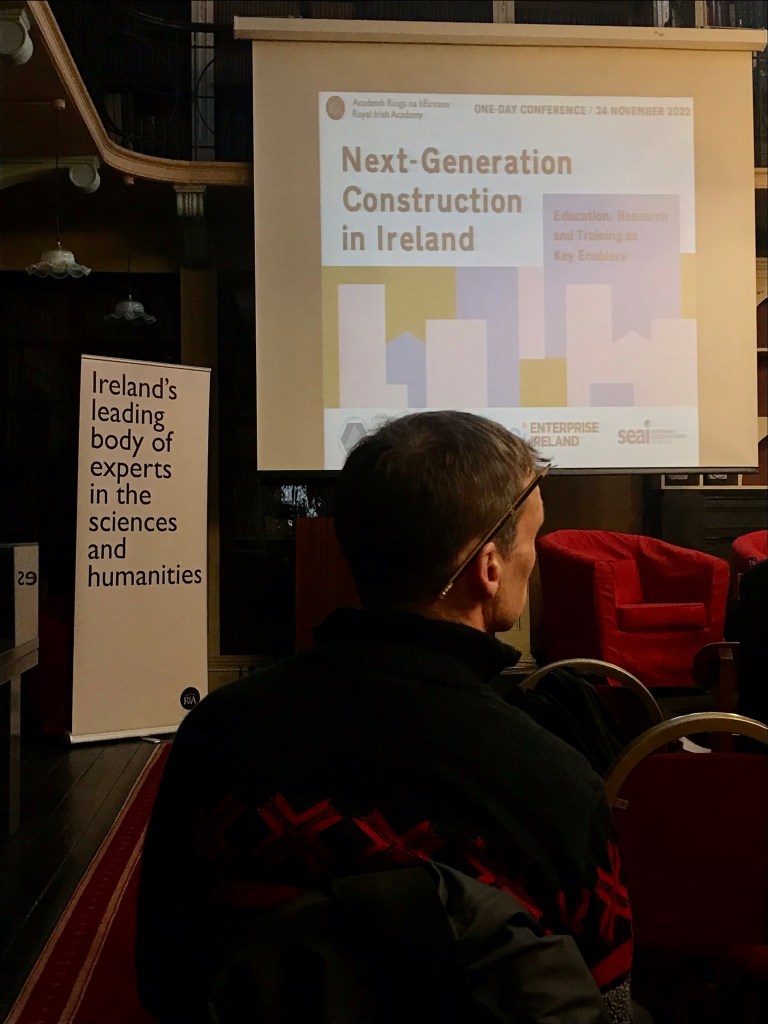
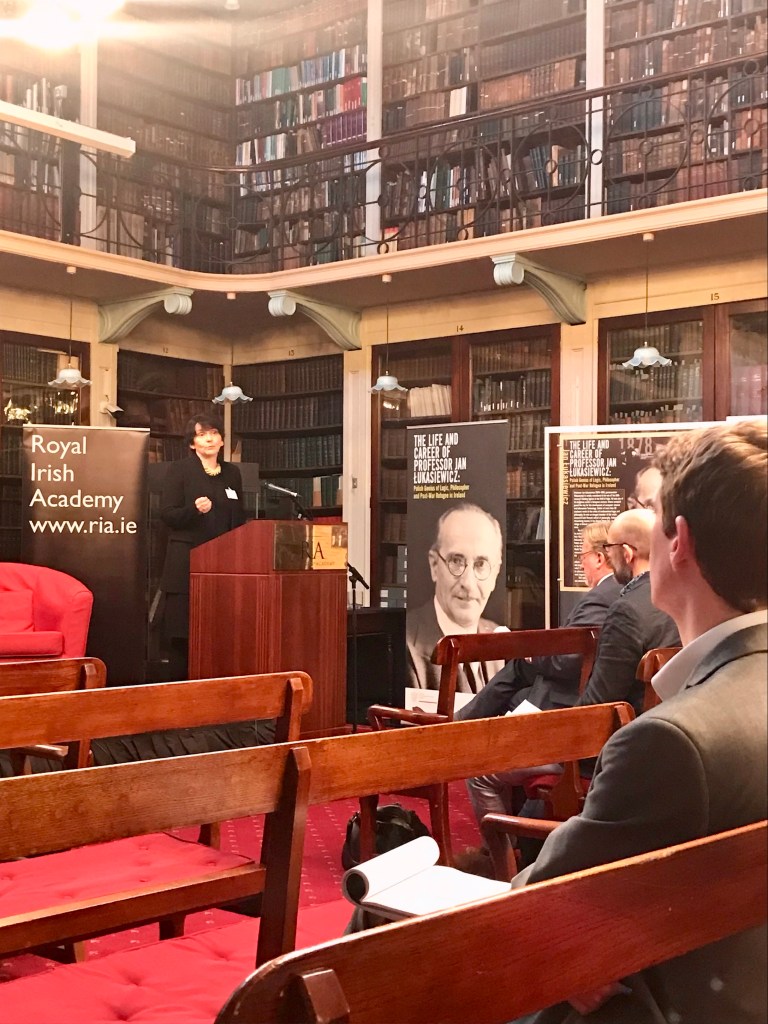
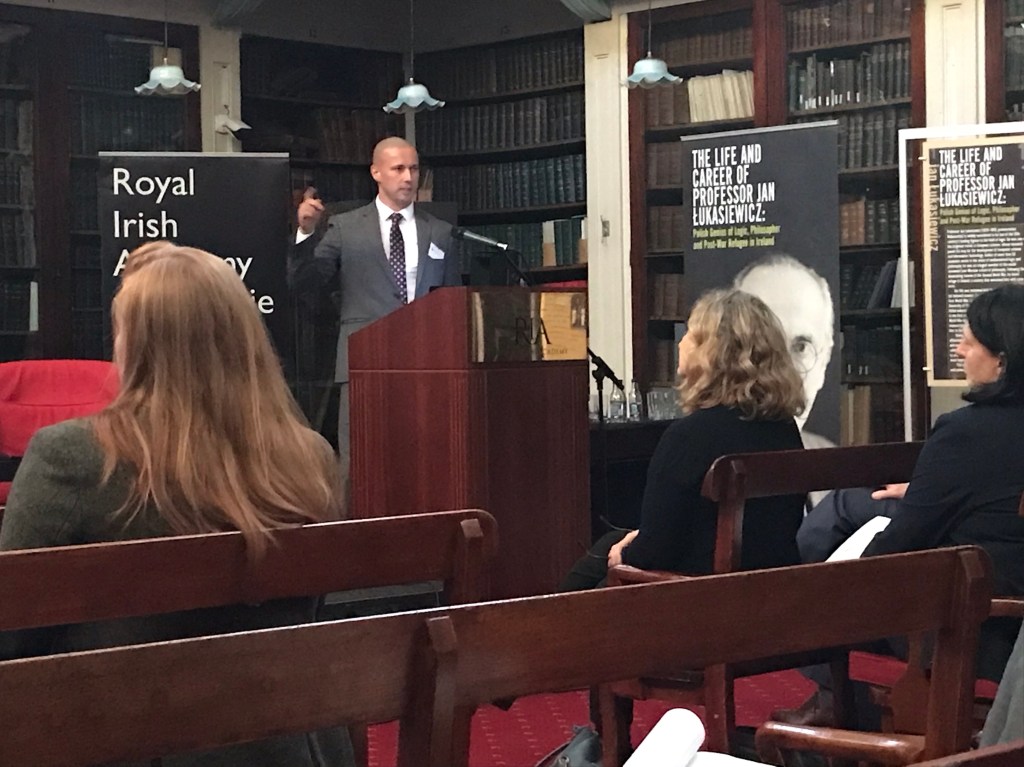
Thanksgiving here in Ireland is usually just another ordinary Thursday. But this year I made a point to celebrate. I registered for a conference held at the Royal Irish Academy on Dawson Street, so I could learn about “Next Generation Construction in Ireland” while soaking in old-school Irish ambiance, and I bought tickets for an American Thanksgiving feast.
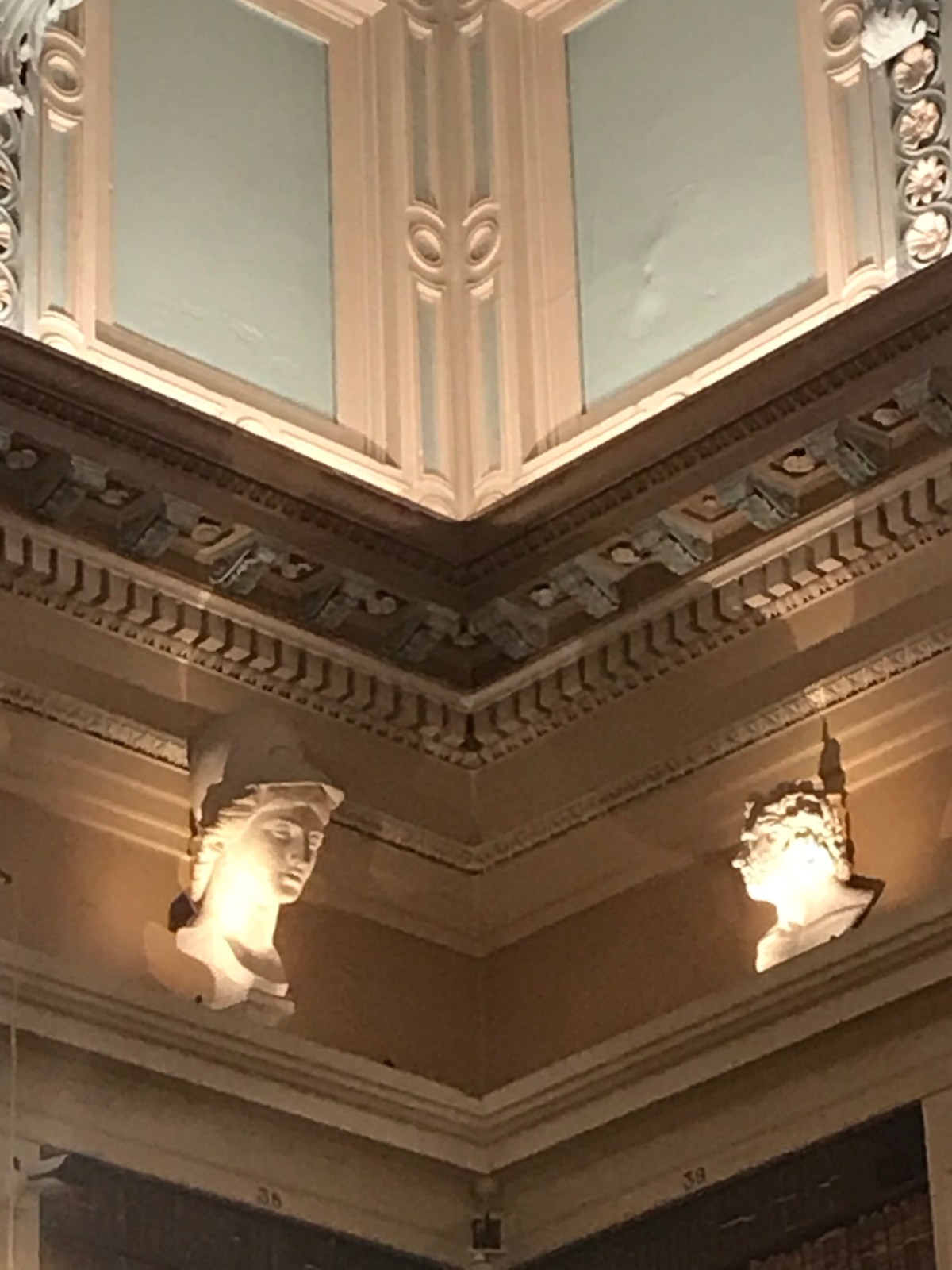
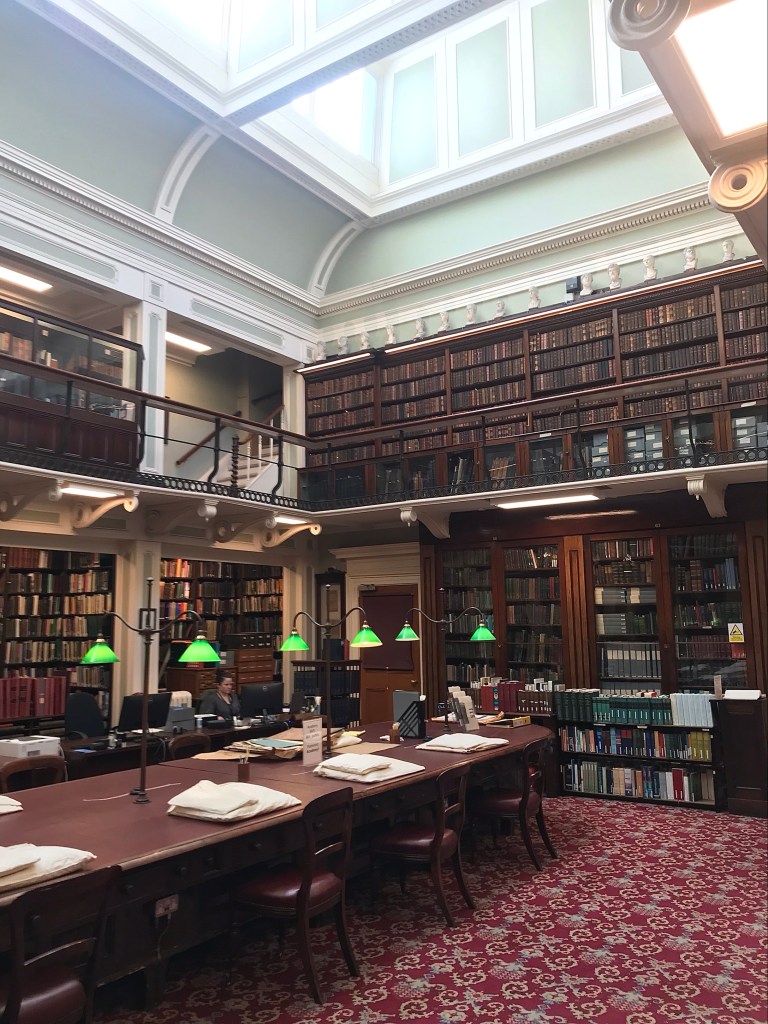
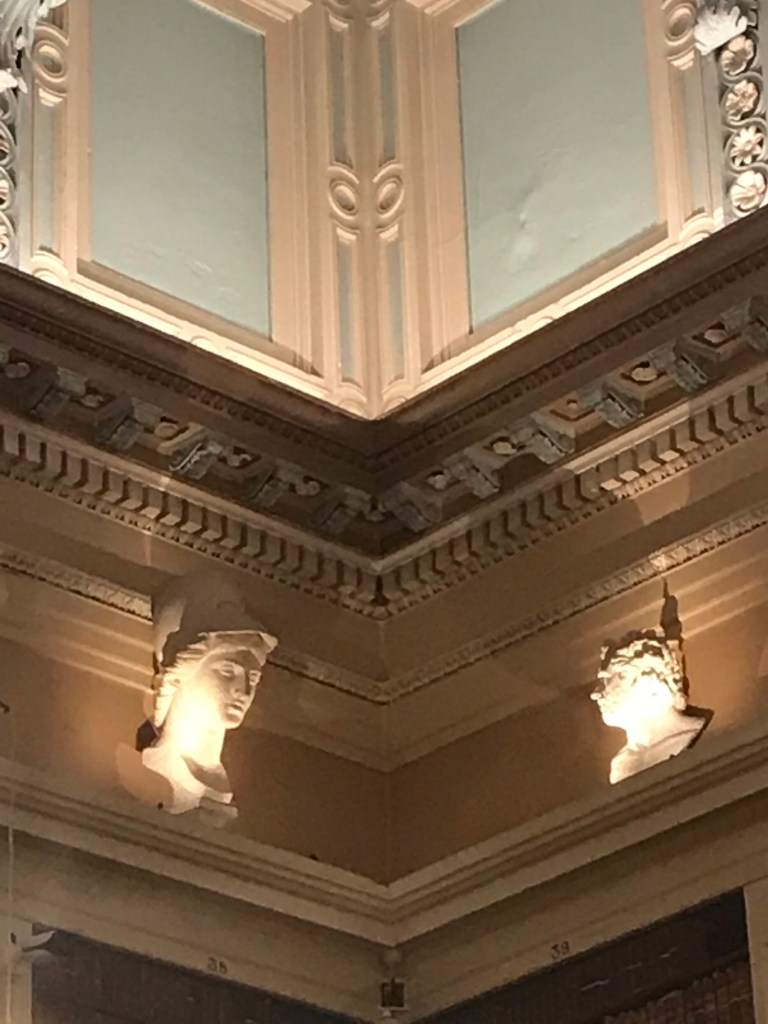
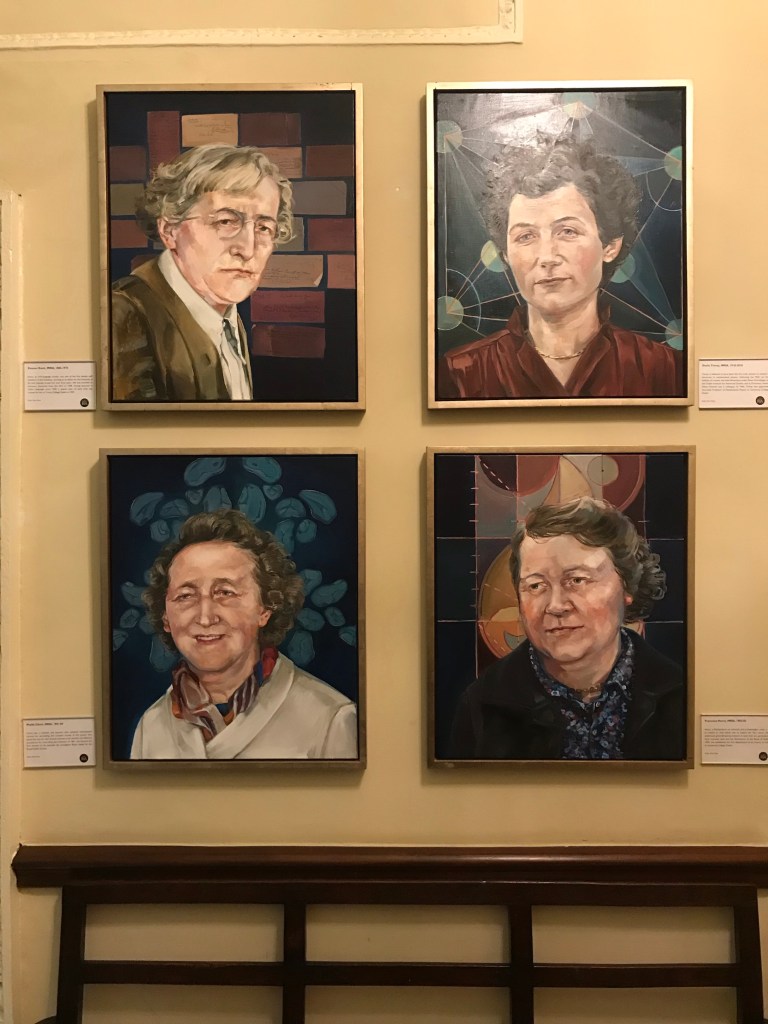
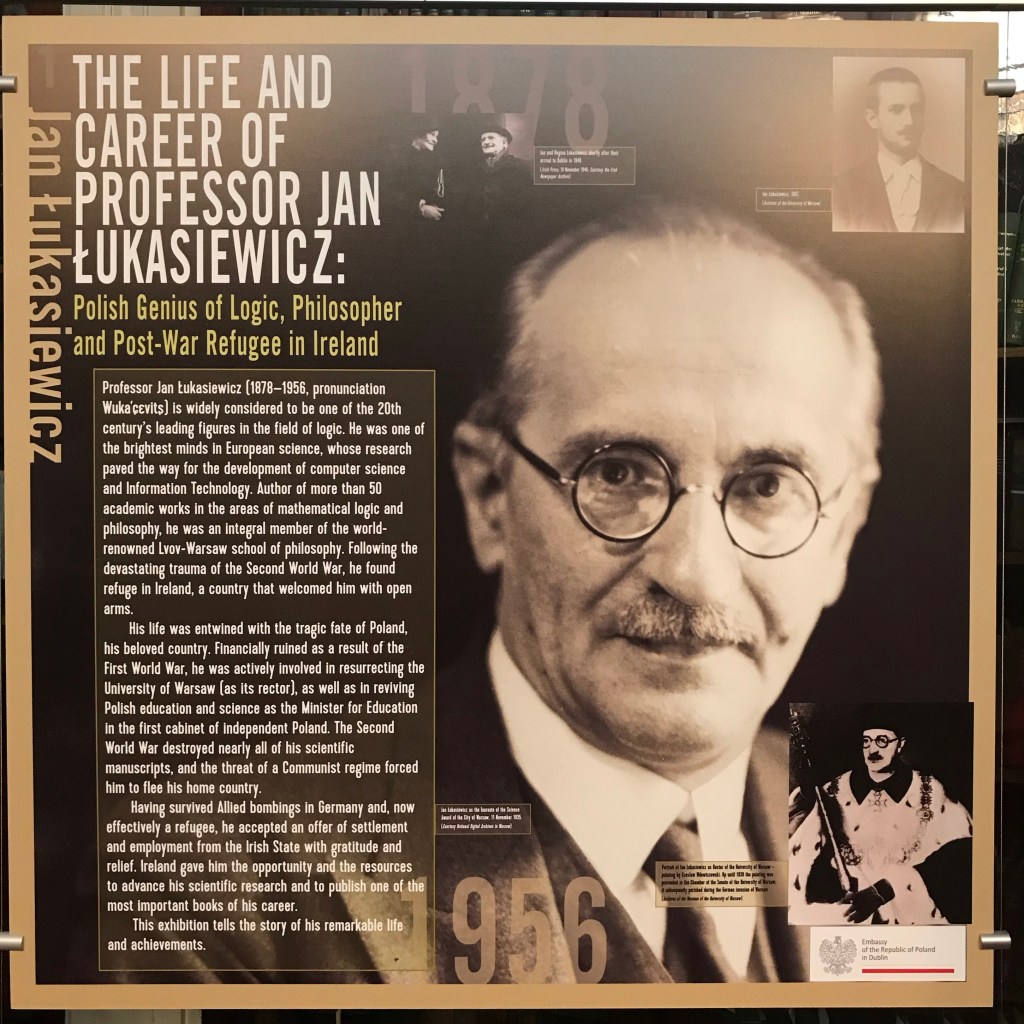
I love visiting the stately old RIA building, with its floors of well worn books. There was an interesting exhibition on display, and lovely architectural details to treat the eyes and soothe the soul.
The Royal Irish Academy bridges science and humanities.
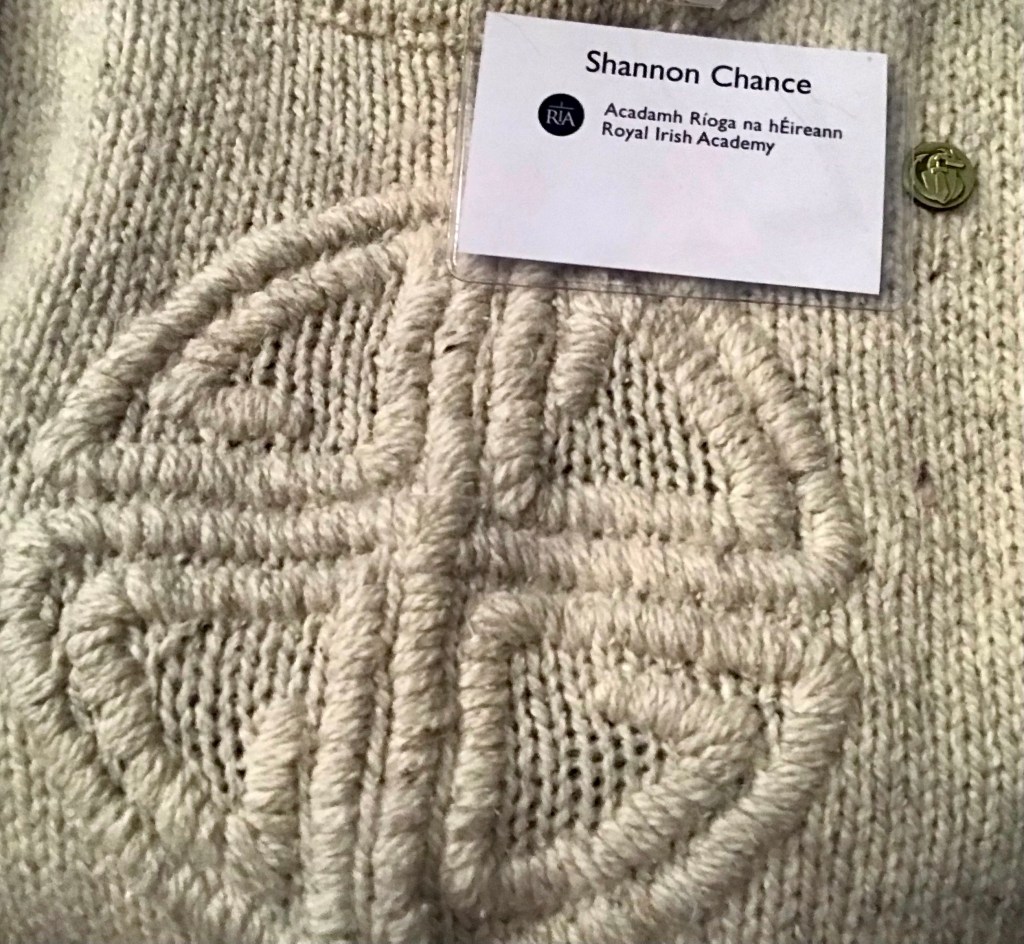
Despite heavy rain falling before my cycle over, I was inspired to wear my favorite Irish sweater and the “BIM Hero” lapel pin I received earlier in the year. (I am hoping the pin will provide the good karma I need to get my current manuscript on the Hero’s Journey polished up to final form to submit this coming week!)
Delighted to have been named a “BIM Hero” at the BIM Coordinators Summit.
During this one-day conference, I learned more than a few new things about Modern Methods of Construction, Irish strategies and policies, and education programs and plans to up-skill the Irish workforce.
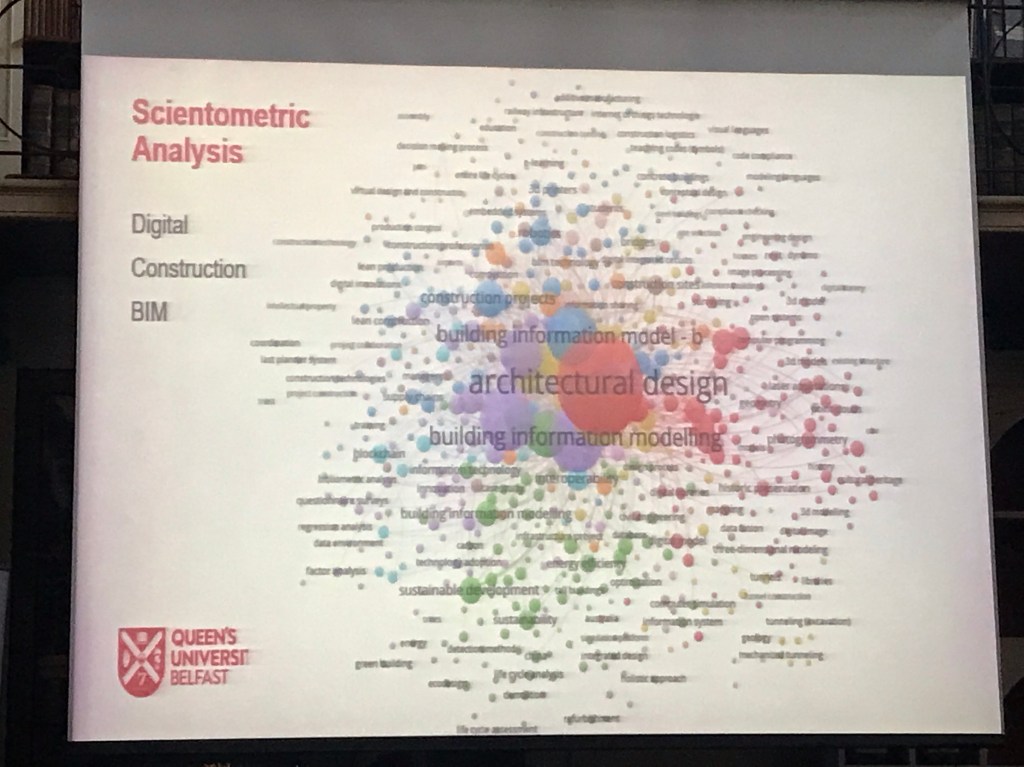
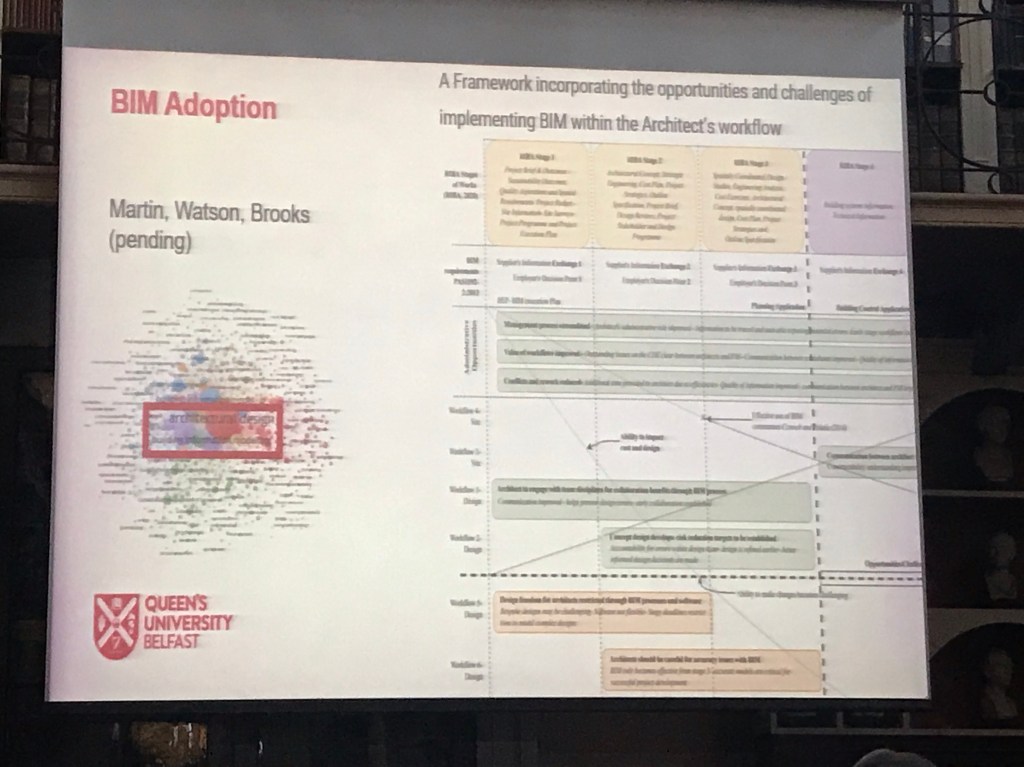
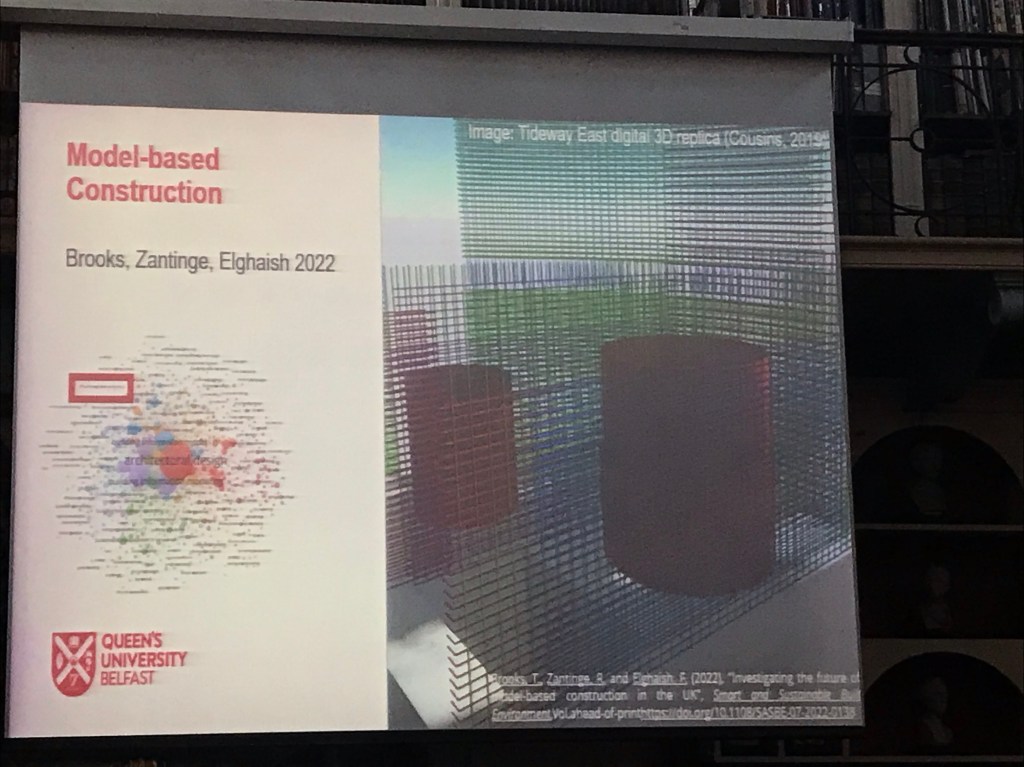
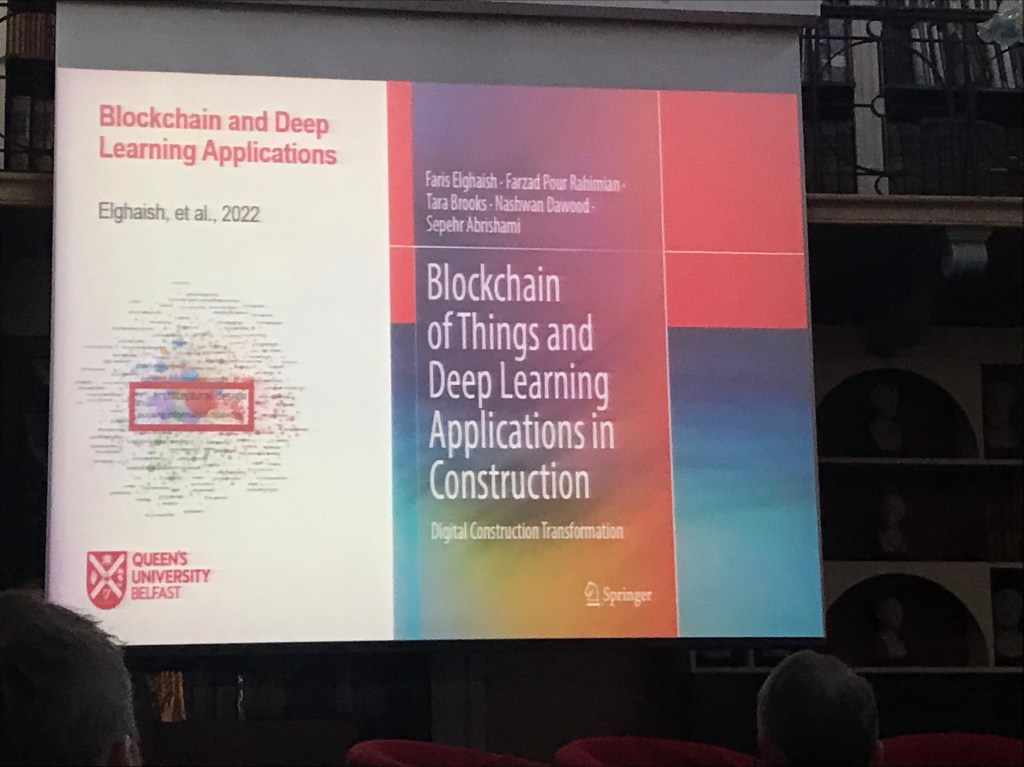
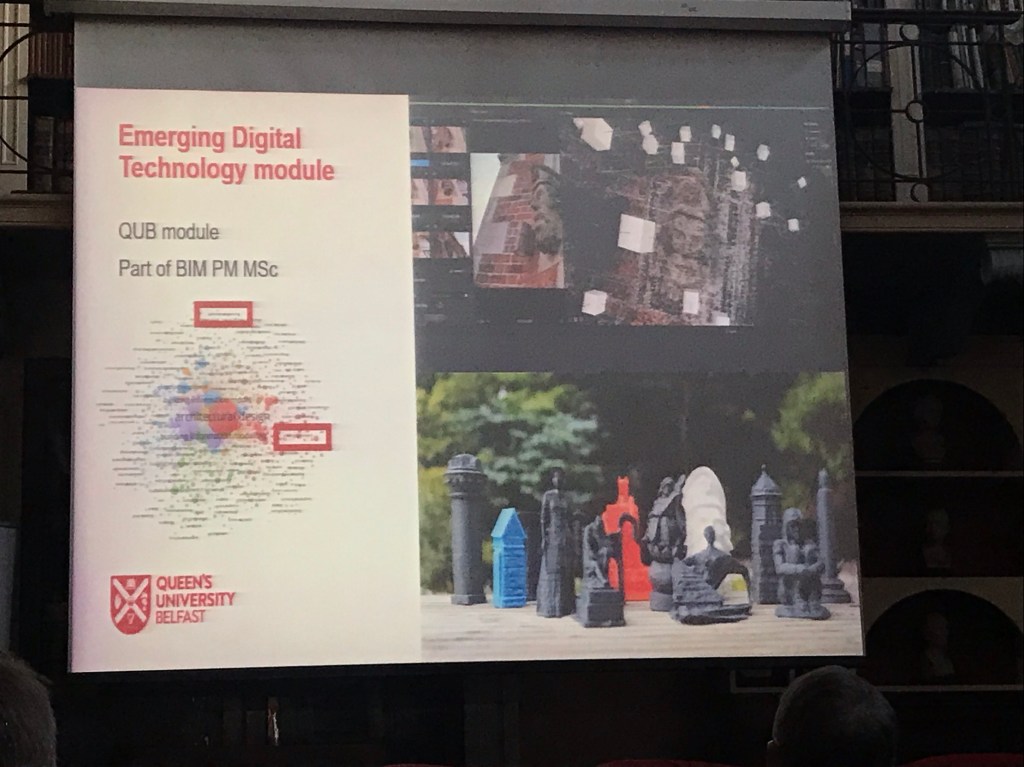
Dr. Tara Brooks from Queens University in Belfast presented fascinating research and I’ve included images since I really enjoyed the graphic devices she used to situate her contributions to the body of knowledge in BIM and digital construction.
The graphically rich presentation by Tara Brooks.
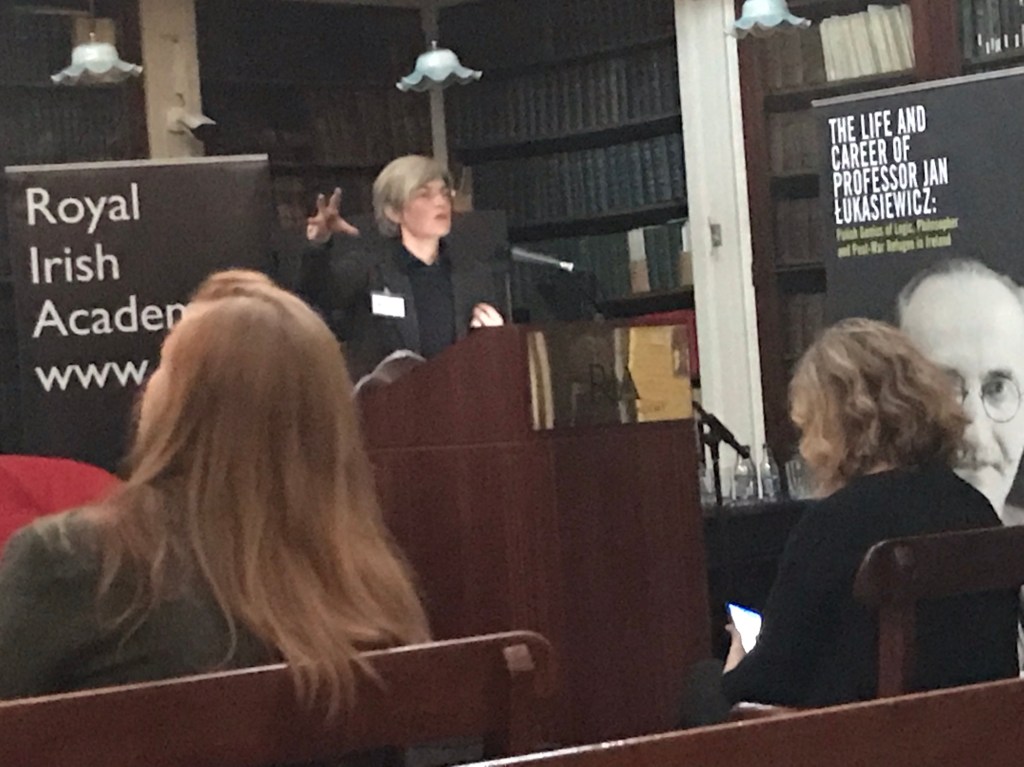
My own university, TU Dublin, was very well represented among attendees, presenters, panelists, organizers, and session chairs. I’ve pictured Joseph Mady, a part time lecturer who delivered an interesting talk.
TU Dublin’s Joseph Mady presenting.
Our conference ended promptly at 5, as Ireland’s Prime Minister was scheduled to speak in the same room at 7, and there was setting up to do.
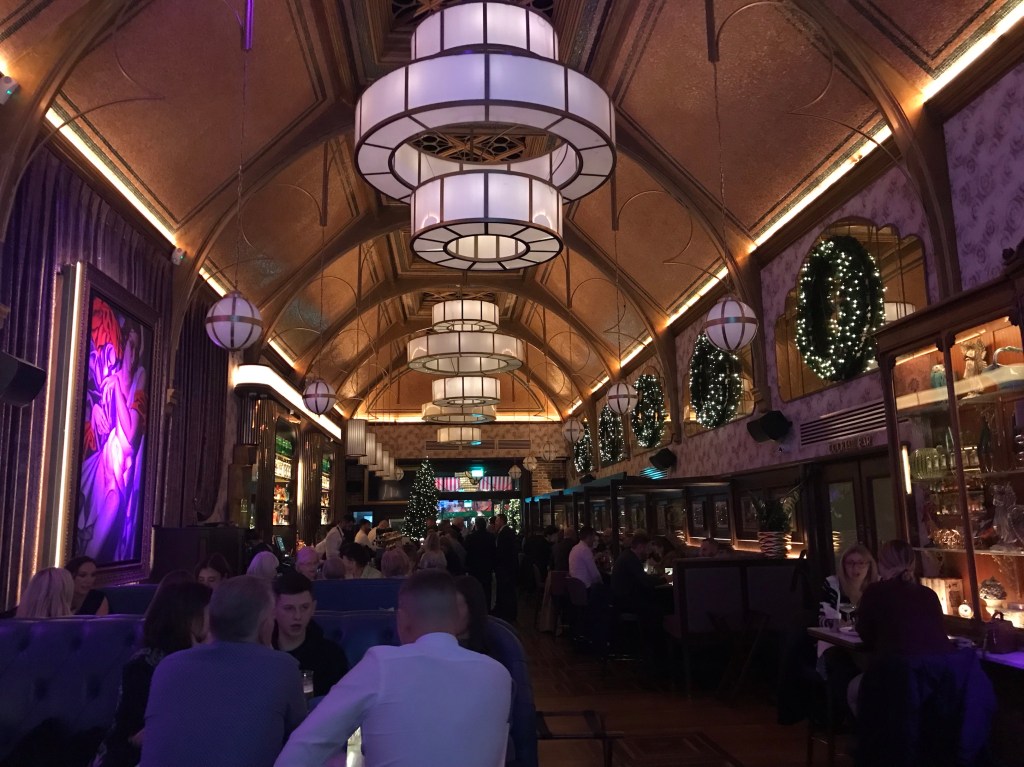
With the conference concluded, I headed across Dawson Street to Cafe en Seine for a cocktail with Aongus.
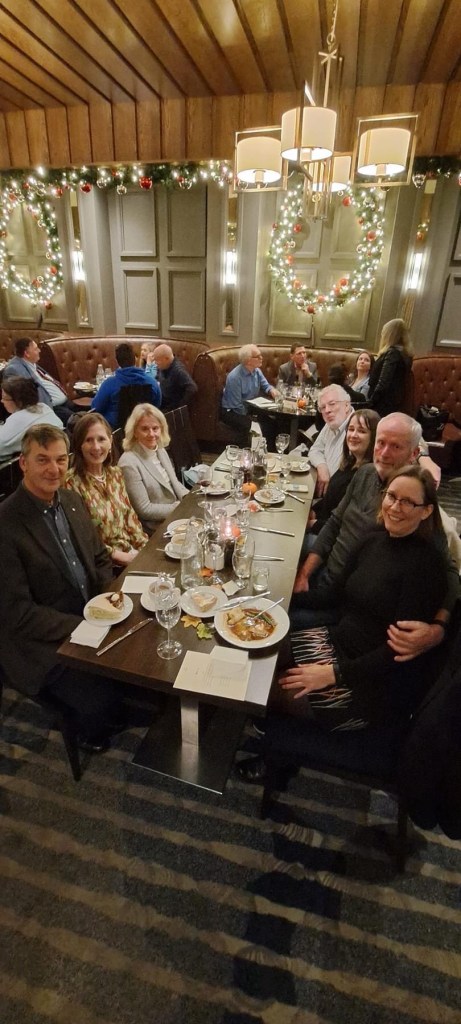
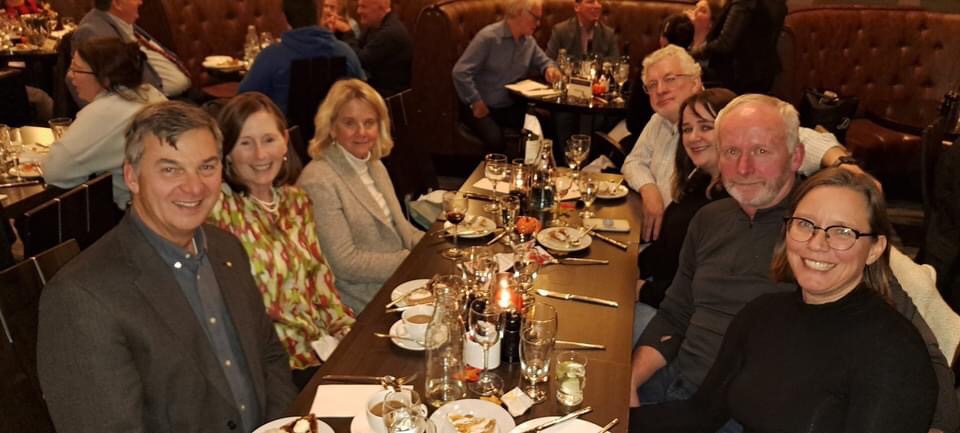
Then we cycled together over to the Hilton near Lock C6 on the south side canal. We met up with a merry group of Americans (most with Irish in tow) to share a feast of turkey will most all the trimmings.
From Cafe en Seine to the Hilton’s Restaurant Charlemont.
It was Aongus’ first sweet potato casserole with marshmallows and he’s still raving about his new find. It’s fun to see the delight he takes in root veg… he also loved the glazed carrots. Such a healthy boy! My favorite were the green beans sautéed with bacon.
We made some new friends and had a ball sharing stories in a familiar twang. Until next year:
I collected interviews for this project with civil engineers recruited by Engineers Without Borders UK (EWB-UK). Dr Inês Direito helped with interviews and data analysis and Professor John Mitchell helped us with editing.
This is a sister article to one published in May 2021 via the Australasian Journal of Engineering Education that was titled “Above and beyond: ethics and responsibility in civil engineering“. That article has 1,354 downloads to date! It’s also Open Access, and free to read.
We hope you’ll find the various insights revealed about the ethics and experiences of early-career engineers interesting and informative.
A recent cover from the Australasian Journal of Engineering Education.
It’s been a long time coming, but a study I’ve been working on since the fall of 2018 has finally resulted in a publication–the first of several, I hope!
The publication process is often slow and suspense-ridden. I submitted the first draft of this paper at the start of March 2020, and now, just 15.75 months later, we’re nearly in print! The first step is digital release, and paper copies will come later.
Chance, S., R. Lawlor, I. Direito, and J. Mitchell. 2021. “Above and Beyond: Ethics and Responsibility in Civil Engineering.” Australasian Journal of Engineering Education. [Taylor & Francis Online]
University College London paid the Open Access publication free, so that you can download and read this article for FREE, without any special library access. My co-authors and I started this project at the request of Engineers without Borders UK, as the organization’s CEO, Katie Cresswell-Maynard, wanted to assess engineers’ perceptions and experiences related to “global responsibility”.
We prepared this specific report in response to a call for papers on ethics in engineering education and practice. To support the study of ethics, extracted data from our interviews that had to do with the topic, and studied it for patterns. As such, we’ve called this an exploratory study, on a topic where little prior research has been done.
Here’s the abstract:
This exploratory study investigates how nine London-based civil engineers have enacted ‘global responsibility’ and how their efforts involve ethics and professionalism. The study assesses moral philosophies related to ethics, as well as professional engineering bodies’ visions, accreditation standards, and requirements for continuing professional development. Regarding ethics, the study questions where the line falls between what an engineer ‘must do’ and what ‘would be good to do’. Although the term ethics did not spring to mind when participants were asked about making decisions related to global responsibility, participants’ concern for protecting the environment and making life better for people did, nonetheless, demonstrate clear ethical concern. Participants found means and mandates for protecting the health and safety of construction workers to be clearer than those for protecting society and the natural environment. Specific paths for reporting observed ethical infringements were not always clear. As such, analyses suggest that today’s shared sense of professional duty and obligation may be too limited to achieve goals set by engineering professional bodies and the United Nations. Moreover, although professional and educational accreditation standards have traditionally embedded ethics within sustainability, interviews indicate sustainability is a construct embedded within ethics.
I want to wholeheartedly thank the research participants and the co-authors who stuck by my side and helped see this project to fruition. It was great to have an ethicist on board in authoring this paper, Dr. Rob Lawlor. It has been a joy to work with him, and with Dr. Inês Direito and Professor John Mitchell, throughout this project. We also enjoyed a helpful and astute advisory panel comprised of Professor Nick Tyler, Jon Pritchard, Dr. Rob Lawlor, and Katie Cresswell-Maynard. The study was supported financially by a Marie Sklodowska-Curie Actions fellowship from the European Union (H2020-MSCA-IF-2016, Project 747069, DesignEng), with additional support provided to Engineers without Borders UK by the Royal Academy of Engineers.


































 Ireland by Chance