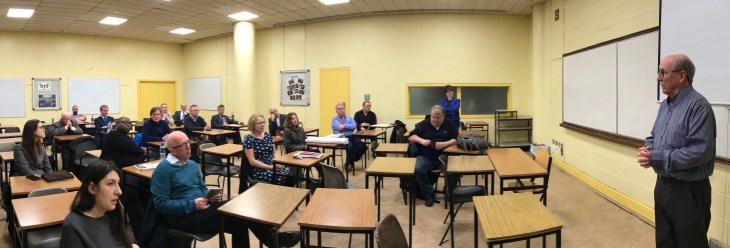
Perched high above UCL, in the penthouse Marconi room, University College London’s engineering education experts assembled on November 29th at the uppermost point of the Bloomsbury campus to discuss progress and strategy for the future. I was delighted with the sweeping views toward East London, where I live, and my co-researcher Dr. Inês Direito and I selected seats where we could watch the color of the sky shift throughout the day.
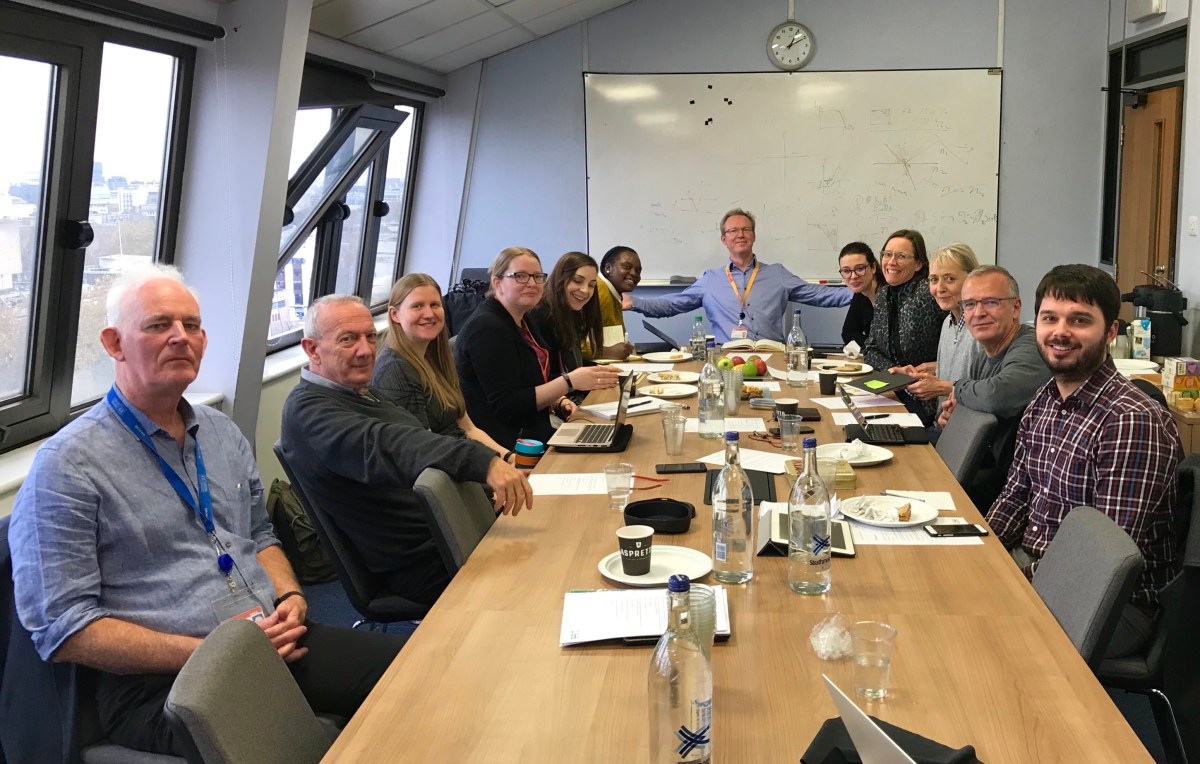
UCL staff from the Institute of Education (IoE), Arena Centre for Research-Base Education, and Faculty of Engineering Sciences (Integrated Engineering Programme and the Centre for Engineering Education where I’m working) joined together for a half-day retreat. We started with a light lunch so that we could get re-acquainted and welcome a guest from McGill University in Canada. I myself am here for two years as a Marie Curie Research Fellow, on a career break from Dublin Institute of Technology (DIT).
Our Centre for Engineering Education (CEE) has two directors. Professor David Guile is from the Institute of Education and Professor John Mitchell is from the Faculty of Engineering Sciences. John ran the meeting.
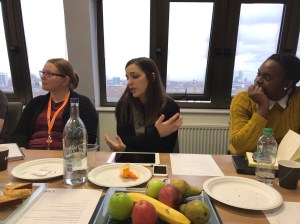
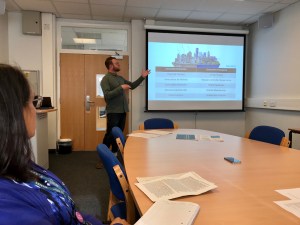
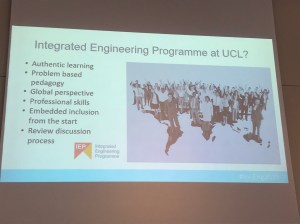
After introductions, we got updates on CEE activities as well as a synopsis of our core mission. Emanuela Tilley, Director of UCL’s Integrated Engineering Programme (IEP) provide an update and John Mitchell described progress building the university’s new campus in Stratford, East London. The campus is called Here East and will eventually include space for our Centre.
Emanuela Tilley providing updates on UCL’s award-winning IEP
We learned about the new Masters in Engineering and Education that CEE and IoE recently launched. There are six MSc students in the current, inagural cohort and its organizers anticipate bringing in 20 additional students next year. I’ll be delivering a session for this degree program in January, on learning theories. I’m hoping that DIT’s MSc in aBIMM (Masters in applied Building Information Modeling and Management technologies) can provide a helpful precedent for organizing the thesis portion of the program, as my colleagues Deborah Brennan and Dr. Avril Behan have already achieved creative solutions to address the types of challenges our UCL team faces, as identified by Jay Derrick and David Guile. I’ll work to connect these four people.
Near the end of the meeting, Inês and I provided updates on our current and planned research projects. I mentioned contributions we’ve made to the larger community of engineering education researchers, running multiple workshops at SEFI 2018, providing leadership on journals like IEEE Transactions on Education, and collaborating with the CREATE research group at DIT, my home institution. I wrapped up by identifying the research projects that we have in progress—two that use phenomenology as well as two phenomenographic studies and two systematic reviews. I should have mentioned the special focus issue I have underway on using design projects to promote student development, but I forgot!
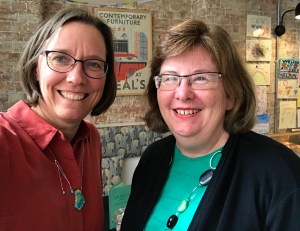
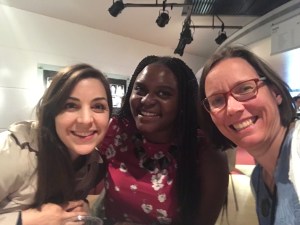
My colleagues in engineering education development and research at UCL.
Thanksgiving Day had a different look and feel this year. Here in Dublin, we welcomed Dr. Bill Williams to give his inaugural lecture as Visiting Professor in DIT’s School of Multidisciplinary Technologies.
Bill is an energetic and knowledgeable colleague, a close friend, and an excellent mentor to me. We have been working together on various projects since the day we first met, at a SEFI conference in 2012. Bill hosted my 2013 visit to five universities in Portugal, and we are currently co-editing a special focus issue of the journal IEEE Transactions on Education, the second special focus issue we’ve organized together. Because Bill has been so helpful in supporting my development over the years, I wanted others at DIT to benefit from his knowledge, experience, and helpful advice as well. He’s got a can-do attitude that is uplifting and infectious. And so, I nominated him for this prestigious appointment at DIT and am delighted it finally came to pass!
He arrived in Dublin Wednesday, which gave us a bit of time to catch up and compare notes on various projects. We enjoyed a very tasty vegetarian dinner at the newly-expanded Brother Hubbard, to get the ball rolling. If you’ve not eaten there, do hurry! You’re really missing out!
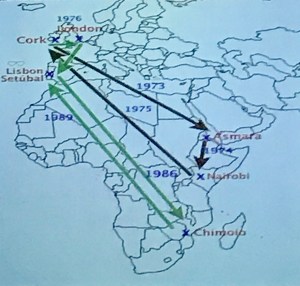
Bill’s life path
Bill and I started Thanksgiving Day with a strategy meeting with our schools’ senior leaders, then we met with colleagues, welcomed guests from near and far, and settled in for Bill’s insightful lecture on “14 ways engineers bring value” to society.
Bill described his trajectory into engineering education research, via two stints in Africa where he taught Chemistry. Although he’s originally from Cork, Ireland, he has lived and worked for the past few decades in Barreiro, Portugal. In Lisbon, he earned his Ph.D., just shortly before retiring. Now, I’m quite happy to report, he’s still incredibly active in research and in advising and mentoring researchers new and old. We’ve now made it official by appointing him as an adjunct professor here at DIT!
After an interesting set of lecture topics followed by Q&A with lively discussion, a small group of the international guests joined Bill and the event organizers for dinner in Dublin’s Italian Quarter–so I had Thanksgiving dinner surrounded by dear friends after all!
Dr. Abel Nyamapfene (UCL) and Professor John Heywood (Trinity)
I was delighted that we had 22 attendees at Bill’s Thursday lecture and nearly as many at the follow-up workshop on Friday–a great turn-out, particularly given the long distances many traveled to attend! Bill himself traveled in from Portugal for the two-day event.
My UCL colleagues, Drs. Inês Direito and Abel Nyamapfene, came across from London. They work with me at the Centre for Engineering Education at University College London.
Dr. John Heywood (Professor Emeritus at Trinity and a global leader in the field of education research) made the trip up from Bray, Ireland.
Drs. Shannon Chance (DIT and UCL) and Inês Direito (UCL)
Dr. Dónal Holland (Assistant Professor at the UCD School of Mechanical & Materials Engineering and an Associate at the Harvard School of Engineering and Applied Sciences) came up from University College Dublin both days.
All these guests were joined by a host of enthusiastic DIT staff from the Kevin Street, Grangegoreman, and Bolton Street campuses.
Still abuzz from the lecture on Thursday, we prepared to focus on research publication strategies on Friday via a workshop led by Bill. But first, Inês, Abel, and Bill came for lunch at my flat and this provided me a semblance of a Thanksgiving gathering around my own table.
Professor Brian Bowe (DIT) with Drs. Dónal Holland (UCD and Harvard) and Gavin Duffy (DIT)
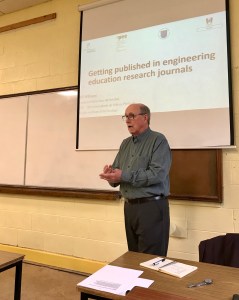
Nevertheless, the main event for Friday was a workshop on getting research published in engineering education. Bill ran this half-day seminar for DIT’s CREATE research group. CREATE seeks to make Contributions to Research in Engineering and Applied Technologies Education. It is based at Dublin Institute of Technology (DIT, soon to be Technological University Dublin, TU Dublin).
Across these two days, we enjoyed sharing ideas informally as well as formally. Bill met with Professor Brian Bowe (the head of CREATE at DIT) and with a number of Ph.D. students and emerging researchers, and with senior leaders of the School.
I photographed some of the memorable moments and have shared them in the gallery below.
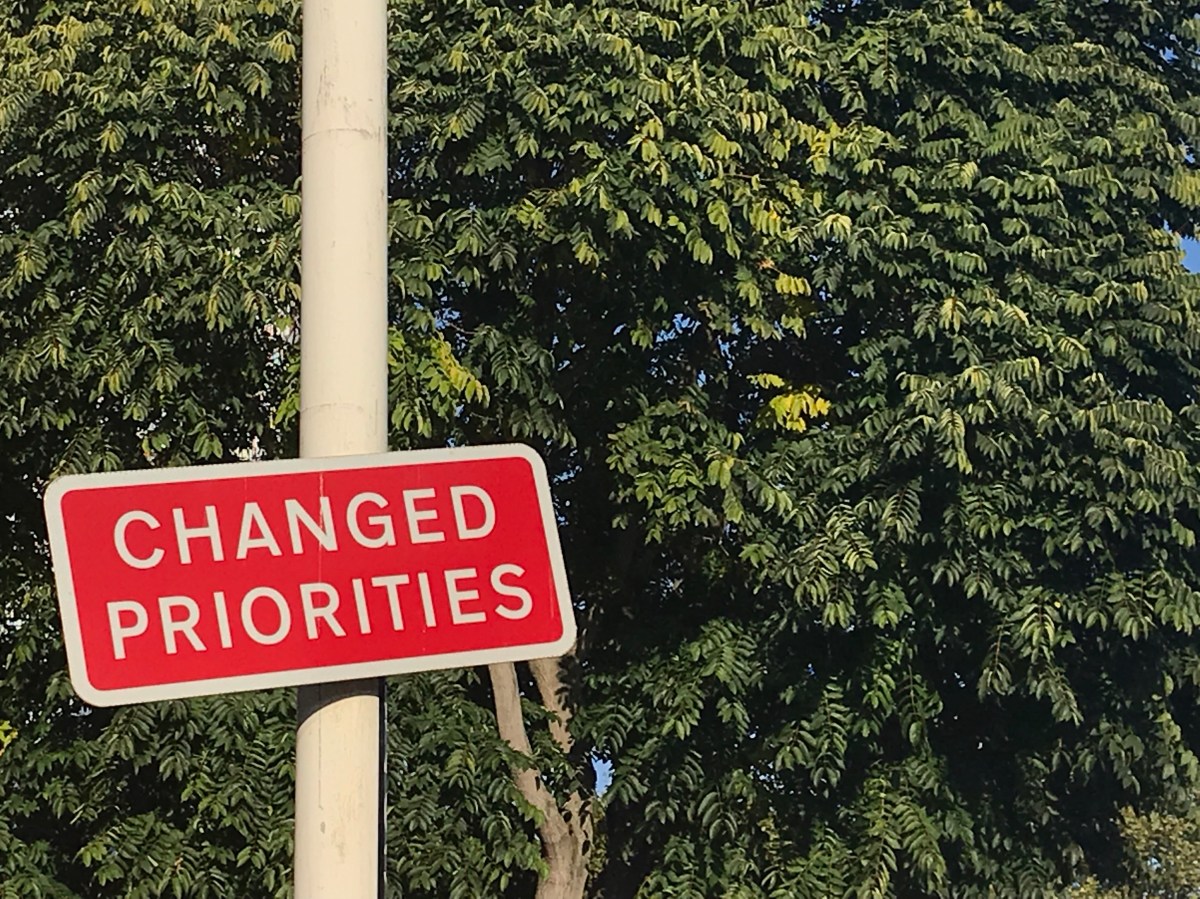
Getting back on track after a vacation is always hectic. A road sign I passed today announcing “CHANGED PRIORITIES” summed up the ironies I’ve faced. My first week back (after a holiday in France and conferences in Denmark and Greece) has been a flurry of activity. I had to put a lot of time into recovering lost documents and preparing government applications, and that wasn’t expected. I anticipated being in Dublin this past week, but fate (and lost IDs) sent me in other directions.
Besides trying to make headway with research projects, file expense reports, get back into my gym routine and recover the plethora of bank and identification cards I lost in Greece, I did make time to meet colleagues and explore material libraries, maker labs, and the massive city model of London. The list below attests, though, that I actually got some “real work” done. I’m making progress despite the detours!
With Dr. Anne Gardner, the new Deputy Editor of AAEE
Chronological highlights of the past ten days have been:
Quick catch-ups with both my supervisors, Profs. Nick Tyler and John Mitchell. John is the incoming Editor in Chief of IEEE Transactions on Education, so we had much to discuss.
Submitting two abstracts for the American Society for Engineering Education (ASEE) 2019 conference.
Providing input on a curriculum proposal under development at our Centre and module (course) planning for our new MSc in Engineering Education.
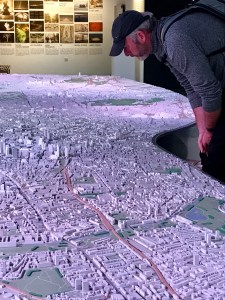
Lunching with guest academic, Prof. Euan Lindsay, of Australia’s Charles Sturt University and making with him a quick trip to the Building Centre’s exhibition on spatial modeling by Zaha Hadid’s lab and the giant model of London.
Touring UCL’s Institute of Making, its materials library and maker space.
Thomas Empson’s fabulous RES2 presentation
Attending a dynamic, well-structured, and highly successful milestone presentation by my Ph.D. student, Thomas Empson of London South Bank University (LSBU). Delighted to have contributed to Thomas’ success.
Touring LSBU’s extensive maker labs (theater and cave for virtual reality, robotic arms, 3D printers using all sorts of materials, high-end laser cutters, and old-school lathes, milling machines, spray booths. Room after room after room. An amazing set of resources for the LSBU engineering community. I was astounded. They also have a small materials library.
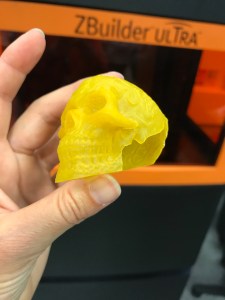
A product of LSBU’s extensive Maker Lab, this shell in the shape of a skull was printed in a liquid that contains emulsion and hardens when struck by a laser beam in the printer. Then the remaining liquid is drained away.
Lunching with guest academic, Prof. Anne Gardner, incoming Deputy Editor of the Australasian Journal of Engineering Education and another quick trip to visit the Building Centre.Gaining official approval from the UCL Ethics Committee to proceed with two research projects.
Completing UCL’s new online training program for data protection (GDPR), earning 100% on the final test.
Reading a UCL publication of guidelines for research staff. This is a very organized place!
Reading an incoming manuscript for the special focus journal issue and helping manage the review process.
Meeting with an expert in phenomenographical research methods, Dr. Mike Miminiris, to plan for an upcoming project.
Scheduling dates for upcoming seminars at UCL (by Dr. Mike Miminiris) and DIT (by Dr. Bill Williams).
Meeting with Prof. Simon Philbin, the new Director of LSBU’s Natu Puri Institute (NPI) to discuss strategic direction for the Institute.
Aongus studying the London model
Over the weekend, I decided to bring Aongus to the Building Center because he hadn’t been yet. We spent most of Saturday with the model of London (using its interactive learning tools and the videos), taking a sneak peek at an exhibition being mounted on modular construction, visiting the special exhibit on the history of the Centre, viewing the Hadid exhibition (mentioned above), and learning about commercially-available building products and materials in the Centre’s massive product library.
That makes THREE materials libraries and TWO extensive maker labs visited in a week! All these are pictured in the photo gallery below.
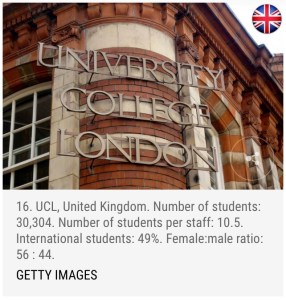
New global rankings from THE
I discovered that the new global rankings of universities, by the Times Higher Education, has placed UCL at 14th in the world. Each rating system uses different variables and metrics, so it’s not surprising that this is a bit different than the QS system that has UCL at 7th globally.
On Saturday and Sunday, we also made time to immerse ourselves in London–including the rainstorm on Saturday (oh my). Aongus and I enjoyed delectable meals, including dim sum at Dim T, my favorite fix at Chipotle, and molten cookies at Kingly Court. Saturday evening, we enjoyed the opening of the film “A Star is Born.” On Sunday, Aongus and I visited the Churchill War Rooms.
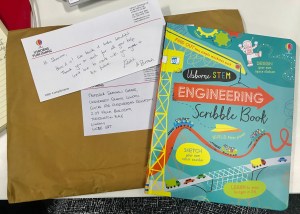
Hot off the presses @Usborne #STEM “Engineering Scribble Book” for kids. Loved offering guidance as Eddie and Darran developed the content! @Centre4EngEdu @CREATE_DIT. A university bookstore outside London replied to comments on my Twitter feed. @cccubookstore said “Engineering Scribble Books will be in stock tomorrow. Science Scribble Book on publication in November ;-)”
So far this week, I’ve reviewed feedback I’ve collected from colleagues on three important documents I’m preparing. I spent the better part of a day re-vamping a manuscript to address reviewer comments.
Also this week, I enjoyed meeting a new Ph.D. student at UCL, Aristos, who is studying tidal energy and knows Greek–he has helped me contact the police station in Greece (still no word on my lost items). I had lunch one day with my officemate, Sital, and learned more about her family’s heritage. I meet online with the board of the Research on Engineering Education Network (REEN) planning the 2019 Symposium (REES 2019) to be held in Cape Town July 10-12, 2019. I also met online with Dr. Bill Williams to plan his upcoming lecture and workshop topics.
Ending on a high note yesterday, I received a fun package in the mail–a copy of a book I helped create for kids. I served as the “expert advisor” for Usborne Publisher on a publication called Usborne STEM “Engineering Scribble Book.” It’s the first in a series and it looks great!
With all these unanticipated adventures, I’m wondering if I, rather than fate, will help set my own priorities for the upcoming week. Probably not!
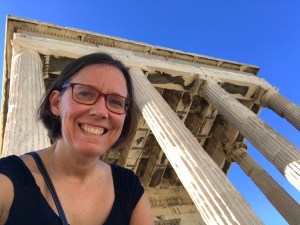
Following last week’s meeting of the European Society for Engineering Education (SEFI) in Copenhagen, I enjoyed a post-conference dinner with colleagues, explored Copenhagen’s old town in the morning, and then jetted off to Greece for a second international conference–this one on Interactive Collaborative Learning (ICL). I spent a day in Athens en route, inspiring a deep sense of awe! For an architect like me, visiting the Acropolis is a must, and the experience was even more uplifting than I’d expected. I loved Athens and I will certainly return!
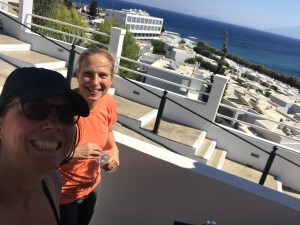
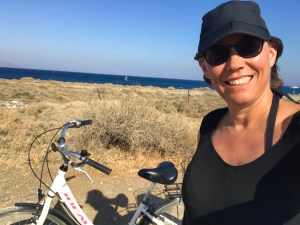
The photo album in this post includes photos of the day I spent cycling around Kos with my colleague, Dr. Stephanie Ferrall, and also from my one-day layover in Athens. It also provides a glimpse into the conference events to show what the work of a traveling researcher really looks like.
Athens
The highlight of the ICL conference was getting to know colleagues with similar interests. I particularly enjoyed getting to know the Portuguese and Sri Lankan delegations and the keynote speakers.
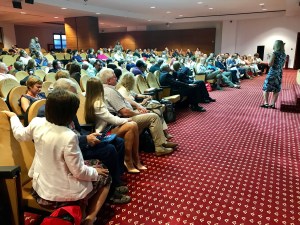
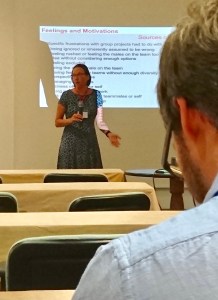
Presentations were interesting and informative and I’ve posted photos of Anuradha Peramunugamage (from Sri Lanka), Stephanie Ferrall (USA), Christina Aggor (Ghana), and Rovani Sigamoney (currently from France) presenting their work.
Dr. Ferrall’s ICL keynote
Stephanie was a big reason I attended. I submitted a paper for this conference after seeing she was listed as a keynote speaker. Stephanie and I were research fellows in Dublin together at DIT during the academic year 2014-2015. Stephanie is a world expert in engineering education pedagogy and in supporting LGBTQ+ students. She is currently the national president of the American Society of Engineering Education (ASEE). Her work focuses on inclusivity and “revolutionizing diversity” in engineering schools. Stephanie’s keynote speech at ICL focused on classroom diversity whereas the keynote she delivered the week before, at SEFI, described large-scale patterns and philosophies regarding diversity. At ICL, Stephanie was honored by the International Society for Engineering Pedagogy (IGIP) with its highest award, the Nikola Tesla chain.
My ICL presentation
I was also drawn to this conference because much of my research has to do with engineering students’ experiences of collaborative learning and that is the core subject of the conference.
At the ICL conference, I presented one line of my analysis, a study of Middle Eastern women’s experiences studying engineering abroad in Ireland. I collected interviews with eight such women over a period of four years. You can download “Middle Eastern Women’s Experiences of Collaborative Learning in Engineering in Ireland” at this link: https://arrow.dit.ie/engschcivcon/109/. The citation for the paper is:
As there were a few days free between SEFI and ICL, I’d gotten to spend time exploring Kos with Stephanie before the second conference. I posted some photos of us on Facebook with a notable but unanticipated effect. A colleague of mine from the Centers for Disease Control (CDC) in the USA, Christopher Kochtitzky, took notice and reached out to connect with Stephanie since their goals for changing the world overlap.
Thus, one of my top accomplishments of this conference was connecting my colleagues from the CDC and ASEE. Soon Stephanie and Chris will be working together. They will connect engineering educators and students with the CDC’s new initiatives to increase physical activity across the US population and to improve public transportation, particularly with regard to accessibility. Stephanie will be able to tap into Chris’s experience and policy research and Chris will access Stephanie’s national contacts to help achieve CDC goals.
On the Acropolis in Athens
The best surprise of my trip to Kos was meeting and getting to know Rovani Sigamoney from the United Nations Educational, Scientific and Cultural Organization (UNESCO). This organization does amazing work. UNESCO was created following WWII to help preserve cultural monuments, artifacts, and places. Today it seeks to get better educational opportunities to the world population and to improve living conditions. I’ve always admired UNESCO’s work but saw it as a big, far-away organization. Now I see ways I can contribute, and I’m getting straight to work! Thanks, Rovaini, for the fine job you’re doing with the engineering division!
UNESCO’s Rovani Sigamoney
On the last evening of my trip, I dined alone. The waiters provided my favorite dessert, although it wasn’t on the menu, and they made it a gift. Shortly before that, I had snapped a photo of the Kos police station in the evening light (see the end of the photo gallery). Little did I know I’d be back at that station in the morning, to report that I’d dropped my purse.
Into every life, a little rain must fall, and in this case, my purse fell off the back of the e-bike I had rented to get around town on the last day. With the generosity of many different people, I managed to make my way back to London late Saturday night. Now I’m working to recover all those bank cards and government-issued photo IDs. Thankfully, though, I still have my health and my happiness and great memories of Copenhagen and Kos, and friends new and old.
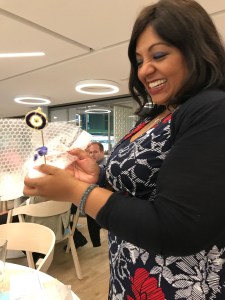
I’ve just attended the world’s friendliest conference, the European Society for Engineering Education (SEFI). I’ve never felt more welcome and invigorated by the exchange of ideas at a conference. This was my third SEFI, and while I’ve always felt incredibly welcome here, I now know people from all corners of the world by first name and they greet me likewise.
Last Sunday, I flew to Copenhagen from Nice, landing in the evening and traveling out to the campus of Denmark Technical University early Monday morning to help deliver an all-day workshop on research methods for PhD students. The workshop was coordinated by Prof. Jonte Bernhard, Dr. Kristina Edström, and Dr. Tinne de Laet. I also attended the conference’s opening ceremony and reception at Microsoft’s Danish HQ that evening.
Tuesday started bright and early with a keynote speech–delivered by Dr. Stephanie Farrell who was a Fulbright Fellow to Dublin Institute of Technology (DIT) while I was a Marie Curie Fellow there. Although each morning started with a keynote lecture, for me, Stephanie’s was the most insightful of all. Attendees asked dozens of questions at the end, with another dozen people standing in line to ask questions afterward.
In all, there were three past DIT Fulbright Scholars at the conference–Stephanie, Dr. Sheryl Sorby, and me. The fact that three past DIT Fulbright scholars are still contributing to European EER on a regular basis and attending SEFI shows how a modest investment to support a Fulbrighter can pay dividends. We all still proudly represent DIT in various activities!
Following the Thursday morning keynotes, we enjoyed a fun new poster-presentation format. Poster authors got 30 seconds each to pitch their topic to the entire delegation, and then we went to visit their posters. This format raised the profile of posters as well as attendees’ interest in discussing them.
On this day, I also attended a session on writing for the European Journal for Engineering Education, got invited to serve on the journal’s Editorial Board by editors (Drd. Edström, Bernhard, and Maartje van den Bogaard), and networked with colleagues from Europe, North America, and Australia. Afterward, back in the city center, I enjoyed a lively dinner with editors from four different journals.
Working Groups were the focus on Wednesday, and I helped deliver a series of sessions of the Engineering Education Research (EER) Working Group, spearheaded by our leader Dr. Tinne de Laet. I’m a member of this group’s Governing Board, and since we meet monthly online, we didn’t need to conduct a business meeting here. In our morning session, each Board member briefly described her/his current projects. Participants each chose one Board member to join for small-group discussion. My small group discussed (1) tips for winning fellowship grants and (2) epistemology and identity topics related to EER. Later in the day, the Working Group ran a workshop where participants reviewed high-quality research papers and discussed their characteristics. During lunch and breaks–which were full of fascinating discussion with colleagues–I conferred with colleagues from Dublin Institute of Technology (Prof. Brian Bowe, Prof. Mike Murphy, Mr. Kevin Gaughan, Ms. Una Beagon, Ms. Diana Adele Martin, and Mr. Darren McCarthy) on plans to host an Inaugural Lecture at DIT this autumn. The lecture will be delivered by Dr. Bill Williams, who has just been appointed Adjunct Senior Researcher at DIT (upon my nomination–yay!). Since we intend to invite colleagues from other institutions, and particularly my colleagues from University College London, I worked to find an appropriate date and to identify the topics of Bill’s upcoming lecture and also the EER workshop he will conduct for our research group. Stay tuned for details!
After lunch, I attended a session on “Increasing the Impact of your Journal Publications” conducted by editors of the Journal for Engineering Education, Dr. Lisa Benson and Dr. Cindy Finelli. For dinner, the EER Working Group Board met in town.
Thursday morning, delegates attended presentations by individual scholars regarding their research projects. We used a range of formats including lecture, discussion, and flipped-classroom.
Over lunch, I worked with UCL colleagues, Ms. Emanuela Tilley, and Prof. John Mitchell, on strategic planning for a new Architectural Engineering curriculum we are developing. Throughout the conference, I enjoyed comparing notes with members of UCL’s Centre for Engineering Education who attended, including Emanuela, John, Dr. Inês Direito, Dr. Able Nayamapfene, and Ms. Paula Broome.
After lunch, I presented as part of the session “Reviewers! Reviewers! Reviewers!” In this session, editors of four journals explained what they are aiming to publish and how to write good reviews. I was representing IEEE Transactions on Education, the journal for which I am Associate Editor. We broke into small groups to identify characteristics of a good peer review and this was followed by a very insightful whole-group discussion.
After the workshop, I attended the Editorial Board meeting for EJEE, learning about our reach and impact from the publisher’s representative.
Late in the afternoon, everyone at the conference boarded buses for Copenhagen’s Experimentarium, a really fun science-learning center. I played with the educational exhibits alongside Stephanie’s family and other colleagues from DIT, UCL, and Fulbright. There was an awards ceremony, where our UCL colleague, Dr. Eva Soerensson was honored, and I thoroughly enjoyed the conference “gala” dinner. I sat with Belgian, Dutch, and British colleagues at dinner. We got a bit rowdy and ended up building towers from paper cups and discussing the feature of ubiquitous household appliances.
The final day of the conference had many individual poster and paper presentations, including a discussion session/presentation I delivered on patterns I’ve found among doctoral dissertations that have used phenomenology to study aspects of engineering education.
The closing ceremony for the conference was chaired by the incoming SEFI president, DIT’s Prof. Mike Murphy. We learned about the venue for next year’s conference, Budapest! Can’t wait!
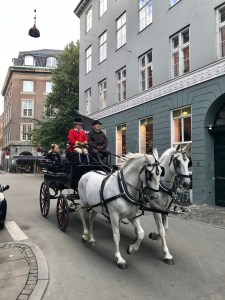
I enjoyed dinner with close friends after the conference attendees dispersed. I got to explore Copenhagen a little on Saturday morning before flying off to a new conference in Greece.
Thanks to the whole SEFI crowd for a stellar week! See you in Hungry if not before!
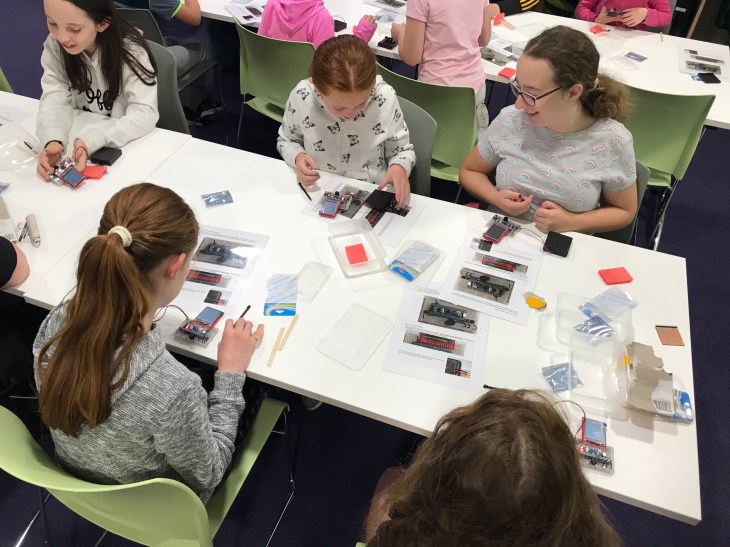
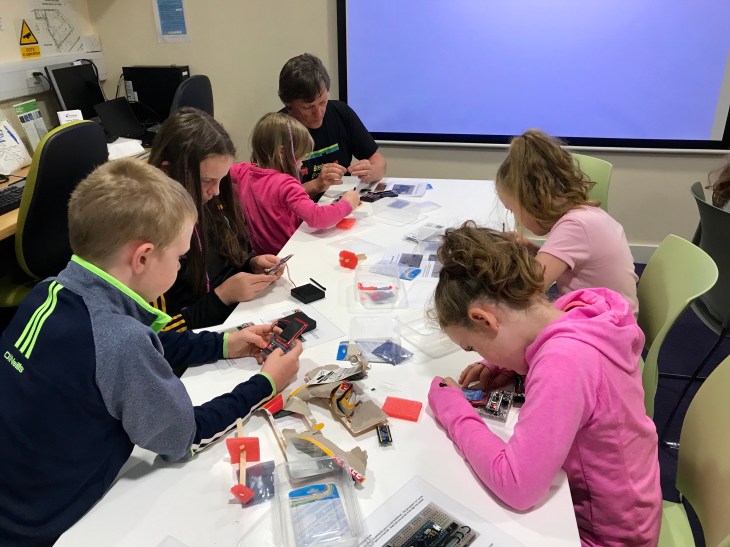
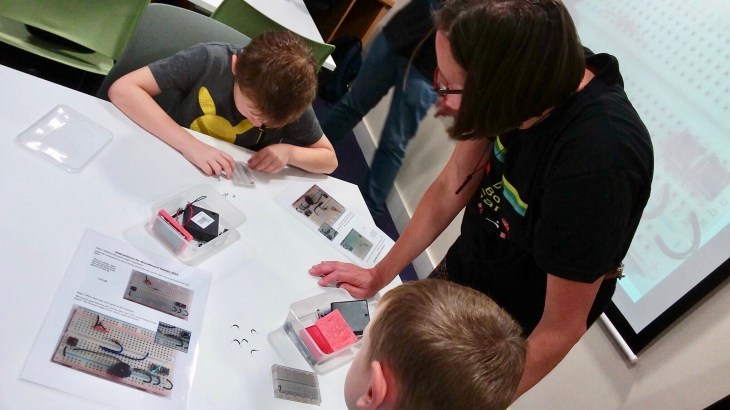
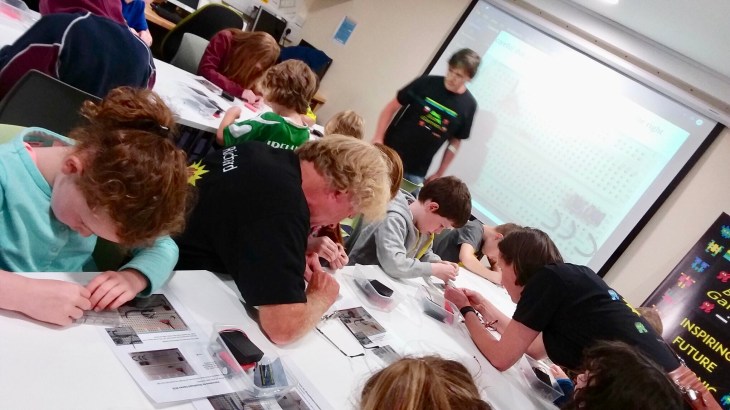
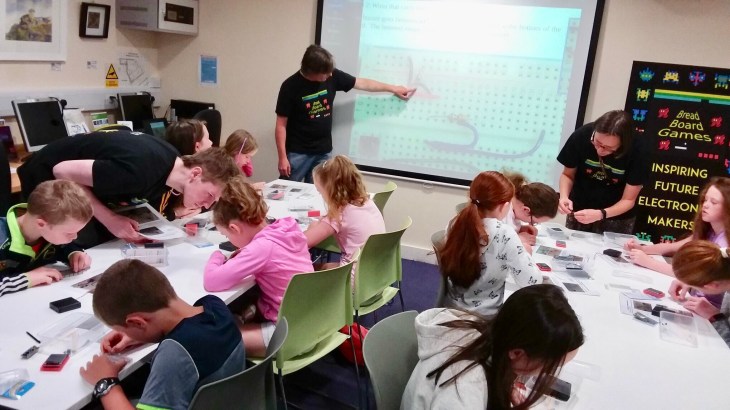
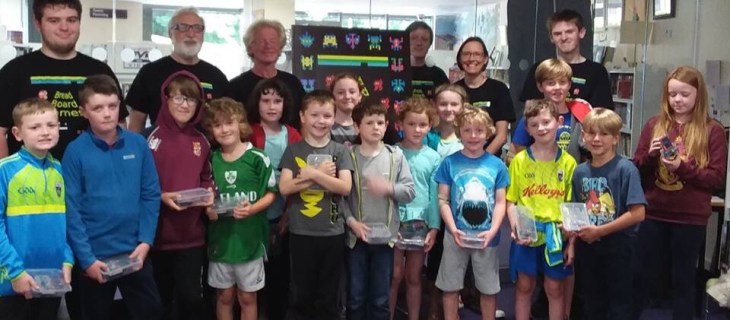
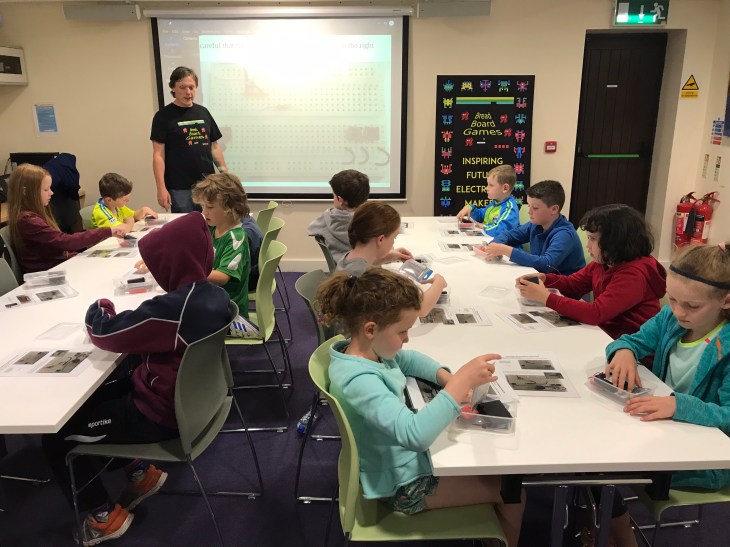
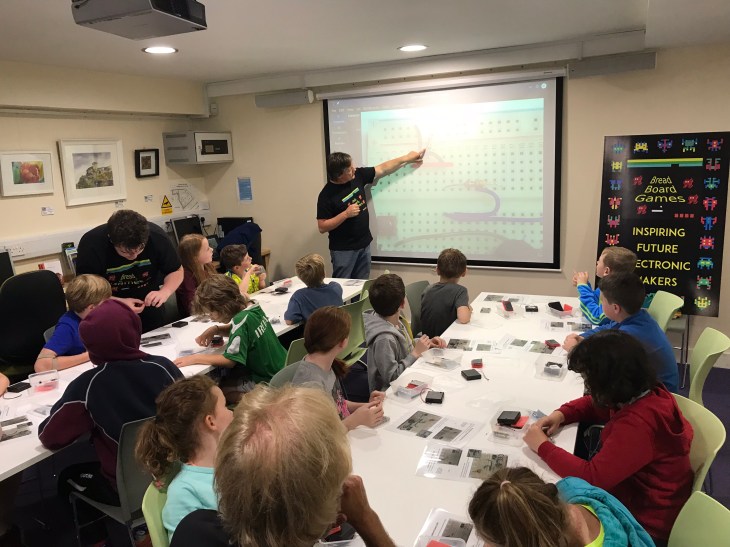
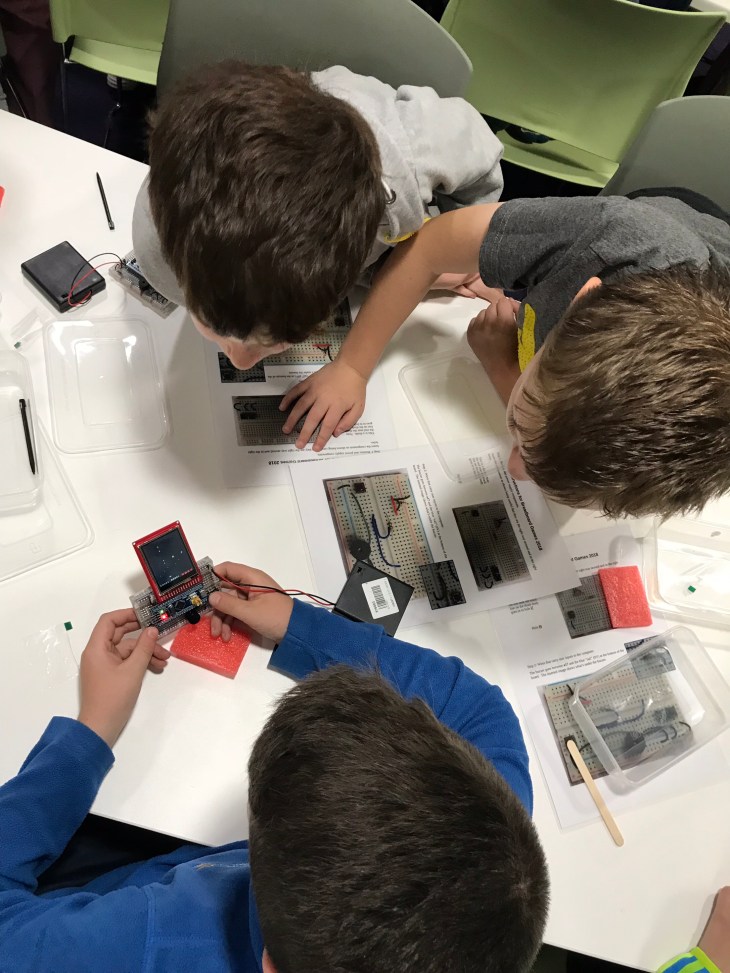
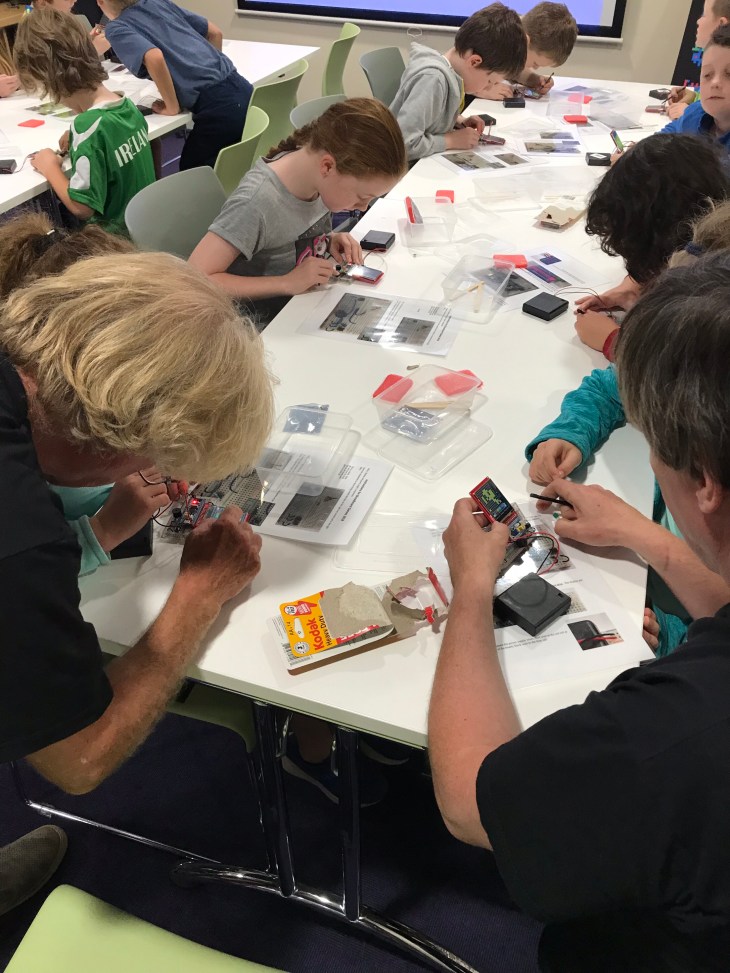
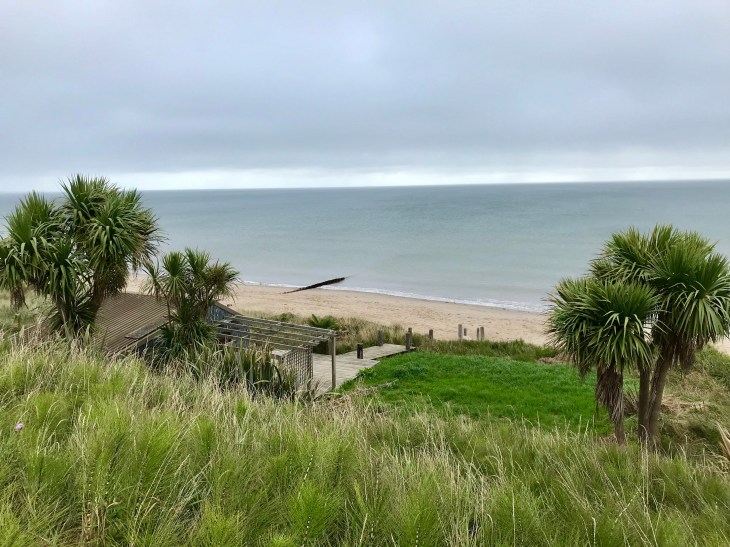
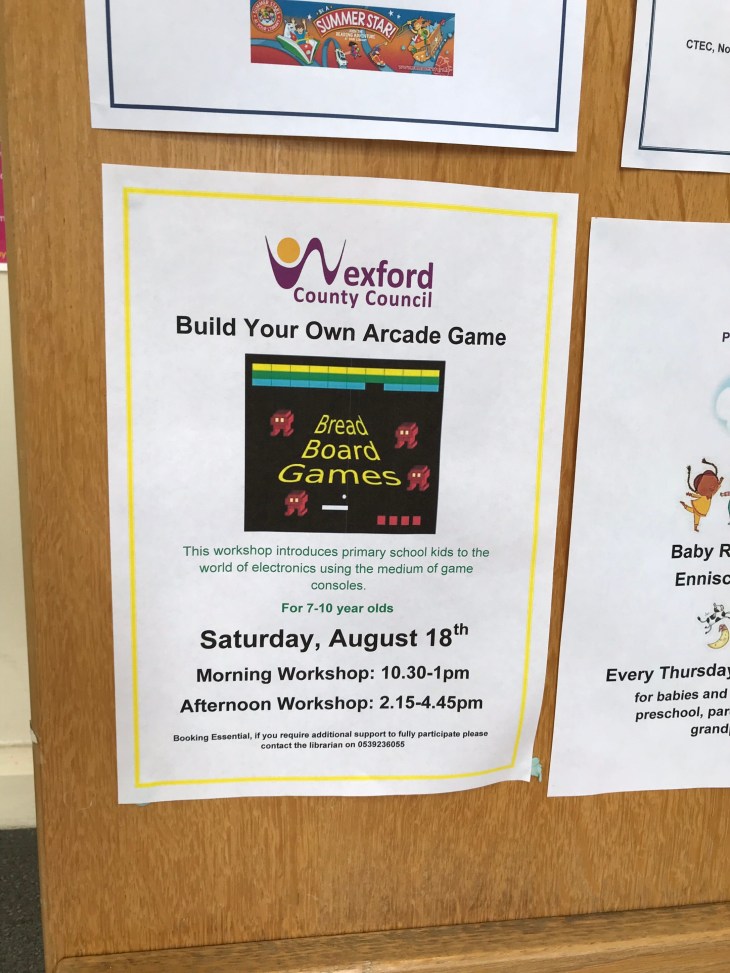
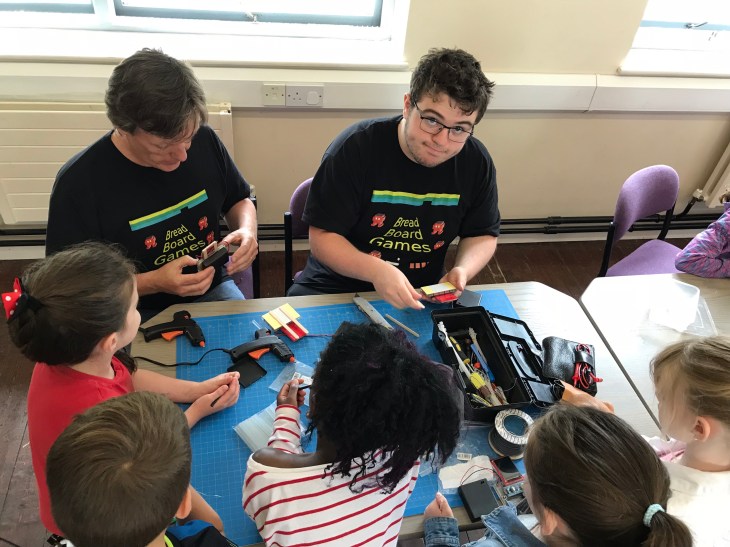
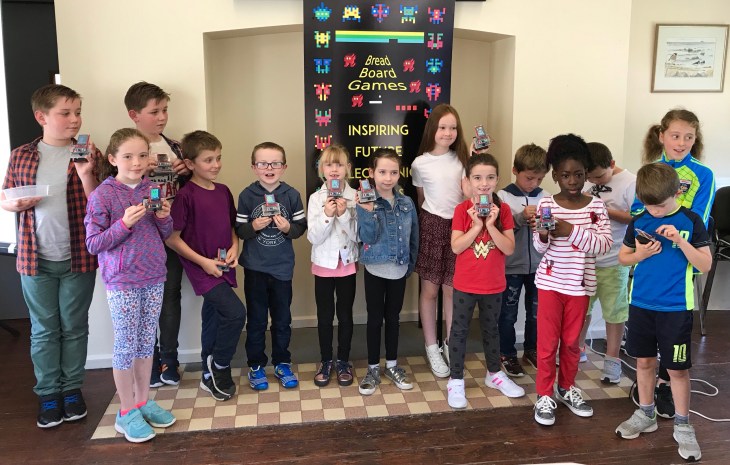
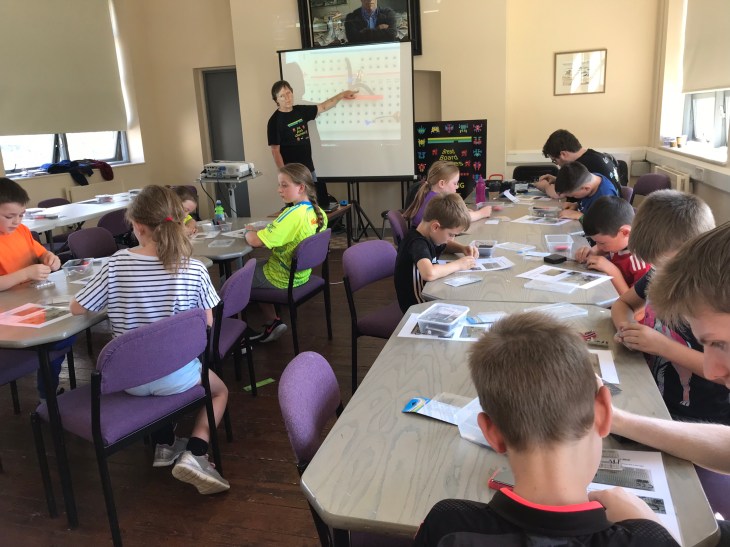
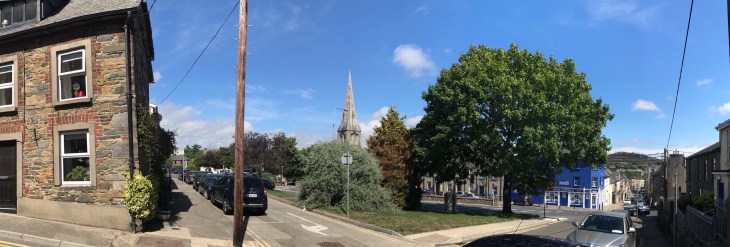
What a great weekend in Ireland, teaching four electronic engineering workshops for kids, mostly 6-8 years old, in Bunclody and Enniscorthy. I love working with the kids, and it’s always fun having a weekend outing with my friends from DIT.
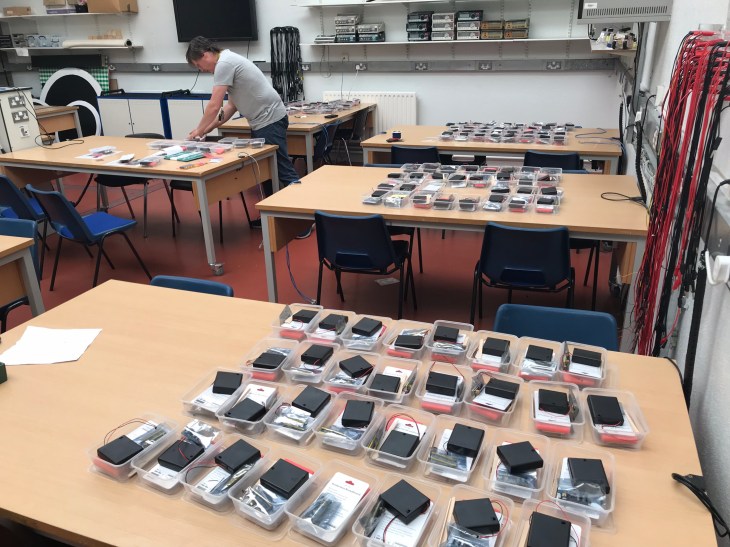
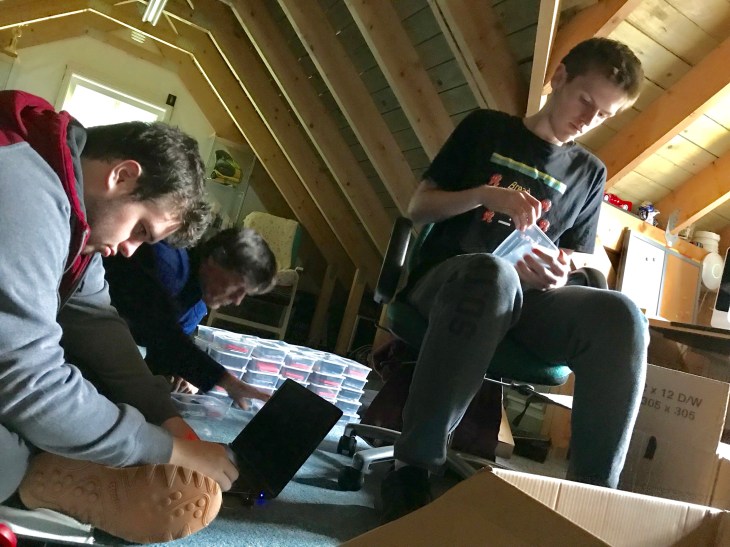
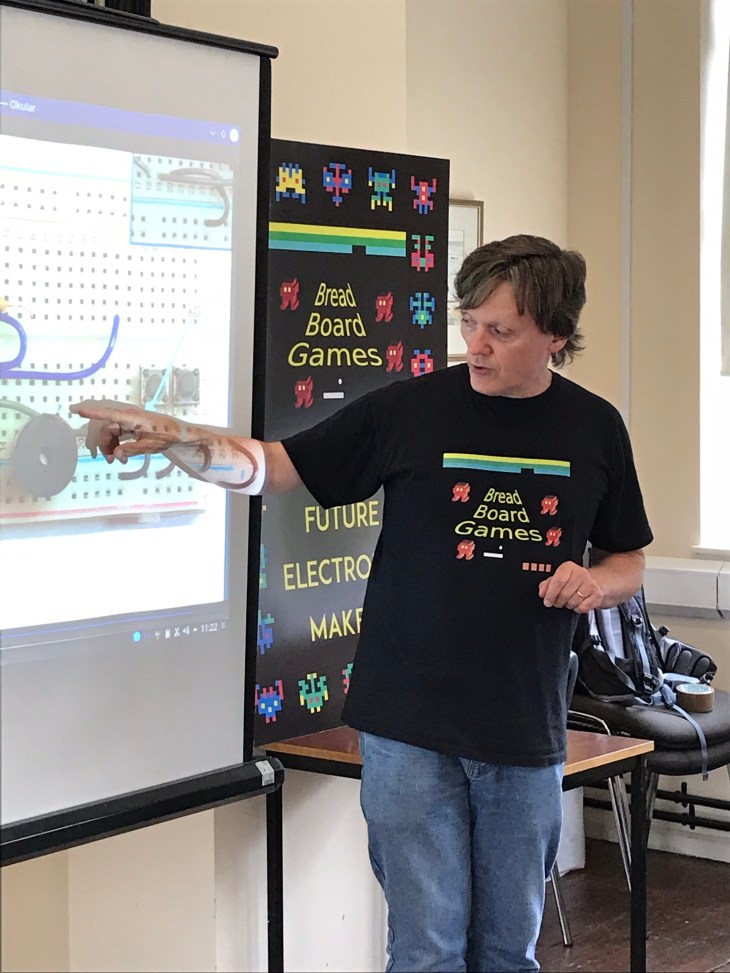
DIT lecturer Frank Duignan invented the small hand held video games and instructions for helping kids assemble their own. Retired DIT lecturer Charlie Pritchard worked with local librarians to schedule these two dates, plus three more dates for workshops to be held around Wexford. Charlie also secured funding and ordered the parts from hither and yon. Then Frank and his son Sam prepared the parts. And the day before we set out for Bunclody, I helped Frank assemble the kits in our project room at DIT.
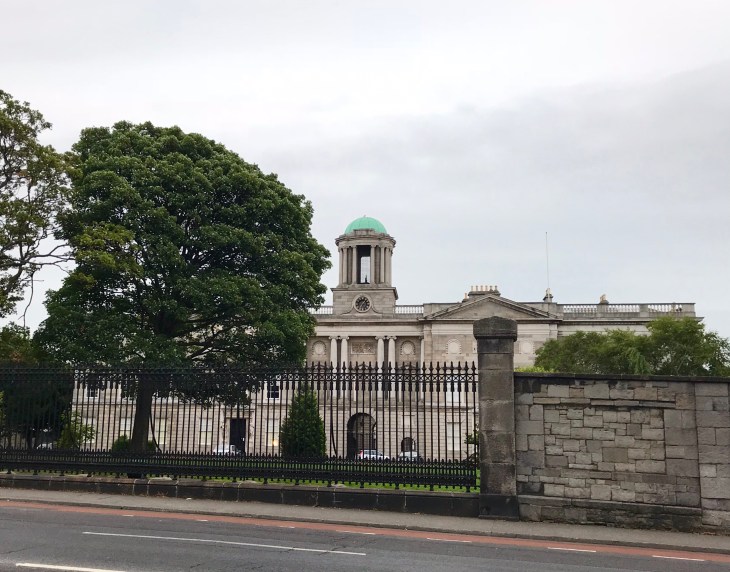
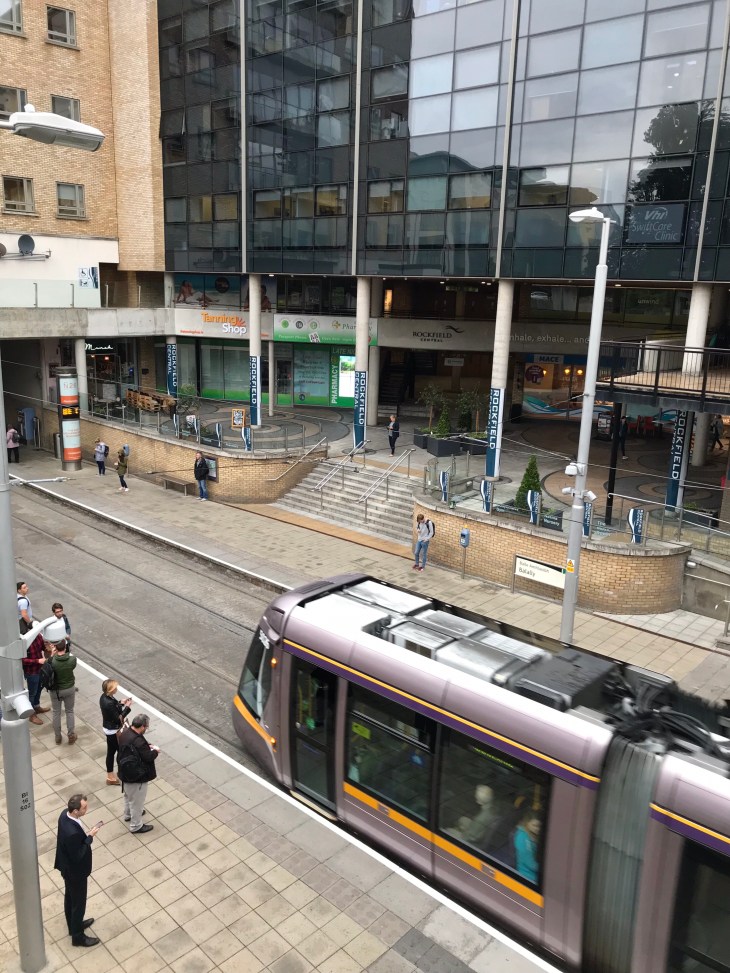
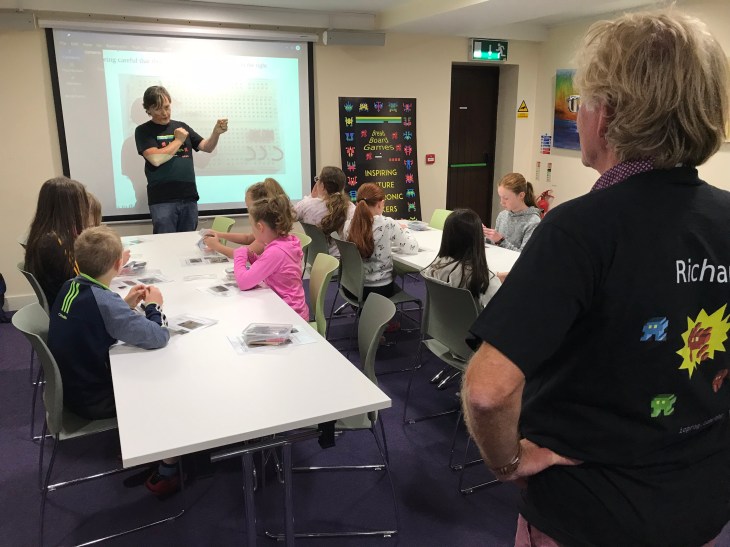
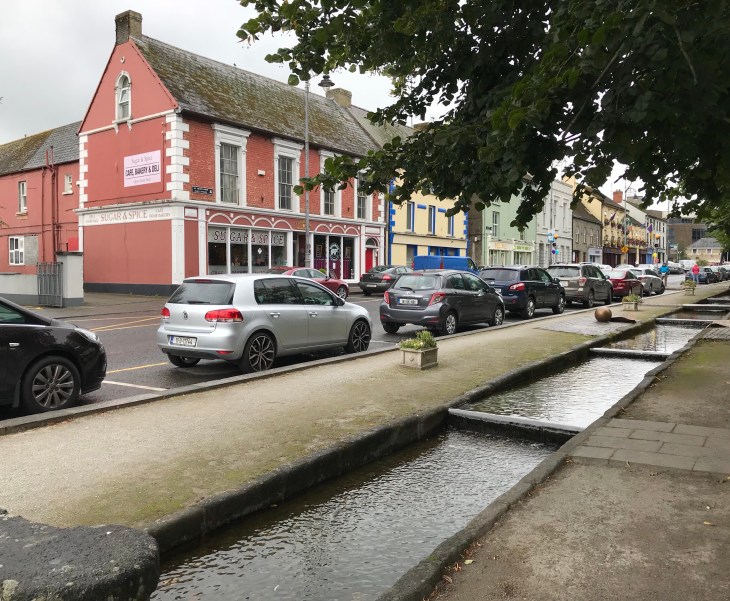
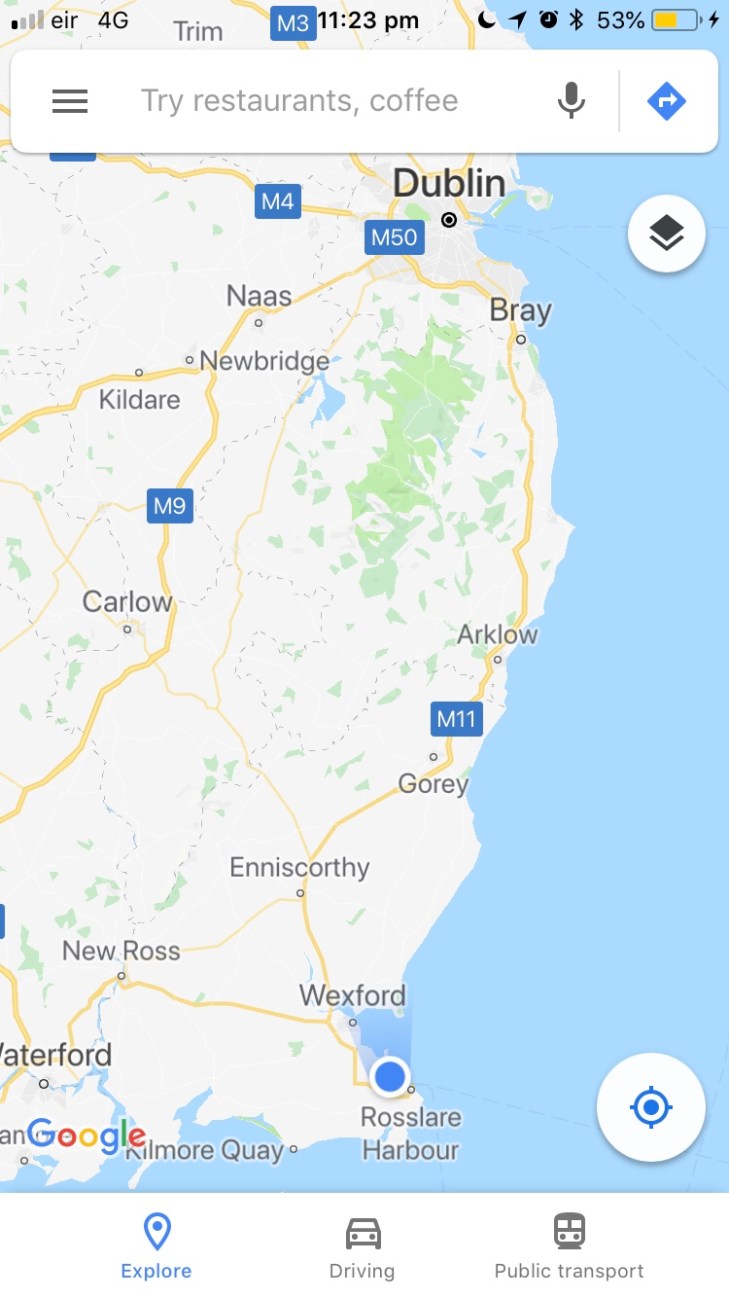
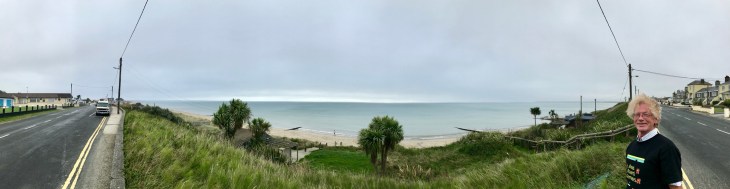
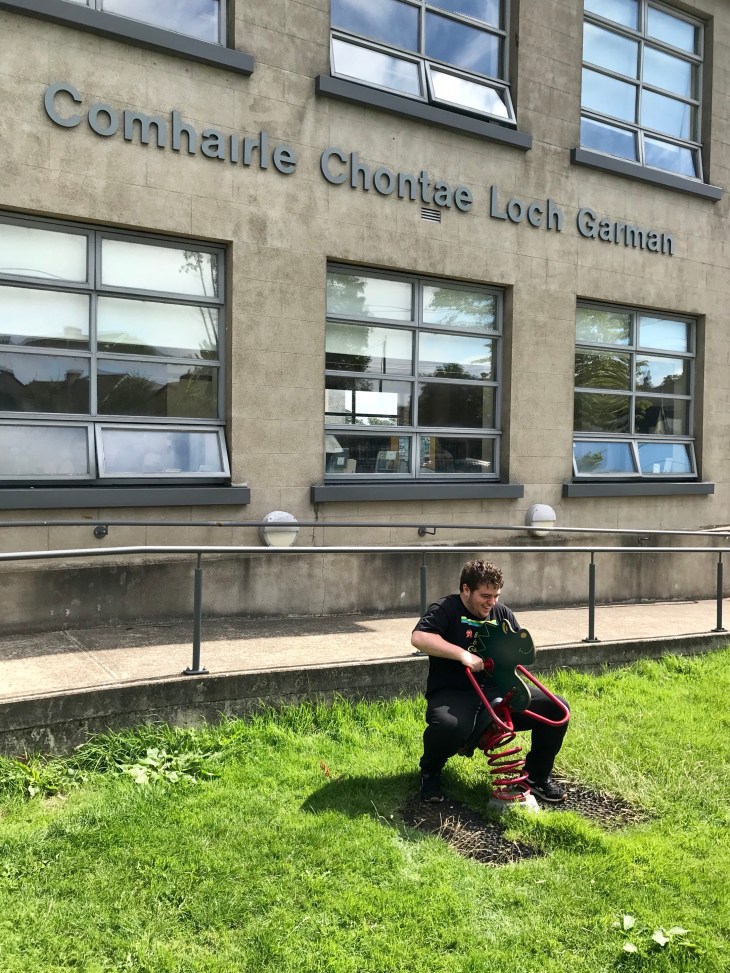
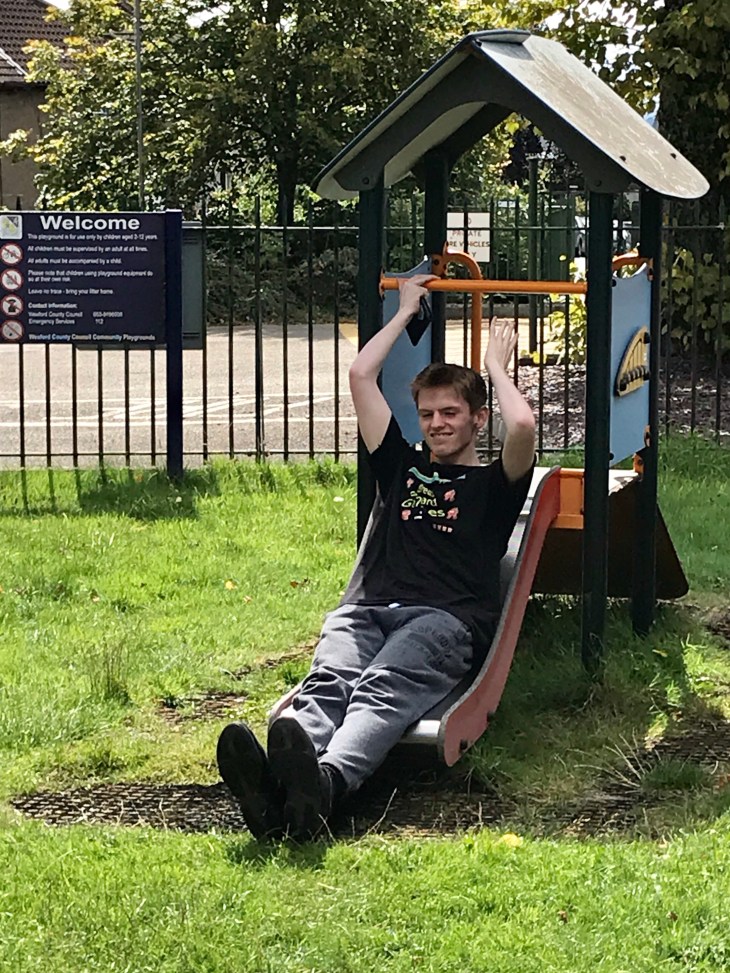
The photo gallery below shows three days of our adventure. You’ll see Frank and me assembling kits, and then sights I saw along the way from my home to the sunny southeastern corner of Ireland. You’ll see our two Friday workshops in Bunclody, our team dinner at the Pritchards’ home, and the village where my overnight hosts, the Hays, live. You’ll see some of the sights I got to take in with retired DIT lecturer Richard Hays, before Saturday’s events, and some lively fun we had between workshop sessions.
Mostly you’ll see young kids happily learning new skills, building their own video games, and operating their little devices with glee. You’ll see a bunch of teachers excited about what they do, and librarians dedicated to supporting them. You’ll see two secondary students, Oran and Sam (who were also there helping lead our booth at Dublin Maker just a few weeks ago), donating yet another day to teaching kids electronics.
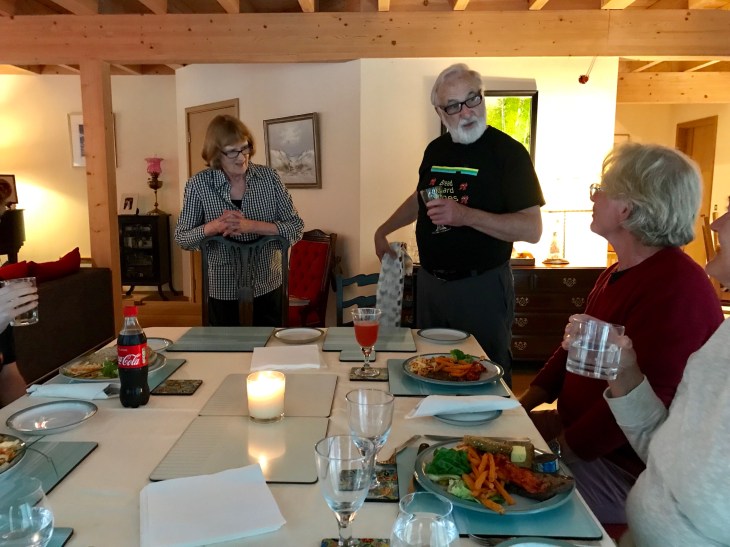
I’m so lucky to know these folks–Frank, Richard, Charlie, Oran, Sam, Edith, and Geraldine–and get to help them give kids a taste of engineering. The kids’ joy when the screen lights up is worth it all. These kids’ focus and attention to detail in assembly pays off when the Bread Board Games spring to life.
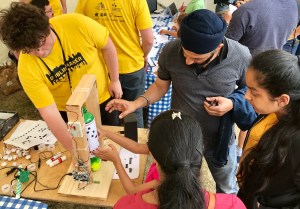
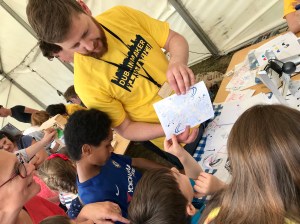
With the annual Dublin Maker fair on July 21st, DIT’s RoboSlam group of volunteer staff and students headed to Marrion Square for an action-packed Saturday. After four years of teaching visitors to Dublin Maker about build robots, we shifted focus to activities that could engage even more people at a time.
My clever colleagues in DIT’s School of Electrical and Electronic Engineering designed a booth on the theme of “Paper Programming” to teach the history and theory of using paper to program computerized gadgets that date back to the industrial loom for weaving fabric and the computer punch card.
The set of photo galleries below shows my weekend activities helping run this booth at Dublin Maker 2018. You’ll learn about and see photos of:
Getting to the fair
Setting up our booth
History of Paper Programming
Visiting other exhibits
Our activities
Fraktalismus
Scan2 Tweet
isitpop.art
Music Box
Time enough left for a relaxing Sunday!
Getting to the fair
My trip from London to the fair included a trip to London City Airport via the Docklands Light Rail on Friday. Exploring the city center of Dublin, I discovered a number of welcome changes. Namely, a second bike rental scheme has entered the city! This scheme requires locking the rental bike to a bike rack but doesn’t require using a docking stating like Dublin Bikes (of which I’m a member and enjoyed using twice this weekend). I also observed a slight increase in the use of the electric-car-charging stations. As I didn’t want to disturb my flat-mates, I dined out at Porto while reviewing calls for conference papers, and then took in a film about Oscar Wilde at the IFI. The next morning I woke early for my cycle ride to Marrion Square.
Setting up our booth
The team arrived an hour an a half before the official opening of the event, to get everything up and running. As every single activity we offered was brand new and designed for this event, we had some tweaking to do! The two main developers–Ted Burke and Frank Duignan–did an amazing job, and that enabled the rest of the crew to set up the activities. We learned a lot and had many successes at this event, and we will expand and continue to develop these activities for use in the future.
History of Paper Programming
Damon Berry and I served as the welcoming committee, of sorts–greeting people and providing introduction and background. Damon discussed the history of programming with paper, as described in the poster pictured below.
Visiting other exhibits
Before things got rolling, and on the way to pick up a lunch box, I got to visit other booths, check out the incredibly wide range of learning events, and make a few things myself.
Fraktalismus
For Fraktalismus, each participant drew one or two small sketches. Then a group of recent DIT graduates would capture the sketched image(s) and import them into a laptop.
The laptop was running a program developed by Dr. Ted Burke that applied a mathematical equation that would repeat the image in a fractal pattern. The participant could then use our computer mouse to adjust the “z” value in the equation–to flip through various iterations of the equation. The equation is included in an image below.
After selecting one fractal as the favorite pattern, the participant would then select a favored color combination. The DIT folks would print the image on glossy cardstock and provide the participant with it and an envelope to take home.
The results were artistic and consistently stunning! People of all ages got involved. I loved making my own greeting card using fractal geometry along with my hand-made sketch of a beloved fragment of London’s skyline.
Scan2 Tweet
in Scan2 Tweet, the participant used a barcode sheet with a hand scanner. Each barcode corresponded to one letter or keyboard character (space, delete, enter, for example). By scanning barcodes from this sheet, the participant could compose a short message and “Tweet” it from our group’s Twitter account. DIT’s Shane Ormonde ran this activity.
isitpop.art
Ted managed to pull a rabbit out of the hat at the last minute, getting his design-it-yourself video game programme up and running that he calls “isitpop.art”. Participants could input their own drawing to use as an icon in the game, and control the background to be an image of their choice (such as their own photo, or a video clip from the internet).
Music Box
In the Music Box activity, designed by Frank Duignan, participants received a sheet of paper with a grid for plotting musical tones in sequence. They were given a quick briefing on how the technology worked—they would color one square per row with a black marker. When this colored square passed its corresponding color sensor, a note would play. Thus, participants with knowledge of music theory were able to predict or orchestrate the sequence of notes to play a tune.
The piece of paper was attached to a drum (in this case a large drink bottle) and spun on its axis. This allowed the grided paper to pass across the set of color sensors, one row after another. A tennis ball was used to hold the bottom of the bottle in the correct place (effectively weighing it down).
We tried to use a similar system to run four small motors to operate a small robotic arm and its claw, and I suspect we will see this up and running in subsequent later events. Watching the teamwork on this activity gave a sense of what it’s like to work as an engineer, working to troubleshoot and address problems that arise with the parts.
I really enjoyed this activity and enjoyed hearing the short tunes that participants created.
Time enough left for a relaxing Sunday!
In the wee hours of Sunday morning, I hailed a cab for Dublin Airport. Landing at Gatwick, I grabbed breakfast to go and headed to the train platform. When the next train to Brighton pulled into the station, Aongus popped out to welcome me aboard for the half hour trip to the southern coast of Britain.
We spent the day on Brighton Beach, with lunch in the town and a visit to Brighton Pier before enjoying a peaceful 1.75-hour trip back by train to our place in Mile End.
Live drawing made during my sister Heather’s performance of “Hedy! The Live and Inventions of Hedy Lamar”, by Liza Donnelly.
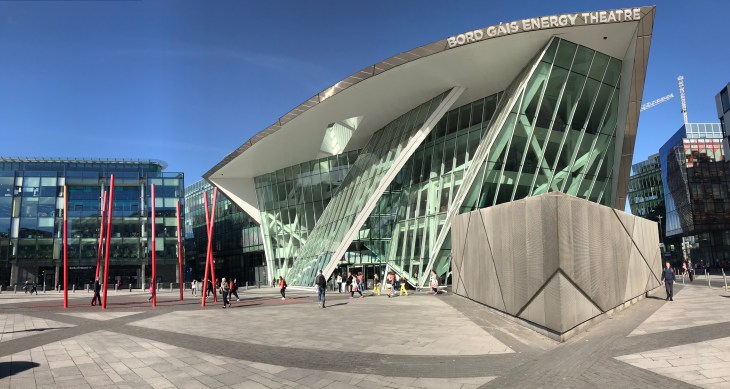
Inspirefest is an annual celebration of women in technology, and this was its fourth year. It’s organized by Ann O’Dea and Silicon Republic. I attend the very first year it was held, and was invited this year as a VIP since my sister, Heather Massie, was performing the one-woman play she wrote, produces, and performs. The play is “Hedy! The Life and Inventions of Hedy Lamar” and Heather has been performing it all over the world. Just before heading to Dublin, she spent five weeks performing around Zimbabwe and South Africa. A major highlight of this year’s Inspirefest was Heather’s abbreviated 65-minute performance in one of Ireland’s largest theaters, the Bord Gáis Energy Theatre.
I’ve inserted a small gallery below with a few pictures from Inspirefest of Heather, me, and other special guests. My colleague and frequent co-author, Bill Williams flew in from Portugal on other business and joined us for Heather’s play. I’ve also included photos with Ann O’Dea, Anne-Marie Imafadon, and Mary Carty, who I met at the first Inspirefest.
ASEE
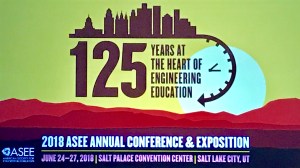
I hopped on a plane to Salt Lake City to attend my first ever ASEE conference. I presented two research papers at this event:
You can download and read the papers at the links above. At ASEE, I met many people who I’ve been collaborating with online, and developed new friendships as well. I attended many sessions, caught up with colleagues like former Fulbright scholars to DIT, Drs. Stephanie Ferrall (the incoming ASEE president) and Sheryl Sorby (a director of the ASEE), and met some all-stars like Prof. John Heywood and Prof. Karl Smith. Professor Smith has been bringing experts and theories from student development to speak at this conference for decades, and I hope to carry on his work.
Virginia Tech–my home place
I made a stopover in Virginia, en route back to London, taking a few days to work from home as well as four days of holiday to visit family and friends.
Visiting Nicky Wolmarans and Jenni Case at Virginia Tech.
Virginia Tech has one of the USA’s two university schools dedicated to Engineering Education, so I grabbed the opportunity to meet with the schools’ new head, Dr. Jennifer Case, and her colleague from the University of Cape Town, Dr. Nicky Wolmarans.
Other highlights of being in Virginia were visiting my dad, dear friends (Katie, Mary, John, Wendy), aunt and uncle (Kitty and Glen), former professor (Pam Eddy) and former student (Luanna Marins) and their families (Dave and Afonzo), some former colleagues (Tony), Virginia Beach (but for a very short 1.5 hours), and my mom for a visit to the Udvar Hazy Center (a branch of the Smithsonian’s Air and Space Museum near Dulles Airport).
Inclusive Engineering Education Symposium
Got back to London in time for UCL’s two-day symposium on Inclusive Engineering Education Symposium!
I’ve been visiting with Professors from the States the past few weeks here in London, and morphing into even more of a Visiting Professor myself!
Two weeks ago, Prof. Pam Eddy and her husband Dave arrived for a week-long visit. Pam was my PhD advisor at William and Mary and she has been an inspiration, role model, and source of advice as I’ve moved across from teaching architectural into researching engineering education. Pam had a Fulbright fellowship to Dublin Institute of Technology (DIT) in 2009. Because I’d set that very same goal—winning a Fulbright grant to work at DIT—in 2003, Pam’s advice on the matter proved indispensable. She shared valuable insight into how Fulbright and DIT operate and she helped me connect with others in-the-know. On my first working trip to Dublin, I got to interview more than half a dozen academics about how DIT works, and this gave me the context I needed to make the most of my subsequent time here. Pam and I even met local scholars together, over another spring break, also before my Fulbright, when we both found ourselves Dublin.
Pam is truly one of the most generous, energetic, and positive people I’ve ever met. I’m beyond lucky to know her and I value her advice—even if I don’t always understand the funny policy-wonk words she uses! 😜
After the excellent musical “Kinky Boots.”
Pam has featured prominently on this blog before, as she’s visited me often in Dublin and we have met up in cities all around the world: Rome, Paris, New Orleans, and Washington, DC. Now we’ve added London to that list. Her professor-husband Dave is usually in tow, and always adding interesting insight, since he’s a former engineering dean.
I’m proud to say this was Pam and Dave’s first trip to the City of London and they really seemed to enjoy the place. I think they will be back!
While here, Pam and I got to work on the journal article we are crafting along with two of my colleagues from the Irish public service. We’ve had our proposal accepted for Policy Reviews in Higher Education, and now we need to pull the parts together and synch them effectively.
Following the departure of Pam and Dave, I had the chance to catch up with another favorite professor, Ron Daniel, and his spouse, Cheryl.
With Prof. Ron and Cheryl Daniel
Ron Daniel was my professor for spring semester of my second year of architecture school. We worked closely together, along with some other amazingly dedicated students and teachers, to create a multimedia extravaganza to celebrate Virginia Tech College of Architecture and Urban Studies’ 25th anniversary in 1989. We had nine screens running simultaneously with performance artists dancing throughout the hour-long show. In preparation for that bash, we also silkscreened posters and designed and poured concrete banner stands with welded steel bases—yes, I learned to weld at Virginia Tech!
For the Anniversary show, I was most closely involved with making several of the 16mm films running on three of the nine screens. And I was one of nine diligent students running the projection booth. What a techie I was!
The following year, Ron invited me to teach film workshops to younger students, and that got me into leading activities and events for my peers. Over the next three years, I taught many workshops and also organized trips, including excursions to Charlottesville, Columbus, and New York City to hear visiting lecturers—world renowned architects visiting UVA, Ohio State, and Columbia University.
When I was nearing graduation from VT’s Bachelor of Architecture program, I went to Ron, expressing interest in the teaching role I’d seen older students doing in the past. I hadn’t realized they were actually designated as lecturers. This was a full-time faculty role, and Ron thought I fit the bill. I was soon awarded this one-year stipend position, and looking back, it seems that may have been my first fellowship.
The year lecturing at VT was a success so I continued on to earn a post-professional Masters in Architecture that would allow me to teach in the future at the university level in architecture. Ron was one of my three advisors for that Masters, and the thesis document was good enough to snag a job working as an intern architect in Switzerland for a year, at Studio Martin Wagner. I also helped teach film that year, for the SCI-Arc center Martin directed.
For the past two years, Ron has been working in London. We finally got a chance to catch up in the neighborhood in Barnes where he and Cheryl have lived for the past year. Aongus and I throughly enjoyed visiting in their home, dining out with them, and attending a jazz performance together. Photos of the Cadillac Kings are included in the photo gallery below. What a hoot!
The instrumental roles professors have had in my life is clear. I’m glad I’ve stayed connected with many who have helped grow my abilities.
Prof. Brad Grant
In the past week, for instance, I’ve communivated with Prof. Brad Grant and Prof. David Leslie, who I learned from at Hampton University and William and Mary, respectively. I always enjoy hearing from them! Their kids—Dr. Rae Wynn-Grant, Asa Wynn-Grant, and Prof. Tom Leslie are true inspirations as well, and are always raising the bar higher.
And I’m doing my bit to reach out and support others in return. I hope someday the students I’ve worked with will have similar things to say about me. I cherish the ongoing relationships I have with my former students, many enabled by Facebook. Just this week, another one earned his license to practice architecture in the USA. Monteil Crawley joined his wife, Kristina Crawley, with this status. Monteil worked on the design of the Smithsonian’s new museum of African-American History. They both took my second-year architecture studio and Architectural Ecology class. I was Krissy’s Bachelors thesis advisor. Krissy went in to get a Masters from UVA. They have two bright and beautiful children.
Profs. David and Thomas Leslie
Today, I make a point to extend the kind and gracious support to the students I meet, as my professors extended me.
Kendall Brantley and Aongus and me at the Vaudeville Theater
For instance, a colleague of mine from Hampton has a niece, Kendall Brantley, who has been studying at NYU here in London. We’ve met a few times, and I took her for dinner and a play last week, before her trip home.
A PhD supervision meeting with Thomas Empson
I hope the relationship I’m developing with my new PhD advisee, Thomas Empson, will extend far into the future as well. Thomas is a doc student at London South Bank University, and I’ve just been appointed Visiting Professor there to aid in my work with him. Our working sessions over the past few months have been quite successful and I have the highest of hopes for him. He’s a bright student, well organized, and an extremely hard worker.
One of my current supervisors, Prof. John Mitchell, helped me connect to LSBU as a way to meet one of my training objectives. You see, my current fellowships aims to equip and position me to secure funding for larger grants. This is so that, someday, I can lead an independent research team. I’m gradually gaining skills in supervising and in publishing. And I’m connecting the people I know from the USA with scholars I meet here in Europe and those I’m working with globally, through networks like REEN and SEFI.
With London superstars Emanuela Tilley and Folashade Akinmolayan
I’m receiving this training as a Marie Curie Research Fellow at University College London, where I’m also officially classified as a Visiting Professor (which will help me continue collaborating with scholars here even after my two-year fellowship is done, for an additional three years or more). I’ve been learning so much from my new colleagues, like professors-in-the-making Folashade Akinmolayan and Emanuela Tilley.
Building a professional research network, connecting scholars across the ocean, and learning to supervise doc students are all important in building my skills as a researcher. And, they are a lot of fun as well!
My research supervisor in London, Professor Nick Tyler, is a global expert in transportation systems, with expertise in accessibility. He travels around the world advising transportation planners–and his research also has gone a long way to improve how Transport for London serves people with mobility challenges and various forms of disability.
Transportation Design
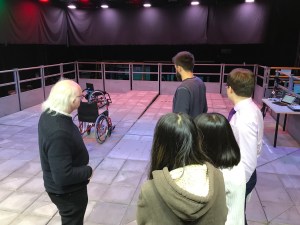
A view from the testing platform, with Professor Tyler and some MSc students.
Nick offered a Masters-level class at University College London in Term 2 and I got to attend the opening day which was held at the research facility he heads, located on the Northern Line up in Tufnell Park.
On the opening day of this course on design for transport engineers, Nick’s students and I experienced what it’s like to navigate common street conditions while blindfolded, hearing impaired, or using crutches and wheelchairs.
The photo gallery provides a glimpse of this opening day. And, YES, it did feel like Back to the Future with Dr. Emmett Brown, who you likely remember as “Doc.”
The testing platform at PAMELA
Professor Nick Tyler demonstrating mobility topics
Equipment at PAMELA
Professor Tyler’s opening lecture
Giving it a go.
Entry to the PAMELA research facility..
About PAMELA
PAMELA stands for “Pedestrian Accessibility Movement Environment Laboratory.” The lab’s website explains that “PAMELA is a multisensory laboratory for the assessment of pedestrian movement.” In other words, it is a research facility with equipment for simulating real-world conditions at full scale so researchers can study how people with differing abilities deal with specific variables (sounds, ambient noise, varying light levels, tripping hazards, steps, etc.).
“Constructed between 2003 and 2006, the PAMELA laboratory is a novel and highly flexible facility,” UCL’s PAMELA webpage explains, “allowing full-scale pedestrian infrastructure to be built and tested to enable thorough assessment and evaluation. The structure includes a flexible floor surface that represents real ground conditions with interchangeable surface materials and is supported by a range of sensing equipment.” The webpage also describes specific research studies that have made a tremendous difference and yielded huge financial savings in London.
In 2017, Nick secured a £9m grant from EPSRC via its UK Collaboratorium for Research on Infrastructure and Cities (UKCRIC) program. This will fund the construction of a new and improved version of PAMELA, called PEARL (People-Environment-Activity Research Laboratory).
Connecting UCL and DIT
In May, during my two visits to Dublin Institute of Technology (DIT), I learned that my colleagues at DIT’s transportation engineers, led by Dr. Lorraine D’Arcy, received validation to launch a new, interdisciplinary Master of Science (MSc) degree in Transport and Mobility. I look forward to helping Lorraine connect with Nick so she and DIT can learn from–and hopefully, contribute to–the wealth of experience and knowledge Nick has accrued.






 Thus, one of my top accomplishments of this conference was connecting my colleagues from the CDC and ASEE. Soon Stephanie and Chris will be working together. They will connect engineering educators and students with the CDC’s new initiatives to increase physical activity across the US population and to improve public transportation, particularly with regard to accessibility. Stephanie will be able to tap into Chris’s experience and policy research and Chris will access Stephanie’s national contacts to help achieve CDC goals.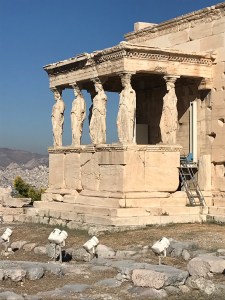


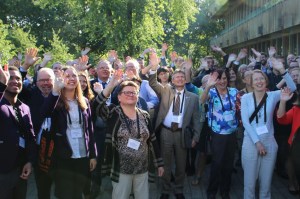 I’ve just attended the world’s friendliest conference, the European Society for Engineering Education (SEFI). I’ve never felt more welcome and invigorated by the exchange of ideas at a conference. This was my third SEFI, and while I’ve always felt incredibly welcome here, I now know people from all corners of the world by first name and they greet me likewise.
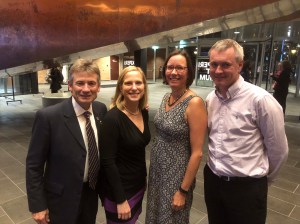 Tuesday started bright and early with a keynote speech–delivered by Dr. Stephanie Farrell who was a Fulbright Fellow to Dublin Institute of Technology (DIT) while I was a Marie Curie Fellow there. Although each morning started with a keynote lecture, for me, Stephanie’s was the most insightful of all. Attendees asked dozens of questions at the end, with another dozen people standing in line to ask questions afterward.
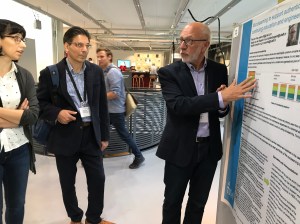 Following the Thursday morning keynotes, we enjoyed a fun new poster-presentation format. Poster authors got 30 seconds each to pitch their topic to the entire delegation, and then we went to visit their posters. This format raised the profile of posters as well as attendees’ interest in discussing them.
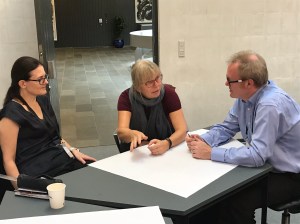 After lunch, I attended a session on “Increasing the Impact of your Journal Publications” conducted by editors of the Journal for Engineering Education, Dr. Lisa Benson and Dr. Cindy Finelli. For dinner, the EER Working Group Board met in town.
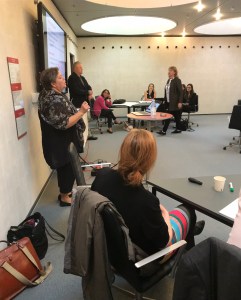 After lunch, I presented as part of the session “Reviewers! Reviewers! Reviewers!” In this session, editors of four journals explained what they are aiming to publish and how to write good reviews. I was representing IEEE Transactions on Education, the journal for which I am Associate Editor. We broke into small groups to identify characteristics of a good peer review and this was followed by a very insightful whole-group discussion.
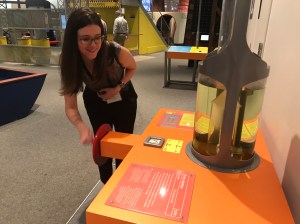 Late in the afternoon, everyone at the conference boarded buses for Copenhagen’s Experimentarium, a really fun science-learning center. I played with the educational exhibits alongside Stephanie’s family and other colleagues from DIT, UCL, and Fulbright. There was an awards ceremony, where our UCL colleague, Dr. Eva Soerensson was honored, and I thoroughly enjoyed the conference “gala” dinner. I sat with Belgian, Dutch, and British colleagues at dinner. We got a bit rowdy and ended up building towers from paper cups and discussing the feature of ubiquitous household appliances.
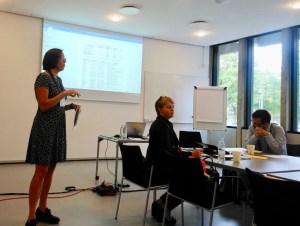 The final day of the conference had many individual poster and paper presentations, including a discussion session/presentation I delivered on patterns I’ve found among doctoral dissertations that have used phenomenology to study aspects of engineering education.
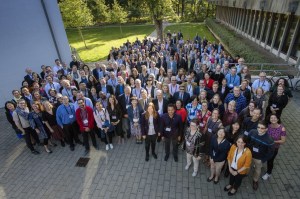 I enjoyed dinner with close friends after the conference attendees dispersed. I got to explore Copenhagen a little on Saturday morning before flying off to a new conference in Greece.






























 With the annual Dublin Maker fair on July 21st, DIT’s RoboSlam group of volunteer staff and students headed to Marrion Square for an action-packed Saturday. After four years of teaching visitors to Dublin Maker about build robots, we shifted focus to activities that could engage even more people at a time.
 The set of photo galleries below shows my weekend activities helping run this booth at Dublin Maker 2018. You’ll learn about and see photos of:


 It’s been a hectic few weeks, beginning with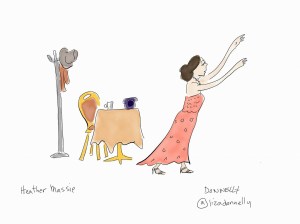








 Ireland by Chance