At the very end of June, after a long day driving around the Ring of Kerry we headed toward Dingle with a stop off at Inch Beach during tumultuous weather.
The weather calmed as we arrived at Dingle’s Brambury Guest House and our hostess encouraged us to hop in the car and drive Slea Head. With now-perfect weather, we shouldn’t risk missing the views! The day before, we’d abandoned plans to drive the Skellig Ring due to rain and low visibility.
Ventry Beach
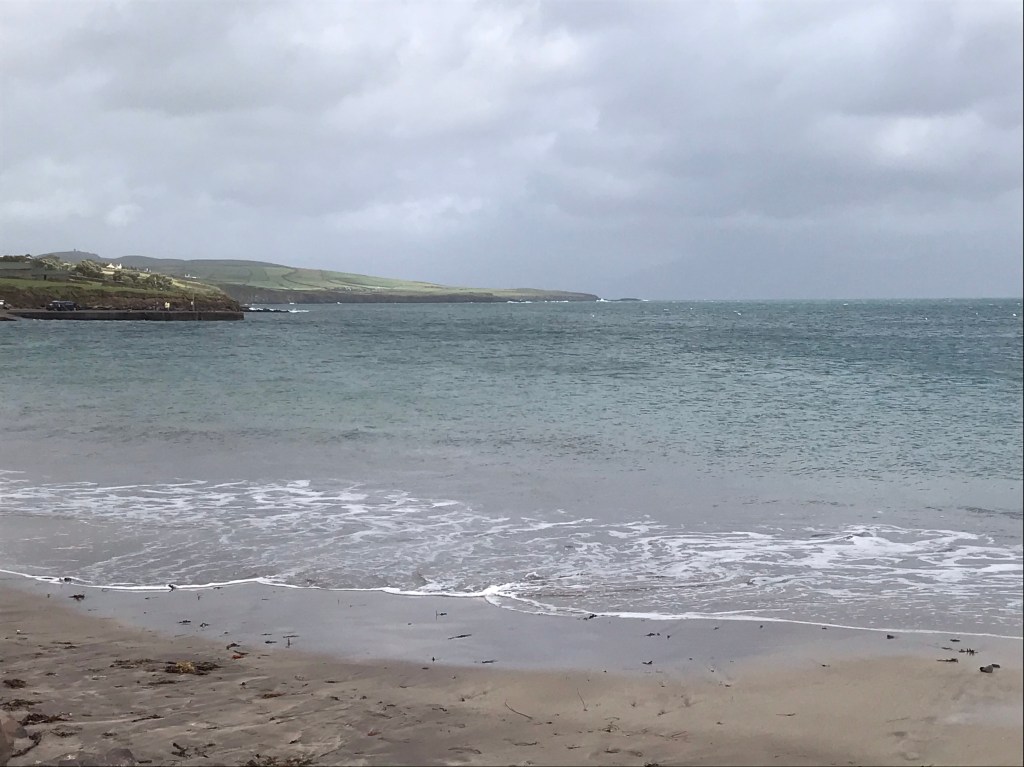
Our first stop after leaving Dingle for Slea Head was Ventry Beach—a bit cold, but pretty in the glimmers of sun.
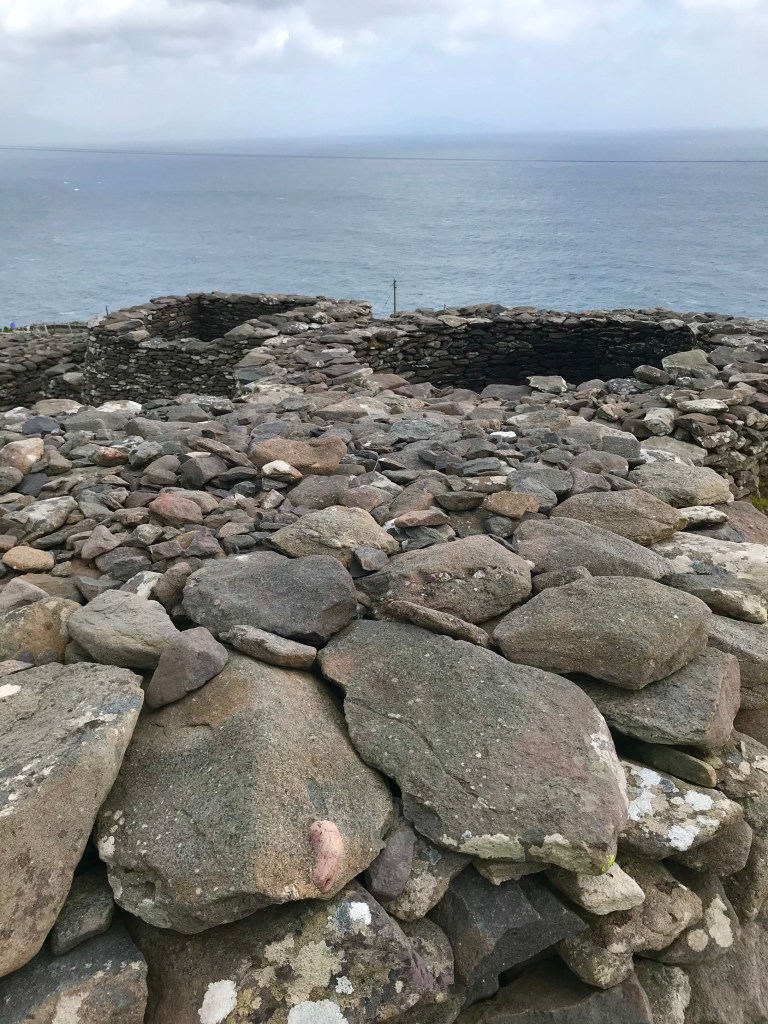
We stopped for a glimpse of an old fort that is tumbling into the sea but it wasn’t open. Frankly it doesn’t look either safe or as if it can be saved from the sea. But there is a gift shop that was just closing its doors when we arrived:
The cliffs here are impressive, and the fort is sliding right off. It’s not pictured, as all I could capture was scaffolding and fence.
Bee Hive Huts
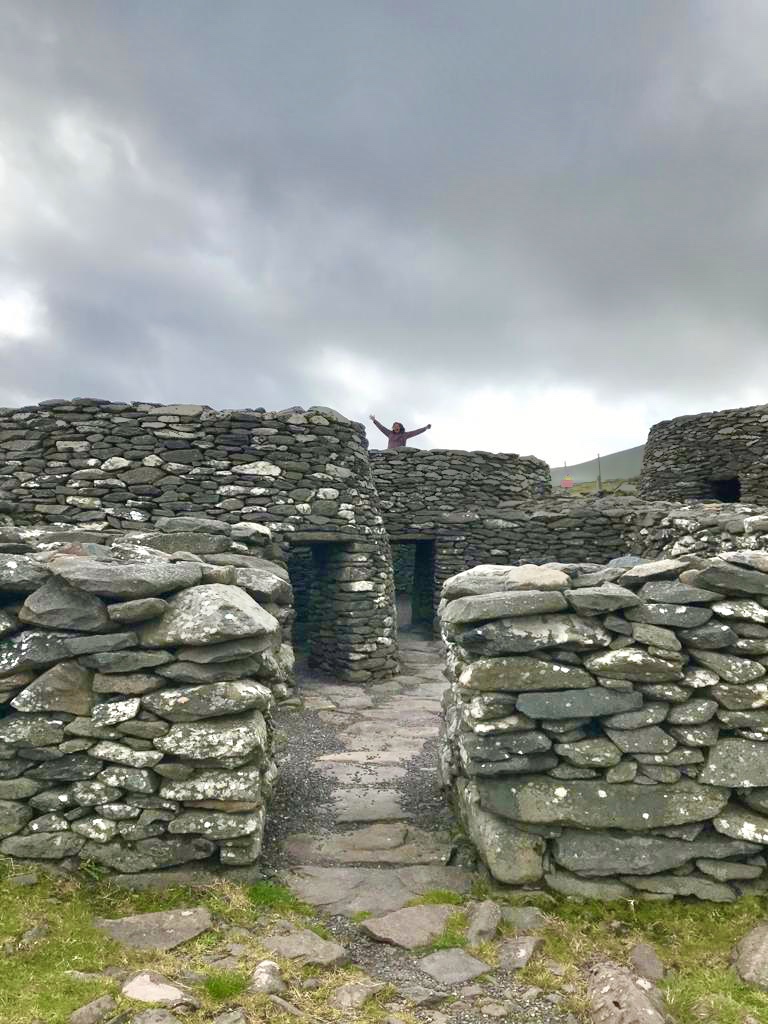
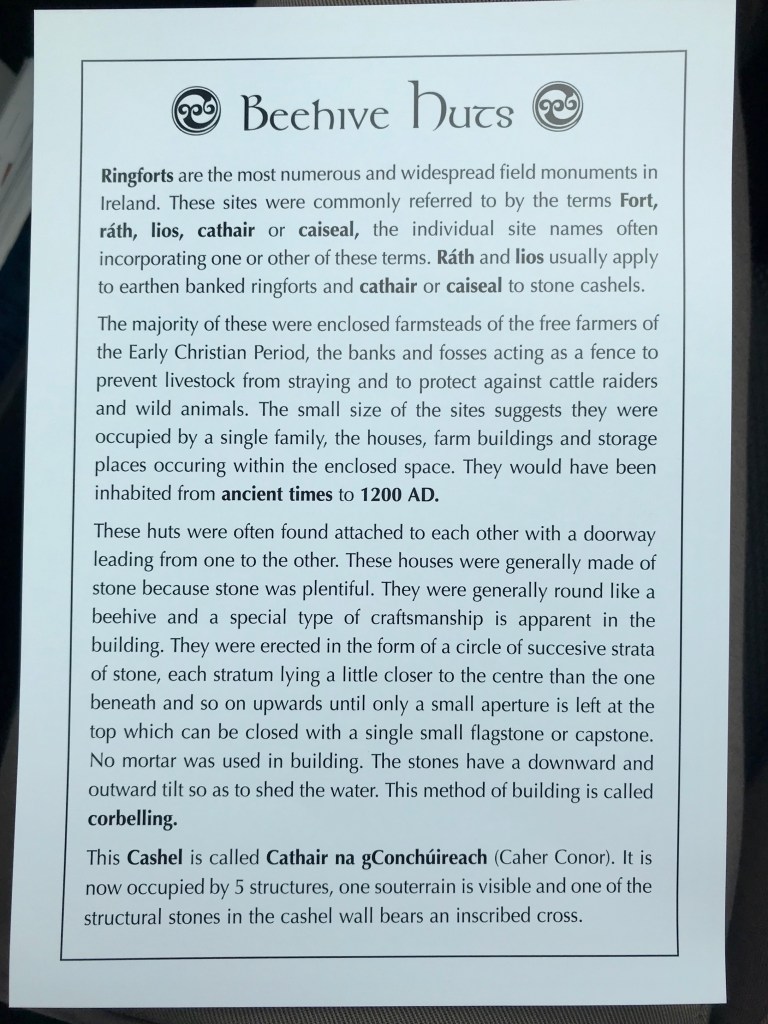
Our next stop was the Beehive Huts, a cluster of houses situated within one large circular compound.
I’d guess that you must pass over a farmer’s land to arrive at here from the road. I say this as the site is publically maintained but there’s a man collecting a €3 fee per person.
Many such sites exist on privately-owned land and can’t be viewed (without great will and determination). Paying €3 is the easy way to go! It a fascinating place to behold.
The €3 got us each a cess and a copy of this information sheet:
Slea Head
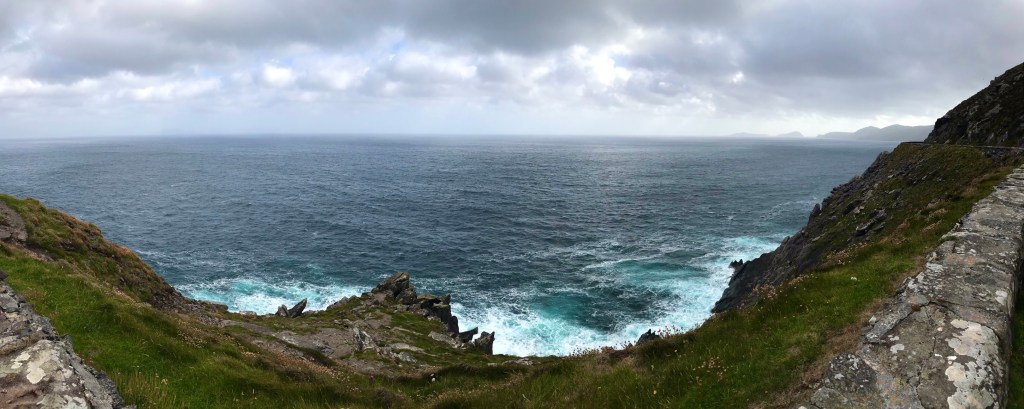
The very western end of the Dingle Peninsula is called Slea Head. The Atlantic pounds these cliffs, day in, day out.
The water is so very blue!
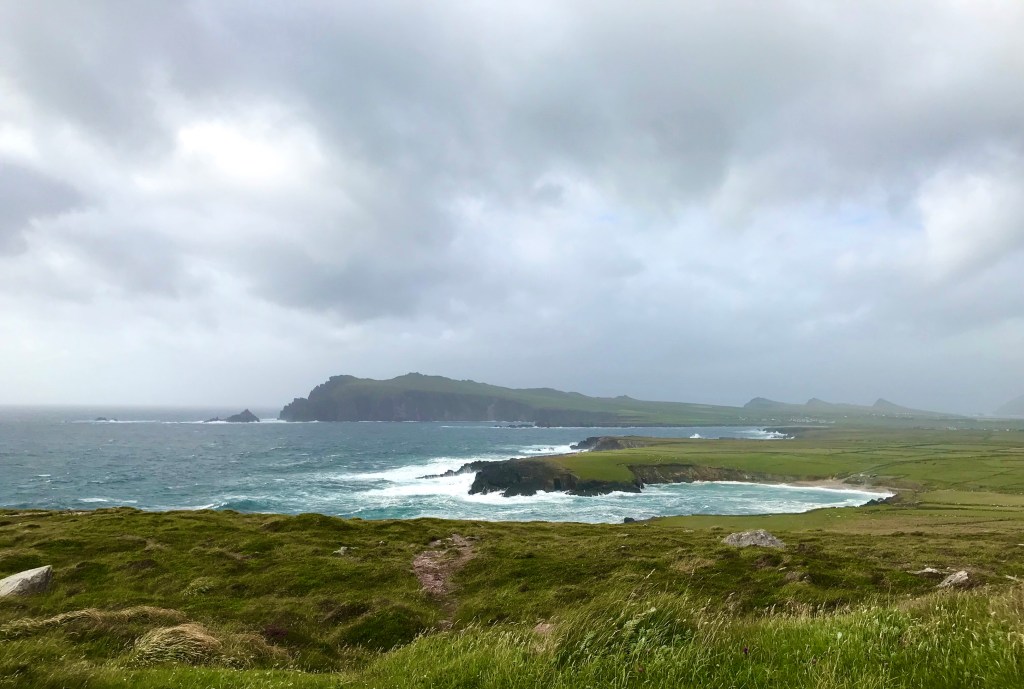
And there are views of the Blasket Islands, just beyond Slea Head:
The bit of land shown below has always stayed in my memory, since my first trip around Slea Head in 2003. It’s less dramatic in a camera phone photo, as it gets flattened out. In person it’s quite impressive.
Gallarus Observatory
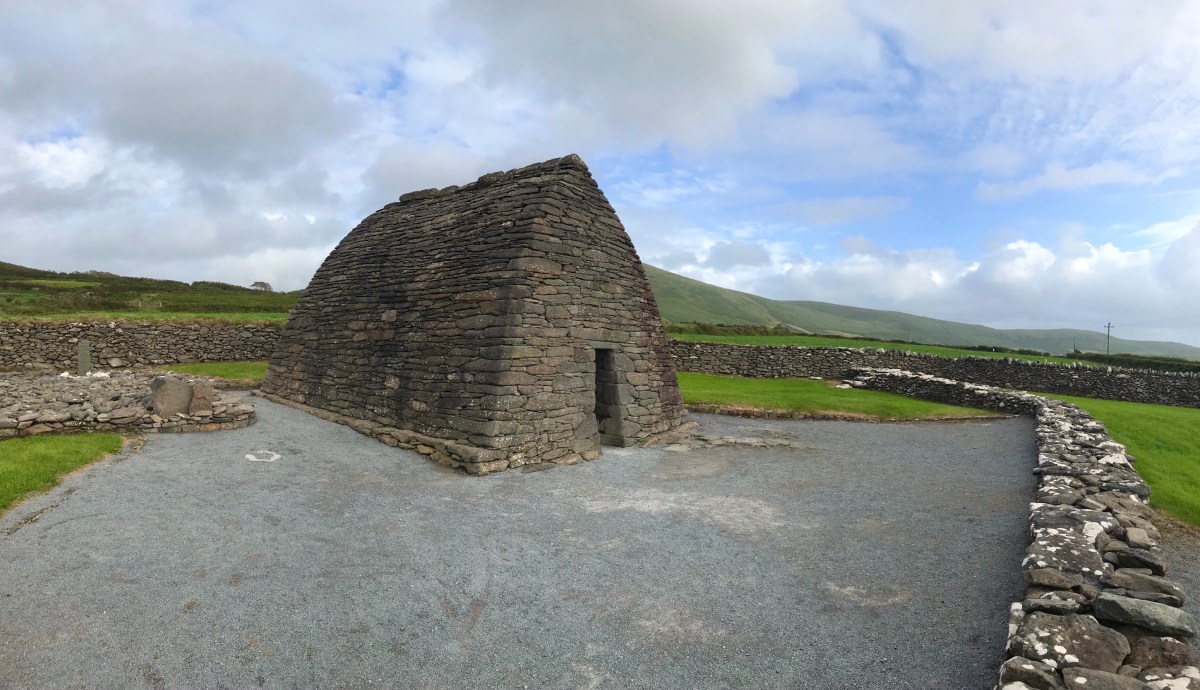
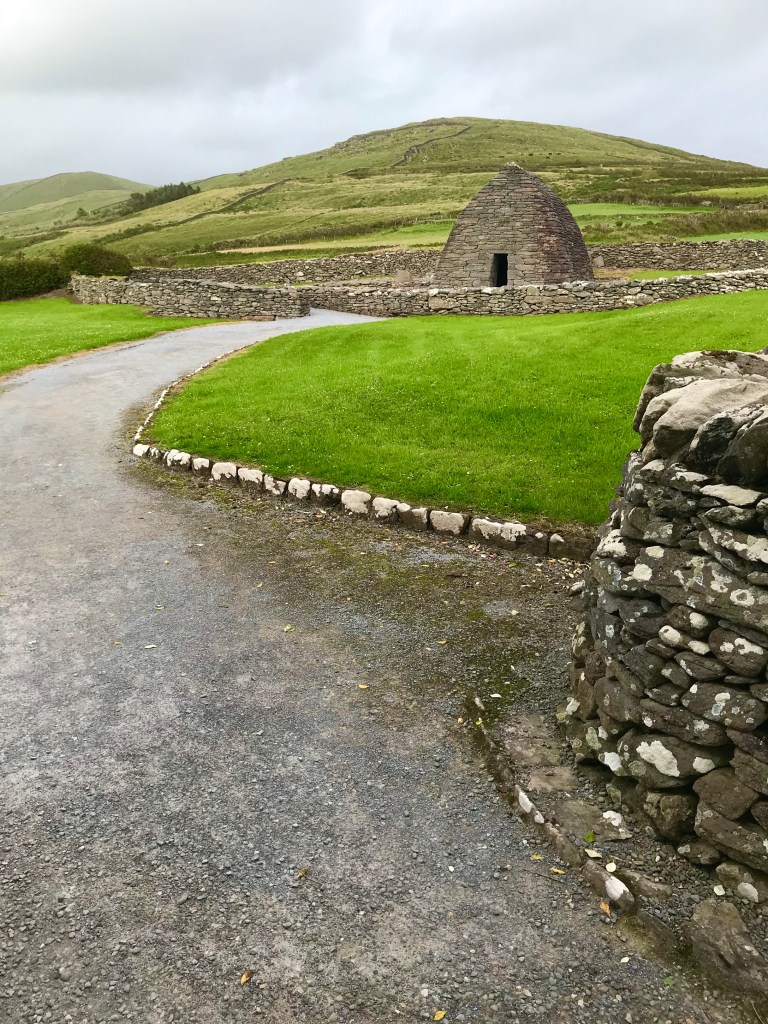
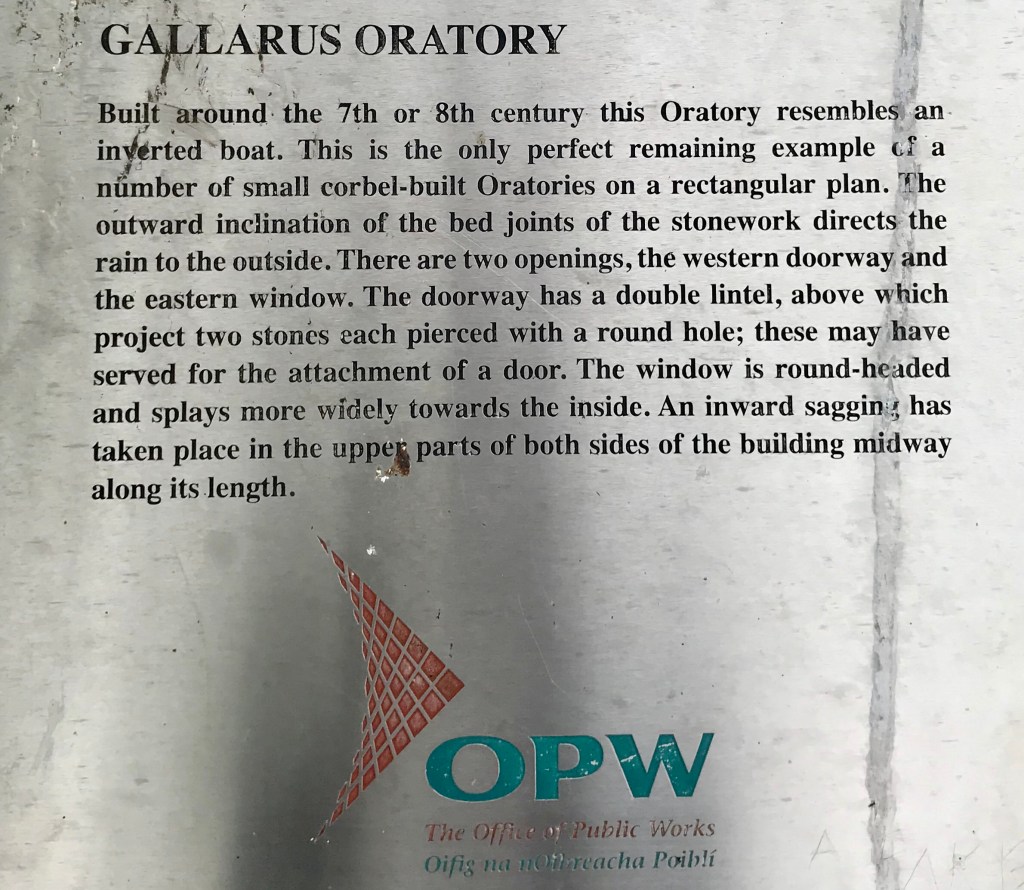
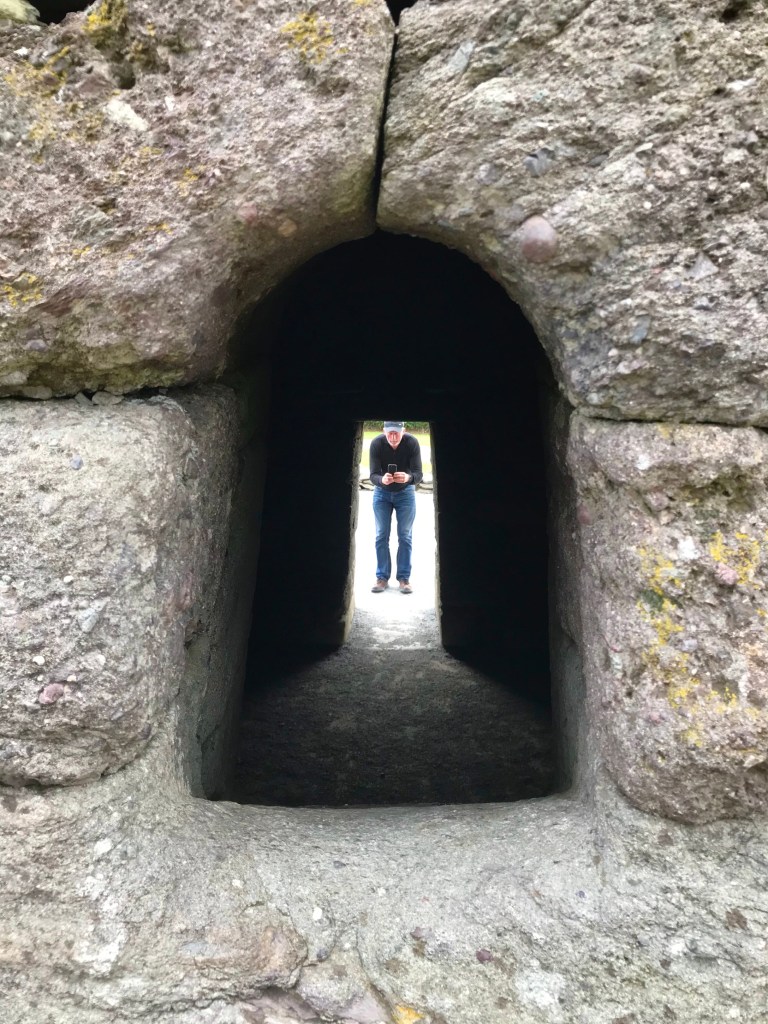
An addition, indelible, memory of the 2003 trip was our visit to Gallarus Observatory, an ancient church of dry stack stone. Not a bit of mortar was used. Yet the place still stands today. Amazing ingenuity and craftsmanship.
This plaque explains how the edifice was constructed:
Indeed, during Europe’s Dark Ages, when most knowledge was forgotten, monks were hard at work on the nearby Blasket Islands, copying religious texts by hand and keeping literacy alive.
It is awe-inspiring to think of what a few dedicated and hard-working individuals were able to do for humanity.
Leaving that kind of legacy is why I became an architect. But today, instead of designing buildings, I design with words.
Kilmalkedar Church
I find the hour or so I spent at Kilmalkedar Church in 2003 is also etched in my being. That’s why I wanted to share it with Aongus as well. It’s just a few minute’s drive from Gallarus Observatory.
Fortunately we saw a humble little print out on the wall of the Observatory gift shop (outside, as the shop itself was still closed in the aftermath of Lockdown). It told us the name of the church so we could search for it on Google Maps.
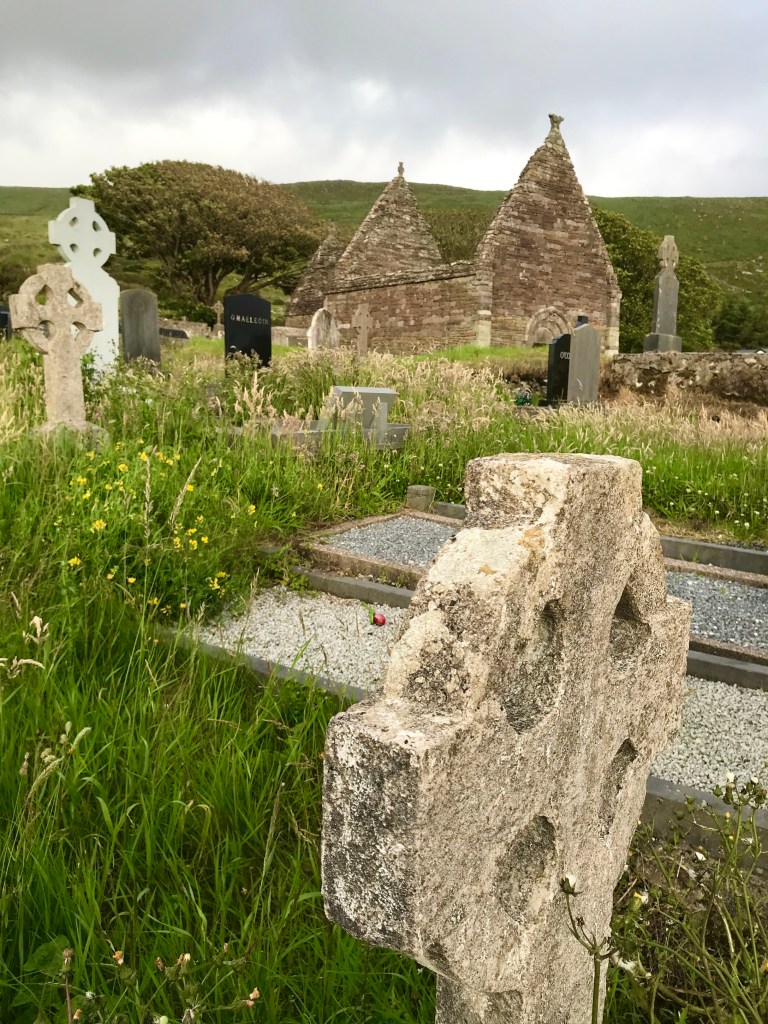
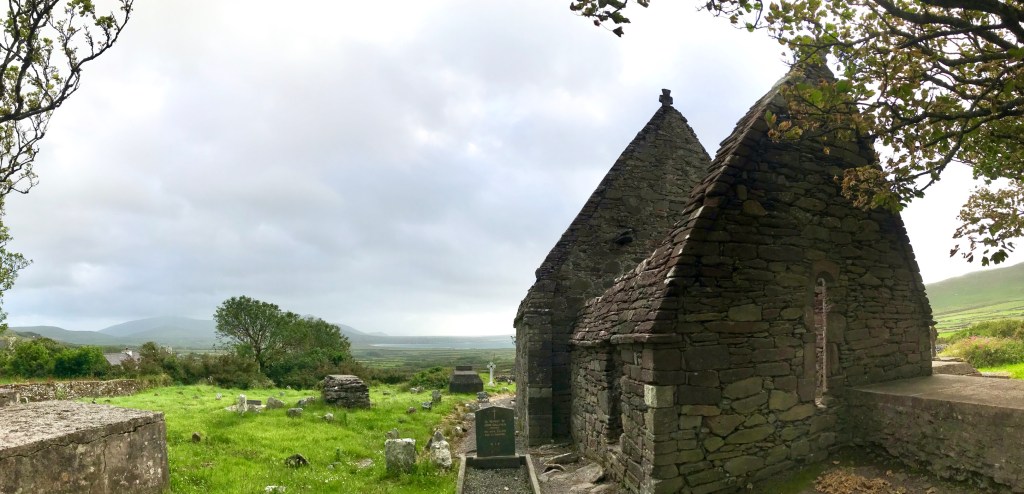
Kilmalkedar Church is surrounded by a cemetary.
It was built in the 1100s, and is thus much newer than Gallarus Observatory which may date back as far as 600 AD.
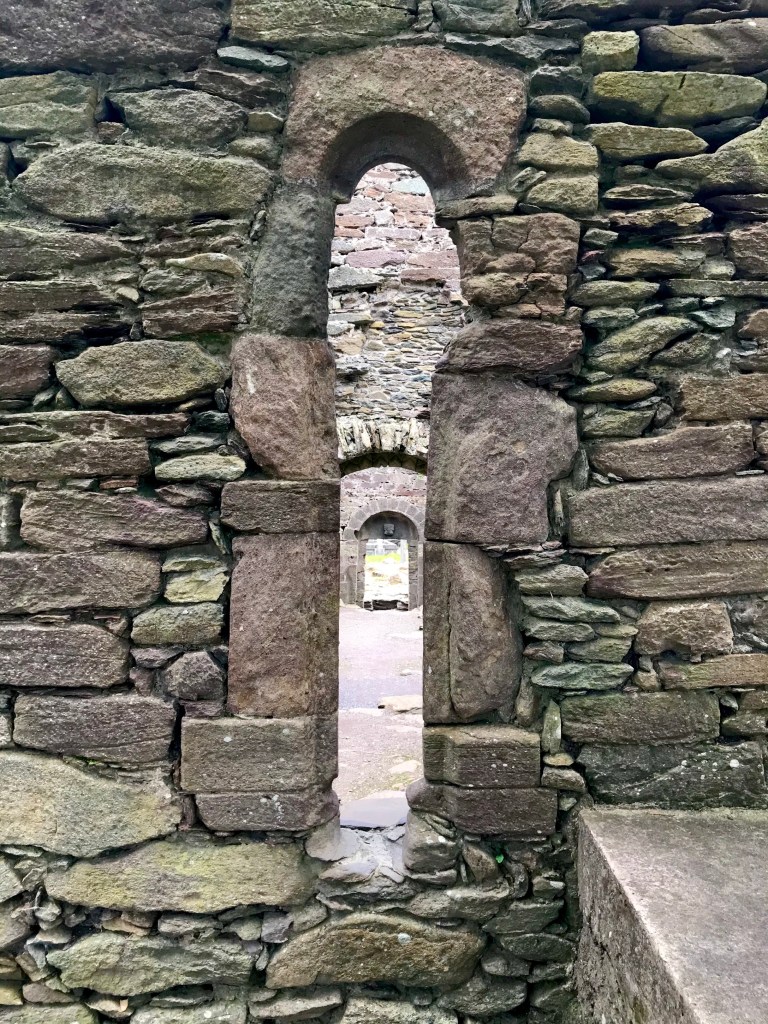
In true Irish fashion, the cemetery extends inside the church walls.
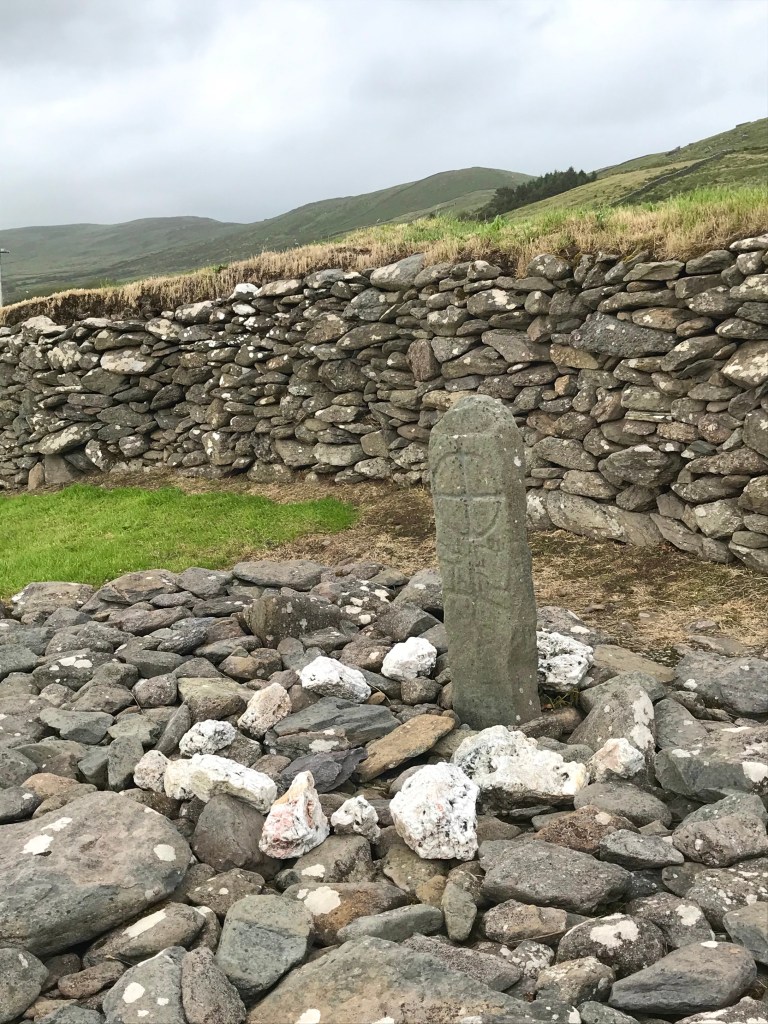
And you’ll find ancient markers here,
and there!
The drive around Slea Head offers thousands more fabulous views, not captured here, and many opportunities to stop and explore the many gorgeous (but cold) beaches.
I wish for you a sunny drive around this peninsula someday, and many happy returns for Aongus and me as well.
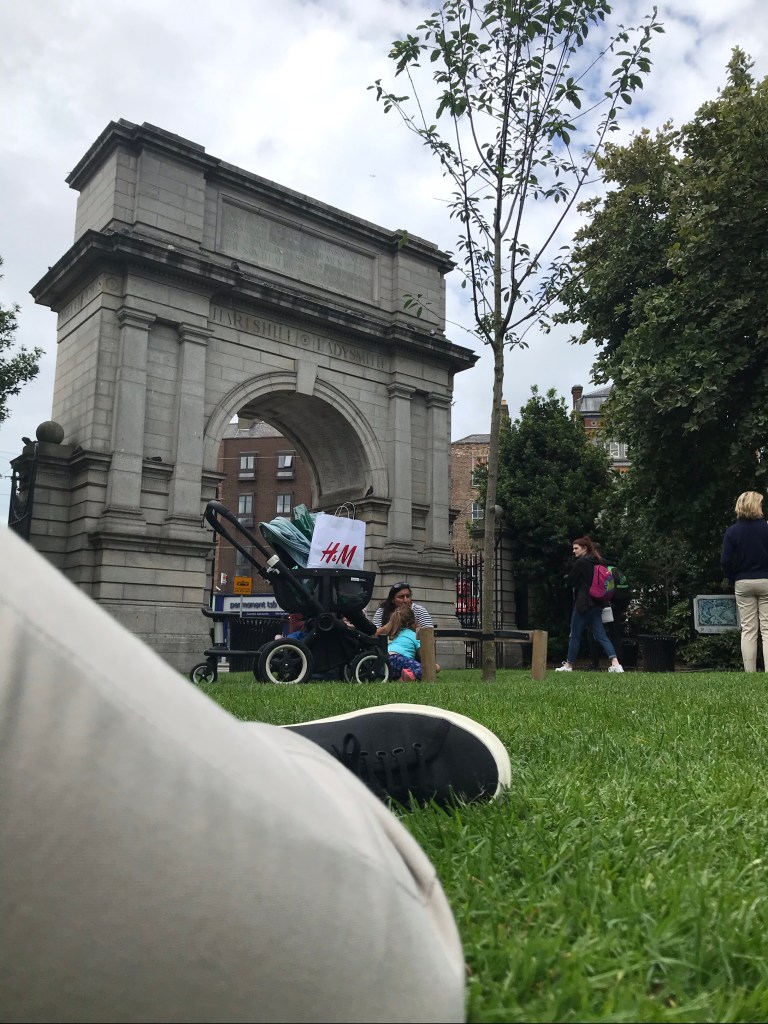
The zone of town around Grafton Street is ripe for pedestrianization. Right now, Dublin City Council is testing the use of street space for people rather than car occupation. Aongus and I are delighted to support that test!
It’s lovely to be in this quarter when you’re safe from cars, as we discovered during the height of lockdown:
Since lockdown started in mid-March, Aongus and I had gone months with no meals out.
We pretty much waiting until the government opened the country for internal travel to start eating out.
Awakening for coffee
By June 21, it was finally time for our first sit-down coffee in Dublin since lock-down.
We sought out a little pop-up container shop at St. James’s Gate, based on a Twitter recommendation from Ciran Cuff. I wanted to support the use of this greyfield site (location of a former gas station), in the hopes the land gets assigned a greener use in the future than petrol sales.
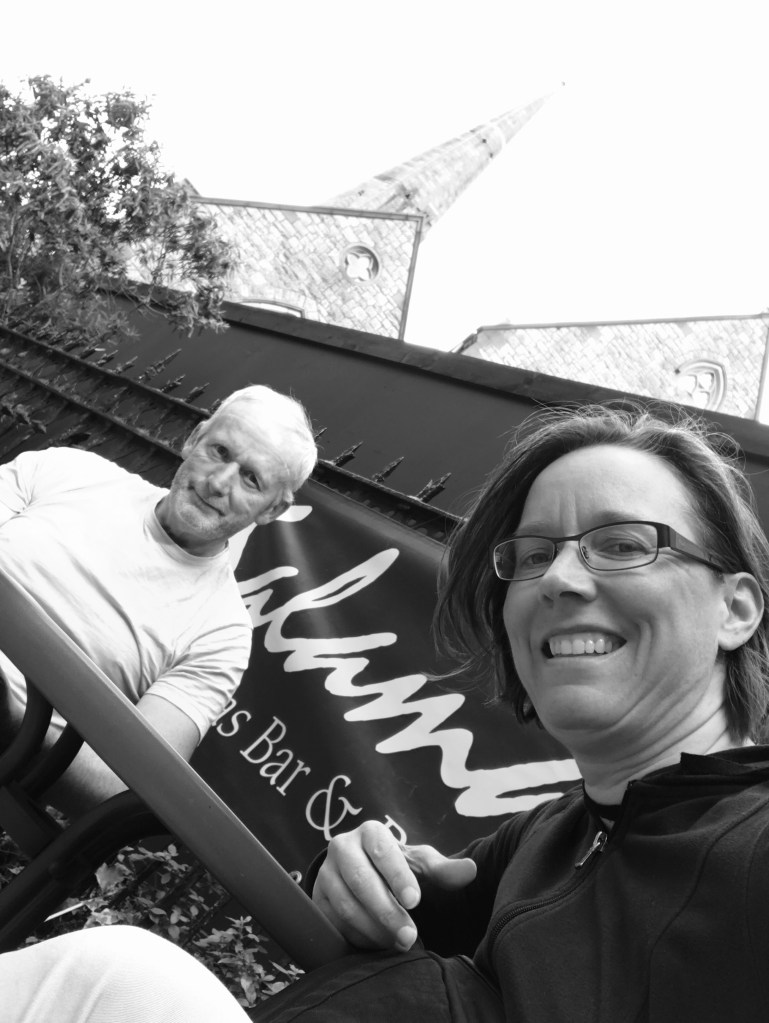
They’re using a shipping container to house the shop itself, and they provide outdoor picnic tables in the back. It was an ideal first stop for the day’s in-town cycling adventure on the southside of the city.
Such a joy to be outside!
First Dinner Out, Post-Lockdown
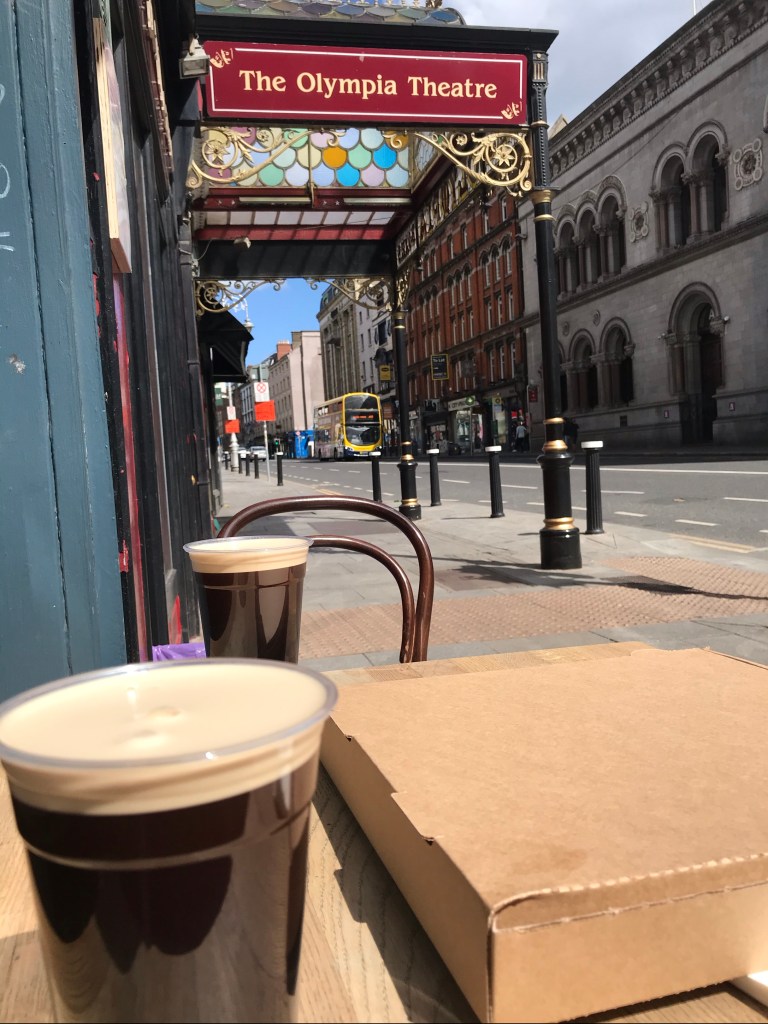
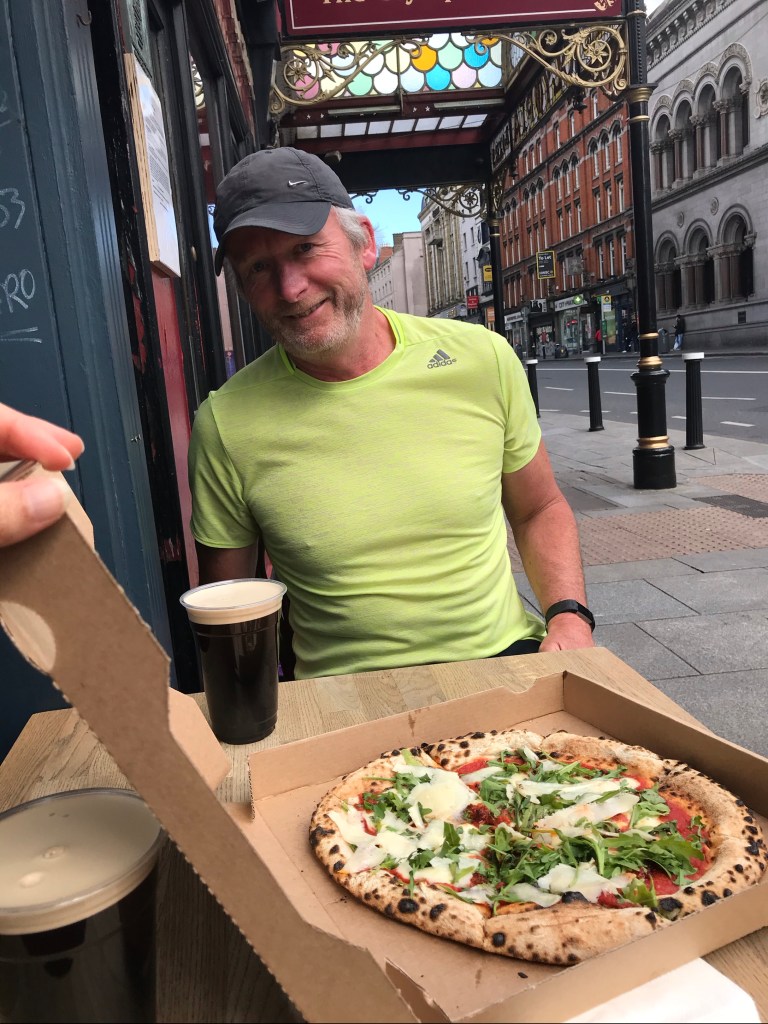
Later that day, on June 21st (and well after the 20km zone opened), we were overjoyed to find a street-side pizzeria offering a couple of sidewalk tables. They had gotten their Guinness tap up and running earlier that day, and we got to sit down and enjoy pizza and a pint in true Irish-Italian style!
We’re delighted that Dublin is re-awakening and we hope to see more street-side dining. Yet, we hadn’t eaten out again here in Dublin until today, August 1st. We have gotten so accustomed to cooking and eating at home, except when we’re venturing far from home.
Instead of traveling far outside of Dublin over the bank holiday weekend, we stayed here in Dublin. We stayed in town for a few reasons: (1) Hotel reservations outside Dublin were somewhat hard to come by for this three day weekend, and quite pricey. (2) We wanted to show support for the pedestrianization trials going on in Dublin over four weekends. (3) We exhausted ourselves the weekend prior by cycling 50 km in one day during variable Irish weather. (4) Aongus is studying for a big test–cramming a three-year degree into four months.
The pedestrian experience of Dublin town did not disappoint!
We really enjoyed the car-free areas. Dublin City Council is still allowing the flow of traffic (heavy traffic at that) into and out of the multi-story parking garages in the town center. But they put people in place during these trials to direct the automobile drivers and help with “traffic calming,” so it’s not the wild-west free-for-all of drivers heading into these garages that has become the norm.
I’m baffled that so many drivers disregard pedestrians in these areas most days. It’s clearly a pedestrian-centric area but drivers barrel on through and expect pedestrians to scatter in their wake.
Last Saturday, we shopped at the ILAC center and wandered the walkable streets, Henry, Grafton and surrounds.
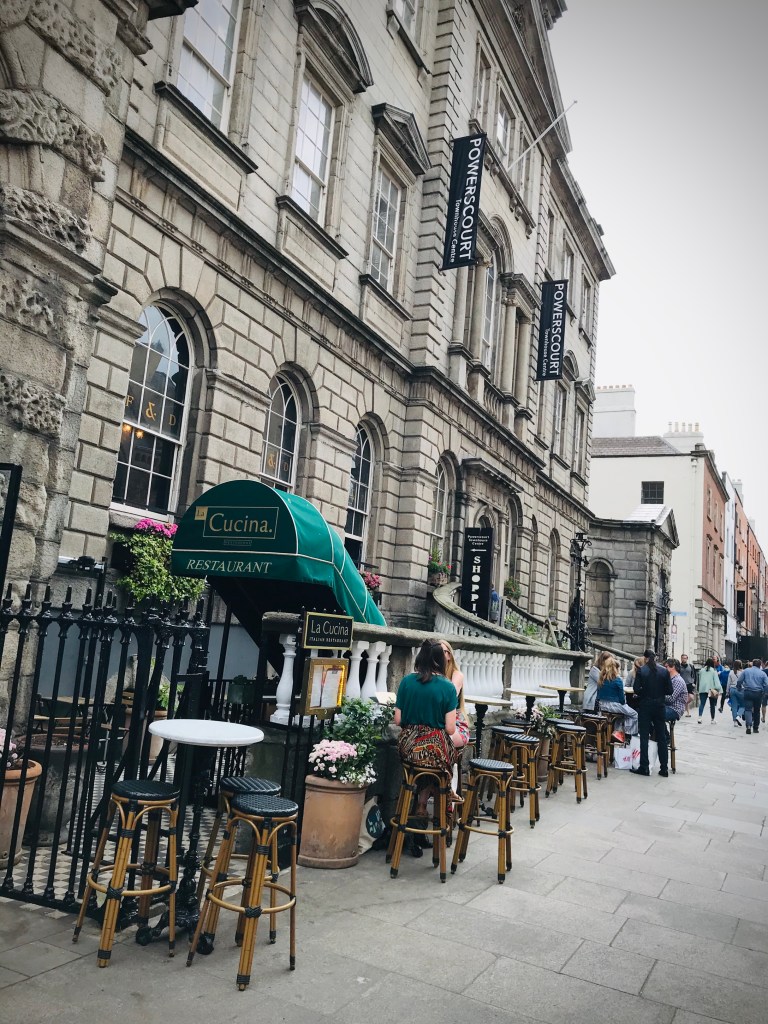
We looked for a pleasant place to sit outside and eat. We found ample selection and couldn’t decide on just one… so we ate twice. Yep, back to back.
Tables in the Street!
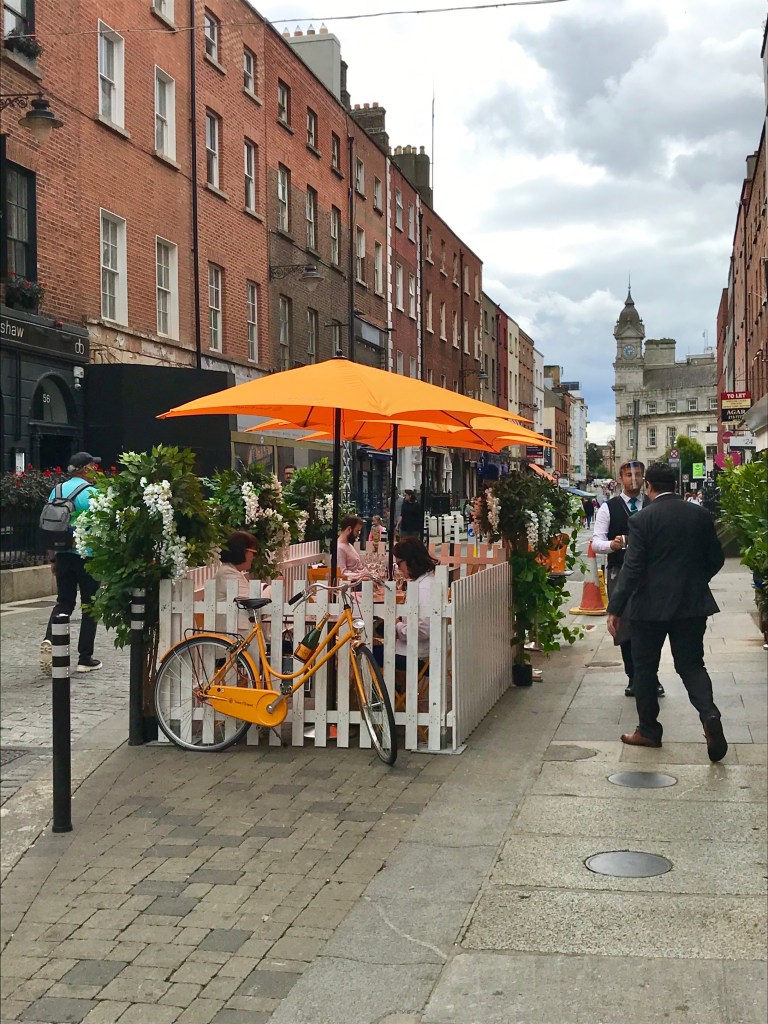
We had our first encounter with “Sole,” which opened while we were living in London. They’re part of the pedestrianization trials and are providing really pleasant and visually pleasing on-street dining on weekends. The manager said they were getting permission to double the size of the on-street area the following weekend.
We each ordered a steak and blue cheese salad. Amazing!
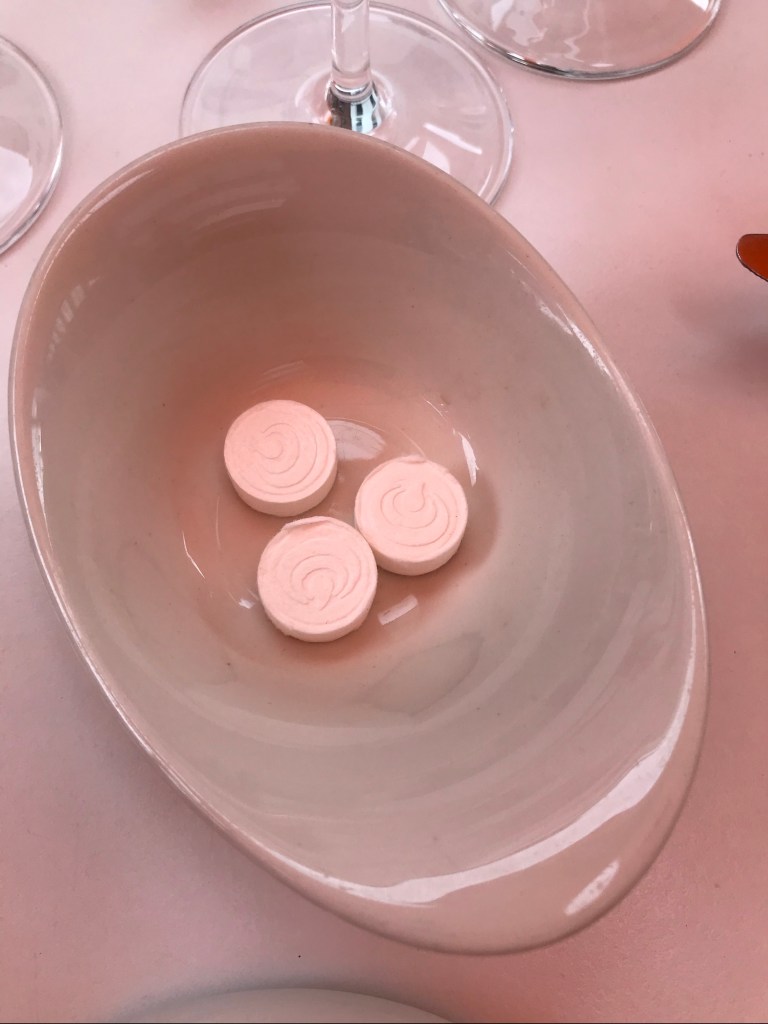
There were little bowls with–mints?–on the table when we arrived. Seemed odd, as mints usually come after food. But the waiter showed up with a pitcher and poured water over them. They were actually little cloths for freshening up!
The deserts our neighboring diners ordered looked fabulous too, but we decided to eat light for lunch and to enjoy an early dinner at another place.
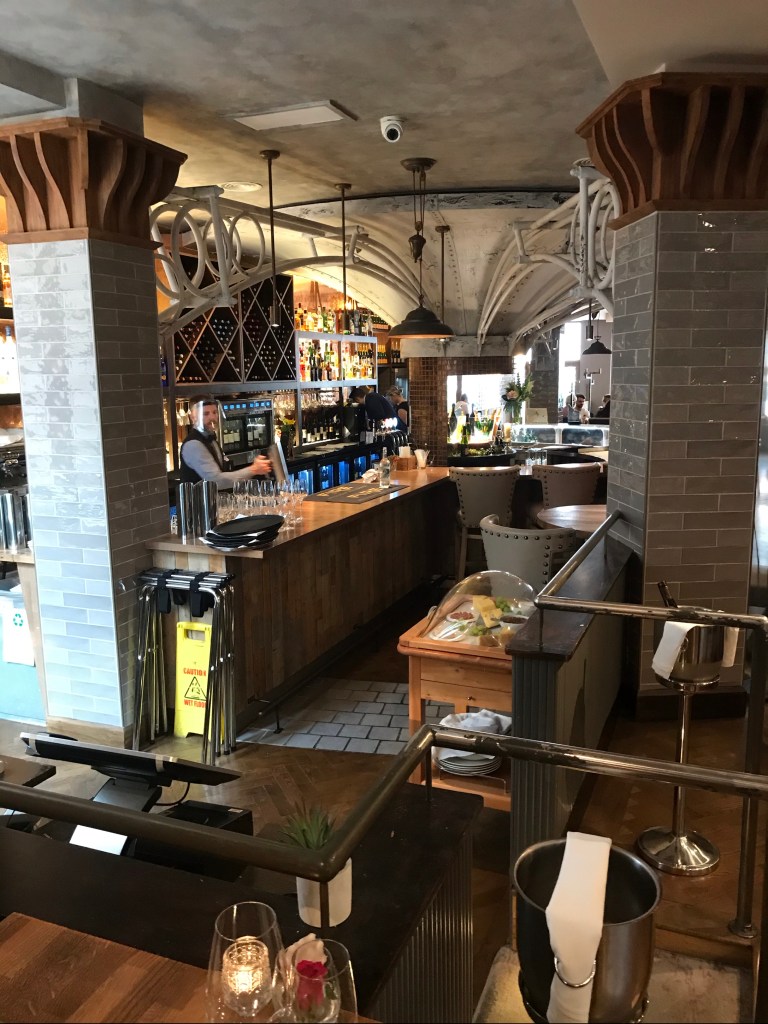
Oh, and I wanted to add that the interior design of Sole was pretty spectacular as well. We’ll be back! Soon!
After some shopping, then lounging in Steven’s Green and watching the people swirl past, we sauntered down Anne Street, where the businesses have been keen to pedestrianize. News reports say the Council raised the sideway in the fenced-in areas shown below over the past week. Hoping to get out later today and see for myself.
Around Anne Street, we found a few moment that reminded of us London and one of the neighborhoods where we lived while we were there: Shoreditch E2.
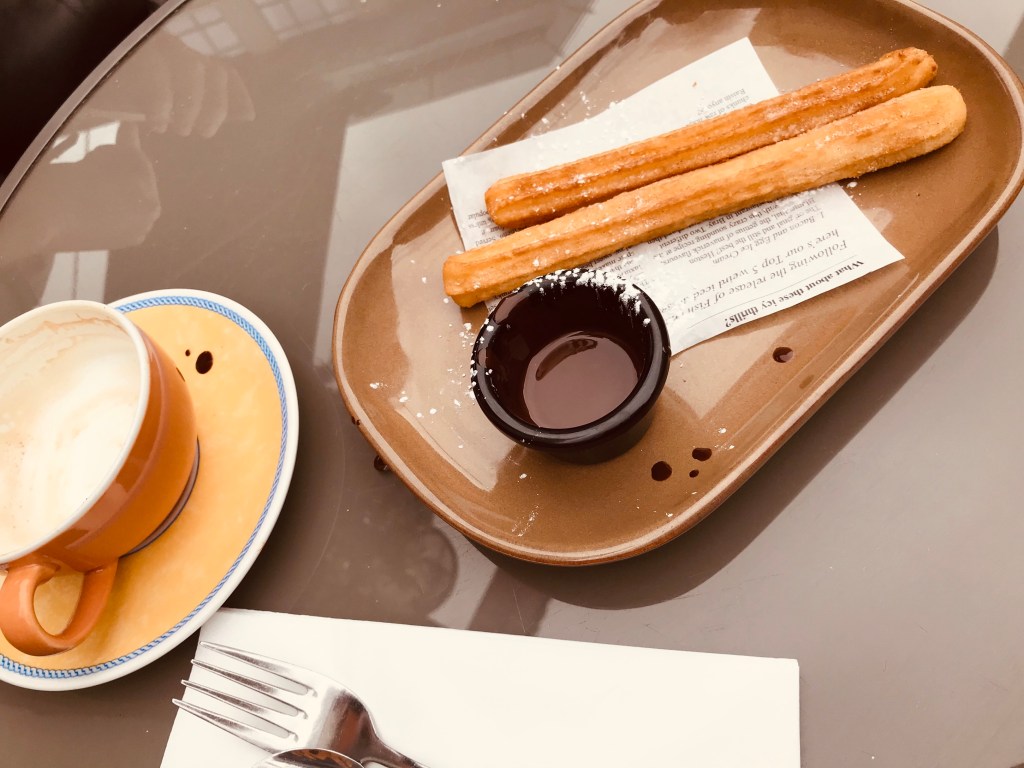
A bit later, we headed over to the street-side tables at Salamanca. A couple tapas and an order of churros hit the spot!
Incidentally, the people watching from this street-side table was second to none!
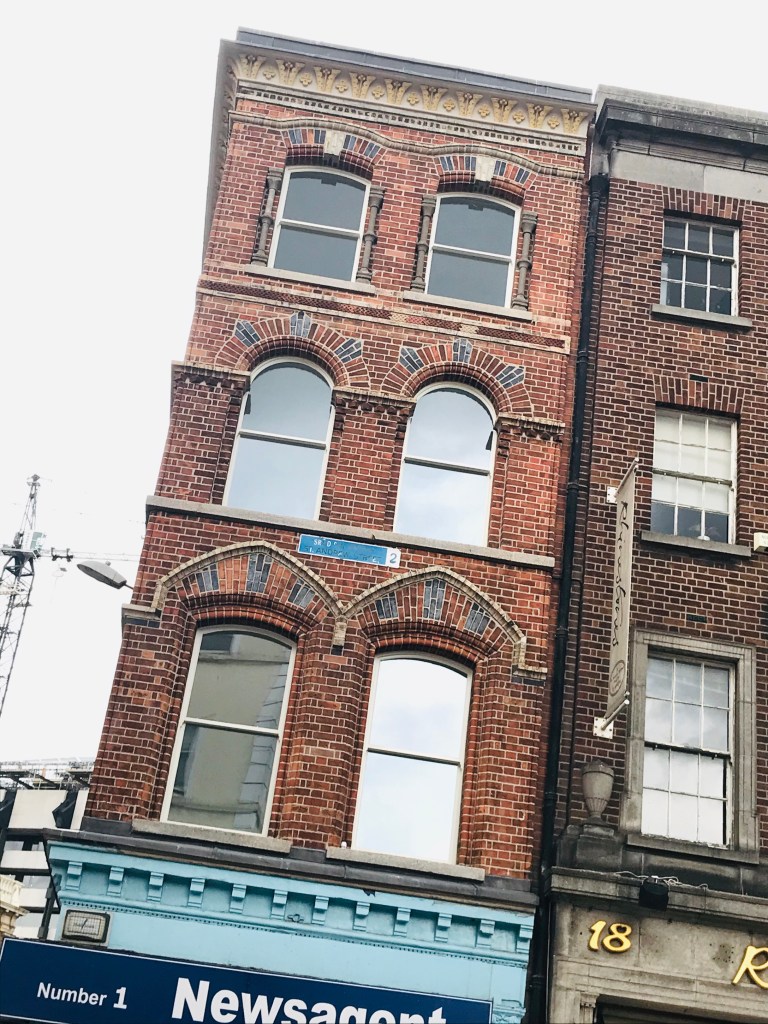
We cycled home. I got too far ahead when Aongus got hung behind a traffic light. So I stopped to admire the architecture. New design aside old, with interesting colors and textures everywhere you look.
So in closing, Aongus and I are asking, begging, Dublin City Council to keep these streets pedestrianized and to encourage businesses to place more tables and chairs outside. Everyone deserves the chance to try the outside seating and find out just how enjoyable it can be. If we can’t go to Italy, we can at least have a slice of Italy here!
Yet, we see the pictures from Cork and realize that what’s in place in Dublin right now is only just a start. We’ve enjoyed outside dining in countries with Ireland’s climate and we *know* it works.
Thanks, Dublin City Council, for the great work you’ve done since March to improve quality of life in our city and keeping the air and the surrounding clean and healthy. We applaud what you’ve been doing and we yearn for more. What a fabulous transformation this can be!
This blog post discusses the outreach activities I engaged in during my 2018-2020 Marie Curie Individual Fellowship (MSCA IF). The reason for doing outreach is to help spread knowledge to others and help diverse audiences–particularly kids and people outside academia–understand the value of research. The funding organization, which is the European Commission, wants to public to know it is getting its money’s worth by investing in research. So, during my recent MSCA IF at University College London in the UK, I dedicated one whole work package (WP4, out of six total WPs) to outreach.
WP4 Outreach Activities
The MSCA application promised to deliver a total of 19 outreach events under WP4, and I ultimately delivered at least 20, involving (1) outreach to kids, (2) outreach via social media, and (3) outreach to adults. Although I hit my targets, I didn’t exceed them to my normal degree. I was able to do far more outreach during my Fulbright Fellowship (2012-2013) to Ireland and my first MSCA research fellowship, also to Ireland (it was an Individual Incoming Fellowship, IIF under FP7) than I managed to accomplish during this MSCA Individual Fellowship. I’m still proud of the work but hope to do even more outreach in the future.
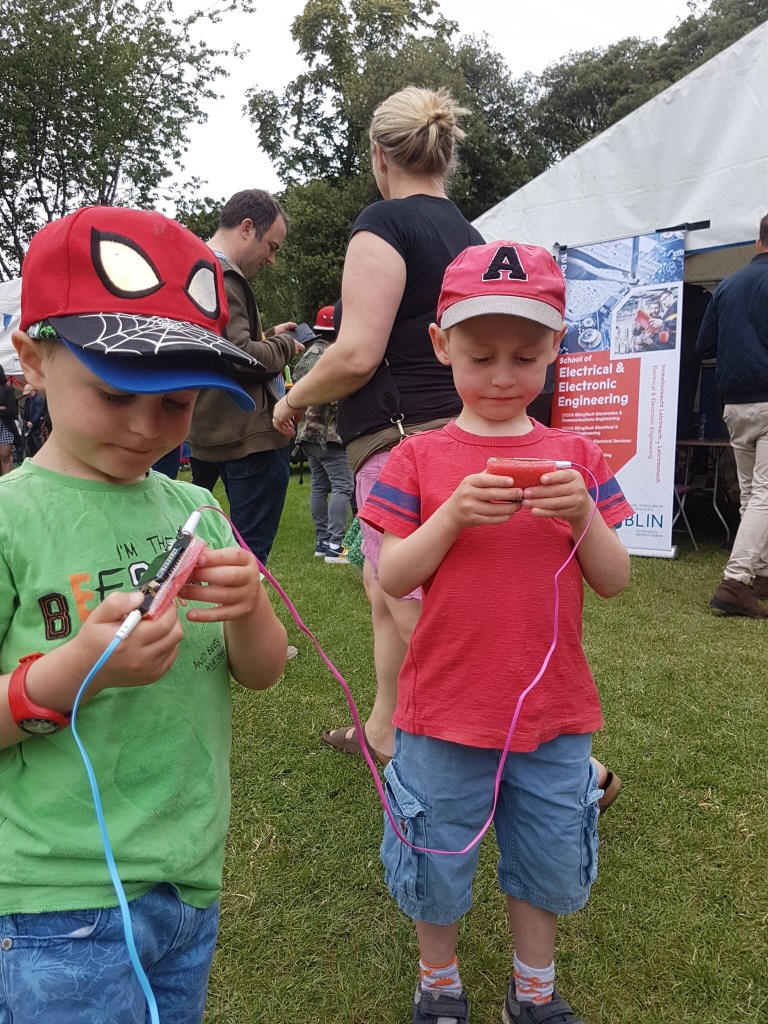
Teaching engineering to kids at a maker faire, called Dublin Maker, in 2019.
Outreach to kids
served as expert advisor for Usbourn publisher on 2 STEM activities book for kids that have been published and are for sale in stores
helped organize and lead 4 RoboSlam workshops (on computer programming and robot building)
helped organize and lead 2 RoboSlam educational exhibition booths (on computer programming and robot building)
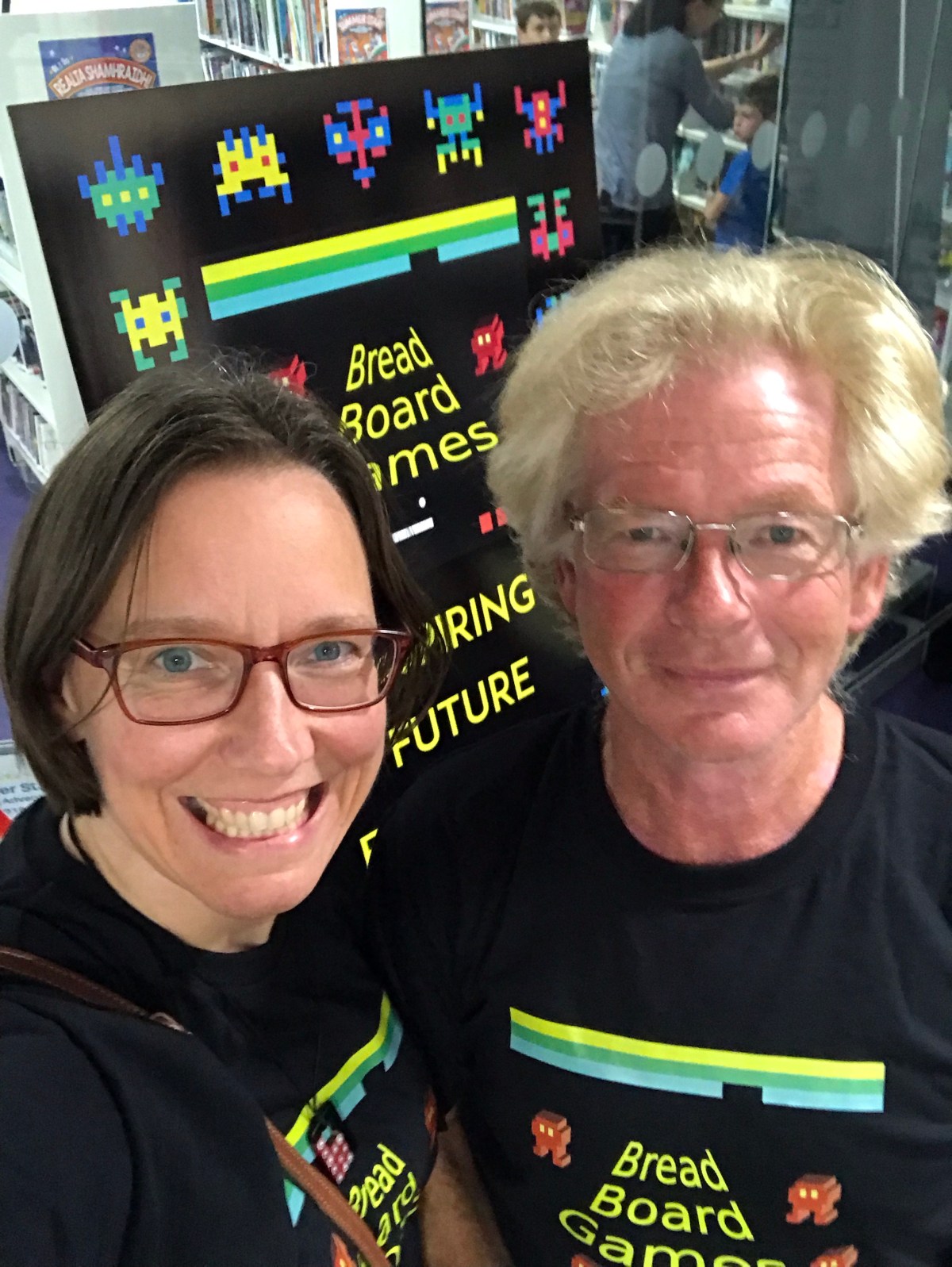
I helped conducted four robotics and electrical engineering workshops for kids in Ireland with colleagues from my home institution (TU Dublin). Having co-founded the RoboSlam robotics outreach team in 2013, I continued to be active in RoboSlam during my MSCA fellowship, as one of the four main coordinators of events. In 2018, I was part of a team that ran a number of robotics and electrical engineering workshops for kids in Ireland over the month of August with the Wexford library service. I assisted in running two workshops in Bunclody (17th August) and two in Enniscorthy (18th August). The workshops were attended by approximately 120 children in 8-12 years old. The children built an electronics arcade game that they brought home afterward. The intention of the workshops was to encourage an interest in electronics and programming. Feedback and pictures are available here. Technical resources used (instructions, and code) at those workshops can be found here.
Preparing for a Robot Building workshop with Frank Duignan at TU Dublin during my 2018-2020 MSCA IF.
I also provided advising/support for the Engineering Your Future Week summer school for Transition Year students, sponsored by Enterprise Ireland. In 2018 the week focused on Robot Building and Biomedical Engineering.
I helped operate educational booths on electrical engineering, at Dublin Maker 2018 and 2019 in Ireland, with colleagues from my home institution. A large team of volunteers (staff and students) from the school participated in Dublin Maker. The theme of the 2018 stand was “paper programming” and the 2019 theme was “arcade games through the ages”.
maintained and continually updated 1 LinkedIn Discussion Board moderated (for the Research in Engineering Education Network, REEN)
maintained and continually updated 2 Facebook pages featuring grant activities (one public page and one private page)
maintained and continually updated 1 Twitter feed of engineering education activities
I hosted and created content for an educational blog on being a “researcher on the move.” The blog has 209 followers who receive direct emails of every post. In 2018 had 3732 visitors and 13,106 views (discrete clicks indicating engagement) and, in 2019, had 4316 visitors and 9887 views. I promoted the blog posts using social media, including LinkedIn, Twitter, and two Facebook accounts.
CHANCE, S. (2012-present). Ireland by Chance: Research Adventures in Ireland and the UK. www.IrelandByChance.com showcasing research and fellowship activities.
On the LinkedIn platform alone, my most recent 2020 blog re-post before submitting my final grant report to the European Commission garnered an additional 1520 views and 46 reactions.
I also provide content for a blog on robotics that I collaboratively manage with colleagues from my host institution. In 2018, this site had 3299 visitors and 6505 views. In 2019, it had 2437 visitors and 5642 views.
Burke, T., CHANCE, S., Berry, D., & Duignan, F. (2012-present). RoboSlam: Robot-building for Beginners. www.Roboslam.com
Presentation delivered as part of a Marie Curie Alumni Association event on gender in engineering education and research.
Outreach to adults
delivered 1 public presentation in Dublin on gender aspects of research (photo above)
provided 1 data source to UNESCO for a global engineering report
evaluated 1 sub-section for UNESCO for a global engineering report
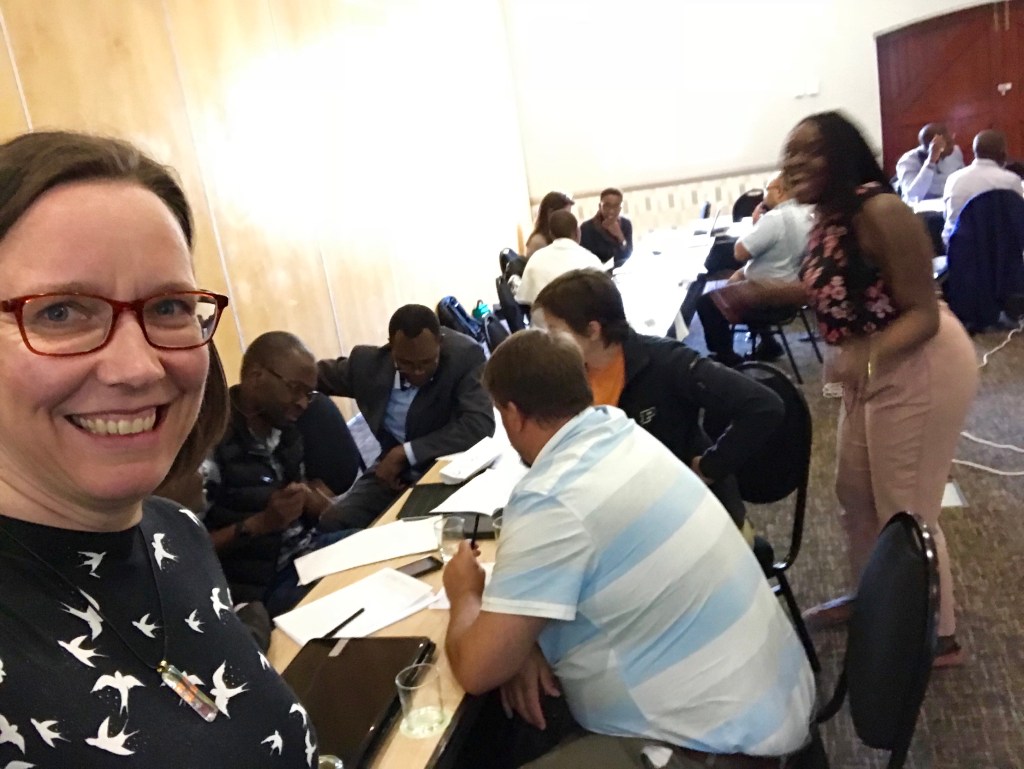
authored 1 encyclopedia entry on the application of PBL in engineering education (and taught on this topic at a Master Class in South Africa, as shown in the photos below)
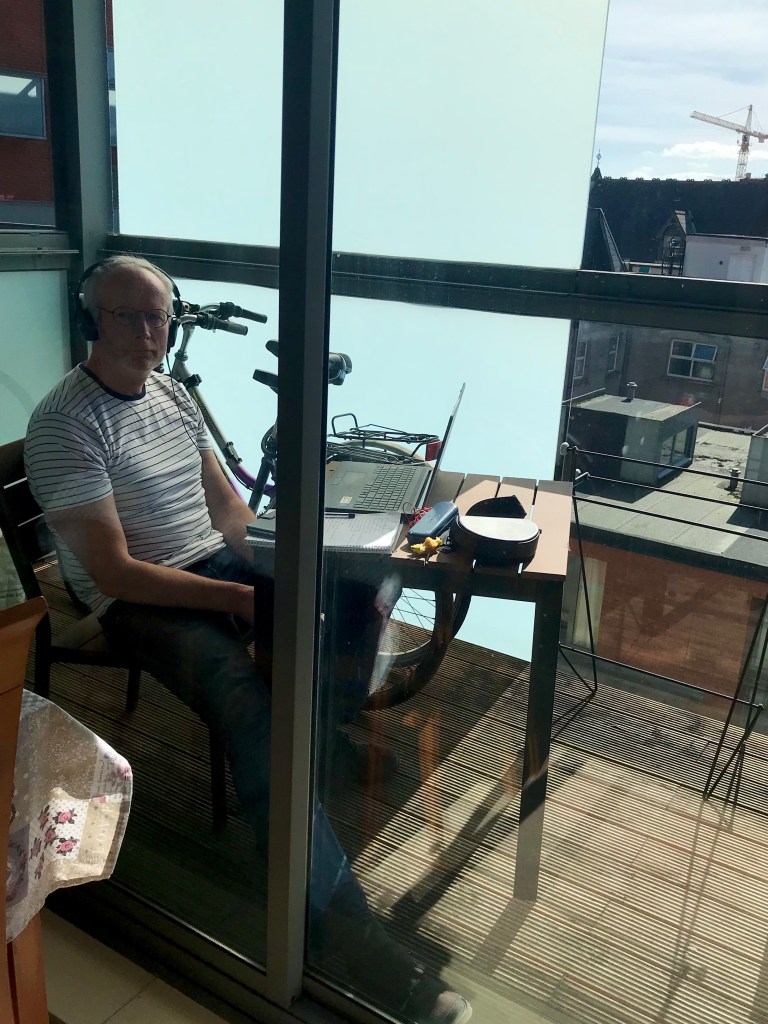
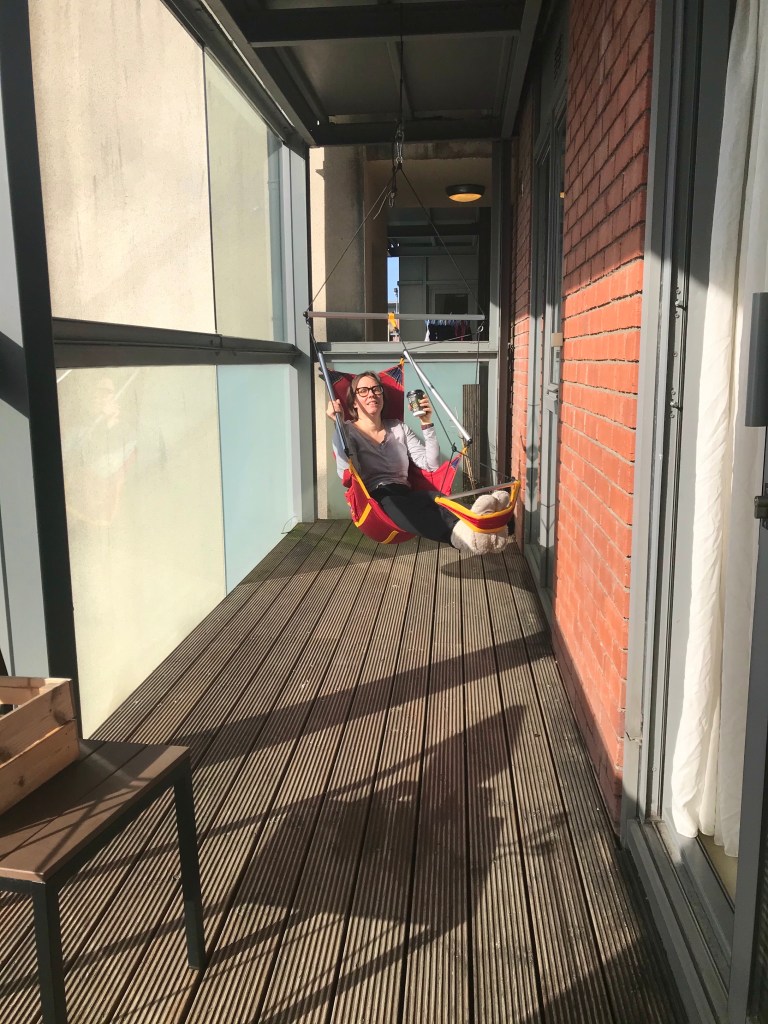
At the start of Ireland’s lockdown, we had some adjusting to do. New ways of living and working, for sure! Aongus was working from home for about six weeks, with the occasional visit allowed to his work site to make sure things were locked up tight and everything looked right. We found new ways to exercise and study together, expanding out the balcony during nice weather. Such weather is rare here, and even our south-facing balcony isn’t usually warm enough for outdoor work.
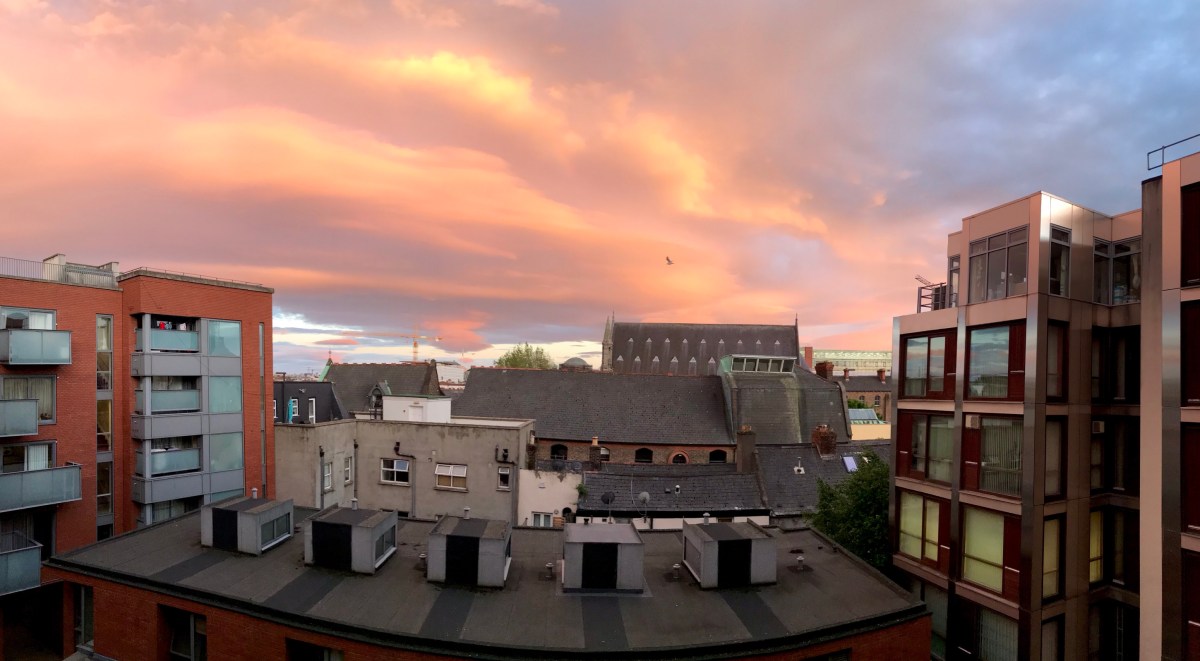
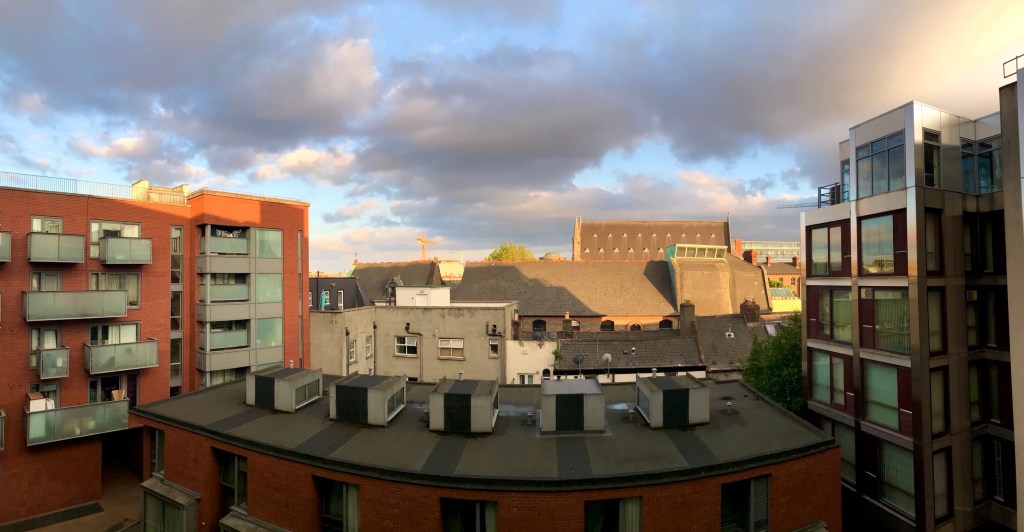
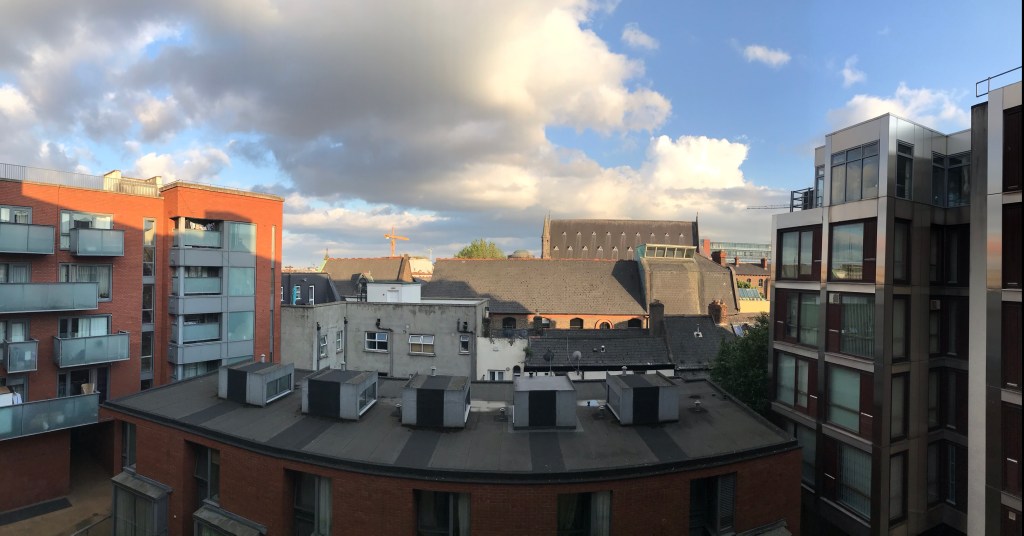
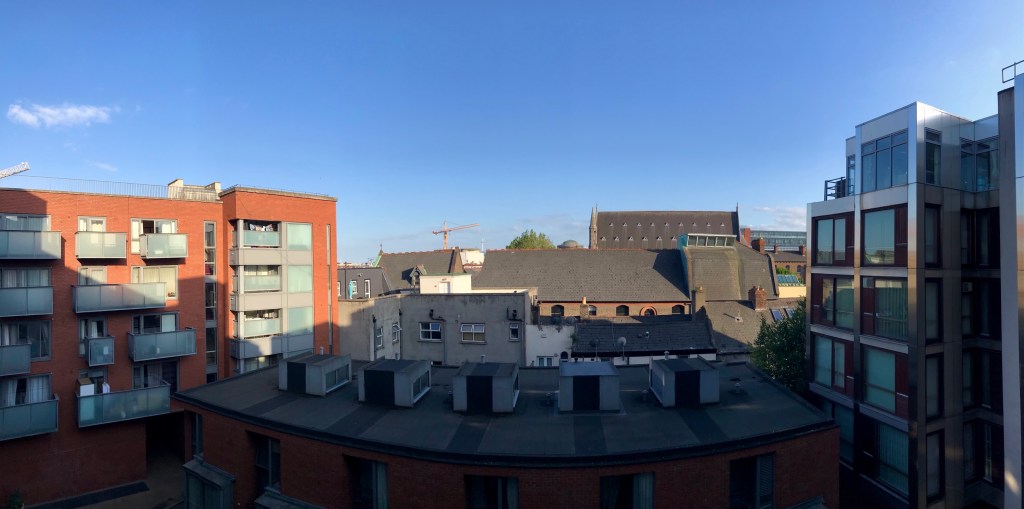
I really started to notice little things, like how dramatically the sky changes from hour to hour, day to day here. The view from my balcony was every-changing–a painting of gorgeous pastels and a hundred different types of clouds.
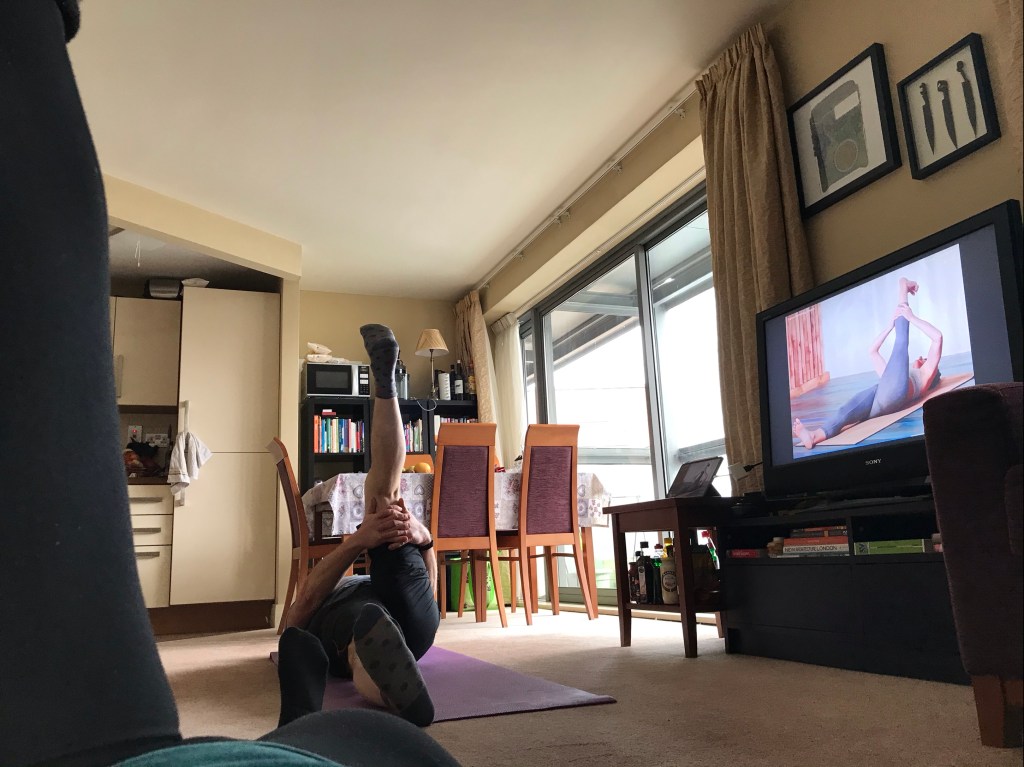
Early on, Aongus was completing a training model online. I tried to stay fit with online zumba and Down Dog yoga.
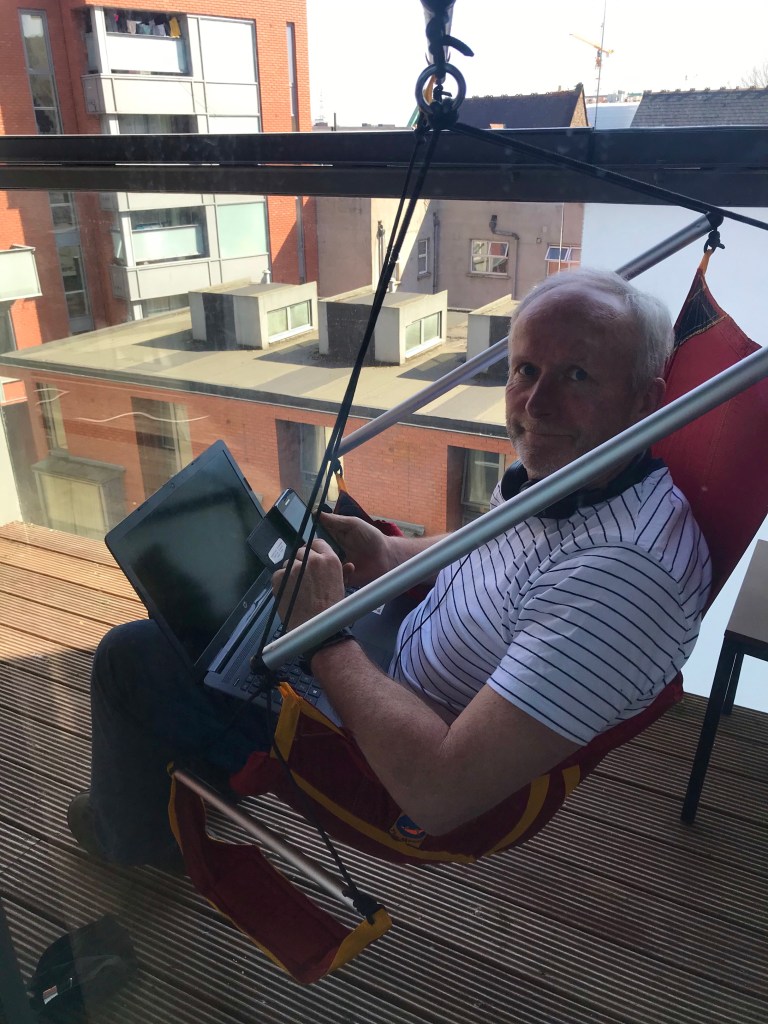
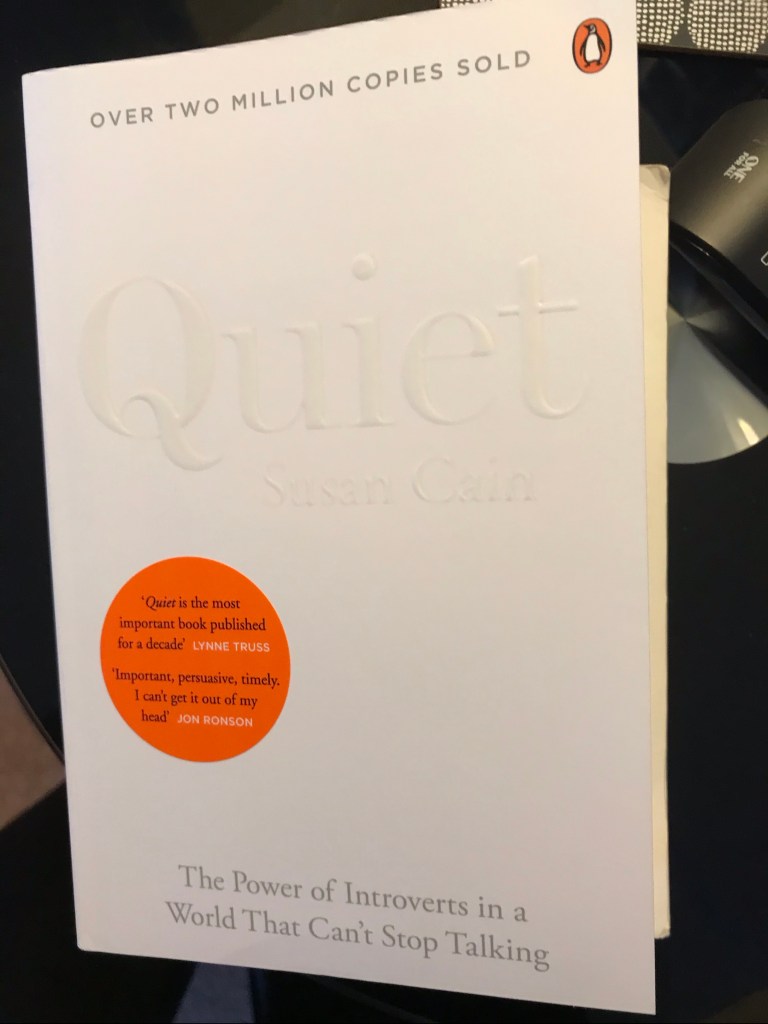
This day was warm enough for balcony use, so I took a little break with one of the books I’ve read this spring, a gift from Inês, called “Quite: The Power of Introverts in a World That Won’t Stop Talking”. Appropo for this period of isolation!
On the other hand, the look of work didn’t have much diversity. As I do educational/social science research, I don’t require access to a lab. I already had plenty of data collected that I could work with and study during Lockdown.
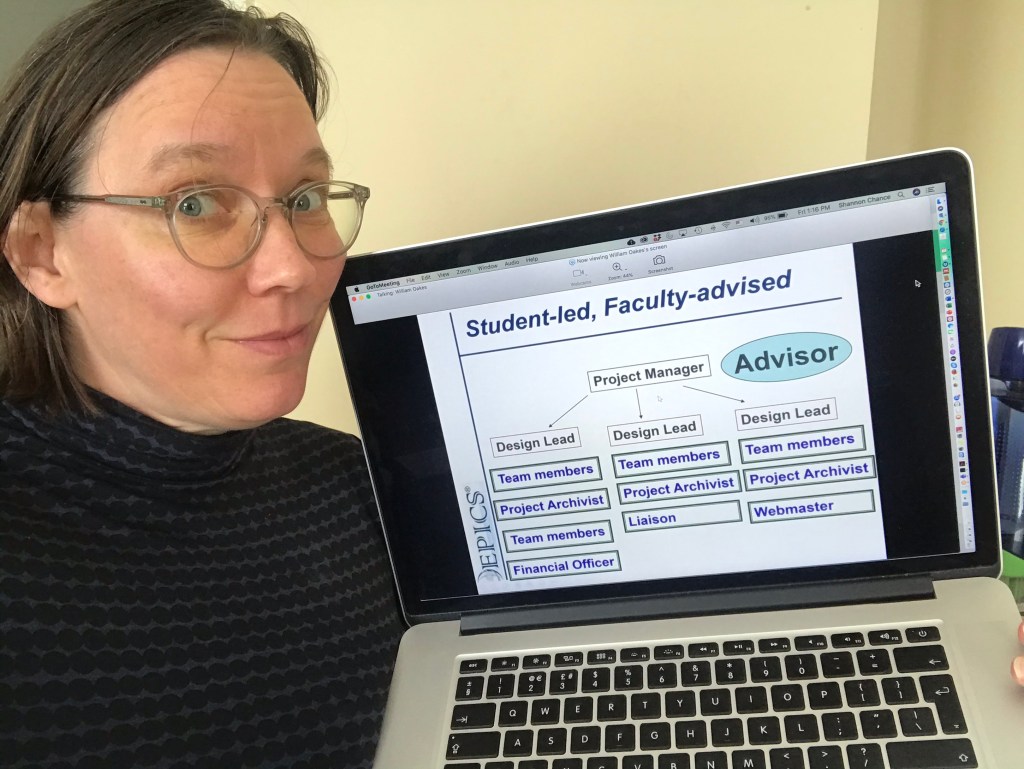
For me, life during lockdown looked a lot like this, each and every day:
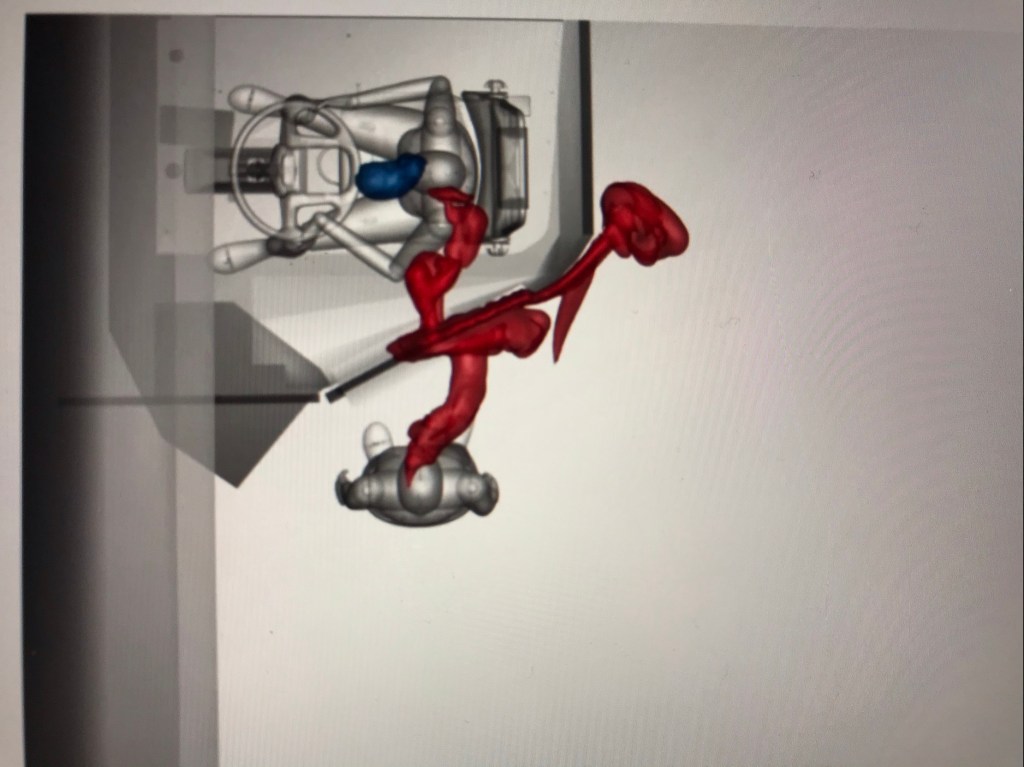
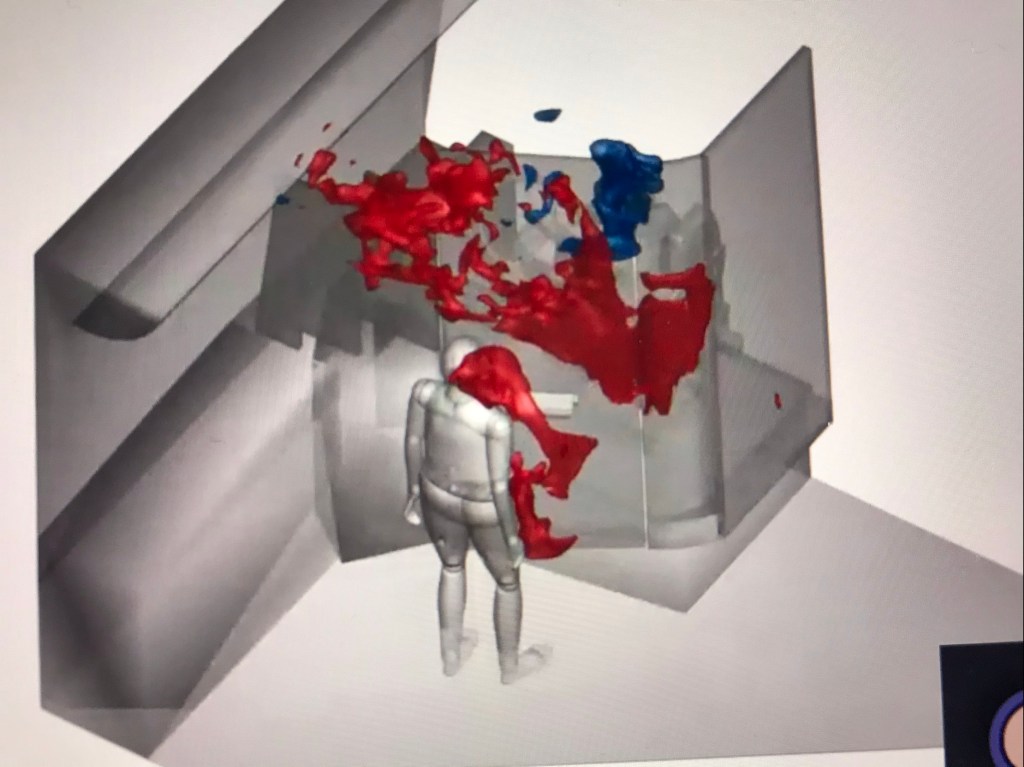
Don’t get me wrong, each of these images captures something I found interesting! The diagrams, for instance, came from a UCL ‘show-and-tell.’ Researchers in Civil, Environmental and Geomatic Engineering (CEGE) are doing fascinating work tracking Covid—looking for patterns—from how droplets move, to tracking the flow of a sequence of coughs by someone tapping to pay on a bus (shown here), to transmission patterns across cities and countries. Really interesting and important stuff! I was Tweeting up a storm that day, to share knowledge with others. Took care not to give away too much detail as the researchers were reporting, to close colleagues, research they had underway.
For me, it has been fun to attend meetings and events in places and with people I’d not have had easy access to in the spring of a teaching semester—like these UCL events and the Big Engineering Education Research Meet Up.
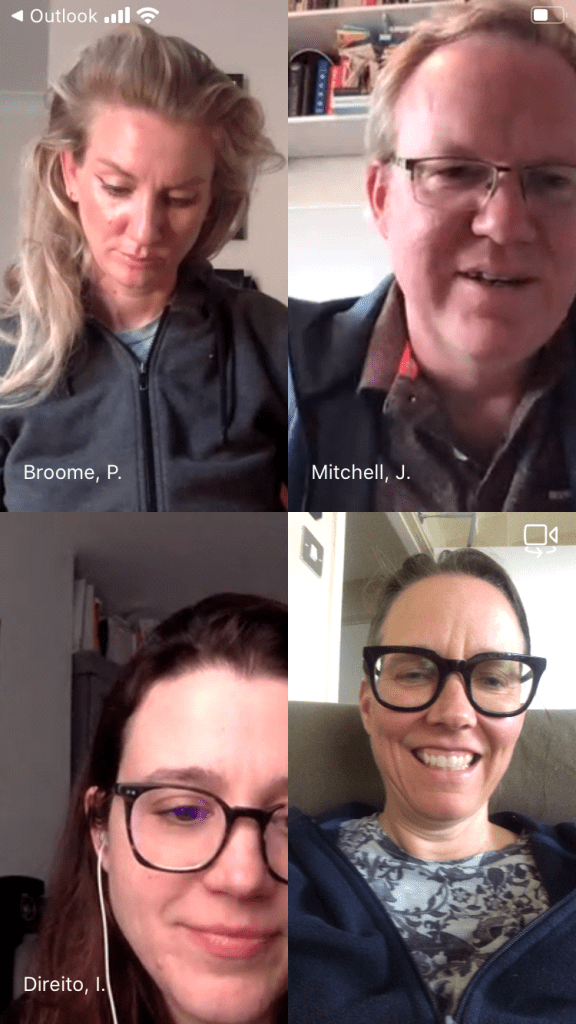
Here’s a screenshot of our UCL team coordinating one of the EER Meet Ups of the spring–Paula, John, Inês, and me (providing perspectives from REEN and TU Dublin). I love this group of people and was glad to work with them over the spring even though we live in two different countries.
There was also teaching to be done online, and new teaching arrangements to be planned for next year as well. I’m preparing materials for the Tech Graphics modules on hand drawing for the autumn, as the pile of tools on my dining table testifies.
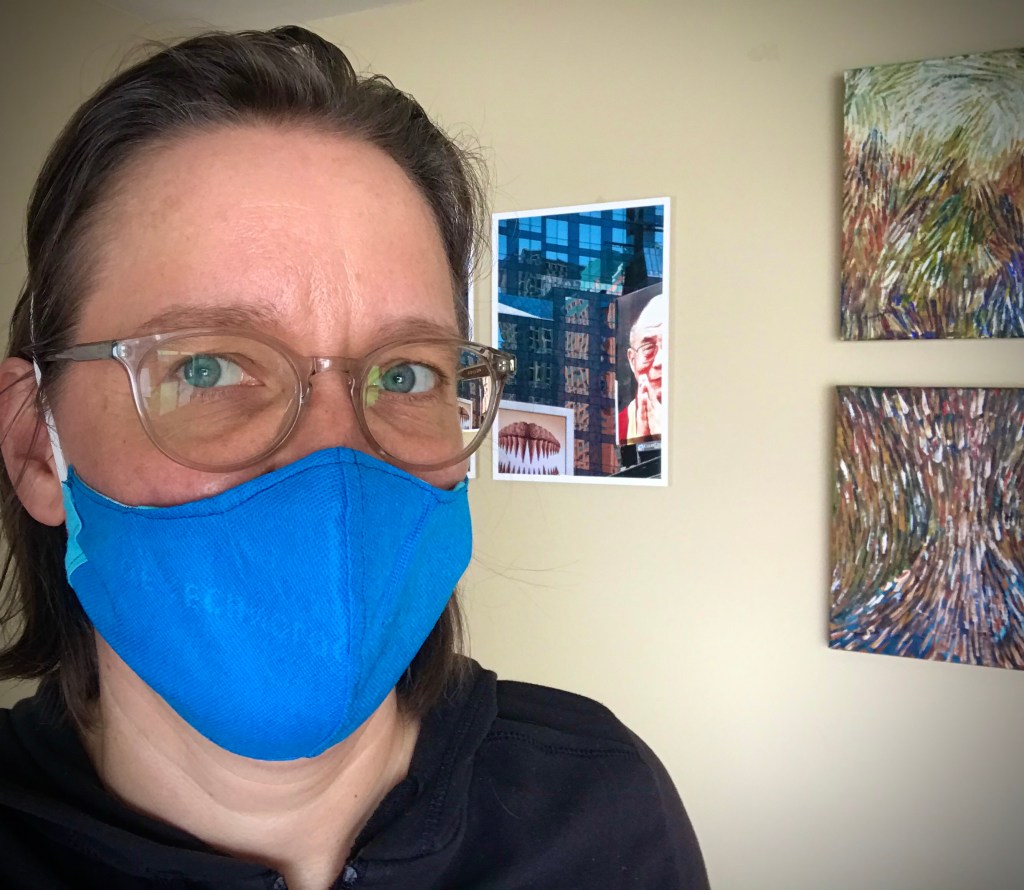
And there was meal after meal after meal to prepare, as you’ll be well aware. Sometimes fancy, sometimes new (fried peaches on the suggestion of my cousin, Rebecca). A colleague from TU Delft, Dr. Gillian Saunders, crated this nifty mask and mailed it over to me. It’s coming in handy, especially since the Irish government has recently stated asking us to wear masks, and requiring them on public transit.
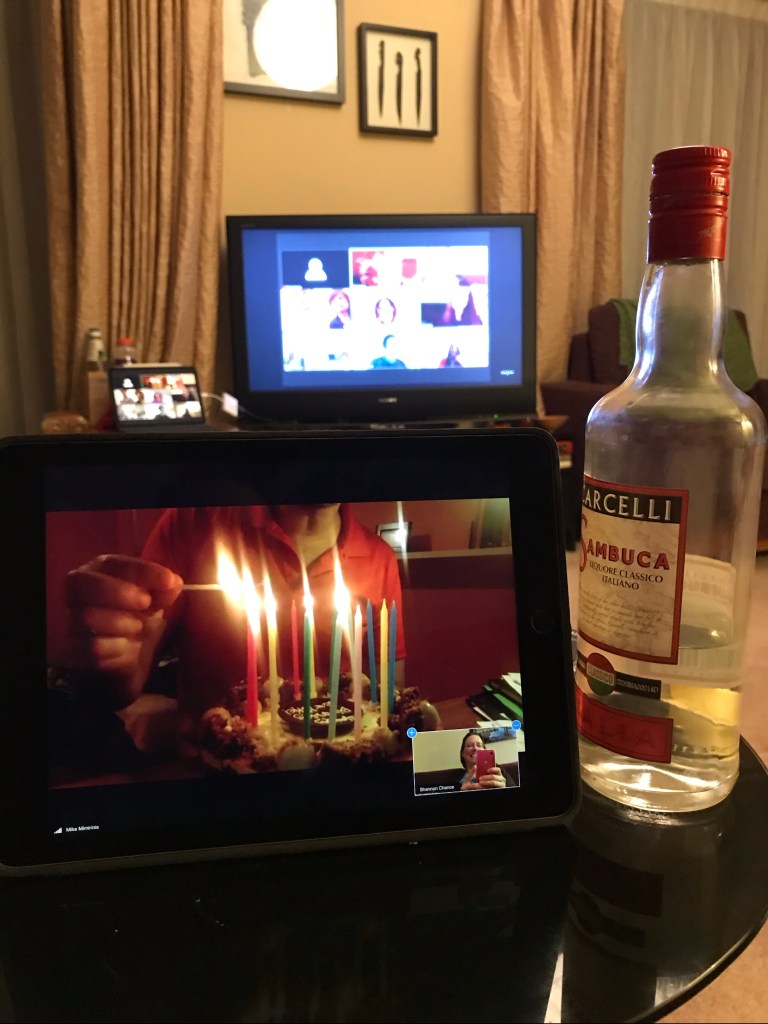
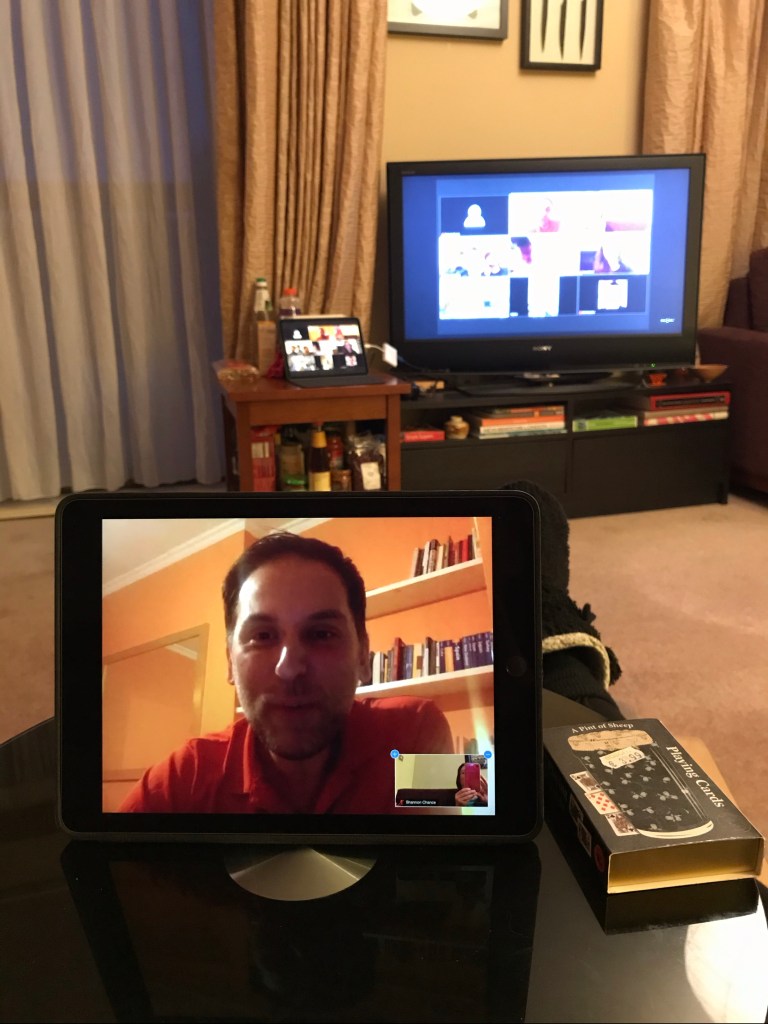
In addition, there’s been the occasional birthday party, with Zoom allowing us to gather from all around the world. Happy b-day, Tarrah Beebe and Mike Miminiris!
Aongus has gone back to work now, and I’m here working from home as has been my norm. I like working at home better when it’s sunny, but I pray most for sunny weekends. I must admit, most of my religious/spiritual intentions have gone for those less fortunate than we’ve been—this facing sickness, stress, and hardship due to Covid or living with addicted or abusive people.
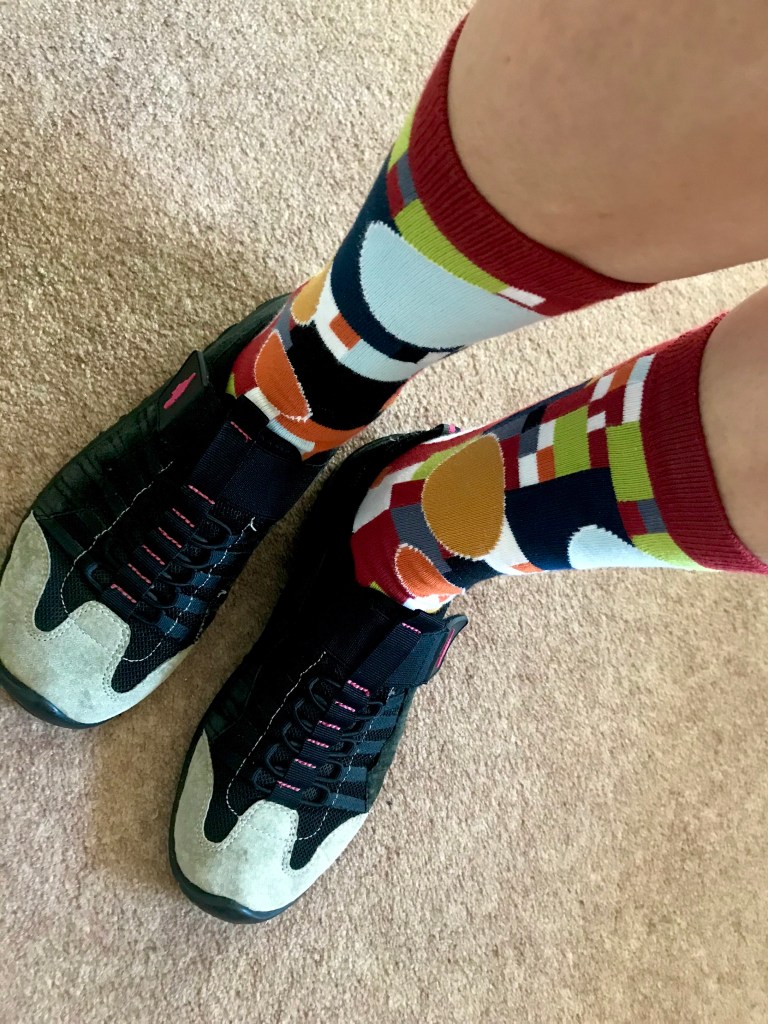
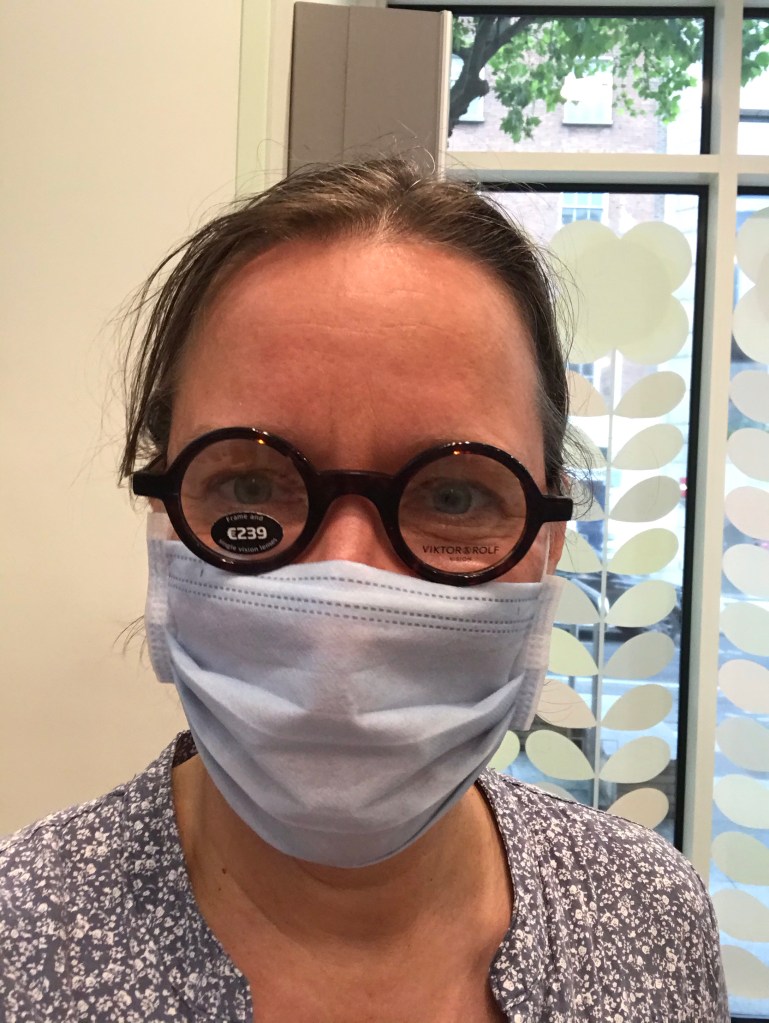
We’ve been blessed and have been able to grow together during this time. We attempt to make each day new and interesting, whether it’s learning a new theory or just pulling out our Frank Lloyd Wright socks (a gift of my recently departed Dad). Other ways I’ve passed the Covid-time include studying for the Driver Theory Test (scored 40/40, yeah baby!) and—now that businesses have opened—finally getting haircuts and new glasses to match my improved prescription. I didn’t buy the Corbu specs (shown below) but they were fun to try!
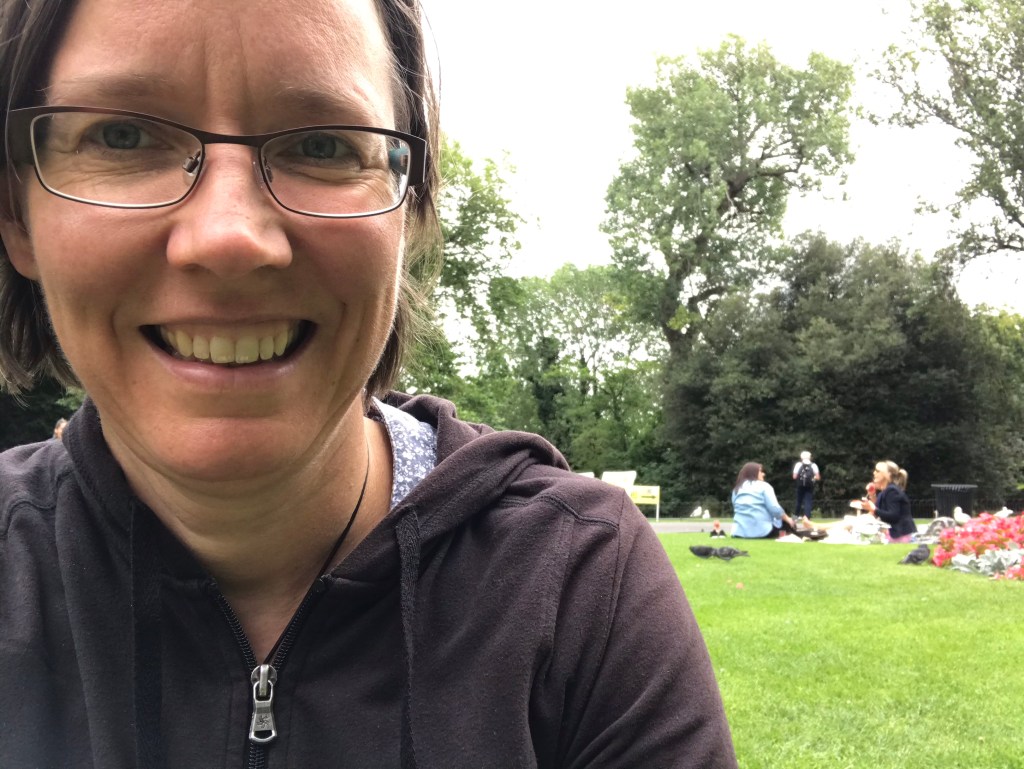
Aongus and I hadn’t spent much time in Dublin’s very large urban park prior to Covid-19. We were, afterall, just returning to Dublin after two years in London.
Our last days in London for Christmas 2019, ending my two-year fellowship and heading home to Dublin.
I’d moved back at the start of January and got things organized. Aongus followed on February 5th. Luckily, I already settled back into the flat and gotten things arranged nicely when he touched down on the Irish tarmac–a full month before isolation set in.
A couple days after Aongus’ return, things got very busy for me at TU Dublin. I was appointed to Chair and launch a new degree program. We held the induction on February 14. We were four weeks into conducting modules that when the pandemic hit and campus buildings shut down. From then on, work was all from home.
When the Irish government asked us to keep inside a 2-kilometer radius from our homes, and only venture out for necessary purchases and daily exercise, I pulled out a map on the “2kmfromhome” app and very happily discovered the entry to Phoenix Park fell within our allowable zone. I loaded the radius map as my phone’s wallpaper for easy reference–that made Aongus feel a bit claustrophobic! He’s not used to such a small bubble. His parents, aunts and siblings live outside it. Sadly, he couldn’t see his parents anyway, as they live in a nursing home. There have been very few visits. His dad had symptoms of Covid but tested negative. His mom had no symptoms but tested positive–go figure. Both are doing fine, but lacking visits has really taken a toll on his dad, who is fully aware of what’s going on.
Considering the radius, I wasn’t quite sure where entering the park alone would get us. During an online School meeting, which we held weekly for months until summer break officially started, I mentioned in the chat box that we had the entrance to Phoenix Park in our allotted circle. A colleague said, oh how lucky! A friend of hers had the same situation. Catherine said it meant we could use the Park in full, as long as we were carrying verification of our address.
To me that made logical sense–afterall, the masses of Dublin living near the Park we couldn’t all stand in the first hundred feet of the entry gate.
And thus began…
Our love affair with Phoenix Park
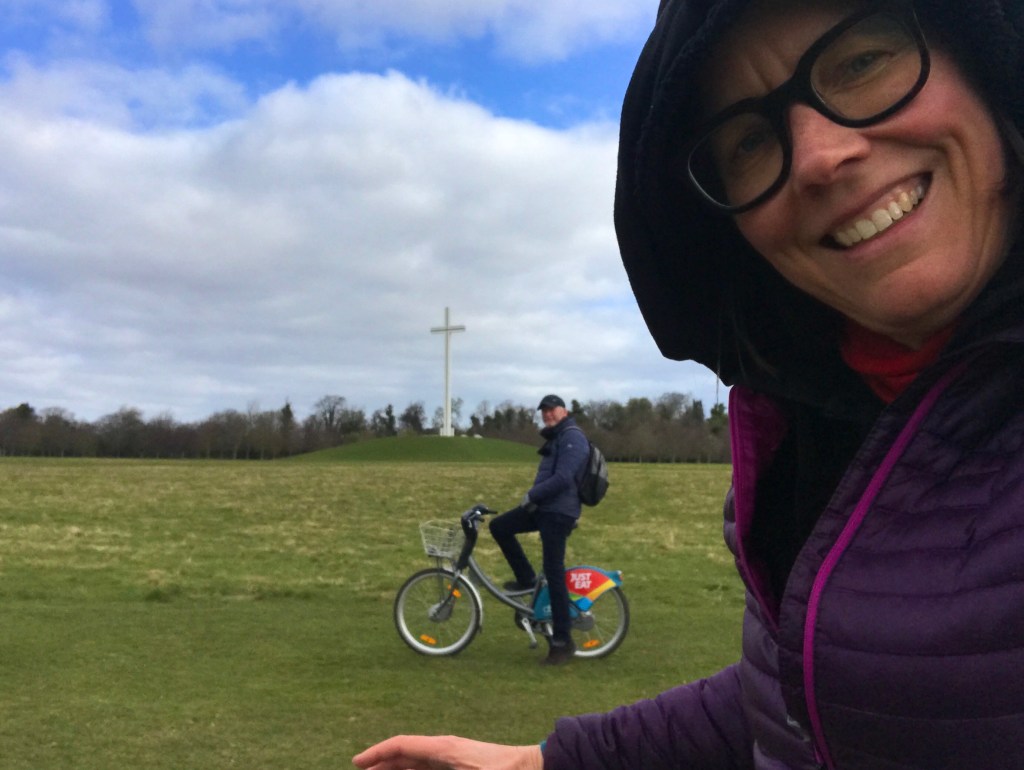
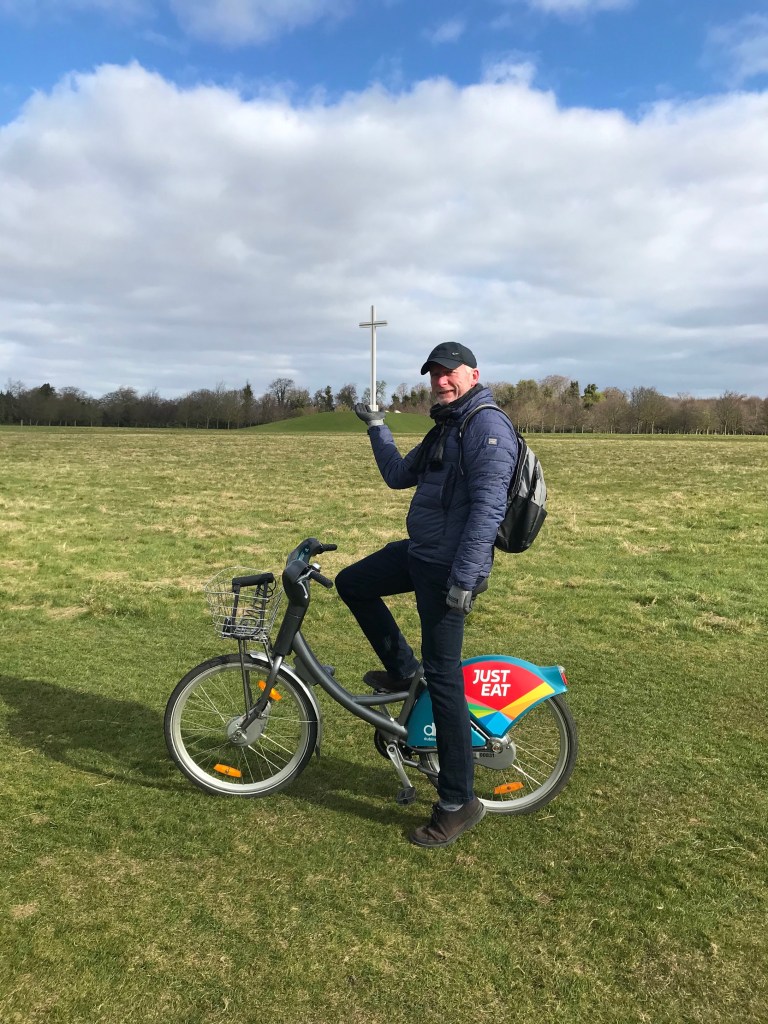
Soon we cycled to the park using Dublin Bikes, with a picnic of left-overs in hand for sustenance.
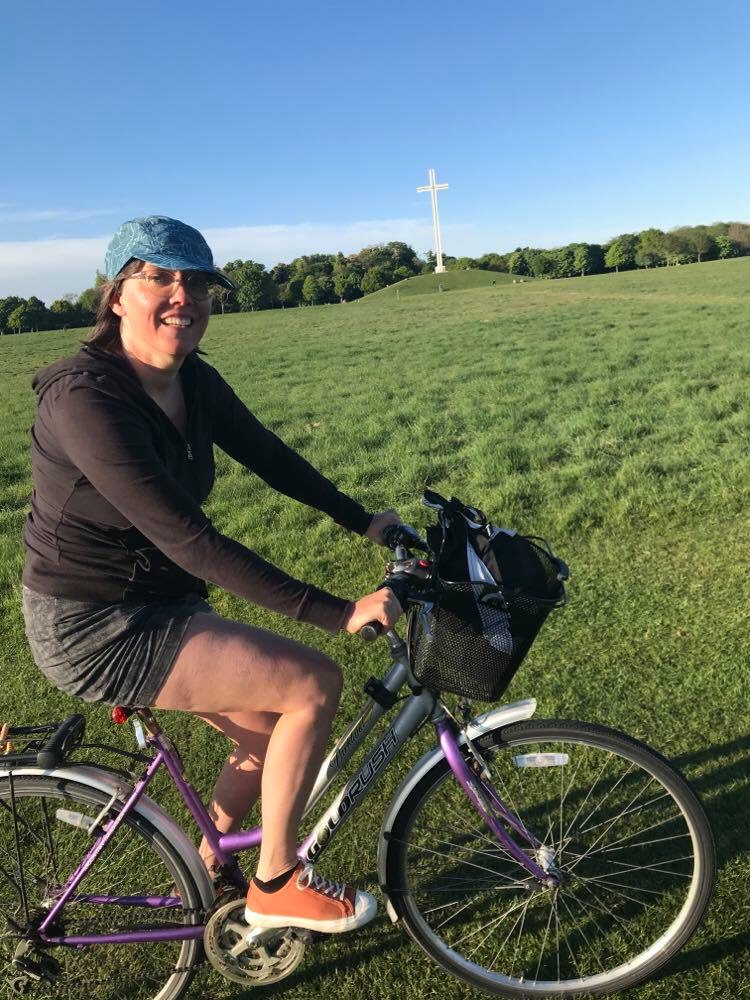
That first day we didn’t make it too far, but on our next trip we discovered the expansive views of the field at the Pope’s Cross, with amazing views over the city of Dublin toward the Dublin Mountains.
Park it, Deer…
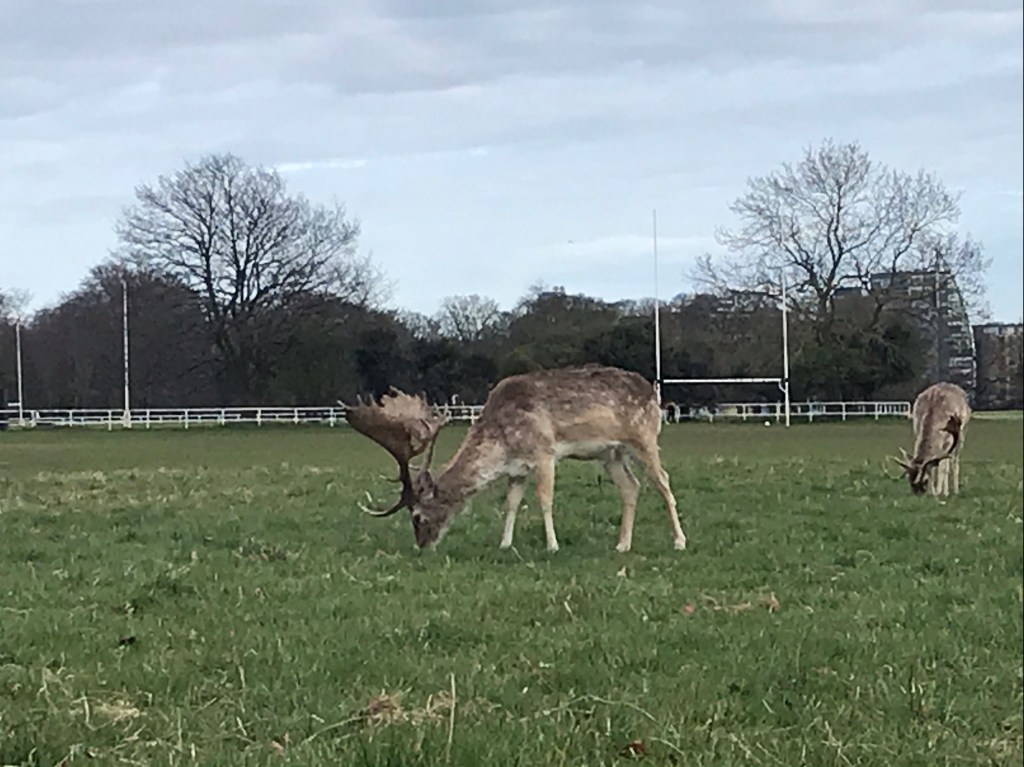
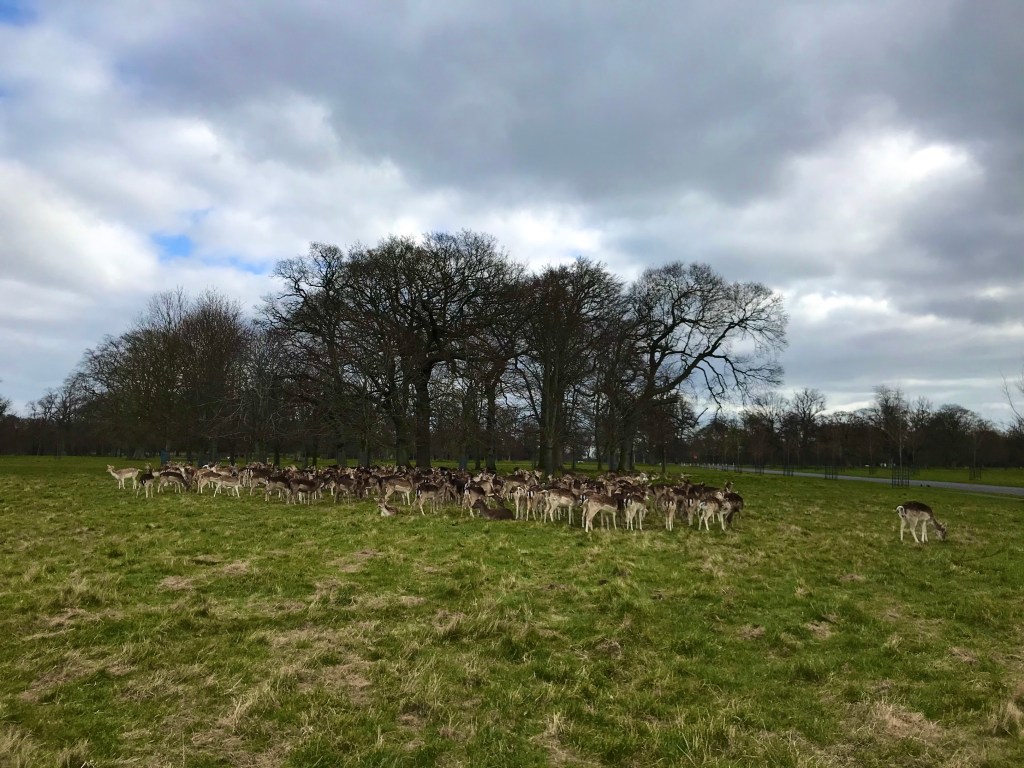
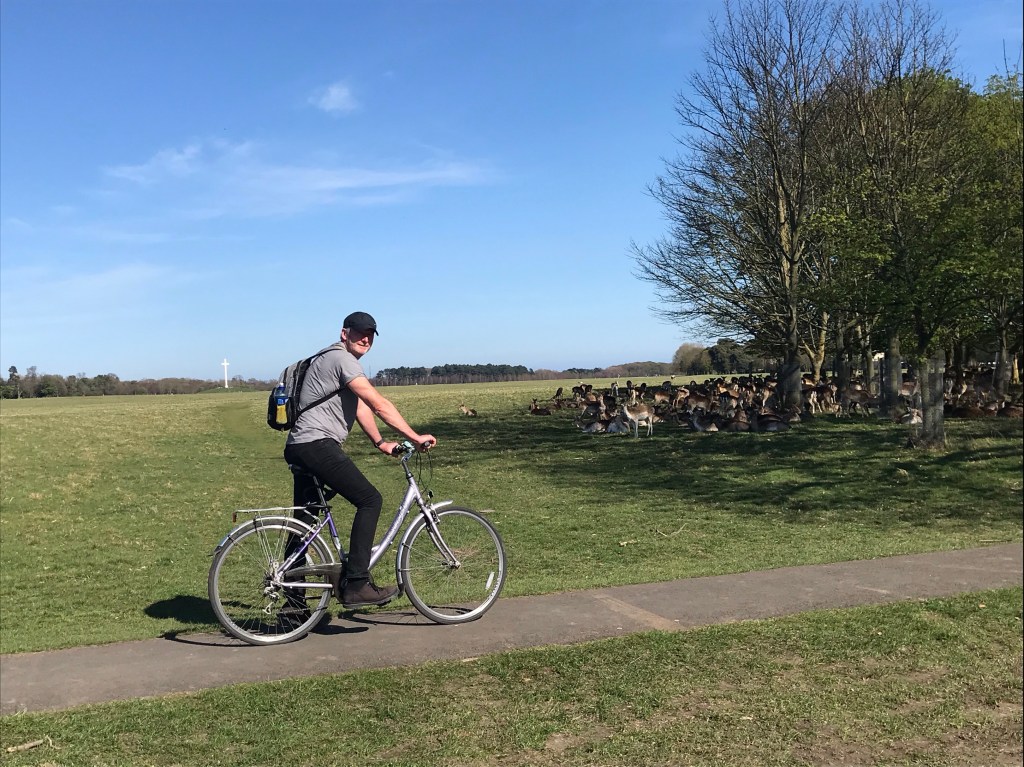
We also discovered the deer of Dublin, so calm and tame.
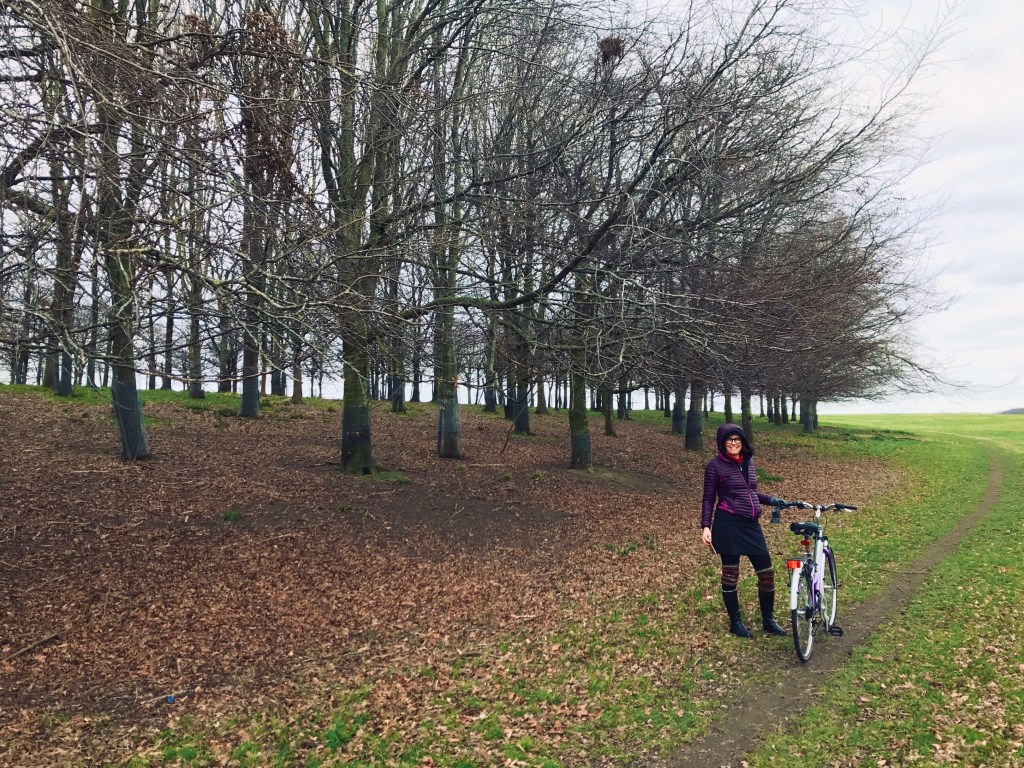
The deer cluster by gender–doe and children together, and bucks in their own groups. In the forested area shown at the top of this blog (with the nifty leg warmers, a gift from ‘me mum’), we once saw an organized lesson in being a male deer underway. There were three sets of young males with antlers joined, play wrestling, and one more deer–who appeared to be the coach. We didn’t get a photo that day, as we weren’t allowed by the Park Rangers to stop to observe. By loud speaker they announced “Keep moving. You’re here for exercise!” or something of that sort. They weren’t messin’ that day–taking no shite….
Fortunately, over time, the sense of panic and urgency has subsided. If you leave the deer be and avoid crowds, you’ll be okay. It is usually easy enough to stumble on crows if you don’t move far for the entry at Parkgate Street.
…and chill
The deer have really loved having the park free of cars–the park is so large that motorists have typically used it as a cut-through, taking their cars at high speeds to get to the other side without much regard for pedestrians and cyclists, families and children. High-speed and rude drivers in the park, along with the poor quality of the pavement in the cycle lane leading into and out of the park, had previously discouraged me from cycling there.
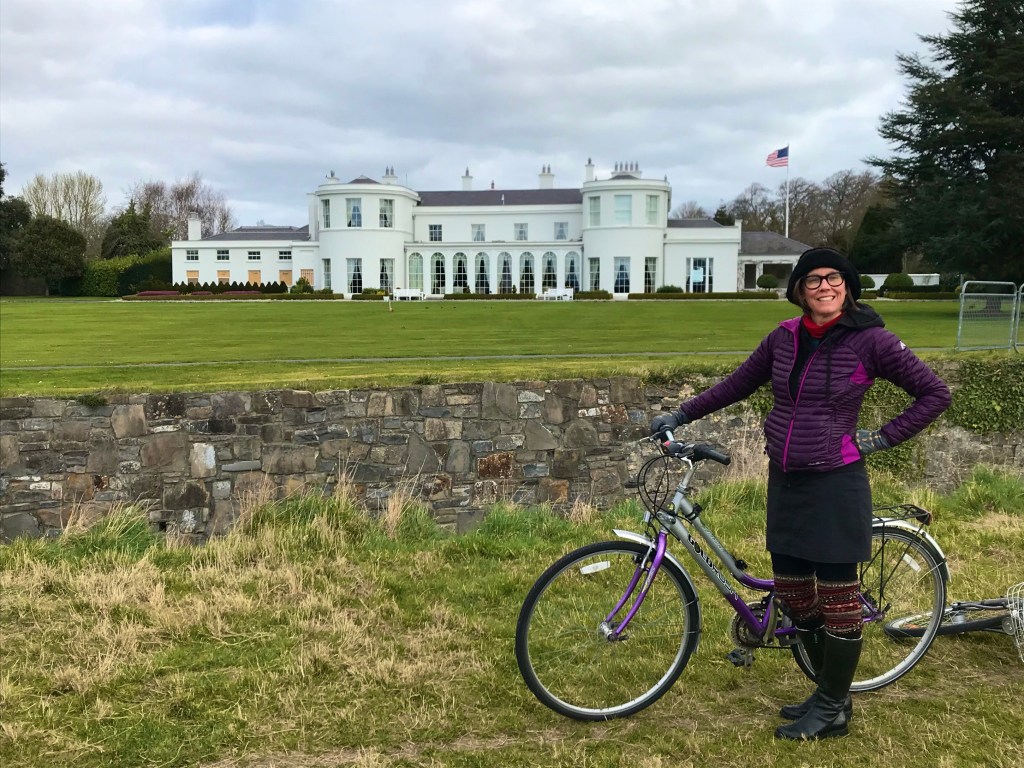
I had, however, cycled to the US Ambassador’s Residence once to hear a NASA astronaut speak at a Fulbright Ireland event. There’s a sizable slope going into the park that takes some determination to climb. I felt so unwelcome by the hill and the rough pavement of the cycle lane going in (the car pavement is nice and smooth here), that I had avoided this park in the interim. I hoped–and still do–that they will repave the cycle lanes near Park Gate. Can’t imagine what has kept that simple act from happening.
This is the back side of the US Ambassador’s Residence. It faces south, toward the Dublin mountains and the Pope’s Cross. (See, nifty leg warmers!)
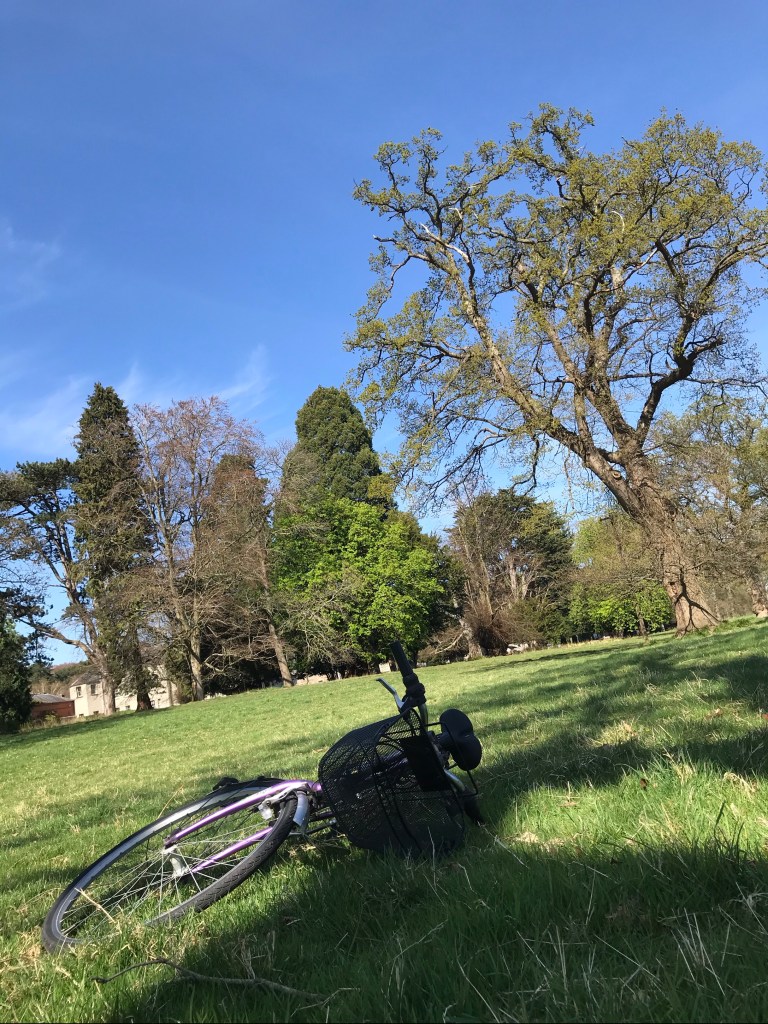
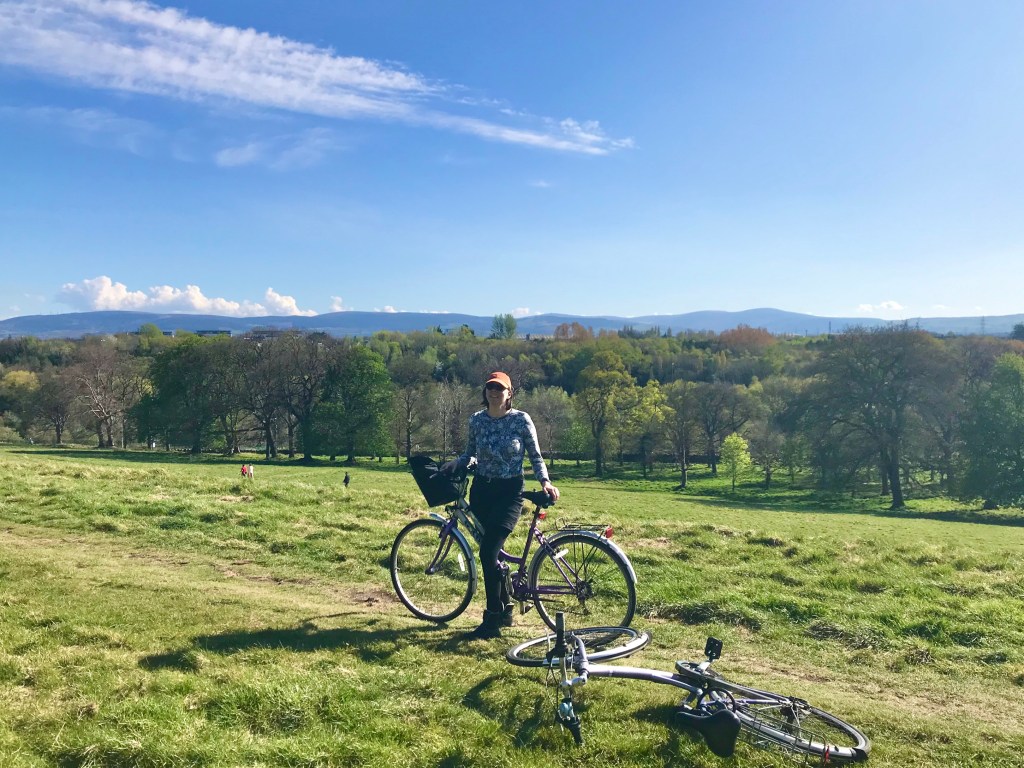
Although we’d enjoyed our Dublin Bike adventure that first day, but realized we’d need our own bikes. My own had been stolen from my courtyard some years before, but our maintenance guy gave me a discarded bike as a replacement. I’d parked it on the balcony, but hadn’t much luck using it. Mostly, I needed a more comfortable saddle.
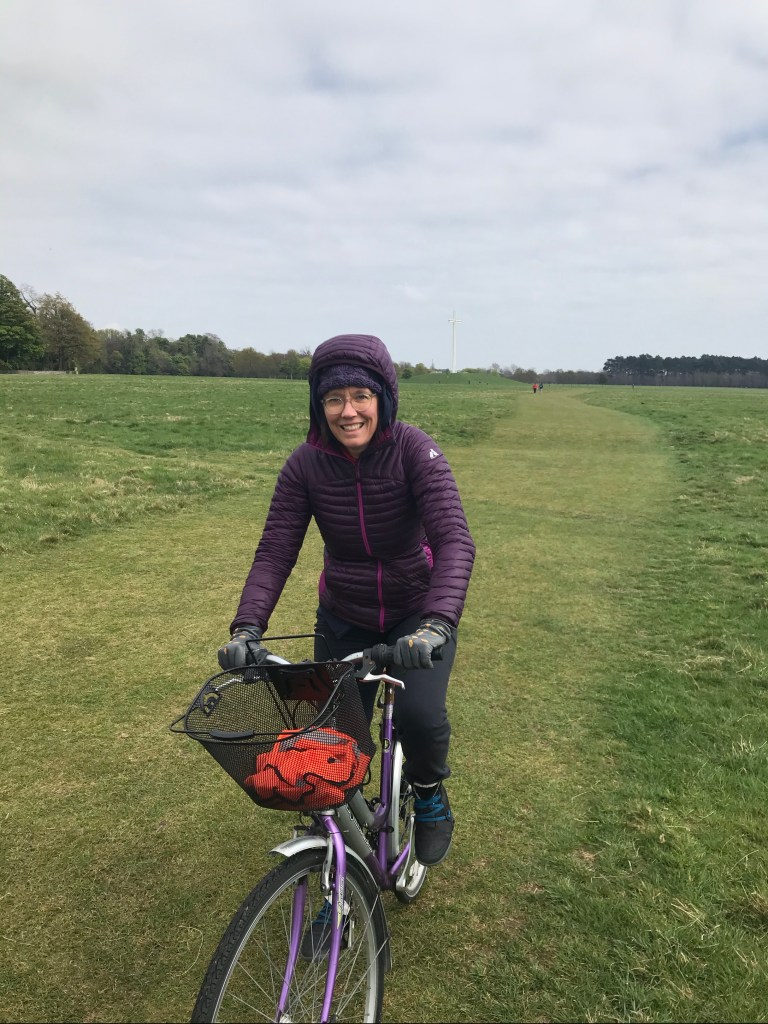
So, in March, I was quite pleased to discover that Pavlov at Bolton Bikes could get it back up and running. It’s heavy and I have to baby the gears, but it works and it has been nice and reliable. Bolton Bikes repairs and also sells used bikes. We were very fortunate to buy one for Aongus that suits him incredibly well. Neither of our bikes is a magnet for thieves, which is fortunate since rates of bicycle theft are off the charts right now in Dublin.
I didn’t even report the earlier theft–really no reason since the police don’t really investigate.
Our bikes have worked out fine. They really serve us well and we are learning to love them and the freedom they provide.
…enjoy a scenic overlook
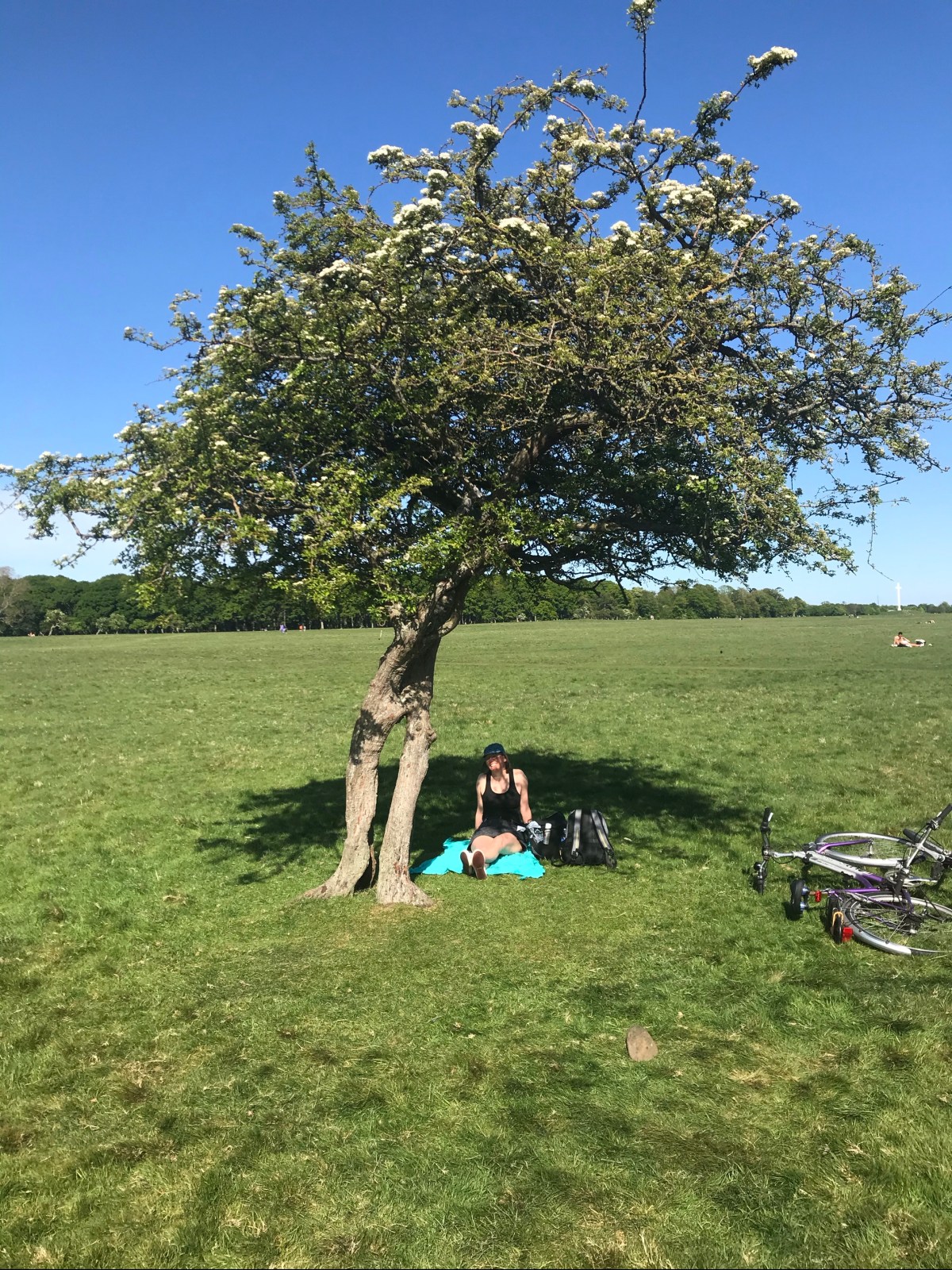
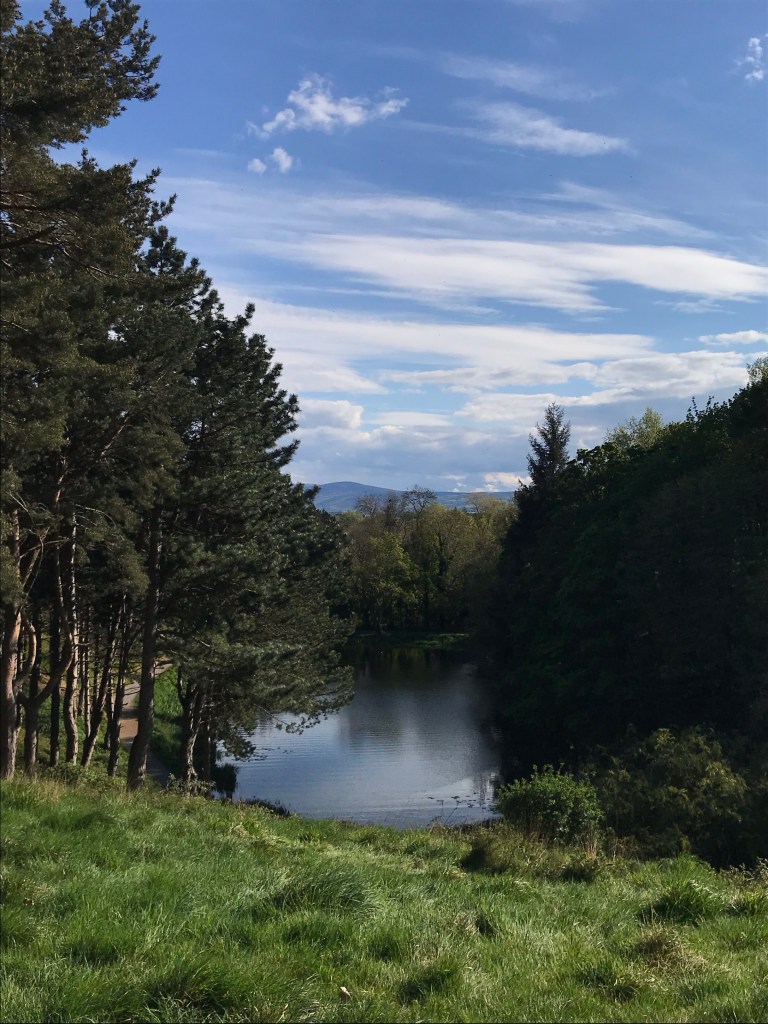
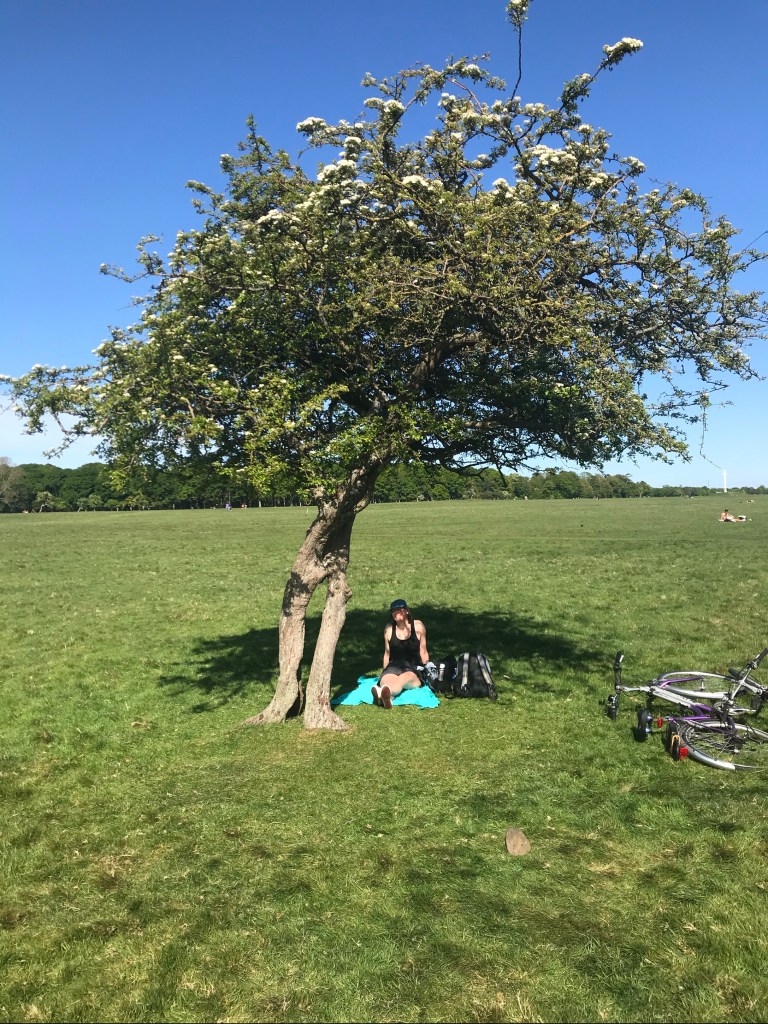
On our second or third visit to the park, we found the far end, to the west, had the fewest people. We’d ride out there and eat a quick snack, tea, or sandwich before cycling back home.
Ireland had an amazing streak of glorious weather, in March and April. Perfect like this for several weeks. We discovered this stunning view at the far end of the park, and reaching it became a regular goal:
…and a quiet little pond
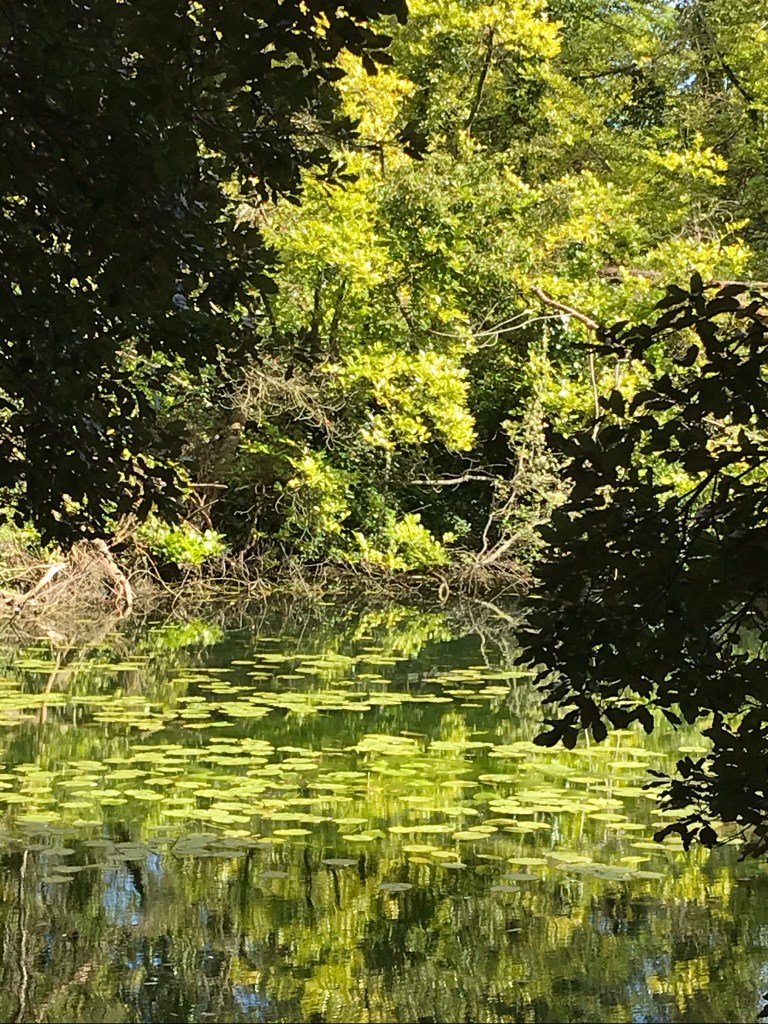
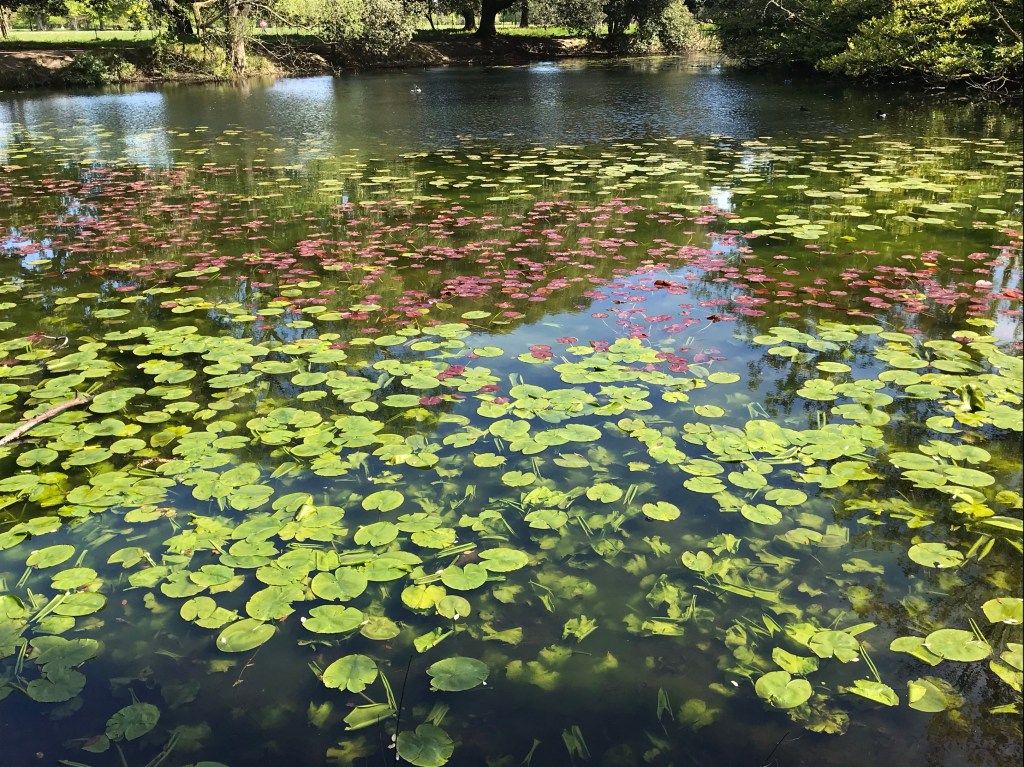
Over time, we ventured into the gated area around the pond. The water lilies were delightful; my photos haven’t done them justice.
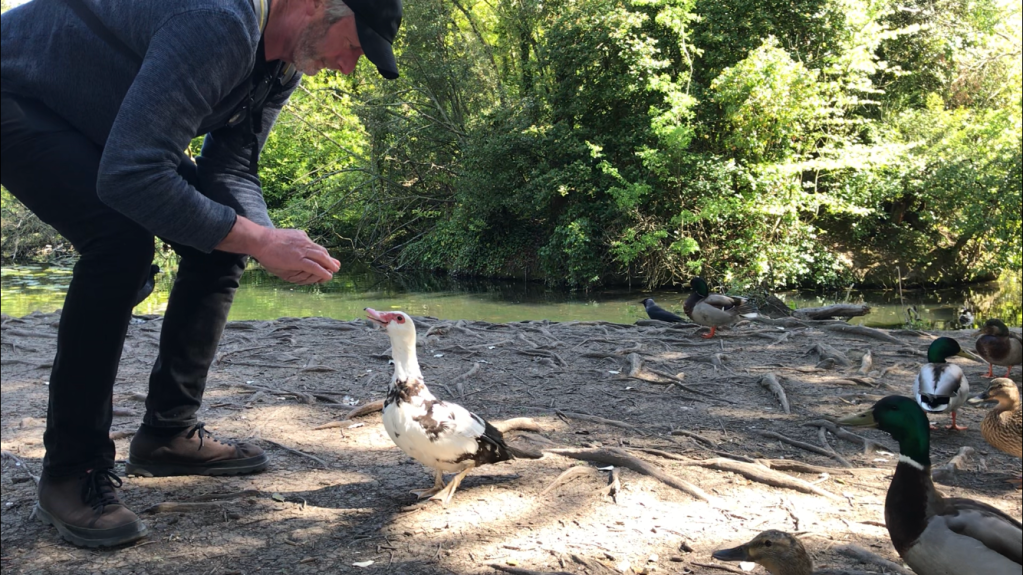
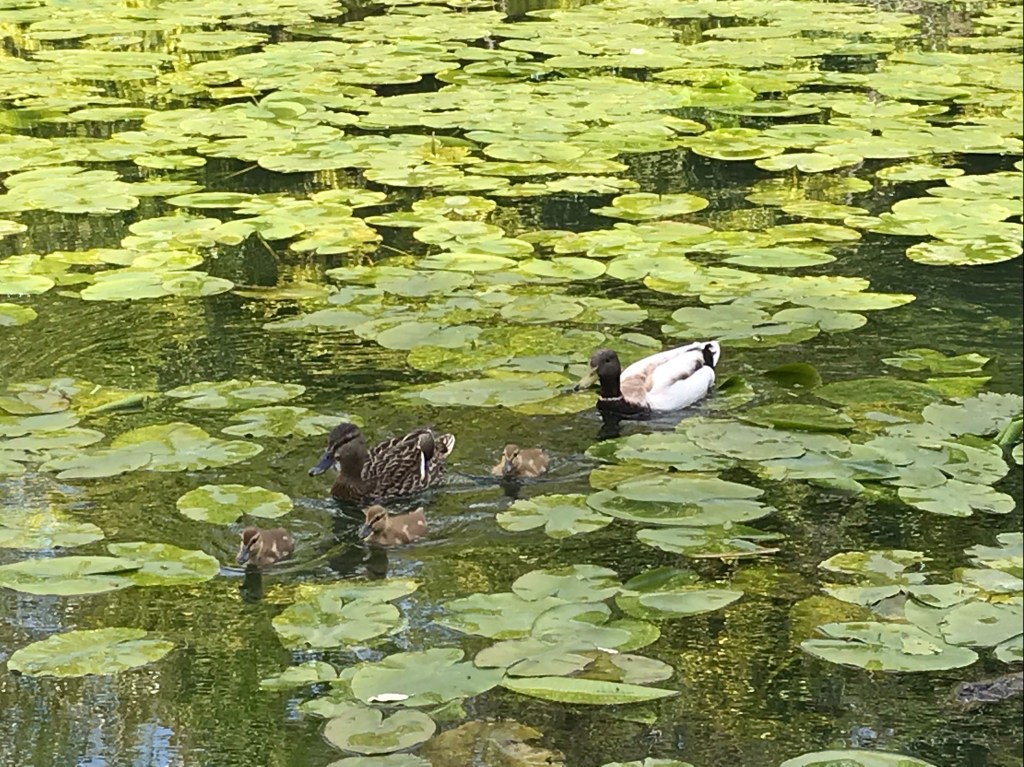
Aongus enjoyed feeding crumbs to the ducks and geese.
Just be yourself!
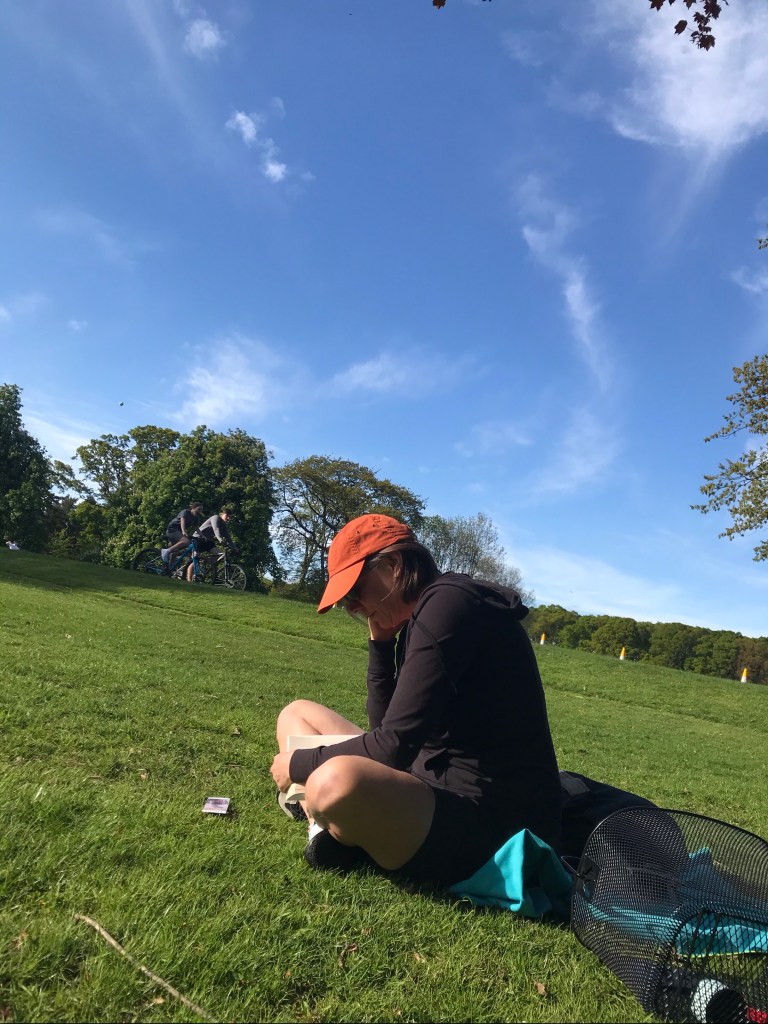
As the weeks progressed this corner of the park remained sparsely attended. We encountered very few people and were even able to curl up with a book on occasion. Wild and free and happy as can be….
(…but not in America!)
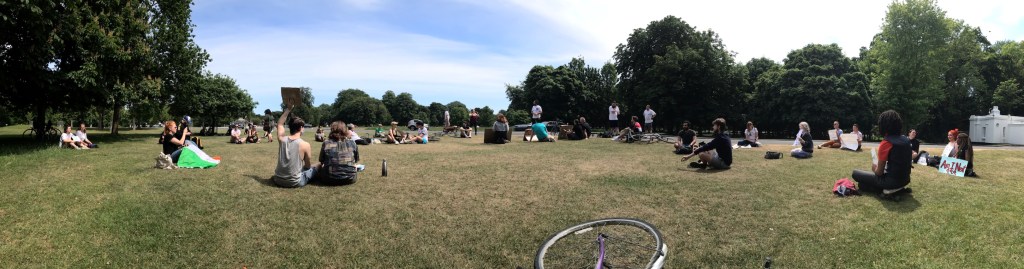
Speaking of America, I felt safe enough in Phoenix Park to attend the very first Dublin-based rally in support of Black Lives Matter.
Stand up for what you believe…
I elected to attend the #BLM rally in Phoenix Park, as I believed there would be ample room for social distancing. This location meant participants weren’t likely to get hemmed in as I feared would happen near the American Embassy. My assumptions were correct.
There was plenty of space where we assembled at the driveway entrance to the Ambassador’s Residence. There was also plenty space as we processed slowly around the property in a long single-file line, and one the rear/southside of the house where we knelt for a minute of silence. Any groups were households that arrived together. Many couples and a few families, and many brave individuals as we did not know what to expect. I saw this advertised on Twitter, with two locations available so everyone could stay in their allowable zone (which, by this time was 5km, I believe).
In any case, I was glad to be able to do *something* to support the #BLM cause, and to achieve that without violating any rules. It was a very small thing, but I had to make a stand for justice and also stand in solidarity with my hundreds and hundreds of Black American friends, colleagues, and former students. And in memory of my honorary grandparents, Bush and Ravella and their daughter Dot. So many people I know and love who had the opposite of a head start in US life simply due to the color of their skin.
Incidentally, a newspaper photographer showed up and took our pictures at this rally, but as there weren’t any juicy scoops to be had, the pics didn’t go viral. Even a telephoto lens couldn’t make this particular crowd look too dense!
All the Guards and Park Rangers who came around expressed sincere support for the cause.
It was a lovely and heartwarming event, and a story you probably didn’t hear on official news outlets.
…just let time drift by.
Since lockdown, I’ve come to know and love Phoenix Park. I truly hope it remains a place that’s safe for families, children, and people of all levels of ability to use safely.
One last set of views out across the Dublin Mountains, daydreaming and soaking in the peace and quiet:
Aongus and I feel so fortunate to live close to the city center. During Ireland’s lockdown, the entire central core fell in our allowable exercise area–a 2km radius from home. We got out and about on weekends, though we sorely missed our gym (1escape, we love you!).
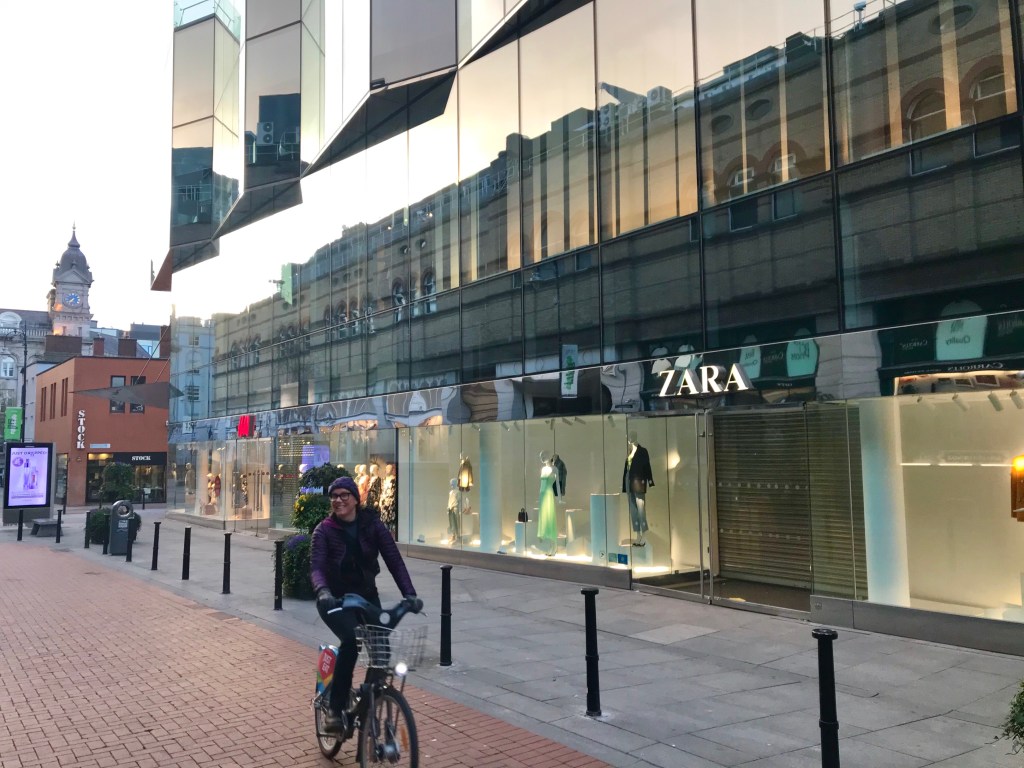
The streets of downtown Dublin were particularly tranquil for morning bicycle rides, and the weather blessed us during March and April. We eventually explored all around Temple Bar, Grafton Street, Synge Street, Portobello, and the Liberties.
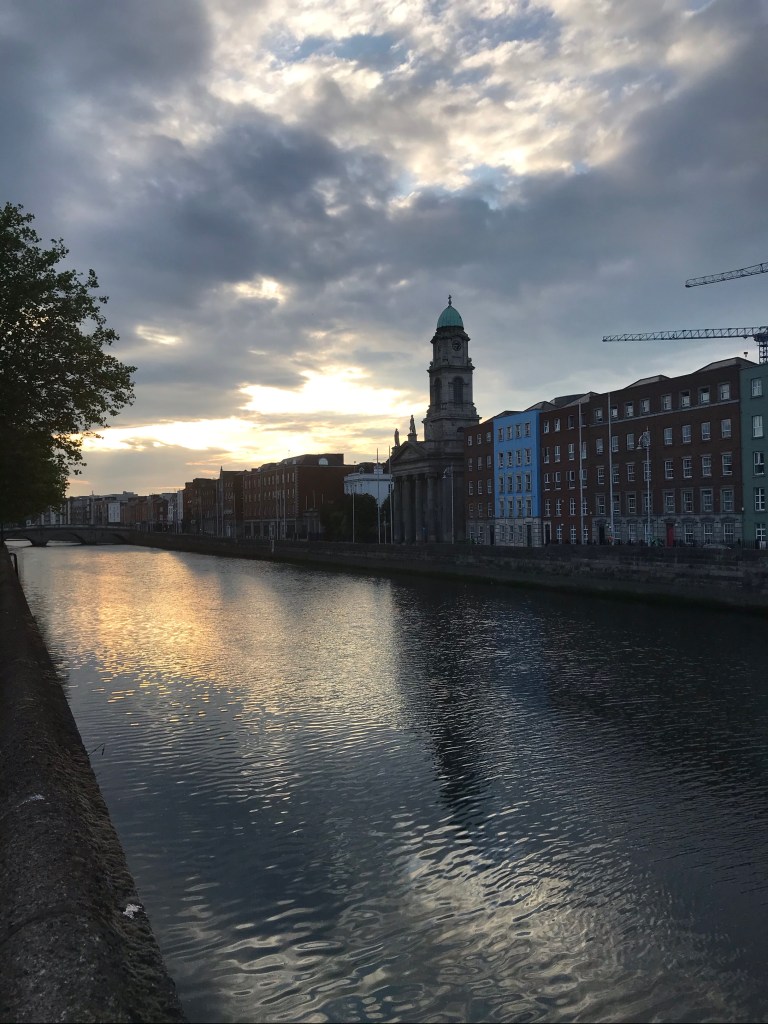
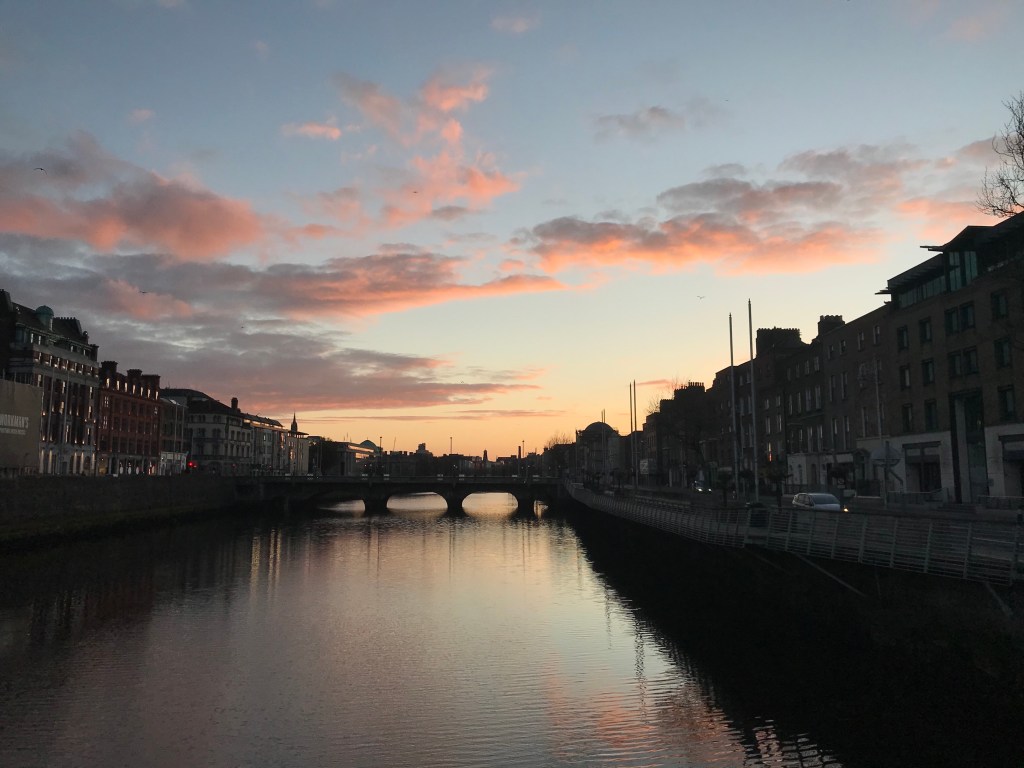
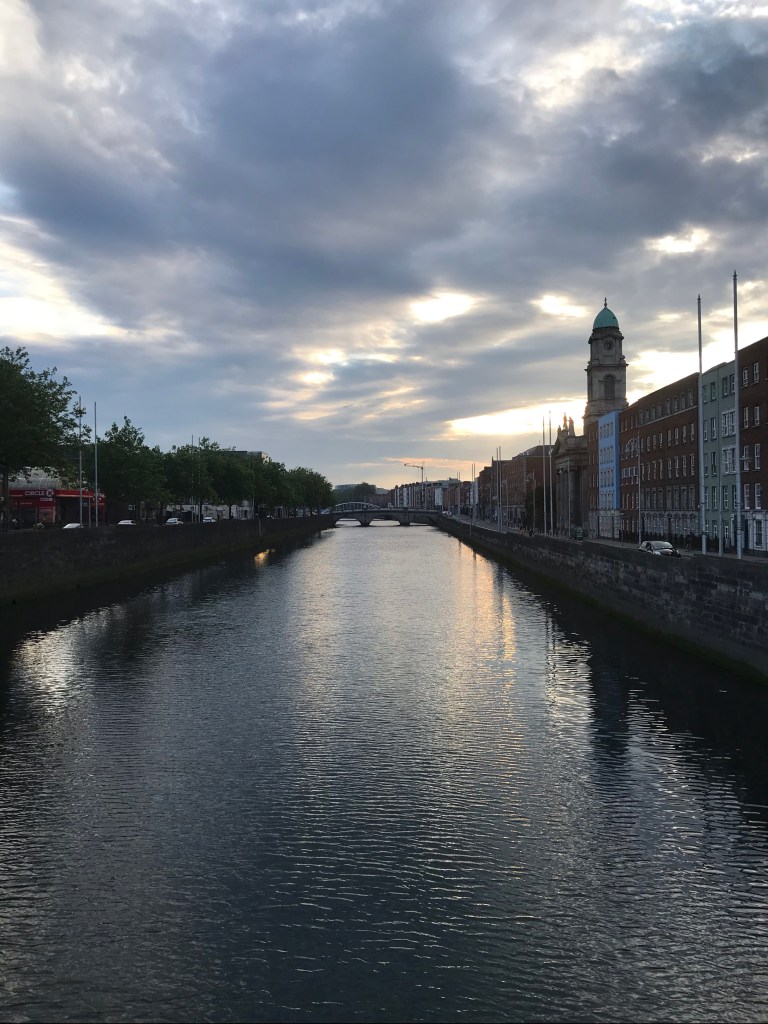
We normally returned home before sunset. They can be so beautiful when viewed across the Liffey.
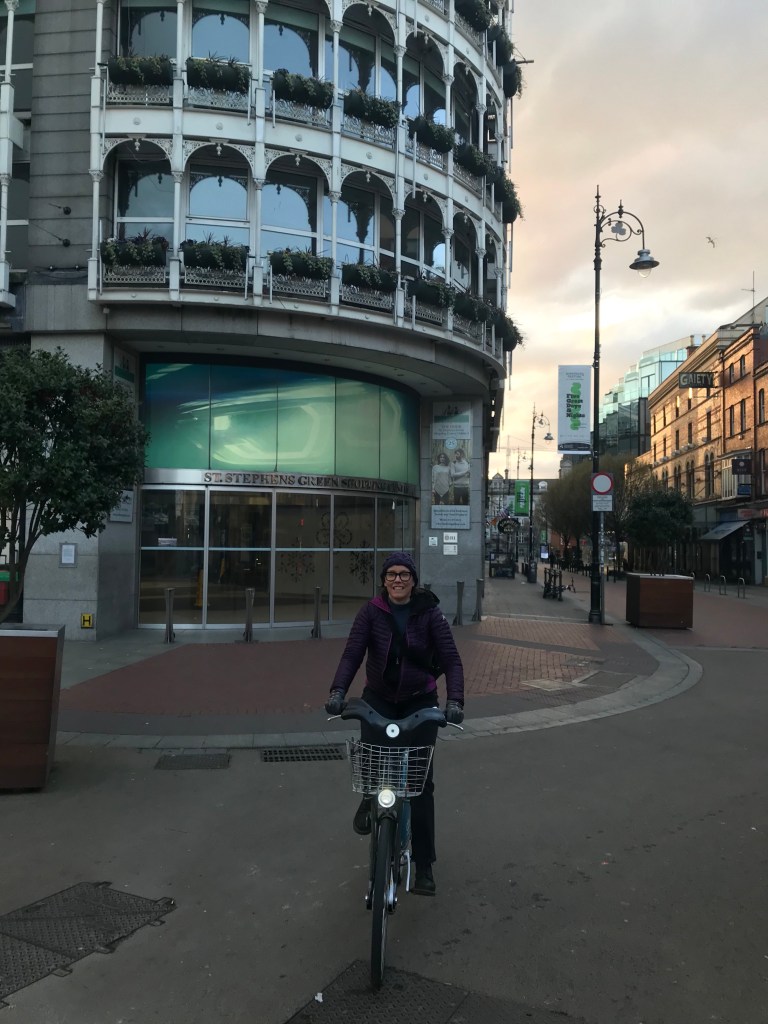
Here we’re at South King Street, near the still-asleep Gaiety Theater and St. Steven’s Green:
Docklands
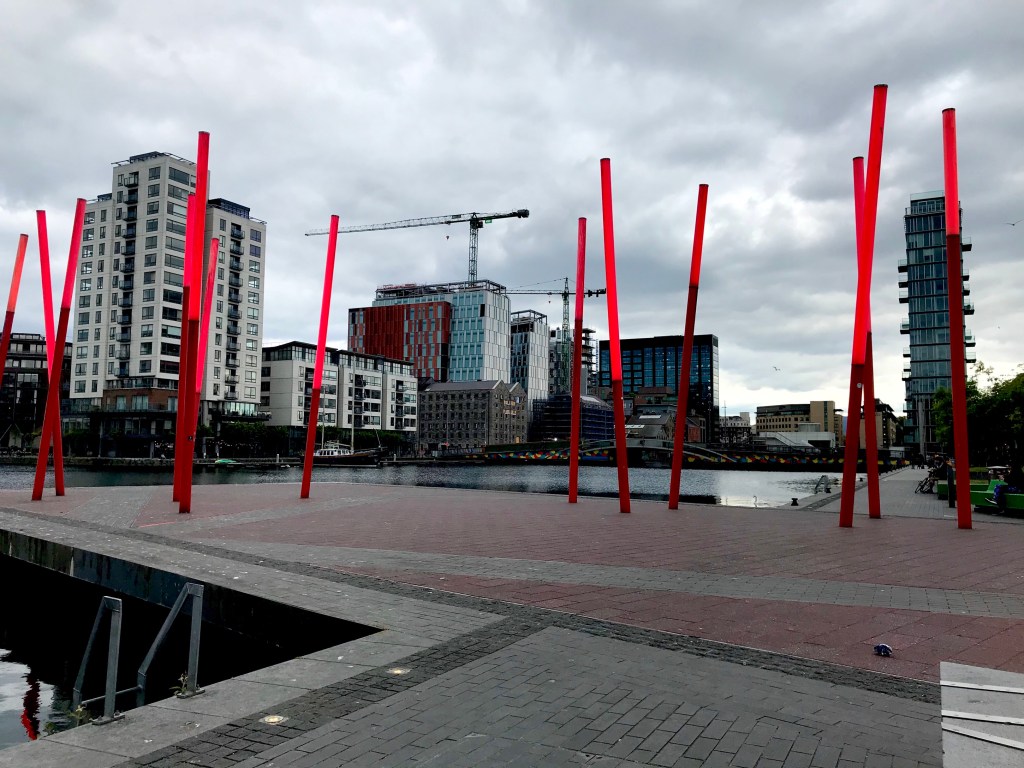
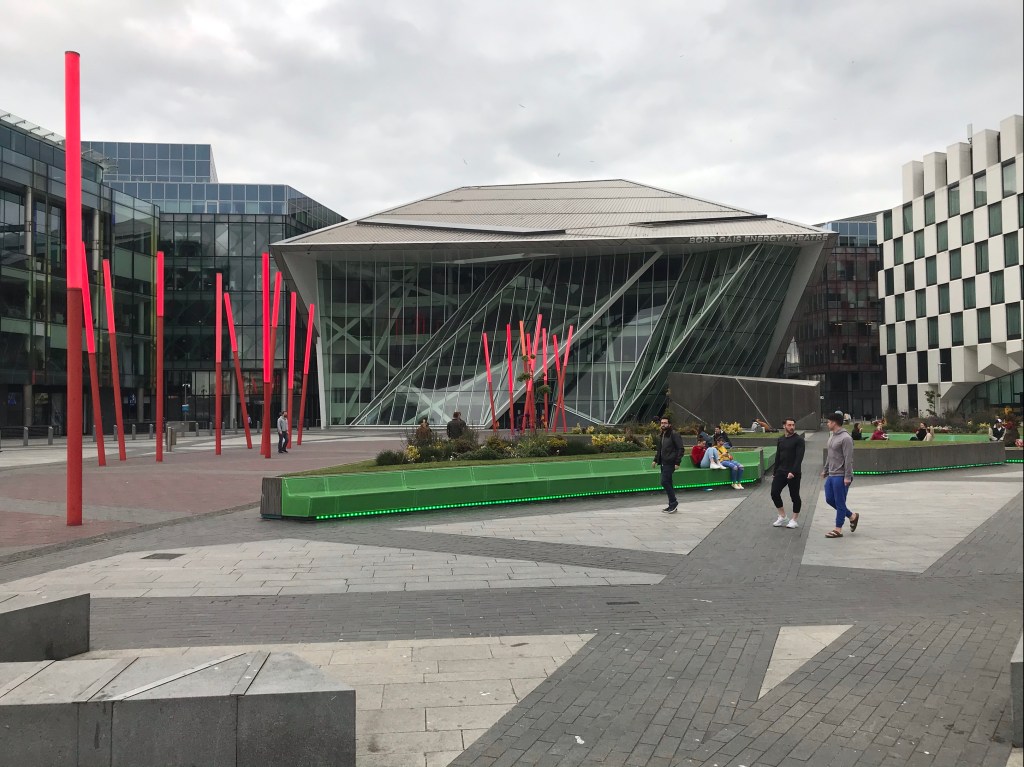
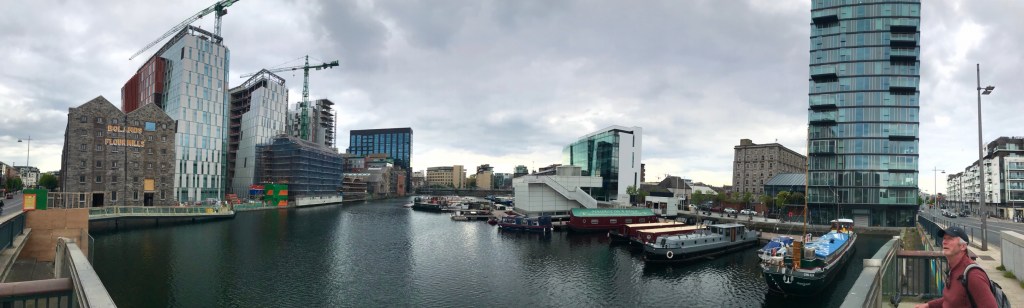
Our cycles brought us through Grand Canal Docks several times, with the Board Gaís Theater, designed by the office of architect Daniel Libeskind.
Ballsbridge
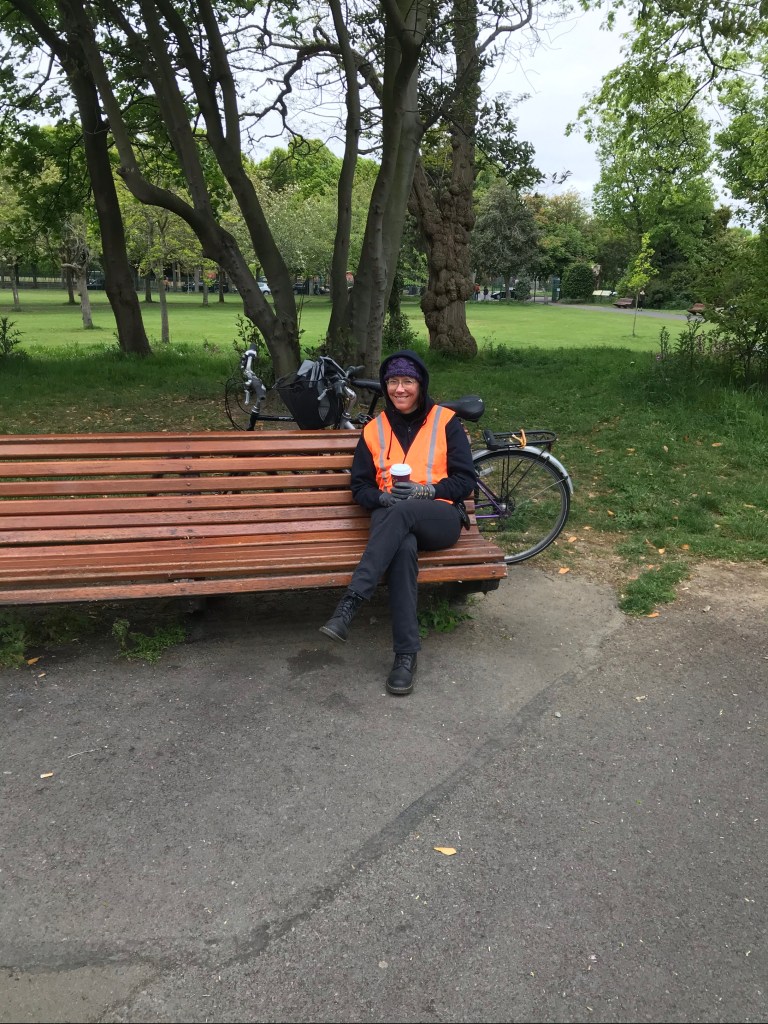
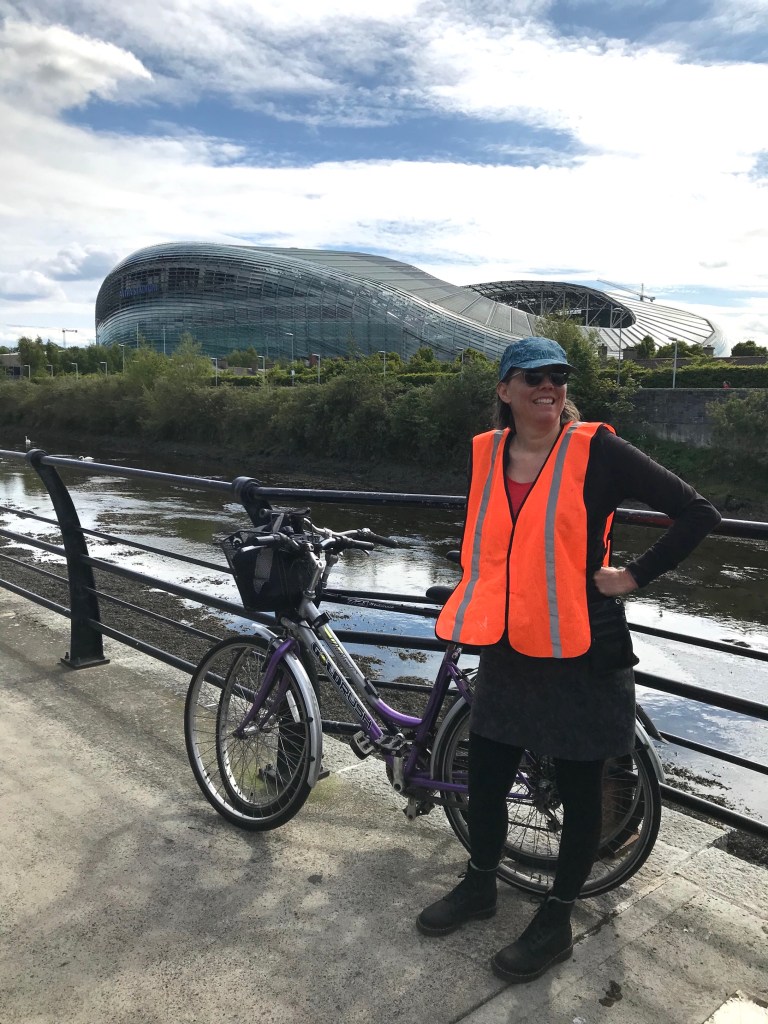
We found Herbert Park in Ballsbridge, which I knew of from Collene Dube’s “100 Days of Walking” Tweets. It’s near Dublin’s big Arena.
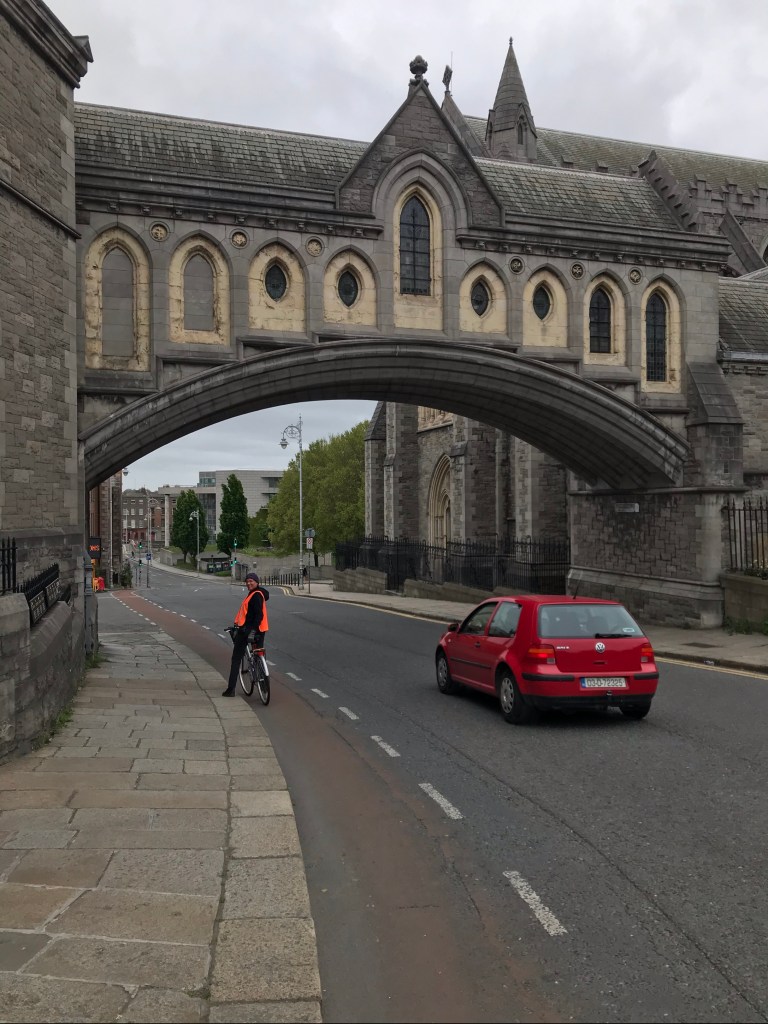
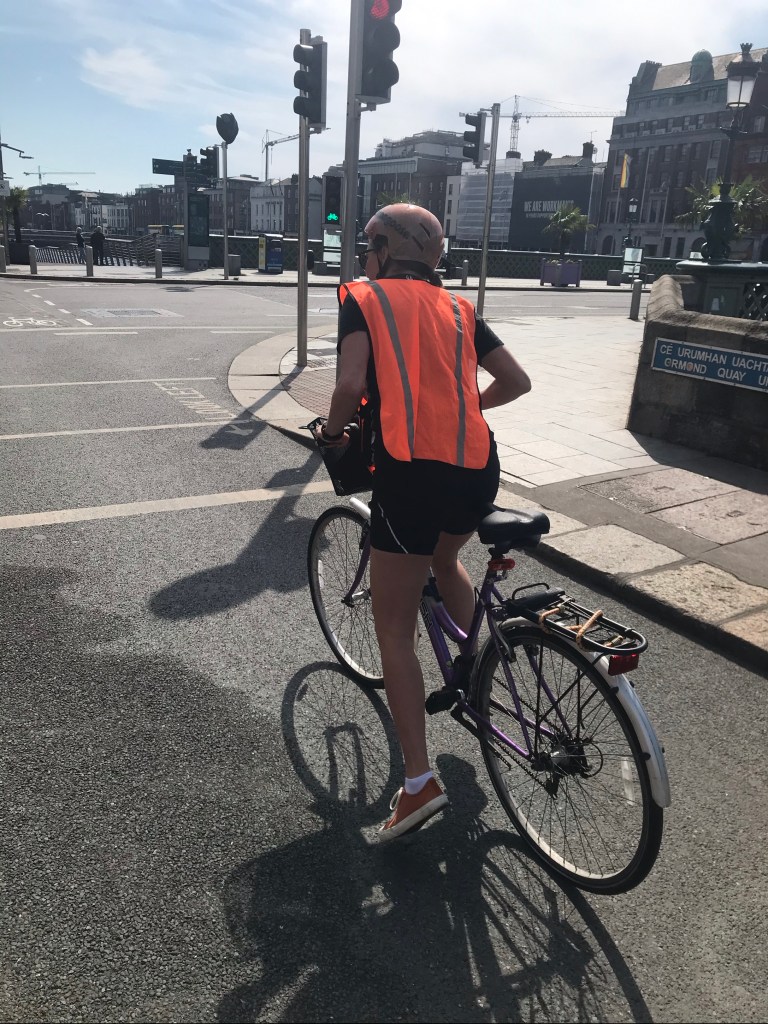
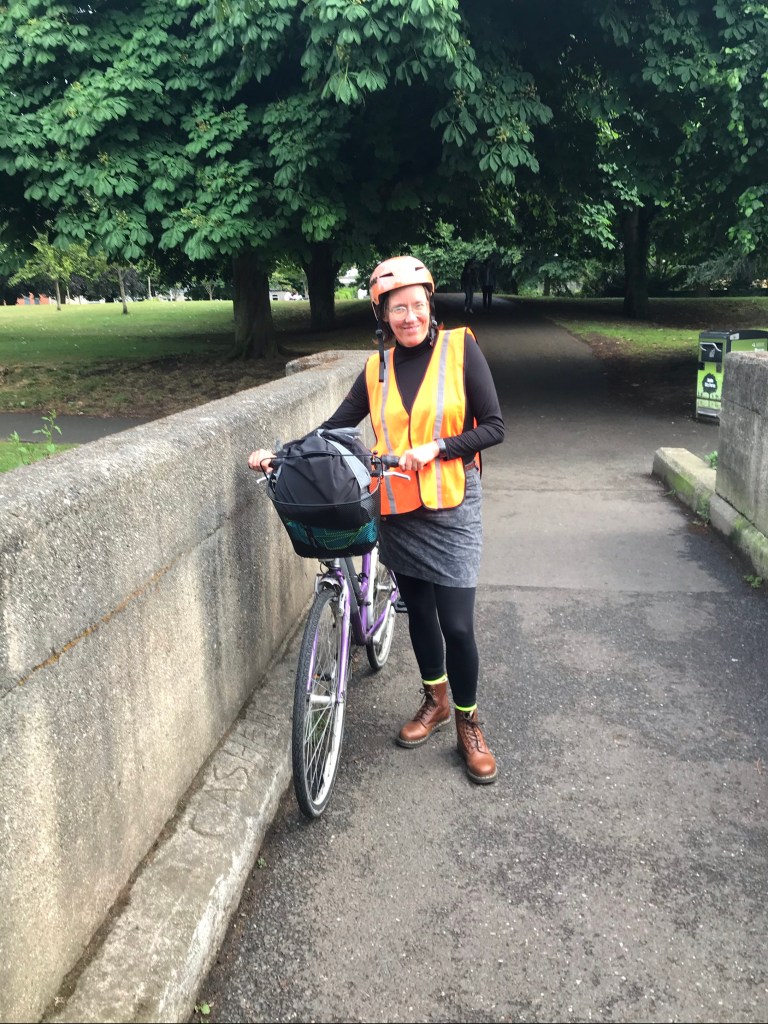
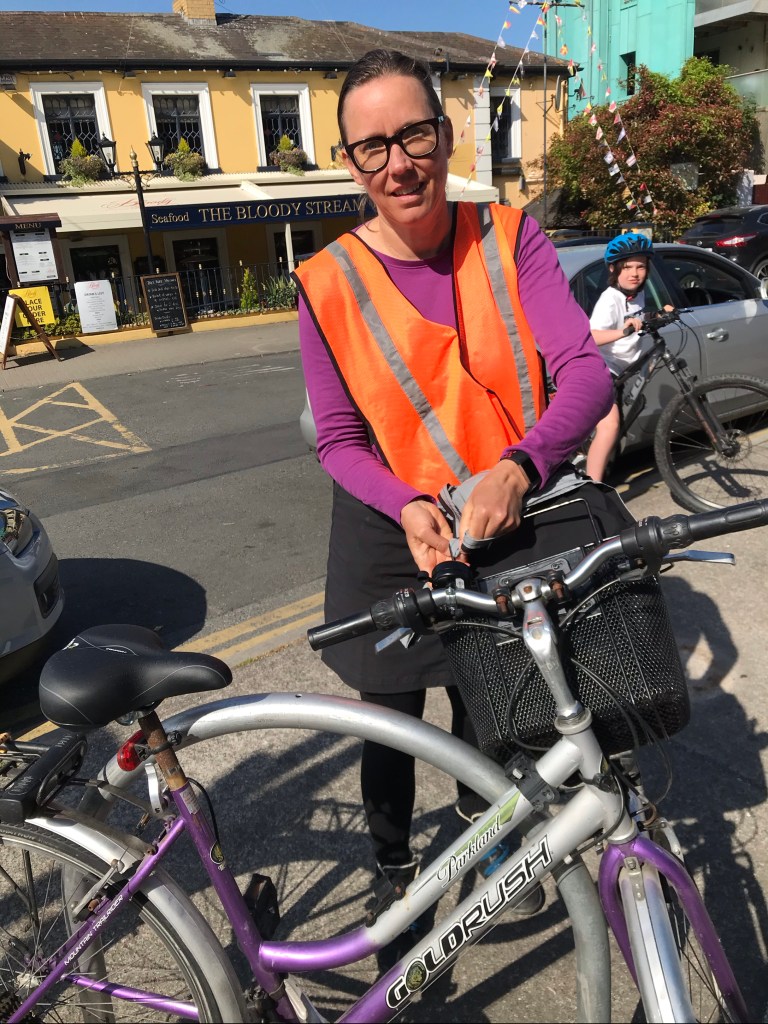
Riding out here, I felt that drivers gave me more space when they saw the orange vest. Aongus says it’s probably the style of vest I’ve chosen, which evidently suggests I do maintenance in the social housing complexes of Dublin. Whatever–it works! And yes, my sense of style is surely all my own!
Sandymount
We could only access the inner part of Sandymount in our 5km radius, but we made the most of it and dreamed of cycling even further southward, toward Booterstown, Blackrock village, and Dún Laoghaire in coming weeks.
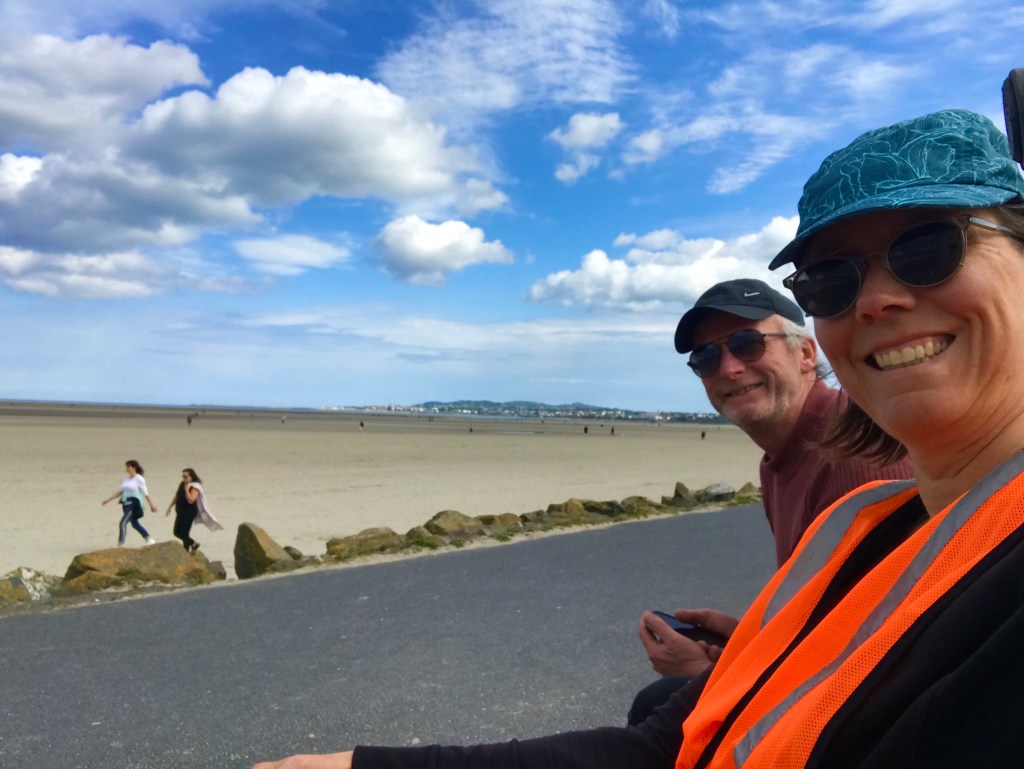
Here we are playing around at Sandymount Strand:
Seapoint
Low and behold, we discovered the beach at Seapoint as our zone opened to 20km, permitting our ventures toward Dún Laoghaire. It was a bit crowded, but still possible to find the needed distance from others:
Dún Laoghaire
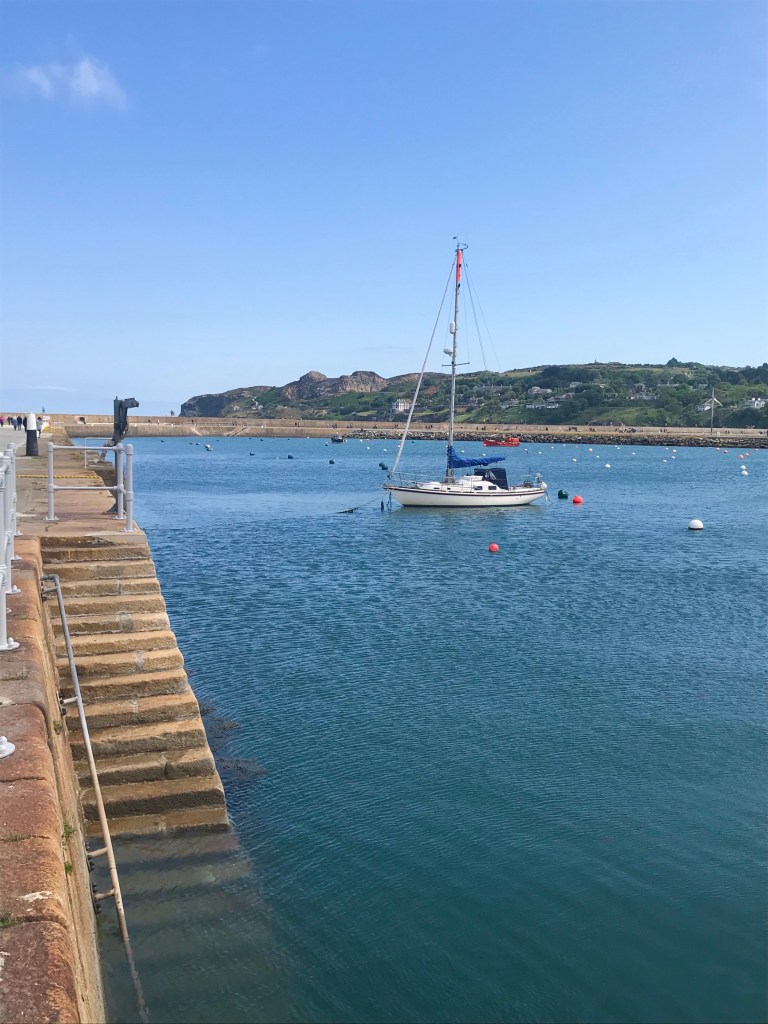
We made it to Dún Laoghaire, with its mega-sized harbor and its vibrant People’s Park. The harbor is so much larger than Howth’s. We always brought a picnic and planned for the lack of bathrooms. Although Howth opened thiers prior to our visits, Dún Laoghaire did not.
We have talked about a cycle out to Dalkey, which is just inside our 20km, but we haven’t made it there yet by bike. Something to look forward to…..
During lockdown in Ireland, we started with an allowable 2 km radius exercise zone from our homes. This eventually increased to 5 km, then 20 km. For Aongus and me, the entire center of Dublin falls within 2km. If you’re thinking “Wow, that’s small!” I agree, yes, Dublin’s central core is quite small.
Our circle expanded, very slowly, from our immediate neighborhood of Smithfield, to 2km with Phoenix Park (described in another post), Blessington Basin and the Royal Canal (described below). At 5km, we expanded to the Botanic Gardens and Griffith Park. At 20km, we cycled further, challenging ourselves to 20km there and 20km back, which would get us to Howth, cycling along the greenway at Clontarf or even over onto Bull Island and along Dollymount Strand. I’ve shared photos of all this below, as it’s just too picturesque to miss.
I wanted to document the experience for historical purposes (the life of empty nesters in Dublin during lockdown!?). I think the post has wider value, too: if you’re ever visiting Dublin, these are great places to explore!
Smithfield Plaza was empty for weeks.
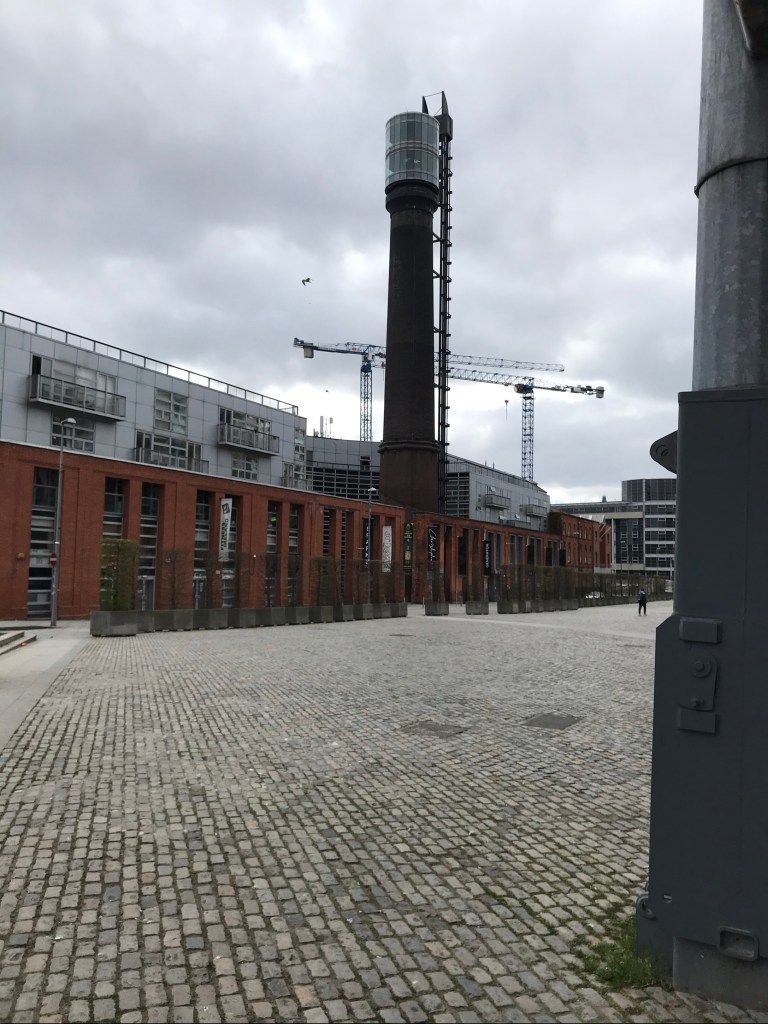
Days before lockdown started, I reminded myself that I wanted to climb the tower at Jameson’s Distillery, shown above, which one could then access for a €5 fee paid to the Genesis Hostel on Smithfield Plaza. The tower could, I told myself, become inaccessible again, for any reason, at any time. It had been closed most of the time since I moved to Smithfield in September 2012.
Due to Covid, the tower certainly became inaccessible once again.
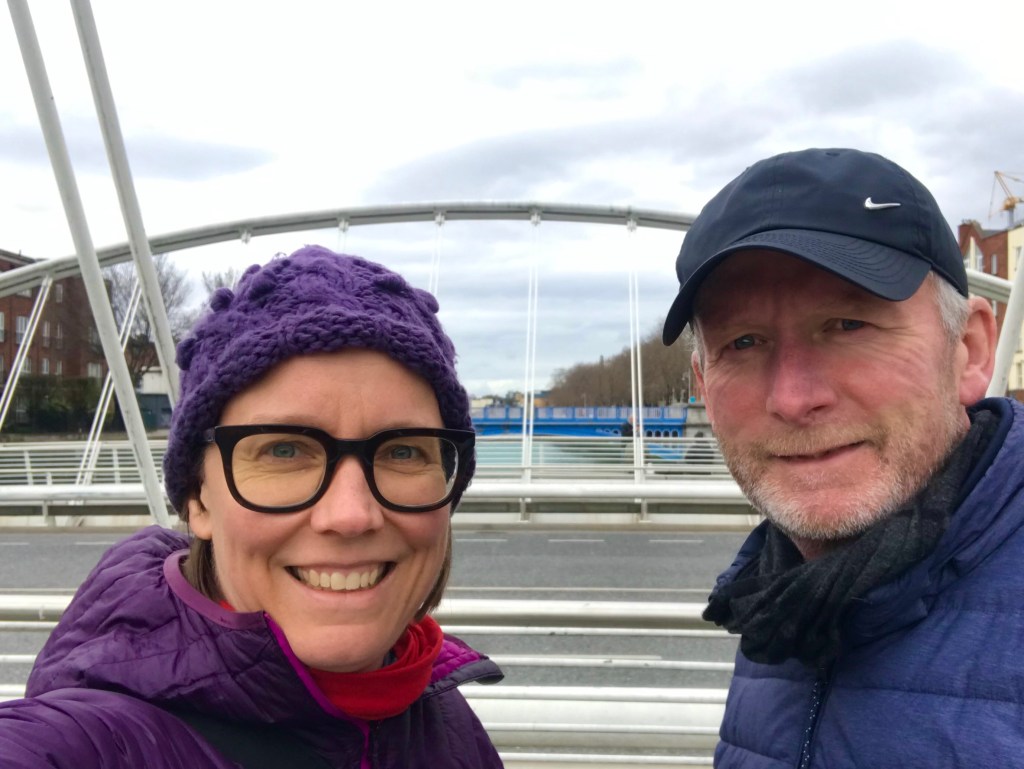
During lockdown, I rarely ventured out Monday-Friday. I tried to get indoor exercise during the week, but it wasn’t easy. With the Liffey four blocks from home, I motivated myself to get out and walk that far some evenings, between work and dinner. Below, Aongus and I are pictured on one of Dublin’s two Calatrava-designed bridge, which is five blocks from our home:
You can see the tip top of the giant obelisk in Phoenix Park peeking from the trees between our heads.
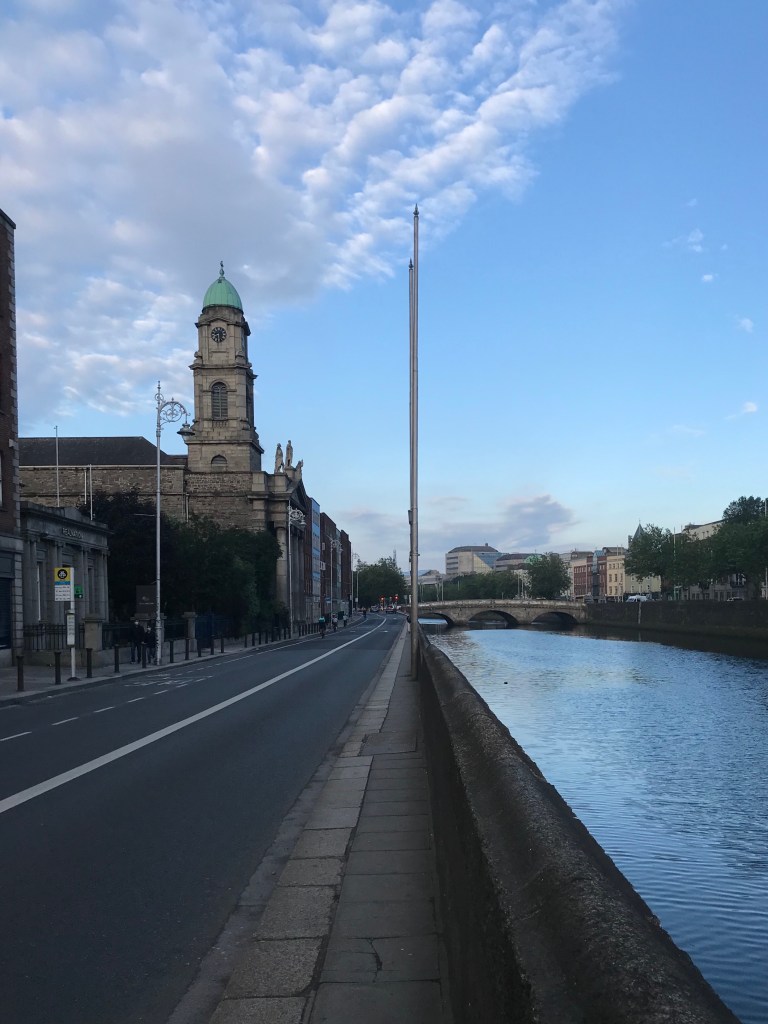
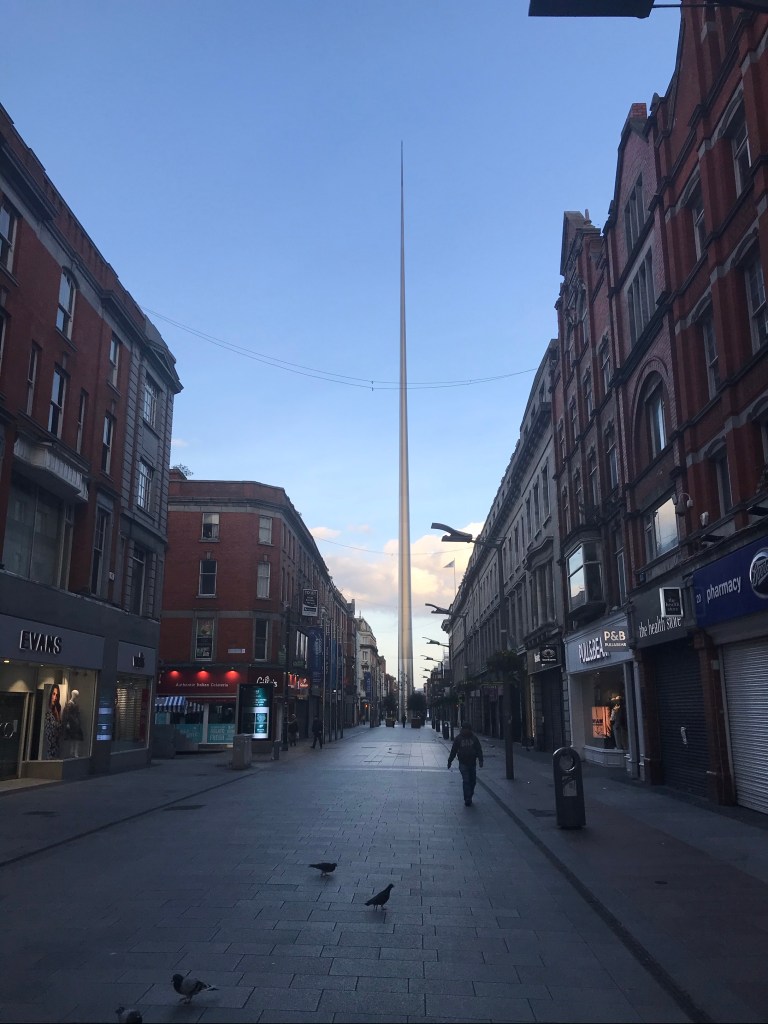
Below are photos of “northside” streets close to our home: (1) along the Liffey with Smithfield to the right/north, (2) cycling the new protected lanes along the Liffey, (3) the lovely steeple of St. Paul’s @ Smithfield shown as second time, and (4) a morning view of, vacant, taken by Aongus on his way to work once lockdown started to lift.
During the height of lockdown, the streets of central Dublin were actually quite eerie in the evening. The Irish police (called the Gardí) set up checkpoints all around Dublin—mostly to prevent drivers from exceeding their boundaries without reason.
On one walk we were stopped on O’Connell Street by a Guard. He asked us why we were in town, and since exercise was allowed and we were within our allowable zone, there was not problem and the guards let us pass. Other acceptable reasons were shopping for medicine or food shopping, or assisting someone who was cocooning.
We got stopped one other time, on the way to Phoenix Park because unbeknownst to us, a right-wing radical individual was trying to stage a protest. It didn’t work for her. People didn’t show up to join her shenanigans. The Irish are quite reasonable politically, in my opinion, and such radical views are unpalatable here.
Blessington Basin
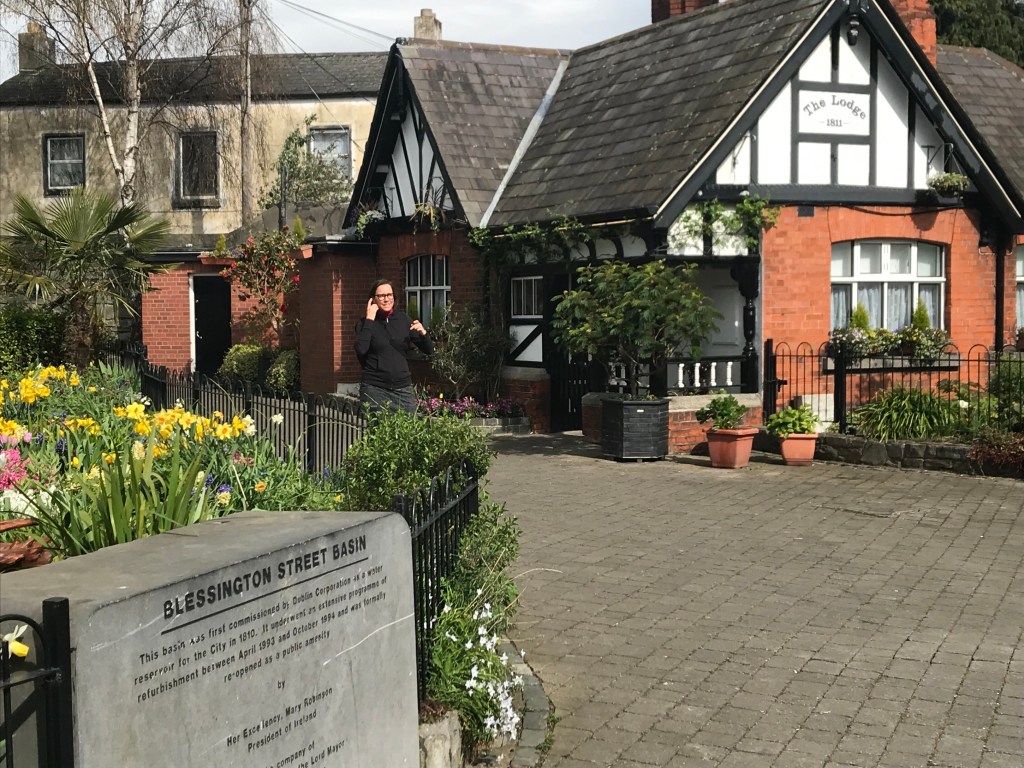
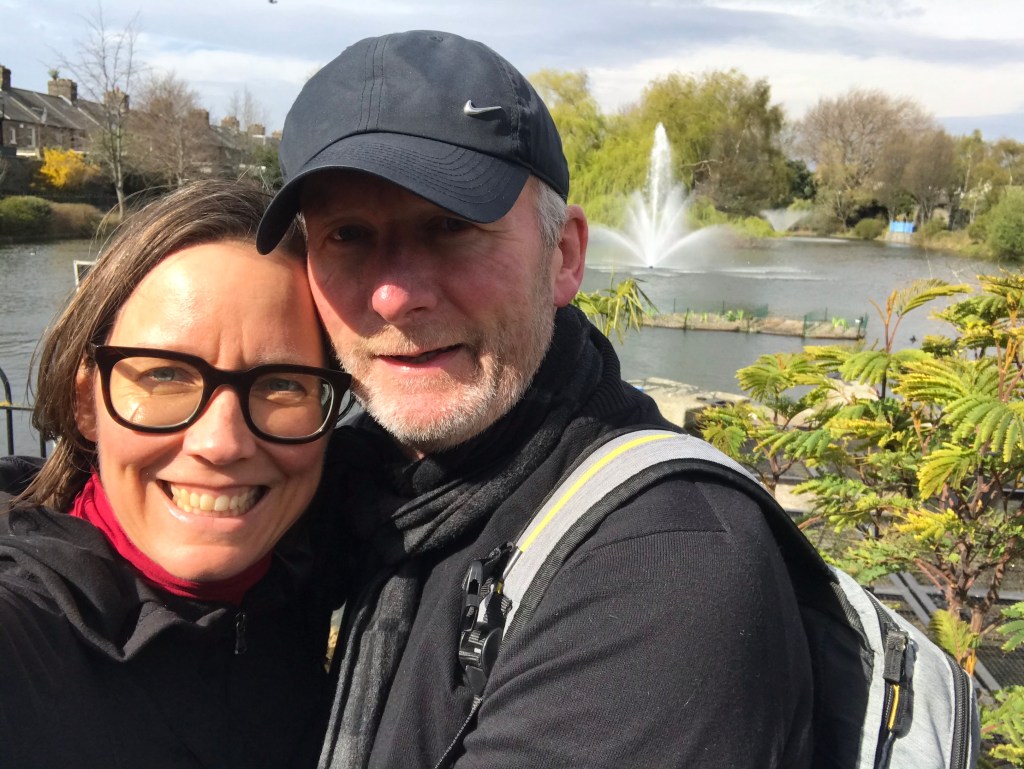
Although Aongus initially thought 2km would be too restrictive, it turned out there was more to see than he realized. Within our 2km small radius there were urban delights to be found: we joyfully ‘discovered’ Blessington Basin for ourselves.
I’d seen it on the map while searching the web for property (I might as well be looking for leprechauns or unicorns as a sunny and affordable flat or house in Dublin). Though I knew its name and location, I’d never had reason to venture there. Until lockdown. It’s easily reached from our flat by foot or bicycle.
Ultimately, we ended up near the Basin while exploring on Dublin Bikes (which we both subscribe to for a very reasonable annual fee).
Aongus was flabbergasted. He had no inkling of the existence of this Basin– even though he was raised not far away, on the Northside of Dublin in Glasnevin!
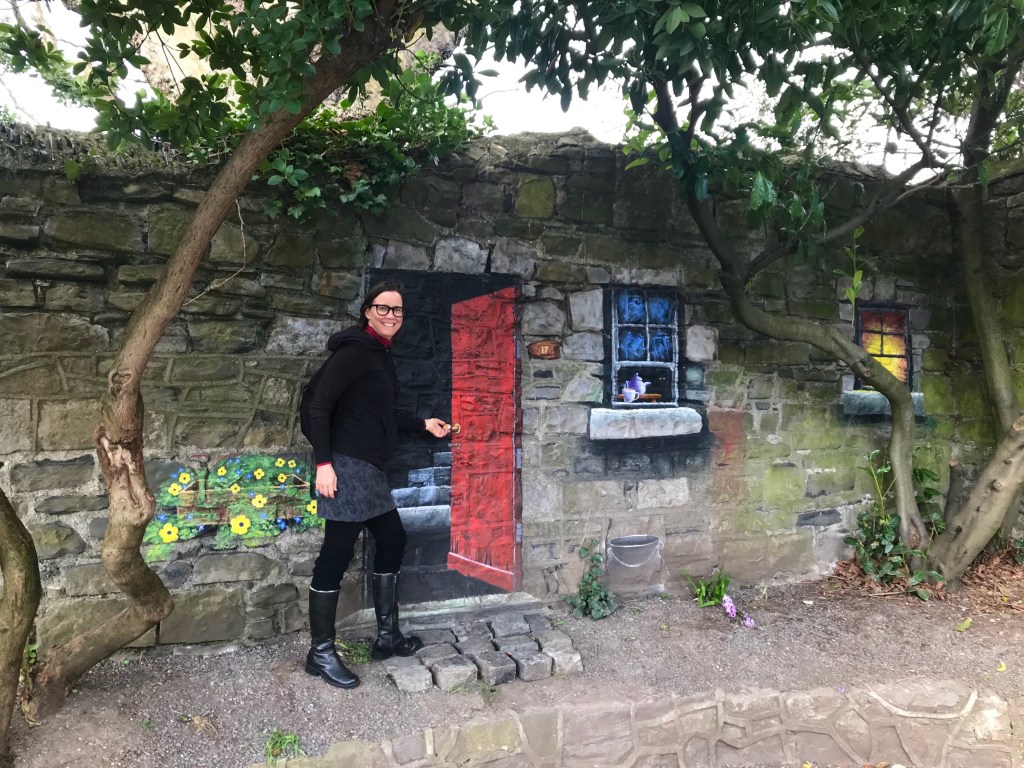
There are several delightful murals in the park surrounding Blessington Basin, and the one pictured above, with me sliding through an illusionary door, is appropo. A step into Blessington Basin park feels like you’re entering Sinclair Lewis’ Narnia or Alice’s Wonderland!
Royal Canal
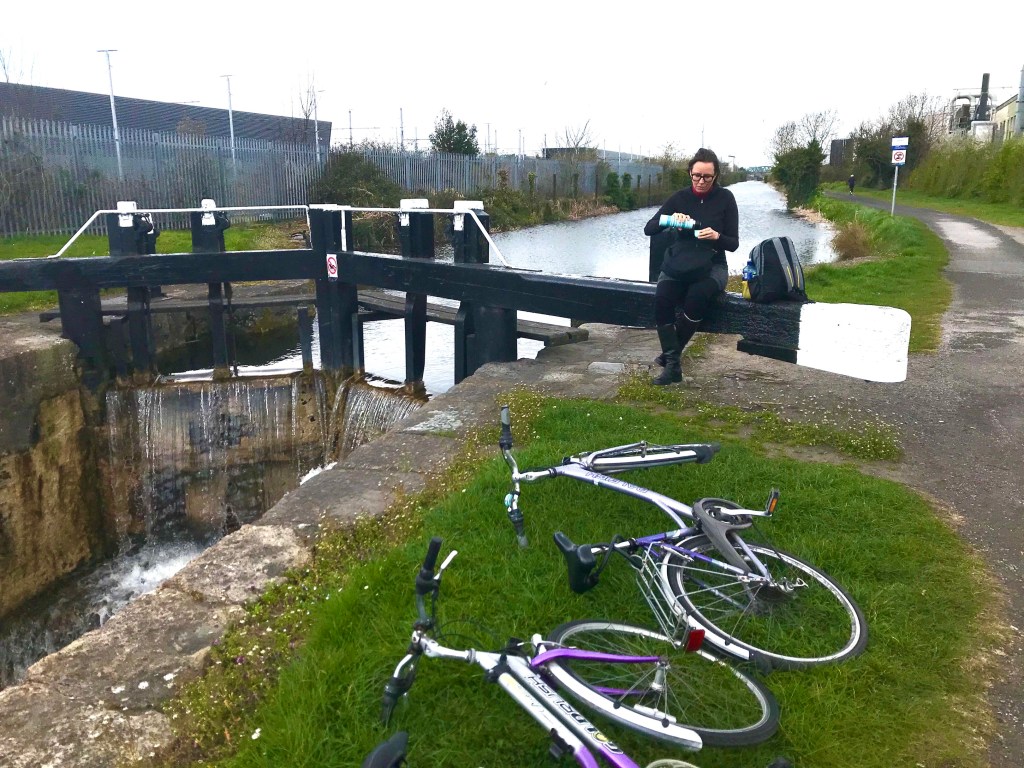
A week into lockdown, I got my previously non-working bike up and running. At about the same time, Aongus borrowed a bike from his sister, because he was the one appointed by his family to keep his 82 year-old aunt supplied with food and meds.
With these bikes, we were able to explore more easily and we found more joys, like the footpaths, the little canalside park beside Shandon Gardens, and cycle paths aside the Royal Canal (with one of its locks shown above). We determined to return again when we’re allowed more distance to roam.
National Botanic Gardens
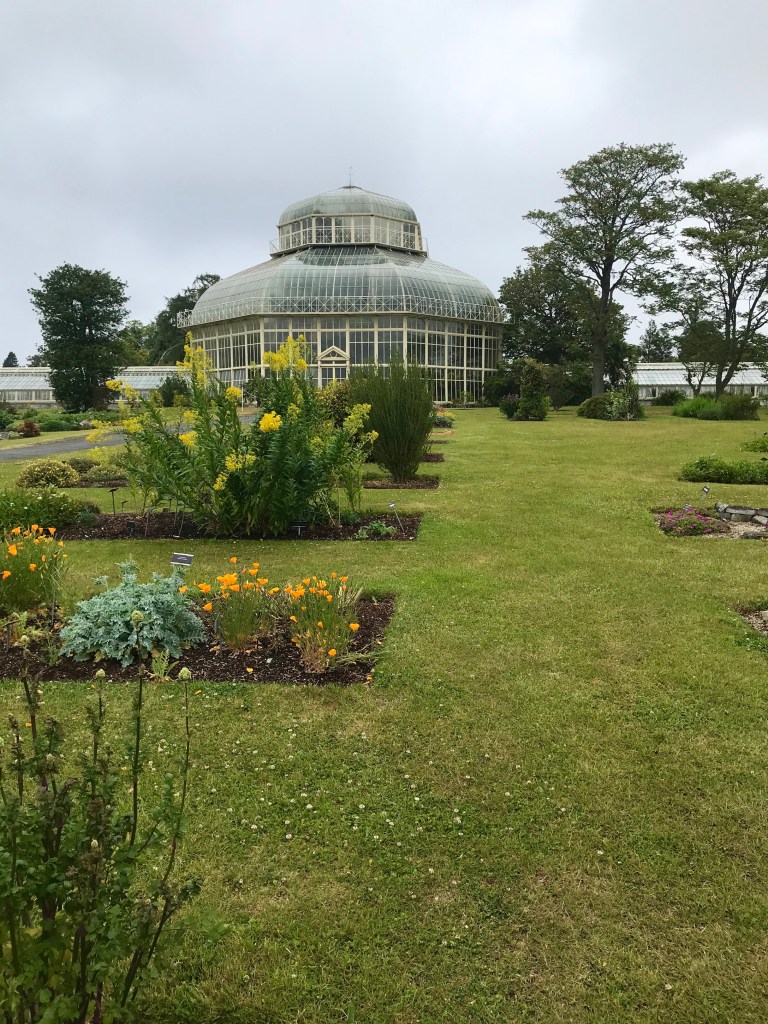
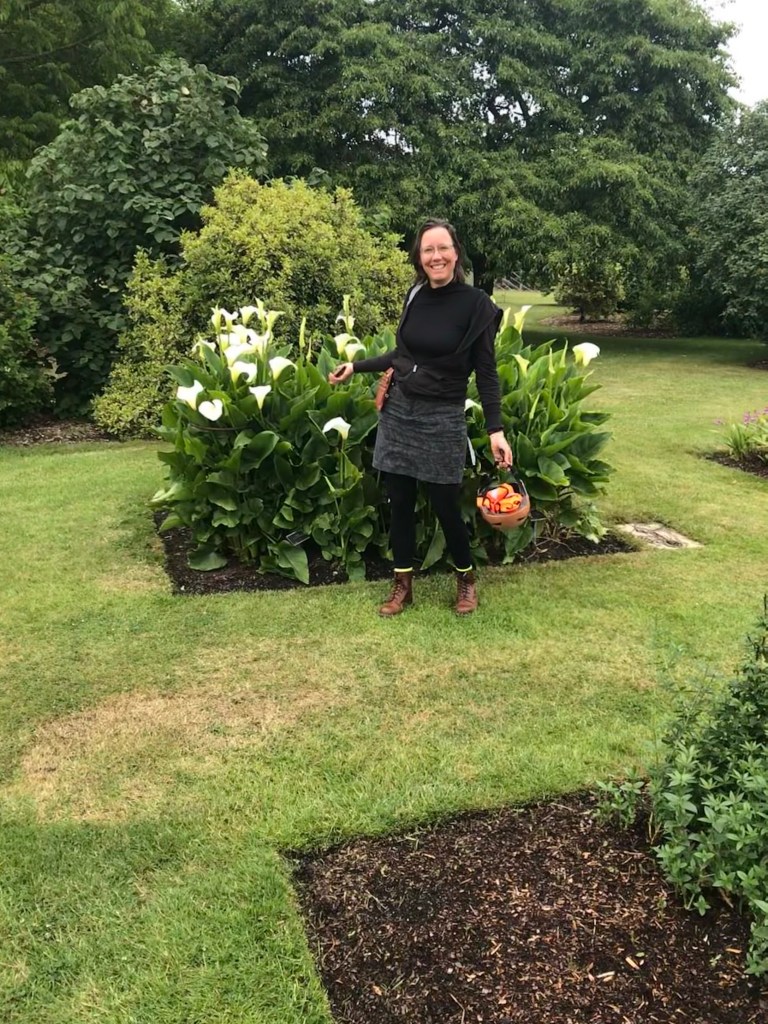
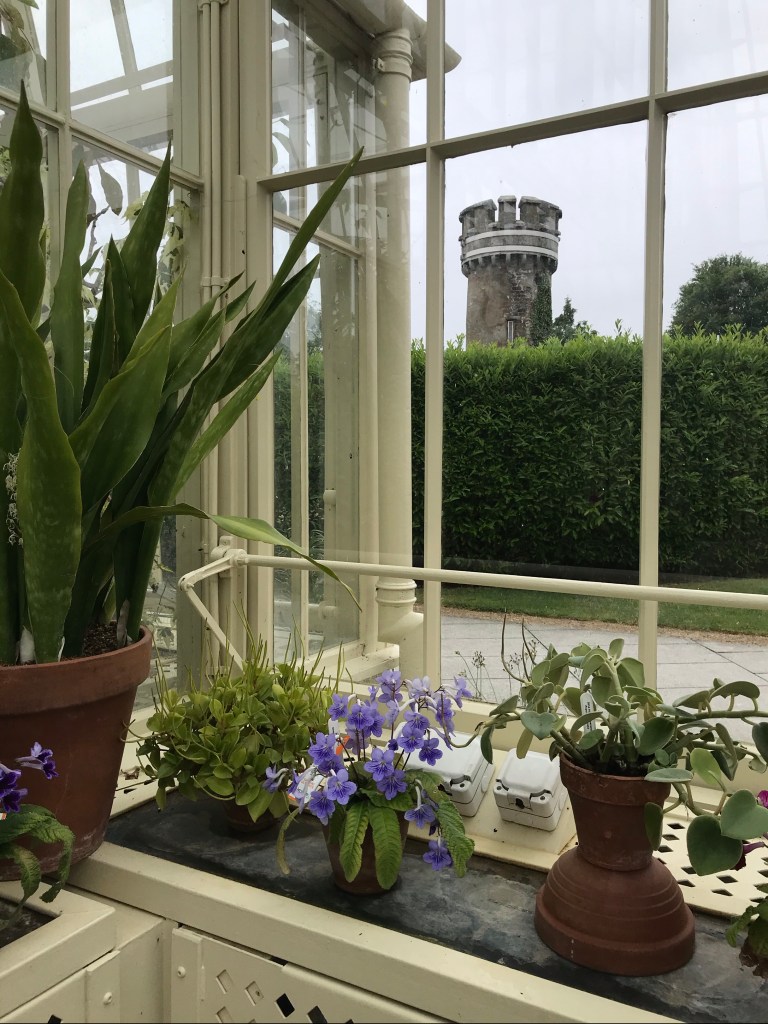
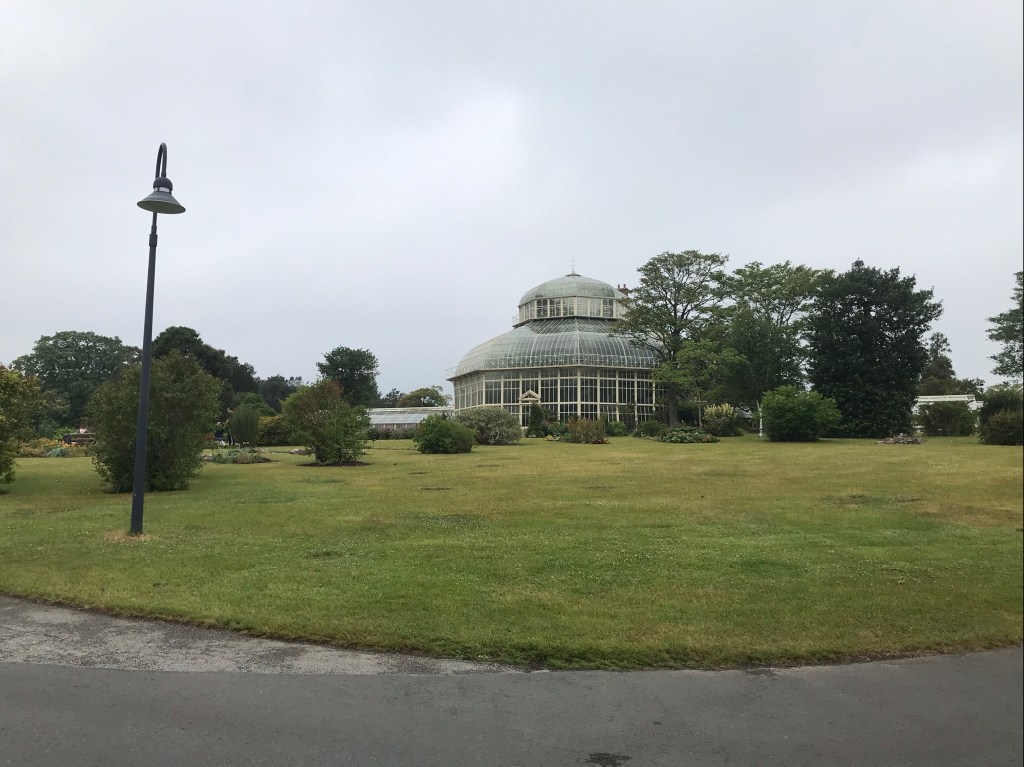
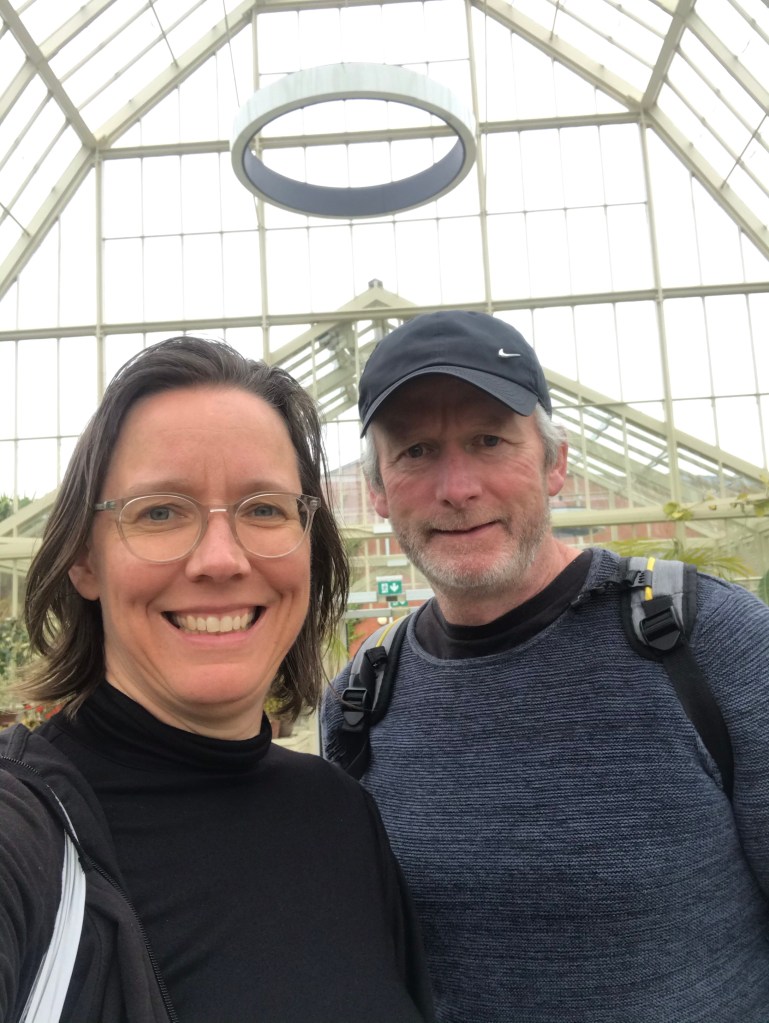
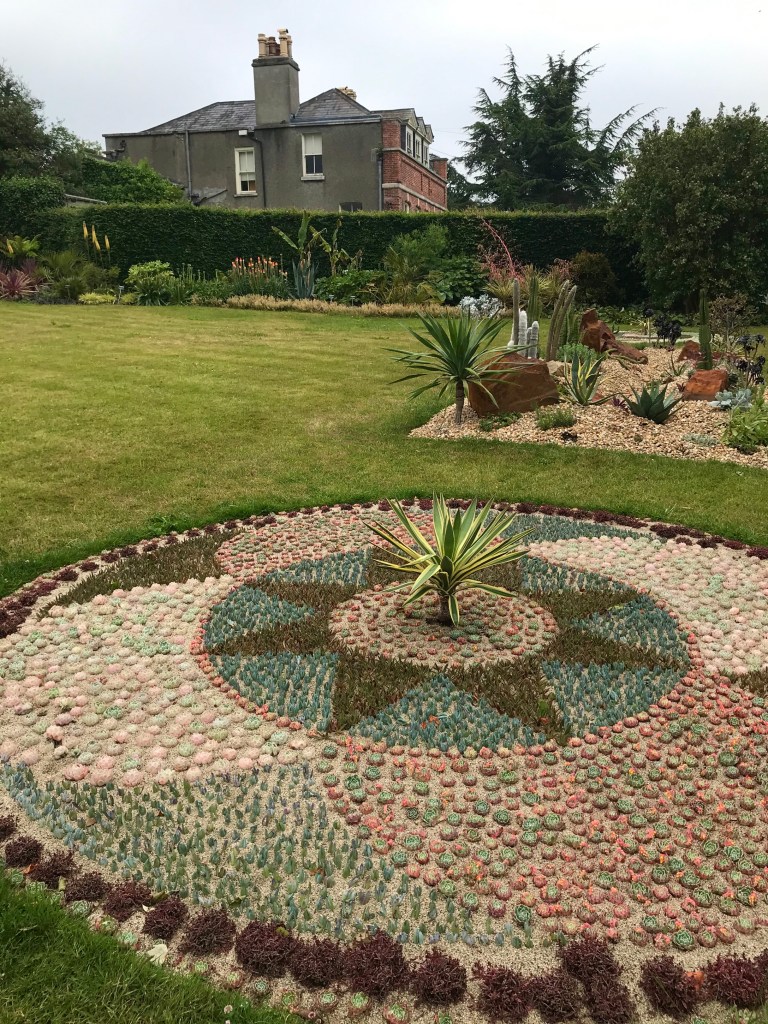
Our allowable zone eventually expanded to 5km. Inside that we found the Botanic Gardens and Griffith Park, although these photos were taken after we’d gotten 20km access. The Botanical Gardens had been closed for months before opening its gates to the public. The caretakers must have been there during lockdown, as the place is still meticulously manicured.
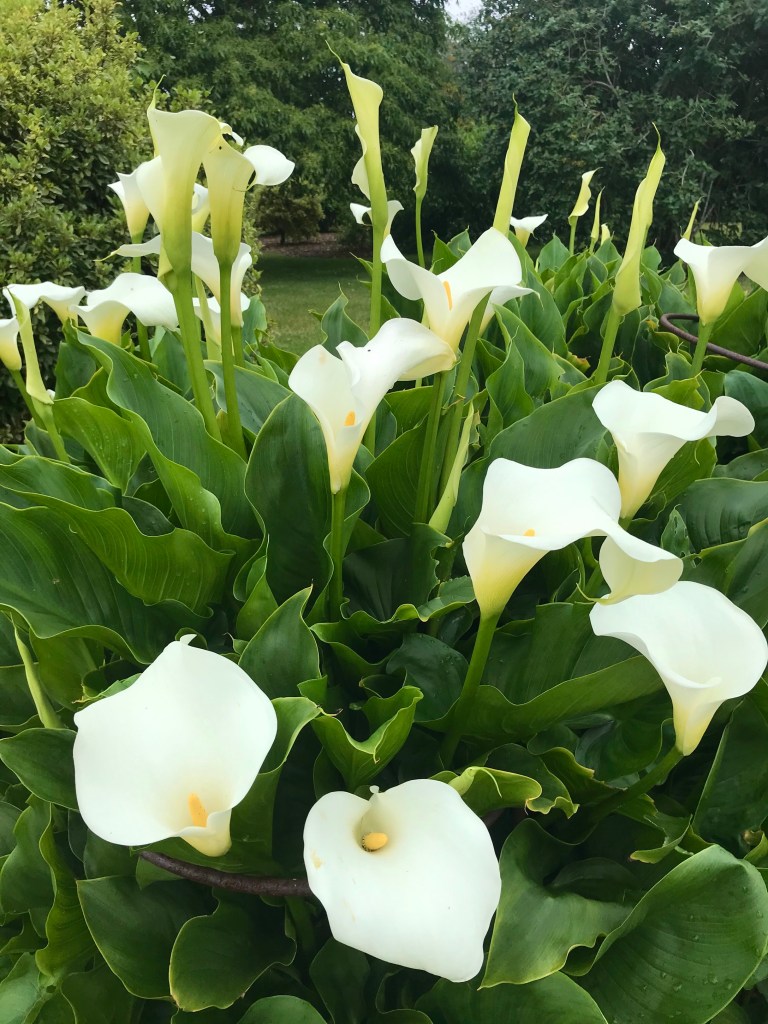
When amenities began re-opening on the northside of the city, the gates of the National Botanic Garden sprung open with colorful life:
The flowers had been developing nicely in the peace and quiet.
Aongus loves this place. It’s near his childhood neighborhood and one if his mum’s favorite spots for a weekend walk.
Griffith Park
Aongus brought me through Griffith Park one day. It’s just to the south of his auntie’s house. Here’s I’m decked out in bright orange and a crash helmet, which I found helpful as cars returned to the streets of Dublin. Most drivers allowed me plenty of space, but of course, I was only cycling on weekends.
We had a snack beside the canal this day in Griffith Park, and then enjoyed a short and distanced front-year visit with his aunt.
Dollymount
Bull Island with its Dollymount Strand fall just beyond our 5km, so we had to wait for the 20km radius to enjoy these coastal amenities again. Fairview and some of Clontarf were allowed, but we couldn’t go up as far as Bull Island. It’s too bad that we couldn’t enjoy the Wood Bridge without cars.
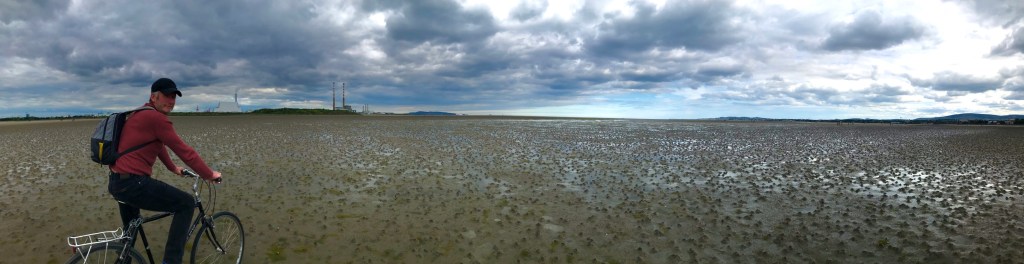
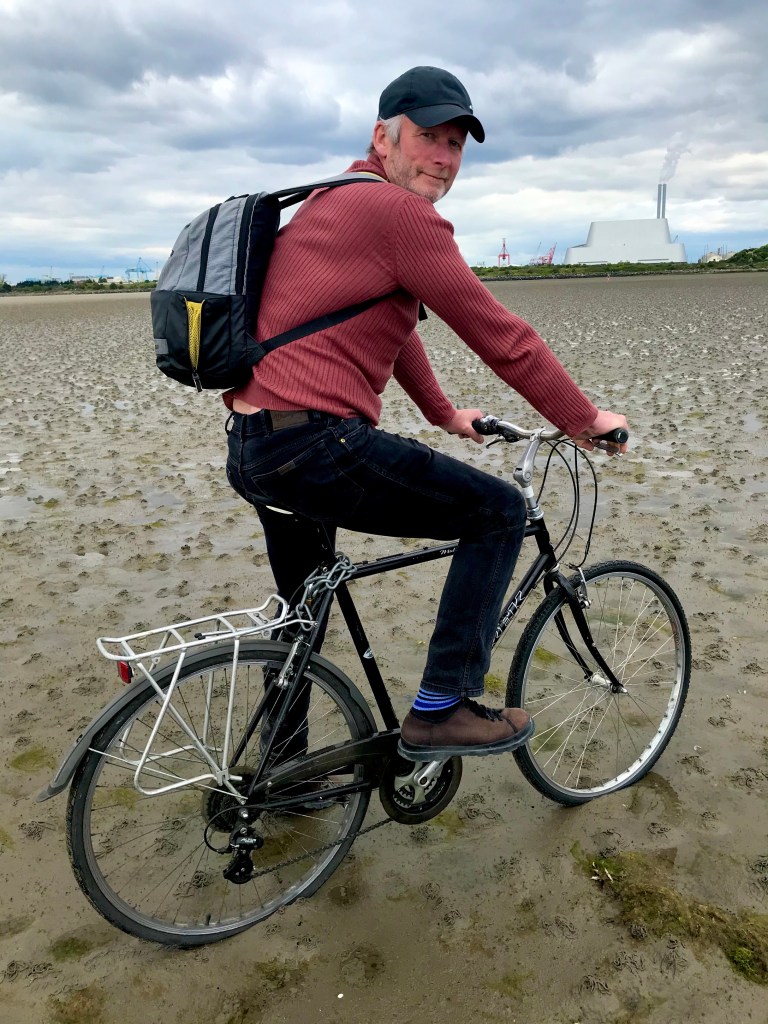
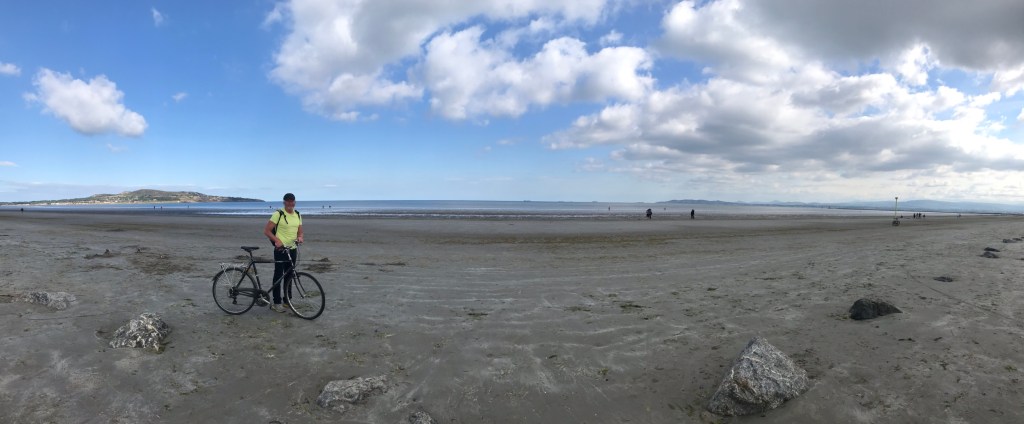
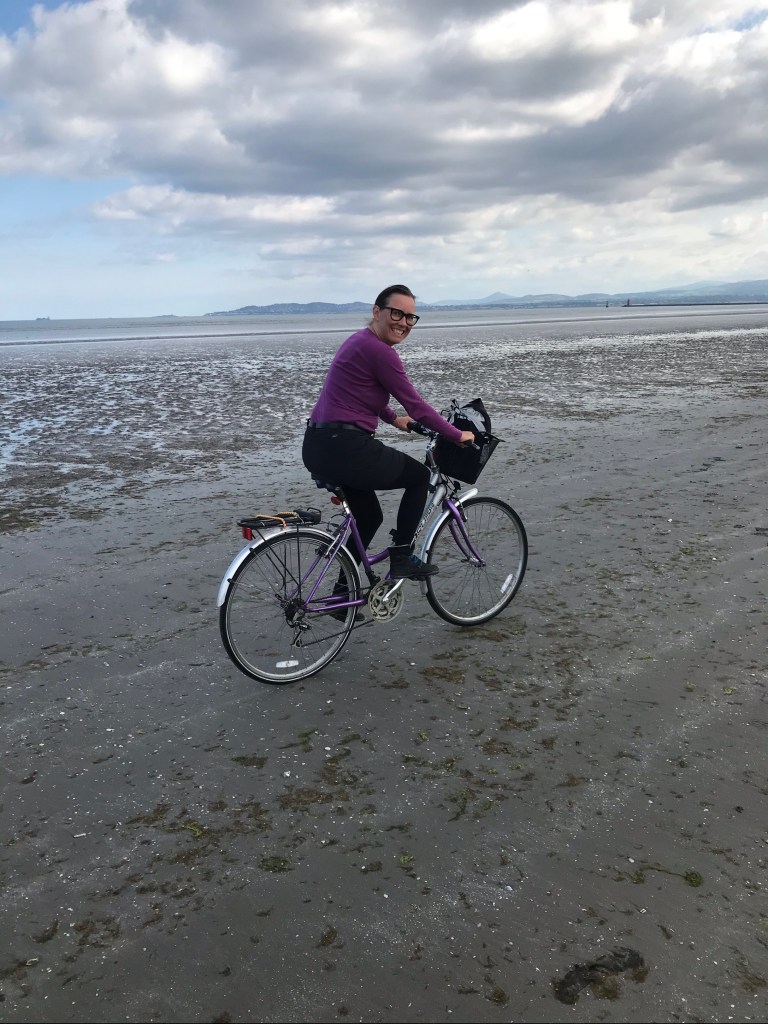
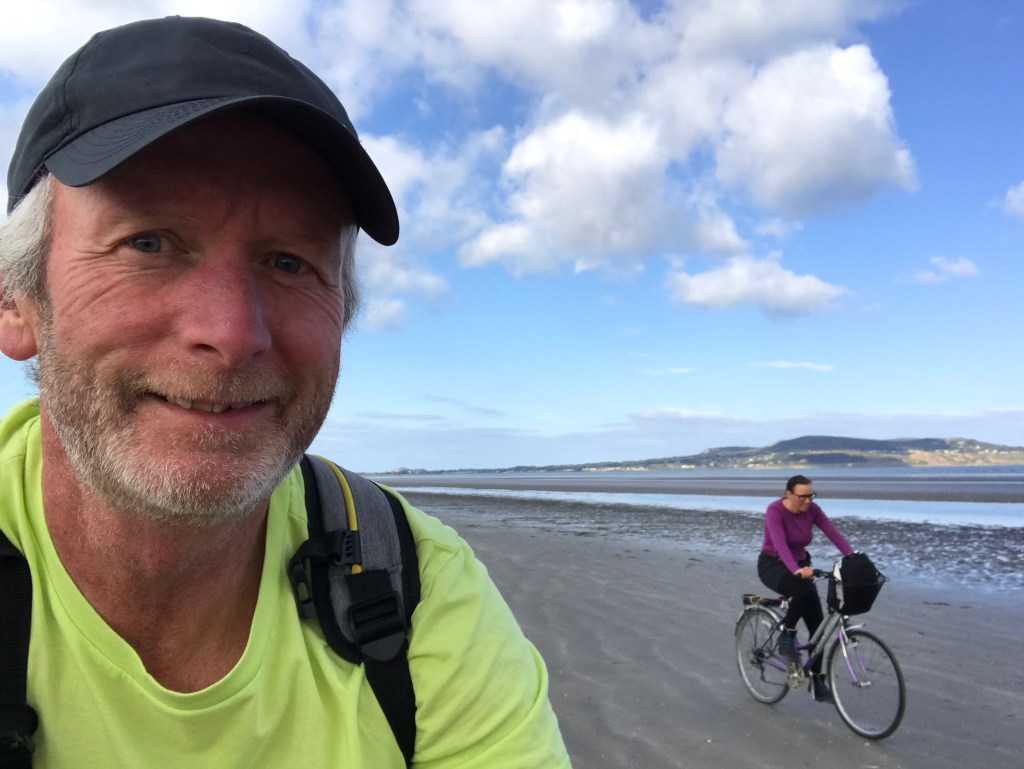
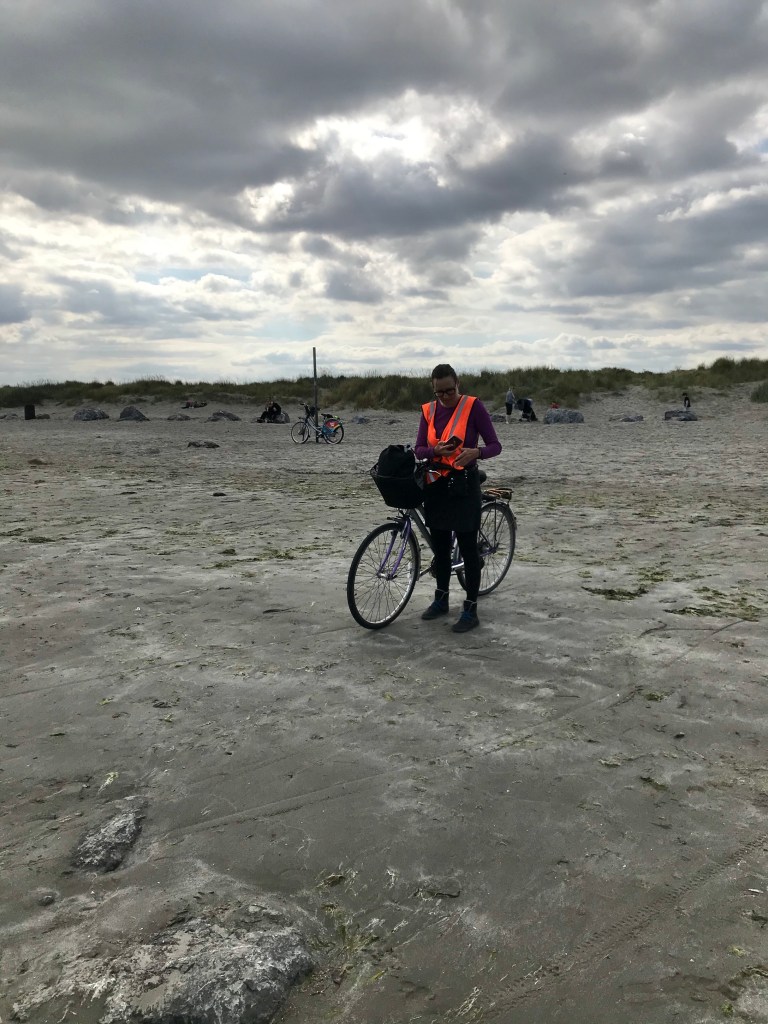
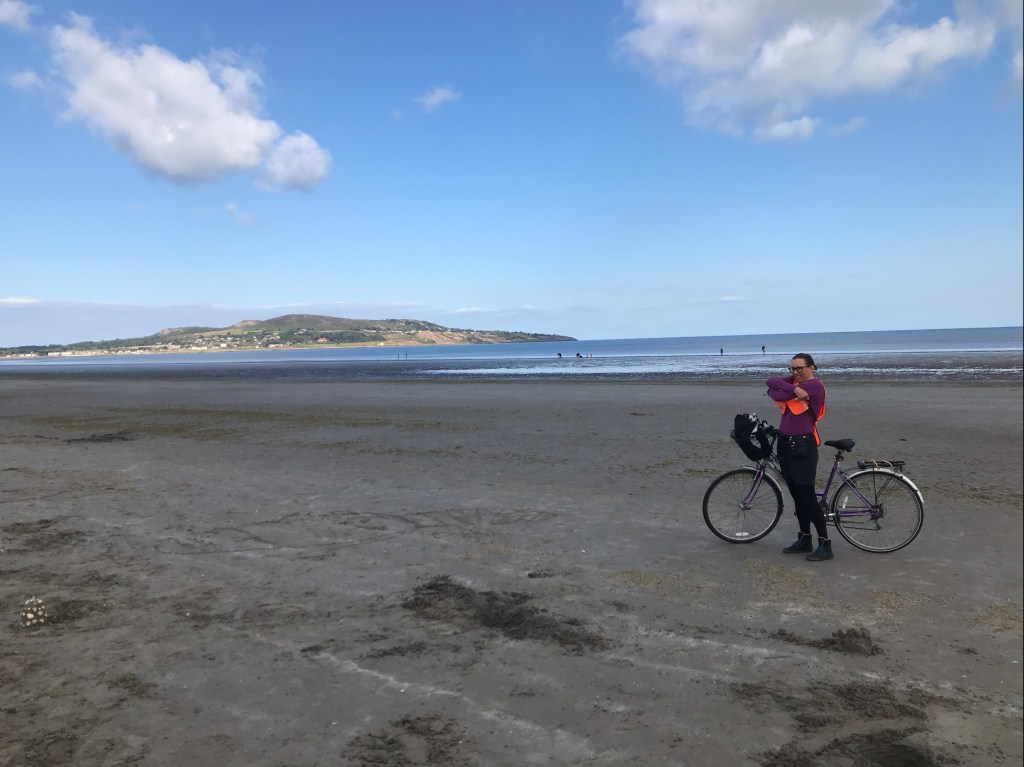
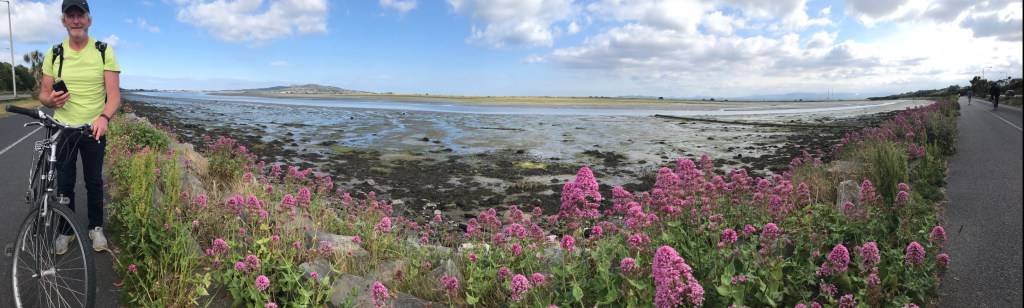
Our visit to Dollymount Strand came after our cycle to Howth (described below). We took the long route on the way home from Howth, to enjoy the views, and the challenge of cycling in the sand. It’s much easier to cycle where the sand is wet than dry!
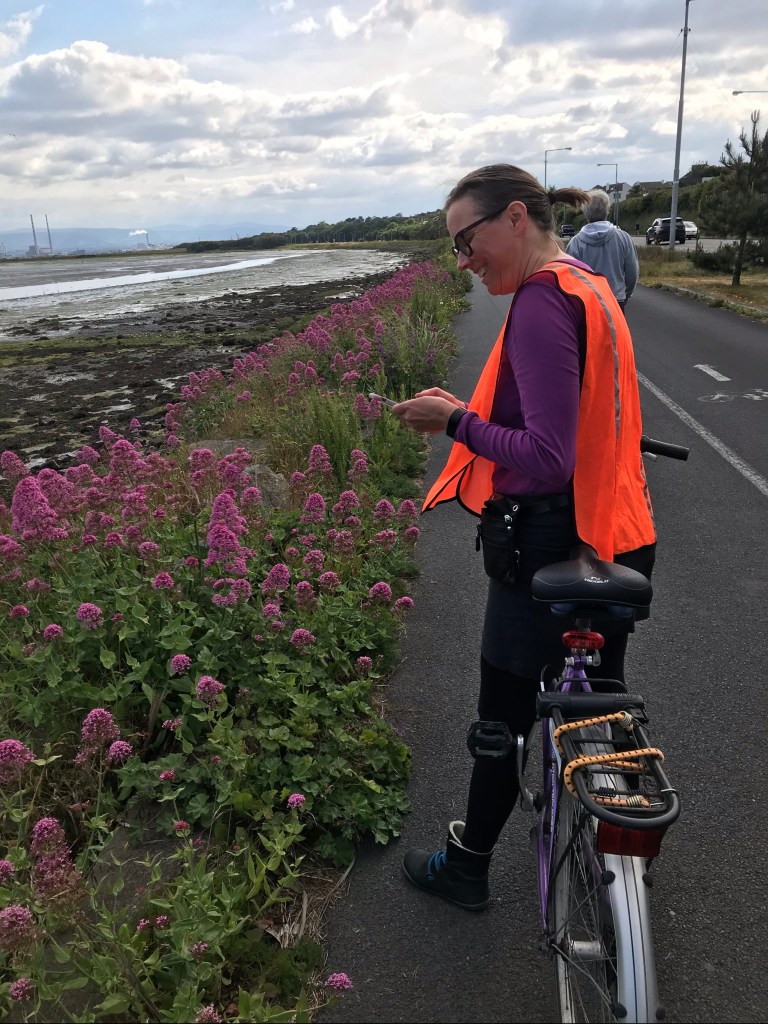
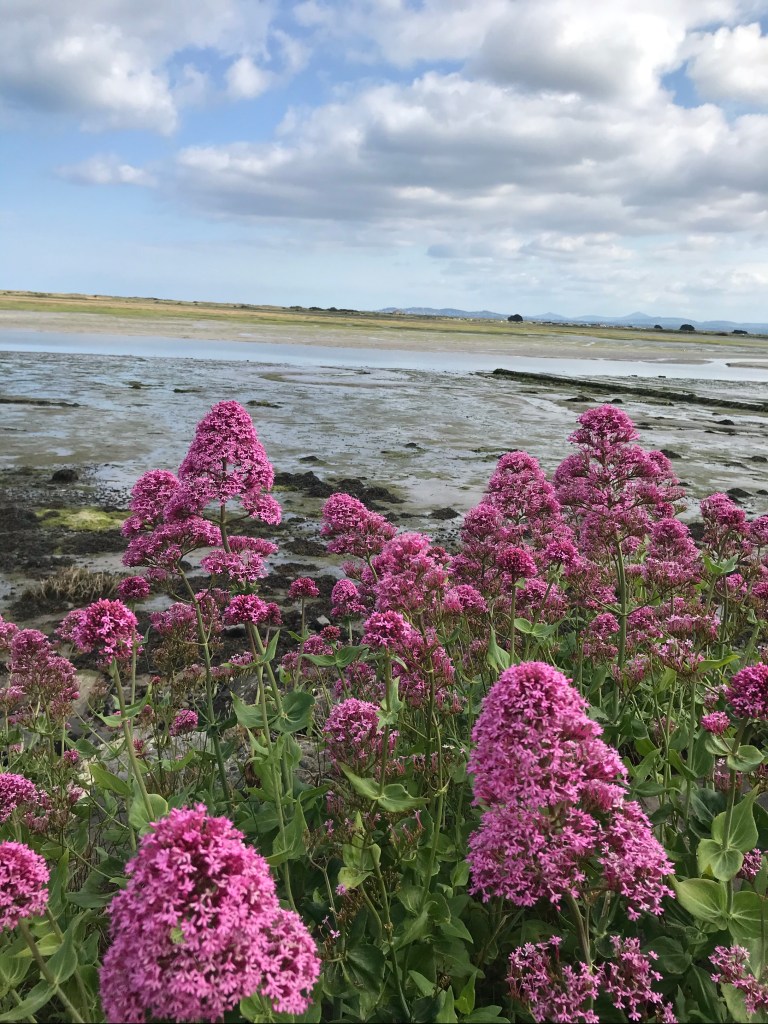
The wildflowers were stunning! Which is why I couldn’t decide which photos to include… so you get a bunch!
Howth
The real jewel in the crown of our 20km radius northward from Dublin is the little fishing village of Howth.
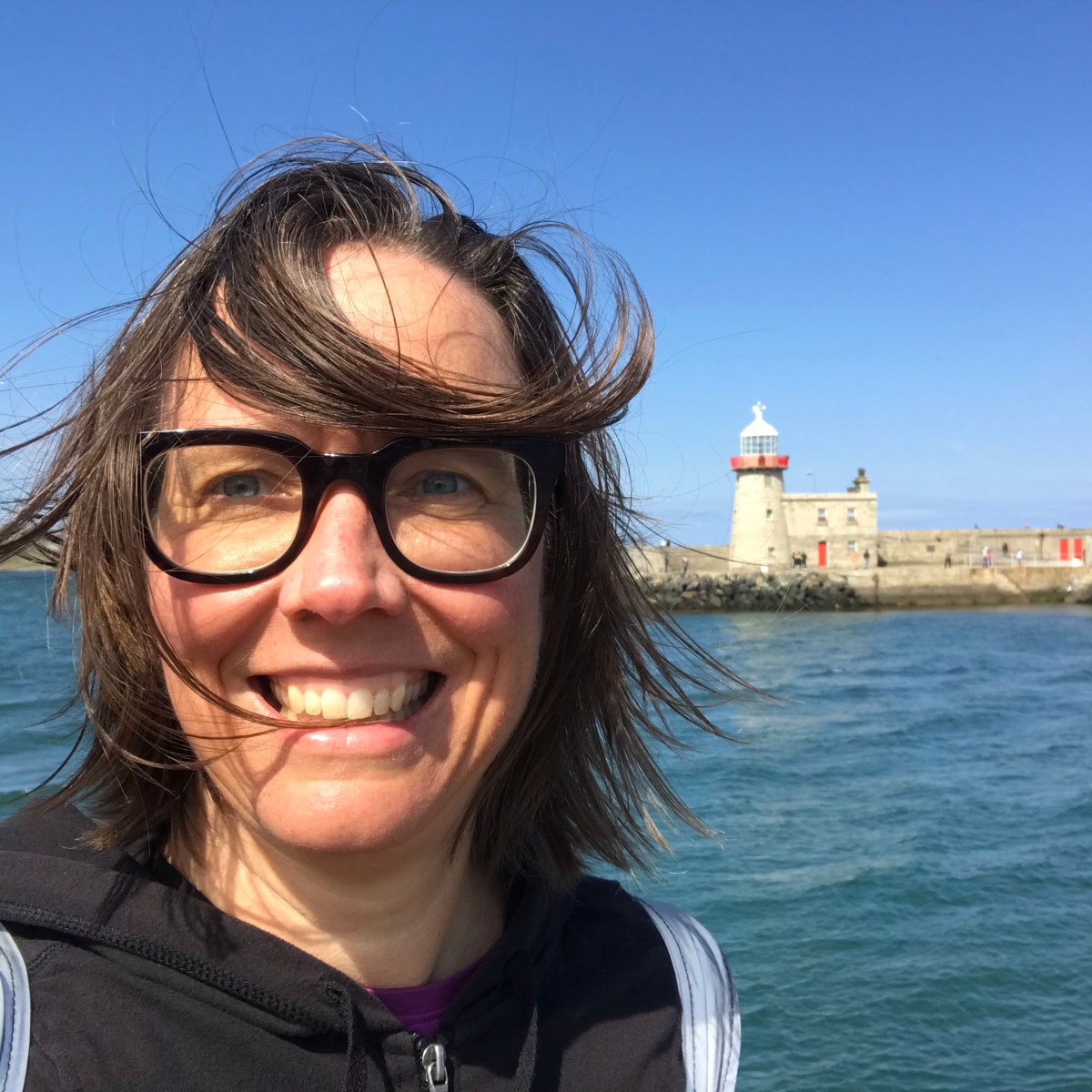
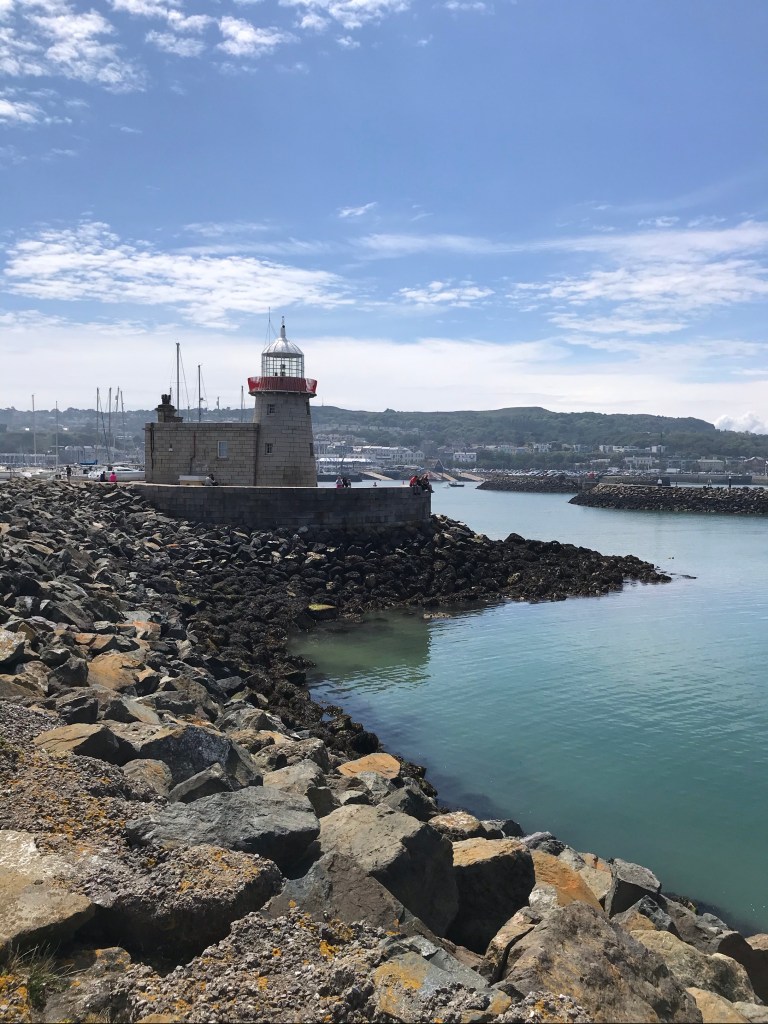
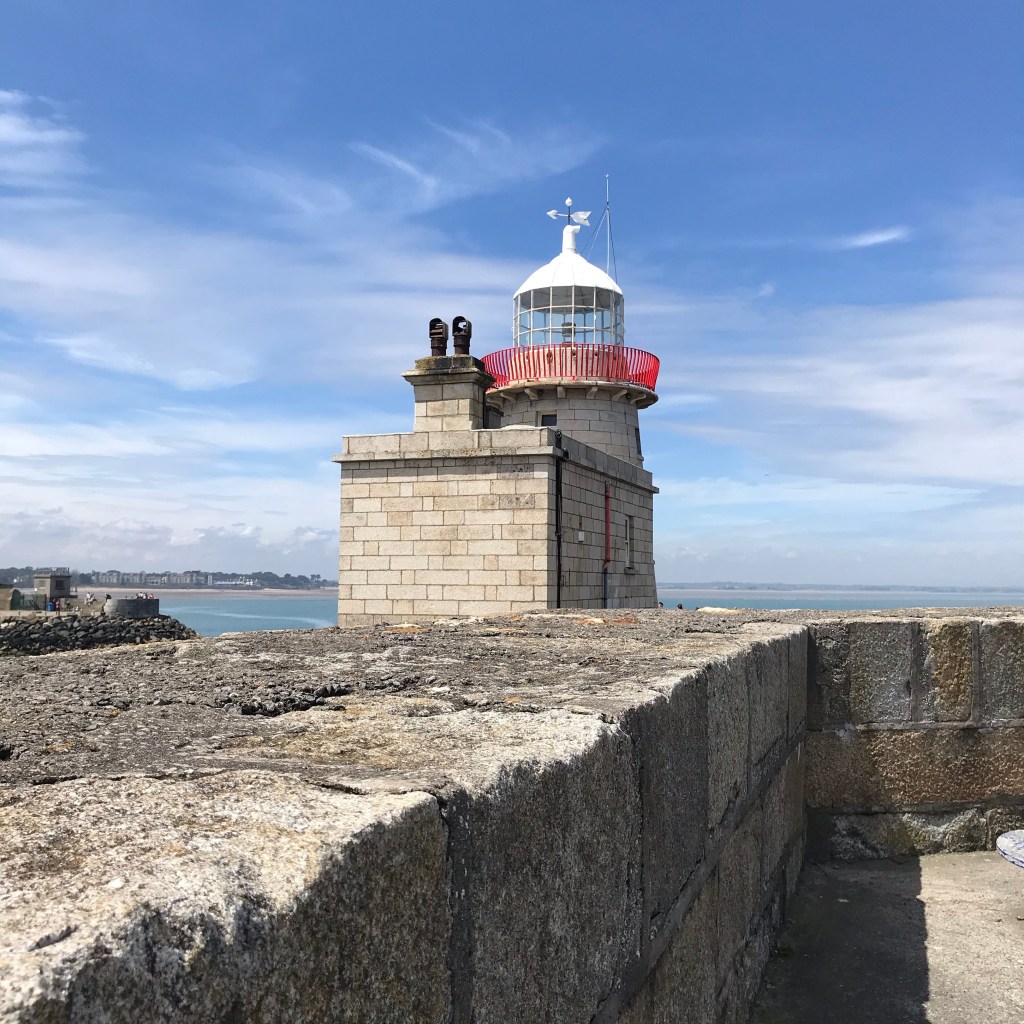
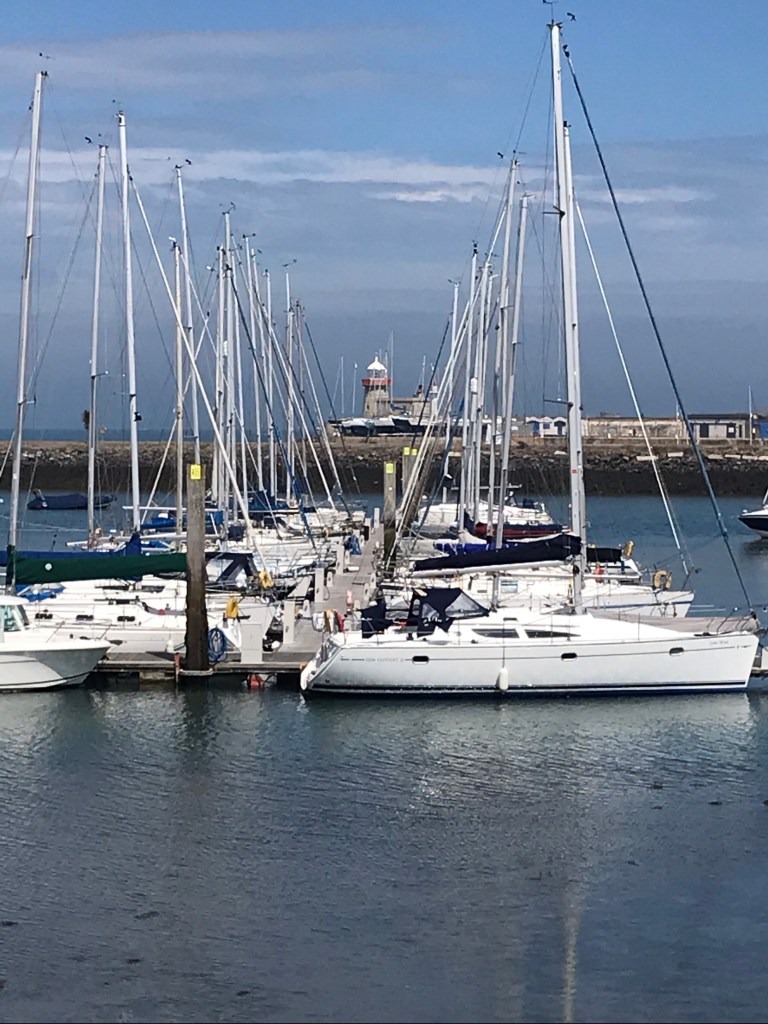
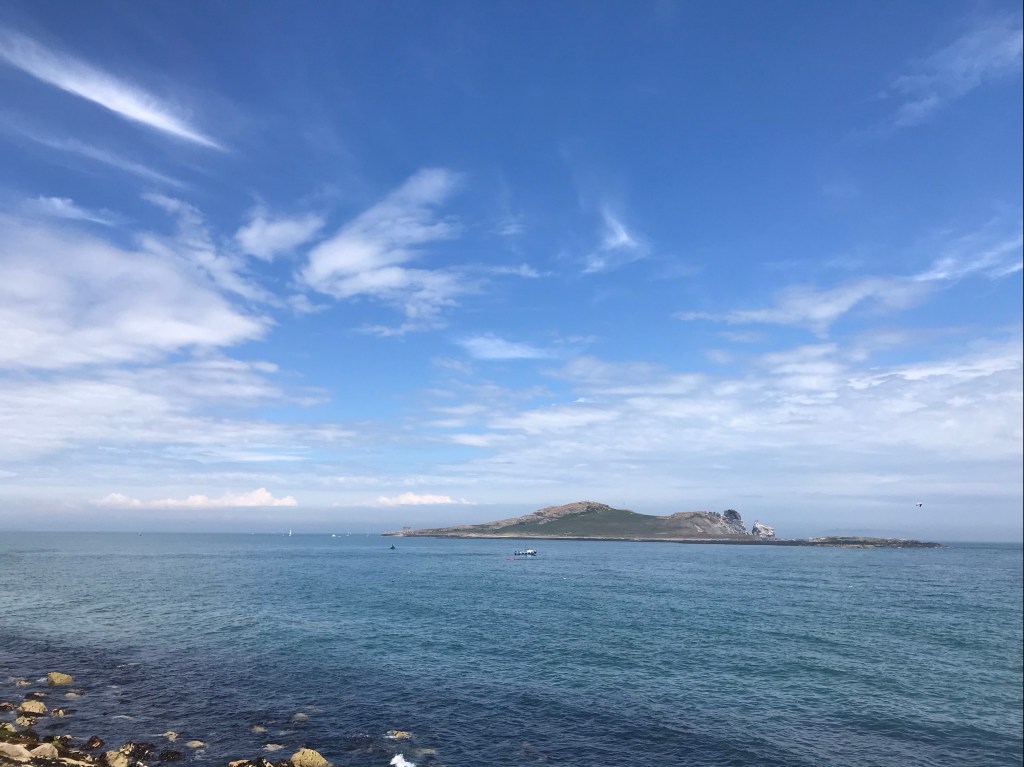
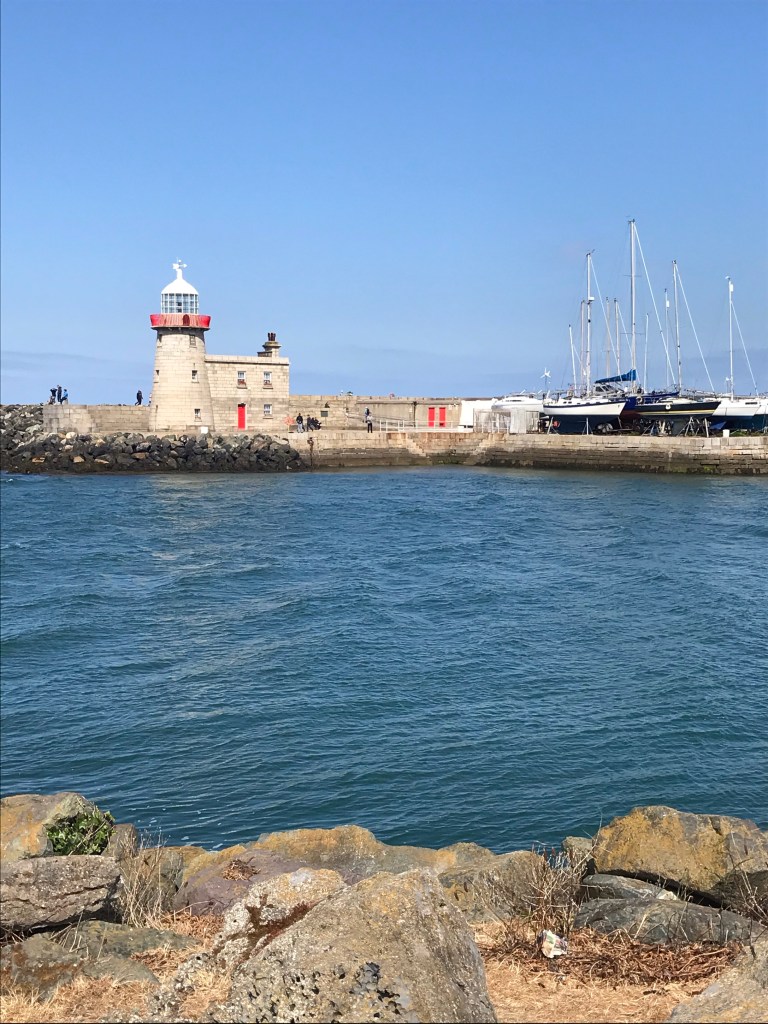
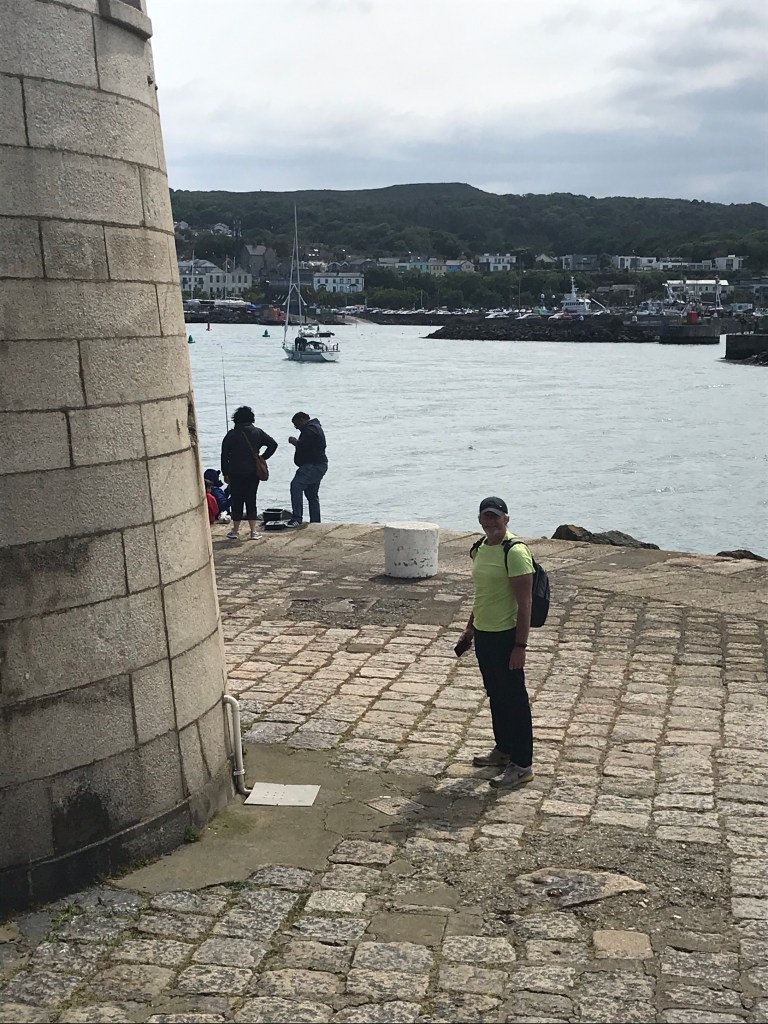
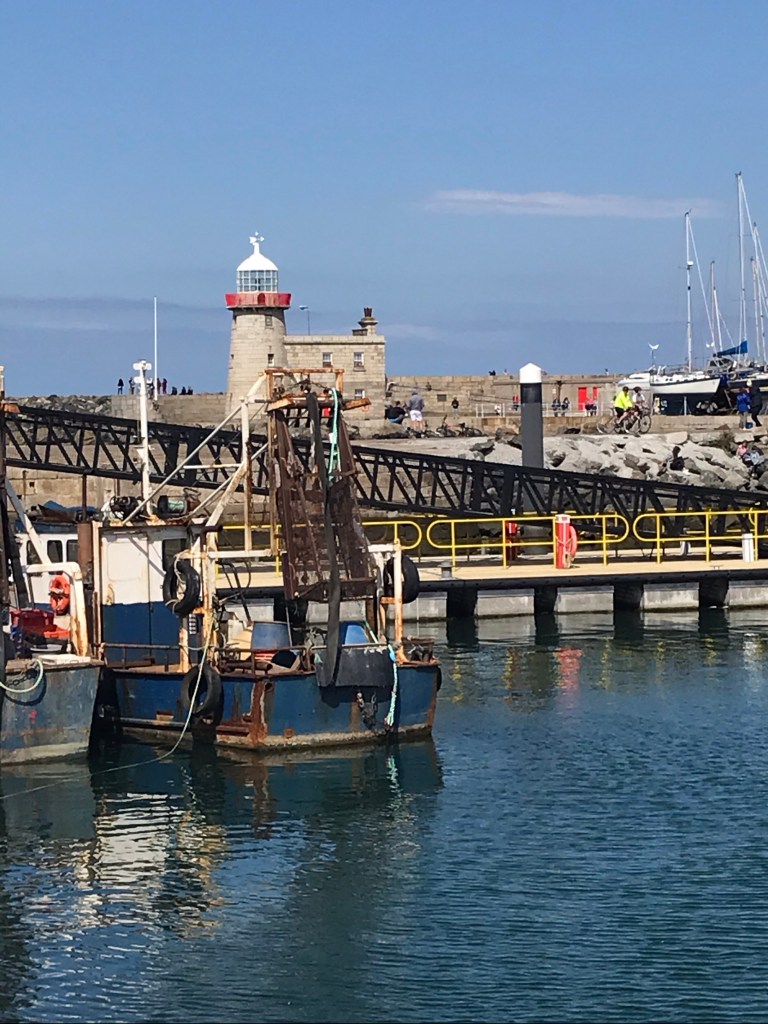
There’s a picturesque little harbor, protected by a lighthouse (and seagulls), that is today filled with pleasure craft in addition to work boats.
We have cycled out to Howth twice now. Once we bumped into friends of Aongus and enjoyed a distranced chat (after months of isolation seeing them was a highlight of the day).
The pictured below show us getting caught in the rain. We ended up taking the DART home that day and, as I had no mask, I had to improvise with a beach blanket.
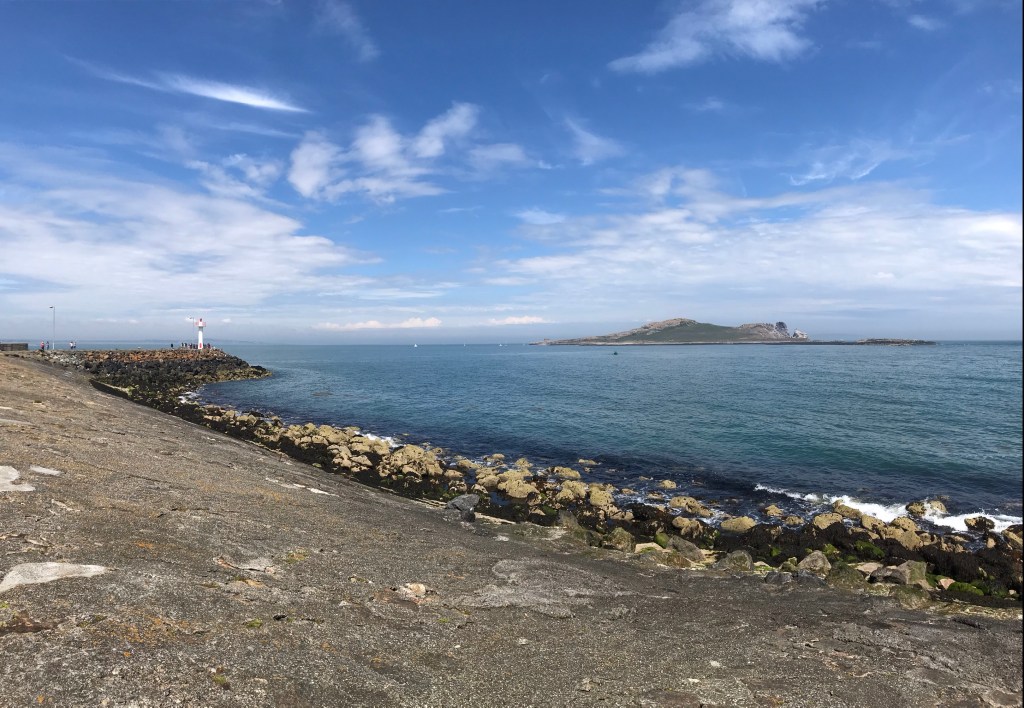
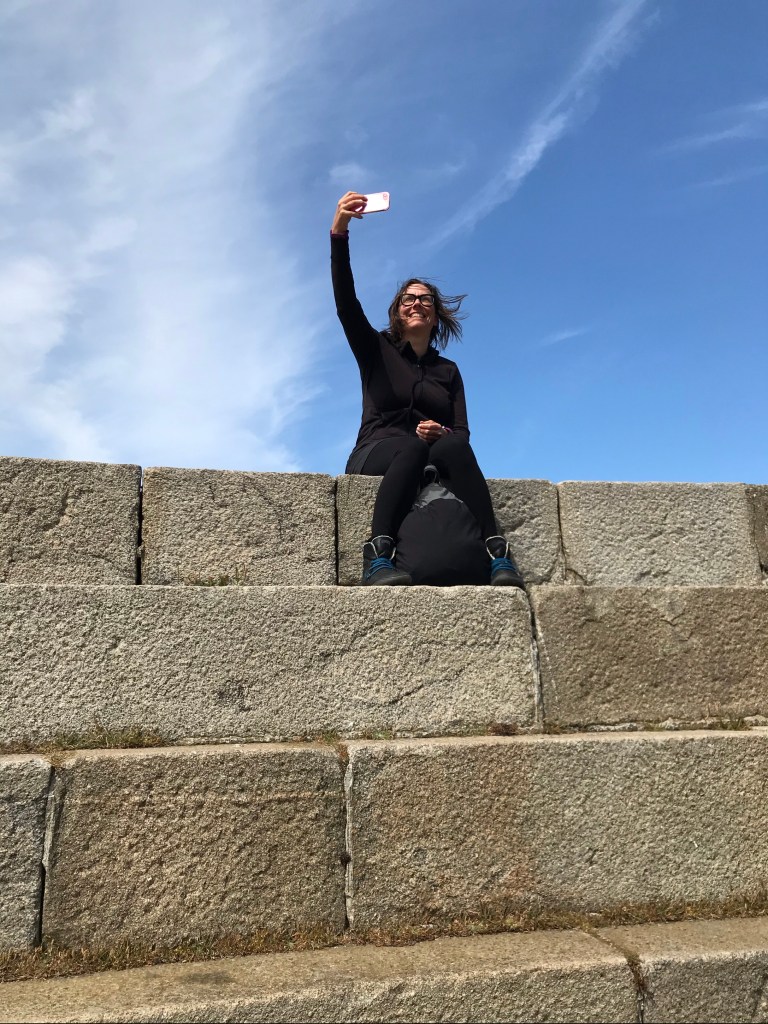
Fortunately, there was also lots of space and sun in Howth.
And so very many eye-catching views.
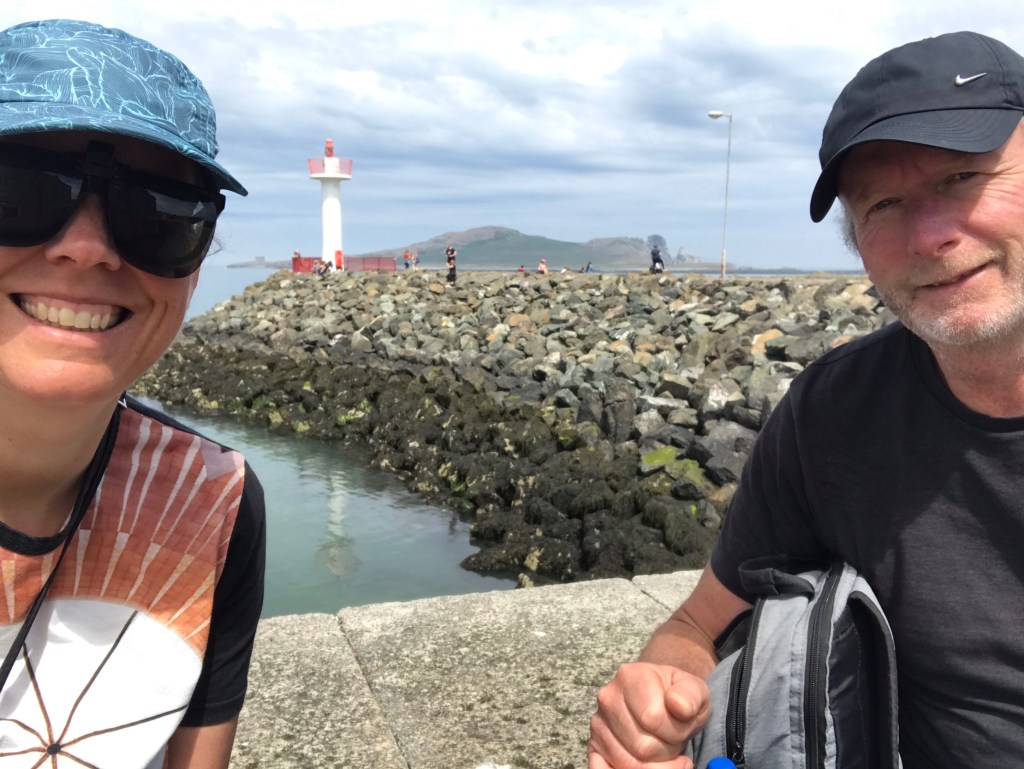
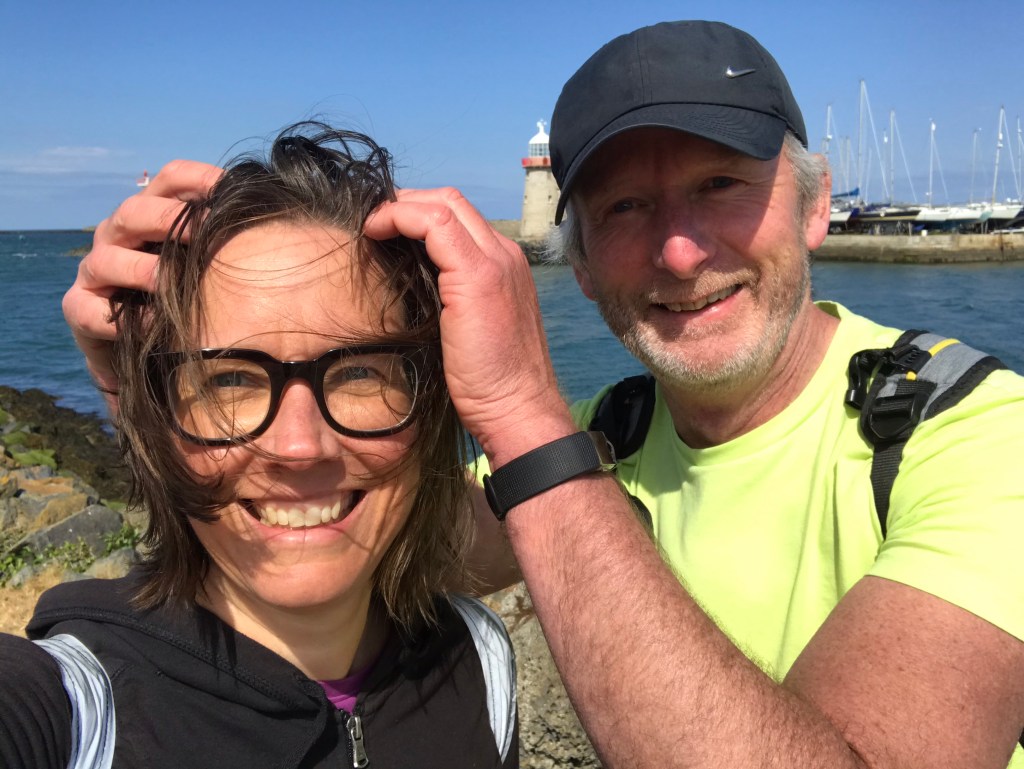
Plus, some darned good company.
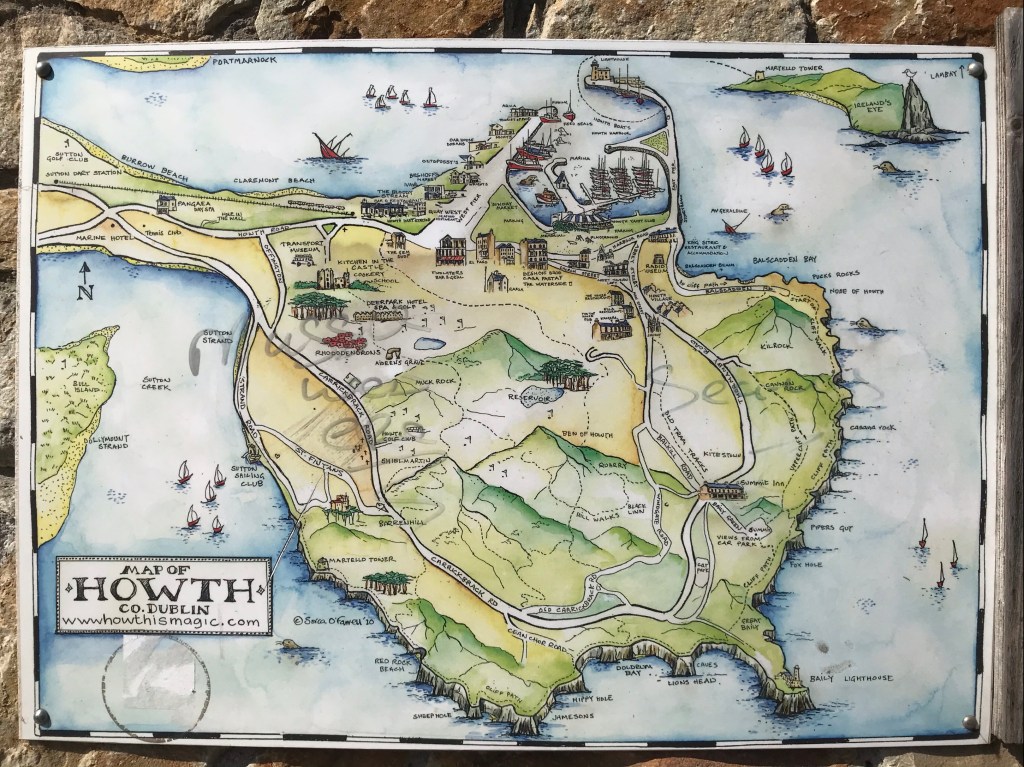
I couldn’t be more blessed than to spend this lockdown with the fun, kind, generous, patient, energetic, optimistic, healthy, share-the-load and ever-loving Mr. Aongus Coughlan. Now, if only I can get him hiking that Howth cliff walk with me (see the map below). Since the 20km rule has been lifted, it’s in our currently allowable zone. And yet, it’s still a bit too steep for the man. Never on a windy day!
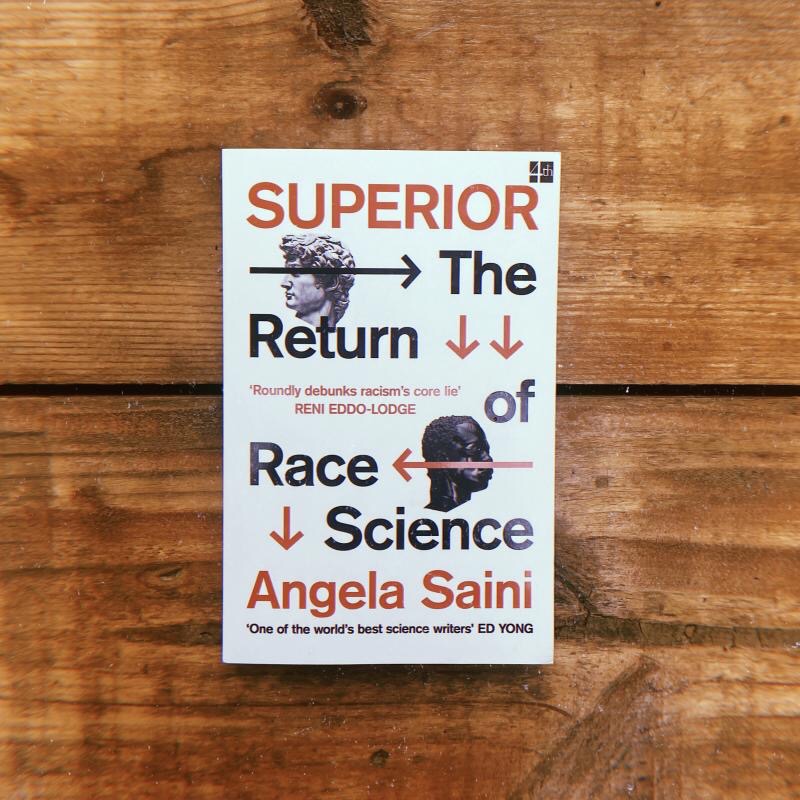
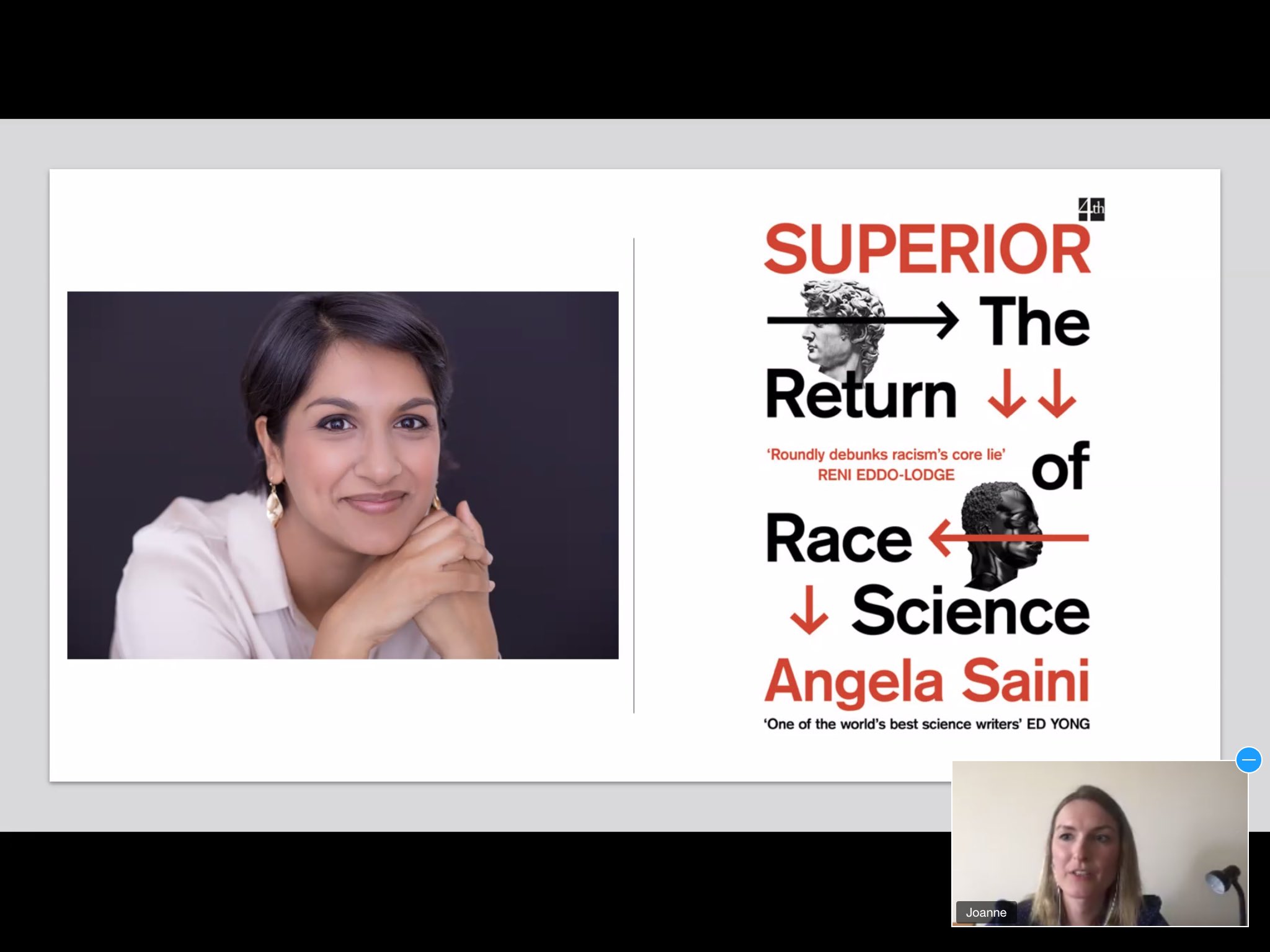
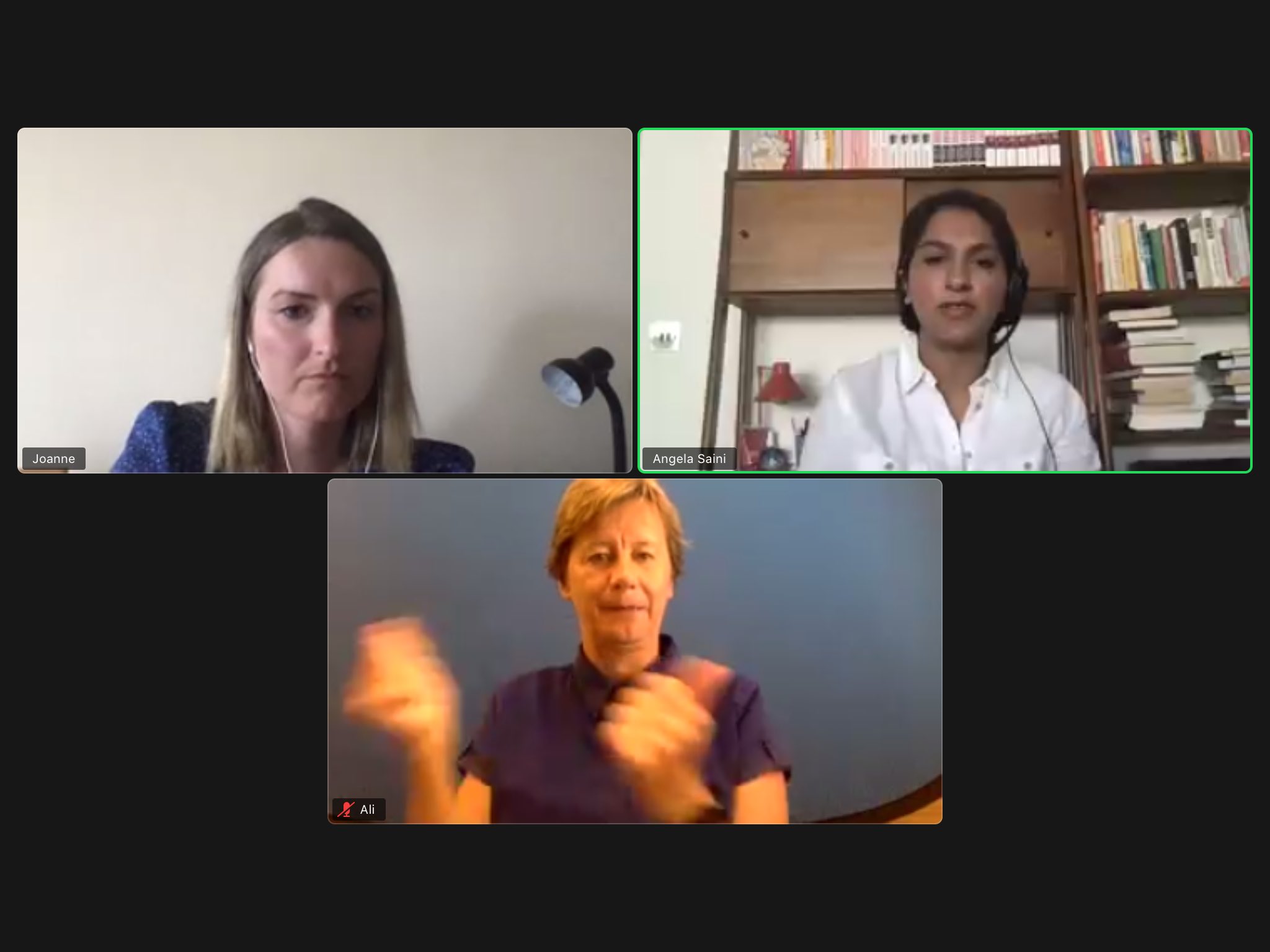
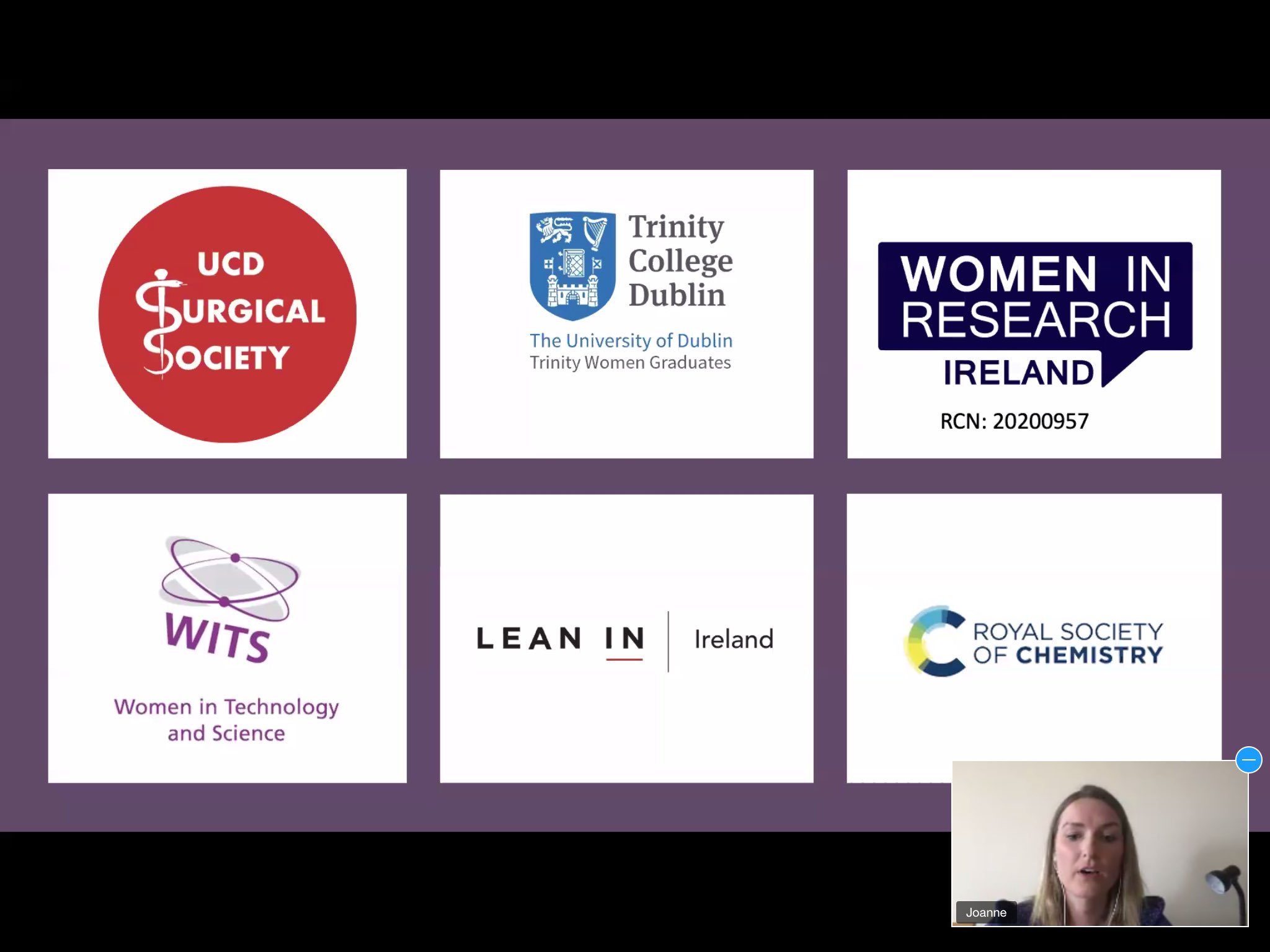
I just attended an online event called “Racism in Science and Society”. It involved an hour-long interview with Angela Saini, and it was supported by six or so organizations in Ireland, including Women in Research Ireland (WiRI) which a colleague of mine from the Marie Curie Alumni Association, Dr. Susan Fetics, helped establish. Susan was one of the moderators today.
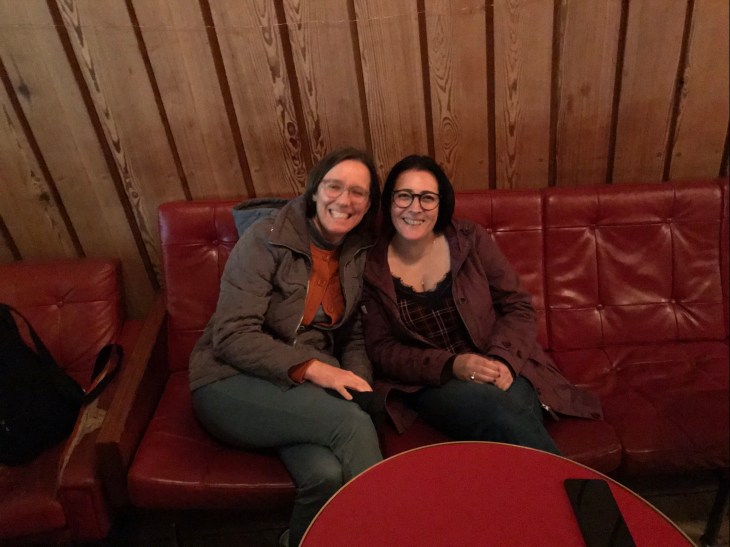
Last social gathering of Marie Curie Alumni Association’s Irish chapter before Covid shut things down. Shannon Chance and Susan Feltics shown here. Susan was one of the organizers for today’s event.
Interestingly, Saini has two different master’s degrees, the first in Engineering from the University of Oxford and a second in Science and Security from the Department of War Studies at King’s College London. Since I research engineering education and I also taught at a Historically Black College/University in the States for 15 years, I follow her work closely. Simply put: it’s close to my heart.
In this blog, I share content from Tweets I posted during the event. I’m sharing this because the event wasn’t recorded, so I wanted a way for others to learn about the topic and what went on today.
The event was well-organized and they sent helpful reminders. The hosts of this online event even provided a sign language interpreter. I wondered: if this method was more effective than auto-captioning?
The host, speaker, and sign language interpreter.
Siani said medicine is keeping race science alive today, more than any other area. Medicine perpetuates the belief in genetic differences that don’t exist. Genetics is the last place to look, she insists, it’s best to look first at social and cultural factors.
Histories of oppression have led to differences in health outcomes, not underlying genetics.
But, even now during Covid, people jump straight to the racial myths, Saini says.
Saini says some of the most promising work to rectify racial myths in medicine is happening in the USA, as there is the recognition that racism is still occurring. There’s more happening in the USA than in Britain and elsewhere in the world, she believes, as in the UK (where she lives and grew up) there is clear reluctance to accept how pervasive racism is.
Incidentally, Saini is of Indian heritage and grew up classified as black in the UK, I learned from her book. This helped me understand why a UK-based collegiate of mine calls herself black, whereas she’d probably use a different term if she were of Indian heritage and living in the USA.
These ideas about race are steeped into us from a very young age. It’s all about power, she says. The dominant group frames their dominance as if they have some innate… superiority.
Saini left Twitter earlier this year due to experiencing abuse, which explains why I couldn’t locate her to tag her. Those with extreme views try to engage journalists and scientists via social media, and suck them dry. They and the algorithms they use are clever; often they have few followers but they cause frustration because they aren’t going to change their opinions but they demand ongoing conversation, they dish out abuse, and they drain energy that can go to something more productive.
Of course, for those without other outlets (Saini is a very well-known journalist in Britain), social media does give us a voice, she acknowledges.
I, for one, miss having her on Twitter.
She helped found “Race and Health” @raceandhealth, a group that looks at issues identified above.
Saini says she wrote “Superior” to get things straight in her head. She hopes readers share in some of this clarity she found by writing it.
She spoke about being surprised things have changed so fast right following the death of George Floyd, such as the re-naming of lecture halls and theaters.
I, myself, have seen Floyd’s murder as a tipping point. I’d been expecting things to boil over in the US–I envisioned another summer of 1968 as the only way that an adequate level of change would happen. Things just weren’t improving fast enough. It was one of the frustrations that caused me to leave the USA and move to Europe. I am glad to finally see change, but I am sad that it’s going to be painful to acknowledge the past and heal.
Recently, UCL announced, via campus-wide email I received, that it is changing names of a building and a lecture hall. Eugenics and race-science had a home at UCL, and the university is seeking to right some wrongs.
Saini says that universities need better systems of accountability; the balance of power in universities is still out of whack. Accountability has to come from the top. Groups like the ones hosting this session today need to work together to lobby universities for better accountability, she says.
The sponsors for today’s event.
She ended by saying that our societies need to change through education and by teaching empathy from a young age.
I was glad to hear Saini say this, as my colleague, Dr. Carlos Mora, and I are working to study empathy in engineering education. And in a similar vein, I’m working to create a special focus issue on empathy in engineering practice and education to be released next spring.
A Marie Curie Research Fellowship is–first and foremost–about developing researchers by giving them a chance to research new things, in new places, with new people. For an MSCA Fellowship, you’ve got to travel. You can come from anywhere in the world, but you can’t have lived in the country where you do the MSCA Fellowship for any more than 12 months of the 36 months before the application date.
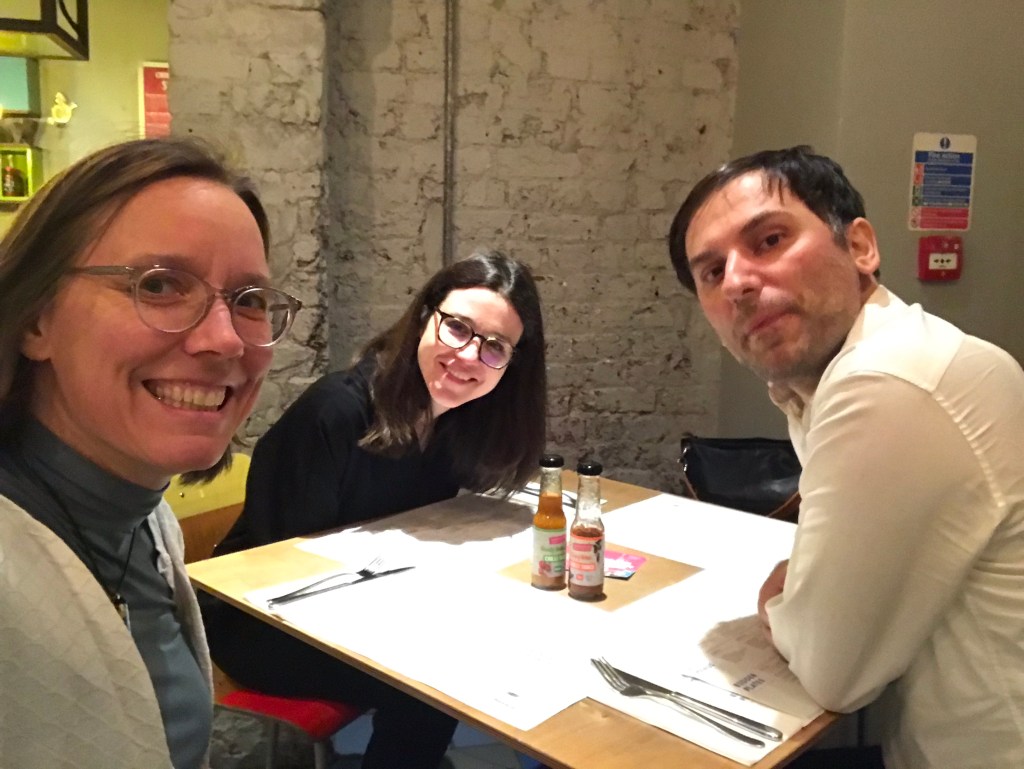
Discussing our ArchEng research project over dinner on Charlotte Street in London, with Drs. Inês Direito and Mike Miminiris.
Work package 5
Researcher Training and Transfer-of-Knowledge
The intention of WP5 was to increase my research skills and encourage me to share my own knowledge and skills with others (i.e., transfer knowledge to them). The MSCA application listed the following deliverables for this work package: 26 Training and Transfer-of-Knowledge sessions completed by the end of the grant period. I’m able to list 70 specific research training workshops and conferences that I attended–and there were actually more!
Yet, it is important to note that the most important training and knowledge transfer actually resulted from me providing leadership in EER. As a result of having a Marie Curie research fellowship at University College London (UCL), many doors were open to me and I was able to learn from the wealth of opportunities that emerged.
Via this MSCA grant, the I have provided: (1) leadership in publishing and (2) leadership in research events. These are summarized directly below.
Under that, a list of the completed researcher training session is provided.
Finally, in this blog, I identify outreach activities I conducted to support educators and researchers, including workshops I conducted and supervision and mentorship I provided to early career researchers (like the one pictured below, in South Africa, to help engineering teachers learn more inclusive teaching attitudes and behaviors).
A small-group discussion during the Inclusivity Master Class that Inês Direito and I conducted with Shanali Govender in Cape Town, South Africa.
As part of my training, I also earned a new teaching qualification in the UK while serving as an MSCA fellow:
Senior Fellow of the Higher Education Teaching Academy (SFHEA)
Earning this credential helped me build proficiency on the vocabulary used in educational research in the UK, which differs somewhat from the USA. Earning it will also help me demonstrate the skills needed to teach at third level in the UK and Ireland. Since earning SFHEA, I have subsequently applied for the highest available credential in this program (Principal Fellow of the Higher Education Teaching Academy/PFHEA), although the application wasn’t successful. I’ll hone my record and try again.
Research Supervision/Mentoring Skills
I have been advising a full-time PhD student at London South Bank University (LSBU) since the start of my MSCA fellowship. The student’s viva is scheduled, and on track, for August 2020. I have also mentoring 5-6 early career researchers. My activities in this realm include:
Mentoring a physics researcher through TU Dublin’s researcher mentoring program
Serving as PI for a new MSCA IF application in engineering education submitted September 2019 (which was not funded in 2019 but will be enhanced and resubmitted)
Mentor for peer reviewers with the Journal of Engineering Education (appointed in 2018)
Expert/external reviewer for applications to Fulbright Ireland (2018, 2019)
A bi-weekly supervision session with Thomas Empson and Prof. Shushma Patel from LSBU. We meet fortnightly in person until I returned to Dublin at the start of 2020.
Leadership in Publishing
In the realm of journal production, I was appointed and has served as:
Associate Editor, IEEE Transactions on Education (2018-present)
Editorial Board, European Journal of Engineering Education (2018-present)
Desan Ozkan published an article in the special focus issue I spearheaded on students’ epistemological development. Here, I met with her in Blacksburg, Virginia, after I conducted interviews with students for my ArchEng project. She has since completed her PhD, defended her dissertation online (I attended) and she is now Dr. Desan Ozkan!
I serve as a peer reviewer for an academic journal in my field:
Australasian Journal of Engineering Education (2019-present)
IEEE Transactions on Education (2017-present)
European Journal of Engineering Education (2016-present)
Journal of Engineering Education (2013-present)
Incidentally, I also provided expert advice to the publisher of two children’s books, although I generally consider this activity to be “Outreach”:
Scribble Architecture, STEM activity book by Usborne Publishing Ltd.(in press)
Scribble Engineering, STEM activity book by Usborne Publishing Ltd.(2018)
Leadership in Research Networks
Opportunities to provide leadership that emerged as a result of this MSCA include:
Chair, Research on Engineering Education Network (January 2020-present)
Vice-Chair, Research on Engineering Education Network (2019-2020)
Governing Board, Research on Engineering Education Network (2018-present) and member of sub-committees including recruitment and selection of upcoming conference hosts
Nathu Puri Institute at the London South Bank University (2018-present), serving on, for example, an interview panel for new director of the Institute (2018) and a member of the Institute’s think tank.
Marie Curie Alumni Association, Ireland chapter organizing committee (2018-present)
Leadership in Funded Projects
Providing grant-writing leadership, I advised Dr. Carlos Mora in securing €56,000 in funding from the Cabildo of Tenerife in Spain to conduct education projects under a project titled “INGENIA” or “Ingenuity” to support sustainability education (I am listed as the co-PI on this grant). I also secured a £11,200 donation to UCL CEE from the UK’s Royal Academy of Engineers via Engineers without Borders UK (the funds will support my ongoing work with UCL’s CEE).
I’ve been mentoring Carlos in grant writing and during this period he has won two grants, including €56,000 from the Cabildo of Tenerife for an educational program and €200,000 for a marine engineering laboratory. We have two more proposals in the works!
This MSCA is intended to broaden career prospects, and it definitely has. Even though I chose to return to my home university at the completion of the fellowship, I brought with me a contract valued at €237,727 allowing me to provide curriculum development services to the University College London Contracts (UCLC) over the three-year period following my MSCA fellowship (2020-2023).
In 2019, I also served as an expert evaluator for the European Commission (COFUND fellowship program).
Researcher Training sessions completed
I could provide images to go with each of these, but then I’d never get this posted… so I’ll just share the list. Each was interesting and informative and most of these activities opened a pandora’s box of ideas and possibilities.
UCL online training module and certificate earned in Safety
UCL online training module and certificate earned in Green Awareness
UCL online training module and certificate earned as Green Champion
UCL day-long Researcher Development Workshop, Finding Your Voice as an AcademicWriter
UCL day-long Researcher Development Workshop, An Introduction to Research Student Supervision at UCL
Researcher information session organized by the Irish Research Council, Opportunities to collaborate with UK-based researchers
UCL day-long Researcher Development Workshop, Creative Approach to Problem Solving and Decision Taking for Researchers
Informational workshop on MSCA programs held at DIT
UCL Arena Guidance Sessions: Initial Guidance
UCL day-long Researcher Development Workshop, Leading Collaborative Projects
UCL’s Centre for Engineering Education’s event, In Conversation With… Angela Saini and Louise Archer
UCL Astrea Voices workshop: Choosing your journey
UCL day-long Researcher Development Workshop, Writing Books and Book Chapters
UCL day-long Researcher Development Workshop, Managing Your Reputation
UCL Arena Senior Fellow Guidance Session: Developing your application
UCL day-long Education Conference 2018 at the UCL Institute of Education
Nathu Puri Institute Thought Leadership discussion and dinner in April
SRHE day-long workshop, Migration and academic acculturation
SRHE day-long workshop, Developing curriculum, learning and pedagogies in STEM subjects: the case of Engineering
SRHE day-long workshop, Phenomenography: An approach to qualitative research in higher education
UCL LLAKES Seminar by Louise Archer Why can’t we solve the science participation ‘crisis’? Understanding young people’s (non)participation in post-16 science
Attended a UCL “Town Hall” to better understand the administrative structure of this research-intensive university, Finding a new place in society for universities
UCL day-long Researcher Development Workshop Publish or Perish: Getting Collaborative Social Science Published
One-day Inaugural Spring Colloquium of the UK-Ireland Engineering Education Research Network, held in Newcastle
UCL day-long Researcher Development Workshop, The Superior Performer: How to Work to Your Strengths
SRHE day-long workshop, Publishing Academic Articles: A way through the maze
UCL Researcher Development Workshop, Induction for New UCL Research Staff
Attended a half-day of UCL conference on Impacts of Gender Discourse on Polish Politics, Society & Culture Comparative Perspectives reservation
UCL workshop, Provost’s Welcome to New Staff
UCL day-long Researcher Development Workshop, Writing and Publishing Research Papers
UCL day-long Researcher Development Workshop, Increasing Impact – Gaining Positive Media Coverage
Attended two-day Inspirefest celebrating women in technology, held in Dublin
Attended four-day conference of the American Society for Engineering Education (ASEE) in Salt Lake City
Attended one-day symposium at the Royal Society sponsored by the RAEng and UCL CEE, Inclusive Engineering Education Symposium
Second Nathu Puri Institute Thought Leadership Event at 6-9 Carlton House Terrace, London SW1Y 5AG
Attended two-day 7th International Symposium of Engineering Education (ISEE 2018), hosted by UCL
UCL day-long Researcher Development Workshop, Storytelling Skills for Teachers and Presenters
UCL Arena training for fellowship applicants at principal level, PFHEA Lunch session
Attended five-day conference of the European Society for Engineering Education (SEFI 2018) in Copenhagen
Attended three-day International Conference on Interactive Collaborative Learning (ICL 2018) plus events of the International Conference on Engineering Pedagogy (IGIP 2018) in Kos Island, Greece
UCL online training module and certificate earned in GDPR
SRHE day-long workshop, IS THERE (STILL) ROOM FOR EDUCATION IN THE CONTEMPORARY UNIVERSITY? Exploring policy, research and practice through the lens of professional education. Seminar 3
Lecture organized by the Irish Fulbright Commission, Creative Minds: In Conversation with a NASA Astronaut
TU Dublin (formerly DIT) online training module and certificate earned in GDPR
TU Dublin 2.5-hour workshop by Dr. Bill Williams, Getting published in engineering education research journals
Attended half-day IEP Research Away (Half) Day
UCL full-day workshop, Building Research Leaders
UCL Career Centre workshop, Effective Academic Interviews
UCL workshop, Providing learning experiences that enable students to acquire the right mix of knowledge, skills and competences
UCL two-hour workshop, Using and understanding bibliometrics
UCL full-day workshop, Influencing and Negotiating
UCL two-hour workshop, Copyright for Research Staff
UCL Arena Principal Fellow Guidance Session: Developing your application
Expert evaluator training briefing for the European Commission
Attended two-day spring symposium, EERN 2018 (UK & Ireland Engineering Education Research Network) in Newcastle upon Tyne, UK
Attended two-day Inspirefest (women in tech) in Dublin
Attended two-day engineering education conference, ISEE 2018 (7th International Symposium of Engineering Education) at UCL
Attended four-day engineering education conference, ASEE 2018 in Salt Lake City
Attended five-day engineering education conference, SEFI 2018 in Copenhagen
Attended three-day engineering education conference, ICL/IGIP 2018 in Kos
Attended three-day higher education conference, SRHE 2018 (Society for Research in Higher Education) in Newport, Wales
Attended three-day annual conference, MSCA General Assembly 2019 in Vienna
Attended two-day spring symposium, EERN 2019 (UK & Ireland Engineering Education Research Network) in Dublin
Attended four-day engineering education conference, ASEE 2019 in Tampa
Attended two-day MSCA IF monitoring event, education sector, in Brussels, June 2019
Attended three-day engineering education conference, REES 2019 in Cape Town
Attended four-day engineering education conference, SEFI 2019 in Budapest
Attended one-day conference of UK Engineering Professors Council and the Institution of Engineering and Technology, New approaches in practice, 2020
Attended two-day annual conference, EERN 2018 (UK & Ireland Engineering Education Research Network) in Coventry, UK
Attended 14 lectures at UCL Bartlett School of Architecture’s International Lecture Series (2018, 2019) and at least 7 other lectures in the Faculty of Engineering.
Outreach to Support Educators and Researchers (Workshops and Invited Presentations Delivered)
I provided workshops on research techniques for Early Stage Researchers as well as experienced researchers. I also provided workshops on teaching (learning theories and innovative teaching techniques) for educators. These are presented alphabetically by country:
Denmark
Edström, K., Bernhard, J., van den Bogaard, M., Benson, L., Finelli, C., CHANCE, S. M., & Lyng, R. (2018). Reviewers, reviewers, reviewers! Workshop at the European Society for Engineering Education (SEFI) 2018 annual conference in Copenhagen, Denmark.
Edström, K., Bernhard, J., De Laet, T., CHANCE, S. M., (2018). Doctoral Symposium. One-day pre-conference workshop at the European Society for Engineering Education (SEFI) 2018 annual conference in Copenhagen, Denmark.
De Laet, T., Williams, B., CHANCE, S. M., & others (2018). Engineering Education Research. Workshop by EER Working Group at the European Society for Engineering Education (SEFI) 2018 annual conference in Copenhagen, Denmark.
Hungry
Edström, K.,Benson, L.,Mitchell, J., Bernhard, J., van den Bogaard, M., Carberry, A., & CHANCE, S. (2019). Writing Helpful Reviews for Engineering Education Journals. Workshop at the European Society for Engineering Education (SEFI) 2019 annual conference in Budapest, Hungary.
Hannon, P. K., Berry, D., CHANCE, S., Core, M., & Duignan, F. (2019). Physical computing: A low-cost project-based approach to engineering education. Workshop at the European Society for Engineering Education (SEFI) 2019 annual conference in Budapest, Hungary.
Miminiris, M., CHANCE, S. M., & Direto, I. (2019). Recognising and understanding qualitatively different experiences of learning in engineering: Variation as a learning tool. Workshop at the European Society for Engineering Education (SEFI) 2019 annual conference in Budapest, Hungary.
Ireland
CHANCE, S. M. (2018). Gender Equality in STEM Education. Presentation delivered at Irish Marie Curie Alumni Association’s Gender Equality Workshop Programme on 3rd December 2018 in Dublin, Ireland.
CHANCE, S. M. (2018). MSCA fellowship experiences. Presentation delivered for Dublin Institute of Technology’s EPA & IUA MSCA Research Information Workshop Programme.
I also shared knowledge with friends, colleagues, and former students from back home. One of my former architecture students, Justin Harris, and his wife, visited me in London.
South Africa
Govender, S., CHANCE, S., & Direito, I. (2019). Fostering Inclusivity in Engineering Education in the South African Context. Two-day Master class conducted for the University of Cape Town’s Engineering Education Existing Staff Capacity Enhancement Programme.
Akinmolayan, F. & CHANCE, S. M. (2018). Facilitating group & Problem-Based Learning in the context of engineering education. Two-day Master class conducted for the University of Cape Town’s Engineering Education Existing Staff Capacity Enhancement Programme.
Dr. Folashade Akinmolayan and I had just checked in in Johannesburg to deliver our two-day Master Class on team-based learning, after a vvvveeeerrrryyyy long flight from London.
United Kingdom
CHANCE, S. M. (2020). Becoming Civil: Outcomes of a Marie Curie Fellowship with CEGE and CEE. Lunch seminar for UCL’s Centre for Engineering Education in London.
My final presentation at UCL at the end of the MSCA IF. Here, I’m presenting one of my projects, this one on Global Responsibility.
Bathmaker, A., CHANCE, S. M., & Wheelahan, L. (2019). Understanding and conceptualizing knowledge in professional and vocationally-oriented higher education: Beyond time management and interpersonal skills. Workshop provided Thursday 16 May 2019 for the Society for Research on Higher Education in London, UK.
CHANCE, S. M. (2019). Learning theories in engineering: A US perspective on student development. A class session for UCL’s new MSc in Engineering and Education.
I frequently connected back to TU Dublin colleagues, Dr. Damon Barry in electrical engineering and Dr. Lorraine D’Arcy in transport engineering and mobility. I even hosted Lorraine and three other colleagues for a day-long visit to UCL.
CHANCE, S. M. (2018). Summary of National STEM Educational Policies in Relation to Girls’ Experiences in Physics in Europe and into the Engineering Pipeline.Society for Research in Higher Education conference 2018 in Newcastle, UK.
Direto, I., Malik, M., & CHANCE, S. M. (2018). Conducting Systematic Literature Reviews in Engineering Education Research. Workshop to the UK & Ireland Engineering Education Research Network (EERN) annual conference 2018 in Portsmouth.
Leão, C. P., Soares, F., Williams, B., & CHANCE, S.(2018). Challenges, experiences and advantages in being a female engineering student: voices in the first person. Presentation at the UK & Ireland Engineering Education Research Network (EERN) annual conference 2018 in Portsmouth.
CHANCE, S. M. (2018). Implications for Irish policy of women’s experiences in STEM education in Ireland, Poland, and Portugal. UK & Ireland EERN Spring Colloquium 2018 in Newcastle-upon-Tyne.
CHANCE, S. M. (2018). Supporting diverse students: Findings from a longitudinal study of female engineering students in three countries. Lunch seminar for UCL’s Centre for Engineering Education in London.
Here I am in March 2020, meeting with Dr. Susan Feltic, one of the other leaders of the Irish chapter of the Marie Curie Alumni Association upon my return home. She hosted weekly MCAA get-togethers pre-Covid, and this was the second one I attended. I’m hoping to get more involved in the Irish chapter now that I’m back in Dublin!
As part of my Marie Skłodowska-Curie Actions Individual Fellowship (MSCA IF), which ran 2018-2020, I learned new skills in project management. Two of my six work packages (WPs) focused on project management: WP3 was for developing a special focus issue (which turned into producing two issues of in the journal IEEE Transactions on Education), and WP6 was for managing the MSCA grant itself.
In this blog post, I describe activities in these two work packages. I also identify what impact I wanted to have with the MSCA grant and share photos with colleagues.
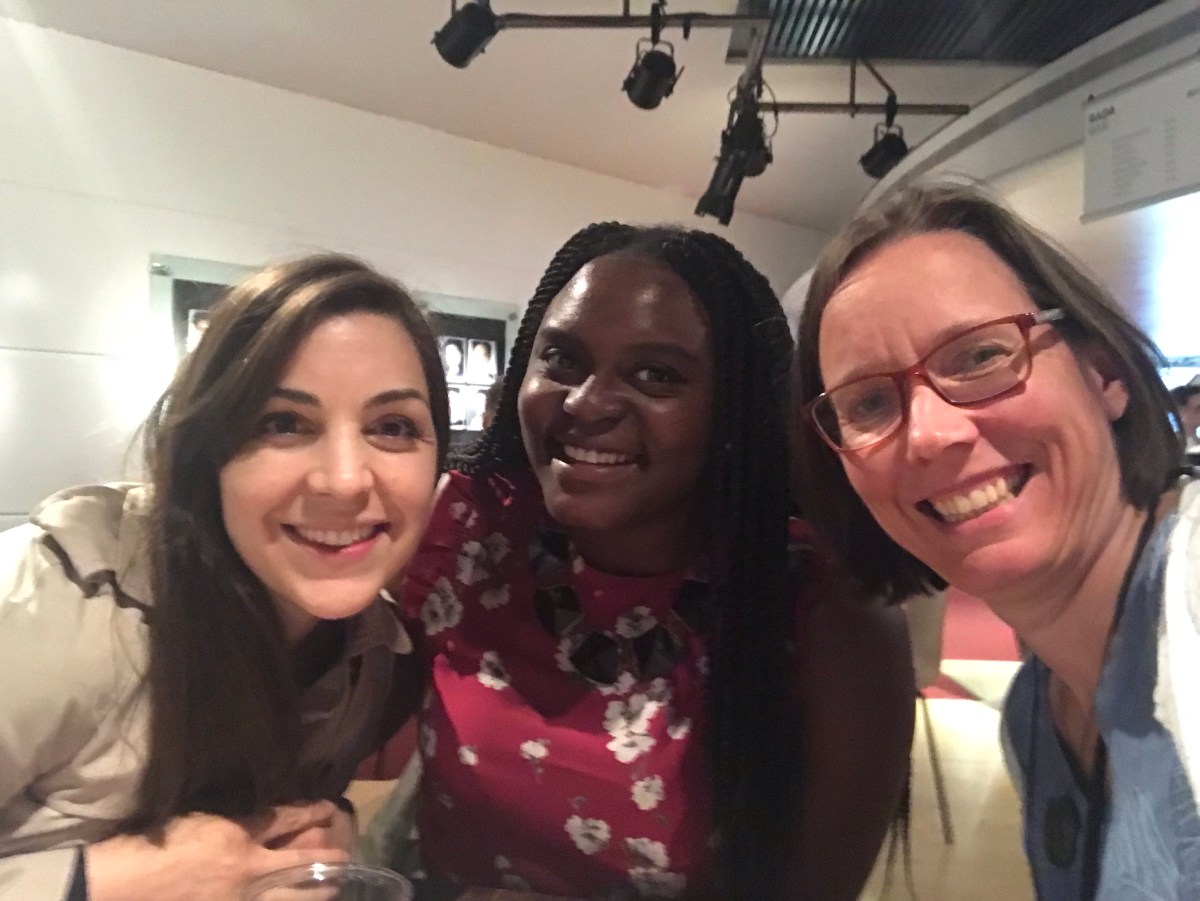
Incidentally, the photo above was taken with Prof. Emanuela Tilley (of University College London, UCL) and Dr. Folashade Akinmolayan (of Queen Mary University London). Emanuela is a highly organized and productive manager and she serves as the Director of UCL’s award-winning Integrated Engineering Programme (IEP). She’s been a fabulous role model for me in learning these types of skills.
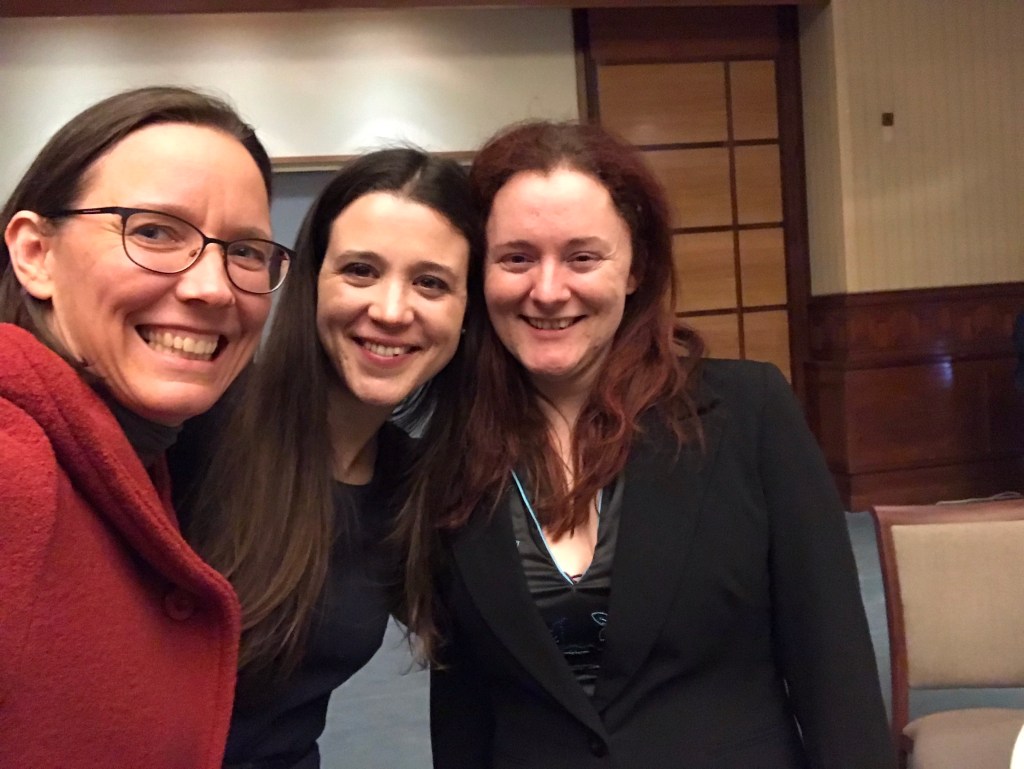
Below are two more colleagues from UCL, who worked with Emanuela and me in the Engineering Faculty Office.
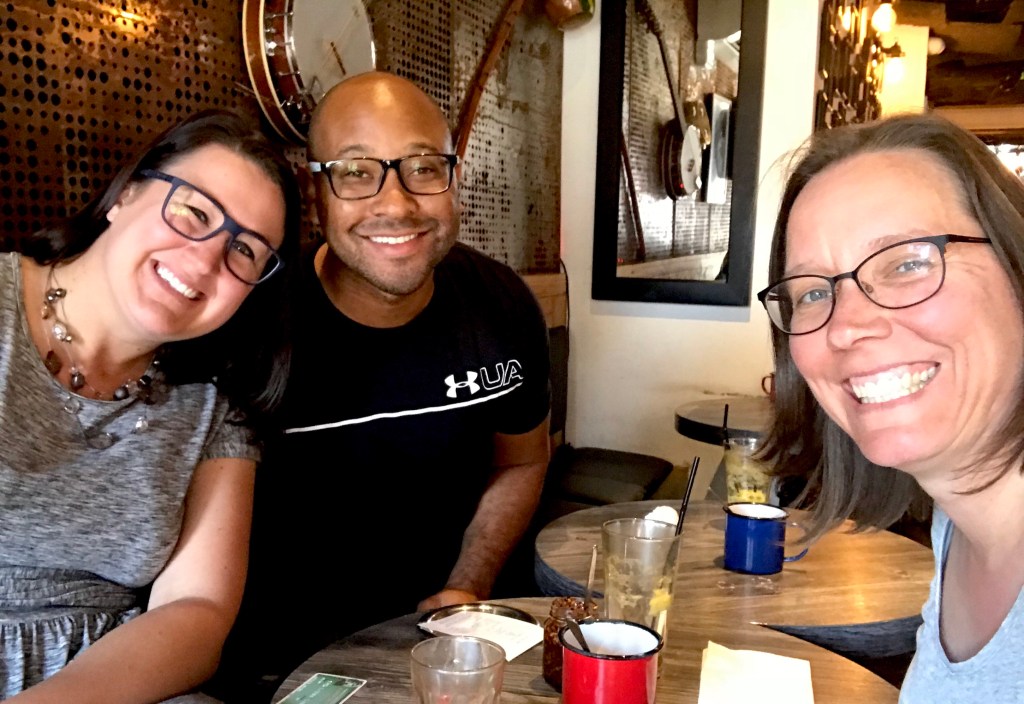
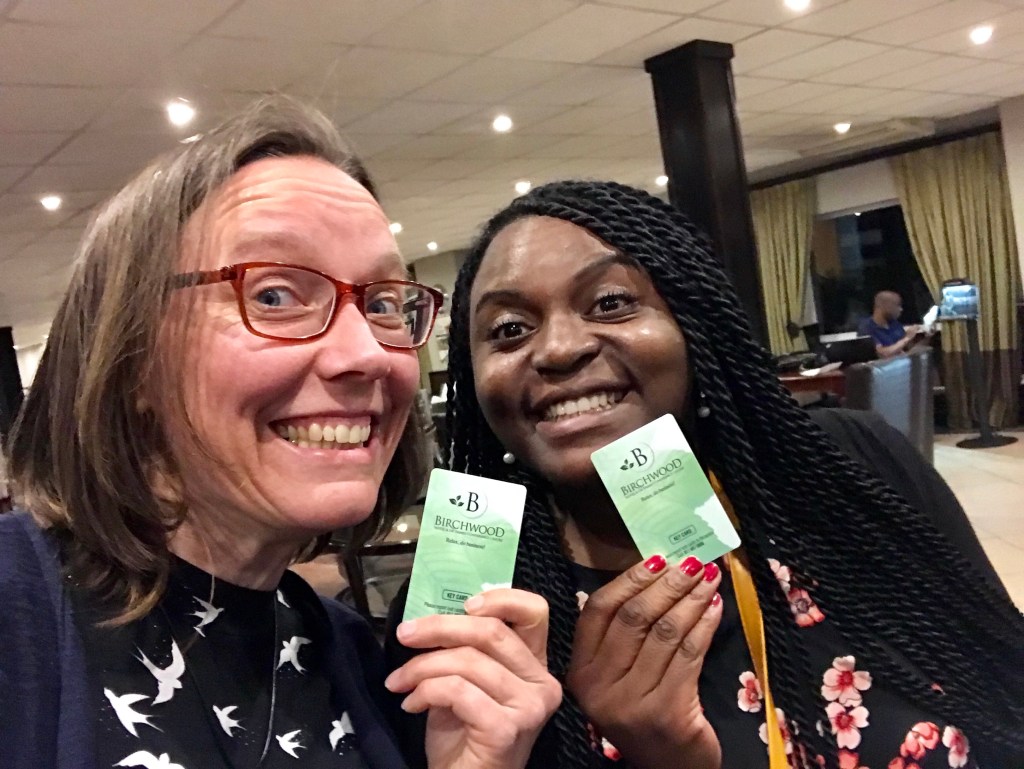
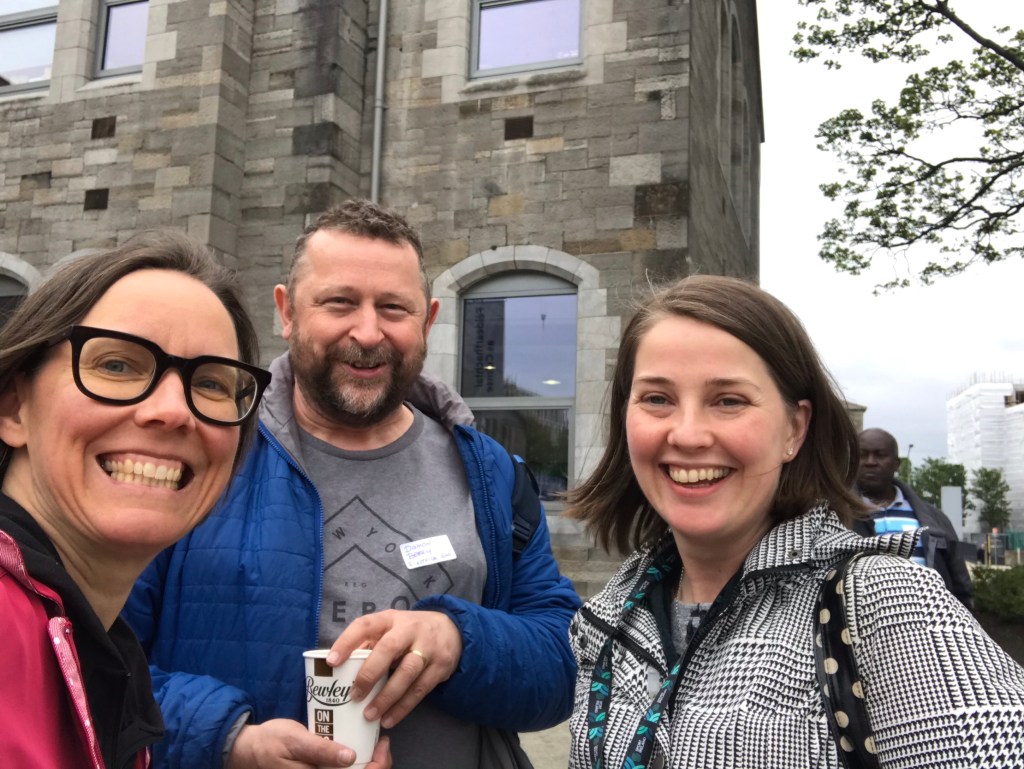
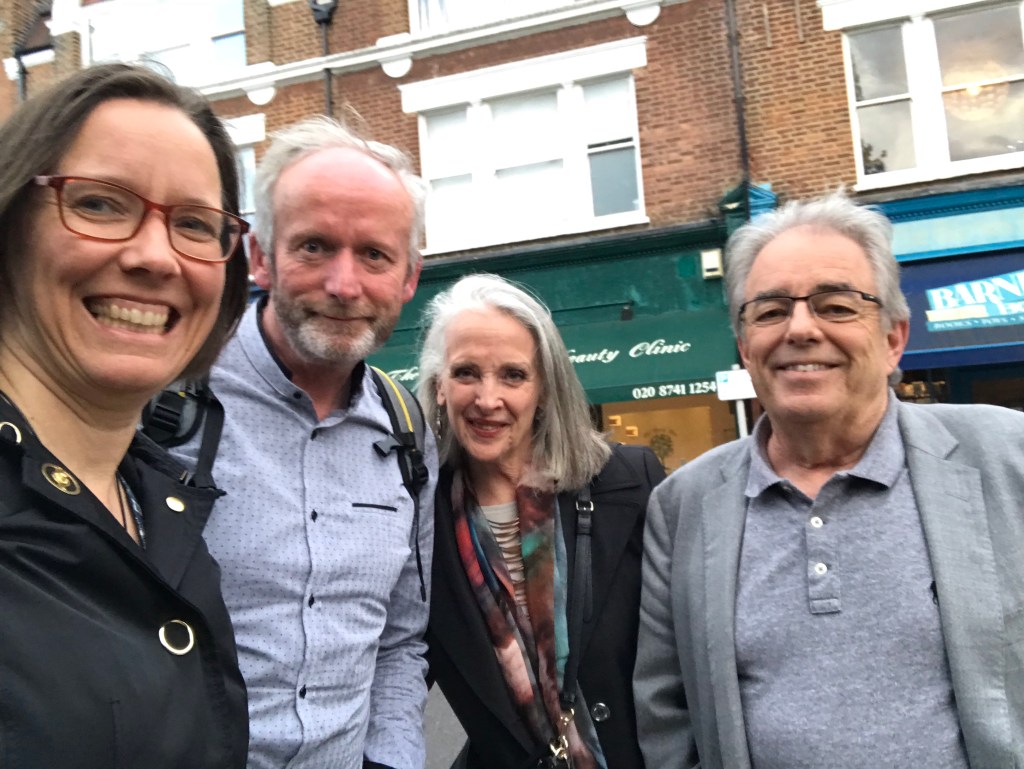
The other three pictures are taken with colleagues from the States, showing how I helped transfer knowledge and learning across the Atlantic and back as a result of this grant.
WP3, Special-Focus Journal Issues
The intention of WP3 was for me to learn publication skills related the engineering education research (EER). In the MSCA application, I promised to deliver a publication-ready document to a publishing house by month 24 of the two-year grant. Ultimately, I found I was able to spearhead development of two different special focus journal issues. I exceed my own expectations by working proactively. In fact, both of these journal issues were already published by month 24, and are currently informing the EER community.
The special focus issues I spearheaded are cited as follows:
CHANCE, S., Williams, B., Goldfinch, T., Adams, R. S., & Fleming, L. N. (Eds.). (August 2019). Special Issue on Using Enquiry- and Design-Based Learning to Spur Epistemological and Identity Development of Engineering Students. IEEE Transactions on Education, (62)3. DOI 10.1109/TE.2019.2923043.
CHANCE, S., Bottomly, L., Panetta, K., & Williams, B. (Eds.). (November 2018). Special-focus issue on gender in engineering in the IEEE Transactions on Education, (61)4.
In the UCL Engineering Faculty Office at UCL, with EER researcher Dr. Inês Direito and the faculty’s Communications Manager Emma Whitney.
At this point, I am leading the development of a third special focus issue–this last one is for the Australiasian Journal of Engineering Education–and this project is extending my reach farther across the globe.
The third special focus issue, now under development is:
CHANCE, S., Strobel, J., Mazzurco, A., Hattingh, T., & Villas-Boas, V. (Eds.). (forthcoming May 2021). Special Issue on Ethics in Engineering Education and Practice. Australasian Journal of Engineering Education (AJEE).
An intention for this new issue is for the two lead editors (Chance and Strobel) to help mentor the three other guest editors through the process to enable them to lead development of future special focus issues in EER. I’m thus delighted to report that Teresa Hattingh was recently appointed as Associate Editor of a new EER journal out of India.
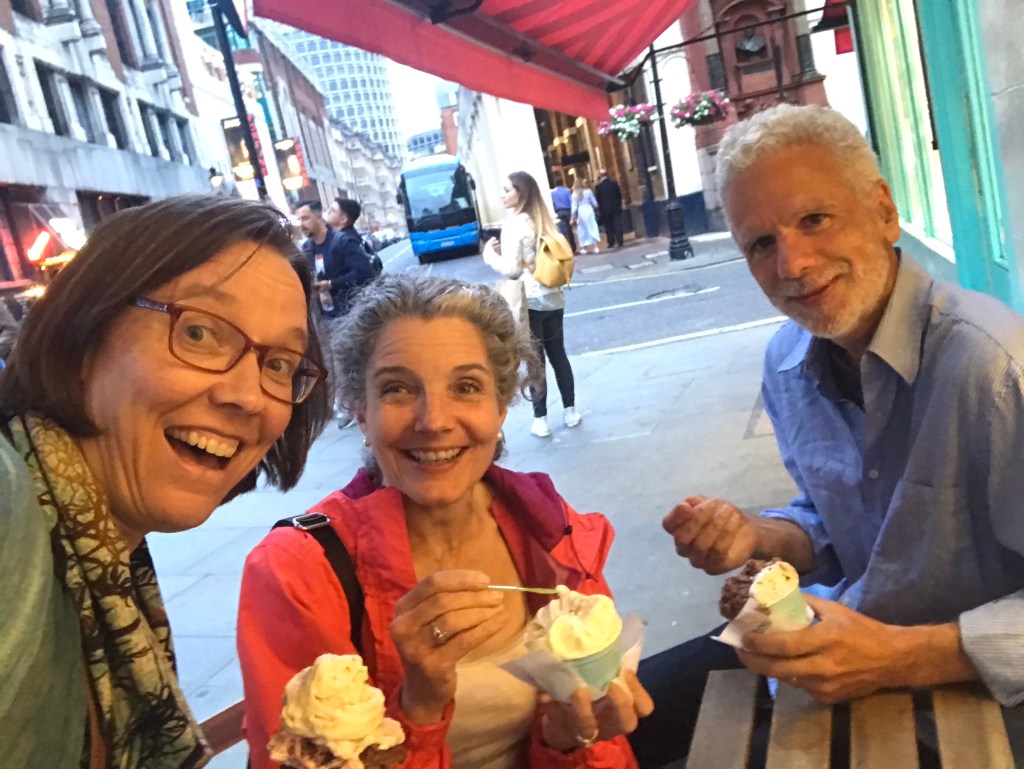
Enjoying ice cream at Covent Garden in London with my amazing PhD advisor, Dr. Pamela Eddy (from William and Mary in Virginia) and her husband, Dr. David Pape, who visited during my Marie Curie.
WP6, Project Management
The intention of WP6 was to keep the grant well managed from financial, quality assurance, and reporting standpoints. The main requirement was to provide essential information to the European Commission regarding the progress of the grant.
During the MSCA IF, I followed University College London data management guidelines. My research projects were identified as “low risk” to human participants and followed the established guidelines.
Under this WP, I had promised the following deliverables: a Career Development Plan (CDP), a mid-project report, and a final report. The CDP was developed and uploaded to the Participant Portal in the required timeframe. I also developed a mid-project report but, as there was no portal available for uploading it on the EU reporting platform, I posted the mid-term report to my blog and sent a link to my program officer.
Three-quarters of the way through my MSCA-IF period, I participated in a monitoring session in Brussels. It was held for Marie Curie Fellows doing projects in education and learning sciences. The set up was new, and this session was one of the first of its kind. Feedback I received there for my MSCA work was positive; no alterations to my projects were requested.
A PDF of the overall final report is available on my website for anyone to see and it has now been downloaded 234 times since I made it available. The blog page where it is posted has been viewed 486.
I believe posting the PDF is making a contribution in that a lot of MSCA fellows are curious to see what a report looks since there isn’t much information available online, meaning that most people can’t work on their reports until their grant actually finishes.
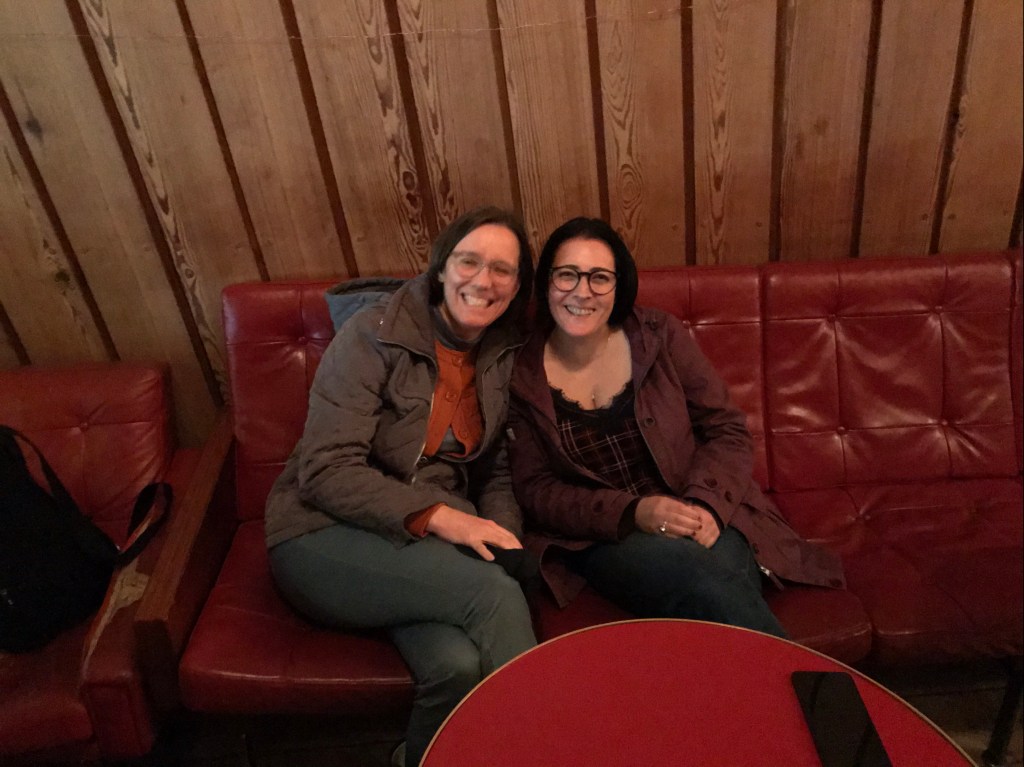
Getting together with my Master’s Thesis advisor (from Virginia Tech) and his wife, Ron and Cheryl Daniel, when they lived in London.
Impact envisioned
From the outset, I wanted my MSCA work to enhanced public perception of engineering as a fun and creative field. I also set out to help:
increase the focus given by engineering educators to the developmental patterns of engineering students;
improve student retention as a result of increased support;
enhance diversity, as techniques to support minority students are increasingly utilized;
improve overall teaching in engineering education as a result increasingly credible and useful research;
provide increased focus on ethics and sustainability in engineering education; and
produce tools and models to help engineering educators foster creativity and engineering firms contribute to realizing the United Nations Sustainable Development Goals (SDGs).
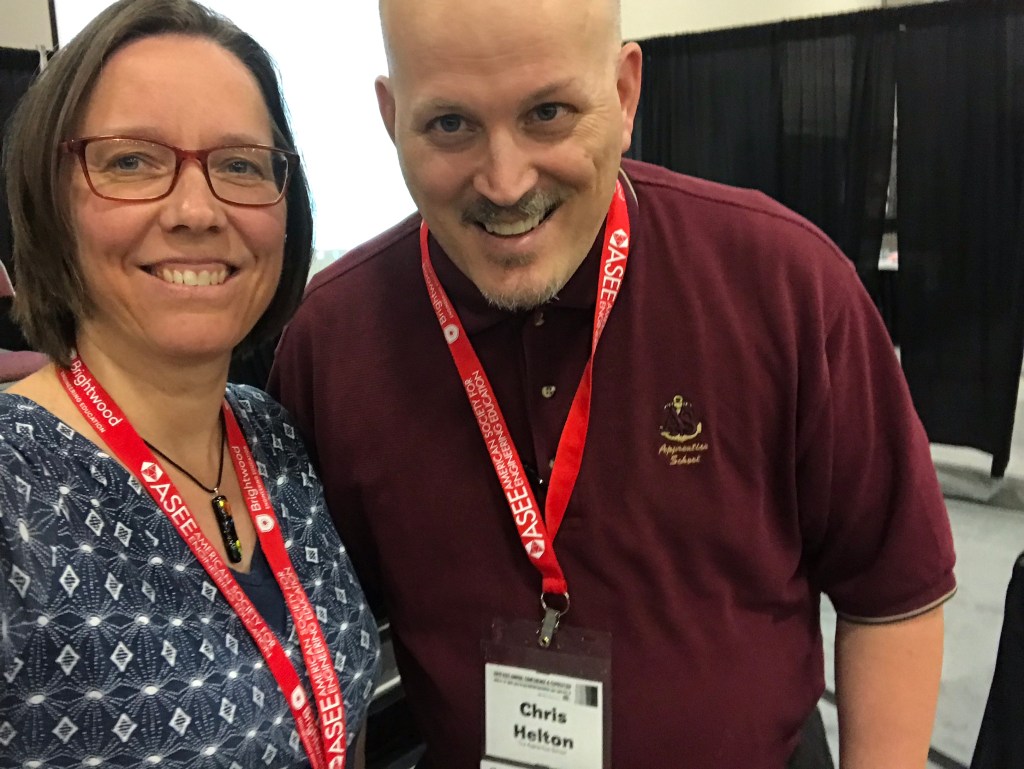
During this MSCA Fellowship, I got to attend my first two annual conferences of the American Society for Engineering Education (ASEE). At both, I caught up with instructors from Hampton Roads in Virginia (where I used to live). They coach student teams that compete at the ASEE conference annually. This colleague, Chris Helton, is from the Apprentice School at the Newport News Shipyard.
My plans for dissemination and exploitation of results was fully realized (and, in fact, exceeded). I believe that all critical objectives proposed in my MSCA application have been fully achieved, and the list of deliverables exceeds the original promises. Many additional manuscripts that are currently under development using data collected during this fellowship will continue to achieve impact in coming years.



























































 Ireland by Chance