As part of my Marie Skłodowska-Curie Actions Individual Fellowship (MSCA IF), which ran 2018-2020, I learned new skills in project management. Two of my six work packages (WPs) focused on project management: WP3 was for developing a special focus issue (which turned into producing two issues of in the journal IEEE Transactions on Education), and WP6 was for managing the MSCA grant itself.
In this blog post, I describe activities in these two work packages. I also identify what impact I wanted to have with the MSCA grant and share photos with colleagues.
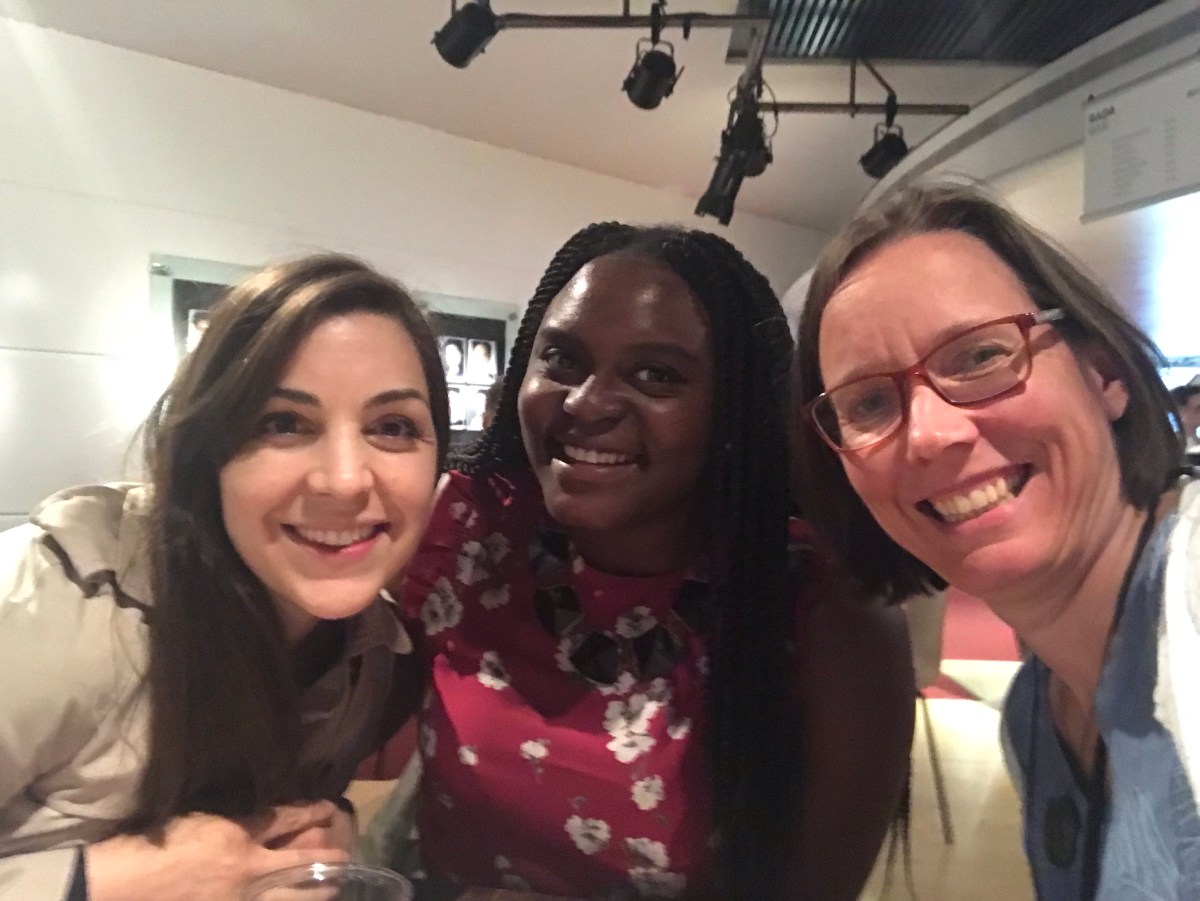
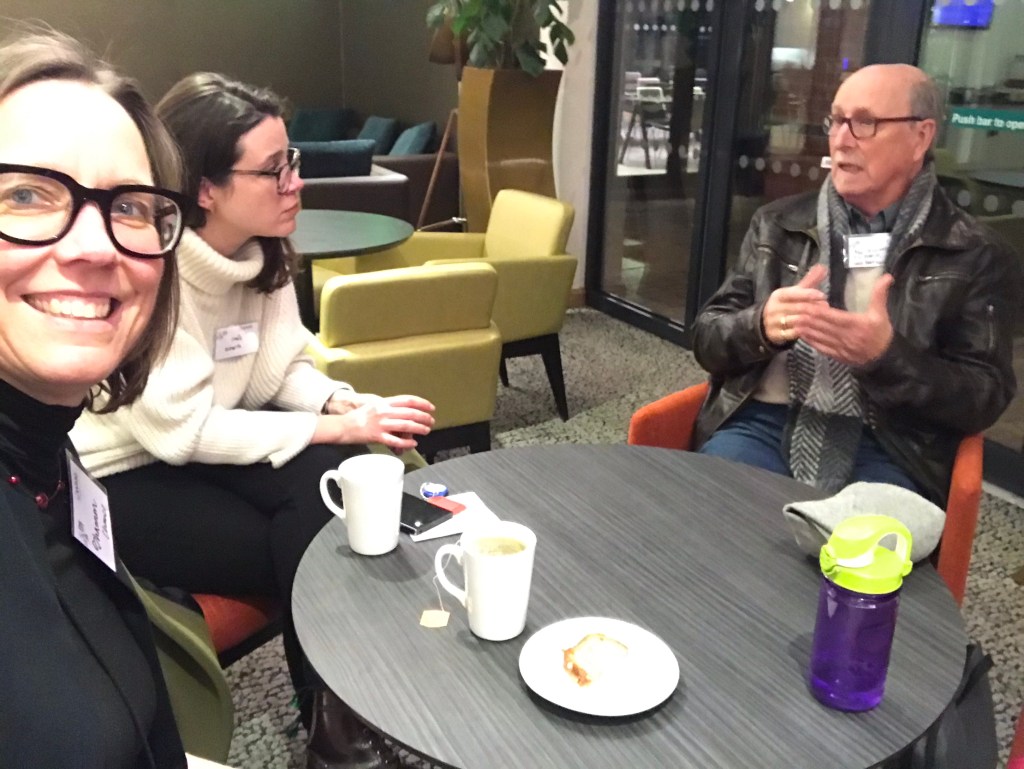
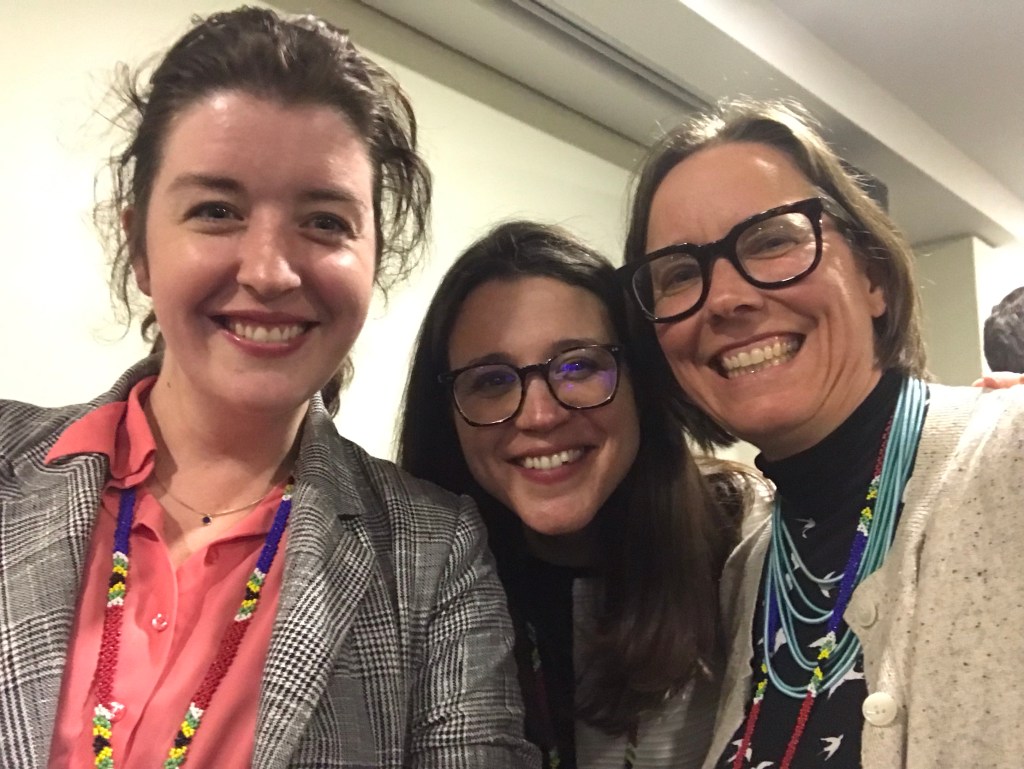
Incidentally, the photo above was taken with Prof. Emanuela Tilley (of University College London, UCL) and Dr. Folashade Akinmolayan (of Queen Mary University London). Emanuela is a highly organized and productive manager and she serves as the Director of UCL’s award-winning Integrated Engineering Programme (IEP). She’s been a fabulous role model for me in learning these types of skills.
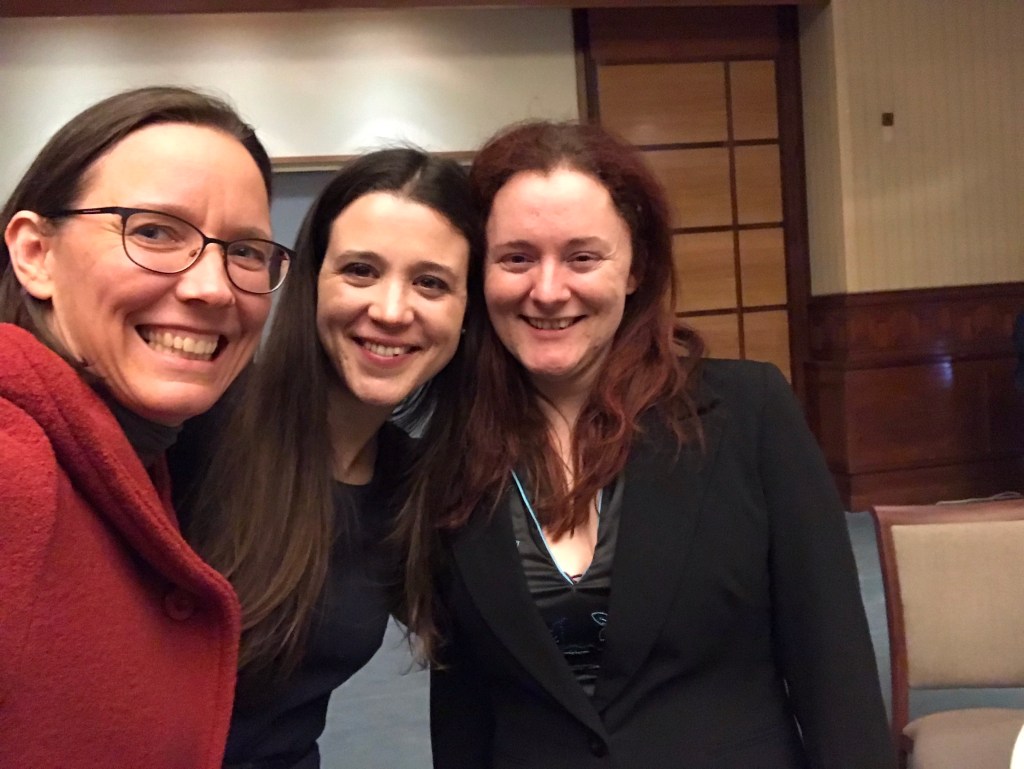
Below are two more colleagues from UCL, who worked with Emanuela and me in the Engineering Faculty Office.
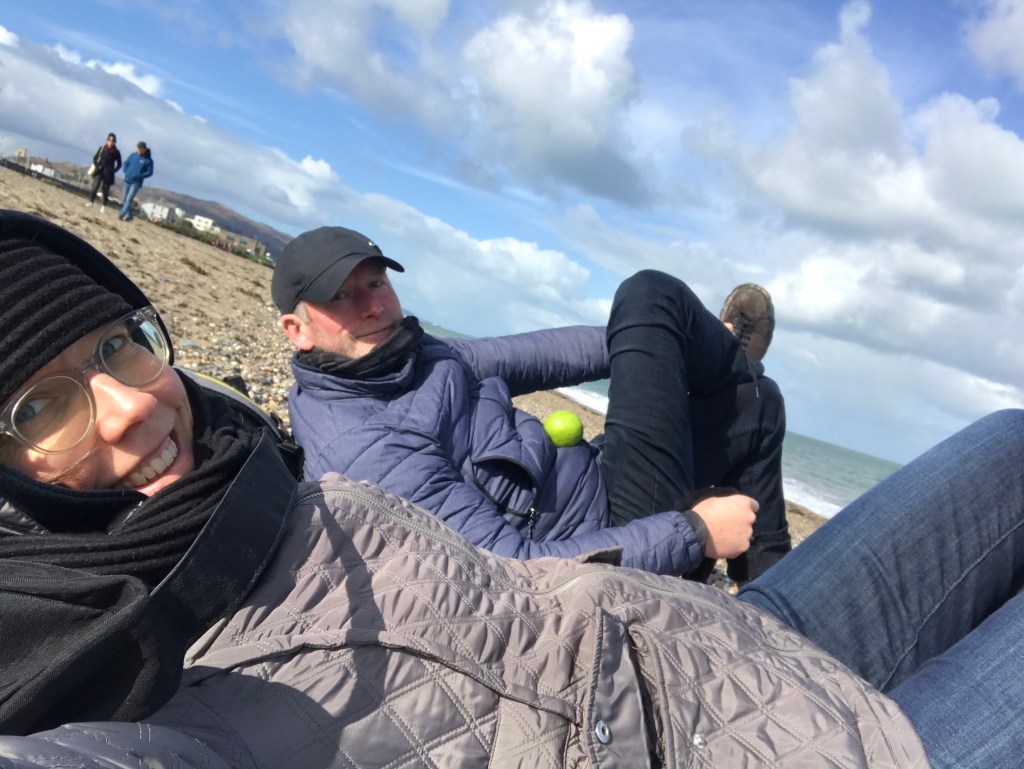
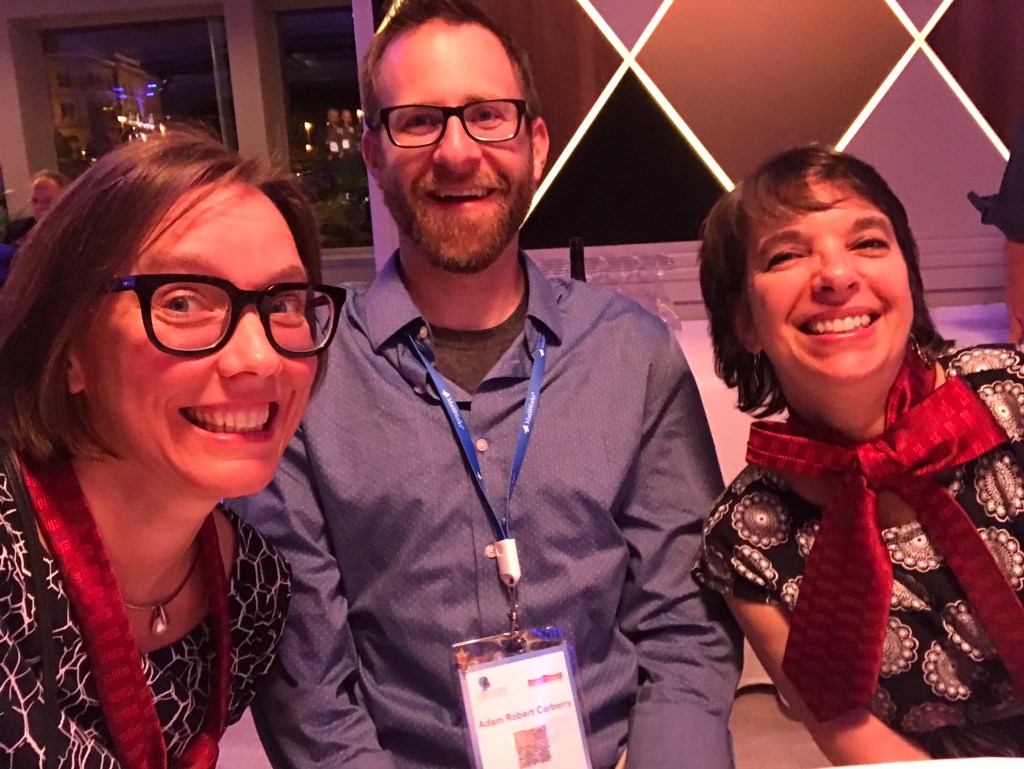
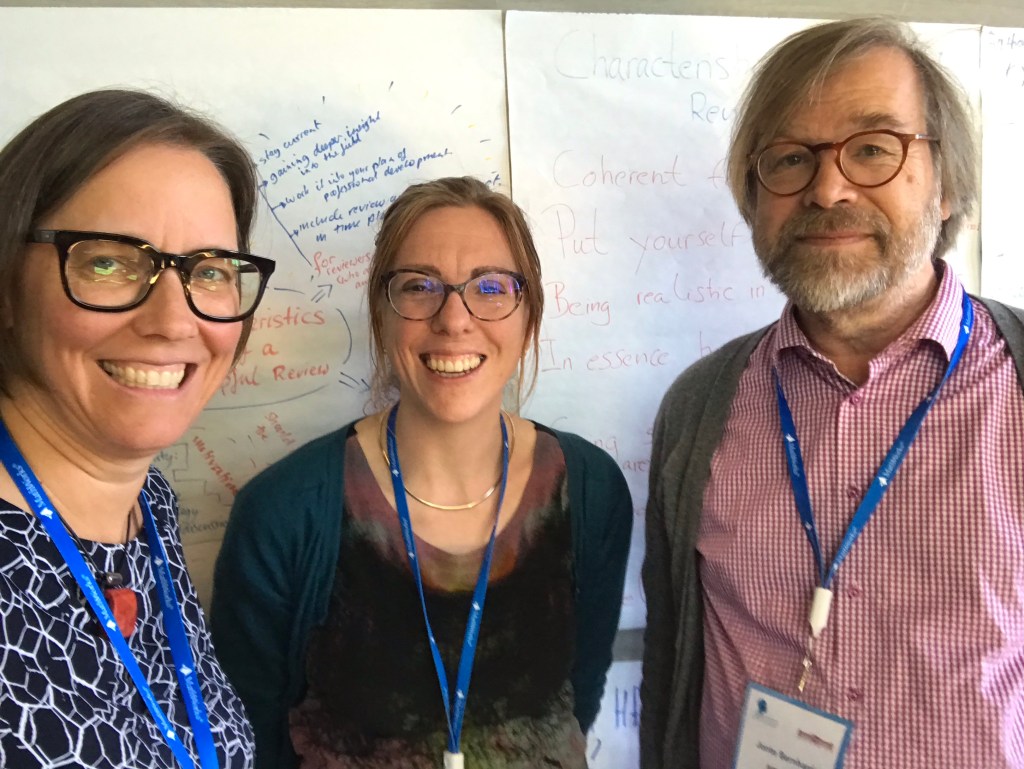
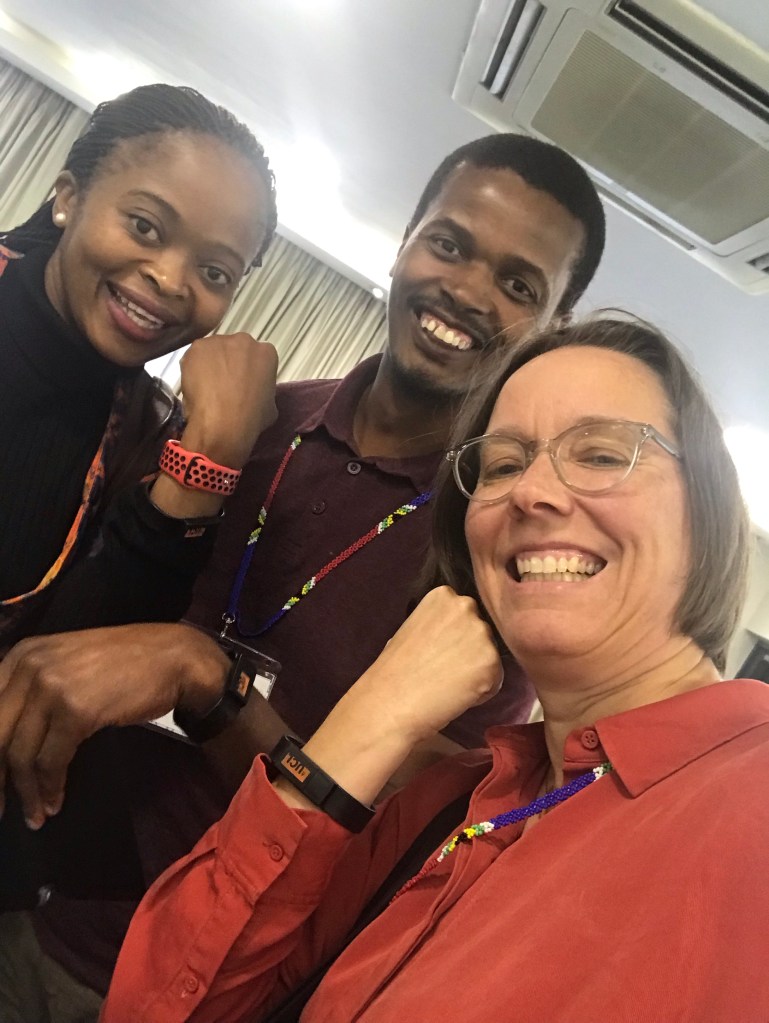
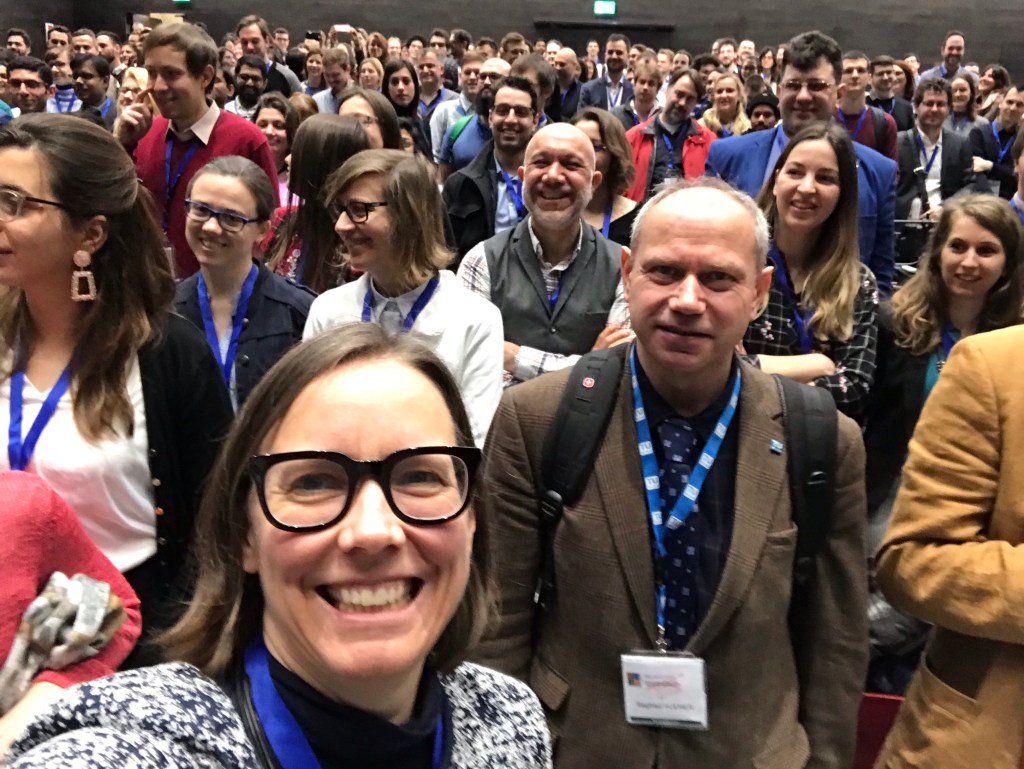
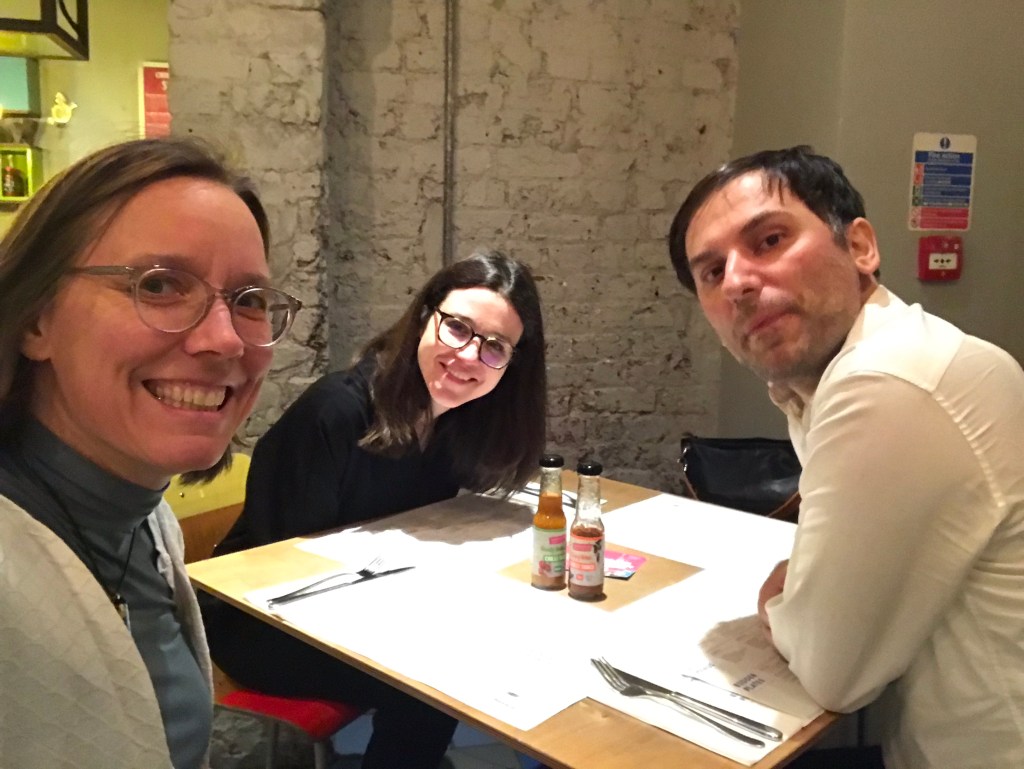
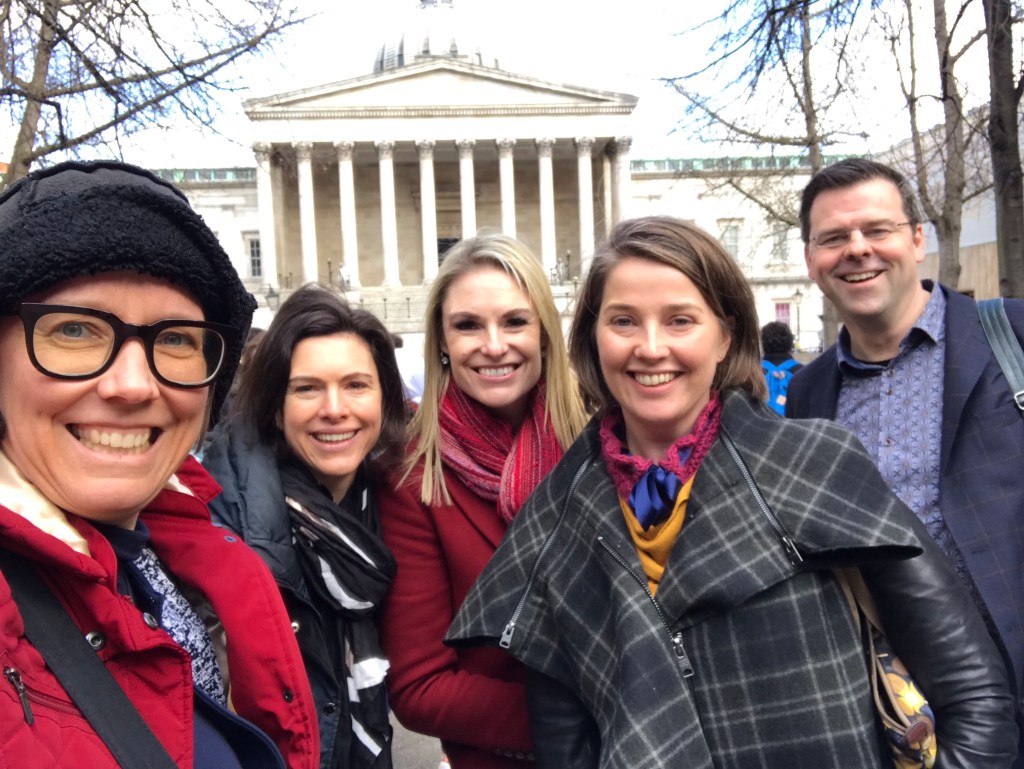
The other three pictures are taken with colleagues from the States, showing how I helped transfer knowledge and learning across the Atlantic and back as a result of this grant.
WP3, Special-Focus Journal Issues
The intention of WP3 was for me to learn publication skills related the engineering education research (EER). In the MSCA application, I promised to deliver a publication-ready document to a publishing house by month 24 of the two-year grant. Ultimately, I found I was able to spearhead development of two different special focus journal issues. I exceed my own expectations by working proactively. In fact, both of these journal issues were already published by month 24, and are currently informing the EER community.
The special focus issues I spearheaded are cited as follows:
CHANCE, S., Williams, B., Goldfinch, T., Adams, R. S., & Fleming, L. N. (Eds.). (August 2019). Special Issue on Using Enquiry- and Design-Based Learning to Spur Epistemological and Identity Development of Engineering Students. IEEE Transactions on Education, (62)3. DOI 10.1109/TE.2019.2923043.
CHANCE, S., Bottomly, L., Panetta, K., & Williams, B. (Eds.). (November 2018). Special-focus issue on gender in engineering in the IEEE Transactions on Education, (61)4.
In the UCL Engineering Faculty Office at UCL, with EER researcher Dr. Inês Direito and the faculty’s Communications Manager Emma Whitney.
At this point, I am leading the development of a third special focus issue–this last one is for the Australiasian Journal of Engineering Education–and this project is extending my reach farther across the globe.
The third special focus issue, now under development is:
CHANCE, S., Strobel, J., Mazzurco, A., Hattingh, T., & Villas-Boas, V. (Eds.). (forthcoming May 2021). Special Issue on Ethics in Engineering Education and Practice. Australasian Journal of Engineering Education (AJEE).
An intention for this new issue is for the two lead editors (Chance and Strobel) to help mentor the three other guest editors through the process to enable them to lead development of future special focus issues in EER. I’m thus delighted to report that Teresa Hattingh was recently appointed as Associate Editor of a new EER journal out of India.
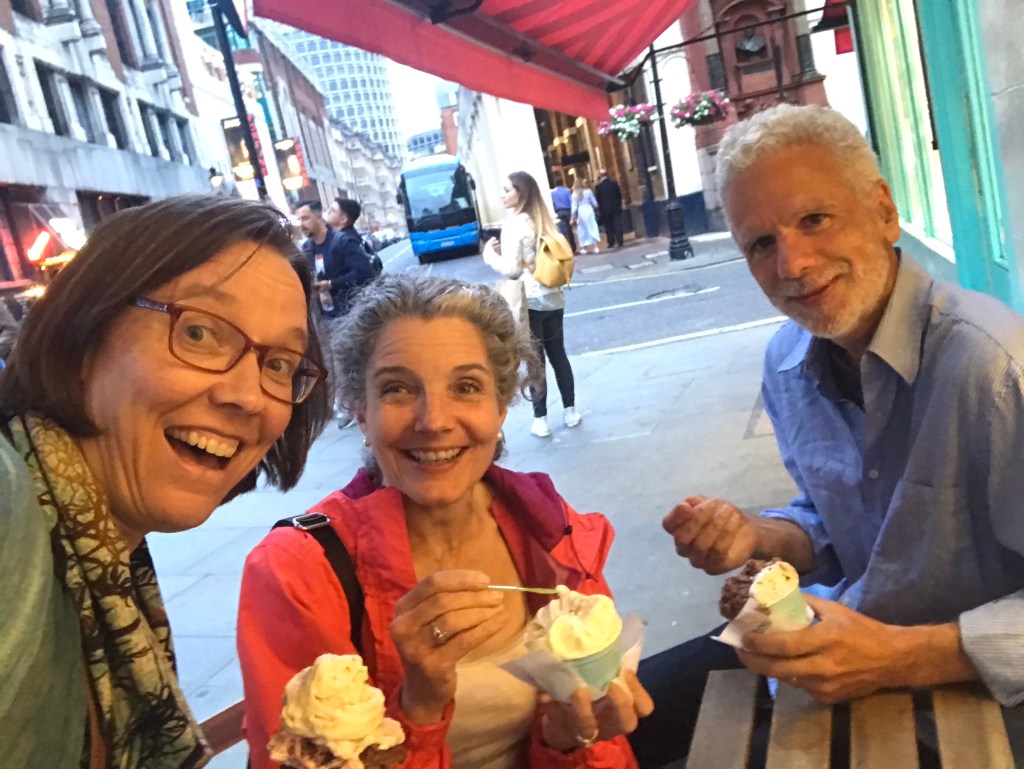
Enjoying ice cream at Covent Garden in London with my amazing PhD advisor, Dr. Pamela Eddy (from William and Mary in Virginia) and her husband, Dr. David Pape, who visited during my Marie Curie.
WP6, Project Management
The intention of WP6 was to keep the grant well managed from financial, quality assurance, and reporting standpoints. The main requirement was to provide essential information to the European Commission regarding the progress of the grant.
During the MSCA IF, I followed University College London data management guidelines. My research projects were identified as “low risk” to human participants and followed the established guidelines.
Under this WP, I had promised the following deliverables: a Career Development Plan (CDP), a mid-project report, and a final report. The CDP was developed and uploaded to the Participant Portal in the required timeframe. I also developed a mid-project report but, as there was no portal available for uploading it on the EU reporting platform, I posted the mid-term report to my blog and sent a link to my program officer.
Three-quarters of the way through my MSCA-IF period, I participated in a monitoring session in Brussels. It was held for Marie Curie Fellows doing projects in education and learning sciences. The set up was new, and this session was one of the first of its kind. Feedback I received there for my MSCA work was positive; no alterations to my projects were requested.
A PDF of the overall final report is available on my website for anyone to see and it has now been downloaded 234 times since I made it available. The blog page where it is posted has been viewed 486.
I believe posting the PDF is making a contribution in that a lot of MSCA fellows are curious to see what a report looks since there isn’t much information available online, meaning that most people can’t work on their reports until their grant actually finishes.
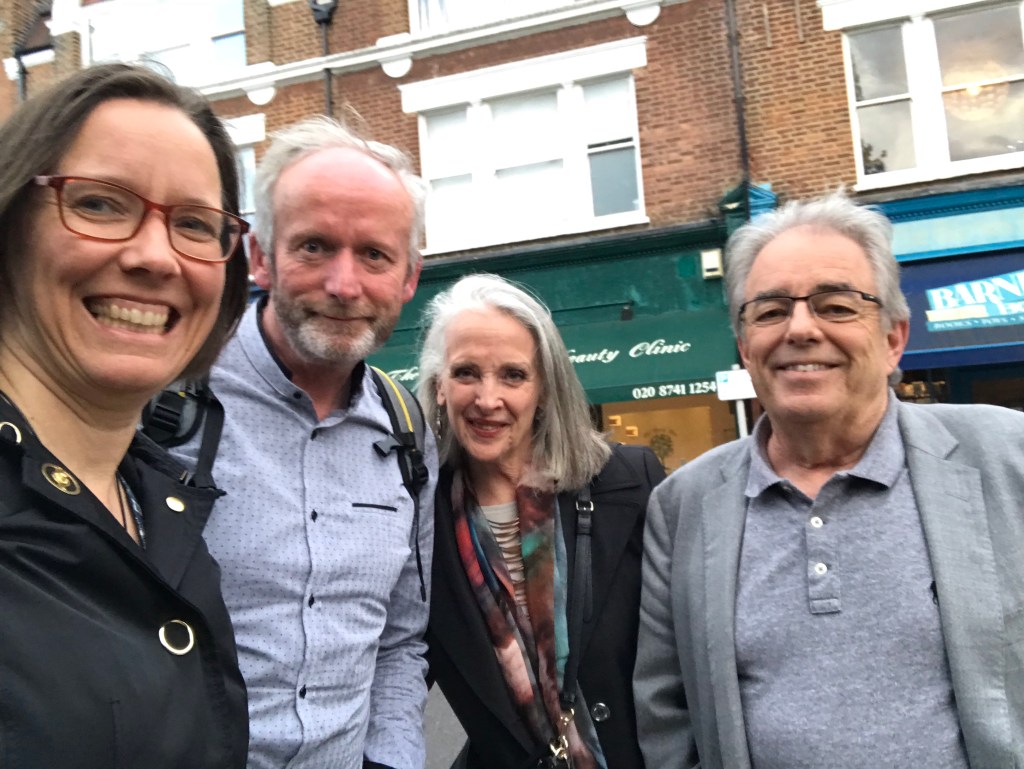
Getting together with my Master’s Thesis advisor (from Virginia Tech) and his wife, Ron and Cheryl Daniel, when they lived in London.
Impact envisioned
From the outset, I wanted my MSCA work to enhanced public perception of engineering as a fun and creative field. I also set out to help:
increase the focus given by engineering educators to the developmental patterns of engineering students;
improve student retention as a result of increased support;
enhance diversity, as techniques to support minority students are increasingly utilized;
improve overall teaching in engineering education as a result increasingly credible and useful research;
provide increased focus on ethics and sustainability in engineering education; and
produce tools and models to help engineering educators foster creativity and engineering firms contribute to realizing the United Nations Sustainable Development Goals (SDGs).
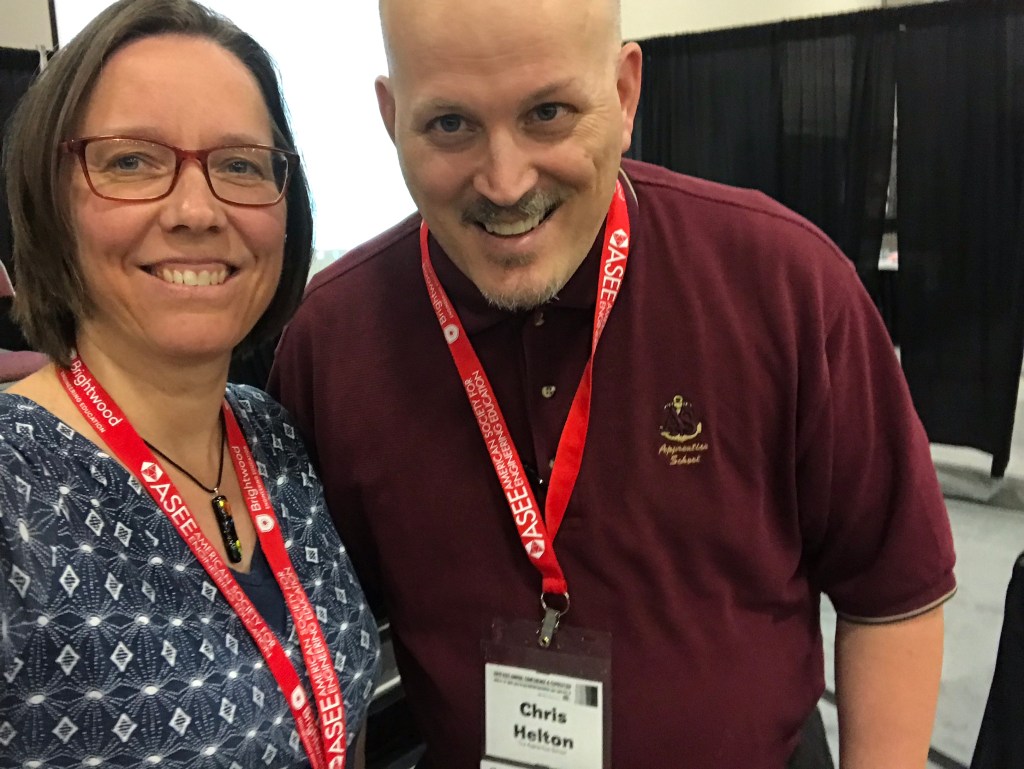
During this MSCA Fellowship, I got to attend my first two annual conferences of the American Society for Engineering Education (ASEE). At both, I caught up with instructors from Hampton Roads in Virginia (where I used to live). They coach student teams that compete at the ASEE conference annually. This colleague, Chris Helton, is from the Apprentice School at the Newport News Shipyard.
My plans for dissemination and exploitation of results was fully realized (and, in fact, exceeded). I believe that all critical objectives proposed in my MSCA application have been fully achieved, and the list of deliverables exceeds the original promises. Many additional manuscripts that are currently under development using data collected during this fellowship will continue to achieve impact in coming years.
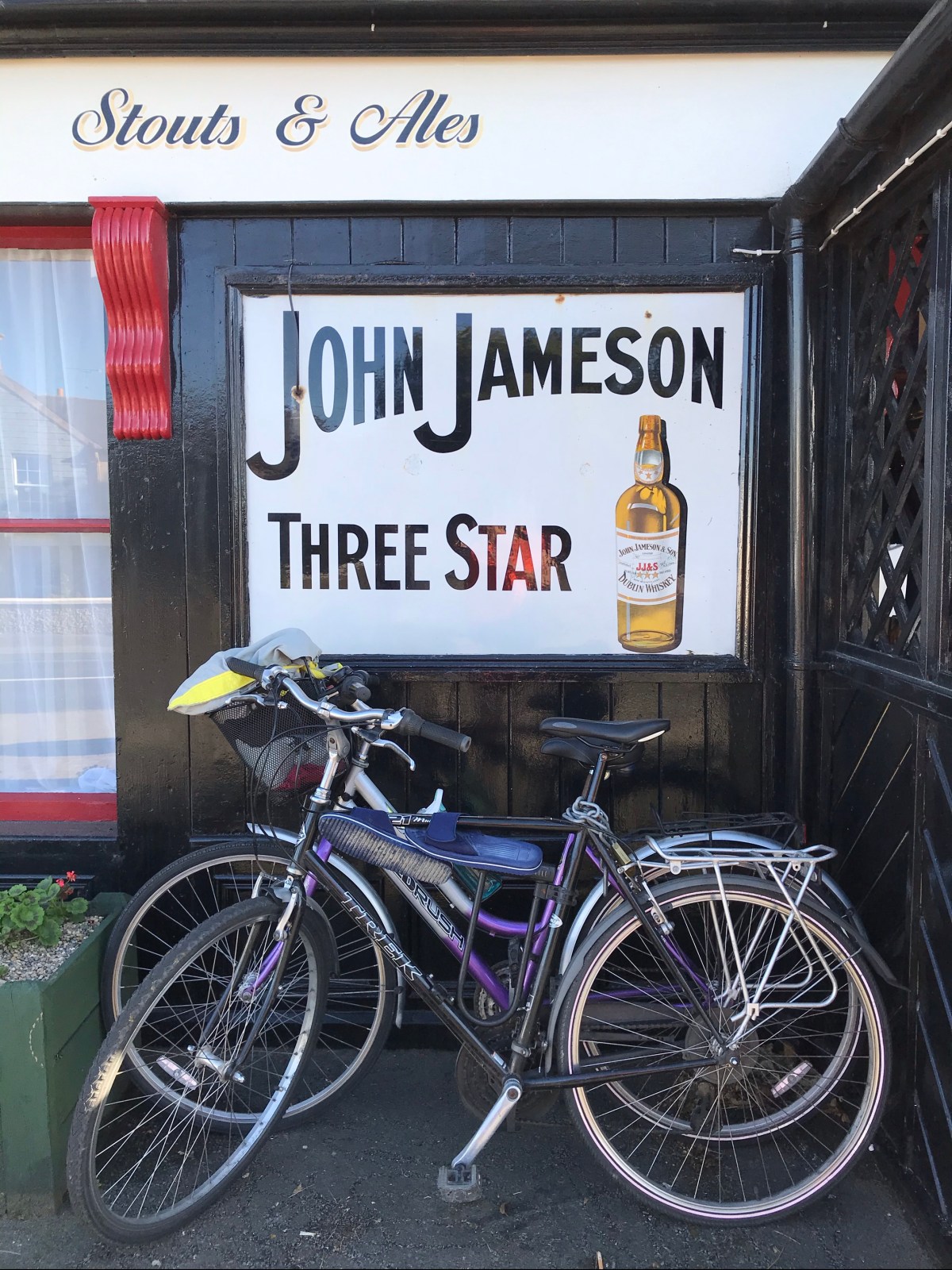
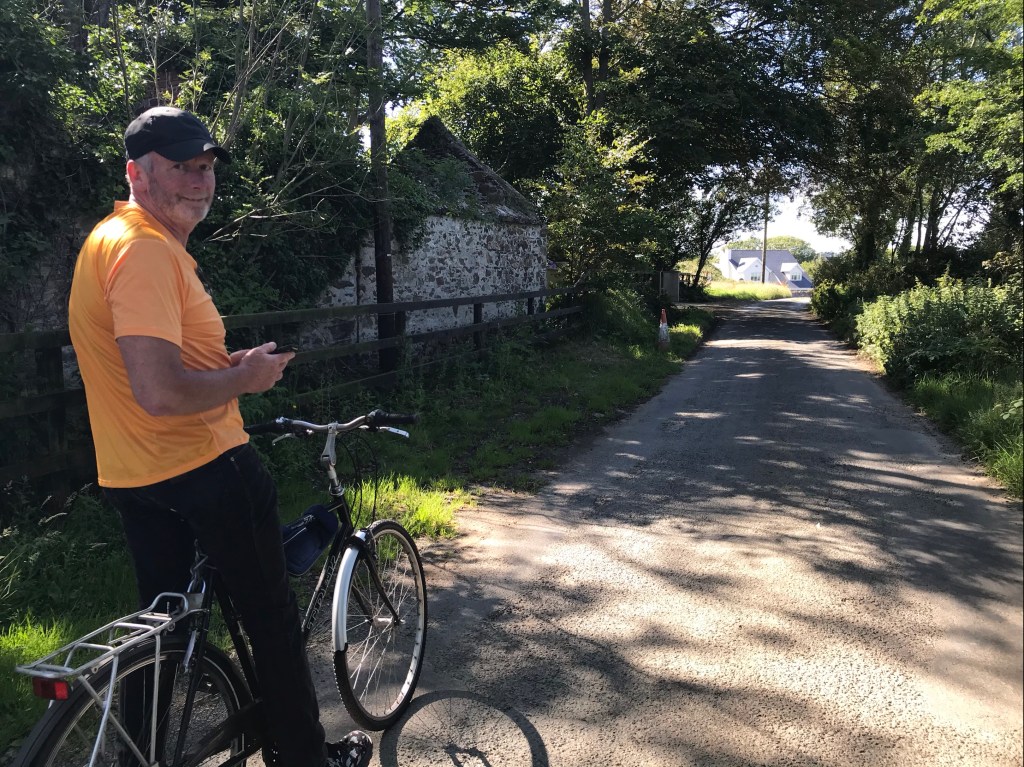
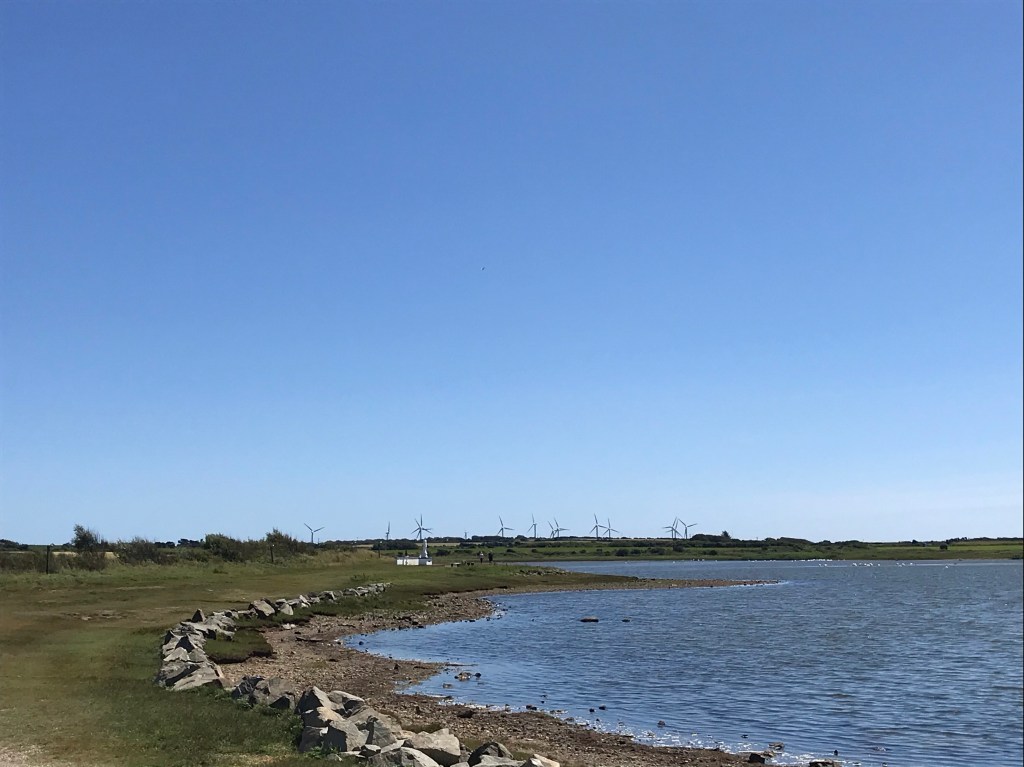
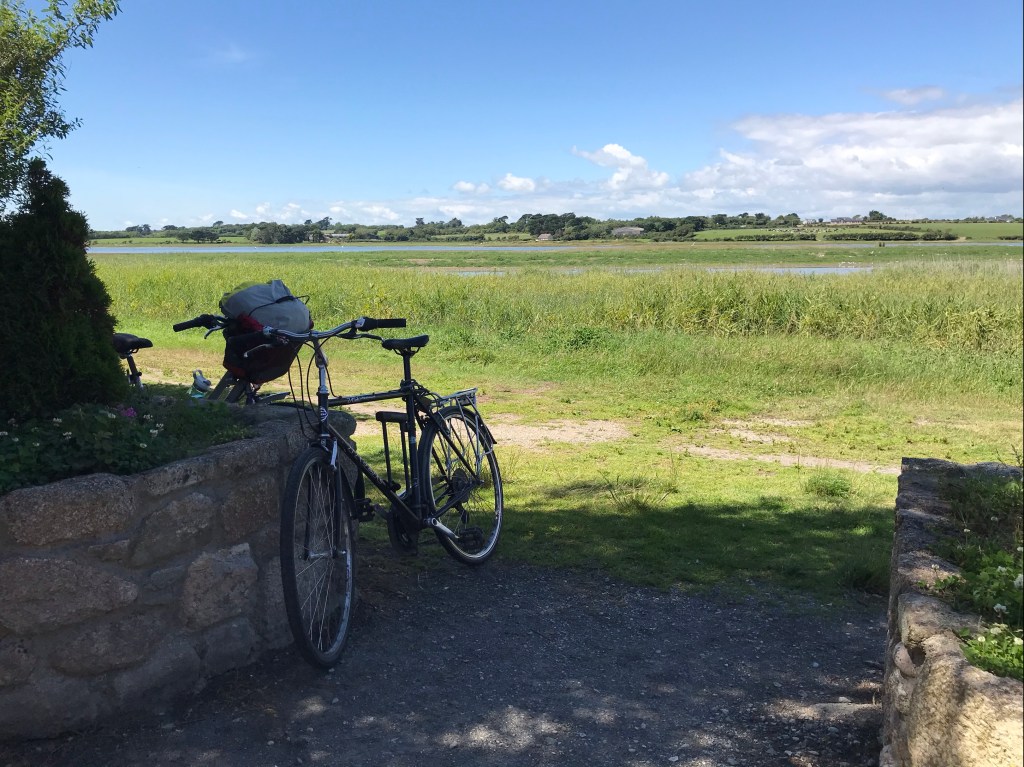
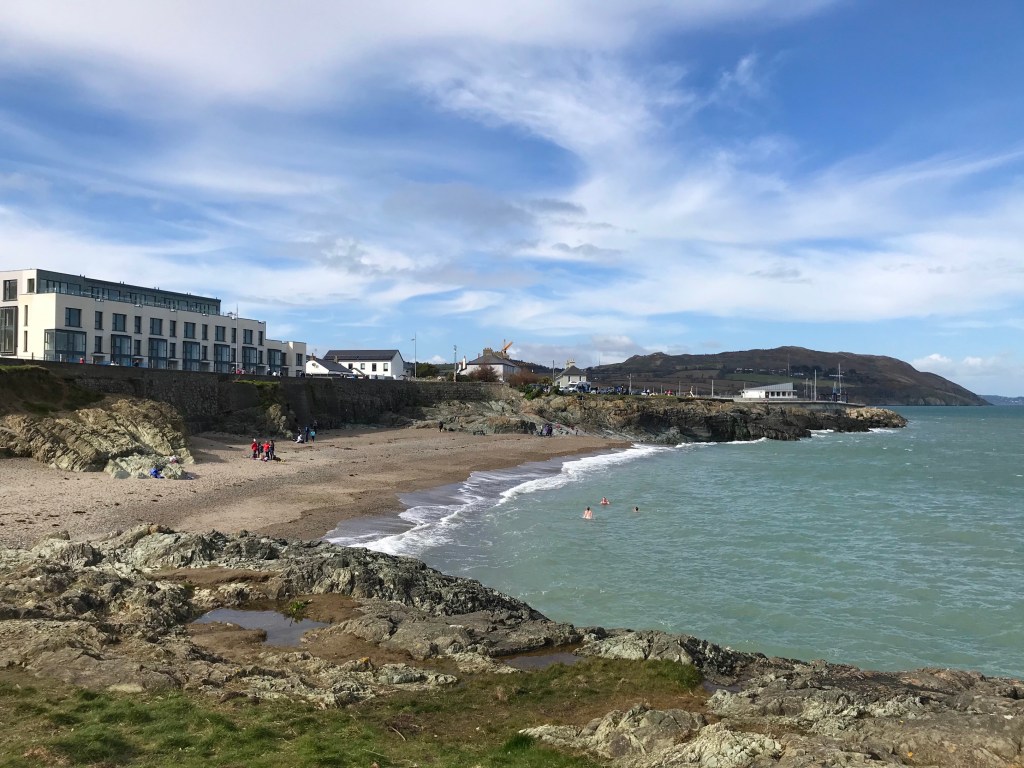
Last weekend we tested out our new car-mounted bike rack. We researched good cycling routes, loaded the bikes for an overnight trip, and struck out Saturday morning for Wexford, the sunniest county in Ireland. On the island’s southeastern-most tip, County Wexford enjoys the highest number of summer days per year on the island.
En route to Wexford with bikes ready to roll.
We parked the car at our hotel in view of Rosslare Harbor, with its ferry port and boats to France, the UK, and elsewhere in Europe and fueled up with a sandwich.
Then we set out to find peaceful waters by bike. The port is the starting point for the Irish leg of a major European cycling route, with three sub-routes circling the area. It’s part of a larger European system of touring-friendly cycling roads.
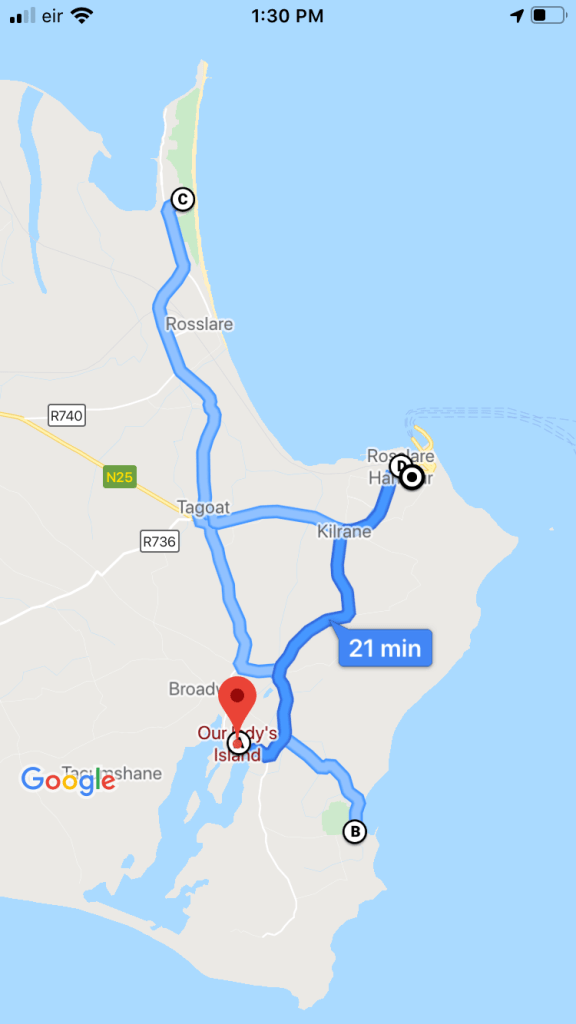
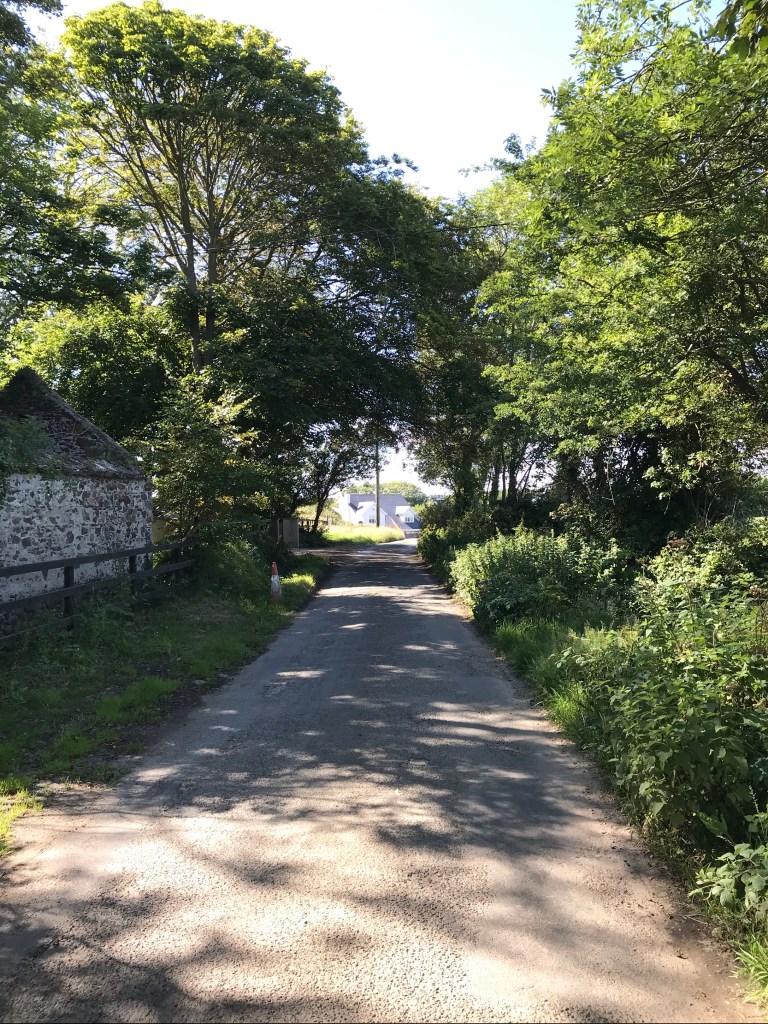
Our cycling route this day totaled about 37 km and, with its loops, provided us options if we ran out of steam. We didn’t run out though! We chose tranquil little roads, were passed by the occasional car, puzzled at the road signs, and asked other cyclists for advice. GPS really helps with navigating roads in Ireland, but groping around can also be fun.
Ladys Island
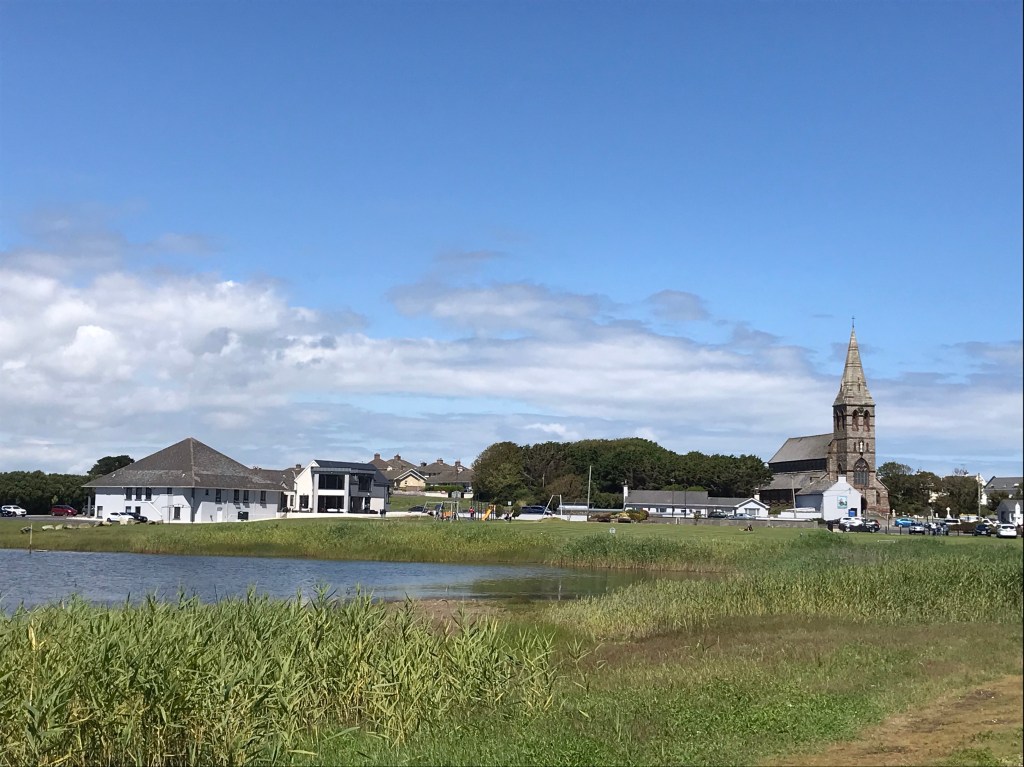
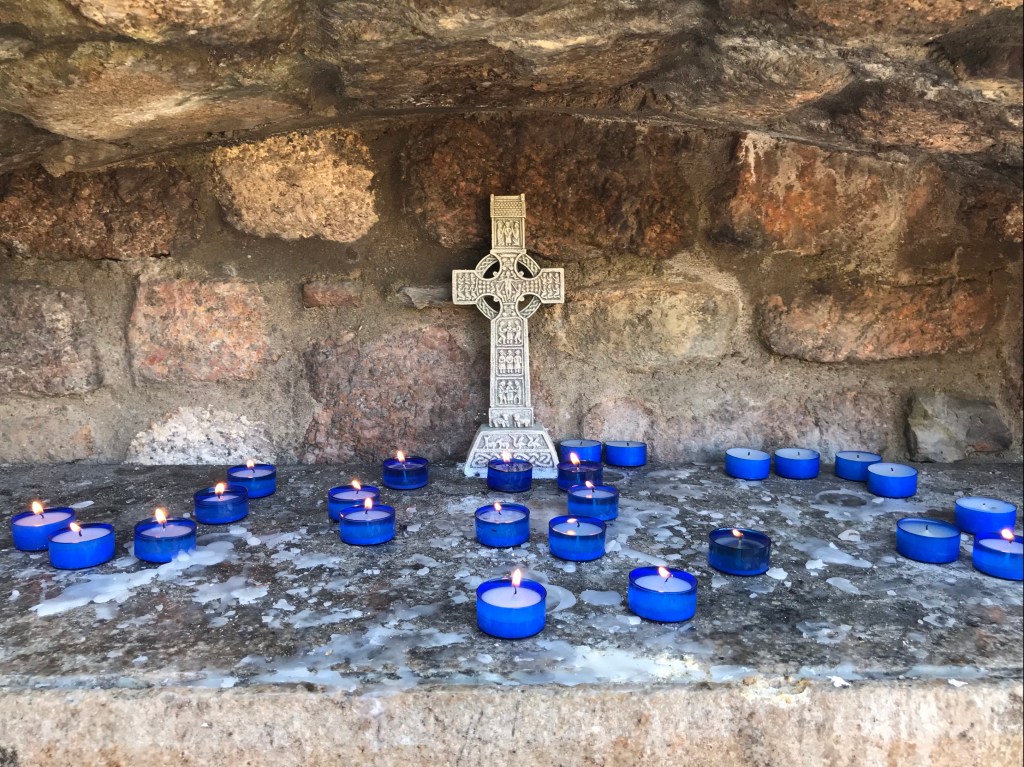
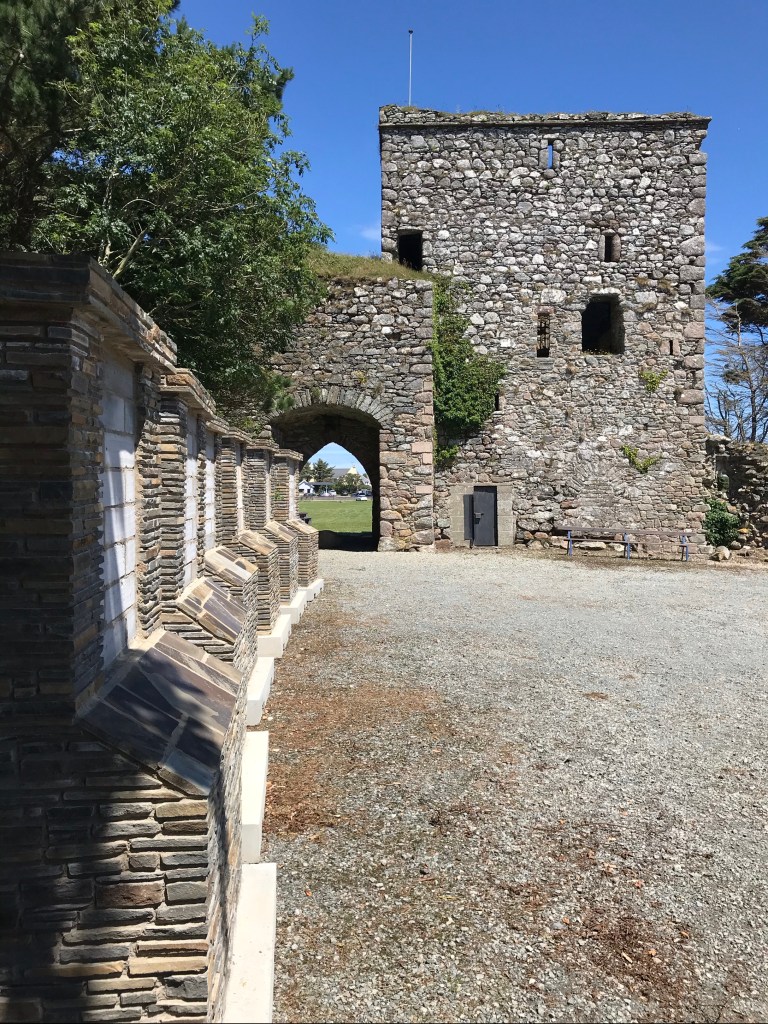
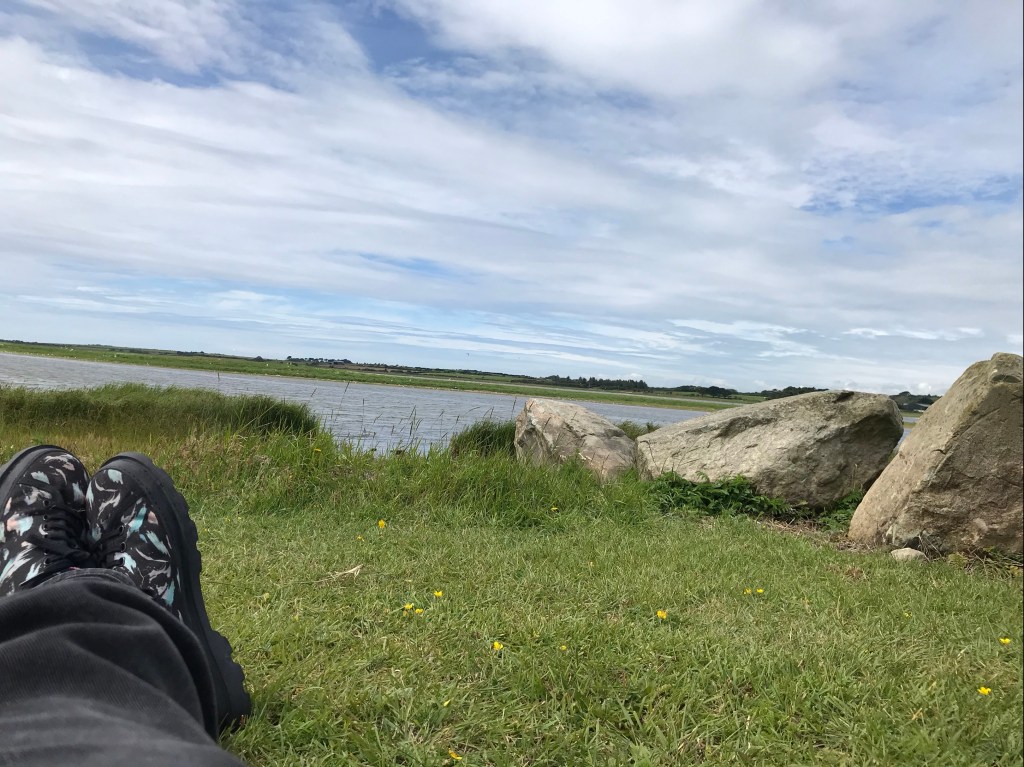
Our first stop: Ladys Island, also called Our Lady’s Island. The island itself is a bird sanctuary, and the peninsula beside it is accessible to people and is a religious pilgrimage site. We completed the pilgrimage route by bike. There was evidence of recent outdoor masses beside the castle-like ruin. We explored a old cemetery, recently reclaimed from the brush. There were many people walking and cycling in the area.
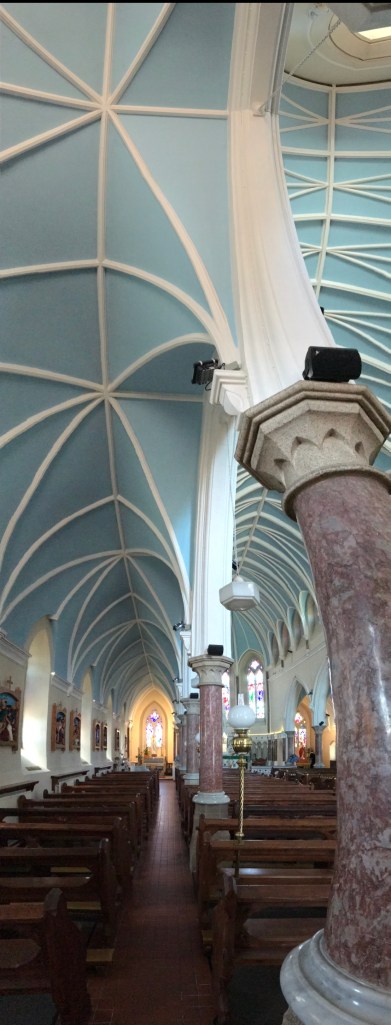
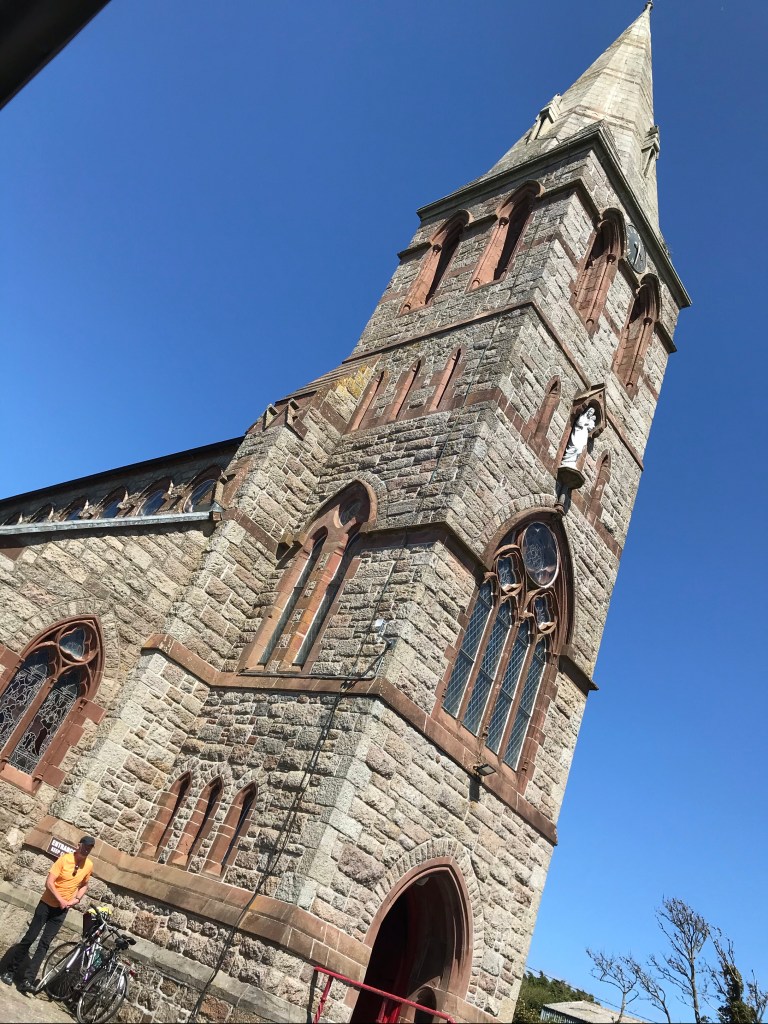
The church here reminded me of the one in Staunton, Virginia, called St. Andrews, where my grandmother went. Designed during the same neo-Gothic loving era, I’d say, and not terribly old.
Carne Beach
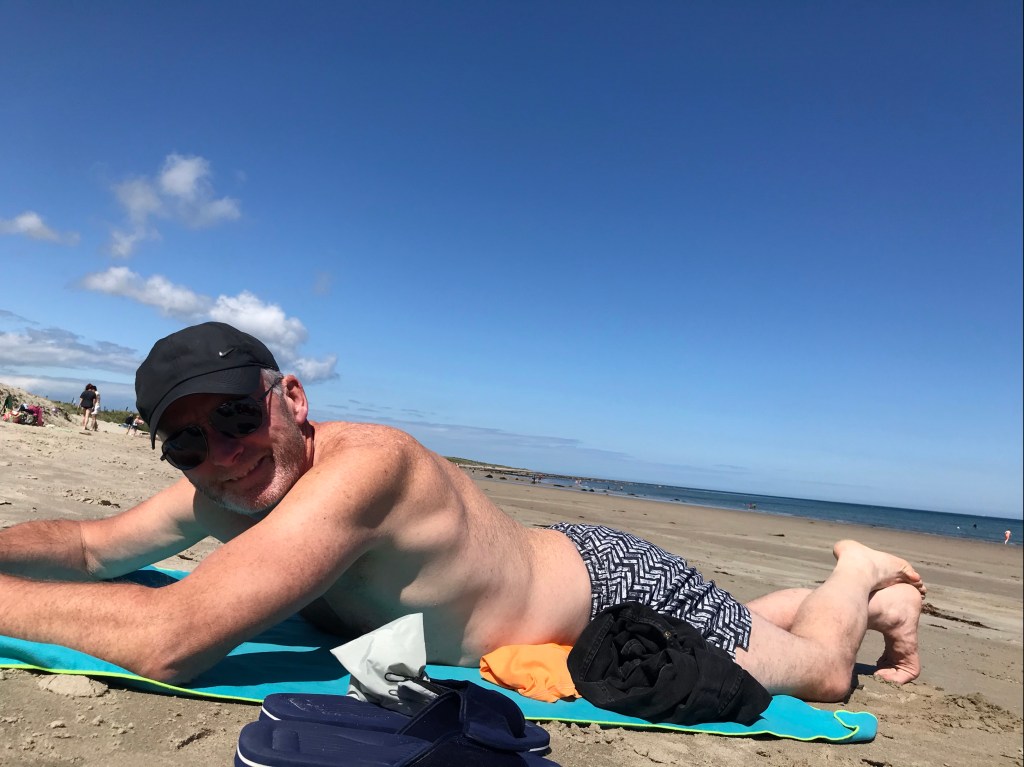
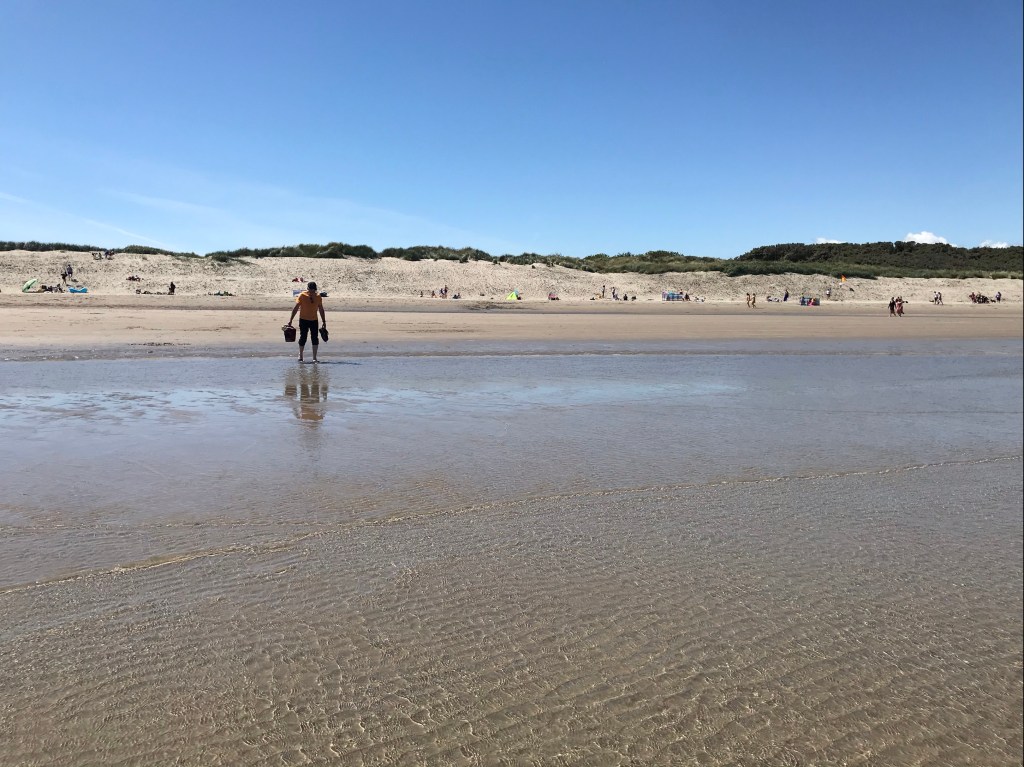
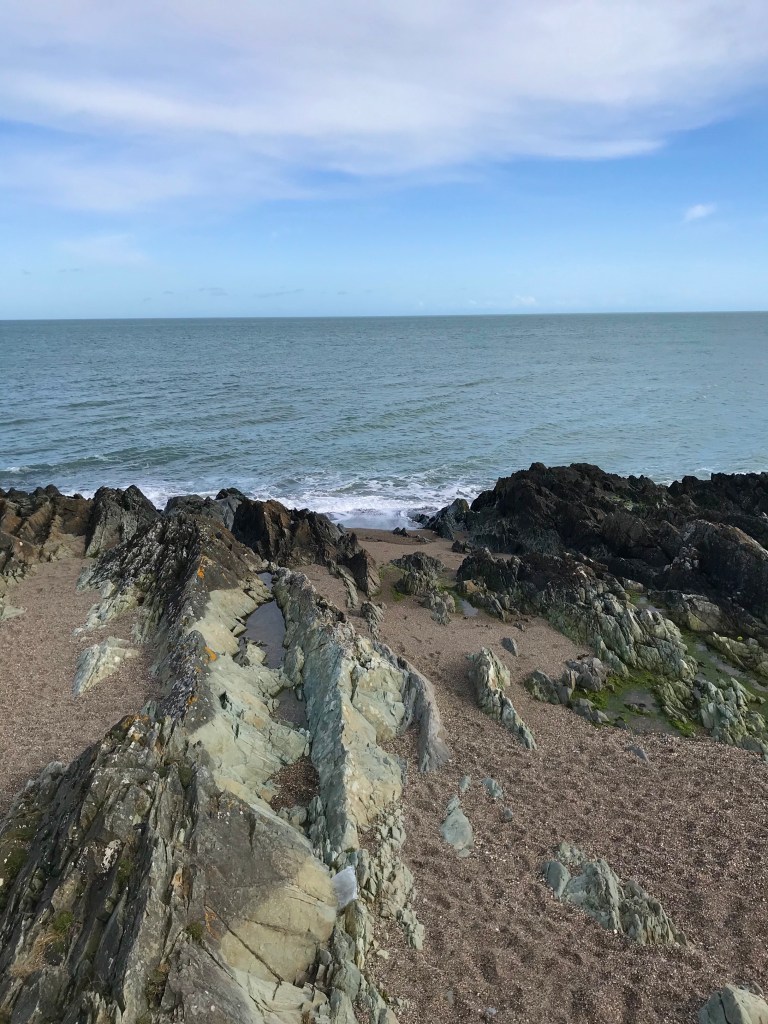
We enjoyed the sounds of all the lovely birds and then we struck out for Carne Beach. It was beautiful and blue and the water seemed warm enough for a swim although we didn’t try. We just enjoyed the sun, sounds, breeze, and colors.
Rosslare
Then we cycled a long stretch to Rosslare village and beach. It was packed with weekend holiday-makers so we didn’t stay long. Turned away from a restaurant at 4:30 PM, we decided it was best to find food without delay. Rosslare doesn’t currently have capacity to serve many in restaurants and it was full of blow-ins from Dublin, like us.
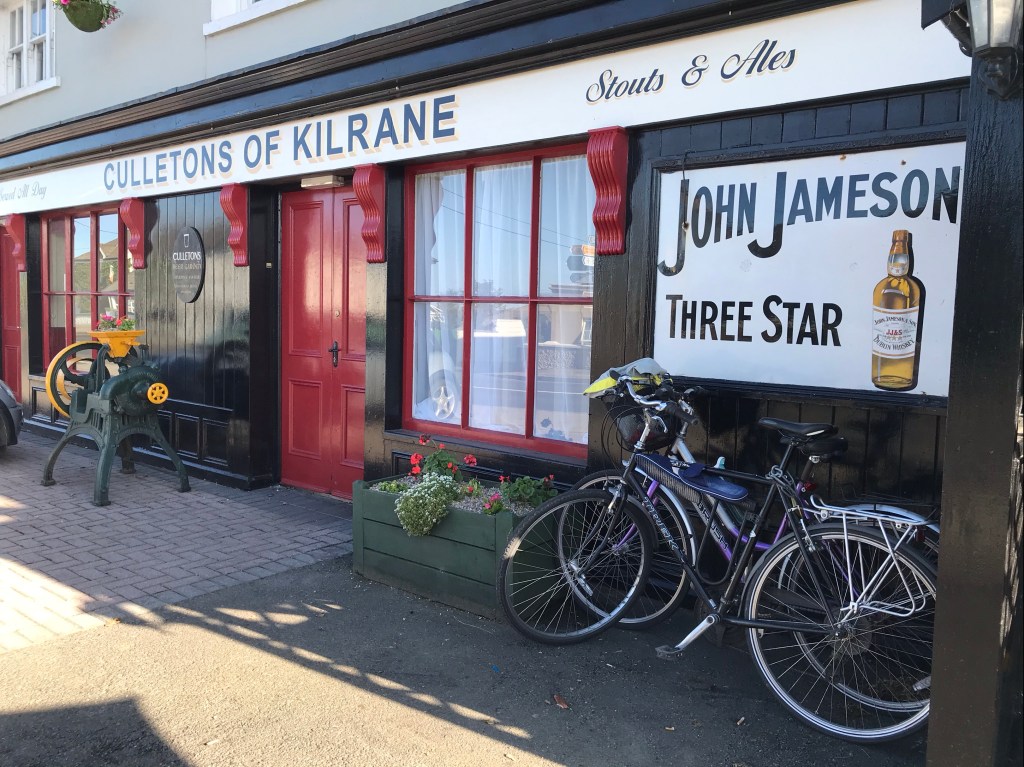
We cycled back toward the Harbor and were fortunate to find the last table at Culletons of Kilrane where we enjoyed one lovely plate of fish and chips and another of salmon-wrapped cod. The high quality of the food was a pleasant surprise! And pulled pints of Guinness to boot!
The pub we tried before this one was filled by funeral-goers from the burial we’d passed earlier in the day, near Lady’s Island. As an Irish person, Aongus is 100% certain the pub booking was linked to the funeral. This is the only possible explanation, he insists. As an American, I’m not sure I can explain how he knows, even though I read up on funeral rites in the book “How to be Irish” by Daniel Slattery. Actually, I’ve read that funeral chapter twice, but some details still evade me.
After dinner, we returned to our hotel and settled in for the night. The cycle route here is lifted off the street and was safe enough even after a pint of Guinness, which Aongus says was rocket fuel for me. I virtually flew home.
Breakfast wasn’t well organized at the hotel, but Supervalue did the trick. We ate on the back deck of the hotel, then packed up and drove back to Lady’s Island to soak in a bit more birdsong and delicate tranquility.
The highlight of our whole trip came at the end, with an impromptu invitation to lunch at the holiday home of our friends Richard and Geraldine. I’d stayed the night with them once before here in Rosslare, between days of RoboSlam events that our team conducted throughout county Wexford, but Aongus had never been to their home.
As we’d only chosen this destination the night before, I messaged Richard on the way down to see if they might be visiting Rosslare on this particular weekend.
Geraldine and Richard arrived in town after us, but welcomed us with (virtually, not literally) open arms! I thought we’d meet at a cafe or on the beach, but they were eager to have guests and graciously invited to their place, nicknamed “Five”. Try finding that on Google Maps!
This was my first time visiting with friends in person since mid-March, and it was really good for my mental health to reconnect with beloved others. I even got to expand upon my new-found knowledge of Irish politics and governance by sharing ideas and perceptions with them.
County Wexford and the Hays family gave us a lovely weekend and we look forward to visiting both again!
Lovely outdoor lunch with Richard and Geraldine. Plus Aongus and Shannon.
Something was about to change here in Dublin on the night of March 11th. I knew this, and thus felt hesitation as well as excitement for an interesting day as I headed into work on the 12th.
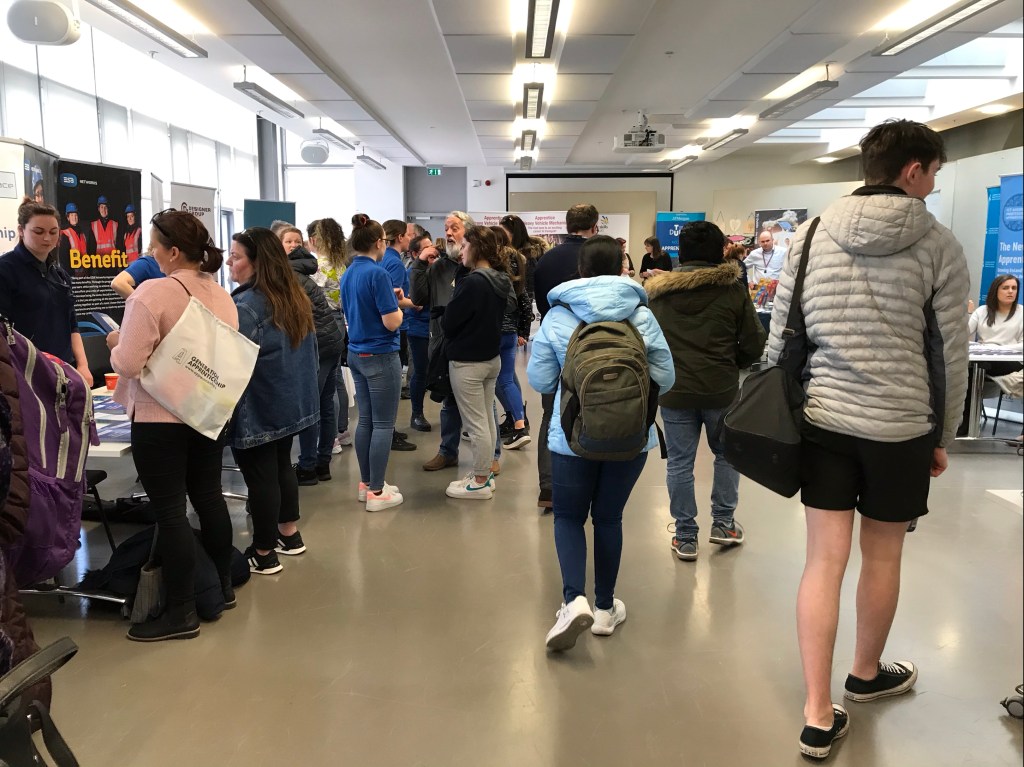
You see, TU Dublin had an Open Day planned to show female high school students about our apprenticeship courses. My colleagues and I had put a lot of work into planning this, although we anticipated things could change due to coronavirus. Later this day, life was to shift decisively about our world here in Dublin.
The Last Day ‘Open’ at TU Dublin
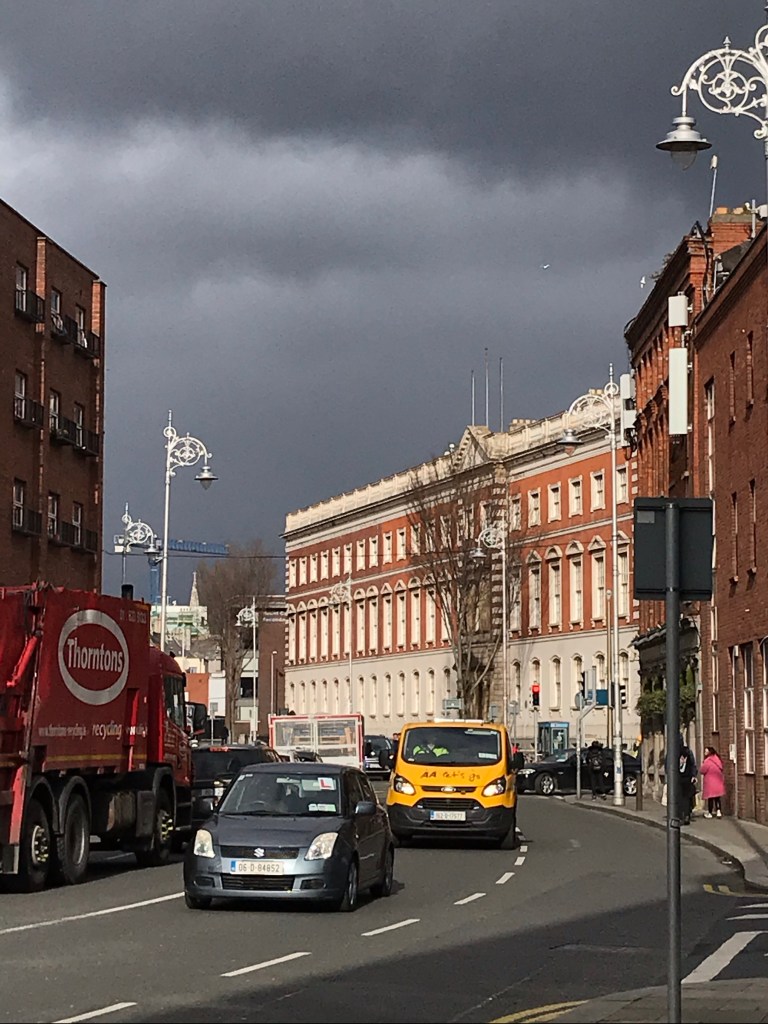
A glimpse of Bolton Street with drama in the sky.
We waited anxiously for word from the university about closures. In the meantime, we took care. Although plans went ahead and during this Open Day, the new norms of hand sanitizer and social distancing appeared. Wee conscientiously worked to hold intimate conversations about life plans at a two arm’s length–not an easy feat in a loud and active space like the lobby of Linenhall, home of the TU’s Dublin School of Architecture.
Attendance on this Open Day was higher than one would expect given the uncertainty of life, but not as high as the past year. Only a portion of those who reserved places made it to D2 that day. It was well worth my own four-block walk into work to meet girls from as far as Wicklow who’d ventured up to meet us.
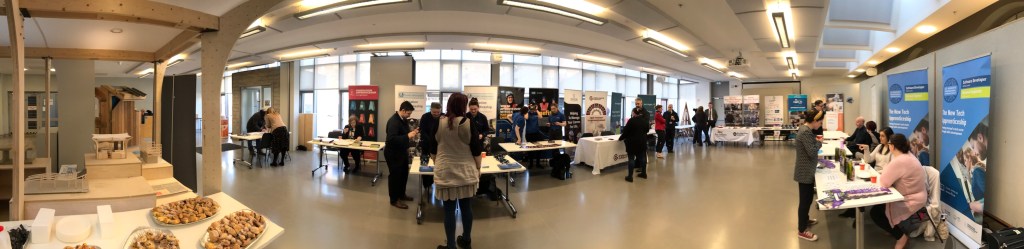
Setting up for the day.
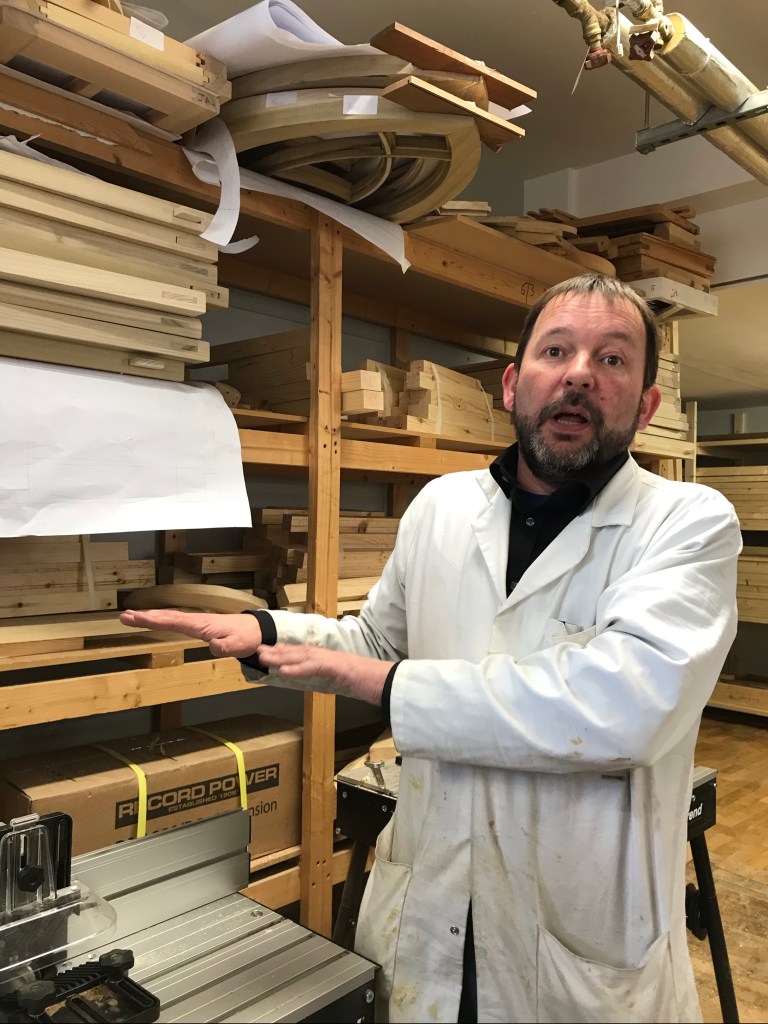
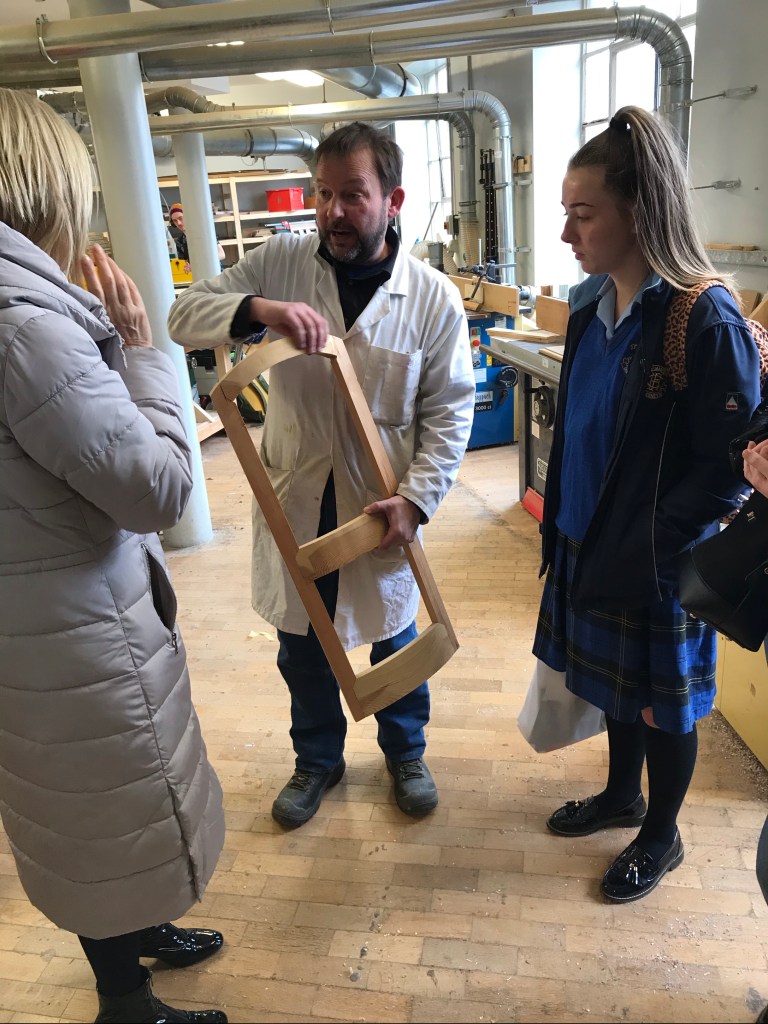
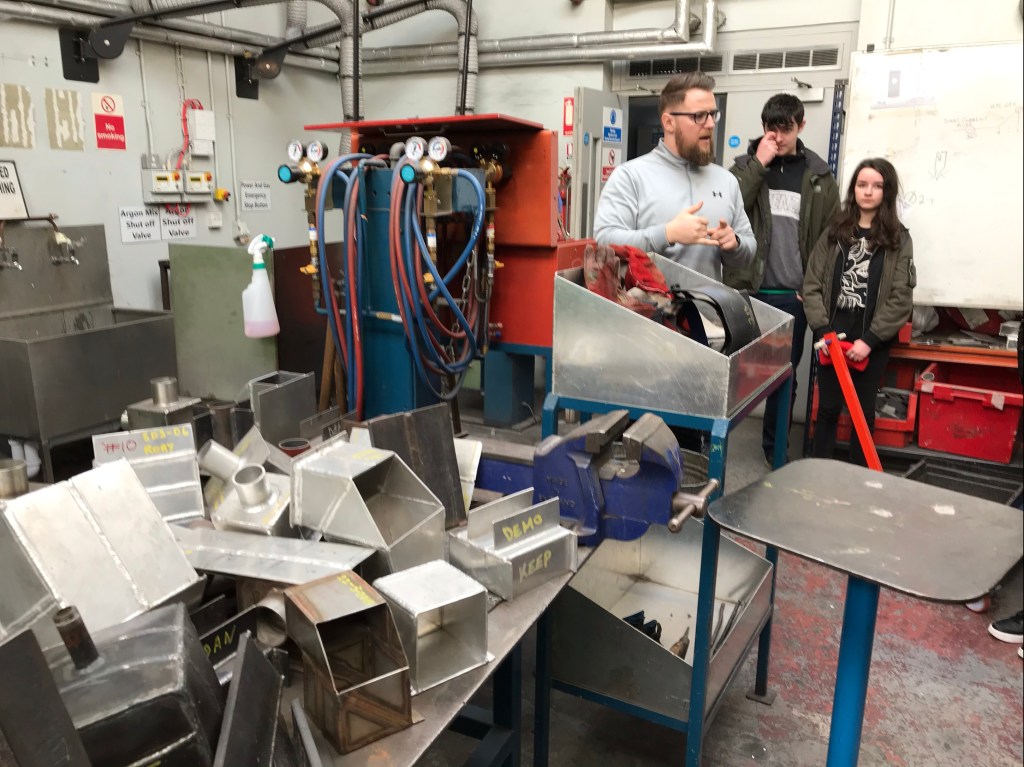
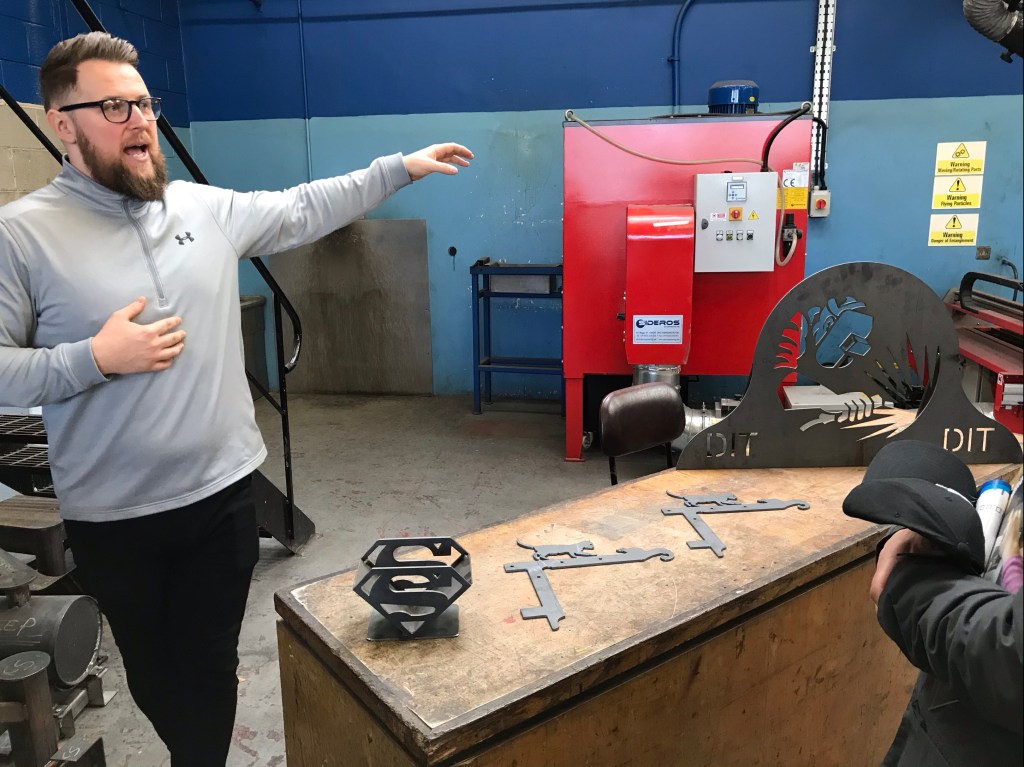
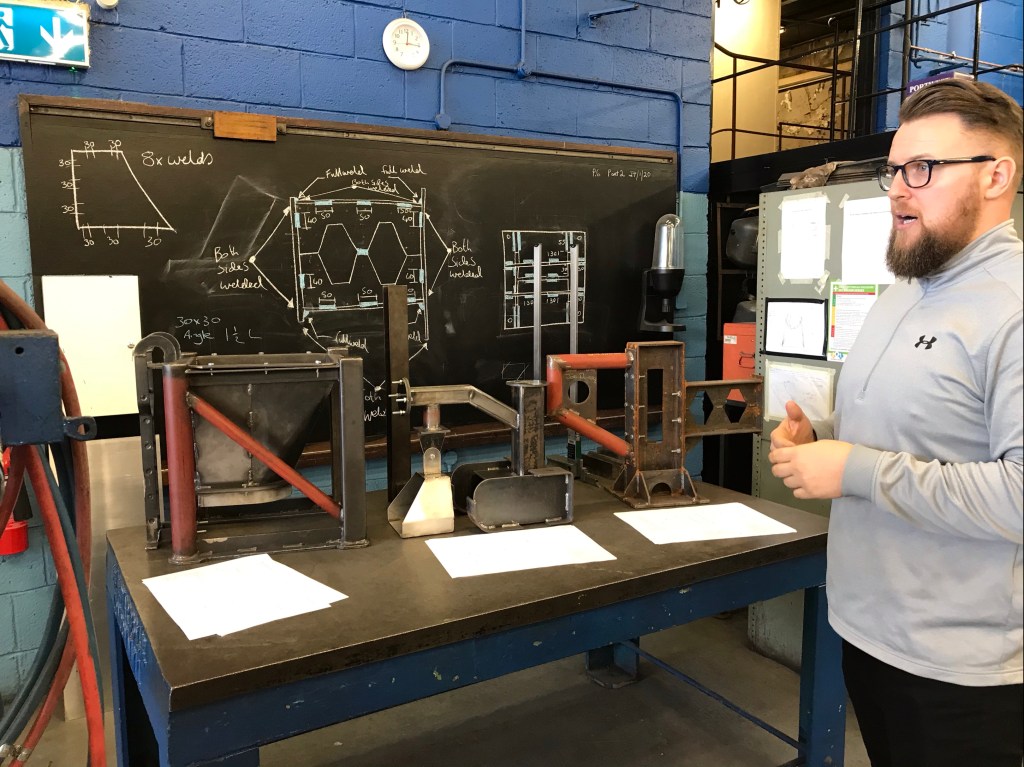
I provided tours of the facilities–bricklaying, plumbing, carpentry, metal fabrication, painting and decorating, laser cutting and 3D printing, automated fabrication–at Linenhall and Bolton Street where apprentices learn. Those taking our sampler program, “Access to Apprenticeship” get to use to all these workshops, and to complete a small project in each to help them determine which to specialize in by completing a full course.
At the end of the event we heard that campus buildings would close that night at 18:00; after this, classes would meet only online.
The BIM modules we offer in my program did indeed meet that night, all online, thanks to the collaborative working platform my colleagues use to teach BIM. Kevin Furlong, Barry McAuley, and Emma Hays took it all in stride and kept on delivering! I was truly impressed.
Working it out during Covid-19
I already worked half time on research, so I actually labored from home 50% of my working hours, pre-Covid. For me, work life after the 12th of March looked pretty similar to before–lots and lots and lots of time at my laptop. There was less variety, though, and much less human contact.
I missed feeling creative. I wasn’t able to blog, as I didn’t feel reason to celebrate during a time of fer and hardship.
I got work done, but not with my normal level of zest.
The first two weekends after the campus shut down, we weren’t yet asked to isolate (we never officially ‘locked down’) but the government was asking us to keep our distance from others.
My household has one other person, Aongus, and this fact has kept me sane during isolation. I’m glad I haven’t had to go through this pandemic living alone. That said, my guy has much higher exposure to the outside world than I do, and could inadvertently drag Covid-19 home at any time.
As you probably know, Aongus and I really enjoy our weekends. We love getting out, exploring the world, getting exercise, fresh air and sunlight. In fact, not feeling pangs of guilt for taking weekend off is a major reason I moved to Europe from the USA. You’ll recall that Aongus and I made the most of every minute in London during my two-year fellowship there. We had plans to make the most of our precious weekends together in Dublin upon our return.
A Sunday at Greystones Beach
Sliding into a new normal, we had a couple weeks to adjust to freedoms and habits that were slipping away. We were still allowed to drive and explore, but were required to stay away from others. Our gym was still open during this time, as well, though we were distancing.
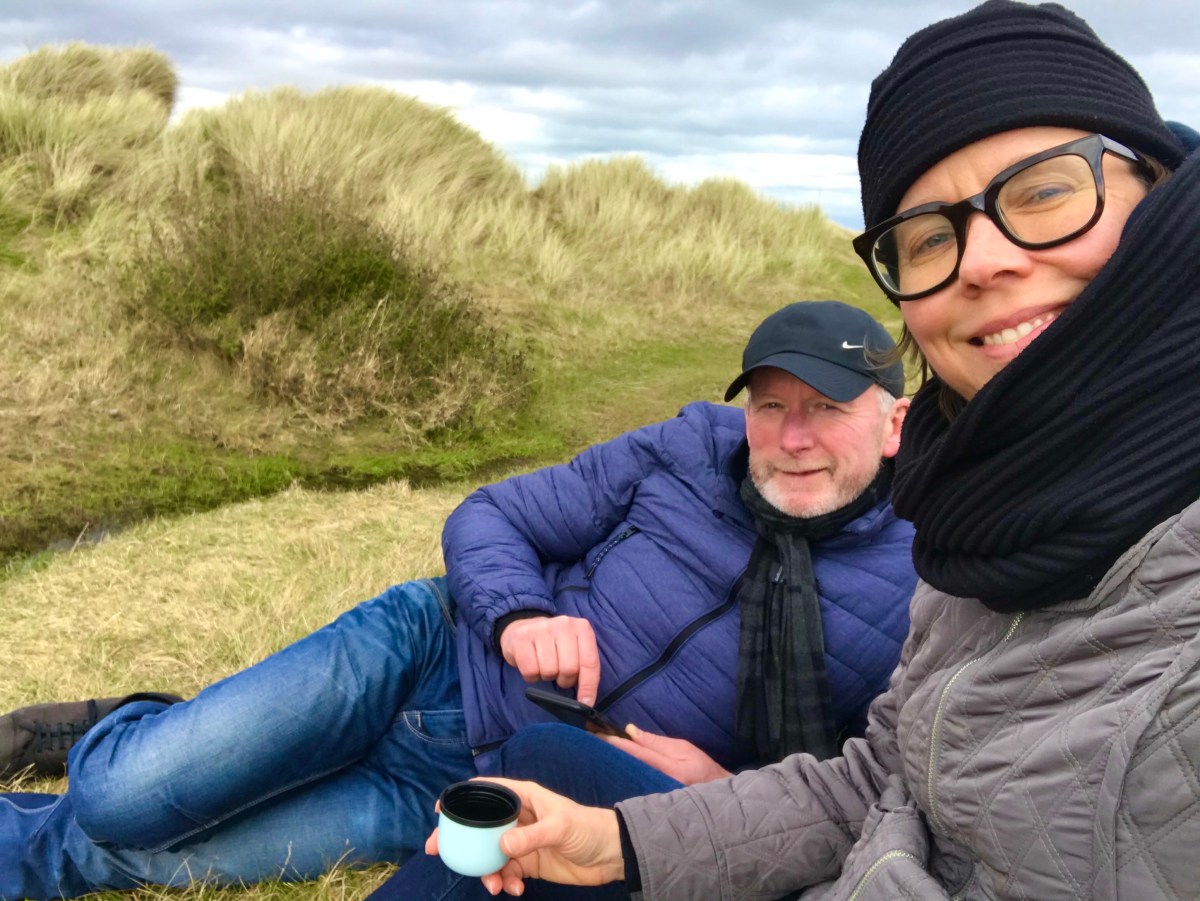
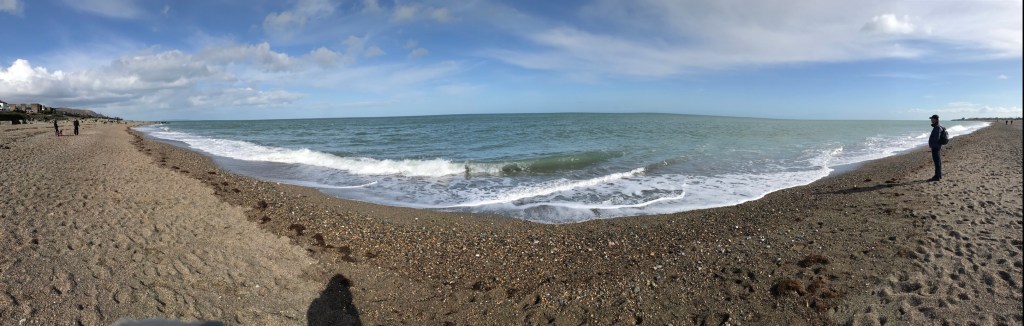
On Sunday, March 15, Aongus and I drove out to Greystones, where we were able to distant from others on the beach. We enjoyed the solitude in the cool winter breeze off the Irish Sea.
And we learned that lunches and loos were few and far between. From this day forward, we packed sandwiches whenever we ventured out, and planned ahead for long period of loo-less-ness.
The difficulty finding these that day told me that things were going to change more radically. We drove to some favorite spots hoping for lunch, but couldn’t stop because they were packed with people.
We did, however, find joy in simple pleasures: an apple, the sunshine, and loving company.
Holi-day at Bull Island Marshes & Dollymount Strand
St. Patrick’s Day was a holiday, so we made another trip trip to the sea, still pre-lockdown (to use the phrase lightly–we’ve never officially ‘locked down’ in Ireland to the degree of many other European countries).
Although Dublin’s St. Patrick’s Day Parade had been cancelled, and tourists discouraged from coming, we residents were still allowed out, but asked to keep our distance.
Aongus and I headed out to Bull Island, by car, as was typical for us before coronavirus. Walking and Dublin Bikes were our other main forms of transportation, and where they didn’t bring us, a bus or car would. “Back then”, we would never have dreamed of cycling to Bull Island or Dollymount Strand; they seemed so very far away.
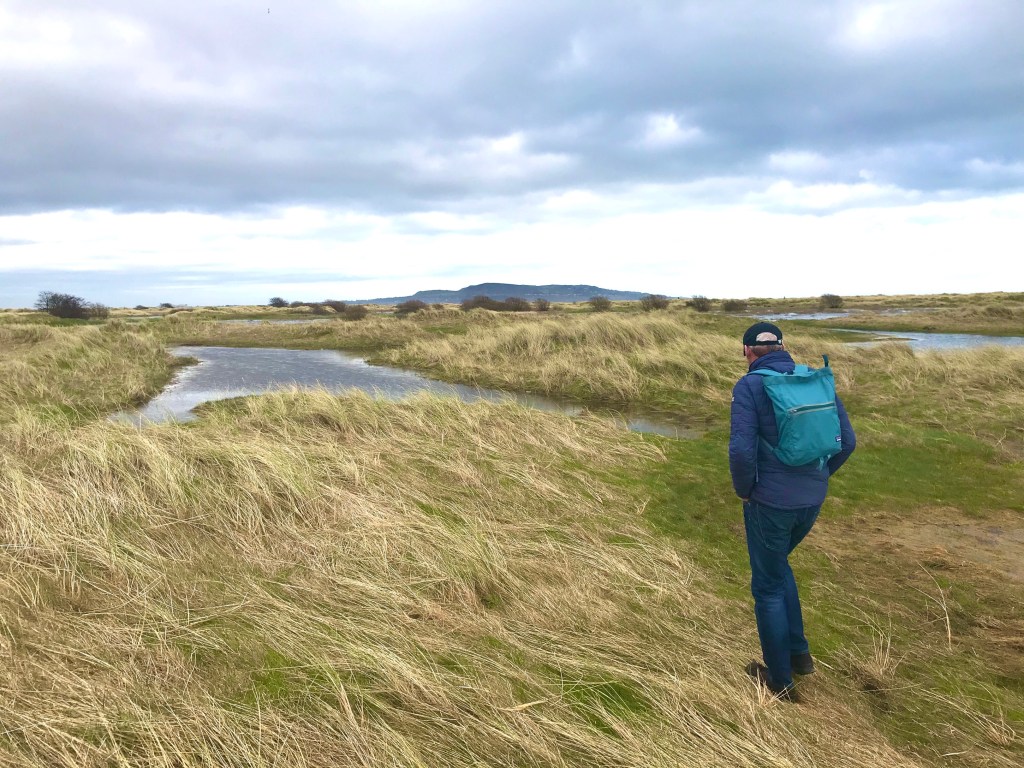
Bull Island is a favorite among Dubliners though, and when we arrived the beach looked far too crowded to allow the distance I required, so we instead explored the marshes.
My colleague Damon Berry had recommended that I check them out, and this was the first time I latched onto the idea. Aongus and I had a nice picnic in the dunes.
Of course, we hoped to find passage across to the beach by way of the dunes, but the waterways prevented that. Nevertheless, we enjoyed discovering a tranquil strip of Bull Island where few people venture.
By the late afternoon, the beach had cleared out (it was the bottleneck along the wall that had presented the problem passing others) and we were able to visit the strand, which is called Dollymount.
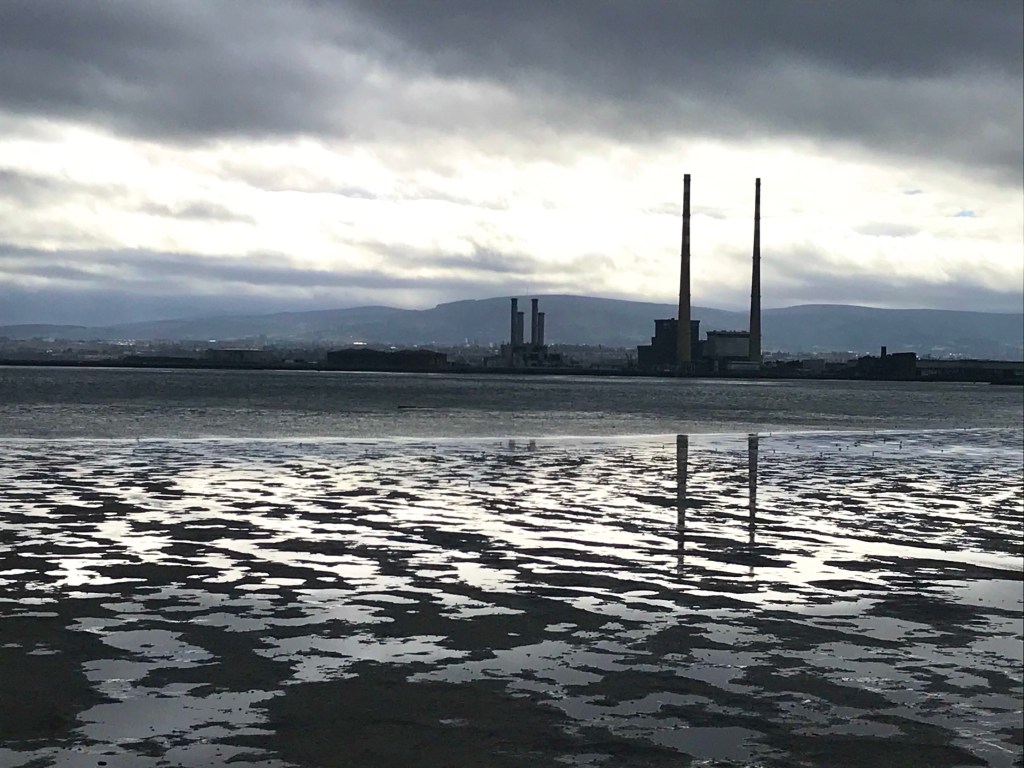
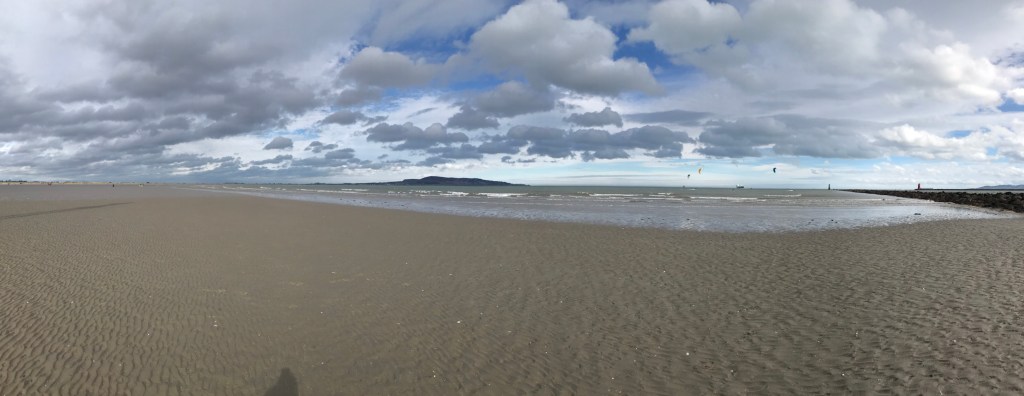
As you can see, Dublin is quite chilly during March, but any opportunity to go outside, walk, and soak in the sunshine is prized.
Isolation begins
The lifestyle we had known was quickly sliding away. Soon after our visit to Bull Island, the period of isolation began. Aongus and I essentially hibernated for weeks. I was able to keep working from home. He, as a construction site project manager, was able to do some limited amount of work from home and was allowed on site, alone, occasionally, to do essential work, or check for security.
As we have a range of grocery stores (Fresh Market, Lidl, two Centras and a Daybreak) within 1-4 blocks of our flat and the food supply chains serving Dublin never let us down, we were able to source food easily and have learned many new recipes with what we can find in these stores.
That 2km radius we were allowed to travel from home for the purpose of exercise kept us sane, and we looked forward to weekends, hoping and praying for sunshine.
The Irish government has allowed domestic travel since June 29, and has been encouraging residents of the Republic to holiday inside the country to help revive the Irish tourist sector. Aongus and I were happy to oblige and we headed out for a four day weekend to the west of Ireland.
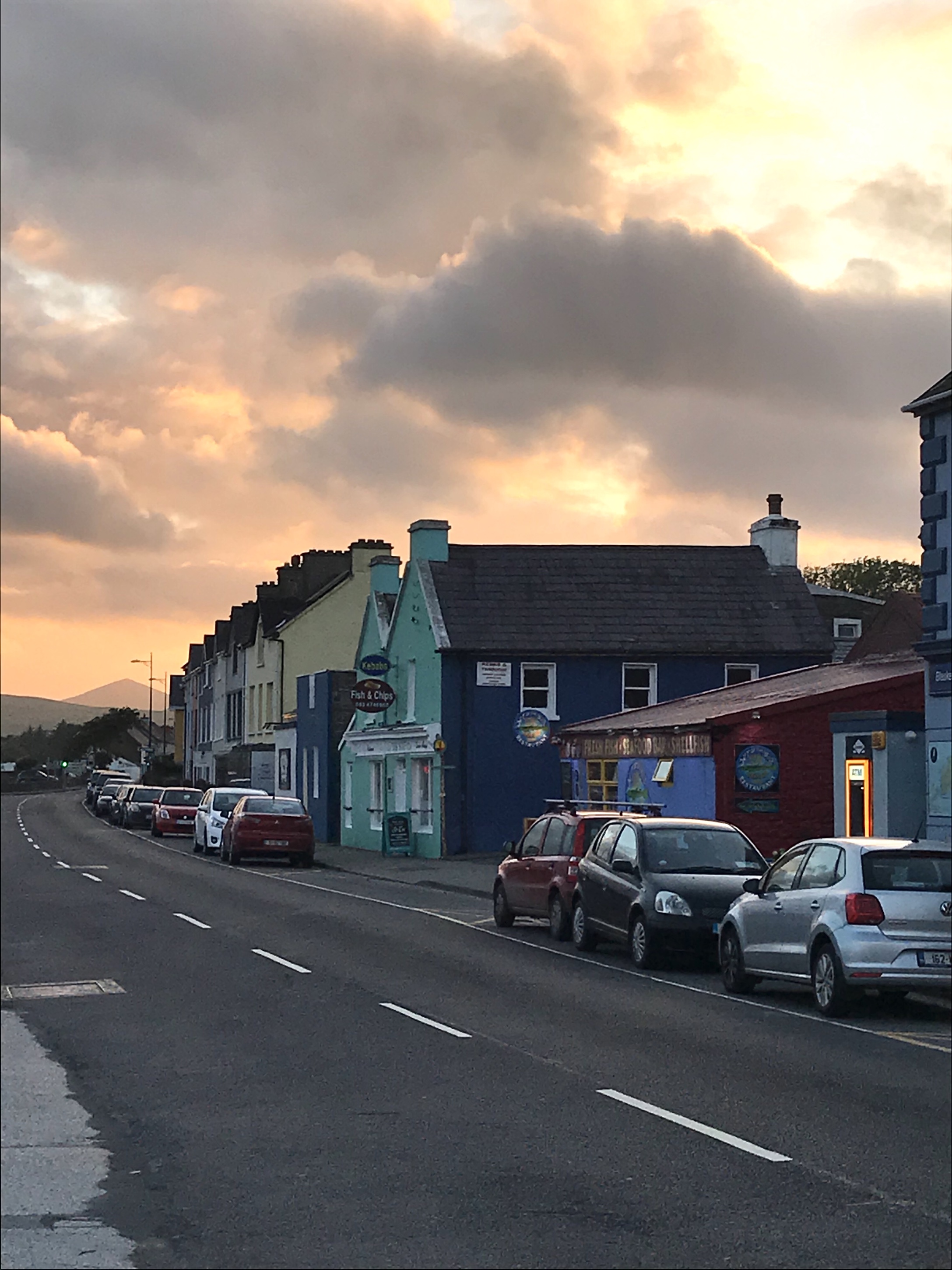
Unbelievably, my Irish man—born in Dublin and raised speaking Irish—had never been to Dingle! This rainy little fishing village is a favorite of Americans, and I’ve visited several times since my inaugural trip there in 2003.
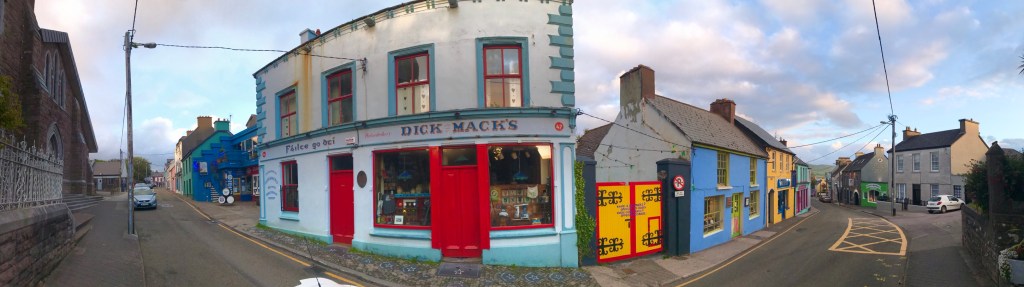
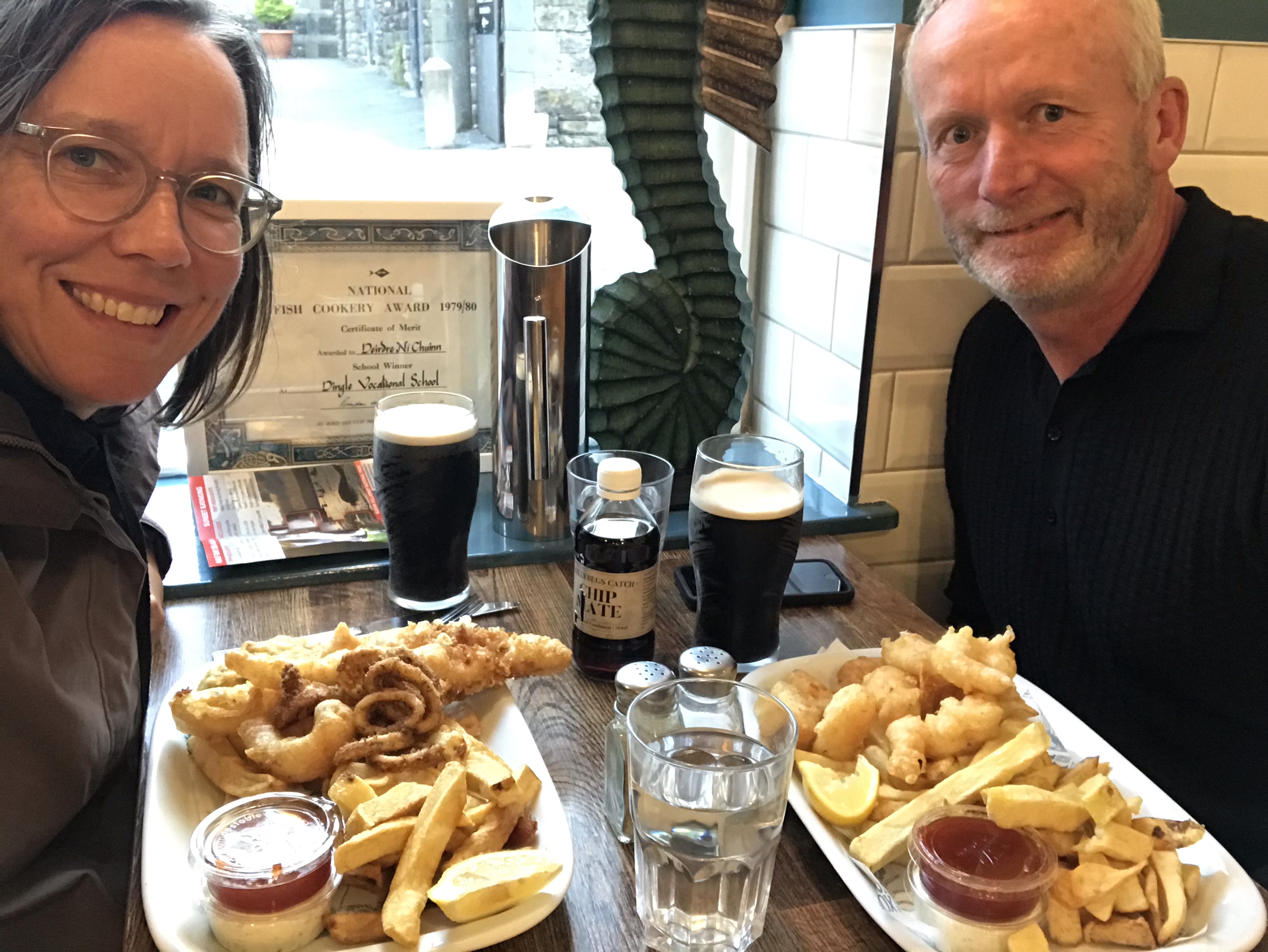
The Fish Box is just to the left of Dick Mack’s Pub, across the street from St. Mary’s Church.
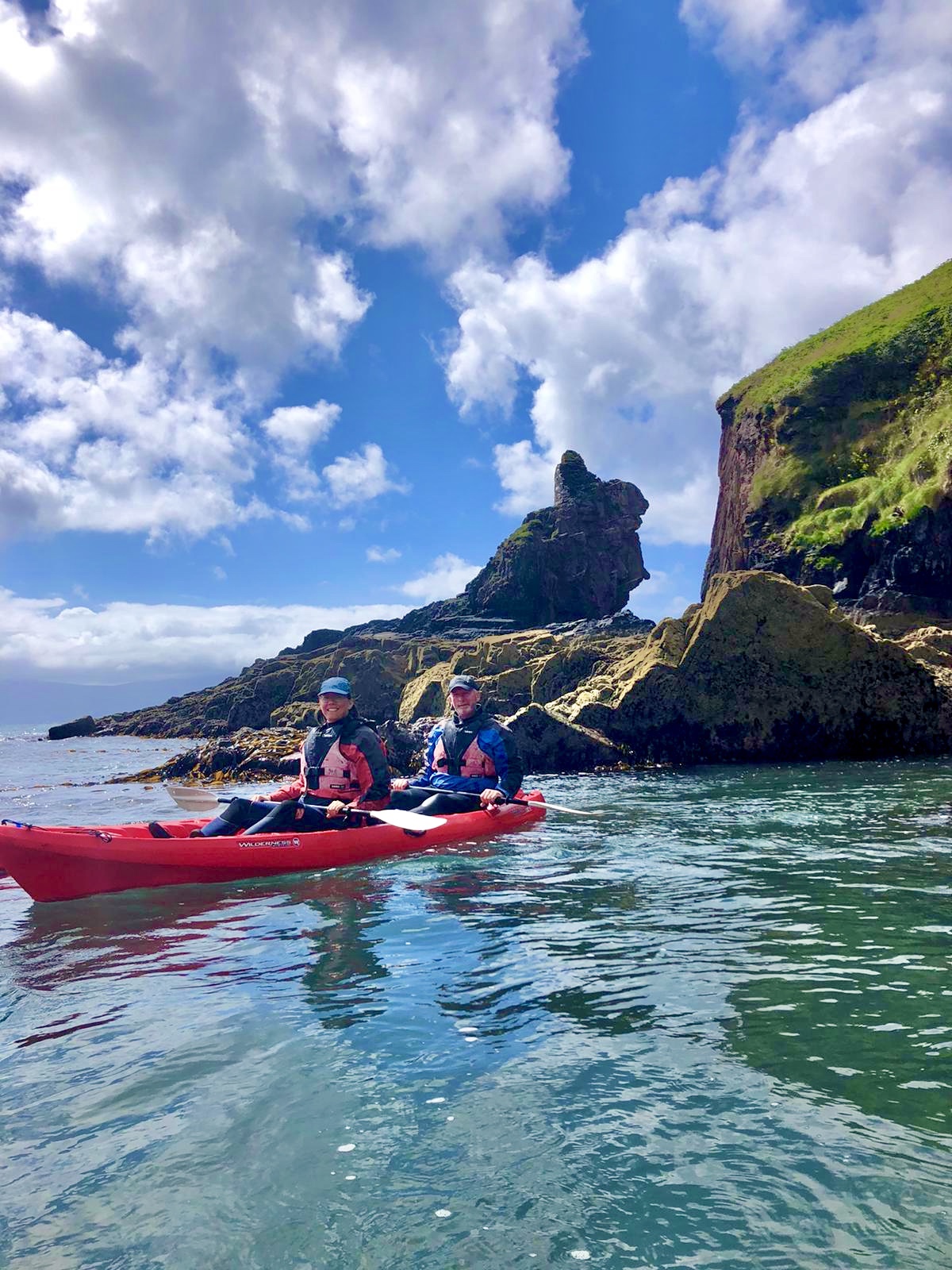
This particular overnight stay in this lovely little town included dinner at The Fish Box (amazing!), bed and breakfast at Bambury’s Guest House, and a kayaking trip guided by Irish Adventures.
And yes, we saw Fungie first hand, just 30’ or so away. Such a friendly and adventurous dolphin who has graced Dingle Bay since 1983. The tourism industry loves Fungie, with hundreds and sometimes even thousands of people boating out to visit the people-living dolphin daily.
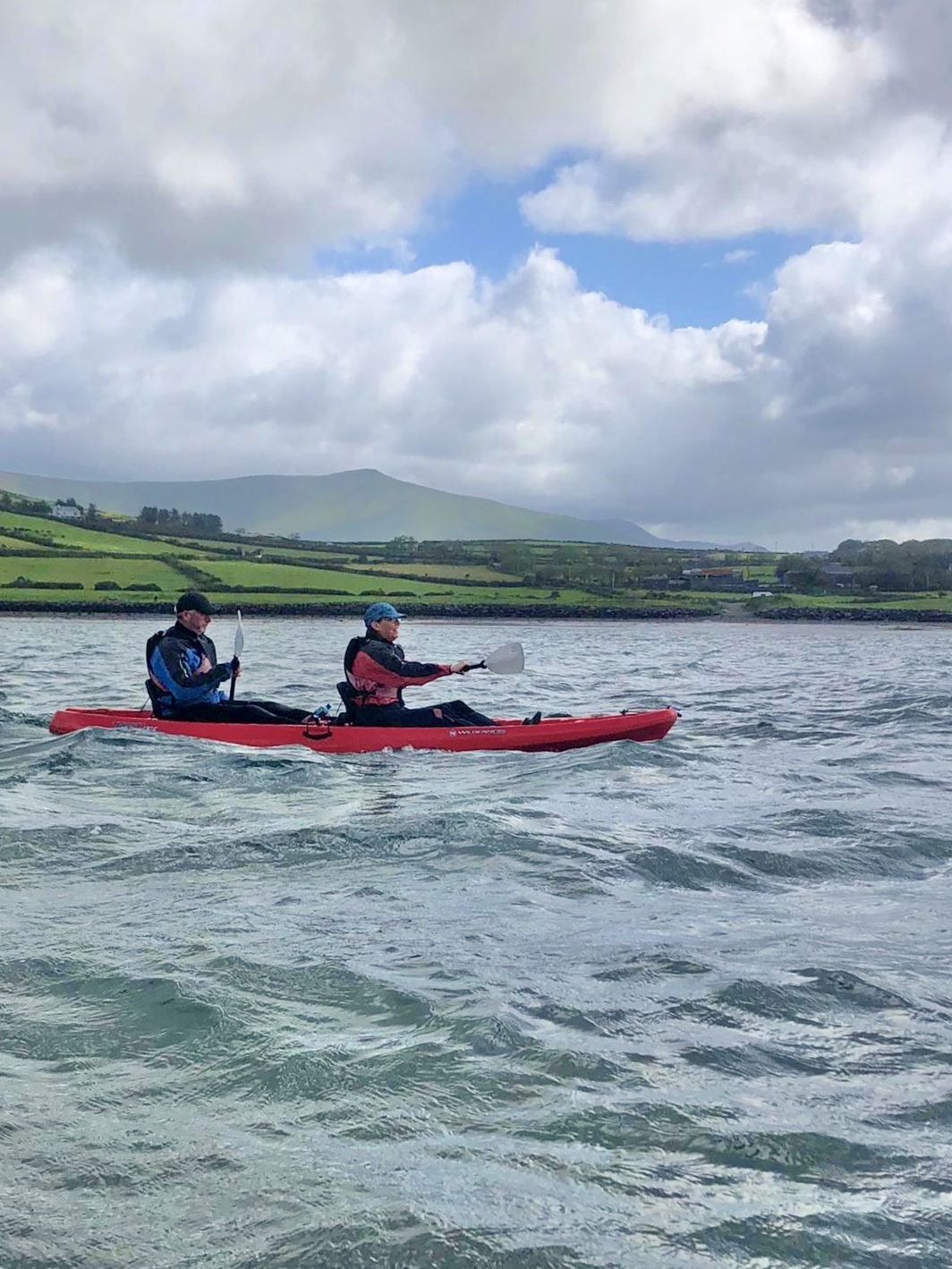
On our kayaking trip were four learners—a couple from Cork and a mum and son from Dingle—and two instructors. A family of five got their own guide and travelled apart from us.
It was such a treat to pal around with Irish people enjoying their own home place. Truly an ideal time to visit. Especially since the seas were too rough for boating two days before and two days after our own outing. We really lucked out!
The pubs of Dingle were still closed during our visit, so there were no trad music sessions to enjoy, but we were able to do a little shopping. I picked up some exercise gear in hopes of our gym opening next week, and I also purchased a Cornwall Seasalt brand scarf to replace the one I dropped at Bonobo’s of Smithfield in February that so unkindly was never handed over to the lost and found.
Social distancing was easy in Dingle and we look forward to exploring more of Ireland as time, weather, and government guidelines permit. We were so very thankful for this one precious day of fun and glorious weather.
New-ish cap!
Special thanks to Noel of Irish Adventures for excellent instruction and leadership of the tour as well as his gift to me of an Irish Adventures baseball cap. They had actually run out of new caps, but gifted me one off their very own head! And it’s already perfectly broken in. Pop it in the wash and it’s good to go!
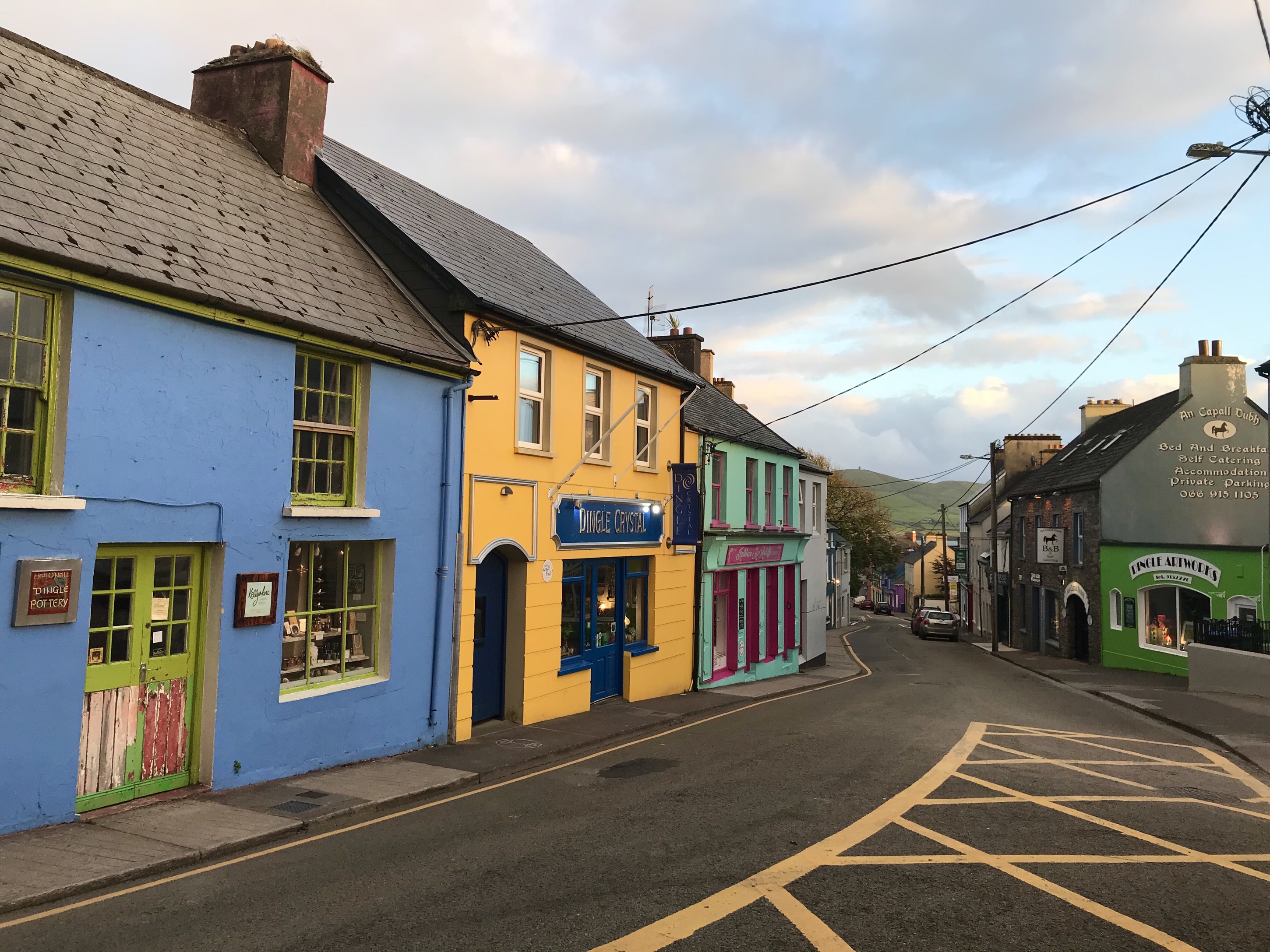
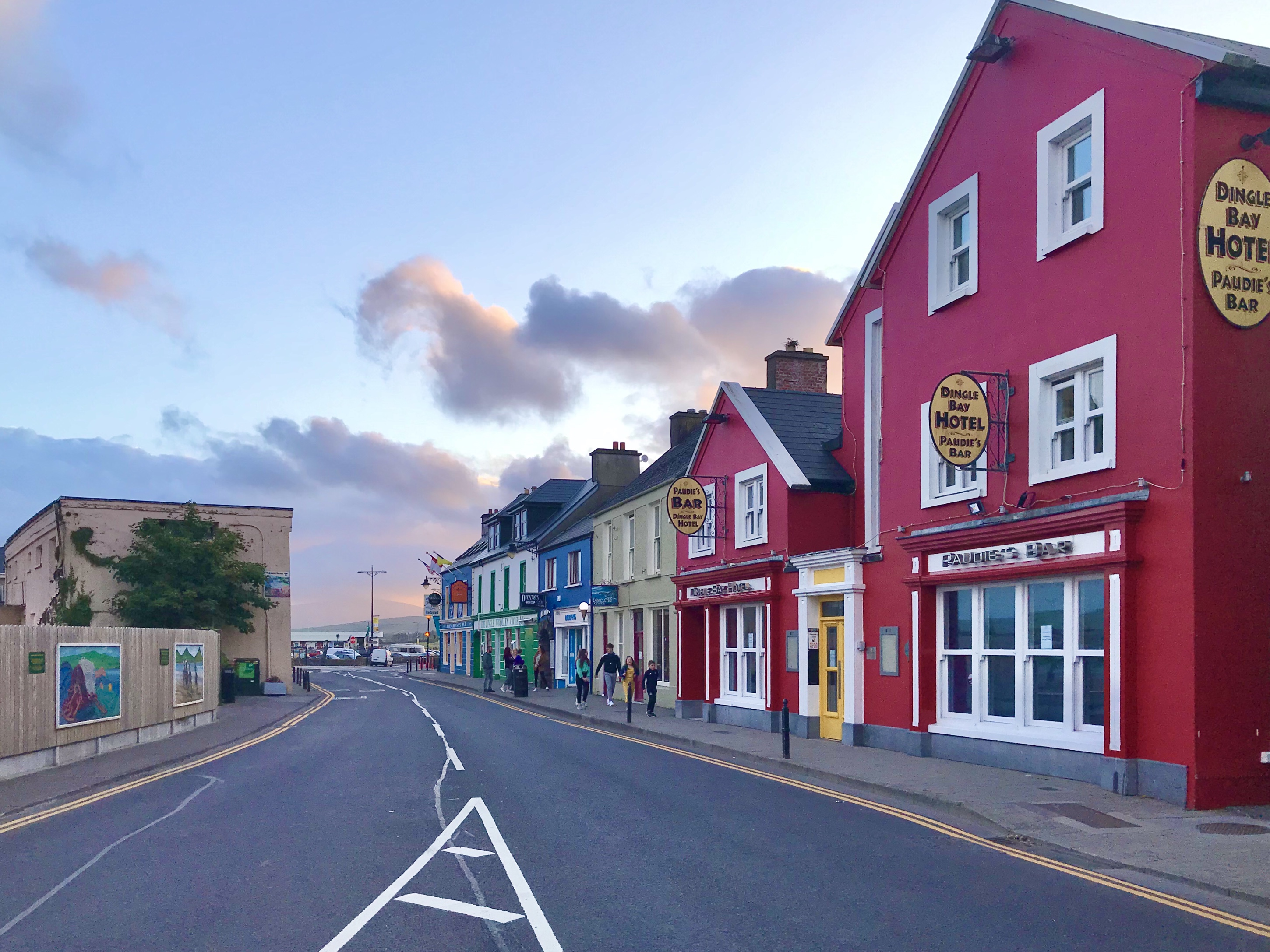
The photo gallery below shows an approach to Dingle via the Connor Pass (with new Wild Atlantic Way signage), the town of Dingle at sunset, and our morning out on the weather. Stay tuned for more pics of Kerry to come!
Bernadette Balentine is the host of Engineering Matters, and in podcast 59, she featured guests from Mott MacDonald, Canada’s Corporation of the Seven Wardens, Engineers Without Borders UK, the University of Leeds, the UK’s Institution of Engineering and Technology, and me, a Visiting Professor at UCL. You can find it at this link.
The podcast tells a fascinating story about a catastrophic bridge failure that happened in Canada, explaining how the overall engineering profession there responded by developing and adopting a strict code of ethics.
The overall podcast is 37 minutes, and I’m featured only briefly (around minute 28.5). In this post, I’ll provide a little more detail on the work I’ve been doing that led me to be included.
As you probably know, I was a Marie Curie Research Fellow at UCL for two years, and I still serve as a Visiting Professor there at UCL. I have a keen interest in the built environment and I’m also a registered architect in the States with LEED-AP credentials. My research specialty involves how people learn engineering and architecture.
During the Fellowship, Engineers without Borders UK came to me asking for help with research idea. As a result, my team and I conducted a small-scale qualitative study where we interviewed nine civil/structural engineers practicing in London about their perceptions of ethics and, specifically, of global responsibility—what it means and how they enact global responsibility in their day-to-day work. I reported this research while speaking with Bernadette for the podcast.
Bernadette asked what factors we had identified that prevent engineers from acting on ethical beliefs. Here’s some of what I said:
Even when early career engineers see opportunities to do something in a better, more ethical or responsible way, they often have trouble getting the idea accepted. Cost and time constraints limit their choices. Small and private projects nearly always prioritize cost and over environmental or social sustainability.
Early-career engineers can influence material selection and thus carbon footprint to some degree, but many other decision are out of their scope of work. Crucial decisions were made long before they got involved. They select materials, run calculations, and make more detailed decisions, but they are often involved in a small portion of any given building or infrastructure project. Even when they see an opportunity to do better on a private project, their client usually only accepts it is the idea if it also saves money or time.
That said, larger public projects provide more opportunity to protect the public good—and they hear about public discussions. But it’s other professionals, such as architects and planners, who often drive those discussions. On the other hand, the senior managing engineer we interviewed was quite able to affect things on a large scale; he had quite a lot of sway in decision-making and frequent opportunities to protect public Health and Safety. He took pride in doing so, and he also reached out to help mentor others to develop such skills.
Early-career engineers told us they lack reliable tools for calculating environmental and social impacts of various options. Quite surprisingly, most don’t recall having discussions in university about sustainability. While they say ethics was probably covered in their professional practice classes, none of this was covered in a way that was “sticky” enough for them to recall it. Most learned about this after university, through CPD courses, their own research, and company induction programs on Health & Safety and anti-corruption with an implied focus on anti-bribery.
Overall, the early career engineers in our study expressed:
A lack of tools for demonstrating benefits of environmental or social action
Some degree of shortfall in training/preparation
Feelings of disempowerment due to decisions being made further up the business or by clients who didn’t value sustainability
One of the most important findings of our study was that the engineers felt empowered to act on job-site Health and Safety more than other areas. Job-site Health and Safety was the one thing, they said, that consistently trumps cost. They were also clear on company rules for reporting gifts.
This led me to wonder: Might we use the levers that facilitated sweeping change across job-site H&S and anti-bribery to facilitate quick change in other areas related to ethics—specifically environmental and social aspects of sustainability and justice?
A helpful example was relayed by Malcolm Gladwell. In it, Korean Airlines went from having one of the world’s worst flight safety records to one of the best, and they did this by changing their own culture (with help of consultants) to allow individuals to raise concerns and challenge authority without personal retribution, without fear of reprimand.
I believe engineers need more of this type of empowerment and protection. The narrative Bernadette Ballantyne has woven on “Empowering Ethical Engineering” illustrates how Civil Engineering in Canada did precisely this.
It’s well worth a listen, regardless of whether or not you “engineer” things!
Meanwhile, stay tuned for more details of our study, as we prepare various findings for publication in research journals. Many thanks to my research collaborators Inês Direito, Rob Lawlor, and John Mitchell, and the Advisory Board appointed by EWB-UK to help guide our work. Financial support came from the European Commission via my Marie Curie Individual Fellowship and a grant to EWB-UK from the Royal Academy of Engineers UK.
London South Bank University (LSBU) has an event on this week called “Sustainability and Climate Action Events Series – Carbon, Climate, Energy and Resources” (for info and registration click here).
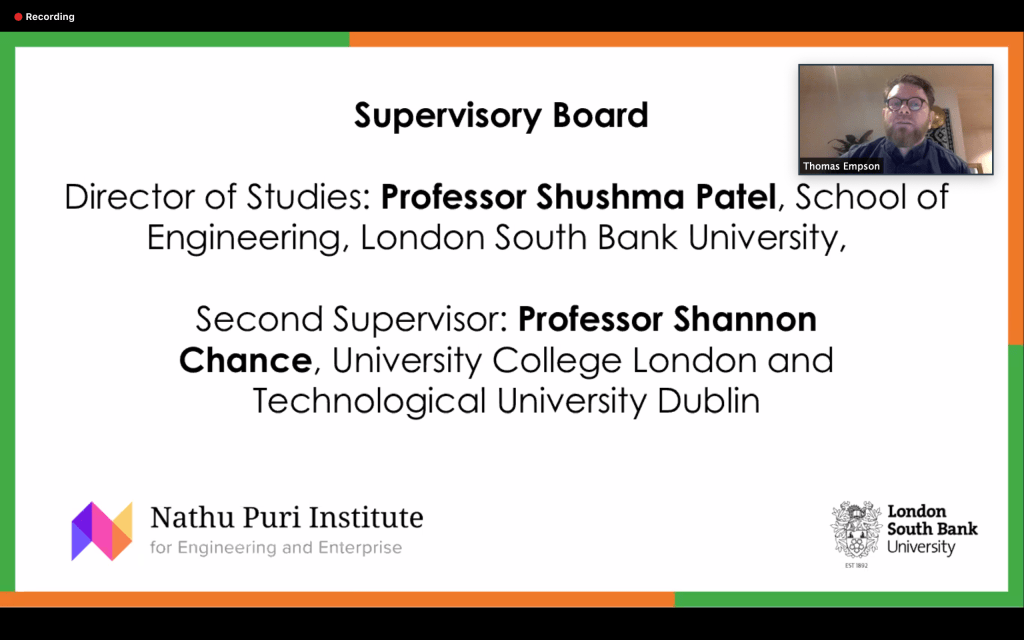
As I’m a Visiting Professor at LSBU, supervising Ph.D. student Thomas Empson who is one of the organizers of this event, I’m one of many in attendance. Thomas studies the role of creativity in creating sustainable design solutions. He looks at engineering and architecture. Thomas is also LSBU’s Sustainability Project Manager.
I’m so proud to be this researcher’s Ph.D. supervisor. He, Shushma Patel, and I have made an excellent team.
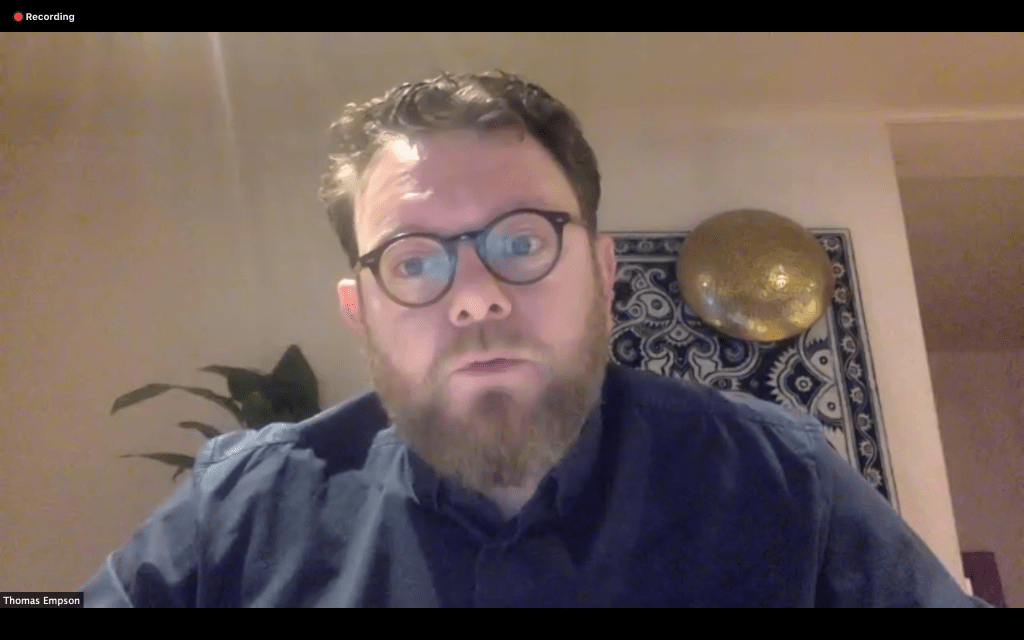
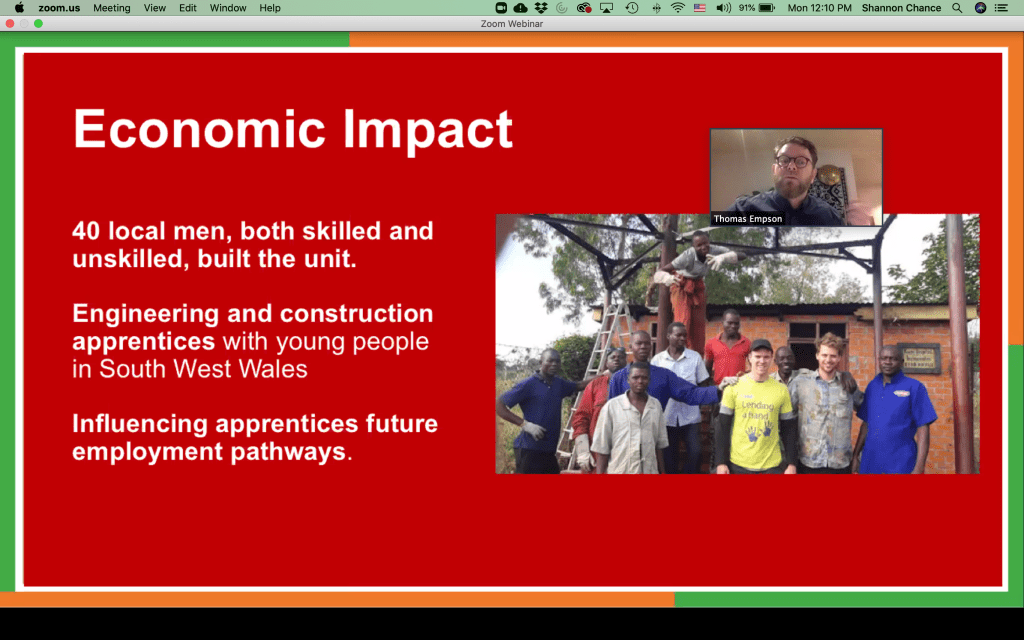
The week-long event kicked off earlier today and Thomas delivered an insightful presentation on his Ph.D. research on “Enabling Enterprising Engineers” and featuring work by HKS architects and Enfinffers for Overseas Development (EFOD).
Thomas Empson delivering welcomes, introductions, and cutting-edge research.
Thomas’ Ph.D. research project is coming together beautifully and he will be presenting his viva (=defending his dissertation) in August. We got a sneak preview today! This event, the LSBU Provost, Professor Pat Bailey, told us at the 9.30am Welcome and Introduction is the largest online event that LSBU has ever hosted. Thomas is one of the two main organizers for this LSBU conference. He’s done this alongside his research work.
As I’m working on various projects throughout the day (including our own online EER Meet Up for tomorrow afternoon), I’ve tuned in and out of the LSBU event. However, I was there “with bells on” for the 11.30am session led by Thomas!
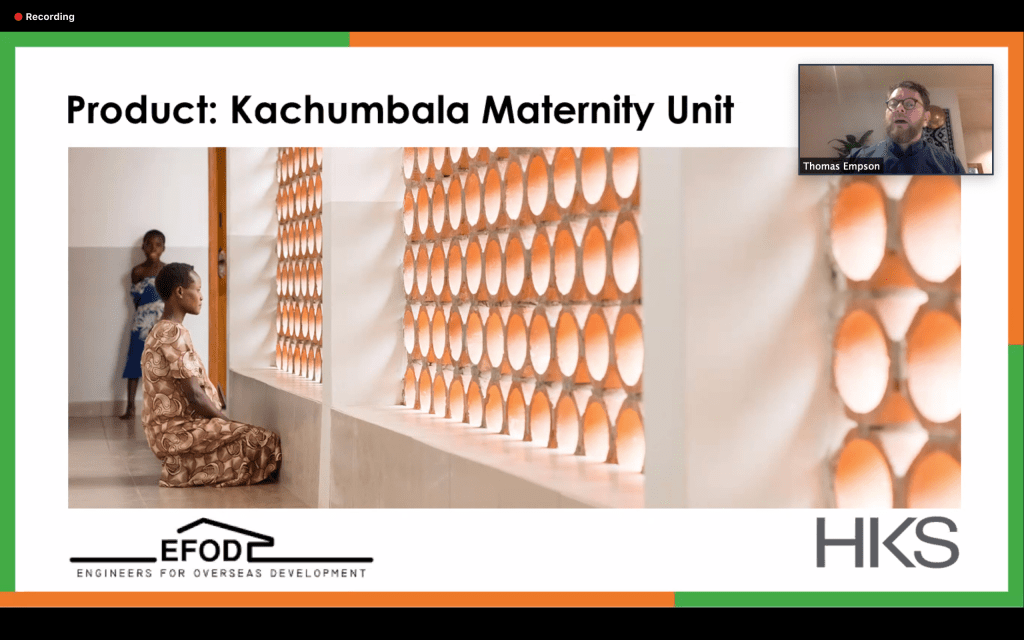
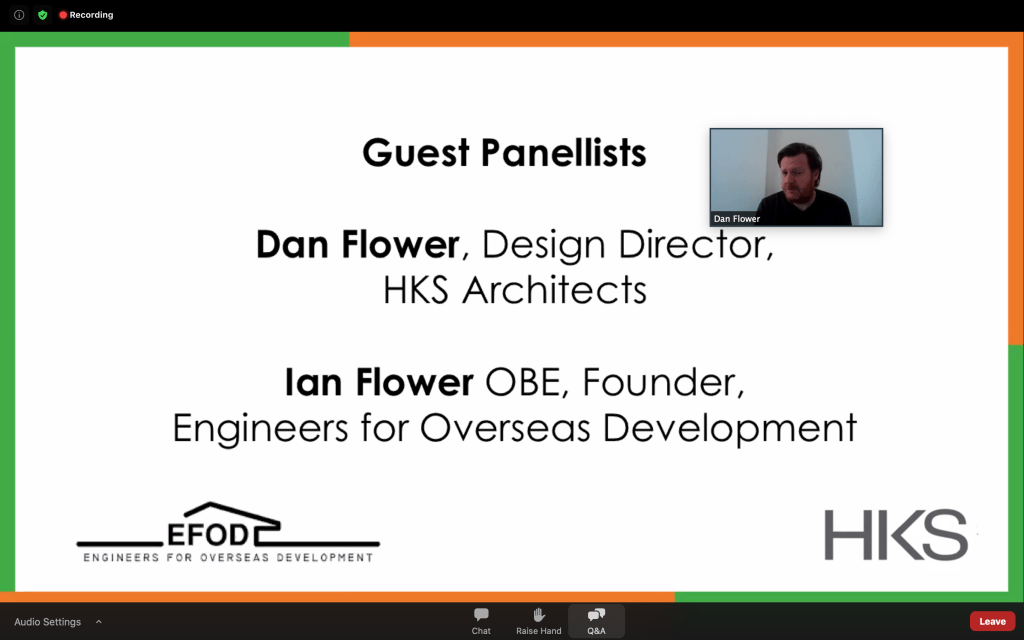
The topic was “Creating Sustainable Development: Measuring the positive ecological, economic and social impact of the Katchumbala Maternity Unit.” Thomas presented his research and then hosted two high-profile panelists: Dan Flower, a Design Director for HKS Architects, and his dad, Ian Flower OBE and Founder of Engineers for Overseas Development (EFOD).
Thomas has been studying aspects of creativity and (environmental, social and economic) sustainability. He has evaluated several case study projects to assess creative practices, processes, outputs, and impacts. The case study he showed today was for the Katchumbala Maternity Unit in Uganda.
Thomas hosted two high-powered designer/activists who made this hospital a reality. It’s a father-son duo with an engineer dad and architect son.
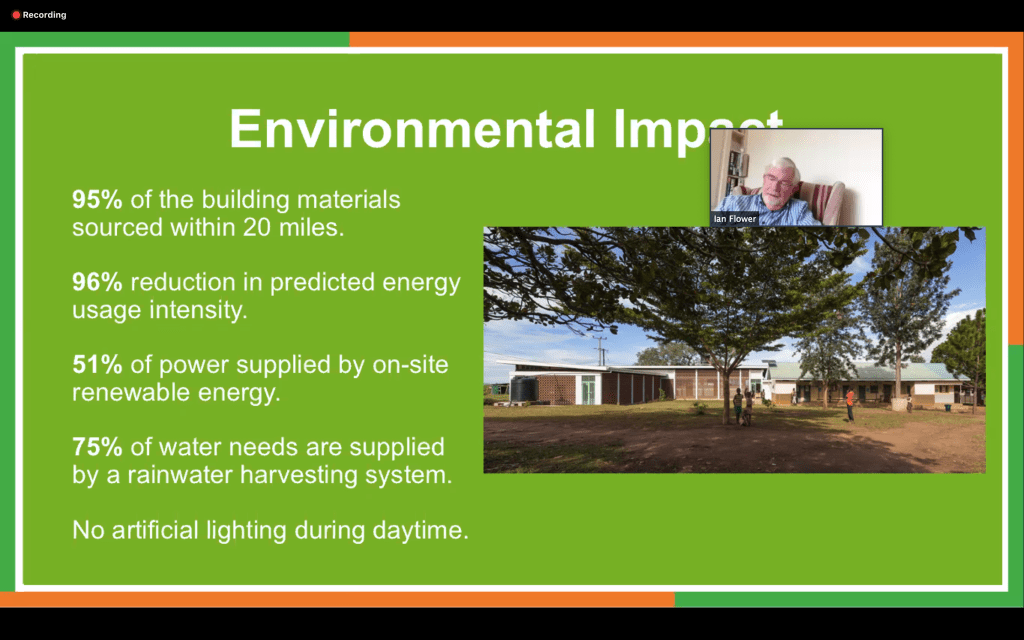
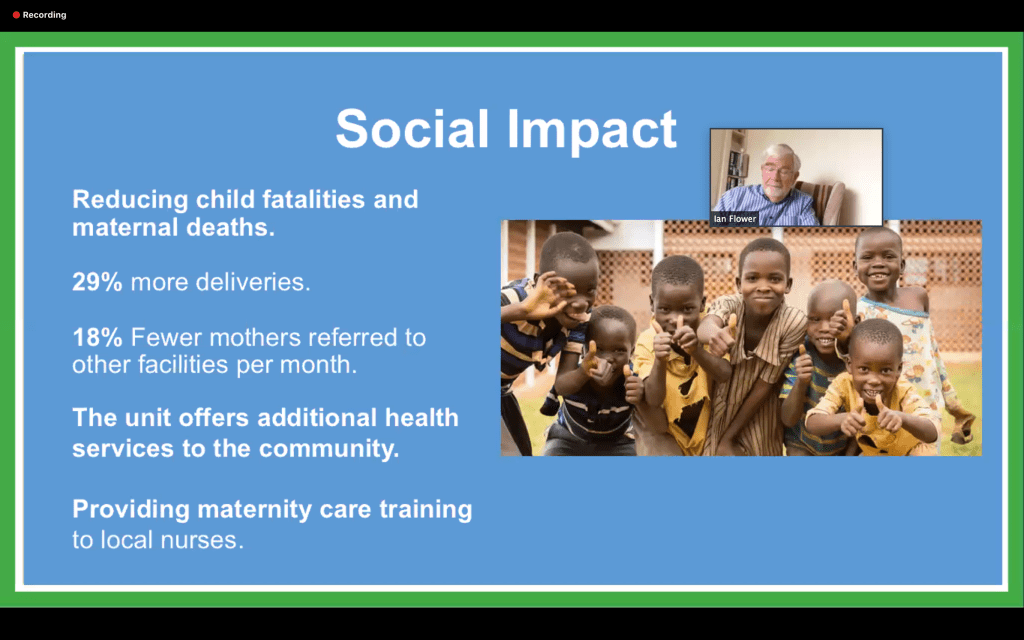
The Hospital generated many positive environmental, social, and economic benefits.
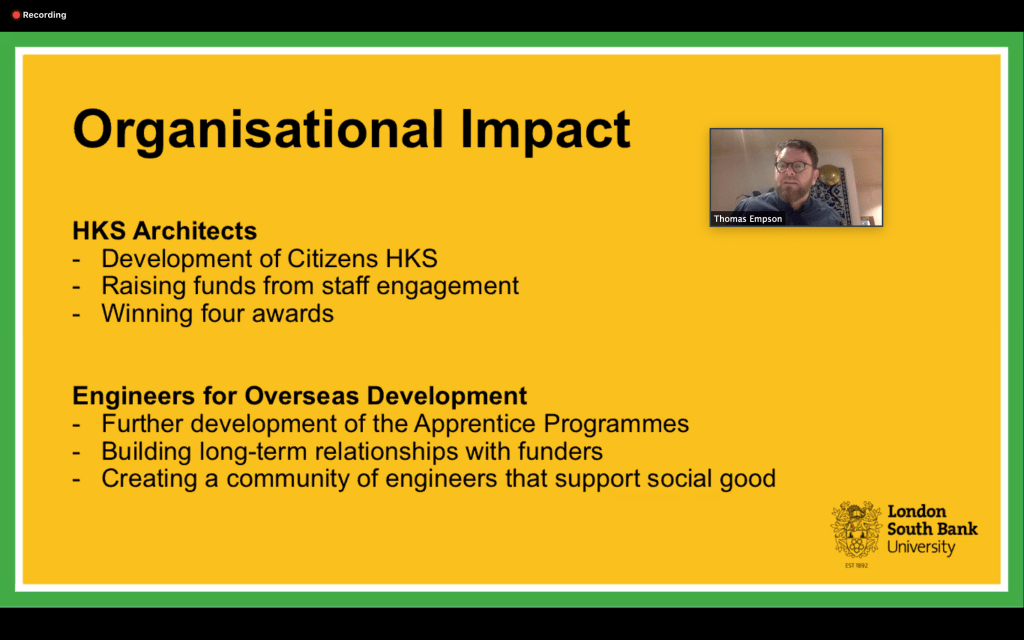
There were also benefits ot the organizations involved:
Thomas has studied creativity within this project and has created a number of really helpful and useful models for assessing sustainable creativity. I’ll share those models with you later, as they are a significant contribution to the knowledge base and have been tested through empirical research.
Today, the audience got a sneak peek at these models and won’t have to wait until Thomas’ viva.
LSBU has loads of interesting sessions planned for the week–why not join in to learn more?
Welcome to the homepage of Ireland by Chance, a blog sharing the adventures of an Expat architect/urbanist/teacher/engineering education researcher who moved from the United States in 2012 to make Ireland her home.
You can view archives (2012-present) by clicking the folder icon to learn what it’s like to be Fulbright and Marie Curie Research Fellow, to teach at university in Ireland, and to explore the cities and landscapes of Ireland, the UK, and Europe.
A Marie Curie Research Fellowship is about developing new research skills by doing research projects under the supervision of highly skilled experts. People who are interested in doing a fellowship like this might want to see what one looks like in reality, particularly a fellowship in the realm of social sciences and/or educational sciences (the SOC panel for European projects). This post describes research I generated myself (working with colleagues during my recent 2-year MSCA Individual Fellowship at UCL) and shares some photos taken with other researchers during my fellowship.
My time was distributed across six work packages (WPs). Today, I described work related to WP1, Qualitative Research and WP2, Multiple Methods.
These two work packages developed my skill with various social science methodologies. I am a pragmatist in that I try to implement whatever methodology is best suited to answer my specific question. And I have so many questions!
The experts I worked with at University College London (UCL) were Professor Nick Tyler, Professor John Mitchell, and the recently promoted Dr. Inês Direto. They were amazing!
At the time I joined, UCL was ranked seventh in the world for research by QS! It was a fantastic place to develop new skills. The fellowship ended December 31, 2019, but I am pleased to say I’m still working with UCL even now, as I was appointed Visiting Professor there for a five year term in addition to having the two-year fellowship. I collaborate with Inês and John nearly every single day.
London was calling my name! I jumped at the “chance” to work at one of the world’s leading research institutions even though I’d nearly just started a new Lecturing post at TU Dublin. Thankfully, my supervisors in Dublin saw value in the exchange and encouraged me to go.
My MSCA-IF research was looking at how design projects influence the cognitive and epistemological development of undergraduates in engineering and architecture. To put it more generally, I investigate how to teach engineering as effectively as possible.
You can read an overview of the fellowship here and download my final report, with similar information, here.
Meeting with a new Marie Curie Fellow entering UCL.
With Inês Direito and Bill Williams at EERN-UK & Ireland conference.
With REEN Chair Adam Carberry & JEE Editor Lisa Benson at SEFI 2019.
The MSCA allowed me to work with a wider range of people than ever before.
WP1, Qualitative Research
The intention of WP1 was to use qualitative research methods to study how engineering and architecture students learn and how they conceptualize design creation and knowledge generation. The following deliverables were listed in the fellowship application: submission of one conference paper and one journal manuscript. The list of items produced is provided below and exceeds the stated expectations. Under WP1, I delivered four conference publications and one journal publication during the fellowship period. I have an additional three conference publications and two journal manuscripts underway.
The first journal paper published under WP1 was an editorial overview of epistemological development and identity development among students published in IEEE Transactions on Education. The academic citation for it is:
The next set of manuscripts investigated the development of civil engineers. I conducted nine interviews with civil engineers practicing in London to explore how they think about ethics and also how they integrate global responsibility (e.g., environmental and social sustainability) into their work. This yielded two conference papers:
CHANCE, S. M., Direito, I., Lawlor, R., Cresswell-Maynard, K., Pritchard, J., Tyler, N., & Mitchell, J. (2019, July). Background and design of a qualitative study on globally responsible decision-making in civil engineering. In Proceedings of the 8th Research in Engineering Education Symposium, REES 2019-Making Connections (Vol. 8, pp. 211-220). REEN (Research in Engineering Education Network) and SASEE (South African Society for Engineering Education). (Download here or here.)
CHANCE, S. M., Direito, I., & Mitchell, J. (forthcoming). To what degree do graduate civil engineers working in London enact Global Responsibility and support UN Sustainable Development Goals? Engineering Education for Sustainable Development (EESD 2020) conference in Cork, Ireland.
The same UK-based engineering study will yield a number of journal articles. The conference paper on Sustainable Development Goals, listed above, was produced for the Engineering Education for Sustainable Development (EESD 2020) conference and is being expanded into a journal article. Moreover, the two following manuscripts have been drafted and are currently being reviewed and refined:
CHANCE, S. M., Mitchell, J., Direito, I., & Creswell-Maynard, K. (accepted for development). Limited by scope and client request: Challenges faced by early-career civil engineers enacting global responsibility in the UK workplace. European Journal of Engineering Education Special Issue: Early Career Engineers and the Development of Engineering Expertise.
CHANCE, S. M., Lawlor, R., Direito, I., Creswell-Maynard, K., & Mitchell, J. (under development). Ethical empowerment: A proposal for following past success to support sustainable behavior among civil engineers. Australasian Journal of Engineering Education. Special Issue: Ethics in Engineering Education and Practice.
Closely related to this UK engineering study is work I have done with the PhD student I have been supervising. The student’s doctoral thesis investigates how creativity is manifest in engineering design and production. The two following papers have been published and presented at conferences—they helped apply the student’s research on engineering organizations to higher education organizations—and many more journal papers are under development by the same team, to be submitted to various journals.
Empson, T., CHANCE, S. M., & Patel, S. (2019). A critical analysis of the contextual pressures sustainable development presents HE researchers and evaluators. Society for Research on Higher Education (SRHE) 2019 conference in Cardiff, UK.
All the projects listed above were helping build my skills to conduct the headline project of this Work Package. For this headline project, I conducted in-depth interviews with 26 architecture and civil engineering students in the United Kingdom, Ireland, and the USA. This yielded a paper for the American Society for Engineering Education (ASEE), one of the world’s most prominent conferences on engineering education:
Two manuscripts are now under development using the data collected. These will make a major contribution to the knowledge base related to design education:
CHANCE, S. M., Miminiris, M., & Direito, I. (under development). How architecture and engineering students conceptualize design creation. Targeting the Journal of Engineering Education or similar.
CHANCE, S. M., Miminiris, M., & Direito, I. (under development). How architecture and engineering students conceptualize the generation of new knowledge. Targeting Design Studies or similar.
By attending a May 2018 workshop at the Society for Research on Higher Education (SRHE), I discovered phenomenography would be the optimal methodology for studying the issue defined in my MSCA grant application. As a result, UCL brought in the teacher of the SRHE workshop, Dr. Mike Miminiris, and employed him as a consultant to help me and my colleagues learn this highly structured research methodology. Dr. Miminiris provided a seminar for UCL staff and has guided me, and other researchers from UCL’s Centre for Engineering Education, through the phenomenographical analysis process.
I made some minor deviations from the work plan originally proposed in my MSCA application; however, these alterations did not alter the intent of the work. For instance, I had proposed to work across sectors with the UK’s Creative Industries Foundation, but ultimately worked instead with UNESCO, Engineers without Borders UK (EWBUK) and the UK’s Royal Academy of Engineering. I originally envisioned collecting data from participants in Ireland, Portugal, Poland and the United Kingdom, but ultimately my data were collected in Ireland, Portugal, the United States and the United Kingdom. I also honed the specific research questions, developing upon the originally envisioned themes of each work package, by making the sub-questions more precise within the major theme while maintaining the intent to investigate:
Gender (supporting diversity)
Epistemic cognition
Outcomes of design-based learning pedagogies
Leading a workshop with the Deputy Editors of EJEE at SEFI 2018 in Budapest.
Meeting newer researchers at REES 2019 in Cape Town.
Chatting with a colleague from EWB-UK.
Expanding my research network.
WP2, Multiple Methods in Research
I also shifted the intention of WP2 slightly after getting the Fellowship underway. I focused my efforts on “multiple methodologies” in engineering education research rather than solely “mixed methods” as originally proposed. This shift in definition allowed me to learn a wider range of research techniques. For instance, changes to WP2 allowed study of the psychological construct of grit.
Learning to work collaboratively as part of a highly effective research team was a major outcome of this fellowship. Another shift in WP2 was that, while I originally anticipated developing and conducting my own survey to extend WP1, I was able to learn more by working with psychologist Dr. Inês Direito to design and implement a quantitative survey for use at UCL. That study was presented/published via the Research in Engineering Education Symposium (REES) in Cape Town in July 2019.
Many researchers use a single methodology, or a highly focused set of similar methodologies, to answer their questions. Thus, they tend to ask questions that can be answered with the methodologies they know. As this particular MSCA Fellow aims to conduct research projects that address a wide array of research questions, I need to develop mastery of many different methods. This way, I can use the most appropriate research method for answering each type of question when it arises. Therefore, the intention of WP2 was to build my skills in new methodologies, and also to help build the skills of the larger engineering education research (EER) community by infusing knowledge about these methodologies.
In the MSCA grant application, the following deliverables were promised under WP2: submission of one conference paper and one journal manuscript. Under WP2, however, I have already delivered five conference presentations, three published journal articles, four conference presentations, and one encyclopedia entry. In addition, I have two conference manuscripts underway. Details are provided below.
The first major project under WP2 had two focus points: (1) comparing two different methodologies and applying these methodologies to (2) study engineering teachers’ experiences implementing design- and problem-based learning. A major publication resulted:
The above publications are part of a larger effort by this Fellow to support diverse students. As a result of this MSCA, I have emerged as a highly visible member and leader of the EER community globally. As part of this community, I am trying to develop better teaching practices (androgies, or pedagogies for adults). To support this effort, I co-authored an overview on socio-cultural diversity in engineering education that was published in a leading journal:
Work conducted via WP2 also helped inform an encyclopedia entry I authored:
CHANCE, S. M. (2020). Problem-Based Learning: Use in Engineering Disciplines. In Amey, M. J. & David, M. E. (Eds.). The SAGE Encyclopedia of Higher Education, 5v. Thousand Oaks, CA: Sage.
Under WP2, I also interviewed 20 women studying engineering in Ireland. This added to the set of interviews I had previously conducted, and it is allowing me to produce longitudinal studies on women’s experiences learning engineering and working in engineering teams. Data analyzed to date focus on the experiences of: (a) a single mother studying engineering and overcoming challenges and (b) Middle Eastern women studying engineering in Ireland. In the future, journal articles will be prepared, related to both topics. Already-published work on this project includes one conference publication on the single mother:
Already-published work on this project also includes multiple conference papers about Middle Eastern students’ experiences:
CHANCE, S. M., & Williams, B. (forthcoming). Here you have to be mixing: Collaborative learning on an engineering program in Ireland as experienced by a group of Middle Eastern young women. EDUCON2020 – IEEE Global Engineering Education Conference in Porto, Portugal.
An additional report of the Middle Eastern students’ experiences was also presented at the following conference but was inadvertently omitted from the proceedings:
In a similar vein to the study on Middle Eastern women studying in Ireland, an additional conference paper has been drafted that relates to people studying engineering abroad:
Direito, I., Williams, W., & CHANCE, S. M. (under development). Brexit impact: Perspectives of Portuguese students and staff in the UK. The 4th International Conference of the Portuguese Society for Engineering Education (CISPEE 2020) in Lisbon, Portugal. (This one we shifted to SEFI 2020 since COVID postponed the CISPEE conference.)
At the start of this MSCA, I and my colleague at UCL decided they also wanted to learn to conduct systematic literature reviews. They published individual studies using this methodology at the Societe Europeenne pour la Formation des Ingenieurs (SEFI) conference in 2018, and they joined with a third colleague they met there to later conduct workshops on the topic and publish a journal article collaboratively. The citation below is for our initial conference paper:
After joining together, the team selected one of the initial conference papers and developed it into a journal article on the construct of grit and how it has been studied in engineering education.
My colleagues and I were able to study and critically evaluate how grit has been researched and reported in engineering education and formulate recommendations to guide others reporting work on grit in EER. This was one of the studies where my colleagues and I were practicing the research methodology known as “systematic literature review” which lead to multiple conference papers as well as the journal article listed above.
Direito, I., CHANCE, S., Tilley, E., & Mitchell, J. (2019, July). Assessing the grit and mindset of incoming engineering students with an emphasis on gender. In Proceedings of the 8th Research in Engineering Education Symposium (REES 2019) (Vol. 8, pp. 253-261). REEN (Research in Engineering Education Network) and SASEE (South African Society for Engineering Education). (Download here or here).
Attending the MCAA General Assembly in Vienna.
Work session with Inês Direito and Mike Miminiris at SEFI in Budapest.
Hosting colleagues from TU Dublin, my home institution, visiting UCL.
I’m delighted to announce a new EER Meet UpTuesday 23rd June 3pm UTC for International Women in Engineering Day! It’s been organized by University College London (UCL) with support from the Research in Engineering Education Network (REEN).
Prof. Dr. Petra Lucht on De-Entangling Gender & Engineering Education Through Research-Based Learning and Teaching
Anika Gupta with Analysis of students’ ratings of teaching quality to understand the role of gender and socio-economic diversity in higher education
Robin Fowler and Trevion Henderson presenting There are many “I”s in TEAM: Considering gendered experiences in team-based pedagogy
Plus breakout discussions:
Gender Inclusive Student Teamwork
Gender implications of improving students’ spatial visualization skills
Moving forward, planning for change – a discussion on the “ASEE & SEFI Joint Statement on Diversity, Equity, and Inclusion: A Call and Pledge for Action.”
Please register and join us on the 23rd. Everyone interested in engineering, STEM, teaching, and/or education research is welcome! And it’s free!
During our first Big Engineering Education (EER) Meet Up on May 14th, we held seven informal breakout sessions that we called Coffee Chats. One was on empathy in engineering education.
The main leaders of this session were: Dr. Carlos Efrén Mora from the Canary Islands of Spain and Assistant Professor of Departamento de Ingeniería Agraria, Náutica, Civil y Marítima Área de Construcciones Navales at University de La Lugana, and Dr. Sally Male, the Chair in Engineering Education at The University of Western Australia. Dr. Inês Direto and I (Dr. Shannon Chance) assisted. At least 27 individuals participated in the chat.
Following the event, Carlos sent an email documenting the event, which I have used to generate this blog. I believe it’s worth sharing this information as it can be a resource for others to learn from and use. If you read through, you’ll discover:
Something special each participant had to say about themselves.
Each person’s main interest in Empathy and Engineering Education.
Q1: How, if at all, do you intentionally develop empathy in your students?
Q2: How, if at all, do you observe or measure empathy in your students?
Q3: How, if at all, do you research empathy in engineering education?
Dear all, Thank you so much for your contributions in our coffee-break session about Empathy in Engineering Education. I felt that the session was a success, and that our sharing of ideas, experiences and research was very helpful, pleasant, and productive. The session was a bit experimental, and we didn’t know at the beginning if our idea about using forms, text chat, and videoconference simultaneously would work, but it seemed to work well.
As promised, the coffee-break session was mainly about networking and sharing, and we didn’t want to keep this info for ourselves. (…) I am sharing with you all ideas and comments that emerged during the session. (…) Again, thank you for participating. I hope that this info is useful to you. I am looking forward to seeing you again soon.
With best regards, Carlos Efrén Mora
Email from Carlos
Below is an anonymized record of our communications.
Say something special about yourself.
I am a Marine Engineer, but I love Arduino stuff 🙂
Aerospace Engineering Education Afficionista
I have the Chair in Engineering Education at The University of Western Australia
I love teaching
I research how to develop competencies in engineering (teamwork, leadership, etc.) and how to develop effective pedagogical practices to promote those competencies
I’m teaching practice
I teach and research engineering ethics, sustainability, social responsibility, leadership, mentoring, identity, ….
I’m delighted with this new EER communication platform!
My research: Humble practice in engineering
Process Engineering educator 🙂
Director of First-Year Engineering at York University in Canada.
Hi! I’m in my final year at Monash University in Australia, completing my bachelors degrees in Electrical and Computer Systems Engineering and Biomedical Science. As a side note I’m quite interested in the differences in teaching between the biomedical science and engineering faculties.
Passionate about understanding students’ mind
I’m a Psychologist
Really interested to understand the way that academic systems evolve, or don’t
I am a PhD student researching on the experiences of international female engineering students in Australia
Mechatronic engineer doing engineering education focusing on sustainability in engineering
Former K-12 STEM teacher
I would like to do something good for this world and I try it every day in small things and in my PhD research
Web Designer and Programmer / Teacher / Social Development Researcher
I would love to be helping to make the world a better place, through my actions and through teaching
I teach Engineering and I really enjoy it
What is your main interest in Empathy and Engineering Education?
Empathy is for me the key to access students’ confident, and a basic resource to motivate them and making them more productive, conscious, and improve society. My interest is learning how to use empathy as a driving feeling to improve students’ and teachers’ motivation.
We are working toward an inclusive campus climate and empathy seems like a good way to start teaching empathy to engineering students and researching empathy in engineering.
Currently doing research on ethics education.
I really believe that students learn better when we show to them that we care about their learning.
I think learning is directly connected to feeling safe, included and engaged, empathy plays a big role on that
How to develop in all students
Advancing empathy in my students’ experiences in their education and beyond.
Links to ethical engineering practice, sustainable development
Carlos’ student facilitator data!
How we can instill empathy as a key trait of engineers (through Eng Edu)
Align practice with GenZ interests
Seeking ways to help students develop and apply empathy
I’m an undergraduate student doing my final year project in investigating empathy and accessible practices in engineering student teams at my university, and I’m really interested in learning what research and information exists currently around empathy in academic settings, especially student-student empathetic practices.
Empathy in the classroom for learning engineering skills, relationship between instructors and students.
Empathy is key to diversity, inclusion and equity in Engineering.
Changing practice
Using empathy to understand intersectional identities.
We had a workshop on this and it failed badly! like to see what are the alternatives to this and if it can be used for sustainability.
Leading pre-college engineering education and interested in incorporating empathy as part of our K-12 engineering programs, which are led by a team of undergrad/grad students.
I think empathy can connect and if you are connected you can do great things.
Improve my Self About Empathy in Education because I am a teacher.
I work with Engineering students on their careers and employability skills and I’m interested to understand more about current thinking on this area.
For helping future engineers to understand the perspectives of stakeholders, to be more effective engineers.
I am an engineering teacher and I think that empathy is very important to connect with students.
I really believe that without empathy you cannot succeed in education or in the professional practice of engineering. And most importantly, it cannot be enjoyed.
Q1: How, if at all, do you intentionally develop empathy in your students?
Most often, individual interactions. But also organized programs of study abroad and community engagement projects.
I try to actively look for opportunities in one-on-one interactions if it is needed but also I try to lead by example by being empathic myself.
Team-based learning; following a systematic framework to create diverse teams with different cognitive abilities and demographic backgrounds.
Not specifically empathy, but we talk about professional attitudes, human centered design; internationally talk about respectful listening.
Showing students case studies of engineering projects that failed because the engineers failed to engage with and empathize with people. In design projects, include rubric criteria for plans of community involvement/consultation/engagement. We are exploring adding community service learning so that students can engage with people and practice empathy.
I constantly emphasize (since the first day of class) how intelligent and capable they are. It is nothing based in theory. I try to make them to trust me and believe that I am there for them.
Encouraging students to think about what they are creating and how it will be used by people. How it will impact those people. Emphasizing it is not as an end in itself.
Not explicitly developed but seen as an enabler of good interaction.
Engage my undergrad/grad student team in co-designing our pre-college engineering education curriculum based on their area of study and interest in engineering. This empowers them and reinforces that their knowledge and experience are valued and important in helping to create the next generation of engineers.
Practicing empathy myself and maybe a little by introducing a collaborative teaching experience in the lab.
We use experiential learning through Humanitarian Engineering and inclusive design.
Overseas immersion activities, trying to put yourself in someone else’s shoes.
They have to develop a project proposed by another group, but they cannot start until they know and can perfectly explain the wishes and needs of their “client”.
(1) try to be empathetic with students; (2) try to encourage students to view problems from the different perspectives of their stakeholders, and gain insight to the challenges of stakeholders.
In our audio discussion, we talked about learning activities we have led to help students develop empathy. Comments entered in the chat box during this discussion are included below.
Service learning and study abroad have been activities I have lad that were most effective.
TBL (team-based learning)
I try to when I am supervising project groups. Some students just have not ever been exposed.
I constantly emphasize (since the first day of class) how intelligent and capable they are. It is nothing based in theory. I try to make them to trust me and believe that I am there for them.
We have our students answer 2-3 one page long prompts in a learning journal each week. We vary the prompts across all domains of their development, however, many of the prompts drive at their empathy for the various stakeholders in their work.
Respectful listening to community voices; Yanna Lambrinidou / Marc Edwards engineering ethics course.
Gift-giving experience using design thinking by Institute of Design at Stanford.
Encouraging students to think about how their developed products would be used by the end user, especially usability for people with disabilities.
[Asked to another participant] Can you expand on what that is? Sounds really nice. [Answer] Info on Gift-giving experience using design thinking by Institute of Design at Stanford is available at https://www.youtube.com/watch?v=-FzFk3E5nxM
As empathy underpins trust, in group projects I engage the students in reflective writing and then formative peer assessment (i.e. no marks) which has a focus on making their collaboration more effective which gives them a shared goal
We have an explicit rule for all interactions. It is called the rule of 1/x. Where x=the number of people in the interaction. eg. if there are 5 student engineers on a team, each person is responsible to participate at the level of 1/5th. This is for working products, conversation participation etc. It ends up creating a self-awareness whereby people must be cognizant of their own contribution and those of others.
Critical educators create teams underpinned by diverse cognitive skills and cultural intelligence backgrounds.
I agree that discussing differences in class helps them understand that not everyone thinks as they do.
I see different types developments: active actions, and reflective actions
There’s a Special issue on ” “COVID-2019 Impacts on Education Systems and Future of Higher Education”. Could you please help to publicise more widely within your education networks? I also invite you to submit your work related to this topic. See below link for more details https://www.mdpi.com/journal/education/special_issues/Future_of_Higher_Education
I also think helping them learn how to do reflections is key in this space.
Engage my undergrad/grad student team in co-designing our pre-college engineering education curriculum based on their area of study and interest in engineering. This empowers them and reinforces that their knowledge and experience are valued and important in helping to create the next generation of engineers.
Q2: How, if at all, do you observe or measure empathy in your students?
N/A for me, up to now
Other than by looking and instinct no I don’t measure
Surveys
There are reflective essays; but not “measure”
I observe, but unfortunately I do not measure, because I have never research this topic.
N/A
Measuring it by to see if they have listened to their partner (the one they interview to gift). They need to develop the best gift according to their partner’s needs.
Through reflective writing but not directly measured, inferred through effective reflection on relationship with colleagues.
Informal observations via weekly undergrad/grad student team meeting and post-activity discussions, as part of our pre-college engineering program.
I just observe.
Observe, but not measure. We see it in the outcomes of student assignments and work, particularly in project-based assessment designing solutions for clients.
I they are able to adapt their solutions to the “other”
I agree with what a lot of participants mentioned about observing but not measuring. I like seeing this unfold organically. On a tangential note, it has been interesting to see students empathise with academics grappling with online teaching in times like this.
Observe through their approach to other students; in how they approach their design projects, if they demonstrate understanding of perspectives, in the questions that they ask.
Comments entered into the Chat about Question 2: How, if at all, do you observe or measure empathy in your students?
I observe, but I do not measure 😦
I look at interactions and the way they express themselves about and towards others
They will definitely recognise this by means of SET (student evaluation of teachers)
This is really interesting; I consider empathy to be the highest point of respect between students and instructors. I thankfully have been positively rewarded by my students when I show that I care.
In architecture we have Student Performance Criteria for Human Behavior, for instance.
I think a smile from students is one of the best indicators! 🙂
No rubrics to measure. Maybe something to research. But I really want to develop empathy to students.
I don’t think we explicitly measure it, but it would depend on how you define empathy, or what behaviours you characterise it as.
Sometime I see the opposite (resistance among senior students to the respectful listening exercise).
I think it is in how they address their design problems, demonstrated understanding of stakeholder perspective in their projects.
I agree with this (…), it is inferred from actions but this confuses how you define empathy.
Informal observations via weekly student team meeting, post-activity discussions.
From a practitioner/teaching perspective, I measure it by levels of engagement and commitment to the course, when they move from grades to caring about the topics.
Measuring it by to see if they have listened to their partner (the one they interview to gift). They need to develop the best gift.
My project is on student-student interactions, but we’re planning on measuring empathetic thinking by looking at inclusive and accessible practices of students within student teams and other elements such a retention rate and application rate.
I agree with (…). I think we look at empathy in how they approach problems and engage with communities.
Q3: How, if at all, do you research empathy in engineering education?
N/A for me, up to now
Not yet, but is definitely a project I am interested in.
Linking cultural intelligence to demographic factors, and then the results to cross-cultural interactions including empathetic behaviours in teams.
Research somewhat related to empathy = care, sustainability, ethics, societal context, listening to the community,…
As far as I experienced engineering is not a field you can go through alone easily, teams and groups as well as collaborations are essential and with all of this, of course empathy.
Empathy can let you feel what other people feels and helps you drive all the emotion in one direction for a bigger common goal.
We are considering using the Empathy Quotient (https://psychology-tools.com/test/empathy-quotient) to measure empathy in students. This tool was originally developed by researchers working on Austism.
I do not 😦
N/A
Not yet.
I do not, for now
I research it tangentially – empathy is related to my research and highly linked.
No, I don´t rerearch empathy but I try to apply it and increase it.
I haven’t read much on empathy from a research perspective but am familiar with empathy as part of the design process.
Still thinking about this…..the research needs to translate into engineering practice that better meets the needs of our global community.
Entered into the Chat about Q3, How, if at all, are you researching the topic?
Not yet. But as we are looking at creating a more emphatic climate we will need to see if we are successful.
Empathy is part of the research, but we are starting a great group to do research on emotions in engineering education. For me individually I’m interested in understanding how instructor provide and receive emotional support.
I’m sending out a survey to all of the engineering students (including masters and PhD students) to gauge their attitudes towards the accessibility of student teams, and to see how those in the teams feel about the culture – so not a part of how empathy is being taught from a top-down perspective, but still looking at how empathy in general is engendered in an engineering context.
I’ve supervised research on trust in technology sharing in SMEs and this was shown to be very dependent upon empathy, interpersonal relationships and largely outside any management of the commercial relationship
@(…), that’s a very interesting idea. It would be good to understand if engineers even value empathy…
@(…) I am interested to see if they do! I have a feeling most engineering students won’t necessarily think of it in these terms’
Students tell me they need a mix of ways teams are composed [response from another participant] I think there are times for this but I’m almost exclusively working with students close to graduation in high stakes projects. [reply back] Yes, the year level matters a whole lot. [from a third person] How do you decide when to offer self-selection/ not?
I’ve been exploring the role of ethnicity in cross-cultural team activities and found interesting results; BME students significantly showed higher motivational ‘cultural intelligence’ as compared to Asian and White students that may suggest they may be more empathetic.
We do blended self-select: so min requirements such as at least 2 of each gender and two non-Dutch speakers and then self-select based on topic.
Students sometimes feel pressure from their friends and sometimes they want wider exposure. Because their friends want to group together every time and they don’t get the diversity they want. This is particularly acute for students form minority groups who don’t feel comfortable asking majority students to be in their teams. It takes action from teachers to help overcome that. [Agreement from 3 others, including] absolutely and this is so important [and] That’s why we have a hidden algorithm.
In the UK we really need more women students to allow us to form diverse groups.
As someone who is still doing group projects, I usually prefer being allocated into a group – as someone who is in the minority of engineering students, I feel very weird trying to sort out my own group.
We are trying to find a space in the curriculum to reflect on the different teams that they have been a part of. Give students an opportunity to think about self-selected vs assigned teams. What were the challenges and how did they overcome them?
In the chat box, we also discussed how we see the teaching of empathy in engineering education
Critical
Succesful
Essential for effective engagement.
Missing
Undervalued
The way to support future global working environment
Fundamental if we want our students to really help to make the world a better place
Not as high as in architectural education.
It’s a need.
Important for fostering collaboration and self-reflection.
What is empathy in engineering education?
An understanding of other people
Empathy in Engineering Education is The Next New Boundary to Push
Empathy in Engineering Education is… finding better solutions
The root for care
Culturally hidden
Inclusivity
It Is a bridge to new knowledge and innovation
KEY for a more diverse and inclusive engineering culture = diverse and inclusive engineering solutions [another participant agreed] That’s certainly been my experience as an electrical engineering student…
Being involved in academic development I agree that the discipline differences are also shown by staff – this leads to the question of how do staff who find empathy difficult support students, particularly those from minority groups?
Some data …There is one unit in all Australian electrical engineering programs which directly addresses empathy as a learning outcome. [Asked by another] which unit? [And] Where about is the program? [Answer] It is more content than a learning outcome. https://www.deakin.edu.au/courses-search/unit.php?unit=SEJ101 and empathy for bais.
I think that empathy opens up the ability to understand different perspectives – which opens up different ways of framing problems and solving problems.
In the UK the National Student Survey asks if the lecturer makes the subject interesting, engineering scores 5% below the all subject average which may say something about staff empathy?
In the Chat at the wrap-up
Thank you for this session. I learned a lot.
Many thanks! Really interesting discussion 🙂
Thank you, a very interactive session!
Thank you all! very interesting.
Thank you! Was great to take part and see you all again!