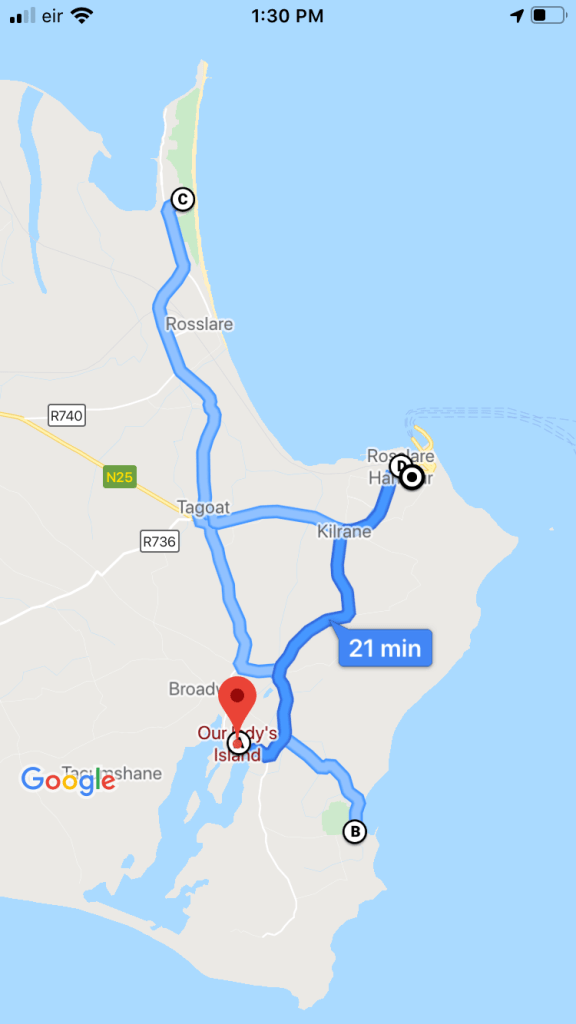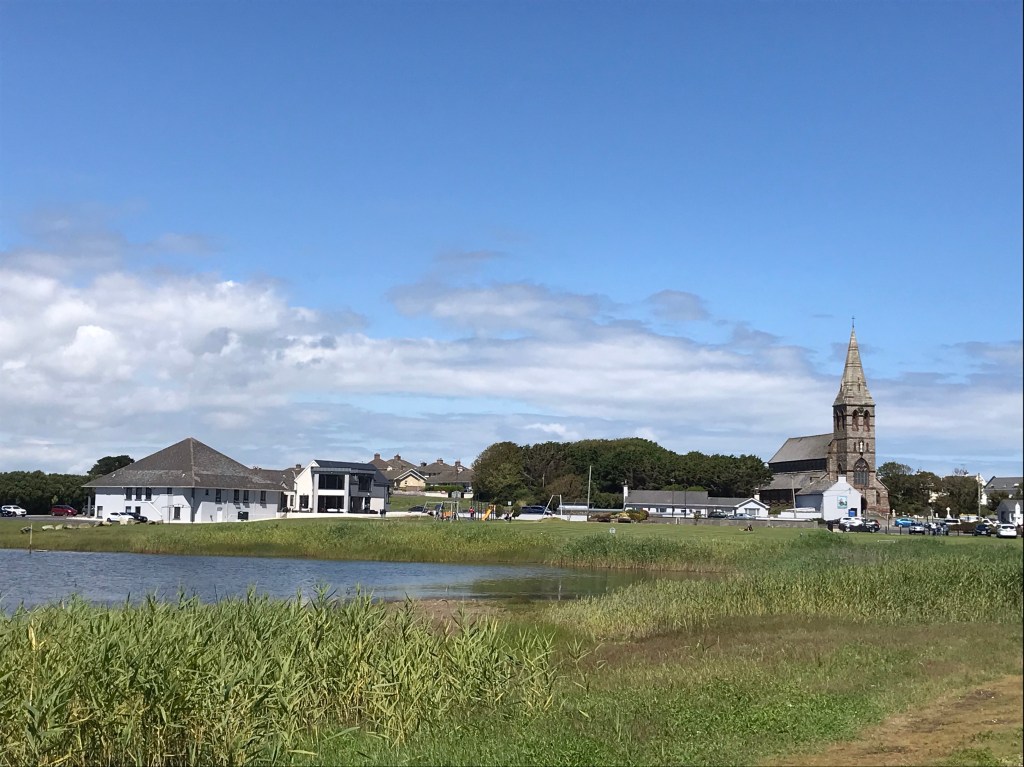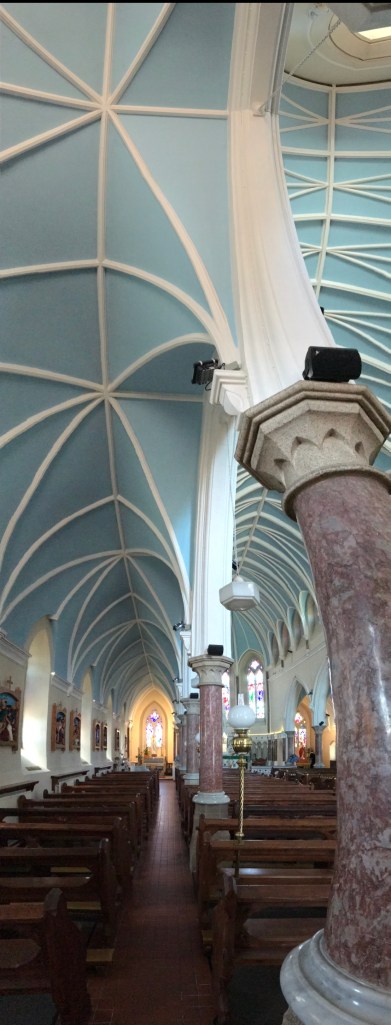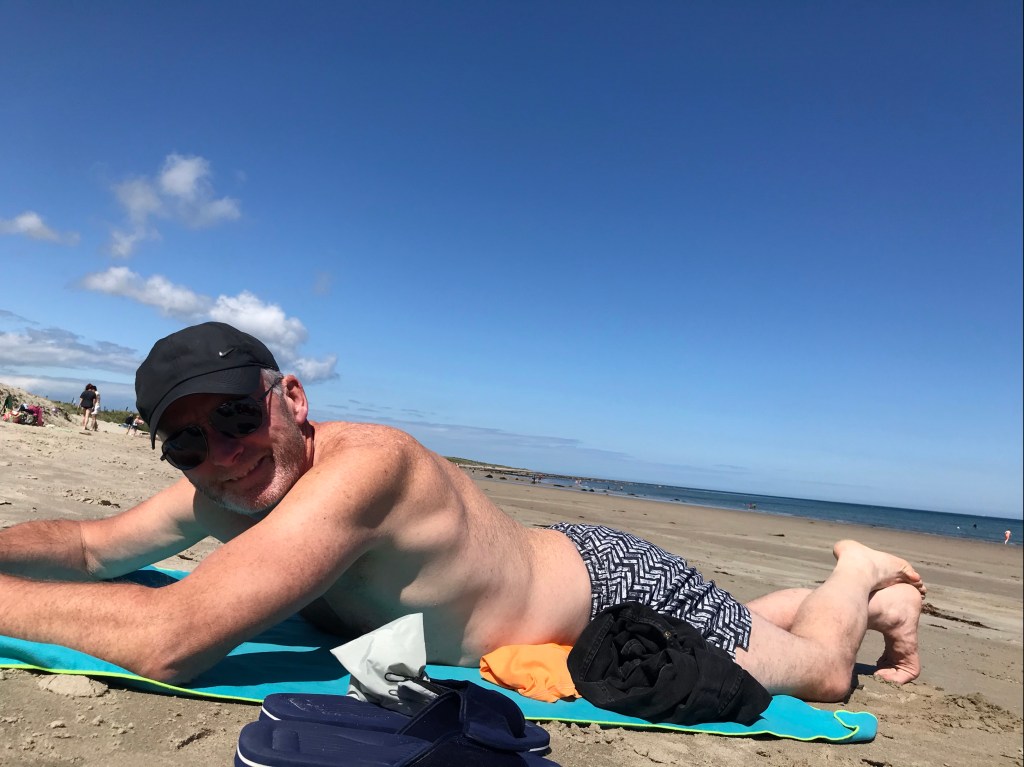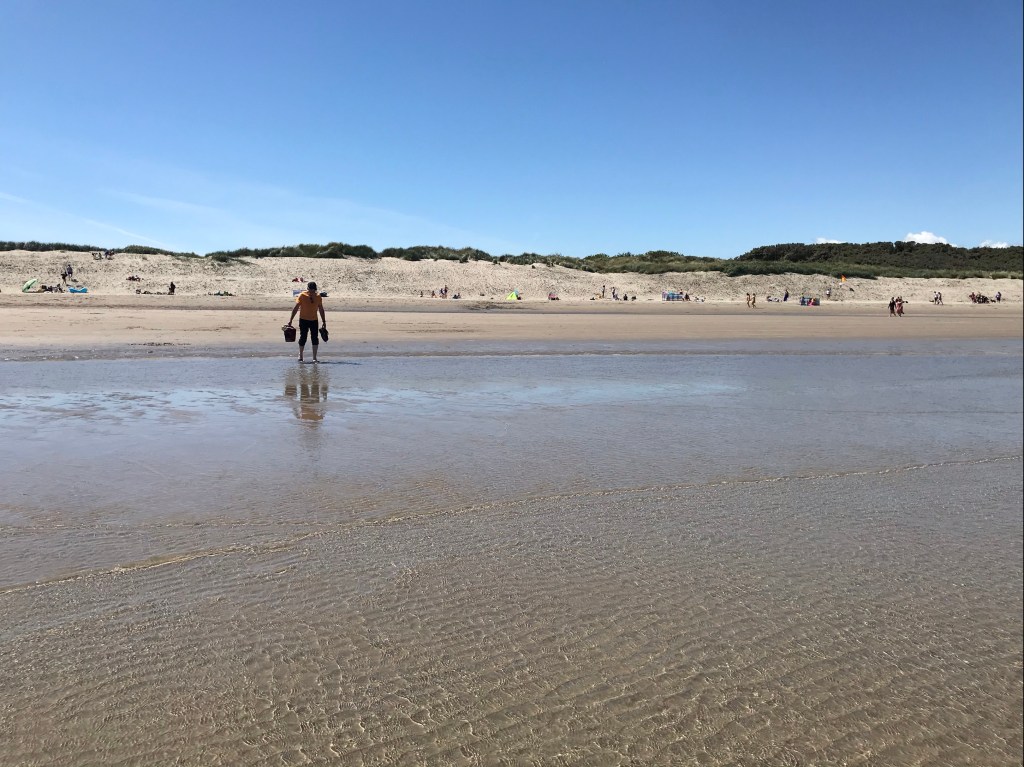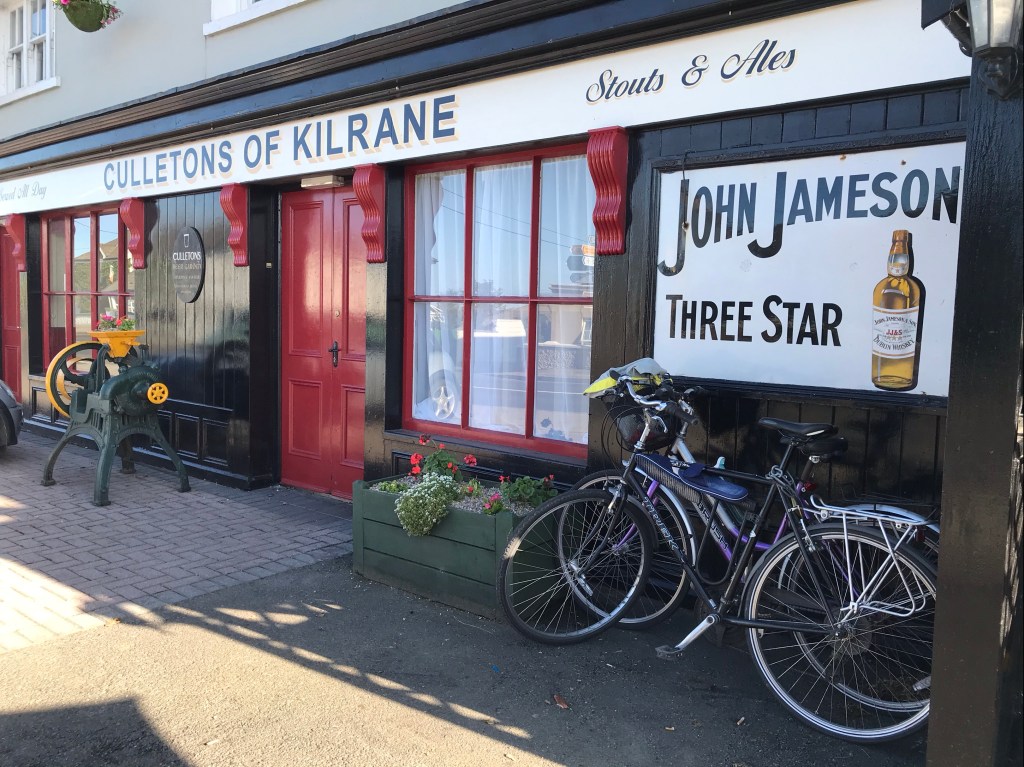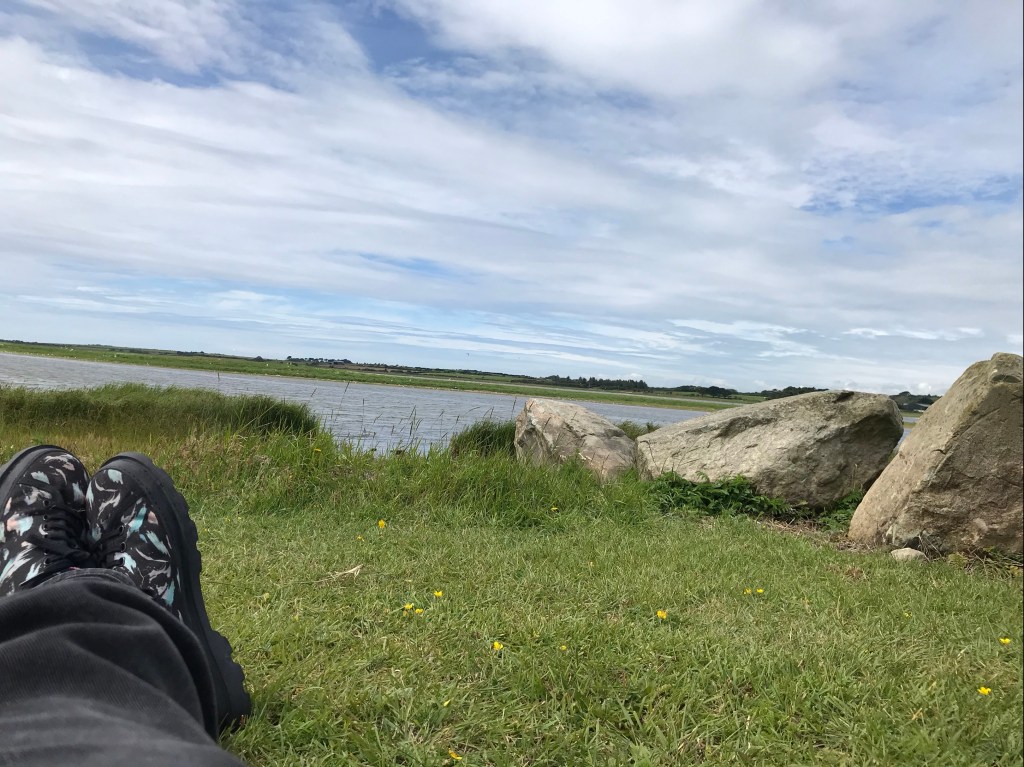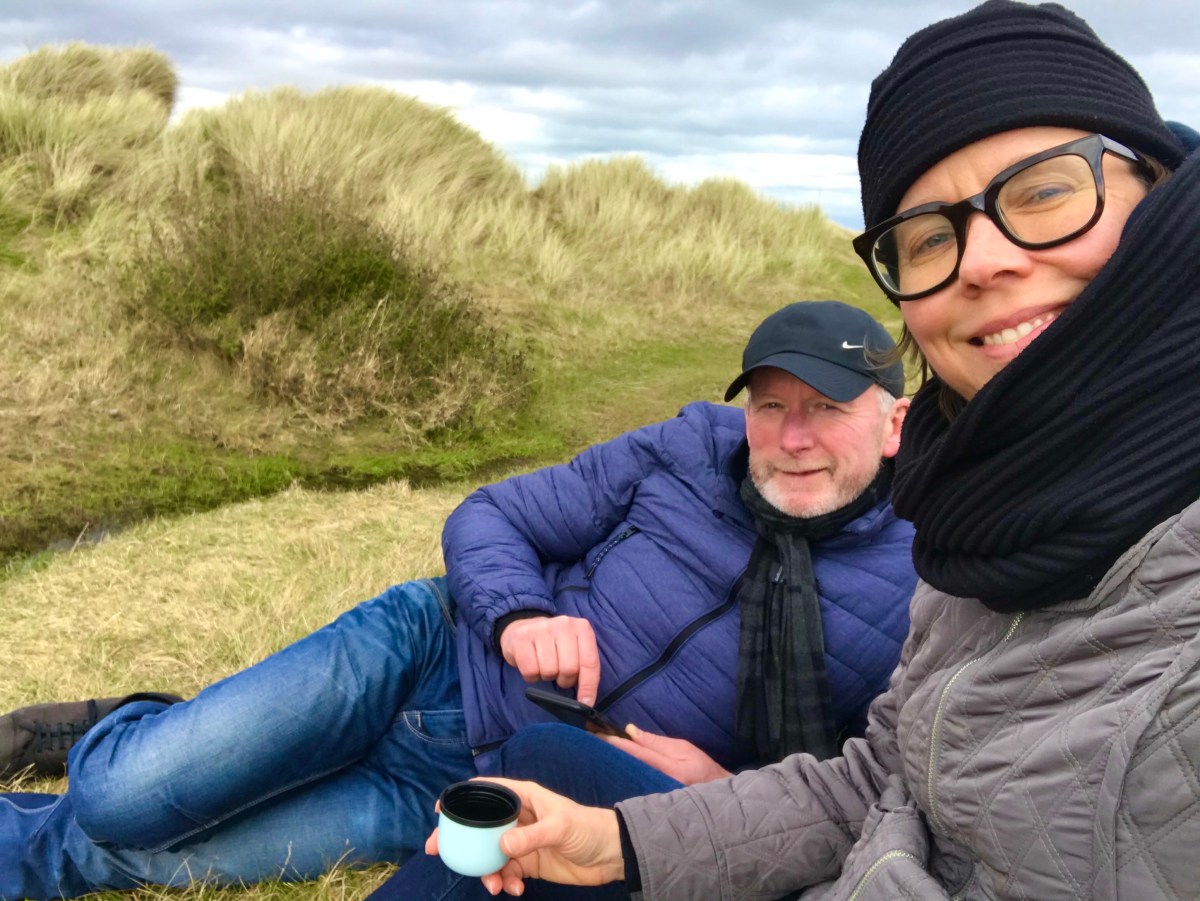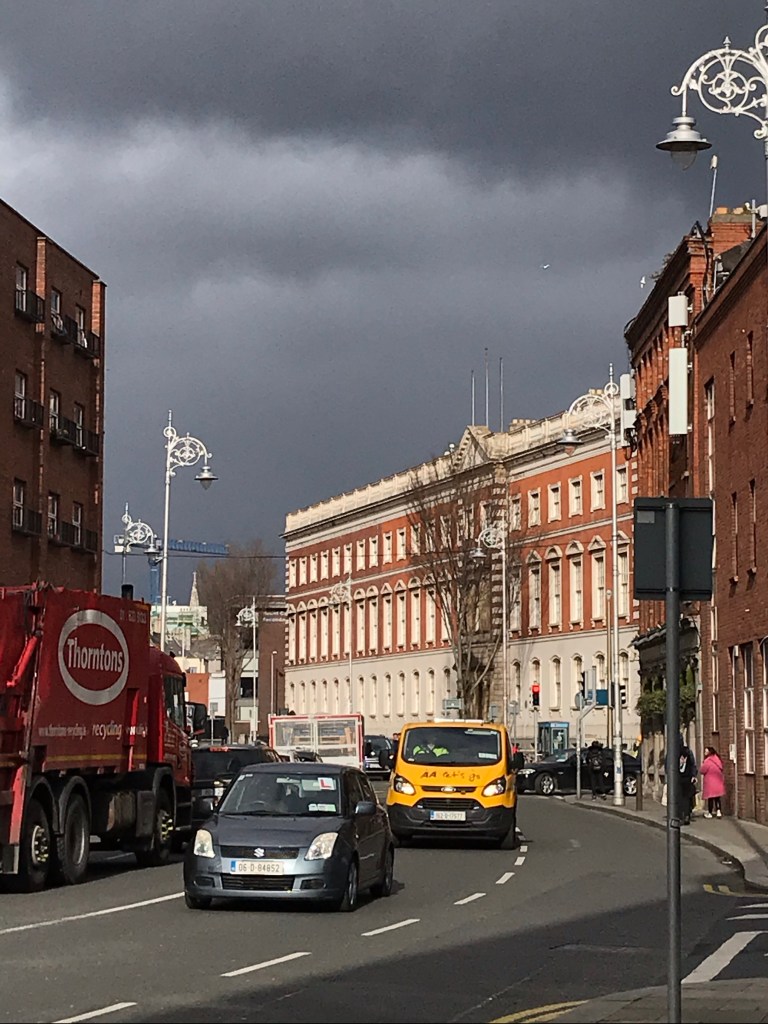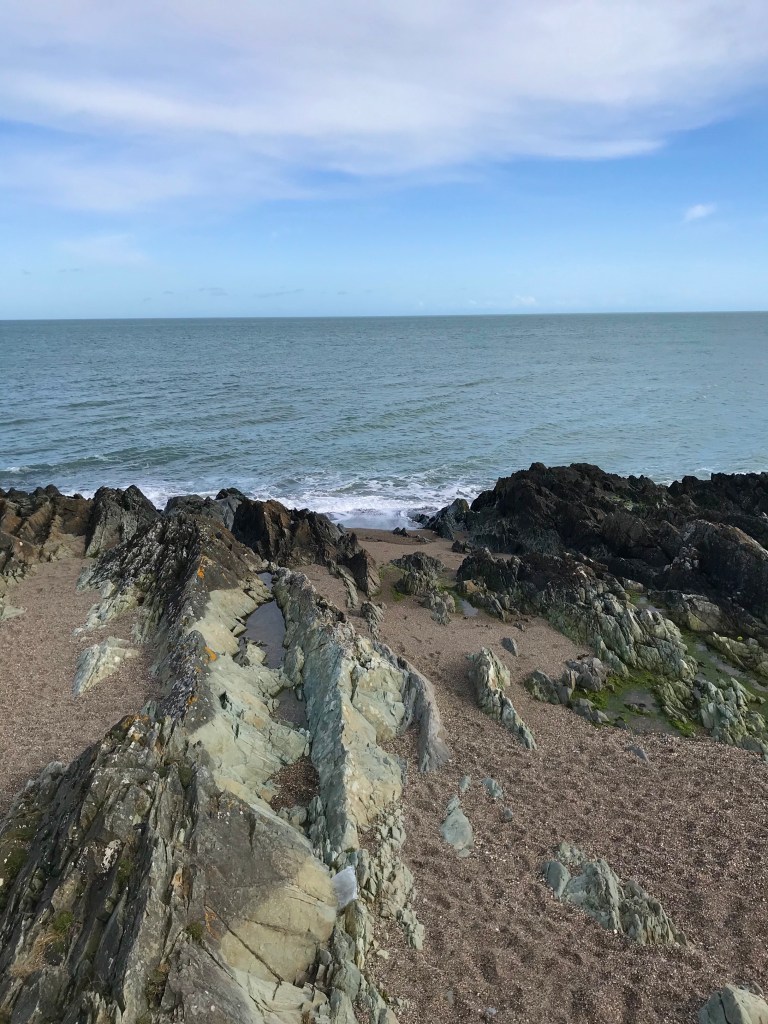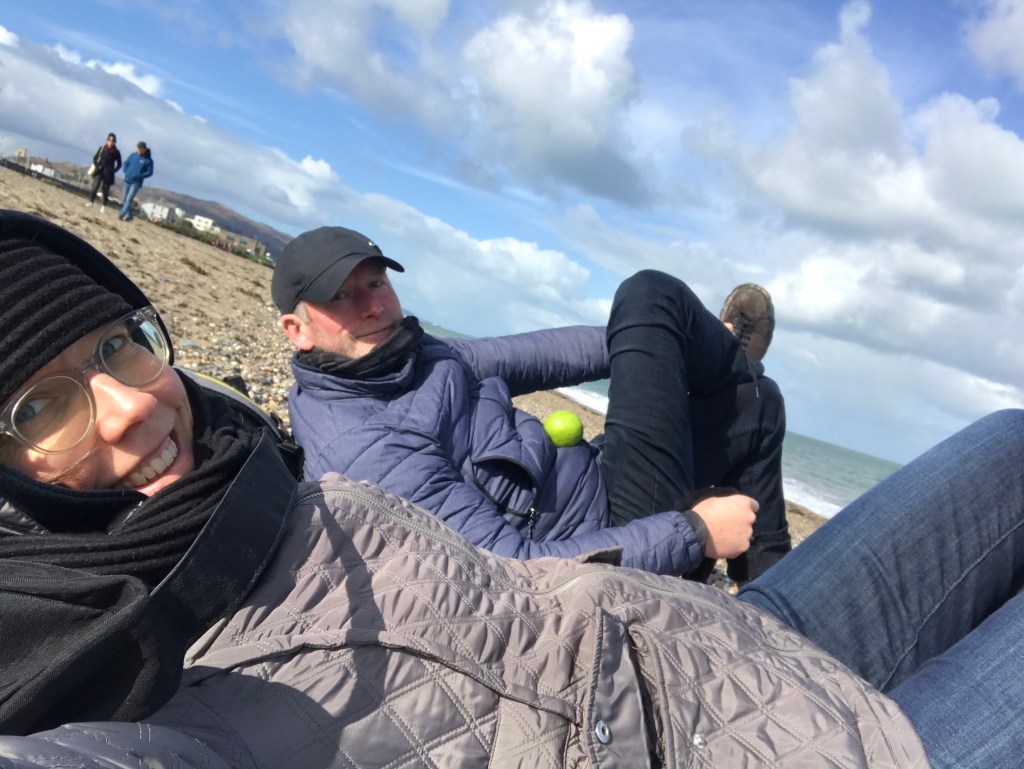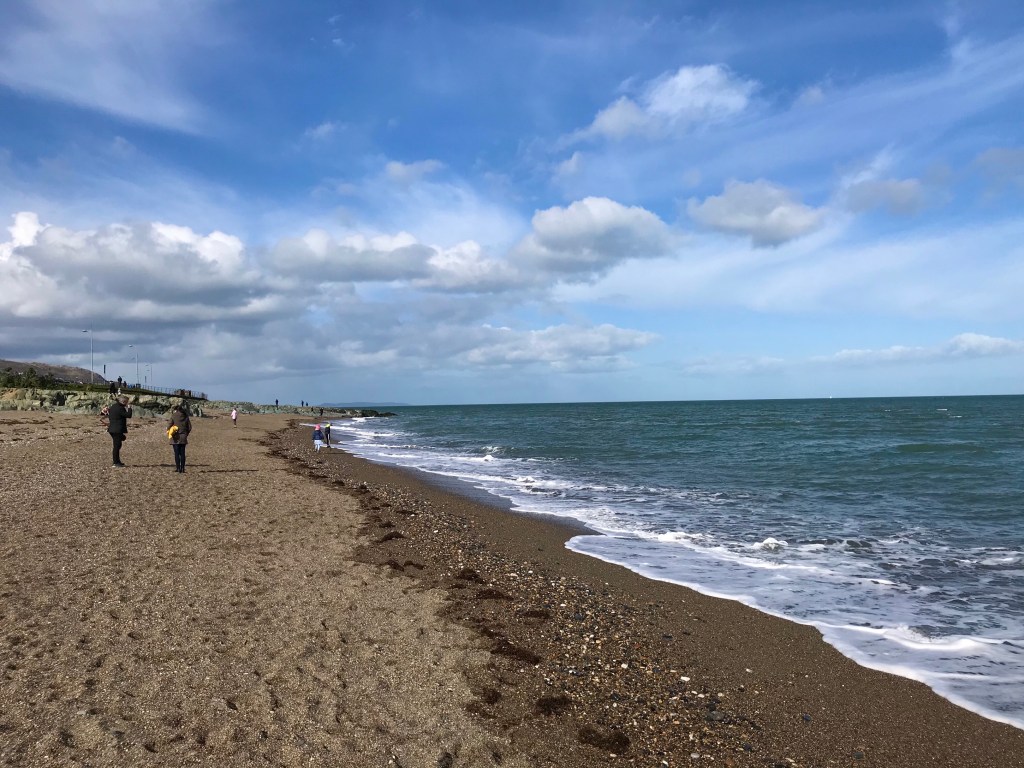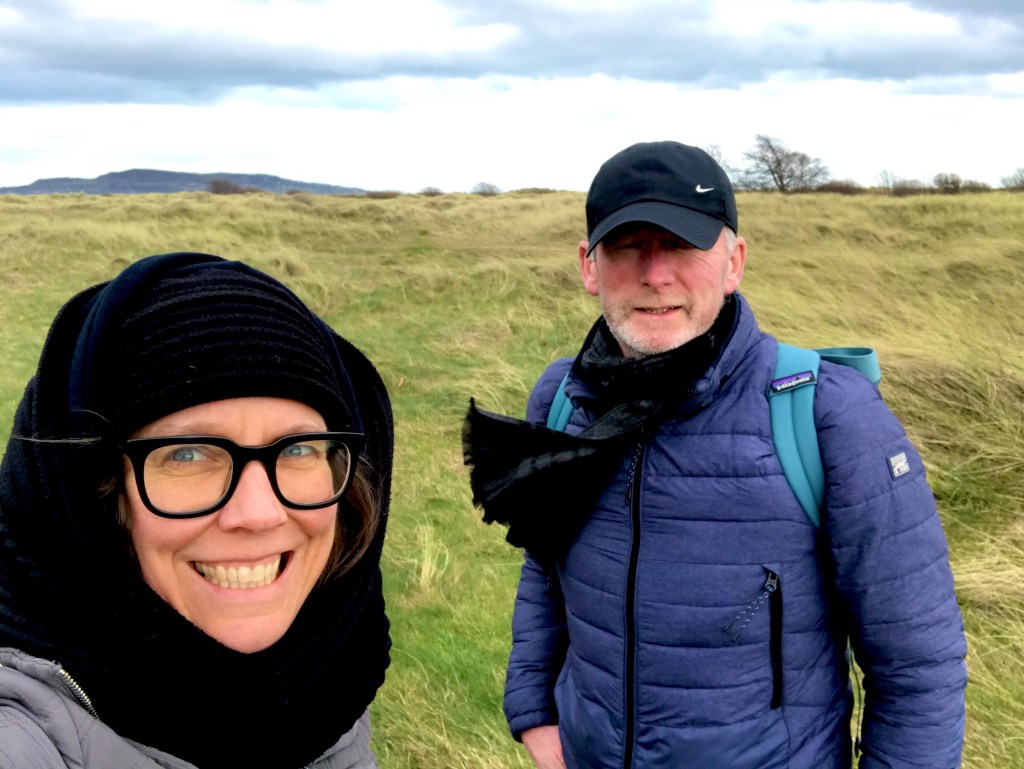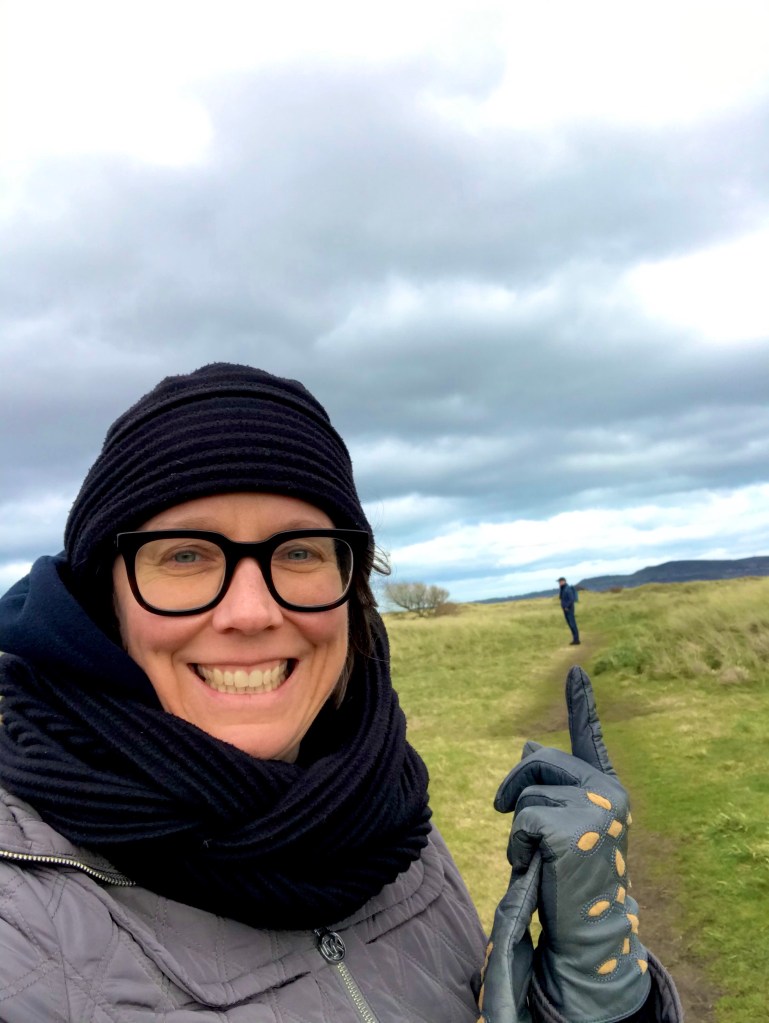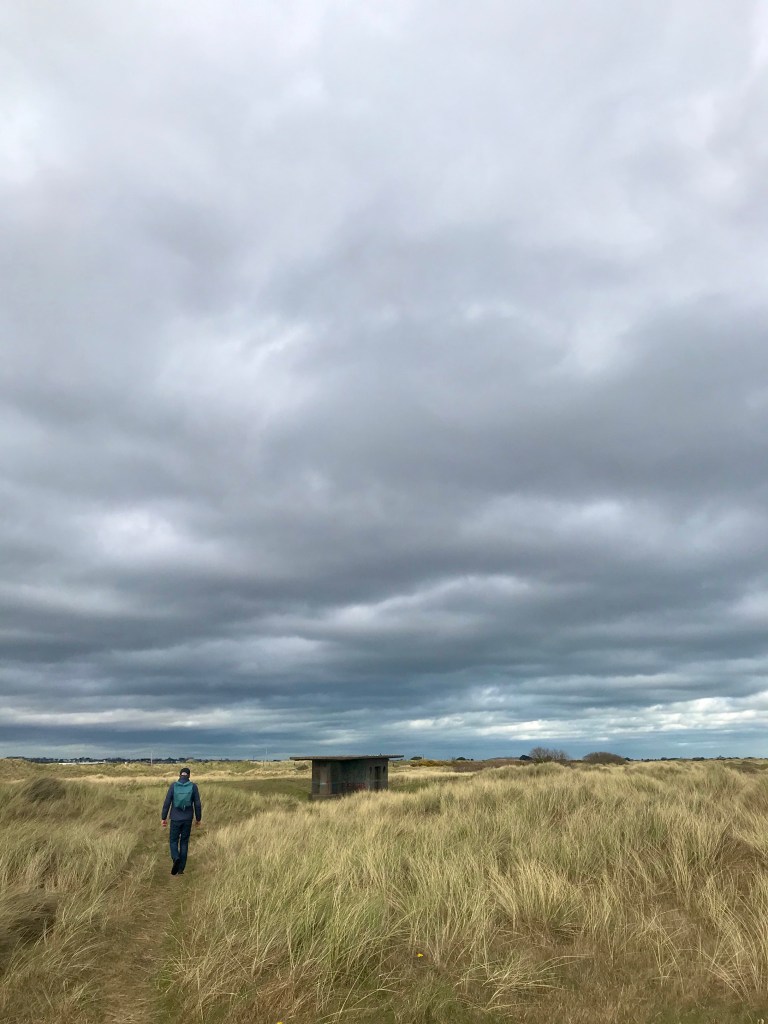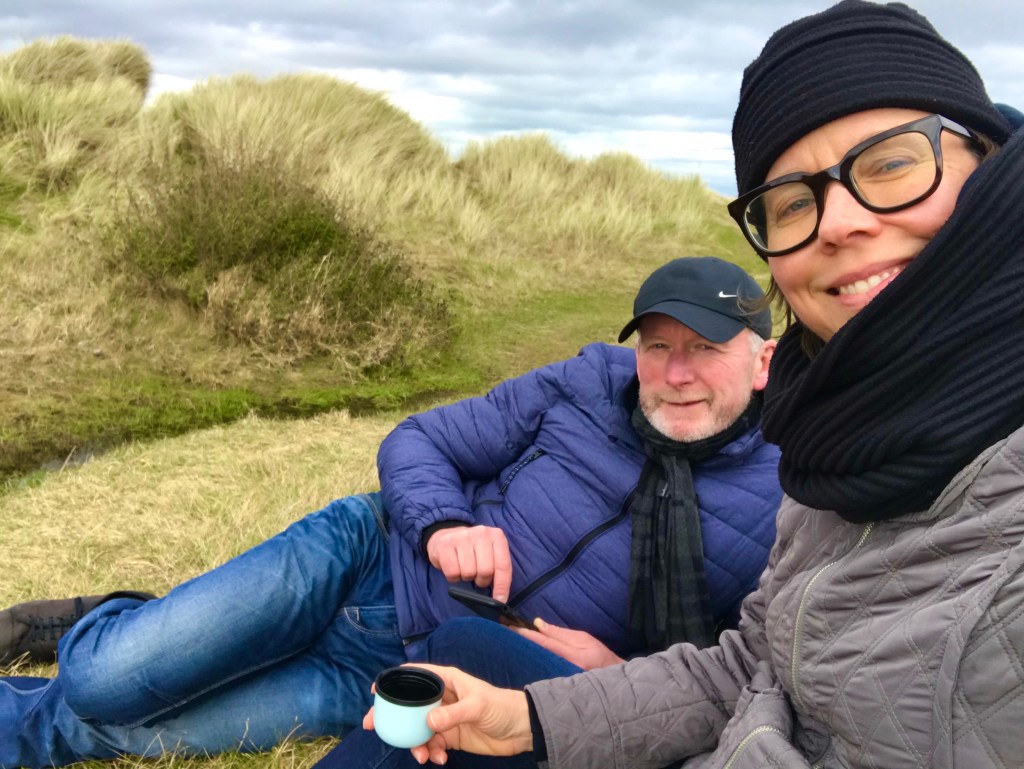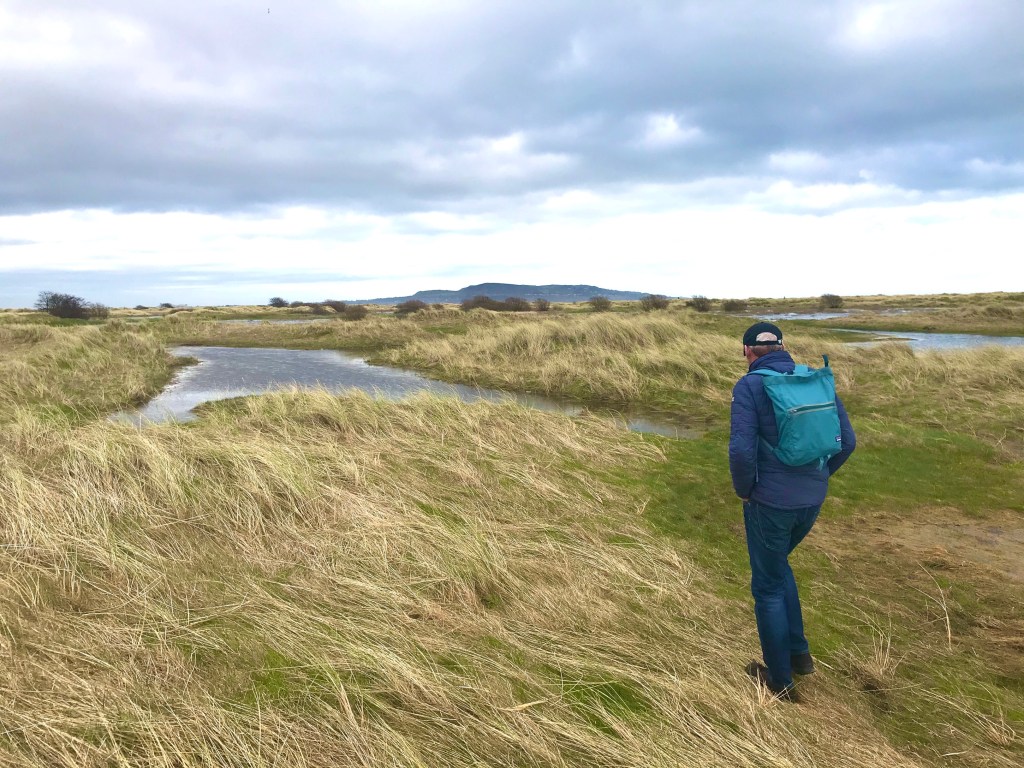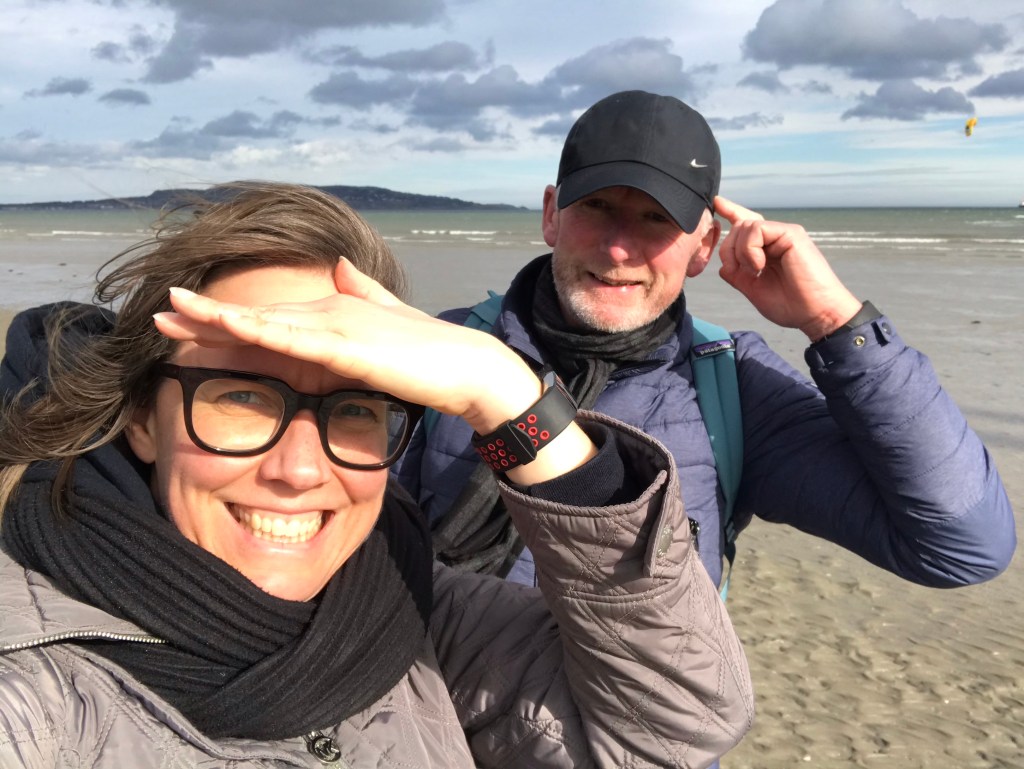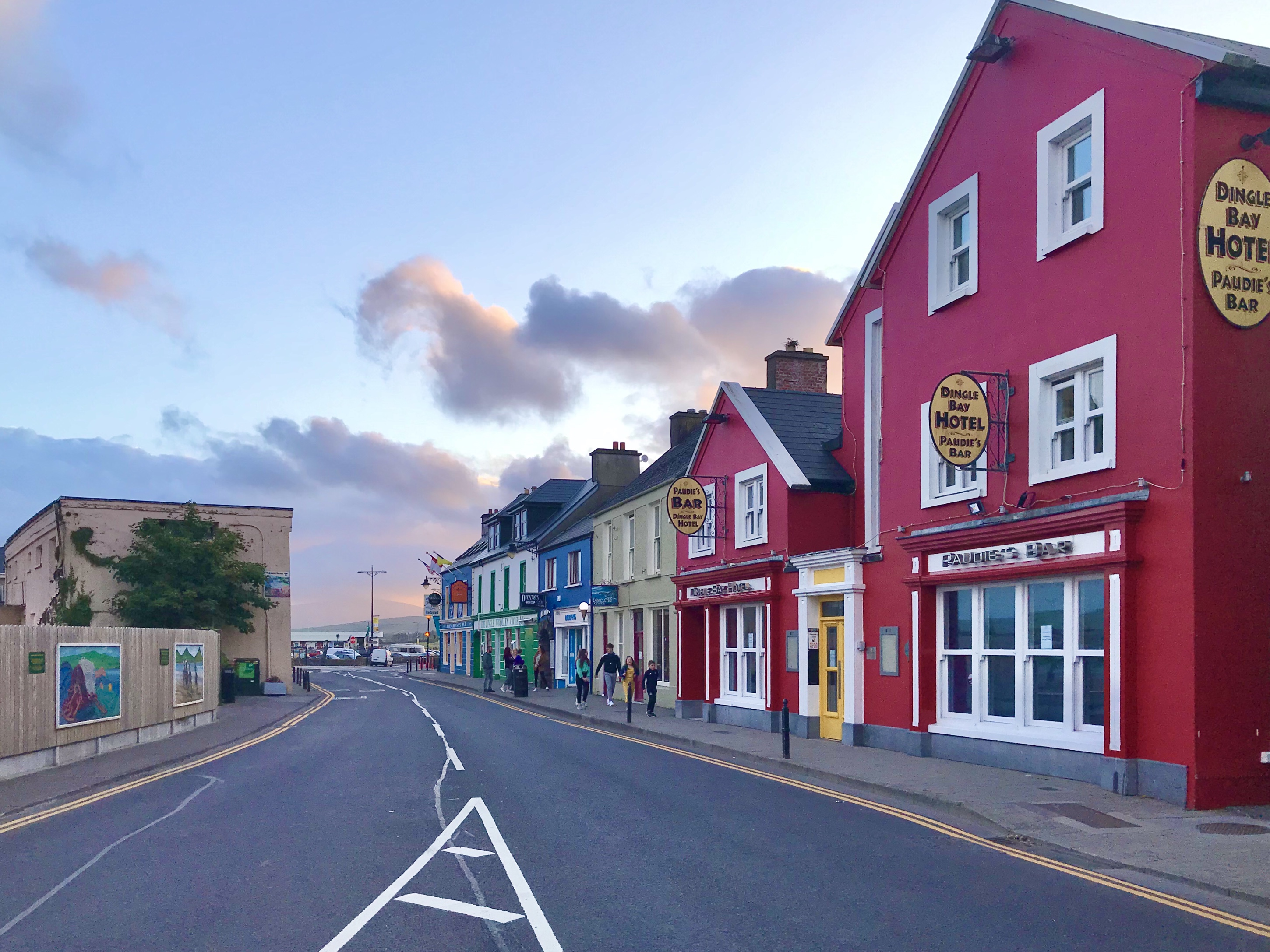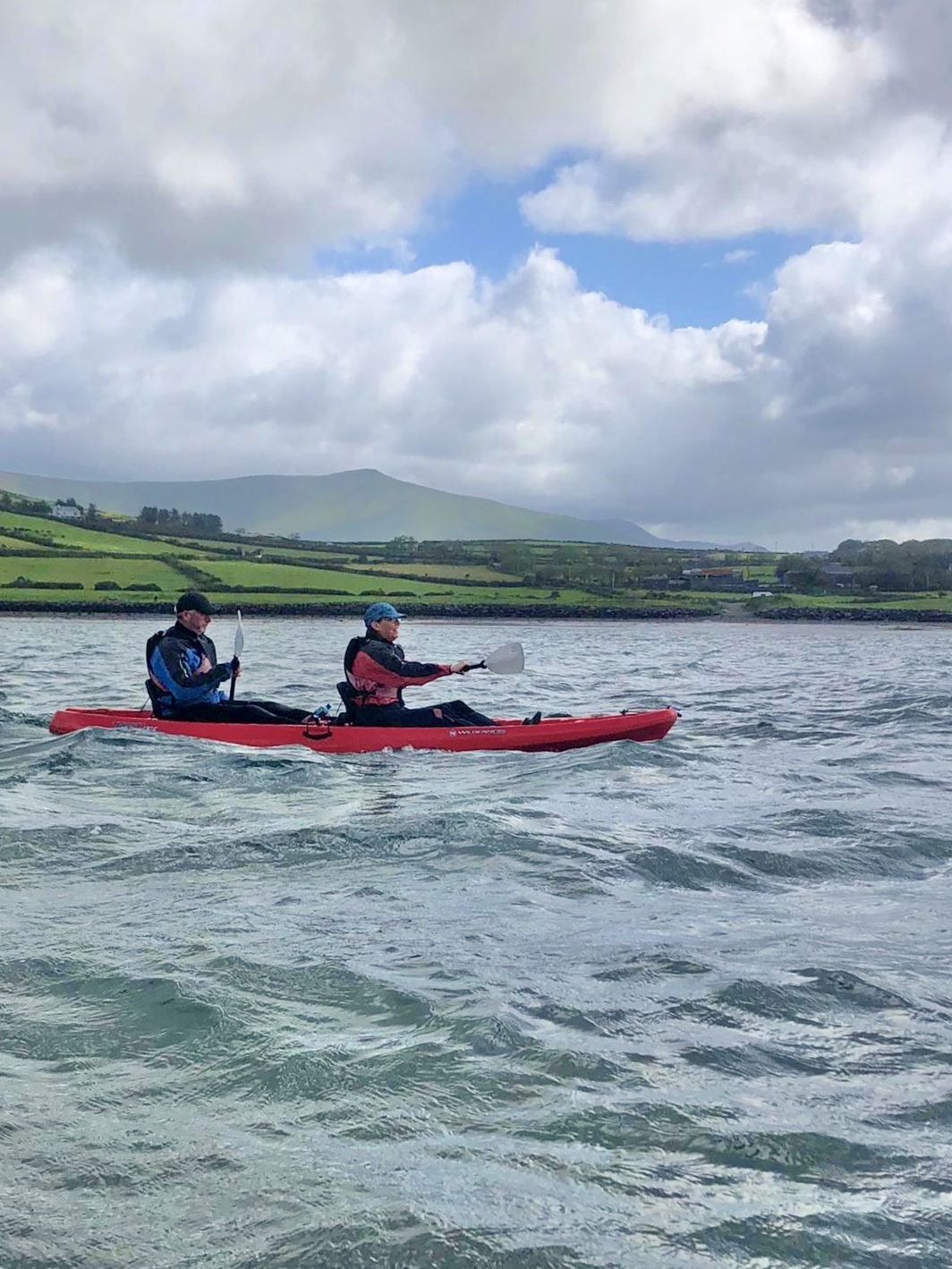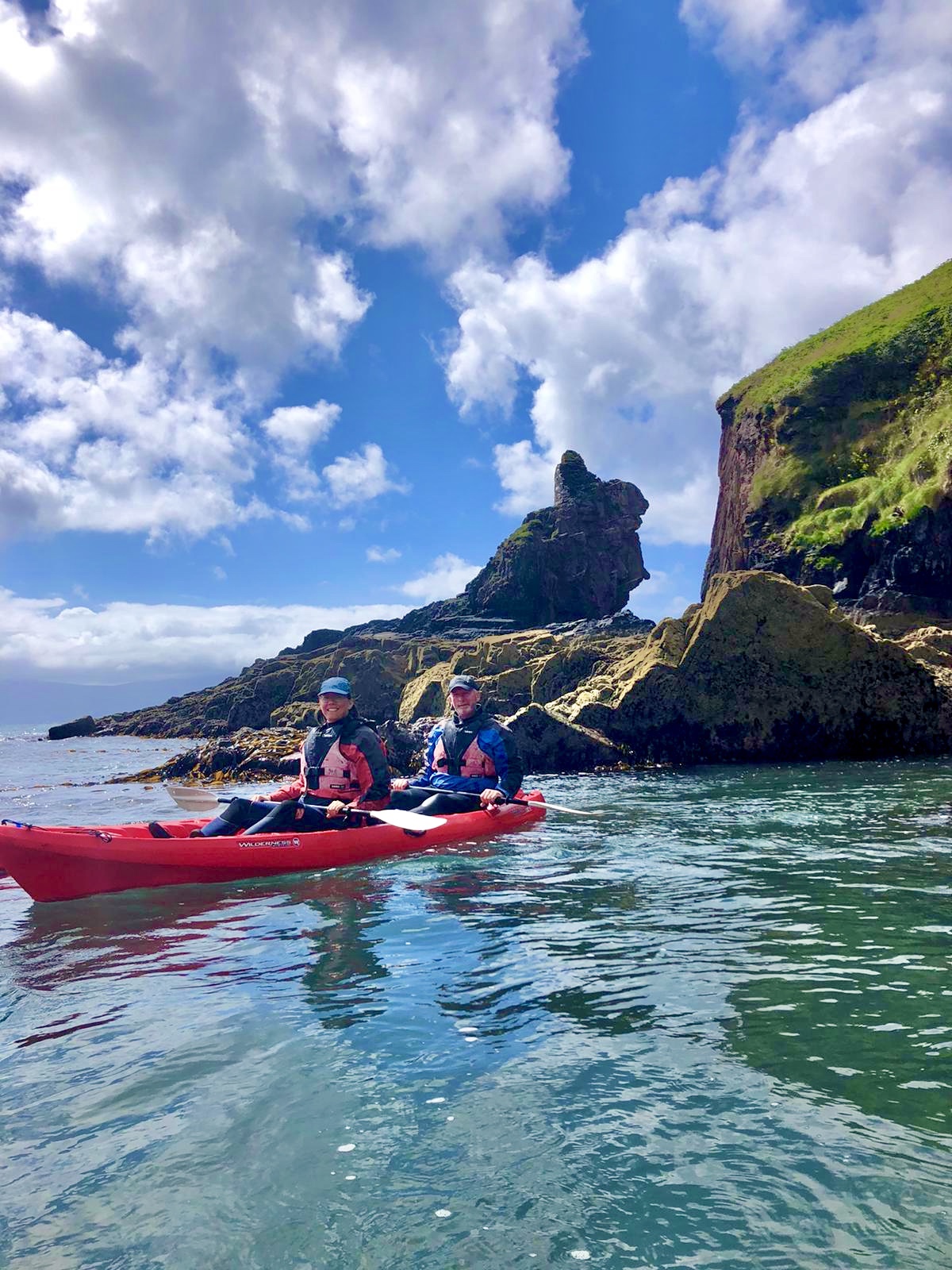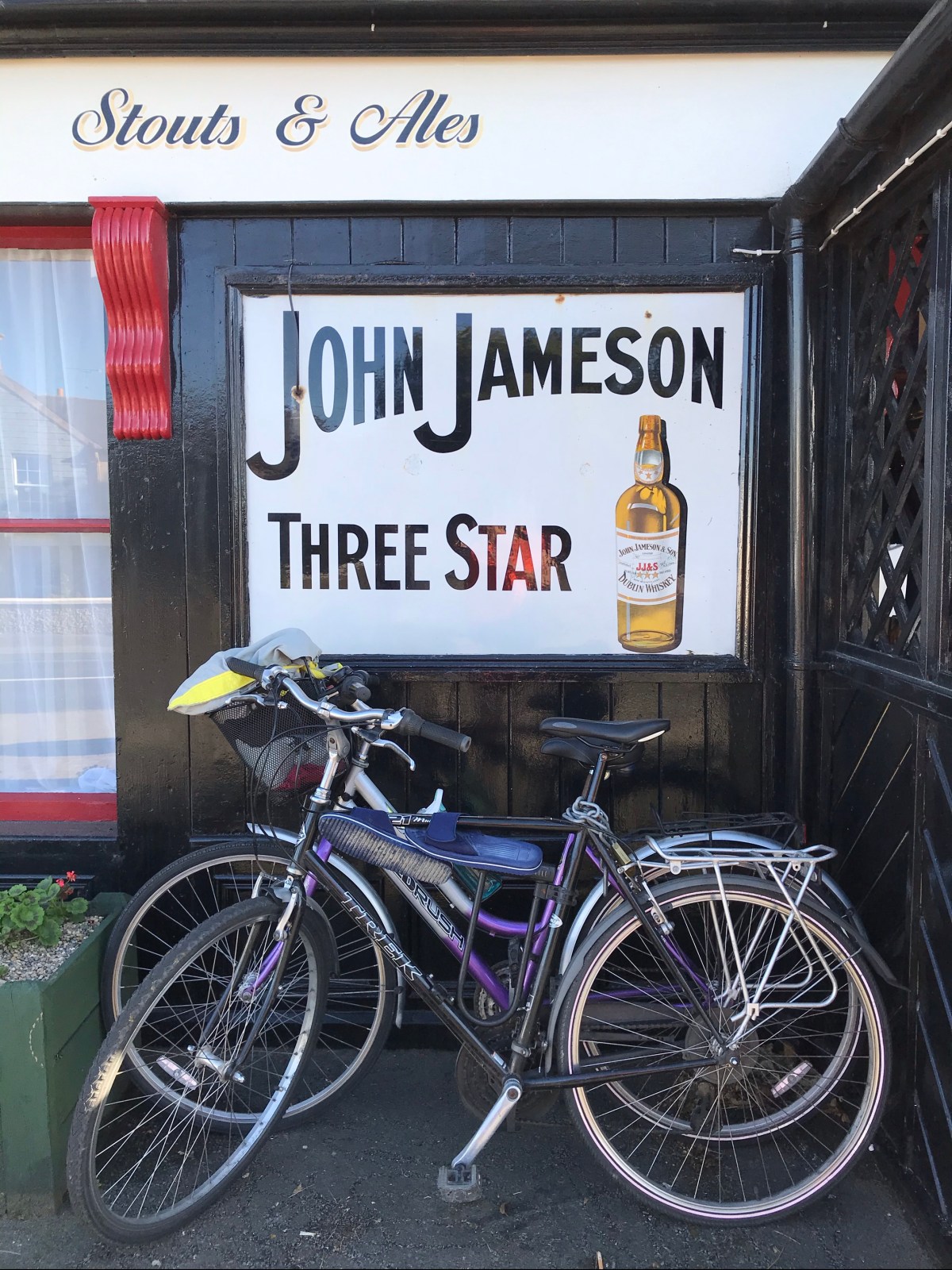
The Irish government has allowed domestic travel since June 29, and has been encouraging residents of the Republic to holiday inside the country to help revive the Irish tourist sector. Aongus and I were happy to oblige and we headed out for a four day weekend to the west of Ireland.
Unbelievably, my Irish man—born in Dublin and raised speaking Irish—had never been to Dingle! This rainy little fishing village is a favorite of Americans, and I’ve visited several times since my inaugural trip there in 2003.
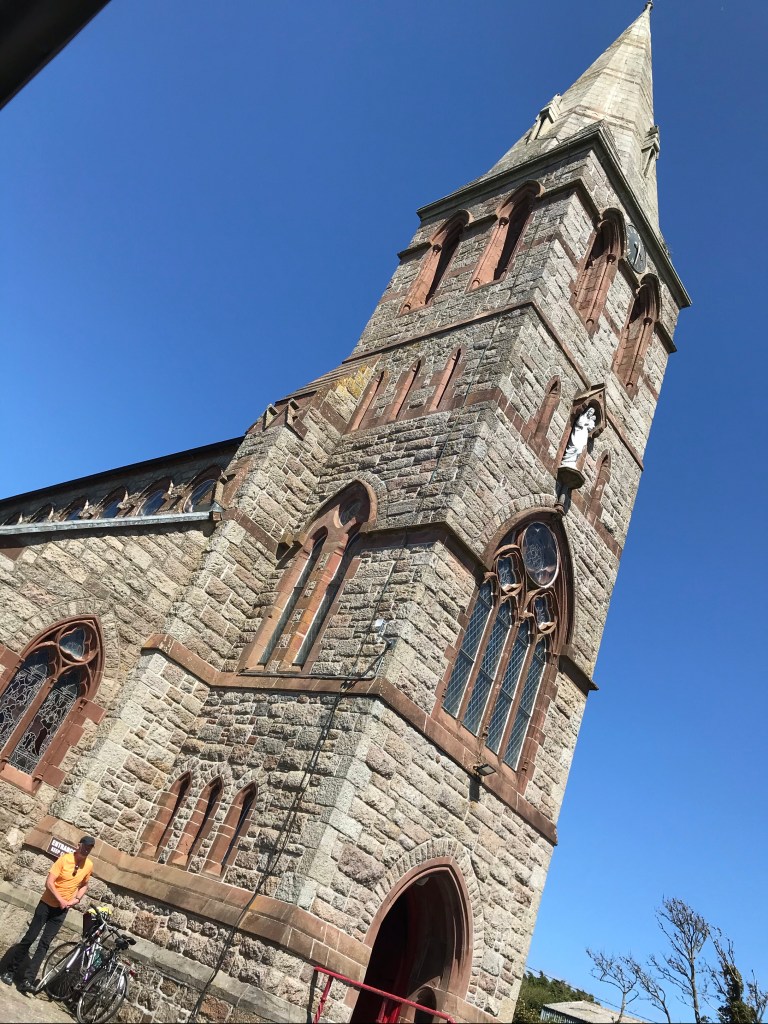
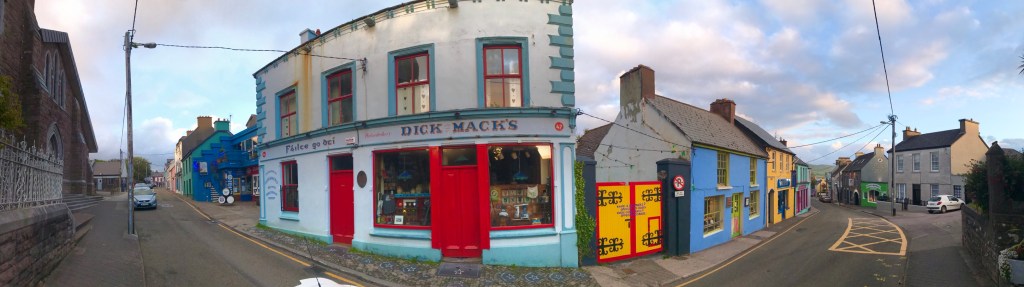
The Fish Box is just to the left of Dick Mack’s Pub, across the street from St. Mary’s Church.
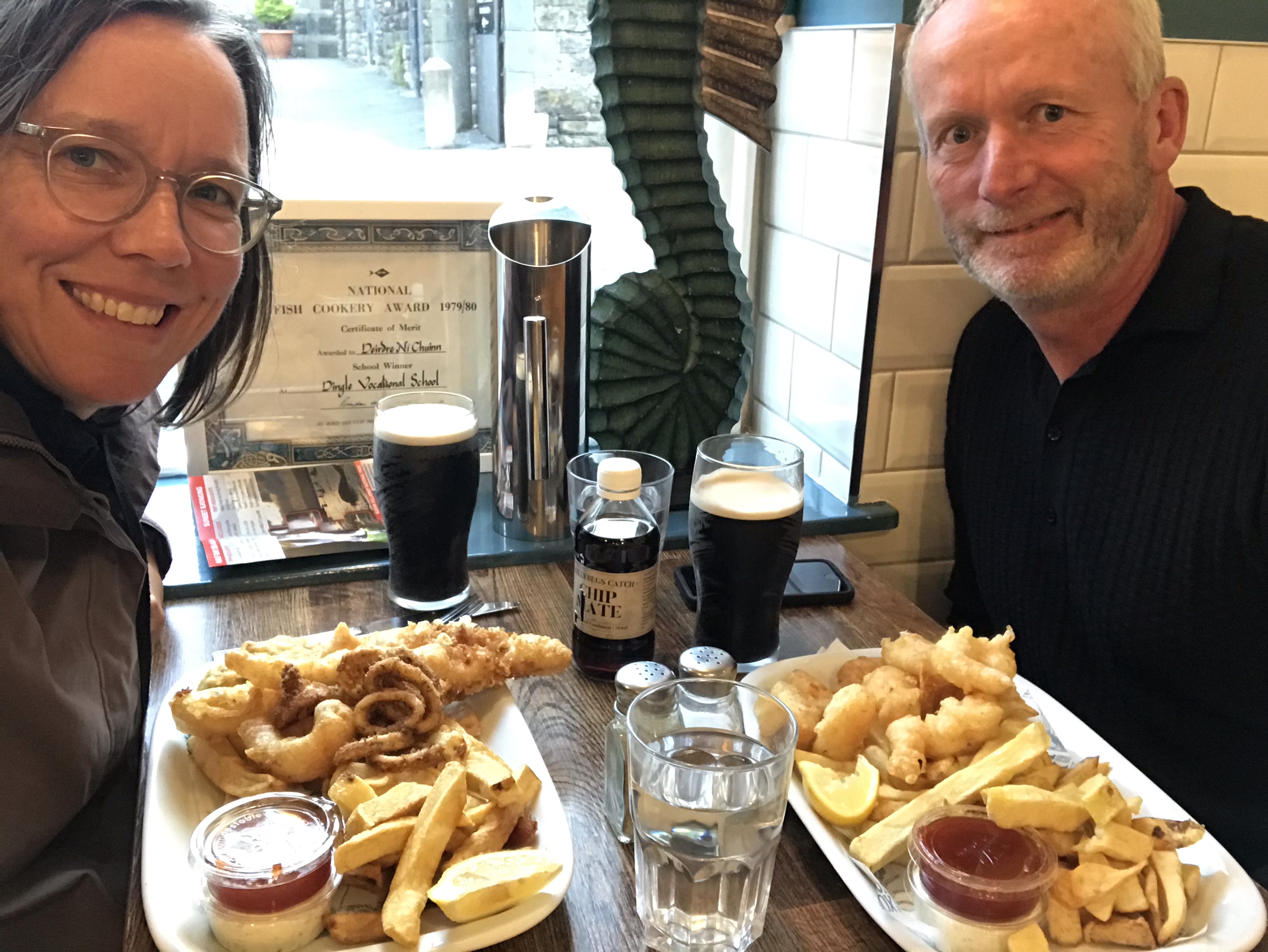
This particular overnight stay in this lovely little town included dinner at The Fish Box (amazing!), bed and breakfast at Bambury’s Guest House, and a kayaking trip guided by Irish Adventures.
And yes, we saw Fungie first hand, just 30’ or so away. Such a friendly and adventurous dolphin who has graced Dingle Bay since 1983. The tourism industry loves Fungie, with hundreds and sometimes even thousands of people boating out to visit the people-living dolphin daily.
On our kayaking trip were four learners—a couple from Cork and a mum and son from Dingle—and two instructors. A family of five got their own guide and travelled apart from us.
It was such a treat to pal around with Irish people enjoying their own home place. Truly an ideal time to visit. Especially since the seas were too rough for boating two days before and two days after our own outing. We really lucked out!
The pubs of Dingle were still closed during our visit, so there were no trad music sessions to enjoy, but we were able to do a little shopping. I picked up some exercise gear in hopes of our gym opening next week, and I also purchased a Cornwall Seasalt brand scarf to replace the one I dropped at Bonobo’s of Smithfield in February that so unkindly was never handed over to the lost and found.
Social distancing was easy in Dingle and we look forward to exploring more of Ireland as time, weather, and government guidelines permit. We were so very thankful for this one precious day of fun and glorious weather.
New-ish cap!
Special thanks to Noel of Irish Adventures for excellent instruction and leadership of the tour as well as his gift to me of an Irish Adventures baseball cap. They had actually run out of new caps, but gifted me one off their very own head! And it’s already perfectly broken in. Pop it in the wash and it’s good to go!
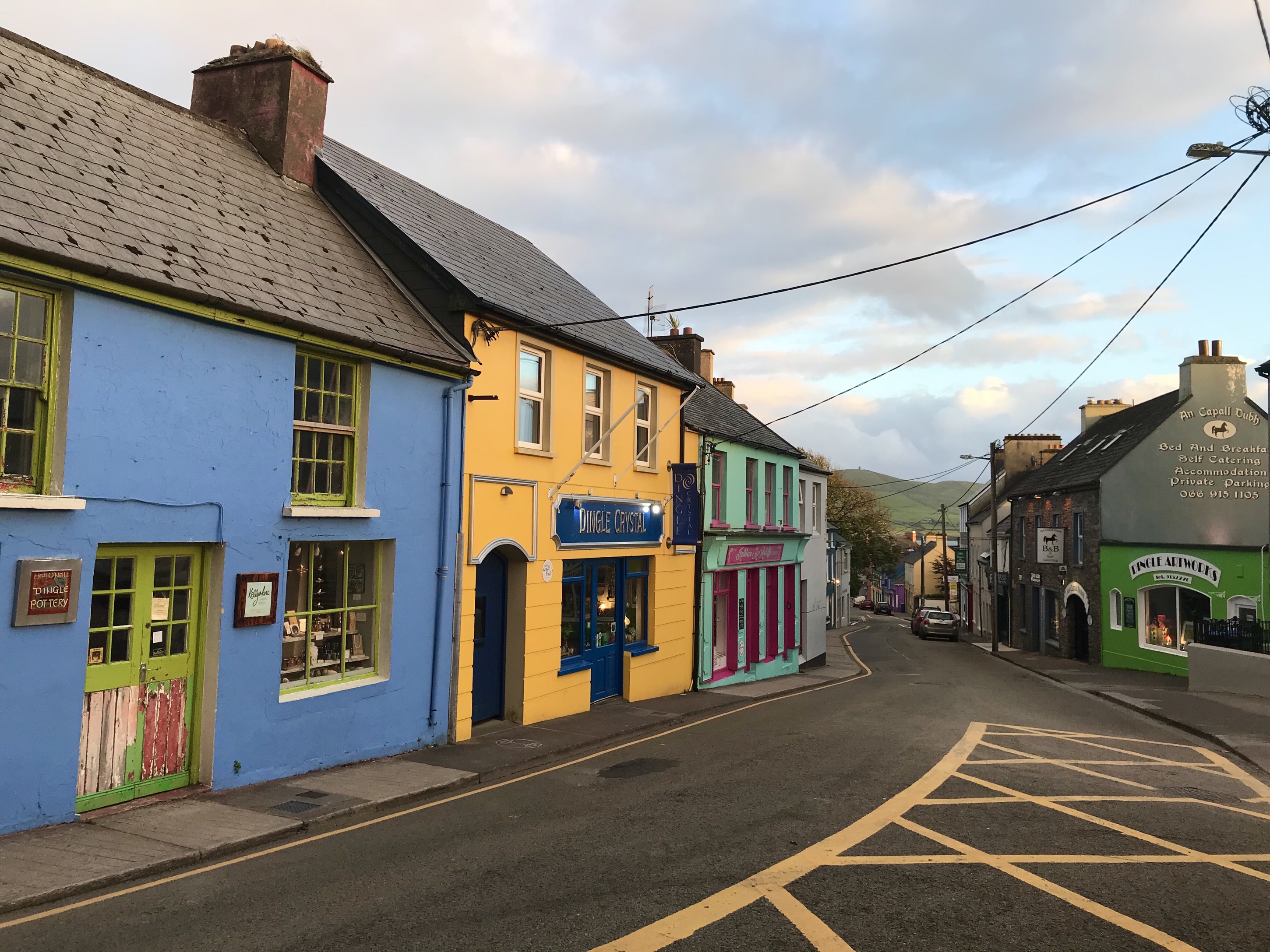
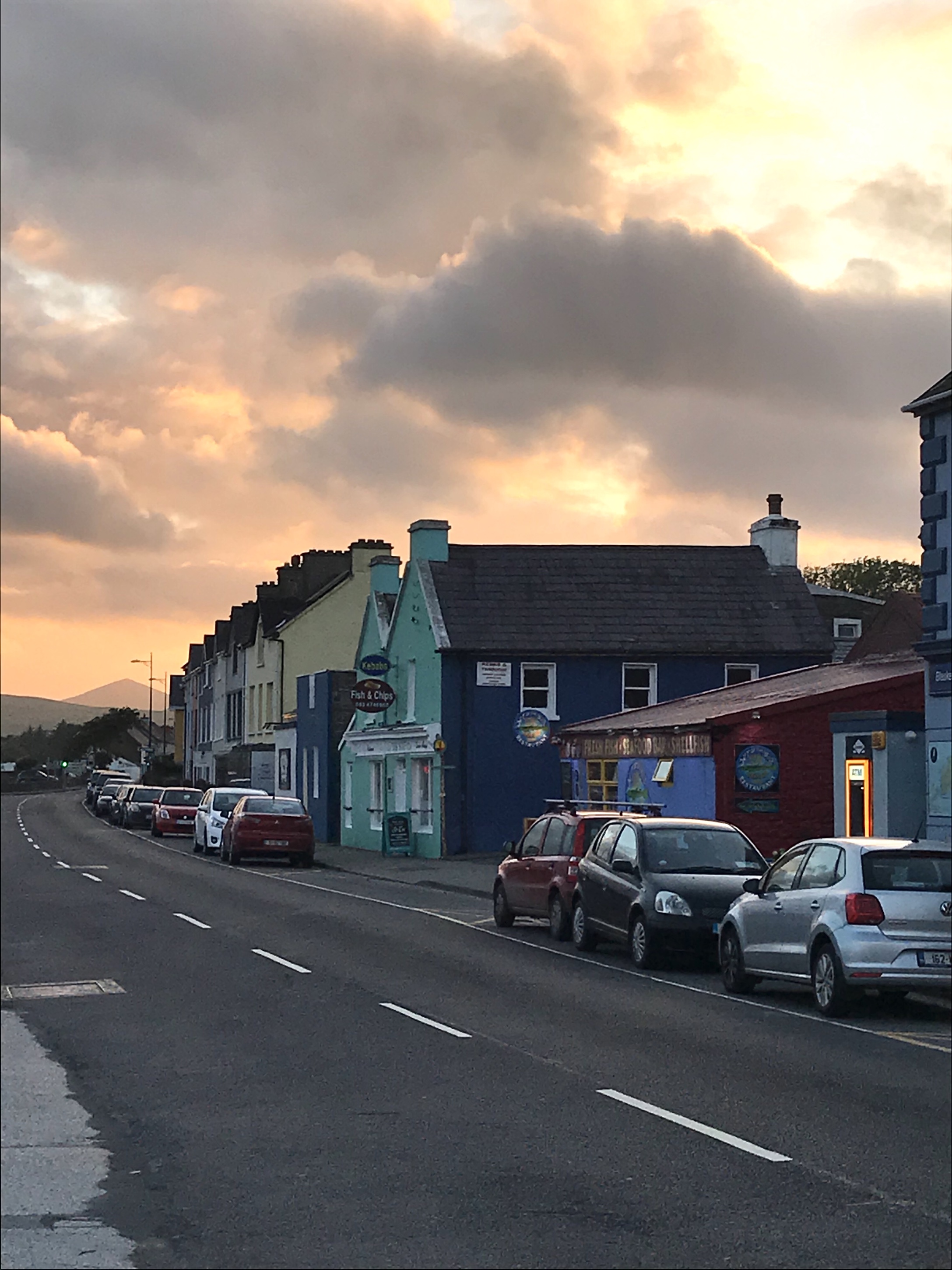
The photo gallery below shows an approach to Dingle via the Connor Pass (with new Wild Atlantic Way signage), the town of Dingle at sunset, and our morning out on the weather. Stay tuned for more pics of Kerry to come!
Bernadette Balentine is the host of Engineering Matters, and in podcast 59, she featured guests from Mott MacDonald, Canada’s Corporation of the Seven Wardens, Engineers Without Borders UK, the University of Leeds, the UK’s Institution of Engineering and Technology, and me, a Visiting Professor at UCL. You can find it at this link.
The podcast tells a fascinating story about a catastrophic bridge failure that happened in Canada, explaining how the overall engineering profession there responded by developing and adopting a strict code of ethics.
The overall podcast is 37 minutes, and I’m featured only briefly (around minute 28.5). In this post, I’ll provide a little more detail on the work I’ve been doing that led me to be included.
As you probably know, I was a Marie Curie Research Fellow at UCL for two years, and I still serve as a Visiting Professor there at UCL. I have a keen interest in the built environment and I’m also a registered architect in the States with LEED-AP credentials. My research specialty involves how people learn engineering and architecture.
During the Fellowship, Engineers without Borders UK came to me asking for help with research idea. As a result, my team and I conducted a small-scale qualitative study where we interviewed nine civil/structural engineers practicing in London about their perceptions of ethics and, specifically, of global responsibility—what it means and how they enact global responsibility in their day-to-day work. I reported this research while speaking with Bernadette for the podcast.
Bernadette asked what factors we had identified that prevent engineers from acting on ethical beliefs. Here’s some of what I said:
Even when early career engineers see opportunities to do something in a better, more ethical or responsible way, they often have trouble getting the idea accepted. Cost and time constraints limit their choices. Small and private projects nearly always prioritize cost and over environmental or social sustainability.
Early-career engineers can influence material selection and thus carbon footprint to some degree, but many other decision are out of their scope of work. Crucial decisions were made long before they got involved. They select materials, run calculations, and make more detailed decisions, but they are often involved in a small portion of any given building or infrastructure project. Even when they see an opportunity to do better on a private project, their client usually only accepts it is the idea if it also saves money or time.
That said, larger public projects provide more opportunity to protect the public good—and they hear about public discussions. But it’s other professionals, such as architects and planners, who often drive those discussions. On the other hand, the senior managing engineer we interviewed was quite able to affect things on a large scale; he had quite a lot of sway in decision-making and frequent opportunities to protect public Health and Safety. He took pride in doing so, and he also reached out to help mentor others to develop such skills.
Early-career engineers told us they lack reliable tools for calculating environmental and social impacts of various options. Quite surprisingly, most don’t recall having discussions in university about sustainability. While they say ethics was probably covered in their professional practice classes, none of this was covered in a way that was “sticky” enough for them to recall it. Most learned about this after university, through CPD courses, their own research, and company induction programs on Health & Safety and anti-corruption with an implied focus on anti-bribery.
Overall, the early career engineers in our study expressed:
A lack of tools for demonstrating benefits of environmental or social action
Some degree of shortfall in training/preparation
Feelings of disempowerment due to decisions being made further up the business or by clients who didn’t value sustainability
One of the most important findings of our study was that the engineers felt empowered to act on job-site Health and Safety more than other areas. Job-site Health and Safety was the one thing, they said, that consistently trumps cost. They were also clear on company rules for reporting gifts.
This led me to wonder: Might we use the levers that facilitated sweeping change across job-site H&S and anti-bribery to facilitate quick change in other areas related to ethics—specifically environmental and social aspects of sustainability and justice?
A helpful example was relayed by Malcolm Gladwell. In it, Korean Airlines went from having one of the world’s worst flight safety records to one of the best, and they did this by changing their own culture (with help of consultants) to allow individuals to raise concerns and challenge authority without personal retribution, without fear of reprimand.
I believe engineers need more of this type of empowerment and protection. The narrative Bernadette Ballantyne has woven on “Empowering Ethical Engineering” illustrates how Civil Engineering in Canada did precisely this.
It’s well worth a listen, regardless of whether or not you “engineer” things!
Meanwhile, stay tuned for more details of our study, as we prepare various findings for publication in research journals. Many thanks to my research collaborators Inês Direito, Rob Lawlor, and John Mitchell, and the Advisory Board appointed by EWB-UK to help guide our work. Financial support came from the European Commission via my Marie Curie Individual Fellowship and a grant to EWB-UK from the Royal Academy of Engineers UK.
London South Bank University (LSBU) has an event on this week called “Sustainability and Climate Action Events Series – Carbon, Climate, Energy and Resources” (for info and registration click here).
As I’m a Visiting Professor at LSBU, supervising Ph.D. student Thomas Empson who is one of the organizers of this event, I’m one of many in attendance. Thomas studies the role of creativity in creating sustainable design solutions. He looks at engineering and architecture. Thomas is also LSBU’s Sustainability Project Manager.
I’m so proud to be this researcher’s Ph.D. supervisor. He, Shushma Patel, and I have made an excellent team.
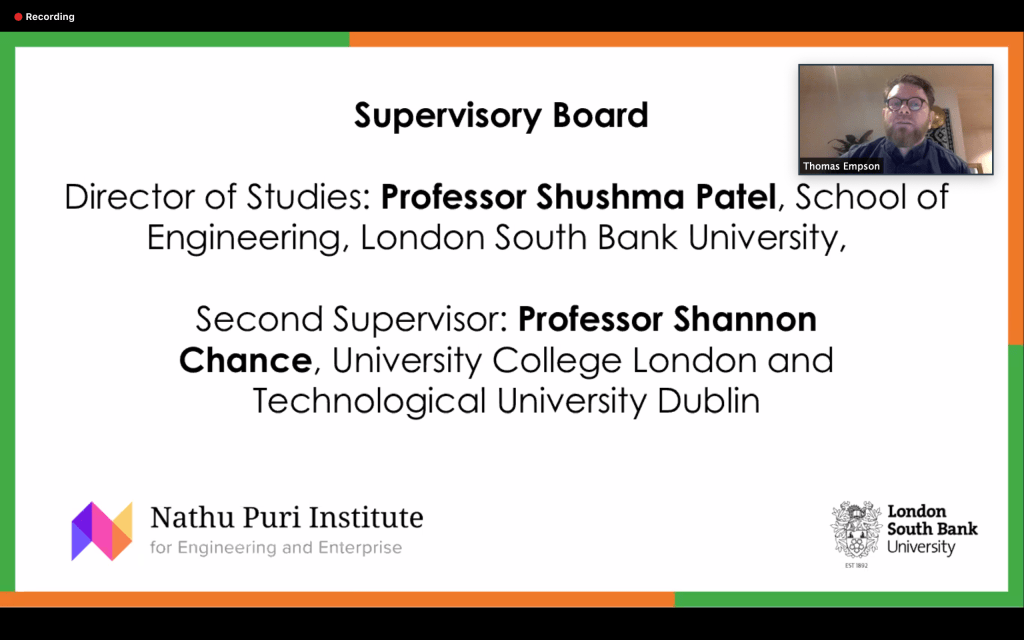
The week-long event kicked off earlier today and Thomas delivered an insightful presentation on his Ph.D. research on “Enabling Enterprising Engineers” and featuring work by HKS architects and Enfinffers for Overseas Development (EFOD).
Thomas Empson delivering welcomes, introductions, and cutting-edge research.
Thomas’ Ph.D. research project is coming together beautifully and he will be presenting his viva (=defending his dissertation) in August. We got a sneak preview today! This event, the LSBU Provost, Professor Pat Bailey, told us at the 9.30am Welcome and Introduction is the largest online event that LSBU has ever hosted. Thomas is one of the two main organizers for this LSBU conference. He’s done this alongside his research work.
As I’m working on various projects throughout the day (including our own online EER Meet Up for tomorrow afternoon), I’ve tuned in and out of the LSBU event. However, I was there “with bells on” for the 11.30am session led by Thomas!
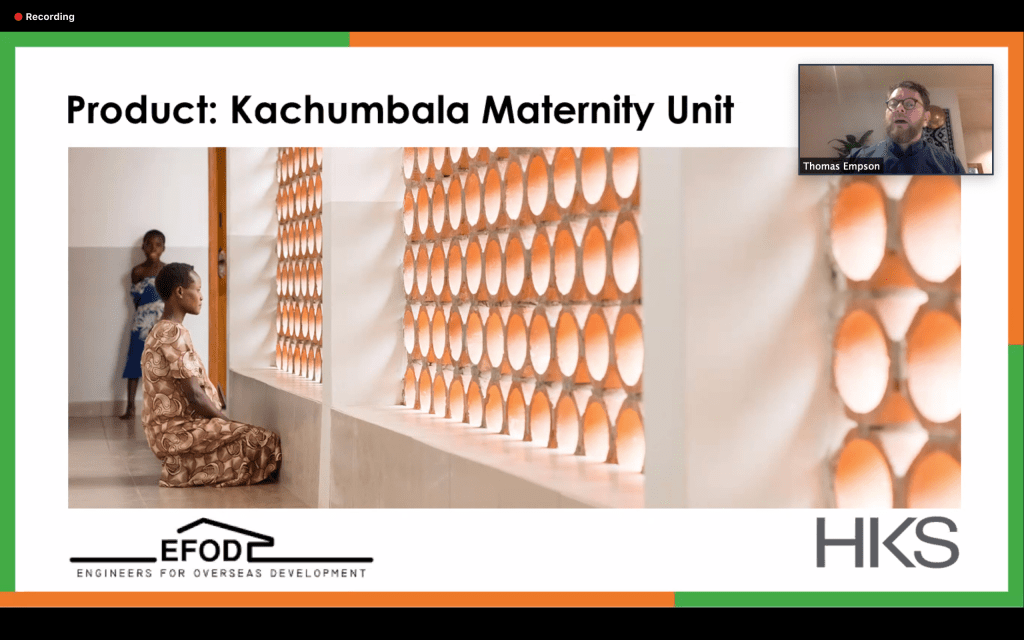
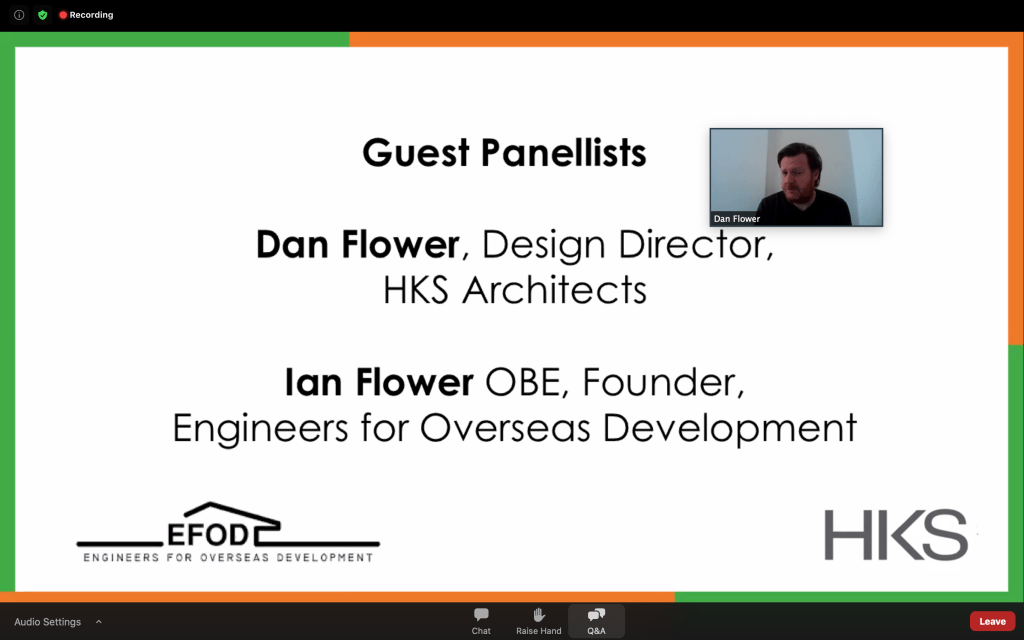
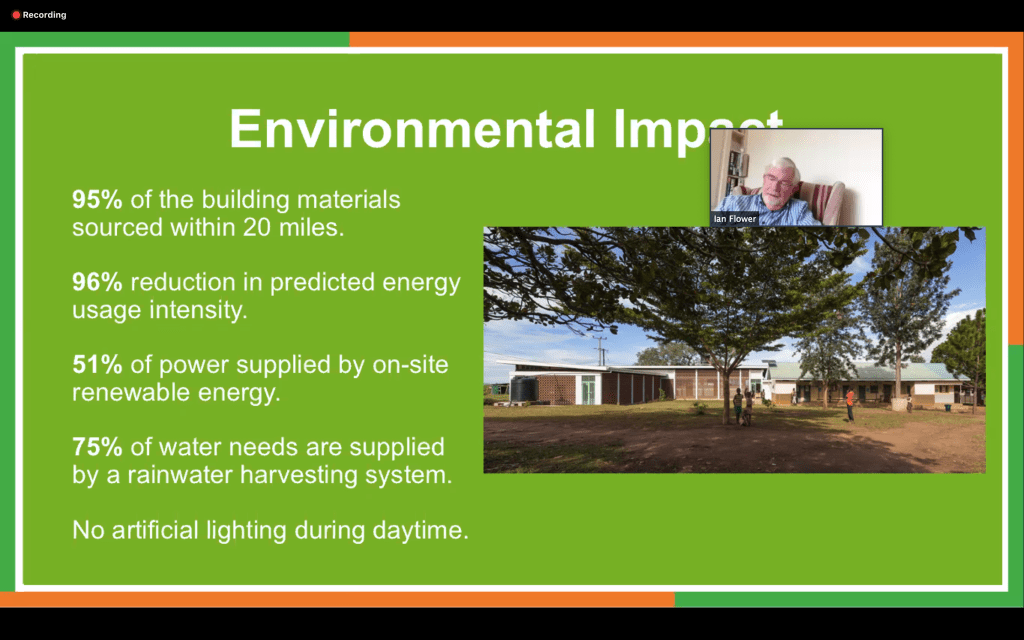
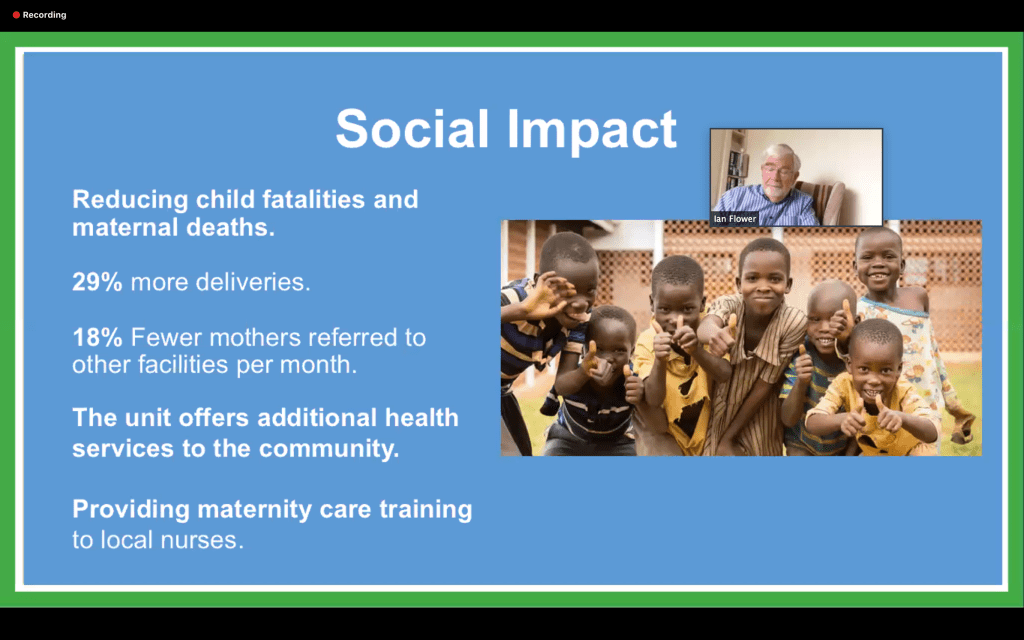
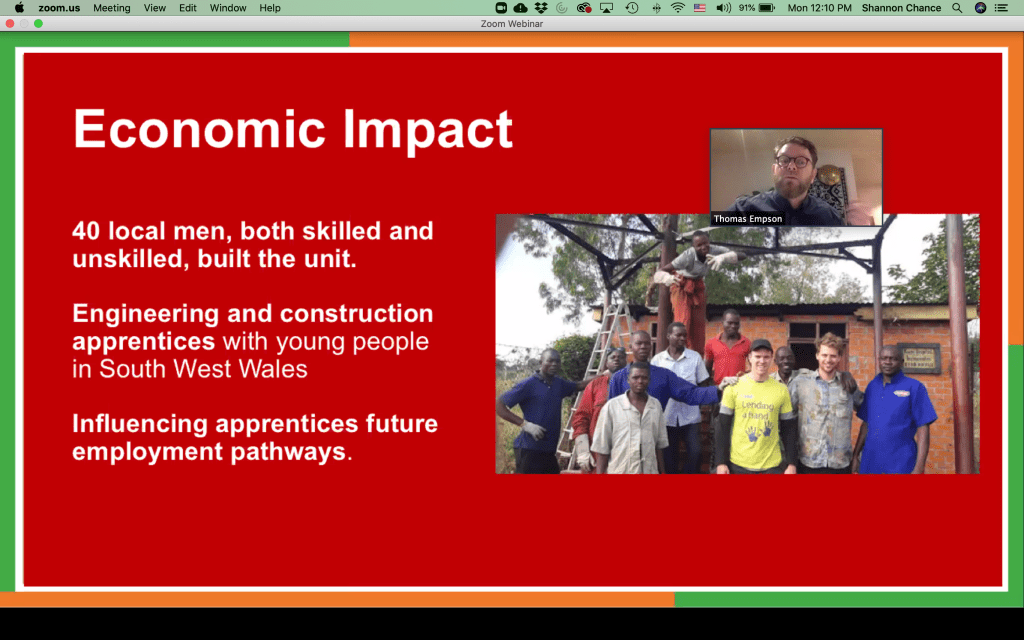
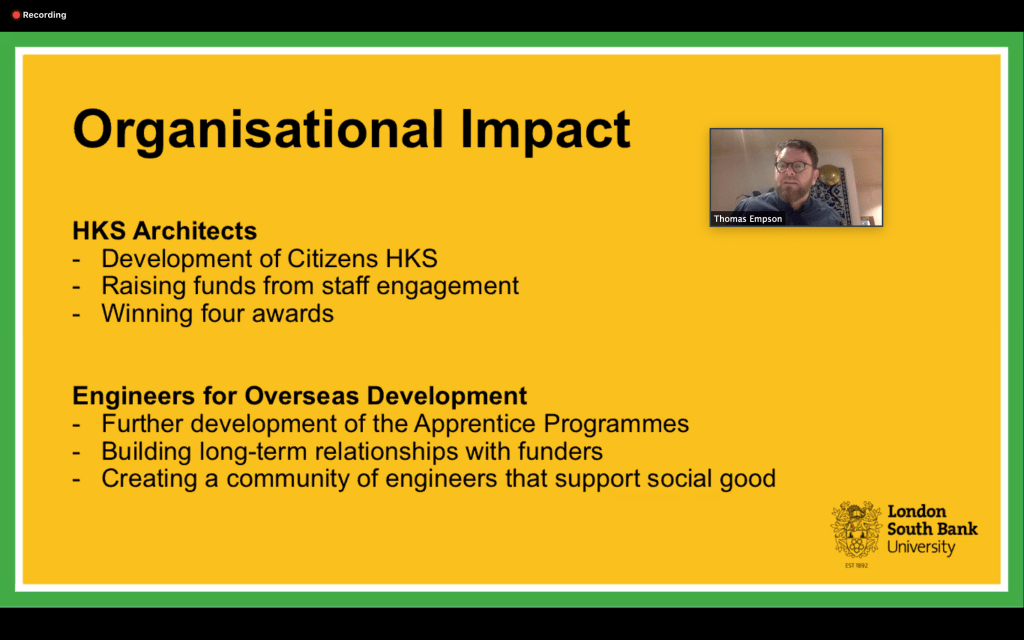
The topic was “Creating Sustainable Development: Measuring the positive ecological, economic and social impact of the Katchumbala Maternity Unit.” Thomas presented his research and then hosted two high-profile panelists: Dan Flower, a Design Director for HKS Architects, and his dad, Ian Flower OBE and Founder of Engineers for Overseas Development (EFOD).
Thomas has been studying aspects of creativity and (environmental, social and economic) sustainability. He has evaluated several case study projects to assess creative practices, processes, outputs, and impacts. The case study he showed today was for the Katchumbala Maternity Unit in Uganda.
Thomas hosted two high-powered designer/activists who made this hospital a reality. It’s a father-son duo with an engineer dad and architect son.
The Hospital generated many positive environmental, social, and economic benefits.
There were also benefits ot the organizations involved:
Thomas has studied creativity within this project and has created a number of really helpful and useful models for assessing sustainable creativity. I’ll share those models with you later, as they are a significant contribution to the knowledge base and have been tested through empirical research.
Today, the audience got a sneak peek at these models and won’t have to wait until Thomas’ viva.
LSBU has loads of interesting sessions planned for the week–why not join in to learn more?
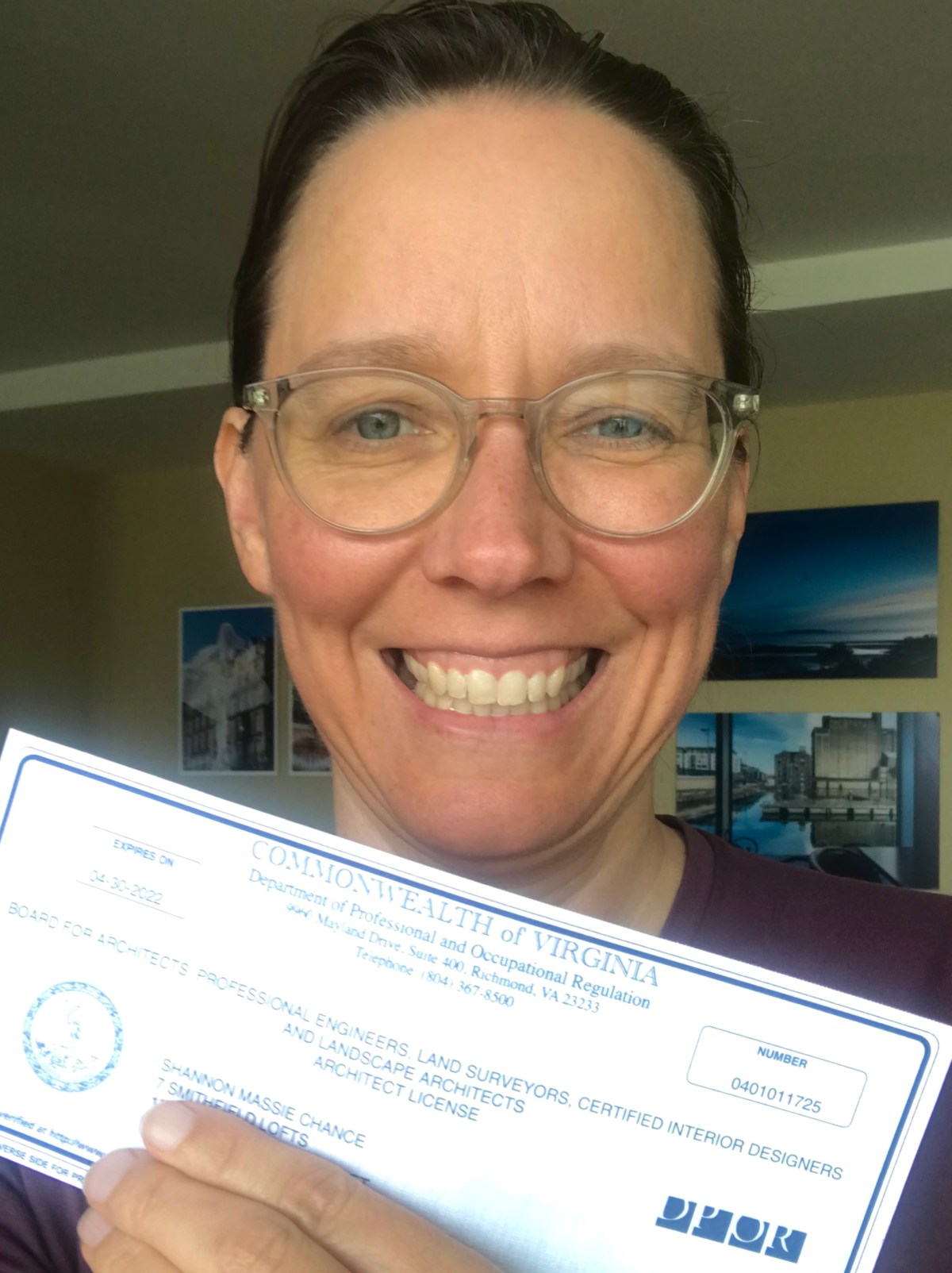
Is that Architect-cheers or Architectures? Today I’m cheering that my updated license has arrived!
With so many moves across ocean and seas, some of my mail never reached me–including an invoice from the Department of Professional and Occupational Regulation in my home state.
Every two years I pay fees to keep my Architectural Registration current, entitling me to practice in the Commonwealth of Virginia. Every year, I also pay fees to the National Council of Architectural Registration Boards to hold a Council Record, which is a national-level endorsement that makes getting registered in additional states easier.
I don’t stamp architectural drawings, so I don’t really *need* to hold a license, but I like to stay current and support the licensing and professional development system. Plus, it’s been nice chatting with the folks at NCARB and VDPOR who assisted me along the way. I’ve always believed that being licensed with up-to-date knowledge makes me a more effective architecture and engineering teacher.
By holding a license in Virginia, I’m allowed to use RA or Registered Architect after my name. By holding a council record, I can use NCARB as well. And then there’s LEED-AP, which indicates I hold a credential in Energy and Environmental Design, also earned through rigorous testing.
In the States, the designation AIA is probably the most widely recognized architecture tag after one’s name, and although I’ve been admitted to the American Institute of Architects, I am not an active, dues-paying member so I can’t use those letters now. The fees add up too fast! It would be great to get Chartered as an Architect over here, through RIAI (Ireland) or RIBA (Britain). As you can see, this is all very complicated. The standards, codes, and construction practices vary so much from one country to the next, that each of these would require additional study, testing, fees, and ongoing country-specific professional development.
To get this little piece of paper from Virginia back in my hands, I needed to complete a series of training modules and tests to show I have current knowledge of best practices in the States. I used downtime over Christmas and the pandemic–along with NCARB monographs–to study:
Sustainable Design Part I: Green Building Standards and Certification Systems
Sustainable Design Part II: Integrated Design
Sustainable Design Part V: Trends in the Profession, Performance, and Practice
Accommodations for Seniors
The Hidden Risk of Green Buildings
Building Design and Security
Building Envelopes Part I: History and Types
Barrier-Free Design and the 2010 ADA Standards
Improving Building Performance Part I: Building Performance and Post Occupancy
Improving Building Performance Part II: Planning, Conducting, & Applying the POE
Perhaps due to COVID it took a month for the envelope I sent to Virginia with the reinstatement application, check, and proof of CPD to arrive at the office in Richmond. So slow, despite the fact I paid €8.70 (nearly $10) to send registered mail. In the meantime, I’d given up hope, called and found them all in the office and fully caught up with all incoming mail, so I paid by credit card using old-fangled fax technology. Yep, Irish mail is slow, but US use of fax and paper check indicates banking technologies could stand to be updated. The envelope arrive a couple days later, and the folks at Virginia DPOR very conscientiously mailed my paper check back to me. I got it a week ago.
Today, I discovered a new license in my postbox, complete with correct and current address. I’m delighted to have it in safely hand!
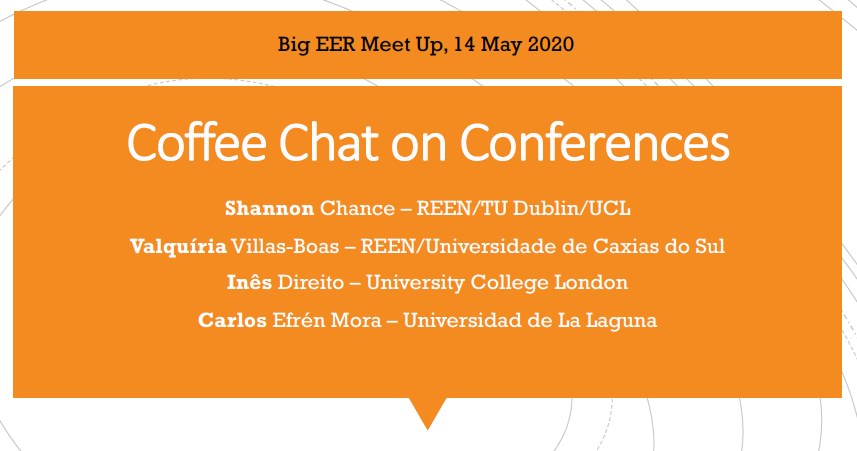
This blog post shares ideas from a breakout “coffee chat” at the May 14th 2020 Big EER Meet Up, hosted by UCL with sponsors including REEN and TU Dublin. Our breakout session asked: Can we make future conferences greener and more equitable by providing online participation options?
It may be of use to people planning conferences for engineering education, engineering education research (EER), and beyond.
Shannon Chance initiated this coffee chat due to her concern for reducing the environmental impacts of conference attendance. Being part of the Marie Curie network (MCAA-UK) had made her aware of the scholarly paper on “Evaluating features of scientific conferences: A call for improvements” by Sarabipour et al (2020). This paper formed the basis of discussion. Shannon feels particularly compelled to develop viable solutions as she is the Chair of the Research in Engineering Education Network (REEN) that coordinates the bi-annual Research in Engineering Education Symposium (REES). REES 2021 is to be held in Perth, and REES 2023 is scheduled for Hubli, India. Although Shannon is passionate about bringing the global community of engineering education researchers together and helping build EER capacity, she’s concerned that so few can be involved in REES due to cost and distance. She recognizes economic inequality of access to the physical event as well as the environmental toll related to academic travel.
This coffee chat was intended to be informal. It was facilitated by:
Dr. Shannon Chance – Chair of REEN, from TU Dublin and UCL
Dr. Valquíria Villas-Boas – REEN Board Member, from the Universidade de Caxias do Sul
Dr. Inês Direito, from University College London
Dr. Carlos Efrén Mora from Universidad de La Laguna
The overall event was globally supported and attended. This graphic lists the co-sponsoring organizations:
The session abstract explained:
Through informal discussion, participants will share experiences of online conference participation, its benefits and drawbacks, and explore how non-pandemic EER conferences could adapt to include rich and rewarding participation for those who can’t physically attend. We will explore recommendations recently published by Sarabipour et al (2020) who believe “Many meetings could still be improved significantly in terms of diversity, inclusivity, promoting early career researcher (ECR) networking and career development, venue accessibility, and more importantly, reducing the meetings’ carbon footprint.” This non-reviewed paper examined “over 260 national and international academic meetings in various disciplines for features of inclusivity and sustainability” and its authors “propose solutions to make conferences more modern, effective, equitable and intellectually productive for the research community and environmentally sustainable for our planet.” With such enthusiastic participation in recent online EER seminars, could EER possible lead the way?
Several resources are available for attendees. Anyone with interest can access them:
A very diverse group attended this coffee chat. We briefly describing introduced ourselves as, for instance:
A teacher of engineers
I like to work in teams
Was on the organizing committee for a conference transitioned to virtual last month
I am planning/organizing a conference in pre-college engineering
An architect
I’m current president of the Student Platform for Engineering Education Development (SPEED) where I found out how passionate I’m about Engineering Education 🙂
I consider myself a citizen of the world. I have lived in 4 countries and 7 different cities, and my family has 3 different nationalities.
We had about 17 attendees in all–good turn out for such a serious topic.
We started by asking participants to take a minute to type into the chat about an enjoyable experience you’ve had in EER virtual learning recently, or provide a short reflection about being a “virtual” or a “face-to-face” person.
Virtual conferences are great for being able to attend with less time & money commitment. However, we need better ways to meet people at virtual conferences.
I love teaching on a chalkboard! I miss being in the classroom with my students. I am enjoying the interactions that I have with students during virtual lectures, but it feels like the balance of control is much more strongly with me, and I have to remember to give students space to contribute the disruptions that are more natural in the classroom.
I loved this [online Big EER] conference!
Easy access to EER community across the world. I have loved attending session that are open ended questions about how we navigate online teaching and learning, and everyone can share what they have been doing.
I find that being a virtual participant is more environmentally friendly by avoiding air travel. it would also be easier to attend more events than I would in person.
Current time is forcing us to adapt quite rapidly to the virtual context, it is important to make the most out of this experience.
I prefer being a face to face person; I am more of a “face-to-face” person because I like to see people’s reactions and smiles.
I’ve enjoyed getting together with architects and engineers for informal chat.
I participated od EDUCON 2020 and I had a great experience participating in workshops.
I’ve had more productive and enjoyable small group meetings with my pastoral supervises since lockdown – better than when they are physically squashed together in my quite small office.
I enjoyed getting to know a larger group of people (and new topics) in EER that otherwise it would not be possible.
I enjoyed being able to meet persons from very different backgrounds and cultures.
Many of the most positive and engaging online experiences I have had, have been since lockdown.
It’s been nice to travel the world from the comfort of my house while enjoying engineering education research.
I’ve been very impressed with how smoothly it has run, and how easy to participate.
During this Corona crisis period I have had the opportunity to attend conferences, webinars that I would not have been able to attend in person in a normal period.
Last Dec the SEFi working group on ethics organized a two day workshop that integrated online participants in all sessions: online presentations from the team of Virginia Tech (Diana Bairaktarova & Tom Sealy), Q&As taking questions from online participants, mixed breakout tables with both in person and online participants. The workshop had 60% in person participants 40% online participants.
Easy access to EER community across the world. I have loved attending session that are open ended questions about how we navigate online teaching and learning and everyone can share what they have been doing.
This experience today has been great – lovely to feel connected to people and conversations that I would normally be far away from.
Also have been thankful for the opportunity to attend conferences/meetings that I wouldn’t otherwise be able to due to my reluctance to be away from home.
Yes, you can “attend” many more conferences in the same time and less expense.
Also much more awake for conference sessions (sometimes getting a decent night’s sleep can be difficult in hotel rooms).
I think though that it is harder to build the connection with people who you don’t already “know”.
There was a webinar by the folks who ran LAK 20 online on two weeks’ notice. The policy was to have speakers present at a time appropriate to their timezone and upload immediately afterwards so that people in other timezones could see the talk.
And somehow interacting with my normal face-to-face colleagues via online seems almost natural – the connectivity is there.
Science is a global endeavour and we as scientists have the responsibility to make conferences more affordable, environmentally sustainable, and accessible to researchers constrained by geographical location, economics, personal circumstances or visa restrictions.
Career development and networking, especially for early career researchers (ECRs)
Venue accessibility
Environmental impact, carbon footprint (Sarabipour et al, 2020)
Many can’t travel, for example:
Early-career researchers
Researchers from young labs and low- to middle-income countries
Junior principal investigators (Sarabipour et al, 2020)
There is inequitable access regarding:
Gender
Ethnicity
Socioeconomic status
Health and mobility
Geographical backgrounds
Career stage (Sarabipour et al, 2020)
Geographical inequity:
Visa inequity
Maps in the paper by Sarabipour et al (2020) provide a visual comparison of Germany, Iran, Argentina, and South Africa–green you can go without a visa, grey you must purchase a visa.
Travel requires resources: time, physical exertion, and family management, as well as funding.
“The less wealthy subsidize the expenses of the speakers, who usually attend scientific meetings free of charge.”
Registration fees can be steep and “Large conferences are often hosted in expensive cities as there are many accommodation options for large crowds, while conferences in more affordable locations are typically smaller in size.” Food often costs more there, too!
“Women and researchers from racial and ethnic groups, who are under-represented in various fields, are the least likely to be offered opportunities to speak at meetings in their discipline”.
“The experience of presenting at meetings for early career researchers (ECRs) and minorities who attend has not improved appreciably”.
“Digitalconferencesanddiscussionforums can, in fact, serve to assist communication between early career and senior researchers since writing a comment or question in a forum can feel less intimidating than approaching an established scholar in person.” (Sarabipour et al, 2020)
Environmental Toll: CO2 emissions
“Global aviation as a country ranks among the top 10 emitters”
“Conference attendance represents 35% of a researcher’s footprint”
This was one of four maps provided in Sarabipour et al (2020). For one person, “Flying from Perth, Australia to London, United Kingdom and back for the annual Immuno-Oncology summit 2020 generated about 3,153 kg (3.47 tons) of CO2. There are 109 countries where the average person produces less CO2 in a year”. It’s equal to a full year’s emissions of all the brown areas on this map. This is the same path that Inês and I plan to take to Perth if we are lucky enough to attend REES 2021.
Participants commented:
This financial impact will be exacerbated in the current economic climate.
That’s a great point @Shannon. We’re teaching Sustainable Development Goals, but attending conferences can have a huge negative impact.
A participant from the US queried:
The “environmental impact” from a single conference is miniscule.
Of course, this assumes that you believe that CO2 emissions are harmful …
We need a better way to “meet” people in online venues.
The last point gained support from other participants:
Agree – it’s difficult to do accidental networking/meeting in online conferences – tend to stick to talking to people you already know/recognise.
I agree.
Absolutely. Many interesting conversations/networking happens in less structured settings – coffee breaks, etc. How can we ‘create’ these opportunities online?
Shannon shared some Recommendations from Sarabipour et al (2020) that could apply in EER:
Replace in-person national and international meetings with more ground-based travel to regional meetings
Hold small and large meetings fully online or connect regional conference hubs digitally by live-streaming the conference [possibility for REES 2021+EERN-UK/IE]
Make research results more accessible globally via virtual access [eg, REEN database] and pre-printing
Foster digital networking by investing in relevant, immersive and interactive experiences [do more of these]
At physical conferences:
Stop generating junk (paper, souvenirs, badges)
Organize well-planned networking activities
Include public outreach & environmental clean-up (Sarabipour et al, 2020)
Graphic from Sarabipour et al (2020) of key considerations to take into account in planning any conference.
Next we discussed a question posed by Val: Why and how would making EER conferences greener impact you as an EER researcher?
Possibility to attend conferences via online would be very helpful for me as a researcher from SA without lots of funds – I would love to attend REEN 2021 but I don’t see how I’ll afford it.
Better access to far away and more conferences.
It would allow me to attend more conferences, since I wouldn’t normally fly to more than one conference per year for environmental considerations (would prefer not to fly at all).
Overall it would make easier to attend conferences if they are virtual. But also, it is easier to make connections in person.
Positive impact: more opportunities to attend events and meet people that I wouldn’t otherwise; ‘feel good’ reducing carbon footprint. Negative impact: human interactions are more challenging online.
With online conferences might see more female researchers participating, especially mothers with young kids who might find it difficult going away for a longer period of time.
I have never been to a REEN conference due to child care considerations, but I would definitely engage online.
Online conferences are less disruptive to teaching schedules – you can conduct your teaching and dip in and out of sessions.
Sometimes it’s difficult to physically travel to a conference fitting it in around teaching commitments.
Is it easier now to justify virtual conferences and meetings? Now we need to do it due to the Covid.
But if we want to build networks we have to do that intentionally.
I would like for online events to have ‘online dinners’ ‘online coffee breakout rooms’ where people could chat by video in an informal manner or to continue the discussion following a talk.
I suspect online conferences would encourage me to take a “chance” on hearing talks from people/projects that I was not aware of before.
I think that having online events makes it possible to design smaller, more frequent gatherings rather than trying to do mega-events.
When I was in Australia for a year, they told me how much time it took to get anywhere!
I am certainly more interested in attending a one day event online than I would be to attend a weeklong online event.
Totally agree with [above comment]! ASEE, for example, can be overwhelming. The sessions you want to attend have limited places. The colleagues you want to reach/get in touch with are difficult to find in the crowd!
I think virtual conferences actually make the physical conference more productive – you can read someone’s research, interact with them online, and if there is traction, you can meet in a physical conference and this will be more productive as you already know each other.
Totally agree – mix of virtual & physical is ideal.
Yes!
I had a glass of wine before talking to Eric Mazur 🙂
Next we discussed the question: How could online participation options work in EER?
Can do online collaborative workshops with colleagues at different institutions easily. Definitely easier to attend than in real life but would be my personal preferences to have a hybrid somehow – but unsure if I am at a conference if I would be interested in doing the online version of that….
Maybe maintain a certain topic coffee break every x weeks. This way we can meet people with the same topic interests. (Like group writing meetings.)
You have to be much more strategic in designing interactions – you just can’t have as many talks in a day, or such quick turnaround between talks, as you would in a physical conference. Large amounts of parallel sessions would be disastrous, I think. Today was a good model – multiple time zones, and everyone speaking was a keynote.
The same way works face to face.
Combination of keynote sessions, workshops, and less structured formal sessions. Other idea would be to provide the option to join ‘interest’ groups.
Would be nice if live streaming/recording of sessions would become common practice. Enabling online participation for in-person conferences. For conferences which are solely online based, including online informal sessions.
I went to REES in Bogota, 2017. It was a great experience. The sessions were very interactive. Very different from those conferences where you have 10 minutes to present your paper, nobody asks you a question and that is the end. I think that the way the sessions were run could be done virtually too.
Another random idea I would like to share: There are conference apps (Whova at https://whova.com/virtual-conference-platform/, Conference4Me) that have networking features (you can meet other attendees with similar interests). This could easily be extended to online conferences. Also, these apps could be extended to accommodate attending multiple conferences at one time, so you could make up a personal schedule of events from both conferences.
Haven’t been to REES either – distance was the reason.
I think we need to add ‘bring your own drink session’ to these online events!
🙂
BoD
Well… this event was, after all, called BEER 😉
I agree with you Ines. Also if there were options for people to set up their own private meet-ups within the conference software – just as we would do when we form small groups during tea breaks.
Actually the REES format forces you to engage. Perhaps this could be a feature that can be built into an online session.
It’s also good to share recordings later – many colleagues couldn’t join due to timezones.
If you have a gap between the session and discussion, you might lose people.
Based on the number of online attendants today, there is a real need for this type of events.
Shannon posed ideas of holding smaller, regional conferences in alignment to share resources and conversation virtually, for instance:
The winter meeting of EERN-UK & Ireland could be aligned with REES 2021 scheduled for December 5-8 in Perth.
REES 2021 could broadcast some presentations and virtual attendees (such as those gathered on another site, or in their own homes) could submit questions using, perhaps, Padlet as implemented successfully at REES 2019 in Cape Town.
Another alternative to Padlet is Jamboard.
Agreed!! I was thinking of Padlet yesterday!
@shannon, I agree totally
Shannon, its a good idea, I am thinking of two or more research groups in different places meeting, individually, and then sharing their discussions with others.
Shannon noted that we need to implement sliding scales for registration fee, or somehow recognize that people from lower-income countries can’t access many of our events physically. Comments on that included:
The conferences that still have big fees are those run by societies that are trying to support their ongoing expenses. I have seen major conferences where the fee is as low as $30.
I’m attending an audio conference coming up virtually but the fee is still $175. Not sure why.
Educon2020 had different fees for people from low income countries.
ASEE, for example, makes a lot of money at the annual conference to support their headquarters and staff. Despite the $500 registration fee, they are still taking a hit to their sustaining fund.
By audio, we noted that conferences that had to quickly shift online had made payments out, that would be lost.
That point about sunk costs is a good one. The conferences that have paid a lot of up-front fees are mostly this spring and summer. Moving into (northern) autumn, we should see some of the fees come down.
Speaking of broadening participation, a virtual conference is a great way to get your students into the academic community at an earlier stage in their education.
One participant said she was new to EER and, in attending this Big EER Meet Up, found this academic community very welcoming. She said she felt much more welcome that in her home/technical discipline. She asked what our experiences were.
Shannon described her transition from architecture (teaching in the States) to engineering education in Europe after she attended SEFI 2012 and experienced a very warm welcome.
@shannon, I agree with you. I am a physicist and EER community is much, much more receptive than the Physics community.
Agreed, also more receptive than Aerospace. Feels like a real community. Inclusive 🙂
The session lasted 1.25 hours, and it drew to a close, participants added:
Great discussions everyone – sorry I can’t stay much longer (it’s supper time in this household) – looking forward to ongoing discussion about moving online!
I need to leave now, this was a good conversation. Thank you to everyone for organising and participating.
I will also ditch… fake SA winters are hard work! Thanks Shannon, Inês and Carlos 🙂
What a great day, and final session. Take care everyone.
Bye Diana! Great work!
Bye Diana. It was great to see you. And what a fantastic presentation!
Thank you ladies! hope we can meet soon. SEFI was also moved online this year.
I know. Very sad about that.
Diana asked: Why is it so difficult to close this meeting? I enjoyed it too much! If you organize any events or online talks including ethics, drop me an email please so I can include them in the SEFI newsletter!
Most days, I find myself communicating with colleagues from afar on various projects, proposals, and ideas. On a typical day, I hear from Dr. Inês Direito in London (UK), Dr. Lelanie Smith in Pretoria (South Africa) and Dr. Carlos Efrén Mora Luis in Tenerife (Spain). We have many overlapping interests–one being how to understand student motivations and emotions and how to use this understanding to help students tackle and persist through challenges. I often hear from our co-author Dr. Bill Williams, from outside Lisbon (Portugal) as well.
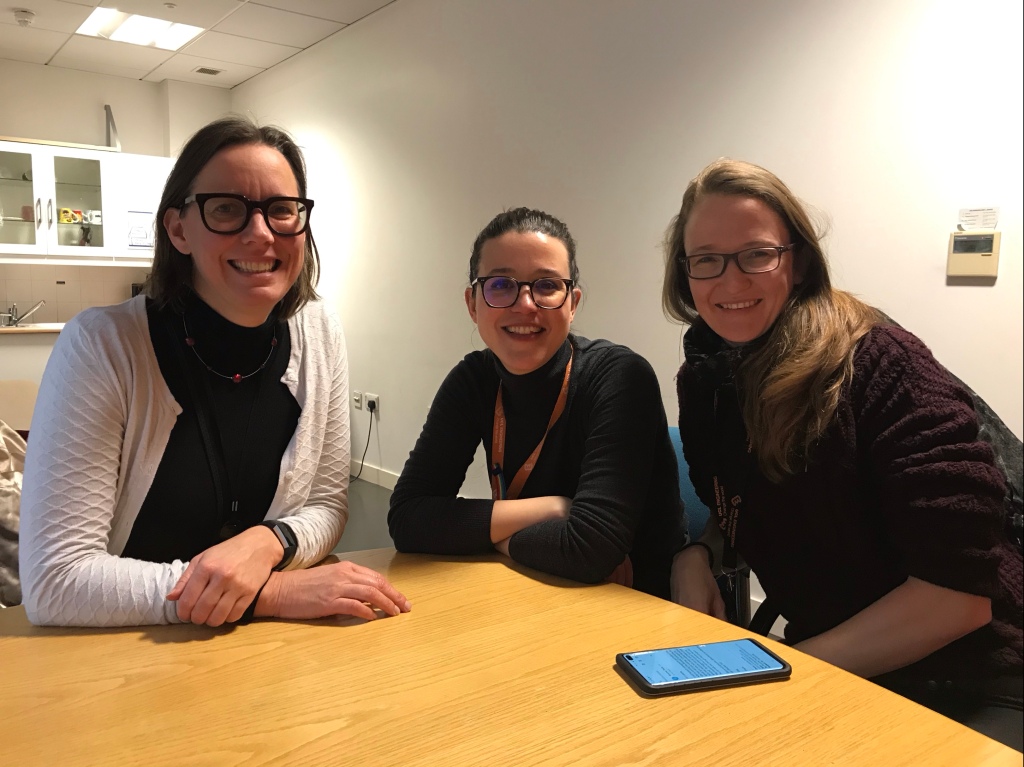
A past meeting of minds among Inês (center), Lelanie (right), and me. These days we can only meet online.
In addition to engineering motivations, we are also all interested in sustainability — environmental, economic and social. So over the past few weeks, WhatsApp and Signal chats have been rich and frequent.
Today alone, Lelanie, Inês, and I discussed research plans. Inês, Bill, and I submitted a conference paper on Brexit (with Inês in the lead and comments from Bill and me). Inês and I refined a journal manuscript on engineering ethics (with me in the lead and verbal input from Inês — she will edit my current version in the morning).
Down in the Spanish Canaries, Carlos has been fighting sand storms, as dust from the Sahara Dessert enveloped the islands. The weekend’s sandstorms were one of a number of challenges he’s faced recently, but he’s never one to give up.
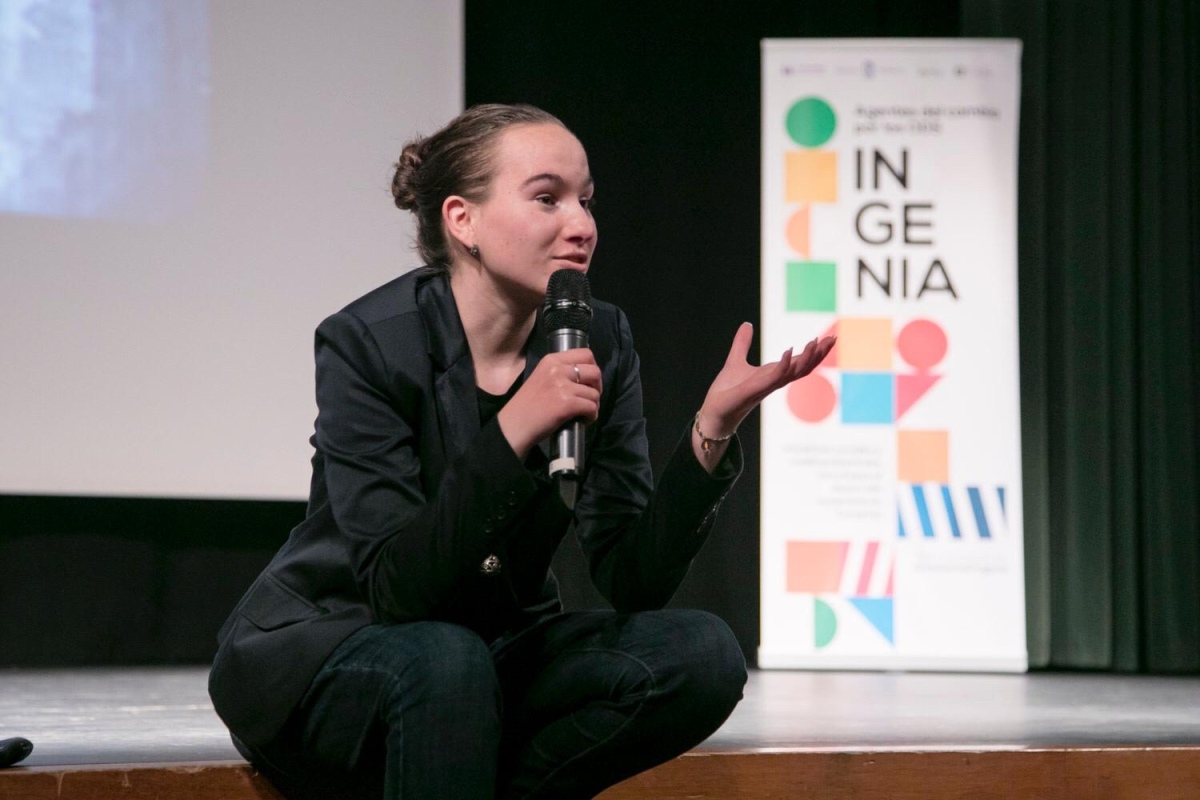
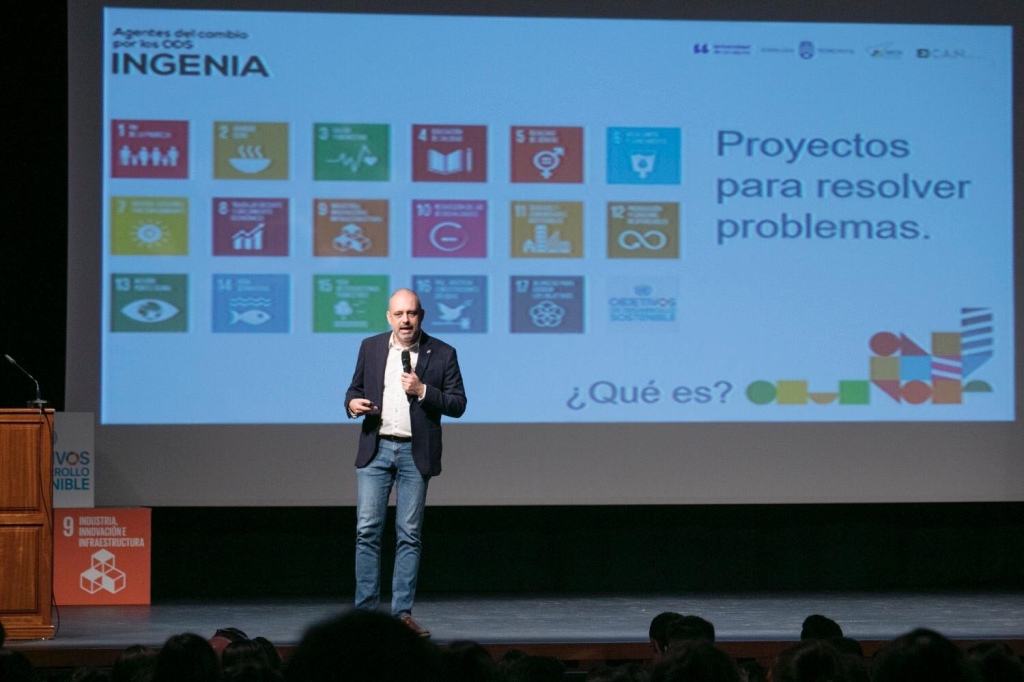
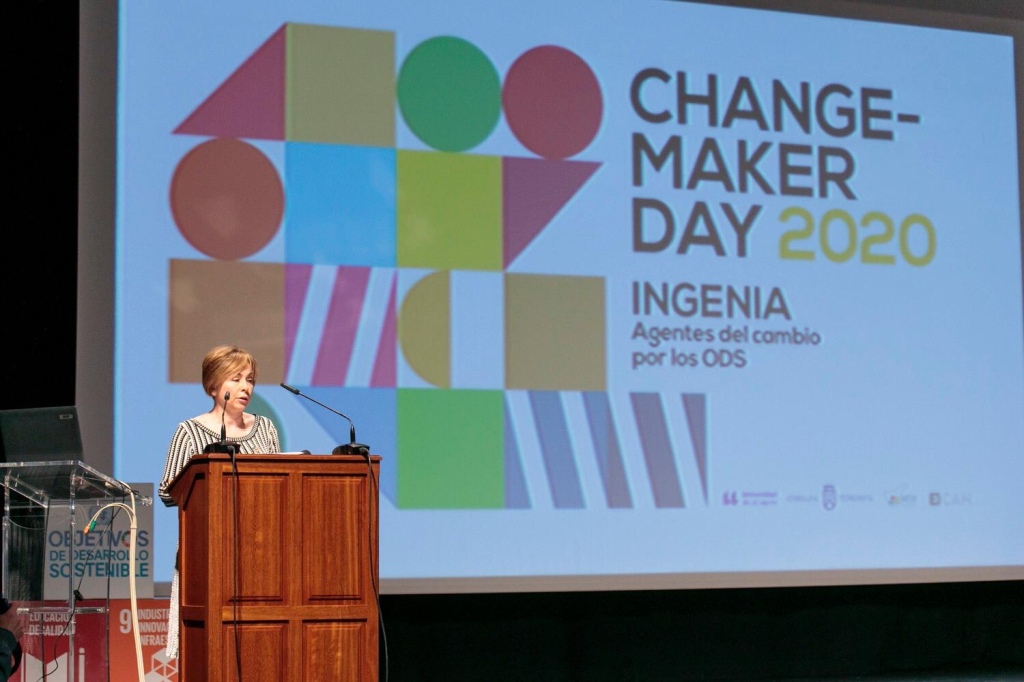
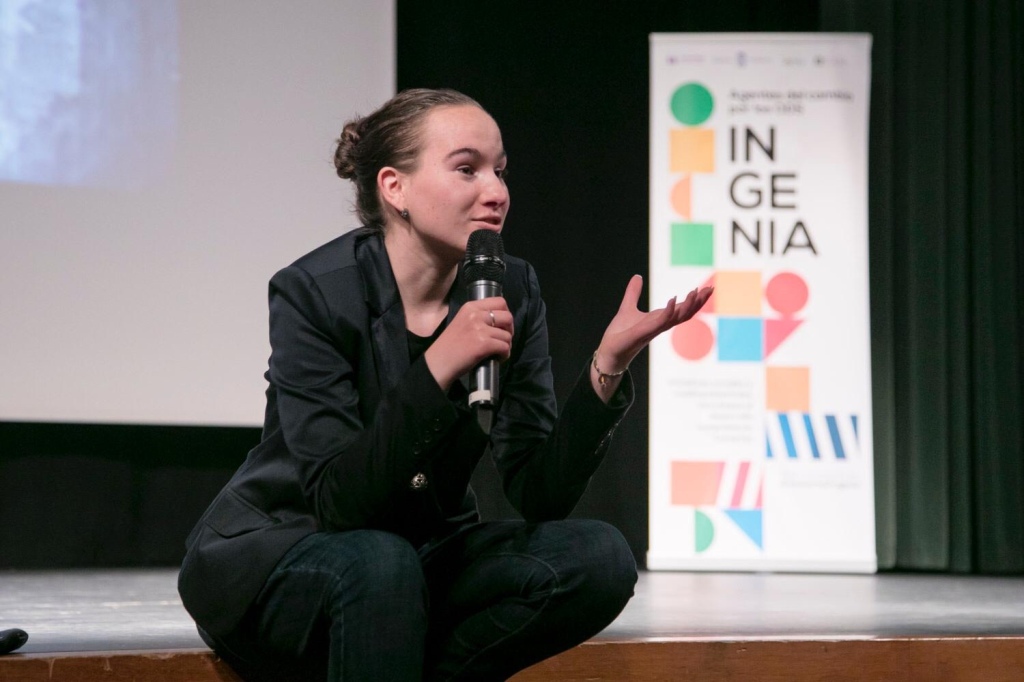
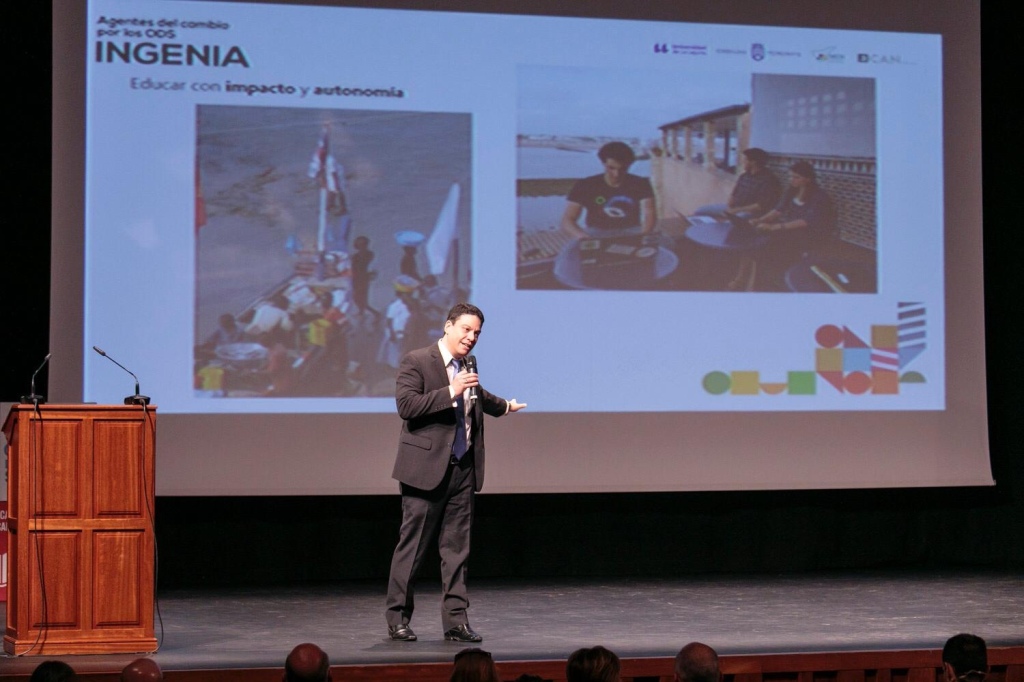
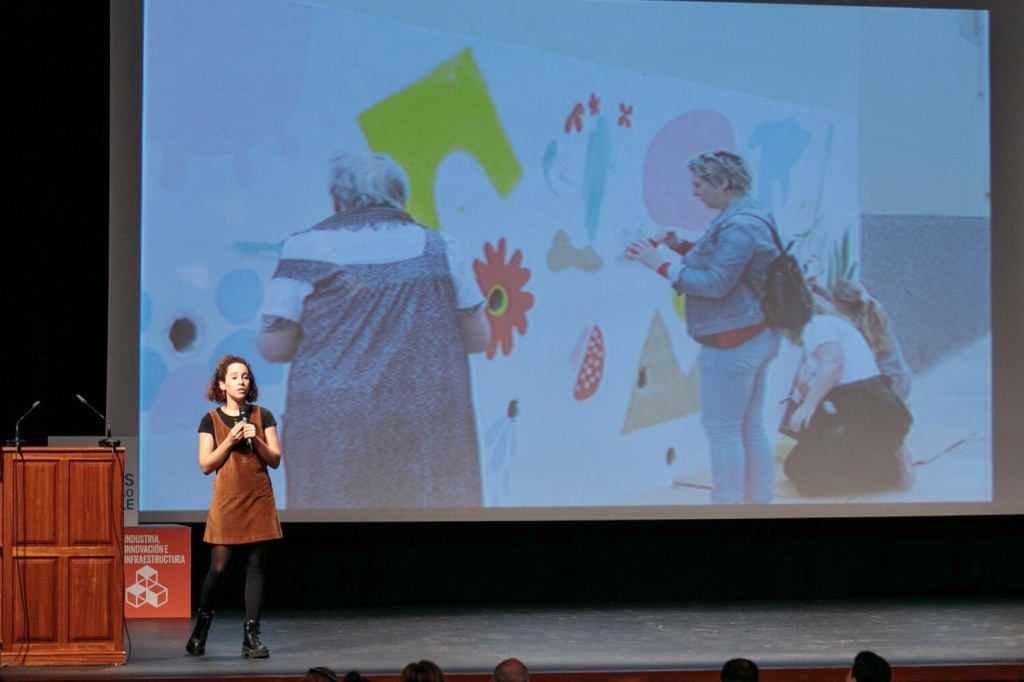
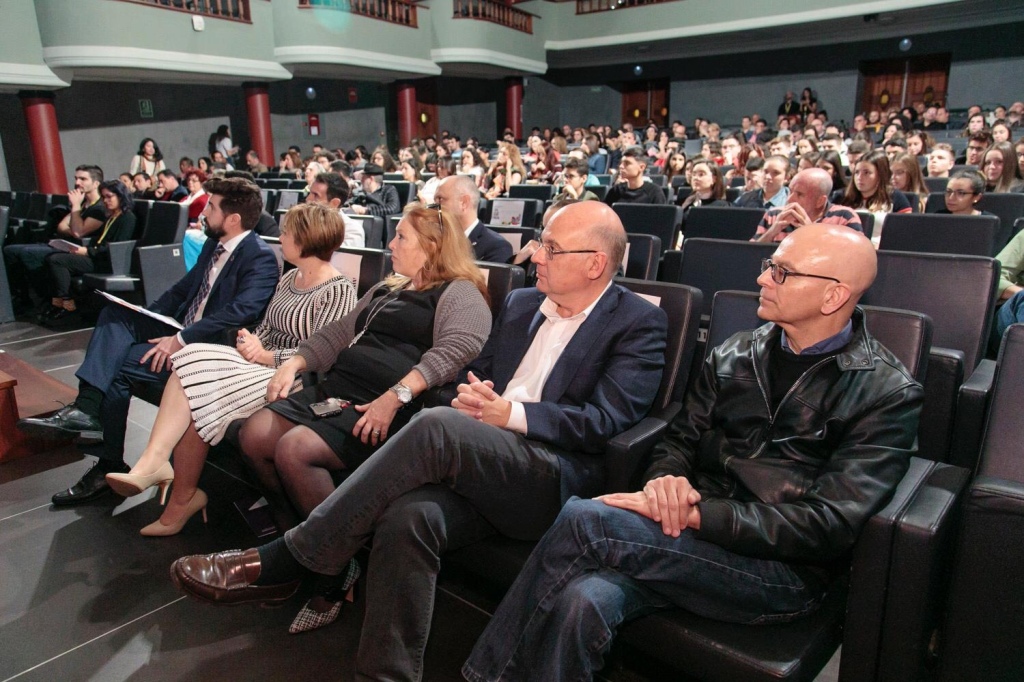
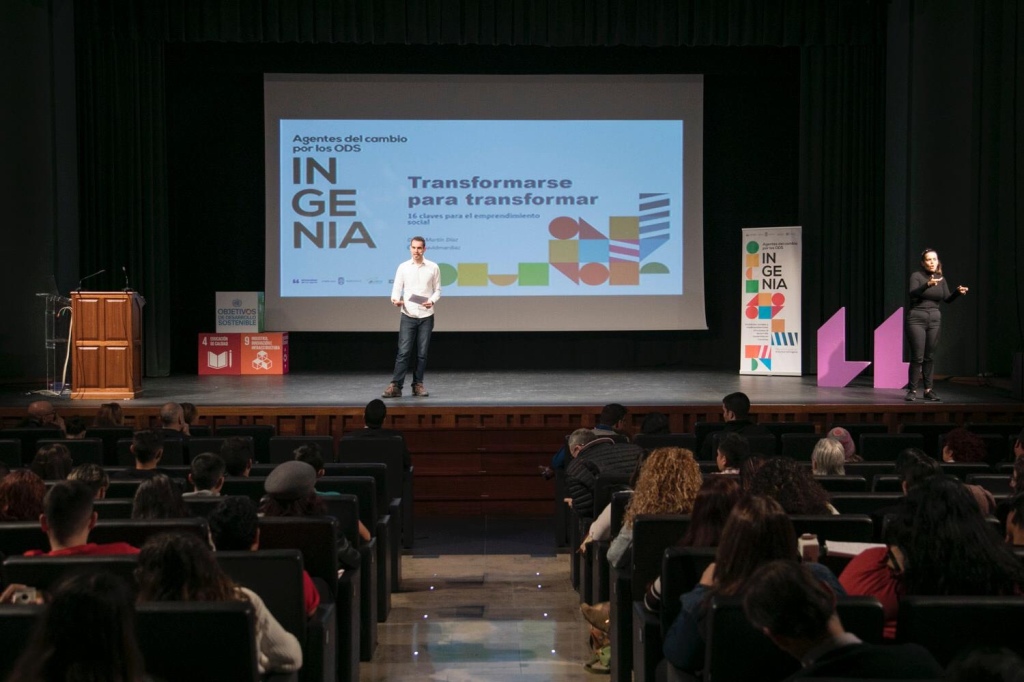
Carlos (Dr. Carlos Mora) speaking at the launch of the INGENIA project. Hundreds of students attended the event, which featured speakers from around the world.
Carlos and I didn’t win the grant we applied for this past September, despite having put months into the proposal. We’ve picked ourselves up, brushed off the disappointment, and developed a plan to perfect and resubmit. I know all too well that resubmitting makes a world of difference! It’s the best way to win funding. Yesterday, I was rallying our troops, gathering support for a new round of work. I am confident that eventually we will succeed.
But we haven’t been sitting around waiting for success to come.
In December, Carlos submitted an additional grant proposal, this one to the Cabildo of Tenerife, Spain, for €56,000. He received funding for the project titled “INGENIA.” Carlos explained to me that the word “Ingenia” comes from “Ingenio,” which is “Ingenuity” in English. So the project is fostering “Ingenuity” to support sustainability education.
I’m honored that (as a result of me coaching him on how to write grant proposals) he included me as a co-PI.
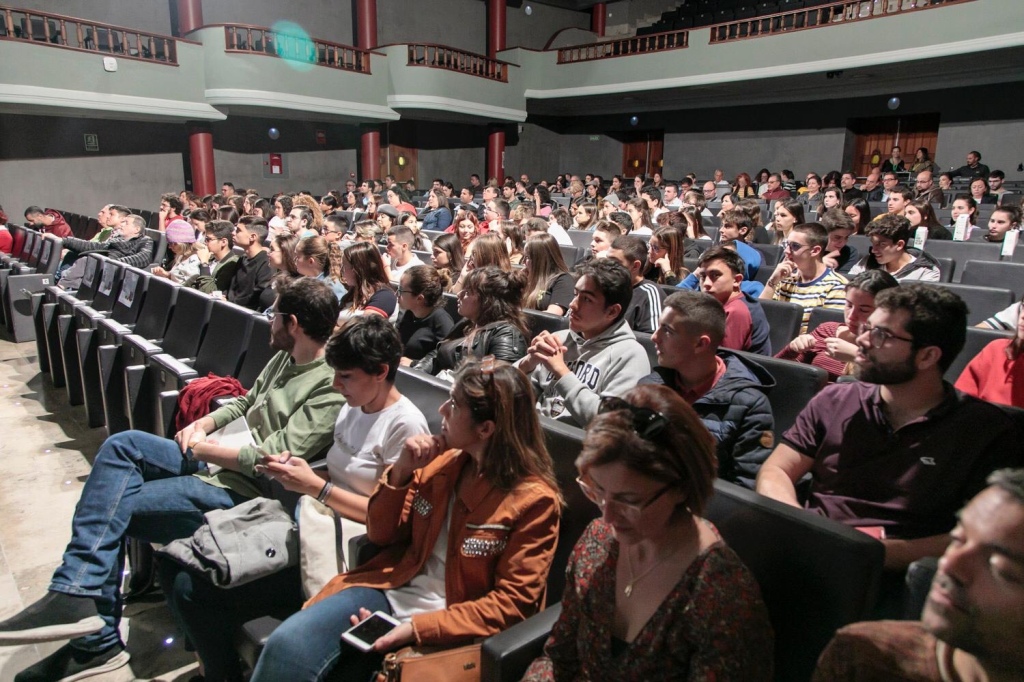
On the 31st of January, Carlos and his colleagues in Tenerife launched his extremely well-designed INGENIA project. It was a true thrill when over 300 people attended his launch that Friday!
Carlos has summarized in English that “INGENIA wants to show that students can find sustainable solutions to real life problems linked to SDGs in Tenerife.” Students will build their own research teams and find a supervisor who will help manage the financial resources for their project.” In other words, the students “will have to find relevant problems and then propose solutions. The final part of the process is selling their solutions to companies and administrative public offices.”
Students will engineer their solutions and compete for funding to realize their projects. Below, I’ve included information that Carlos wrote to described the project, which is being conducted in Spanish. I can understand a bit by reading the Spanish materials he produced, but he was kind enough to translate for me/us!
INGENIA project
The Spanish public universities agreed recently contributing to the 2030 Agenda by building and transferring knowledge and skills to society about the Sustainable Development Goals (SDGs). Universities can contribute with teaching, learning, and student-participation methods to transfer not just the skills, but the motivation needed to face the SDGs. Like other Spanish higher education institutions, University of La Laguna (ULL) endorsed the United Nations (UN) SDGs initiative, and has a detailed understanding of the importance of its local problems linked to the environmental, social, and economical sustainability of the Canary Islands.
INGENIA is a project coordinated by ULL that is focused on the needs of the local society in the Canaries that supports building knowledge and skills on the participating students. INGENIA uses Project-oriented Problem Based Learning (PoPBL) learning strategies to motivate the students to find and propose solutions to real problems linked to the SDGs around their own environment.
Objectives
Train university and high school academic staff in using active learning strategies to impulse SDGs.
Educate postgraduate students, and academic staff, in facilitating techniques and strategies to guiding students in complex projects linked to SDGs.
Develop real student projects with a high potential for positive impact in the Canarian society.
Implementation
INGENIA will be implemented in three stages:
Informative and training actions. Informative actions will include a conference to be held at ULL in its theatre showing how students can change the world. Training actions will include workshops with specialists in Engineering Education focused on PBL and the evaluation of the impact of student projects. Goal: Get teachers motivated to help students in writing their proposals. Each of these teachers will also serve as guarantors for a team of students, and guarantors will assume the financial responsibility of the projects they back.
Training of facilitators. A group of postgraduate students will receive specific training for PBL, Motivation, Conflict Management, and Project Management. Facilitators will collaborate with guarantors in guiding the student teams. Goal: Having at least one facilitator for each wining proposal.
Project development: INGENIA will include a call for proposals. Student teams must justify the relevance of the problem and the feasibility of their solutions. Winning teams will receive funding for their projects, and must execute their projects within two months. At the end of this period, each team will write a report to identify the impact of their solutions. Students will participate in a public exhibition in October 2020, and will also have the opportunity to show their solutions to companies and public institutions with the aim of getting additional funding to continue their projects.
Carlos explained that the 31st was a day full of feeling. One of the speakers told such a moving story that the audience shed tears of emotion. Specifically, two students described their experiences; the second of these is working with ‘invisible’ people, meaning people who appear in social statistics, but have no work, no home, and thus no address. Carlos said she did an excellent job transmitting her feelings. She said, for instance, “that one day, she cooked rice for homeless people, but she was so busy that she forgot to turn off the cooking plate.” The rice was damaged, but she salvaged and packed up as much rice us she could, and went to give it to people in the street in Tenerife. She gave a portion to one man, and stayed looking at him. As the man was eating that rice, he stopped, looked at her eyes, and said what a lovely smile she had.
When she finished her narrative at the launch, one retired professor raised his hand to say something, but when he tried to start broken into tears. He cited numbers — the number of people invisible to all of us — and then he said that he had lived this experience along with her, and that she had touched his heart. The student walked down from the stage and gave the professor a big embrace. All the assistants, students, and teachers in the audience started to applaud.
It is this sort of change Carlos hopes to inspire among more students, and this is the sort of communication I received from Carlos daily.
After the student’s talk, many people were in tears, including Carlos. But he couldn’t stop to weep: he was next up on the stage.
Carlos needed to explain details of the program and how it will run. He had to explain the schedule and what will be expected of the various people working together in teams — including the student team members as well as the post-graduate and faculty member (e.g., professors) advising each team.
Carlos said the event was so motivating, inspiring them all to go out and find problems to solve. He received oodles of questions from students and academics wanting to participate. He said “Yes, I still can’t believe it, but something positive happened today!”
I have included images that are copyright of the photographer, Emeterio Suárez Guerra, and used with permission of Carlos.
It’s been a great start-of-semester and welcome-back here in Dublin. I’ve been settling back in at TU Dublin, since the first of the year. I’ve been learning to juggle a host of new job responsibilities along with my favorite existing projects. There’s so much work to be done!
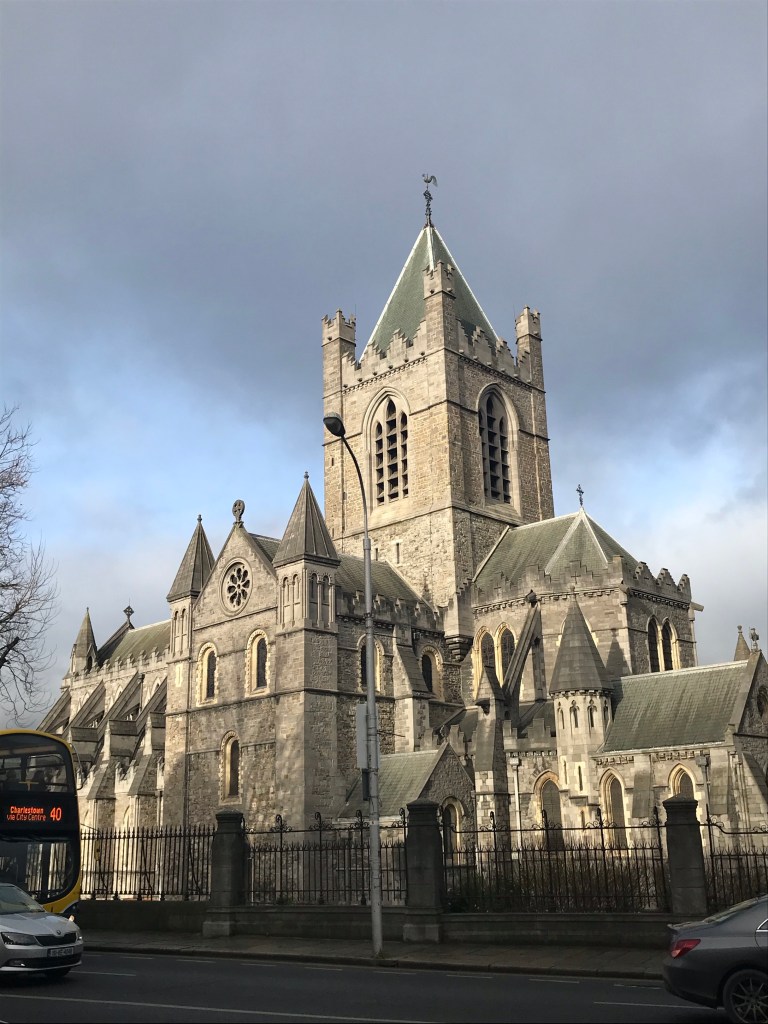
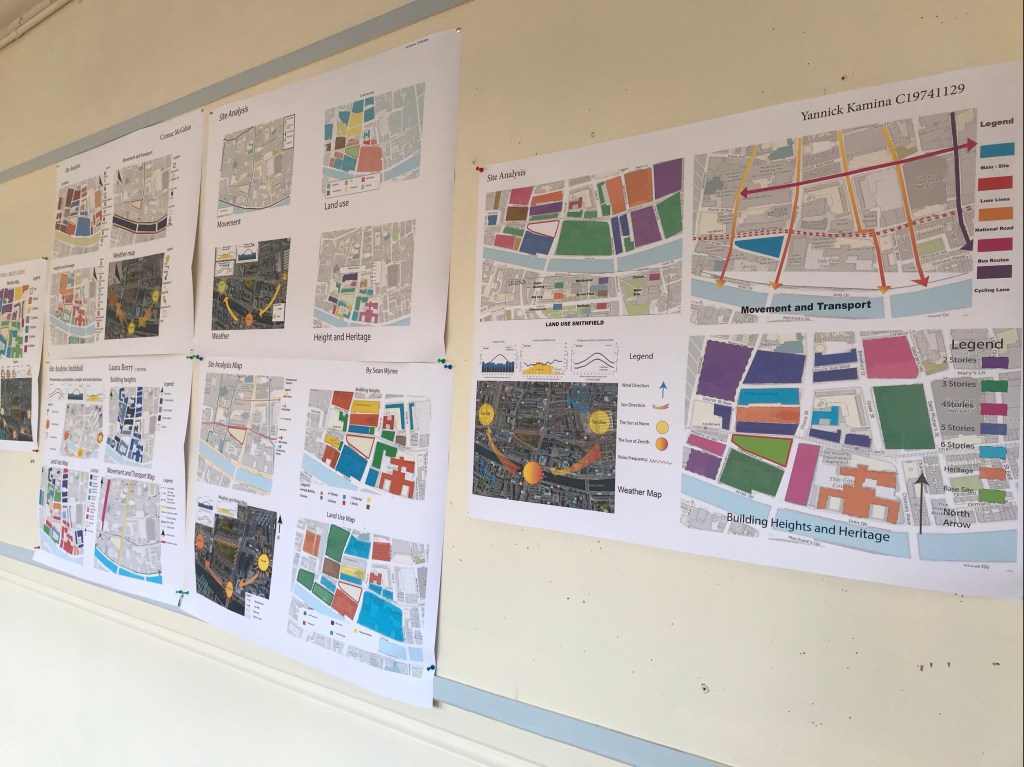
Images from Dublin (my walking path between TU Dublin buildings), my Tech Graphics class (day 2), and postings in the hallway that remind me of projects led back in the States.
In addition to teaching first-year engineering modules/courses, I have also been helping launch the new MSc in BIM, working on curriculum development (which buys out half my work time), finalizing research projects for publication, and drafting my final report for the 2018-12019 fellowship I had to UCL.
I’ve also attended a host of special events:
The launch of TU Dublin’s new strategic plan
A two-day conference on “Rethinking the Crit” in architecture and design education.
Tech support workshops for staff on Brightspace and Agresso
Personal wellbeing workshops for staff on insurance and personal finance.
A planning sessions with our ever-expanding RoboSlam team preparing for Dublin Maker 2020 (June 2020) and our upcoming Engineering Your Future week (May 2020)
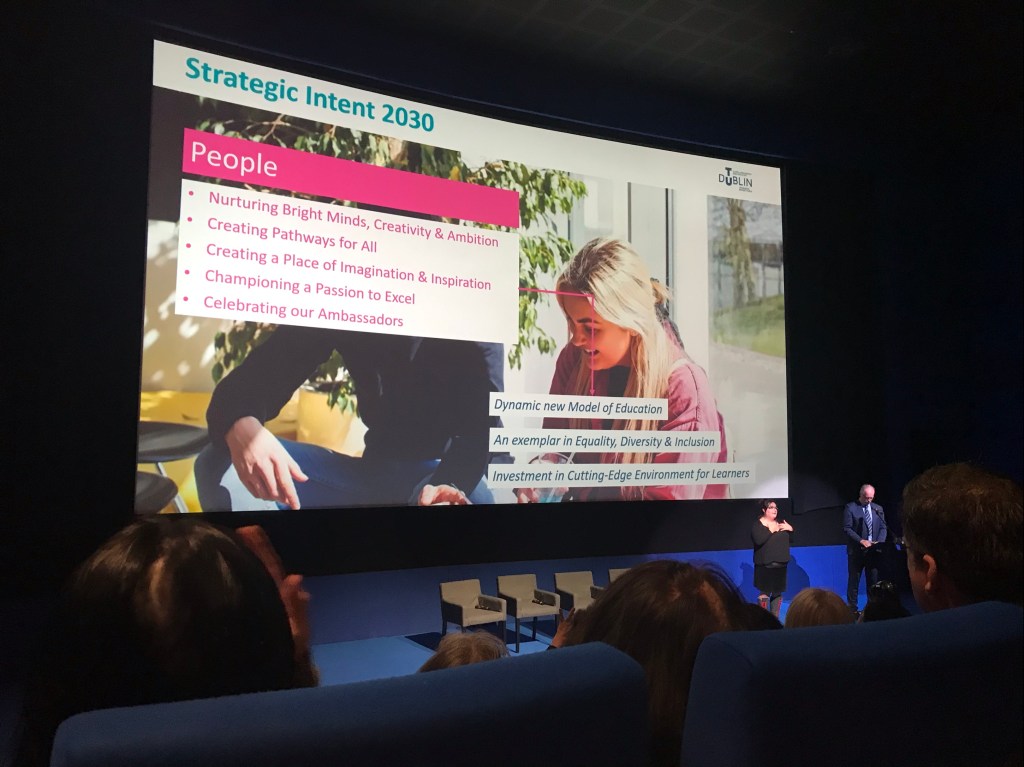
TU Dublin’s new Strategic Plan
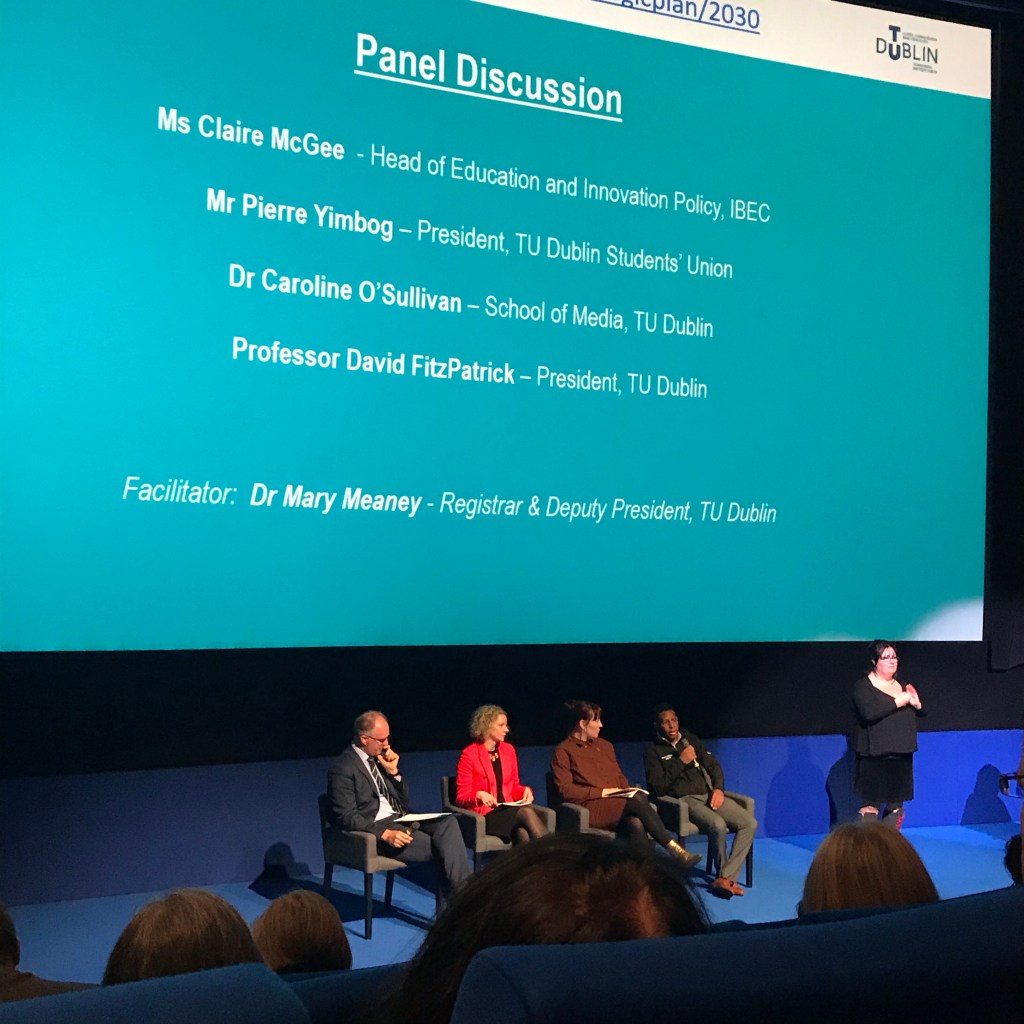
The launch of TU Dublin’s strategic plan was held at the Lighthouse Cinema, under Smithfield Plaza.
The unveiling of the strategic plan was quite well organized and inspiring. The speakers and panelists all did a great job explaining the shared aspirations of our academic community. I hope the details are as well done as the vision they presented.
Soon, I’ll read the plan and see how it matches up against the evaluation rubric I published back during my doc studies, which you can download here.
The take-home message of the strategic planning launch was that TU Dublin values diversity and inclusivity. The student voice was clear, strong and impressive. The leaders were well-spoken.
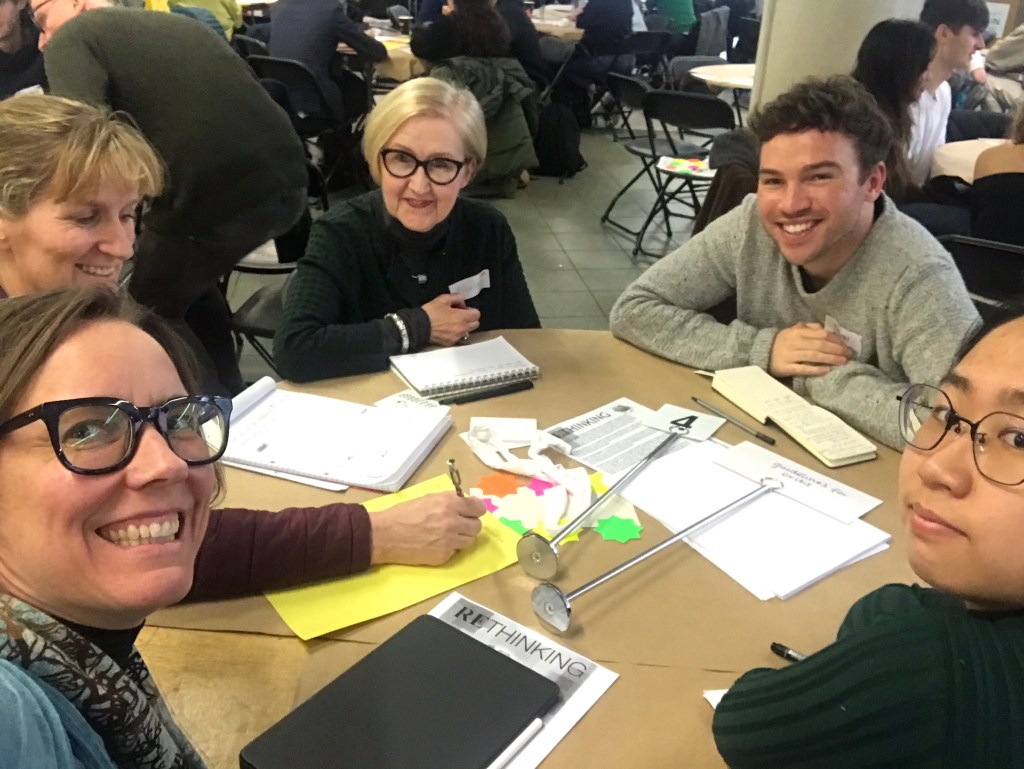
TU Dublin’s workshop on “Rethinking the Crit”
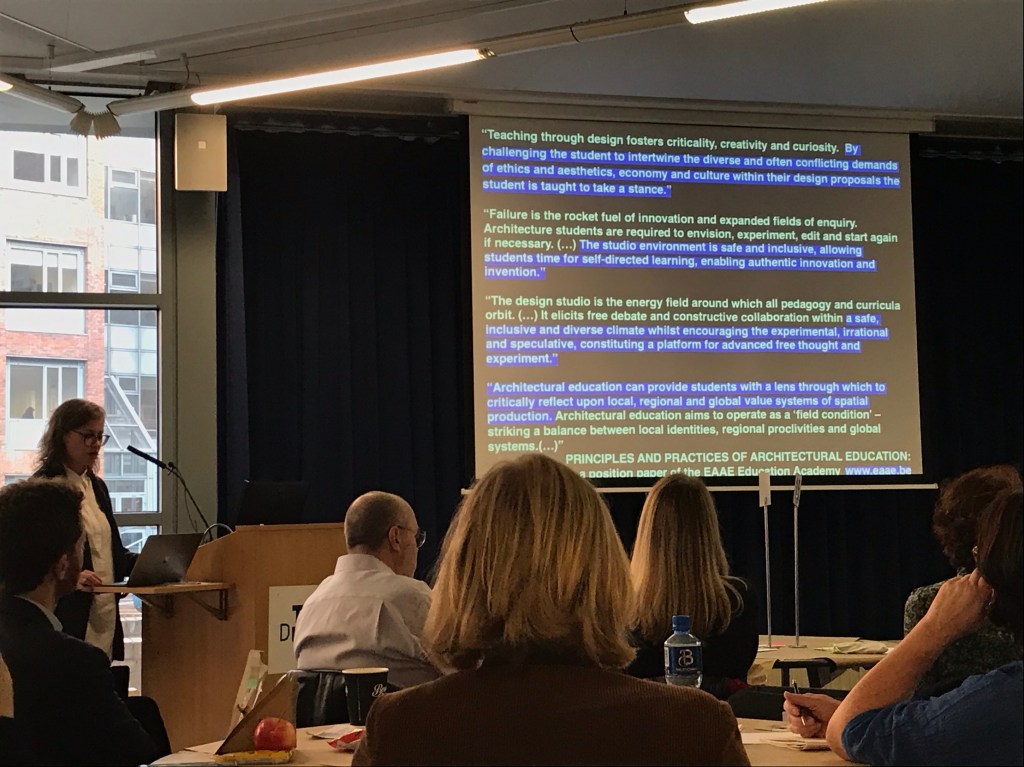
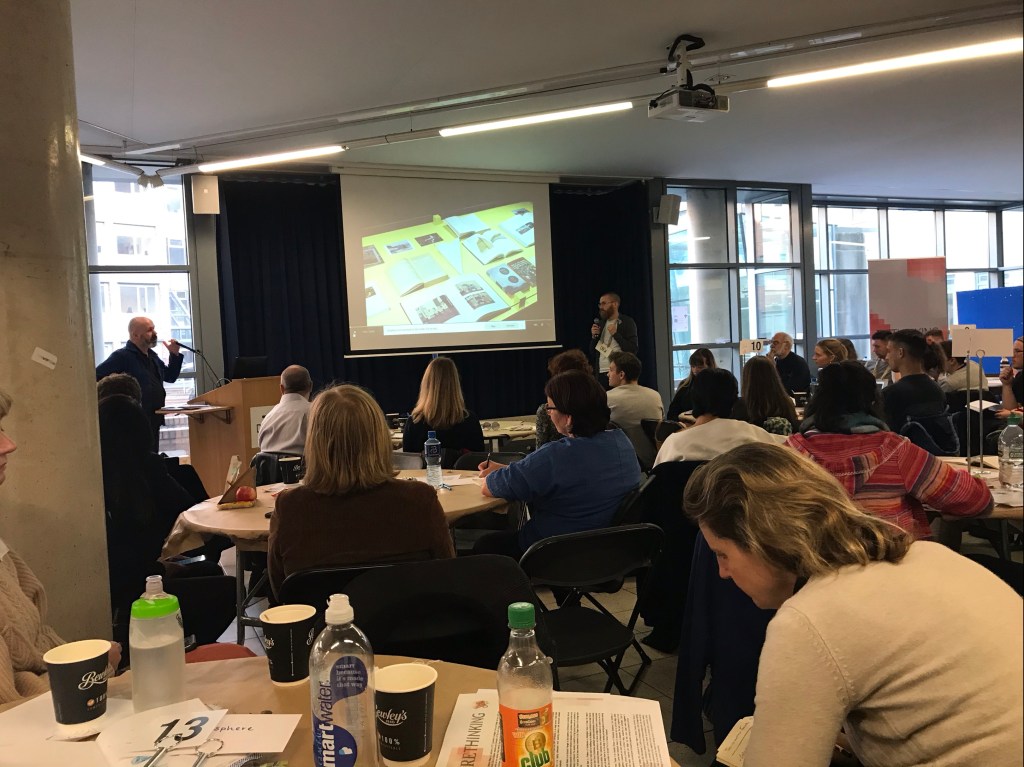
I attended a hands-on conference alongside architecture students from all over Ireland as well as teachers and critics from Ireland and abroad.
The workshop was organized by my College’s office for Learning Development, under the direction of Patrick Flynn, our Head of Learning Development. In many places, his role would be called Vice Dean for Academics, but DIT (the parent of TU Dublin) tended to do things its own unique way.
As I’m part of a team developing a brand new Architectural Engineering curriculum, this conference on how to improve the studio jury system was of great value to me. That Arch Eng course will graduate people ready for architecture licensing.
One of the presenters, Dr. Kathryn Anthony, literally wrote the book that got this conversation rolling: Design Juries on Trial. It was published in 1991 but there’s still a lot more uptake needed of her ideas across the globe. She collected data at Hampton University, where I used to teach, and at HU we used many of the techniques she proposed—with great success.
I hope to use techniques we discussed to help improve architecture education near and far.
The “Rethinking the Crit” symposium included presentations and small-group work sessions with teams of students, lecturers, and outside experts.
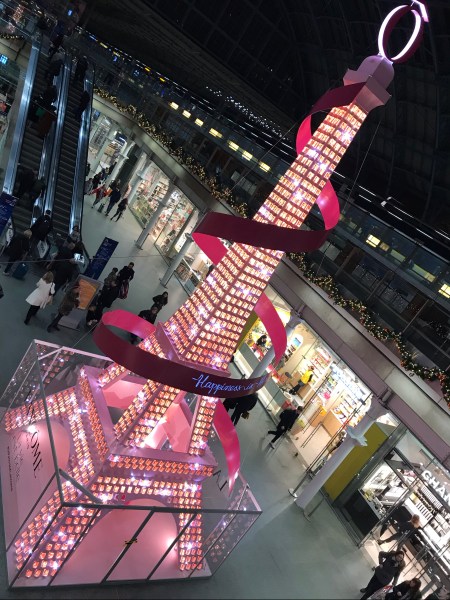
This past Sunday night, I hopped on the Eurostar from London St. Pancreas–and in just over two hours I disembarked at Midi station in Brussels. I love that Chunnel!
I’ve spent the week working alongside other experts from around Europe to evaluate projects proposed for funding. This is an activity I am doing to develop more skills with regard to grant writing and program design.
Aongus took the underground over to St. Pancreas Sunday night, to see me off as I boarded the Eurostar.
This is a job that requires a great deal of concentration. We’ve each been working for weeks–studying 30-page proposals, 7-8 of them per expert, and then creating very detailed individual reports, comparing and compiling these into group reports, and then meeting face-to-face on-site in Brussels to discuss each proposal in depth. The scores we assign will be used to determine which organizations will receive funds to support doctoral and post-doctoral researchers.
Through this process, the European Commission and its Research Executive Agency (REA) provide detailed, specific feedback to applicants as well as numeric scores.
Many applicants succeed and receive financial support, but I’ll admit that with the sums provided, competition is fierce.
I believe this funding is well spent. It builds the capacity of researchers to do great work and learn important new skills. It yields results that make life and systems better at the individual, organizational, national, regional, and international levels. It produces valuable research results in a vast array of fields and disciplines.
The evaluation process is extremely important. It has to be done with extreme care. It is a huge amount of work, and the experts involved take the job very seriously.
The evaluation itself is confidential, but pictures of Brussels I can share. 🙂
Many dozen experts have been involved this week, as reviewers and quality control officers. Our purpose is to deliver accurate and reliable results.
As a scholar from the States, I particularly value the feedback given to applicants in this process. Great care is taken to keep the scoring open, transparent, and fair, and to yield consistency from year to year as well as between proposals.
It’s a tight-knit process with a demanding timetable. And we’ve done remarkably well at staying focused and on track.
Why do I see the results of this process as valuable? In the U.S., fellowship and grant applicants rarely get feedback. I suspect it’s a result of the litigious nature of “American” society that funding agencies don’t want to open themselves up to questioning, and they won’t let applicants know what was seen as weak about the proposal. They will provide only very general feedback if any at all. I’ve had this experience with at least three different funding agencies in the USA. It was exceedingly frustrating and turned me off from wanting to keep bashing my head against a rock (even though I had a relatively high level of success winning grants for educational/learning sciences!).
The plaza next to the building where evaluations are conducted.
Working here at REA, our primary focus is on achieving accurate scores that can hold water. There’s much less paranoia on the part of the funders, in my opinion. In fact, there doesn’t seem to be the same fear of redress–in the case of any mistake, the program managers actually do want to address it in a way that is fair to the applicant. Transparency and proper channels for redress/appeal are foundational principles of the programs that REA funds.
Because REA’s process provides reliable feedback, I myself was able to improve one past proposal that wasn’t successful on its first submission. I was able to learn and to re-submit. By addressing the points raised in the first evaluation, I was able to secure funding the second time around!
In the United States, I’d have been left in the dark, making the same mistakes over and over again. In my experience (having submitted 3 unsuccessful proposals, 2 successful proposals, and one pending proposal to various MSCA programs evaluated via REA), the European evaluation system is FAR better than the US system. A knowledgable colleague told me yesterday that the overhead costs for evaluating and managing/overseeing the quality of these MSCA programs is lower than typical of other similar programs worldwide.
Dinner at Lyon!
I can’t say this work is pleasurable, but I do enjoy being here, working hard, and feeling satisfaction by week’s end. It’s sometimes bittersweet, though, as it is Thanskgiving and, also, yesterday would have been Dad’s 74th birthday. He died five weeks ago, right after my assignments for this job arrived. Therefore, I didn’t get to talk with him yesterday. And, since this particular review always falls on Thanksgiving week, I’m spending my fourth Thanksgiving Day in Brussels, missing turkey in the States with family yet again.
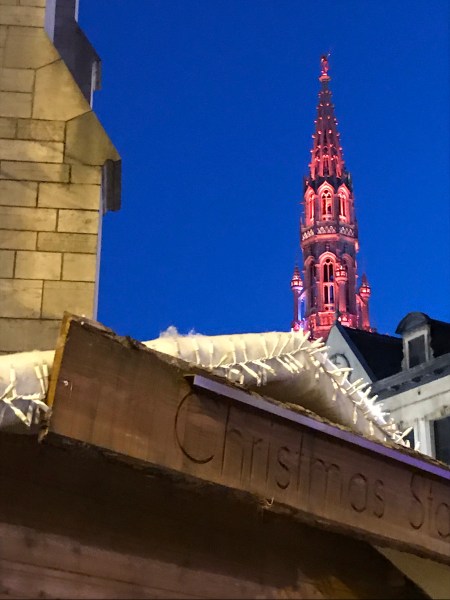
In the evenings of this evaluation week, however, I do enjoy dinner out with other experts and my walks through the city to the Grand Place and the Royal Arcade. Hopefully tonight, the Christmas Market will be up and running! It’s 6:40PM so I need to get going and pack up my things for the night.
On Monday night I went out and I got to enjoy Moules et Frites at Lyon.
Back in March 2019, I received an email out of the blue regarding a researcher in the Canary Islands, Dr. Carlos Efrén Mora, looking to recruit a mentor.
Specifically, Carlos wanted help writing a fellowship proposal to conduct Engineering Education Research on social responsibility, and he had contacted a Special Interest Group I work with as a member of the European Society for Engineering Education (SEFI). This particular group studies Educational Research Methods and I’d mentioned at a meeting in 2018 that I was looking to help/host prospective fellows in Engineering Education Research.
Because Carlos was proposing a topic I have been studying for Engineers without Borders UK, I jumped at the chance to help. I emailed him right away and we set to work.
Carlos emailed me a copy of a proposal he’d previously submitted, and as I’ve successfully secured the funding under this scheme twice before, I reverted with more feedback and strategic advice.
Carlos and I worked tirelessly from March until the deadline for our target program in mid-September.
It was a grueling process, but Carlos is extremely hard-working. I must say that Carlos enthusiastically accepted every ounce of critique that I and my colleagues doled out, and he used it to improve his plans and ideas. The ability to welcome criticism is rare but so very important. It’s one of the most important skills I learned in architecture school! Carlos has it, too!
To make sure Carlos had the best chance to win funding, I assembled a team of superstar researchers and advisors. Their job: to poke holes in all his arguments and make sure the content was in the right places (ie, the places the evaluators will expect to find them while they are scoring his work).
I was elated with the results. In all, I believe we have an excellent chance of receiving funding to conduct research together–I as his mentor/supervisor/PI and he as a full-time research fellow working aside me at TU Dublin, hopefully starting in August 2020.
The text of the proposal is exceptional. The scientific merit is clear, the work plan is strong, the planned secondment is second to none, and the early-stage researcher has shown outstanding promise. He has a dedicated mentor by his side–one who is working hard to build her own research record and raise the visibility and credibility of EER globally.
Since we submitted in mid-September, Carlos has already secured some financial support from his own university to start some of the work.
Visiting London’s Carnaby Street with the Mora family
Though al that is exciting, we are currently in the no-mans-land called the grant evaluation period. Researchers work for months on end to craft a research proposal. They send it off with the greatest of hope in their hearts. And then they wait and wait, and wait–often at least half a year–to hear back.
Typical success rates for the program we’ve requested run 9-14%.
What to do while waiting? Celebrate!
After we got the proposal submitted, Carlos brought his family up to London from the Canaries to meet me. Carlos and I held a work meeting on the first day of their stay.
This was the first trip off their Islands for the Mora kids, and I was delighted to be part of their big adventure. (The whole family has been getting excited about the possibility of spending a couple years in Dublin! They came to London this time since it’s where I am currently working.)
Pre-dinner photo shoot. Beautiful food!
I planned one of the four days of their visit, and, as usual, I packed too much in. We all did new things–I’d never eaten Ramen before but Celia said it would be “a dream come true” so we all agreed!
Our lively chatter silenced when the food arrived for dinner.
We soon unanimously agreed again: we will be eating Ramen together again in Dublin ASAP. It was delicious!
The photo album below starts with a photo from the Canaries and another taken at the airport–Carlos sends me family updates regularly and it’s fun seeing the kids grow!
My beautiful and intelligent colleague, Dr. Folashade Olayinka (who I traveled to Johannesburg with 1.5 years ago to teach a Master Class) decided to marry her beloved Dr. Damilola Olaniyi last weekend, so on Saturday, November 9, 2019, I headed for the Putney Bridge tube bright and early. It was a cold day, but bright and full of energy.
My own beloved Aongus walked me to the station. Even though the invite was just for one, he wanted to set me off on the right course for the weekend.
At Liverpool Street Station, I met up with my best Plus-None, Dr. Inês Direito, and we head off for Chelmsford by train, excited for a new adventure.
When we arrived in Chelmsford, our room wasn’t quite ready at The County Hotel, but we found space to change into wedding attire–with “Colours of the day” specified as “Emerald Green & Gold” we did our best not to clash!
We taxied from the Hotel over to All Saints Church on Church Lane, Writtle, Chelmsford CM1 3EN, UK for the Church of England ceremony, held in a historic venue and officiated by a pastor who delivered an informative lesson on love, and in quite an interesting way.
The Nyamapfenes, Abel and Tari, with Inês and me at the church.
Our colleague Dr. Abel Nyamapfene had already arrived with his lovely wife, Tari.
Inês and I had a ball getting to know her. Considering we arrived at 12:20 and the bride marched down the aisle at 1:40, we had ample time to get to know each other–and I assure you we had a delightful time doing that in such a lovely and lively setting. I look forward to seeing Tari again some day.
During the ceremony, from my seat along the outer wall of the side nave, I was able to see the exchange of vows. I had never realized quite how much Neo-Gothic columns limit paritioners’ viewing angles. Thanks to my colleague Dr. Fiona Truscott, and the book she lent me on English architecture, “A Lust for Windowsills” by Harry Mount, I was able to discern that this church is, specifically, “perpendicular Gothic“. A nice treat to be in such a space for a celebration of marriage! I recognized the last song and happily sang along, despite being chronically out-of-tune.
Hylands House, the reception venue. (Photo copied from the couple’s wedding page.)
The reception was held at the beautiful and elegant Hylands House on London Road, Writtle, Chelmsford CM2 8WQ, UK.
Graduation pic of Dami and Shade. Doctors of Engineering!
At the reception, we learned many things, and we got to watch video of the wedding ceremony the couple had in Nigeria (prior to this ceremony here in England). Incidentally, the newlyweds were both born here in Britain, of parents born in Nigeria. They have lived here all their lives, but visit Nigeria frequently. I sometimes say Shade is the most British person I know!
During the toasts, we learned that Shade was born at University College London (UCL) Hospital, on the campus where she and I worked together until she moved to Queen Mary University of London. She completed all her higher education degrees at UCL. Her new husband, Dami, also earned his doctorate in engineering at UCL. In fact, the two met at UCL in 2011. Their subjects are slightly different, however, as Shade has a doctorate in Chemical engineer, while I believe Dami’s doctorate is in aeronautical engineering.
The newlyweds
During the meal, Inês and I had the pleasure of sharing a table with the PhD supervisor for each of the two. Shade’s supervisor, Professor/Dr. Eva Sorenson had attended the SEFI 2018 conference with Inês and me in Copenhagen and I sat beside her at the gala of that event, just after she’d been recognized with the biggest award of the conference. I’m getting used to siting among the stars!
Both supervisors got specific call-outs from the couple and the family during toasts–how cool! It looks like you can make a real difference in someone’s life as their PhD supervisor. I hope that’s me someday. (My first PhD supervisee just passed the final threshold before his PhD viva, slated for August 2020–very excited about all that!)
Following dinner, a grand Nigerian buffet, we enjoyed cake and some dancing.
Eventually we headed by taxi for the hotel for some Zs.
With Emanuela and family!
In the morning, we enjoyed breakfast with the happy couple and another of our beloved colleagues, Emanuela Tilley (who is currently away form us on maternity leave) along with her beautiful and energetic family. I get far too little time with Emanuela these days! Making every moment count here in England.
After a quick walk to the station and an easy train trip back to London, I made my way back to Putney to meet up with Aongus, who’d had to work Sunday, morning until noon.
Flowers!
I arrived at the flat first, and when Aongus arrived he brought a lovely bouquet for me! I was delighted to find I’d been missed by this incredible man. It’s a pleasure to be surrounded with so much love and support.
Thanks so very much to Shade and Dami for including Inês and me in this–the biggest day of your lives. You make a lovely couple and you seem so comfortable and happy together. Your families seem so warm and supportive, and it looks like they provide great models for healthy interactions and long-lasting love. Your ceremony was beautiful and touching. The bridal party was full of vitality and was beautifully attired (love those bridesmaid dresses!). The toasts were heartfelt. The venues were such a pleasure to experience. The dancing, rituals, and outfits had a distinctly Nigerian flair that was a treat to behold.
It was all so beautiful and festive! And we were so lucky to be there!