In Dublin last week, to conduct interviews with architecture and civil engineering students on their conceptualizations of design creation, I took an afternoon away to help teach girls from St. Bridig’s in the Coombe to build small hand-held video games. This was part of International Women’s Day 2019. It was one of two workshops our TU Dublin RoboSlam team conducted.
Frank Duignan (far left), his two sons Sam and Oran, Shane Ormond (far right) and I all helped coach the students.
The workshop I helped conduct was the beautiful and newly-renovated Kevin Street public library (see photo gallery below). We had about 20 students and a handful of teachers there to build their first electronic devices. The game’s design was created by TU Dublin’s own Frank Duignan.
The students from St. Bridig’s were great–so focused and so very polite. They finished their breadboard gadgets in no time and had a chance to pay the games Frank had programmed in.
Thanks to TU Dublin’s Civic Engagement Office and St. Bridig’s of the Coombe for helping our RoboSlam crew get this experience to the students. The teachers posted a blog on their school site.
I’ve been spell bound all day by Dayan Sudjic’s 2016 book, “The Language of Cities.” I purchased the book after work yesterday to keep my knowledge of city-building fresh and up-to-date. I made that find at Waterstones, across the street from my office in Bloomsbury, and sealed the deal with a £10 gift card I won at Christmas.
In the past 24 hours, I’ve devoured every last page.
The Faculty if Engineering held a team-building event for Christmas, aboard a private double-decker bus that toured around the city of London. I got to know other members of our faculty as I sat with three people I didn’t previously know. Our table of four formed a team for the trivia contest, developed by our Dean’s personal assistant, the marvelous Maria Speight. Maria invented all the questions, having to do mostly with the sights we were passing. Excelling in this game required in-depth knowledge of the history of this fine city, which dates back to Roman times.
My team was fiercely competitive, and the two Brits in our team knew quite a lot about their city. I worried I couldn’t contribute; but I actually was able to help out.
I earned us a whopping nine points by knowing the name of every reindeer! In the end, there was a three-way tie. It took several rounds to break, but in the final round, I knew the winning answer. I had learned the population of London via my multiple visits to the city’s Building Centre. At the time the video at the Centre was made, there were about 8.8 million inhabitants. I extrapolated to today, guessing a current 8.9 mil, whereas Maria had an official count of 8.79…. Nevertheless, our answer was the closest and we won the top prize: Waterstones gift cards for our whole team!
What a great way to spend a day before Christmas, on a sunset tour of a glorious city, surrounded by passionate people who love their work in academia. I am truly blessed!
And now, I’ve soaked in every detail of Dayan Sudjic’s “The Language of Cities.”
The book calls me back to my days teaching “urban history and theory” to third-year architecture students at Hampton University, a module we provided students prior to their summer study abroad.
Sudjic’s book is full of insight, making fascinating new connections, so the synapses in my brain have been firing furiously today! Sudjic makes plenty of reference to the history and operation of London as well as cities around the world, and I am connecting the principles to places I’ve been.
Sincere thanks to the Dean and Faculty of Engineering at UCL and Ms. Maria Speight for helping get this book into my hands so I can learn more about the city we toured by double-deck bus!
The photo gallery below shows the bus-tour day as well as an informal night out for Christmas with engineering colleagues.
When you’re supervising a Ph.D. student, s/he usually comes to you for meetings. In my case, however, I travel over to LSBU twice a month to meet with my supervisee, Thomas, and his primary supervisor, Professor Shushma Patel. I’m doing this for several reasons:
It helps ensure Thomas gets effective advice that coincides. That helps since Thomas’ work and his conceptual thinking are very complex and we can work together to make sure all the parts fit together coherently.
As part of my Marie Curie Fellowship, I’m also in training myself. As part of Work Package 4, Training, I’m supervising Thomas. This is an excellent way to build skills supervising students. Once Tomas successfully completes his Ph.D., I’ll be eligible to serve as a primary Ph.D. supervisor at TU Dublin and other institutions. This will surely make my applications for future funding more enticing to grantors, in cases where I’m proposing to “train” others in research.
In this case, I get to learn from Professor Patel, Thomas’ primary supervisor, who has impressive experience guiding doc students. I’m the second supervisor.
Meeting with Thomas and Shushma is loads of fun!
In advising Thomas, I get to draw from many aspects of my past experience–design creativity, environmental sustainability, engineering teamwork, and higher education (its organization and inner workings).
We usually spend about two hours in each meeting, as there are multiple facets to our work:
Most importantly, Thomas is writing a thesis (which in the United States we call a “dissertation”). It will include case studies of innovative engineering production. This is the central focus of our work.
We’ve had an abstract accepted for a conference on product design education and we are developing it into a full paper, to submit in early March.
These meetings are delightful! We connect lots of synapses and we most definitely grow our brains while discussing complex inter-related issues.
The appetizer for the main-course meeting at LSBU each week is the trip there. I take a different route than I take to work daily and, on these days, I enjoy getting a bit of exercise. The fastest route to their campus is by way of the DLR, which is a 15-minute walk away from our flat
The cake-and-icing of the day? The double-decker-bus trip back to UCL! I love taking the London Bus from LSBU near Elephant and Castle, past Waterloo and the London Eye (the city’s giant Ferris wheel), across the Thames, over Strand Street, past Holburn Station and then straight north, through Bloomsbury, past Russel Square, to Tavistock Square. Then, it’s a short walk to the Engineering Front Building.
All parts of the journey are full of interesting sights!
Today on the big red bus, I got my very favorite seat–right above the bus driver, perched high above the street. The lovely sunlight today helped me overlook the bitter cold, and enticed me to snap even more photos than usual. You can see shots of the trip overall, with a frame-by-frame of some of my favorite areas.
I disembarked at Tavistock Square where a ceremony to commemorate Gandhi, held on the anniversary of his death, was concluding. The Square was magical and I felt Gandhi’s presence and the sense of peace he cherished–until I slipped on some black ice and nearly took a fall. Thankfully, I–or perhaps the spirit of Gandhi–caught me on the way down. I escaped injury.
Lessons of the day:
Completing a Ph.D. is a journey, best done with a collegial group of curious, knowledgeable, creative, and good-natured people.
A Fellowship also provides a gateway from the ordinary day-to-day routine and facilitates journey into the unknown.
There’s no better way to traverse the city on such a day than London Bus.
Seize the day and enjoy the journey. Make the very best of it you can.
AND:
BE THE CHANGE YOU HOPE TO SEE IN THE WORLD! –Mahatma Gandhi
UCL’s Centre for Engineering Education is offering a brand new Masters of Science (MSc degree) in Education and Engineering. We have six students enrolled in the first cohort, and my colleague, Dr. Abel Nyamapfene, asked me to provide the second lecture for the winter term, on theories related to learning and teaching in higher education.
Fortunately, I had two modules on this topic as part of my taught Ph.D. coursework, and it’s one of my very favorite subjects. It’s also the topic of a new special focus issue I’m organizing for IEEE Transactions on Education, and this field of research also provides the framework for a new study I’m starting to investigate differences in the ways architecture and civil engineering students perceive the world.
Giving this two-hour lecture also helped support the goals of my current Marie Curie Individual Fellowship, titled “Designing Engineers: Harnessing the Power of Design Projects to Spur Cognitive and Epistemological Development of STEM Students.” An overarching objective of my work is to develop and promote better ways to teach and support diverse STEM students, including women and minority students.
I had a great audience at the MSC lecture!
Even though the student group is small–and two of the six students attend via the Internet, meaning I could hear but not see them–we had a very active discussion. It really helped that a number of my colleagues attended as well. In addition to me, five other staff members from UCL were present, including Jay Derrick, Dr. Abel Nyamapfene, and Dr. Fiona Truscott. In fact, Dr. Inês Direito, my closest colleague, contributed photos of the event:
Shannon Chance with the organizers of UCL’s new MSC in Education and Engineering, Jay Derrick (left) and Abel Nyamapfene (right)
37,35,318,312.488403
35,35,305,314.943878
35,35,303,311.024414
32,35,305,295.343658
36,35,299,306.363129
Before the class meeting, I provided the following synopsis to Able, which he distributed to all everyone involved in the class.
Session speaker: Prof Shannon Chance
(UCL Faculty of Engineering Science)
As college students take their courses, they’ll gain much beyond the academic benefit. Through their courses, and through the guidance of instructors like you, students can develop attitudes and skills that help them gain confidence, work well with others, and better understand themselves and the world around them. (Strang, 2015)
Outline:
Theories on student development are well known among student affairs professionals who provide extra-curricular and auxiliary support to students, yet these theories are less frequently known or applied by academic staff (Evans, et al., 2009). Understanding these theories may help engineering educators communicate clearly and effectively with students—helping students develop incrementally, providing effective scaffolding for student learning, and providing an appropriate balance of challenge and support. This session provides an introduction to seminal (groundbreaking) theories. It will be presented from an American perspective, as most theories presented in this session originated in the USA.
Studying at the university has been found to promote development including (Strang, 2015):
Soft, professional, generic or transferable skills
Self-knowledge
Values and ethical standards (see identity theories)
A group of theories bridging these topics has deals with epistemological development (or epistemic cognition). Epistemology is the study of how an individual conceptualizes knowledge, where knowledge comes from, and how it originates. Students with sophisticated epistemic cognition consider multiple points of view; they make decisions in context and recognize their own ability to create new solutions and generate new knowledge. Research shows students who can restructure their thinking to do this get more out of their higher education and are much better prepared for their careers than those who do not (Perry, 1970). Such skills are necessary for effective performance in STEM, yet the typical engineering student progresses fewer than two positions along Perry’s nine-position scheme in college (Pavelich & Moore, 1996).
At the end of this introductory session, participants will be able to:
Identify several different established theories about how students learn
Discuss ideas underpinning at least two of the learning theories discussed
Identify some research methods used to construct Perry’s theory
Critically analyze one learning theory for its relevance in their teaching practice
Pre-session tasks:
Please print this hand-out and read this short blog entry prior to our class session:
The session will provide a brief introduction to each of the following theories, and students are encouraged to follow up in learning about specific theories that interest them from the list below, which is organized in the same sequence as presented during the session. You might want to use a print out of this sheet to help you keep notes during the session.
Excellent overview of theories
Evans, N. J., Forney, D. S., Guido, F. M., Patton, L. D., & Renn, K. A. (2009). Student development in college: Theory, research, and practice. John Wiley & Sons.
Balance of challenge and support
Sanford, N. (1962). The American college. New York, NY: Wiley.
Student involvement
Astin, A. W. (1999, September/October). Student involvement: A developmental theory for higher education. Journal of College Student Development, 40(5).
Student persistence
Tinto, V. (1987). Leaving college: Rethinking the causes and cures of student attrition. Chicago: University of Chicago Press.
Seminal theory of epistemological development
Perry, W. (1970). Forms of ethical and intellectual development in the college years: A scheme. (1st). San Francisco: Wiley.
Subsequent theories of epistemological development
Belenky, M. F., Clinchy, B. M., Goldberger, N. R., & Tarule, J. M. (1986). Women’s ways of knowing: The development of self, voice, and mind. New York: Basic Books.
Baxter Magolda, M. B. (1992). Knowing and reasoning in college: Gender-related patterns in students’ intellectual development. San Francisco: Jossey-Bass.
King, P. M., & Kitchener, K. S. (1994). Developing reflective judgment: Understanding and promoting intellectual growth and critical thinking in adolescents and adults. San Francisco: Jossey-Bass.
Hofer, B. K. & Pintrich, P. R. (2002). Personal epistemology: The psychology of beliefs about knowledge and knowing. Mahwah, NJ: Erlbaum.
Kuhn, D., Cheney, R., & Weinstock, M. (2000). The development of epistemological understanding. Cognitive Development, 15(3), 309-328.
Schommer-Aikins, M. (2004). Explaining the epistemological belief system: Introducing the embedded systemic model and coordinated research approach. Educational Psychologist, 39(1), 19-29.
Seminal theory of identity development
Chickering, A. W. (1969). Education and Identity. Jossey-Bass.
Chickering, A. W., & Reisser, L. (1993). Education and Identity. The Jossey-Bass Higher and Adult Education Series. San Francisco: Jossey-Bass.
Professional identity
Loui, M. C. (2005). Ethics and the development of professional identities of engineering students. Journal of Engineering Education, 94(4), 383-390.
Gender identity
Bilodeau, B. L., & Renn, K. A. (2005). Analysis of LGBT identity development models and implications for practice. New directions for student services, 2005(111), 25-39.
Spiritual identity
Parks, S. D. (2011). Big questions, worthy dreams: Mentoring emerging adults in their search for meaning, purpose, and faith. John Wiley & Sons.
Racial or ethnic identity
Cross, W. E. (1978). The Thomas and Cross models of psychological nigrescence: A review. Journal of Black Psychology, 5(1), 13-31.
Phinney, J. S. (1993). A three-stage model of ethnic identity development in adolescence. Ethnic identity: Formation and transmission among Hispanics and other minorities, 61, 79.
Helms, J. E. (1997). Toward a model of White racial identity development. College student development and academic life: Psychological, intellectual, social and moral issues, 49-66.
Typology theories
Kolb, D. A. (2014). Experiential learning: Experience as the source of learning and development. FT Press.
Kolb, D. A. (1976). Learning style inventory technical manual. Boston, MA: McBer.
Myers, I. B. (1962). The Myers-Briggs Type Indicator: Manual.
Strange, C. C., & Banning, J. H. (2001). Educating by Design: Creating Campus Learning Environments That Work. The Jossey-Bass Higher and Adult Education Series. San Francisco: Jossey-Bass.
Tools for Design Educators
I also introduced the students to Crismond and Adams extremely helpful tool for helping teach design-related aspects of engineering and other subjects:
Crismond, D. P. & Adams. R. S. (2012). The informed design teaching and learning matrix. Journal of Engineering Education 101(4), 738-797. (This is Table 1, from pages 748-749 of the article.)
Here’s a copy of the matrix that I typed into the computer when I first read their paper. It may be of use to you.
And here are some of the slides I presented to Abel’s class:
Assisting local REES hosts in publishing the proceedings of the REES conferences.
Organizing and publishing special focus journal issues showcasing research conducted for dissemination at REES that carries the research findings far beyond the confines of the REES meeting itself.
Today, REEN received good news from one of our Board members, Professor Jonte Bernhard from Linköping University’s Department of Science and Technology in Norrköping, Sweden. Jonte and I are the two European Representatives on REEN. Every continent (except Antarctica) is represented on our Board.
Jonte happily announced:
the EJEE special issue based on REES 2015 in Dublin is now finally published online (individual papers have been published earlier) as vol. 44, issue 1-2: https://www.tandfonline.com/toc/ceee20/44/1-2
A major goal is to get engineering students to engage–especially in dealing with tough, complex, and wicked- or ill-structured problems, the way I observe architecture students do:
Two articles deal with spatial perception, an area where the Dublin hosts of REES 2015 have developed expertise with the help of expert Professor Sherly Sorby:
I’ve produced a report of the work I’ve done in the past year, and thought that readers of this blog might be interested to see it. Not the most thrilling reading, but it might be useful to other MSCA Individual Fellows to see how I’ve structured this, and what I’ve managed to achieve in twelve months as a Research Fellow at University College London.
MSCA Log of Activities conducted in the first year by MSCA IF Prof. Shannon Chance
(01 January 2018 – 31 December 2018)
This interim report summarizes work and achievements resulting from year one of a Marie Sklodowska-Curie Actions (MSCA) fellowship provided the European Union. This fellowship runs 1 January 2018 until 31 December 2019.
Call identifier H2020-MSCA-IF-2016
Project number 747069
Project acronym DesignEng
Project title Designing Engineers: Harnessing the Power of Design Projects to Spur Cognitive and Epistemological Development of STEM Students
We are delighted to report outcomes of the training and mutual learning of MSCA Research Fellow Professor Shannon Chance alongside her primary MSCA supervisor Professor Nick Tyler, her informal second MSCA supervisor Professor John Mitchell, her colleagues from University College London (UCL) and its Centre for Engineering Education (CEE), and her colleagues from Technological University Dublin (TU Dublin, formerly DIT) and its CREATE research group. The achievements identified in this report reflect the positive learning environment at the host institution (UCL) and ongoing positive relationships with the home institution (TU Dublin).
This mid-project report provides a log of activities conducted in 2018, the first 12 months of this fellowship, by MSCA Research Fellow Professor Shannon Chance. The work plan proposed in the fellowship application has been followed, and the researcher development activities promised in the six Work Packages are on track. Allowing for a small degree of variation from details of original proposal yet thoroughly meeting the intent—at the overall level as well as within each work package—we report that all milestones have been met, and all promised items have been either produced or on track to be produced on time.
WP1, Qualitative studies
Conducted interviews with 15 final-year women studying engineering in Ireland, and worked with teachers at my home institution to implement findings to enhance their teaching practice.
Designed a research study and conducted a literature review on global responsibility in civil engineering. Obtained ethics approval to proceed with the study. Prepared an extensive mid-project report for Engineers without Borders UK.
Designed a study on conceptualizations of architecture and civil engineering students, obtained ethics approval to proceed with the study, and conducted three pilot interviews to test the interview protocol.
Assisted in the design of a study of student experiences and expectations in UCL’s Integrated Engineering Programme (IEP) and provided advice throughout the ethics application and data collection process.
Assisted in the development of a manuscript reporting a systematic review of the literature on “grit”.
Published three conference papers disseminating findings of my empirical research under this work package and presented them at ASEE, ICL, and SEFI.
CHANCE, S. M. & Williams, W. (2018). Preliminary findings of a phenomenological study of Middle Eastern women’s experiences studying engineering in Ireland. American Society for Engineering Education (ASEE) conference in Salt Lake City, Utah.
CHANCE, S. M. & Direito, I. (2018). Preliminary findings of a systematic review of doctoral theses in engineering education that have used phenomenological methods. European Society for Engineering Education (SEFI) conference in Copenhagen, Denmark.
CHANCE, S. M. & Williams, W. (2018). Middle Eastern Women’s Experiences of Collaborative Learning in Engineering in Ireland. International Conference on Interactive Collaborative Learning (ICL) in Kos Island, Greece.
Submitted the final draft for publication (based on a 2017 conference presentation) in the proceedings of the UK Royal Academy of Engineering’s EERN, Engineering Education Research Network
Submitted a draft journal article to SRHE’s consultant for the journal PRHE for advice.
CHANCE, S. M., Maguire, R., Direito, I., Gleeson-Mills, A., & Eddy, P. L. (first draft). National STEM educational policies: Their relation to girls’ experiences in physics across Europe and to the engineering pipeline. Policy Reviews in Higher Education.
Made additional presentations of my empirical research under this work package at SRHE and EERN:
CHANCE, S. M. (2018). Summary of National STEM Educational Policies in Relation to Girls’ Experiences in Physics in Europe and into the Engineering Pipeline. Society for Research in Higher Education conference 2018 in Newcastle, UK.
CHANCE, S. M. (2018). Summary of National STEM Educational Policies in Relation to Girls’ Experiences in Physics in Europe and into the Engineering Pipeline. Society for Research in Higher Education conference 2018 in Newcastle, UK.
Leão, C. P., Soares, F., Williams, B., & CHANCE, S. (2018). Challenges, experiences and advantages in being a female engineering student: Voices in the first person. Presentation at the UK & Ireland Engineering Education Research Network (EERN) annual conference 2018 in Portsmouth.
Presentation at SRHE 2018
WP2, Mixed-methods study
Published one conference paper and delivered one presentation, disseminating findings of my empirical research under this work package.
CHANCE, S. M. & Duffy, G. (2018). A model for spurring organizational change based on faculty experiences working together to implement Problem-Based Learning. American Society for Engineering Education (ASEE) conference in Salt Lake City, Utah.
Submitted a complete manuscript that uses multiple methodologies for review by EJEE, received instructions to revise and resubmit, and submitted a revised version for the second round of peer reviews.
CHANCE, S. M., Duffy, G., & Bowe, B. (in press). Comparing grounded theory and phenomenology as methods to understand lived experience of engineering educators implementing Problem-Based Learning. European Journal of Engineering Education.
Recent journals on engineering and higher education
WP3, Special focus journal
(I proposed delivering one special focus issue over two years and have exceeded this goal.)
Spearheaded a special focus issue on diversity in electrical and electronic engineering that was published November 2018, and served as lead author of the guest editors’ statement.
CHANCE, S., Bottomly, L., Panetta, K., & Williams, B. (Eds.). (November, 2018). Special focus issue on gender in engineering in the IEEE Transactions on Education.
CHANCE, S., Bottomly, L., Panetta, K., & Williams, B. (Eds.). (November, 2018). Guest Editorial Special Issue on Increasing the Socio-Cultural Diversity of Electrical and Computer Engineering and Related Fields. IEEE Transactions on Education, (61)4, 261-264.
I am spearheading another special focus issue on using design to spur epistemological and identity development among engineering students underway and ahead of schedule: Call for papers issued (m1), Proposals arrive (m4), Proposals selected for continuation (m6), Full drafts received (m14), Reviews returned to authors (m16), Finals submitted for re-review (m19).
CHANCE, S., Williams, B., Goldfinch, T., Adams, R. S., & Fleming, L. N. (Eds.). (forthcoming, 2019). Special focus issue on using design projects to spur cognitive development of students in science and engineering n the IEEE Transactions on Education.
Produced PBL encyclopedia entry.
CHANCE, S. M. (forthcoming). Problem-Based Learning: Use in Engineering Disciplines. In Amey, M. J. & David, M. E. (Eds.). The SAGE Encyclopedia of Higher Education, 5v. Thousand Oaks, CA: Sage.
Learning from experts like phenomenographer Dr. Mike Miminiris
WP4, Outreach activities
(I proposed delivering 19 outreach events/outputs over two years.)
Outreach to General Public
(In 2018, 5 workshops, 1 booth, 1 book publisher advised, 2 educational websites)
Directly conducted 4 robotics and electrical engineering workshops for kids in Ireland with colleagues from my home institution. Having co-founded RoboSlam robotics outreach team in 2013, I continue to be active in RoboSlam, as one of the four main coordinators of events. In 2018, was part of a team that ran a number of robotics and electrical engineering workshops for kids in Ireland over the month of August with the Wexford library service. I specifically assisted in running two workshops in Bunclody (17th August) and two in Enniscorthy (18th August). The workshops were attended by approximately 120 children in the age range 8-12. The children built an electronics arcade game which they brought home afterwards. The intention of the workshops was to encourage an interest in electronics and programming. Feedback and pictures (courtesy of Shannon Chance) are available here: https://www.dropbox.com/home/DIT%20Bread%20Board%20Games. The technical resources we used (instructions, and code) can be found here: https://ioprog.com/bbg.
Operated an educational booth on electrical engineering in Ireland with colleagues from my home institution, at Dublin Maker 2018. A large team of volunteers (staff and students) from the school participated in Dublin Maker in Merrion Square in mid-July 2018. The common theme of our stand was “paper programming”.
Provided support for the EI sponsored Engineer Your Future Week summer school for TY students in mid-May. Our school’s contribution encompassed Robot Building and Biomedical Engineering.
STEM Activity Books for Kids—provided “expert advice” as the primary content consultant for activity books:
Scribble Engineering, STEM activity book published by Usborne Publishing Ltd. (2018)
Scribble Architecture, STEM activity book to be published by Usborne Publishing Ltd. (forthcoming)
Hosted and created content for an educational blog on being a mobile researcher that had 3,732 visitors in 2018 and 13,106 views (discrete clicks indicating engagement) with additional interaction via Linkedin, Twitter, and Facebook.
CHANCE, S. (2012-present). Ireland by Chance: Research Adventures in Ireland and the UK. http://www.IrelandByChance.com showcasing research and fellowship activities
Provided content for a blog on robotics that I collaborative manage with colleagues from my host institution that had 3,299 visitors in 2018 and 6,505 views.
Burke, T., CHANCE, S., Berry, D., & Duignan, F. (2012-present). RoboSlam: Robot-building for Beginners. Roboslam.com showcasing outreach activities I do with my colleagues in electrical engineering.
My colleagues in engineering education development and research at UCL.
Outreach to Support Educators
Provided workshops on teaching (learning theories and innovative teaching techniques) for educators.
Akinmolayan, F. & CHANCE, S. M. (2018). Facilitating group & Problem-Based Learning in the context of engineering education. Two-day Master Class conducted for the University of Cape Town’s Engineering Education Existing Staff Capacity Enhancement Programme.
CHANCE, S. M. (2019). Learning theories in engineering: A US perspective on student development. A class session for UCL’s new MSc in Engineering and Education.
CHANCE, S. M. (2018). Supporting diverse students. Lunch seminar for UCL’s Centre for Engineering Education in London.
Outreach to Support Researchers
Provided workshops on research techniques for Early Stage Researchers.
Direto, I., Malik, M., & CHANCE, S. M. (2018). Conducting Systematic Literature Reviews in Engineering Education Research. Workshop to the UK & Ireland Engineering Education Research Network (EERN) annual conference 2018 in Portsmouth.
Edström, K., Bernhard, J., De Laet, T., & others including CHANCE, S. M. (2018). Doctoral Symposium. One-day pre-conference workshop at the European Society for Engineering Education (SEFI) 2018 annual conference in Copenhagen, Denmark.
De Laet, T., Williams, B., & others including CHANCE, S. M. (2018). Engineering Education Research. Workshop by EER Working Group at the European Society for Engineering Education (SEFI) 2018 annual conference in Copenhagen, Denmark.
CHANCE, S. M. (2018). MSCA fellowship experiences. Presentation delivered for Dublin Institute of Technology’s EPA & IUA MSCA Research Information Workshop Programme.
Provided presentations at symposia for experienced researchers
CHANCE, S. M. (2018). Gender Equality in STEM Education. Presentation delivered at Marie Curie Alumni Association’s Gender Equality Workshop Programme on 3 December 2018 in Dublin, Ireland.
Edström, K., Bernhard, J., van den Bogaard, M., Benson, L., Finelli, C., CHANCE, S. M., & Lyng, R. (2018). Reviewers, reviewers, reviewers! Workshop at the European Society for Engineering Education (SEFI) 2018 annual conference in Copenhagen, Denmark.
WP5, Training and transfer-of-knowledge
(I proposed attending 56 training sessions over two years and have exceeded this goal)
Researcher Training sessions completed
In chronological order:
UCL online training module and certificate earned in Safety
UCL online training module and certificate earned in Green Awareness
UCL online training module and certificate earned as Green Champion
UCL day-long Researcher Development Workshop, Finding Your Voice as an AcademicWriter
UCL day-long Researcher Development Workshop, An Introduction to Research Student Supervision at UCL
Researcher information session organized by the Irish Research Council, Opportunities to collaborate with UK-based researchers
UCL day-long Researcher Development Workshop, Creative Approach to Problem Solving and Decision Taking for Researchers
UCL Arena Guidance Sessions: Initial Guidance
UCL day-long Researcher Development Workshop, Leading Collaborative Projects
UCL day-long Researcher Development Workshop, Writing Books and Book Chapters
UCL day-long Researcher Development Workshop, Managing Your Reputation
UCL Arena Senior Fellow Guidance Session: Developing your application
UCL day-long Education Conference 2018 at the UCL Institute of Education
Nathu Puri Institute Thought Leadership discussion and dinner in April
SRHE day-long workshop, Migration and academic acculturation
SRHE day-long workshop, Developing curriculum, learning and pedagogies in STEM subjects: the case of Engineering
SRHE day-long workshop, Phenomenography: An approach to qualitative research in higher education
UCL LLAKES Seminar by Louise Archer Why can’t we solve the science participation ‘crisis’? Understanding young people’s (non)participation in post-16 science
Attended a UCL “Town Hall” to better understand the administrative structure of this research-intensive university, Finding a new place in society for universities
UCL day-long Researcher Development Workshop Publish or Perish: Getting Collaborative Social Science Published
One-day Inaugural Spring Colloquium of the UK-Ireland Engineering Education Research Network, held in Newcastle
UCL day-long Researcher Development Workshop, The Superior Performer: How to Work to Your Strengths
SRHE day-long workshop, Publishing Academic Articles: A way through the maze
UCL Researcher Development Workshop, Induction for New UCL Research Staff
Attended a half-day of UCL conference on Impacts of Gender Discourse on Polish Politics, Society & Culture Comparative Perspectives reservation
UCL workshop, Provost’s Welcome to New Staff
UCL day-long Researcher Development Workshop, Writing and Publishing Research Papers
UCL day-long Researcher Development Workshop, Increasing Impact – Gaining Positive Media Coverage
Attended two-day Inspirefest celebrating women in technology, held in Dublin
Attended four-day conference of the American Society for Engineering Education (ASEE) in Salt Lake City
Attended one-day symposium at the Royal Society sponsored by the RAEng and UCL CEE, Inclusive Engineering Education Symposium
Second Nathu Puri Institute Thought Leadership Event at 6-9 Carlton House Terrace, London SW1Y 5AG
Attended two-day 7th International Symposium of Engineering Education (ISEE 2018), hosted by UCL
UCL day-long Researcher Development Workshop, Storytelling Skills for Teachers and Presenters
UCL Arena training for fellowship applicants at principal level, PFHEA Lunch session
Attended five-day conference of the European Society for Engineering Education (SEFI 2018) in Copenhagen
Attended three-day International Conference on Interactive Collaborative Learning (ICL 2018) plus events of the International Conference on Engineering Pedagogy (IGIP 2018) in Kos Island, Greece
UCL online training module and certificate earned in GDPR
SRHE day-long workshop, IS THERE (STILL) ROOM FOR EDUCATION IN THE CONTEMPORARY UNIVERSITY? Exploring policy, research and practice through the lens of professional education. Seminar 3
Lecture organized by the Irish Fulbright Commission, Creative Minds: In Conversation with a NASA Astronaut
TU Dublin (formerly DIT) online training module and certificate earned in GDPR
TU Dublin 2.5-hour workshop by Dr. Bill Williams, Getting published in engineering education research journals
Attended half-day IEP Research Away (Half) Day
Attended three-day Society for Research in Higher Education conference (SRHE 2018) in Newport, Wales
Exploring Athens between conferences
Research skills development activities
PhD/Research supervision
Second supervisor for one PhD student at LSBU, Thomas Empson, meeting with him and the primary supervisor Professor Sushma Patel bi-monthly. Successfully guided him through (1) REES2 submission and panel interview gaining university permission to proceed, (2) ethics approval process, and (3) submission of abstract to EPDE conference that was accepted for development into a full paper.
Co-supervising one PhD student at TU Dublin, Una Beagon.
Supervised a group of students in The Civil Service Graduate Development Programme 2017-18 in Ireland in conducting a policy-related research project.
International Leadership Appointments in EER
Appointed Associate Editor for the journal IEEE Transactions on Education. In addition to organizing the two special focus issues listed under WP3, I also provided advice to the Editor in Chief at the desk review stage, managed the review of multiple manuscripts, gave input into operational changes, and review manuscripts nominated for Best Paper.
Appointed to and served on the Editorial Board of the European Journal of Engineering Education.
Appointed to and serve as Governing Board member, global Research on Engineering Education Network (REEN) and providing leadership on the sub-committee for recruitment and selection of upcoming conference hosts.
Appointed to the organizing group of the new Irish Chapter of the Marie Curie Alumni Association (MCAA). Joined international MCAA organization and both the Irish and UK chapters.
Appointed to the SEFI Working Group on Engineering Education Research.
Provided leadership to the Nathu Puri Institute at the London South Bank University as a think-tank member (2018) and by serving on the interview panel for the new director of the Institute.
Appointed as Visiting Professor at London South Bank University.
Invited to serve as a member of the Program Committee of the 11th Global Engineering Education Conference (EDUCON), which will take place in Porto, from 27-30 April 2020.
Journal Peer Reviews
Reviewed manuscripts for the European Journal of Engineering Education (EJEE), including CEEE20160099, CEEE20180019, CEEE20170301, CEEE20180019.R1, CEEE20180086, and CEEE20180173.
Reviewed manuscripts for the Journal of Engineering Education (JEE) manuscript JEE-2017-0238 and JEE-2017-0238.R1.
Conference Peer Reviews
Provided reviews of three abstracts for the Research in Engineering Education Symposium to be held in 2019
Provided peer reviews of four abstracts (contributions 1149, 1217, 1236, and 1384) for SEFI 2018.
Served as meta-reviewer, breaking ties on three abstracts (contributions 1123, 1237, and 1242) for SEFI 2018.
Reviewed one abstract (contribution 1194) for the 2018 ICL conference.
Educational Assessment
Provided assessment of one proposal for Fulbright Ireland’s 2019-2020 Programme.
Invited to serve on National Architectural Accreditation Board (NAAB) IPR Review Panel (forthcoming 2019).
Invited to serve as Evaluator for EU grant proposals under the ERASMUS Program (forthcoming 2019).
Provided a formal assessment of four MSc capstone thesis papers submitted at my home institution.
Curriculum Design and Education Development
Provided input into the design of a new MSc in Applied Computing for professionals in Built Environment at her home institution.
Provided advice for UCL’s new MSc Engineering and Education, launched in September 2018. This flexible and unique MSc is designed for anyone teaching in a department of engineering or working as an engineer or in engineering policy, who is aiming to: (a) lead change and enhance the performance of engineers in industry or (b) develop innovative strategies to improve the education of engineers, in either educational or work contexts. More information and apply at: https://www.ucl.ac.uk/prospective-students/graduate/taught/degrees/engineering-education-msc
Provided input into the proposed new curriculum in architecture engineering for Newgiza University to be developed by my host institution.
Developed links around accessible transport in London that are of importance to my home institution’s new MSc in Transport and Mobility. I am coordinating a visit of DIT’s MSc staff for spring 2019 to London to visit the world-recognized transportation testing facility headed by Professor Nick Tyler, CBE.
Visited former colleagues and students in bridge and robot design modules during research trips to Dublin.
Fellowship applications
Submitted a fellowship application to the British Academy that was not funded.
Advised Dr. Inês Direito on preparing her won grant application for the Nuffield Foundation.
Worked on developing an application for a HEA Teaching Fellowship.
Coaching and mentoring
Advised researchers in Portugal (Filomena Soares and Celina Pinot Leao) who are collecting interview data to add to that I’ve collected with Dr. Bill Williams.
Mentored multiple young past students and research participants and the person hired to cover me during my MSCA career break.
Advised aspiring MSCA applicants.
Provided references for past students and colleagues.
Provided mentoring on PhD research design to a UCL colleague.
Kept up with the achievements of my former architecture students via Facebook and LinkedIn (e.g., buildings designed, books launched, exams passed, professional registrations earned, challenges faced, lives well-lived.)
Miscellaneous
Provided data to assist with UNESCO report on engineering.
Nominated colleague Dr. Bill Williams for appointment as Visiting Professor at my home institution and assisted in organizing his inaugural lecture and a workshop for my home research group, called CREATE.
Coordinated guest lecture at my host institution (UCL) by Dr. Mike Miminiris
Provided interview for gender researcher Susana Vázquez Cupeiro
Served as moderator of ISEE conference session organized by my host institution.
Was featured in a two-page spread in DIT’s Research News, issued in March 2018, on women in STEM.
Received one-to-one training from research experts
Mike Mimirinis, phenomographer
Professor Nick Tyler
Professor John Mitchell
Bill Williams
Professor Jenni Case
Jeff Froyd
Professor Brian Bowe
Professor Anne Gardner
Professor Pam Eddy
Inês Direito
Professor Shushma Patel
Able Nyamapfene
Claire Ellul GeoBIM – Linking Geographic Information Systems and Building Information Modelling
Jenny Griffiths
Professor Rao Bhamidimarri
Kate Roach
Folashade Akinmolayan
Nicky Wolmarans
Jay Derrick
Emanuela Tilley
Lorraine D’Arcy
Avril Behan
Kevin Gaughan
Jean Cahill
Amir Tobacovic
Professor Ron Daniel
Ted Burke
Damon Berry
Frank Duignan
Professor Simon Phibin
Georgia Pitts
Elpedia Makriyannis
Jeffrey Johnson
Professor Euan Lindsay
Andrew Forkes, Maker Labs at LSBU
Alan Hilliard
Rovani Sigamoney of UNESCO
Rob Lawlor
Fiona Truscott
Conor O’Carroll
Tony Fawcett, CEGE Communications and Marketing Manager
Attended CPD lectures to stay up-to-date in my field (architecture and urbanism)
Attended two lectures on accessible transportation at PAMELA, UCL’s transportation research hub, delivered by Professor Nick Tyler
UCL Architecture lecture, Sir Peter Cook of CRAB Studios
UCL Architecture lecture, SueAnne Ware with University of Newcastle, Australia
UCL Architecture lecture, Ken Yeang
UCL Architecture lecture, Fabio Gramazio of ETH Zurich and Gramazio Kohler Research
UCL Architecture lecture, Jeremy Till from UAL
UCL Architecture lecture, Vera Bühlmann from Technical University of Berlin
UCL Engineering event, presentations of BEAMS EPSRC Vacation Bursary Best Project nominations
UCL Architecture lecture, Peg Rawes from The Bartlett
UCL Engineering lecture, Designing a Road Traffic Model for the Cross-sectoral Analysis of Future National Infrastructure
UCL Education Awards
Architecture lecture by Grafton Architects
TU Dublin lecture by Dr. Bill Williams, It’s not just about innovation: 14 ways engineers create value
Attended DIT London Alumni Annual Reception at the London Irish Centre
Visited museum visits to stay up-to-date in my field (architecture and urbanism)
Science Museum (including the Transportation exhibit)
Bartlett exhibition on Street Life
Tower Bridge with bride design exhibition
Foundling Museum
Tower of London
Paris—San Chappelle, Arab Institute, Medieval Museum, Marie Curie Museum
Saatchi Gallery
V&A Museum
British Museum (e.g., Egyptian exhibition)
Courtard Gallery
Folkestone Museum
Dover Castle
Royal Academy (Charles I)
Whitechapel Gallery
Sir John Soane Museum
V&A Museum of Childhood (including Nordic Design exhibition)
Apartheid Museums in Johannesburg
Constitution Hill museum in Johannesburg
National Gallery (exhibitions on Degas and Murillo)
Wallace Collection
History Museum in London
UCL Art Museum, Octagon exhibition hall, and Library
National Gallery (Monet and Architecture)
Tate Modern (e.g., an exhibition on Modigliani)
Tate Britain (e.g., an exhibition on Impressionists in London, and the Turner Prize)
Somerset House (print exhibit & tour)
Building Centre
Institute of Making
UCL Grant Museum of Archeology
Open House Dublin (Normal House, Villas, Belvedere House, Ash House, 14 Henrietta Street, KS Garda St, Richmond Surgical)
Udvar-Hazy Air and Space Museum
Smithsonian Air and Space Museum
Smithsonian East Wing
Smithsonian Cochrane Gallery
Smithsonian Museum of American History
Visited and studied cities to stay up-to-date in my field (architecture and urbanism)
London, England
Paris, France
Folkestone, England
Dover, England
Johannesburg, SA
Ramsgate, England
Rye, England
Nice and south of France
Copenhagen, Denmark
Athens, Greece
Kos, Greece
Newport, Wales
Bristol, England
Washington, DC
WP6, Management
Attended pre-grant meetings with primary MSCA supervisor Professor Nick Tyler, second supervisor Professor John Mitchell, colleagues from the research center I was joining and the corollary center at my home institution to align plans and activities, including its head, Professor Brian Bowe.
Attended a fellowship kick-off meeting with Professor Nick Tyler and second supervisor Professor John Mitchell.
Developed an official Career Development Plan based on research and bespoke advice from Professor Nick Tyler.
Attended a Month 1 Probationary Assessment with my supervisor, Professor Nick Tyler.
Attended a Month 3 Probationary Assessment with my supervisor, Professor Nick Tyler.
Attended a Month 6 Probationary Assessment with Professor Nick Tyler and submitted required documents to UCL.
Held frequent discussions (bi-monthly) with my second supervisor, Professor John Mitchell.
Held quarterly discussions with my former MSCA supervisor, Professor Brian Bowe.
Attended a one-year review discussion with supervisor Nick Tyler.
Prepared and submitted a log of activities to be included in the mid-project report to the European Commission.
I presented on the first day of the 2018 SRHE Conference in Newport, Wales.
The Society for Research in Higher Education (SRHE) met last week for its 2018 conference. On Day 1, I delivered a summary report on national education policies in relation to what female engineering students told me about school experiences that led them to study engineering.
SRHE is a UK-based organization and its annual meeting is held each December in Wales at the Celtic Manor near Newport, a high-end golf resort where the organization has garnered good deals by assembling mid-week, off-season. The place was decorated beautifully for Christmas and I got a room on the tenth/top floor, with views of the nearby hills. Because I’m a genuine geek, I attended seminars straight through and missed out on the facility’s lovely pool, ice skating rink, and challenge course. Despite missing those thrills, I found the seminars delightful. In this blog, I can’t describe all the fascinating things I learned at the conference, but I’ll share some overarching thoughts and impressions.
View from my tenth-floor room of Celtic Manor.
The opening and closing keynote speeches were very interesting, and they bookended the conference by taking opposite approaches to study international trends in higher education.
Prof. Marek Kwiek delivered the opening keynote. He described how his mixed-methods research study was conducted. He collected over 17k surveys and 500 interviews across 11 European countries, and he identified eye-popping results that did not sit well with some conference attendees. Essentially, top earners in higher education in Europe are more research-oriented, they publish much more than other academics but they also work quite hard, spending more time than others on *all* aspects of academic work–including teaching, research, service, and administration. This goes against commonly held beliefs, and prior research, that suggests researchers successfully avoid work other than research.
Prof. Kwiek said the top 10% of researchers produce 50% of all journal articles.
Prof. Kwiek found that the top 10% of researchers produce 50% of all journal articles. Top-producers work a full two months per year more than most university teachers. They also collaborate with many others internationally when they publish. But what visibly agitated the audience was the demographics Prof. Kwiek identified with regard to these top performers: they are predominantly male, middle-aged, full professors, with a mean age of 47. Being that I’m 48, I am already behind–but more than willing to catch up!
I’m a quick learner, and now I have the code for success. In this case, Prof. Kwiek highlighted an inherent problem: that the variables that mean the most to promotions/progression, salary, and prestige consistently favor men. This is not a problem of Prof. Kwiek’s making, but it is a situation his data clearly showed.
Meeting with my phenomenography mentor, Dr. Mike Miminiris and his US-based friend Marquis Moore.
The other bookend presentation, the closing keynote by Prof. Louise Morley of the Centre for Higher Education and Equity Research in Sussex, would highlight several relevant and important points in response.
One interesting point Prof. Morley raised was that the person who identifies a problem often comes to be seen *as* the problem. Another interesting topic she raised was that bias built into the system of higher education ties to our overall economic-political model called “neo-liberalism” and this makes it nearly impossible to escape. It’s like trying to avoid air. How can we step outside this model to properly credit diverse contributions, when all the measures of performance inherently favor mainstream versions of excellence and productivity?
An extremely informative panel with Profs. Ellen Hazelkorn and Vikki Boliver and Kalwant Bhopal.
Although I am not a positivist (similar to Prof. Kwiek), I also haven’t adopted the critical perspectives that Prof. Morley uses. I haven’t entirely rejected the neo-liberal framework, and most of my research takes an interpretivist and/or constructivist stance in that I study the status quo prior to suggesting ways to change it. I do incorporate some aspects of critical feminism and critical race theory, but these are underlying principles, not the core paradigm I use.
With regard to neo-liberalism, back during my Ph.D. studies, I really enjoyed the class I had at William and Mary called “Finance of Higher Education.” My teacher, Prof. David Leslie, studied economic trends in USA higher ed and he identified patterns like this. He exampled that in the States, there’s a direct correlation between the discipline you teach in, the pay you’ll receive teaching in that discipline, and how traditionally male- or female-dominated the profession is. This means that in the USA, I can get paid more by teaching in an architecture or engineering department than in an education department. I did look this up and found it shockingly true.
Dr. Maryam Al-Mohammad presenting on “global citizenship” alongside Dr. Neil Harrison, both from UWE.
Fortunately, in European higher ed, the pay grades are less inherently tied to gender. On the whole, there seems to be better pay equity among disciplines in the European academy. Despite the fact that there is more equitable pay for equal work, men still reach the top echelons of higher education management/administration (and research) at much, much higher rates than women. Ireland, for example, is far behind the US where many university and community college (the US equivalent of the Irish IoT) presidents are female.
So, yes, bias regarding gender, ethnicity, physical ability, etc., etc., etc. is still extremely pervasive. Understanding bias, and visualizing why and how it happens, can help us remedy the problems.
So, even though the findings Prof. Kwiek presented were gloomy overall, he did provide me with helpful ideas for accelerating my career. I’ve been trying to break into publishing in a new discipline (I’ve moved from publishing in architecture education and education planning journals to publishing in engineering education) and the findings Prof. Kwiek reported will help me set, and meet, my goals faster. For me, having a road map of what it takes to succeed under current conditions is an important step in moving ahead and I thank Prof. Kwiek for providing such a guidebook.
A later speaker during Day 1 of the conference, Dr. Rachel Handford, noted that “possible selves” “can only include those selves that it is possible to perceive (Stevenson & Clegg, 2011; 233)” meaning that we learn what we might become and consider options before we act, but we need to see examples of possibilities first. I’ve always found this to be true, and I try to expose myself to many different people with different ways of working and seeing the world. They help me figure out what I want to be, learn, do and accomplish. There are photos of Dr. Handford’s presentation below, as well as presentations by Prof. Ming Cheng (on Chinese students studying abroad) and Drs. Cecelia Whitechurch and William Locke (on academic staff members’ techniques for gaining promotion).
I need to wrap up, though I would like to mention other highly-notable moments: three presentations on higher ed in South Africa, one presentation on low-income UK students studying abroad at elite US institutions, a fascinating panel that included Profs. Ellen Hazelkorn and Vikki Boliver and Kalwant Bhopal, a presentation by Drs. Maryam Al-Mohammad and Neil Harrison on “global citizenship”, and talks by historians Prof. John Tyler and Dr. Mike Klasser.
Prof. John Tyler delivered a keynote on the impact of WWI on higher education in Europe and his presentation was insightful. In the US, the aftermath of the Civil War and WWII were turning points for higher education. I’d say the Morrill and Hatch Acts which established the Land Grant institutions in the US mark the birth of the modern university in North America. These facilitated providing higher education to the masses. The federal government became involved in funding higher education. These funds expanded after WWII when our country needed to re-train returning vets and decided to provide money to send them to university. The US government also decided to fund research via universities, as it had worked well for the US to have Harvard run the top-secret Manhattan Project that developed the A-bomb and helped end the war. These are all things I learned in the “History of Higher Education” course I took at Old Dominion University in 2009. At SRHE, Prof. Tyler explained that the dawn of the modern university in the UK came after WWI.
In a paper presentation, Dr. Mike Klassen discussed his research on “the academization of engineering education in the United States and the United Kingdom: A neo-institutional perspective.” Dr. Klassen recently visited UCL (for our recent CEE strategy meeting) but I hadn’t learned what he was studying other than higher ed policy. At SRHE, I got to hear him present on the history of engineering education. I’m hoping that someday he’ll want to study overlaps between engineering and architecture education history and pedagogy development–again comparing North American and European traditions–and that the two of us can work together on this.
I left SRHE having forged many new contacts. I met so many people I’d like to keep in contact with and learned so many new ideas and research findings. I look forward to attending SRHE 2019 and speaking at an SRHE workshop, to be organized by Ann-Marie Bathmaker, in spring 2019.
IEEE Transactions on Education table of contents for the special focus issue on enhancing socio-cultural diversity
The new special focus issue I spearheaded for IEEE Transactions on Education just arrived in my mailbox! It arrived alongside a number of other prestigious journals on engineering and higher education.
This issue is dedicated to helping increase social and cultural diversity in engineering fields relevant to IEEE, including electrical, electronics, and computer engineering. As a result of my work on this issue, I was appointed as an Associate Editor of the journal and I have a second special focus issue underway.
To give you a bit of information on it–the November 2018 issue on socio-cultural diversity–I’m sharing an early draft of our guest editorial. You’ll find the draft below, after the list of article titles. You can visit the journal’s homepage or follow the links I’ve provided to download individual articles. Our guest editorial statement is free, but many of the others will require you to purchase the article or log in via a university library website that pays for access. Please contact me if you need help accessing articles.
A favorite photo from my days at Hampton University, with architecture students Nataschu Brooks
Fostering diversity and supporting diverse students has always been a focus of mine. I’m proud to have been associated with Hampton University, a Historically Black University in southeast Virginia, and to have been appointed Full Professor there in 2014. I try to bring what I learned there into the work I do here in Europe every day.
I’m also proud to have done research to increase understanding of how diverse students experience engineering education. I did much of this work at Dublin Institute of Technology, and I’m extending the impact of that work today through my current appointment as a Marie Curie Research Fellow at University College London (UCL), by publishing articles and special focus issues.
UCL has a proud history of inclusivity, having admitted women and people from diverse races and religions long before most institutions did so. My amazing colleagues in UCL’s Centre for Engineering Education (CEE)–including Jan Peters, Emanuela Tilley, and John Mitchell–worked with the Royal Academy of Engineering in the UK to produce a groundbreaking report titled “Designing Inclusion into Engineering Education.” Techniques they developed have far wider applicability than just engineering, so please download a copy.
Recent journals on engineering and higher education
Table of contents
List of editors and our guest editors’ statement
Guest editors’ statement
Guest editors’ statement
Description by guest editors
Universities and colleges struggle to find the best approaches for achieving diversity throughout their campus environments. Even after successfully recruiting diverse populations, challenges arise in providing appropriate support and developing engagement opportunities that help enable students’ success. Some students from minority populations may not have had schooling that was as well funded as their peers from the mainstream. They may arrive differently equipped, but not any less capable, than their peers. In this special focus issue, we asked: How do we support their efforts to succeed? How do we help faculty understand the challenges diverse students face? How can we affect change in the teaching methods they encounter?
This issue of the IEEE Transactions on Education (ToE) makes exciting contributions to the literature on teaching in fields including electrical and electronics engineering, computer engineering, and computer science. This issue represents an effort to positively influence engineering scholarship, engineering education, and engineering practice. It helps stake new territory for ToE with regard to format as well as the diversity of authors, topics, editors, and reviewers.
Regarding the presentation of content, this is ToE’s third issue to provide structured abstracts. This feature makes content more searchable and it also makes the questions guiding each study more explicit. The most noteworthy contributions and findings are identified clearly and succinctly, prior to the full text. These features help readers locate relevant content and more easily understand how the pieces fit together.
Even more importantly, this issue provides a platform for voices and perspectives from around the globe to explore facets of diversity relevant to IEEE. Although engineering education research (EER) on diversity has focused greatly on gender aspects, we aimed to explore many different aspects of diversity in this issue. All contributors provide concepts and techniques to foster equity and equality in engineering education.
The topics, authors, editors, and reviewers represent ever-widening diversity—geographically, socially, ethnically, racially, religiously, and otherwise. Our call for papers defined diversity broadly, in an effort to increase inclusion and equity in engineering classrooms and labs as well as in engineering publications. A primary intention has been to improve the participation rates of people from under-represented groups—particularly in computer science, electrical and electronic engineering, computer engineering, software engineering, and biomedical engineering—and to support their ongoing success in these fields.
The guest editors have lived and worked in multiple countries across Africa, Europe, and North America and were keen to involve diverse individuals throughout the publication process. We were acutely aware that many readers and authors of many US-based journals had lacked exposure to much of the work in EER being conducted outside the US. Citation analysis of 4321 publications across four prominent platforms—the Journal of Engineering Education (JEE), the European Journal of Engineering Education (EJEE), and conferences of both the American Society of Engineering Education (ASEE) and European Society of Engineering Education (SEFI)—had shown ASEE and JEE citations “are dominated by sources with US affiliations.” SEFI and EJEE reflected wider diversity in that “while US sources are frequently cited, European and other authors are also well represented (Williams, Wankat, & Neto, 2016, p. 190).” Thus, Williams et al demonstrated, “in citation terms, European EER is relatively global but US EER is not (p. 190).”
In response, the guest editors encouraged researchers active in the US to submit articles and they also worked to solicit manuscripts from around the world. They aimed to provide “complementary perspectives” as encouraged by Borrego and Bernhard (2013), whose study compared EER that originated in the US with EER from Northern and Central Europe. They found the latter tends to explore “authentic, complex problems, while U.S. approaches emphasize empirical evidence” (p. 14). They also found “disciplinary boundaries and legitimacy are more salient issues in the U.S., while the Northern and Central European Bildung philosophy integrates across disciplines toward development of the whole person” (p. 14). Informing this edition’s intent, Borrego and Bernhard asserted, “Understanding and valuing complementary perspectives is critical to growth and internationalization of EER” (p. 14).
Adopting a global perspective, this issue promotes research, advocacy, and action geared toward achieving equity. Authors have considered many facets of diversity, including race, ethnicity, economic status, religious affiliation, age, and multiple understandings of the term gender. Subsequent issues of IEEE ToE will extend this work by, for instance, featuring technologies developed to support learning in IEEE fields for people with physical disabilities. Supporting a range of approaches to diversity, this current issue features empirical research on engineering/STEM pedagogies, paying particular attention to their level of inclusivity for students and teachers from minority groups.
Research from Saudi Arabia that is included in this issue contributes new understanding of women’s experiences studying engineering there. The nation has only recently offered engineering programs in-country that are open to women; some of the engineering teachers are female, but many who deliver courses are male. Digital technologies, Mariam Elhussein and colleagues explain, are intended to bridge the divide in classrooms where women sit on one side of a glass partition while observing male teachers who deliver content. Technologies do not always achieve the desired aims, because female students explained during focus group discussions that they sometimes keep their digital devices off to avoid illuminating their faces and revealing their identities—a taboo in their culture. The study, authored by Mariam Elhussein, Dilek Düştegör, Naya Nagy, and Amani Alghamdi, is entitled “The Impact of Digital Technology on Female Students’ Learning Experience in Partition-Rooms: Conditioned by Social Context.”
Contributing new understanding regarding racially diverse learners in the US, Jumoke Ladeji-Osias et al. describe outcomes of an ongoing school program to engage black male youths in engineering and computing. These authors describe a program, running both after-school and during summers, wherein students develop mobile apps and build 3D-printed models to ignite their interest in science, technology, engineering, and mathematics (STEM). Having participated for two years, students reported more positive ideas about STEM and increased interest in attending university and entering a career in either science or app development. Unfortunately, participants did not show corresponding interest in taking science courses in school. The research team of Jumoke Ladeji-Osias, LaDawn Partlow, and Edward Dillo submitted this study, titled “Using Mobile Application Development and 3D Modeling to Encourage Minority Male Interest in Computing and Engineering.”
Contributing new understanding regarding socially and economically diverse learners who enter engineering via two-year colleges in the US, Simon Winberg and colleagues discovered a correlation between math performance in two-year colleges and persistence to graduation in the four-year degree. Such research can help educators to better advise students and recruit those likely to complete degrees. The authors mined data from institutional databases to analyze and compare the performance of transfer and non-transfer students. By calculating and comparing averages, frequencies of passes and failures, withdrawals and repeats, the authors identified factors associated with persistence-to-graduation in Bachelor of Science ECM programs. The study helps confirm prior research showing many minority students who transfer to four-year engineering programs demonstrate high levels of persistence, focus and commitment, resilience to overcome challenges, and they also had high grades at their two-year institution, cumulative and in mathematics. This study, by Simon Winberg, Christine Winberg, and Penelope Engel-Hills, is titled “Persistence, Resilience and Mathematics in Engineering Transfer Capital.”
Reporting from Spain, Noelia Olmedo-Torre et al. assess what attracts women to join STEM and select specific branches of engineering. The team collected survey data from more than 1000 women (graduates and current students) representing six different institutions of higher education. About 40% were in computing, communications, electrical and electronic engineering (CCEEE) and the rest in other STEM (non-CCEEE) fields where women are greatly under-represented. Women in CCEEE were significantly less motivated by “the possibility of working on projects ” and “the possibility of working as part of a team” than those outside CCEEE. This study also reveals women’s perceptions of why others avoid CCEEE majors. The article was submitted by Noelia Olmedo-Torre, Fermín Sánchez Carracedo, Núria Salán Ballesteros, David López, Antoni Perez-Poch, and Mireia López-Beltrán and it asks, “Do Female Motives for Enrolling Vary According to STEM Profile?”
Two articles identify gender bias evident in team projects in engineering classrooms, that tends to go undetected and/or unreported by students. First, in a small-scale study with clear relevance in engineering classrooms around the globe, Laura Hirshfield’s US-based analysis shows that when students self-report regarding team performance and team dynamics, they may fail to see and/or report differences that have to do with the way they interact and allocate tasks. Although individuals submitted team assessments and interviews describing effective collaboration and a lack of gender bias in allocating roles, self-reports did not match the author’s observations nor the data she collected via interviews. Dynamics and assignments reflected visible gender bias, the author reports, yet male and female students reported the same levels of confidence and said they were similarly satisfied with their teams. To achieve greater equity, the author urges readers to look deeper and consider forms of stereotyping and gender bias that influence students’ experiences. Laura Hirshfield’s article is titled “Equal But Not Equitable: Self-Reported Data Obscures Gendered Differences in Project Teams.”
Two of the papers in this issue focus on educators’ experiences. Reporting from India, Anika Gupta et al. have analyzed the ratings male and female students assign to their teachers as measures of the teaching quality. They identified statistically significant differences in the ratings given—differences that correspond to the teachers’ gender and socio-economic status. In addition to bias regarding socio-economic status, this research team also found same-gender and cross-gender biases that yielded statistically different scores for teaching. The team gathered over 100,000 complete surveys—comparing groups from (a) civil engineering, (b) computer science and engineering, (c) electrical engineering, (d) humanities and social sciences, and (e) mathematics. Similar to the study by Potvin et al., these results illustrate student perceptions of various majors. In this case, statistics showed that interaction between a student’s gender and socio-economic status and those characteristics of the teacher influenced the student’s evaluation of the teacher. As student evaluations are used to inform faculty promotion and retention decisions, it is reasonable to question the validity of the data they provide. The paper was submitted by Anika Gupta, Deepak Garg, and Parteek Kumar and is titled “Analysis of Students’ Ratings of Teaching Quality to Understand the Role of Gender and Socio-Economic Diversity in Higher Education.”
Kat Young and colleagues have assessed participation in audio engineering conferences, a field that remains strongly male-dominated. Their work provides a new tool for determining the gender of participants who do not report their own data, such as in cases where they are listed as authors in various publications and conference proceedings. The techniques presented in this paper consider that not all individuals identify in a binary way. As such, this manuscript contributes new knowledge related to LGTBQ+ and how to determine what gender an author would ascribe to their self in instances where they have not been asked to provide that data. The team analyzed four aspects of data from 20 conferences—looking at conference topic, presentation type, position in the author byline, and the number of authors involved. Data revealed a low representation of non-male authors at conferences on audio engineering as well as the significant variance in conference topic by gender, and the distinct lack of gender diversity across invited presentations. This paper is titled “The Impact of Gender on Conference Authorship in Audio Engineering: Analysis Using a New Data Collection Method” and it was submitted by Kat Young, Michael Lovedee-Turner, Jude Brereton, and Helena Daffern.
Prior research has shown that including diverse perspectives on STEM teams enables more robust and innovative designs (Hunt et al, 2018) and that cross-disciplinary teaming that can facilitate pooling of diverse perspectives is difficult to achieve in practice (Edmondson & Harvey, 2017). A challenge for engineering educators is to ensure the perspectives of diverse individuals we now recruit are fully heard—that all participants have the opportunity to have their contributions considered and valued. Many instructors have had little or no training on pedagogical approaches within STEM. Even well-intentioned instructors may not understand how team formation and management of teams can help reinforce peer teamwork, and they may not recognize that poorly managed and conducted can deplete the confidence of women and others outside the classroom’s mainstream. Instructors who are accustomed to assigning team projects may not be providing guidance and support and thus may ultimately throw students together, simply expecting them to be collaborative, equitable, and productive but not explaining how to achieve this. As a result, students may not perceive group work as a recipe for success, but rather an obstacle course suited to the fittest.
In this special issue of ToE, authors have presented insights generated through the study of student learning experiences. Some authors have introduced innovative methods to measure the impacts of new pedagogical approaches within institutions. Several have investigated pitfalls that could detract from the effectiveness and inclusiveness of teams. Others increased understanding of gender-identification procedures for researchers—this group also exposed perpetual underlying biases in the speaker-invitation process that all IEEE disciplines may benefit from assessing.
Diversity and inclusion are not a post-processing task tacked on in a course or mentioned in a lecture. A well-thought-out, integrated plan that places value on the different perspective of students from diverse backgrounds, genders and life-experiences. Educators are beginning to foster a sense of belonging by adopting techniques for “cohort building” among diverse groups of students. This can help bridge the gulf many students experience when they move from secondary school into higher education. Such techniques can help ensure diverse students’ expectations are met, so students do not find themselves isolated or alone.
The guest editors hope you enjoy this special issue of IEEE Transactions on Education and are able to incorporate some of the methods presented here—to help create a generation of future leaders and innovators. The editors encourage readers to review emerging calls for action in diversity recently published by The Power Electronics Industry Collaborative (PEIC), ASEE, and SEFI.
In this issue, editors channeled their efforts towards achieving fairness and holistic well being, and toward fostering a community of engineers who can address global challenges, act with vision and confidence, and develop effective and robust responses to engineering problems. When students are prepared with superior STEM skills and equipped with life-skills, they will be able to build their own interest-related cohorts and will be able to seek out the resources they need, without being afraid to ask for them. A more diverse group will be prepared to address global challenges.
—Shannon Chance, Laura Bottomley, Karen Panetta, and Bill Williams
References
Borrego, M., & Bernhard, J. (2011). The emergence of engineering education research as an internationally connected field of inquiry. Journal of Engineering Education, 100(1), 14-47.
Edmondson, A. C., & Harvey, J. F. (2017). Cross-boundary teaming for innovation: Integrating research on teams and knowledge in organizations. Human Resource Management Review.
Hunt, V., Prince, S., Dixon-Fyle, S., & Yee, L. (2018). Delivering through diversity. McKinsey & Company Report. Retrieved April, 3, 2018.
Williams, B., Wankat, P. C., & Neto, P. (2018). Not so global: a bibliometric look at engineering education research. European Journal of Engineering Education, 43(2), 190-200.
The campus of DIT Grangegoreman (soon to be TU Dublin) which is now under construction
I found myself surrounded today, by dozens of brilliant scholars. I’d been invited to speak at a workshop on Gender Equality held by the Irish Alumni Chapter of Marie Skłodowska-Curie actions (MSCA). The half-day workshop was held in St. Laurence Church on the Grangegorman Campus of DIT.
Marie Curie fellows, past and present, traveled in from all over Ireland to attend the event. The Irish MSCA Alumni chapter is just two years old and it covers the whole of the island, welcoming researchers from north and south, east and west.
A lovely group of early-career researchers arrived in last night from Cork for the workshop, for instance. They came to Ireland from many different countries across Europe and beyond to work with the excellent researchers here.
Dr. Chiara Loder, with Ireland’s MSCA office, helps researchers write winning proposals
Dr. Geraldine Canny, the MSCA National Contact Point and Head of Ireland’s MSCA Office.
Dr. Amir Tabaković, a Strategic Research Proposal Coordinator housed in DIT’s Research Enterprise and Innovation Services office organized the event. Amir was formerly a Marie Curie Fellow to TU Delft in the Netherlands. Several other alumni assisted in organizing, including Dr. Declan Devine, the Chair of Ireland’s MCA Alumni chapter who was a Marie Curie fellow–following his wife’s own MSCA fellowship. They have spent time doing research in Switzerland, the US, and now back home in Ireland.
The day’s line-up of speakers was both exceptionally accomplished and full of insight. We started with introductions by our hosts, Amir and Declan, and a talk by Dr. Geraldine Canny, who is Head of the Irish Marie Skłodowska-Curie Office and National Contact Point – H2020 Marie Skłodowska-Curie Programme. She is responsible for the delivery of the office suite of application supports and also provides input into MSCA policy as a Programme Committee member. The program continued as follows:
Jean Cahill, one of my mentors and heroes
I’ve included photos of many presentations. During the coffee break and post-workshop lunch, we got to socialize and network. I asked Jean Cahill–a Head of Research at DIT and one of the people who has helped me with writing various grants in the past–how many Marie Curie Fellows we’ve had at DIT. She rattled off five, and I was two of them! I think, for institutional records, I’m counted as an incoming MSAC Fellow (2014-2016) and an outgoing MSCA Fellow (2018-2020). The reason I’d asked Jean about this was that I had just met DIT’s newest incoming MSCA fellow, and she’s female. Interestingly, all the five fellows to DIT who Jean identified are female. The program is open to men and women alike, so the success rate for women applying to DIT is very high! I’ve always found DIT to be a very supportive environment. In fact, Jean and others like former National Contact Point Dr. Jennifer Brennan, helped me draft both of MSCA applications–going well above and beyond their job requirements and providing loads of pertinent advice that was crucial to my success in securing funds. For both of my MSCA applications, Professor Nancy Stenson and Dr. Marek Rebow helped with editing as well.
Chatting with Professor Brian Bowe in DIT’s Rathdowne House
For today, Amir had asked me to talk about my experiences as a Marie Curie fellow and identify some gender aspects of my research work. I encouraged the audience to push beyond gender and seek inclusivity for all types of diversity. I asked them to promote wider considerations of diversity in European funding calls and evaluations, as well as in their own research. I asked them to consider publishing gender-related aspects of their findings in journals that reach more than one type of specialty audience and I provided examples. Then I described one of the research projects I’ve done as an MSCA fellow and the data analysis I have underway now that I will report via the Society for Research in Higher Education.
Dr. Shanonn Chance with DIT’s Dr. Barry McCauley, an expert in BIM and Quantity Surveying
At the conclusion of the workshop, I met up with my former Fulbright and MSCA supervisor, Professor Brian Bowe. Then I walked from DIT Grangegoreman to DIT Bolton Street by way of our new path–which connects the two sites and takes just seven minutes to walk. There at Bolton Street, I returned a library book (Marton and Booth, 1997) and had a chat with Dr. Barry McCauley, who was serving as my temporary replacement but has since been appointed to a permanent full-time position of his own at DIT. I couldn’t be more pleased, as Barry is an excellent teacher and researcher and is excelling even while adjusting to his new prosthetics. Barry was injured on a construction site when he was 21 and his legs were crushed, but he has not let this stop him. He went on to get his Ph.D. and he’s a force to be reckoned with! We are lucky to have him at DIT; I really enjoyed learning Navis Works and CostX from him in prior years and he has done some very important research on uptake and implementation of BIM (Building Informational Modelling) globally.
If you are a researcher reading this who is interested in applying for a fellowship to come do research in engineering education at either DIT (soon to be TU Dublin) or at my other institution which is UCL, or in BIM implementation here at DIT, please contact me and I’ll help you write a grant proposal (IrelandByChance at gmail dot com).
Maintaining professional connections is important, and although I’m on a Marie Curie fellowship in London, I still meet frequently with leaders from my home institution, Dublin Institute of Technology (DIT). Last night I met with Dr. Avril Behan (my direct line manager at DIT) in London, our recently-retired boss Professor Kevin Kelly, and DIT’s president Professor Brian Norton.
The London DIT Alumni chapter hosted a brilliant get-together, an annual event, at London’s Irish Center. This gave me a chance to meet DIT alumni working in London and also catch up with Avril, Kevin, Brian, and other DIT staff like Ciara Ahern.
I also had the pleasure of meeting anew many DIT graduates: MBA Tania Eyanga, Architecture Technologist John Heaney, daylighting designer Dr. Ruth Kelly Waskett, and engineers Paul Sheridan and Stephen Sunderland who work with WSP.
I’ve attached photos of the event as well as a few pics from Professor Kevin Kelly’s retirement party, held at DIT a couple of weeks ago.
At last night’s gathering, Professor Brian Norton provided updates on DIT’s new campus at Grangegoreman, and delivered the exciting news that a pedestrian route connecting Grangegoreman with DIT Bolton Street has just opened. The walk now takes just seven minutes and cuts through Kings Inn Law building, a truly stroll walk up Henrietta Street to Constitution Hill. Can’t wait to use this route! It will cut about 15 minutes off the current walking time between the two DIT sites.
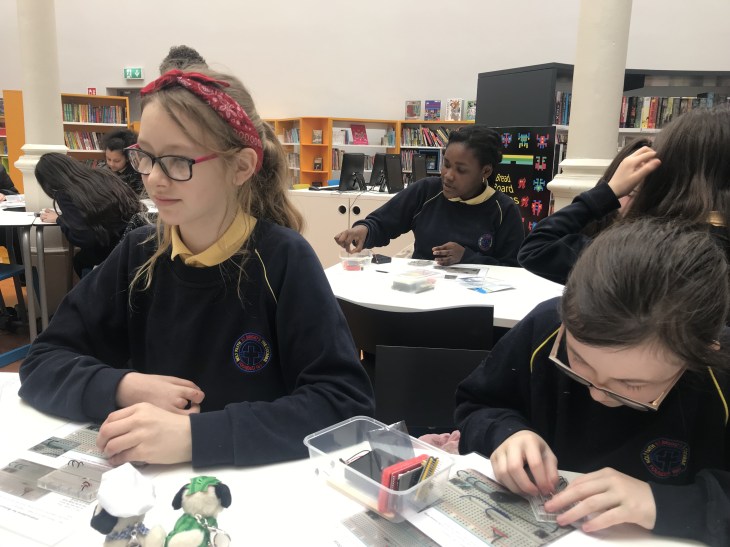
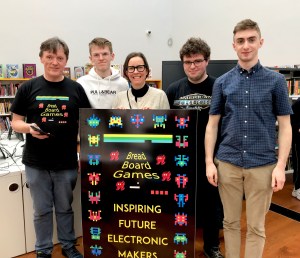


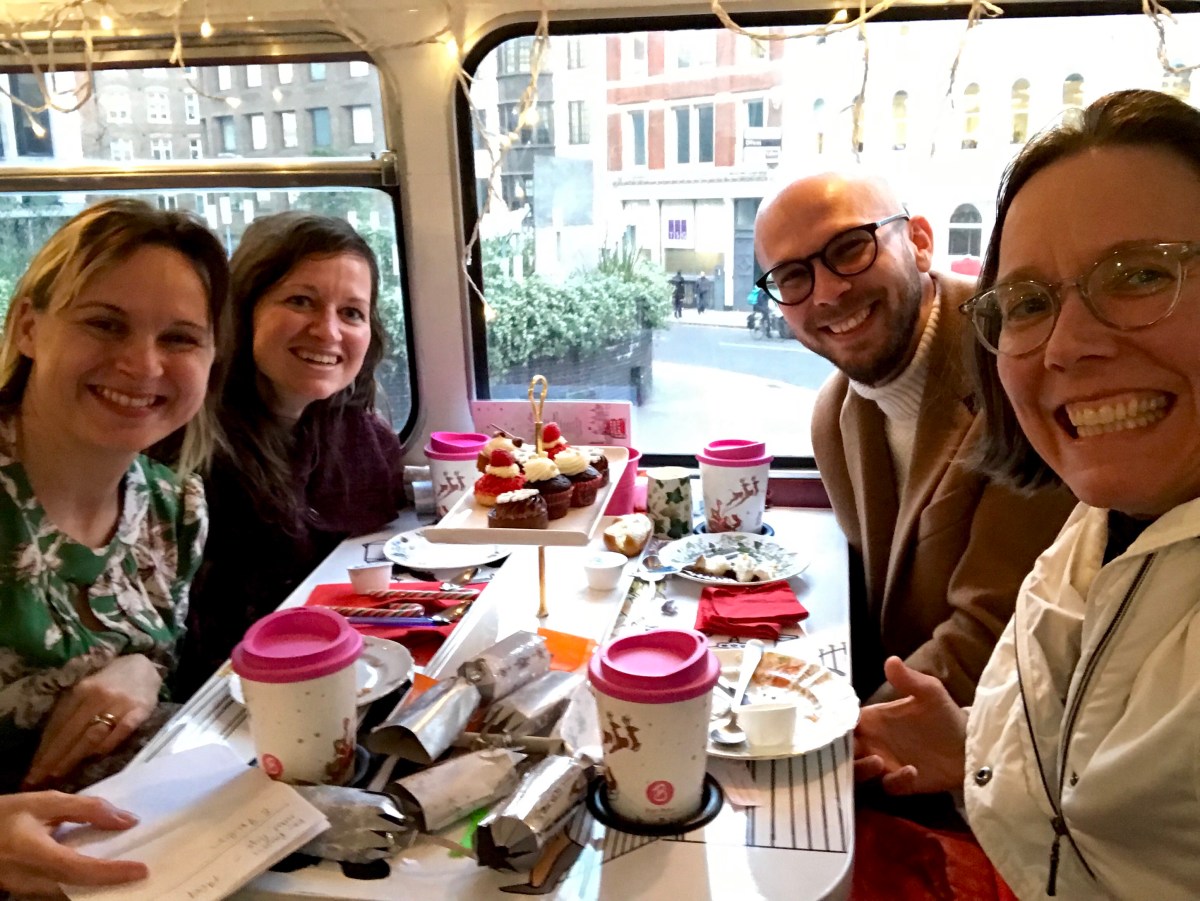
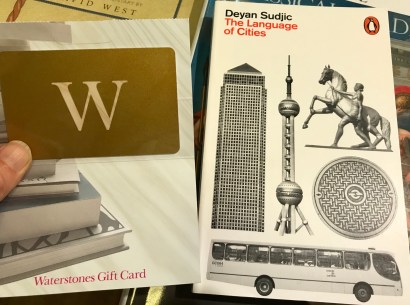 I’ve been spell bound all day by Dayan Sudjic’s 2016 book, “The Language of Cities.” I purchased the book after work yesterday to keep my knowledge of city-building fresh and up-to-date. I made that find at Waterstones, across the street from my office in Bloomsbury, and sealed the deal with a £10 gift card I won at Christmas.
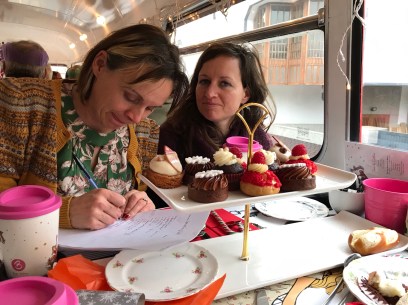 The Faculty if Engineering held a team-building event for Christmas, aboard a private double-decker bus that toured around the city of London. I got to know other members of our faculty as I sat with three people I didn’t previously know. Our table of four formed a team for the trivia contest, developed by our Dean’s personal assistant, the marvelous Maria Speight. Maria invented all the questions, having to do mostly with the sights we were passing. Excelling in this game required in-depth knowledge of the history of this fine city, which dates back to Roman times.
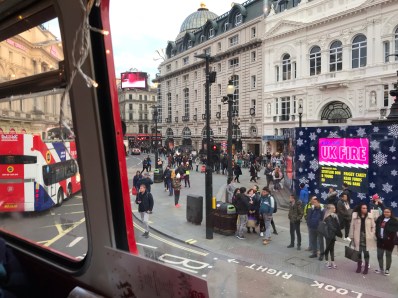 What a great way to spend a day before Christmas, on a sunset tour of a glorious city, surrounded by passionate people who love their work in academia. I am truly blessed!
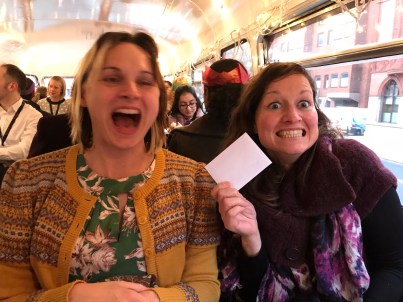 Sudjic’s book is full of insight, making fascinating new connections, so the synapses in my brain have been firing furiously today! Sudjic makes plenty of reference to the history and operation of London as well as cities around the world, and I am connecting the principles to places I’ve been.


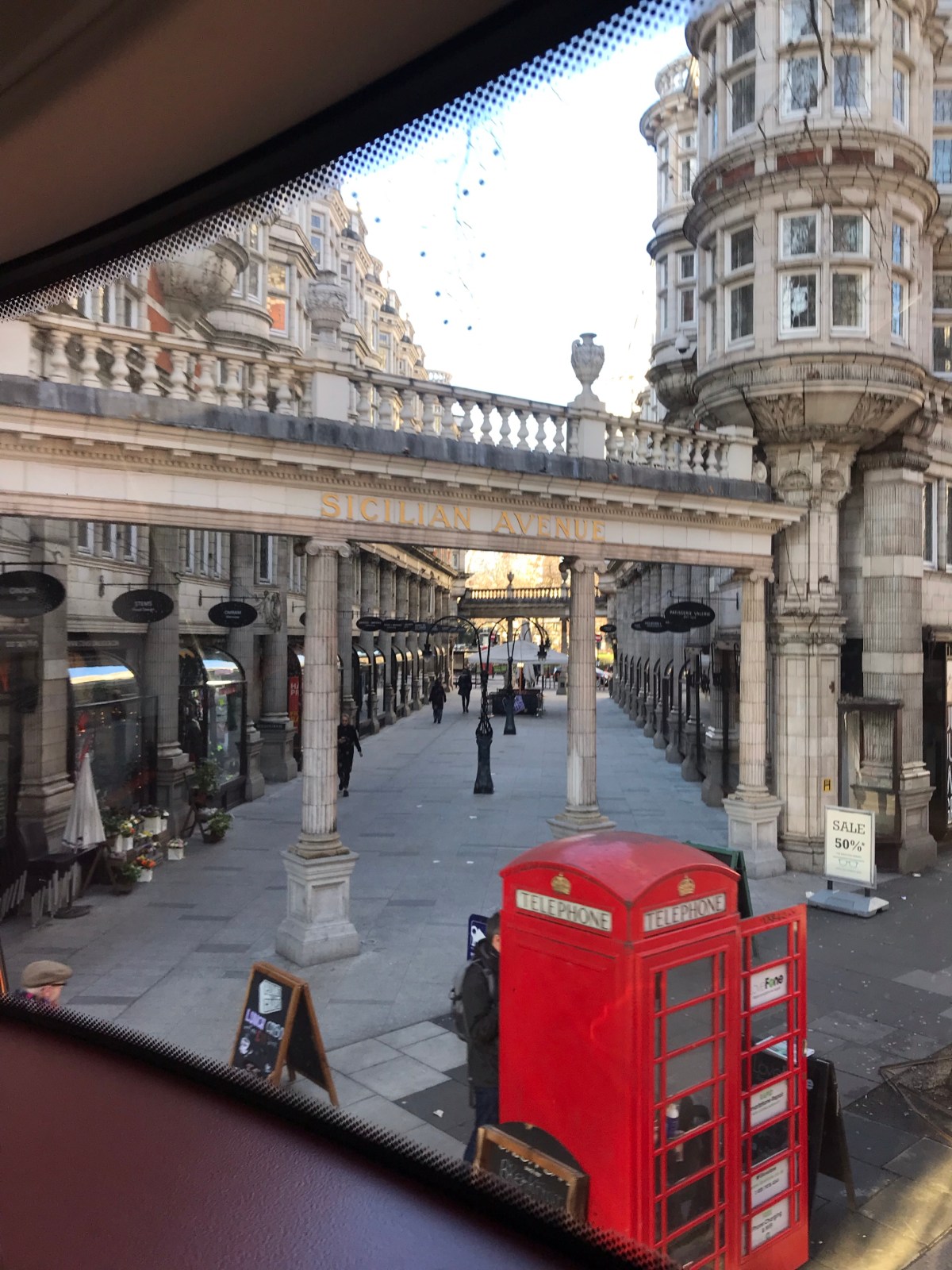
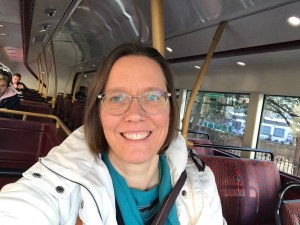 When you’re supervising a Ph.D. student, s/he usually comes to you for meetings. In my case, however, I travel over to LSBU twice a month to meet with my supervisee, Thomas, and his primary supervisor, Professor Shushma Patel. I’m doing this for several reasons:
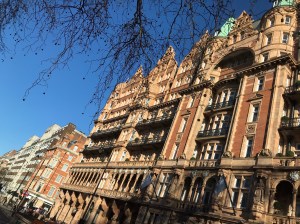 The appetizer for the main-course meeting at LSBU each week is the trip there. I take a different route than I take to work daily and, on these days, I enjoy getting a bit of exercise. The fastest route to their campus is by way of the DLR, which is a 15-minute walk away from our flat
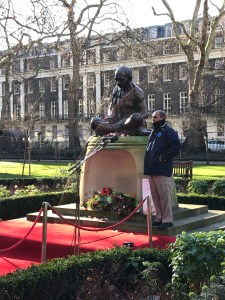 All parts of the journey are full of interesting sights!
 Lessons of the day:


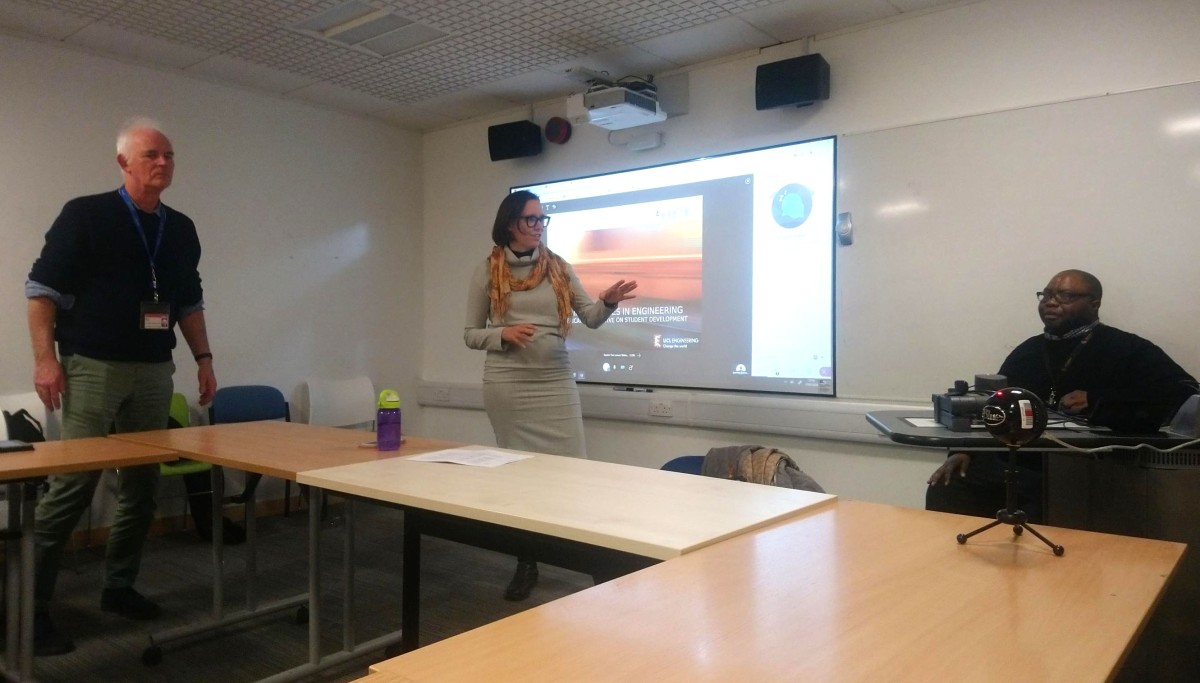


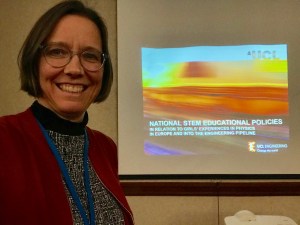
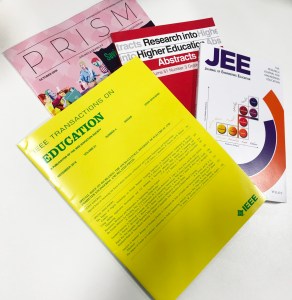
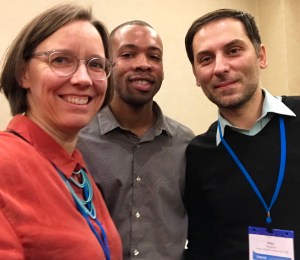
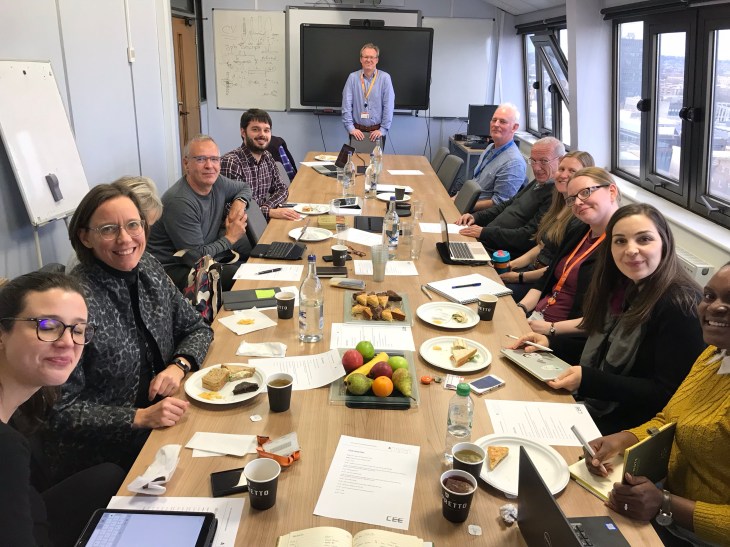
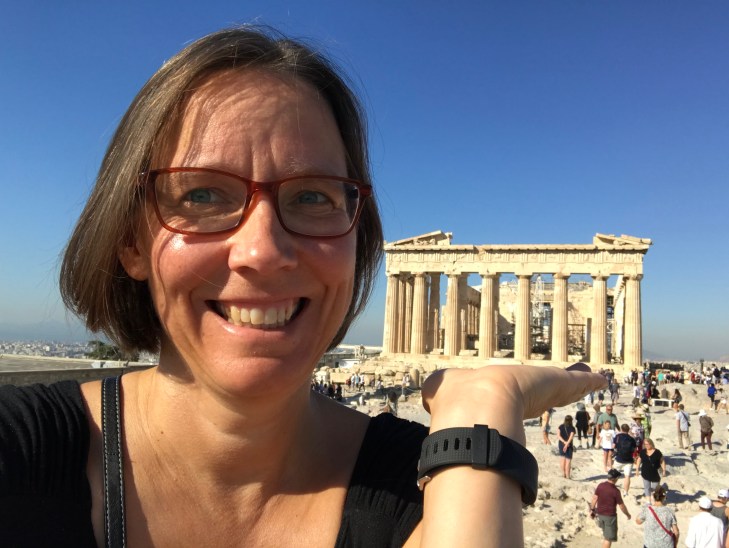


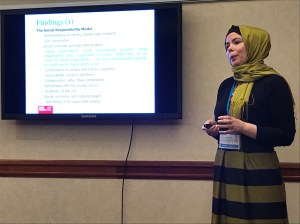


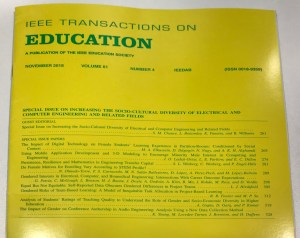

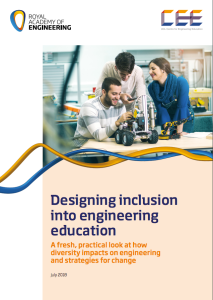


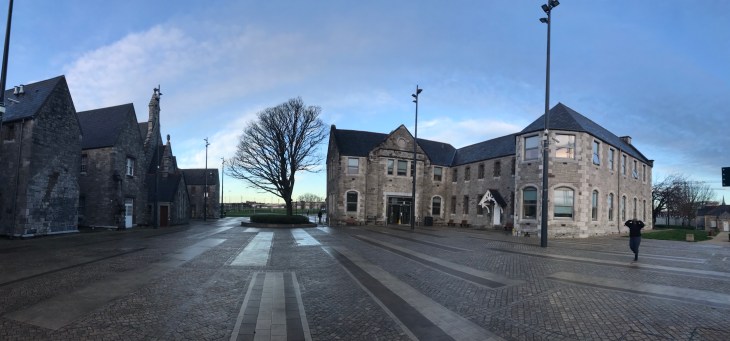
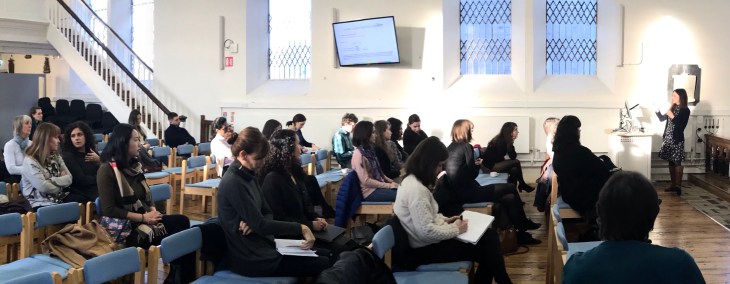
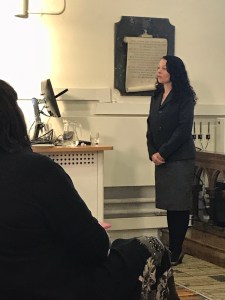
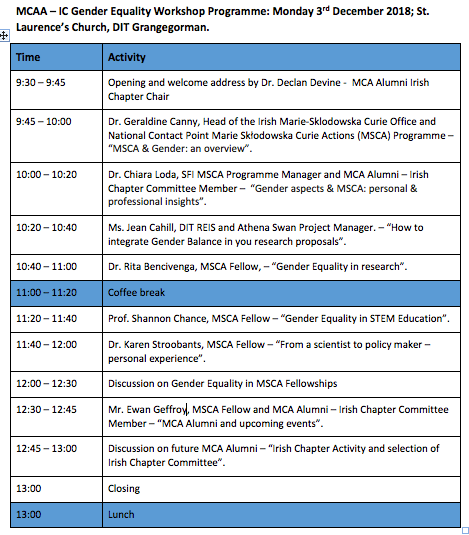
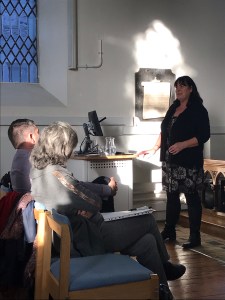
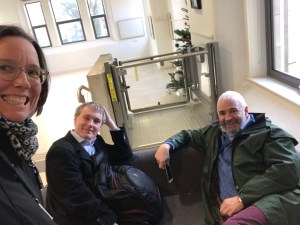


 Ireland by Chance