
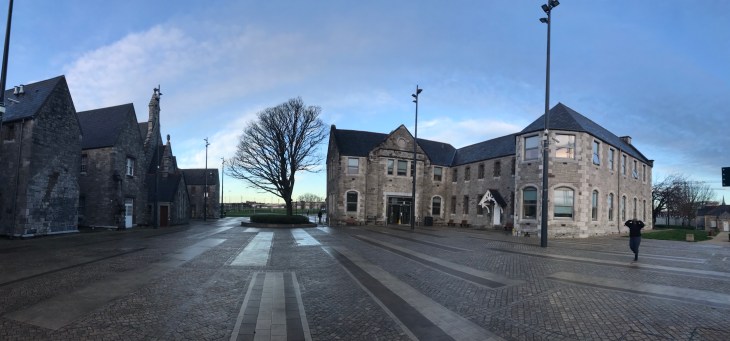
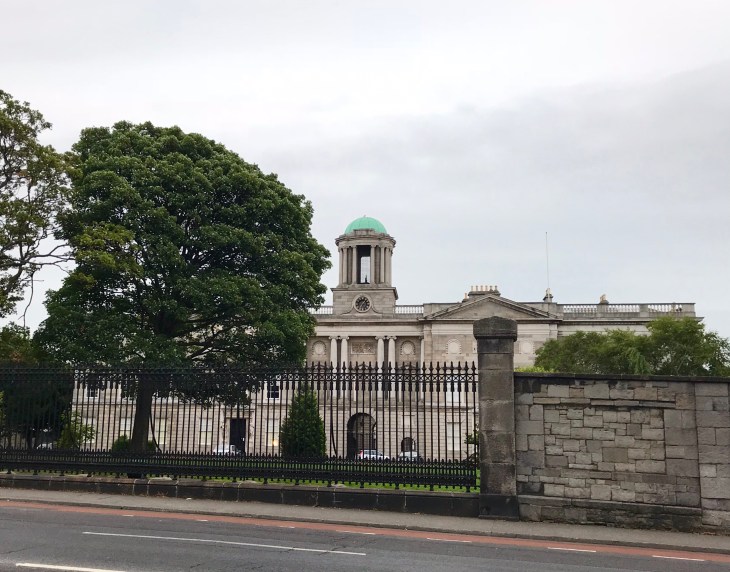
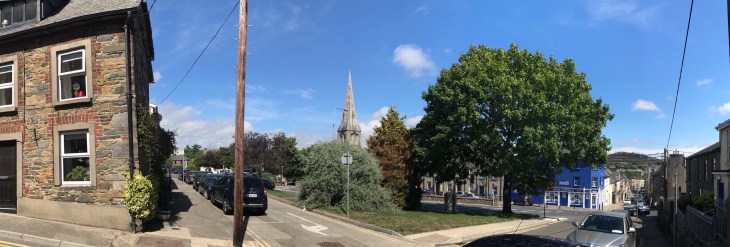
The campus of DIT Grangegoreman (soon to be TU Dublin) which is now under construction
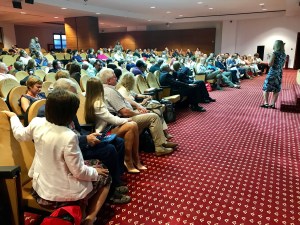
I found myself surrounded today, by dozens of brilliant scholars. I’d been invited to speak at a workshop on Gender Equality held by the Irish Alumni Chapter of Marie Skłodowska-Curie actions (MSCA). The half-day workshop was held in St. Laurence Church on the Grangegorman Campus of DIT.
Marie Curie fellows, past and present, traveled in from all over Ireland to attend the event. The Irish MSCA Alumni chapter is just two years old and it covers the whole of the island, welcoming researchers from north and south, east and west.
A lovely group of early-career researchers arrived in last night from Cork for the workshop, for instance. They came to Ireland from many different countries across Europe and beyond to work with the excellent researchers here.
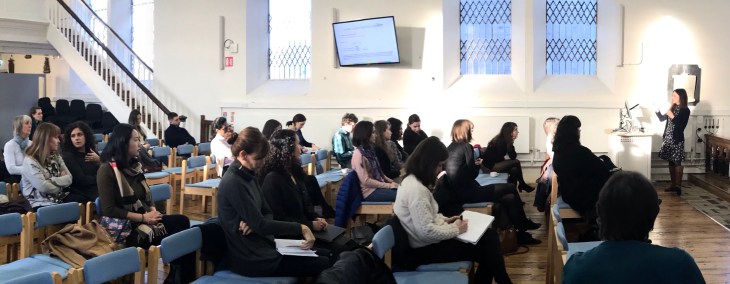
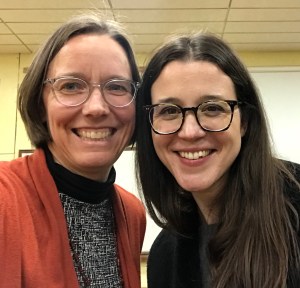
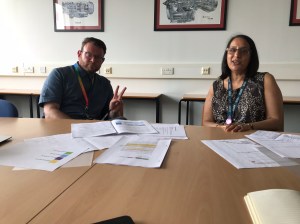
Dr. Chiara Loder, with Ireland’s MSCA office, helps researchers write winning proposals
Dr. Geraldine Canny, the MSCA National Contact Point and Head of Ireland’s MSCA Office.
Dr. Amir Tabaković, a Strategic Research Proposal Coordinator housed in DIT’s Research Enterprise and Innovation Services office organized the event. Amir was formerly a Marie Curie Fellow to TU Delft in the Netherlands. Several other alumni assisted in organizing, including Dr. Declan Devine, the Chair of Ireland’s MCA Alumni chapter who was a Marie Curie fellow–following his wife’s own MSCA fellowship. They have spent time doing research in Switzerland, the US, and now back home in Ireland.
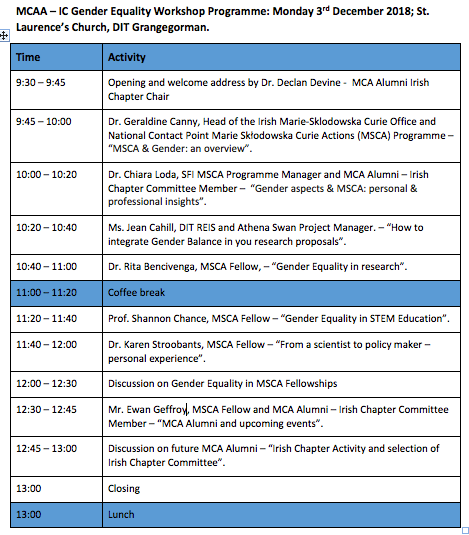
The day’s line-up of speakers was both exceptionally accomplished and full of insight. We started with introductions by our hosts, Amir and Declan, and a talk by Dr. Geraldine Canny, who is Head of the Irish Marie Skłodowska-Curie Office and National Contact Point – H2020 Marie Skłodowska-Curie Programme. She is responsible for the delivery of the office suite of application supports and also provides input into MSCA policy as a Programme Committee member. The program continued as follows:
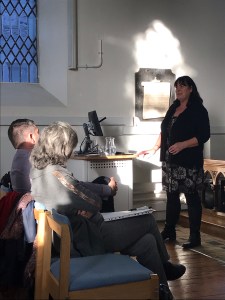
Jean Cahill, one of my mentors and heroes
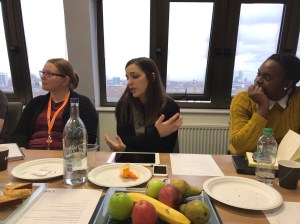
I’ve included photos of many presentations. During the coffee break and post-workshop lunch, we got to socialize and network. I asked Jean Cahill–a Head of Research at DIT and one of the people who has helped me with writing various grants in the past–how many Marie Curie Fellows we’ve had at DIT. She rattled off five, and I was two of them! I think, for institutional records, I’m counted as an incoming MSAC Fellow (2014-2016) and an outgoing MSCA Fellow (2018-2020). The reason I’d asked Jean about this was that I had just met DIT’s newest incoming MSCA fellow, and she’s female. Interestingly, all the five fellows to DIT who Jean identified are female. The program is open to men and women alike, so the success rate for women applying to DIT is very high! I’ve always found DIT to be a very supportive environment. In fact, Jean and others like former National Contact Point Dr. Jennifer Brennan, helped me draft both of MSCA applications–going well above and beyond their job requirements and providing loads of pertinent advice that was crucial to my success in securing funds. For both of my MSCA applications, Professor Nancy Stenson and Dr. Marek Rebow helped with editing as well.
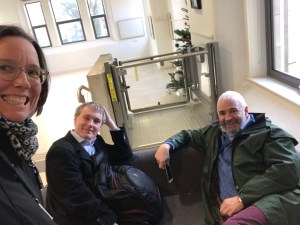
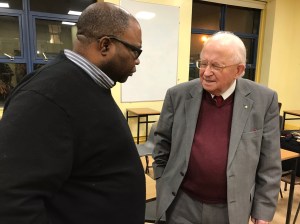
Chatting with Professor Brian Bowe in DIT’s Rathdowne House
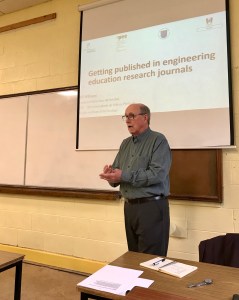
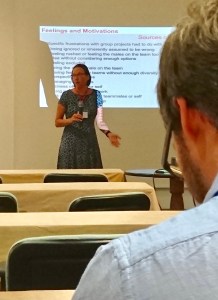
For today, Amir had asked me to talk about my experiences as a Marie Curie fellow and identify some gender aspects of my research work. I encouraged the audience to push beyond gender and seek inclusivity for all types of diversity. I asked them to promote wider considerations of diversity in European funding calls and evaluations, as well as in their own research. I asked them to consider publishing gender-related aspects of their findings in journals that reach more than one type of specialty audience and I provided examples. Then I described one of the research projects I’ve done as an MSCA fellow and the data analysis I have underway now that I will report via the Society for Research in Higher Education.
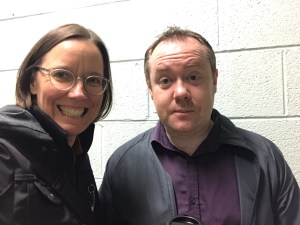
Dr. Shanonn Chance with DIT’s Dr. Barry McCauley, an expert in BIM and Quantity Surveying
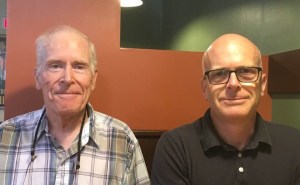
At the conclusion of the workshop, I met up with my former Fulbright and MSCA supervisor, Professor Brian Bowe. Then I walked from DIT Grangegoreman to DIT Bolton Street by way of our new path–which connects the two sites and takes just seven minutes to walk. There at Bolton Street, I returned a library book (Marton and Booth, 1997) and had a chat with Dr. Barry McCauley, who was serving as my temporary replacement but has since been appointed to a permanent full-time position of his own at DIT. I couldn’t be more pleased, as Barry is an excellent teacher and researcher and is excelling even while adjusting to his new prosthetics. Barry was injured on a construction site when he was 21 and his legs were crushed, but he has not let this stop him. He went on to get his Ph.D. and he’s a force to be reckoned with! We are lucky to have him at DIT; I really enjoyed learning Navis Works and CostX from him in prior years and he has done some very important research on uptake and implementation of BIM (Building Informational Modelling) globally.
If you are a researcher reading this who is interested in applying for a fellowship to come do research in engineering education at either DIT (soon to be TU Dublin) or at my other institution which is UCL, or in BIM implementation here at DIT, please contact me and I’ll help you write a grant proposal (IrelandByChance at gmail dot com).








 Thus, one of my top accomplishments of this conference was connecting my colleagues from the CDC and ASEE. Soon Stephanie and Chris will be working together. They will connect engineering educators and students with the CDC’s new initiatives to increase physical activity across the US population and to improve public transportation, particularly with regard to accessibility. Stephanie will be able to tap into Chris’s experience and policy research and Chris will access Stephanie’s national contacts to help achieve CDC goals.


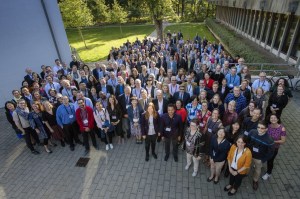
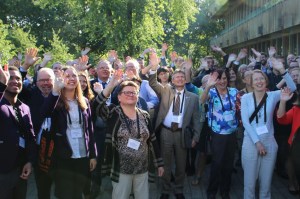 I’ve just attended the world’s friendliest conference, the European Society for Engineering Education (SEFI). I’ve never felt more welcome and invigorated by the exchange of ideas at a conference. This was my third SEFI, and while I’ve always felt incredibly welcome here, I now know people from all corners of the world by first name and they greet me likewise.
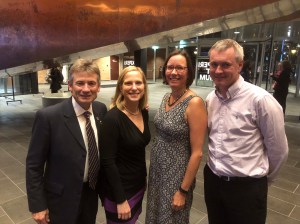 Tuesday started bright and early with a keynote speech–delivered by Dr. Stephanie Farrell who was a Fulbright Fellow to Dublin Institute of Technology (DIT) while I was a Marie Curie Fellow there. Although each morning started with a keynote lecture, for me, Stephanie’s was the most insightful of all. Attendees asked dozens of questions at the end, with another dozen people standing in line to ask questions afterward.
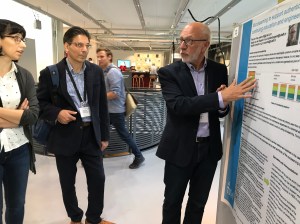 Following the Thursday morning keynotes, we enjoyed a fun new poster-presentation format. Poster authors got 30 seconds each to pitch their topic to the entire delegation, and then we went to visit their posters. This format raised the profile of posters as well as attendees’ interest in discussing them.
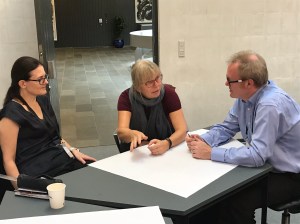 After lunch, I attended a session on “Increasing the Impact of your Journal Publications” conducted by editors of the Journal for Engineering Education, Dr. Lisa Benson and Dr. Cindy Finelli. For dinner, the EER Working Group Board met in town.
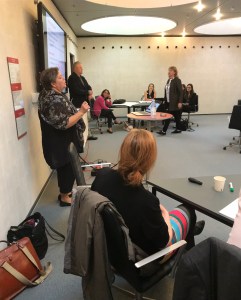 After lunch, I presented as part of the session “Reviewers! Reviewers! Reviewers!” In this session, editors of four journals explained what they are aiming to publish and how to write good reviews. I was representing IEEE Transactions on Education, the journal for which I am Associate Editor. We broke into small groups to identify characteristics of a good peer review and this was followed by a very insightful whole-group discussion.
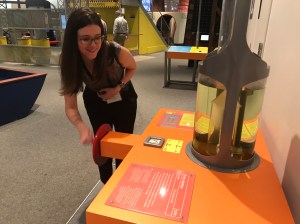 Late in the afternoon, everyone at the conference boarded buses for Copenhagen’s Experimentarium, a really fun science-learning center. I played with the educational exhibits alongside Stephanie’s family and other colleagues from DIT, UCL, and Fulbright. There was an awards ceremony, where our UCL colleague, Dr. Eva Soerensson was honored, and I thoroughly enjoyed the conference “gala” dinner. I sat with Belgian, Dutch, and British colleagues at dinner. We got a bit rowdy and ended up building towers from paper cups and discussing the feature of ubiquitous household appliances.
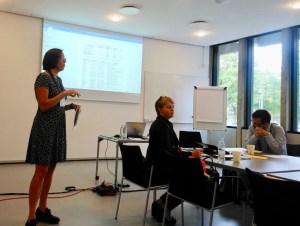 The final day of the conference had many individual poster and paper presentations, including a discussion session/presentation I delivered on patterns I’ve found among doctoral dissertations that have used phenomenology to study aspects of engineering education.
 I enjoyed dinner with close friends after the conference attendees dispersed. I got to explore Copenhagen a little on Saturday morning before flying off to a new conference in Greece.


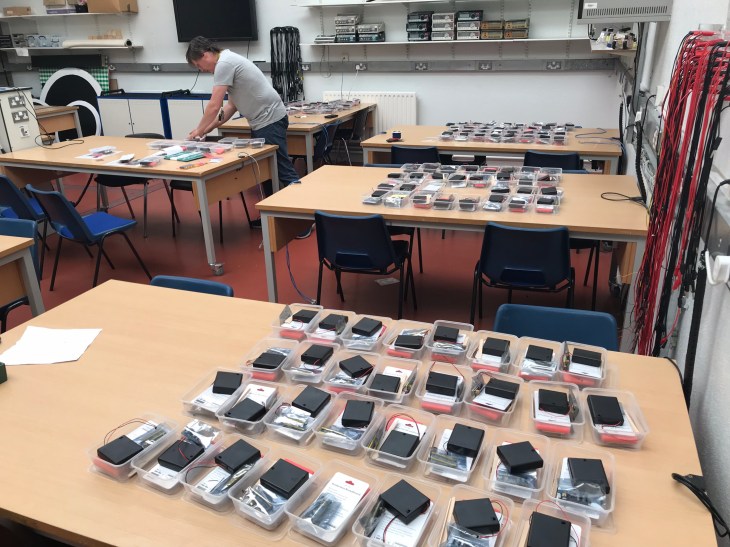



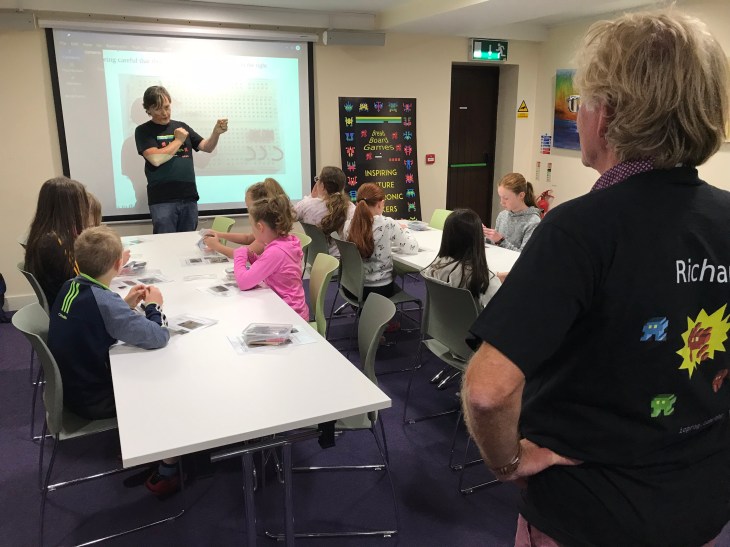

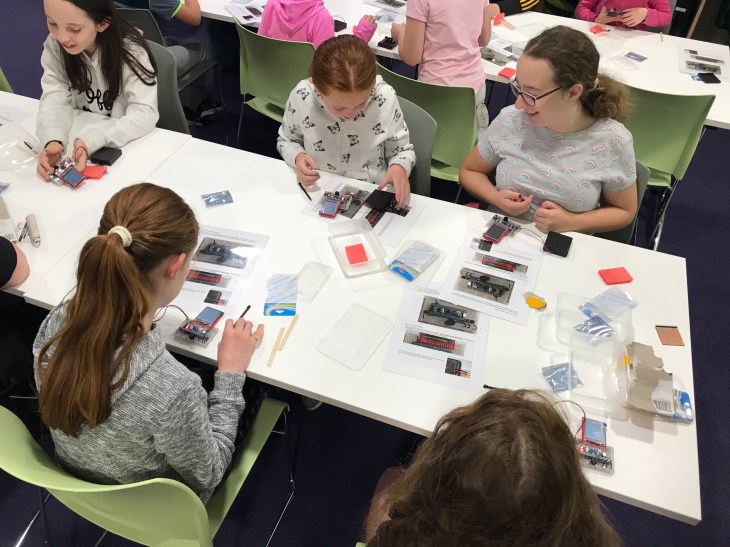


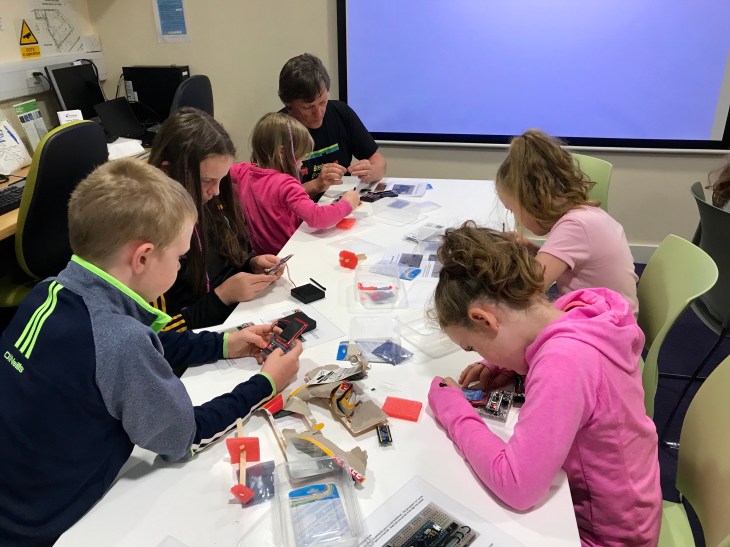

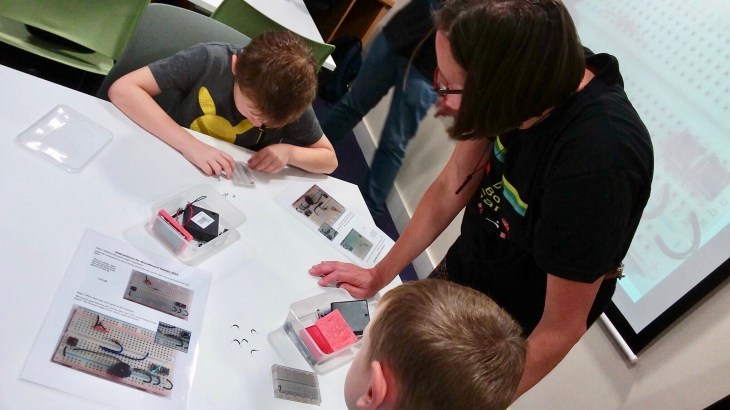

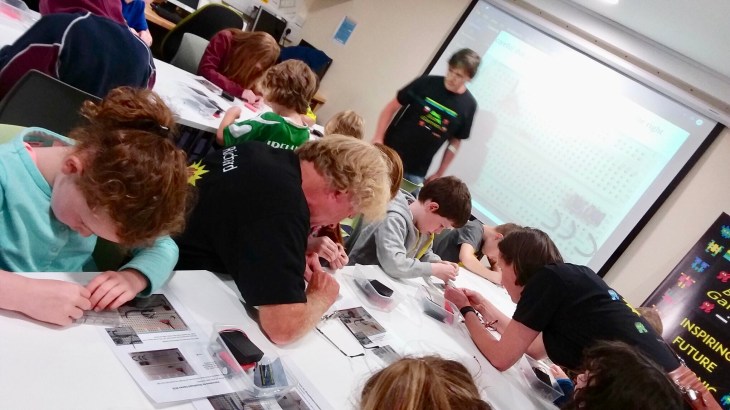

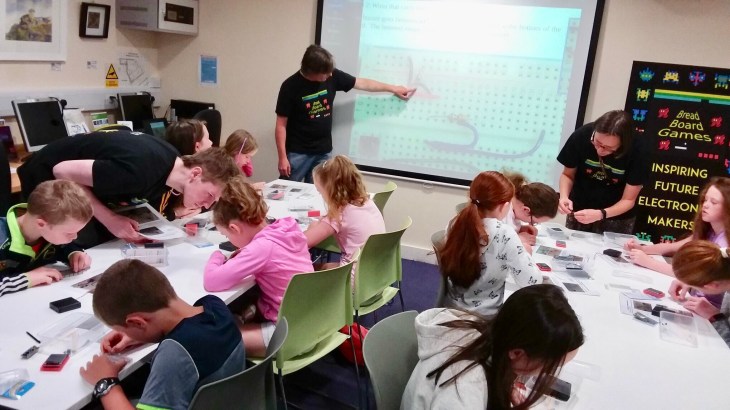

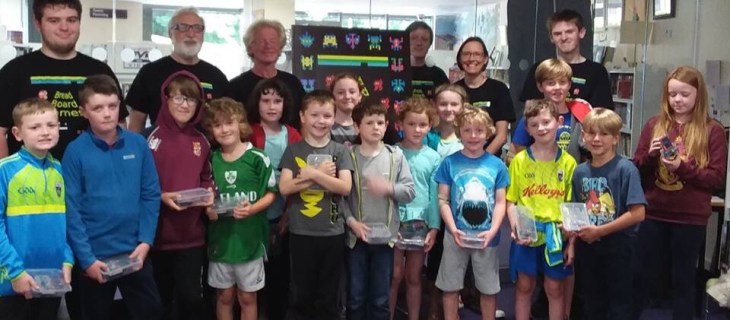


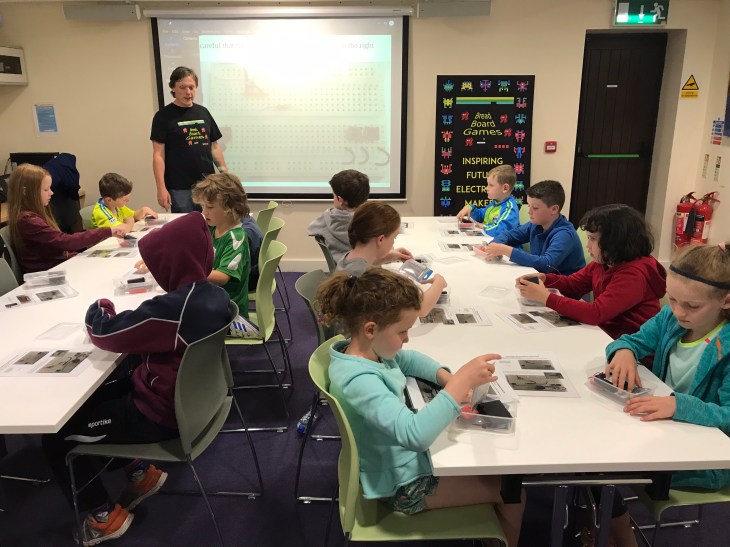

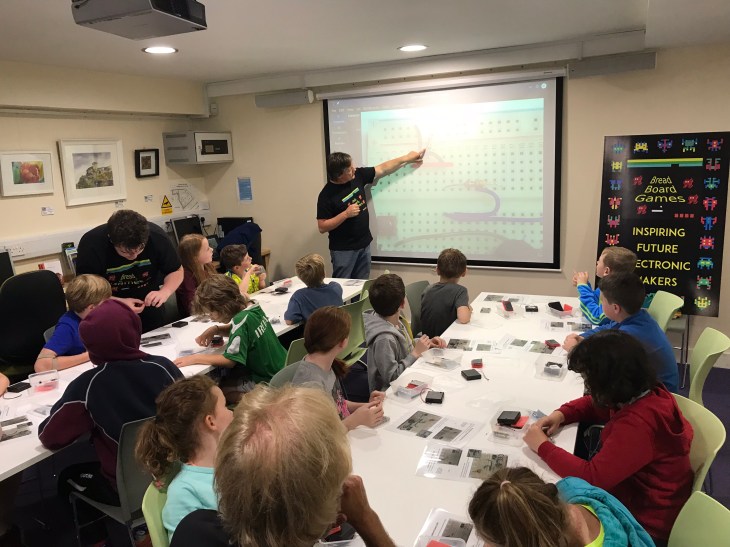
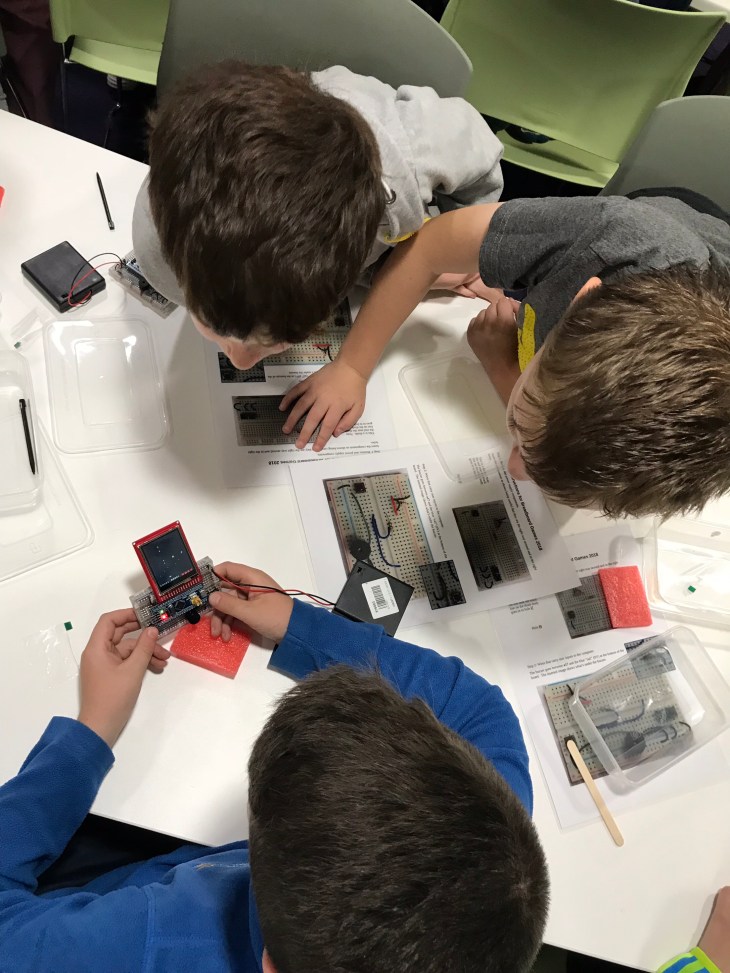

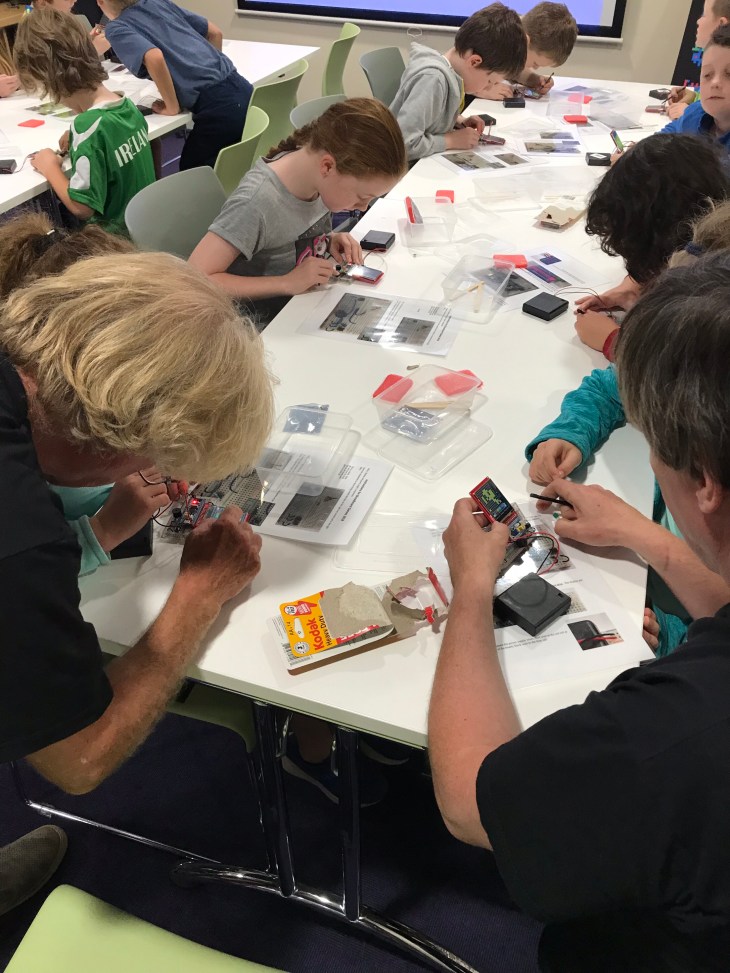


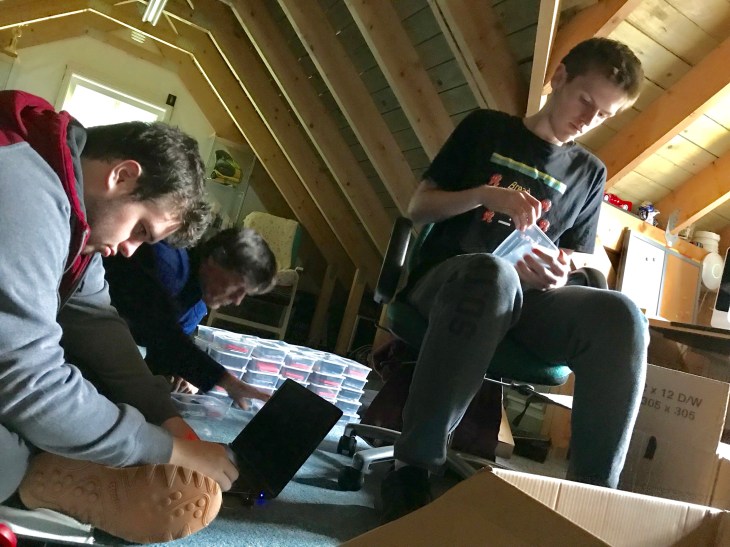





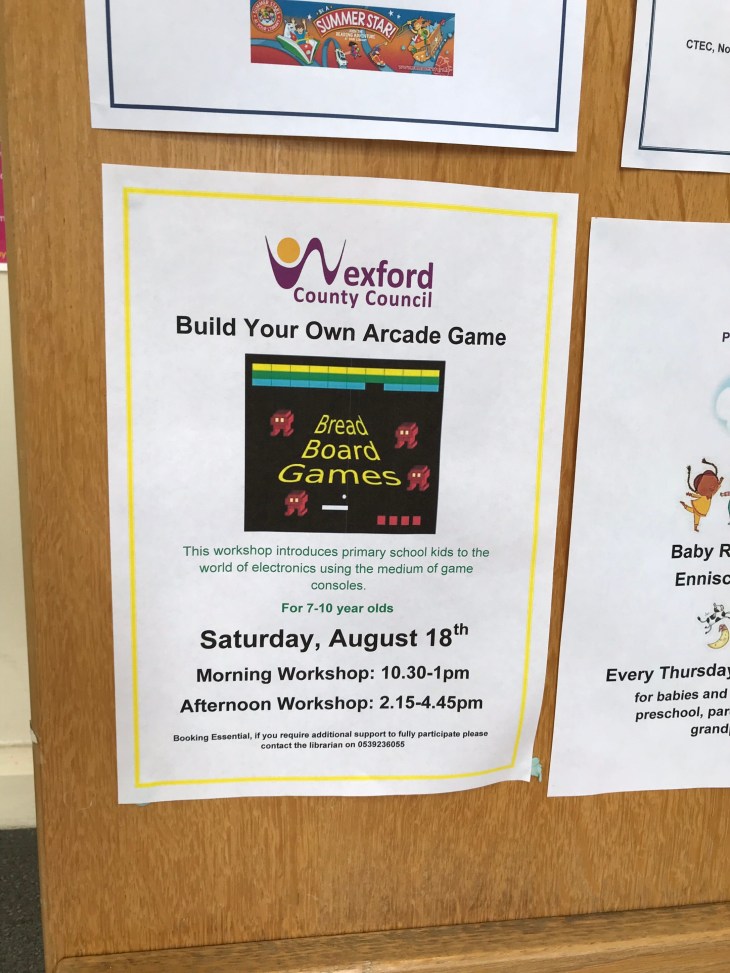
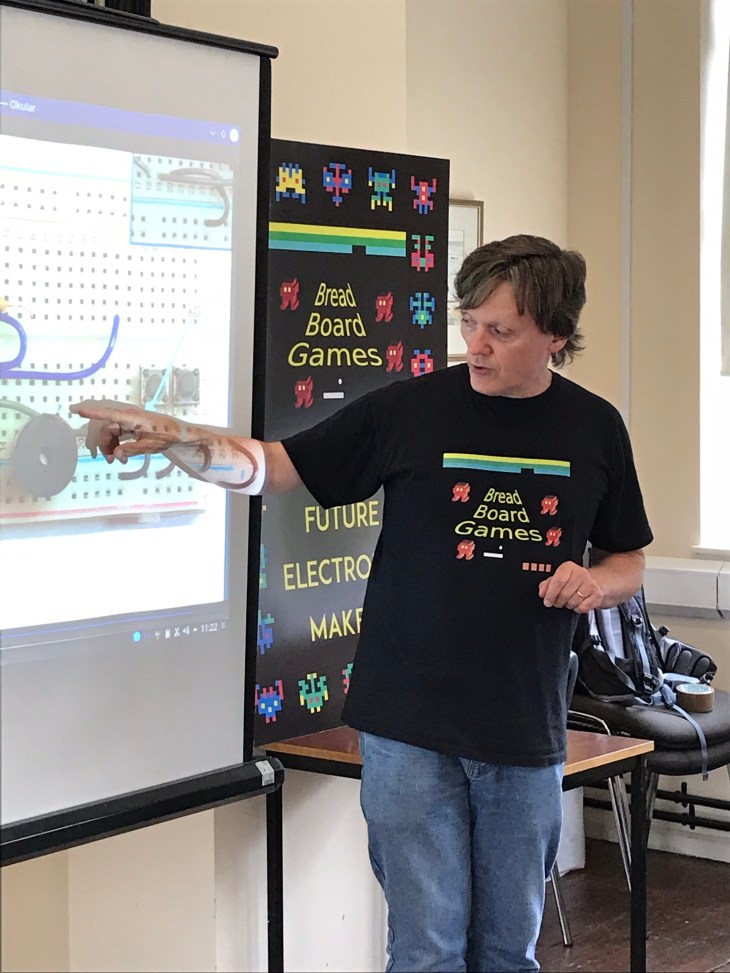

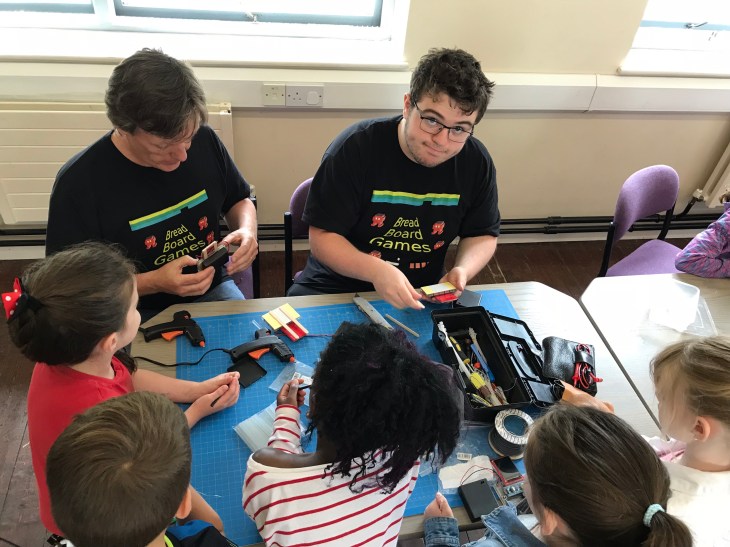
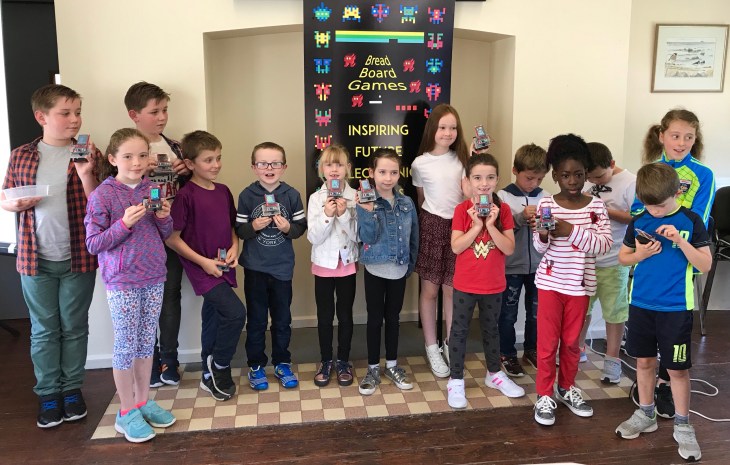


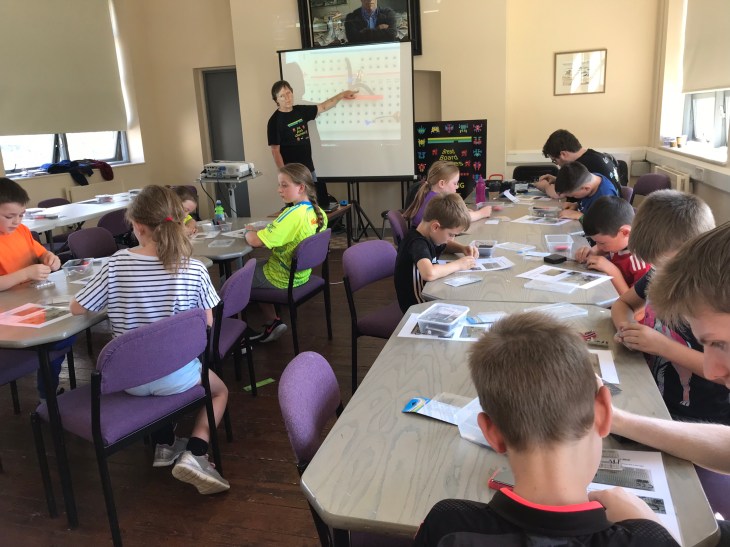




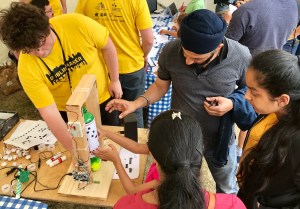 With the annual Dublin Maker fair on July 21st, DIT’s RoboSlam group of volunteer staff and students headed to Marrion Square for an action-packed Saturday. After four years of teaching visitors to Dublin Maker about build robots, we shifted focus to activities that could engage even more people at a time.
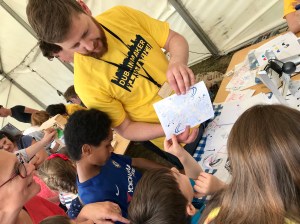 The set of photo galleries below shows my weekend activities helping run this booth at Dublin Maker 2018. You’ll learn about and see photos of:


 It’s been a hectic few weeks, beginning with






 Ireland by Chance